THREE ESSAYS ON ADVERTISING, CUSTOMER SATISFACTION, AND CUSTOMER LOYALTY
Carolyn Samuel Taylor
A dissertation submitted to the faculty of the University of North Carolina at Chapel Hill in partial fulfillment of the requirements for the degree of Doctor of Philosophy in the Kenan-Flagler Business School, Department of Marketing.
Chapel Hill
2013
Approved by:
Katrijn Gielens
Jan-Benedict E.M. Steenkamp
Tarun Kushwaha
Christine Moorman
ii ABSTRACT
CAROLYN SAMUEL TAYLOR: Three Essays on Advertising, Customer Satisfaction, and Customer Loyalty
(Under the direction of Katrijn Gielens and Jan Benedict E.M. Steenkamp)
This dissertation focuses on the attitudinal metric of customer satisfaction and its
consequence of customer loyalty. While the merits of customer satisfaction and customer
loyalty are widely studied and recognized, less is known about how the firm should go about
using its resources to optimize these constructs, and how the optimization of these constructs
may affect firm value.
The first essay examines the effect of advertising effort on customer satisfaction and
its implications for firm value. The second essay delves into analyzing the conceptual
components of customer loyalty by exploring the effect of a firm’s resource allocation
choices on its loyalty capability, which is defined in this dissertation as a firm’s ability to
convert its resources into customer loyalty. In these first two essays collectively, I argue that
the efficient optimization of both customer satisfaction and customer loyalty will positively
impact a firm’s performance in the market. The final essay examines customer satisfaction
within a global context, and explores the extent to which market familiarity and experience
contributes to a multinational corporation’s (MNC’s) ability to provide valuable offerings
iii
The results of Essay I suggest that firms can over- or underadvertise with respect to
optimizing customer satisfaction. This advertising ineffectiveness, particularly
overadvertising, is detrimental to firm value. Moreover, this study shows that analyzing the
impact of advertising on market value without accounting for effectiveness may lead to
biased results. The findings from Essay II demonstrate that loyalty capabilities may vary
across firms and over time due in part to the firms’ advertising allocations, level of
innovation, category characteristics, and portfolio strategy. The findings also suggest that
loyalty capability contributes to firm performance. Finally, the results of Essay III indicate
that a firm’s experience in the market has a positive effect on its ability to provide value to
the customer. However, the results are mixed as to whether experience helps a MNC
overcome differences between the country of origin and the host country, and cope with the
iv
TABLE OF CONTENTS
LIST OF TABLES…………...……….………..……vii
LIST OF FIGURES………...……….………...viii
CHAPTER I. INTRODUCTION…….……..……….….……1
Overview……….1
Literature Overview of Customer Satisfaction………...2
Dissertation Structure and Preview………...20
References……….26
II. ESSAY I: THE IMPACT OF ADVERTISING ON CUSTOMER SATISFACTION AND THE EFFECT ON FIRM VALUE………...30
Introduction………...……….……...30
Conceptual Framework………...………..33
Customer Satisfaction..……….36
Relationship between Advertising and Customer Satisfaction……….38
The Impact of Advertising Effort, Effectiveness, and Efficiency on Firm Value...41
Data……….……….…….48
Methodology……….………..……….………….52
v
Validation Analysis………...………..…………....63
Discussion………....….…..69
Limitations..……….………..………….71
References………...73
III. ESSAY II: AN ANALYSIS OF LOYALTY CAPABILITY………...………….79
Introduction………....79
Conceptual Framework of the Drivers of Loyalty Capability...………..……...85
Methodology………..……….…....98
Sample……….99
Step 1: Measuring Loyalty Capabilities………..99
Step 2: Relating Drivers to Loyalty Capability…...………..108
Step 3: Relating Loyalty Capability to Firm Sales...…….…….…………...113
Results………...115
Step 1: Measuring Loyalty Capabilities……….….…………..115
Step 2: Drivers of Loyalty Capability………..………...…..…………120
Step 3: The Impact on Firm Sales………...……….…..123
Discussion……….126
Future Research………140
References……….…142
IV.ESSAY III: MARKET EXPERIENCE AND INTERNATIONAL CUSTOMER SATISFACTION……….…………...151
Introduction.……….151
Conceptual Framework……….………154
vi
The Impact of Economic Distance on Customer Satisfaction….………….164
The Impact of Experience on Customer Satisfaction and its Moderating Effects on Cultural and Economic Distance………..……...…168
Control Variables..………...……….171
Data………...………..………..174
Measures………..………..…....174
Methodology……….179
Results………...182
Discussion.………..……….……….187
Future Research……….………190
References……….211
APPENDIX A...………..……….………...191
APPENDIX B…………..…………..………...……….….193
APPENDIX C...………..……….……….…..194
APPENDIX D…………..…………..………...………..207
vii
LIST OF TABLES
1.1 Literature Review of the Antecedents and Consequences of Customer
Satisfaction………...4
1.2 Corresponding Constructs of the ACSI Framework and the Focal Framework...18
2.1 Results of Random Parameters Stochastic Frontier Estimation: Impact on ACSI……….….57
2.2 Descriptive Statistics of Derived Advertising Efficiency………...60
2.3 Impact of Efficiency, Effectiveness, Advertising Effort, and Moderating Effect of Products/Services on Tobin’s q………....61
2.4 Validation Analysis: Model Comparison Statistics……….63
2.5a Validation Analysis: Latent Class Selection Statistics………65
2.5b Validation Analysis: Results of Latent Class Stochastic Frontier Estimation: Impact on ACSI………...65
2.6 Validation Analysis: Latent Class Membership………..66
2.7 Validation Analysis: Results of Alternative Models: Impact on ACSI…………..68
3.1 Data Operationalizations………...112
3.2 Results of Random Parameters Stochastic Frontier Estimation: Impact on Customer Loyalty……….………116
3.3 Random Parameter Results by Firm………..119
3.4 Loyalty Capability Statistics by Firm………119
3.5 Results of Tobit Model: Impact on Loyalty Capability……….122
3.6 Regression Results: Impact on Sales………...125
4.1 Descriptive Statistics………...177
viii
LIST OF FIGURES
1.1 Model of the Antecedents and Consequences of Customer Satisfaction..…………9
1.2 The ACSI Framework……...………..17
2.1 Advertising Value Chain……….35
2.2 Proposed Relationship between Advertising Effort and Customer Satisfaction: Implications of Advertising Ineffectiveness and Advertising Inefficiency………42
2.3a Distribution of ACSI Scores across Companies and over Time……….50
2.3b Distribution of Time-Averaged ACSI Scores across Companies………...50
2.4 Relationship between Advertising Effort and Predicted ACSI Based on Aggregate Parameter Results………..58
2.5 Proportional Distribution of Derived Advertising Efficiencies: Products vs. Services………....59
3.1 Overview of Research Approach…..………...84
3.2 Distribution of ACSI Loyalty Scores across Companies and over Time………...100
3.3a Impact of Advertising Effort on Customer Loyalty………..118
3.3a Impact of New Product Introductions on Customer Loyalty………....118
3.4 Evolution of Loyalty Capability over Observations………..129
4.1 Conceptual Framework………..157
CHAPTER I -- INTRODUCTION
1.1 Overview
This dissertation focuses on the attitudinal metric of customer satisfaction and its
consequence of customer loyalty. While the merits of customer satisfaction and customer
loyalty are widely studied and recognized, less is known about how the firm should go about
using its resources to optimize these constructs, and how the optimization of these constructs
may affect firm value. This dissertation explores multiple aspects of customer satisfaction
through two distinct research initiatives.
The first research stream examines how and to what extent the efficient optimization
of both customer satisfaction and customer loyalty will positively impact a firm’s
performance in the market. The first essay examines the effect of advertising effort on
customer satisfaction and its implications for firm value. The second essay delves into
analyzing the conceptual components of customer loyalty, by exploring the effect of a firm’s
resource allocation and diversification choices on loyalty capability, which is defined in this
dissertation as a firm’s ability to convert its resources into customer loyalty.
In the second research initiative, customer satisfaction is examined in a global context
in order to evaluate the extent to which multinational corporations (MNCs) are able to
provide valuable offerings with which consumers in the host country express satisfaction.
2
between the home and host markets, which refers to the sum of such factors that may hinder
the flow of market information (Johanson and Vahlne 1977).
To provide a brief outline of what has already been done, I first present a review of
the literature that addresses the antecedents and consequences of customer satisfaction,
including customer loyalty. Next, a framework of customer satisfaction is developed based
on existing research. Finally, the objectives of each of the three dissertation essays are
outlined, and I describe how each essay contributes to the existing literature on customer
satisfaction.
1.2 Literature Overview of Customer Satisfaction
Oliver (1999, p. 34) defines customer satisfaction as fulfillment in that,
“…consumption fulfills some need, desire, goal, or so forth and that this fulfillment is
pleasurable.” Satisfaction is the result of a postconsumption evaluation which contains both
cognitive and affective elements (Oliver 1997). The cognitive state reflects the buyer’s
perception of whether the outcome was an adequate or inadequate reward for the customer’s
sacrifice. This evaluation is a response to the perceived discrepancy between prior
expectations and the performance of the product as perceived after consumption (Tse and
Wilton 1988). The affective element refers to the consumer’s subjective positive or negative
feelings surrounding the consumption experience (Westbrook 1987). According to
Parasuraman et al. (1988), incidents of satisfaction combine to result in perceptions of
quality. Over time, “satisfaction soon decays into (but nevertheless greatly affects) one’s
3
future behavior in that each evaluation of a consumption experience updates the continuous
construct of attitudes (Day 1984), and may thus alter future behavior accordingly.
The fact that there are many variations of the definition of customer satisfaction
already suggests that customer satisfaction is a complex construct composed of multiple
elements. To further complicate matters, customer satisfaction can be evaluated at various
levels including satisfaction with a product, a consumption experience, an attribute, a store, a
brand, or a company (Yi 1991).
Next, a framework of customer satisfaction is developed that is grounded in the
existing literature, and the antecedents and consequences of customer satisfaction are
explored. The framework is largely based on Syzmanski and Henard’s model of the
antecedents of customer satisfaction (2001), which was created to accompany their
meta-analysis. However, a number of modifications were made, such as omitting a measure of
actual performance, in order to allow perceptions of performance as compared to customer
expectations to affect customer satisfaction. In addition, the positive and negative
counterparts of the constructs of affect and word of mouth are represented in the following
framework, and the construct of customer loyalty is included as a consequence of customer
satisfaction. Table 1.1 includes a brief summary of the research highlights related to the
antecedents and consequences of customer satisfaction. This table informs the present
research by summarizing the empirical support for the antecedents and consequences of
customer satisfaction that compose this study’s framework, subsequently described. A
Table 1.1
Literature Review of the Antecedents and Consequences of Customer Satisfaction
Authors Title Antecedents of Customer Satisfaction Consequences of Customer Satisfaction
Bolton and Lemon JMR 1999
A Dynamic Model of Customers’ Usage of Services: Usage as an Antecedent and Consequence of Customer Satisfaction (CS)
• Payment equity has a strong effect on CS. • Customers’ comparison of current
payments with normative expectations has a direct effect on CS.
• Service usage increases as price increases to maintain payment equity.
• High CS leads to high usage levels in future periods.
• Higher price is associated with lower future usage.
Chandrashekaran, Rotte, Tax, and Grewal JMR 2007
Satisfaction Strength and Customer Loyalty
• Satisfaction strength has a great influence on the translation of stated satisfaction into customer loyalty. When satisfaction is strong (uncertainty is low), CS translates to loyalty. The translation is greatly lowered when satisfaction is weakly held.
Churchill and Surprenant JMR 1982
An Investigation Into the Determinants of Customer Satisfaction
• For nondurable goods, expectations, disconfirmation, and performance are determinants of customer satisfaction. • For durable goods, performance is the sole
determinant of satisfaction.
Day Advances in Consumer Research 1984 Modeling Choices Among Alternative Responses to Dissatisfaction
• Dissatisfaction motivates the consumer to complain but does not determine the outcome of the
complaining. Then consumers determine their action by considering the complaining alternatives and the benefits of complaining.
Helgesen Journal of Marketing Management 2006
Are Loyal Customers Profitable? Customer Satisfaction, Customer (Action) Loyalty and Customer Profitability at the Individual Level
• Found a positive and significant relationship between customer satisfaction and customer loyalty. But the relationship only holds beyond a certain threshold of customer satisfaction, and variations in customer satisfaction only explain about 10% of variations in loyalty.
5 Homburg,
Koschate, and Hoyer JM 2005
Do Satisfied Customers Really Pay More? A Study of the
Relationship Between Customer Satisfaction and Willingness to Pay (WTP)
• Based on equity theory: fairness of the exchange.
• Relationship between CS and WTP is inverse s-shaped, consistent with disconfirmation theory, since the strongest impact is at the extremes (delight or disappointment). WTP also grows stronger as CS evaluations becomes cumulative.
Homburg, Koschate, and Hoyer JM 2006
The Role of Cognition and Affect in the Formation of Customer Satisfaction: A
Dynamic Perspective
• Over time, the impact of cognition on satisfaction increases while the impact of affect decreases. Thus, advertisers should try to have an early influence on consumers
Johnson, Garbarino, and Sivadas IJMR 2006
Influences of Customer Differences of Loyalty, Perceived Risk and Category Experience on Customer Satisfaction Ratings
• Antecedents:
o The customer’s previous history of positive experiences (loyalty) o Negative encounters with the
organization that may lead to perceptions of risk
o A customer’s experience with similar or competing
organizations (category experience)
• Loyalty has a positive effect on CS; perceived risk has a negative effect; effect of category experience is not significant. Luo and Bhattacharya JM 2006 Corporate Social Responsibility (CSR), Customer Satisfaction, and Market Value
• CS partially mediates the relationship between CSR and market value. • In innovative companies, CSR has a
positive and significant impact on CS, and a negative and significant impact on CS in firms with low innovativeness. Luo and Homburg
JM 2007
Neglected Outcomes of Customer Satisfaction
• Free word-of-mouth (WOM) advertising is an antecedent of CS; it boosts the efficiency of future advertising.
• CS also has a positive influence on human capital
6 MacInnis and de
Mello JM 2005
The Concept of Hope and its Relevance to Product Evaluation and Choice
• Hope is an antecedent of CS. It is an emotion, and therefore falls under the driver of affect. It also affects possible disconfirmation and perceived equity. But the expectations of the positive outcome may be weak.
de Matos and Rossi JAMS 2008
Word-of-Mouth Communications in Marketing: a Meta-Analytic Review of the Antecedents and Moderators
• Satisfaction has a stronger relationship with positive WOM than with loyalty.
• Customer commitment has the strongest effect on WOM.
Mittal and Kamakura JMR 2001
Satisfaction,
Repurchase Intent, and Repurchase Behavior: Investigating the Moderating Effect of Customer
Characteristics
• Repurchase intent increases monotonically as CS increases.
• Consumers have different thresholds and response bias exists, so there is variation among responders.
Olsen JAMS 2002
Comparative Evaluation and the Relationship Between Quality, Satisfaction, and Repurchase Loyalty
• Quality is an antecedent of CS. o The relationship is stronger
when relative attitudes are used rather than individual
evaluations.
• Customer loyalty is a consequence of CS. o Again, the relationship is stronger when
relative attitudes are used rather than individual evaluations.
Orsingher, Valentini, and Angelis JAMS 2010
A Meta-Analysis of Satisfaction with Complaint Handling in Services
The antecedents of satisfaction with complaint handling are:
• Distributive justice: when an individual feels that their needs are met (strongest effect)
• Interactional justice: the quality of the interpersonal treatment (second strongest effect)
• Procedural justice: the perceived fairness of the policies (weakest)
• WOM – strongest correlations with satisfaction with complaint handling; people will share their
experiences whether positive or negative • Return intent – second highest correlation • Overall satisfaction – weakest correlation
7 Rijsdijk, Hultink
and
Diamantopoulos JAMS 2007
Product Intelligence: Its Conceptualization, Measurement and Impact on Customer Satisfaction
• Product intelligence indirectly leads to CS through relative advantage, compatibility, and complexity.
o The relationship between complexity and CS is negative o The relationship between
compatibility and complexity and CS is positive.
Rust, Inman, Jia, and Zahorik MS 1999
What You Don’t Know about Customer-Perceived Quality: The Role of Customer Expectation Distributions
• Customer expectations are distributions, and not simple point expectations. Expectations are formed based on cumulative experiences.
• Customers consider risk in their decision-making and they are more sensitive to negative disconfirmation than to positive disconfirmation. Rust and Oliver
JAMS 2000
Should We Delight the Customer?
• Outlines the conditions under which positive disconfirmation pays off. Though for repeat purchases,
expectations will be raised, so it is harder to delight in the future.
Szymanski and Henard JAMS 2001
Customer Satisfaction: A Meta-Analysis of the Empirical Evidence
• Tests the antecedents of Expectations, Disconfirmation, Performance, Affect, and Equity. Finds that all are significant except for Performance.
• Disconfirmation and equity are the most significant.
• Complaining, Negative WOM, and Repurchase Intentions
Westbrook and Oliver
JCR 1991
The Dimensionality of Consumption Emotion Patterns and Customer Satisfaction
• Finds 5 affective patterns that relate to CS, thus demonstrating that there are many facets of CS. Not all measures of satisfaction do a good job in capturing these dimensions.
8 Yi
Review of Marketing 1991
A Critical Review of Customer Satisfaction
• Literature overview that includes: disconfirmation, satisfaction and dissatisfaction as two separate constructs, equity, instrumental performance, expressive performance, demographic characteristics (found to be weak), expectations, equity, value-percept disparity (does the product provide the features and performance characteristics desired)
• Negative WOM has stronger effects than positive WOM.
• CS influences attitudes which affect purchase intention.
• Customer complaint – having an outlet for complaints may keep customers from switching. Dissatisfied customers who do not complain are more likely to switch.
9
-
Positive Disconfirmation
of Expectations Customer Expectations
Positive Affect
Customer
Satisfaction
Repeat Purchase Positive Word of Mouth
Customer Complaints
Outcome-to-Input Ratio
Customer Loyalty Negative
Affect
Figure 1.1
Model of the Antecedents and Consequences of Customer Satisfaction
Negative Word of Mouth
+
10 Antecedents of Customer Satisfaction
The focal theoretical framework delineates customer satisfaction as composed of
consumer expectations (Prakash and Lounsbury 1984), disconfirmation of expectations
(Oliver 1993), the perceived outcome-to-input ratio (Yi 1991; Szymanski and Henard 2001),
and positive and negative affect associated with the product experience (Oliver 1993). A
meta-analysis conducted by Szymanski and Henard (2001) validates that these constructs are
indeed significant antecedents of customer satisfaction.
Customer Expectations. Customer expectations serve as a baseline, or anchor, against
which the actual experience is compared (Yi 1991). Expectations are formed based on
numerous factors in a consumer’s environment, including advertising, word of mouth, brand
reputation, and even past product experience. The three major types of expectations that
have been studied in the satisfaction literature include predictive expectations, normative
expectations, and comparative expectations (Prakash and Lounsbury 1984). Each type of
expectation uses a different point of reference, as predictive expectations refer to anticipated
product performance, or how a product is likely to perform, normative expectations describe
the standards that consumer’s think should be met, and comparative expectations are based
on experiences with other similar brands (Prakash and Lounsbury 1984). In this context,
predictive expectations are used, as they serve as a benchmark against which actual
performance is compared.
Disconfirmation of Expectations. Disconfirmation of expectations arises when actual
outcomes as perceived by the consumer diverge from expectations. It results in a surprise
effect which magnifies the consumer’s perceived disparity between expectations and actual
11
expectations and the customer experiences delight, resulting in high levels of customer
satisfaction (Rust and Oliver 2000). In contrast, negative disconfirmation is a case of
expectations exceeding outcomes (Szymanski and Henard 2001) and it leads to
dissatisfaction (Yi 1991).
Outcome-to-Input Ratio. According to consumer behavior literature, consumers are
satisfied when they perceive their outcome-to-input ratio to be fair (Yi 1991). Customers
judge the fairness of the transaction by comparing their outcome-to-input ratio to that of a
referent person or group (Szymanski and Henard 2001). If consumers perceive that others
are experiencing greater outcomes relative to their inputs, then the situation is perceived as
inequitable and it results in dissatisfaction (Yi 1991). However, previous research shows that
buyers are more sensitive to their own inputs and outcomes (Oliver and Swan 1989b), and do
not account for seller outcomes when evaluating the fairness of a transaction (Oliver and
Swan 1989a). Thus, consumers tend to hold a self-centered, asymmetric view of fairness
(Oliver and Swan 1989a).
Affect. Affect influences customer satisfaction when emotions, whether positive or
negative, are elicited during consumption and leave traces in memory, which are then
integrated into the customer satisfaction evaluation (Westbrook and Oliver 1991). As an
illustration, a restaurant encounter is a complex experience that may trigger both positive and
negative affect (Derbaix and Pham 1991). A consumer may be pleased with the food and the
ambiance of the restaurant but become angered by the waiter, and thus experience both
positive and negative affect. Since positive and negative affect can be elicited
simultaneously (Westbrook 1987), a single continuum for modeling affect is insufficient
12
taxonomies which present as many as ten different categories of affect (Westbrook 1987), but
these categories can be broadly classified as forms of either positive or negative affect.
Nomological Network of the Antecedents of Customer Satisfaction
Expectations can affect customer satisfaction in two ways. First, raising expectations
has been found to boost a consumer’s evaluation of product performance (Anderson 1973;
Olshavsky and Miller 1972). Based on assimilation theory, if actual performance turns out to
be close to expectations, the consumer will assimilate their product evaluation toward their
expectations (Yi 1991). Thus, if expectations are biased slightly upwards, then consumers
will assimilate their product evaluations upwards. Consistent with this theory, Rust et al.
(1999) find that people tend to seek evidence that confirms their expectations, which means
that as long as expectations are fulfilled by actual performance in some capacity, then
consumers will be satisfied. In addition, simply meeting expectations strengthens customer
satisfaction by making the firm seem reliable and thereby reducing perceptions of future risk.
The second way that expectations can affect customer satisfaction is through the
disconfirmation of expectations, or a contrast effect. Based on contrast theory, a large
discrepancy between expectations and actual performance will result in the disconfirmation
of expectations if a product’s performance falls outside of a consumer’s range of acceptance
(Anderson 1973; Yi 1991). If expectations are substantially higher than actual performance,
the consumer will experience negative disconfirmation of expectations, which will have a
negative effect on customer satisfaction. Conversely, if expectations are low relative to
actual performance, then the customer will experience positive disconfirmation of
expectations, which will have a positive impact on customer satisfaction and will contribute
13
A consumer’s outcome-to-input ratio also plays an integral role within the
nomological net of the antecedents of customer satisfaction. Among the antecedents of
customer satisfaction, the outcome-to-input ratio is the only construct which explicitly factors
in the cost of the good. Thus, the outcome related to a costly luxury item will be evaluated at
high relative standards, while the standards will be relaxed considerably for discount items.
Lastly, aside from the cognitive drivers of customer satisfaction, affect separately
impacts customer satisfaction. The relationship between affect and customer satisfaction
varies across product categories (Westbrook 1980) and over experience levels, as the role of
affect is greatest when the consumer has little experience with the product (Homburg et al.
2006). Positive affect contributes to satisfaction while negative affect leads to dissatisfaction
(Oliver 1993). If a consumer experiences both positive and negative affect concurrently, the
overall influence on customer satisfaction will be the net difference, but it is still important
that the firm understand the complexity of the consumer’s evaluation.
According to a meta-analysis conducted by Szymanski and Henard (2001), the
disconfirmation of expectations and the outcome-to-input ratio are the strongest relative
drivers of customer satisfaction, having reliability-adjusted mean correlations with
satisfaction of .46 and .50, respectively. Expectations and positive affect are also significant
determinants of customer satisfaction with mean correlations of .27 for each. Based on a
large volume of research relating perceived product performance to customer satisfaction,
Szymanski and Henard explored its role as a possible antecedent of customer satisfaction and
found that is has a mean correlation with satisfaction of .34. Perceived product performance
14
satisfaction through the disconfirmation of expectations driver as well as the
outcome-to-input ratio.
Consequences of Customer Satisfaction
This framework centers on the consequences that have received the most attention to
date, including customer complaints (Szymanski and Henard 2001), positive word of mouth
(Luo and Homburg 2007), negative word of mouth (Szymanski and Henard 2001), repeat
purchase (Mittal and Kamakura 2001), and customer loyalty (Chandrashekaran et al. 2007).
Customer satisfaction has a positive relationship with repeat purchase, positive word of
mouth, and customer loyalty, and is inversely related to customer complaints and negative
word of mouth.
Customer Complaints. Customer complaints are the result of consumers formally
voicing their dissatisfaction (Hoyer and MacInnis 2004). However, according to Hoyer and
MacInnis (2004), the majority of dissatisfied customers do not take the initiative to complain
to the manufacturer or retailer. Dissatisfied customers consider a number of factors when
deciding whether or not it is worth their effort to issue a complaint (Day 1984). Consumers
consider the significance of the event, the costs of complaining, and the probability that
complaining will lead to a favorable outcome.
Word of Mouth. Word of mouth is defined as information about products or services
that is communicated verbally (Hoyer and MacInnis 2004). It can be positive or negative.
According to Luo and Homburg (2007), customer satisfaction generates positive word of
mouth which can greatly boost the efficiency of future advertising. However, the effects of
negative word of mouth, generated by dissatisfaction, are even stronger than the effects of
15
negative customer reviews than to positive customer reviews (Chevalier and Mayzlin 2006).
In addition, dissatisfied customers tell three times as many people about their negative
experience than satisfied customers tell about their positive experience (Richins 1983).
Repeat Purchase. Dick and Basu (1994) and Mittal and Kamakura (2001) state that
satisfaction with a product may lead to repeat purchase. Repeat purchase is a construct that
measures observed purchasing behavior, but not the attitudes that prompt it. Thus, favorable
customer satisfaction should have a positive effect on repeat purchase, though inferences of
attitudes cannot be made based on the occurrence of repeat purchases, as they may be merely
a result of situational constraints (Dick and Basu 1994).
Customer Loyalty. According to Dick and Basu (1994, p. 99), customer loyalty is
“the strength of the relationship between an individual’s relative attitude and repeat
patronage.” Thus, a loyal customer views the focal firm favorably in comparison to
competitors, and their purchasing behavior is consistent with this position.
Nomological Network of the Consequences of Customer Satisfaction
Dissatisfied customers are predisposed to complain (Szymanski and Henard 2001),
but the complaints themselves are not necessarily harmful to the firm if handled
appropriately. Dissatisfaction motivates the consumer to complain (Day 1984), and thus,
there would be no complaints if there was no dissatisfaction. Yet, given that all firms are
confronted with varying degrees of customer dissatisfaction, a voiced complaint is valuable
in that it alerts the firm to a problem. It presents an opportunity for the firm to rectify a
suboptimal situation to prevent further damage and even salvage the relationship with the
customer. The manner in which the complaints are handled shapes the consumer’s lasting
16
the customer is that their needs are met when the complaint is addressed (Orsingher et al.
2010). Secondary in importance is the interpersonal treatment with which the complaint is
handled. By addressing complaints effectively, firms can reduce negative word of mouth
(Hoyer and MacInnis 2004).
Like customer complaints, negative word of mouth serves to release tension, but it
also affords consumers the opportunity to get revenge on the offending firm, to regain control
of the situation, and to garner sympathy from others (Nyer 1999). Alternatively, positive
word of mouth is highly correlated with a customer’s fulfillment regarding how a firm
handles their complaint (Orsingher et al. 2010). Customer satisfaction has a strong
relationship with positive word of mouth (de Matos and Rossi 2008).
Repeat purchase is an observed behavior that is often indicative of customer loyalty,
but more information is needed to determine if a customer is indeed loyal or if they are
perhaps vulnerable to defection (Chandrashekaran et al. 2007). Customer loyalty is of
particular importance to marketers as it represents a sustainable competitive advantage (Dick
and Basu 1994). According to Helgesen (2006), there is a positive and significant
relationship between customer satisfaction and customer loyalty, but it is dependent on the
strength of the customer’s satisfaction (Chandrashekaran et al. 2007). When the customer
satisfaction judgment is strongly held, then satisfaction tends to translate to loyalty; yet the
likelihood of satisfaction translating to loyalty decreases significantly when the satisfaction
judgment is weakly held.
The meta-analysis by Szymanski and Henard (2001) indicates that the
reliability-adjusted mean correlation between customer satisfaction and repeat purchase is .53. There
17
reliabilities for customer complaints and negative WOM, however, their sample size-adjusted
means are -.34 and -.57, respectively. The correlations of customer satisfaction with both
positive WOM and customer loyalty were not reported.
The American Customer Satisfaction Index
In the following three essays, the American Customer Satisfaction Index (ACSI) is
used as the metric for customer satisfaction and customer loyalty. The ACSI score is a
composite score that takes into account the multiple dimensions of customer satisfaction.
ACSI’s operationalization of customer satisfaction weights the underlying drivers so as to
maximize the explanation of customer satisfaction on the consequence of customer loyalty.
The final ACSI score is then a weighted combination of consumers’ perceived quality,
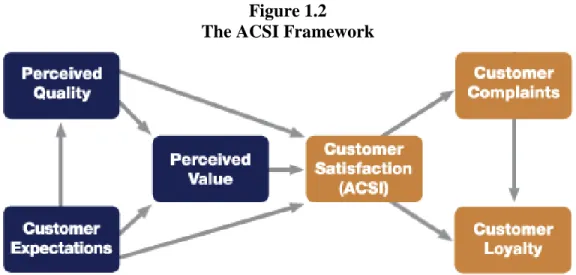
perceived value, and expectations (Fornell et al. 1996). (See Figure 1.2) Additional
information describing the ACSI model and methodology is included in Appendix A. Next, I
examine how this conceptualization compares to the framework presented in Figure 1.1.
Table 1.2 articulates the one-to-one correspondence of the focal framework presented in
Figure 1.1 to the ACSI framework.
Figure 1.2 The ACSI Framework
18 Table 1.2
Corresponding Constructs of the ACSI Framework and the Focal Framework
ACSI Framework Focal Framework
Expectations:
The customer’s anticipation of the quality of a company’s products or services.
Expectations:
The construct is the same as the ACSI’s.
Perceived Value:
The level of product or service quality experienced relative to price paid.
Outcome-to-Input Ratio:
The construct is the same as the ACSI’s Perceived Value construct.
Perceived Quality:
The customer’s evaluation via recent consumption experience of the quality of a company’s products or services. Quality is measured in terms of customization and reliability.
Disconfirmation of Expectations:
When actual outcomes as perceived by the customer diverge from expectations. Disconfirmation of expectations will be positive (negative) if perceived quality is better (worse) than expected.
- Affect:
Subjective feelings or emotions (positive or negative) that are elicited during the
consumption experience.
Customer Loyalty:
A combination of the customer’s professed likelihood of repurchasing from the same supplier and the likelihood to repurchase at various price points (indicating the degree of price tolerance).
Customer Loyalty:
The relationship between an individual’s attitude toward the product or service and their repeat patronage.
Included in Customer Loyalty construct Repeat Purchase:
A measure of observed purchase behavior.
Customer Complaints:
Instances of consumers formally voicing their dissatisfaction.
Customer Complaints:
The construct is the same as the ACSI’s.
- Word of Mouth:
19
Firstly, the construct of customer expectations in the focal framework is the same as
that in the ACSI framework, as predictive expectations are used, versus normative or
comparative, following the tradition of Szymanski and Henard (2001) and Fornell et al.
(1996). Secondly, the ACSI defines perceived value as the consumer’s perception of product
or service quality relative to the price paid. This ACSI construct mirrors the construct of the
outcome-to-input ratio. Perceived quality as operationalized by the ACSI is closely linked to
the disconfirmation of expectations in the focal framework. In the ACSI framework,
perceived quality is defined as the customer’s evaluation of the degree to which their needs
are met (performance), as measured against their expectations (http://www.theacsi.org/).
Thus, there will be positive disconfirmation of expectations/high perceived quality if actual
performance exceeds the consumer’s expectations in meeting their needs, and negative
disconfirmation of expectations/low perceived quality if performance fails to meet the
consumer’s needs, and thus falls short of expectations. The only antecedent from the focal
framework that is not included in the ACSI framework is affect. Though I find this omission
to be problematic, affect perhaps has the weakest influence on customer satisfaction among
the antecedents, as the outcome-to-input ratio and the disconfirmation of expectations have
the greatest impact (Szymanski and Henard 2001), and expectations explicitly factor into the
disconfirmation of expectations.
With respect to the consequences of customer satisfaction, the construct of customer
complaints is the same in the focal framework as in the ACSI framework. Both frameworks
include constructs of customer loyalty, but define them differently. The ACSI defines
customer loyalty as the likelihood of repurchase combined with the consumers’ likelihood of
20
separate construct since it is not always reflective of customer loyalty and may be influenced
by external factors. Finally, the ACSI framework omits the consequence of word of mouth,
which is included in the focal framework. Word of mouth perhaps has a greater role now
more than ever, thanks in part to social networking and online platforms.
Despite these differences, the many strengths of the ACSI outweigh the minor
shortfalls related to its alignment with the focal framework. With respect to the following
essays, the major benefits of the ACSI are that it is composed of longitudinal data that are
robust across time and industries, and it has a great deal of nomological validity, given that it
has been widely studied in academic literature. Another benefit of using the ACSI within the
following essays is that these essays may then contribute to and build upon the current wealth
of customer satisfaction literature that uses the ACSI.
1.3 Dissertation Structure and Preview
This dissertation is divided into three essays. The first essay investigates the impact
of advertising on customer satisfaction and the subsequent effect on firm value. In this essay,
I hope to provide insight into the advertising—market value relationship by introducing
customer satisfaction as an intervening perceptual measure. The second essay measures
loyalty capability in a consumer packaged goods (CPG) setting and explores some of the
reasons why a firm’s ability to convert marketing resources into loyalty may differ across
firms and over time. Additionally, this study examines the impact of loyalty capability on
firm performance. Finally, the third essay examines customer satisfaction in an international
setting to address the extent to which market familiarity and experience compensate for
21 1.3.1 Essay I
The objectives of Essay I include the following:
1. To introduce customer satisfaction as an intervening perceptual measure between
advertising and market value.
2. To identify, describe, and explain the effects of advertising effort on customer
satisfaction.
3. To identify, describe, and explain the impact on market value of over- and
underadvertising (effectiveness) and advertising efficiency with respect to
customer satisfaction.
a. To examine whether these relationships differ for products versus services.
Companies spend significant resources on advertising. Hence it is not surprising that
effectiveness of advertising has been a frequently researched topic. Traditionally, marketers
have relied on sales performance metrics, but this does not reflect the full story. Arguably
the “ultimate” way to demonstrate the added value of advertising is to show that it has a
positive effect on firm value. To better understand the advertising—market value
relationship, customer satisfaction is introduced as an intervening perceptual measure. This
study then examines the impact on market value of over- and underadvertising
(effectiveness) and advertising efficiency with respect to customer satisfaction.
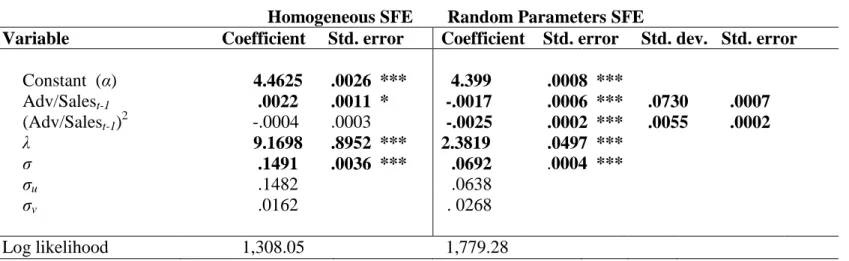
In a first step, a random parameters stochastic frontier estimation is used to estimate
the curvilinear relationship between advertising and customer satisfaction for over 100 U.S.
firms operating in different consumer goods, services, and retail markets from 1994 to 2008.
In a second step, I explore how advertising effectiveness, advertising efficiency, and
22
whether the differences between products and services translate to more or less pronounced
effects of advertising efficiency and over/underadvertising on firm value.
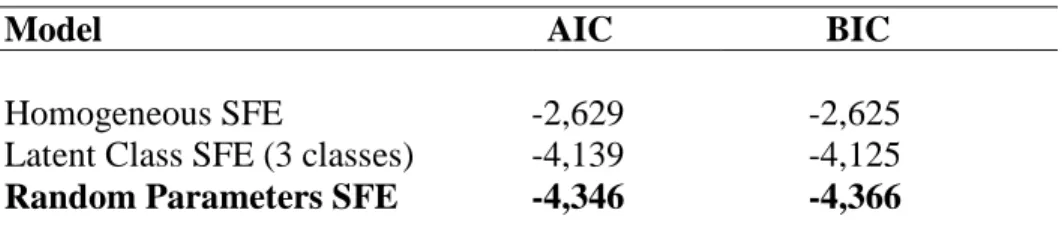
As a validation check, the results from the random parameters stochastic frontier
model used in step 1 are then compared to a latent class stochastic frontier model as well as a
homogeneous model. This is done to determine if it is necessary to make accommodations
for heterogeneity, and if so, if there is a superior approach for modeling the data. Using the
latent class stochastic frontier method, I determine the number of latent classes that provides
the best model fit. Then, the fit of the three respective models is assessed to establish which
one has the best fit.
Finally, this essay’s contributions to the advertising—market value debate are
presented, and the managerial implications of the findings are discussed.
1.3.2 Essay II
Essay II builds on the concepts established in Essay I that relate to the effect on firm
value of enhancing consumer attitudes, and the importance of accounting for the efficiency
with which consumer attitudes are enhanced. This essay explores loyalty capability in the
context of the CPG industry.
The objectives of Essay II are:
1. To construct a measure of loyalty capability.
2. To identify, describe, and explain some of the reasons why capabilities differ
across firms and over time. More specifically, I examine the effects on loyalty
capability of advertising allocations, innovation type, category characteristics, and
23
3. To examine the impact of loyalty capability on firm performance.
This article begins by discussing the role of firm capabilities as a source of
competitive advantage. Capabilities measure the firm’s ability to efficiently combine and
deploy its resources to attain a certain objective (Amit and Schoemaker 1993; Dutta et al.
1999). They are of great importance to the firm as they may explain significant variations in
firms’ performance (Dutta et al. 1999; Vorhies and Morgan 2005).
The construct of loyalty capability reflects a firm’s use of its skills and tacit
knowledge to competently deploy its marketing resources in order to generate and facilitate
customer loyalty. Firms with superior loyalty capability enjoy competitive advantages
associated with establishing strong customer relationships and strengthening a customer’s
attitude toward the brand. Using the resource-based-view, conclusions may be drawn
regarding the resources and activities that contribute to a firm’s capabilities. This article
presents a number of hypotheses addressing the potential effects of a firm’s strategic
allocations and diversification of resources on loyalty capability. More specially, I examine
the impact of innovations, advertising media allocations, category characteristics, and
portfolio strategy on loyalty capability. I also analyze the extent to which firm scale
moderates the relationship between loyalty capability and innovations, media allocations, and
firm scope.
Essay II continues with an analysis of the impact of loyalty capability on firm
performance. I then discuss the results of these analyses, the managerial implications for
24 1.3.3 Essay III
Essay III examines customer satisfaction within a global context and has the
following primary objectives:
1. To explore the effects of psychic distance between the home and host countries
on customer satisfaction.
2. To identify, describe, and explain the extent to which market familiarity and
experience compensates for psychic distance between the firm’s home country
and the host country.
3. To examine the extent to which variation in cultural and economic distance
between the firm’s home and host countries may affect customer satisfaction, and
subsequently, how the effect may be moderated by firm experience.
Using customer satisfaction scores across 22 countries representing 151 firms, this
study analyzes the extent to which cultural and economic distances between the home and
host countries negatively affect customer satisfaction, and whether those effects are
moderated by a firm’s experience in the market. Not only are the absolute distances between
the home countries and host countries of interest, but I also hypothesize that unstable
conditions, or volatility in the differences between the home and host countries, will result in
further risk to the firm. However, this risk may also be moderated by a firm’s experience in
the market. Finally, this study accounts for a number of country-specific cultural and
socioeconomic control variables that may systematically affect a firm’s ability to provide
value to consumers. Using multilevel modeling, the hypotheses are tested using customer
satisfaction evaluations that come from business-to-consumer firms covering a wide range of
25
and country-level effects.
The essay concludes with a discussion of the results and the implications for
managers that are responsible for expansion into international markets. Based on the
findings, conclusions may be drawn with respect to which markets managers may be advised
to enter, and how they may equip their firm for success. This essay then presents the
limitations and opportunities for future research using international customer satisfaction
26 References
The American Customer Satisfaction Index (accessed May 11, 2009), [available at
http://www.theacsi.org/].
Amit, Raphael and Paul J.H. Schoemaker (1993), “Strategic Assets and Organizational Rents,” Strategic Management Journal, 14 (1), 33-46.
Anderson, Rolph E. (1973), “Consumer Dissatisfaction: The Effects of Disconfirmed Expectancy on Perceived Product Performance,” Journal of Marketing Research, 10 (February), 38-44.
Bolton, Ruth N. and Katherine N. Lemon (1999), “A Dynamic Model of Customers’ Usage of Services: Usage as an Antecedent and Consequence of Customer Satisfaction,” Journal
of Marketing Research, 36 (May), 171-86.
Chandrashekaran, Murali, Kristin Rotte, Stephen S. Tax, and Rajdeep Grewal (2007), “Satisfaction Strength and Customer Loyalty,” Journal of Marketing Research, 44 (February), 153-63.
Chevalier, Judith A. and Dina Mayzlin (2006), “The Effect of Word of Mouth on Sales: Online Book Reviews,” Journal of Marketing Research, 43 (August), 345-54.
Churchill, Jr., Gilbert A. and Carol Surprenant (1982), “An Investigation into the
Determinants of Customer Satisfaction,” Journal of Marketing Research, 19 (November), 491-504.
Day, Ralph L. (1984), “Modeling Choices Among Alternative Responses to Dissatisfaction,” Advances in Consumer Research, Vol. 11, Thomas C. Kinnear, ed. Ann Arbor, MI: Association for Consumer Research, 496-500.
Derbaix, Christian and Michael T. Pham (1991), “Affective Reactions to Consumption Situations: A Pilot Investigation,” Journal of Economic Psychology, 12 (June), 325-55.
Dick, Alan S. and Kunal Basu (1994), “Customer Loyalty: Toward an Integrated Conceptual Framework,” Journal of the Academy of Marketing Science, 22, 99-113.
Dutta, Shantanu, Om Narasimhan, and Surendtra Rajiv (1999), “Success in High-Technology Markets: Is Marketing Capability Critical?” Marketing Science, 18, 547-68.
27
Helgesen, Oyvind (2006), “Are Loyal Customers Profitable? Customer Satisfaction,
Customer (Action) Loyalty and Customer Profitability at the Individual Level,” Journal of
Marketing Management, 22 (April), 245-66.
Homburg, Christian, Nicole Koschate, and Wayne D. Hoyer (2005), “Do Satisfied Customers Really Pay More? A Study of the Relationship Between Customer Satisfaction and
Willingness to Pay,” Journal of Marketing, 69 (April), 84-96.
Homburg, Christian, Nicole Koschate, and Wayne D. Hoyer (2006), “The Role of Cognition and Affect in the Formation of Customer Satisfaction: A Dynamic Perspective,” Journal
of Marketing, 70 (July), 21-31.
Hoyer, W. and D. MacInnis (2004), Consumer Behavior. Boston, MA: Houghton Mifflin.
Johanson, Jan and Jan-Erik Vahlne (1977), “The Internationalization Process of the Firm—A Model of Knowledge Development and Increasing Foreign Market Commitments,” Journal of International Business Studies, 8 (Spring), 23-32.
Johnson, Mark S., Ellen Garbarino, and Eugene Sivadas (2006), “Influences of Customer Differences of Loyalty, Perceived Risk and Category Experience on Customer
Satisfaction,” International Journal of Market Research, 48 (5), 601-22.
Luo, Xueming and C.B. Bhattacharya (2006), “Corporate Social Responsibility, Customer Satisfaction, and Market Value,” Journal of Marketing, 70 (October), 1-18.
Luo, Xueming and Christian Homburg (2007), “Neglected Outcomes of Customer Satisfaction,” Journal of Marketing, 71 (April), 133-49.
MacInnis, Deborah J. and Gustavo E. de Mello (2005), “The Concept of Hope and its Relevance to Product Evaluation and Choice,” Journal of Marketing, 69 (January), 1-14.
de Matos, Celso Augusto and Carlos Alberto Vargas Rossi (2008), “Word-of-Mouth Communications in Marketing: a Meta-Analytic View of the Antecedents and Moderators,” Journal of the Academy of Marketing Science, 36 (4), 578-96.
Mittal, Vikas and Wagner A. Kamakura (2001), “Satisfaction, Repurchase Intent, and Repurchase Behavior: Investigating the Moderating Effect of Customer Characteristics,” Journal of Marketing Research, 38 (February), 131-42.
Nyer, Prasanth (1999), “Cathartic Complaining as a Means of Reducing Consumer Dissatisfaction,” Journal of Consumer Satisfaction, Dissatisfaction, and Complaining
Behavior, 12, 15-25.
28
Oliver, Richard L. (1981), “Measurement and Evaluation of Satisfaction Processes in Retail Setting,” Journal of Retailing, 57 (Fall), 25-48.
Oliver, Richard L. (1997), Satisfaction: A Behavioral Perspective on the Consumer. New York: McGraw-Hill.
Oliver, Richard L. (1999), “Whence Consumer Loyalty?” Journal of Marketing, 63 (Special Issue), 33-44.
Oliver, Richard L. and John E. Swan (1989a), “Consumer Perceptions of Interpersonal Equity and Satisfaction in Transactions: A Field Survey Approach,” Journal of
Marketing, 53 (April), 21-35.
Oliver, Richard L. and John E. Swan (1989b), “Equity and Disconfirmation Perceptions as Influences on Merchant and Product Satisfaction,” Journal of Consumer Research, 16 (December), 372-83.
Olsen, Svein Ottar (2002), “Comparative Evaluation and the Relationship between Quality, Satisfaction, and Repurchase Loyalty,” Journal of the Academy of Marketing Science, 30 (3), 240-49.
Olshavsky, Richard W. and John A. Miller (1972), “Consumer Expectations, Product Performance, and Perceived Product Quality,” Journal of Marketing Research, 9 (February), 19-21.
Orsingher, Chiara, Sara Valentini, and Matteo de Angelis (2010), “A Meta-Analysis of Satisfaction with Complaint Handling in Service,” Journal of the Academy of Marketing
Science, 38, 169-86.
Parasuraman, A., Valarie A. Zeithaml, and Leonard L. Berry (1988), “SERVQUAL: A Multiple-Item Scale for Measuring Consumer Perceptions of Service Quality,” Journal of
Retailing, 64 (Spring), 12-40.
Prakash, Ved and John W. Lounsbury (1984), “The Role of Expectations in the
Determination of Customer Satisfaction,” Journal of the Academy of Marketing Science, 12 (3), 1-17.
Richins, Marsha L. (1983), “Negative Word of Mouth by Dissatisfied Consumers: A Pilot Study,” Journal of Marketing, (January), 68-78.
29
Rust, Roland T., Jeffrey Inman, Jianmin Jia, and Anthony Zahorik (1999), “What You Don’t Know about Customer-Perceived Quality: The Role of Customer Expectation
Distributions,” Marketing Science, 18, 70-92.
Rust, Roland and Richard L. Oliver (2000), “Should We Delight the Customer?” Journal of
the Academy of Marketing Science, 28, 86-94.
Szymanski, David M. and David H. Henard (2001), “Customer Satisfaction: A Meta- Analysis of the Empirical Evidence,” Journal of the Academy of Marketing Science, 29, 16-35.
Tse, David K. and Peter C. Wilton (1988), “Models of Consumer Satisfaction Formation: An Extension,” Journal of Marketing Research, 25 (May), 204-12.
Vorhies Douglas W. and Neil A. Morgan (2005), “Benchmarking Marketing Capabilities for Sustainable Competitive Advantage,” Journal of Marketing, 69 (1), 80-94.
Westbrook, Robert A. (1980), “Intrapersonal Affective Influences on Consumer Satisfaction with Products,” Journal of Consumer Research, 7 (June), 49-54.
Westbrook, Robert A. (1987), “Product/Consumption-Based Affective Responses and Postpurchase Processes,” Journal of Marketing Research, 24 (August), 258-70.
Westbrook, Robert A. and Richard L. Oliver (1991), “The Dimensionality of Consumption Emotion Patterns and Consumer Satisfaction,” Journal of Consumer Research, 18 (June), 84-91.
CHAPTER II -- ESSAY I: THE IMPACT OF ADVERTISING ON CUSTOMER SATISFACTION AND THE EFFECT ON FIRM VALUE
2.1 Introduction
Advertising is a key marketing instrument. In the U.S. alone, advertising expense
exceeds $150 billion annually (Sonne 2010). Despite the size of this investment, business
decisions related to marketing and advertising are currently made with less information than
decisions made with much lower financial consequence. As a Procter & Gamble CMO once
said, “Marketing is a $450 billion industry, and we are making decisions with less data and
discipline than we apply to $100,000 decisions in other aspects of our business” (Farris et al.
2006, p. XV). Traditionally, marketers have relied on consumer attitudes or sales
performance metrics to measure advertising response (Joshi and Hanssens 2010), but this
does not reflect the full story, nor does it satisfy top management’s growing need for
accountability and justification of advertising expenses (Srinivasan et al. 2009). Arguably
the “ultimate” way to demonstrate the added value of advertising is to show that it has a
positive effect on firm value.
There is conflicting evidence on whether advertising has a positive impact on market
value. Studying PC manufacturers and the sporting goods industry, Joshi and Hanssens
(2010) find that advertising indeed has a positive effect on market value. In a broader study,
however, Wang et al. (2009) find that in 10 out of 32 industries, advertising has a significant
31
tended to be service providers, including eating places and retail establishments. Still, if
advertising increases sales and generates goodwill, then why doesn’t advertising always
translate to increases in firm value? Wang et al. (2009) speculate that one factor might be
overadvertising, and research indicates that many firms indeed greatly overadvertise (Aaker
and Carman 1982; Prasad and Sen 1999). This overadvertising thesis is compatible with
behavioral research which suggests that if consumers view advertising as excessive, it will
have a negative impact on their attitudes toward the brand (Kirmani and Wright 1989).
Moreover, not only may firms be ineffective, they may also be inefficient. Luo and Donthu
(2005) establish that even among top marketers, a great deal of advertising inefficiency
exists. They found that about 20% of advertising spending among firms in their study was in
vain due to inefficiency, resulting in missed opportunities as well as wasted resources.
Ignoring this inefficiency may further bias the impact of advertising effort.
To gain a better understanding of the advertising—market value relationship, I
introduce customer satisfaction as an intervening perceptual measure, study the role of
advertising effectiveness (i.e. extent of over- and underadvertising with respect to customer
satisfaction) and efficiency in this process, and contrast the relationship for product firms
versus service firms. I elaborate on each of these contributions in detail.
First, to better understand the role that over-/underadvertising plays in the
advertising—market value relationship, attitudinal measures must be considered. Buyer
behavior is largely determined by how the customer processes information to form concepts
and make judgments (Howard and Sheth 1969). Indeed, tracking how a firm’s marketing
expenditures influence customers’ attitudes and subsequent behavior can help in evaluating
32
As such, Gupta and Zeithaml (2006) and the Marketing Science Institute (2006) call for
research that complements observed measures with attitudinal constructs.
Customer satisfaction is regarded as one of the ultimate attitudinal constructs
(Morgan and Rego 2006; Gupta and Zeithaml 2006) whose antecedents are related to
advertising (Boulding et al. 1993; Mehta et al. 2008) and whose consequences feed into
market value (Fornell et al. 2006; Anderson et al. 2004). Still, no one has explored the extent
of explanatory power and insight that incorporating customer satisfaction into the
advertising—market value relationship can provide.
Second, in this paper, I evaluate the impact of advertising effort on firm value while
controlling for the impact of advertising effectiveness and efficiency with respect to customer
satisfaction. Within this study, effectiveness is defined as the ability of the advertising input
to generate the maximum possible customer satisfaction (e.g., Naik and Raman 2003).
Efficiency refers to maximizing output relative to inputs used (Luo and Donthu 2006). In
this context, advertising efficiency measures a firm’s conversion of advertising into customer
satisfaction relative to the level of advertising inputs used.
Third, I explore whether the industry in which the firm operates plays a role. As
observed in previous work, the relationship between advertising and market value tends to
differ between industries (Wang et al. 2009) and across different types of purchase situations
(Hoch and Deighton 1989; Mehta et al. 2008). There are fundamental differences between
consumer product offerings and service offerings which define the manner in which
consumers search for and evaluate their purchases, making some consumption experiences
33
products and services translate to more or less pronounced effects of over-/underadvertising
and efficiency on firm value.
To explore the relationship between advertising and customer satisfaction and derive
insights into advertising effectiveness and advertising efficiency with respect to optimizing
customer satisfaction, I use data on 101 U.S. firms from 1994 until 2008. More specifically,
the analysis first relates advertising to customer satisfaction in a curvilinear way using a
random parameters stochastic frontier analysis. The curvilinear relationship makes it
possible to capture the extent to which firms are over- or underadvertising. The stochastic
frontier approach enables the measurement of efficiency for each individual firm. By using a
random parameters approach, I allow for the inherent heterogeneity in the market among
firms that span various industries. Subsequently, these results are used to obtain
firm-specific measures of advertising effectiveness and efficiency. In a second step, I relate
advertising effectiveness and advertising efficiency with respect to customer satisfaction to
market value. For ease of exposition, in the remainder of this paper, any reference to over- or
underadvertising will refer to over- or underadvertising with respect to optimizing customer
satisfaction. Likewise, advertising effectiveness and advertising efficiency will also be with
respect to customer satisfaction.
2.2 Conceptual Framework
Managers invest in both advertising and customer satisfaction with the goal of
enhancing firm value, but these efforts are frequently independent of one another. This study
takes a holistic approach, as it examines how advertising and customer satisfaction may be
34
consumption experience and how firm value is ultimately affected. Figure 2.1 depicts the
conceptual model for this study and traces the process by which advertising creates value for
the firm that can be measured in financial terms. In the first stage, the firm engages in
marketing activity, which is in the form of advertising. In the second stage, advertising
affects what the consumer thinks and feels about the brand, which is measured using the
ACSI. Customer satisfaction then influences present behavior and predicts future customer
35 Figure 2.1
Advertising Value Chain
What companies do
Advertising
What customers think & feel about a brand
Customer satisfaction
Financial market impact
Firm Value
36
I first reflect on the benefits of including an attitudinal construct in the advertising—
firm value relationship. Then, I discuss why satisfaction is a relevant and informative
intervening construct. The ideal characteristics of a linking construct require that the
antecedents are shaped by advertising and the consequences anticipate future financial
performance. Next, this essay presents the theoretical and empirical support for how
advertising affects customer satisfaction. Finally, this essay shows how the outcomes of
customer satisfaction contribute to market value. A number of hypotheses are presented that
address the relationship between advertising and customer satisfaction and the ultimate
impact on firm value.
2.3 Customer Satisfaction
Keller and Lehmann (2003, p. 27) propose that “the value of a brand ultimately
resides with customers.” Thus, it is essential to model customer attitudes when attempting to
analyze, and more importantly, understand, the impact of a marketing action on firm value.
Attitudes are “sticky” measures and are indicative of future firm performance. They become
“more ‘top of mind’ or accessible, persistent, resistant to change, and likely to guide
intentions and subsequent behavior,” as the consumer gains more and more experience with
the brand (Johnson et al. 2006, p. 123).
Why is customer satisfaction, rather than other attitudinal measures, used to help
explain the advertising—market value relationship? First, a definition of customer
satisfaction is provided, and then I discuss its intermediate role in the advertising—market
value relationship.
Customer satisfaction is “the consumer’s response to the evaluation of the perceived