CULTIVATING EFFECTIVENESS:
LEADERSHIP AND PARTICIPATION IN LOCAL, VOLUNTARY GROUPS
Sarah Morris Cote
A dissertation submitted to the faculty of the University of North Carolina at Chapel Hill in partial fulfillment of the requirements for the degree of Doctor of Philosophy in the
Department of Sociology
Chapel Hill 2017
Kenneth Andrews
Howard Aldrich
Neal Caren
Bob Edwards
ABSTRACT
Sarah Morris Cote: Cultivating Effectiveness: Leadership and Participation in Local, Voluntary Groups
(Under the direction of Kenneth Andrews)
Why are some local, voluntary groups more effective than others at achieving the goals
for which they were founded? The majority of research on the effectiveness of organizations in
the voluntary sector has studied large, incorporated, nonprofit organizations that operate at
the regional or national level or with local chapters tied to a national organization. Thus,
knowledge of the non-federated, small, local voluntary groups that undergird civil society in
towns and cities across the country is extremely limited. I add to this limited research base by
studying a particularly vibrant form of local, voluntary group – community gardens – in
Greenridge, a mid-sized, Southeastern city. Drawing on data from over 100 in-depth interviews,
content analysis of group documents, and group site visits, I examined how different forms of
group capacity relate to group goal attainment, specifically material resources, internal group
structure, sociopolitical legitimacy, and participation.
Analyses revealed that, although theorized to boost organizational effectiveness,
sociopolitical legitimacy and material resources did not account for differential group goal
attainment due to the institutionally supportive and resource-rich environment for community
garden groups in Greenridge at the time of the study. Through an examination of the broader
environments that challenge the assumption of competitiveness underlying much of the work
in social movements and organizational sociology. Moreover, I show that only when a local,
voluntary group has a leader with the knowledge and skill to mobilize a participant base to
capitalize on favorable conditions does a resource-rich environment contribute to the likelihood
of group goal attainment. In doing so, I support recent work that brings leadership and leader
development to the forefront of analysis in social movements and the study of civic
To the village who helped me get here – you know who you are.
To all of those individuals who welcomed me into their lives as they shared their stories of struggle and success in pursuit of a healthy garden and a vibrant community.
TABLE OF CONTENTS
LIST OF TABLES ... ix
LIST OF FIGURES ... x
CHAPTER 1: INTRODUCTION ... 1
Local, Voluntary Groups and Conceptualizing Effectiveness as Goal Attainment ... 5
Local, Voluntary Groups ... 5
Goal Attainment as Effectiveness in Local, Voluntary Groups ... 7
Case Study: Community Gardens in Greenridge ... 8
A Snapshot of Greenridge ... 12
Study Design ... 14
Case Selection ... 14
Data Collection Methods ... 17
Interviews with Key Informants ... 18
Site Visits ... 19
Content Analysis ... 20
Analysis ... 20
Outline of Dissertation ... 22
CHAPTER 2: GOAL ATTAINMENT IN LOCAL, VOLUNTARY GROUPS ... 25
Defining and Assessing Goal Attainment ... 27
Explaining Differential Goal Attainment ... 35
Resources ... 40
Internal Group Structure... 41
Sociopolitical Legitimacy ... 42
Participation ... 43
Findings ... 45
Resources ... 45
Internal Group Structure... 46
Sociopolitical Legitimacy ... 47
Participation ... 48
Discussion and Conclusion ... 57
CHAPTER 3: ON LEVEL GROUND ... 60
The National Legitimation of Community Gardens ... 63
Governmental Institutions ... 66
Scientific Community ... 67
Media ... 69
Local Foundations ... 70
Vision for a Healthy Greenridge... 71
Changing Demographics ... 73
The Legitimation of Community Gardens in Greenridge ... 75
Population-Level Sociopolitical and Resource Mobilization ... 82
Discussion and Conclusion ... 86
CHAPTER 4: “THE CRAFT OF GETTING COMMITMENTS” ... 90
What Does a Garden Look Like with Active Versus Inactive Participants? ... 95
A Garden with Inactive Participants ... 97
The Pathway to Building Active Participation ... 100
Engaging in Continuous, Active Recruitment ... 102
Rapport among the Target Participant Base ... 108
A Lack of Localized Cultural Capital ... 109
Symbolic Capital ... 114
Ensuring Participation is Worthwhile ... 120
Collective Identity and Sustained Participation ... 128
Building Collective Identity at St. Eugene’s ... 128
Building Collective Identity at Laurel Road Elementary ... 131
Alternative Explanations for Group Participants ... 134
Summary and Conclusion ... 136
CHAPTER 5: CONCLUSION ... 141
Contributions to Scholarship and Practice ... 143
Implications for Practitioners ... 147
Limitations and Directions for Future Research ... 149
APPENDIX A: METHODOLOGICAL APPENDIX ... 153
APPENDIX B: COMMUNITY GARDEN GROUP PROFILES ... 169
APPENDIX C: DETAILS ON ANALYSIS OF GARDEN GROUP INTERNAL CAPACITY IN COMPARISON TO OVERALL GOAL ATTAINMENT ... 187
APPENDIX D: INTERVIEW AND SITE VISIT GUIDES ... 201
LIST OF TABLES
Table 1.1: Selected Cases ... 17
Table 1.2: Number of Interviewees, by Type ... 18
Table 2.1: Official Goals of Community Garden Groups in Greenridge ... 28
Table 2.2: Goal Attainment of Community Garden Groups ... 31
Table 2.3: Operationalization of Types of Internal Group Capacity ... 47
Table 2.4: Degree to which Garden Groups had Internal Group Capacity in Comparison to Overall Goal Attainment ... 50
Table 3.1: Samples of the Incorporation of Community Gardens into Greenridge Neighborhood and Community Plans ... 78
Table A.1: GrowDirt’s Garden Type Descriptions ... 155
Table A.2: Respondent Types Obtained for Each Community Garden Group ... 159
Table A.3: Characteristics of Interviewees ... 160
Table A.4: Respondent Types, by Race and Gender ... 161
LIST OF FIGURES
Figure 1.1: USDA Poster Promoting Victory Gardens. 1917. ... 9
Figure 2.1: Photos Illustrating Community Garden Maintenance. ... 32
Figure 2.2: Photos of an Ineffective Community Garden, the Sturgis
Neighborhood Garden. ... 34
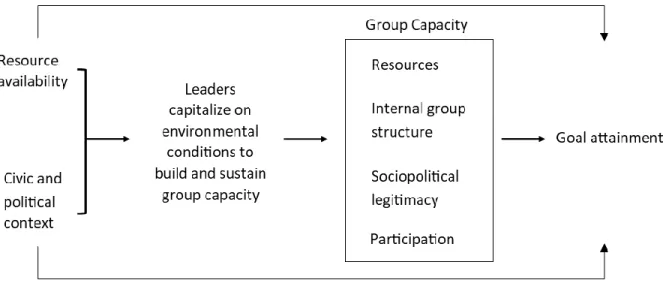
Figure 2.3: Initial Proposed Model of Effectiveness in Local, Voluntary Groups. ... 40
Figure 2.4: The Write-Up Advertising the Nourish Community Garden in the
Guide to the 2012 Greenridge Urban Farm Tour. ... 53
Figure 2.5: The Reverend Jesse Jackson spoke at the dedication ceremony of
the Sturgis Neighborhood Garden in the spring of 2011. ... 54
Figure 2.6: The Livingston Community Garden Committee puts together an occasional
newsletter with gardening tips and recipes for all of the garden’s participants. ... 56 Figure 2.7: The garden maintained by the group at Lightyear Technologies
showed clear signs of neglect in the summer of 2015. ... 57
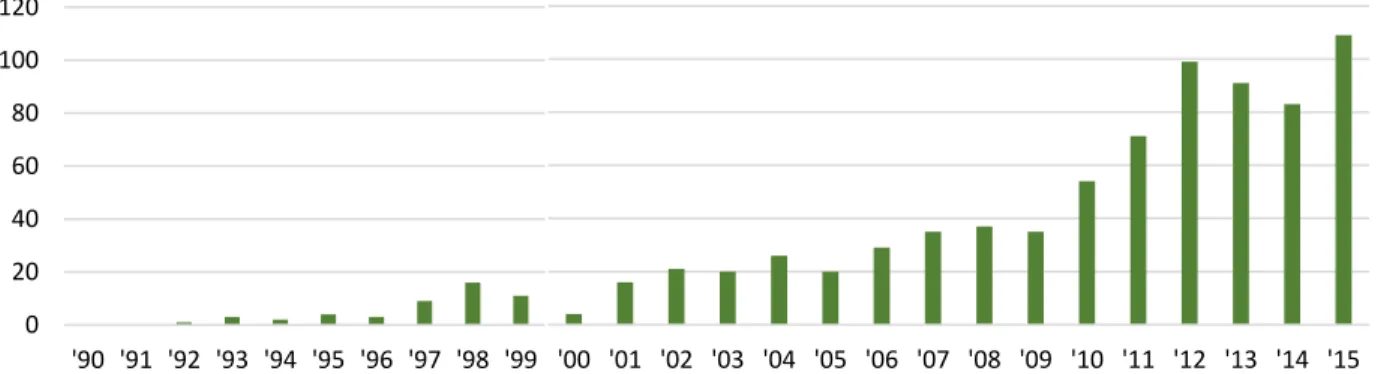
Figure 3.1. Number of Peer-Reviewed Scholarly Journal Articles Mentioning
“Community Garden,” Based on a Search of ProQuest Central’s Multidisciplinary
Research Database, by Year. ... 68
Figure 3.2. Number of Newspaper Articles Mentioning “Community Garden,”
Based on a Search of the Archives of the 587 U.S. Newspapers Housed within
ProQuest’s U.S. Newsstream Database, by Year. ... 69 Figure 4.1: Pathway to Building Active Participation. ... 102
Figure 4.2: Four of the six volunteers who helped Claude till and prepare the
St. Eugene’s Community Garden for fall planting. ... 117
Figure 4.3: An invitation to the St. Eugene’s Community Garden Group 2017
“Fall Fellowship Feast.” ... 130
Figure 4.4: Laurel Road Elementary School Green Thumb Club logo: “Laurel Road is Living Healthy…RecYcling…Taking care of our community…Helping our
CHAPTER 1: INTRODUCTION
You know, the garden…just died. Don’t know why…I rode down there [to the garden], and it's just grass…I can't answer why this [the garden being neglected] is taking place again. Because [at]…the initial start, it's the greatest thing since sliced bread. And it is. It's a great thing. But…I'm stumped. I wish I knew, but it's, uh, I really fear that this is it for us [the Oakridge Community] and the community garden world.
Tom Director of the Oakridge Community Parks and Recreation Department
At 8:00 am on the morning of July 15, 2015, I sat under fluorescent lights in the
wood-paneled office of Tom, the director of the Oakridge Community Parks and Recreation
Department. I was there to talk with him about his impressions of the Oakridge Community
Garden Group, which was founded three years before in 2012. At the time of my visit, the
Oakridge Community Garden was covered in grass and weeds and looked like, in the words of
Tom, “a damn jungle.” Tom was more than happy to spend an hour sharing his frustration over
the continual failure of the voluntary group that oversaw the garden to regularly maintain it,
the produce of which went to a local food bank. However, he was “stumped” as to why it kept
happening year after year.
At the heart of this dissertation is a simple question: why do some local, voluntary
groups, like the Oakridge Community Garden Group, struggle to meet their goals while other
groups flourish? The majority of research on the effectiveness of organizations in the voluntary
regional or national level or with local chapters tied to a national organization (Andrews et al.
2010; Edwards and McCarthy 2004b; Smith 1997b). Examples include the Sierra Club, the Red
Cross, Mothers Against Drunk Driving, the Boys and Girls Club of America, and the United Way.
Our knowledge of the non-federated, small, local, voluntary groups that undergird civil society
in towns and cities across the country is extremely limited (Smith 1997b, 2000). These are the
community gardens and neighborhood associations, the volunteer orchestras and citizens’
groups, the community watch groups and local arts councils that are formed by individuals to
make a difference or institute change in their communities.1
The voluntary organization of individuals into groups and associations to accomplish
socially-oriented goals has been a hallmark of United States democracy for generations,
famously observed by Alexis de Tocqueville almost 200 years ago (Tocqueville [1835–40] 1969).
Today, longtime nonprofit scholar David H. Smith argues that despite the focus on the “bright
or most visible” paid-staff nonprofit organizations, voluntary groups still comprise the majority
of the nonprofit sector and carry out the bulk of its work (Smith 1997b, 2000). As such, scholars
should have a greater understanding than we currently do of what makes the efforts of these
groups successful.
1 Scholars have correctly identified that there can be a “dark side” to voluntarism and civic engagement (Fiorina
1999). The building of social capital is the mechanism that is often put forth to explain the benefits to democracy of voluntarily organizing into groups and associations. However, in the words of van Deth and Zmerli (2010:633), the benefits of social capital also apply to “any organization or social network, regardless of its criminal or
In pursuit of this understanding, I spent two years studying community gardens, a
particularly vibrant form of local, voluntary group with a long history of being utilized by
communities to address a myriad of social problems. Within the context of Greenridge, a
mid-sized, Southeastern city2, I identified community garden groups that were more and less
effective. Through content analysis, site visits, and dozens of interviews with gardeners and
community leaders, I worked to uncover why some were better able to meet their goals than
others.
I borrowed from both deductive and inductive research approaches to design this study.
While I left room in the research design to allow for the discovery of unexpected answers to my
question, I started my initial investigation with the belief that it was the organizational capacity
of these groups, their ability to respond to and capitalize on conditions in the organizational
environment, that would determine goal achievement. Drawing on literature from
organizational sociology, social movements, and the study of nonprofit organizations, I
conceptualized organizational capacity as a multidimensional construct (Andrews et al. 2010;
Doherty, Misener, and Cuskelly 2014) and identified resources (Cress and Snow 2000; McCarthy
and Zald 1973, 1977), internal group structure (Bloemraad and Gleeson 2012; Cress 1997;
Minkoff 1993; Staggenborg 1988), sociopolitical legitimacy (Baum and Oliver 1992; DiMaggio
and Powell 1983; Edwards and Marullo 1995; Walker and McCarthy 2010), and participation
(Andrews et al. 2010; Han 2014; Knoke and Prensky 1984; Smith 2000) as the four types of
2 Throughout the dissertation, I use pseudonyms in place of the proper names of all individuals, places, and
capacity that should matter most to the ability of community garden groups to accomplish their
goals.
I conducted a systematic comparison of the existence and degree to which each of these
types of capacity were present in community garden groups, expecting to find patterns in how
different types of capacity were linked to one another among more and less effective groups.
For example, as suggested by the literature in organizational sociology, perhaps groups that had
more sociopolitical legitimacy also would have more resources (Aldrich and Auster 1986;
Pfeffer and Salancik 1978), and this combination would be present most clearly in groups that
were achieving their goals versus groups that were struggling to sustain themselves.
However, instead of clear patterns in how different types of capacity hung together in
relation to group goal attainment, what I uncovered through this comparison was a puzzle.
Success in mobilizing participation was the only element of capacity that consistently separated
groups that were more and less effective in achieving their goals, and despite an overwhelming
amount of past research arguing the contrary, resource mobilization and sociopolitical
legitimacy did not seem to matter at all. Unraveling this puzzle became the focus of my
research. I sought to understand why resources and legitimacy did not distinguish between
groups that were and were not able to achieve their goals, and how leaders played a central
role in the mobilization of participation.
Overall, this dissertation is a step towards exploring the degree to which extant theories
in organizational sociology, social movements, and nonprofit studies have relevance in
understanding the factors that contribute to the ability of local, voluntary groups to achieve
which I am referring when I use the term “local, voluntary group,” followed by a brief discussion
of why I studied goal attainment as a measure of group effectiveness. I then describe the case I
used to answer my research question and provide a summary of the study design and nature of
the data I collected, details of which can be found in Appendices A and B. I conclude by
previewing the main themes and findings of the remaining chapters.
LOCAL, VOLUNTARY GROUPS AND CONCEPTUALIZING EFFECTIVENESS AS GOAL ATTAINMENT Local, Voluntary Groups
There has been significant work to categorize and conceptualize the variety of
organizations, associations, and groups that make up the nonprofit sector. Researchers have
studied interest groups, advocacy organizations, and civic associations (Andrews et al. 2010;
Andrews and Edwards 2004; Han 2014; Knoke 1986; O’Neill 1989; Walker 1991);
community-based organizations (CBOs), community development corporations (CDCs), community
organizing groups, and social change organizations (Kunreuther 2011; Levine 2016; Marwell
2004, 2007; Walker and McCarthy 2010); and social movement organizations and groups
(Andrews and Edwards 2005; Edwards 1994; Jenkins 1987; Staggenborg 1988; Zald and
McCarthy 1987). Given the lack of standardized terminology and the overlapping nature of
many of the above designations, it is worth clarifying my use of the term “local, voluntary
group.”
In this study, “local, voluntary group” refers to locally-based, non-federated, organized
collectives for social change for which the majority of work is done by members or participants
who are not financially compensated for their efforts and/or do not derive their livelihood from
geographically-bounded area no larger than a county but perhaps as small as a neighborhood
or city block. By non-federated, I refer to groups that are autonomous, not a chapter,
extension, or sub-unit of a larger organization located outside of the group’s target geographic
area. By social change, I mean that the group was started to address a specific problem(s) or
implement a specific shift in thinking, culture, or practice in the target community.
In sum, I am interested in what Smith (1997b) calls the “dark matter” of the nonprofit
universe3, those voluntary groups that make up the backbone of day-to-day civic society, many
of which are not legally incorporated and often do not appear on the radar of scholars
interested in organizational studies or social movements. These types of organizations have
been variously termed in the literature “voluntary groups,” “grassroots associations,” “local
associations,” “community associations,” and “voluntary associations” (see, for example, Cnaan
and Milofsky 2008; Harris 1998, 2015; Milofsky 2008; Smith 2000).
I use the term “group” to clearly demarcate the type of organized collective that is the
focus of this study from civic associations, which have received much more coverage in the
literature. I use the combination of “local” and “voluntary” instead of the term “grassroots,”
which is promoted by Smith (2000), to avoid confusion with the use of “grassroots” in relation
to social movement organizations.
3 In using the term “dark matter,” Smith (1997:115) is comparing local, voluntary groups in the “nonprofit
Goal Attainment as Effectiveness in Local, Voluntary Groups
Since the 1980s, scholars of both for-profit and nonprofit organizations increasingly
have relied on multidimensional models to measure organizational effectiveness (Andrews et
al. 2010; Baruch and Ramalho 2006; Kanter and Brinkerhoff 1981; Kaplan and Norton 1996;
Quinn and Rohrbaugh 1983; Rojas 2000; Sowa, Selden, and Sandfort 2004). These models
assume complexity of organizational structure, processes, and goals – assumptions that are safe
to make when the organizations under consideration have a formal structure, including defined
hierarchies of authority, clear boundaries of membership or affiliation, and documented
processes and rules. However, in the case of local, voluntary groups, goal attainment, the oldest
and simplest conceptualization of effectiveness, is the most useful.
While some scholars moved away from conceptualizing effectiveness as goal attainment
due to criticisms that organizations were too complex to consider goals as the only indicator of
success – see Kanter and Brinkerhoff (1981) for a review – the simple, often informal
organizational structure of voluntary groups and the targeted purposes for which they are
founded renders these criticisms moot. According to Smith (1997b), the majority of voluntary
groups are not legally incorporated as 501(c)3 or (c)4 organizations and thus do not have the
common elements of organizational structure (e.g. a board of directors, defined budgets, etc.)
that accompany legal status.4 The inconsistent presence of these elements across voluntary
4 There is a small literature in organizational sociology that considers “minimalist organizations,” entities with few
groups means that we cannot use multidimensional models that incorporate them to assess
group effectiveness.
In addition, local, voluntary groups are founded in direct response to the desire to
address specific problem(s) or institute specific changes in a local community, in other words,
to accomplish specific goals. While all organizations and groups have goals they are trying to
achieve, in local, voluntary groups, the goals or mission serve as the “raison d’être” and are not
used simply to orient the group’s work or motivate better management practices (Baruch and
Ramalho 2006:44; Minkoff and Powell 2006). Moreover, unlike larger organizations that are
more regional or national in scope with dispersed constituents, local, voluntary groups are
intimately tied, at least geographically, to the communities they serve. Such close proximity
imposes more pressure to produce demonstrable progress towards goals. Thus, claiming
effectiveness based on, for example, efficiency of organizational processes or coherence of
organizational structure does not carry much weight if the goals underlying a group’s existence
are not being addressed.
To put it briefly, due to their simple organizational structure and targeted reasons for
existence, I consider goal attainment to be the most relevant measure of the effectiveness of
local, voluntary groups. In doing so, I place my work alongside other scholars who also have
emphasized the value of examining the factors relating to goal attainment in loosely organized,
socially-oriented groups (Doherty et al. 2014; Torres, Zey, and McIntosh 1991).
CASE STUDY: COMMUNITY GARDENS IN GREENRIDGE
To explore the ability of local, voluntary groups to achieve the goals for which they were
in the Southeast. Community gardens are a particularly vibrant example of a type of local
voluntary group in the United States. Examples of community garden groups can be traced back
to the 1890s, and efforts to build and sustain such groups have repeatedly swelled in times of
economic recession and social turmoil, and waned in times of abundance and peace (Lawson
2005). When recession struck the economy during the 1890s, Detroit became the first city to
advocate for the collective development of communal gardens on vacated lots to supplement
assistance given to the unemployed (Lawson 2005). During the Great Depression in the 1930s,
American citizens applied for subsistence garden plots in communal spaces; in 1934, gardeners
grew approximately $36 million worth of food for private consumption (Lawson 2005). In World
Wars I and II, the U.S. government encouraged citizens to grow their own food in order to free
up commercial domestic food supplies to be sent overseas (Lawson 2005). During the social
upheaval of the 1960s and 1970s, and the accompanying rise of the environmental movement,
community garden groups once again grew in popularity as forms of active resistance to urban
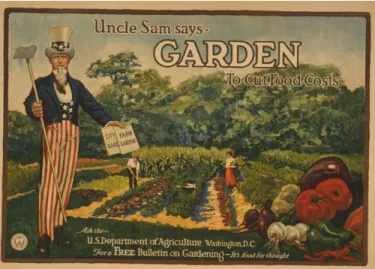
Figure 1.1: USDA Poster Promoting Victory Gardens. 1917.
neighborhoods abandoned by those fleeing to the safety and controlled environment of the
suburbs (Lawson 2005). Today community gardening is thriving again, thanks in part to former
First Lady Michelle Obama’s Let’s Move! campaign, which emphasized fighting obesity through
fresh food and exercise programs.
While some define community gardens as just urban phenomena (Glover 2003a), as the
above brief history demonstrates, the term “community garden” encompasses a wide range of
local, voluntary groups established and endorsed for a variety of reasons. Some scholars and
advocates have argued that imposing a specific definition on what community garden groups
are limits the opportunities of garden groups (and those who study them) to expand their vision
and scope to adjust to community needs (Ferris, Norman, and Sempik 2001), although various
scholars have attempted to do so (Grayson 2007; Lawson 2005; Nettle 2014; Okvat and Zautra
2011). For this study, I follow Nettle (2014), who incorporates self-identification as a key part of
her definition. In order for a community garden group to be defined as such, it must be a plot of
land maintained, gardened, and/or farmed by a collective of people who self-identify as a
community garden.
In addition to being a well-recognized and vibrant type of local, voluntary group,
community gardens are a strong case study because, by nature of being place-based, they are
restricted to serving communities within a relatively restricted geographic area. As such, they
are hyper-local in their scope. Community garden groups also are a single type of group (in the
sense that they all are organized groups of people cultivating a shared plot of land) with
significant variation in the goals for which they are founded, their internal organizational
whether they are connected to a larger local institution such as a church or school). In this
regard, my proposed research is similar to other single institution studies (Andrews et al. 2010;
Edwards and McCarthy 2004b; Small, Jacobs, and Massengill 2008) that allow the researcher to
look at variation in similar indicators like forms of organizational capacity across different
settings.
Moreover, community gardens as a case study are particularly well suited for this type
of research as comprehensive lists documenting populations of them are readily available in
certain areas of the United States, including Greenridge. Part of the reason there has been a
dearth in research on the effectiveness of local, voluntary groups is because of the difficulty in
identifying population frames from which one can sample or select case studies. It is much
easier to find lists of legally incorporated nonprofits for which there exist federal (e.g. the IRS),
state, and independent databases (e.g. Guidestar) that often can be sorted by the size,
category, and location of the kind of organization one wants to study.5 The often informal
nature of local, voluntary groups means finding official record of their existence can be tough.
However, resurgent interest in community gardens since the late 1990s, in combination with
the development of GIS technology, has led to a number of national and local organizations
seeking to map their existence. For examples, see the American Community Gardening
Association’s (ACGA) database (American Community Gardening Association n.d.); the directory
of gardens maintained by Gardening Matters, a network and resource organization for
5 See Aldrich et al. (1989), Andrews et al. (2016), Edwards and Foley (2002), Grønbjerg and Clerkin (2005), and
community gardens in the Twin Cities and Minnesota at large (Gardening Matters n.d.); and the
GreenThumb Garden Map of New York City (NYC Parks and Recreation GreenThumb n.d.).
Greenridge, the Southeastern city in which I conducted my research, had a list of the
community gardens active throughout the county that bears its name at the time I began my
study in 2015. This list was maintained by GrowDirt, a local community garden support
organization similar to Minnesota’s Gardening Matters, which had been publically tracking the
locations of community gardens across the city and county since the summer of 2011. Unlike
the other available source of information about Greenridge’s community garden population,
ACGA’s national database which relies on self-registration, GrowDirt actively sought out the
establishment of new groups and tracked the status of existing groups. As such, its list
overwhelmingly was more comprehensive; at the time of data collection, GrowDirt listed 54
community gardens in Greenridge County, in comparison to ACGA, which listed two.
Below, I give a brief snapshot of the city and county of Greenridge to provide a sense of
the setting in which these community garden groups operated.
A Snapshot of Greenridge
Known for three-fourths of the 20th century as a booming textile town and gateway to
the state, Greenridge experienced significant decline in the 1960s and 1970s as the textile
industry relocated overseas. Always known for being the state’s most progressive area
(according to the state’s Work Projects Administration in the 1940s, the city was a “hot-bed of
Union sentiment”), Greenridge today is the direct result of the city’s recognition of its decline
and concerted attempts to chart a new path forward, something many former Southern, textile
the development of a cohesive vision for Greenridge’s future as a leading center of culture and
business in the South. By the early 2000s, Greenridge had made significant progress towards its
goal and began receiving numerous regional and national accolades. Amazed at the city’s
transformation, chamber of commerce groups from all over the country visited to learn how
Greenridge went from a languishing textile community to a flourishing center of arts and
commerce with a booming business and creative class. In fact, the mostly rural county
Greenridge anchors experienced a population growth rate of forty-five percent from 1990 to
2015 as increasing numbers of new businesses arrived, followed by young and middle-aged
workers looking for jobs.
Today, the city of Greenridge has a population between 60,000 and 80,000, while
Greenridge County boasts a total population between 450,000 and 500,000.6 With a median
age of 36, the population of Greenridge is young; the median age for the county is not much
higher at 38. Only 40% of those who live in the city and 32% of those who live in the county
have a bachelor’s degree or higher, although these numbers reflect a dramatic increase from
the 1990s due to population growth fueled by in-migration from the Northeast, Florida, and
parts of the Midwest. Median income for the city is around $40,000 with a poverty rate of 20%,
while the county has a median income of around $50,000 with a poverty rate five percentage
points lower. Finally, unlike its sister cities in the state, Greenridge’s population is largely white,
6 The data in this paragraph are from the 2010 Census and the 2016 Census Bureau’s Population Estimates
at a rate of 74% of all individuals in the county and 65% of individuals within the city limits.
African Americans are the next most populous racial group, comprising roughly 18% of all
individuals in both the county and the city.
As will become apparent in Chapter 3, Greenridge’s dramatic revitalization in the last
two decades, and the subsequent growth in its population and economy that ensued, is key to
understanding the role, or lack thereof, that a group’s capacity in the areas of material
resources and sociopolitical legitimacy played in its ability to achieve its goals.
STUDY DESIGN
To explore why some local, voluntary groups are more effective than others at achieving
their goals, I set up a mixed-methods, comparative case study of 18 community garden groups
in Greenridge. Below I provide a summary of the case selection process, data collection
methods, and analysis approach.
Case Selection
I selected 18 community garden groups as case studies in the spring of 2015 based on a
variety of factors. First, I sought to maximize variation in the degree to which groups were
achieving their goals so that I could look for differences in factors linked to goal attainment.
Given the infeasibility of assessing the goal attainment of all 54 community garden groups in
Greenridge before selecting cases, I made use of the only available proxy, group “vibrancy,” an
informal, three-point index of the degree to which garden groups were active. The index was
developed by Wyatt, the director of GrowDirt and the individual in Greenridge with the most
up-to-date knowledge of the garden groups in existence at the time, to note struggling groups
According to Wyatt, in “vibrant” garden groups, depending on the season, there were
plants in the ground and people who were active in taking care of the garden. “Struggling”
garden groups, on the other hand, were ones he described as being at “the stage before
shutdown”; gardens were “tilled up…no garden volunteers, [fallow] beds…maybe only one
member left.”7Finally, “failed” garden groups were those with no active garden beds and no
signs of recent activity or indication of plans for future activity. While “vibrant” garden groups
may have had differing degrees of goal attainment, these groups arguably were attaining more
of their goals (even if they were just maintenance goals of keeping plants alive) than garden
groups who were “at the stage before shutdown.” Thus, while not ideal, using “vibrancy” as a
proxy enabled me to have variation in goal attainment in the cases I selected. In the spring of
2015 at the time of case selection, Greenridge had 36 “vibrant” garden groups, 18 “struggling”
garden groups, and 22 “failed” garden groups.
In addition to selecting based on maximizing variation in goal attainment, I also selected
garden groups based on another classification scheme used by GrowDirt to organize the kinds
of garden groups present in Greenridge based on the nature of the community that founded
them: faith-based, community, neighborhood, nonprofit, school/youth, or workspace.8 Within
7 From a conversation with Wyatt on March 3, 2015.
8 See Table A.1 in Appendix A for details on the differences between these garden group types.
each of these six categories of garden group types, I selected three groups of different
“vibrancies” (one “vibrant,” one “struggling,” and one “failed” group), based on the degree to
which their external environments (e.g. geographic/demographic) were similar (Perkins et al.
1990; Small et al. 2008; Swaroop and Morenoff 2006; Taylor 1996; Wilson 1997). For example,
within the category of neighborhood-based community garden groups, I chose three groups
within neighborhoods that were as similar as possible to each other in size, percentage of
low-income residents, and percentage of minority residents. Selecting gardens from within each of
the six garden types allowed me to observe community garden groups in a wide range of
institutional settings, maximizing variation along a host of factors that might have proven
relevant to understanding differential goal attainment. For example, perhaps goal attainment
would be related to the degree of group organizational structure: workspace, faith-based,
nonprofit, and school garden groups might have been more organized due to their direct
connection to a host institution. Or, perhaps participant mobilization would be easier for
faith-based garden group leaders than others due to the availability of religious rhetoric to
encourage people to participate in the group.
Overall, this selection process left me with 12 active and 6 failed community garden
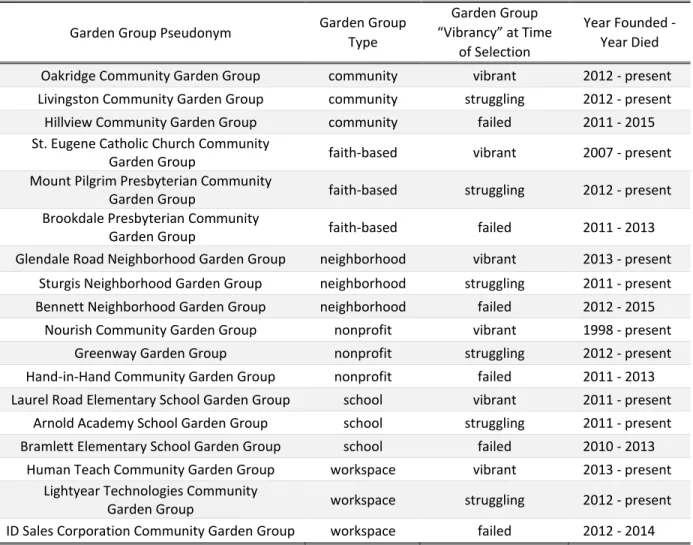
groups that would act as my case studies for comparison. Table 1.1, below, lists the groups I
selected for study. Readers can find a more detailed summary table of each case garden in
Appendix B, and a description of other, ancillary factors I took into consideration when
selecting cases in Appendix A.
Table 1.1: Selected Cases
Garden Group Pseudonym Garden Group
Type
Garden Group “Vibrancy” at Time
of Selection
Year Founded - Year Died
Oakridge Community Garden Group community vibrant 2012 - present
Livingston Community Garden Group community struggling 2012 - present
Hillview Community Garden Group community failed 2011 - 2015
St. Eugene Catholic Church Community
Garden Group faith-based vibrant 2007 - present
Mount Pilgrim Presbyterian Community
Garden Group faith-based struggling 2012 - present
Brookdale Presbyterian Community
Garden Group faith-based failed 2011 - 2013
Glendale Road Neighborhood Garden Group neighborhood vibrant 2013 - present
Sturgis Neighborhood Garden Group neighborhood struggling 2011 - present
Bennett Neighborhood Garden Group neighborhood failed 2012 - 2015
Nourish Community Garden Group nonprofit vibrant 1998 - present
Greenway Garden Group nonprofit struggling 2012 - present
Hand-in-Hand Community Garden Group nonprofit failed 2011 - 2013
Laurel Road Elementary School Garden Group school vibrant 2011 - present
Arnold Academy School Garden Group school struggling 2011 - present
Bramlett Elementary School Garden Group school failed 2010 - 2013
Human Teach Community Garden Group workspace vibrant 2013 - present
Lightyear Technologies Community
Garden Group workspace struggling 2012 - present
ID Sales Corporation Community Garden Group workspace failed 2012 - 2014
Data Collection Methods
Having selected 18 community garden groups for study, I utilized a three-pronged,
mixed-methods data collection strategy: in-depth interviews with key informants from each
garden group and its surrounding community; site visits to the physical location of each
and local newspaper articles, grant applications, planning documents from the city and county,
key informant emails, and records kept by each individual garden group.
Interviews with Key Informants
My primary data comes from 102 semi-structured, in-depth interviews with individuals
who were associated with the 18 garden groups or who occupied a social or institutional
position in Greenridge such that they had a broad, community-level perspective on the
proliferation of community garden group establishment in Greenridge starting in 2010. Taking a
multiple constituency approach9 (Connolly, Conlon, and Deutsch 1980; Jun and Shiau 2012;
Zammuto 1984) to identifying key informants, I strove to speak with founders, leaders, core
participants, occasional participants, non-participant constituents, and local community leaders
associated with each garden group in order to get different perspectives on each group’s level
of effectiveness at achieving goals. During interviews, I asked questions targeting the four
Table 1.2: Number of Interviewees, by Type
Respondent Type N (%)
Founder 20 (19.6)
Leader 13 (12.7)
Core Participant 15 (14.7)
Occasional Participant 15 (14.7)
Non-Participant Constituent 14 (13.7) Community Leaders Tied to
Garden Groups 16 (15.7)
Leaders in Community
Gardening in Greenridge 8 (7.8)
Greenridge Community
Leaders 1 (1)
Total: 102 (100%)
9 By a multiple constituency approach, I mean that I sought to get a variety of perspectives from different types of
areas of organizational capacity I began this research with an interest in studying. In addition, I
also pursued numerous other lines of questioning to gain a comprehensive understanding of
the founding and evolution of each garden group, as well as interviewees’ backgrounds and
previous history with gardening. Pursuing these sorts of questions and other interesting topics
that arose during the course of interviews helped me remain open to alternative answers to my
motivating research question.
As the study progressed and it became clear – often through these tangential lines of
questioning – that dynamics happening in the organizational environment of community
garden groups in Greenridge played a significant role in the emerging story, I scheduled
interviews with individuals who were leaders in and/or had a broad perspective on
Greenridge’s community gardening scene at the time. These individuals included the
Greenridge County’s 4-H extension agent, the Executive Director of Greenridge County Parks
and Recreation, and the head of Partners in Care, the Robert Wood Johnson Foundation funded
coalition that founded GrowDirt in 2011. I interviewed eight of these “leaders in community
gardening in Greenridge” (see Table 1.2) during the two years of data collection.
Site Visits
Over the course of the study period, I visited the physical location of each community
garden at least once to document garden features of interest and the community surrounding
the gardens. Features of interest included the number of garden beds (or in-ground rows), the
availability and accessibility of water (including the existence of an irrigation system), the
existence of a shed or other place to store tools, availability and accessibility of restrooms, and
photos to document the state of the garden at the time of my visit. During analysis, I frequently
returned to these photos to verify details from my notes or to mentally place myself back in the
setting when reading interview transcripts.
Content Analysis
Over the course of the two years I collected data for this study, I amassed thousands of
pages of written material associated with the 18 selected garden groups and/or related to
community gardens in Greenridge in general. I sourced these documents from interviewees and
internet searches. Upon request, most interviewees who had documents related to their
garden groups shared those files with me; these included handwritten notes, early drafts of
mission statements, tax documents, brochures, flyers, grant applications, reports, and hundreds
of saved emails participants forwarded me from their inboxes, among other things. In addition,
I assembled relevant documents via internet search, including city and county plans for
neighborhoods and communities, social media posts by community garden groups and those
supporting them, and over 50 articles from the local newspaper, The Greenridge News, from
2000 to 2015 that mentioned the phrase “community garden.”
ANALYSIS
I stored all of the interview transcripts, site visit notes, site visit photos, and documents
within MAXQDA, a qualitative software program, for analysis. Approximately halfway through
data collection, I began analyzing the data using a combination of coding methods – provisional
coding, descriptive coding, and process coding (Saldaña 2015) – and memo-writing strategies
(Corbin and Strauss 2007), eventually compiling comprehensive memos of everything I knew
These narratives mostly were organized in chronological order and were summaries of the
information I learned about each garden with my thoughts, impressions, and questions
interspersed.
Given the design of this research as a comparative case study of community garden
groups, throughout the coding and memo-writing process, I continually compared the general
narratives of the garden groups to each other to look for clues as to what made some groups
more able to achieve their goals than others. Eventually, I found the only way to distill the
amount of information I had into something manageable was to create charts with the garden
group names on the vertical and the themes or garden attributes I was exploring at that time
on the horizontal. I then would proceed to mark whether each theme or attribute was present
within a particular garden’s narrative and to what extent (see the Appendix A for an example).
Eventually, these charts became the foundation for the scales and indexes I used to assess the
capacity and goal attainment of garden groups in Chapter 2. The resulting puzzle that emerged
from this analysis informed a subsequent, more open and inductive exploration of the data that
led to the findings presented in Chapters 3 and 4.
Finally, it is worth noting that in the initial analysis presented in Chapter 2, I consider
only the 12 garden groups that were active at the time of data collection, while in Chapters 3
and 4, I draw on data from all 18 garden groups selected for study. My decision to look at only
the 12 active garden groups in Chapter 2 is due to the fact that in my initial analysis, I
considered the goal attainment and internal capacity of groups at the time of the study. As the
six “failed” garden groups had ceased to exist before the study began, I could not collect data
addition, as the interviews I conducted with affiliates of the six failed garden groups were
retrospective in nature, the point in each group’s trajectory on which interviewees reflected
differed; some interviewees recalled when their group was flourishing, while others mainly
focused on their group during its final throes of existence. As such, I was unable to reliably
identify a similar point in time at which all failed gardens could be assessed. However, the
analyses I present in Chapters 3 and 4 were not affected by this issue, and therefore, I draw on
data from all 18 selected garden groups in those chapters.
OUTLINE OF DISSERTATION
To reiterate, the motivating research question behind this dissertation is why some
local, voluntary groups are more effective than others at achieving the goals for which they
were founded. Having long been recognized as playing a vital role in society by supplying goods
and services that are not provided by the state (Marwell 2004; Steinberg 2003; Weisbrod 1977,
1988), voluntary groups are an important part of any society’s organizational sector. And yet,
work in the for-profit field still dominates organizational sociology, and research on the
nonprofit sector largely is comprised of studies of formal, legally-incorporated organizations,
not small, often informally structured groups. A full understanding of the role played by
organized collectives, whether large or small, formal or informal, necessarily should include a
consideration of voluntary groups.
In Chapter 2, I present the theoretical setup for and results of my initial investigation
into the differential goal attainment of the 12 active community garden groups I selected for
study. I begin by defining goal attainment and providing examples of what it looked like in the
nature, local, voluntary groups can be thought of, theoretically, as formal organizations that
perpetually are in a phase of emergence. As such, we can look to the existing scholarship on
what types of capacity are most critical to the ability of a formal organization to successfully
navigate startup and early growth in order to understand what types of capacity should be
most relevant to goal attainment among voluntary groups. I then assess the degree to which
the 12 active garden groups had four types of capacity (resources, internal group structure,
sociopolitical legitimacy, and participation) necessary for early growth in relation to their level
of goal attainment. I found that participation was the only type of capacity that distinguished
groups that were and were not achieving their goals. These patterns motivated the analyses in
the remaining chapters of this dissertation.
In Chapter 3, I draw on data from all 18 cases to examine the primary puzzle that
emerged from my analysis of group capacity and goal attainment in Chapter 2, specifically, why
sociopolitical legitimacy and material resources were not associated with the goal attainment
of community garden groups in any systematic way. Briefly, the explanation lies in the
overwhelming amount of sociopolitical legitimacy in Greenridge for the establishment of
community garden groups and the wide availability of material resources to build and sustain
them. In tracing the emergence of the popularity of community gardens in Greenridge in the
mid-2000s, I show how the convergence of three conditions can create resource-rich
organizational environments that challenge the assumption of competitiveness underlying
much of the work in social movements and organizational sociology. I then suggest that rather
such environments simply make it easy for individuals to form groups quickly without ensuring
the degree to which they have commitment from their target participants.
In Chapter 4, I examine the ways that leaders of groups that were achieving their goals
mobilized and sustained participation. I begin by painting contrasting portraits of two
community garden groups, one with active participants and one that lacked a strong participant
base. The groups had similar levels of sociopolitical legitimacy in their respective communities
and high levels of material resources, and yet one thrived while the other flirted with failure
each season. Again, drawing on data from all 18 cases, I argue that the reason some community
garden groups in this study had more active participants than others is that their leadership
engaged in the active recruitment of participants, built or leveraged existing rapport within
their target participant population, and helped participants have successful and meaningful
experiences when working with the group. In focusing on the ways leaders, in particular,
engaged participants, I bring renewed focus to the inseparability of the actions and
characteristics of leaders in small and emerging groups, and group success or failure at goal
attainment.
Finally, in Chapter 5, I review the arc of the study and provide an overview of the main
findings. I consider contributions to both scholarship and practice, summarizing how this
research challenges and extends current theories in organizational sociology, social
movements, and nonprofit and voluntary studies. In addition, I discuss the implications of this
study for those who wish to establish local, voluntary groups and the individuals, organizations,
and institutions that wish to support their efforts. In conclusion, I offer suggestions for future
CHAPTER 2: GOAL ATTAINMENT IN LOCAL, VOLUNTARY GROUPS
I received a variety of answers when I asked people to describe the mission of their
community garden group. Harriet, the leader of the Arnold Academy School Garden, told me in
a slightly incredulous voice as she leaned back in her desk chair:
There are children, bright children, highly intelligent children who don’t
understand that carrots grow underground, you know?!...I don’t think children are as connected to outside as they used to be (laughs), um, and I think there’s
value in getting them out there.
I interviewed Carol, the founder and leader of a community garden group in the Glendale Road
neighborhood, in a faux-wood-paneled room inside of an old church whose outer walls formed
a backdrop for the community garden outside. Lamenting the decline of the neighborhood over
the past couple of decades, Carol responded to my question by telling me:
[The garden] is a, an outreach…It’s a, it’s a big way to connect to the people in the community and learn from each other. Uh, cause I think that’s really, really important. And so many times I’ve seen, it’s one of those things that’s lost in today’s society.
A month after talking to Carol, I spoke to Claude, founder and leader of the St. Eugene’s
Catholic Church Community Garden Group. Inside the cool, air-conditioned church social hall,
Claude described to me how he wanted to help the neighborhood surrounding the church:
[Y]ou know, in, in around here, it, it’s a lot of poor people, you know, that don’t
have much as far as, especially fresh vegetables, you know? We give out
Connecting children to the outdoors. Helping residents in a rundown neighborhood get
to know each other. Supplementing the canned goods given out by a church food pantry. These
statements are representative of the sorts of altruistic goals that residents of Greenridge aimed
to achieve when they started community garden groups. These statements also are
representative of goals pursued by local, voluntary groups, in general – small in scope, limited
to a specific community, and targeted towards making changes that typically would not make
the agenda of local or state governments. And yet, despite arguably modest ambitions, many
local, voluntary groups struggle to achieve their goals. In fact, of the three leaders I quote
above, only Claude can claim that his community garden group consistently met the goals for
which it was founded.
This chapter presents my initial investigation into why this was the case, beginning with
how I defined and operationalized goal attainment in the context of Greenridge’s community
garden groups. I then present the results of my assessment of the goal attainment of the 12
active groups I selected for study. As discussed in Chapter 1, I consider only the 12 active
groups as there was not a similar point in time at which all failed gardens could be assessed.
Next, building on theory from organizational sociology and social movements, I suggest that
some groups are more effective than others at achieving their goals because of differing levels
of internal group capacity, specifically, differing levels of material resources, internal group
structure, sociopolitical legitimacy, and participation. In the final sections of this chapter, I
examine this theory by undertaking a systematic comparison of the degree to which community
garden groups had each of the four types of capacity in relation to their levels of goal
DEFINING AND ASSESSING GOAL ATTAINMENT
For this study, I define goal attainment based on the work of Price (1972), who argues
that scholars should differentiate between an organization’s official versus operative goals.
While official goals are those an organization was founded to accomplish (e.g. the
organization’s mission), operative goals are those objectives an organization seeks to achieve
on a day-to-day basis, including “maintenance” goals, the pursuit of which are necessary to
keep an organization alive (Davis and Scott 2007; Perrow 1961; Price 1972).
Given that a community garden was the vehicle used by each group in this study to
accomplish their mission, I defined the operative goals of all study groups as the
accomplishment of those daily and weekly tasks associated with consistently maintaining an
established physical garden: seasonally planting vegetables and/or flowers, watering and
weeding plants, and maintaining raised beds and other structures.
In contrast, the official goals of the community garden groups considered here varied
based on how each group sought to use their garden to address certain social problems or
generally bring about change in their communities. I identified each garden group’s official
goals through thematic coding of the transcripts of the 93 in-depth interviews I conducted with
community garden group leaders and participants, non-participant constituents, and
community leaders, as well as information I gleaned from analysis of the documents I compiled
around each group’s founding and work.
Table 2.1 provides a summary of the types of official goals claimed by the 12 active
The goals listed in Table 2.1 are similar to those identified in other studies of community
garden groups (e.g. Alaimo et al. 2005; Alaimo, Reischl, and Allen 2010; Campbell 2004;
Cumbers et al. 2017; Kato, Passidomo, and Harvey 2014; Lawson 2005; Wakefield et al. 2007).
For example, Alaimo et al. (2005:124) described the use of community gardens in Flint,
Michigan, to “improve the conditions of distressed neighborhoods,” and in their study of
community gardens in Glasgow, Scotland, Cumbers et al. (2017:7) found examples of gardens
Table 2.1: Official Goals of Community Garden Groups in Greenridge
Official Goals Example Data
Contribute to the revitalization of the neighborhood/community
“Seniors in the Sturgis community…recall a vibrant community where residents were healthy, active and thriving…Today there are many barriers that prevent residents from enjoying a good quality of life…It [the garden] will…be on the forefront of encouraging and supporting a…neighborhood struggling to be revitalized.” – Grant application written by the leader of the Sturgis Community Garden
Grow fresh food for the hungry “Feeding families, feeding people, feeding needy people…giving people food that need it. I can sit here and bullshit you more about it but bottom line is, you need food? Take this bag of vegetables here with you. Enjoy.” – Community Leader, Oakridge Community Garden
Build community and connectivity
among people “[W]hen you’re digging in the dirt with someone, that person doesn’t care what your 401k is like, and you don’t know what their house situation is…but you’re there in that moment, and you’ve got that chance to, um, be human and to converse and, you know, share life experiences.” – Former Leader, Hillview Community Garden
Provide a place to garden for
those who do not have one “Basically the concept of the garden over here is that anybody in the Livingston community who has limited access as far as land and…you want to grow a garden, but you don’t have room to grow it…then we will give you a plot of land.” – Founder, Livingston Community Garden
Teach people how to grow food and/or live more sustainably
“[T]he goal is to show people that you can grow the food that you eat and you can be sustained by the food and not have to, you know, go out and buy food as much.” – Leader, Greenway Community Garden
Encourage a healthy
lifestyle/promote preventative health practices
"[T]he garden is just one of those things where I can politely email and say ‘Guys, get outside, get some fresh air…get away from your boss…’ and just that encouragement of doing something that’s good for the employees. Healthy employees are productive employees.”
– Founder, Lightyear Technologies, Inc. Community Garden Provide an opportunity for stress
relief
that were established to “help people recover from the stresses and strains of everyday life.” It
is also worth noting that the majority of the garden groups in this study had multiple official
goals. For example, the facilities manager at Lightyear Technologies, Inc. founded a group to
promote health among his employees, provide an on-site form of stress relief, and provide a
way for employees to connect with each other.
***
To assess the goal attainment of the twelve active community garden groups, I assigned
each group two ratings using two scales ranging from 0 to 2; one scale represented success at
achieving operative goals, while the other represented success at achieving official goals. I
added the two ratings together to obtain an overall goal attainment score that ranged from 0 to
4. I developed these scales by coding the data for interviewee opinions of the effectiveness of
each group; I also relied on my own impressions based on the combination of interview, site
visit, and document data.
On the operativegoal attainment scale, a “0” indicates that a garden group’s leadership
and participants regularly failed to maintain the garden; on site visits, plants appeared
overgrown or dead, garden beds were full of weeds or simply not planted at all, and a general
air of neglect hung over the space. See the left image in Figure 2.1 for an example of what a “0”
looks like. A “1” on this scale indicates that groups were meeting their operative goals
consistently, but based on interviewee accounts, they were struggling to do so. Groups with a
score of “2” were meeting their operative goals consistently without any difficulty.
Whereas I assessed the operative goal attainment of all community garden groups
attainment by combining interview, site visit, and content analysis data to judge whether each
group was achieving the goals for which it, in particular, was founded. For example, I assessed
the goal attainment of the Oakridge Community Garden Group based on how well it provided
fresh food to hungry individuals in the Oakridge community, whereas I assessed the goal
attainment of the Livingston Community Garden Group based on how well it provided a place
to garden for those who lacked one and whether it worked to promote preventative health in
the Livingston area.
On the officialgoal attainment scale, a “0” indicates that a group was not meeting any
of its official goals, whereas a garden group with a score of a “1” was meeting some of its
official goals, but not all, or not meeting its goals well. For example, the Glendale Road
Community Garden Group sought to provide fresh food for the hungry, but it contributed so
little food to the local pantry (perhaps a handful of vegetables, at most, every month) that in
effect, it was not providing the hungry with food to any substantive degree. Finally, I assigned a
“2” to groups that were meeting all of the official goals for which they were originally founded.
Table 2.2 contains the results of my assessment of each of the community garden
groups. For an explanation of the reasons behind each garden’s score, see Appendix C. Next, I
describe the results and illustrate the differences between “effective,” “semi-effective,” and
***
Four of the twelve existing garden groups –Nourish, St. Eugene’s, Livingston, and Laurel
Road –were “effective” with overall goal attainment ratings of “4” out of “4”. A “4” means they
were meeting their operative goals consistently and without difficulty and were able to use
their community garden to meet their group’s official goals. The Nourish Community Garden, Table 2.2: Goal Attainment of Community Garden Groups
Operative Goal Attainment
(scale: 0-2)
Official Goal Attainment
(scale: 0-2)
Overall Goal Attainment
(scale: 0-4)
Effective Garden Groups --- --- ---
Nourish Community Garden Group 2 2 4
St. Eugene’s Catholic Church
Community Garden Group 2 2 4
Livingston Community Garden Group 2 2 4
Laurel Road Elementary School
Garden Group 2 2 4
Semi-Effective Garden Groups --- --- ---
Arnold Academy School Garden Group 1 2 3
Glendale Road Neighborhood Garden
Group 1 1 2
Human Teach Community Garden
Group 1 1 2
Greenway Garden Group 2 0 2
Oakridge Community Garden Group 0 2 2
Ineffective Garden Groups --- --- ---
Mount Pilgrim Presbyterian
Community Garden Group 0 1 1
Sturgis Neighborhood Garden Group 0 1 1
Lightyear Technologies Community
group. Founded primarily to provide vegetables to enhance the meals made in its host
institution’s soup kitchen, the Nourish Community Garden Group was able to consistently
maintain a verdant garden of over 18 raised beds and several in-ground rows that produced
hundreds of pounds of produce for the soup kitchen each season.
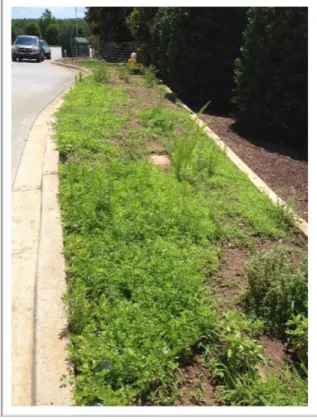
Figure 2.1: Photos Illustrating Community Garden Maintenance.
Left:The Oakridge Community Garden Group’s in-ground garden was taken over completely by grass and weeds. Right: A volunteer poses in front of the Nourish Community Garden Group’s
neatly tended 18 raised beds.
In contrast, with the exception of Arnold Academy, the remaining community garden
groups had an overall goal attainment rating of “2” or less. I classified garden groups with less
as “ineffective.” Bracketing Arnold Academy,10“semi-effective” community garden groups had
different combinations of operative and official goal attainment ratings that led to an overall
goal attainment rating of “2”. The Glendale Road and Human Teach Community Garden Groups
each had a “1” on both operative and official goal attainment, meaning they struggled to
consistently maintain their gardens and either achieved their official goals only partway or
achieved fully only some of their official goals. For example, the Glendale Road Community
Garden Group was founded to provide people in the neighborhood a way to connect with each
other. However, the group struggled to consistently maintain their garden of eight raised beds,
and despite the founder’s assertions that it did “help the community connect,” I was told in
multiple interviews that from a neighborhood of over 1,000 residents, the founder and her
daughter were the only ones who truly cared about the group.
While Glendale Road and Human Teach both had “1’s” for operative and official goal
attainment, the Greenway Community Garden Group had a “2” for operative goal attainment
but a “0” for official goal attainment, and the Oakridge Community Garden had ratings that
were the exact opposite. An outreach to a low-income, historically Black neighborhood, the
Greenway Garden Group had no trouble maintaining its garden, but at the time of data
collection, was not teaching neighborhood residents how to live sustainably, the goal for which
it was founded. On the other hand, the Oakridge Community Garden Group experienced the
opposite phenomena: the group was not able to maintain their garden consistently, but during
10 The Arnold Academy Community Garden Group is a unique case. While the garden was maintained consistently
the periods when they were providing their garden with regular care, the group was able to
meet its official goal of regularly donating produce to the local food bank.
“Ineffective” community garden groups shared Oakridge’s pattern, but with less success at
achieving official goals when in operation. For example, the Sturgis Neighborhood Garden
Group, seen in Figure 2.2, was founded for a variety of reasons, including to help with
neighborhood revitalization and to foster a social support network among residents.
Figure 2.2: Photos of an Ineffective Community Garden, the Sturgis Neighborhood Garden. Left: The pathways between beds at the garden are not visible through weeds and grass. Right:
A chalkboard sign outside the garden displayed the remainders of an old message for months.
However, the garden was not planted consistently, and according to one interviewee, even
when it was, “[I]t’s not really used by the community…People who are from, like, around
here…They just walk past it and just see it and just keep going.”
***
What separates the effective from the semi-effective and ineffective garden groups?
produced hundreds of pounds of vegetables a season, while the Oakridge Community Garden
Group’s most reliable crops were crabgrass and other weeds?
To help answer this question, in the following section I introduce and evaluate an
explanation centered around group capacity. Suggesting that local, voluntary groups be
conceptualized as formal organizations that continually are in a phase of organizational
emergence, I capitalize on existing theoretical work around what types of capacity help formal
organizations successfully navigate startup to explore the organizational foundations of goal
attainment among voluntary groups. As will become apparent, the results of my explorations
left me with a theoretical puzzle, which I take up in Chapter 3.
EXPLAINING DIFFERENTIAL GOAL ATTAINMENT
Past scholarship seeking to explain why some organizations are more or less effective
than others in achieving their goals can be categorized into two camps: explanations that rely
on environmental, contextual factors and those that emphasize factors specific to the
organizations themselves (e.g. organizational structure).
Arguments that environmental, contextual factors influence organizational performance
have a long history in organizational scholarship (e.g. Aldrich and Ruef 2006; Pfeffer and
Salancik 1978), social movements research (e.g. Kriesi 2004), and work in nonprofit and
voluntary organizations (e.g. Chambre 1997). These arguments can be grouped broadly into
two categories: civic and political context and resource availability. Civic and political context
refers to the presence of organizational allies and other similarly-minded organizations (Ruef
2000; Sampson et al. 2005; Tarrow 1998), political opportunities (Meyer 2004), and a history of