A Pilot Study of Students’ Self-Perceptions of Efficacy and Engagement in the Writing Process
Leigh Anna Hutchison
A thesis submitted to the faculty of the University of North Carolina at Chapel Hill in partial fulfillment of the requirements for the degree of Master of Arts in the School of Education (Division of Early Childhood, Family and Literacy Studies).
Chapel Hill 2007
Approved by:
Rune Simeonsson, Ph.D.
Mary Ruth Coleman, Ph.D.
2007
ABSTRACT
LEIGH ANNA HUTCHISON: A Pilot Study of Students’ Self-Perceptions of Efficacy and Engagement, in the Writing Process.
(Under the direction of Mary Ruth Coleman)
This pilot study used a descriptive case-study method, with multiple cases, to examine changes in students’ self-perceptions and performance in writing. The study focused on the effects of an intervention, intended to impact components of motivational engagement (interest and writing apprehension) as well as self-efficacy beliefs, for students with cognitive strengths and learning deficits, in order to determine how this relates to levels of effort and persistence on writing tasks. The participants were two adolescent students, who exhibited cognitive strengths, coupled with learning disabilities in writing. The study design used Entry Phase and Exit Phase measures to collect data on the students’ levels of self-efficacy, apprehension, and interest in writing, before and after the intervention. Additional measures of effort, persistence, and performance were also taken at Entry and Exit Phases. Findings indicated improvements for both students on levels of effort, persistence, and performance following the intervention.
ACKNOWLEDGEMENTS
I have appreciated the helpful support of many people throughout the course of my studies. I would especially like to thank the members of my committee for their continued encouragement and support. I have appreciated Dr. Harriet Boone’s kindness, perceptiveness, and encouragement, especially early in my program of studies. I would like to thank Dr. Rune Simeonsson for his invaluable wisdom, guidance, and support in allowing and enabling me to develop an integrated approach to my subject area. I would also like to thank Dr. Mary Ruth Coleman for her compassionate understanding and support, and her essential insights and guidance throughout the process of compiling the thesis.
I would like to extend appreciation to my professors, including Dr. Stephen Hooper, and Dr. Jill Fitzgerald, whose courses provided inspiration, direction, and a wealth of resources.
I am also quite grateful to the students, and parents, who participated in this study. I have greatly appreciated their kindness and cooperation throughout the duration of the study; for without their help, the study would never have been possible.
I would also like to thank Dr. Jonathan Farber, and James E. Payne for their valuable comments and supportive friendship throughout this process.
DEDICATION
In loving memory of my father, Robert M. Hutchison, who devoted his life to helping others.
TABLE OF CONTENTS
LIST OF TABLES...ix
I. CHAPTER ONE BACKGROUND AND RATIONALE...1
Significance of the Study ...11
Research Questions ...14
Limitations of Study ...15
II. CHAPTER TWO REVIEW OF THE LITERATURE ... 17
Self-Efficacy Beliefs in Academic Learning ...19
Key Points: Self-Efficacy Beliefs ...28
Educational Strategies that Enhance Self-Efficacy Beliefs ...29
Key Points: Educational Strategies to Enhance Self-Efficacy Beliefs ...33
Metacognition and Motivational Engagement...34
Key Points: Metacognition and Motivational Engagement ...38
Cognitive Strengths Coupled with Learning Disabilities ...39
Key Points: Cognitive Strengths/Learning Disabilities ...47
Self-Regulation and Language Development ...48
Key Points: Self-Regulation and Language Development ...56
Description of the Demystification Process ...58
III. CHAPTER THREE
METHODOLOGY ...64
Selection of Participants ...66
Instruments...67
Procedures for Data Collection...74
Developing the Neurodevelopmental Profile...75
Entry Phase (Week 1) ...78
Intervention Phase (Week 2)...80
Practice Phase of Intervention Stage I, II, III (Weeks 3, 4, & 5) ...88
Exit Phase (Week 6)...91
IV. CHAPTER FOUR ANALYSIS PLAN AND RESULTS ...95
Part I: Individual Case Description: Tony ...95
Individual Case Analysis: Tony / Research Question #1...100
Individual Case Analysis: Tony / Research Question #2...105
Individual Case Analysis: Tony / Research Question #3...109
Part II: Individual Case Description: Robin...116
Individual Case Analysis: Robin / Research Question #1 ...120
Individual Case Analysis: Robin / Research Question #2 ...124
Individual Case Analysis: Robin / Research Question #3 ...130
V. CHAPTER FIVE DISCUSSION ...139
Part I: Individual Case Discussion: Tony ...139
Individual Case Discussion: Tony / Research Question #1 ...139
Individual Case Discussion: Tony / Research Question #3 ...144
Part II: Individual Case Discussion: Robin...148
Individual Case Discussion: Robin / Research Question #1...149
Individual Case Discussion: Robin / Research Question #2...151
Individual Case Discussion: Robin / Research Question #3...155
Part III: Discussion of Cross Case Trends……… ...160
Discussion / Tony and Robin / Research Question #1...160
Discussion / Tony and Robin / Research Question #2...162
Discussion / Tony and Robin / Research Question #3...165
VI. CHAPTER SIX CONCLUSION...171
APPENDIX A: Measure of Persistence Operationalized as “Time on Task” .176 APPENDIX B: Exit Interview ...177
APPENDIX C: Protocol for Entry Phase (Spring 2007) ...179
APPENDIX D: Protocol for Practice Session One – Three (Spring 2007) ...181
APPENDIX E: Protocol for Exit Phase (Spring 2007)………...183
LIST OF TABLES Table
1. Time Frame of Study ...82
2. Comparison of Responses: Measure of Writing Apprehension Tony)...102
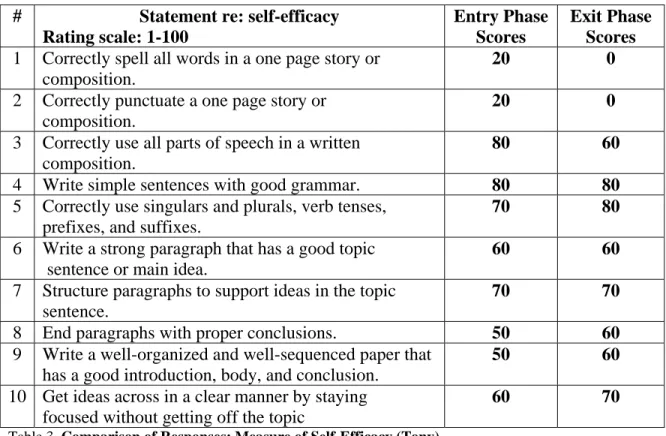
3. Comparison of Responses: Measure of Self-Efficacy (Tony) ...106
4. Comparison of Responses: Measure of Interest (Tony) ...108
5. Comparison of Spontaneous Subtest Scores (Tony)...111
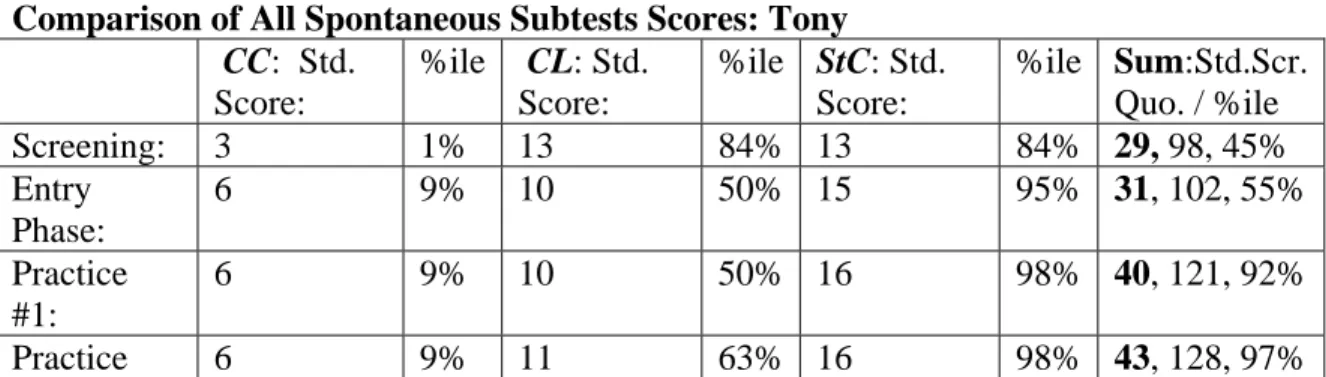
6. Comparison of All Spontaneous Subtest Scores (Tony)...111
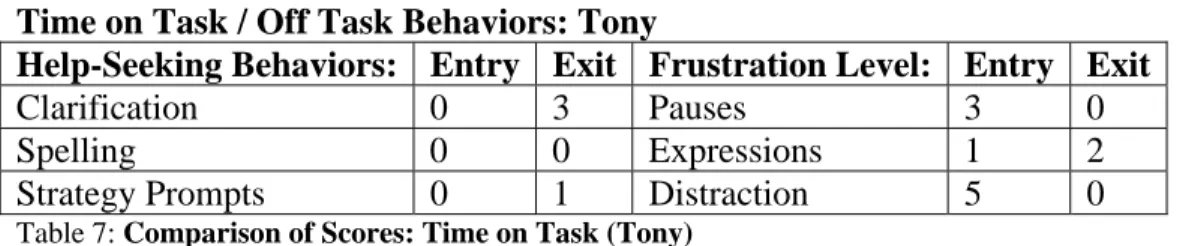
7. Comparison of Scores: Time on Task (Tony)...113
8. Comparison of Responses: Measure of Writing Apprehension (Robin) ...121
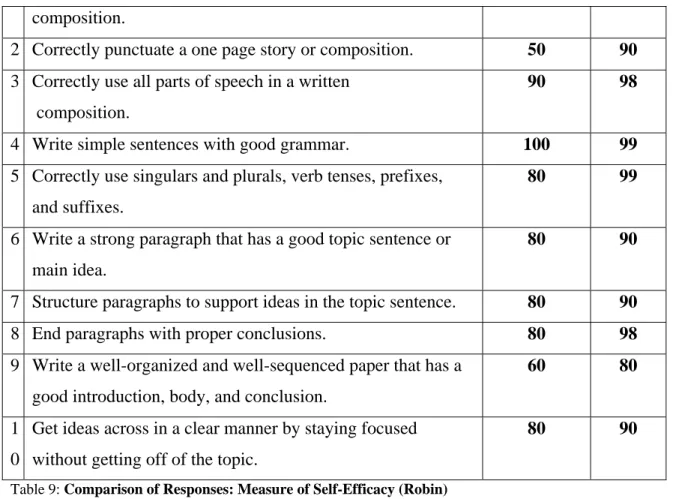
9. Comparison of Responses: Measure of Self-Efficacy (Robin)………....125
10. Comparison of Responses: Measure of Interest (Robin) ...128
11. Comparison of Spontaneous Subtest Scores (Robin...131
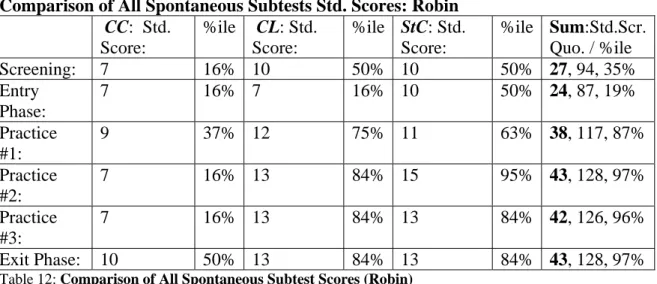
12. Comparison of All Spontaneous Subtest Scores (Robin) ...132
CHAPTER ONE
BACKGROUND AND RATIONALE
Students who have learning disabilities often suffer from heightened levels of anxiety in the learning environment, due to repeated experiences of failure on academic tasks (Lumsden, 1994). Current research has demonstrated that frequent experiences of failure have a negative impact on students’ perceptions of self-efficacy in performing academic tasks (Klassen, 2001). Self-efficacy beliefs are defined by Linnenbrink and Pintrich (2003) as an individual’s judgements of their capabilities to organize and execute courses of action, required to attain a specific type of performance (Linnenbrink &
Pintrich, 2003). Many studies have reinforced findings which demonstrate that academic performance is strongly influenced by the beliefs which students hold about their levels of ability (Linnenbrink & Pintrich, 2003; Pajares & Johnson, 1993). Therefore, students who have lowered self-efficacy beliefs often feel increasingly anxious when they are faced with academic tasks which they perceive to be unattainable, and as a result, they fail to exert the amount of effort necessary to succeed. The resulting lowered self-efficacy beliefs, and lack of effort and persistence, create a negative achievement cycle which is difficult to change (Seeratan, 2001).
deficits in language processing, and still others may have exceptional talents or strengths in combination with specific learning disabilities, and are therefore recognized as meeting the criteria for exceptional” learners. Students who fit the profile of
“twice-exceptional” learners (both gifted and learning disabled), have remarkable strengths in some areas, and disabling weaknesses in others (Baum, 1990; Nielsen & Higgins, 2005). This uneven development of skills results in educational needs that are different from those of more typical students with learning disabilities. An uneven development of skills can also create unique learning profiles, which often result in experiences of emotional turmoil for these students (Baum, 2004). Studies have shown that feelings of emotional turmoil can also have a negative effect on students’ academic performance (Nielsen & Higgins, 2005). The cycle of failure resulting from these types of negative experiences can also lower students’ perceptions of self-efficacy, because self-efficacy beliefs can be strongly affected by the emotional and physiological reactions which an individual feels toward an academic task (Pajares & Valiante, 2006; Klassen, 2001).
Often, such students exhibit weaknesses in information processing which create deficits in core academic skills (Nielsen & Higgins, 2005). For instance, research by Nielsen & Higgins (2005) indicates that although measures of intellectual ability (expectancy IQ, verbal IQ, performance IQ, and full scale IQ) of students who meet the criteria for twice-exceptional learners, were similar to such measures in the gifted population, the reading and written language performance of these students was significantly lower than that of their gifted peers. Therefore, students who meet the criteria for twice-exceptional learners, and who experience difficulties in these academic areas, may experience heightened levels of anxiety when facing performance on these tasks (King, 2005).
Heightened levels of anxiety can have a negative impact on students’ perceptions of self-efficacy, since self-efficacy beliefs are partially formed by an individual’s
emotional and physiological reactions to a task (Pajares & Valiante, 2006; Klassen, 2001). This relationship between anxiety and self-efficacy is also reciprocal, because self-efficacy beliefs have been found to influence thought patterns and emotional
reactions (Pajares & Valiante, 2006). For instance, specific studies have shown that low self-efficacy beliefs result in negative physiological reactions, such as anxiety and writing apprehension (Wachholz & Etheridge, 1996; Pajares & Johnson, 1993).
researchers defined writing apprehension as ‘a general avoidance of writing, and of situations perceived by the individuals to potentially require some amount of writing, accompanied by the potential for evaluation of that writing’ (Hassan, 2001, pg. 4).
Daly and Miller found that individuals who experienced high levels of writing apprehension found writing to be an unpleasant experience, which they would avoid if possible. These individuals experienced heightened levels of anxiety on writing tasks, which was reflected in their attitudes and behaviors about writing, as well as in their written products (Hassan, 2001). For instance, students who experienced high levels of writing apprehension also reported more instances of negative experiences, and failure with writing (Wachholz & Ethridge, 1996). Evidence suggests, therefore, that low levels of writing self-confidence, in combination with previous negative experiences, does interfere with learning, and has a negative impact on students’ self-efficacy beliefs (Wachholz & Etheridge, 1996). In fact, previous experience of success or failure in writing was one of the most frequently cited sources of students’ self-efficacy beliefs (Wachholz & Etheridge, 1996).
Feelings of anxiety and frustration with academic tasks can have a significant negative impact on the self-efficacy beliefs of these students, as demonstrated in recent studies. For instance, one particular study demonstrated that the single major factor which distinguished students, who fit the profile of twice-exceptional learners, from either gifted, or learning disabled students, was a marked sense of low self-efficacy; they demonstrated a lack of belief in their ability to perform successfully (Howard, 1994). Although such students often have interesting and important ideas to share, they are frequently reluctant to demonstrate their limited spelling or writing abilities, for example, when they exhibit learning disabilities in writing in these subject areas. Therefore, the quality of their work is inhibited, and they are left feeling frustrated, as the cycle of failure is reinforced (Baum, et al. 2001). This cycle of persistent failure can cause students with learning disabilities to lose confidence in their ability to succeed, resulting in lowered self-efficacy beliefs that become further diminished over time (Baum, et al., 2001).
their personal “internal” standards (Baum, 2004, p. 3). This is particularly relevant for students who fit the profile of twice-exceptional learners, because such students are often motivated intrinsically, and have a heightened need to set personally meaningful
standards for their academic work (Reiss, 2004; Baum, 2004).
An interactive concept of self-efficacy relevant to the current study, was built on Bandura’s model, and formulated by Linnenbrink and Pintrich (2003). This model demonstrates that self-efficacy is integrated with behavioral, cognitive, and motivational engagement, as interactive components that impact learning and achievement. In their model, the concept of self-efficacy can be broken down into three component parts, which include behavioral engagement (effort, persistence, and instrumental help-seeking), cognitive engagement (strategy use and metacognition) and motivational engagement (interest, value and affect) (Linnenbrink & Pintrich, 2003).
Behavioral engagement can be measured in terms of three factors; the level of effort which a student exerts in order to complete a task, the student’s level of persistence
in working through challenges, and a student’s ability to use instrumental help-seeking, to find effective resources. Behavioral engagement has also been shown to be related
positively to measures of efficacy. In a variety of studies, students with strong self-efficacy beliefs showed higher levels of effort and persistence in the face of difficulties, than did students with low measures of self-efficacy (Linnenbrink & Pintrich, 2003).
Cognitive engagement is apparent when students are thinking deeply about the
difficulty, and they are also able to think critically and creatively about the subject matter (Linnenbrink & Pintrich, 2003). These abilities also tap skills in metacognition (the ability to reflect on one’s own thinking, while self-monitoring for comprehension), which are a strong indicator of cognitive engagement (Linnenbrink & Pintrich, 2003). High self-efficacy beliefs have been shown to be consistently related to an increased use of
metacognitive strategies, and deep processing strategies. Self-efficacy beliefs also interact with cognitive engagement in a reciprocal way, because an increased use of metacognitive strategies can help a struggling student to learn more effectively, and thus develop heightened levels of self-efficacy in learning processes (Singer & Bashir, 1999). Motivational engagement, the third component of engagement in learning, can be
further broken down into the components of interest, value, and affect. Each of these components influences the others, and they interact in reciprocal ways. “Interest” is apparent when students engage in tasks which are personally relevant to them, or which inspire motivation at an intrinsic level. Research has shown that students who are motivated intrinsically use cognitive strategies that require more effort, and that result in the processing of information at deeper levels (Lumsden, 1994). For instance, when students are motivated to learn for intrinsic goals, they have been found to show greater levels of persistence on tasks, they process information more deeply, and they also perform better on tests, than comparable students who are motivated primarily by
The second component, “value” refers to either utility value, which relates to the personal usefulness of the information or the task to the student, or value beliefs, which relate to more global life goals of the student (Linnenbrink & Pintrich, 2003). The final component of emotional response, or “affect”, is positively related to learning because positive emotions, like pride and joy in one’s task, contribute to motivational
engagement. Alternatively, negative emotions relate negatively to engagement in learning, and interfere with levels of interest, and metacognitive engagement (Linnenbrink & Pintrich, 2003).
In summary, the interactive model of self-efficacy, formulated by Linnenbrink & Pintrich (2003), demonstrates that self-efficacy is integrated with behavioral, cognitive, and motivational engagement, as interactive components that impact learning achievement. The components of behavioral engagement can be measured as levels of effort and persistence. Cognitive engagement is indicated by a student’s use of metacognition and deep processing strategies. Motivational engagement is broken down into the components of interest, value, and affect. Self-efficacy is demonstrated to be integrated in reciprocal interrelations, with these varied components of engagement. Therefore, this model is very useful in examining the interrelations among the cognitive and emotional aspects of learning, which impact the performance of students who may suffer from high levels of anxiety, or apprehension, and will serve as the framework for this study.
students. Results of a research study by Schunk & Pajares (2002), reinforce this
perspective, through findings which indicate that self-regulation, cognitive strategy use, and self-efficacy are positively inter-correlated, and are useful in predicting outcomes of achievement. In particular, self-evaluation (a subprocess of self-regulation), has been found to be important in enhancing self-efficacy beliefs (Schunk & Pajares, 2002).
The process of self-evaluation is particularly important for students who meet the criteria for twice-exceptional learners, because these students often view themselves as primarily disabled, as a result of attention focused on their disabilities (Nielsen, 2005; Baum, 1990). Such students are often extremely emotionally vulnerable, and need to be supported in self-discovery activities that help them to identify their areas of strength, their talents, affinities, learning styles, and emotional needs (Nielsen & Higgins, 2005; Baum, 1990). Therefore, metacognitive strategies that promote self-regulation are especially important for such students, who have cognitive strengths coupled with learning disabilities. In particular, the process of self-evaluation, or self-assessment, is critical for students who have difficulty evaluating their performance accurately (Miller, 1991).
task” (Miller, 1991, p. 180). They will then be able to more effectively self-monitor their performance, which is critical to effective academic achievement (Reis, et al. 2004).
Students who meet the criteria for twice-exceptional learners, and who view themselves as primarily disabled, can benefit greatly from intervention strategies that help them to identify their areas of strength and weakness, their learning styles, affinities, and emotional needs (Howard, 1994). Research has shown that remediation strategies for basic skills, such as reading and writing, requiring primarily repetition to ensure mastery, have proven to be ineffective for students who have both high ability and learning
disabilities (Baum, 2004). In contrast, case studies of students who had high cognitive abilities coupled with learning disabilities were able to “analyze and understand their deficits from the metacognitive, self-assessment perspective” and, as a result, make significant progress in improving both reading and writing skills (Miller, 1991, p. 185). These types of strategies also incorporate the factors of personal relevance and interest in learning, by engaging students’ interest in their personal learning process, which can result in enhanced intrinsic motivation and task commitment (Baum, 2004).
writing apprehension, interest, and self-efficacy beliefs for each of the student participants, before and after the intervention.
Significance of the Study
It is critical to develop effective intervention strategies which can stop the
negative cycle of failure, and empower students to try to succeed at tasks which challenge them. A study by Pajares (1999), with typical students in the area of self-efficacy, offers evidence that interventions may be effective. Studies by Pajares (1999) have found that high self-efficacy beliefs offset the negative effects of writing apprehension. Current research (Pajares, 2003; Klassen, 2001) has also shown that self-efficacy beliefs and writing performance are related, in that confidence engenders increased effort and resiliency when facing challenges. Various studies by Pajares and colleagues, with typical students at elementary and middle school levels, have established interactions between self-efficacy beliefs and motivational variables (Pajares, et al. 2001, Pajares & Valiante, 2001). Pajares (2003) has advocated the need to examine the complexity of the interactions between the emotional processes and the cognitive processes involved in writing, for typical students as well as for students at risk. He has also reinforced the importance of examining the impact of affect on self-efficacy beliefs. This is particularly relevant to writing, and has led Pajares to emphasize that all phases of the writing process are influenced by affective components (Pajares, 2003).
tasks, often results in heightened levels of anxiety in areas such as writing composition. These students are therefore at risk of becoming trapped in a failure cycle, because a number of studies have shown that writing anxiety (or apprehension) is “negatively associated with the quality of the message encoded, and with the individual’s actual writing behavior, their writing performance, and their willingness to write or take advanced writing courses” (Cheng, et al. 1999).
However, these students also have an increased need to find value and personal meaning in academic learning (Siegle & McCoach, 2005). It is therefore critical to design interventions which meet the needs of these students’ complex, individual learning styles, by utilizing their strengths in metacognition to help them develop effective self-assessment and self-regulation strategies (Fall & Nolan, 1993; Zimmerman & Martinez-Ponz, 1990). As students learn effective strategies for assessment, and for self-regulation of their unique learning style, they can be empowered to exert more effort to effectively self-monitor their performance, and thus improve their levels of achievement in academic skills, such as writing (Reis, et al. 2004, Miller, 1991). Increases in writing skills and improved self-efficacy beliefs, have been found to result in heightened levels of confidence, which lead to increased levels of effort and resiliency when facing challenges (Pajares, 2003; Klassen, 2001). Heightened levels of self-efficacy beliefs can offset the negative effects of writing apprehension, as demonstrated by Pajares with typical students (1999), and therefore have a positive impact on the failure cycle.
To date, few researchers have examined the effect of self-efficacy beliefs on writing performance, but those who have, recognize that there is a relationship
demonstrated that both writing anxiety and self-efficacy are related to writing performance (Wachholz & Ethridge, 1996; Pajares & Johnson, 1993). Results of research in this area are varied however, with some researchers reporting a significant relationship between writing self-efficacy beliefs and related writing performance, but a lack of a significant relationship between writing apprehension and writing performance (Pajares & Johnson, 1993). ). Separate studies, examining writing apprehension and self-esteem, found results which indicated that heightened levels of writing apprehension negatively impacted the quality of students’ composition writing (Hassan, 2001; Cheng, et al. 1999). Writing apprehension has, however, been demonstrated to be negatively related to self-efficacy beliefs (Pajares & Johnson, 1993). Therefore, if low self-efficacy beliefs contribute to negative physiological reactions, such as anxiety or writing
apprehension, interventions designed to decrease anxiety and foster self-regulation, may be useful in increasing student’s confidence in their writing ability, and thus in increasing their self-efficacy beliefs (Pajares & Valiante, 2006).
This situation is intensified for students who meet the criteria for
them. In order to be effective, interventions must meet the needs of these students’ complex, individual learning styles, by utilizing their strengths in metacognition to help them develop effective self-assessment and self-regulation strategies (Fall & Nolan, 1993: Zimmerman & Martinez-Ponz, 1990). Interventions must also be designed to engage students’ interest in their unique learning process, and increase positive emotional responses to academic tasks (Nielsen & Higgins, 2005). Research is needed, therefore, to examine the interrelation of certain components of motivational engagement (interest, and writing apprehension) to self-efficacy beliefs, and levels of effort and persistence on writing tasks, in the population of students who meet the criteria for twice-exceptional learners.
Research Questions
self-efficacy beliefs, and levels of effort and persistence in a writing task; therefore resulting in improved performance.
Specific questions which will be addressed through this research study are listed as follows:
1. How does the student’s personal knowledge of his/her unique strengths and weaknesses in learning (as obtained through the intervention process of Demystification) impact the student’s levels of writing apprehension?
2. How does the student’s personal knowledge of his/her unique strengths and weaknesses in learning (as obtained through the intervention process of Demystification) impact the student’s self-efficacy beliefs in writing, and his/her interest in the writing task?
3. How does the student’s personal knowledge of his/her unique strengths and weaknesses in learning (as obtained through the intervention process of Demystification) affect the student’s levels of effort, persistence and performance on the writing task?
Limitations of the Study
This study is limited in the scope of its findings, due to the pilot nature of the study, which is an exploratory, qualitative study. The study uses a descriptive case-study method, in a multiple case design, in order to provide a rich, descriptive analysis of the individual cases, as well as a discussion of cross-case trends. Only two cases are examined, due to the limitations in resources of the researcher, which required the participants to be drawn from a sample of convenience.
In order to establish construct validity, the study uses multiple sources of
CHAPTER TWO
REVIEW OF LITERATURE
Repeated experiences of failure in the academic environment can have a negative impact on students’ perceptions of self-efficacy in performing academic tasks. Students who experience lowered self-efficacy beliefs may also experience increased levels of anxiety when facing academic tasks which they perceive to be unattainable. Increases in anxiety, accompanied by lowered self-efficacy beliefs, may result in a student’s failure to exert the amount of effort and persistence needed in order to succeed at academic tasks. Therefore, students with learning disabilities frequently experience a negative cycle of academic failure, which can be difficult to change.
An interactive model of self-efficacy, formulated by Linnenbrink and Pintrich, effectively demonstrates that self-efficacy is integrated with behavioral, cognitive, and motivational engagement. In this model, the components of self-efficacy can be broken down further to include behavioral engagement (effort, persistence and instrumental help-seeking), cognitive engagement (strategy use and metacognition), and motivational engagement (interest, value and affect). These three separate components of self-efficacy have been demonstrated to be interactive, and therefore important in impacting learning and achievement.
Research into the nature of self-efficacy beliefs has resulted in the development of strategies designed to positively impact students’ perceptions of self-efficacy in performing academic tasks. Strategies include the implementation of mastery goals, and autonomy in the learning environment. Interventions which utilize metacognitive
strategies, and self-regulatory strategies, have also been demonstrated to be effective with students who display learning disabilities in language processing. Such strategies may include techniques for developing skills in self-monitoring, self-evaluation, and behavioral adjustment.
motivational engagement, because the active use of metacognitive skills is a strong indicator of cognitive engagement in learning. Studies indicate that metacognition has been found to be integrated with the executive functions in the abilities of planning, organizing, and developing strategies in order to achieve a specific goal. Therefore, metacognitive strategies which integrate language functions, metacognitive skills (such as self-monitoring, and self-evaluation), and self-regulation have been found to be very effective for students with language based learning disabilities.
Chapter two includes a review of research in the areas of self-efficacy beliefs in academic learning, metacognition and motivational engagement, language development and self-regulation, and an overview of the educational and emotional needs of students who exhibit cognitive strengths coupled with learning disabilities. The chapter is divided into six sections. Subheadings are used to divide each section, and to introduce the overriding concept being addressed. Each section is concluded with a summary of key points. The final section of chapter two includes a description of the process of
Demystification, which is an important aspect of the intervention design of the study.
Self-Efficacy Beliefs in Academic Learning
with academic tasks (Lumsden, 1994; Knowles, 1983). As a result, many of these students face repeated experiences of failure, which have a negative impact on their perceptions of self-efficacy in performing academic tasks (Klassen, 2001). Research in the area of education has recognized that the concept of self-efficacy beliefs is critical to academic learning, because a student’s self-efficacy beliefs have an impact on their ability to perform a task successfully. A student’s self-efficacy beliefs also affect their choices within their academic careers, and their ability to persist in the face of difficulties (Schunk, 2003; Linnenbrink & Pintrich, 2003; Pajares & Valiante, 2002).
The theoretical concept of self-efficacy was originally developed by Albert Bandura. Bandura formulated the concept as a critical aspect of his Social cognitive theory, which recognized that people do not simply react to their environment, as behaviorists had previously postulated. Instead, Bandura believed that a reciprocal interaction existed among personal factors which were unique to the individual, such as cognition, emotion, and behavioral response, as well as environmental factors ( Pajares, 2002). Bandura’s theory regarded individuals as being able to act upon their environment (as producers), as well as being products of their environment. The concept of
self-efficacy beliefs, as defined by Bandura, is critical for its ability to enable control over an individual’s feelings, thoughts, and actions ( Pajares, 2002; Pajares & Valiante, 2006). Self-efficacy beliefs are theorized therefore, as a key concept in motivation and
This concept of self-efficacy is currently recognized as being very important in influencing human behavior. Research studies in areas as diverse as athletics,
psychology, business, and education have demonstrated that self-efficacy beliefs are very important to an individual’s ability to self-regulate behavior, and impact levels of
motivation and persistence in the face of challenges (Klassen, 2001). Although the concept of self-efficacy is similar in some ways to the concept of personal competence and self-concept, an important difference is the fact that self-efficacy beliefs are task specific; they focus on an individual’s ability to perform a task in a specific situation, and they are not global in scope (Linnenbrink & Pintrich, 2003). Therefore, due to the task specific nature of self-efficacy beliefs, they have predictive power over the outcome of a task (Linnebrink & Pintrich, 2003).
Recent research in the area of education has recognized that the concept of self-efficacy is critical to academic learning because of its power to predict outcomes on task performance. Current research by Linnenbrink & Pintrich (2003), offers a conceptual framework to show the interactions between self-efficacy beliefs, engagement, and learning in the academic environment. This conceptual framework shows a reciprocally interactive relationship between self-efficacy, and components of behavioral, cognitive, and motivational engagement in learning (Linnenbrink & Pintrich, 2003).
instrumental help-seeking), cognitive engagement (strategy use and metacognition) and motivational engagement (interest, value and affect) (Linnenbrink & Pintrich, 2003).
Each of the components of engagement illustrated can be examined and measured both separately, and in interaction with self-efficacy beliefs.
Behavioral Engagement: Behavioral engagement can be measured in terms of
three factors; effort, persistence and instrumental help-seeking. The two which will be incorporated in this study, include the level of effort exerted by a student in order to complete a task, as well as the student’s ability to persist in the face of difficulties. Behavioral engagement has also been shown to be related positively to measures of efficacy, as both typical junior high students, and college students, with strong self-efficacy beliefs showed higher levels of effort and persistence in the face of difficulties, than did students with low measures of self-efficacy (Linnenbrink & Pintrich, 2003). Studies have determined that a positive correlation between self-efficacy and behavioral engagement seems to be a stable factor which is generalizable across different ages and genders, for students from elementary grade levels throughout schooling (Linnenbrink & Pintrich, 2003).
Cognitive Engagement: Cognitive engagement is evident when students are
(Linnenbrink & Pintrich, 2003). Self-efficacy beliefs also interact with cognitive engagement, because high self-efficacy beliefs have been shown to be consistently related to an increased use of metacognitive strategies, and deep processing strategies. These findings were stable across age groupings of students from elementary schools to college classrooms, as well as across gender and ethnic groups (Linnenbrink & Pintrich, 2003). Alternatively, an increased use of metacognitive strategies can help a struggling student to learn more effectively, and thus develop heightened levels of self-efficacy in learning processes (Singer & Bashir, 1999).
Motivational Engagement: Motivational engagement is the third component of
engagement, which can be further broken down into the components of interest, value, and affect, all of which interact in a reciprocal way. The causal link between these components and self-efficacy has been continuously debated however it is evident that they do influence each other (Linnenbrink & Pintrich, 2003). For example, the
component of “interest” can be further distinguished as intrinsic, or being personally relevant to a student. Research has shown that students who are motivated intrinsically use cognitive strategies that require more effort, and result in the processing of
The second component, “value” can be broken down into the concepts of utility value and more general value beliefs about the task, content, or goals. The concept of utility value relates to the personal usefulness of the information or the task to the student, while value beliefs often relate to the more global life goals of the student (Linnenbrink & Pintrich, 2003). The final component, “affect” (or emotional response), is positively related to learning because positive emotions, like pride and joy in one’s task, contribute to motivational engagement, while negative emotions relate negatively to engagement in learning (Linnenbrink & Pintrich, 2003).
Each of these components interact in reciprocal ways with self-efficacy beliefs. For instance, studies have determined that high levels of interest result in the use of cognitive strategies that require more effort, and allow for deeper levels of cognitive
processing, which in turn should increase positive self-efficacy beliefs (Hidi et al, 2002). Affect has also been found to have a reciprocal relationship with self-efficacy beliefs in that positive emotions result in higher levels of motivational engagement which increase self-efficacy beliefs. Negative emotions however, result in decreased levels of interest and enjoyment, which decrease levels of effort and persistence, and result in lowered self-efficacy beliefs (Pajares, 2003). If this type of negative emotional cycle persists, it can cause fear of failure on future academic tasks, as well as the output of less effort, which can result in a negative achievement cycle (Seeratan, 2001; Schunk, 2003).
effectiveness of the learning process. For example, Schunk (2002) has determined that self-efficacy beliefs and motivational engagement can be linked to two types of goal orientation; either mastery goals or performance goals. Mastery goals support autonomy, absorption, and self-determination in learning and result in the use of cognitive strategies that require more effort and persistence (Miller & Meece, 1997). A focus on mastery goals can also result in positive increases in self-efficacy beliefs (Schunk & Pajares, 2002).
A focus on performance goals however, often has the opposite effect. When a student is focused on performance goals, they are concerned with demonstrating competence on a task relative to others. Therefore, their motivation has an extrinsic, rather than intrinsic focus, which frequently results in worries and doubts which are focused on the self, rather than on the specific task. This type of focus has been found to result in decreases in levels of intrinsic motivation, persistence, and lowered self-efficacy beliefs (Rawsthorne & Elliot, 1999).
Extensive research has demonstrated the ways in which goal orientation impacts student motivation in learning, and affects an individual’s perceptions of self-efficacy (Schunk & Pajares, 2002; Bandura & Schunk, 1981; Vansteenkiste, et al., 2004; Miller & Meece, 1997). For example, in a meta-analysis of the literature, Rawsthorne and Elliot (1999), state that theorists have effectively determined that the two important goal orientations (mastery goals as opposed to performance goals), result in different impacts upon intrinsic motivation. Mastery goals require an individual to focus on the
and enjoyment) (Rawsthorne & Elliot, 1999). Research by Miller & Meece (1997, p. 287) also demonstrated that task mastery goals produced the most positive patterns of interactions between “motivational goals, achievement affect, and the use of different cognitive strategies”. Students who pursued mastery goals effectively used “effort-based cognitive strategies”, persisted on difficult tasks, and generally held high perceptions of their abilities to perform positively on learning tasks (Miller & Meece, 1997, p. 287).
In contrast, performance goals (which require a demonstrated level of competence in relation to others) were shown to result in anxiety from evaluative pressures, and to actually undermine intrinsic motivation (Rawsthorne & Elliot, 1999). These researchers also found evidence that “the pursuit of performance goals has an undermining effect on intrinsic motivation, relative to the pursuit of mastery goals”, and the pursuit of
performance goals was also found to result in “less free-choice persistence, and self-report interest and enjoyment” than was associated with mastery goals (Rawsthorne & Elliot, 1999, p. 337). Goals such as performance goals, which elicit anxiety, result in lower achievement because the resulting worries and self doubts cause a student’s attention to shift away from the learning task at hand, and to focus instead on the self (Snow, 1986).
determined that “self-percepts of efficacy and intrinsic interest” could be enhanced by using activities which encouraged “self-motivation through proximal goal setting”.
The term “proximal” implies short-term goals, which have a superior impact over long term goals. Students are able to utilize proximal goal setting to make rapid progress toward the mastery of skills in situations of self-directed learning. Research
demonstrates three major psychological effects of proximal goals on behavior. This includes motivation effects, because self-motivation is best achieved by setting attainable sub-goals, which lead to an ultimate goal. This achievement of sub-goals also enhances percepts of self-efficacy, because it enables development of mastery skills, which can lead to the development of intrinsic interest through sustained satisfaction in achievement (Bandura & Schunk, 1981). Results of this research also demonstrated that proximal self-motivators effectively produced more rapid mastery of the subject matter (Bandura & Schunk, 1981).
The importance of self-motivation as a critical component in learning is
which illustrates the reciprocal effects of positive emotions, interest, and cognitive engagement on motivational engagement in academic learning.
Key Points: Self-Efficacy Beliefs
The concept of efficacy beliefs is critical to academic learning because self-efficacy beliefs affect a student’s ability to successfully perform an academic task, and to persist in the face of difficulties. The concept of self-efficacy was originally developed by Albert Bandura (1986) as a key concept in motivation and performance. The concept of self-efficacy is defined as an individual’s judgements of their capabilities to both organize and execute actions required to attain specific types of performances. This concept is important in the area of education because of its power to predict outcomes on task performance.
Linnenbrink and Pintrich (2003) developed an interactive model of self-efficacy beliefs, based on Bandura’s definition, which shows a reciprocally interactive
relationship between self-efficacy and components of behavioral, cognitive, and motivational engagement in learning. This model includes three components of
engagement which interact with self-efficacy beliefs to impact learning and achievement. The three components include behavioral engagement (effort, persistence and
instrumental help-seeking), cognitive engagement (strategy use and metacognition), and motivational engagement (interest, value, and affect). Each of these components can be measured individually, or in reciprocal interaction with self-efficacy beliefs, as well as with the other components.
performance goals. Master goals support autonomy, intrinsic motivation, engagement, and self-determination in the learning process, and can result in increases in self-efficacy. A focus on mastery goals also results in the use of cognitive strategies, with increased levels of effort and persistence. In contrast, when a student is focused on performance goals, they are primarily concerned with demonstrating competence on a task relative to others, and their motivation has an extrinsic focus. This type of goal orientation results in worries and doubts which are focused on the self, rather than on the specific task, and therefore results in lowered levels of persistence as well as lowered self-efficacy beliefs.
Educational Strategies that Enhance Self-Efficacy Beliefs Research has shown that students’ own perceptions of self-efficacy and
achievement can be enhanced by their sense of autonomy in their learning environment (Schunk & Pajares, 2002). Learners have been found to be able to gauge their self-efficacy independently, through observing their actual performance on tasks, the
feedback they receive from others, and their emotional responses to their achievements. Their self-efficacy beliefs in turn have been shown to affect their choice of task, and the effort and persistence with which they engage in the task, as well as their final
achievement (Schunk & Pajares, 2002). Therefore, strategies and environments which foster feelings of autonomy, and perceptions of self-efficacy in students, often result in optimal learning situations.
A number of specific strategies have been developed and demonstrated by
student to focus on the development of personal competence (or mastery), and it therefore supports attitudes of self-determination, autonomy and task absorption. This orientation results in personal enjoyment of the learning process (Rawsthorne & Elliot, 1999). Research by Vansteenkiste supports these findings. Vansteenkist states that autonomy is critical to effective learning, because “people are more able to fully attend to and grasp the importance of an intrinsic goal for their learning when they feel free to decide for themselves to learn, rather than feeling forced to do so” (Vansteenkiste, et a., 2004, p. 21 of 25). Therefore, he postulates that the condition that provides the optimal environment for learning integrates intrinsic motivation with autonomy, because the resulting
synergistic interaction has an extremely positive effect on the learning process (Vansteenkiste, et al., 2004).
Research by Ames (1992) also offers some guidelines for integrating strategies in learning environments to enhance intrinsic motivation, and promote mastery orientation. Her work indicates that students should be engaged in meaningful learning activities which allow personal autonomy and control over the learning process. She also states that tasks should be structured in specific ways which utilize short term goals and
metacognitive organizational, and monitoring strategies. Her work indicates that evaluations should also focus on self-improvement, rather than social comparison standards. Research by Meece and Holt (1993) reinforces this perspective through findings which indicate that mastery orientation is most effective when there are no competing goals or motives.
believes that education should primarily offer individualized paths for the pursuit of individual goals in a way that allows the learner control over choices. However, he also recognizes that alternative paths toward common goals are necessary, as are paths designed to remediate inaptitudes directly.
Each student has a unique set of social, emotional, and academic needs, which interact within the learning environment in multiple ways (Coleman, 2003). Therefore, factors other than ability can also influence a student’s academic development. Each day, a student’s achievement is influenced by his choice of goals, and the level of effort and persistence that he brings to each task. Also, the way that the learning environment is structured, the beliefs of the teacher, the type of feedback to which the student is exposed, and the student’s beliefs about his/her own ability to learn, can all have a profound
influence on the efficacy of the learning process (Dweck, 1986; Schunk & Pajares, 2002). The challenge of providing an optimal learning environment across the spectrum, to meet the challenging needs of students who have been diagnosed as learning disabled, as well as the needs of those who have been identified as gifted, can only be met through an individualized educational approach (Snow, 1986). Current research in motivation offers guidelines for structuring optimal learning environments, which can be effective for students across the educational spectrum. Learning environments which support students as individuals, and which encourage intrinsic motivation through the pursuit of mastery goals, can enhance self-efficacy beliefs and foster optimal learning for students at all levels of ability.
As an advocate of individualized education, Snow (1986) states that
differences in education, because all students learn best when they are intrinsically motivated” (Snow, 1986, p. 1032). In this context, students are undertaking an activity “for its own sake, for the enjoyment it provides, the learning it permits, or the feelings of accomplishment it evokes” (Lumsden, 1994, p. 1 of 5). This type of learning results in high self-efficacy beliefs, which influence task choice, effort, persistence, resilience, and achievement, because such students exert more effort, persist longer through difficulties, and achieve at higher levels (Schunk & Pajares, 2002).
Strategies have been developed which have been proven to effectively break the cycle of failure that tends to trap many students with learning disabilities, as well as students who are considered to be of average ability, or those classified as gifted, who suffer from low self-efficacy beliefs. Lumsden (1994, p. 1 of 5), has isolated strategies to help discouraged students recover the love of learning “for its own sake”. The strategies outlined include portraying effort “as investment rather than risk”, focusing on the development of skills using domain-specific sub-goals, as well as promoting a focus on mastery learning (Lumsden, 1994, p. 4 of 5). Strategic approaches which support motivation to learn through a concerted focus on individualized learning, effort, and task mastery, rather than performance and competition, is strongly emphasized.
motivation. Accurate feedback during this process helps students to accurately gauge their developing skills, self-correct, and monitor their progress (Schunk & Pajares, 2002).
Research by Singer and Bashir (1999) effectively illustrates the importance of using metacognitive strategies and self-regulatory strategies in interventions with children who display learning disabilities in language processing. These researchers designed an intervention to address issues of self-efficacy and motivation directly, by using metacognitive strategies to help students understand their problem areas, learn to alleviate them, and finally learn to control their own performance on learning tasks. In this research, the importance of using problem-solving strategies in developing new habits of thinking and communicating, in order to help students develop active problem-solving strategies through the process of self-reflection is stressed (Singer & Bashir, 1999). Interventions which utilize strategies of self-monitoring, self-evaluation, and behavioral adjustment, can promote autonomy and intrinsic motivation in the learning process (Singer, 1999; Levine, 2002).
Key Points: Educational Strategies to Enhance Self-Efficacy Beliefs Many specific strategies have been demonstrated by researchers to enhance students’ perceptions of self-efficacy and to develop intrinsic motivation in learning. One important strategy is the implementation of mastery goals, which require a student to focus on the development of personal competence (or mastery). This type of goal
Other types of strategies stress the importance of utilizing short-term goals with metacognitive organizational and monitoring strategies. Short-term or proximal goals, allow effective self-monitoring to occur, and represent challenges which are attainable. It is also important to allow students to engage in learning activities that are meaningful, and which allow personal autonomy and control over the learning process. Students should also be allowed to focus on self-improvement whenever possible, rather than on extrinsic standards for social comparison. Academic learning that fosters intrinsic motivation and achievement related motives, results in heightened levels of self-efficacy beliefs.
It is also critical to design educational strategies which allow for individualized learning that provides accurate feedback on performance of specific academic tasks. Strategies which help students learn to set and achieve short-term goals can also enhance self-efficacy beliefs, as well as intrinsic motivation, by providing attainable challenges with timely feedback. Incorporating these strategies with accurate feedback during the learning process can help students learn to accurately gauge their skills, as well as self-correct, and monitor their progress on academic tasks. Strategies which develop accurate self-assessment skills foster attitudes of autonomy and intrinsic interest in the learning process.
Metacognition and Motivational Engagement
specifically. These researchers show that both previous empirical findings, as well as theoretical positions, indicate a need for further investigation of the connection between interest and self-efficacy, as it relates to writing tasks. Examination of the general component of affect, which impacts motivational engagement as well as self-efficacy, is equally important (Pajares, 2003). A study of the relationship of affect to metacognition is particularly significant for students with learning disabilities, who experience heightened levels of anxiety in the learning environment (Seeratan, 2001). More specifically however, this relationship has been recognized as a critical factor pertaining to interventions for students who meet the criteria for twice exceptional learners (Baum, 2004).
Metacognition is a particularly important aspect of the learning process, which monitors understanding and self-regulates learning. A person who is skilled in metacognitive strategies can understand their thinking processes. They know their areas of strength and weakness in learning, and they are able to monitor and regulate their learning process by using strategies and skills effectively (Hannah & Shore, 1995). Therefore, the active use of metacognitive skills is a strong indicator of cognitive engagement in learning. Research by Linnenbrink & Pintrich (2003) reinforces the interaction between metacognitive strategies (specifically the use of organizational techniques and elaboration strategies) and active cognition in learning, and shows that it results in deeper levels of information processing.
of repeated experiences of failure. They come to attribute failure to their use of effort, as well as their ability level, which results in both dysfunctional metacognitive patterns, and self-systems(Seeratan, 2001). This type of dysfunction results in an increased likelihood of future failure for these students. However, the use of strategies which can raise a student’s self-efficacy beliefs, increase motivation, and develop skills to monitor and affect the student’s own learning process, can help to break the cycle of failure (Schunk & Pajares, 2002).
Other studies have shown that interventions which develop a student’s ability to think about their thinking processes, and to engage in self-reflection, questioning, and self-monitoring, are critical for achievement at the postsecondary level (Reis, et al., 2004). Research by Denckla, et al. (1989), shows that the use of metacognition and executive function are, in general, important in the improvement of learning ability (Reis, et al., 2004). School related behaviors identified by Denckla within the domain of executive function include the abilities to plan, organize (initiate, shift, inhibit, and sustain), as well as to develop and utilize rules or strategies (Reis, et al., 2004). Therefore, aspects of executive functions and metacognition overlap, and each are integrated in the process of effective learning.
doing and how they are doing it”, in order to be able to use metacognitive strategies effectively (Singer & Bashir, 1999, p. 268). As a result, they advocate the use of intervention techniques which are designed to integrate metacognitive and linguistic strategies for students who have language-based learning disabilities (Singer & Bashir, 1999).
In their research, Singer and Bashir (1999) used a case study of a sixteen year old boy, who displayed significant problems with written and oral language. The student had difficulty expressing his ideas effectively through oral or written language, as well as problems with effective grammatical and phonological encoding. The student’s own perception of his difficulty stated that “with writing and talking, too much information floods my mind at once. I don’t know how to present it in a clear way… I often half bake an argument… My teachers tell me that I make leaps, without providing enough details” (Singer & Bashir, 1999, p. 270).
making the highest score possible on the essay requirement for an advanced placement test in history (Singer & Bashir, 1999).
Key Points: Metacognition and Motivational Engagement It is important for researchers to examine ways to enhance motivational engagement in academic tasks for students with learning disabilities. Studies have demonstrated that research which focuses specifically on the interactions among the components of motivational engagement, may be critical in the development of effective interventions. For instance, it is necessary to examine the effects of affect on the writing process, and the ways in which emotions impact motivational engagement and self-efficacy beliefs. It is also important to investigate the connection between interest and self-efficacy as it relates specifically to writing, because each of these components has an impact on successful performance of writing tasks.
Strategies which are designed to utilize metacognitive processes have also been demonstrated to be effective in enhancing motivational engagement as well as self-efficacy beliefs. The active use of metacognitive skills is a strong indicator of cognitive engagement in learning, because it requires the use of strategies which self-monitor the learning process, and allow a student to self-regulate behavior and performance. Metacognition has been found to be integrated with the executive functions in the abilities of planning, organizing, and developing rules or strategies toward a specific goal.
Successful interventions developed by Singer and Bashir (1999) emphasize the integration of language functions, executive functions, and self-regulation in
self-judgement, and self-reaction, were demonstrated to result in highly successful interventions when they were incorporated into strategies which used metacognitive self-talk to aid in planning, organizing, analyzing, and regulating language production.
Cognitive Strengths coupled with Learning Disabilities
Research by Singer and Bashir (1999) effectively illustrates the importance of using metacognitive strategies, and self-regulatory strategies, in interventions for students who display cognitive strengths coupled with learning disabilities in language processing. Their study demonstrated the effectiveness of an intervention which used metacognition to address issues of self-efficacy and motivation directly, by implementing the use of metacognitive self-talk to improve a students’ ability
to plan, organize, and regulate his production of oral and written language. The success of their intervention emphasizes the importance of using metacognitive strategies to remediate skills for students who have learning disabilities in conjunction with strengths
in cognition.
the thinking processes of students who are classified as gifted, even when their abilities are compromised by learning disabilities (Hannah & Shore, 1995). The study demonstrated that the metacognitive performance, as well as comprehension, of the students who met the criteria for twice-exceptional learners, was more similar to that of the group classified as gifted, than the group with learning disabilities; a finding which was “supported on all dependent measures at both grade levels” (Hannah & Shore, 1995, p. 104).
In a separate study, students who demonstrated characteristics of giftedness as well as learning disabilities, were found to use more complex strategies for problem solving, and were more persistent than those who were characterized as having average intellectual ability, with learning differences (Coleman, 1992). These students who fit the profile of twice-exceptional learners, were also able to identify specific strategies which they could use to overcome their challenges, as opposed to more typical students with learning disabilities, who were unable to recognize specific steps necessary in utilizing strategies (Coleman, 1992).
(Coleman, et al., 2005). Accurate diagnosis is frequently problematic for these students, due to their unusual characteristics, and the unique learning profiles which they exhibit (King, 2005).
Current research recognizes the importance of using more than one set of diagnostic criteria to evaluate and diagnose students with dual exceptionalities. However, diagnostic data frequently show a marked discrepancy between scores of intellectual ability, and achievement in specific academic areas, for these students (Nielsen & Higgins, 2005). For instance, students who fit the profile of twice-exceptional learners often achieve scores on intelligence tests in the areas of verbal I.Q., expectancy I.Q., performance I.Q., and even full scale I.Q., that are similar to the scores of students in the gifted population. However, their scores on measures of achievement are often much lower, and more similar to the scores of students diagnosed with learning disabilities. Many of these students meet state criteria for both giftedness and specific learning disability. Others perform in the average range on achievement tests, but have large differences between their I.Q. scores and levels of academic achievement ( Nielsen & Higgins, 2005).
For example, recent research by Nielsen & Higgins (2005) and King (2005), illustrates specific characteristics of students who meet the criteria for twice-exceptional learners, and the ways in which their areas of strength interact with their weaknesses. These students frequently have strengths in creative or critical thinking, but they may also show evidence of deficits in social cognition or self-regulation. They may also have specific learning disabilities which impact their reading or writing abilities, and which create frustration with academic tasks. Some students demonstrate very high levels of problem solving or reasoning abilities, which may be undermined however, by slower levels of thinking, or work output. Others may exhibit a striking ability to integrate complex concepts, but may have difficulty with short term memory or in retrieving factual information accurately (Nielsen & Higgins, 2005).
The unique and varied combinations of strengths and weaknesses which such students present, make it difficult to identify them accurately. Frequently their strengths mask their deficits, so that their learning disability may go unnoticed. However, the student’s weakness may also mask his/her abilities, in which case the student may come to view him or herself as primarily disabled (Baum, 2004). It may be possible to identify the different characteristics of a student with dual exceptionalities, but the interaction between their strengths and weaknesses often results in a unique learning profile, as well as unique emotional challenges (Nielsen & Higgins, 2005).
learning disabilities. These students often had excellent verbal ability, but frequently had poor writing or spelling skills, for example. Despite their weaknesses however, they were able to perform at grade level academically (King, 2005).
The second category of student is often very hard to identify, because their strengths and weaknesses frequently mask each other. These students often demonstrate superior intellectual ability, though they are not identified as gifted, and thus do not gain the benefits of more challenging programs. The cognitive strengths of these students often mask their learning deficits, allowing them to perform at grade level. However, they frequently suffer from mild depression and function below their full potential (King, 2005).
The third category of student with dual exceptionalities fits the student who is identified as both gifted and learning disabled. These students often face extreme challenges in educational settings because their strengths frequently go unnoticed, and focus is primarily given to remediating their disability. These students generally receive little support in their areas of strength, and are often unchallenged intellectually. As a result, many of these students fail in academic settings (King, 2005). Many of these students may also struggle with low self-efficacy beliefs, due to their tendency to view themselves as primarily disabled, as illustrated in a study by Baum (2004).
confused and frustrated by the discrepancy between their levels of ability and weakness, and may not understand why they are not able to perform effectively. Parents, as well as teachers of these children, may misunderstand the student’s inability to perform according to expectations. They may recognize the child’s potential, but be unaware of the challenges with which the child struggles. The result may be mixed messages, which serve to further confuse the child, and increase levels of frustration (King, 2005).
Students with dual exceptionalities also face frustration because they frequently set very high goals for themselves, while they are simultaneously highly self-critical. Sometimes they feel that they must constantly prove that they are smart, and they may tend to rush through assignments or avoid academic tasks in their area of weakness. The emotional needs of these students are often extreme and complex, as they struggle with confusion about their abilities, anxiety, heightened levels of anger and frustration, and all too frequently, issues resulting from low self-concept (King, 2005).
their learning environments, and learn to become effective self-advocates (Coleman, 2005).
Many intervention strategies have also been developed to create learning environments which meet the needs of these students more effectively. Findings from a study by Baum (2004) indicate that many students with dual exceptionalities struggle with self-efficacy beliefs that are lower than those of typical students with learning disabilities. This has been reinforced in work by King (2005), who suggests that it is critical to develop learning environments for these students which do not focus on remediation primarily. Such a focus results in a variety of negative reactions, including low self-esteem, depression, and loss of motivation (King, 2005). Educational environments must instead design programs which will challenge and engage these students in areas of intellectual strength (Nielsen & Higgins, 2005).
It is important to encourage these students to use metacognitive strategies which help them to focus on their thinking processes and to learn to effectively monitor their progress on academic tasks (Nielsen & Higgins, 2005). It is also important to engage their personal knowledge within a subject area, and build factual knowledge from a conceptual framework (Coleman, 2005). Students with cognitive strengths and learning disabilities thrive when they are intrinsically motivated, and engaged in academic work which is personally meaningful (Siegle & McCoach, 2005).
and finally learn to control his own performance on learning tasks. This goal of helping students develop active problem-solving strategies through the process of self-reflection (using strategies of self-monitoring, self-evaluation, and behavioral adjustment) is effective because it has also been found to promote autonomy and intrinsic motivation in the learning process (Singer & Bashir, 1999; Levine, 2002).
Research by Siegle & McCoach (2005), states that intrinsic motivation can also be promoted by incorporating the factors of personal relevance and interest in the learning process. This is particularly important for students who fit the profile of twice-exceptional learners, because they often show stronger commitment to learning tasks which are personally meaningful (King, 2005). Research by Hidi et al. (2002) cites studies which demonstrate findings of increased persistence, effort, and the experience of positive emotions, when students are engaged in tasks which interest them; “with such engagements, one would expect improved performance and a corresponding increase in their self-efficacy” (Hidi et al., 2002, p. 433).