Center variation in the delivery of indicated late preterm births
Sofia Aliaga, MD MPH1, Jun Zhang, PhD MD2, D. Leann Long, PhD3, Amy H. Herring, ScD3,4, Matthew Laughon, MD MPH1, Kim Boggess, MD5, Uma M. Reddy, MD MPH6, and Katherine Laughon Grantz, MD MS7
1Department of Pediatrics, University of North Carolina, Chapel Hill, NC, Pediatrics CB#7596, 101
Manning Drive, Chapel Hill, NC 27599; [email protected]; [email protected]
2MOE-Shanghai Key Laboratory of Children’s Environmental Health, Xinhua Hospital, Shanghai
Jiao Tong University School of Medicine, 800 Dongchuan Rd., Minhang District, Shanghai, China; [email protected]
3Department of Biostatistics, West Virginia University, PO Box 9190, Morgantown, WV 26506;
4Carolina Population Center, 206 West Franklin St., Rm. 208, Chapel Hill, NC 27516;
5Department of Obstetrics and Gynecology, University of North Carolina, Chapel Hill, NC, The
University of North Carolina, 101 Manning Drive, CB #7516, Old Clinic Building, Chapel Hill, NC 27599; [email protected]
6Pregnancy and Perinatology Branch, Eunice Kennedy Shriver National Institute of Child Health
and Human Development, National Institutes of Health, 6100 Executive Blvd Room 7B03M, MSC 7510, Bethesda, MD 20852; [email protected]
7Epidemiology Branch, Division of Intramural Population Health Research, Eunice Kennedy
Shriver National Institute of Child Health and Human Development, National Institutes of Health,
Bethesda, MD, 6100 Executive Blvd Room 7B03M, MSC 7510, Bethesda, MD 20852; [email protected]
Abstract
Objective—Evidence for optimal timing of delivery for some pregnancy complications at late preterm gestation is limited. The purpose of this study was to identify center variation of indicated late preterm births.
Study design—Analysis of singleton late preterm and term births from a large U.S. retrospective obstetrical cohort. Births associated with spontaneous preterm labor, major congenital anomalies, chorioamnionitis, and emergency cesarean were excluded. We used modified Poisson fixed effects logistic regression with interaction terms to assess center variation
Corresponding author information: Sofia Aliaga, MD MPH, Pediatrics CB#7596, 101 Manning Drive, Chapel Hill, NC 27599, [email protected], phone#: 919-966-5063, fax#: 919-966-3034.
HHS Public Access
Author manuscript
Am J Perinatol
. Author manuscript; available in PMC 2017 August 01.Published in final edited form as:
Am J Perinatol. 2016 August ; 33(10): 1008–1016. doi:10.1055/s-0036-1582129.
A
uthor Man
uscr
ipt
A
uthor Man
uscr
ipt
A
uthor Man
uscr
ipt
A
uthor Man
uscr
of indicated late preterm births associated with four medical/obstetric comorbidities after adjusting for socio-demographics, co-morbidities, and hospital/provider characteristics.
Results—We identified 150,055 births from 16 hospitals; 9218 were indicated late preterm births. We found wide variation of indicated late preterm births across hospitals. The extent of center variation was greater for births associated with preterm premature rupture of membranes (RR across sites: 0.45 – 3.05), hypertensive disorders of pregnancy (RR across sites: 0.36 – 1.27), and placenta previa/abruption (RR across sites: 0.48 – 1.82). We found less center variation for births associated with diabetes (RR across sites: 0.65 – 1.39).
Conclusion—Practice variation in the management of indicated late preterm deliveries might be a source of preventable late preterm birth.
Keywords
late preterm birth; preterm birth; center variation; practice variation
Over 70% of all preterm births are late preterm (34 0/7th to 36 6/7th weeks).1. Late preterm newborns have prolonged hospital stays, more frequent readmissions, more long-term morbidities, and increased health care costs compared to term newborns.2–9 Approximately 30 to 50% of late preterm births follow the onset of isolated spontaneous preterm labor. 10–12 The remainder of late preterm births is associated with obstetric and/or medical
complications affecting the pregnancy. Common complications associated with late preterm delivery include hypertensive disorders of pregnancy, preterm premature rupture of
membranes, and placental disorders.10, 12–14 Indicated delivery prior to the onset of spontaneous labor may decrease the risk of maternal and perinatal morbidity or mortality. However, there is limited evidence guiding the optimal timing of delivery in the presence of many maternal/fetal complications during pregnancy.15, 16 Current obstetric
recommendations for management of late preterm pregnancies are based primarily on limited evidence and expert opinion. Since overall neonatal morbidity decreases with delivery at advancing gestational age, obstetric management at late preterm gestation is complicated by the difficulty in balancing maternal, fetal, and neonatal risks.
Practice variation, either at the provider or hospital/health care system level, driven by uncertainty or lack of evidence for an intervention can result in overuse or underuse of medical care. Examples in obstetrics and pediatrics include variation in rates of cesarean delivery, low birth weight births, neonatal length of stay, and hospital readmissions.17–20 Practice variation can result in variation in medical care that is independent of patient characteristics and illness severity, but rather related to differences in quality and efficiency of health care delivery. 21, 22 The paucity of Level A recommendations for management of common obstetric/medical complications, supported by randomized controlled trials, meta-analyses, and/or systematic reviews, at late preterm gestation likely contributes to obstetrical practice variation. Without strong evidence supporting the optimal timing for delivery of late preterm pregnancies complicated by common co-morbidities, providers’ training and specialty, previous experience and practice environment will likely determine practice. Between 1990 and 2006, labor inductions and cesarean deliveries increased among late preterm births.23 During the same time period late preterm births increased by 25%. Rising
A
uthor Man
uscr
ipt
A
uthor Man
uscr
ipt
A
uthor Man
uscr
ipt
A
uthor Man
uscr
rates of late preterm birth likely resulted, in part, from a change in the threshold of delivery for pregnancy complications at this gestational age.23, 24 Estimates of potentially preventable late preterm birth resulting from elective or non-indicated and “soft call” deliveries range from 6 – 23%.10–12 Despite a recent decrease in rates of late preterm delivery, 9% of all US births still occur between 34 0/7th and 36 6/7th weeks’ gestation.25 Given the public health implications of late preterm birth, it is important to explore underlying obstetrical practice variation as a source of potentially modifiable late preterm birth. The purpose of this study was to identify center variation of indicated late preterm births in a large multicenter cohort of US births.
Methods
This study is a secondary analysis of data from the Consortium of Safe Labor supported by the intramural research program at the Eunice Kennedy Shriver National Institute of Child Health and Human Development. The Consortium on Safe Labor study was a retrospective cohort of 228,562 deliveries between 2002 and 2008 from 19 hospitals in the United States. This study has been described in detail in a previous publication.26 Briefly, the Consortium on Safe Labor hospitals were chosen for the availability of electronic medical records at each institution and geographic distribution covering all districts of the American College of Obstetricians and Gynecologists. Data was collected from 228,668 deliveries between 2002 and 2008. All births at 23 weeks gestation or greater were included. Data from the
Consortium of Safe Labor includes demographic, medical history, and labor and delivery information, as well as obstetric, postpartum and neonatal outcome data extracted from electronic medical records and mapped to predefined categories. Data validation was performed for four key variables, and electronic medical records were found to be
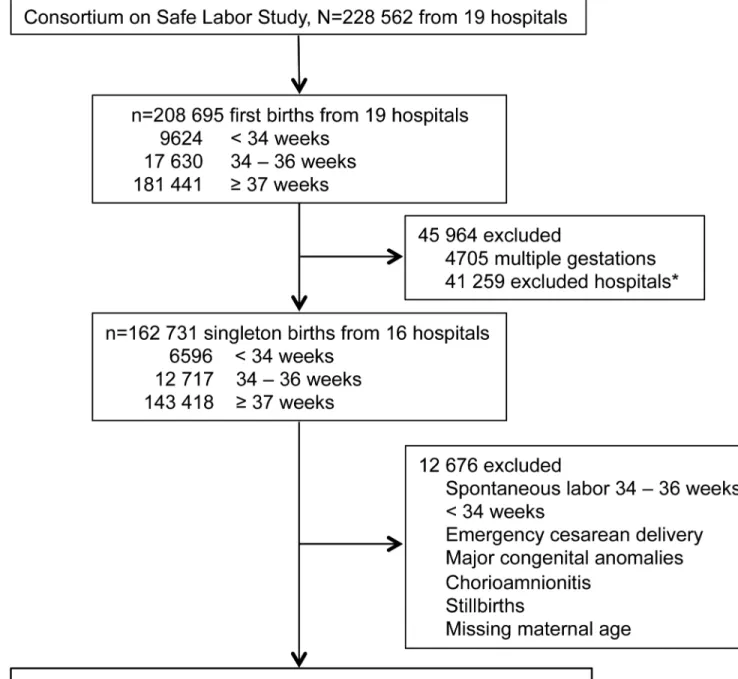
reasonably accurate. Information on hospital and provider characteristics, including hospital type, was obtained from surveys of local investigators at each study site. Since women could have more than one delivery in this cohort we included data on first births only. We excluded 3 sites due to missing data on key variables (indication for labor induction, insurance status, and maternal diabetes). Our analysis included only indicated births at 34 0/7 weeks of gestation or greater. We defined indicated births as those occurring after labor induction or cesarean delivery without labor as recorded in the medical record. We excluded births with a gestational age < 34 0/7 weeks, those associated with spontaneous late preterm labor, major congenital anomalies, chorioamnionitis, emergency cesarean, and stillbirths. We chose to exclude late preterm births associated with these conditions because they were less likely to be explained by practice variation and more likely due to a different decision-making process (e.g., emergency cesarean), near-certainty for delivery (e.g., chorioamnionitis), or more likely to be delivered at a tertiary hospital (e.g. major anomaly). Stillbirths are usually delivered upon diagnosis. Collectively these cases represented a small percentage of the study population (Figure 1).
We identified medical risk factors associated with the delivery and spontaneous preterm labor from variables in the medical record indicating reason for admission, indication for induction or cesarean delivery, and medical and obstetric history information. Premature rupture of membranes (PROM) and preterm premature rupture of membranes (PPROM) were defined as rupture of membranes without spontaneous labor. Gestational age was
A
uthor Man
uscr
ipt
A
uthor Man
uscr
ipt
A
uthor Man
uscr
ipt
A
uthor Man
uscr
recorded in the patient chart defined by best obstetrical estimate based on last menstrual period, 1st or 2nd trimester ultrasound, or artificial reproductive technique dating. We identified the following socio-demographic and medical risk factors: maternal age, maternal race/ethnicity, parity, marital status, insurance type, history of prior cesarean, history of prior preterm birth, and medical/obstetric risk factors affecting delivery: PROM/PPROM,
hypertensive disorders of pregnancy (gestational hypertension, preeclampsia, superimposed preeclampsia, eclampsia, hypertension not otherwise specified), diabetes (pre-gestational and gestational), placenta previa or placental abruption (diagnosed before labor), other maternal conditions (such as chronic hypertension, cardiac disease, renal disease), and other fetal conditions (such as fetal growth restriction, oligohydramnios and non-reassuring fetal status). Women could have more than one risk factor. We included data on insurance type as a proxy for socioeconomic status. We also identified the following hospital and provider characteristics: practice type (private practice, university faculty, other), delivery physician age, 24-hour maternal-fetal medicine (MFM) coverage, 24-hour neonatologist coverage, and geographic region. Hospitals were classified into three categories: university-teaching hospital, community-teaching hospital, and non-teaching community hospital. This study was determined to be exempt from approval by the University of North Carolina Institutional Review Board.
Statistical analysis
In this analysis we sought to examine center variation of indicated late preterm births both overall and then for four common medical/obstetric risk factors: PROM/PPROM,
hypertensive disorders of pregnancy, placenta previa or placental abruption, and diabetes. For all analyses, we used modified Poisson regression techniques with a hierarchical approach to account for correlated observations within each hospital.27.
To examine center variation in overall indicated late preterm births, we calculated the unadjusted and adjusted percent of overall indicated late preterm deliveries in our dataset. We developed an initial adjusted model using mixed effect modified Poisson regression with a random intercept for site and fixed effects for demographic and medical/obstetric risk factors (Model 1). The demographic and medical/obstetric risk factors included in the model are those listed above in the methods section. We then examined the effect of hospital and provider characteristics on indicated late preterm births. For this, we derived a second model (Model 2) by adding hospital and provider characteristics as fixed effects to Model 1. If hospital and provider characteristics further explained variation of indicated late preterm birth across hospitals, we would expect less variation across hospitals for Model 2 compared to Model 1. We did not include hospital type in model development due to correlation with other variables. Site variability was examined with a likelihood ratio test of the random intercept and statistical significance was assessed using a 50:50 mixture of chi-square distributions.28 We then plotted the estimated percent of indicated late preterm births, from lowest to highest, across study hospitals (Figure 2).
Second, we examined the center variation of indicated late preterm births for four common medical/obstetric risk factors: PPROM, hypertensive disorders of pregnancy, placenta previa or placental abruption, and diabetes. For each of the four risk factors we fit a hierarchical
A
uthor Man
uscr
ipt
A
uthor Man
uscr
ipt
A
uthor Man
uscr
ipt
A
uthor Man
uscr
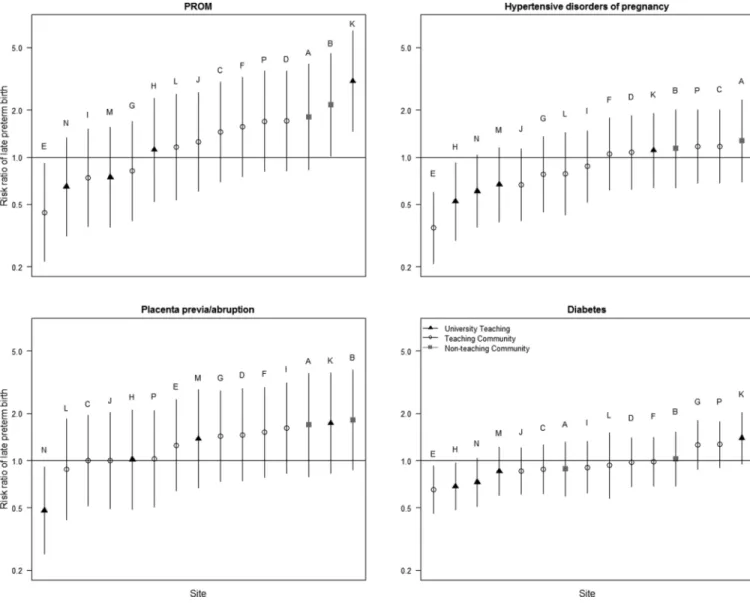
Poisson model to calculate the adjusted risk ratio (RR) of late preterm delivery versus delivery ≥ 37 weeks for that particular risk factor for each site compared to the cohort’s largest site. Each model was identical to Model 2 described above with the inclusion of an interaction term site by risk factor random effect. For each risk factor of interest, the statistical significance of variability of late preterm birth across sites was examined with a likelihood ratio test employing a 50:50 mixture of chi-square distributions. We plotted the distribution of RR across the study hospitals from lowest to highest (Figure 3).
The main analysis included 1556 late preterm births where spontaneous onset of labor was unknown or missing. We performed a sensitivity analysis by reclassifying these late preterm births as spontaneous. PPROM prior to 34 weeks gestation is likely followed by delivery at or shortly after reaching 34 weeks gestation (i.e. 34 0/7th weeks), therefore explaining some of the center variability. We performed a sensitivity analysis including only births at 35 weeks gestation or greater. All statistical analyses were performed in SAS 9.3 (SAS Institute, Cary, NC).
Results
We identified 228 562 births to women delivering at 19 hospitals as part of the Consortium on Safe Labor study, of which 208 695 (93%) were the first birth to a woman in the dataset. Among first births in the dataset, 17 630 (8%) were late preterm births. We excluded 58,640 births based on study criteria, including 213 women excluded due to missing data on maternal age. Our final dataset included data from 150 055 births from 16 hospitals, of which 9218 (6%) were indicated late preterm births (Figure 1).
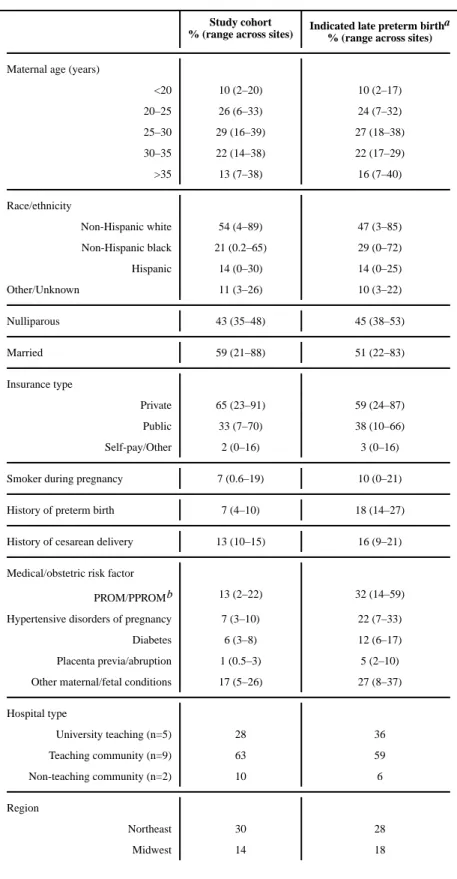
Cohort characteristics are presented in Table 1. Most of the births (77%) were to women 20 to 35 years of age, while 10% occurred to women under age 20 and 13% to women over the age of 35. Over half of the births in the cohort (54%) were to non-Hispanic white women and 65% of women in the cohort had private insurance. We included births from 5 university-affiliated teaching hospitals (28%, n=41,538), 9 teaching community hospitals (63%, n=93,760), and 2 non-teaching community hospitals (10%, n=14,757) (Table 1). The majority of indicated late preterm births (59%) occurred at teaching community hospitals. All 16 hospitals in the cohort reported 24-hour obstetric coverage. A large majority of deliveries occurred in hospitals with 24-hour MFM and neonatologist coverage. All of the 5 university-affiliated teaching hospitals and 8 of the teaching community hospitals reported 24-hour MFM coverage. All of the university-affiliated and teaching community hospitals reported 24-hour neonatologist coverage. Neither of the non-teaching community hospitals reported 24-hour MFM or neonatologist coverage. Private practice physicians performed the majority of deliveries in the full cohort and among indicated late preterm births.
We observed wide variation of indicated late preterm births across hospitals, with indicated late preterm births varying from 3.1 to 9.3% (Figure 2, unadjusted model). We found that demographic and medical/obstetric risk factors explain some of the center variation of indicated late preterm births, with the adjusted percent ranging from 2.7 to 7.4% across hospitals (Figure 2, Model 1). The effect of demographics and medical risk factors on the percent of indicated late preterm birth varied across hospitals. For example, hospital M had
A
uthor Man
uscr
ipt
A
uthor Man
uscr
ipt
A
uthor Man
uscr
ipt
A
uthor Man
uscr
an unadjusted percent > 1% above the overall cohort average, but had an adjusted percent that approximated the cohort’s average. Center variation was further explained by also adjusting for hospital and provider characteristics (indicated late preterm birth ranged from 2.9 to 5.9% across hospitals), as noted by some hospitals (e.g., A, H, L, and O) approaching the cohort’s overall percent of indicated late preterm birth (Figure 2, Model 2).
We also found wide center variation in the risk of indicated late preterm birth for the four medical/obstetric risk factors modeled in our analysis. Variation of indicated late preterm births across hospitals (as compared to the reference site) was greatest for births associated with PPROM (adjusted RR range across hospitals: 0.45 – 3.05), followed by hypertensive disorders of pregnancy (adjusted RR range across hospitals: 0.36 – 1.27) and placenta previa/abruption (adjusted RR range across hospitals: 0.48 – 1.82) (Figure 3). We found the least variability of indicated late preterm births among those associated with diabetes (RR range: 0.65 – 1.39). The interactions between the risk factor and hospital site were
statistically significant (each p<0.001) for all four risk factors, indicating that the risk of late preterm birth for each of these risk factors differed across sites. Although not all hospitals had a consistent pattern of risk across risk factors, some hospitals (e.g., E, L, and N) more consistently had a lower risk of indicated late preterm birth compared to others (e.g., A, K, and P) (Figure 3). Results from both sensitivity analyses also demonstrated significant center variation in indicated late preterm births and center variation in the risk of indicated late preterm births for the four major risk factors.
Comments
We found wide center variation of indicated late preterm births in a large cohort of US births even after controlling for socio-demographic and medical/obstetric risk factors. A portion of the remaining center variation was further explained by hospital and provider characteristics, thus supporting the role of practice variation as a potential source of modifiable late preterm birth.
Obstetric management of maternal or fetal co-morbidities during pregnancy frequently includes preterm delivery in order to prevent maternal and perinatal morbidity or mortality. Compared to very preterm newborns, neonatal outcomes from late preterm birth are more favorable; but late preterm newborns still experience more short and long-term morbidities compared to term newborns.6–9 Balancing maternal and fetal risk at late preterm gestation is challenging.16 Continuing a late preterm pregnancy in the setting of maternal or fetal complications results in decreasing benefit as the pregnancy progresses closer to term. Traditionally, the management of high-risk pregnancies shifts at 34 weeks’ gestation.15 For example, antenatal steroids are not routinely administered after 33 weeks’ gestation. However, this approach is being reexamined with a randomized control trial on the use of antenatal steroids in women at risk for late preterm delivery (NCT01222247). With a paucity of evidence supporting an optimal timing of delivery for many pregnancy complications, provider practice variation likely results in different thresholds for delivery. The increased awareness of the morbidities of late preterm and early term birth has resulted in several successful quality improvement initiatives designed to decrease practice variation in elective deliveries before 39 weeks’ gestation.29–31 The success of such initiatives supports the
A
uthor Man
uscr
ipt
A
uthor Man
uscr
ipt
A
uthor Man
uscr
ipt
A
uthor Man
uscr
presence of modifiable practice variation in the management of late preterm births. The presence of practice variation in the threshold for late preterm delivery creates an opportunity to identify potential areas for further quality improvement activities.
The role of practice variation in health care quality has been described in many areas of health care, including obstetrics and neonatology (e.g., cesarean deliveries, labor inductions, and low birth weight). 17, 18, 32 Less is known about practice variation surrounding late preterm births. Previous studies have described statewide regional variation in late preterm births and variation in neonatal care of late preterm newborns.33, 34 In a clinical vignette-based survey, delivery providers in North Carolina reported variation in delivery decision-making for indicated late preterm deliveries.35 To our knowledge this is the first study to examine center variation of indicated late preterm births.
We found wide variation in the risk of indicated late preterm birth associated with PPROM. Late preterm birth associated with PPROM without spontaneous labor is common. 10, 12, 36 Current practice guidelines recommend delivery for PPROM at 34 weeks’ gestation or greater, so it is unclear why there is such variation across hospitals.15 Perhaps there is variation because these recommendations are primarily based on data prior to the use of latency antibiotics. A 2010 Cochrane review of seven trials did not find a difference in outcomes between planned early delivery and expectant management of PROM before 37 weeks’ gestation.37 The trials included in the Cochrane review were of varying
methodological quality and only one used prophylactic antibiotics. A recent European study found a higher risk of clinical chorioamnionitis with expectant management of PPROM between 34 and 36 completed weeks’ gestation, but not an increased risk of neonatal sepsis.38 It is possible that practice variation in the management of late preterm PPROM might increase until guidelines are revised (whether or not practice changes are
recommended) and successfully disseminated.
A small proportion (2 – 6%) of non-spontaneous late preterm births are associated with placenta previa or abruption.12, 36 Guidelines for the management of pregnancies complicated by placenta previa are based primarily on expert opinion, and delivery is recommended at 36 to 37 weeks’ gestation.16 Since previous studies on late preterm birth outcomes do not consistently address whether the placental disorder was acute or chronic, it is difficult to determine whether late preterm births associated with placental disorders are modifiable. For this study we were also not able to reliably determine severity or acuity of placental disorders. It is possible that differences in disease severity contributed to the variation. Interventions directed toward decreasing variation in late preterm births associated with placental disorders are less likely to significantly affect late preterm birth rates. Further evidence is needed to help guide the timing of delivery in pregnancies complicated by placental disorders.
Hypertensive disorders of pregnancy (e.g. preeclampsia, gestational hypertension) are among the most common risk factors for indicated late preterm birth.10, 12, 36 Obstetrical management of hypertensive disorders of pregnancy varies according to disease severity and gestational age. Current guidelines recommend expectant management for mild
preeclampsia until term gestation and preterm delivery (in consultation with MFM
A
uthor Man
uscr
ipt
A
uthor Man
uscr
ipt
A
uthor Man
uscr
ipt
A
uthor Man
uscr
specialists) in severe preeclampsia.15 Approximately 12 to 15% of indicated late preterm deliveries are associated with mild preeclampsia, and could be classified as potentially preventable late preterm birth.12, 36 We were unable to classify severity of preeclampsia, but might speculate severe disease to be more common at tertiary care centers (i.e. teaching hospitals) with more specialty services. However, given that we observed a high risk of late preterm birth associated with hypertensive disorders of pregnancy across all hospital types we speculate that factors other than disease severity influence the risk of late preterm delivery. Late preterm delivery in pregnancies complicated by hypertensive disorders of pregnancy, particularly gestational hypertension and mild preeclampsia, is a source of potentially modifiable late preterm birth.
We found the least center variation in late preterm births associated with maternal diabetes. In general, preterm delivery is not recommended unless diabetes is poorly controlled or manifestations of severe disease are present. 16 The smaller degree of center variation is possibly due to greater agreement on what manifestations of disease should prompt delivery (e.g. poor diabetes control, superimposed preeclampsia).
Although our analysis did not focus of center variation by hospital type, we did observe that the non-teaching community hospitals in our cohort consistently had a higher risk of indicated late preterm birth for PPROM, hypertensive disorders of pregnancy, and placenta previa/abruption. Previous evidence supports an increased risk of indicated late preterm birth at non-teaching community hospitals. Non-evidence based or potentially preventable late preterm births are associated with private insurance, older maternal age, white non-Hispanic race/ethnicity, and non-faculty private physicians.11, 12, 36 Our study shows that several of these risk factors are more common at non-teaching community hospitals. Conclusions on variation by hospital type are limited by the small sample size of non-teaching community hospitals in the dataset.
Strengths of this study include the large sample size and multicenter nature of the cohort; both characteristics increase the generalizability of our findings. Our study is limited by retrospective data collection; because of this we were only able to determine risk factors associated with the delivery and not definite indications for delivery. The presence of spontaneous labor was also based on the same data collection process, thus the definition of spontaneous labor was not standardized. When examining center variation of indicated late preterm births we attempted to adjust for possible confounders in a multivariable analysis. However, the potential for unmeasured confounders remains, thus possibly preventing us from fully adjusting for case-mix. We were unable to establish disease severity for the risk factors included in the analysis (e.g. severity of preeclampsia). Disease severity influences obstetrical decision-making and may account for some of the variation found in our study. Nonetheless, a major strength of our study is the detailed information on maternal
demographics and pregnancy outcomes from the medical record. Our study does not allow us to make inferences on whether differences across hospital types are due to provider or institutional practices, or patient preferences and expectations.
Center variation of indicated late preterm births associated with common medical/obstetric complications of pregnancy was common in a large cohort of U.S. births. Late preterm
A
uthor Man
uscr
ipt
A
uthor Man
uscr
ipt
A
uthor Man
uscr
ipt
A
uthor Man
uscr
newborns are the largest subgroup of preterm births, are at risk for short and long-term morbidities, and contribute significantly to neonatal healthcare utilization. Obstetrical practice variation in the management of common pregnancy complications (e.g. PPROM, hypertensive disorders of pregnancy) may be a source of potentially modifiable late preterm birth. Future research should generate evidence on best practice for these obstetric
complications. Strategies for dissemination of evidence may need to be customized for teaching and non-teaching healthcare environments.
Acknowledgments
The data included in this article were obtained from the Consortium on Safe Labor, which was supported by the Intramural Research Program of the Eunice Kennedy Shriver National Institute of Child Health and Human Development, National Institutes of Health, through Contract number HHSN267200603425C. Institutions involved in the Consortium include, in alphabetical order: Baystate Medical Center, Springfield, MA; Cedars-Sinai Medical Center Burnes Allen Research Center, Los Angeles, CA; Christiana Care Health System, Newark, DE; MedStar Georgetown University Hospital, Washington, DC; Indiana University Clarian Health, Indianapolis, IN; Intermountain Healthcare and the University of Utah, Salt Lake City, UT; Maimonides Medical Center, Brooklyn, NY; MetroHealth Medical Center, Cleveland, OH; Summa Health System, Akron City Hospital, Akron, OH; The EMMES Corporation, Rockville, MD (Data Coordinating System); University of Illinois at Chicago, Chicago, IL; University of Miami, Miami, FL; and University of Texas Health Science Center at Huston, Houston, TX. The named authors alone are responsible for the views expressed in this manuscript, which does not necessarily represent the decisions or the stated policy of the NICHD.
DL Long received supported from a grant from the National Institute of General Medical Sciences (U54GM104942); her views expressed in this manuscript are not that of the NIH.
This study received supported from a Faculty Development Award from the North Carolina Children’s Promise.
References
1. Hamilton BE, Martin JA, Osterman M, Curtin SC. Births: preliminary data for 2013. Natl Vital Stat Rep. 2014:63.
2. Engle WA, Tomashek KM, Wallman C. “Late-preterm” infants: a population at risk. Pediatrics. 2007; 120:1390–1401. [PubMed: 18055691]
3. Bird TM, Bronstein JM, Hall RW, Lowery CL, Nugent R, Mays GP. Late preterm infants: birth outcomes and health care utilization in the first year. Pediatrics. 2010; 126:e311–e319. [PubMed: 20603259]
4. Berard A, Le Tiec M, De Vera MA. Study of the costs and morbidities of late-preterm birth. Arch Dis Child Fetal Neonatal Ed. 2012; 97:F329–F334. [PubMed: 22933090]
5. Escobar GJ, Greene JD, Hulac P, Kincannon E, Bischoff K, Gardner MN, et al. Rehospitalisation after birth hospitalisation: patterns among infants of all gestations. Arch Dis Child. 2005; 90:125– 131. [PubMed: 15665162]
6. Morse SB, Zheng H, Tang Y, Roth J. Early school-age outcomes of late preterm infants. Pediatrics. 2009; 123:e622–e629. [PubMed: 19336353]
7. Petrini JR, Dias T, McCormick MC, Massolo ML, Green NS, Escobar GJ. Increased risk of adverse neurological development for late preterm infants. J Pediatr. 2009; 154:169–176. [PubMed: 19081113]
8. Chyi LJ, Lee HC, Hintz SR, Gould JB, Sutcliffe TL. School outcomes of late preterm infants: special needs and challenges for infants born at 32 to 36 weeks gestation. J Pediatr. 2008; 153:25– 31. [PubMed: 18571530]
9. Teune MJ, Bakhuizen S, Bannerman CG, Opmeer BC, van Kaam AH, van Wassenaer AG, et al. A systematic review of severe morbidity in infants born late preterm. Am J Obstet Gynecol. 2011; 205:374, e371–e379. [PubMed: 21864824]
10. Laughon SK, Reddy UM, Sun L, Zhang J. Precursors for late preterm birth in singleton gestations. Obstet Gynecol. 2010; 116:1047–1055. [PubMed: 20966688]
A
uthor Man
uscr
ipt
A
uthor Man
uscr
ipt
A
uthor Man
uscr
ipt
A
uthor Man
uscr
11. Reddy UM, Ko CW, Raju TN, Willinger M. Delivery indications at late-preterm gestations and infant mortality rates in the United States. Pediatrics. 2009; 124:234–240. [PubMed: 19564305] 12. Holland MG, Refuerzo JS, Ramin SM, Saade GR, Blackwell SC. Late preterm birth: how often is
it avoidable? Am J Obstet Gynecol. 2009; 201:404, e401–e404. [PubMed: 19716546] 13. Lubow JM, How HY, Habli M, Maxwell R, Sibai BM. Indications for delivery and short-term
neonatal outcomes in late preterm as compared with term births. Am J Obstet Gynecol. 2009; 200:e30–e33. [PubMed: 19136092]
14. McIntire DD, Leveno KJ. Neonatal mortality and morbidity rates in late preterm births compared with births at term. Obstet Gynecol. 2008; 111:35–41. [PubMed: 18165390]
15. Riley, LE.; Stark, AR., editors. Guidelines for Perinatal Care. 7th. American Academy of Pediatrics and The American College of Obstetricians and Gynecologists; 2012.
16. Spong CY, Mercer BM, D’Alton M, Kilpatrick S, Blackwell S, Saade G. Timing of indicated late-preterm and early-term birth. Obstet Gynecol. 2011; 118:323–333. [PubMed: 21775849] 17. Clark SL, Belfort MA, Hankins GD, Meyers JA, Houser FM. Variation in the rates of operative
delivery in the United States. Am J Obstet Gynecol. 2007; 196:526, e521–e525. [PubMed: 17547880]
18. Thompson LA, Goodman DC, Chang CH, Stukel TA. Regional variation in rates of low birth weight. Pediatrics. 2005; 116:1114–1121. [PubMed: 16263997]
19. Eichenwald EC, Blackwell M, Lloyd JS, Tran T, Wilker RE, Richardson DK. Inter-neonatal intensive care unit variation in discharge timing: influence of apnea and feeding management. Pediatrics. 2001; 108:928–933. [PubMed: 11581446]
20. Berry JG, Toomey SL, Zaslavsky AM, Jha AK, Nakamura MM, Klein DJ, et al. Pediatric readmission prevalence and variability across hospitals. JAMA. 2013; 309:372–380. [PubMed: 23340639]
21. Wennberg, JE. Tracking medicine : a researcher’s quest to understand health care. New York: Oxford University Press; 2010.
22. Goodman DC. Unwarranted variation in pediatric medical care. Pediatr Clin North Am. 2009; 56:745–755. [PubMed: 19660625]
23. MacDorman MF, Declercq E, Zhang J. Obstetrical intervention and the singleton preterm birth rate in the United States from 1991–2006. Am J Public Health. 2010; 100:2241–2247. [PubMed: 20864720]
24. Martin, JA.; Hamilton, BE.; Sutton, PD.; al, e. Births: Final Data for 2006. Hyattsville, MD: National Center for Health Statistics2009 Contract No.: 7;
25. Martin JA, Osterman MJ, Sutton PD. Are preterm births on the decline in the United States? Recent data from the National Vital Statistics System. NCHS Data Brief. 2010:1–8. [PubMed: 20604990]
26. Zhang J, Troendle J, Reddy UM, Laughon SK, Branch DW, Burkman R, et al. Contemporary cesarean delivery practice in the United States. Am J Obstet Gynecol. 2010; 203:326, e321–e326, e310. [PubMed: 20708166]
27. Zou G. A modified poisson regression approach to prospective studies with binary data. Am J Epidemiol. 2004; 159:702–706. [PubMed: 15033648]
28. Fitzmaurice, GM.; Laird, NM.; Ware, JH. Applied longitudinal analysis. 2nd. Hoboken, N.J: Wiley; 2011.
29. Oshiro BT, Henry E, Wilson J, Branch DW, Varner MW. Decreasing elective deliveries before 39 weeks of gestation in an integrated health care system. Obstet Gynecol. 2009; 113:804–811. [PubMed: 19305323]
30. Donovan EF, Lannon C, Bailit J, Rose B, Iams JD, Byczkowski T. A statewide initiative to reduce inappropriate scheduled births at 36(0/7)-38(6/7) weeks’ gestation. Am J Obstet Gynecol. 202:243, e241–e248. [PubMed: 20207241]
31. Fisch JM, English D, Pedaline S, Brooks K, Simhan HN. Labor induction process improvement: a patient quality-of-care initiative. Obstet Gynecol. 2009; 113:797–803. [PubMed: 19305322] 32. Glantz JC. Labor induction rate variation in upstate New York: what is the difference? Birth. 2003;
30:168–174. [PubMed: 12911799]
A
uthor Man
uscr
ipt
A
uthor Man
uscr
ipt
A
uthor Man
uscr
ipt
A
uthor Man
uscr
33. Aliaga SR, Smith PB, Price WA, Ivester TS, Boggess K, Tolleson-Rinehart S, et al. Regional variation in late preterm births in North Carolina. Matern Child Health J. 2013; 17:33–41. [PubMed: 22350629]
34. Aliaga S, Boggess K, Ivester TS, Price WA. Influence of Neonatal Practice Variation on Outcomes of Late Preterm Birth. Am J Perinatol. 2013
35. Aliaga S, Price W, McCaffrey M, Ivester T, Boggess K, Tolleson-Rinehart S. Practice variation in late-preterm deliveries: a physician survey. J Perinatol. 2013; 33:347–351. [PubMed: 23018796] 36. Gyamfi-Bannerman C, Fuchs KM, Young OM, Hoffman MK. Nonspontaneous late preterm birth:
etiology and outcomes. Am J Obstet Gynecol. 2011; 205:456, e451–e456. [PubMed: 22035950] 37. Buchanan SL, Crowther CA, Levett KM, Middleton P, Morris J. Planned early birth versus
expectant management for women with preterm prelabour rupture of membranes prior to 37 weeks’ gestation for improving pregnancy outcome. Cochrane Database Syst Rev.
2010:CD004735. [PubMed: 20238332]
38. van der Ham DP, van der Heyden JL, Opmeer BC, Mulder AL, Moonen RM, van Beek JH, et al. Management of late-preterm premature rupture of membranes: the PPROMEXIL-2 trial. Am J Obstet Gynecol. 2012; 207:276.e1–276.e10. [PubMed: 22901981]
A
uthor Man
uscr
ipt
A
uthor Man
uscr
ipt
A
uthor Man
uscr
ipt
A
uthor Man
uscr
Figure 1. Study Flow Diagram
*3 hospitals excluded due to missing data on key variables
A
uthor Man
uscr
ipt
A
uthor Man
uscr
ipt
A
uthor Man
uscr
ipt
A
uthor Man
uscr
Figure 2. Percent of indicated late preterm births across study hospitals
Figure refers to late preterm births and study hospitals included in the final study population. Error bars refer to 95% CI
Model 1 adjusted for: demographic and medical/obstetric risk factors
Model 2 adjusted for: demographic risk factors, medical/obstetric risk factors, and hospital and provider characteristics
A
uthor Man
uscr
ipt
A
uthor Man
uscr
ipt
A
uthor Man
uscr
ipt
A
uthor Man
uscr
Figure 3. Center variation of risk ratio of late preterm birth by risk factor
All models adjusted for demographics, medical/obstetric risk factors, and hospital and provider characteristics
A
uthor Man
uscr
ipt
A
uthor Man
uscr
ipt
A
uthor Man
uscr
ipt
A
uthor Man
uscr
A
uthor Man
uscr
ipt
A
uthor Man
uscr
ipt
A
uthor Man
uscr
ipt
A
uthor Man
uscr
ipt
Table 1
Cohort characteristics (n=150,055)
Study cohort
% (range across sites) Indicated late preterm birtha% (range across sites)
Maternal age (years)
<20 10 (2–20) 10 (2–17)
20–25 26 (6–33) 24 (7–32)
25–30 29 (16–39) 27 (18–38)
30–35 22 (14–38) 22 (17–29)
>35 13 (7–38) 16 (7–40)
Race/ethnicity
Non-Hispanic white 54 (4–89) 47 (3–85)
Non-Hispanic black 21 (0.2–65) 29 (0–72)
Hispanic 14 (0–30) 14 (0–25)
Other/Unknown 11 (3–26) 10 (3–22)
Nulliparous 43 (35–48) 45 (38–53)
Married 59 (21–88) 51 (22–83)
Insurance type
Private 65 (23–91) 59 (24–87)
Public 33 (7–70) 38 (10–66)
Self-pay/Other 2 (0–16) 3 (0–16)
Smoker during pregnancy 7 (0.6–19) 10 (0–21)
History of preterm birth 7 (4–10) 18 (14–27)
History of cesarean delivery 13 (10–15) 16 (9–21)
Medical/obstetric risk factor
PROM/PPROMb 13 (2–22) 32 (14–59)
Hypertensive disorders of pregnancy 7 (3–10) 22 (7–33)
Diabetes 6 (3–8) 12 (6–17)
Placenta previa/abruption 1 (0.5–3) 5 (2–10)
Other maternal/fetal conditions 17 (5–26) 27 (8–37)
Hospital type
University teaching (n=5) 28 36
Teaching community (n=9) 63 59
Non-teaching community (n=2) 10 6
Region
Northeast 30 28
A
uthor Man
uscr
ipt
A
uthor Man
uscr
ipt
A
uthor Man
uscr
ipt
A
uthor Man
uscr
ipt
Study cohort
% (range across sites) Indicated late preterm birtha% (range across sites)
South 27 35
West 29 19
24 hour MFMc provider on-call 83 86
24 hour Neonatologist on-call 90 94
Physician age (years)
<40 22 (4–47) 24 (3–48)
40 - < 50 34 (20–51) 36 (20–44)
50 - < 60 24 (7–43) 20 (10–40)
≥ 60 11 (1–26) 10 (1–32)
Unknown 9 (0–35) 10 (0–30)
Physician practice type
Private practice 60 (0–98) 51 (0–97)
University faculty 17 (0–76) 24 (0–87)
Other/Unknown 23 (1–100) 25 (2–100)
a
Late preterm included 34 0/7 to 36 6/7 weeks of gestation
b
Premature rupture of membranes (PROM) and preterm premature rupture of membranes (PPROM) were defined as rupture of membranes without spontaneous labor
c