R E S E A R C H
Open Access
Oxidative stability and quality characteristics
of whey protein coated rohu (
Labeo rohita
) fillets
Muhammad Issa Khan
1,2, Muhammad Nawaz Adrees
1, Muhammad Sajid Arshad
3*, Faqir Muhammad Anjum
3,
Cheorun Jo
2and Aysha Sameen
1Abstract
Background:Edible coatings have beneficial effect on quality of fish and act as barrier against moisture transfer and uptake of oxygen. Edible coating made up of biodegradable materials is helpful to control the quality deterioration and enhance the shelf life.
Methods:The present study was designed to elucidate the effects of whey based protein using two plasticizers i.e. sorbitol and glycerol on oxidative stability and quality characteristics of Rohu (Labeo rohita). Coating solutions were prepared by incorporating whey (8 % protein; w/ w) in distilled water followed addition of sorbitol and glycerol. Dipping method was used to apply coating on fish fillets. The coated fillets were subjected to quality characterictics, pH, color, TBARS, peroxide value, volatile basic nitrogen (TVBN) and sensory evaluation during 40 days of storage.
Results:The results showed significant impact on different quality attributes of fish fillets. Highest (TVBN) and TBARS were observed in control samples (T0) (12.60 ± 0.25, mg/100 g, 0.820 ± 0.02 mg MDA/kg) while lowest in T3coated samples (8.81 ± 0.18 mg/100 g., 0.352 ± 0.01 mg MDA/kg of meat). Moreover, sensorial findings did
not showed adverse effects and T3coated samples were ranked higher by consumers.
Conclusion:In conclusion, coating fish with Whey: Glycerol: Sorbitol (1:1:1) in current investigation enhances the storage life and quality of fish fillets.
Keywords:Whey protein coating, Fish fillets, TBARS, TVBN, Oxidative stability, Quality
Introduction
Fish provide valuable essential health promoting fatty acids, amino acids, lipid soluble vitamins and micronu-trients [1]. Fish is essential part of human diet in many regions of the world and for some countries major source of income [2]. Rohu (Labeo rohita) is a fresh water fish of the carp family Cyprinidae and ubiqui-tously present throughout South and South East Asia in the weedy, slow flowing or standing waters of lakes and rivers [3]. Animal foods are perishable but fish is ranked high among them and conventionally consumed as fresh in fishing areas due to complication in its handling, pro-cessing and perishable nature [4]. The quality deterior-ation of fish mostly occurs in fat and fish fat is mainly
composed of unsaturated fatty acids. The environmental oxygen rapidly affects these unsaturated fatty acids which results in oxidation of these unsaturated fatty acids leading to deteriorate the quality of fish meat. The neutral pH, high amount of enzymes in the tissues, water holding cap-acity and connective tissues content also contribute to quality deterioration of fish [5].
Oxygen is responsible for degradation processes in foods like lipid oxidation, microorganism growth, enzymatic browning and vitamin loss [6]. The lipid oxidation result in development of off flavor, off color, nutrient loss [7] and oxidative processes causing degradation in meat proteins, pigment and lipids ultimately limiting the shelf life [8]. The highly perishable nature of fishery products demand the development of process for their better distribution in “as-is” condition. Edible coating is one of most promising fish preservation technique in this prospective with con-sumer interest potential [9]. Edible coating, a biodegradable
* Correspondence:[email protected]
3
Institute of Home and Food Sciences, Government College University, Faisalabad, Pakistan
Full list of author information is available at the end of the article
material to be eaten as a part of food material without any side effects is the best choice for food industries to capture the consumer demands [10]. Edible coating is applied to the product surface and is responsible for restrict oxygen permeability, solute movement and serve as provider for a good barrier to moisture [11]. Whey protein fractions and isolates have been studied for film formation [12] and their potential as edible film forming agent during last decade due to favorable functional properties and dairy industry surplus [13]. The whey proteins have been used to produce transparent, flexible, colorless and odorless films [14] with moderate potential as moisture barrier and excellent oxy-gen barrier potential [15]. The making of protein-based films generally needs the incorporation of a minimal con-tent of plasticizer to reduce its brittleness by weakening intermolecular forces between adjacent polymer chains. Plasticizers are essential for hydrocolloid coatings to en-hance edible film processability and flexibility by raising the volume or molecular mobility of polymers and enhancing intermolecular spacing, by decreasing internal hydrogen bonding between polymer chains. Common plasticizers in-clude polyols like sorbitol, glycerol, mannitol, propylene glycol and polyethylene glycol. The current study was de-signed with objective to apply whey protein based coating on fish fillets and assess its impact on oxidative stability and quality characteristics.
Materials and methods Materials preparation
Fresh Rohu (Labeo rohita) was procured from University of Agriculture, Faisalabad, pakistan fisheries and all che-micals and reagents required to carry out research were purchased from Sigma Aldrich (Germany) and Merck (Germany). Fishes were cleaned to remove blood residues and dirt particles attached on the surface of fish and were cut into fillets of uniform sizes and stored at−18 °C prior to coating. Whey proteins concentrate based coating solutions were formulated by following the procedure as described by Diaz et al. (2011). Three coatings of differ-ent compositions were prepared: Whey + glycerol (1:2); Whey + sorbitol (1:2); Whey + glycerol + sorbitol (1:1:1). Protein coating solutions were prepared by slow stirring of whey protein concentrate (8 % protein; w/ w) in dis-tilled water for 30 min at room temperature and later plasticizers were added as per treatment plan. Uniform homogenous consistency of coating solution was achieved by further stirring for 30 min and then heated in water bath at 80 °C for 30 min.
Whey protein coating and storage of fish fillets
The edible coatings of whey proteins concentrate were ap-plied to fish fillet dipping coating solutions for two minutes. After application of coating solution, these fish fillets were dried at room temperature for 15 min to maintain uniform
thickness (1.5 mm) of coatings. Non-coated and whey pro-tein concentrate coated samples were stored at−18 °C and were subjected of analysis at regular intervals (0, 10, 20, 30 and 40 days of storage).
Coating retention
The yield after coatings were measured following the proce-dures described by Diaz et al. [16] The fish fillets were weighed before and after coating. The yield (weight gain, %) of coated fillets was calculated as:
Coating retentionð Þ ¼% Wt:of coated fillet pieces
Wt:of non‐coated raw fillet piecesx 100
Thaw yield measurement
Thaw yield was measured according to method as de-scribed by Diaz et al. [16], frozen fillet were removed from the freezer, kept for 9 h at refrigerated temperature (5 °C), removed from the freezer bag, and placed on a rack for 2 min to release liquid drip. Then the thawed fillet pieces were weighed. The thaw yield (%) was deter-mined by using the formula.
Thaw Yieldð Þ ¼% Wt:of the thawed coated fillet pieces Wt:of the non‐coated raw fillet pieces
Drip loss measurement
Drip loss was obtained by following the method as des-cried by Diaz et al. [16]. After thawing, fish samples were suspended in a polyethylene bag sealed under atmos-pheric pressure. The sample was held at 2 °C for 24 h and then reweighed. The drip loss (%) was determined by using the formula.
Drip lossð Þ ¼% ½ðWt:of the frozen fillets‐Wt:of the Thawad thawadÞ 100Þ Wt:of the frozen coated fillet pieces
Oil uptake measurement
Oil uptake of fish fillets was determined by the method as described by Kilincceker et al. [13] 30 g fish sample was weighed and deep fried in the cooking oil (Canola oil). Then fat content present in fried fish fillet was determined by using Soxhlet extractor. One gram oven dried sam-ple was used to extract the fat content with n-Hexane. The n-Hexane was evaporated and recovered with the help of rotary evaporator. The fat content was weighed and oil uptake was calculated by the given formula.
Oil uptakeð Þ ¼% Wt:of fried sample‐Wt:of defatted sample
Wt:of sample 100
pH measurement
fish fillets. Purposely, the samples were homogenized in 100 mL of distilled water for about 30s and pH was noted by placing the pH electrode in samples [17].
Color analysis
Color values (L*, a*, and b*) of fish fillet samples were obtained by a colorimeter following the method as de-scribed by Diaz et al. [16] Observations were made for edible coated and non-coated samples at three different locations.
Oxidative stability of fish fillets
The oxidative stability of the whey proteins concentrate coated fish fillets was determined by Peroxide Value and TBARS Value. Peroxide value of fish fillets was deter-mined by adopting the procedure described by Shon & Chin [18]. 5 g sample was heated in a water bath for 3 min at 60 °C followed by thorough mixing through agi-tation in order to dissolve the fat and homogenize the sample after addition of 30 mL of acetic acid-chloroform solution (3:2 v/v). After filtration saturated potassium iod-ide solution was added in the filtrate @ 0.5 mL before transferring into a burette. The sample was titrated against a standard solution of sodium thiosulfate (25 g/L) using starch solution as indicator. The peroxide value was calcu-lated and expressed in milliequivalent peroxides per kg of the fish sample:
POV meqð =kgÞ ¼SN
W 1000
S = Volume of titration in mL
N = Normality of the sodium thiosulfate solution W = Sample weight in kg
The TBARS value of the whey proteins concentrate coated fish fillets was assessed by measuring mg of malon-dialdehyde per kg of fish fillets by following the method as described by Luo et al. [19] Briefly 5 g of sample was weighed into 50-mL test tube and homogenized with 50μL of butylated hydroxytoluene (7.2 %) and 15 mL of deionized distilled water using a homogenizer for 15 s at high speed. One milliliter of the meat homogenate was transferred to a disposable test tube (13 × 100 mm) and 2 mL added TBA/trichloroacetic acid solution (TCA; 15 mM TBA/15 % TCA). The mixture was vortex and in-cubated in a boiling water bath for 15 min to develop color. Then samples were cooled in the ice water for 10 min, vor-texed again, and centrifuged for 15 min at 2,000 × g at 4 °C. The absorbance of the resulting supernatant solution was determined at 531 nm against a blank containing 1 mL of deionized distilled water and 2 mL of TBA/TCA solution. The amounts of TBARS were expressed as milligrams of malondialdehyde (MDA) per kilogram of fish fillets.
Total volatile basic nitrogen (TVB-N) measurement The total volatile basic nitrogen value of fish fillets was de-termined by the micro titration method as described by Sallama et al. [20] 10 g fish flesh sample was dispersed in 100 mL of distilled water by stirring for 30 min and fil-tered. Afterwards, 5 mL MgO (1 %) solution was added to 5 ml filtrate and Kjeldahl apparatus was used for sample distillation. The nitrogen released was absorbed in 20 mL aqueous solution of boric acid (2 %) containing methylene blue indicator. The trapped nitrogen was titrated with 0.01 M HCl solution and TVB-N content of samples was measured through equation using the volume of 0.01 M HCl used for titration.
Sensory evaluation of fish fillets
The sensory evaluation of fried fish fillets was conducted for color, odor, taste, texture and overall acceptability by a panel of judges using 9-point hedonic scale according to the procedure of Meilgaard et al [21].
Statistical analysis
The data obtained for each parameter was subjected to statistical analysis to determine the level of significance according to the method described by Steel et al. [22] by using the software package (Statistic 8.1). The Duncan’s multiple range (DMR) test was used to estimate the level of significance existed between mean values.
Results and discussion
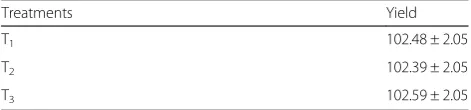
Quality assessment of whey protein coated rohu fillets The coating retention of fish fillets was assessed by measuring the weight gain of fish fillets after application of whey proteins concentrate coating (Table 1). It is evi-dent from results that weight gain did not differ signifi-cantly for different whey proteins concentrate coating indicating the uniformity of coating application for all coating types. These findings are in agreement with the previous work of Diaz et al. [16] who observed non-significant difference in weight gain of whey protein based edible coated Atlantic salmon (Salmo salar). Thaw yield is measure of fish weight achieved after thawing of fish fillet and yield was recorded higher for the treat-ments with coating as compared to control as depicted in Table 2. The un-coated samples (T0) results in higher
thawing losses as lowest thaw yield was observed for
Table 1Coating retention (%) of whey protein edible coating by Rohu fish fillets
Treatments Yield
T1 102.48 ± 2.05
T2 102.39 ± 2.05
T3 102.59 ± 2.05
those samples. Thaw yield of frozen fish fillet also de-creased with storage time and all samples showed similar decreasing trend in thaw yield with storage. However, coating samples have higher yield than un-coated fish fillets indicating that coatings have moisture barrier property and thus preserve the weight of the fish fillets. Our findings are in harmony with the previous work of Valverde et al. [23] who stated that aloevera based novel coatings served as a good preservative agent to maintain the quality and safety of poultry meat during cold stor-age. Diaz et al. [16] reported similar trend in Atlantic salmon (salmo salar) fish during frozen storage. The correlated factor with thaw yield is drip loss, as the product having higher thaw yield showed have minimum drip loss. The results explicated in Table 2 indicate that T3have minimum mean drip loss (0.69 %) as compare
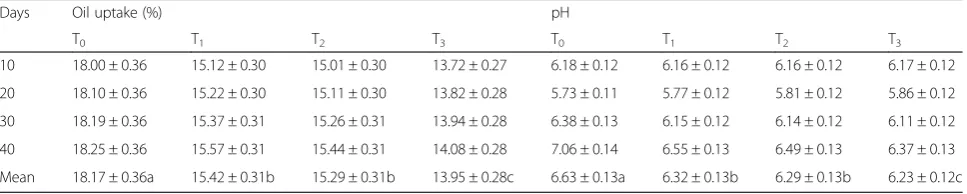
to other coated and non-coated samples (1.28 %). Drip loss occurred due to moisture removal from frozen fish fillets with the passage of time. Whey protein coating having glycerol and sorbitol in 1:1 present highest bar-rier against moisture loss and thus reducing drip loss of coated fish fillets. These findings are in accordance with results of Han et al. [24] who applied chitosan coating and observed reduced drip loss. Edible coating reduced the amount of oil uptake during the frying process as oil use same channel of water removal from sample for up-take during frying. Thus, reduced water removal as a re-sult of coating reduces the oil uptake by coated samples. The samples having lower drip losses have lower oil up-take as indicated in Table 3. These result are in agreement
with findings of Elmadfa et al. [25] who observed similar trend in edible coated farmed fish (salmo salar) during frying process.
pH and color of whey protein edible coated rohu fillets The pH of food is consider an important attribute affect-ing its quality and shelf stability by regulataffect-ing many func-tions and reacfunc-tions. The data explicated in Table 3 showed significant variation in pH of fish fillet as a result of edible whey protein coating. The results indicated an ultimate decrease in pH of coated fish fillets with whey protein coating. The pH of sample showed an initial decrease and then increase in pH value. This increase in pH was attrib-uted to production of volatile bases by the degradation of proteins and initial decrease of pH was linked to dissol-ution of CO2. Amongst the treatments, the maximum pH
increase was found in T0(uncoated) and the lowest pH
in-crease was documented in T3 (Whey (1): glycerol (1):
sorbitol (1) ). The samples exhibited a gradual increase in the pH ranging from 6.16 ± 0.12 to 7.05 ± 0.14 during 40 days of frozen storage and sample exhibited a similar trend that maximum increased was observed in T0
dur-ing storage while lowest was found for T3. The results
are supported by earlier findings of Fan et al. [26] who reported an increase in pH of silver carp fish fillets as-sociated with production of volatile bases due to the degradation of protein to ammonia and trimethylamine by microbial or endogenous enzymes. Vargas et al. [9] reported an increase in pH with the advancement of storage period of fish fillets.
Table 2Thaw yield and Drip loss of whey protein coated rohu fish fillets
Days Thaw yield (%) Drip loss (%)
T0 T1 T2 T3 T0 T1 T2 T3
10 98.59 ± 1.97 101.53 ± 2.03 101.52 ± 2.03 101.92 ± 2.04 1.301 ± 0.03 0.927 ± 0.02 0.849 ± 0.02 0.653 ± 0.01 20 97.35 ± 1.95 100.57 ± 2.01 100.63 ± 2.01 101.23 ± 2.02 1.25 ± 0.02 0.945 ± 0.02 0.876 ± 0.02 0.677 ± 0.01 30 96.11 ± 1.92 99.59 ± 1.99 99.73 ± 1.99 100.51 ± 2.01 1.27 ± 0.03 0.974 ± 0.02 0.894 ± 0.02 0.711 ± 0.01 40 94.84 ± 1.90 98.60 ± 1.97 98.81 ± 1.98 99.77 ± 2.00 1.31 ± 0.03 0.994 ± 0.02 0.922 ± 0.02 0.736 ± 0.01 Mean 96.72 ± 1.93b 100.07 ± 2.00a 100.17 ± 2.00a 100.86 ± 2.02a 1.283 ± 0.03a 0.960 ± 0.02b 0.885 ± 0.02c 0.694 ± 0.01d
The values are mean ± SD of three independent measurements, Means sharing similar letter in a row are statistically non-significant (P> 0.05) T0: Without coating T1: Whey: Glycerol (1:2) T2: Whey: Sorbitol (1:2) T3: Whey: Glycerol: Sorbitol (1:1:1)
Table 3Oil uptake and pH of whey protein coated rohu fish fillets
Days Oil uptake (%) pH
T0 T1 T2 T3 T0 T1 T2 T3
10 18.00 ± 0.36 15.12 ± 0.30 15.01 ± 0.30 13.72 ± 0.27 6.18 ± 0.12 6.16 ± 0.12 6.16 ± 0.12 6.17 ± 0.12 20 18.10 ± 0.36 15.22 ± 0.30 15.11 ± 0.30 13.82 ± 0.28 5.73 ± 0.11 5.77 ± 0.12 5.81 ± 0.12 5.86 ± 0.12 30 18.19 ± 0.36 15.37 ± 0.31 15.26 ± 0.31 13.94 ± 0.28 6.38 ± 0.13 6.15 ± 0.12 6.14 ± 0.12 6.11 ± 0.12 40 18.25 ± 0.36 15.57 ± 0.31 15.44 ± 0.31 14.08 ± 0.28 7.06 ± 0.14 6.55 ± 0.13 6.49 ± 0.13 6.37 ± 0.13 Mean 18.17 ± 0.36a 15.42 ± 0.31b 15.29 ± 0.31b 13.95 ± 0.28c 6.63 ± 0.13a 6.32 ± 0.13b 6.29 ± 0.13b 6.23 ± 0.12c
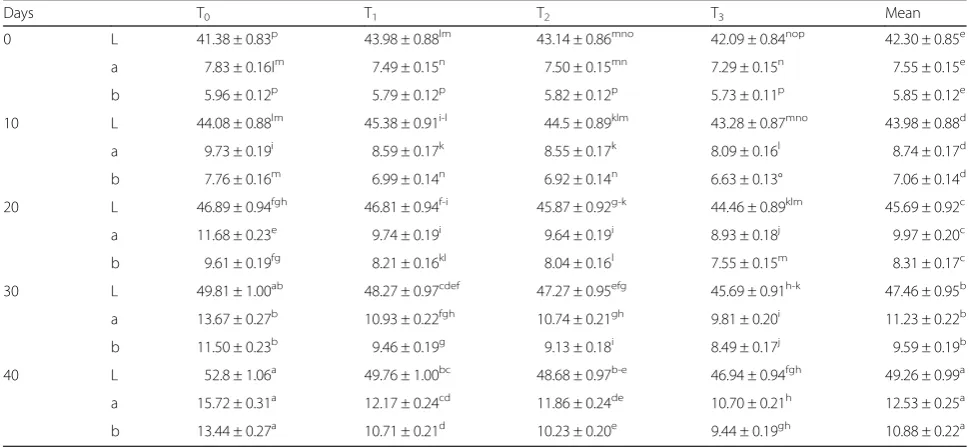
The appearance of foods is one of the major determi-nants of its appeal to consumers and consequently the sales of product. Oxidative processes in meat lead to the degradation of lipids and proteins which, in turn, con-tribute to the deterioration in flavor, texture and color of displayed meat [27]. The results regarding mean values for color L*, a* and b* values of coated fish fillets are given in Table 4. It is evident from the results that whey protein coating significantly affect the color L*, a* and b* values of fish fillets. The storage period of edible coated fish fillets also significantly increase the L*, a* and b* value fish fillets. It is evident from results that lower degradation of color values of fish fillets was observed in whey protein coated samples and this degradation was lowest in whey protein coating prepared by combination of plasticizers. These results are in compliance with the findings reported by Diaz et al. [16] who reported similar trend in Atlantic salmon (salmo salar) fish during frozen storage. The different factors are responsible for color change in fish meat.
Oxidative stability of whey protein edible coated rohu fillets
Autoxidation is a major process of quality deterioration in food containing fats that leads towards generation of free radical and ultimately it spoils the quality by gener-ation of off flavors and bad taste [28]. Lipid oxidgener-ation is mainly responsible for quality degradation meat and meat products during storage and it can be delayed or inhibited by the edible coating of food [29].
Peroxide value (POV) is an important indicator to meas-ure rancidity of fat. The oxidation of fat produced free
radicals that leads to the formation of aldehydes and ke-tones that decreases the quality of meat. It is evident from results (Table 5) that coatings and storage significantly af-fected peroxide value among treatments. The mean values for peroxide value of fish fillets showed that the highest oxidation occurred in non-coated samples (T0) while
minimum fat degradation (2.42 ± 0.05 meq/kg) in samples coated with whey protein coating prepared with combin-ation of plasticizers. The mean values for peroxide value of fish fillets changed from 0.92 ± 0.02 meq/kg at 0 day to 5.12 ± 0.10 meq/kg on 40thday of storage. These findings showed that fish fillets treated with coatings especially T3
proved to be effective in retarding the lipid oxidation. Lipid oxidation occurred due to enzymatic activity in fish meat which can be triggered by availability of free oxygen. Thus, coating mixture provide barrier against oxygen pene-tration resulting in delayed lipid oxidation. These results are in compliance with the findings of Sallam [30] who also indicated a decline in peroxide value in salmon fish fillets under frozen storage.
The thiobarbituric acid reactive substance (TBARS) is used as an index of lipid oxidation measurement in meat and allied products. The results regarding TBARS of coated fish fillets in (Table 5) showed momentous effect coating on oxidation of fish fillets. The lowest oxidation of fat occurred in T3and highest oxidation occurred in T0
(control). The lowest mean value for thiobarbituric acid 0.352 mg of MDA/kg was observed for T3while control
samples has higher TBARS mean value (0.820 ± 0.02 mg of MDA/kg). The TBARS value of fish fillets showed a gradual increase as 0.178 ± 0.00 mg of MDA/kg (0d) in-creased significantly to 0.867 ± 0.02 mg of MDA/kg after
Table 4Color L*, a* and b* values of whey protein coated rohu fish fillets
Days T0 T1 T2 T3 Mean
0 L 41.38 ± 0.83p 43.98 ± 0.88lm 43.14 ± 0.86mno 42.09 ± 0.84nop 42.30 ± 0.85e
a 7.83 ± 0.16lm 7.49 ± 0.15n 7.50 ± 0.15mn 7.29 ± 0.15n 7.55 ± 0.15e
b 5.96 ± 0.12p 5.79 ± 0.12p 5.82 ± 0.12p 5.73 ± 0.11p 5.85 ± 0.12e
10 L 44.08 ± 0.88lm 45.38 ± 0.91i-l 44.5 ± 0.89klm 43.28 ± 0.87mno 43.98 ± 0.88d
a 9.73 ± 0.19i 8.59 ± 0.17k 8.55 ± 0.17k 8.09 ± 0.16l 8.74 ± 0.17d
b 7.76 ± 0.16m 6.99 ± 0.14n 6.92 ± 0.14n 6.63 ± 0.13° 7.06 ± 0.14d
20 L 46.89 ± 0.94fgh 46.81 ± 0.94f-i 45.87 ± 0.92g-k 44.46 ± 0.89klm 45.69 ± 0.92c
a 11.68 ± 0.23e 9.74 ± 0.19i 9.64 ± 0.19i 8.93 ± 0.18j 9.97 ± 0.20c
b 9.61 ± 0.19fg 8.21 ± 0.16kl 8.04 ± 0.16l 7.55 ± 0.15m 8.31 ± 0.17c
30 L 49.81 ± 1.00ab 48.27 ± 0.97cdef 47.27 ± 0.95efg 45.69 ± 0.91h-k 47.46 ± 0.95b
a 13.67 ± 0.27b 10.93 ± 0.22fgh 10.74 ± 0.21gh 9.81 ± 0.20i 11.23 ± 0.22b
b 11.50 ± 0.23b 9.46 ± 0.19g 9.13 ± 0.18i 8.49 ± 0.17j 9.59 ± 0.19b
40 L 52.8 ± 1.06a 49.76 ± 1.00bc 48.68 ± 0.97b-e 46.94 ± 0.94fgh 49.26 ± 0.99a
a 15.72 ± 0.31a 12.17 ± 0.24cd 11.86 ± 0.24de 10.70 ± 0.21h 12.53 ± 0.25a
40 days of storage. The results concluded that among the fish fillets treated with various composition of coating, whey protein coating prepared by combination of plasti-cizer (T3) has proved to be effective in retarding the lipid
oxidation. The protein based coatings consisting oxidation by preventing or retarding the interaction between air and meat surface resulting in lower TBARS values. These sults are in lined with findings of Diaz et al. [16] who re-ported that TBARS values of Atlantic salmon (salmosalar) fish coated with whey protein decreased as compared to control during frozen storage. Villegas et al. [31] reported lower TBARS value for coated bacons compared to control. Kilincceke et al. [13] also indicated lower TBARS value of coated fish fillet sample than that of the un-coated ones.
Total volatile basic nitrogen of whey protein edible coated rohu fillets
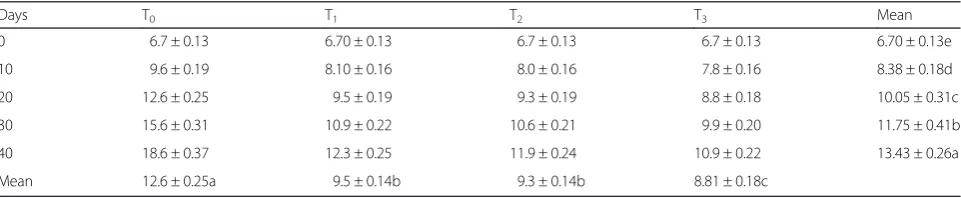
Total volatile basic nitrogen is widely used as an indica-tor of meat spoilage that is mainly composed of ammo-nia, primary, secondary and tertiary amines produced by the degradation of protein and non-protein nitrogenous compounds. Protein degradation can occur in meat and meat based products due to microbial activity during storage. The 35-40 mg/100 g of TVB-N level in fish fil-lets is an indicative of spoiled fish. The results (Table 6) revealed a momentous effect of coatings on total volatile basic nitrogen of fish fillets. The storage of fish fillets also significantly affected total volatile basic nitrogen. The means revealed that maximum total volatile basic nitrogen (12.60 ± 0.25 mg/100 g) was observed in T0(control) while
lowest TVB-N (8.81 ± 0.18 mg/100 g) was exhibited by T3.
A gradual increase in TVB-N ranging from 6.70 ± 0.13 to 13.43 ± 0.26 mg/100 g from 0 to 40thday was observed during storage for 40 days at frozen state. Among treat-ments, the maximum increase was observed in T0while
the lowest TVB-N increase was found in T3.These results
are in concordant with Mchugh and Senesi [11] who re-ported a gradual increase in TVB-N mainly due to pro-duction of amines during storage.
Sensory evaluation of whey protein edible coated rohu fillets
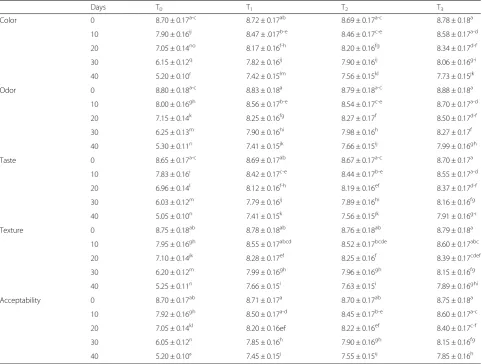
Sensory evaluation of food can be defined as“a scientific method used to evoke, measure, analyze and interpret responses to products as perceived through the senses of sight, touch, smell, taste, and hearing”. It is an important tool to access the quality and consumer acceptability of a food product. The sensory parameters have significant effect on the rohu fish fillet and the coated samples have better sensory characteristics as compared to un-coated samples. Color is the first perception of eye perceived by the consumer and is main criteria for consumer to evalu-ate a product. The results (Table 7) showed whey based protein coatings with plasticizers significantly improved the color of fish fillets and color values decreased with the advancement of storage period as perceived by panel of judges. The results of the present study are in consistent with the findings of Paulo et al. [32] who also reported that color values of fish are decreased with the advance-ment of storage time. Odor is an important parameter in
Table 5Peroxide Value (meq/kg) and TBARS Value (mg MDA/kg) of whey protein coated rohu fish fillets
Days POV (meq/kg) TBARS Value (mg MDA/kg)
T0 T1 T2 T3 Mean T0 T1 T2 T3 Mean
0 0.92 ± 0.02 0.93 ± 0.02 0.90 ± 0.02 0.91 ± 0.02 0.92 ± 0.02e 0.18 ± 0.14 0.17 ± 0.06 0.18 ± 0.00 0.170 ± 0.00 0.175 ± 0.01e 10 2.42 ± 0.05 1.88 ± 0.04 1.76 ± 0.04 1.66 ± 0.03 1.93 ± 0.06d 0.48 ± 0.01 0.30 ± 0.01 0.28 ± 0.01 0.250 ± 0.01 0.327 ± 0.02d 20 3.97 ± 0.08 2.84 ± 0.06 2.64 ± 0.05 2.38 ± 0.05 2.96 ± 0.05c 0.83 ± 0.02 0.44 ± 0.01 0.40 ± 0.01 0.340 ± 0.01 0.502 ± 0.02c 30 5.57 ± 0.11 3.83 ± 0.08 3.53 ± 0.07 3.18 ± 0.06 4.03 ± 0.07b 1.13 ± 0.02 0.60 ± 0.01 0.540 ± 0.01 0.440 ± 0.01 0.677 ± 0.03b 40 7.19 ± 0.14 4.86 ± 0.10 4.44 ± 0.09 3.98 ± 0.08 5.12 ± 0.1a 1.48 ± 0.03 0.78 ± 0.02 0.690 ± 0.01 0.560 ± 0.01 0.877 ± 0.03a Mean 4.01 ± 0.4a 2.868 ± 0.06b 2.65 ± 0.05b 2.42 ± 0.05c
The values are mean ± SD of three independent measurements, Means sharing similar letter in a row and column are statistically non-significant (P> 0.05) T0: Without coating T1: Whey: Glycerol (1:2) T2: Whey: Sorbitol (1:2) T3: Whey: Glycerol: Sorbitol (1:1:1)
Table 6Total volatile basic nitrogen (TVB-N) of whey protein coated rohu fish fillets
Days T0 T1 T2 T3 Mean
0 6.7 ± 0.13 6.70 ± 0.13 6.7 ± 0.13 6.7 ± 0.13 6.70 ± 0.13e
10 9.6 ± 0.19 8.10 ± 0.16 8.0 ± 0.16 7.8 ± 0.16 8.38 ± 0.18d
20 12.6 ± 0.25 9.5 ± 0.19 9.3 ± 0.19 8.8 ± 0.18 10.05 ± 0.31c
30 15.6 ± 0.31 10.9 ± 0.22 10.6 ± 0.21 9.9 ± 0.20 11.75 ± 0.41b 40 18.6 ± 0.37 12.3 ± 0.25 11.9 ± 0.24 10.9 ± 0.22 13.43 ± 0.26a Mean 12.6 ± 0.25a 9.5 ± 0.14b 9.3 ± 0.14b 8.81 ± 0.18c
T0: Without coating T1: Whey: Glycerol (1:2) T2: Whey: Sorbitol (1:2) T3: Whey: Glycerol: Sorbitol (1:1:1)
sensory evaluation of a food product. The results (Table 7) showed that whey based protein coatings with plasti-cizers significantly affected odor of fish fillets and odor values were decreased with the advancement of storage period. The findings are in harmony with the findings of Del-Valle et al. [33] who used cactus mucilage based coat-ings and applied on fish fillets and reported a decrease in odor scores with the advancement of storage period. Taste resides at the core of desirability of any food product. The results (Table 6) showed that whey based protein coatings with plasticizers significantly affected the taste of fish fil-lets and taste values were decreased with the advancement of storage period. These results regarding change in taste are in line with the findings of Vaithiyanathan et al. [34] who reported a decrease in taste of edible coated meat with the advancement of storage periods due to the enzymatic degradation. Texture is a very important attribute in the sensory evaluation of meat products and is an important indicator of consumer perception regarding the quality and acceptability of meat. The results (Table 7) showed that
whey based protein coatings significantly affected the tex-ture of fish fillets and textex-ture values decreased with the ad-vancement of storage period. The results of present study are consistent with the findings of Devatkal et al. [35] and Lu et al. [36] who reported an increase in hardness of fish meat with the progression of storage period. The results (Table 7) showed that whey based protein coatings with different plasticizers significantly affect the overall accept-ability of the fish fillets and overall acceptaccept-ability scores de-creased with the advancement of storage period. The results of current investigation are in accordance with that of Hambleton et al. [37] and Song et al. [38] who reported that overall acceptability of fish fillets coated with alginate coatings were improved as compared to control.
Conclusion
Whey protein concentrate coating play effective role in improving the quality attributes of rohu (Labeo rohita) fillets, protecting fish fillets from oxidative and micro-bial spoilage. Whey protein coating with combination
Table 7Sensory attributes of whey protein coated rohu fish fillets
Days T0 T1 T2 T3
Color 0 8.70 ± 0.17a-c 8.72 ± 0.17ab 8.69 ± 0.17a-c 8.78 ± 0.18a 10 7.90 ± 0.16ij 8.47 ± .017b-e 8.46 ± 0.17c-e 8.58 ± 0.17a-d 20 7.05 ± 0.14no 8.17 ± 0.16f-h 8.20 ± 0.16fg 8.34 ± 0.17d-f 30 6.15 ± 0.12q 7.82 ± 0.16ij 7.90 ± 0.16ij 8.06 ± 0.16g-i 40 5.20 ± 0.10r 7.42 ± 0.15lm 7.56 ± 0.15kl 7.73 ± 0.15jk Odor 0 8.80 ± 0.18a-c 8.83 ± 0.18a 8.79 ± 0.18a-c 8.88 ± 0.18a 10 8.00 ± 0.16gh 8.56 ± 0.17b-e 8.54 ± 0.17c-e 8.70 ± 0.17a-d 20 7.15 ± 0.14k 8.25 ± 0.16fg 8.27 ± 0.17f 8.50 ± 0.17d-f 30 6.25 ± 0.13m 7.90 ± 0.16hi 7.98 ± 0.16h 8.27 ± 0.17f 40 5.30 ± 0.11n 7.41 ± 0.15jk 7.66 ± 0.15ij 7.99 ± 0.16gh Taste 0 8.65 ± 0.17a-c 8.69 ± 0.17ab 8.67 ± 0.17a-c 8.70 ± 0.17a
10 7.83 ± 0.16i 8.42 ± 0.17c-e 8.44 ± 0.17b-e 8.55 ± 0.17a-d 20 6.96 ± 0.14l 8.12 ± 0.16f-h 8.19 ± 0.16ef 8.37 ± 0.17d-f 30 6.03 ± 0.12m 7.79 ± 0.16ij 7.89 ± 0.16hi 8.16 ± 0.16fg 40 5.05 ± 0.10n 7.41 ± 0.15k 7.56 ± 0.15jk 7.91 ± 0.16g-i Texture 0 8.75 ± 0.18ab 8.78 ± 0.18ab 8.76 ± 0.18ab 8.79 ± 0.18a
10 7.95 ± 0.16gh 8.55 ± 0.17abcd 8.52 ± 0.17bcde 8.60 ± 0.17abc 20 7.10 ± 0.14jk 8.28 ± 0.17ef 8.25 ± 0.16f 8.39 ± 0.17cdef 30 6.20 ± 0.12m 7.99 ± 0.16gh 7.96 ± 0.16gh 8.15 ± 0.16fg 40 5.25 ± 0.11n 7.66 ± 0.15i 7.63 ± 0.15i 7.89 ± 0.16ghi Acceptability 0 8.70 ± 0.17ab 8.71 ± 0.17a 8.70 ± 0.17ab 8.75 ± 0.18a
10 7.92 ± 0.16gh 8.50 ± 0.17a-d 8.45 ± 0.17b-e 8.60 ± 0.17a-c 20 7.05 ± 0.14kl 8.20 ± 0.16ef 8.22 ± 0.16ef 8.40 ± 0.17c-f 30 6.05 ± 0.12n 7.85 ± 0.16h 7.90 ± 0.16gh 8.15 ± 0.16fg 40 5.20 ± 0.10° 7.45 ± 0.15j 7.55 ± 0.15ij 7.85 ± 0.16h
of plasticizers (Whey: Glycerol: Sorbitol 1:1:1) showed better result in improvement of quality attributes and retarding oxidative degradation, However, certain quality improver or additives can be used in future studies to pre-vent changes in sensory quality of coated fish fillets.
Competing interests
The authors declare that they have no competing interests.
Authors’contributions
The contribution of the each author for this manuscript was as follows, MIK, FMA and AS designed the experimental plan. MNI conducted the analysis. MSA drafted the manuscript and CJ reviewed the manuscript. It is also confirmed that all the authors read and approved the final manuscript.
Acknowledgments
The author acknowledged the support by Department of Zoology and Fisheries for providing samples and Meat Science and Technology, National Institute of Food Science and Technology, University of Agriculture, Faisalabad, Pakistan for providing required fundings.
Author details
1National Institute of Food Science and Technology, University of Agriculture,
Faisalabad, Pakistan.2Department of Agricultural Biotechnology, Center for
Food and Bioconvergence, Research Institute of Agricultural and Life Science, Seoul National University, Seoul 151-921, Republic of Korea.3Institute of Home
and Food Sciences, Government College University, Faisalabad, Pakistan.
Received: 7 March 2015 Accepted: 12 June 2015
References
1. Isabel M, Jose M, Gallardo M, Santiago P. Quality preservation in chilled and frozen fish products by employment of slurry ice and natural antioxidants. Int J Food Sci Technol. 2009;44:1467–79.
2. Lugasi A, Losada V, Hovari J, Lebovics V, Jakoczi I, Aubourg S. Effect of pre-soaking whole pelagic fish in a plant extract on sensory and biochemical changes during subsequent frozen storage. Food Sci Technol. 2007;40:930–6.
3. Mahboob S, Hussain MI, Iqbal Z, Nadeem S. Estimation of volatile organic compounds in farmed and wild rahu (Labeorohita)”. Iran J Fisheries Sci. 2008;2008(8):65–72.
4. Izgi S, Çiftçiog LG. Investigations on the shelf life of trout packed under modified atmosphere. J Food Eng. 1997;1997(23):231–54.
5. Serdarog LM, Felekog LE. The packaging under modified atmosphere of seafood. World Food. 2001;4:73–7.
6. Ayranvi E, Tunc S. The effect of edible coating on water and vitamin C loss of apricots (Armeniaca vulgaris Lam.) and green pepper (Capsicum Annum L). Food Chem. 2003;87(3):339–42.
7. Hong SI, Krochta JM. Whey protein isolate coating on LDPE film as a novel oxygen barrier in the composite structure. Packag Technol Sci. 2004;17:13–21.
8. Liu Q, Lanari MC, Schaefer DM. A review of dietary vitamin E supplementation for improvement of beef quality. J Anim Sci. 1995;73:3131–40.
9. Vargas M, Chiralt A, Albors A, Martínez CG. Effect of chitosan-based edible coatings applied by vacuum impregnation on quality preservation of fresh-cut carrot. Postharvest Biol Technol. 2008;51:263–71.
10. Sathivel S. Chitosan and protein coatings affect yield, moisture loss, and lipid oxidation of apple pink salmon fillets during frozen storage. J Food Sci. 2005;70:445–59.
11. Mchugh TH, Senesi E. Apple wraps: a novel method to improve the quality and extend the shelf life of fresh-cut apples. J Food Sci. 2000;2000(65):480–5.
12. Kaya S, Kaya A. Microwave drying effects on properties of whey protein isolate edible films. J Food Eng. 2000;43(2):91–6.
13. Kilincceker O, Dogan IS, Kucukoner E. Effect of edible coatings on the quality of frozen fish fillets. LWT - Food Sci Technol. 2009;42:868–73. 14. Fairley P, Monahan FJ, German JB. Krochta: Mechanical properties and water
vapor permeability of edible films from whey protein isolate and sodium dodecyl sulfate. J Agric Food Chem. 1996;44:438–43.
15. Hong SI, Krochta JM. Oxygen barrier properties of whey protein isolate coatings on polypropylene films. J Food Sci. 2003;68(1):224–8. 16. Diaz O, Turienzo LR, Cobos A, Caride A, Vieitesm JM. Whey protein-based
coatings on frozen Atlantic salmon (Salmosalar): Influence of the plasticiser and the moment of coating on quality preservation. Food Chem. 2011;128:187–94.
17. Rossini K, Noren CPZ, Cladera-Olivera F, Brandelli A. Casein peptides with inhibitory activity on lipid oxidation in beef homogenates and mechanically deboned poultry meat. LWT—Food. Sci Technol. 2009;42:862–7.
18. Shon J, Chin KB. Effect of whey protein coating on quality attributes of low fat, aerobically packaged sausage during refrigerated storage. J Food Sci. 2008;73:469–75.
19. Luo Y, Song Y, Liu L, Shen H, You J. Effect of sodium alginate-based edible coating containing different anti-oxidants on quality and shelf life of refrigerated bream (Megalobramaamblycephala). Food Control. 2011;22:608–15.
20. Sallama KI, Ishioroshib M, Samejima K. Antioxidant and antimicrobial effects of garlic in chicken sausage. Lebensmittel-Wissenschaft & Technologie. 2004;37:849–55.
21. Meilgaard MM, Civille GV, Carr T. Overall difference tests: Does a sensory difference exist between samples? In Pages 63–104 in Sensory Evaluation Techniques. 4th edition. New York, USA. 2007.
22. Steel RGD, Torrie JH, Dickey D. Principles and procedures of statistics: a biometrical approach”. 3rd ed. New York, USA: McGraw Hill Book Co. Inc; 1997.
23. Valverde JM, Valero D, Martínez-Romero D, Guillén F, Castillo S, Serrano M. Novel Edible Coating Based on Aloevera Gel to Maintain poultry Quality and Safety. J Agric Food Chem. 2005;2005(53):7807–13.
24. Han C, Lederer C, McDaniel M, Zhao Y. Sensory Evaluation of Fresh Strawberries (Fragaria ananassa) Coated with Chitosan-based Edible Coatings. J Food Sci. 2005;70:S172–8.
25. Elmadfa I, Saghir SA, Thurner K, Wagner KH, Frisch G, Luf W, et al. Effects of different cooking procedures on lipid quality and chlosterol oxidation of farmed fish (salmo salar). J Agric Food Chem. 2004;52:5290–6.
26. Fan W, Sun J, Chen Y, Qiub J, Zhang Y, Chi Y. Effects of chitosan coating on quality and shelf life of silver carp during frozen storage. Food Chem. 2009;115:66–70.
27. Decker EA, Chan WKM, Livisay SA, Butterfield DA, Faustman C. Interactions between carnosine and the different redox states of myoglobin. J Food Sci. 1995;60:1201–4.
28. Arshad MS, Anjum FM, Khan MI, Shahid M, Akhtar S, Sohaib M, et al. Wheat germ oil enrichment in broiler feed withα-lipoic acid to enhance the antioxidant potential and lipid stability of meat. Lip Health Dis. 2013;12:164.
29. Mccarthy TL, Kerry JP, Kerry JF, Lynch PB, Buckley DJ. Evaluation of the antioxidant potential of natural food/plant extracts as compared with synthetic antioxidants and vitamin E in raw and cooked pork patties. Meat Science. 2001;57:45–52.
30. Sallam KI. Antimicrobial and antioxidant effects of sodium acetate, sodium lactate, and sodium citrate in refrigerated sliced salmon. Food Control. 2007;18:566–75.
31. Villegas R, O’connor TP, Kerry JP, Buckley DJ. Effect of gelatin dip on the oxidative and colour stability of cooked ham bacon pieces during frozen storage. Int J Food Sci Technol. 1999;34:385–9.
32. Paulo RC, Favaro-Trindade CS, Trindade MA, Balieiro JC, Viegas EM. Quality of sausage elaborated using minced Nile Tilapia submmitted to cold storage. J Agric Food Chem. 2010;67:183–90.
33. Del-Valle V, Hernández-Muñoz P, Guarda A, Galotto MJ. Development of a cactus-mucilage edible coating (Opuntia ficus indica) and its application to extend fish meat shelf-life. Food Chem. 2005;91:751–6.
34. Vaithiyanathan S, Naveena BM, Muthukumar M, Girish PS, Kondaiah N. Effect of dipping in pomegranate (Punica granatum) fruit juice phenolic solution on the shelf life of chicken meat under refrigerated storage (4 ° C). Meat Sci. 2011;88:409–14.
35. Devatkal SK, Naveena BM. Effect of salt, kinnow and pomegranate fruit by-product powders on color and oxidative stability of raw ground goat meat during refrigerated storage. Meat Sci. 2010;85:306–11.
37. Hambleton A, Debeaufort F, Bonnotte A, Voilley A. Influence of alginate emulsion-based films structure on its barrier properties and on the protection of microencapsulated aroma compound. Food Hydrocolloids. 2009;23(8):2116–24.
38. Song Y, Liu L, Shen H, You JN, Luo Y. Effect of sodium alginate-based edible coating containing different anti-oxidants on quality and shelf life of refrigerated bream (Megalobrama amblycephala). Food Control. 2011;22:608–15.
Submit your next manuscript to BioMed Central and take full advantage of:
• Convenient online submission
• Thorough peer review
• No space constraints or color figure charges
• Immediate publication on acceptance
• Inclusion in PubMed, CAS, Scopus and Google Scholar
• Research which is freely available for redistribution