University of New Orleans University of New Orleans
ScholarWorks@UNO
ScholarWorks@UNO
University of New Orleans Theses and
Dissertations Dissertations and Theses
5-18-2007
Implementing Peer Coaching in a State Funded Pre-Kindergarten
Implementing Peer Coaching in a State Funded Pre-Kindergarten
Program: An Autoethnography
Program: An Autoethnography
Darilyn Mercadel Butler
University of New Orleans
Follow this and additional works at: https://scholarworks.uno.edu/td
Recommended Citation Recommended Citation
Butler, Darilyn Mercadel, "Implementing Peer Coaching in a State Funded Pre-Kindergarten Program: An Autoethnography" (2007). University of New Orleans Theses and Dissertations. 546.
https://scholarworks.uno.edu/td/546
This Dissertation is protected by copyright and/or related rights. It has been brought to you by ScholarWorks@UNO with permission from the rights-holder(s). You are free to use this Dissertation in any way that is permitted by the copyright and related rights legislation that applies to your use. For other uses you need to obtain permission from the rights-holder(s) directly, unless additional rights are indicated by a Creative Commons license in the record and/ or on the work itself.
Implementing Peer Coaching in a State Funded Pre-Kindergarten Program: An Autoethnography
A Dissertation
Submitted to the Graduate Faculty of the University of New Orleans in partial fulfillment of the requirements for the degree of
Doctor of Philosophy in
Curriculum and Instruction
by
Darilyn Mercadel-Butler
B.A. University of New Orleans, 1996 M.F.A. University of New Orleans, 1999
M.Ed. University of New Orleans, 2000
Dedication
ACKNOWLEDGEMENTS
I am grateful to God for many blessings. The blessings of strength, courage, and
determination have been crucial in allowing me to do many things in my life. I hope to use the
gifts that He has bestowed upon me to make a difference in the world.
Thank you, Dr. Judith Keiff, my major professor, whose kindness, generosity, wide
breadth of knowledge, and patience has guided me through this process, one that began years
ago. With your contagious enthusiasm spilling over and encouraging me to do all that I can do,
and your endless support after Hurricane Katrina, I was able to finish this research. Thank you,
for both housing me and feeding my soul after the storm.
Many thanks to my committee: Dr. Casbergue for opening my eyes to the world of
emergent literacy, Dr. Bedford to autoethnography, and to Dr. Barnitz, Dr. Gifford, and Dr.
McHugh, your assistance in this process has been appreciated.
I will be forever grateful to my family. Sincere gratitude goes to my husband Bradford. I
truly appreciate your encouragement. To my children, Jason, Jeanay, and Kendall, I love you and
thank you for your patience and impatience, assisting me in completing this process and pushing
me to reach one of my lifetime goals. I am also thankful to my mother and father, Yvonne and
James Mercadel, as well as my sisters, Tamara, Natalie, Lauren and Cecily. Thanks for the
loving, engaging sisterly conversations. Genuine thanks also go to very special friends.
Finally, I am grateful to the teachers who participated in the study. Their work with
young children inspired me to work harder. And last but not least, very special thanks go to
Charles Tate, Ashley Collins, Petrouchka Moise, Courtney Pitts, and Dr. Emily Smith; they have
TABLE OF CONTENTS
Abstract………… ...vii
Chapter 1 The Introduction ...1
Definition of Terms...14
Chapter 2 The Connection ...16
Research Related to Student Access to Print ...23
Research Related to Adult Child Shared Storybook Reading ...27
Research Related to Literacy Enriched Play Areas ...30
Implications for Teaching Practices and Emergent Literacy...31
Peer Coaching ...32
Peer Coaching as a Viable Professional Development Process...32
Peer Coaching as Professional Development ...35
Functions and Principles of the Peer Coaching Process ...36
Types of Peer Coaching ...38
Research Related to Peer Coaching ...39
Implications of Peer Coaching and Early Childhood Education ...43
Further Discussion ...44
Chapter 3 The Interpretation...47
Qualitative Research ...51
Autoethnography...52
Autoethnographic Coding and Themes ...55
Purpose………...57
Who Were These Teachers ...59
Access……….. ...59
Instrumentation ...60
The Coaching Effectiveness Profile...60
Early Language and Literacy Observation Toolkit...61
The Literacy Environment Checklist ...62
The Classroom Observation and Teacher Interview...62
The Literacy Activities Rating Scale ...63
Professional Development Activities...64
Analysis of Numeric Data...67
Limitations…… ...68
Summary…….. ...68
Chapter 4 The Realization...70
Teachers Building Strong Relationships...70
Teachers Engaging in a Change of Instructional Practice ...72
Table 4.1 – Teachers Peer Coaching Competencies...73
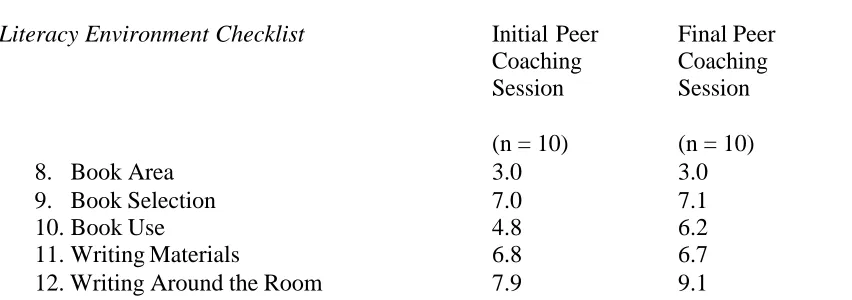
Table 4.2 – Literacy Environment Checklist ...74
Table 4.3 – Literacy Activities Rating Scale ...75
Teachers Committed to Professional Growth ...77
Chapter 5 The Explanation ...80
Implications…...82
Summary..…… ...82
Chapter 6 The Reflection ...85
Conclusion……. ...86
References………...89
Appendices……...……...99
Appendix A – Letter of Consent...100
Appendix B – Peer Coaching Communication...102
ABSTRACT
This autoethnography - rooted in the qualitative tradition of field research, explored the life
experiences of the researcher which subsequently led to the preparation, implementation, and
analysis of a professional development program. The purpose of this study was to reflect upon
whether or not a peer coaching program would enhance the development of pre-kindergarten
teachers’ emergent literacy strategies in the Greater New Orleans area. This autoethnography
employed the author as the research tool in order to understand the researcher’s personal self
within the context of the professional development. The guiding question of this study is as
follows - ‘does utilizing peer coaching increase teachers’ emergent literacy development
strategies in a pre-kindergarten program?’
This research will not only add to the body of early childhood research in the area of
professional development, but also distinguish autoethnography as a viable, emerging,
qualitative research method; this is because it acknowledges the link between the personal and
the cultural. The study will give information relating to the effectiveness of the peer coaching
program as a means to provide professional development for teachers. More importantly,
students in the classrooms may benefit from the newly implemented professional development,
CHAPTER ONE
Introduction
Let me introduce myself. I’m Darilyn Butler, your presenter for today. I am the monitor
of the four year old program within this area of the state. I have been working with this program
three and a half years. I am from here in New Orleans. (pause) I completed the program for a
Master’s Degree in Curriculum and Instruction, specializing in Early Childhood Education from
the University of New Orleans and attended one of the schools with this program, actually
kindergarten through to eighth grade… So that makes me very familiar with the schools and
families and all that we deal with here in New Orleans as teachers. Well, (scanning the room), I
do see some familiar faces, Ms. XYZ, Ms. THT, Ms. JKN. But don’t worry, as you can see from
the agenda, we have plenty of time to get to know one another. Welcome to this professional
development workshop.
My four sisters and I were raised in a small house in the ninth ward of New Orleans,
Louisiana. I always loved the fact that there were five of us, never once wishing to be an
only-child. I remember us always being together and playing a lot. We lived one block away from
the Desire-Florida Housing Development, a really rough Housing Development. We heard and
saw many things, yet I felt as though we were happy kids growing up; that is, until I turned
Then, things changed drastically. We could no longer afford food, clothing, or many of
the things we enjoyed when they were together. We attended Catholic school when they were
married but, after the divorce, we had to change to public school. We felt like and had become
children of a single parent. To us, my mother’s greatest (and only) wish at that time was that we
all graduate from high school; lucky for us, her constant nagging about homework and boys kept
us on the straight and narrow. She would always say, “You girls need to know how to take care
of yourselves.” She challenged us at every turn and a day never went by when she didn’t discuss
something about college. She would always mention things that could happen 10 or 15 years
later, as if we really had academic futures. At the time, we couldn’t see that far.
Of course, New Orleans is a city loaded with character and tradition – and my family was
really grounded in that tradition. Even now as we live in different parts of the United States, we
almost always eat red beans and rice on Mondays, fish or some type of seafood on Fridays, and
we “make groceries” instead of “purchasing” them like most other Americans. Interestingly, with
all of the wonderful cultural traditions we honor and celebrate we carry with us many other
idiosyncratic tendencies that haunt us as well. For instance, we carry a thick accent (hard to
mask at times), a tendency to enjoy an overabundance of seafood and other rich, sauced foods
and, like many other families in Louisiana, ours is very religious – Catholic, to be specific. My
mother was undeniably afraid to dissolve her marriage through divorce for fear of being
excommunicated from the church, even though the relationship was an abusive one. Thank
As you can see from the agenda, our topic for today’s professional development
workshop is Peer Coaching. But, before we discuss the topic, I would like for you to give me
information about yourselves. I would like to know how you feel about your skills as
coaches before we begin this professional development process this year. On your tables,
you will find the Coaching Effectiveness Profile. Please take a moment to answer the
survey.
After the divorce, my mother enrolled in nursing school. She hadn’t worked while she
was married to my father. She promised that she would not become dependent on anyone again,
making sure to stress this to us throughout our lives. She taught us to cook, clean, wash our
clothes, use indoor and outdoor tools, repair appliances, cut grass, and pay bills; furthermore, she
insisted that we handle business transactions very early in our lives. It drove us crazy at the time
and, with six women in the house, we would all say to her, “Whoa mom, we don’t need to know
this kinda stuff right now!” And she would always reply, “You never know.” Her precedent
took hold with the older girls though, as we would often share what we knew with the younger
kids, passing along the knowledge for survival.
We learned to live with my mother (without my father) and visited my father and
stepmother during summers in Mobile, Alabama. My mother’s family – one full of brothers and
sisters, were not very optimistic about our futures. A woman alone with five children in the 70’s
was not enviable to most in that environment. They did not appreciate her tenacious need to
prove independence. This totally isolated us from her family though and, oddly enough, at the
High school was uneventful and difficult to complete. I was really bored and ready to
move on. My mother’s wishes began to come true as my older sister graduated from high school
and then I did, a year later. I was two years younger than she but skipped the third grade because
I was a precocious student. This wasn’t apparent in high school though, as I was not motivated
whatsoever; this is partially because we moved to the eastern part of New Orleans and I
unhappily attended three high schools within four years, one of them twice in alternate years. I
was not at all proud of myself academically and did little to nothing to change my performance.
If I knew one thing for sure during high school, it was that I wanted leave New Orleans as soon
as I could. I applied to college in Georgia and was accepted at an all women’s college in
Atlanta. I was thrilled.
Thank you. You have completed your Coaching Effectiveness Survey. It is important to
know that our professional development affects the students in our classrooms. According to a
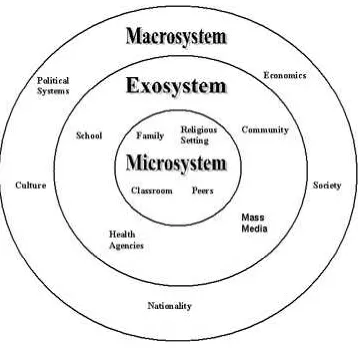
theorist, Urie Bronfenbrenner, each person is significantly affected by interactions among a
number of overlapping systems. For me, it is his ecological systems theory that is influencing
these professional development activities. If you notice, on the diagram, the student is at the
center of the microsystem. The Microsystems are the systems that intimately and immediately
Table 1.1 (Berger, 2000)
According to Bronfenbrenner’s theory, pre-kindergarten teachers and their practices
have a direct impact upon the individuals in their classrooms via the Mesosystem. The
Mesosystem actually entails the influences between Microsystems and relates to constructs such
as family experiences, school experiences and those of family to peers, and the social
institutions. Together, the systems describe the social context of human development,
(Bronfenbrenner, 1979). Now, what we do in the classroom, the experiences, opportunities, and
environments created by us (teachers and schools) within and among young children’s
mesosytem, are crucial to their micosystems and as a result important to the total development of
young children. Your volunteering here today shows your understanding of the impact that you
Atlanta was liberating for me. I was seventeen and felt as though I was ready to take on
the world. I had successfully entered my freshman year, but personally wallowed over the lack
of a focused academic path, even though I quickly learned the city and made friends easily. I
soaked up the rich African-American history that was provided as a part of the college
environment and was unbelievably inspired by the legacy of Martin Luther King and the civil
rights movement – something quite permanent in Atlanta. It was in Atlanta that I discovered the
immense class differences within the African-American community, my desire to assist with
community action, and my ability to help people. My sense of spirit began to take shape in
Atlanta as my environment in New Orleans had not exposed me to issues of very different
perspectives.
I lived in Atlanta three years. The cost of college there was more than what our family
could handle without major financial assistance, and on top of it, I was not a stellar student. I
knew that my mother did not have the funds to support my less than par education, so I headed
back to New Orleans. I began to work at a mall, and in a gynecologist’s office where my mother
was an office manager; I was deeply unhappy about my schooling and my future. She had my
three younger sisters to get through high school and stressed that I had to take care of myself. I
did want to finish college, but I also had the need to see more of the world. I worked long and
hard enough to buy a car, and I hit the road. Ironically enough, my travels included visiting
friends at college campuses throughout the US. I traveled back to Atlanta often, and to Montana,
Colorado, North Carolina, Washington, DC, Texas, California, Mexico and many other places.
Oddly enough, it was while in Grambling, Louisiana at a football game at Grambling State
You have been randomly paired with a peer coaching partner. You and another
person share a quote about education that is written on the back of an index card in your
packet. Right now you will have time to match up quotes, get to know one another, and…
(pause) please, please exchange personal information. Along with your quotes, you will find
ice breaker questions that you may ask your peer coaching partner in order to get to know
him or her. You have forty minutes.
A year after marrying my husband, we had our first child. A year after having our son,
we had a daughter. My life slowed, yet sped up at the same time. My travels changed too, as I
was determined to provide my children with a loving home and a positive environment in which
to grow. This included their daily care and/or day care environments. I decided I would
become a stay-at-home mom rather than work outside of the home; instead of road trips to
Southeastern Conference basketball games, they became ‘during the night trips’ to the children’s
hospital with my son’s chronic ear infections and daughter’s seasonal asthma attacks.
With one running and both in diapers, I got the fever for adult conversation and serious
intellectual stimulation. I did the “Mommy and Me” programs with the children and frequented
the zoo, aquarium, and children’s museum weekly. Yet I felt like I was missing something, that
I was not making progress towards my own life. I woke up one morning and compiled a list of
things that I had always wanted to accomplish - graduating from college was at the very top of
that list. I enrolled in the undergraduate program at the University of New Orleans and majored
in communications. After earning a bachelor’s degree, I enrolled in graduate school. The
university became a positive environment that aided my children’s development. They were
enrolled at The Children’s Center, affording me peace of mind, as I knew that they were in a
Wow! You all got to talking right away! This is great! I hope that you have exchanged
information. We are having this type of professional development because of a few reasons. (1)
Many of you have asked me personally for a way that you teachers can get together and discuss
classroom strategies in an interesting way without the schools’ administration guiding the
professional development. (2) You also asked that I assist you in organizing a way that you
could collaborate with teachers in the different schools in this program. And (3), I believe the
fact that training and educational experiences of early childhood teachers and staff varies
dramatically and that quality ecological interactions would require continual training and
education as well as ongoing support networking. My hope is that this professional
development, which includes peer coaching, will fulfill what you have requested, assist you in
gaining new skills, and allow you to share what you learn with one another, and with the
students in your classrooms.
I began my graduate education at UNO while volunteering in the elementary school
classrooms of my children. My participation in an early childhood education course focused my
thoughts specifically to early childhood education. After funds from a grant ran out, I returned to
the country’s home workforce; specifically, I began teaching pre-school while working on my
graduate studies. But I experienced my first actual year of teaching within the public school
system in New Orleans. I was fresh out of the classroom and ready to share what I had learned
in grad school, but was floored when I met with the principal and she passed me a box of chalk
across her desk. I was in her office to ask about classroom materials and supplies. As she gave
me the box of chalk, she said that that was all she had been given when she began teaching; she
I now want to introduce you to our presenter on peer coaching and the Coaching
Effectiveness Profile. She will work with us on a variety of activities so that we will have the
necessary peer coaching competencies to work and share with one another. Later, the
classroom strategies that you will work on while peer coaching will be determined. I have heard
many concerns from you about a number of issues and have asked you to write them down on
paper and give them to me. The topic to be discussed, while you are peer coaching, will come
from your questions, concerns, and comments. Once again have a great peer coaching workshop
and, good luck!
There were a few books in the classroom, hardly any materials and supplies that were of
substance, nothing like the veteran teacher’s materials next door. She suggested that if I was
really nice to the principal, eventually I would get “stuff” as well. I couldn’t believe what I was
hearing. How could she have so many materials and I not have anything?
I thought, at first, that maybe it was things — books, play materials, puzzles, paint,
puppets — which were from her veteran teacher supply that she has kept over the years. But it
was not; it was, however, from newly purchased items from Title 1 funds. How did I know? I
knew this because I peeked at the inventory tags that were posted on the items. I couldn’t
believe it. What about the children? There were twenty five in my class and twenty five in the
other… were they not the same kids? I was naïve.
I had the classroom at the very end of the building; but that was not the reason for my
feelings of isolation. I was feeling unsupported and, eventually, resentful because of the school’s
administration that pit new teachers against veteran teachers, principal’s friends against
principal began to question my developmentally appropriate teaching practices. Yet I was intent
on finishing out the academic year. She began to come to my classroom often to see what was
happening inside. She was adamantly against my learning or activity centers in the classroom
and, after having donations of materials, supplies, and literature brought in, she was livid. She
asked that I share the materials with the veteran teacher, and I refused. This made her very
angry. But after I stood my ground and declined to share, she didn’t bother me as much. I
finished the year at the school because of the wonderful students and the families I had grown to
really appreciate.
When the tumultuous first year of teaching ended in May 2003, I responded to a request
for proposals issued by a nonpublic pre-kindergarten program. The request was a solicitation for
qualified persons to provide program monitoring services in the state of Louisiana. I issued a
response in the form of a proposal and was awarded the contract to serve the Orleans and
Jefferson Parish regions of the state. My capacity in this venture was to monitor a
pre-kindergarten program, ensuring that the private and parochial schools’ administrations, and
teachers, were serving the four-year-old population of students in the appropriate capacity. Also
included was the obligation to provide technical assistance, albeit limited, and to promote
opportunities for professional development and growth with the faculty, staff, and
administrations.
While working with the nonpublic pre-kindergarten program of 25 schools and
approximately 50 classrooms in the years 2004-05, the overall goal of providing students a high
quality early childhood education was often a challenge. While a few teachers were
knowledgeable about early childhood education, many of the teachers working with the program
education. Many were not knowledgeable about best practices or strategies in four- year old
preschool programs. It was a necessity that I observe the classrooms while working with the
schools. Often, the observations were not positive. I consulted with the program staff, sharing
information related to the schools and early childhood. Consequently, this led to changes in the
guidelines of the program, particularly with teacher qualifications and classroom materials and
supplies.
An interesting turning point came during the 2004-05 school year, when the new
guidelines were established. It was the cost of the mandatory requirements of classroom
furniture, materials, supplies, and literature that had all of the administrators at their wits end.
The teachers were also at their wits end; not sure what to do with all of the classroom materials
they had received. The director of the program set the mandatory requirements of classroom
furniture, literature, materials, and supplies, but only after multiple consultations with staff, the
other program monitor and myself. Previously we (the program staff) had nicely asked the
schools to comply, but implementation of the new guidelines was just not occurring. It became
necessary to think of other alternatives to refining the teachers’ strategies. Slowly, hesitantly,
but surely, the schools began purchasing the classroom items. Unfortunately, many of the
teachers did not know how or what to do with the new resources.
Relaying the theories, practices, and reasoning behind the materials, supplies, and
literature to the teachers of many different educational backgrounds had become frustrating and
tedious. The administrators at the schools were insisting upon an explanation of every item’s
usage because of the cost, and the teachers were baffled by the abundance of materials, supplies,
realize that the teachers should discover, reflect, and discuss them on their own. Subsequent to
their number, they were also varied, such as:
“How do I arrange my classroom? How many learning or activity centers should I have?
Do I have to display all of the play materials? Do I have to have a sand and water table? Should
we have a reading corner or a writing center or both? How many tables can I have in my
classroom? What in the world do we do with all the books? Why so many books? Where do we
store them? Which books should I display? How many do we display at one time?” As I
mentioned earlier, these were great questions with great answers, and I wanted to talk with every
single teacher and assist with every single classroom and every single question - but I couldn’t.
It was not physically or mentally possible to do so, and this bothered me.
I was bothered because the teacher training for the school year had already occurred in
August where the teachers were to gain all program information, information relating to
planning, classroom environment, activities, and assessment. Unfortunately, the August teacher
training did not answer the questions the teachers were asking about the newly acquired
materials, supplies, and literature. I had to find suitable professional development that would
remove me from the process as much as possible. This had to be a process for the teachers that
would have a life of its own; coupled with the pre-kindergarten program work and my family, I
knew that I needed to work on my dissertation even though it would be quite difficult.
One day, while visiting Dr. Kieff - my major professor and advisor, in order to hash out
concerns about my role as a monitor in the schools, she suggested that I look into mentoring. I
left her office and began to research articles related to teachers and mentoring, and came across
the concept of peer coaching; I was fascinated. Peer coaching, as it was described in the
totally involved in their own process of professional development. Second, I could assist in the
structure of the program, but not be involved as an evaluator or monitor. Third, the teachers, on
their own, would initiate the inquiry and the dialogue. Fourth, if the peer coaching was
successful, by showing an increase in the teachers’ practices and strategies, the director of the
program were likely to regard peer coaching as a viable option for the teachers development.
Finally, the information gained could assist other early childhood education providers, teachers,
or researchers by adding information to the early childhood education body of literature.
Through monitoring and observing classrooms, I witnessed the way in which teachers
development of literacy practices was very inconsistent. Students’ access to literacy, access to
materials, and interactions within certain environments were highly differentiated. I also realized
the scoring on the state’s assessment instrument showed an increase in the area of emergent
literacy when the teachers had some type of early childhood education. This scoring was also
consistent when the teachers’ assessed themselves. I equated the differences of emergent literacy
practices to the variation of education and training of early childhood staff. I thought, if the
training and educational experiences of early childhood staff varied this dramatically in these
classrooms, in order to improve ecological interactions through emergent literacy development
with students, teachers would need continual training and education as well as ongoing support
networks. It appeared that peer coaching emerged as a valuable process to get the teachers
involved in this action.
Interesting… could this also be suitable research for my dissertation? I began to see that
I had similar purposes for both monitoring and dissertation research. Things were coming
together as one. The guiding question of this study would be “does utilizing peer coaching
The purpose would be to reflect upon whether or not a peer coaching program would enhance the
development of pre-kindergarten teachers’ emergent literacy strategies in an early childhood
education program in the Greater New Orleans area. This could possibly be a significant
contribution to professional development as the teachers would, in essence, direct their own
growth as professionals. It was utterly fascinating to me.
Accordingly, while developing these ideas, the following terms surfaced, some of which
are explained here:
Definition of Terms
Autoethnography – A qualitative method of inquiry where the use of self as a data source is
prominent, personalized research using highly personalized accounts to extend an understanding
of a particular discipline or culture (Holt, 2003).
Emergent Literacy; Emergent Literacy Development – The precursory knowledge about
reading and writing that children acquire prior to conventional literacy instruction and that they
bring to the task of learning to read (Justice & Pullen, 2003).
Emergent Literacy Practices; Strategies – Teachers’ use of materials, supplies, literature,
instruction, that supports the development of young children’s reading, writing and language
In Service – Teacher professional development activities
Peer Coaching – Collegial coaching and cognitive coaching seeking to improve existing
teacher practices by refining techniques, developing collegiality, increasing professional
dialogue, and assisting teachers to reflect on their teaching (Ackland, 1991; Becker, 1996).
Professional Development - Teacher’s professional education while engaged in teaching;
extension of teachers’ education
CHAPTER TWO
The Connection
Welcome Back!! According to Robbins (1991), peer coaching provides an avenue for
you to tailor a staff development plan for yourselves. This supports your desire to be
self-directed. As you now know from this peer coaching workshop, you can become action
researchers in your own classrooms and investigate the connections between your own planning,
your teaching behaviors, and the consequences or outcomes for students. (Robbins, 1991). I
have reviewed the questions and comments you’ve submitted. Many of you had questions related
to the wide variety of children’s literature, materials, and supplies that have been stocked in
your classrooms. Other questions and comments are related to emergent literacy development.
As you may already know, in 1969, Piaget theorized that students learn best by interacting with
their environment, which means, while you are peer coaching, you will be discussing emergent
literacy development within the students’ environment, utilizing the materials and supplies within
the pre-kindergarten classrooms. We will attempt to see what we can do to work with the
materials, using them to the greatest benefit towards developing emergent literacy. I hope you
will enjoy discussing this topic with one another! The idea is that you exchange strategies,
methods, or manners of support for literacy, utilizing the peer coaching competencies. You will
also have access to an assessment instrument to work with during the observation of one
It is called the ELLCO, the Early Language and Literacy Classroom Observation Tool Kit
(Smith, Dickerson, Sangeorge, & Anastasopoulos, 2002). This tool kit will equip you with
observational tools to go along with your coaching. Dr. Brown will work with us on the ELLCO
training right now. Let’s have fun!
Once I realized the teachers’ commitment the professional development process, the
guiding question of the research became clear, “does utilizing peer coaching increase teachers’
emergent literacy development strategies in a pre-kindergarten program?” I also understood my
purpose - to assess whether or not a peer coaching program would enhance the development of
the teachers’ emergent literacy strategies. Naturally, I was led to ground this research in
supportive theory and research. I was confident that the research of Piaget (1969) and Vygotsky
(1978) would provide a solid theoretical foundation for the development of the teachers’
questions and comments. I also knew that it would be Urie Bronfenbrenner’s (1979) ecological
systems theory that would influence the professional development plan and entire research
project.
I had perused personal research I completed years ago. I once authored a literature
review related to state and federal policies regarding their affect on children and families. The
paper highlighted how state and federal legislators could be creating and implementing policies
that may have a negative affect on the people whom they are serving. As I observed this
policymaking, via an internship at a nonprofit organization, I felt the need to review literature in
that area. It was while discussing this disconnect - between public policy and children and
families, that Dr. Judith Kieff and Dr. Patricia Snyder suggested I take a look at research by Urie
Bronfenbrenner’s ecological systems theory reviews how a child at the center of the
model is significantly affected by interactions among a number of overlapping systems. The
interactions intersect across the various layers (see table - 2.1). It was my intent, like
Bronfennbrenner’s (1979), to maintain policies, administrators, family structures, schools,
classrooms, teachers, and people connected to the child, all affect the child’s development.
Consequently, it is also Bronfenbrenner’s ecological systems theory that helped to build a
research foundation for this project. In the same sense, I believe the teachers in the classroom
and the classroom environment have a direct impact on the child.
In The Ecology of Human Development, Bronfenbrenner (1979) explains the
microsystems are the systems that intimately and immediately shape human development and the
primary microsystems for children include the family, peer group, classroom, neighborhood,
and sometimes a church, temple, or mosque as well. The interactions among the microsystems,
as when parents and teachers coordinate their efforts to educate the child, take place through the
mesosystem. Bronfenbrenner continues to theorize that, surrounding the microsystems, is the
exosystem, which includes all the external networks, such as community structures and local
educational, medical, employment, and communications systems that influence the
microsystems; and, influencing all other systems is the macrosystem, which includes cultural
values, political philosophies, economic patterns, and social conditions. Together, these systems
make up the ecological systems theory (Bronfenbrenner 1979).
Brofenbrenner also wrote about the underlying importance of developmental relations
between an active individual and his or her integrated, complex and changing ecology. He
discussed theory developed by Lev Vygotsky (1978). Vygotsky’s theory posits that the creation
of a zone of proximal development is an essential feature of learning. That is, learning “awakens
a variety of internal developmental processes that are able to operate only when the child is
interacting with people in his environment and in cooperation with his peers” (Vygotsky, 1978,
p.90). A more capable adult or peer help create the child’s zone of proximal development,
highlighting “those functions (in the child) that have not yet matured but are in the process of
maturation, functions that will mature tomorrow but are currently in an embryonic state… Once
these processes are internalized, they become part of the child's independent developmental
While my kids were growing and during my early childhood education coursework, I had
come to believe children’s independent developmental achievement provides a critical
foundation for any subsequent cognitive development. A child’s learning and development
cannot be considered separate from the individual’s social environment - their ecocultural niche
(Neuman & Celano, 2001). That said, I was clearly aware of how the early environments of poor
and low- income children might not support optimal cognitive development or emergent literacy
(Neuman, Celano, et. al, 2001). It was both from the teachers’ questioning and my observations
in many of the classrooms in the city where I internalized these beliefs. Also, the experiences in
my life illustrated how students’ emergent literacy development was greatly affected by
socio-economic advantage or disadvantage.
While witnessing the differences of economics and support for emergent literacy in the
classrooms, I recognized and understood the enormous responsibility of the teachers. As
expressed by Brofenbrenner (1979), the experiences, opportunities and environments created by
the teachers and schools within and among young children’s mesosytem, are crucial to their
micosystems, and as a result, important to their cognitive development and the development of
emergent literacy. More often than not, I noticed teachers lacked the literature, materials, and
supplies necessary to facilitate good emergent literacy development; and many times, even after
the teachers had gained or acquired the literature, materials, or supplies that it takes for optimal
emergent literacy development within the classroom environment, the teachers did not know
what to do with them.
In a book edited by Strickland and Morrow (1989), Morrow describes how children from
literacy-rich environments learn to read before coming to school. She mentions key practices
literacy materials, (3) adults responding to children’s literacy based questions and comments, (4)
parents providing experiences that help them learn to read, and importantly (5) parents read to
them, help them to write and read, and read themselves. For students outside of literacy rich
environments though, the burden then lies with the schools, teachers, and classrooms to provide
supportive emergent literacy and language environments (Justice, Chow, Capellini, Flanigan, &
Colton, 2003; Taylor, Blum, & Logsdon, 1986; Morrow & Rand, 1991; Vukelich, 1990; 1994;
Neuman & Roskos, 1992; 1993; and 1997). Similarily, if early childhood programs practice
similar processes or key practices, such as those described by the researchers and that of parents
in literacy rich environments, teachers could be successful at serving children who do not come
from literacy rich environments.
The research states, for most children, much of emergent literacy is gained during the
preschool years before formal schooling (Dickinson & McCabe, 2001; Watkins & Bunce, 1996).
Emergent literacy opportunities associated with these accomplishments should include: print
awareness, word awareness, graphic awareness, and metalinguistic awareness (Justice & Ezell,
2001). Children who live within literacy rich environments gain these broad elements of
emergent literacy prior to formal schooling. Quite possibly, as literacy rich homes give students
opportunities to nurture emergent literacy development, preschools could as well (Dickinson, D.
& McCabe, A., 2001). The teachers of the program could assist one another through peer
coaching, as a means to create opportunities and environments to support the students’ emergent
literacy.
Like Piaget, I believe children acquire knowledge by interacting with the world and the
environment (Piaget & Inhelder, 1969). If teachers construct their own knowledge about
become successful at promoting emergent literacy development. Justice & Pullen (2003), state
three approaches show the most promising effectiveness as emergent literacy interventions; (a)
adult-child shared storybook reading, (b) literacy enriched play settings, and (c) teacher-directed
structured phonological awareness curricula (p. 99). Important to the emergent literacy
development process is frequent, informal, and naturalistic interactions with written and oral
language with supportive and mediated opportunities with adult caregivers (Kaderavek &
Justice, 2002; Watkins & Bunce, 1996). I accepted these approaches as useful and necessary
strategies and decided to include them within the professional development; but because each
teacher utilizes a different type of curricula to promote phonological awareness, albeit important,
the peer coaching professional development program highlighted the adult child shared
storybook reading and the literacy enriched play settings.
Vygotsky’s (1978) theory posits that the creation of a zone of proximal development is an
essential feature of learning. This became essential to my planning as I developed an
understanding of how important teachers’ professional development is to implementing quality
emergent literacy practices within a classroom setting. It is quite possible for students to gain
meaningful accomplishments in print awareness, word awareness, graphic awareness and
meta-linguistic awareness with appropriate practice strategies in place. For the purpose of this
research, and to assist the teachers with the professional development of peer coaching, this
study involved the teachers working towards improving students’ access to print in the
environment, adult-child shared storybook reading, and creating literacy-enriched play settings.
This involved the teachers creating, working, and assisting one another within their zones of
Research Related to Student Access to Print in the Classroom Environment
I understood how important the influence of literacy in the environment had become.
Years ago, the impact of how literacy environment was structured, had not been considered by
researchers with such depth. Though recent evidence suggests that such considerations are
critically important (Atwell, 1987, Graves, 1983; Justice & Pullen, 2003; Morrow & Weinstein,
1986, Neuman & Roskos, 1997), careful attention should have been and should now be paid to
the physical arrangement of the classroom and with the selection of literacy and play materials.
There is a true need to maximize literacy goals in the classrooms by creating literacy-enriched
play settings. According to the literature, the environment should be rich with different forms of
text; this includes utilizing print and print resources in the classroom, as they are essential to
instructional success (Casbergue, R., McGee, L., & Bedford, A. in press; Morrow & Rand,
1991).
I reviewed more research by Susan Neuman, coming upon a study in 1999 wherein she
examined the impact of an intervention program designed to flood over 330 child care centers
with high quality children’s books and provided 10 hours of training to the child care staff. The
program targeted centers of children from economically disadvantaged backgrounds. It is
described as a formative experiment, systematically sampling 400 three and four-year-old
children randomly selected from 50 centers across 10 regions and 100 children from comparable
child care centers not involved in the study. Fascinatingly, children’s early literacy skills —
receptive language, concepts of print, environmental print, letter name knowledge, concepts of
Throughout her study, Neuman assessed child-care practices by photographing the
physical environments. Literacy-related interactions were assessed between teachers and
children in sample classrooms as well as storybook reading activity in both the treatment and
control groups. The results indicate enhanced physical access to books, greater verbal
interaction around literacy, and more time spent reading and relating to books. Neuman (1999)
concluded that with greater access to literacy materials, children in the intervention group scored
statistically significantly higher than the control group on four of six assessment measures, with
gains still very much evident six months later in kindergarten. She also notes that her findings
provide powerful support for the physical proximity of books and the psychological support to
child care staff on children’s early literacy development (Neuman, 1999).
In 2001, similar findings are described in the manuscript, Access for All: Closing the
Book Gap for Children in Early Education, by Neuman, S., Greco, A., Celano, D., & Shue, P.
This document provides a comprehensive overview of information relating to students’ access to
print. The authors talk about how children learn a wide array of language competencies related
to literacy development through books. Critical to a young student’s literacy development is the
access to literature in the classroom and school environment and, because books play such a
central role in children’s literacy development, Neuman et al. reveals extensive statistics
outlining the overview of the consumer book market, and disclosing which families buy books.
According to the authors of this study, households with incomes above $30,000 represent what
the authors call book-buying families. As we might expect, education influences book
purchasing, as adults with a high school degree and above are more likely to purchase books than
those with less education (Neuman et al., 2001). Nevertheless, the acquisition of books requires
Along with the other studies, Neuman et al. (2001) utilized a fast response survey of
pre-kindergarten classrooms to examine the issues of: (1) the approximate number of books per
classroom, (2) the average budget and sources of funding for book purchases, (3) the major
source for acquiring books, and (3) the condition and quality of books in the collections.
According to the survey, there is reason for concern. The results indicated that book collections
in early childhood classrooms averaged from mediocre to poor and without efforts to reverse the
trend, early childhood programs will not close the book gap for children from low-income
families (Neuman et al., 2001). The survey found that 60% of the centers buy less than 50 books
per year although they are likely to enroll more than 65 children each year. Budgets were found
to be particularly low for books; over 38% of the books come from donations and, only 26% of
the books in the collection are in good condition, 49% adequate, and 25% described as in poor
condition.
As I read through the studies, the importance of children having access to books became
clear - access is crucial to literacy development. Without access to books, children may be
denied the very experiences most essential to vocabulary development, word analysis skills,
fluency, and comprehension in the early years (Neuman et al., 2001). Even with limited access
to books, the students are also likely to lack experience with different genres, storybooks,
informational texts, and poetry, among others, which prepare them for reading for different
purposes (Duke, 2000). Research also indicates young children can learn much about how the
world works from informational books. Background knowledge and experience, along with the
processing of expository text, are critical to continued success in reading (Anderson, Heibert,
In research examining book access and the environment, Neuman and Celano (2001)
discuss students’ access to print in low income and middle- income communities through an
ecological study of four neighborhoods. They examine print in two low income and two middle
income neighborhoods in a large industrial city and document the availability of print in these
communities. The study focuses on resources considered to be influential in a child’s
development as a writer and reader. This information was gained from the year- long study
which showed large differences between neighborhoods with access to print. Neuman and
Celano (2001), along with a multicultural team, devised a theory of community influences that
might have an impact on children’s early literacy development.
They define community access as: the quantity and selection of children’s books that
parents can conceivably purchase in the neighborhood, environmental print (signs, labels, logos),
the public areas where children might observe people reading, the quantity and quality of books
in the child-care centers they would most likely attend, the quantity and quality of books in the
local elementary school library, and the collections in the local public library (p.13).
In this quantitative study, a research team surveyed the communities, using census
boundaries to account for the number of places likely to have reading materials, signage, public
spaces for reading, and books in child care centers; they also surveyed the school and public
libraries. The results of the data indicate that there were minor differences in access to print
materials; while there were noticeable differences between neighborhoods of similar income,
there were major and striking differences at almost all levels between neighborhoods of different
According to the research, “children from middle- income neighborhoods were likely to be
deluged with a wide variety of reading materials; however, children from poor neighborhoods
would have to aggressively and persistently seek them out” (p.15).
Research Related to Adult-Child Shared Storybook Reading
I realized that a critical look at getting books into students’ hands propels the discussion
of teacher-student interaction with the literature. Circle time often occurs in early childhood
classrooms with many teachers unaware of its true significance. Teachers include the storybook
session within their daily plans as a ritual without really knowing its value to students. Very
frequently, teachers are only vaguely aware of the many cognitive and social dimensions of
story-time and, therefore, might not make the most of it (Strickland & Taylor, 1989). In recent
years, educators have learned a great deal about the acquisition of reading and oral language
development, and much of this knowledge helps us to explain why adult-child shared storybook
experiences are important to early language and literacy development (Justice & Pullen, 2003;
Teale & Sulzby, 1986). According to Mason, Peterman, and Kerr (1989), storybook reading
provides students with information and influences students’ retelling ability; Morrow (1988) also
found that one-on-one reading to children in day care improved their ability to talk about stories.
While reviewing the literature, I found a few studies that examined the number of
adult-child shared storybook reading. According to Susan Neuman (1999) adult-adult-child interactions
have never been described as particularly rich in early childhood settings. Neuman discusses this
research – that of Bruner (1980), Helburn (1995), and Wood, McMahon, and Cranstoun, (1980),
which documents information that the small amount of adult-child talk that does occur in early
following teacher directives and imperatives. Currently, researchers acknowledge that this could
be detrimental to the literacy learning process, because listening to and responding to books is
viewed as a vital resource for building background knowledge, fostering language development,
linking reading to writing, developing a sense of story, and building positive attitudes about
books and print (Strickland, 1987; Taylor & Strickland, 1986). As stated by Watkins & Bunce
(1996), shared adult-child storybook reading is definitively powerful because it is an interactive
context that is contextualized, authentic, meaningful, interesting, and motivating to the young
student.
In my personal experience, I witnessed, everyday, early childhood teachers spending a
great deal of time with whole group instruction, yet forgetting the one-on-one interaction needed
to encourage students’ literacy and language attempts. Kieff and Casbergue (2000) suggest once
teachers have planned for classroom themes, projects, and centers and have carefully selected
appropriate materials, their role must become that of an active participant in children’s language
and literacy learning. More often than not, in my opinion, this was not occurring in the
classrooms where I observed. Language and literacy should occur, not as a result of solitary
exploration of things in the classroom environment, but from the rich interactions that should
infuse every part of the curriculum (Kieff & Casbergue, 2000). Teachers can facilitate the
process of literacy and language development by facilitating students’ language through dramatic
play and play in center areas within the classroom. Teachers can also encourage students’
David Dickinson and Miriam Smith (1994) researched the long term effects of preschool
teachers’ book readings on low- income children’s vocabulary and story comprehension. They
examined, through a longitudinal study, whether or not there are identifiable patterns of
teacher-child interaction during book reading and if the ways in which teachers read books to
four-year-olds have effects on children’s language and literacy development that can be detected one year
later. Twelve of the subjects were participants of Head Start, while thirteen of the remaining
sample were in similar programs for children of families with low income.
The primary data from the study came from videotaped book reading sessions and
supporting data from general classroom observations, teacher interviews, children’s spontaneous
language use, and target children’s scores on outcome measures. The authors ask a central, core
question in this research, “are there ways of characterizing approaches to preschool book reading
that reveal long-term effects on children’s literacy-related skills?” In fact, Dickinson and Smith
(1994) found distinctive patterns of book reading and striking evidence that the type of
interaction, as books are read, has enduring effects on the vocabulary and story understanding
skills of four-year-olds. This study supported the need for the teachers to improve on those
interactions and book reading sessions.
Interestingly, after making physical changes to the classroom environment, Susan
Neuman (1999) noted changes in literacy-related interactions between the teacher and student.
She found that after the physical changes, teachers were engaging children more in talking about
stories, using song books, counting, and rhyming books interactively for skill development, and
providing more one-on-one or small group interactions around books. Encouraging children to
interact with books should be the key way in which children experience print in the early
In terms of language and literacy development, teachers’ assistance may take many
forms. It can entail simply providing language to accompany play, encouraging verbalizations
and written language attempts, elaborating on those attempts, and structuring interactions with
print (Kieff & Casbergue, 2000). Having literacy rich materials and play areas that create
opportunities for literacy and language to occur will assist the teacher with developing students’
emergent literacy. Consequently, preschool and kindergarten children are likely to engage in
more voluntary literacy behaviors during free-play periods when literacy materials are
introduced and teachers guide children to use those materials (Morrow & Rand, 1991).
Research Related to Literacy Enriched Play Areas
Earlier, I mentioned Jean Piaget and how he theorized children acquire knowledge by
interacting with the world or the environment (Piaget & Inhelder, 1969). I also mentioned
Vygotsky(1981) and how he theorized a more capable adult or peer can help create the child’s
zone of proximal development. Teachers, as I observed, generally want to honor and promote
emergent literacy development as an integral part of the total school curriculum as they enhance
the environment creating zones of proximal development (Morrow, 1989). These teachers, by
their questions and comments, wanted to place Piaget’s theory into practice by allowing space,
time, and materials for students to actively engage in literacy activities in the environment. They
were willing to arrange space in the classroom, work with the materials, create activities across
all early childhood developmental domains, time to allow moments of expression, engagement,
interaction and encouragement, and provide the literacy materials to extend the range of
Studies related to emergent literacy activities indicate the physical environment as
essential to supporting and actively influencing literacy learning (Justice, Chow, Capellini,
Flanigan, & Colton, 2003; Taylor, Blum, & Logsdon, 1986; Morrow, 1987; Morrow & Rand,
1991; Morrow & Weinstein, 1986; Neuman & Roskos, 1992; 1993; 1997 and Vukelich, 1990;
1994). As I often discussed with teachers while monitoring, an early childhood curriculum
should not isolate literacy as a separate part of the curriculum but integrate literacy and language
into the total program. Following, Strickland and Morrow (1989) state, “in reality, the focus
should not be on a literacy curriculum per se. Instead, literacy should be an integral part of the
overall curriculum” (p. 7). The acquisition of literature, play materials, and supplies in children’s
hands could address the ecological and sociological underpinnings of emergent literacy
development.
Implications for Teaching Practices and Students’ Emergent Literacy
The first part of this literature review describes my utilization of Bronfenbrenner’s (1979)
ecological systems theory as the theoretical underpinnings for this research. Included is a
discussion of Piaget (1969) and Vygotsky (1978) and how settings lacking literacy enriched play
areas and adult-child shared storybook reading, tend to be the same environments to produce less
than quality emergent literacy development experiences in the classroom. The classrooms within
settings of low socioeconomic status also tend to lack the resources to acquire books, play
materials, literacy rich materials, and lack appropriate space for students to have access to
literacy enriched play settings. The second part of this discussion, or literature review, highlights
peer coaching as a feasible professional development program to enhance the literacy learning in
Peer Coaching
Gaining information related to peer coaching required me to examine adults’ and
teachers’ need and/or desire for professional development. I personally felt the need for the
teachers to want to be in on their own process, utilizing the principles of adult education that I
later describe by Gordon (2004). As I explored the principles of peer coaching and the various
types, I committed to the idea of peer coaching as a feasible method for the teachers to build
their own strategies and to make connections. Because of my understanding of Bronfenbrenner’s
(1979) theory related to how teachers have an affect on students through the various systems, I
was relying on peer coaching as a workable method to build a solid foundation of professional
development.
Peer Coaching as a Viable Professional Development Process
In the state of Louisiana, early childhood education is inclusive of programs that have
great variability of instruction and environment when meeting the needs of young students. The
education and experience of people working in these settings vary greatly. In some places, the
requirements to work as early childhood teachers range from a high school education to teaching
certification/licensure and/or graduate coursework. Yet, the goals of most programs are the same
in the attempt to provide excellent developmentally appropriate classroom instruction. Even
though the education and experience of teachers differ, classroom instruction and the
In order to bridge this gap, administrators and organizers of programs seek to provide
sources of professional development opportunities for teachers through teacher trainings,
professional development workshops, and/or supervised observations. Because we are in this
intense age of school reform, there is an increasing need for teacher training or professional
development. Policymakers and education leaders are just beginning to recognize the need for
quality professional development in order to support school reform efforts. Five areas of
practice, according to Gordon (2004) — shared governance, transformational leadership,
student-centered teaching, teacher collegiality, and cultural change, are critical to school
improvement; however, there are school attributes beyond what Gordon has mentioned. In
addition, work toward improving these attributes will be more successful if combined with
professional development (Gordon, 2004).
How many times do teachers sit through what they consider useless ‘in service’
meetings? While professional development is becoming evident as a means to shape school
improvement, quality and effective professional development is not occurring in most schools.
Many schools and school entities do not support high quality sustained professional development
that include follow-up and provide a conceptual basis for program planning. Few programs of
professional development contain substance that individualizes teacher activities according to the
needs of teachers and staff. Some professional development has actually been a deficit in
philosophy, and a remediation of teacher shortcomings (Hargreaves, 1994), rather than
recognizing their expertise as the school's greatest resource (Ingvarson & Chadbourne, 1994);
and, while collaboration to deliver professional development among systems is generally
discussed, it does not often occur because it requires teachers to desert their traditional norms of
How many times as a teacher did I have opportunities to participate in professional
development? Development I would have chosen for myself? Often, teachers lack meaningful
opportunities to participate in professional development activities. Very few moments of
significant collegial interaction occur in many school settings, and teachers are often isolated and
lack opportunities to exchange information with colleagues. It is very difficult to find activities
that are stimulating and inviting where teachers are in the position to guide their practice.
Through a review of the literature relating to adult learning, Gordon (2004) highlights several
principles that apply to professional development:
· Adults are motivated to learn when the learning will meet a need or interest they are experiencing in their personal or work lives.
· Adults bring considerable life experience and prior knowledge to the learning situation.
· Adults learn best when they are actively involved in the learning process. · Adults have widely varying learning styles.
· As adults develop personally and professionally, they have an increasing need to be self-directed.
· Adult learners have affiliation needs. (p. 52)
Many times, without consideration of the adult learner, professional development, or activities
that occur at schools often leave teachers unfulfilled and uninterested. Many schools have not
taken seriously the principles of adult education. Staff participation surrounding the entire
process is usually limited, if any participation occurs at all. The remaining part of this discussion,
or literature review, highlights peer coaching as a feasible professional development program to
enhance the literacy learning in the pre-kindergarten classroom as it focuses on empowering the
Peer Coaching as Professional Development
I believed that peer coaching emerged as a viable process of inquiry and professional
development because of the constructs of encouraging and improving shared governance,
transformational leadership, student-centered teaching, teacher collegiality, dialogue, and
cultural change. Robert Ackland (1991), in a review of the peer coaching literature, quoted
Killion and Valencia as defining peer coaching as “the process where teams of teachers regularly
observe one another and provide support, companionship, feedback and assistance.” As I
discovered, several definitions used in books and articles also describe peer coaching in a similar
fashion. Peer coaching is traditionally referred to as a confidential process through which two or
more professional colleagues work together to reflect on current practices; expanding, refining,
and building new skills; sharing ideas; teaching one another; conducting classroom research; or
solving problems in the workplace is defined by Pam Robbins in 1991. It originally appeared as
an approach to professional development that has a consideration of improving schools while
incorporating the principles of adult learning.
In 1982, Joyce and Showers were among the first to use the term ‘coaching’ in
connection with teachers learning new skills. They described a term like ‘supervised practice’
had too many hierarchal connotations and were drawn to the idea that athletic coaches develop a
relationship that facilitates transfer of skills and information. So they coined the term coaching.
Earlier articles written by them referring to coaching did not mention the term ‘peer’ (Ackland,
1991). Showers added the term in 1984 when training teachers to be peer coaches because they
were not using staff developers to work with the teachers (Ackland, 1991). The word ‘peer’ was
Functions and Principles of the Peer Coaching Process
Through the years, peer coaching has encouraged a number of articles, books, and
research, discussing its impact on teacher instructional skills and strategies. The studies and
articles highlight peer coaching as essential to professional development when discussing
specific classroom activities, teacher performance, teaching behaviors, feedback, teacher
responsive statements, teacher experiences, and complex instructional arrangements. Although
several models of peer coaching have been developed over the decades, nearly all of the models
subscribe to the following key principles:
· Peer coaching is non-evaluative.
· Peer coaching is collegial in manner.
· Peer coaching is classroom based.
· Peer coaching makes use of classroom observation data.
· Peer coaching is nonjudgmental.
· Peer coaching is based on a trust relationship among peers.