HIGHER EDUCATION
by
Susan K. Shannon
A dissertation
submitted in partial fulfillment of the requirements for the degree of Doctor of Education in Educational Technology
Boise State University
DEFENSE COMMITTEE AND FINAL READING APPROVALS
of the dissertation submitted by
Susan K. Shannon
Dissertation Title: A Mixed Methods Exploratory Study of Digital Literacies in Higher Education
Date of Final Oral Examination: 27 September 2017
The following individuals read and discussed the dissertation submitted by student Susan K. Shannon, and they evaluated her presentation and response to questions during the final oral examination. They found that the student passed the final oral examination.
Chareen Lee Snelson, Ed.D. Chair, Supervisory Committee Dazhi Yang, Ph.D. Member, Supervisory Committee Maude S. Yacapsin, Ed.D. Member, Supervisory Committee Chris Haskell, Ed.D. Member, Supervisory Committee
iv
v
I would like to acknowledge Chareen Snelson, chair of my supervisory
committee, for her time, encouragement, and straight forward guidance. She was always timely with her support as she led me through this study. From the beginning, she grounded me, driving me to better focus my proposal. She helped me conceptualize, write, and navigate all stages and processes involved. Dr. Snelson also helped me form a strong committee. I am fortunate to have had such a wonderful Chair!
I would also like to acknowledge my committee members, Dazhi Yang, Maude Yacapsin, and Chris Haskell for their interest in the study. They offered knowledgeable insights for ways to improve my proposal, guided me through revisions to the screening and cleaning processes, and were with me for a final review of the dissertation.
I will always be grateful to Bill Strausbaugh for pushing me to pursue my doctoral degree. His confidence in me was ever present. He periodically checked in with me over the last nine years asking me how I was doing, and assuring me I could do it with phrases like, “you got this” and “you can do it!” His encouragement kept me going.
vi course site.
In addition, this study would not exist without the support from Gila Kurtz and Yehuda Peled. They allowed me to use their digital literacy framework and assessment instrument in my research. I cannot thank them enough. Gila’s continued interest and encouragement was always reassuring and encouraging. Thank you Gila and Yehuda!
vii
This exploratory study examines the assessment of digital literacy in higher education using Kurtz and Peled’s (2016) digital literacy framework and assessment instrument. As information and communications technologies have grown over the last part of the 20th century and the first part of the 21st century, so has the socio-cultural environment (Kurtz & Peled, 2016; Roxin & Rusitoru, 2016). Literacy has grown from a simple concept involving the ability to read and write to a complex concept that includes many more competencies. A review of the literature shows the emergence of many new literacies (Šorgo, Bartol, Dolničar, & Podgornik, 2016). While much is written about new literacies in general, little is written specifically on the assessment of digital literacy (Ainley, Schulz, & Fraillon, 2016; Literat, 2014; & Mills, 2010). At the same time, institutions of higher education are attempting to align their educational objectives with the ever evolving digital landscape. The two questions driving this research are:
(1) Based on Kurtz and Peled’s (2016) digital learning domains, how digitally literate are Messiah College’s first year undergraduate students? and
(2) How do supporting digital files and text reflections and explanations extend Kurtz and Peled’s (2016) instrument assessing digital literacy?
Using an embedded mixed methods approach, participants of this study are Messiah College’s first year students who completed a survey instrument with quantitative and qualitative data collection components. Analysis included descriptive statistics
viii
the 2016-2017 academic year were digitally literate with a majority of students responding positively to six of seven of Kurtz and Peled’s (2016) digital learning domains (DLDs). One of the seven DLDs, information management, received an unacceptable reliability score of = 0.53. The qualitative data: (a) added a layer of supporting evidence for all but one of the DLDs, information validation; (b)
ix
DEDICATION ... iv
ACKNOWLEDGEMENTS ...v
ABSTRACT ... vii
LIST OF TABLES ... xiii
LIST OF FIGURES ... xiv
LIST OF ABBREVIATIONS ... xvi
CHAPTER ONE: BACKGROUND ...1
Introduction ...1
Purpose ...5
Research Questions ...6
Research Design ...6
Summary ...7
CHAPTER TWO: LITERATURE REVIEW ...9
Evolution of Digital Literacy ...10
Information and Communications Technologies (ICTs) ...10
New Literacies ...11
Digital Literacy ...14
Core Concepts ...15
x
Information Literacy (IL) Instruments ...24
Media Literacy Instrument ...26
Digital Literacy Instrument ...27
Summary of Assessment Instruments ...28
Summary ...29
CHAPTER THREE: METHODS ...31
Study Design ...32
Data Collection ...33
Target Population ...33
Recruitment ...34
Instrument ...37
Data Analysis ...40
Screening and Cleaning Quantitative Date ...41
Quantitative Analysis ...44
Qualitative Analysis ...45
Limitations ...48
CHAPTER FOUR: RESULTS ...49
Quantitative Data ...49
Demographics ...49
Digital Learning Domains’ Descriptive Statistics ...50
Quantitative Summary ...65
xi
Data Driven Analysis ...79
Summary ...81
CHAPTER FIVE: SYNTHESIS, INTERPRETATIONS, AND FINAL THOUGHTS...83
Synthesis of Quantitative and Qualitative Components ...84
Interpretations ...86
Final Thoughts ...88
Results ...88
Generalizability ...90
Future Research ...90
REFERENCES ...92
APPENDIX A ...100
Messiah College Strategic Plan 2016-2020 ...101
APPENDIX B ...105
Methods Diagram...106
APPENDIX C ...107
Script ...108
APPENDIX D ...109
Post Card (Front)...110
Post Card (Back) ...110
APPENDIX E ...111
Announcement ...112
xii
APPENDIX G ...115
Flyer ...116
APPENDIX H ...117
Mass Email...118
APPENDIX I ...119
Organized Packet of Materials Delivered to Faculty ...120
Sample Email to Faculty Members ...120
APPENDIX J ...122
Self-assessment Survey Instrument ...123
APPENDIX K ...134
Descriptive Statistics for Page Time Submissions for Each DLD ...135
APPENDIX L ...141
xiii
Table 2.1 A Comparison of Ideas Related to Information and Media Literacy ... 13
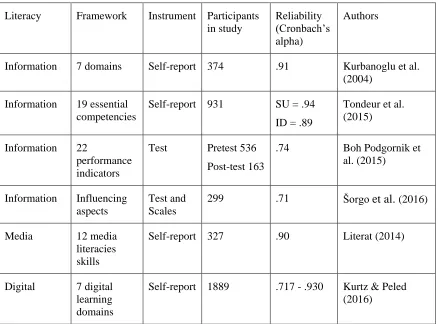
Table 2.2 Instruments Assessing New Literacies ... 29
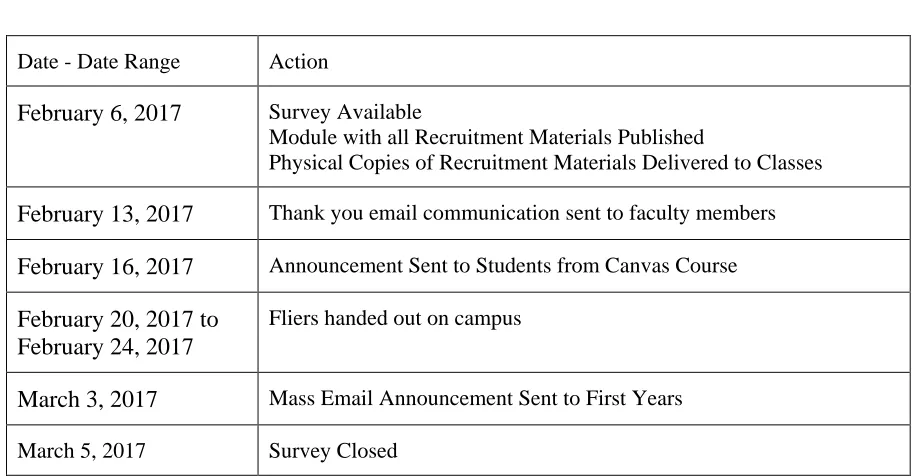
Table 3.1 Recruitment Time-line ... 37
Table 3.2 Digital Learning Domains with Corresponding Performance Statements 38 Table 3.3 Results of Page Submission Time for each DLD ... 42
Table 3.4 Sample Evidence Supporting DLDs ... 47
Table 4.1 Descriptive Statistics for each PS in Information Research and Retrieval 53 Table 4.2 Descriptive Statistics for each PS for Information Validation ... 55
Table 4.3 Descriptive Statistics for each PS for Information Management ... 57
Table 4.4 Descriptive Statistics for each PS for Processing and Presentation of Information ... 59
Table 4.5 Descriptive Statistics for each PS for Team-based Learning in Digital Environments ... 61
Table 4.6 Descriptive Statistics for each PS for Awareness of Digital Integrity ... 63
Table 4.7 Descriptive Statistics for each PS for Social Responsibility ... 65
Table 4.8 Descriptive Statistics for each DLD ... 66
Table 5.1 DLDs Synthesized Assessment Prioritized ... 88
xiv
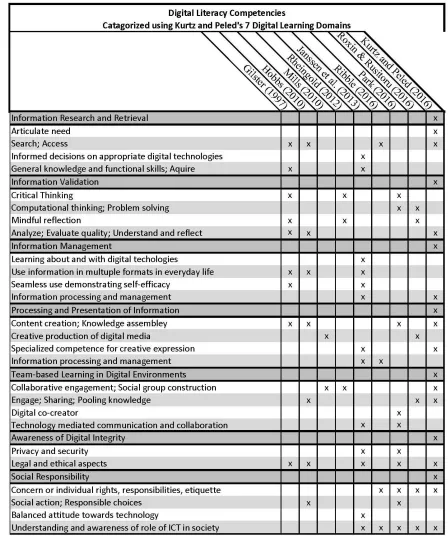
Figure 1. DL Competencies: Categorized by Kurtz and Peled’s 7 DLDs ... 22 Figure 2. Diagram of study’s design ... 33 Figure 3. Visual highlights seventeen cases with page submission times below 2
sec./PS threshold. Times are in seconds, and ‘x’ indicates an unwanted response to at least one self-report indices ... 43 Figure 4. Graphical representation of the proportions of categories in sample data
for gender, age, and racial/ethnic identity ... 50 Figure 5. Stacked bar chart combining scaled responses for all 12 performance
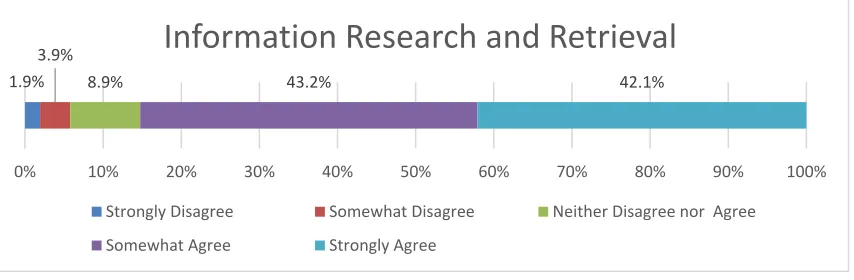
statements to information research and retrieval ... 51 Figure 6. Stacked bar chart combining scaled responses for all five performance
statements to information validation ... 54 Figure 7. Stacked bar chart combining scaled responses for all three performance
statements to information management ... 56 Figure 8. Stacked bar chart combining scaled responses for all eight performance
statements to processing and presentation of information ... 57 Figure 9. Stacked bar chart combining scaled responses for all eight performance
statements to team-based learning in digital environments ... 60 Figure 10. Stacked bar chart combining scaled responses for all 15 performance
statements to awareness of digital integrity ... 62 Figure 11. Stacked bar chart combining scaled responses for all three performance
statements to social responsibility ... 64 Figure 12. A graphical representation of negative, neutral, and positive responses to
DLDs. Note information management ( = 0.53) ... 67 Figure 13. A screenshot of nested nodes within NVivo for the Information
xv
Figure 15. A screenshot of a public infographic developed as a group project for a class ... 72 Figure 16. A screenshot of a video developed as a component of a larger group
PowerPoint presentation ... 72 Figure 17. A screenshot of a public website developed with HTML and CSS for a
class ... 74 Figure 18. A screenshot of one sheet in an Excel project used to display information
... 75 Figure 19. Cases with properties overlapping multiple DLDs. Circle size proportional
to number of cases ... 78 Figure 20. A screenshot of nested nodes within NVivo for emotion ... 79 Figure 21. Representation of emotions within respective DLD ... 81 Figure 22. Summary of combined quantitative and qualitative results for each DLD.
Positive response equals the combined percent for Somewhat-agree and Strongly-agree responses. Emotions are positive except for fear ... 86 Box plots for page submission times in seconds for 7 DLDs. The most extreme value on
xvi
ACRL Association of College and Research Libraries BSU Boise State University
CCC Created and Called for Community CWEO s College Wide Educational Objectives DLDs Digital Learning Domains
GC Graduate College
ICTs Information and Communications Technologies
IRB Institutional Review Board
NML New Media Literacy
QCA Qualitative Content Analysis
TDC Thesis and Dissertation Coordinator
CHAPTER ONE: BACKGROUND
Literacy has expanded from reading and writing print based materials to a fluid concept that includes: (a) active participation in a digital society (Hobbs, 2010; & Literat, 2014); (b) an understanding of legal, social and ethical issues in digital environments (Kurtz & Peled, 2016); and (c) social responsibility in digital environments (Kurtz & Peled, 2016). Digital literacy is just one of the many new literacies discussed in educational literature in the 21st century. Changes in information and communications technologies (ICTs) and the digital landscape have driven the changes in how literacy is defined. Educational institutions must align their goals and objectives with the changing digital landscape. Relevant, guiding principles provide a sound framework by which educators are better able to craft meaningful activities for students growing up in and living in a digital media participatory culture (Johnson et al., 2016). This research explored the digital literacy proficiency of first year undergraduate students at Messiah College, to provide baseline data to the College to support efforts to revise guiding
educational principles that are, in part, outdated and irrelevant to the current environment. Introduction
Educational Objectives (CWEOs). Specifically, the Plan states, “Messiah College will prepare educators to cultivate appropriate teaching and learning outcomes that meet the needs of a changing student body” (see Appendix A, Theme 3). This goal includes an action step to “review and revise the College Wide Educational Objectives in light of the changing environment with attention to digital proficiency and intercultural
competencies” (Appendix A, Theme 3, Goal 3). The inclusion of digital proficiency competencies in the strategic plan signifies these competencies as a high priority for the College to address in coming years. Meshing mission statements and strategic plans with the socio-cultural environment, and engaging curricula with digital literacies has become “one of the most pressing concerns of higher education today” (emrecaglayan, 2016, Third para.). Johnson et al. (2016) state, “Through the creation of frameworks, higher education leaders are helping students and faculty learn skills for working in a digital society” (p. 25).
A closer look at contemporary society sheds light on why Messiah College chose to prioritize a review of the CWEO’s with attention given to digital proficiency. Societies are fluid (Martin, 2006). They evolve by, with, and for the citizens that participate in them. Dewey (1916) referred to a society as “an organic union of individuals” whereby citizens must be ready, able and willing to utilize the tools available to them to “act economically and efficiently” (Article I). An accelerated use of information and
contemporary global society with support from ICTs can increase common values held within a group. However, as Dewey (1916) noted, “social return [must] be demanded from all and … opportunity for development of distinctive capacities [must] be afforded all” (p. 142). It is therefore, important that education supports student engagement in this participatory culture through the ICTs available in this contemporary digital age.
Literacy, a necessary competency for active participation in society, has expanded from reading and writing of printed text to a skillset that includes many more higher order outcomes. Many terms have been associated with new literacies, including
information, media and digital literacy, and these literacies overlap in many ways (Šorgo, et al., 2016).
Information literacy evolved from a need that supports the abilities to (a) recognize a need for information, (b) access, evaluate and use information, and (c) understanding social connections among sources. These skillsets grew from needs associated with the use of library resources (Association of College and Research Libraries, 2016; Chartered Institute of Library and Information Professionals, 2013).
Media literacy focuses on the medium, or tool, used to create and communicate a message (Jolls & Wilson, 2014). Like information literacy, accessing and evaluating information is valued (Martens, 2010; Rogow, 2011) as is collaboration in a participatory culture (Jenkins et al., 2006). The National Association for Media Literacy Education (2007) supports developing skills that include: (a) inquiry, (b) self-expression, and (c) critical thinking.
(2011) referenced digital literacy as a framework with sociocultural underpinnings, and Tan (2013) sees it as a skillset that includes the act of establishing the authority of material. Kurtz and Peled (2016) make an important distinction for digital literacies, arguing these literacies “are valuable only insofar as they are capable of evolution in light of changing technical, social, economic, cultural, and educational contexts” (p. 147).
While much is written about the need for education to focus on skillsets and competencies associated with these ever evolving new literacies, limited assessment instruments exist (Boh Podgornik, Dolnicar, Šorgo, & Tomaž, 2015; Kurtz & Peled, 2016; Literat, 2014; Mills, 2010; Walsh, 2010). Most of the limited emerging instruments consist of self-reports created around different conceptual frameworks. Literat’s (2014) instrument on new media literacy (NML) measures individuals’ “NML skills, media exposure, digital participation, and civic engagement,” (p. 15) and takes into account both online and offline student behaviors.
Kurtz and Peled’s (2016) instrument measures students’ digital literacies within seven digital learning domains (DLDs) identified as: (a) information research and retrieval, (b) information validation, (c) information management, (d) processing and presentation of information, (e) team-based learning in digital environments, (f)
Purpose
Society’s improving ICTs and growing participatory culture provide the general social context for this research within a higher education institution. Revising the outdated policies and frameworks that guide processes within educational institutions is necessary for maintaining relevance in changing times. From accreditation practices to teaching and learning practices, change is a common theme as Ewell (2015) explains:
As demonstrated by the past ten years, change can happen quickly and become transformational before those who experience it become aware of the fact. After all, tools that are now taken for granted, ranging from Google to GoToMeeting, were only created in the last decade. This makes it all the more imperative that higher education policy leaders quickly but carefully identify the implications behind current trends and to remake quality assurance structures and practices more suited to emerging realities. (p. 9)
The purpose of this research is to support Messiah College in its attempt to revise its College Wide Educational Objectives (CWEOs) with a focus on digital proficiency. The use of an existing scale to measure students’ digital literacy proficiency is a first step toward achieving this goal. Use of this scale will guide the College toward determining an acceptable digital proficiency, or level of mastery of the digital age, providing a target the College may strive to achieve.
educators as they develop program and course objectives, and design student learning activities to improve student learning.
Finally, this exploratory embedded mixed-methods study expands the limited research currently available on the assessment of digital literacies. Adding a qualitative component to Kurtz and Peled’s (2016) quantitative self-assessment survey instrument provides a descriptive and interpretive analysis that is not possible with quantitative data alone (Creswell & Plano Clark, 2011). Meaning constructed from these data supports the work aimed toward achieving Messiah College’s goal of improving teaching and learning outcomes with a focus on digital proficiency, and increases general knowledge about the assessment of digital literacies.
Research Questions
This research describes the digital literacy proficiency of students from data collected through a self-assessment instrument, and explores students’ digital artifacts and open-ended text reflections and explanations demonstrating their digital literacies. The following questions will guide this research:
(1) Based on Kurtz and Peled’s (2016) digital learning domains, how digitally literate are Messiah College’s first year undergraduate students? and
(2) How do supporting digital files and text reflections and explanations extend Kurtz and Peled’s (2016) instrument assessing digital literacy?
Research Design
rated themselves on a 5 level Likert-type scale on 54 performance statements and provided a digital file that they believe demonstrates their digital literacy proficiency. In addition, students included reflective statements and explanations as additional
qualitative data. Analysis included descriptive statistics (Hatcher, 2013) and qualitative content analysis (Saldaña, 2016; Schreier, 2012).
Summary
Information and communications technologies (ICTs) are transforming society (Greenberg & Zanetis, 2012; Yousef et al., 2014). Changing socio-cultural environments are influencing educational institutions, increasing the need for transforming strategic plans, guiding institutional documentation, and educational objectives to maintain practices that are relevant to society (Ewell, 2015). Results from this embedded mixed methods exploratory study will inform members of the Messiah College task force shepherding the Strategic Plan toward completion, providing a better understanding of digital literacies and how first year students assess themselves in seven digital learning domains (DLDs), supporting the alignment of educational objectives to student needs.
In addition, this research extends what knowledge currently exists in the
educational community on the assessment of digital literacies. There is a need for further research on new literacies and the assessment of new literacies specifically (Boh
(2016) developed a self-assessment instrument that is reported to be reliable, this instrument is in need of further evaluation. Using Kurtz and Peled’s (2016) instrument this study supports Messiah College as it works toward improving the CWEOs with a focus on digital proficiency and extends knowledge on the assessment of digital literacies for the educational community.
CHAPTER TWO: LITERATURE REVIEW
This literature review begins with an historical account of the evolution of digital literacy. This historic account includes the growth of information and communications technologies (ICTs) and the expanding definition of literacy. A synthesis of the literature on new literacies, specifically digital literacy, follows. Many authors articulate the concepts they believe are integral to new literacies as skill sets or competencies. Kurtz and Peled’s (2016) seven digital learning domains provide a framework for the synthesis of the many competencies discussed in the literature. Finally, a review of empirical studies involving assessment instruments developed to measure new literacies concludes this Chapter.
share new content with other members of society (Kurtz & Peled, 2016; Mills 2010, Park, 2016; & Roxin & Rusitoru, 2016). This abstract literacy originated in the last part of the 20th century alongside information and communications technologies (ICTs).
Evolution of Digital Literacy
Information and communications technologies (ICTs) have transformed socio-economic and socio-cultural environments around the globe. Cultures and economies are in many ways defined by their use of ICTs (UNESCO, 2016). This section synthesizes the growth of ICTs and briefly describes emerging new literacies resulting from the evolving ICTs in society. This discussion on transforming ICTs in society and the expanding philosophies surrounding what it means to be literate provides a backdrop for a more thorough discussion on digital literacy, specifically, in the following section. Information and Communications Technologies (ICTs)
storage; and an increasingly connected population of active users of digital technologies” (p. 3). Building on the “infrastructure of the digital [3rd] revolution” (p. vii), they explain the fourth industrial revolution as a change society, one that is built on the backbone of current ICTs that will transform society in exponential ways. This transformation has spurred new thinking related to the traditional definition of literacy.
New Literacies
New literacies emerged in large part from the transformations in information and communications technologies (ICTs) and expanding knowledge society (Sharma, Fantin, Prabhu, Guan, & Dattakumar, 2016). While early conversations regarding how literacy should be defined began in the mid-twentieth century, interpretations continue to be fluid.
Many novel literacy concepts have been put forward in response to the new social and technological environments. Some are independent and novel, such as digital literacy and information fluency, whereas others are compound concepts such as multiliteracies, transliteracy and media and information literacy (MIL) (Lee, 2013, p. 4).
“Terms such as digital, media and information literacy are used to describe the recent and future knowledge and skills required to allow an individual to navigate media- and information-rich environments” (Šorgo et al., 2016, p. 2).
Conceptually, information literacy (IL) includes the ability of individuals to find the truth in documents, and focus on a document’s relevance, reliability, validity, timeliness, accuracy, and completeness (Lau, 2013), and has had a strong association with academic libraries. IL, evolved from skillsets needed in libraries that support information access from books, periodicals, and media archives (Keeffe, 2016). It is explained, more recently, as a literacy that involves knowing when and why to access information, where to find information, and how to evaluate, use, and communicate it in an ethical manner (Chartered Institute of Library and Information Professionals, 2013). The Association of College and Research Libraries (2016) and Kurbanoglu, Akkoyunlu, and Umay (2004) articulate an additional skill set, the ability to recognize the need for information prior to finding or locating the information. The Association of College and Research Libraries (ACRL) also embraces the need for information literate individuals to understand social connections and implications among sources. While Klomsri and Tedre (2016) and Lau (2013) describe the need for IL as an over-arching literacy, Keeffe (2016) presumes other ICTs and digital literacies will remain the focus in this current
transforming knowledge economy.
Additional supporting competencies of media literacy include the ability of an individual to access, analyze, evaluate, create, or produce, and distribute messages within a global society (Hobbs, 2010; Martens, 2010; Rogow, 2011).
Media literacy also includes the ability to form social connections through active, collaboration in a participatory culture (Jenkins et al., 2006) supporting critical
investigations and the formation of new knowledge (Jolls & Wilson, 2014). Media literate individuals, Martens (2010) declares, “take an active rather than a passive role in acquiring new knowledge and skills. In this way, they become fully able to participate as critical consumers and citizens in a media-saturated society” (p. 6). The National
Association for Media Literacy Education (2007) states, “the purpose of media literacy education is to help individuals of all ages develop the habits of inquiry and skills of expression that they need to be critical thinkers, effective communicators and active citizens in today’s world” (p. 1). Table 2.1 synthesizes the ideas described in this section as they relate to information and media literacy.
Table 2.1 A Comparison of Ideas Related to Information and Media Literacy
Information Literacy Media Literacy Focus Relevance, reliability, validity,
timeliness, accuracy, completeness
Message presented through different media transform topic Application Ability to apply information for
problem solving
Ability to producing new knowledge
Abilities Knowing when, why, where, and how to use ethically;
Critical thinking
Deconstructing and constructing meaning;
Critical thinking Social
Connections
Understanding social context; Effective use of information
New literacies have moved beyond the core skills of reading and writing into a complex constellation of competencies that include the ability to not only find and read resources, but critically analyze each resource, make new meaning, share new knowledge in multiple forms, and actively participate in society. Lankshear and Knobel (2007) contend, new literacies are “ways of generating, communicating and negotiating meaningful content … [beyond text] … within contexts of participation” (p. 224). Information and media literacy, regardless of different terminology, are closely linked in the literature and often used interchangeably with digital literacy (Ainley et al., 2016; Hobbs, 2010). Hobbs (2010) makes clear that digital and media literacies provide an expansion of the classic definition of literacy, and do not supplant it, and she makes a case for propelling both digital and media literacies, which she defines as a “constellation of life skills” (p. vii), into the mainstream. Ainley et al. (2016) express a similar point of view affirming digital literacy is required for participation in a knowledge economy and information society. A closer look at digital literacy follows in the next section.
Digital Literacy
This proposal of the interpretation of digital literacy being constructed by different social groups exposes the complexity of digital literacy and the difficulties integral to
developing a consistent set of competencies for a more global society.
Even though conceptualizations of digital literacy by the authors included here are complex, they do have overlapping features. After briefly addressing digital literacy’s core concepts outlined by multiple authors in the field, Kurtz and Peled’s (2016) digital literacy framework synthesizes the overlapping features of digital literacy.
Core Concepts
In her call to action, Hobbs (2010) raises the need for people to have “the ability to access, analyze and engage in critical thinking about the array of messages they
receive and send in order to make informed decisions about the everyday issues they face regarding health, work, politics and leisure” (p. vii). Digital and media literacy, Hobbs asserts, improves through deep collaborative engagement with ideas and information in socio-cultural life. Rheingold (2012) explains, digital literacies include the social competency to work effectively and collaboratively with others, and the ability to be mindful of information and representations (media) so as to filter the irrelevant information that is so prevalent. Rheingold (2012, p. 3) states,
as people who are trying to get along day to day in a hyperscale, warp-speed civilization that seems so often to be beyond anyone’s control, digital literacy is something powerful we can learn as well as exercise for ourselves and each other.
(a) general knowledge and functional skills, (b) use in everyday life,
(c) specialized and advanced competence for work and creative expression, (d) technology mediated communication and collaboration,
(e) information processing and management, (f) privacy and security,
(g) legal and ethical aspects,
(h) balanced attitude towards technology,
(i) understanding and awareness of role of ICT in society, (j) learning about and with digital technologies,
(k) informed decisions on appropriate digital technologies, and (l) seamless use demonstrating self-efficacy.
Janssen et al. (2013) describe areas (d, e, f, g, h, and i) as relevant for all uses of digital technologies on a day to day basis; they describe other areas as moving from specific lower order skills (a, b, and c) to more self-directed higher order thinking skills (j, k, and l). They note, “the digitally competent person demonstrates self-efficacy and seamless use of digital technologies” (p. 478), and they argue for the inclusion of
attitudes in addition to knowledge and skills in their list of competencies. More recently, the definition of digital literacy has expanded to include security, concern for an
A Digital Literacy Framework
Kurtz and Peled (2016) with the help of six researchers in the field of educational technology and seven graduate students in the field of ICT identified seven digital learning domains (DLDs).
Information Research and Retrieval Information Validation
Information Management
Processing and Presentation of Information Team-based Learning in Digital Environments Awareness of Digital Integrity
Social Responsibility
These DLDs establish the framework for the self-assessment tool used in this research. The digital competencies and conceptual items described by: Gilster, 1997; Hobbs, 2010; Mills, 2010; Rheingold, 2012; Janssen et al., 2013; Ribble, 2016; Park, 2016; and Roxin, and Rusitoru, 2016 easily map to the DLDs developed by Kurtz and Peled (2016).
Therefore, the organization of competencies and skill sets described in this section follow Kurtz and Peled’s seven DLDs.
Information Research and Retrieval
search. In addition, Janssen et al. (2013) address the need for informed decisions supporting the use of appropriate digital technologies for researching.
Information Validation
Information Validation is a digital learning domain that, while foundational, can be a more cognitively demanding skill than Information Research, Retrieval, and Management. Not only do Kurtz and Peled (2016) support the ability to determine a source’s credibility, they also include the skill required to determine if the information will meet the intended needs of a given task. Critical thinking is required (Gilster, 1997; Park, 2016; Rheingold, 2012), as is mindful reflection (Gilster, 1997; Rheingold, 2012) and the ability to problem solve (Roxin & Rusitoru, 2016). A digitally literate individual must be able to analyze, evaluate, understand, and reflect on a given task and the
information required to meet the need (Gilster, 1997; Hobbs, 2010). Information Management
Kurtz and Peled (2016) describe information management from a very basic level referencing the ability to organize digital files. Like Information Research and Retrieval, this is another foundational skill to many new literacies. However, Gilster (1997) and Janssen et al. (2013) extend this foundational concept a bit further. They speak of the need for self-efficacy of an individual in the ability to seamlessly navigate in a digital environment, while at the same time having the ability to process information received from multiple formats. They also express the need for digitally literate individuals to have the ability to learn about and with digital technologies, an increasing necessity as
Processing and Presentation of Information
At its most basic level, processing, managing, and presenting information involves content creation and knowledge assembly (Gilster, 1997; Hobbs, 2010; Park, 2016). Hobbs (2010) explains active participation in digital literacy practices “cultivate[s] an active approach to the process of meaning making” (p. 31). Yet, digital literacy
includes more, moving beyond basic representation toward the use of multiple forms of digital media for creative expression (Janssen et al., 2013; Kurtz & Peled, 2016; Mills, 2010; Roxin & Rusitoru, 2016). There is, Janssen et al. (2013) note, an intricate relationship between digital technologies and creative expression.
Team-based Learning in Digital Environments
Team-based learning, like social responsibility links to the need of individuals to work collaboratively in this participatory culture. Kurtz and Peled (2016) look closely at individual team-members’ awareness of their role and the roles of other team-members and the alignment of individual roles for the work of the group. Concern for collaborative engagement and the ability to construct social groups (Mills, 2010; Rheingold, 2012) as well as having the ability to share individual thoughts with group members (Gilster, 1997; Hobbs, 2010; Kurtz & Peled, 2016) are noted in the literature as being important competencies of digital literacy. In addition, Janssen et al. (2013) and Park (2016) refer specifically to the abilities of individuals to participate in technology mediated
communication and collaboration within a group. Awareness of Digital Integrity
Digital integrity encompasses the knowledge of common practices and
digital media including awareness and understanding of Creative Commons licenses and how to provide attribution (Gilster, 1997; Hobbs, 2010; Kurtz & Peled, 2016). In similar fashion, Janssen et al. (2013) include privacy and security, and legal and ethical aspects as competencies of digital literacy. They state, the following for each respectively,
The digitally competent person has the capacity to protect personal data and take appropriate security measures; [and] the digitally competent person behaves appropriately and in a socially responsible way in digital environments,
demonstrating awareness and knowledge of legal and ethical aspects on the use of ICT and digital content. (Janssen et al., 2013, p. 477)
Park (2016) provides details specific to digital literacy and security including: password protection, internet and mobile security related to hacking, scams, and malware detection.
Social Responsibility
Social responsibility is a key component necessary for life in a participatory culture (Jenkins et al., 2006) in this emerging fourth industrial revolution driven by the digital economy (Baller et al., 2016). Kurtz and Peled (2016) describe social
responsibility as an awareness of threatening situations and understanding of social consequences related to one’s actions as do Ribble (2016) and Roxin & Rusitoru (2016) who refer to the need for social awareness and concern for individual rights and
understanding of the role of ICT in society that individuals are able to balance their perceptions of and actions with ICT in society (Janssen et al., 2013).
Assessment Instruments
While active development of a common language defining digital literacy has been under way for the last decade, assessment instruments are only recently emerging (Ainley et al., 2016). The challenges associated with a shift from defining competencies conceptually to measuring competencies empirically abound. This challenge of shifting from conceptual clarity of digital literacy to the assessment of digital literacy is a result of the fluid ICT environment, and is in part due to the many voices and interpretations of new literacies that have led to industry tensions related to literacy’s boundaries,
pedagogical concerns, and digital practices (Mills, 2010). Ainley et al. (2016) emphasize these challenges in assessment development noting the breadth of skills from basic to advanced ICT usage and the breadth of contexts. These challenges are relevant to global assessment as well as more local assessments.
Regardless, “valid, reliable, practical assessments of 21st century skills are
needed” (Dede, 2010, p. 54). Mills (2010) calls for new innovative assessment models for contemporary times. She claims authentic digital literacy practices in social contexts are missing from assessments of conventional literacy, and affirms mixed methods
approaches for improving empirical studies, aiding in the transformation of these new literacies.
from their research of a formative assessment rubric for students’ multimodal projects, “there is an urgent need to develop alternative ways of assessment in support of students’ new literacy practices in the digital age” (p. 400).
While some empirical studies exist on the assessment of digital literacy,
standardization of these evaluations is challenging (Boh Podgornik et al., 2015). To date there is no final agreement for best assessment method (Boh Podgornik et al., 2015). A sample of the empirical studies associated with information, media and digital literacies assessment instruments in higher education follow. The instruments presented here include an information literacy test and self-assessment instruments for information, media, and digital literacy.
Information Literacy (IL) Instruments
Four instruments used to assess information or ICT literacies are identified here. While each instrument references a different conceptual framework, the scores from these varied instruments are all reported to be reliable, or “stable and consistent,” (p. 159) one indication of a good instrument (Creswell, 2012). Calculations of Cronbach’s alpha, is “one of the most important and pervasive statistics in research involving test construction and use” (Cortina, 1993, p. 98). Each of the four IL instruments introduced here indicate acceptable values for reliability (Nunnally, 1978).
locating and accessing the resources, (d) assessing and comprehending the information, (e) interpreting synthesizing and using the information, (f) communicating the
information, and (g) evaluating the product and process. Their 28-item self-efficacy scale was given to 374 teachers, and was calculated to be reliable with a Cronbach’s alpha = .92.
Focusing on 19 essential competencies of IL, Tondeur et al. (2015) developed a self-report instrument for measuring pre-service teachers’ ICT competencies in
supporting student use of ICTs and competencies with the integration of ICTs in their pedagogies. A total of 931 pre-service teachers participated in their study. Their instruments, based on 5-point Likert-type scales, were found to be reliable with
calculated Cronbach’s alpha values for ICT competencies and instructional design equal to .94 and .89 respectively.
In an attempt to serve higher education institutions in developing courses that improve student IL, Boh Podgornick et al. (2015) developed an IL test composed of 40 multiple choice questions, each with one correct answer. The 22 performance indicators of IL as proposed by the ACRL, a division of the American Library Association,
(American Library Association, 2000) provided a conceptual framework. Subscales were used to better identify areas of need. Testing occurred before and after participation in an IL-related course. Using 536 students in the first test group and 163 students in the second (posttest group), Boh Podgornik et al. (2015) found a 13.1% increase in test results with the "most significant improvement ...in advanced search strategies.
improved to a lesser extent" (p. 12). Reliability for their test was calculated to be sufficient, Cronbach's alpha = .74.
In an attempt to better understand aspects that influence IL, Šorgo et al. (2016) used the IL test developed by Boh Podgornik et al. (2015) in addition to four scales rating: (a) ICT experiences, (b) ICT-rich courses, (c) Internet confidence, and (d) ICT ownership. Reliability for their test was calculated with a Cronbach’s alpha of 0.71. Results from their study that included 299 student participants indicated increased application use does not improve IL, nor does increased device ownership. However, ownership of devices does impact one’s experience and confidence which in turn
produces a positive impact on IL. Likewise, “ICT-rich university courses have an impact on ICT experiences and student confidence” (p. 16).
Media Literacy Instrument
experience correlated with higher media literacy as did participation in Web 2.0 platforms and an individual’s civic engagement. This 80 question assessment took approximately 20 minutes to complete. The questionnaire’s length was noted as a limitation to attracting participation. Literat calls for qualitative components to future research “to achieve a fuller and more precise assessment of media literacy” (p. 23) and questions the ability of similar assessments to be useful “for both baseline and endline assessments” (p. 23). The specificity of particular digital platforms in this questionnaire was problematic for some participants, as one user indicated using a particular platform does not make one more or less media literate.
Digital Literacy Instrument
Using a conceptual framework that includes visual literacy, literacies associated with ICT, and digital literacy, Kurtz and Peled (2016) validated a set of digital literacies that originated from prior work completed by Beaudoin, Kurtz, Jung, Suzuki, and Grabowski (2013). The seven digital learning domains (DLDs) identified for their instrument are: (a) information research and retrieval, (b) information validation, (c) information management, (d) processing and presentation of information, (e) team-based learning in digital environments, (f) awareness of digital integrity, and (g) social
responsibility.
Given their work toward validating an instrument for measuring digital literacies, Kurtz and Peled (2016) declared digital literacies "are valuable only insofar as they are capable of evolution in light of changing technical, social, economic, cultural, and educational contexts" (p. 147). Their instrument is not technology specific and, therefore, has the potential to withstand future ICT changes to socio-cultural environments.
Summary of Assessment Instruments
Table 2.2 Instruments Assessing New Literacies
Literacy Framework Instrument Participants in study
Reliability (Cronbach’s alpha)
Authors
Information 7 domains Self-report 374 .91 Kurbanoglu et al. (2004)
Information 19 essential competencies
Self-report 931 SU = .94
ID = .89
Tondeur et al. (2015)
Information 22
performance indicators
Test Pretest 536
Post-test 163
.74 Boh Podgornik et al. (2015)
Information Influencing aspects
Test and Scales
299 .71 Šorgo et al. (2016)
Media 12 media literacies skills
Self-report 327 .90 Literat (2014)
Digital 7 digital learning domains
Self-report 1889 .717 - .930 Kurtz & Peled (2016)
Notes: SU = student use; ID = instructional design Summary
The advent and growth of ICTs in society has and will have a revolutionary effect on socio-cultural environments around the globe (Baller et al., 2016). The shift in ICTs has drastically altered the amount, form, and mode of information available and has altered the way in which individuals search for, retrieve, remix and send communications (Rheingold, 2012). These changes have altered the way in which society defines literacy.
Information, media, and digital literacies are some of the new literacies represented in the literature. Common themes for the new literacies identified here include:
(b) the ability to critically evaluate, analyze and interpret all sources, (c) the ability to deconstruct and construct new meaning,
(d) the ability to present and/or distribute new expressions
(e) the ability to engage in these activities while at the same time being aware of social context and rights, responsibilities and etiquette associated with collaborative engagement.
Digital literacy provides a broad context that includes competencies associated with information and media literacies. Digital literacy has the power to transform a society (Rheingold, 2012). While, Janssen et al. (2013) support the notion that “a
common language is needed” (p. 473) in the field of digital competence, defining digital literacy remains a complex process. Digital literacy remains an important and fluid field of study, as educational institutions attempt to define literacy in an information media rich society.
CHAPTER THREE: METHODS
This exploratory study followed an embedded mixed methods design. Mixed methods studies combine “the advantages of both quantitative and qualitative data” (Creswell, 2012, p. 545) and uncover multiple perspectives (Creswell & Plano Clark, 2011). Creswell and Plano Clark (2011) describe embedded mixed methods, specifically, as having both quantitative and qualitative components within one traditional design. A fixed approach to this study placed quantitative methods first in the design and qualitative methods second. Each component remained independent through the analysis phase. Quantitative and qualitative components were mixed when drawing conclusions at the end of the study.
First year students in the 2016-2017 academic year at Messiah College
represented the target population for this study. Recruitment efforts focused on students enrolled in a course taken by most first year students in the spring semester of their first year. The survey instrument used for this research included Kurtz and Peled’s (2016) self-assessment instrument used to collect quantitative data, and open ended prompts used to collect qualitative data. Qualitative data included digital media files and text reflections and explanations supplied by the participants at the end of the survey.
the survey. This qualitative analysis began with a conceptual organization of data according to Kurtz and Peled’s seven DLDs. Then, using the constant comparative approach of grounded theory, final categorizations of qualitative data were determined (Glaser, 2002).
This chapter begins with a detailed look at this study’s mixed methods features. The data collection section includes information related to the target population, recruitment efforts, and the research instrument. The data analysis section includes screening techniques, and quantitative and qualitative assessment practices used to answer this study’s research questions. The chapter ends with research limitations.
Study Design
Creswell (2012) explains, an embedded mixed methods design includes the collection and analysis of quantitative and qualitative data with “one form of data play[ing] a supportive role to the other form of data” (p. 544). The supporting data augments, supports, or extends the primary form of data (Creswell, 2012). Collection of the quantitative and qualitative data components can happen simultaneously or
sequentially, and each form of data is used to answer a different research question (Creswell, 2012). Creswell also highlights the importance of clarifying the intended purpose of the secondary data set when using this method.
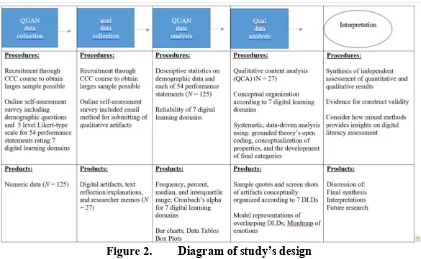
How do supporting digital files and text reflections and explanations extend Kurtz and Peled’s (2016) instrument assessing digital literacy? This mixed methods study extends the research available on digital literacy, providing valuable insights on digital literacy assessment that have not been provided by quantitative data alone (Literat, 2014; Mills, 2010). A diagram of this study’s design appears in Figure 2 and Appendix B.
Figure 2. Diagram of study’s design
Data Collection
The target population for this study was first year students at Messiah College in the 2016-2017 academic year. Recruitment efforts focused on a course in which nearly all first year students were enrolled, Created and Called to Community (CCC). A survey instrument supported the data collection efforts of the quantitative and qualitative elements of this study. This section provides detail on the: (a) target population, (b) recruitment efforts, and (c) survey instrument.
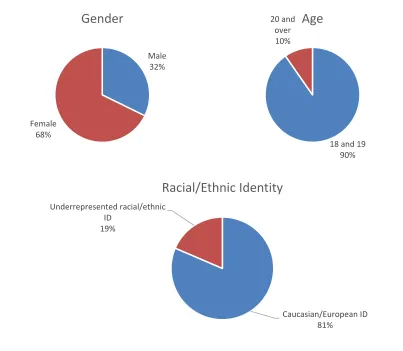
First-year students attending Messiah College in the 2016-2017 academic year represented the target population for this study, specifically, first year students, 18 years of age or older. First year students in the fall of 2016 totaled 660, with 39% male and 61% female. A large portion, 89%, began the year as 18 or 19 years old (Messiah College, 2016). Of all undergraduate students for the 2016-2017 academic year,
underrepresented racial/ethnic cultural populations accounted for 17.4% of population, a portion of the total population of undergraduate students that has continued to increase over the past five years (Messiah College, 2016). Students under the age of 18 in the fall semester of 2016 accounted for only 6.5% of the total first year enrollment (Messiah College, 2016). By the second semester of the first year, when this research took place, this portion of the population under the age of 18 was expected to be even smaller. Therefore, students under the age of 18 were excluded from this research, eliminating the need for parent/guardian informed consent.
Creswell (2012) indicates the importance of selecting, “as large a sample as possible [in survey research] so that the sample will exhibit similar characteristics to the target population” (p. 381), thus reducing sampling error. Given the recruitment
procedures that follow, a 95% chance of sample having similar characteristics to the total population, and a 4% tolerance for error, the sample size expected for this research was 100 (Fowler, 1988). Recruitment procedures that follow attempted to produce the largest representative sample possible.
Recruitment
Created and Called for Community (CCC). The Assistant Dean of General Education and Common Learning and Advising and the Chair of the CCC Steering Committee
consented to providing this research opportunity to students enrolled in CCC. All sections of the CCC course use the learning management system, Canvas, providing a streamlined avenue for storing recruitment materials and sending communications. Recruitment materials modeled by sample documents provided by the Boise State University IRB (Institutional Review Board) included:
A script read by faculty to their respective CCC courses (see Appendix C). A post card (see Appendix D).
An Announcement generated from each CCC course within the learning
management system, Canvas, to students that provides them with links to a video introduction and the survey (see Appendix E).
A cover letter provided to students in digital form through CCC courses in Canvas (see Appendix F).
A flyer circulated around campus to spark interest in the study and posted electronically through CCC courses in Canvas (see Appendix G).
A mass email sent to all first year students with links to a video introduction and the survey (see Appendix H).
Students were able to review digital copies of these recruitment materials from a Module developed within each Canvas course.
Receiving Messiah College’s Institutional Review Board (IRB) approval (#2016-008) and a successful defense of this proposed research, the following strategy
observation by providing a systematic consistent approach for all participants.
Recruitment began with a communication from the Chair of the CCC Steering Committee to all CCC faculty members on January 24,2017, encouraging them to support
recruitment efforts for this study. To improve researcher visibility for the faculty
members and students physical copies of the faculty script, postcards for all students, and a flier were organized by section and delivered to each of the 36 sections of the CCC course February 6 to 9, 2017. An image of the organized packets of materials and a sample copy of the email sent to faculty members appear in Appendix I.
Table 3.1 Recruitment Time-line
Date - Date Range Action
February 6, 2017 Survey Available
Module with all Recruitment Materials Published
Physical Copies of Recruitment Materials Delivered to Classes
February 13, 2017 Thank you email communication sent to faculty members February 16, 2017 Announcement Sent to Students from Canvas Course February 20, 2017 to
February 24, 2017
Fliers handed out on campus
March 3, 2017 Mass Email Announcement Sent to First Years March 5, 2017 Survey Closed
Instrument
An electronic survey instrument supported data collection efforts for the quantitative and qualitative elements (see Appendix J). The first page of the survey, indicated: (a) participation was voluntary, (b) details of the study, (c) implications for participating, (d) anonymity, and (e) researcher contact information. The quantitative component included two parts: (1) demographic questions on gender, age and
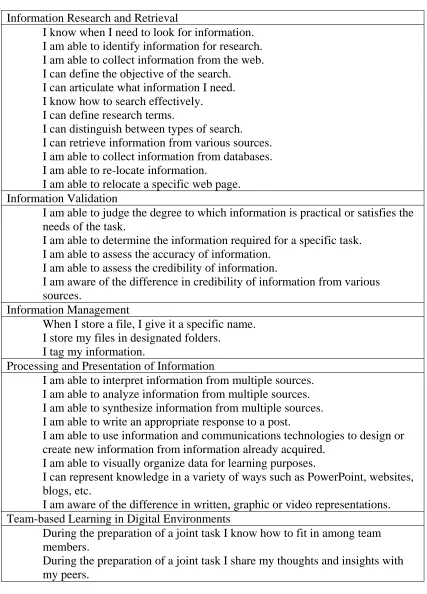
Table 3.2 Digital Learning Domains with Corresponding Performance Statements
Information Research and Retrieval
I know when I need to look for information. I am able to identify information for research. I am able to collect information from the web. I can define the objective of the search. I can articulate what information I need. I know how to search effectively. I can define research terms.
I can distinguish between types of search. I can retrieve information from various sources. I am able to collect information from databases. I am able to re-locate information.
I am able to relocate a specific web page. Information Validation
I am able to judge the degree to which information is practical or satisfies the needs of the task.
I am able to determine the information required for a specific task. I am able to assess the accuracy of information.
I am able to assess the credibility of information.
I am aware of the difference in credibility of information from various sources.
Information Management
When I store a file, I give it a specific name. I store my files in designated folders.
I tag my information.
Processing and Presentation of Information
I am able to interpret information from multiple sources. I am able to analyze information from multiple sources. I am able to synthesize information from multiple sources. I am able to write an appropriate response to a post.
I am able to use information and communications technologies to design or create new information from information already acquired.
I am able to visually organize data for learning purposes.
I can represent knowledge in a variety of ways such as PowerPoint, websites, blogs, etc.
I am aware of the difference in written, graphic or video representations. Team-based Learning in Digital Environments
During the preparation of a joint task I know how to fit in among team members.
During the preparation of a joint task I know that I have an influence on the work process.
During the preparation of a joint task I know what is expected of me. While performing a joint task I feel that my contribution to the team is meaningful.
My peers are aware of my abilities and of what I can contribute. I have no reservation regarding joint tasks.
I like to work with my peers on a joint task. Awareness of Digital Integrity
I understand the ethical consequences of the use of technology. I understand the social consequences of the use of technology.
I do not acquire digital information, files, programs, databases, etc., via illegal means.
I do not use technology for purposes that are intimidating or threatening. I am aware of the prohibition of illegal file download.
I am aware of copyright issues.
I am aware of appropriate acknowledgment of sources I use. I am aware of the danger of my data being online.
I am aware of cyber-bullying issues. I am aware of identity theft issues. I am aware of e-theft issues.
I am aware of the danger from my online activities. I am aware of the influence my online data has.
I am able to identify/avoid online fraud or identity theft situations. I am able to protect myself from online predators.
Social Responsibility
I adhere to the rules of discourse and proper behavior in social networks I make sure not to reveal information about organizations without consent I make sure not to hurt others - people and organizations - online.
presentation artifacts. Reflection and/or explanation of practices or about artifacts were also given as examples. These optional qualitative components were included at the end of the survey so as not to disrupt the flow of participants responding to the primary quantitative component (Creswell, 2012). See Appendix J for the instrument.
Researcher memoing supported the qualitative data collected for this study. Memos include “ideas, musings, and reflections…thoughts, feelings and impressions” (Birks, Chapman, & Francis, 2008, p. 69). Memos help a qualitative researcher reflect on the context, data collected, and how their own subjectivity may influence the study enabling knowledge generation (Birks et al., 2008). This researcher maintained memos on the data collection and analysis process, in a password protected Microsoft OneNote notebook.
Data Analysis
Analysis began with a close inspection of the data to ensure data quality. A report downloaded from Qualtrics, included results from 140 participants who started the survey between February 6 and March 5, 2017. These 140 participants also indicate “Yes. I read the information above and will participate.” Six of the 140 cases did not respond to any of the PSs. These cases were eliminated, bringing the case total to 134.
modifying the proposed screening methods, and explanation of the ultimate screening and cleaning procedures used in this study follow, prior to an explanation of methods used for quantitative and qualitative analysis.
Screening and Cleaning Quantitative Date
Self-report indices, a direct screening technique, included at the beginning and at the end of the self-assessment portion of the survey, were set up on a five level Likert-type scale similar to the rest of the survey. Screening highlighted respondents answering ‘strongly disagree’ to the first self-report question, ‘I will respond to survey thoughtfully and truthfully,’ and ‘strongly agree’ to the second self-report question, ‘I occasionally answered items without reading them’ (Desimone et al., 2016). Nineteen respondents indicated ‘strongly disagree’ to the first self-report question, and seven respondents indicated ‘strongly agree’ to the second question. All 26 respondents screened by these self-report indices were independent of one another. None of the respondents presented an unfavorable response to both questions. However, upon closer inspection, three of these 26 cases provided the same response for all 54 Performance Statements. Desimone et al. (2016) define invariant responses as an archival screening method. These three cases providing an unwanted response to at least one of the self-report indices and non-varied responses to all 54 PSs were eliminated, bringing the total number of cases to 131.
time threshold for each DLD. Table 3.3 shows the results of this screening method using a factor of six seconds per performance statement, indicating the number and percent of cases screened for falling below this response time threshold.
Table 3.3 Results of Page Submission Time for each DLD
Digital Learning Domains Number of Cases Under 6 sec./PS Threshold
Percent Cases Under 6 sec./PS Threshold
Information Research and Retrieval (N=131)
106 80.9
Information Validation (N=129) 85 65.9
Information Management (N=129) 107 82.9
Processing and Presentation of Information (N=129)
93 72.1
Team-based Learning in Digital Environments (N=129)
95 73.6
Awareness of Digital Integrity (N=128) 108 84.3
Social Responsibility (N=128) 90 70.3
Notes: PS = performance statement
This proposed page submission time threshold of 6 sec./PS screened over 65.9% of the cases and was, therefore, not helpful to this exploratory study. Adjusting the
Seventeen cases had at least one page submission time below the 2 sec./PS threshold. Figure 3 highlights all seventeen cases with a page submission time falling below the 2 sec./PS threshold, and identifies which of these seventeen cases provided an unwanted response to one of the self-report indices.
Figure 3. Visual highlights seventeen cases with page submission times below 2 sec./PS threshold. Times are in seconds, and ‘x’ indicates an unwanted response to
at least one self-report indices
submission times under the 2 sec./PS threshold and provided an unwanted response to at least one of the self-report indices. A close inspection of remaining eleven cases with one to three of the seven page submission times under the 2 sec./PS threshold revealed no abnormalities. The six cases identified here (18, 44, 70, 85, 103, and 110) were eliminated from the data set bringing the total number of cases to 125.
In summary, the direct screening method that included two self-report indices was inconclusive in identifying respondents that completed the survey with insufficient effort. None of the respondents presented an unfavorable response to both questions. However, the 26 individual cases that provided an unfavorable response to at least one of the self-report indices were identified for closer inspection. Three of these cases provided an unwanted response to at least one of the self-report indices and non-varied responses to all 54 PSs. These three cases were eliminated bringing the total number of case to 131.
Page submit times were highly positively skewed with the mean submission times for each DLD relatively close to the proposed 6 sec./PS threshold making this proposed screening measure unhelpful to this exploratory study. Updating the seconds/PS factor from six seconds to two seconds offered a more reasonable screening measure. Six additional cases were identified for elimination using the revised page submission time threshold and self-report indices. Removing these 6 cases brought the total number of cases to 125. This meets the study’s proposed goal of 100 cases.
Quantitative Analysis
sample data and the entire population (Hatcher, 2013). The survey instrument design supported this effort by offering the same categories for gender, age and
underrepresented racial/ethnic populations as those listed in the Messiah College Fact Book (Messiah College, 2016). Further analysis of the responses to the 54 performance statements that were part of digital literacy self-assessment focused on answering the first research question: Based on Kurtz and Peled’s (2016) digital learning domains, how digitally literate are Messiah College’s first year undergraduate students?
Analysis of the descriptive statistics of the sample data for each DLD included calculating the frequency, percent, median, and interquartile range for each performance statement and DLD (Hatcher, 2013). In addition, calculating Cronbach’s alpha using SPSS Statistics 23 for each DLD supported measurements for internal consistency (Hatcher, 2013), considering values above +.70 as acceptable (Hatcher, 2013; Nunnally, 1978).
Qualitative Analysis
The qualitative component of this study focused on answering the second research question: How do supporting digital files and text reflections and explanations extend Kurtz and Peled’s (2016) instrument assessing digital literacy? Meaning systematically constructed from specific components found in the data (digital artifacts, text
reflection/explanations, and researcher memos) as described by Schreier (2012) using qualitative content analysis (QCA) drove this analysis.
Screening and cleaning techniques included an initial review of the data
or non-representative of the study (Schreier, 2012). Three emails received by students did not contain any digital artifact or text explanation, and one artifact was deemed non-representative, as it was submitted by a student who was not a first year student. The artifact submitted was a link to an article for a senior capstone course. This study’s target population focused on first year students during the 2016-17 academic year. Eliminating these cases brought the total number of qualitative cases to 27. These 27 cases
represented first year students who completed the initial quantitative self-assessment instrument and also chose to submit artifacts as a final step to the study.
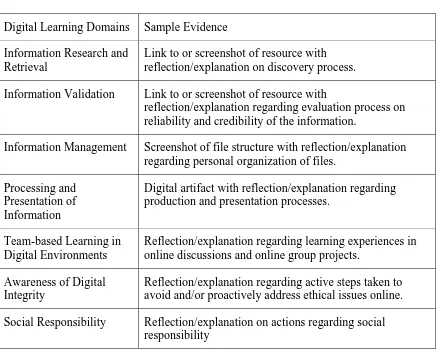
Table 3.4 Sample Evidence Supporting DLDs
Digital Learning Domains Sample Evidence Information Research and
Retrieval
Link to or screenshot of resource with reflection/explanation on discovery process. Information Validation Link to or screenshot of resource with
reflection/explanation regarding evaluation process on reliability and credibility of the information.
Information Management Screenshot of file structure with reflection/explanation regarding personal organization of files.
Processing and Presentation of Information
Digital artifact with reflection/explanation regarding production and presentation processes.
Team-based Learning in Digital Environments
Reflection/explanation regarding learning experiences in online discussions and online group projects.
Awareness of Digital Integrity
Reflection/explanation regarding active steps taken to avoid and/or proactively address ethical issues online. Social Responsibility Reflection/explanation on actions regarding social
responsibility
A systematic data-driven analysis followed, identifying specific components from within these qualitative data submitted by 27 students to determine final categorizations, thus reducing the amount of data (Schreier, 2012). This data-driven coding began with open coding from grounded theory, a process by which the researcher describes the data with labels forming concepts (Corbin & Strauss, 1990; Schreier, 2012). Additional analysis led to a conceptualization of properties, and the development of final categories (Corbin & Strauss, 1990; Glaser, 1999; Schreier, 2012). A constant comparative