R E V I E W A R T I C L E
Open Access
Exercise or physical activity and cognitive
function in adults with type 2 diabetes,
insulin resistance or impaired glucose
tolerance: a systematic review
Ren Ru Zhao
1,4*, Anthony J. O
’
Sullivan
3and Maria A. Fiatarone Singh
1,2Abstract
Background:Diabetes is an important risk factor for cognitive impairment. Although some studies suggest that physical exercise can minimize age-related cognitive declines or improve brain morphology or function, benefits in diabetes or impaired glucose tolerance are unclear. Therefore, our aim was to evaluate the efficacy of exercise or physical activity on cognition in adults with type 2 diabetes, insulin resistance or impaired glucose tolerance. Methods:An electronic search for studies published from the earliest record until February 2017 was conducted using Medline, EMBASE, SPORTDiscus, CINAHL, and PsycINFO. Any experimental or observational study designs were included, as long as they were conducted in individuals of any age with type 2 diabetes, insulin resistance or impaired glucose tolerance, and they directly examined exercise/physical activity effects on cognitive outcomes or the relationship between changes in cognition and changes in either insulin resistance and glucose homeostasis. Study quality was assessed using the PEDro scale; data on participant and intervention characteristics and outcomes were extracted.
Results:Six studies enrolling 2289 participants met the eligibility criteria. Quality was modest and effect sizes variable and mostly small or negligible. Overall, four of the six studies (67%) reported significant benefits of greater exercise/physical activity participation for some aspects of cognition, but only 26% of cognitive outcomes were significant across all trials. Clinical improvements in insulin resistance/glucose homeostasis were related to improvements in cognitive function in three studies. Overall results were inconsistent, with benefits varying across exercise types and cognitive domains.
Conclusions:Literature does not provide evidence that physical activity or exercise interventions contribute to a better cognitive function in patients with type 2 diabetes or impaired glucose tolerance. Large-scale, long-term, robust randomized controlled trials are required to determine if exercise improves cognition in this high-risk cohort, and to investigate putative mechanistic links between cognition, body composition, metabolism, and inflammation in diabetes and related metabolic syndromes.
Keywords:Diabetes, Exercise/physical activity, Cognition
* Correspondence:[email protected]
1Exercise, Health, and Performance Research Group, Faculty of Health
Sciences, University of Sydney, Lidcombe, NSW 2141, Australia 4Clinical Rehabilitation Centre, University of Longyan, Longyan, Fujian
Province 364012, China
Full list of author information is available at the end of the article
Background
Diabetes is projected to affect 435 million adults by 2030 [1], and as the prevalence rises with age from 12% in people aged 65 to 70 to 15% in those over age 80, older adults will continue to be disproportionately affected [2]. Type 2 betes (T2D) accounts for 85% to 90% of patients with dia-betes, is a progressive disease manifested by a decline in insulin sensitivity with insulin deficiency that results in sus-tained hyperglycemia [3], and is the leading cause of cardio-vascular disease, kidney disease, vision loss, and neuropathy [4]. Patients with T2D may present with cognitive deficits, associated with reduced performance in multiple domains of cognitive function [5–8]. Higher levels of glycosylated hemoglobin (HbA1c) have been negatively associated with cognitive performance in middle-aged and older individuals [5, 9]. Additionally, in older patients with T2D, cognitive def-icits in working memory and attention have been observed in the hyperglycemic state during a glucose clamp [10].
Diet and exercise represent the initial treatment ap-proaches to slow progression of metabolic disturbances
as-sociated with pre-diabetes and to assist with
pharmacological treatment in established T2D. Increased physical activity has clear beneficial physiological effects for older adults with T2D or glucose intolerance or insulin re-sistance [11, 12], and more recently has been shown to benefit cognition as well [13–15]. Epidemiological evidence consistently links physical exercise with better cognitive performance [13], lower risk for dementia, and reduced pathological changes in the central nervous system [14–16]. Positive effects of aerobic exercise on cognition have been well documented in animal models and in aging clinical populations [17–19]. There is evidence from cross-sectional and prospective brain imaging studies to suggest that aerobic exercise may reduce brain atrophy in older adults, changes that are most striking for brain regions that support executive control processes and memory [17, 20]. Experimental studies have more recently reported benefits of resistance training on cognitive function in older adults [21–23]. Furthermore, regular physical exercise also has potential therapeutic effects on glucose regulation and car-diovascular health, both of which may threaten cognitive integrity when compromised [22, 24, 25]. Although it has been shown that exercise can enhance cognitive function, most studies have been in healthy older adults, and thus the applicability of these findings to older adults at high risk for cognitive decline is less well defined. Indeed, there are recent reviews of the cognitive benefits of physical ac-tivity [26, 27], but there is no systematic review of the ef-fects of exercise on cognitive function in people with T2D, insulin resistance (IR) or impaired glucose tolerance (IGT) to our knowledge. Given the increased risk for dementia posed by T2D, it is important to define the utility of exer-cise or physical activity for this outcome in this cohort specifically.
Therefore, our objective was to systematically review the literature to identify the relative efficacy of various modes of structured exercise or habitual physical activity level in individuals of any age with T2D or IR or IGT on any measure of cognition, including attention, visual-spatial performance, memory, information processing speed, executive control processes, or global cognitive function. Our secondary aim was to identify the poten-tial mechanisms underlying any cognitive benefits by examining relationships between changes in metabolism, body composition, markers of cerebral pathology includ-ing amyloid deposition, and cognitive changes after ex-posure to chronic exercise or physical activity in this cohort.
Methods
Systematic review protocol
A systematic review consistent with the Preferred Reporting Items for Systematic Reviews and Meta-Analyses (PRISMA) was conducted [28]. An electronic search was originally performed in June 2014 and updated in February 2017 using database Medline (1946 -Second week February 2017), CINAHL (1982- -Second week February 2017), EMBASE (1974-February 07, 2017), SPORTDiscus (1967- Second week February 2017), and PsycINFO (1967- January week 5 2017). The exercise intervention search terms were: [exercise] [training] [physical] [aerobic] [physical capacity] [aerobic capacity] [physical performance] [physical endurance] [motor activity] [resistance] [weight lifting] [strength] [power training] [strength training] [weight-training] [re-sistance exercise], combined with“or”. Population terms, combined with “or”, were [diabetes] [insulin] [glucose], Cognitive outcomes terms, combined with “or”, were: [Cognition] [Cognitive] [Memory] [Brain] [Mental] [Neurological] [Neuropsychological]. Intervention, Popu-lation, and Cognitive outcome terms were combined with “AND” and then searched in “All Fields” with the limits human and English language. Reference lists of re-trieved papers and review articles were hand-searched for any additional papers.
Eligibility criteria
Studies were selected from the initial search if they met all of the following criteria:
2) Intervention: Physical exercise training consistent with the definition of the American College of Sports Medicine: planned, structured, and repetitive physical activity which has as a final or intermediate objective, the improvement or maintenance of physical fitness [29]. Studies of less than twelve weeks’duration did not meet criteria for chronic training and were excluded. No limitations were imposed based on modality, dose, or intensity. In experimental studies, the exercise intervention did not need to be fully supervised but must have been prescribed and quantifiable, including
self-administered questionnaires or activity monitors [30, 31]. If the study was observational, then it had to re-port the level of physical activity of the cohort by ei-ther objective or subjective measures. The design of the study must have been such that the independent effects of exercise or physical activity could be ana-lyzed. In the case of multiple interventions (e.g., diet + exercise), one group must have been treated with diet/other intervention, another with diet/other intervention + exercise, and both groups must have included individuals with T2D, IGT or IR.
3) Outcomes: Any validated neuropsychological test of cognition reported at baseline and follow-up after exposure to exercise or physical activity. The physio-logical/metabolic profile was included in the second-ary aim of examining relationships between changes in physiological/metabolic profile and changes in cognition, studies must have directly analyzed the ef-fects of changes in IR or other metabolic outcomes on the changes in cognitive function outcomes. Such analyses must have included metabolic, body com-position or fitness changes as independent variables using simple or multiple regression models unless the independent effects of changes in these parame-ters could be determined from the statistical models presented.
4) Control group: For experimental studies, any kind of control group was eligible, including no contact, no treatment, waiting list, attention control, sham exercise, or alternative active treatment. For observational studies, cohorts had to be stratified by level of reported or observed physical activity, with the least active stratum considered the control/low exposure group, and may have included participants who did not have metabolic disorders in the overall study, as long as the subset with the metabolic disease was analyzed separately.
5) Study design: randomized controlled trial (RCT), non-randomized controlled trial (NRCT), uncon-trolled trial (UCT), observational study.
6) Full-length article published in a peer-reviewed Eng-lish language journal.
Data extraction and quality assessment
One author (RRZ) conducted the search and extracted all data. After eliminating duplicates, all papers identified by the search strategy were screened by the author, first by title and then by the abstract. Two authors (RRZ and AOS) determined final eligibility by reading the full text of potentially relevant studies. Quality assessment of eli-gible trials was independently rated on the quality rating Physiotherapy Evidence Database scale (PEDro) [32]. An additional item (“Exercise supervised: yes/no”) was in-cluded to identify this important component of exercise, providing a final possible score of 12. Any discrepancies were resolved by consensus, or by a third author (MFS) when necessary. Baseline and follow-up data were ex-tracted, and cohort characteristics, intervention (training type, delivery, volume, intensity and duration), and out-come measures were reported along with relationships and statistical significance levels. Authors were con-tacted for missing data whenever possible.
Data analysis
A quantitative meta-analysis of studies was not carried out due to the heterogeneity of exercise interventions, outcomes assessed and measurement tools used and the paucity of studies identified. The systematic review com-pared exercise with no exercise or strata of physical ac-tivity at the end of the intervention/observation period. Measurements are presented as mean +/−standard devi-ation (SD) and significance was set at p< 0.05 unless otherwise indicated, as original study papers reported. Relative effect size (ES) (mean change Treatment – mean change Control) ÷ Pooled baseline SD was calcu-lated for controlled trials where possible [33]. Effect sizes were interpreted according to the method of Cohen as: ‘trivial’ (≤ 0.20),‘small’ (≥ 0.20 to <0.50),‘moderate’ (≥ 0.50 to <0.80) and‘large’(≥0.80) [34].
Results
Studies retrieved
Figure 1 displays the detailed results of the search process at each step. The combined search identified 7238 potentially eligible studies while hand searching identified a further two studies; this was reduced to 19 after reviewing titles and abstracts, which were reviewed in full to determine suitability. Six studies [35–40] met criteria for this review. This included three RCTs [35, 38, 40], one NRCT [39], one prospective cohort study (which also included a cross-sectional analysis) [37] and one cross-sectional study [36].
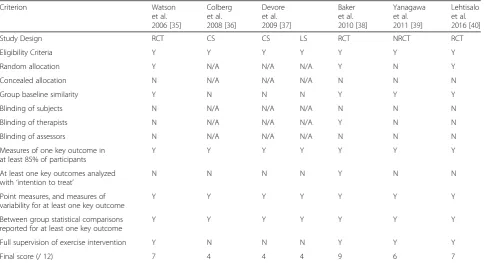
Study quality assessment
Fig. 1Flowchart of papers identified from search strategy
Table 1Study quality of included trials according to a modified PEDro scale
Criterion Watson
et al. 2006 [35]
Colberg et al. 2008 [36]
Devore et al. 2009 [37]
Baker et al. 2010 [38]
Yanagawa et al. 2011 [39]
Lehtisalo et al. 2016 [40]
Study Design RCT CS CS LS RCT NRCT RCT
Eligibility Criteria Y Y Y Y Y Y Y
Random allocation Y N/A N/A N/A Y N Y
Concealed allocation N N/A N/A N/A N N N
Group baseline similarity Y N N N Y Y Y
Blinding of subjects N N/A N/A N/A N N N
Blinding of therapists N N/A N/A N/A Y N N
Blinding of assessors N N/A N/A N/A N N N
Measures of one key outcome in at least 85% of participants
Y Y Y Y Y Y Y
At least one key outcomes analyzed with‘intention to treat’
N N N N Y N N
Point measures, and measures of variability for at least one key outcome
Y Y Y Y Y Y Y
Between group statistical comparisons reported for at least one key outcome
Y Y Y Y Y Y Y
Full supervision of exercise intervention Y N N N Y Y Y
Final score (/ 12) 7 4 4 4 9 6 7
this review was moderate, receiving scores of 7 or 9 out of 12. Common limitations in quality were: lack of blinded assessors, lack of therapists blinded to hypoth-eses, the absence of intention-to-treat analysis, and in-sufficient available information regarding baseline matching between groups in all trials [35, 38, 40]. As ex-pected, the NRCT [39], prospective [37], and cross-sectional [36, 37] studies were of a lower standard on the PEDro scale [36, 37, 39], with an average scoring 4/ 12 (range 4 to 6) [36, 37, 39].
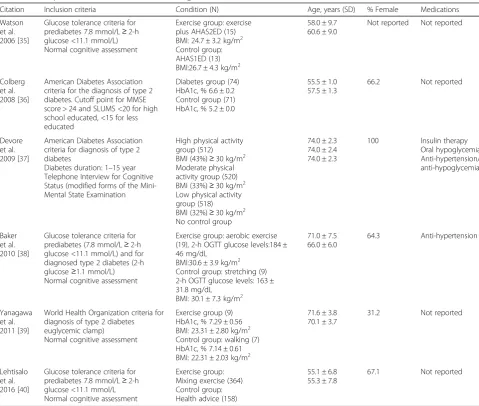
Study design and participant characteristics
A summary of participant and study characteristics can be found in Table 2. Total of 2289 participants were en-rolled across 6 studies, ranging from 16 to 1550 partici-pants, with median 71. Pooled sample size amongst
RCTs was 578 (398 in exercise intervention arms, ran-ging from 15 to 364) [35, 38, 40], while 16 participants were enrolled in 1 NRCT [39]. The average age of co-horts across all studies was 64 years, ranging from 56 to 74 years. Sex breakdown was provided in 5/6 study co-horts. Overall, one study included women only [37], while another one did not report sex [35]. The remaining 4 studies [36, 37, 39, 40] were comprised of mixed cohorts.
Measures of glucose homeostasis and insulin resistance
One study utilized fasting glucose≥7 mmol/L, or insulin resistance 100 to 125 mg/dL for diagnosis of type 2 dia-betes [36]. The hyperinsulinemic euglycemic clamp (the gold standard measurement for IR) was only used in two studies [38, 39], while only two studies used an oral
Table 2Participant characteristics of exercise on cognition in individuals with T2D or IGT
Citation Inclusion criteria Condition (N) Age, years (SD) % Female Medications
Watson et al. 2006 [35]
Glucose tolerance criteria for prediabetes 7.8 mmol/L≥2-h glucose <11.1 mmol/L) Normal cognitive assessment
Exercise group: exercise plus AHAS2ED (15) BMI: 24.7 ± 3.2 kg/m2 Control group: AHAS1ED (13) BMI:26.7 ± 4.3 kg/m2
58.0 ± 9.7 60.6 ± 9.0
Not reported Not reported
Colberg et al. 2008 [36]
American Diabetes Association criteria for the diagnosis of type 2 diabetes. Cutoff point for MMSE score > 24 and SLUMS <20 for high school educated, <15 for less educated
Diabetes group (74) HbA1c, % 6.6 ± 0.2 Control group (71) HbA1c, % 5.2 ± 0.0
55.5 ± 1.0 57.5 ± 1.3
66.2 Not reported
Devore et al. 2009 [37]
American Diabetes Association criteria for diagnosis of type 2 diabetes
Diabetes duration: 1–15 year Telephone Interview for Cognitive Status (modified forms of the Mini-Mental State Examination
High physical activity group (512) BMI (43%)≥30 kg/m2 Moderate physical activity group (520) BMI (33%)≥30 kg/m2 Low physical activity group (518) BMI (32%)≥30 kg/m2 No control group
74.0 ± 2.3 74.0 ± 2.4 74.0 ± 2.3
100 Insulin therapy
Oral hypoglycemia Anti-hypertension/ anti-hypoglycemia
Baker et al. 2010 [38]
Glucose tolerance criteria for prediabetes (7.8 mmol/L≥2-h glucose <11.1 mmol/L) and for diagnosed type 2 diabetes (2-h glucose≥1.1 mmol/L) Normal cognitive assessment
Exercise group: aerobic exercise (19), 2-h OGTT glucose levels:184 ± 46 mg/dL
BMI:30.6 ± 3.9 kg/m2 Control group: stretching (9) 2-h OGTT glucose levels: 163 ± 31.8 mg/dL
BMI: 30.1 ± 7.3 kg/m2
71.0 ± 7.5 66.0 ± 6.0
64.3 Anti-hypertension
Yanagawa et al. 2011 [39]
World Health Organization criteria for diagnosis of type 2 diabetes euglycemic clamp) Normal cognitive assessment
Exercise group (9) HbA1c, % 7.29 ± 0.56 BMI: 23.31 ± 2.80 kg/m2 Control group: walking (7) HbA1c, % 7.14 ± 0.61 BMI: 22.31 ± 2.03 kg/m2
71.6 ± 3.8 70.1 ± 3.7
31.2 Not reported
Lehtisalo et al. 2016 [40]
Glucose tolerance criteria for prediabetes 7.8 mmol/L≥2-h glucose <11.1 mmol/L Normal cognitive assessment
Exercise group: Mixing exercise (364) Control group: Health advice (158)
55.1 ± 6.8 55.3 ± 7.8
67.1 Not reported
AHAS1EDAmerican Heart Association Step 1 Eucaloric Diet,AHAS2EDAmerican Heart Association Step 2; Eucaloric Diet,MMSEMini-mental State Examination,
SLUMSSaint Louis University Mental Status Examination,OGTToral glucose tolerance test,HbA1cglycosylated hemoglobin,BMIBody mass index,SD
glucose tolerance test to assess glucose tolerance and in-sulin sensitivity [35, 40]. One study failed to report any measure of insulin or glucose metabolism [37].
Measures of body composition
Body composition was reported in all but one cross-sectional study [36]. One study used computerized tomography to measure intra-abdominal fat [35] and two studies assessed percent body fat [38, 39]. The remaining two studies reported that participants were overweight or obese, with body mass index (BMI) mean of ≥25 kg/m [37, 40].
Neuropsychological assessment
Cognitive function was assessed by
neuro-psychological examination [35, 38–40]. One study measured cognitive status with the Mini-mental State Exam (MMSE) [36], with a cutoff point for MMSE scores > 24 and Saint Louis University Mental Status (SLUMS) scores <20 for high school educated, <15 for less education inclusive. One study used modified forms of the MMSE [37], and although MMSE scores were inclusionary criteria for the study, the actual scores (global cognitive scores) were not provided [37].
Intervention characteristics
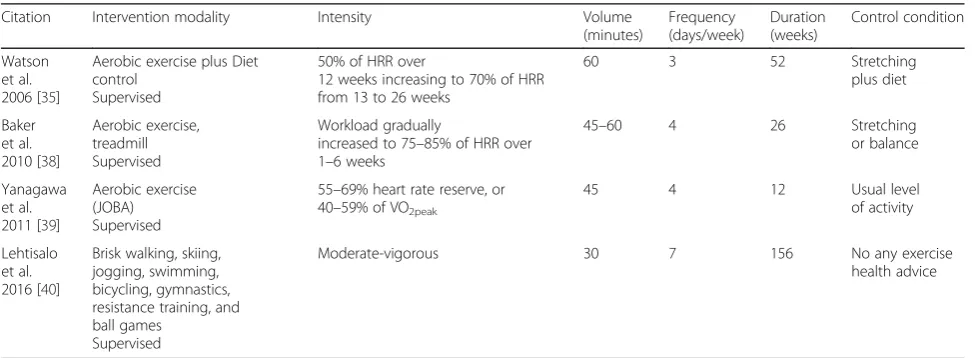
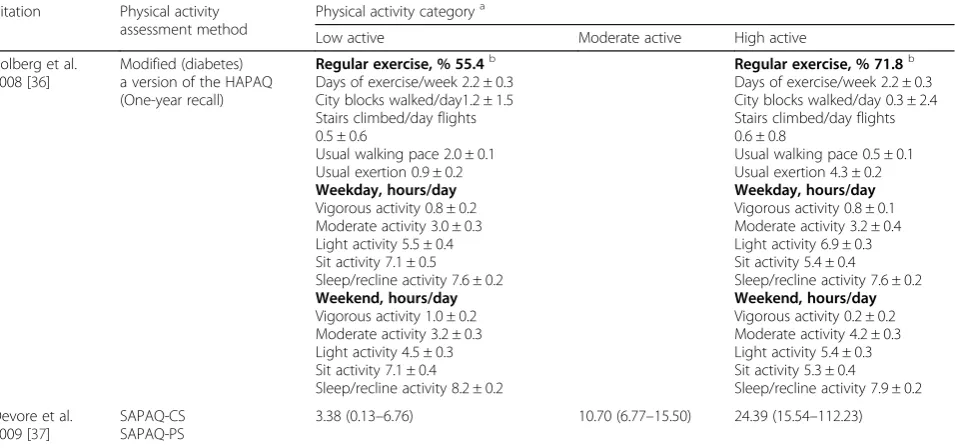
Tables 3 provides an overview of the exercise inter-ventions among the 4 experimental studies. For the cross-sectional and prospective studies, physical ac-tivity exposure was assessed by self-report question-naires (Table 4).
Training modality
One trial tested the effect of isolated moderate-intensity aerobic exercise [38], one moderate- and
high-intensity mixed training [40], and one prescribed low-intensity horseback riding therapeutic equipment (JOBA) compared to a maintaining usual level of ac-tivity (walking) control group [39]. Only one study in-vestigated the effects of a combination of aerobic exercise and dietary restriction compared to a diet re-striction plus stretching control group [35]. The single prospective cohort study compared the effects of highest habitual physical activity level to lowest phys-ical activity level [37], while the cross-sectional study, derived from the same cohort, examined the differ-ence between the highest and the lowest physical ac-tivity groups [37]. Finally, another cross-sectional compared the cognitive function of regular exercise in a sedentary diabetes group (controls) to exercise in a group with T2D [36].
Exercise dose and intensity
Exercise volume in experimental studies varied from 30 to 60 min per session, three to seven sessions per week, and duration of interventions ranged from 12 to 156 weeks. Two trials of aerobic exercise used exercise equipment at moderate [35, 38], or low [39] intensities (JOBA), whereas moderate- and high-intensity walking was prescribed in one mixed resist-ance and other exercise modalities [40]. In the
pro-spective cohort and cross-sectional studies, for
classification of habitual physical activity, the period of observation was 1 year [36] and 4.2 years of follow-up [37], respectively. Devore et al. (2009) re-ported exercise intensity as metabolic equivalents (METs) [37], while Colberg et al. (2008) [36] defined the intensity of aerobic activities according to exertion levels (e.g., usual exertion, usual walking pace, stair climbing).
Table 3Intervention and control characteristics of exercise on cognition in individuals with T2D or IGT
Citation Intervention modality Intensity Volume
(minutes)
Frequency (days/week)
Duration (weeks)
Control condition
Watson et al. 2006 [35]
Aerobic exercise plus Diet control
Supervised
50% of HRR over
12 weeks increasing to 70% of HRR from 13 to 26 weeks
60 3 52 Stretching
plus diet
Baker et al. 2010 [38]
Aerobic exercise, treadmill Supervised
Workload gradually
increased to 75–85% of HRR over 1–6 weeks
45–60 4 26 Stretching
or balance
Yanagawa et al. 2011 [39]
Aerobic exercise (JOBA) Supervised
55–69% heart rate reserve, or 40–59% of VO2peak
45 4 12 Usual level
of activity
Lehtisalo et al. 2016 [40]
Brisk walking, skiing, jogging, swimming, bicycling, gymnastics, resistance training, and ball games
Supervised
Moderate-vigorous 30 7 156 No any exercise
health advice
Control conditions
Control conditions were highly variable and included diet [35], stretching or balance [38], usual activities [39], or health advice [40]. Three of the experimental studies reported supervision during the control condition [35, 38, 40]. The one prospective and two cross-sectional studies described the control condition as a low level of habitual aerobic exercise/physical activity, which was compared to the higher activity level stratum, all un-supervised [36, 37].
Outcome measurement
A total of 20 different cognitive outcome measures were administered (average 4/study, range: 2–7). Data from non-significant findings were not always provided [35, 38]. The general cognitive function was measured using MMSE, SLUMS, Telephone Interview for Cognitive Sta-tus (TICS), or overall global scores [36, 37, 39, 40]. The majority of studies administered standardized neuro-psychological tests with attention/executive function the most frequently measured domain [35, 38, 39], followed by memory [35, 37–39] information processing [39, 40], and global cognitive function [36, 37, 39]. Only four tri-als had a longitudinal follow-up after intervention at 12 weeks [39], 26 weeks [38], 52 weeks [35], or 36 months [40]. Supervision was removed during the maintenance phase in one study and participants were advised to continue exercise at home for the final
6 months [35]. The one prospective cohort study had follow-up over 4.2 years [37].
Four of the 6 studies (67%) reported significant bene-fits for at least one outcome [35–38]. However, only 26% of cognitive outcomes were significant across all trials. Exercise was reported to result in improved global cog-nition [36, 37], executive function [38], and memory [39] in these 4 studies, which included 2 interventional and 2 observational studies.
Executive function/attention
Aerobic exercise vs. non-exercise controls
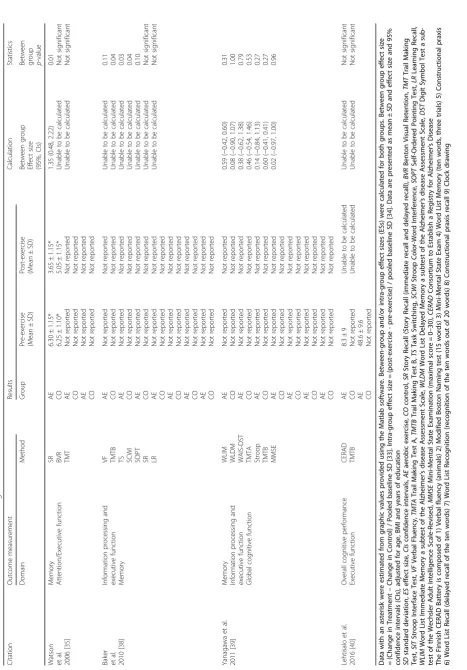
A summary of the results can be found in Table 5. Only one [38] out of four [35, 38–40] studies reported a sig-nificantly greater improvement in three of five executive function tests in aerobic training compared to controls, with small effect size (ES) [(Trail Making Test B ES = 0.36, p= 0.04), (Task Switching ES = 0.39, p= 0.03), and Stroop Color-Word Interference ES = 0.38, p = 0.04)], and trends for improvement in Verbal Fluency (ES = 0.26,p= 0.11) and Self-Ordered Pointing Test (ES = 0.29, p= 0.10) over 6 months. [38] However, analysis of execu-tive function showed no difference in a trial of low in-tensity JOBA exercise vs. controls [(Trail Making Test A ES: 0.46; 95% CI: -0.54, 1.46), (Trail Making Test B ES: 0.60; 95% CI: -0.41, 0.41), (Stroop ES: 0.14; 95% CI:
-0.84, 1.13), (Wechsler Adult Intelligence Scale
Revised-Digit Symbol test ES: 0.38; 95% CI: -0.62,
Table 4Intervention and control characteristics of physical activity on cognition in individuals with T2D or IGT
Citation Physical activity assessment method
Physical activity categorya
Low active Moderate active High active
Colberg et al. 2008 [36]
Modified (diabetes) a version of the HAPAQ (One-year recall)
Regular exercise, % 55.4b Days of exercise/week 2.2 ± 0.3 City blocks walked/day1.2 ± 1.5 Stairs climbed/day flights 0.5 ± 0.6
Usual walking pace 2.0 ± 0.1 Usual exertion 0.9 ± 0.2
Weekday, hours/day
Vigorous activity 0.8 ± 0.2 Moderate activity 3.0 ± 0.3 Light activity 5.5 ± 0.4 Sit activity 7.1 ± 0.5 Sleep/recline activity 7.6 ± 0.2
Weekend, hours/day
Vigorous activity 1.0 ± 0.2 Moderate activity 3.2 ± 0.3 Light activity 4.5 ± 0.3 Sit activity 7.1 ± 0.4 Sleep/recline activity 8.2 ± 0.2
Regular exercise, % 71.8b Days of exercise/week 2.2 ± 0.3 City blocks walked/day 0.3 ± 2.4 Stairs climbed/day flights 0.6 ± 0.8
Usual walking pace 0.5 ± 0.1 Usual exertion 4.3 ± 0.2
Weekday, hours/day
Vigorous activity 0.8 ± 0.1 Moderate activity 3.2 ± 0.4 Light activity 6.9 ± 0.3 Sit activity 5.4 ± 0.4 Sleep/recline activity 7.6 ± 0.2
Weekend, hours/day
Vigorous activity 0.2 ± 0.2 Moderate activity 4.2 ± 0.3 Light activity 5.4 ± 0.3 Sit activity 5.3 ± 0.4 Sleep/recline activity 7.9 ± 0.2
Devore et al. 2009 [37]
SAPAQ-CS SAPAQ-PS
3.38 (0.13–6.76) 10.70 (6.77–15.50) 24.39 (15.54–112.23)
a
Physical activity category is classified according to the HAPAQ and SAPAQ where possible (Devore reported exercise intensity as metabolic equivalents (METS)
[37], while the study of Colberg et al. (2008) defined the intensity of aerobic activities according to exertion levels (e.g. usual exertion, usual walking pace, stair
climbing) [36]
b
Regular exercise was defined (using the HAPAQ) as participants engaging in at least 30 min of moderate aerobic exercise 3 times a week for a minimum of 1 year
SAPAQSelf-administered Physical Activity Questionnaire,HAPAQHarvard Alumni Physical Activity Questionnaire [31],CScross-sectional study,PSprospective study,
Table 5 Effect of exercise interventions on cognition Citation Outcome measurement Results Calculation Statistics Domain Method Group Pre-exercise (Mean ± SD) Post-exercise (Mean ± SD) Between group Effect size (95%, CIs)
Between group p-value
Watson et al. 2006 [ 35 ] Memory Attention/Executive function
SR BVR TMT AE CO AE CO AE CO
6.30 ± 1.15* 6.25 ± 1.10* Not reported Not reported Not reported Not reported 3.65 ± 1.15* 5.05 ± 1.15* Not reported Not reported Not reported Not reported 1.35 (0.48, 2.22) Unable to be calculated Unable to be calculated 0.01 Not significant Not significant Baker et al. 2010 [ 38 ] Information processing and executive function Memory
VF TMTB TS SCWI SOPT SR LR
AE CO AE CO AE CO AE CO AE CO AE CO AE CO
Not reported Not reported Not reported Not reported Not reported Not reported Not reported Not reported Not reported Not reported Not reported Not reported Not reported Not reported Not reported Not reported Not reported Not reported Not reported Not reported Not reported Not reported Not reported Not reported Not reported Not reported Not reported Not reported Unable to be calculated Unable to be calculated Unable to be calculated Unable to be calculated Unable to be calculated Unable to be calculated Unable to be calculated
0.11 0.04 0.03 0.04 0.10 Not
significant Not significant Yanagawa et al. 2011 [ 39 ] Memory Information processing and executive function Global cognitive function
WLIM WLDM WAIS-DST TMTA Stroop TMTB MMSE
AE CO AE CO AE CO AE CO AE CO AE CO AE CO
Not reported Not reported Not reported Not reported Not reported Not reported Not reported Not reported Not reported Not reported Not reported Not reported Not reported Not reported Not reported Not reported Not reported Not reported Not reported Not reported Not reported Not reported Not reported Not reported Not reported Not reported Not reported Not reported 0.59 ( − 0.42, 0.60) 0.08 ( − 0.90, 1.07) 0.38 ( − 0.62, 1.38) 0.46 ( − 0.54, 1.46) 0.14 ( − 0.84, 1.13) 0.60 ( − 0.41, 0.41) 0.02 ( − 0.97, 1.00)
0.31 1.00 0.79 0.53 0.27 0.27 0.96
Lehtisalo et al. 2016 [ 40 ] Overall cognitive performance Executive function CERAD TMTB AE CO AE CO
1.38)] [39]. Similarly, there was no significant effect of exercise on executive function in two other aerobic exercise trials [35, 40].
Memory
Aerobic exercise vs. non-exercise or aerobic exercise and diet restriction vs. diet restriction or high physical activity vs. low physical activity
A summary of the results can be found in Table 5. Four studies [35, 37–39] examined the effects on memory and nonsignificant results were reported for the majority of outcomes. Aerobic training combined with diet control compared to a diet control group produced significant large effects on delayed memory (Story Recall Test ES: -1.26; 95% CI: -1.83, −0.70), but nonsignificant results on overall memory domain [35]. Similarly, nonsignificant results were found in studies of low intensity JOBA exer-cise [39] and moderate intensity treadmill exerexer-cise [38]. The cross-sectional analysis failed to find positive effects of high physical activity compared to low physical activ-ity levels [37], and in longitudinal analyses from this same cohort, there was no relationship between physical activity level and memory in this prospective cohort study at the 4.2-year follow-up [37]. Thus, aerobic train-ing and diet compared to diet only control has been shown to improve one memory test in one trial, and no data are available on direct comparisons of the efficacy of different exercise modalities for these outcomes.
Information processing speed
Aerobic exercise vs. non-exercise controls
Results are reported in Table 5. Few data on information processing speed were available, as this was reported after aerobic training in 2 only trials [39, 40]. No signifi-cant improvements were shown compared to non-exercise controls.
Global cognitive function
Aerobic exercise vs. non-exercise or higher physical activity vs. low physical activity
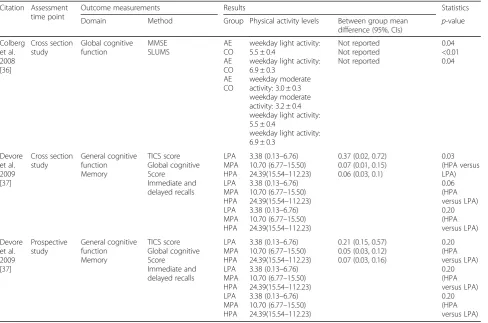
As reported in Table 6, aerobic exercise or high physical activity did not significantly improve any global cognitive outcome in a prospective study [37], one RCT [40], and one NRCT [39]. Two cross-sectional analyses reported significantly better global cognition in those with higher physical activity levels however [36, 37]. Similarly, seden-tary time showed an inverse relationship with a global cognitive function on the SLUMS test which was used in the study of Colberg et al. [36].
Relationship between changes in measures of cognitive function and insulin resistance
Results are shown in Table 7. Improvements in delayed memory were correlated with improvements in glucose
infusion rates (r= 0.64; p= 0.024) during a euglycemic clamp, with a trend for metabolic clearance rate (r= 0.575;p= 0.051) in those who performed JOBA exercise, as well as in the usual physical activity control group [39]. In another intervention study, improvements in de-layed memory were related to greater reductions in 2-h OGTT insulin levels (r=−0.52; p< 0.05) in the aerobic exercise plus diet group only, while no relationship was seen in the diet and stretching control group [35]. Add-itionally, global cognitive function in participants report-ing higher levels of physical activity was inversely related to HOMA-IR (r=−0.19, p = 0.02) and insulin level (r=
−0.13, p= 0.03) in a cross-sectional study [36]. Thus, there is some evidence to suggest that improvements in insulin sensitivity are either potentially contributory to cognitive adaptations or at least markers for other bene-ficial mechanistic adaptations and are modified propor-tionally by exercise.
Relationship between changes in measures of cognitive function and glucose homeostasis
A summary of the results can be found in Table 8. Im-provements in word recall were related to reductions in HbA1c (r=−0.627;p= 0.029) after JOBA intervention in one NRCT but were not observed in the control group [39]. Higher fasting blood glucose was directly related to worse executive function (r= 0.611; p= 0.035) in this same study [39]. However, no such relationships be-tween cognition and glucose changes were reported in those who performed aerobic training or aerobic training plus diet control only, or in the control groups of two other studies [35, 38]. Thus, there is mixed support for improvements in glucose homeostasis as a mechanism or marker for cognitive benefits of exercise in cohorts with metabolic disease.
The relationship between changes in measures of cognitive function and body composition
A summary of the results can be found in Table 9. Re-ductions in intra-abdominal fat (IAF) were correlated with improvements in delayed memory within control participants who received diet and stretching, while no significant relationship was observed in those who re-ceived aerobic training and dietary intervention [35]. No other studies reported body composition/cognition rela-tionships, precluding generalized conclusions.
Discussion
Table 6Effect of exercise /physical activity on cognition
Citation Assessment time point
Outcome measurements Results Statistics
Domain Method Group Physical activity levels Between group mean
difference (95%, CIs) p -value
Colberg et al. 2008 [36]
Cross section study
Global cognitive function
MMSE SLUMS
AE CO AE CO AE CO
weekday light activity: 5.5 ± 0.4
weekday light activity: 6.9 ± 0.3
weekday moderate activity: 3.0 ± 0.3 weekday moderate activity: 3.2 ± 0.4 weekday light activity: 5.5 ± 0.4
weekday light activity: 6.9 ± 0.3
Not reported Not reported Not reported
0.04 <0.01 0.04
Devore et al. 2009 [37]
Cross section study
General cognitive function Memory
TICS score Global cognitive Score
Immediate and delayed recalls
LPA MPA HPA LPA MPA HPA LPA MPA HPA
3.38 (0.13–6.76) 10.70 (6.77–15.50) 24.39(15.54–112.23) 3.38 (0.13–6.76) 10.70 (6.77–15.50) 24.39(15.54–112.23) 3.38 (0.13–6.76) 10.70 (6.77–15.50) 24.39(15.54–112.23)
0.37 (0.02, 0.72) 0.07 (0.01, 0.15) 0.06 (0.03, 0.1)
0.03 (HPA versus LPA) 0.06 (HPA versus LPA) 0.20 (HPA versus LPA)
Devore et al. 2009 [37]
Prospective study
General cognitive function Memory
TICS score Global cognitive Score
Immediate and delayed recalls
LPA MPA HPA LPA MPA HPA LPA MPA HPA
3.38 (0.13–6.76) 10.70 (6.77–15.50) 24.39(15.54–112.23) 3.38 (0.13–6.76) 10.70 (6.77–15.50) 24.39(15.54–112.23) 3.38 (0.13–6.76) 10.70 (6.77–15.50) 24.39(15.54–112.23)
0.21 (0.15, 0.57) 0.05 (0.03, 0.12) 0.07 (0.03, 0.16)
0.20 (HPA versus LPA) 0.20 (HPA versus LPA) 0.20 (HPA versus LPA)
Data are presented as mean ± SD and mean difference and 95% confidence intervals (CIs), adjusted for age, education, disability indicators, and others
SLUMSSaint Louis University Mental Status exam,MMSEMini-Mental State Examination,TICSTelephone Interview for Cognitive Status,LPAlow physical activity,
MPAmoderate physical activity,HPAhigh physical activity,AEregular physical exercise in individuals with diabetes,COregular physical exercise in
normal individuals
Table 7Relationship between changes in cognition and insulin resistance
Citation Cognition Insulin resistance measurement
Time since last exercise bout
Relationship r p-value Comments
Watson et al. 2006 [35]
Delayed memory
Two-hour Oral glucose tolerance test insulin level (mmol/L)
26 weeks Change in delayed memory and change in two-hour Oral glucose tolerance test insulin level (mmol/L)
−0.52 0.047 Exercise group (Aerobic exercise plus American Heart Association Step 2 Eucaloric Diet only
Colberg et al. 2008 [36]
Global cognitive function
Homeostatic Model Assessment-insulin resistance Insulin (IU/mL)
Not reported Not reported
Relationship between HOMA-IR and cognitive function Relationship between insulin level and cognitive function
−0.19
−0.18 0.02 0.03
Diabetes exercise group
Yanagawa et al. 2011 [39]
Delayed memory
Euglycemic Clamp (glucose infusion rate (mL/kg/min) Metabolic clearance rate(mL/kg/min)
12 weeks Change in word recall and change in glucose infusion rate Change in word recall and change in metabolic clearance rate
0.64 0.575
0.024 0.051
and the majority of studies had insufficient power due to low sample size to detect small effects. Few cognitive outcomes (26%) were significant, thus providing no strong or consistent evidence that aerobic exercise or lifestyle intervention or higher levels of habitual physical activity improve cognition or are associated with less risk of cognitive impairment/decline in individuals with T2D or IGT or IR.
Abnormal glucose tolerance, a characteristic of predia-betes and T2D, has been related to an increased risk of cognitive impairment and dementia compared with healthy peers [41–43]. Regular exercise has potential therapeutic effects on cognitive function compromised by T2D and Alzheimer’s disease (AD) pathology [41–45]. Long term T2D often contributes to numerous harmful consequences for peripheral systems and neurophysiologic and structural changes in the brain that adversely affect cognition [44] and ultimately increase the risk of dementia [46]. Cerebral neuropathological changes are believed to begin in the early stages of diabetes, consistent with defi-cits in cognitive performance for adults with prediabetes as well [47, 48]. Exercise and lifestyle interventions may improve metabolic health as well as potentially attenuate neuropathology in adults at high risk for developing type 2 diabetes, thus ultimately both preventing type 2 diabetes and preserving cognitive function. However, there are cur-rently no studies comparing the use of exercise for cogni-tive benefits at various stages of the disease process, and this is an important topic for future study. Theoretically, it would seem intuitive that halting the neuropathological changes in the brain at an early stage might be most bene-ficial, however, literature reviews in dementia [14] actually show that the effect size of exercise on cognition isgreater in those with cognitive impairment and/or dementia than it is in older adults with normal cognition. Given that the adverse effects of hyperinsulinemia on neuronal structures and function can be addressed even after a neurotoxic
insult has occurred in animal models [49], there would ap-pear to be the rationale for the application of exercise along the entire spectrum of disease from impaired glu-cose tolerance to established, longstanding T2D.
Prior studies in cohorts without diabetes have mainly focused on aerobic exercise and linked it to improved executive function [19, 50, 51]. In our review, moderate-to-high intensity aerobic exercise was related to im-provements in executive function in only 1 [38] of 4 studies [35, 38–40], and additional evidence is needed to confirm this finding. Exercise may protect executive function by reducing brain atrophy [52], However, the failure to observe consistent beneficial effects of exercise on executive function as shown the other 3 trials is not-able. The type of exercise prescribed (low intensity and short duration JOBA training) may have attenuated the response in one study [39]. It is likely that small sample size may have resulted in a type II error in the group with T2D or IGT [35, 39]. The other study [40] which reported no significant improvement in executive func-tion after mixed aerobic training had a high dropout rate of 30% which may have precluded benefit. Additionally, this study included participants of younger ages with a relatively high level of cognitive function even at the end of the follow-up study, and thus even longer-term follow-up may have been needed in this early prediabe-tes stage due to ceiling effects on cognitive prediabe-testing uti-lized. Thus, as there is only one positive study [38] investigating executive function and exercise, further in-vestigation is required to confirm these findings. By
con-trast, no beneficial improvements were seen for
information processing speed domain after aerobic exer-cise in older adults with T2D [39] or IGT [40]. These findings stand in contrast to large beneficial effects re-ported in two previous studies of aerobic exercise healthy cohorts [53]. Sample sizes in this review may have been too small to detect a significant improvement
Table 8Relationship between changes in cognition and glucose homeostasis
Citation Cognition Glucose level measurement
Time since last exercise bout
Relationship r Pvalue Comments
Yanagawa et al. 2011 [39]
Delayed memory Executive function
HbA1c (%) (glycosylated hemoglobin) Fasting glucose level (mg/dl)
12 weeks 12 weeks
Change in word recall and change in HbA1c Change in word recall and change in metabolic clearance rate
−0.627 0.611
0.029 0.035
Horseback riding simulation equipment (JOBA)
exercise group
Table 9Relationship between changes in cognition and body composition
Citation Cognition Body composition measurement
Time since last exercise bout
Relationship r Pvalue Comments
Watson et al. 2006 [35]
Delayed memory
Intra-abdominal fat (cm2)
26 weeks Change in delayed memory and change in intra-abdominal fat (IAF)
Not reported
−0.62 Not reported 0.024
in information process speed, and thus replication in lar-ger samples is indicated.
Only one study compared memory changes between exercise and diet control vs. diet control, and reported a significant, large benefit of the exercise on one memory outcome [35]. Although additional studies are needed, this finding is consistent with evidence in older adults without metabolic disease which suggests a moderate ef-fect in favor of aerobic exercise combined with diet management [54, 55]. This may be explained by the fact that participants in the diet plus exercise group had greater improvement in metabolic parameters directly relevant to memory than did the diet only group. How-ever, in the observational study of high physical activity vs. low physical activity in older individuals with T2D, this benefit for memory was not seen [37]. It is possible that long-standing diabetes, medication treatment, and/ or disability may have attenuated the response in this co-hort. Similarly, the current review did not find any con-sistent benefit of aerobic training compared to controls for memory in the other experimental studies of older adults with T2D [39] or IGT [38]. Memory tasks are supported by structural plasticity in the hippocampus [56] which has been observed after aerobic voluntary wheel running in rodents. In humans, the absence of exercise-induced memory benefits in most trials we reviewed may relate to the type of tests administered or the specific task demands that rely on patterns of struc-tural plasticity in specific brain regions. Modality, dose, intensity, and duration of testing is another possible ex-planation. However, no consistent pattern has been dem-onstrated and further study is needed.
Only two cross-sectional studies and no experimental studies reported that high physical activity vs. low phys-ical activity showed global cognitive function improve-ments, and thus it is not possible to draw conclusions about the efficacy of physical activity for global cognition in this cohort. Evidence in older people without T2D suggests a small effect in favor of high physical activity for global cognition [57]. Regular physical exercise par-ticipation may offset many of the increased risk factors for cognitive dysfunction frequently associated with dia-betes, such as visceral obesity and hypertension [45]. Aerobic fitness itself is also linked to cognitive decline, and an increase of only 1.0 MET has been linked to a lower rate of global cognitive decline, mild cognitive im-pairment and AD in older individuals, for example [58]. Moderate-to-vigorous intensity aerobic exercise is the most potent exercise modality for improving aerobic fit-ness, thus providing another rationale for its inclusion in exercise programs and guidelines for older adults with T2D. However, the analysis of the cross-sectional/obser-vational studies has some limitations: the level of phys-ical activity was self-reported in two studies, (with
physical activity category classified according to the Harvard Alumni Physical Activity Questionnaire and Self-administered Physical Activity Questionnaire, whereas Devore [37] reported exercise intensity as meta-bolic equivalents, and Colberg [36] defined the intensity of aerobic activities according to exertion levels. Thus, actual physical activity/exercise intensity may not have been reliably captured. Although Devore et al. [37] dem-onstrated that the validity of such questionnaires is ad-equate, the results should be interpreted with caution. Among three studies which included patients with T2D [37, 39] or IGT [40], Devore [37] showed that subjects of T2D engaging in a higher level of physical activity per week had better global and verbal cognitive outcomes compared to the lower level of physical activity after adjusting age and education level. However, the initial results disappeared after further adjustments for all co-variates. Similarly, among the two experimental studies (one RCT and one NRCT) included in this review, the Lehtisalo [40] did not find any improvement in global cognition in the T2DM or IGT patients after training. This cohort had a relatively young group of participants, with a relatively high level of cognitive function even at the end of their follow-up study. Another possibility is that there were also higher dropout rates after the long follow-up. Furthermore, in the NRCT [39], no positive effects of exercise on global cognition were reported in older adults with T2D. The relatively small sample size and low exercise training intensity and short duration may have contributed to the lack of benefit observed.
which may lead to improved neurogenesis and vessel re-modeling in the brain [70]. Currently, the American Col-lege of Sports Medicine recommends that exercise programs for older adults include both aerobic and non-aerobic physical activities, such as resistance training, balance training, and stretching for optimal general health [29]. The inconsistent efficacy of isolated aerobic training for cognitive outcomes in this review suggests that for optimal cognitive outcomes in those with meta-bolic disease, such a combined prescription of exercise modalities may also be required, and requires specific investigation.
The small amount of evidence available suggests that better cognitive outcomes on executive function [39], memory [35], and global cognitive function [36] were partially explained by, or associated with, reductions in IR. In this context, it is notable that reduced insulin ele-vations were associated with better delayed memory in IGT patients after aerobic training and diet control in one study which was included this review, compared to diet alone. Although suggestive, we cannot conclude that the exercise alone would have had this same association. In another study in this review, improvements in HOMA2-IR were related to improvements in memory and executive function, even if no significant change in either measure was observed post-intervention. The intervention delivered during the negative trial was JOBA exercise [39], and it may be that the intervention was not of a sufficient intensity to induce significant im-provements in delayed memory, information processing speed, executive function, or global cognitive function, nor provide robust metabolic benefit. However, what the results do suggest is that improvements in insulin resist-ance were related to improvements in cognitive function. In another study, the improvements of global cognitive function were explained in part by decreases in periph-eral insulin resistance (HOMA-IR) in individuals who participated in more vigorous activities [36]. It is known that hyperinsulinemia is neurotoxic [71], and thus it is possible that insulin sensitivity and insulin signaling pathway improvements after exercise would favor neuro-genesis, and thereby improved cognitive function. How-ever, additional animal and human studies are required to determine the nature of the mechanistic links sug-gested by the relationships reported in this review.
The reductions in HbA1c and the reduction in fasting blood sugar were related to cognitive benefits in one NRCT study. [39] With the limited data available, it is difficult to conclusively determine the specific role of changes in glucose homeostasis on cognition. How-ever, this study does suggest that improvements in glucose homeostasis are potentially related to im-provements in memory and executive function of older adults with T2D.
Limitations of this review and future research
between the exercise and cognitive change. Many other putative mechanistic factors remain to be studied in this regard as well. Additionally, little is known regarding the persistence of therapeutic effects on cognition following the termination of exercise. The training regimes were relatively short and some lacked sufficient intensity to optimize neurophysiological or neuropsychological change. Dose-response relationships between exercise dose (both volume and intensity) and comparisons of dif-ferent exercise modalities and cognitive outcomes in this cohort are completely lacking, and should also be a focus of the additional investigation. Furthermore, future studies will also need to use cognitive measures which are com-prehensive and more sensitive to longitudinal change, and provide long-term follow up to assess the sustainability of any gains achieved during clinical trials. Arguably the most salient issue for the field is the expansion of out-comes to assess transfer of cognitive gains to activities of daily living, quality of life, and psychological well-being.
Conclusions
The limited data available suggest that aerobic exercise or lifestyle interventions may improve some aspects of cogni-tion in older adults with T2D or IGT, including executive function, delayed memory, and global cognitive scores, but the effects are inconsistent and require further study. In the present review, exercise-induced improvements in insulin sensitivity and glucose levels were associated with the observed cognitive benefits, while there is insufficient evidence exploring any relationship with other physio-logical adaptations at this time. In addition, literature from other cohorts supports potential advantages for moderate-to-high intensity aerobic exercise, rather than the low-intensity aerobic training paradigms sometimes recom-mended clinically in T2D or IGT, but confirms the need for dose-response trials in this cohort. Furthermore, com-paring study effects was difficult due to different neuro-psychological tests used, and standardized cognitive test batteries would increase the ability to synthesize data across trials. Future research in this field should include high quality, robust, randomized controlled trials which enroll older adults with T2D or metabolic syndrome to confirm any beneficial effects of physical exercise on cog-nition in these cohorts specifically. Moreover, analyses of the relationships between exercise-induced improvements in insulin sensitivity, glucose levels, body composition, and other metabolic parameters that potentially mediate and/or moderate the cognitive adaptations are needed. Such investigations will lead to a better understanding of the underlying mechanisms and therefore to the design of interventions specifically targeting the specific needs of those with metabolic disease. This will promote optimal physical, cognitive and psychological health, and ultim-ately improve quality of life in such individuals.
Abbreviations
AD:Alzheimer’s disease; AOS: Anthony J O’Sullivan; BDNF: Brain-derived neurotropic factor; BMI: Body mass index; CI: Confidence intervals; ES: Effect size; HbA1c: Glycosylated hemoglobin; HOMA: Homeostatic Model of Assessment; IGF-1: Insulin-like growth factor-1; IGT: Impaired glucose tolerance; IR: Insulin resistance; JOBA: Intensity horseback riding therapeutic equipment; METs: Metabolic equivalents; MFS: Maria Fiatarone Singh; MMSE: Mini-Mental State Exam; NRCTs: Non-randomized controlled trials; OGTT: Oral glucose tolerance test; PEDro: Physiotherapy Evidence Database scale; PRISMA: Preferred reporting items for systematic reviews;
PRT: Progressive resistance training; RCTs: Randomized controlled trials; RRZ: Ren Ru Zhao; SDs: Standard deviations; SLUMS: Saint Louis University Mental Status; T2D: Type 2 diabetes; TMTB: Trail Making Test B; VO2peak: Peak
oxygen uptake; VS: Versus
Acknowledgments
The authors would like to acknowledge Dr.Yorgi Mavros who provided support with literature review.
Funding
All the authors did not receive any funding related to this manuscript.
Availability of data and materials
Not applicable.
Authors’contributions
RRZ - Study design and concept, literature search, paper selection (inclusion/ exclusion), data abstractions, quality assessment, data analysis and interpretation, manuscript preparation. MFS - Consensus on inclusion/ exclusion criteria and paper selection, consensus on quality assessment and data extraction, data interpretation, critical review and editing of the manuscript. AJOS - Quality assessment, data extraction, critical review and editing of the manuscript. All authors read and approved the final manuscript.
Ethics approval and consent to participate
The systematic review was a sub-study of the Graded Resistance Exercise And Type 2 Diabetes in Older adults, which was registered with the Australian Clinical Trials Registry (ACTRN12606000436572) on the 11th of October 2006. Ethical approval was obtained from Sydney South West Area Health Service the (Royal Prince Alfred Hospital Ethics Review Committee, Protocol No: X04–0096) on the 2nd of August 2006 and the University of Sydney Human Research Ethics Committee on the 4th of August 2006.
Consent for publication
All authors provided consent for publication.
Competing interests
All authors declare that they have no competing interests.
Publisher’s Note
Springer Nature remains neutral with regard to jurisdictional claims in published maps and institutional affiliations.
Author details
1
Exercise, Health, and Performance Research Group, Faculty of Health Sciences, University of Sydney, Lidcombe, NSW 2141, Australia.2Hebrew SeniorLife and Jean Mayer USDA Human Nutrition Center on Aging at Tufts University, Boston, MA, USA.3St George and Sutherland Clinical School, UNSW Medicine, Sydney, NSW, Australia.4Clinical Rehabilitation Centre, University of Longyan, Longyan, Fujian Province 364012, China.
Received: 8 August 2017 Accepted: 4 January 2018
References
1. Shaw JE, Sicree RA, Zimmet PZ. Global estimates of the prevalence of diabetes for 2010 and 2030. Diabetes Res Clin Pract. 2010;87(1):4–14. 2. Rathmann W, Giani G. Global prevalence of diabetes: estimates for the year
3. American Diabetes A.(2) Classification and diagnosis of diabetes. Diabetes Care. 2015;38 Suppl:S8-S16.
4. Zhao Y, Ye W, Boye KS, Holcombe JH, Hall JA, Swindle R. Prevalence of other diabetes-associated complications and comorbidities and its impact on health care charges among patients with diabetic neuropathy. J Diabetes Complicat. 2010;24(1):9–19.
5. Cukierman-Yaffe T, Gerstein HC, Williamson JD, Lazar RM, Lovato L, Miller ME, et al. Relationship between baseline glycemic control and cognitive function in individuals with type 2 diabetes and other cardiovascular risk factors: the action to control cardiovascular risk in diabetes-memory in diabetes (ACCORD-MIND) trial. Diabetes Care. 2009;32(2):221–6. 6. Strachan MW, Reynolds RM, Marioni RE, Price JF. Cognitive function,
dementia and type 2 diabetes mellitus in the elderly. Nat Rev Endocrinol. 2011;7(2):108–14.
7. Cooray G, Nilsson E, Wahlin A, Laukka EJ, Brismar K, Brismar T. Effects of intensified metabolic control on CNS function in type 2 diabetes. Psychoneuroendocrinology. 2011;36(1):77–86.
8. SR-F J, Sa-Roriz TM, Rosset I, Camozzato AL, Santos AC, Chaves ML, et al. (Pre)diabetes, brain aging, and cognition. Biochim Biophys Acta. 2009; 1792(5):432–43.
9. Ryan CM, Geckle MO. Circumscribed cognitive dysfunction in middle-aged adults with type 2 diabetes. Diabetes Care. 2000;23(10):1486–93. 10. Sommerfield AJ, Deary IJ, Frier BM. Acute hyperglycemia alters mood state
and impairs cognitive performance in people with type 2 diabetes. Diabetes Care. 2004;27(10):2335–40.
11. Diabetes Prevention Program Research. G.The diabetes prevention program (DPP): description of lifestyle intervention. Diabetes Care. 2002; 25(12):2165–71.
12. Hwang MH, Kim S. Type 2 diabetes: endothelial dysfunction and exercise. J Exerc Nutrition Biochem. 2014;18(3):239–47.
13. Ahlskog JE, Geda YE, Graff-Radford NR, Petersen RC. Physical exercise as a preventive or disease-modifying treatment of dementia and brain aging. Mayo Clin Proc. 2011;86(9):876–84.
14. Colcombe S, Kramer AF. Fitness effects on the cognitive function of older adults: a meta-analytic study. Psychol Sci. 2003;14(2):125–30.
15. Etgen T, Sander D, Huntgeburth U, Poppert H, Forstl H, Bickel H. Physical activity and incident cognitive impairment in elderly persons: the INVADE study. Arch Intern Med. 2010;170(2):186–93.
16. Larson EB, Wang L, Bowen JD, McCormick WC, Teri L, Crane P, et al. Exercise is associated with reduced risk for incident dementia among persons 65 years of age and older. Ann Intern Med. 2006;144(2):73–81.
17. Colcombe SJ, Erickson KI, Scalf PE, Kim JS, Prakash R, McAuley E, et al. Aerobic exercise training increases brain volume in aging humans. J Gerontol A Biol Sci Med Sci. 2006;61(11):1166–70.
18. Cotman CW, Berchtold NC, Christie LA. Exercise builds brain health: key roles of growth factor cascades and inflammation. Trends Neurosci. 2007; 30(9):464–72.
19. Kramer AF, Erickson KI, Colcombe SJ. Exercise, cognition, and the aging brain. J Appl Physiol (1985). 2006;101(4):1237–42.
20. Colcombe SJ, Kramer AF, Erickson KI, Scalf P, McAuley E, Cohen NJ, et al. Cardiovascular fitness, cortical plasticity, and aging. Proc Natl Acad Sci U S A. 2004;101(9):3316–21.
21. Liu-Ambrose T, Nagamatsu LS, Voss MW, Khan KM, Handy TC. Resistance training and functional plasticity of the aging brain: a 12-month randomized controlled trial. Neurobiol Aging. 2012;33(8):1690–8. 22. Nagamatsu LS, Handy TC, Hsu CL, Voss M, Liu-Ambrose T. Resistance
training promotes cognitive and functional brain plasticity in seniors with probable mild cognitive impairment. Arch Intern Med. 2012;172(8): 666–8.
23. Suzuki T, Shimada H, Makizako H, Doi T, Yoshida D, Tsutsumimoto K, et al. Effects of multicomponent exercise on cognitive function in older adults with amnestic mild cognitive impairment: a randomized controlled trial. BMC Neurol. 2012;12:128.
24. Gasparini L, Potential XH. Roles of insulin and IGF-1 in Alzheimer's disease. Trends Neurosci. 2003;26(8):404–6.
25. Helzner EP, Luchsinger JA, Scarmeas N, Cosentino S, Brickman AM, Glymour MM, et al. Contribution of vascular risk factors to the progression in Alzheimer disease. Arch Neurol. 2009;66(3):343–8.
26. Gregory SM, Parker B, Thompson PD. Physical activity, cognitive function, and brain health: what is the role of exercise training in the prevention of dementia? Brain Sci. 2012;2(4):684–708.
27. Yau SY, Gil-Mohapel J, Christie BR, So KF. Physical exercise-induced adult neurogenesis: a good strategy to prevent cognitive decline in neurodegenerative diseases? Biomed Res Int. 2014;2014:403120. 28. Moher D, Liberati A, Tetzlaff J, Altman DG, Group P. Preferred reporting
items for systematic reviews and meta-analyses: the PRISMA statement. BMJ. 2009;339:b2535.
29. American College of Sports M, Chodzko-Zajko WJ, Proctor DN, Fiatarone Singh MA, Minson CT, Nigg CR, et al. American College of Sports Medicine position stand. Exercise and physical activity for older adults. Med Sci Sports Exerc. 2009;41:1510–30.
30. Paffenbarger RS Jr, Blair SN, Lee IM, Hyde RT. Measurement of physical activity to assess health effects in free-living populations. Med Sci Sports Exerc. 1993;25(1):60–70.
31. Wolf AM, Hunter DJ, Colditz GA, Manson JE, Stampfer MJ, Corsano KA, et al. Reproducibility and validity of a self-administered physical activity questionnaire. Int J Epidemiol. 1994;23(5):991–9.
32. Maher CG, Sherrington C, Herbert RD, Moseley AM, Elkins M. Reliability of the PEDro scale for rating quality of randomized controlled trials. Phys Ther. 2003;83(8):713–21.
33. Morris SB, DeShon RP. Combining effect size estimates in meta-analysis with repeated measures and independent-groups designs. Psychol Methods. 2002;7(1):105–25.
34. Cohen JA. Power primer. Psychol Bull. 1992;112(1):155–9.
35. Watson GS, Reger MA, Baker LD, McNeely MJ, Fujimoto WY, Kahn SE, et al. Effects of exercise and nutrition on memory in Japanese Americans with impaired glucose tolerance. Diabetes Care. 2006;29(1):135–6.
36. Colberg SR, Somma CT, Sechrist SR. Physical activity participation may offset some of the negative impact of diabetes on cognitive function. J Am Med Dir Assoc. 2008;9(6):434–8.
37. Devore EE, Kang JH, Okereke O, Grodstein F. Physical activity levels and cognition in women with type 2 diabetes. Am J Epidemiol. 2009;170(8): 1040–7.
38. Baker LD, Frank LL, Foster-Schubert K, Green PS, Wilkinson CW, McTiernan A, et al. Aerobic exercise improves cognition for older adults with glucose intolerance, a risk factor for Alzheimer's disease. J Alzheimers Dis. 2010;22(2): 569–79.
39. Yanagawa M, Umegaki H, Uno T, Oyun K, Kawano N, Maeno H, et al. Association between improvements in insulin resistance and changes in cognitive function in elderly diabetic patients with normal cognitive function. Geriatr Gerontol Int. 2011;11(3):341–7.
40. Lehtisalo J, Lindstrom J, Ngandu T, Kivipelto M, Ahtiluoto S, Ilanne-Parikka P, et al. Association of Long-Term Dietary fat Intake, exercise, and weight with later cognitive function in the Finnish diabetes prevention study. J Nutr Health Aging. 2016;20(2):146–54.
41. Luchsinger JA. Type 2 diabetes, related conditions, in relation and dementia: an opportunity for prevention? J Alzheimers Dis. 2010;20(3):723–36. 42. Biessels GJ, Deary IJ, Ryan CM. Cognition and diabetes: a lifespan
perspective. Lancet Neurol. 2008;7(2):184–90.
43. Yuan XY, Wang XG. Mild cognitive impairment in type 2 diabetes mellitus and related risk factors: a review. Rev Neurosci. 2017;28(7):715–23. 44. Manschot SM, Biessels GJ, de Valk H, Algra A, Rutten GE, van der Grond J,
et al. Metabolic and vascular determinants of impaired cognitive performance and abnormalities on brain magnetic resonance imaging in patients with type 2 diabetes. Diabetologia. 2007;50(11):2388–97. 45. Ryan JP, Fine DF, Rosano C. Type 2 diabetes and cognitive impairment:
contributions from neuroimaging. J Geriatr Psychiatry Neurol. 2014;27(1): 47–55.
46. Yaffe K, Blackwell T, Kanaya AM, Davidowitz N, Barrett-Connor E, Krueger K. Diabetes, impaired fasting glucose, and development of cognitive impairment in older women. Neurology. 2004;63(4):658–63. 47. Peila R, Rodriguez BL, White LR, Launer LJ. Fasting insulin and incident
dementia in an elderly population of Japanese-American men. Neurology. 2004;63(2):228–33.
48. Luchsinger JA. Adiposity, hyperinsulinemia, diabetes and Alzheimer's disease: an epidemiological perspective. Eur J Pharmacol. 2008;585(1):119–29. 49. Biessels GJ, Reagan LP. Hippocampal insulin resistance and cognitive
dysfunction. Nat Rev Neurosci. 2015;16(11):660–71.
51. Angevaren M, Aufdemkampe G, Verhaar HJ, Aleman A, Vanhees L. Physical activity and enhanced fitness to improve cognitive function in older people without known cognitive impairment. Cochrane Database Syst Rev. 2008;3: CD005381.
52. Weinstein AM, Voss MW, Prakash RS, Chaddock L, Szabo A, White SM, et al. The association between aerobic fitness and executive function is mediated by prefrontal cortex volume. Brain Behav Immun. 2012;26(5):811–9. 53. Peiffer R, Darby LA, Fullenkamp A, Morgan AL. Effects of acute aerobic
exercise on executive function in older women. J Sports Sci Med. 2015; 14(3):574–83.
54. Gomez-Pinilla F, Hillman C. The influence of exercise on cognitive abilities. Compr Physiol. 2013;3(1):403–28.
55. Xie C, Wang X, Zhou C, Xu C, Chang YK. Exercise and dietary program-induced weight reduction is associated with cognitive function among obese adolescents: a longitudinal study. PeerJ. 2017;5:e3286.
56. Cotman CW, Berchtold NC. Exercise: a behavioral intervention to enhance brain health and plasticity. Trends Neurosci. 2002;25(6):295–301.
57. Hamer M, Chida Y. Physical activity and risk of neurodegenerative disease: a systematic review of prospective evidence. Psychol Med. 2009;39(1):3–11. 58. Angevaren M, Vanhees L, Wendel-Vos W, Verhaar HJ, Aufdemkampe G,
Aleman A, et al. Intensity, but not duration, of physical activities is related to cognitive function. Eur J Cardiovasc Prev Rehabil. 2007;14(6):825–30. 59. Daly RM, Miller EG, Dunstan DW, Kerr DA, Solah V, Menzies D, et al. The effects
of progressive resistance training combined with a whey-protein drink and vitamin D supplementation on glycaemic control, body composition and cardiometabolic risk factors in older adults with type 2 diabetes: study protocol for a randomized controlled trial. Trials. 2014;15:431.
60. Mavros Y, Kay S, Simpson KA, Baker MK, Wang Y, Zhao RR, et al. Reductions in C-reactive protein in older adults with type 2 diabetes are related to improvements in body composition following a randomized controlled trial of resistance training. J Cachexia Sarcopenia Muscle. 2014;5(2):111–20. 61. Misra A, Alappan NK, Vikram NK, Goel K, Gupta N, Mittal K, et al. Effect of
supervised progressive resistance-exercise training protocol on insulin sensitivity, glycemia, lipids, and body composition in Asian Indians with type 2 diabetes. Diabetes Care. 2008;31(7):1282–7.
62. Peake JM, Kukuljan S, Nowson CA, Sanders K, Daly RM. Inflammatory cytokine responses to progressive resistance training and supplementation with fortified milk in men aged 50+ years: an 18-month randomized controlled trial. Eur J Appl Physiol. 2011;111(12):3079–88.
63. Craft S. Insulin resistance and Alzheimer's disease pathogenesis: potential mechanisms and implications for treatment. Curr Alzheimer Res. 2007;4(2): 147–52.
64. Cassilhas RC, Lee KS, Fernandes J, Oliveira MG, Tufik S, Meeusen R, et al. Spatial memory is improved by aerobic and resistance exercise through divergent molecular mechanisms. Neuroscience. 2012;202:309–17. 65. Cassilhas RC, Lee KS, Venancio DP, Oliveira MG, Tufik S, de Mello MT.
Resistance exercise improves hippocampus-dependent memory. Braz J Med Biol Res. 2012;45(12):1215–20.
66. Yarrow JF, White LJ, McCoy SC, Borst SE. Training augments resistance exercise induced elevation of circulating brain derived neurotrophic factor (BDNF). Neurosci Lett. 2010;479(2):161–5.
67. Parise G, Phillips SM, Kaczor JJ, Tarnopolsky MA. Antioxidant enzyme activity is up-regulated after unilateral resistance exercise training in older adults. Free Radic Biol Med. 2005;39(2):289–95.
68. Ogawa K, Sanada K, Machida S, Okutsu M, Suzuki K. Resistance exercise training-induced muscle hypertrophy was associated with reduction of inflammatory markers in elderly women. Mediat Inflamm. 2010;2010:171023. 69. Kirschbaum C, Wolf OT, May M, Wippich W, Hellhammer DH. Stress- and
treatment-induced elevations of cortisol levels associated with impaired declarative memory in healthy adults. Life Sci. 1996;58(17):1475–83. 70. Cotman CW, Engesser-Cesar C. Exercise enhances and protects brain
function. Exerc Sport Sci Rev. 2002;30(2):75–9.
71. El Khoury NB, Gratuze M, Papon MA, Bretteville A, Planel E. Insulin dysfunction and tau pathology. Front Cell Neurosci. 2014;8:22. 72. Iglay HB, Thyfault JP, Apolzan JW, Campbell WW. Resistance training and
dietary protein: effects on glucose tolerance and contents of skeletal muscle insulin signaling proteins in older persons. Am J Clin Nutr. 2007;85(4):1005–13.
• We accept pre-submission inquiries
• Our selector tool helps you to find the most relevant journal
• We provide round the clock customer support
• Convenient online submission
• Thorough peer review
• Inclusion in PubMed and all major indexing services
• Maximum visibility for your research
Submit your manuscript at www.biomedcentral.com/submit