
R E V I E W
Open Access
Impact of cow
’
s milk intake on exercise
performance and recovery of muscle
function: a systematic review
Juan M. A. Alcantara
1*, Guillermo Sanchez-Delgado
1, Borja Martinez-Tellez
1,2, Idoia Labayen
3and Jonatan R. Ruiz
1Abstract
Dairy products are thought to improve recovery after both resistance and endurance exercises due to their nutritional proprieties. We systematically reviewed the effects of dairy product intake on exercise performance and recovery of muscle function in humans. A literature search was conducted in the MEDLINE (via PubMed) and Web of Science databases from their inception to 15th April 2018. The initial search retrieved 7708 articles, and a total of 11 studies were finally included after applying inclusion and exclusion criteria. All the selected studies were conducted with cow’s milk. Whereas some studies found significant positive effect of cow’s milk on exercise performance and recovery of muscle function, others did not find any effect. These controversies could be due to the heterogeneity of cow’s milk ingestion (e.g., amount of cow’s milk, timing of consuming the cow’s milk), to the type of intervention, and to the large heterogeneity of outcomes measured. Limited studies exist examining the effects of cow’s milk consumption and its influence on exercise performance and recovery of muscle function, therefore further studies are needed to draw more definitive conclusions.
Keywords:Dairy product, Muscle damage, Muscle recovery, Resistance training, Endurance training
Introduction
There is evidence that proper nutritional intake is a key fac-tor in optimizing exercise performance as well as adapta-tion to training (e.g., positive stimuli for protein synthesis in skeletal muscle) and recovery of muscle function (e.g. increase the recovery between training sessions or competi-tions, decrease the symptoms of delayed onset muscle soreness, etc.) [1, 2]. High exercise performance requires very controlled nutritional intake [3] and timing [4] before, during and after exercise to maximize exercise-induced adaptation and to shorten recovery after exercise, however the impact of either the type, composition or timing of the nutrient is still not known. Protein intake has a great impact on muscle damage repair, facilitating the recovery of muscle function (e.g. muscle strength, muscular power production, muscular stiffness, etc.) and muscular protein synthesis [1, 2]. For both hypertrophy and recovery, a
positive muscle protein net balance, i.e., a higher muscle protein synthesis than muscle protein break-down, is necessary [5].
When the rates of muscle protein synthesis and degrad-ation increase [6,7], an adequate nutrition is required [8– 10] to facilitate the recovery process. For example, a bout of unaccustomed exercise, especially that including eccentric muscle contractions such as downhill running, can damage contractile proteins, impair muscle function, and induce muscle soreness [11, 12]. In theory, the stimulation of muscle protein synthesis by means of protein or amino acids (e.g. through dairy products ingestion) represents an important skeletal muscle adaptive response to mechanical stress that helps in recovery of muscle function [8,13,14].
Dairy products are rich in amino acids, proteins, lipids, minerals and vitamins, and their health benefits have been reviewed elsewhere [15]. These beneficial properties are based on the fact that dairy products, and especially cow’s milk, contains lactose (carbohydrate), casein and whey pro-tein—commonly in a 3:1 ratio (casein:whey), as well as cal-cium [5,15]. Of note is that these other nutrients present in cow’s milk such as calcium, sodium or potassium could
© The Author(s). 2019Open AccessThis article is distributed under the terms of the Creative Commons Attribution 4.0 International License (http://creativecommons.org/licenses/by/4.0/), which permits unrestricted use, distribution, and reproduction in any medium, provided you give appropriate credit to the original author(s) and the source, provide a link to the Creative Commons license, and indicate if changes were made. The Creative Commons Public Domain Dedication waiver (http://creativecommons.org/publicdomain/zero/1.0/) applies to the data made available in this article, unless otherwise stated.
* Correspondence:[email protected]
1
PROFITH“PROmoting FITness and Health through physical activity”research group Department of Physical Education and Sport, Faculty of Sport Sciences, University of Granada, Ctra. de Alfacar s/n C.P, 18071 Granada, Spain
aid in fluid recovery after exercising [5] and this improve-ment in the hydration state could help the recovery of the skeletal muscle. Furthermore, the aforementioned protein ratio could promote slow digestion and absorption of amino acids [5], which may lead to an increase in the serum amino acid concentration (mainly branched amino acids) [16], however, it is important to note that casein alone or whey protein alone, could increase serum amino acid concentration. These branched amino acids may have a large impact on protein synthesis and muscle metabolism [5] and therefore, helping the aforementioned muscle dam-age repair process. However, it is important to note that Atherton et al. [17] showed that branched amino acids effect on muscular protein synthesis is most likely due to the presence of leucine and not the presence of isoleucine or valine. Furthermore Witard et al. [18] reported that muscular protein synthesis stimulation via branched amino acids was ~ 50% inferior compared to a whey protein bolus containing similar amounts of branched amino acids. Moreover, the nutritional characteristics of dairy products (e.g. cow’s milk) [19] plus the relatively low price and high availability [20] of dairy products make them a potentially recovery-enhancing product after exercise [5]. This is observed in the current growth of scientific interest in the effects of dairy product intake on exercise performance and muscle function recovery [5].
In this systematically review, we summarize the results of the studies assessing the effect of dairy products on exercise performance and on the recovery of muscle function in humans.
Methods
This systematic review was conducted following the Pre-ferred Reporting Items for Systematic Reviews and Meta-Analysis (PRISMA) statement [21] and was registered through the International Prospective Register of System-atic Reviews (PROSPERO registration number: CRD4201 8094800).
Search strategy
A literature search was conducted in the MEDLINE (via PubMed) and Web of Science (WOS) databases from their inception to 15th April 2018. The search terms as well as the search strategy and equations can be seen in detail in the Additional file 1: Table S1. Briefly, we used “dairy products”, “exercise”, “training”,
“athletic performance”, “muscle strength”, “muscle
fatigue”, and “muscle recovery” among others terms (see Additional file1: Table S1) joined with Boolean op-erators. The reference lists of the retrieved systematic reviews and meta-analyses were reviewed to identify additional studies.
Selection criteria
The inclusion criteria used were 1) dairy product and exer-cise intervention (either chronic or acute) studies. The dif-ference between the intervention and the control group/ period should be in the dairy product consumption. Dairy product includes raw and processed or manufactured milk and milk-derived products. Dairy products normally come from cow but could be also from goats, sheep, reindeer, and water buffalo as defined by the National Library of Medicine (PubMed) [22]; 2) conducted in healthy humans, regardless of age or fitness level; and 3) studies including measurements of exercise performance or recovery of muscle function. We included studies that measured exer-cise performance quantified by fitness parameters such as maximum repetition test and isokinetic dynamometry vari-ables [23,24]. Moreover, we included studies that assessed muscle recovery function by subjectively measurements [e.g., ratio of perceived exertion and visual analogue scales (VAS)] or objectively measured by the use of blood markers [(e.g., creatine kinase (CK) and myoglobin)] [25]. If the same data/study was used in different original articles for different purposes, only the report that provided more de-tailed information about the topic of this systematic review was included.
The exclusion criteria used were 1) studies written in languages other than English or Spanish; 2) studies in which any type of protein, flavoring or sweetener was added to the consumed dairy product; moreover, colos-trum (e.g., bovine coloscolos-trum), chocolate milk and breast milk were excluded from this systematic review; 3) studies in which there was no a control group.
Data extraction
The following data were collected from each included study: 1) study characteristics (author identification and reference); 2) number of participants and sex; 3) age of the participants; 4) fitness level of the participants; 5) design; 6) groups; 7) exercise intervention; 8) dairy product inges-tion (e.g. cow’s milk ingesinges-tion) and placebo ingesinges-tion; 9) study outcomes; 10) results; and 11) risk of bias score.
Regarding the exercise intervention, those studies includ-ing exercises such as sprints series, isokinetic (combininclud-ing eccentric and concentric contractions) or resistance (e.g. bench press) exercise or training were classified in resist-ance or high-intensity exercise. Those studies including exercises such as continuous cycling or cycling at different intensities (e.g. 70% peak oxygen uptake) were classified in endurance exercise.
Study quality and risk of bias assessment
detection bias (blinding of the outcome assessment), at-trition bias (incomplete outcome data), reporting bias (selective reporting), and other sources of bias.
The literature search and data extraction as well as the quality assessment were independently performed by four reviewers (JMAA, GSD, BMT and JRR), and incon-sistencies were solved by consensus.
Results Overall results
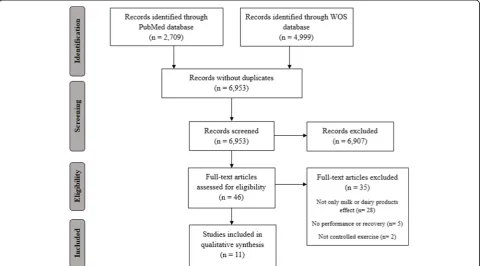
Figure 1 presents the PRISMA consort diagram for the search strategy. The initial search retrieved 7708 articles, and a total of 11 studies were finally included after applying the inclusion and exclusion criteria (Table 1). All the in-cluded studies used cow’s milk products. A total of 7 stud-ies (63.6%) investigated the acute effect of cow’s milk after resistance or high-intensity exercise [27–33], whereas three studies (27.3%) determined the acute effect of cow’s milk after endurance exercise [34–36]. In addition, one study [37] analyzed the long-term effect (over 12 weeks of resist-ance training) of exercise and cow’s milk on the maximum repetition strength of squat and bench press.
Risk of bias within studies
The quality of the included studies was predominantly suboptimal. The methodological quality assessment is shown in Fig.2. Details of randomization [27–37], allo-cation concealment [27–37], and study blinding [27–32,
35–37] were inadequately reported or rated as an “un-clear risk” (categorized when the information was not specified in the article) for most studies.
Effects of cow’s milk on performance and muscle function
recovery after resistance or high-intensity exercise The exercise performance outcomes measured were mus-cular strength related variables [27–33, 37]. Regarding muscle function recovery, most of the studies [27–33] de-termined muscle soreness or damage using subjective scales such as VAS, and the most of them added also mea-sures of blood biomarkers (e.g., CK or myoglobin) [27–32]. Cow’s milk attenuated losses in peak torque (maximal effort concentric knee flexion) [27,28,30,31], total work of the set (6 concentric knee flexion repetitions) using iso-kinetic dynamometry [31], countermovement jump [27,
28,33], rate of force development of an isometric contrac-tion of the dominant leg quadriceps [27, 28], and sprint tests [27, 29, 32]. On the other hand, other studies ob-served no effect of cow’s milk on sprint recovery [28,33], countermovement jump [32], reactive strength index [32], and bench and squat maximum strength after an exercise intervention [37].
Cow’s milk did not modify the pre-post resistance ex-ercise changes in serum CK [27,28,32], myoglobin [32], high-sensitivity C-reactive protein [27, 28] and protein carbonyls [27]. In contrast, a positive effect, i.e. lower in-crease in CK and myoglobin concentrations, was
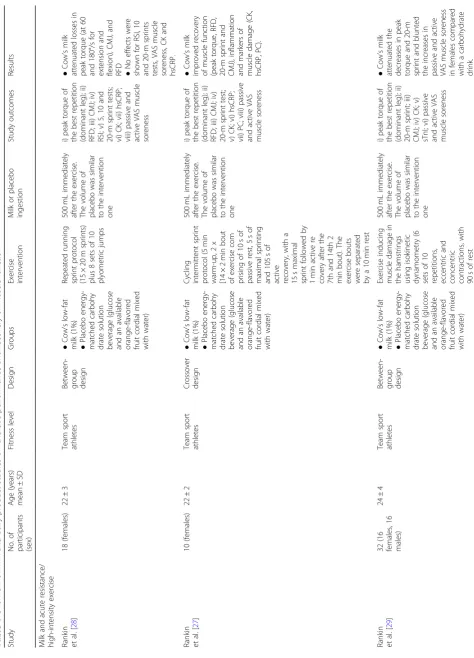
Table 1 Overview of milk and dairy product studies on exercise performance and recovery of muscle function (Continued) Study No. of participan ts (sex) Age (ye ars) mean ± SD Fi tness level Design Groups Exerc ise interve ntion Milk or pla cebo inge stion Study out comes Re sults be tween se ts) at an an gular spe ed of 60°/s ● Cow ’ s milk also atte nuat ed increases in sTn I, and a similar eff ect on se rum CK was only obse rved from 24 to 72 h and 48 – 72 h. ● In me n, cow ’ s mi lk produc ed a mi nim al positi ve eff ect on sore ness an d mu scle damage (s TnI and CK) . Coc kburn et al. [ 32 ] 14 (m ales) 24 ± 4 Te am sport athl etes (sem iprofe ssional soc cer players) Betw een-group desig n ● Cow ’ s emiskimm ed milk
(1.7%) ●Placebo beverage
Table 1 Overview of milk and dairy product studies on exercise performance and recovery of muscle function (Continued) Study No. of participan ts (sex) Age (ye ars) mean ± SD Fi tness level Design Groups Exerc ise interve ntion Milk or pla cebo inge stion Study out comes Re sults Coc kburn et al. [ 31 ] 24 (m ales) 21 ± 3 Re gularly com peted in team sports (foo tball, rugby, hock ey and cri cket) Betw een-group desig n ● Cow ’ s semiskim med milk (1.7%) ● Low-fat choc olate mi lk ● Carbohydrate
beverage ●Placebo beverage
(water) Exerc ise inducing mu scle damage in the ha mstrin gs usi ng isokinetic dy namom etry (6 se ts of 10 rep etitions , ecc entric and conc entric cont racti ons, with 90 s of res t be tween se ts) at a spe ed of 1.05 rad/ s 500 mL on two occasions, im mediate ly afte r and within 2 h after the exerc ise (to tal volu me: 10 00 mL). The vo lume of pla cebo was similar to the interven tion one i) pe ak torque of the best repetit ion (domi nant le g); ii) CK; iii) Mb; iv) passive and active VAS mu scle sorenes s ● Cow ’ s milk atte nuat ed the de crem ents (48 h) in tot al work of the set, pe ak torq ue, CK and Mb after a bout of exe rcise-ind uced mu scle dam age. ● The muscle sore nes s asses sed usi ng VAS was sim ilar betwee n the gro ups. Kirk et al. [ 33 ] 21 (m ales) 23 ± 3 Re gularly com peted in team sports (Gae lic foot ball, soc cer, rug by) Betw een-group desig n ● A2 milk ● Regu lar milk (cow ’ s mi lk) ● Placebo beverage (maltodextri n mixed with water) Re peated sprint prot ocol (15 × 30 m sprints with 60 s of rest betwee n se ries) 500 mL immedi ately afte r the exerc ise. The vo lume of pla cebo was similar to the interven tion one i) CM J; ii) MVCs ; iii) 20-m spr int test; iv) VAS mu scle sorenes s ● CMJ reco vered qui cker in bo th cow ’ s mi lk groups vs. the pla cebo group. No diff erenc es betwee n gro ups we re ob served in either MV Cs or VAS muscle sore nes s. ● There we re no eff ects on 20-m sprint te st ti me; how ever, the cow ’ s m ilk group rec overed qui cker than the pla cebo gro up. More over, rel ative to the base line , decrem ents over 48 h were minim ized in the cow ’ s milk vs. pla cebo groups. Milk and resistanc e exercis e interve ntion Volek et al. [ 37 ] 28 (m ales) 13 to 17 Not rep orted Betw een-group desig n ● Cow ’ s fluid milk
(1%) ●Placebo beverage
Table 1 Overview of milk and dairy product studies on exercise performance and recovery of muscle function (Continued) Study No. of participan ts (sex) Age (ye ars) mean ± SD Fi tness level Design Groups Exerc ise interve ntion Milk or pla cebo inge stion Study out comes Re sults de creas ing vo lume Milk and acute end urance exerc ise Ups haw et al. [ 34 ] 8 (males) 22 ± 2 Tra ined cyclists Cross over desig n ● Cow ’ s low-fat milk (1%) ● Choc olate Mi lk
(1%) ●Hemp chocolate
milk
●
Soy
chocolat
e
milk ●Placebo beverage
(low-energy drink) Cy cling at diff erent inten sities unt il the part icipant cou ld not cont inue with the app ropri ate cad ence at an inten sity of 70 an d 50% of max imal power out put. Afte rward, a best -effort 20 -km time tri al test (cy cloergo meter) 2262 ± 14 8 mL (beverage plus wat er if applicable) im mediate ly afte r the exerc ise an d at 30 mi n intervals over 2 h be fore complet ing the 20-k m time tri al test exerc ise. The vol um e of pla cebo was simil ar to the inter vent ion one i) be st effort 20 -km ti me trial test; ii) HR ● Cow ’ s low-fat milk im prove d the 20-k m ti me trial test pe r form ance vs. that of the placebo group. ● No differ ences in H R were observe d dur ing this test . Lee et al. [ 36 ] 8 (males) 24 ± 4 Ac tives (regular phy sical activ ity) Cross over desig n ● Cow ’ s 0.1% fat
milk ●Cow
’ s 0.1% fat milk plus glu cose ● A com merc ially available CHO-electro lyte sports
drink ●Placebo beverage
(water) Co ntinuous cyc ling exercis e at an inten sity of 70 % VO 2peak unt il vo litional exha ustion, de fined as an inability to mai ntain a pedal cad ence of ≥ 60 rpm 1022 ± 47 0 (1.5 mL/ kg of body mas s) every 10 min dur ing exerc ise. The volu me of placebo was simil ar to the interve ntion one i) ti me to
volitional exhaustion (exerc
ise cap acity); ii) HR; iii) exp ired gases; iv) RP E ● Exercis e capac ity, bas al HR, exerc ise H R, exp ired gases an d RP E were sim ilar be tween groups. Watson et al. [ 35 ] 7 (males) 23 ± 3 Ac tives (regular phy sical activ ity) Cross over desig n ● Cow ’ s skimme d milk (1%) ● Placebo beverage (a comm ercially
available carbohydrate- electro
observed from the baseline to 48 h after resistance exer-cise in the cow’s milk group compared with the values of the placebo beverage group [31]. Cockburn et al. [30] also showed that the increase in CK can be blunted after resistance exercise with less cow’s milk ingestion (500 mL of cow’s milk instead of 1000 mL of cow’s milk). These lower increases of CK were observed from 24 to 72 h after exercise-induced muscle damage in the hamstring and cow’s milk ingestion [29]. Cow’s milk also
attenuated the skeletal troponin I increase after exercise compared with a placebo group (energy-matched carbo-hydrate solution) [29].
Cow’s milk did not improve muscle soreness after resist-ance exercise in other studies [31–33], whereas it had a positive effect on muscle soreness and tiredness at 72 h post resistance exercise in other [27]. Moreover, cow’s
milk reduced passive soreness in males and females, as well as active muscle soreness (all from baseline to 72 h) in both sexes [29]. Similar results were found in another study that compared cow’s milk vs. energy-matched carbohydrate solution as a control at 72 h [28]. Finally, passive measurements of muscle soreness (using VAS) showed a benefit of limiting increases in muscle soreness in the group receiving less bolus cow’s milk (500 mL) compared with the high-bolus cow’s milk group (1000 mL) between the baseline and 48 h after exercise and cow’s milk ingestion [30]. Due to lack of homogeneity in the measurement of exercise performance, and on the recovery of muscle function outcomes after resistance or high-intensity exercise intervention doing a meta-analysis was not possible (see Table1).
Effects of cow’s milk on exercise performance and muscle
function recovery after endurance exercise
Cow’s milk before (2 h prior the exercise) endurance ex-ercise improved performance in a 20-km time trial (P< 0.05) [34]. Moreover, no differences in heart rate were observed between the cow’s milk group and the placebo group [34]. In another study [35], the mean cycling time to exhaustion was the same on the placebo group trial (39.6 ± 7.3 min) compared with the cow’s milk group (39.7 ± 8.1 min; P= 0.879). Furthermore, no differences in oxygen consumption during exercise were found [35]. Finally, there was no effect of cow’s milk on changes in the rate of perceived exertion after exercise (P= 0.744) compared with the placebo group [35].
Lee et al. [36] did not observe differences in the time to volitional exhaustion independently of the beverage ingested (median, range: 103.3, 85.7–228.5 vs. 93.3, 82.4– 192.3 min for the cow’s milk vs. placebo group, respect-ively) [36]. Cow’s milk did not alter the heart rate reached
in the volitional exhaustion point nor the RPE sensations during the exercise [36]. Due to heterogeneity in the measurement of exercise performance and on the recov-ery of muscle function outcomes after endurance exercise doing a meta-analysis was not possible (see Table1).
Discussion
effect of cow’s milk after high-intensity exercise [27–33] or resistance training [37] reported contradictory results. Whereas some studies found significant effects of cow’s milk intake on performance or recovery of muscle func-tion such as attenuated losses in peak torque, counter-movement jump, rate of force development, sprint series and inflammation and markers of muscle damage, others did not find any effect. Therefore, there is currently not enough evidence to conclude whether cow’s milk has a positive effect on exercise performance and recovery of muscle function, and further studies are needed to make more definitive conclusions. The results regarding endur-ance exercise are similar to those observed in resistendur-ance exercise. Whereas one study observed significant effect of cow’s milk intake on performance [34] others [35,36] did not observe any enhancing effect. The observed contra-dictory findings can be explained by the heterogeneity of cow’s milk ingestion, such as the amount of cow’s milk, the timing of the cow’s milk intake, and the type of inter-vention, as well as by the large heterogeneity of outcomes measured. Moreover, the study participants’ fitness level may also play an important role when studies are com-pared. In addition, doing a meta-analysis was not appro-priate due to the heterogeneity between studies, which was mainly identified in the reporting of exercise perform-ance and on the recovery of muscle function.
It has been shown that 20 g of protein might be sufficient to stimulate muscle protein synthesis after resistance exer-cise [38], so perhaps a greater consumption of protein (via cow’s milk) would have resulted in more positive effects. It is noteworthy, however, that one study showed similar ef-fects after consumption of 500 and 1000 mL of cow’s milk [30]. Volek et al. [37] found no differences between the ef-fects of cow’s milk vs. juice (both groups consumed 708 mL daily) after a resistance exercise intervention in maximum repetition strength (12 weeks of resistance training). Both Lee et al. [36] and Watson et al. [35] found no effect of cow’s milk on time to volitional exhaustion, heart rate, ex-pired gases and RPE after endurance exercise. In contrast, Upshaw et al. [34] found that low-fat cow’s milk (2262 ±
299 mL) improved the time in a 20-km time trial test after glycogen-lowering exercise compared with that of a placebo group (2262 ± 290 mL low-energy drink). Regarding the intensity of the exercise, one study [35] reported that the heart rate during endurance exercise in a cow’s milk trial test (2263 ± 241 mL) was higher than that during a carbohydrate trial test (2280 ± 249 mL), yet no differences in oxygen consumption during exercise were observed. The intensity and exercise performed in both studies was similar [35, 36], while in the study by Upshaw et al. [34], a glycogen-lowering exercise was performed before both cow’s milk ingestion and the examined exercise. The amount of cow’s milk ingested in the study by Upshaw et al. [34] and in the study by Watson et al. [35] was similar,
and therefore, the differences in recovery between the groups might be partially explained by differences in the fitness levels of the participants [35, 36]. In the study by Upshaw et al. [34], the participants were trained cyclists, while in the other study, the participants were regularly active individuals.
Philips et al. [39] in their review focused on the evidence showing the differences in responses of muscle protein synthesis and muscle protein accretion in humans, con-cluded that cow’s milk-based proteins (whey and casein) appear to be better than carbohydrate beverages in the promotion of hypertrophy. Moreover, they highlighted the importance of the dose-response in the studies since the difference in leucine content (as is present in cow’s milk) may have an important influence in maintaining and pos-sibly increasing the muscle mass [39]. Furthermore, leu-cine could have an impact in the recovery process (e.g. in the muscle protein synthesis and muscle protein accre-tion). Maybe the contradictory results obtained in exercise performance in our systematic review could be partially explained by the different amount of cow’s milk (and therefore leucine content) provided in the selected studies. It is assumed that a single cow’s milk bolus intake increases net amino acid synthesis in young healthy sedentary volunteers [40]. Moreover, the consumption of protein and carbohydrates together, as is presented in cow’s milk, results in a higher rate of protein synthesis compared to that from the intake of these nutrients sep-arately [41, 42]. Regarding protein consumption, suffi-cient protein intake is necessary to stimulate protein synthesis as we mentioned previously [38]. Therefore, it is biologically plausible that cow’s milk consumption after a bout of exercise can stimulate protein synthesis metabolism [6, 7]. Muscle membrane damage following exercise occurs as a result of mechanical stress during the first phase of muscular damage, with further disrup-tion via the lysosomal pathway during the next phase [43]. The lack of a positive effect of cow’s milk on some blood markers (e.g., protein carbonyls and high-sensitiv-ity C-reactive protein) [27, 28,32] may suggest that the ingestion of cow’s milk could affect other metabolic pathways. For example, the CK concentration increases after exercise, but no clear CK blunting effects were ob-served from cow’s milk, while the skeletal troponin I rise was blunted in the cow’s milk group [29]. Controver-sially, in another study it was shown that the CK in-crease can be attenuated with lower cow’s milk intake (500 mL instead of 1000 mL) [30], and an effect on myo-globin was also observed between the baseline and 48 h after exercise [31] from cow’s milk ingestion. Of note is
carbohydrate/kg/h and 0.2–0.4 g protein/kg/h preferably after the exercise, with a minimum of 20 g high-quality protein for improve the recovery after exercise. However, some controversial still exist regarding the correct timing and if carbohydrate and protein have to be con-sumed right after the exercise [44, 45]. Following these recommendations by Sousa et al. [44], maybe the nega-tive results found in some of the included studies could be partially explained for either an insufficient amount of cow’s milk (i.e. not enough protein and/or leucine) or the timing of ingestion. Regarding the time of ingestion, most of the studies provided the beverage (e.g. cow’s milk, placebo, etc.) immediately after the exercise [27– 32], while others offered the beverage during the exer-cise [35, 36], and one [34] offered the beverage immedi-ately after the exercise and every 30 min. In Volek et al. [37] the beverage consumption was daily.
Regarding muscle soreness perception, whereas several studies did not find a positive effect of cow’s milk [31–33,
36], others observed significant differences in both active and passive muscle soreness between cow’s milk and con-trol groups (~ 500 mL) [27–30]. However, VAS muscle soreness perception is a more subjective outcome than blood markers, and it is more difficult to establish whether these differences could be explained by the treatment (e.g., cow’s milk vs. placebo), by the physical condition of partic-ipants (e.g., team sport players vs. individuals not habitu-ated to exercise), or by unaccustomed sensations after resistance (i.e., repeated eccentrics contractions).
The current review has several limitations. First, there is a high degree of heterogeneity among the analyzed studies, in part due to differences in the type, intensity, volume, frequency, and duration of the interventions, as well as in the outcome measures, and, for these reasons a meta-analysis was not possible. This review is also lim-ited by the suboptimal methodological quality of the in-cluded interventions. Finally, because the search was limited to articles published in English or Spanish and gray literature was not consulted, the language restric-tions and unpublished studies might slightly modify our results. Therefore, the results should be taken with cau-tion, and more research on the effects of cow’s milk and dairy products is required before definitive recommen-dations can be provided.
Conclusions
In conclusion, based on the current evidence, it cannot be determined whether cow’s milk has a positive effect on exercise performance and recovery of muscle function in humans, due to the limited number of studies included in this systematic review. Nevertheless, since cow’s milk is a source of protein, carbohydrates, calcium and other nutri-ents, and thus may lead to an increase in the serum amino acid concentration and, therefore, helping the muscle
damage repair process. In line with this, some studies included found significant effects of cow’s milk intake on performance and recovery of muscle function. For these reasons, more and better study designs such as blinding the beverage to both, participants and personnel, generate a random sequence of beverage group, etc. are needed to demonstrate its usefulness as a sport nutrition-related supplement.
Additional file
Additional file 1: Table S1.Search equations for both databases. (DOCX 14 kb)
Abbreviations
CK:Creatine kinase; CMJ: Countermovement jump; HR: Heart rate;
hsCRP: High-sensitivity C-reactive protein; IL-6: Interleukin-6; Mb: Myoglobin; MeSH: Medical subject heading; MVCs: Maximum voluntary isometric contractions; PC: Protein carbonyls; Rad/s: Radians per second; RFD: Rate of force development; RM: Maximum repetition; RPE: Ratio of perceived exertion; RPM: Revolutions per minute; RSI: Reactive strength index;
sTnI: Skeletal troponin I; VAS: Visual analogue scales; VO2: Volume of oxygen
consumption; VO2peak: Peak oxygen uptake; WOS: Web of Science
Acknowledgements
This study is part of a Ph.D. thesis conducted in the Biomedicine Doctoral Studies of the University of Granada, Spain.
Funding
The study was supported by the Spanish Ministry of Education (FPU 13/ 04365 and 15/04059), by the Redes temáticas de investigación cooperativa RETIC (Red SAMID RD16/0022), and by the University of Granada Plan Propio de Investigación 2016 -Excellence actions: Unit of Excellence on Exercise and Health (UCEES) - and Plan Propio de Investigación 2018 - Programa Contratos-Puente, and the Junta de Andalucía, Consejería de Conocimiento, Investigación y Universidades (ERDF: ref. SOMM17/6107/UGR), and by the In-terprofessional Dairy Organization (INLAC) of Spain. The sponsor had no role in the design of the studies included in the supplement; in the collection, analyses, or interpretation of the data; in the writing of the manuscript; or in the decision to publish the results.
Availability of data and materials Not applicable.
Authors’contributions
JMAA, GS-D, BM-T, and JRR contributed to the design of the systematic re-view; JMAA, GS-D, BM-T, IL and JRR contributed to the analysis and interpret-ation of data; JMAA and JRR drafted the manuscript. All authors read and approved the final manuscript.
Ethics approval and consent to participate Not applicable.
Consent for publication Not applicable.
Competing interests
The authors declare that they have no competing interests.
Publisher’s Note
Springer Nature remains neutral with regard to jurisdictional claims in published maps and institutional affiliations.
Author details
1PROFITH“PROmoting FITness and Health through physical activity”research
Sciences, University of Granada, Ctra. de Alfacar s/n C.P, 18071 Granada, Spain.2Department of Medicine, Division of Endocrinology, and Einthoven
Laboratory for Experimental Vascular Medicine, Leiden University Medical Centre, Albinusdreef 2, Leiden 2333, The Netherlands.3Institute for Innovation & Sustainable Development in Food Chain, Public University of Navarra, Campus Arrosadía, s/n, 31006 Pamplona, Spain.
Received: 25 January 2019 Accepted: 14 April 2019
References
1. Pennings B, Koopman R, Beelen M, Senden JMG, Saris WHM, van Loon LJC.
Exercising before protein intake allows for greater use of dietary protein-derived amino acids for de novo muscle protein synthesis in both young
and elderly men. Am J Clin Nutr. 2011;93:322–31.
2. Yang Y, Breen L, Burd NA, Hector AJ, Churchward-Venne TA, Josse AR, et al.
Resistance exercise enhances myofibrillar protein synthesis with graded
intakes of whey protein in older men. Br J Nutr. 2012;108:1780–8.
3. Ziegenfuss TN, Landis JA, Lemieux RA. Protein for sports-new data and new
recommendations. Strength Cond J. 2010;32:65–70.
4. Areta JL, Burke LM, Ross ML, Camera DM, West DWD, Broad EM, et al.
Timing and distribution of protein ingestion during prolonged recovery from resistance exercise alters myofibrillar protein synthesis. J Physiol. 2013;
591:2319–31 Wiley-Blackwell.
5. Roy BD. Milk: the new sports drink? A review. J Int Soc Sports Nutr. 2008;5:15.
6. Pitkanen HT, Nykanen T, Knuutinen J, Lahti K, Keinanen O, Alen M, Komi PV,
Mero AA. Free amino acid Pool and muscle protein balance after resistance
exercise. Med Sci Sports Exerc. 2003;35:784–92.
7. Biolo G, Maggi SP, Williams BD, Tipton KD, Wolfe RR. Increased rates of
muscle protein turnover and amino acid transport after resistance exercise
in humans. Am J Physiol Metab. 1995;268:E514–20.
8. Levenhagen DK, Carr C, Carlson MG, Maron DJ, Borel MJ, Flakoll PJ.
Postexercise protein intake enhances whole-body and leg protein accretion
in humans. Med Sci Sports Exerc. 2002;34:828–37.
9. Koopman R, Wagenmakers AJM, Manders RJF, Zorenc AHG, Senden JMG,
Gorselink M, et al. Combined ingestion of protein and free leucine with carbohydrate increases postexercise muscle protein synthesis in vivo in
male subjects. Am J Physiol Metab. 2005;288:E645–53.
10. Rasmussen BB, Tipton KD, Miller SL, Wolf SE, Wolfe RR. An oral essential
amino acid-carbohydrate supplement enhances muscle protein anabolism
after resistance exercise. J Appl Physiol. 2000;88:386–92.
11. Clarkson PM, Nosaka K, Braun B. Muscle function after exercise-induced muscle
damage and rapid adaptation. Med Sci Sports Exerc. 1992;24:512–20.
12. Pasiakos SM, Lieberman HR, McLellan TM. Effects of protein supplements on
muscle damage, soreness and recovery of muscle function and physical
performance: a systematic review. Sports Med. 2014;44:655–70.
13. Moore DR, Stellingwerff T. Protein ingestion after endurance exercise: the
“evolving”needs of the mitochondria? J Physiol. 2012;590:1785–6 Wiley-Blackwell.
14. Howarth KR, Moreau NA, Phillips SM, Gibala MJ. Coingestion of protein with
carbohydrate during recovery from endurance exercise stimulates skeletal
muscle protein synthesis in humans. J Appl Physiol. 2009;106:1394–402.
15. Haug A, Høstmark AT, Harstad OM. Bovine milk in human nutrition–a
review. Lipids Health Dis. 2007;6:25.
16. Bos C, Metges CC, Gaudichon C, Petzke KJ, Pueyo ME, Morens C, et al.
Postprandial kinetics of dietary amino acids are the Main determinant of their metabolism after soy or Milk protein ingestion in humans. J Nutr. 2003;
133:1308–15.
17. Atherton PJ, Smith K, Etheridge T, Rankin D, Rennie MJ. Distinct anabolic
signalling responses to amino acids in C2C12 skeletal muscle cells. Amino
Acids. 2010;38:1533–9.
18. Witard OC, Jackman SR, Breen L, Smith K, Selby A, Tipton KD. Myofibrillar
muscle protein synthesis rates subsequent to a meal in response to increasing doses of whey protein at rest and after resistance exercise. Am J
Clin Nutr. 2014;99:86–95.
19. Fogelholm M. Dairy products, meat and sports performance. Sports Med.
2003;33:615–31.
20. Hoffman JR, Falvo MJ. Protein - Which is Best? J Sports Sci Med. 2004;3:118–30.
21. Moher D, Liberati A, Tetzlaff J, Altman DG, PRISMA Group. Preferred
reporting items for systematic reviews and meta-analyses: the PRISMA statement. BMJ. 2009;339:b2535.
22. National Library of Medicine. Medical Subject Headings. MeSH Descriptor
Data. 2018 [cited 2018 June 12]. Available from:https://www.ncbi.nlm.nih.
gov/mesh/?term=dairy+product
23. McMaster DT, Gill N, Cronin J, McGuigan M. A brief review of strength and
ballistic assessment methodologies in sport. Sports Med. 2014;44:603–23.
24. Paul DJ, Nassis GP. Testing strength and power in soccer players. J Strength
Cond Res. 2015;29:1748–58.
25. Brancaccio P, Lippi G, Maffulli N. Biochemical markers of muscular damage.
Clin Chem Lab Med. 2010;48:757–67.
26. Higgins JPT, Green S. Cochrane handbook for systematic reviews of
interventions version 5.1.0 [updated March 2011]: The Cochrane
Collaboration; 2011. Available fromwww.cochrane-handbook.org.
27. Rankin P, Lawlor MJ, Hills FA, Bell PG, Stevenson EJ, Cockburn E. The effect
of milk on recovery from repeat-sprint cycling in female team-sport
athletes. Appl Physiol Nutr Metab. 2018;43:113–22.
28. Rankin P, Landy A, Stevenson E, Cockburn E. Milk: an effective recovery
drink for female athletes. Nutrients. 2018;10:228.
29. Rankin P, Stevenson E, Cockburn E. The effect of milk on the attenuation of
exercise-induced muscle damage in males and females. Eur J Appl Physiol.
2015;115:1245–61.
30. Cockburn E, Robson-Ansley P, Hayes PR, Stevenson E. Effect of volume of
milk consumed on the attenuation of exercise-induced muscle damage. Eur
J Appl Physiol. 2012;112:3187–94.
31. Cockburn E, Hayes PR, French DN, Stevenson E, St Clair Gibson A. Acute
milk-based protein–CHO supplementation attenuates exercise-induced
muscle damage. Appl Physiol Nutr Metab. 2008;33:775–83.
32. Cockburn E, Bell PG, Stevenson E. Effect of Milk on team sport performance
after exercise-induced muscle damage. Med Sci Sports Exerc. 2013;45:1585–92.
33. Kirk B, Mitchell J, Jackson M, Amirabdollahian F, Alizadehkhaiyat O, Clifford T.
A2 Milk enhances dynamic muscle function following repeated Sprint exercise, a possible ergogenic aid for A1-protein intolerant athletes? Nutrients. 2017;9:94.
34. Upshaw AU, Wong TS, Bandegan A, Lemon PW. Cycling time trial
performance 4 hours after glycogen-lowering exercise is similarly enhanced by recovery nondairy chocolate beverages versus chocolate Milk. Int J Sport
Nutr Exerc Metab. 2016;26:65–70.
35. Watson P, Love TD, Maughan RJ, Shirreffs SM. A comparison of the effects
of milk and a carbohydrate-electrolyte drink on the restoration of fluid balance and exercise capacity in a hot, humid environment. Eur J Appl
Physiol. 2008;104:633–42.
36. Lee JKW, Maughan RJ, Shirreffs SM, Watson P. Effects of milk ingestion on
prolonged exercise capacity in young, healthy men. Nutrition. 2008;24:340–7.
37. Volek JS, Gómez AL, Scheett TP, Sharman MJ, French DN, Rubin MR, et al.
Increasing fluid milk favorably affects bone mineral density responses to
resistance training in adolescent boys. J Am Diet Assoc. 2003;103:1353–6.
38. Moore DR, Robinson MJ, Fry JL, Tang JE, Glover EI, Wilkinson SB, et al.
Ingested protein dose response of muscle and albumin protein synthesis
after resistance exercise in young men. Am J Clin Nutr. 2009;89:161–8.
39. Phillips SM, Tang JE, Moore DR. The role of milk- and soy-based protein in
support of muscle protein synthesis and muscle protein accretion in young
and elderly persons. J Am Coll Nutr. 2009;28:343–54.
40. Elliot TA, Cree MG, Sanford AP, Wolfe RR, Tipton KD. Milk ingestion
stimulates net muscle protein synthesis following resistance exercise. Med
Sci Sports Exerc. 2006;38:667–74.
41. Børsheim E, Cree MG, Tipton KD, Elliott TA, Aarsland A, Wolfe RR. Effect of
carbohydrate intake on net muscle protein synthesis during recovery from
resistance exercise. J Appl Physiol. 2004;96:674–8.
42. Miller SL, Tipton KD, Chinkes DL, Wolf SE, Wolfe RR. Independent and
combined effects of amino acids and glucose after resistance exercise. Med
Sci Sports Exerc. 2003;35:449–55.
43. Armstrong RB. Initial events in exercise-induced muscular injury. Med Sci
Sports Exerc. 1990;22:429–35.
44. Sousa M, Teixeira VH, Soares J. Dietary strategies to recover from
exercise-induced muscle damage. Int J Food Sci Nutr. 2014;65:151–63.
45. Schoenfeld BJ. Does exercise-induced muscle damage play a role in skeletal
![Fig. 2 Methodological quality of the included studies. The methodological quality was assessed using the Cochrane risk of bias tool [26]](https://thumb-us.123doks.com/thumbv2/123dok_us/9473214.1930361/8.595.56.539.87.320/methodological-quality-included-studies-methodological-quality-assessed-cochrane.webp)
