Millin R Gohel
Sigma Institute of Pharmacy, Vadodara, Gujarat Email: [email protected]
Address for correspondence
Access this article online www.japer.in
Formulation Development of Suitable Osmotic Drug Delivery
System for Highly Water Soluble Drug
INTRODUCTION
Introduction of oral controlled drug delivery system: There had been an outpouring of controlled release (CR) formulations for several medicines in the last two decades. These delivery systems offer numerous advantages in comparison to conventional dosage forms, which include fewer doses per day or week, reduced adverse effects and improved patient compliance and convenience. CR products are designed to maintain constant therapeutic plasma concentration of the drug within the therapeutic range of the drug over prolonged periods.
Osmotically controlled release system
In these systems, osmotic pressure is the driving force to generate controlled release of drug. A semi-permeable membrane surrounds the drug and osmogen mixture. The drug is released at constant rate throughout GIT i.e. pH independent release is obtained. Osmosis refers to the process of movement of solvent molecules from lower concentration to higher concentration across a semi permeable
membrane. Osmotic pressure created due to imbibitions of fluid from external environment into the dosage form regulates the delivery of drug from osmotic device. Rate of drug delivery from osmotic pump is directly proportional to the osmotic pressure developed due to imbibitions of fluids by osmogen. Osmotic pressure is a colligative property of a solution in which the magnitude of osmotic pressure of the solution is independent on the number of discrete entities of solute present in the solution. Hence the release rate of drugs from osmotic dispensing devices is dependent on the solubility and molecular weight and activity coefficient of the solute (osmogen).
[1-5] Factors affecting the drug release rate from Osmotic Pump tablets:
There are following factors which should be considered while designing an Osmotic System. 1. Drug Characteristics.
2. Solubility of drug. 3. Osmotic Pressure.
4. Type of Polymer and its concentration. 5. Use of Wicking agent.
6. Type of membrane and its characteristics. 7. Membrane thickness.
8. Type and amount of plasticizer. 9. Size of the delivery orifice.
An oral osmotic drug delivery system that can deliver ropinirole hydrochloride for extended period of time has been developed and characterized. Push Pull Osmotic Pump were developed in the work. Formulations were formulated using wet granulation technique. The tablets were coated with semipermeable coating polymer i.e. cellulose acetate. At the end tablets were drilled. When such systems come in contact with the medium, the PEO forms viscous gel and controls the drug release, whereas sodium chloride increases the drug release. In push pull system the push layer swells releasing the drug at a controlled rate. In advanced Parkinson’s disease the usual dose of ropinirole hydrochloride is 0.25mg- 5mg three to four times a day. Hence, an attempt was made to develop a once-a-day controlled release system. This may offer significant patient benefits by providing enhanced efficacy and reduced side effects and may also reduce the number of daily doses compared to conventional therapies. The developed push-pull osmotic system showed the desired once-a-day release kinetics. From the optimized batch the drug release was found to follow zero order kinetics with regression co-efficient of 0.9906. The optimized batch was found to be stable during the period of 3 months.
Keywords: Osmogen, polymer, water soluble drug, osmotic pressure. ABSTRACT
Millin R Gohel*, Adarsh Shah, Umesh M Upadhyay
Sigma Institute of Pharmacy, Vadodara, Gujarat
[7] Push pull osmotic pump:
Push pull osmotic pump is a modified EOP through which it is possible to deliver both poorly water-soluble and highly water water-soluble drugs at a constant rate. This system resembles a standard bilayer coated tablet. One layer (depict as the upper layer) contains drug in a formulation of polymeric, osmotic agent and other tablet excipients. This polymeric osmotic agent has the ability to form a suspension of drug in situ. The other layer contains osmotic and coloring agent, polymer and tablet excipients. These layers are formed and bonded together by tablet compression to form a single bilayer core. The tablet core is then coated with semi-permeable membrane. After the coating has been applied, a small hole is drilled in the membrane by a laser or mechanical drill on the drug layer side of the tablet. When the system is placed in aqueous environment water is attracted into the tablet by an osmotic agent in both the layers. The osmotic attraction in the drug layer pulls water into the compartment to form a suspension of drug. The osmotic agent in the nondrug layer simultaneously attract water into that compartment, causing it to expand volumetrically and the expansion of non drug layer pushes the drug suspension out of the delivery orifice.
MATERIALS AND METHOD Materials used in the present work
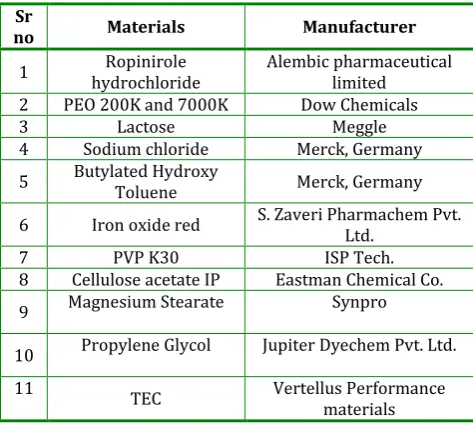
Table 1: Materials used in the present work
Sr
no Materials Manufacturer
1 hydrochloride Ropinirole Alembic pharmaceutical limited
2 PEO 200K and 7000K Dow Chemicals
3 Lactose Meggle
4 Sodium chloride Merck, Germany
5 Butylated Hydroxy Toluene Merck, Germany
6 Iron oxide red S. Zaveri Pharmachem Pvt. Ltd.
7 PVP K30 ISP Tech.
8 Cellulose acetate IP Eastman Chemical Co.
9 Magnesium Stearate Synpro
10 Propylene Glycol Jupiter Dyechem Pvt. Ltd.
11 TEC Vertellus Performance
materials
Table 2: solvents used in present work Formula
solvents used in the present work
Sr. no. Solvents Vendor
1 Ethanol SR Enterprise, Vadodara
2 Dichloro methane SR Enterprise, Vadodara
Table 3: formula for formulation F1-F7
Ingredients F1 F2 F3 F4 F5 F6 F7
Drug 13.68 13.68 13.68 13.68 13.68 13.68 13.68
Lactose 27.43 27.43 27.43 20.59 20.59 20.59 20.59
PEO 200K 6.84 6.84 6.84 13.68 13.68 13.68 13.68
Nacl 0.00 0.00 0.00 0.00 0.00 0.00 0.00
PVP K30 1.50 1.50 1.50 1.50 1.50 1.50 1.50
Mg. Stearate 0.50 0.50 0.50 0.50 0.50 0.50 0.50 PEO 7000K 5.00 5.00 5.00 5.00 5.00 5.00 5.00
Nacl 0.00 0.00 0.00 0.00 0.00 4.50 9.00
Lactose 38.18 38.18 38.18 38.18 38.18 33.18 29.18
PVP K30 1.35 1.35 1.35 1.35 1.35 1.35 1.35
Iron Oxide
(red) 0.05 0.05 0.05 0.05 0.05 0.05 0.05
Mg. Stearate 0.45 0.45 0.45 0.45 0.45 0.45 0.45 Cellulose
acetate 8.55 8.55 17.10 8.55 17.1 8.55 8.55
Propylene
Glycol 0.95 0.00 0.00 0.00 0.00 0.00 0.00
TEC 0.00 0.95 1.9 0.95 1.9 0.95 0.95
Wt. Gain 10% 10% 20% 10% 20% 10% 10%
Table 4: formula for formulations F8-F14
Ingredients F8 F9 F10 F11 F12 F13 F14
Drug 13.68 13.68 13.68 13.68 13.68 13.68 13.68 Lactose 20.59 18.09 18.09 18.09 15.59 15.59 15.59 PEO 200K 13.68 13.68 13.68 13.68 13.68 13.68 13.68
Nacl 0.00 2.50 2.50 2.50 5.00 5.00 5.00
PVP K30 1.50 1.50 1.50 1.50 1.50 1.50 1.50 Mg.
Stearate 0.50 0.50 0.50 0.50 0.50 0.50 0.50
PEO 7000K 5.00 5.00 5.00 5.00 5.00 5.00 5.00
Nacl 13.5 4.50 9.00 13.50 4.50 9.00 13.50
Lactose 24.65 33.18 29.18 24.65 33.18 29.18 24.65 PVP K30 1.35 1.35 1.35 1.35 1.35 1.35 1.35 Iron Oxide
(red) 0.05 0.05 0.05 0.05 0.05 0.05 0.05
Mg.
Stearate 0.45 0.45 0.45 0.45 0.45 0.45 0.45
Cellulose
acetate 8.55 8.55 8.55 8.55 8.55 8.55 8.55
Propylene
Glycol 0.00 0.00 0.00 0.00 0.00 0.00 0.00
TEC 0.95 0.95 0.95 0.95 0.95 0.95 0.95
Wt. Gain 10% 10% 10% 10% 10% 10% 10%
Method
Push pull osmotic pump: The formulation of bi-layer osmotic tablets involved following steps:
Step 1: Formulation of Drug layer:
passed through 40# sieve. Then all were mixed uniformly with API. IPA was used as granulating agent. It was added slowly during the granulation process to get proper granules. The granules were dried in Tray drier at 50ºC for 20-25 minutes. Then they were passed through 30# sieve to get uniform sized granules. At the end extra-granular components were uniformly mixed with the granules.
Step 2: Formulation of Push layer:
Wet granulation technique was used for the granulation. All ingredients were weighed accurately& passed through 40# sieve. Then all were mixed uniformly. IPA was used as granulating agent. It was added slowly during the granulation process to get proper granules. The granules were dried in Tray drier at 50ºC for 20-25 minutes. Then they were passed through 30# sieve to get uniform sized granules. At the end extra-granular components were uniformly mixed with the granules.
Step 3: Formulation of bi-layer tablets:
8 station rotary machine (Cadmac) was used for the formulation of bi-layer tablets. The tablets were made by using 5mm concave punches. Firstly the Drug layer was pre- compressed. Then the push layer granules were added in to the die cavity over the pre compressed drug layer and again it was compressed to get bi-layer tablet. The weight and hardness were adjusted.
Step 4: Coating of bi-layer tablets:
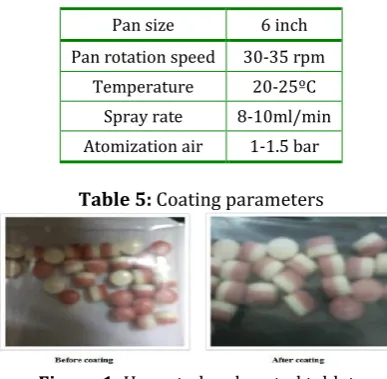
The tablets were coated by conventional Pan coating method. The coating parameterswere as following:
Pan size 6 inch
Pan rotation speed 30-35 rpm
Temperature 20-25ºC
Spray rate 8-10ml/min
Atomization air 1-1.5 bar
Table 5: Coating parameters
Figure 1: Uncoated and coated tablets
Step 5: Drilling of tablets:
Tablets were drilled by mechanical drilling machine.
Figure 2: Drilled tablets
Evaluation of Compressed Tablets: 1. Weight variation [8, 9]:
Every individual tablet in a batch should be in uniform weight and weight variation
within permissible limits. Twenty (20) tablets from each batch were randomly selected and individually weighed in milligrams (mg) on an analytical balance. The average weight, standard deviation and relative standard variation determined.
2. Thickness [8, 9]:
It was measured by varnier caliper. 3. Hardness [8, 9]:
Tablet Hardness of 6 randomly selected tablets was determined using Dr.Schleuniger tablet hardness tester. It was reported in Kilo-pond (Kp).
4. Friability [8, 9]:
Friability was evaluated as the percentage weight loss of tablets during tumbling in a friabilator for 4min. at 25rpm. The tablets were then de-dusted and the loss in weight caused by fracture or abrasion was recorded as the percentage friability. Friability range as per IP is 0.5-1% of average weight of tablet.
5. Thickness of coat:
Thickness of 10 uncoated and coated tablets was recorded and difference was measured for all. The average values are reported.
6. [7] Content Uniformity:
next day solution was filtered through 0.45µ nylon filter and analyzed against suitable standard.
7. Dissolution Study:
As the system is independent of pH of dissolution medium, the release was carried out in 0.1N Hydrochloric acid. The drug content was estimated using a spectrophotometer (model UV-1700, Shimadzu, Japan) at the wavelength of 250 nm. 8. Comparison with marketed Formulation: The optimized formulation was compared with the existing marketed formulation of ropinirole hydrochloride. The drug release profile of both was compared by using similarity factor.
9. [10] Stability study:
The optimized formulation was charged for the accelerated stability studies according to ICH guidelines (40± 2ºC and 75± 5% RH) for a period of 3 months in a stability chamber. The optimized batch was packed in a HDPE bottle and that was used for stability study. The samples were withdrawn at the end of 1, 2 and 3 months and evaluated for the physical appearance, drug content and in vitro drug release.
RESULT AND DISCUSSION
Parameters F1 F2 F3 F4 F5 F6 F7
Wt. variation (n=20) Pass Pass Pass Pass Pass Pass Pass
Thickness(mm) (n=10) 4.21±0.3 4.20±0.2 4.35±0.3 4.14±0.5 4.33±0.3 4.14±0.4 4.13±0.3
Hardness(Kp) (n=6) 4.21±0.3 4.20±0.2 4.35±0.3 4.14±0.5 4.33±0.3 4.14±0.4 4.13±0.3
Friability (%) Pass Pass Pass Pass Pass Pass Pass
Assay (%) (n=3) 99.8± 0.5 100.3± 0.2 100.3± 0.7 100.9± 0.5 99.1± 0.6 100± 0.4 101.3± 0.8
Thickness of coat(µ) (n=10) 180± 20 170± 30 270± 20 160± 20 260± 30 170± 20 180± 30
Table 6: Results of different test performed on formulations F1-F7
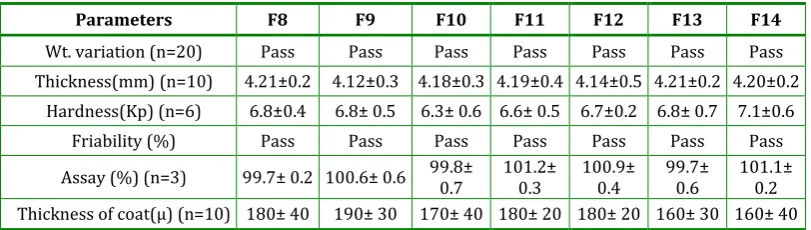
Parameters F8 F9 F10 F11 F12 F13 F14
Wt. variation (n=20) Pass Pass Pass Pass Pass Pass Pass
Thickness(mm) (n=10) 4.21±0.2 4.12±0.3 4.18±0.3 4.19±0.4 4.14±0.5 4.21±0.2 4.20±0.2
Hardness(Kp) (n=6) 6.8±0.4 6.8± 0.5 6.3± 0.6 6.6± 0.5 6.7±0.2 6.8± 0.7 7.1±0.6
Friability (%) Pass Pass Pass Pass Pass Pass Pass
Assay (%) (n=3) 99.7± 0.2 100.6± 0.6 99.8± 0.7 101.2± 0.3 100.9± 0.4 99.7± 0.6 101.1± 0.2
Thickness of coat(µ) (n=10) 180± 40 190± 30 170± 40 180± 20 180± 20 160± 30 160± 40
Table 7: Results of different test performed on formulations F8-F14 Dissolution study:
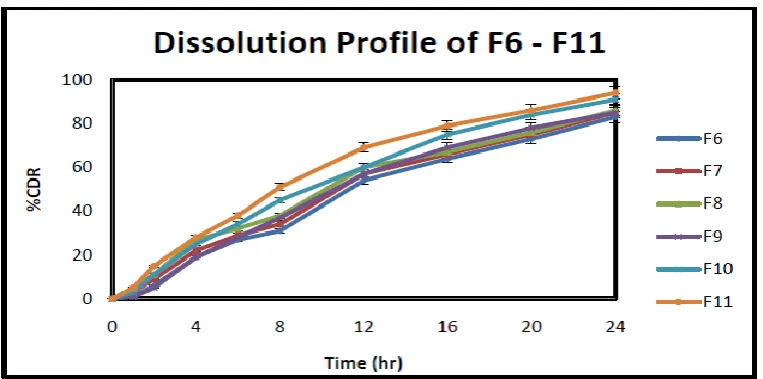
Figure 3: Dissolution profile of F1 and F2
Figure 4: Dissolution profile of F2 to F5
Figure 6: Dissolution profile of F12, F13 and F14
Figure 7: Dissolution profile of F14 with marketed product
Stability study
Figure 8: Stability study of F14
CONCLUSION
Present Research work was aimed to formulate and optimize a suitable osmotic drug delivery system for ropinirole hydrochloride which can release drug in
once-a-day controlled release system. This may offer significant patient benefits by providing enhanced efficacy and reduced side effects and may also reduce the number of daily doses compared to conventional therapies. An optimized system was selected to study the effect of the pH of dissolution media and the effect of agitation intensity.
Push Pull Osmotic Pump were developed in the work. The developed push-pull osmotic system showed the desired once-a-day release kinetic. All the evaluation parameter of tablet like hardness, friability, drug content, drug release study, etc. were satisfactory. From the optimized batch (F14) the drug release was found to follow zero order kinetics with regression co-efficient of 0.9906. The stability study revealed that the optimized batch which was subjected to accelerated stability study shows no significant changes and confirms the stability of formulations. In comparison to the marketed product F14 showed consistent release profile.
REFERENCES
1. F. Theeuwes, ―Elementary Osmotic Pump.‖ J. Pharm.
Sci. 1975, 64, 1987–1991.
2. McClelland GA, Sutton SC, Engle K and Zentner GM, ―The solubility-modulated osmotic pump: in vitro/in vivo release of diltiazem hydrochloride.‖
Pharm. Res. 1991, 8, 88–92.
3. Ayer AD and Wong PSL. Dosage form comprising
solubility regulating member. U.S. Patent 4 755 180 1988.
4. G. M. Zentner, G. A. McClelland, and S. C. Sutton, ―Controlled porosity solubility- and resin-modulated osmotic drug delivery systems for release of diltiazem hydrochloride.‖ J. Controlled Release 1991, 16, 237–244.
5. Khanna SC. Therapeutic system for highly water soluble active ingredients. U.S. Patent 4 992 278 1991.
6. Malaterre V, Ogorka J, Loggia N and Gurny R, ―Oral
osmotically driven systems: 30 years of development and clinical use.‖ Eur. J. Pharm. Biopharm. 2009, 73, 311–323.
7. Wakode R, Bhanushali R and Bajaj A, ―Development
and Evaluation of Push-Pull based Osmotic Delivery
System for Pramipexole.‖ PDA Journal of
Pharmaceutical Science and Technology 2008, 62, 22-31.
8. Yunxia B, Sunada H, Yonezawa Y, and Danjo K, ―Evaluation of rapidly disintegrating tablets prepared by direct compression method.‖ Drug Dev Ind Pharm, 1999, 25, 571-581.
9. Lachman L., Limberman HA, and Kanig JL. The theory
and practice of industrial pharmacy, 3rd Edn; Varghese publishing house, 1987, pp 66.
10. ICH topic 8 Pharmaceutical guidelines, Note for
Guidance on Pharmaceutical Developments,
(EMEA/CHMP167068/2004).
How to cite this article: Millin R Gohel*, Adarsh Shah, Umesh M Upadhyay; Formulation Development of Suitable Osmotic Drug Delivery System for Highly Water Soluble Drug; J. Adv. Pharm. Edu. & Res. 2014: 4(2): 193-199.