Marta Wasilewska
B–D, F, G, Izabela Gosk-Bierska
A–GThromboembolism Associated with Atrial Fibrillation
as a Cause of Limb and Organ Ischemia
Powikłania zatorowe w przebiegu migotania przedsionków
jako przyczyna niedokrwienia kończyn i narządów wewnętrznych
Department of Angiology, Hypertension and Diabetology, Wroclaw Medical University, Poland
A – research concept and design; B – collection and/or assembly of data; C – data analysis and interpretation;
D – writing the article; E – critical revision of the article; F – final approval of article; G – other
Abstract
Atrial fibrillation (AF) is associated with a high risk of thromboembolic episodes. Stroke is the most common embolic complication of AF. Consequently, the majority of the conclusions regarding the association between AF and embolism are based on clinical studies of patients with ischemic stroke. The AF-related thromboembolism of limbs and visceral arteries is rarely recognized, and there is little data on this matter. For this reason it is often a neglected issue. Nevertheless, AF is diagnosed in 60–95% of patients operated on due to acute limb ischemia, 31% of patients with splenic artery embolization, 55% with acute renal ischemia and 47% with mesenteric ischemia. AF should be considered as a leading cause of peripheral embolism. Extracerebral AF-related thromboembolic events are associated with serious clinical consequences including a high mortality rate. This paper reviews the current evidence regarding AF as a cause of visceral and limb ischemia (Adv Clin Exp Med 2013, 22, 6, 865–873). Key words: atrial fibrillation, thromboembolism, limb, organ ischemia.
Streszczenie
Migotanie przedsionków (m.p.) jest związane z dużym ryzykiem wystąpienia incydentów zakrzepowo-zatorowych, wśród których najczęstszym powikłaniem są udary mózgu. W konsekwencji większość wniosków dotyczących korelacji migotania przedsionków z zatorowością opiera się na ocenie stanu klinicznego chorych z udarem niedo-krwiennym mózgu. Natomiast zdarzenia zatorowe w przebiegu m.p. prowadzące do niedokrwienia kończyn lub narządów wewnętrznych są rzadziej rozpoznawane. W literaturze niewiele jest danych dotyczących tego rodzaju powikłań i dlatego problem ten jest często niedoceniany przez klinicystów. Migotanie przedsionków jest rozpo-znawane w 60–95% przypadków wśród pacjentów operowanych z powodu ostrego niedokrwienia kończyn, wystę-puje u 31% pacjentów z embolizacją tętnicy śledzionowej, u 55% chorych z ostrym niedokrwieniem nerki oraz u 47% pacjentów z niedokrwieniem krezki. W związku z tym m.p. powinno być rozważane jako wiodąca przyczyna zatorowości obwodowej. Incydenty zakrzepowo-zatorowe do tętnic obwodowych występujące w przebiegu m.p. wiążą się z poważnymi następstwami klinicznymi, w tym dużym ryzykiem zgonu. W artykule przedstawiono prze-gląd aktualnych danych dotyczących związku migotania przedsionków z niedokrwieniem kończyn oraz narządów trzewnych (Adv Clin Exp Med 2013, 22, 6, 865–873).
Słowa kluczowe: migotanie przedsionków, powikłania zakrzepowo-zatorowe, niedokrwienie kończyn/narządów.
Adv Clin Exp Med 2013, 22, 6, 865–873 ISSN 1899–5276
rEvIEWS
© Copyright by Wroclaw Medical University
Atrial fibrillation is an arrhythmia whose risk increases significantly with age [1, 2]. Consequen-tly, the prevalence of atrial fibrillation (AF) is con-tinually increasing due to the aging of the popula-tion. AF affects 1–2% of the general population, but this value could be an underestimation because of its
24.8% and 22.9%, respectively [1]. A Framingham study involving the American population placed the incidence of AF at 0.5% in the age group of 50–60 years, and 8.8% over 80 years [2].
Atrial fibrillation is associated with an in-creased risk of thromboembolism [3]. The throm-boembolic complications of AF are an important cause of morbidity and mortality. Although the embolic complications associated with AF can af-fect any of the arteries, cerebral arteries are the most frequently occluded vessels. Stroke is then the most common complication of AF. Consequently, the literature database for AF embolic complica-tions mostly concerns ischemic strokes. The in-formation on peripheral artery embolization in the course of AF is limited and, therefore, the data pertaining to this complication is relatively poor-ly recognized. Most of the few studies regard AF as one of the many factors of peripheral arterial oc-clusion. Angiosurgical experience indicates that acute limbs and/or visceral ischemia usually oc-cur in patients with cardiac diseases, and AF is the most frequent cause of thromboembolism. The re-sults of existing studies suggest that clinicians may underestimate the problem of extracerebral AF-re-lated thromboembolism, which leads to delayed or mistaken diagnosis.
Risk Factors of
Thromboembolic
Complications Associated
with Atrial Fibrillation
In 2010, the European Society of Cardiology introduced new clinical guidelines for the assess-ment of the risk of stroke and other thromboembol-ic episodes. According to the new CHA2DS2-vASc
score, age ≥ 75 years, history of stroke, transient ischemic attack (TIA) or other thromboembolic episodes are consider as major risk factors (worth 2 points). Non-major risk factors (worth 1 point) in-clude congestive heart failure, left ventricular sys-tolic dysfunction (defined as LvEF ≤ 40%), hyper-tension, diabetes, female gender, age 65–74 years, and vascular disease (history of myocardial infarct, atherosclerotic peripheral artery disease or com-plex aortic plaque). The one-year risk of stroke in patients with AF, according to the CHA2DS2-vASc
score, ranges between 0% (for 0 point) and 15.2% (for 9 points) [3].
According to Ciocârlie et al., who analyzed a group of 415 patients with AF, the most com-mon risk factors of embolism included a history of heart failure, arterial hypertension, female
gen-der, and age above 75 years. Most of patients had at least 2 risk factors [4].
The results of certain studies suggest that fe-male gender can be an independent risk factor of embolism associated with AF, both in younger and older age groups. The predisposition of the female gender to embolism may be associated with dif-ferences in the coagulation process and endothe-lial function. Women with AF were characterized by higher concentrations of the F1.2 prothrombin fragment, von Willebrand factor, and tissue plas-minogen activator antigen [5]. However, no evi-dent association between the above factors and the increased risk of embolic complications associat-ed with AF has been identifiassociat-ed thus far. Addition-ally, a relationship between the risk of embolism and differences in the structure of the left ventri-cle in women has been suggested. Previous stu- dies revealed that estrogen-based hormone re-placement therapy increases the risk of ischemic stroke in postmenopausal women. However, this relationship was not confirmed in the study by Fang et al. [5]. The study comparing cerebral vs. extra-cerebral embolisms indicated a significantly higher percentage of women in the group with pe-ripheral ischemia (71%) than with stroke (45%) in patients with AF [6].
The analysis of risk factors for extra-cerebral thromboembolism (aorta, renal, mesenteric, pel-vic and extremity arteries) for a person in the Atri-al Fibrillation Cohort (1980–1993) vs. the Danish population indicated that the highest risk was ob-served during the 1st year after an incident of AF diagnosis. The higher relative risk of embolism was observed in both women and men with peripher-al atherosclerosis, acute myocardiperipher-al infarct and stroke. Diabetes was the most important risk fac-tor of embolism in men, hypertension and conges-tive heart failure in women [7].
recently, a Mayo Clinic study including more than 200 patients with peripheral artery embolism and an equally large group of patients with AF-as-sociated ischemic stroke helped to determine peri-pheral embolism’s characteristic risk factors as well as differences in the clinical manifestation in comparison to cerebral artery embolization. The group of patients with peripheral thromboembolic complications was characterized by a significantly older mean age, an elevated percentage of women and individuals above 75 years of age, more frequent occurrence of symptomatic circulatory failure and an increased fraction of patients with a history of acute ischemic episode of the limbs. In contrast, patients with ischemic stroke more frequently re-ported a history of stroke and/or TIA. Except for prior stroke, all CHADS-2 variables were more prevalent in the group of patients with peripheral embolism. Patients with AF and peripheral embo-lism had a higher rate of thromboembolic recur-rence [11]. Therefore the heterogeneity of the clin-ical course of AF-related thromboembolism may be the result of a unique subpopulation of patients with this arrhythmia.
Compared to AF-associated stroke, periphe-ral embolism was revealed to be associated with more frequent presence of thrombotic material in the left atrium and/or the phenomenon of SEC, re-duced left ventricular ejection fraction, and high-er value of the left atrial volume index in echocar-diography [8, 11].
The Location of Cardiogenic
Embolism
Causes of the varied location of thromboembo-lism in the course of AF are not definitively known. A number of factors can impact the emboli location but it is difficult to determine which of these factors play the decisive role in the distribution of thrombo-embolic material. In addition to the most common location, in cerebral arteries, cardiogenic emboli are usually located in extremities arteries, and most fre-quently in the lower limbs [12, 13]. The specific ana-tomical properties of the arterial system (lack of fine branching of peripheral cerebral arteries or differ-ences in the anatomical structure of the left and right carotid and subclavian arteries) may determine the location of the embolus [7, 8]. A twice as high inci-dence of embolism to the right upper extremities ar-teries in comparison to the left side suggests that an-atomical arrangement has a considerable influence on the location of an embolism. vessel narrowings in the course of atherosclerosis and points of arteri-al division are at particular risk of embolization with thrombotic material [8].
AF-related thromboembolic complications can involve visceral arteries, although this is not frequently observed [6, 11, 14–17]. The embolisms of visceral arteries constitutes only several per cent of peripheral embolic complications with the up-per mesenteric artery being the most frequently af-fected [6, 11, 16, 17]. In a Danish population study, lower and upper extremities arteries were the most frequent location of extra-cerebral thromboembo-lism (61% of patients). The distribution of other events were: 29% in mesenteric arteries, 9% in pel-vic arteries, 7% in the aorta and 2% in the renal artery. However, the study had some limitation because the diagnosis was established on the ba-sis of ICD-8 coding, and did not differentiate be-tween an embolus and thrombosis as the cause of an acute arterial occlusion [7].
A higher prevalence of symptomatic emboliza-tion of carotid arteries as compared to subclavian arteries can be associated with the low-resistance and increased-volume blood flow in cerebral arte-ries. Furthermore, the higher prevalence of neuro-logical deficits may be a result of the poor network of small peripheral cerebral arteries and a particu-lar sensitivity of the nervous tissue to ischemia in comparison to others organs [8]. This hypothesis is supported by the fact that the embolization of splanchnic arteries is most commonly observed in the upper mesenteric and renal arteries which are characterized by low-resistance and high-volume blood flow [7].
Clinical Implications
of Atrial Fibrillation
and prolonged hospitalization. AF-associated em-bolization of central nervous system arteries is considerably more frequent than the emboliza-tion of peripheral arteries. Consequently, the con-clusions concerning AF-associated thromboembo-lism are based on the observation of patients with ischemic stroke. However, extra-cerebral throm-boembolism in patients with AF is also associat-ed with serious clinical consequences including the high mortality rate. A Danish population study in-dicated that patients with a hospital diagnosis of AF had an increased risk of peripheral thrombo-embolic events (relative risk, 4.0 in men and 5.7 in woman) compared to the Danish population. Extra-cerebral thromboembolism occurred in 621 (2.07%) of the 29.862 patients with AF included in the study from 1980 to 1993 [7].
Atrial Fibrillation as a Cause
of Peripheral Extremities
Arteries Thromboembolism
AF-related peripheral thromboembolic com-plications occur rarely in comparison with cere-bral embolism. However, AF was diagnosed in 60–95% of patients operated on because of pe-ripheral embolization [12, 13, 23, 24]. A number of studies dealing with the pathogenesis of periph-eral emboli confirmed heart as the most frequent source of embolic material. AF is the predominant cardiologic condition associated with the forma-tion of embolic material in the left atrium, followed by myocardial infarct. Other, less common reasons of embolization include endocarditis, valvular dis-orders, atrial myxoma, valvular prostheses, insta-ble atherosclerotic plaques of the aorta, and iatro-genic causes (complications of intra-aortic balloon counterpulsation, cardioversion, coronarography, etc.) [12, 13, 23, 24]. Embolism-related limb isch-emia was revealed to be associated with a higher mortality risk than the occlusion of an artery with local thrombosis in the course of atherosclero-sis [12]. Furthermore, patients with AF-related pe-ripheral embolic complications had a higher mor-tality risk compared to individuals with embolism associated with myocardial infarct [25].
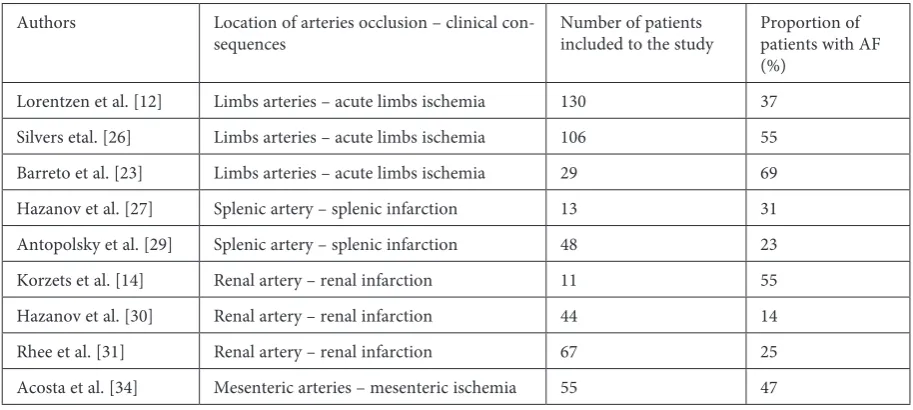
Lorentzen et al. studied a group of 130 pa-tients with peripheral artery embolization, and confirmed the cardiogenic origin of the embolus in 63% of the cases [12]. In this group, emboliza-tion led most commonly to acute ischemia of the lower limbs, followed by upper limb ischemia. The AF documented in 48 patients was the most fre-quent cause of embolization; while the myocardial infarct observed in 31 cases was the 2nd most com-mon cause. Acom-mong the other causes were aortic
atheroma, rheumatic heart disease, atrial myxoma, and myocarditis. Additionally, it was observed that co-existing arrhythmia was associated with seri-ous clinical implications including increased mor-tality, mostly due to cardiovascular complications (cause of 79% of the deaths). Ischemic heart dis-ease, pulmonary embolism, and stroke, followed by mesenteric artery embolism, and aneurysm of the abdominal aorta were the most frequent causes of mortality. The interesting finding of the study was the fact that mitral stenosis was detected in only 1 patient [12]. This observation was particu-larly quaint because mitral stenosis was previous-ly considered the most frequent cause of peripher-al embolism.
Silvers et al. reported similar causes of peripher-al artery embolization. Cardiologic comorbidity was confirmed in 76% of the 106 patients. Diagnosis of AF was estimated in 55% (58 people) of patients. 16 patients had a previous history of myocardial in-farct, and 7 individuals had had a recent myocar-dial infarct. Cardiologic surgeries or cardiac cathe-terization were the causes of embolic complications in 13 cases. The embolization involved mostly low-er limb artlow-eries, with similar frequency at left and right extremities; 13.8% of the patients had bilateral embolic episodes. Thromboembolic complications were connected with high mortality (21.7%) during hospitalization, mainly due to cardiologic complica-tions (17%). Other causes of mortality included re-nal failure, pneumonia, sepsis and pulmonary em-bolism. Additionally, secondary embolic episodes were observed in 34 patients (32%). Most of them occurred during the hospitalization. Cardiac disease was the cause of 76.5% (26/34) of secondary embo-lization, with AF being the most frequent risk fac-tor (18/34). The risk of secondary peripheral embo-lization was dependant on antithrombotic therapy. The secondary thromboembolic complications de-veloped in 40% of patients without anticoagulant therapy and in 25% of individuals on oral antico-agulation (no data if the therapy was conducted at a therapeutic level) [26].
mitral stenosis and, more rarely, aortic valve in-sufficiency), and pulmonary hypertension. Barreto et al. confirmed that diagnosis of peripheral em-bolization is a poor prognostic factor. In patients with acute ischemia in the course of embolism, the mortality rate was 17.2% during a one-year follow-up. The main cause of death was recurrent throm-boembolic events [23].
Summarizing, a heightened risk of cardiac morbidity and/or mortality should be anticipated in hospitalized patients with peripheral limb ar-tery embolism. The continually increasing num-ber of patients with AF leads to a rising demand for angiosurgical interventions due to peripheral embolism.
Atrial Fibrillation
as a Cause of Organ Arterial
Thrombombolism
Embolization of mesenteric, renal, or splenic arteries may be difficult to diagnose. This might be due to the frequently nonspecific or asymptoma- tic course of embolization in these regions, and in particular in renal arteries [7, 14–17, 27, 28]. An asymptomatic course can be the result of well-de-veloped collateral circulation, a rich vascular net-work of organs with efficient compensatory mech-anisms, especially if only one vessel is occluded [7, 14–17, 27, 28]. Consequently, we can expect that the prevalence of organ arterial embolization is undervalued. Post mortem studies support this theory [23].
Splenic Artery Embolization
Embolization of splenic vessels is a rare pa-thology. The prevalence of such events is difficult to determine and probably underestimated. rich spleen vascularization, on one hand predisposed to thromboembolic episodes, on the other hand can be the reason for poorly expressed clinical manifes-tations. Non-specific symptoms (severe abdominal pain, nausea, vomiting) impede diagnosis [27, 28]. Diagnosis of splenic artery embolism, therefore, is determined very often on the basis of autopsy.
Atrial fibrillation is one of the most common causes of acute splenic ischemia. Hazanov et al., during a 3-year follow-up, identified 13 cases of splenic artery embolization confirmed by CT [27]. The prevalence of embolic episodes of the splen-ic artery amounted to 0.12%; however, the authors emphasized that this value is probably underesti-mated. The vascular episodes were more frequent in patients above 40 years of age. 31% (4/13) of
patients with splenic artery embolization had AF, including 3 newly diagnosed cases. Two of them had simultaneous embolic complications in other organs. Other risk factors of splenic arterial embo-lism included infectious endocarditis (3/13), myxo-matous mitral valve (2/13), and non-infectious en-docarditis in the course of malignancy (1/13) [27].
A 10-year retrospective study conducted by Antopolsky et al. indicated that AF was the most common risk factor of splenic infarction and oc-curred in 23% (11 persons) of 48 patients. Among the 48 individuals with splenic ischemia, 31% had hypertension, 23% diabetes mellitus, 10% pre- vious thromboembolism, 8% previous stroke and 8% congestive heart failure, however the subgroup with AF was not analyzed separately [29]. Cardi-ac valvular surgery, mobile aortic atheroma, ma-lignancy, severe liver disease, oral contraceptives, antiphospholipid syndrome, hematological diseas-es, mostly sickle cell anemia, myeloproliferative and lymphoproliferative disorders, and paroxys-mal nocturnal hemoglobinuria are other risk fac-tors of splenic infarction [27–29].
Renal Artery Embolization
renal artery embolization is an uncommon condition with variable clinical presentation. There are few clinical observations, involving small groups, which concern AF as a risk factor of renal artery embolization [7, 14, 30, 31]
Korzets et al. described 11 cases of acute renal ischemia. AF occurred in 6 patients (55% of cas-es), and was the most common cause of throm-boembolism, before ischemic heart disease and cardiomyopathy [14]. The prevalence of embo-lization was similar in the right and left kidney; al-though, previous reports have shown the more fre-quent occlusion of the left renal artery. An analysis of the risk factors of thromboembolism indicated that only two of the patients with AF were treat-ed with warfarin, and both of them had non-ther-apeutic INr (1.6–1.8); 1 patient had activated pro-tein C and protein S deficiency. Three individuals had earlier embolic episodes in anamnesis: acute lower limb ischemia (2 patients) and acute renal ischemia (1 patient). Diagnosis of renal artery em-bolization was determined during from 24 hours to 7 days from the time of admission into the hos-pital. Nephrolithiasis, pyelonephritis and renal cell carcinoma were considered in the differential diagnosis [14].
than 60 years. Lack of anticoagulation or non-therapeutic doses of warfarin were significant risks of AF-related thromboembolism; only 9 patients were treated with warfarin, and 66% of them had subtherapeutic INr. The 30-days mortality was 11.4% [30].
rhee et al. retrospectively analyzed risk fac-tors, comorbidities, methods of treatment and hospital mortality in 67 patients with acute re-nal infarct. Concurrent thromboembolic infarct (superior mesenteric artery embolism, spleen in-farct, acute cerebrovascular accident, myocardial infarct) occurred in 16.4% of patients. In-hospi-tal morIn-hospi-tality was 8.9%, long-term morIn-hospi-tality (fol-low-up 40 months) was 19.7%. Diagnosis of AF oc-curred in 17 cases (25.4%), and AF was the most common cause of acute renal ischemia, followed by direct vessel injury – 22.4% and hypercoagu-lable state (protein C, protein S deficiency, malig-nancy, bedridden state) – 20.9% [31].
The diagnosis of acute renal ischemia due to the embolization of the renal artery is fre-quently misdiagnosed or delayed, because of non-specific clinical manifestations [14, 15, 32]. Unilateral, persistent flank or abdom-inal pain, nausea/vomiting, fever, and el-evated arterial pressure are common but non-specific symptoms. Laboratory abnormali- ties include haematuria, leukocytosis, and el-evated LDL. renal filtration can be normal (57.7%), mildly (16.7%), moderately (15.4%), or severely impaired (10.2%) [14, 15, 32]. Diagno-sis can be estimated based on the concomitance of a condition predisposing to thromboembolic complications.
Mesenteric Artery
Embolization
AF-related acute thromboembolic mesenter-ic ischemia has a low incidence but is connected with high mortality [32]. Acute mesenteric artery embolism usually occurs in patients above 50 years of age, with a history of cardiac diseases. Due to the progressive aging of the population, the num-ber of incidence of mesenteric artery embolism is increasing.
Acute mesenteric ischemia most common-ly results from an embolization with thrombus of cardiac origin (40–50%) and AF is considered one of the most common causes [7, 34]. Myocardial infarct, mitral stenosis, and infectious endocardi-tis are other important risk factors of thromboem-bolism of the mesenteric artery. Other reasons for acute intestinal ischemia associated with the oc-clusion of the mesenteric artery include local ar-terial thrombosis in the course of atherosclerosis or hypercoagulation state (20–30%), vascular dis-section, complication of arteriography or surgi-cal procedures. Cardiovascular comorbidities sig-nificantly worsen the forecasts of survival in this group of patients [16, 17].
The clinical spectrum of intestinal ischemia is quite extensive. Timely recognition is essential for a favorable outcome. Sudden occlusion of the mes-enteric artery leads to intestinal necrosis with dra-matic clinical symptoms and death. On the other hand, the clinical course in older patients with car-diologic comorbidities can be non-specific or oli-gosymptomatic. An asymptomatic or non-specific course of the disease can be the result of collateral
Table 1. The participation of AF in the pathogenesis of limbs and organs ischemia
Tabela 1. Udział migotania przedsionków w patogenezie niedokrwienia kończyn i narządów
Authors Location of arteries occlusion – clinical
con-sequences Number of patients included to the study Proportion of patients with AF (%)
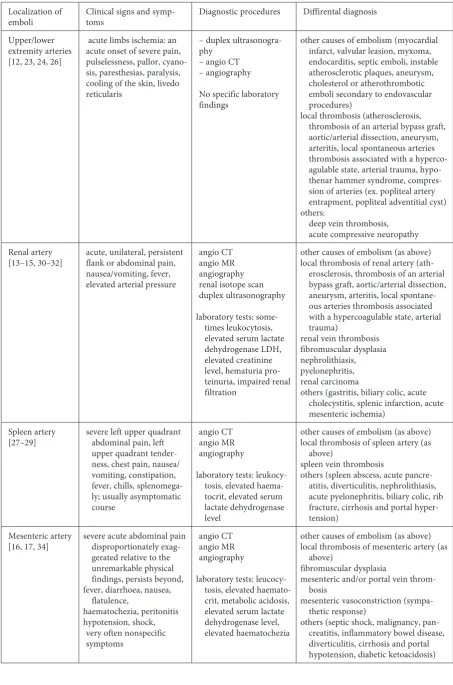
Table 2. Peripheral AF-related thromboembolism: clinical manifestations, diagnostic procedure, diffirental diagnosis
Tabela 2. Zatorowość obwodowa w przebiegu MP: objawy kliniczne, badania diagnostyczne, diagnostyka różnicowa
Localization of
emboli Clinical signs and symp-toms Diagnostic procedures Diffirental diagnosis Upper/lower
extremity arteries [12, 23, 24, 26]
acute limbs ischemia: an acute onset of severe pain, pulselessness, pallor, cyano-sis, paresthesias, paralycyano-sis, cooling of the skin, livedo reticularis
– duplex ultrasonogra-phy
– angio CT – angiography
No specific laboratory findings
other causes of embolism (myocardial infarct, valvular leasion, myxoma, endocarditis, septic emboli, instable atherosclerotic plaques, aneurysm, cholesterol or atherothrombotic emboli secondary to endovascular procedures)
local thrombosis (atherosclerosis, thrombosis of an arterial bypass graft, aortic/arterial dissection, aneurysm, arteritis, local spontaneous arteries thrombosis associated with a hyperco-agulable state, arterial trauma, hypo-thenar hammer syndrome, compres-sion of arteries (ex. popliteal artery entrapment, popliteal adventitial cyst) others:
deep vein thrombosis, acute compressive neuropathy renal artery
[13–15, 30–32] acute, unilateral, persistent flank or abdominal pain, nausea/vomiting, fever, elevated arterial pressure
angio CT angio Mr angiography renal isotope scan duplex ultrasonography
laboratory tests: some-times leukocytosis, elevated serum lactate dehydrogenase LDH, elevated creatinine level, hematuria pro-teinuria, impaired renal filtration
other causes of embolism (as above) local thrombosis of renal artery
(ath-erosclerosis, thrombosis of an arterial bypass graft, aortic/arterial dissection, aneurysm, arteritis, local spontane-ous arteries thrombosis associated with a hypercoagulable state, arterial trauma)
renal vein thrombosis fibromuscular dysplasia nephrolithiasis, pyelonephritis, renal carcinoma
others (gastritis, biliary colic, acute cholecystitis, splenic infarction, acute mesenteric ischemia)
Spleen artery
[27–29] severe left upper quadrant abdominal pain, left upper quadrant tender-ness, chest pain, nausea/ vomiting, constipation, fever, chills, splenomega-ly; usually asymptomatic course
angio CT angio Mr angiography
laboratory tests: leukocy-tosis, elevated haema-tocrit, elevated serum lactate dehydrogenase level
other causes of embolism (as above) local thrombosis of spleen artery (as
above)
spleen vein thrombosis
others (spleen abscess, acute pancre-atitis, diverticulitis, nephrolithiasis, acute pyelonephritis, biliary colic, rib fracture, cirrhosis and portal hyper-tension)
Mesenteric artery
[16, 17, 34] severe acute abdominal pain disproportionately exag-gerated relative to the unremarkable physical findings, persists beyond, fever, diarrhoea, nausea,
flatulence,
haematochezia, peritonitis hypotension, shock,
very often nonspecific symptoms
angio CT angio Mr angiography
laboratory tests: leucocy-tosis, elevated haemato-crit, metabolic acidosis, elevated serum lactate dehydrogenase level, elevated haematochezia
other causes of embolism (as above) local thrombosis of mesenteric artery (as
above)
fibromuscular dysplasia
mesenteric and/or portal vein throm-bosis
mesenteric vasoconstriction (sympa-thetic response)
circulation, previously developed due to an ath-erosclerotic process involving the mesenteric ar-tery [16, 17, 34]. In most cases, mesenteric arar-tery occlusion results in intestinal ischemia and needs immediate diagnostic imaging and surgical treat-ment. In older patients, diagnosis of AF, a histo-ry of recent myocardial infarct, congestive heart failure, or a history of embolic episodes should suggest the suspicion of mesenteric artery embo-lism [16, 17, 34].
Acute mesenteric ischemia is associated with poor prognosis, especially in patients without a history of embolism or thrombosis in splanchnic vessels [16, 17, 34].
Table 1 shows the participation of AF in the pathogenesis of limb and organ ischemia accord-ing to the studies discussed in this article. The dif-ferential diagnosis of AF-related limb and organ thromboembolism are presented in Table 2.
Conclusions
The specific risk factors of peripheral em-bolism associated with AF have not been clear-ly identified. The results of recent studies suggest the presence of demographic, clinical, and prog-nostic differences between patients with peripheral thromboembolism and those with stroke. There-fore, the risk assessment of extra-cerebral embol-ic events, based on the CHA2DS2-vASc score
orig-inally developed to assess the risk of stroke, may not be optimal.
Peripheral thromboembolism is a marked-ly less frequent complication of AF compared to ischemic stroke; however AF should be considered an important cause of acute limb or organ isch-emia with a high mortality rate. The prevalence of peripheral AF-related embolic events may be un-derestimated, because of a nonspecific or asymp-tomatic course, leading to misdiagnosis.
References
[1] Heeringa J, Kuip DAM, Hofman A, Kors J, Herpen G, Stricker BHCh, Stijnen T, Lip GYH, Witteman JCM:
Prevalence, incidence and lifetime risk of atrial fibrillation: the rotterdam study. Eur Heart J 2006, 27, 949–953.
[2] Lloyd-Jones DM, Wang TJ, Leip EP, Larson MG, Levy D, Vasan RS, D’Agostino RB, Massaro JM, Beiser A, Wolf PA, Benjamin EJ: Lifetime risk for development of atrial fibrillation: the Framingham Heart Study. Circulation 2004, 110, 1042–1046.
[3] Camm J, Kirchhof P, Lip GYH, Schotten U, Savelieva I, Ernst S, Van Gelder, Al-Attar N, Hindricks G, Prendergas B, Heidbuchel H, Alfieri O, Angelini A, Atar D, Colonna P, Caterina R, Sutter J, Goette A, Gorenek B, Heldal M, Hohloser SH, Kolh P, Le Heuzey JY, Ponikowski P, Rutten FH: Guidelines for the Management of Patients with Atrial Fibrillation, European Society of Cardiology 2010.
[4] Ciocârlie T, Avram R, Pârv F, Mogą V, Balint M, Avram I, Corlan A: Embolic risk in atrial fibrillation. J Exp Med Surg res 2010, 4, 291–294.
[5] Fang MC, Singer DE, Chang Y, Hylek EM, Henault LE, Jensvold NG, Go AS: Gender differences in the risk of ischemic stroke and peripheral embolism in atrial fibrillation: the Anticoagulation and risk factors In Atrial fibril-lation (ATrIA) study. Circufibril-lation 2005, 20, 1687–1691.
[6] Gosk-Bierska I: Znaczenie płytek krwi w patogenezie obwodowych powikłań zakrzepowo-zatorowych u cho-rych z migotaniem przedsionków. Wrocław: Akademia Medyczna, 2010, 89 s. (rozprawy Habilitacyjne Akademii Medycznej we Wrocławiu, 1/2010).
[7] Frost L, Engholm G, Johnsen S, Moller H, Henneberg EW, Husted S: Incident thromboembolism in the aorta and the renal, mesenteric, pelvic, and extremity arteries after discharge from the hospital with a diagnosis of atrial fibrillation. Arch Intern Med 2001, 161, 272–276.
[8] McBane RD, Hodge DO, Wysokinski WE: Clinical and echocardiographic measures governing thromboembo-lism destination in atrial fibrillation. J Thromb Haemost 2008, 99, 951–955.
[9] Zapolski T, Wysokiński A: Importance of atrial fibrillation as a cause of thromboembolism. Pol Prz Kardiol 2010, 12, 45–54.
[10] Ammash N, Konik EA, McBane RD, Chen D, Tange JI, Grill DE, Herges RM, McLeod TG, Friedman PA, Wysokinski WE: Left Atrial Blood Stasis and von Willebrand Factor–ADAMTS13 Homeostasis in Atrial Fibrillation. Arterioscler Thromb vasc Biol 2011, 31, 2760–2766.
[11] Gosk-Bierska I, McBane R, McLeod TG, Wysokinski WE: Unique Atrial Fibrillation Subpopulations: Thromboembolic Destination Predicts recurrence rates and Survival. Circulation 2009, 120, S1150.
[12] Lorentzen JE, Roder OC, Buchard Hansen HJ: Peripheral embolism. A follow-up of 130 consecutive patients submitted to embolectomy. Acta Chir Scand 1980, 502, 111–116.
[13] Connett MC, Murray DH, Jr, Wenneker WW: Peripheral arterial emboli. Am J Surg 1984, 148, 14–19.
[14] Korzets Z, Plotkin E, Bernheim J, Zissin RŁ: The Clinical Spectrum of Acute renal Infarction. Isr Med Assoc J 2002, 4, 781–784.
[15] Kansal S, Feldman M, Cooksey S, Patel S: renal Artery Embolism: A Case report and review. J Gen Intern Med 2007, 23, 644–647.
[17] Budzyński J, Wasielewski M, Wiśniewska J, Suppan K, Pulkowski: Acute mesenteric ischaemia – Is this the time for 24-h angiographic service? The role for endovascular therapy. Acta Angiologica 2011, 17, 237–250.
[18] Conen D, Osswald S, Albert CM: Epidemiology of atrial fibrillation. Swiss Med Wkly 2009, 139, 346–352.
[19] Benjamin EJ, Wolf PA, D’Agostino RB, Silbershatz H, Kannel WB, Levy D: Impact of Atrial Fibrillation on the risk of Death: The Framingham Heart Study. Circulation1998, 98, 946–952.
[20] Wolf PA, Abbott RD, Kannel WB: Atrial fibrillation as an independent risk factor for stroke: the Framingham Study. Stroke 1991, 22, 983–988.
[21] Petty GW, Brown RD, Whisnant JP, Sicks JD, Fallon WM, Wiebers DO: Ischemic stroke subtypes: a population-based study of functional outcome, survival, and recurrence. Stroke 2000, 31, 1062–1068.
[22] Anderson CS, Jamrozik KD, Broadhurst RJ, Stewart-Wynne EG: Predicting survival for 1 year among different subtypes of stroke: result from the Perth Community Stroke Study. Stroke 1994, 25, 1935–1944.
[23] Barretto PCA, Nobre MRC, Mansur AJ, Scipioni A, Ramires JA F: Peripheral Arterial Embolism. report of Hospitalized Cases. Arq Bras Cardiol 2000, 74, 324–327.
[24] Cambria R P, Abbott WM: Acute arterial thrombosis of the lower extremity. Its natural history contrasted with arterial embolism. Archiv Surgery 1984, 119, 784–787.
[25] Vohra R, Zahrani H, Lieberman DP: Factors affecting limb salvage and mortality in patients undergoing femoral embolectomy. JrCSE 1991, 36, 213–215.
[26] Silvers LW, Royster TS, Mulcar RJ: Peripheral arterial emboli and factors in their recurrence rate. Ann Surg 1980, 192, 232–236.
[27] Hazanov N, Attali M, Somin M, Beilinson N, Goland S, Katz M, Malnick SDH: Splenic Embolus: 13 Cases from a Single Medical Department. Isr Med Assoc 2006 8, 94–97.
[28] Wei CC, Chiu CZ: Atrial fibrillation and splenic infarction presenting with unexplained fever and persistent abdominal pain – a case report and review of the literature. Acta Cardiol Sin 2012, 28, 157–160.
[29] Antopolsky M, Hiller N, Salameh S, Goldshtein B, Stalnikowicz R: Splenic infarction: 10 years of experience. Am J Emerg Med 2009, 27, 262–265.
[30] Hazanov N, Somin M, Attali M, Beilinson N, Thaler M, Mouallem M, Maor Y, Zaks N, Malnick S: Acute renal Embolism: Forty-Four Cases of renal Infarction in Patients With Atrial Fibrillation. Medicine 2004, 83, 292–299.
[31] Rhee H, Song SH, Lee DW, Lee SB, Kwak IS, Seong EY: The significance of clinical features in the prognosis of acute renal infarction: single center experience. Clin Exp Nephrol 2012, 16, 611–616.
[32] Nasser NJ, Abadi S, Azzam ZS: Acute renal infarction from a cardiac thrombus. Nat Clin Pract Nephrol 2007, 3, 631–635.
[33] Menke J, Lüthje L, Kastrup A, Larsen J: Thromboembolism in Atrial Fibrillation. Am J Cardiol 2010, 105, 502– 510.
[34] Acosta S, O¨gren M, Sternby N-H, Bergqvist D, Bjo¨rck M: Fatal nonocclusive mesenteric ischaemia: popula-tion-based incidence and risk factors. J Intern Med 2006, 259, 305–313.
Address for correspondence:
Marta Wasilewska
Department of Angiology, Hypertension and Diabetology Borowska 213
50-556 Wrocław Tel.: + 48 71 733 22 00 E-mail: [email protected]
Conflict of interest: None declared