ISSN 1392-2785 ENGINEERING ECONOMICS. 2008. No 3 (58) WORK HUMANISM
The Three-loop Learning Model Appliance in New Product Development
Žied
ū
na Liep
ė
, Algimantas Sakalas
Kauno technologijos universitetas K. Donelaičio g. 73, LT-44029 Kaunas
Today's companies are experiencing significant pressures from increased levels of competition, rapidly changing market requirements, higher rates of technical obsolescence, shorter product life-cycles and the heightened importance of meeting the needs of increasingly sophisticated customers. Many companies realize that in order to provide value and win customers they now need to quickly and accurately identify changing customer needs, develop more complex products to satisfy those needs, provide higher levels of customer support and service, and utilize the power of information technology to provide greater functionality and performance. Consequently, greater focus is being placed in having new product development frameworks that achieve an optimized balance of internal execution effectiveness, coupled with an ability to delight customers (Shepherd, Ahmed, 2000).
Learning and accumulation of (new) knowledge in an organization always start with the individual. An individual’s personal knowledge has to be transformed into information that other members of the organization can use in their accumulation of knowledge in order to apply it to create (new) values for the organization. Learning and accumulation of new knowledge in an organization always require two transformation processes: one transformation process from data to information and another from information to (new) knowledge. This is so because only information, and not knowledge, can be shared and spread among the members of the organization.
This paper emphasizes the importance of learning on new product development and demonstrates that learning is a critical component of such development. Learning in new product development process is cited as being vital in today’s competitive, uncertain and turbulent environments. In this study we present three general learning styles and two main categories of Non-Duetero and Duetero learning, emphasizing their performance in new product development process. It is also given a multi - dimensional learning framework in new product development which is best conceived with nine correlated but distinct elements:
information acquisition, information dissemination, information implementation, unlearning, thinking, improvisation, intelligence, sense-making, and memory. Akgun, Lynn and Reilly (2002) affirm, that organizational learning is not just information acquisition or information implementation, it is a combination of many cognitive components.
Because fierce market, customer needs and technological environments make learning a standard requirement for organizations competitiveness, they can be successful in their new products only if they learn more quickly than their competitors. The results of scientific literature
analysis showed that Duetero learning is more: knowledgeable about the factors that drive successful and failed products; inclined to establish business goals and employ balanced measures when benchmarking new product development. All this suggests that organizational learning should be considered as a critical component in new product development.
Keywords: Innovation, new product development, learning, organizational learning.
Introduction
As a consequence of intensive competition in global market, the need to innovate and enter new niche markets has intensified. That is why to be an innovative company is extremely important in order to secure a place in the competitive world of the future.
Innovation can be defined as the development and implementation of new ideas by people who engage in transactions with others within an institutional context. This definition is sufficiently general to a wide variety of technical, product, process, and administrative innovations (Zhang, Lim, and Cao, 2004). Innovation itself is a very broad concept and, as a result, various classifications of innovation have been developed and applied in economic literature (Cumming, 1998; Grunert, 1997; Johannessen, 2001). The concept of innovation can be seen as extending far beyond radical and technology - based product innovation. Innovation may also be taken to cover incremental changes in products and processes as well as changes in the organizational structure and moves to exploit new markets. This idea is reflected in Lundvall’s (1992) definition of innovation as: “an ongoing process of leaving, searching, and exploring which results in: -new products; new techniques; new forms of organization; and new markets” (Avermatete, Viaene, Morgan and Crawford, 2003).
The term innovation, most importantly, implies newness. Innovative activity may relate to new products, new services, new methods of production, opening new markets, new sources of supply, and new ways of organizing. But the first thing the customer usually meets with is a new product. Within this context, special attention needs to be paid to product innovation or new product development (NPD) process.
faster and more efficiently than their competitors, are in better position to create a sustainable competitive advantage. Competitive advantage is increasingly derived from knowledge and technological skills and experience in creation of new products (Teece, 1997; Tidd, 1997).
Product innovation consists of successful exploitation of new ideas (Myers and Marquis, 1969). Therefore, it implies two conditions - novelty and use (Gee, 1981). According to Freeman (1982), product innovation is a process that includes technical design, manufacturing, management and commercial activities involved in the marketing of new (or improved) product. There is a range of studies about NPD process, e.g. idea generation, concept and product development, marketing testing, commercialization (Cooper, 1993, 1994; Crawford, 1997, 1998; O’Connor, 1994; Hughes and Chafin, 1996; Khurana and Rosenthal, 1997, 1998; Ottum and Moore, 1997). There are many tools and techniques which can be applied in new product development process. These include Quality function deployment (QFD), Computer-aided Tools, Customer involvement, Design Coding, Design of Manufacture, Multi-functional Teams, Involving Key Suppliers, Project Management, Four field mapping (Maylor and Gosling, 1998; Maylor, 1997). As competition in global markets becomes intense, companies have begun to recognize the importance of new product development and innovation issues, such as time-to market (Cooper and Kleinschmidt, 1994; Kessler and Chakranarti, 1996; Zhang and Doll, 2001), organizational learning (Argyris and Schon, 1978; Bailey, 1989; Fiol and Lyles, 1985; Gupta and Thomas, 2001), mass customization (Kotha, 1996), and information acquisition and distribution (Howard, 1997). In this article we focus our attention on learning and knowledge development as a key strategic variable driven by innovation in the process of new product development.
The complexity of today’s business environment is such that a company cannot survive unless it is flexible, adaptable and capable of learning. Companies that continuously learn and reinvent themselves on a timely basis are better able to take advantage of emerging opportunities in fast-paced competitive markets (Senge, 1990). De Geus (1997) has asserted that learning and, more importantly, learning more quickly than competitors, is vital for a company’s survival. Schein (1993), who has researched organizational learning for many years, has noted that organizations must learn to adapt quickly, or will be weeded out in the economic evolutionary process (Lyy, Akgun and Keskin, 2003). Learning is important for many functions within an organization, but it is vital in new product development in which teams must respond quickly to rapidly changing technologies, customer needs and competitive actions.
Product innovation learning involves increasing the effectiveness of product development efforts as a result of practice and the refinement of innovation related skills (McKee, 1992; Mishra, 1996); Zirger and Maidique, 1990). Although the importance of learning to innovate in product development is widely recognized, only limited attention in the literature has been given to product innovation learning and knowledge accumulation process of NPD (Zhang, Lim, and Cao, 2004).
Research object – learning in new product development.
Research goal – to disclose the appliance possibilities of the three-loop learning model in new product development.
Research methods – Comparative analysis and grouping of scientific literature, formulation of conclusions.
Theoretical Background and Conceptual Framework
Learning is the process in which changes in knowledge take place inside an individual. This could involve the recognition of new or changed causal relations, modifications or a rejection of previously held beliefs, or changes in earlier individual faith (Heene and Sanchez, 1997). Learning could be seen as natural aspect of everyday work, and work itself is seen as a rich source of learning (Collin, 2002).
Different job characteristics such as task complexity, task variety, control or scope of action are important determinants of the learning potential of a work system. But according to Ellinger (2005), talking about learning at the work place, it is not considered well enough how it can be best supported, encouraged, and developed. The research has revealed, that creating the informal learning opportunities, encouraging risk taking, highlighting the importance of sharing knowledge and developing others, etc. positively motivate the learning process in the organization (Ellinger, 2005).
Learning should be associated with a production process over which the individual who is learning has some kind of influence. Competence building is based upon learning. One can also learn from one’s mistakes if one is allowed to, rather than being punished as a consequence. This means that learning constitutes a change in and of practices and that learning takes place as a negation of meaning between the participants in a community of practice. The participants in a community of practice learn in cooperation where different interests, points of view and power relations are at stake, challenged and under consideration. This means that ‘action learning’ is what an individual learns when he is involved in an activity. When an individual has learned to do a different action he has acquired new knowledge. Figure 1 shows the chain of learning which can be created combining this with the processes of transformation from data via information to knowledge.
generalizations can be drawn. Practical knowledge does not involve knowing a lot of rules or theories. It means judging which rule is the most appropriate in the concrete situation (Jensen, 2005).
Management theorists and researchers recognize that organizational ability to learn facilitates organization-wide improvements and change adeptness. Such adaptability
enhances the competitive position through improvements in efficiency, productivity and innovation. However, while learning is a cornerstone for competitive advantage, risks are attached to presuming all learning will be beneficial. Scott-Ladd and Chan (2004) categorize three negative impacts of learning: (1) superstitious learning, (2) success learning and (3) competency traps.
Data Information Action Learning New Knowledge
Figure 1. Chain of learning
Superstitious learning occurs when positive results are interpreted as learning outcomes in spite of little or no association. Success learning involves expectations or assumptions that what worked best in the past will work for the future. Competency traps occur when the organization refuses to adopt superior technology despite its availability. These negative impacts are avoidable if organizations implement learning within a transparent framework where employees are emotionally intelligent enough to recognize, avoid and manage such pitfalls (Scott-Ladd, Chan, 2004).
Learning is best unclosing through the ‘learning organization’ concept, which Senge (1992) describes as ‘an organization that is continually expanding its capacity to create its future’. Senge (1992) argues that unless people change their thinking and interactions, the organization itself cannot change or learn. Therefore he postulates the following five-factor framework for crafting learning attributes in an organization. The first of these attributes is systems thinking, which is a philosophy that views unrelated sections, components, processes or events as integrated to improve decision-making. The second is personal mastery, where organizational members need to gain proficiency or skills through continuous learning so they have the capacity to produce desirable results. The third attribute is mental models, or the deeply ingrained assumptions or generalizations that individuals hold about the world. The third attribute underpins the fourth, which is a shared mental model, where members share the same vision of the organization’s aspirations and future. Combined, these attributes promote team learning, whereby team members contribute to each other’s development and capacity to achieve positive results. While the learning organization represents active promotion and organization of learning activities, Finger and Woolis (1994) clarify that organizational learning denotes the change processes of an organization. The learning organization focuses on action and the creation of an ideal organization, whereas organizational learning, which draws on the disciplines of psychology, organizational development, management science, strategy, production management, sociology and cultural anthropology, is less clearly defined (Easterby-Smith, 1997). Nonetheless, according to Scott-Ladd and Chan (2004) organizational learning is a set of activities designed for organizational improvement in processes initiated by the learning organization and one such strategy
is the clearly defined guidelines of participation in decision-making.
There are many concepts and definitions of organizational learning in scientific literature. However,there is not yet, a paradigmatic approach in this field, and numerous concepts compete in terms of their comprehensiveness, empirical usage and practical relevance. According to Argyris and Schön (1996), organizational learning is a change in the behavior of the organization or its members that is triggered by a change in the underlying ‘theory in use’, i.e. the often tacitly used set of values and causal beliefs that the members of an organization share. In a similar way, Dodgson (1993) defines organizational learning with a particular focus on the knowledge dimension when stating that it incorporates ‘the ways firms build, supplement and organize knowledge and routines around their activities and within their cultures, and adapt and develop organizational efficiency by improving the use of the broad skills of their workforces’. In their system theory view, Probst and Büchel (1997) define organizational learning as ‘the process by which the organization’s knowledge and value base changes, leading to improved problem-solving ability and capacity for action’. This definition integrates the outcome perspective by asserting that organizational learning has to serve a specific purpose. Organizational learning may be understood as the capability, which enables an organization to acquire and process new information on a continuous basis to elevate knowledge and improve decision-making. This definition infers that organizational learning is an active process, requires continuous feedback, and that it best positions the company to administer the NPD process (Saban, Lanasa, Lackman, Peace, 2000).
Learning in New Product Development and Performance
Over the last two decades, numerous authors have studied how organizations learn, improve their knowledge levels and change their behavior (Bateson, 1973; Argyris and Schon, 1978; Senge, 1990; Kline and Saunders, 1993; Nonaka and Takeuchi, 1995; Marquardt, 1996; Allee, 1997). However, only a few authors (McKee, 1992; Lynn et al, 1996; Hughes and Chafin, 1996) established a theoretical link between organizational learning and preparedness to implement the NPD process.
are having to quickly and accurately identify changing customer needs and wants, develop more complex products to satisfy those needs, provide higher levels of customer support and service while also utilizing the power of information technology in providing greater functionality, performance and reliability. New products are central to the growth and prosperity of the modern and innovative organization (Shepherd, Ahmed, 2000). Lynn, Akgun and Keskin (2003) identify that developing new products the motivating factors are the primary conditions that help individuals and organizations learn more quickly. These factors are: - vision clarity (having a clear learning goal); - management support; - urgent need to learn more quickly.
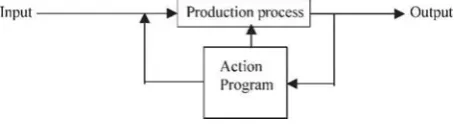
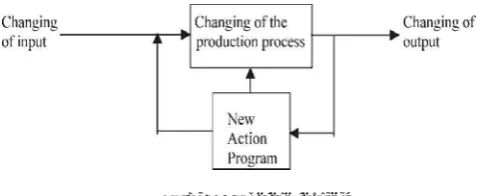
Not being aware of this difference between what is said and what is done will often present an obstacle to learning. But to be aware of this difference could, at least in some situations, mean that the individuals have to change the context or even, in radical situations, break out of the context and create a whole new context. Saban, Lanasa (2000) and others authors suggest three general learning styles (Single-loop, Double-loop and Duetero) as follows in the Figure 2, 3 and 4.
Single-loop learning (Figure 2). Single-loop learning (Allee, 1997; Argyris, 1977; McKee, 1992; Nonaka and Takeuchi, 1995; Senge, 1990; Slater andNarver, 1995) is the most fundamental and passive learning style. For example, when a product manager sees that new product sales have fallen below expectations, he or she may inquire into the shortfall, hoping to uncover the reason and adjust the company's marketing strategies to bring sales performance back in line (Argyris and Schon, 1996). This type is characterized by changes in operations and outputs (products or services). While the existing objective and regulation systems in the organization remain unchanged, these processes only include an operational level. More general values on the collective or individual level do not change. The corporate culture for the most part stays the same (Siebenhüner, Arnold, 2007). Single-loop learning occurs within a given organizational structure and a set of rules. It leads to the development of some rudimentary associations of behavior and outcomes, but these usually are of short duration and impact only part of what the organization does. It is a result of repetition and routine and involves association building (Zhang, Lim, and Cao, 2004). Because single-loop learning focuses on immediate problems and opportunities, it limits knowledge development and behavior modification to the task at hand, which may speak to why so many companies employ the same NPD techniques again and again.
Double-loop learning (Figure 3). In contrast to single-loop processes, learning according to the double-single-loop mode includes the explicitly formulated or implicitly pursued objectives and behavioral strategies in the learning process. An overall reflection takes place regarding the processes and outcomes, resulting in actual behavioral changes. Thereby, the dominating values, strategies and corporate culture are transformed. It questions the overall effectiveness of current norms, values and practices, and suggests that fundamental changes may be required to improve performance. This is learning, that results in a change in the values of the theory-in-use, as well as in its strategies and assumptions (Argyris and Scho¨n, 1996). This
means that the individual involved is aware and can then take the context into consideration in the learning process
Figure 2. Single-loop learning
Double-loop learning aims at adjusting overall rules and norms rather than specific activities or behaviors. The associations that result from double-loop learning have long-term effects and impacts on the organization as a whole. This type of learning occurs through the use of skill development and insights.
Figure 3. Double-loop learning
Duetero learning (Figure 4, Triple-loop learning). This type of learning aims at an improvement of the organizational learning processes themselves (Bateson, 1972; Yuthas, 2004). Through the evaluation of experiences with past learning processes, organizations can deliberately improve the principles, rules and abilities. Duetero learning (Allee, 1997; Argyris and Schon, 1996; Bateson, 1973; McKee, 1992) is the most advanced style of learning and seeks to gain insight into the "learning process" itself, all while addressing the problems or opportunities at hand. This learning style also embraces an atmosphere where failures are fully tolerated, if not encouraged. A major benefit of this feature, according to Schrange (1989), is that "organizations that learn how to fail intelligently outperform organizations that seek to minimize the frequency of failure." Zhang (2004) refer Duetero learning as Meta-learning which involves institutionalizing the ability to learn. This kind of learning is not focused on a particular task (e.g. a specific innovation) but on the organization's generalized ability to improve its performance at a class of tasks (e.g. to learn to innovate). A company may perform well on a specific innovation, but still lack the ability to generalize what it has learned to other innovations (Zhang, Lim, and Cao, 2004).
Duetero learning supports more of a strategic "market orientation" due to the preference for multiple product factors linked with higher usage of business goals and a balanced set of performance measures. Non-Duetero learning appears to support more of a tactical "sales orientation" due to the high dependence on "price" and promotion/sales" factors coupled with a tendency to focus on end-of-process performance measures. Consequently, one could infer that Duetero learning is better prepared to improve the NPD performance than Non-Duetero learning is.
Figure 4. Duetero learning
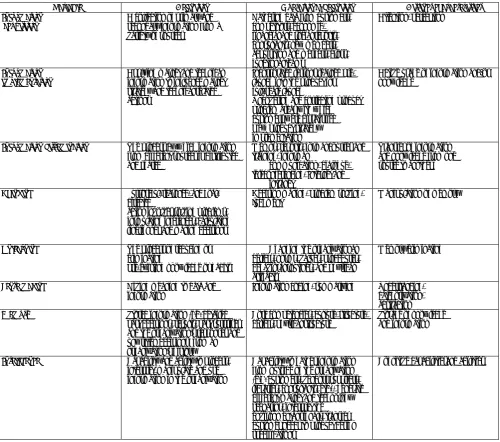
New products require varying levels of information, which is going to be discussed in Table 1. As we have analyzed above, this review discusses three learning styles and their performance in new product development, which is identified in New Product Learning Model (Figure 5). Saban (2000) in his study distinguishes, that these three learning styles may be grouped into two distinct categories:
We believe these findings not only establish that a functional relationship exists between organizational learning and the NPD process, but also suggest that organizational learning should be considered as a critical component in new product development.
Learning in new product development spans many activities, such as acquiring, processing, disseminating, retaining and retrieving information. Akgun, Lynn and Reiltt (2002) emphasize that learning is multifarious and multiphased and its multidimensionality should be investigated based on socially shared cognition. Learning in new product development is best conceived as a multidimensional structure with nine correlated but distinct constructs: information acquisition, information dissemination, information implementation, unlearning, thinking,
improvisation, intelligence, sense-making, and memory.
Therefore it is given a list of cognitive activities of multidimensional learning framework and a brief description of each unit of cognition in new product development in Table 1.
Level 1 - Single and Double-loop learning or as we have termed, Non-Duetero, is characterized as passive, routine-based systems learning that supports current behavior, limits feedback, and reinforces a short-term orientation.
Level 2 - Duetero learning is characterized as active, holistic learning, where continuous feedback is sought, and the process reinforces a long-term orientation.
Based on different authors’ researches (Saban, 2000; Slater and Narvel, 1995) about the performance of these learning categories on new product development, we can tell, that Duetero learning focuses the organization on continuously collecting information and using it to create superior customer value.
Organizational
Learninig Organizational Behavior
Level 1: Single-Loop or
Non-Duetero
Learning Process Behavior 1:
Goal Setting Knowledge Development
Step 1: Information Acquisition
Step 2: Information Dissemina-
tion
Step 3: Shared Interpreta-tion Level 1:
Double-Loop or Non-Duetero
Learning Process End-of-Process, Behavior 1:
In-Process, Balanced Performance
Measures Level 2:
Duetero (Triple-loop) Learning Process
New Product Performance
Table 1. Multi-dimensional learning in new product development
Variable Definition Operational definition Distinct characteristics
Information acquisition
A collection of primary and secondary information from a variety of sources
Gathering data from customers, competitors, economic, financial and social reports, consultants, new members, acquisition and mergers, cross-functional teams
Attention, perception
Information implementation
Applying market and technical information to influence market strategy and technical related actions
Incorporated lessons learned pre-launch into the product for full-scale launch
Uncovering and correcting product problem areas with which customers were dissatisfied New product strategy implementation
Active usage of information and/or knowledge
Information dissemination The process by which information from different sources is distributed and shared
Memos, reports, formal courses and training, informal
communication, dialogue, teleconferencing, Internet and
intranet
Transfer of information and knowledge from one source to another
Thinking Purposeful, reasoned, and goal-directed
action involves solving problems, formulating inferences, calculating likelihoods and making decisions
Decision making, problem solving, judgment
Manipulation of memory
Unlearning The process of reducing or eliminating
pre-existing knowledge or habits
Changing the organizational beliefs, norms, values, procedures, behavioral routines, and physical artifacts
Memory eliminating
Sense-making Giving meaning to data and information
Information coding, summarizing Understanding, categorization, abstraction Memory Stored information (i.e. detailed
past decisions, results, past surprises and the organization's responses and unwritten decisions) from an organization's history
Core competencies, culture, structure, beliefs, physical structure
Storage of knowledge and information
Intelligence Capability and ability to process, interpret, manipulate and use information in the organization
Capability to gather information from outside of the organization (e.g. customers, vendors suppliers, libraries, consultants, etc.), generate different market and technology scenarios, interpret the environmental signals, transfer customer needs to product design specifications
Cognitive capabilitiesand abilities
Source: Akgun, Lynn and Reilly, 2002.
According to Akgun, Lynn and Reilly (2002), learning is not just information acquisition or information implementation, it s a combination of many cognitive components. Therefore it should be an integrating unit of analysis. To that end, during product development process, organization should explicitly and seriously consider these factors to be more successful. Learning organization should have the ability and capability to acquire process, implement, unlearn and retrieve information to increase the probability of product development success. Top managers should consider these learning factors during the new product development process.
Conclusions
This article has given a comprehensive understanding about learning concept itself in the conditions of intense global competitive environment and has emphasized the importance of learning in new product development
process. An attempt has been made to better define the organizational learning process occurring through innovation process. Because of fierce market and technological environments, organizations can be successful in their new products development processes only if they learn more quickly than their competitors.
Learning and all knowledge is achieved and possessed by individuals. On the contrary, the use of (productive) knowledge to create values is a collective process. So the primary focus in organizational learning has to be paid on transformation of individual knowledge into information, which could be used by other members of the organization in order to be more productive than they otherwise could be alone.
learning, double-loop learning and Duetero or Meta learning. Accordingly these learning styles may be grouped into two different categories: Non-Duetero and Duetero.
The research and analysis of scientific literature has revealed that organizational learning (exclusively Duetero learning) should be considered as critical component in new product development. According to Saban (2000), Duetero learning encourages businesses to review both successful and failed new product performance, stimulates goal setting behavior, increases businesses knowledge about the factors that drive new product performance and prepares a company to implement the NPD process more than Non-Duetero learning.
Learning in new product development is best conceived as a multidimensional structure of nine correlated but also distinct elements: information acquisition, information dissemination, information implementation, unlearning, thinking, improvisation, intelligence, sense-making, and memory. Since learning requires a combination of these cognitive elements, top managers of organization should consider them during the new product development process. Learning elements can vary over different stages of the product development process, different environmental conditions and innovation types and this should be considered as a promising area for future studies.
The primary goal of this study was to disclose the relationship between organizational learning and new product development process. This article triggers the need for more research in new product development regarding learning concept. In order to analyze better the functional relationship between organizational learning and new product development processes, there should be made an exploratory survey covering business and product population and evaluating all the learning constructs and their performance.
References
1. Akgun, A. E. Multi-dimensionality of learning in new product development teams / A. E. Akgun, G. S. Lynn and R. Reilly // European Journal of Innovation Management, 2002, Volume 5, Number 2, 2002, p. 57-72.
2. Alegre, J. A measurement scale for product innovation performance / J. Alegre, R. Lapiedra, R. Chiva // European Journal of Innovation Management, 2006, Vol. 9, No. 4, p. 333-346.
3. Alee, V. The knowledge evolution // Butterworth-Heinemann, Boston, 1997, MA, p. 21.
4. Ališauskas, K. Inovacijos ir projektai: mokomoji knyga / K. Ališauskas, H. Karpavičius, J. Šeputienė // Šiaulių universiteto leidykla, 2005, p. 85.
5. Argyris, C. On organizational learning (2nd ed.). Oxford: Blackwell, 1999.
6. Avermaete, T. Determinants of innovation in small food firms / T. Avermaete, J. Viaene, E. J. Morgan, N. Crawford // European Journal of Innovation Management, 2003, Vol. 6, No 1, p. 8-17.
7. Chanal, V. Innovation management and organizational learning: a discursive approach // European Journal of innovation Management, 2004, Vol. 7, No 1, p. 56-64.
8. Crossan M. M. Organizational learning and strategic renewal / M..M.Crossan, I.Bedrow // Strategic Management Journal, 2003 24: 1087–1105.
9. Crawford, C. M. New Product Management // Irwin, Chicago, 1997, IL.
10. De Geus, A. D. The living company / Harvard Business Review, 1997, March-April, p. 51-9.
11. Jensen, P. A. A Contextual Theory of Learning and the Learning Organization / Knowledge and Process Management, 2005, Vol. 12, No. 1, p. 53–64.
12. Keane J. P. Towards a Learning Organization: The Application of Process-Based Knowledge Maps to Asset Management / J. P. Keane, K. B. Barber, J. E. Munive-Hernandez // Knowledge and Process Management, 2007, Volume 14, Number 2, p. 131-143.
13. Kontoghiorghes, C. Examining the Relationship Between Learning Organization Characteristics and Change Adaptation, Innovation, and Organizational Performance /C. Kontoghiorghes, S. M. Awbrey, P. L. Feurig // Human Resource Development, 2005, Quarterly, Vol. 16, No. 2.
14. Lynn, G. S. Accelerated learning in new product development teams / G. S. Lynn, A. E. Akgun, H. Keskin // European Journal of innovation Management, 2006, Vol. 6, No 4, p. 201-212.
15. Maylor, H. Concurrent new product development: an empirical assessment // International Journal of Operations &Production Management, 1997, Vol. 17, No. 12, p. 1196-1214.
16. Maylor, H. The reality of concurrent new product development / H. Maylor, R. Gosling // Integrated Manufacturing Systems, 1998, Vol. 9, No. 2, p. 69-76.
17. McKee, D. An organizational learning approach to product innovation // Journal of Product Innovation Management, 1992, Vol. 9, p. 232-245.
18. Saban, K. Organizational learning: a critical component to new product development / K. Saban, J. Lanasa, C. Lackman, G. Peace // Journal of Product and Brand Management, 2000, Vol. 9, No. 2, p. 99-119.
19. Nonaka, I. A theory of organizational knowledge creation / I. Nonaka, H. Takeuchi, K. Umemonto // Human Relationship, Vol. 5, p. 835-845.
20. Parker, H. Interfirm collaboration and the new product development // Industrial Management & Data Systems, Vol. 100, No. 6, p. 255-260.
21. Scott-Ladd,B. Emotional intelligence and participation in
decision-making: strategies for promoting organizational learning and
change / B. Scott-Ladd, Ch. C. A. Chan // Strategic Change. John
Wiley & Sons, Ltd. 2004, March–April, p .95-105.
22. Senge, P. M. 1992. The Fifth Discipline: The Art & Practice of the
Learning Organization. Random House Australia: Milson Point, NSW.
23. Shepherd, Ch. From product innovation to solutions innovation: a
new paradigm for competitive advantage / Ch. Shepherd, P. K. Ahmed // European Journal of innovation Management, 2000, Vol. 3, No. 2, p. 100-106.
24. Slater, S. F. Market orientation and learning organization / S. F. Slater, J. C. Narvel // Journal of Marketing, 1995, Vol. 59, July, p. 63-74.
25. Staškevičius, J. A. Inovatika: monografija // Vilnius: Technika, 2004, p. 128.
26. Yang, B. The construct of the learning organization: Dimensions,
measurement, and validation/ B. Yang, K. E. Watkins, & V. J. Marsick // Human Resource Development Quarterly, 15 (1), 2004. p. 31-55.
27. Zhang, Q. Innovation-driven learning in new product development: a conceptual model / Q. Zhang, J. S. Lim, M. Cao // Industrial Management & Data Systems, 2004, Vol. 104, No. 3, p. 252-261.
Žiedūna Liepė, Algimantas Sakalas
Trijų lygmenų mokymosi modelio pritaikymo galimybės kuriant naują produktą
Santrauka
Pastaruoju metu akcentuojama, kad ne materialus, technologinis turtas, o gebėjimas nuolat atsinaujinti, kurti naujus produktus, procesus ar paslaugas, plėtotis naujomis kryptims, yra svarbiausias įmonės vertės kūrimo veiksnys. Tai lemia šiuo metu susiklosčiusi visiškai nauja konkurencinė situacija, kai pagrindinis konkurencijos sėkmės veiksnys ir yra gebėjimas nuolat kurti naujus produktus, procesus ar paslaugas. Hiperkonkurencinėje aplinkoje įmonės negali turėti nuolatinio konkurencinio pranašumo, jos turi nenutrūkstamai plėtotis naujomis kryptimis, kurti ir diegti naujoves.
Inovacijos sąvoka yra labai plati. Todėl ilgainiui ekonominėje literatūroje buvo išplėtota ir pritaikyta daug įvairių inovacijų
klasifikacijos formų (Cumming, 1998; Grunte, 1997; Johannessen, 2001). Inovacijas galima apibrėžti kaip naujų idėjų plėtojimą ir įgyvendinimą tų
Plačiuoju požiūriu, inovacija - sėkmingas ir veiksmingas bet kokių
naujovių taikymas ir panaudojimas ekonomikos ir socialinėje srityje.
Mokymasis yra svarbus daugeliui funkcijų organizacijos viduje, bet jis yra esminis kuriant naują produktą, nes organizacijos nariai privalo reaguoti greitai į staigius technologijų, vartotojų poreikių ir konkurencinių
veiksnių pokyčius (Meyers, Dilemon, 1989). Inovacijos apibrėžime akcentuojamas naujumas. Naujumo aspektas
pabrėžiamas ir inovacijų klasifikacijoje. Inovacija – tai sėkmingas naujų
technologijų, idėjų ir metodų komercinis pritaikymas, pateikiant rinkai naujus produktus ir procesus arba tobulinant jau egzistuojančius (Staškevičius, 2004).
Nors egzistuoja daugybė požiūrių apie organizacinį mokymąsi ir jo strateginę svarbą, tačiau nėra išskirta konkreti teorija ar modelis, kuris būtų plačiai priimtinas. Vis dėlto nemažai autorių (Zhang, Lim, Cad, 2004; Saban, Lanasa, Lackman, Peace, 2000) įvardino tris pagrindinius mokymosi stilius arba lygmenis: vieno lygio mokymasis (Single-loop learning), dviejų lygių mokymasis (Double-loop learning) ir Duetero (trijų lygių) mokymasis (Triple-loop learning). Atitinkamai šie mokymosi lygmenys gali būti sugrupuoti į dvi atskiras kategorijas: Non-Duetero (apima pirmuosius du lygmenis) ir Duetero (apima trečiąjį lygmenį). Inovatyvi veikla gali būti susieta su naujais produktais, naujomis
paslaugomis, naujais gamybos metodais, naujų rinkų atsivėrimu, naujais tiekimo šaltiniais ir naujais organizavimo būdais. Bet pirmas dalykas, su kuo pirmiausia paprastai susiduria vartotojas, yra naujas produktas. Todėl ypatingas dėmesys turi būti skiriamas produkto inovacijai arba naujo produkto kūrimui. Egzistuoja daug būdų ir metodų, kurie gali būti pritaikyti naujo produkto kūrimo procese. Tai ir kokybės funkcijos išskleidimas (QFD), klientų įtraukimas, daugiafunkcinių komandų
kūrimas, pagrindinių tiekėjų įtraukimas, projektų valdymas ir daugelis kitų metodų (Maylor, 1997, Cooper, Kleinschmidt, 1994)). Tačiau šiame straipsnyje norima akcentuoti mokymosi ir žinių plėtojimo svarbą, kaip strateginį elementą, kuriam įtaką daro inovacijos kuriant naują produktą.
Mokslinės literatūros analizė parodė, jog organizacinis mokymasis, ypač Duetero mokymasis, turėtų būti laikomas esminiu komponentu kuriant naują produktą. Anot K. Saban (2000), Duetero mokymasis, palyginti su Non-Duetero mokymusi, skatina verslo įmones geriau peržiūrėti ir sėkmingą, ir nesėkmingą naujų produktų diegimą, verčia jas iš anksto suformuluoti tikslą, gilina įmonių žinias apie veiksnius, nuo kurių priklauso naujo produkto veikla, ir geriau negu Non-Duetero mokymasis parengia įmones įgyvendinti naujo produkto kūrimo procesą. Tyrimo objektas – mokymasis kuriant naują produktą.
Tyrimo tikslas – atskleisti trijų lygių mokymosi modelio pritaikymo
galimybes kuriant naują produktą. Mokymasis kuriant naują produktą geriausiai gali būti suvokiamas kaip multidimensinė struktūra iš devynių tarpusavyje susietų, bet kartu ir skirtingų elementų: informacijos įgijimo, informacijos sklaidos, informacijos įgyvendinimo, klaidinančio mokymosi, mąstymo, improvizacijos, sumanumo, prasmės suvokimo ir atminties. Mokymosi procesas nėra tik informacijos įgijimas, gavimas ar informacijos
įgyvendinimas, tai – daugelio kognityvinių komponentų derinys. Todėl produkto kūrimo proceso metu, organizacijos turėtų aiškiai ir rimtai apsvarstyti šiuos veiksnius. Besimokanti organizacija turi turėti galimybę
ir sąlygas išplėtoti procesą, jį įgyvendinti, tada klaidingai mokytis ir atrinkti informaciją tam, kad produkto kūrimo sėkmės galimybė būtų
didesnė (Akgun, Lynn, Reilly, 2002). Tyrimo metodai: lyginamoji mokslinės literatūros analizė,
grupavimas, išvadų formulavimas.
Nors mokymosi svarba inovacijoms kuriant produktą yra plačiai pripažinta, tačiau nepakankamai dėmesio mokslinėje literatūroje skiriama mokymui ir žinių kaupimo procesui. Organizacijoms, kurios nuolat mokosi ir laiku atsinaujina, yra lengviau pasinaudoti atsiradusių
galimybių privalumais tvirtai suvaržytose konkurencinėse rinkose (Senge, 1990). Todėl sugebėjimas mokytis greičiau negu konkurentai yra vienas iš svarbiausių pranašumų. De Geus (1997) pabrėžė, jog mokymasis, o ypač mokymasis greičiau už konkurentus, yra gyvybiškai svarbus veiksnys kompanijai išlikti.
Raktažodžiai: inovacijos, naujo produkto kūrimas, mokymasis, organizacinis
mokymasis.