Coarse Aggregate By Coconut Shell And With
Addition Of Chicken Feather In Concrete
[1]
R.Revathi,
[2]L.Bharathi,
[3]A.Durgadevi,
[4]D.Kavipriya
[1]Assistant Professor, Dept. of Civil Engineering, Kings College of Engineering, Thanjavur, [2]
UG Students, Dept.of Civil Engineering, Kings College of Engineering, Thanjavur.
Abstract: Traditional disposal strategies of chicken feathers and coconut shells are expensive and difficult. Currently, the quantity of chicken feather produced annually by the poultry industry as a waste in worldwide, is a serious solid agricultural waste problem. Thus disposal methods are restricted, generate greenhouses gases or pose danger to the environment. Several commercial applications have been explored to utilize fibers from chicken feathers. The feather is highly micro crystalline, very durable and resistant to both mechanical and thermal stress because of the presence of protein Keratin. They are proved to be stronger than wood. Its value is similar to polypropylene. Feathers comprise over 90% of proteins the main component being beta keratin, a fibrous insoluble protein containing disulphide bonds. An innovative way to utilize poultry feather into a novel composite material is to bind them with Portland. Cement bonded composite, offers on environmentally friendly method of disposing a serious waste product and promotes competitiveness of both the poultry and construction industries. The behavior of the chicken feather fibers are made to understand their usability as a reinforcing material for composite fabrication. A concrete mix as control, while coconut shells are used to replace crushed granite by volume. The use of coconut shells as partially replacement of conventional aggregate. The replacement of coarse aggregate by coconut shell by 0%, 10%, 20% and 30%.Cubes are produced and compressive and tensile strength are evaluated at 7 days, 14 days and 28 days. It should be encouraged as an environmental protection and construction cost reduction measure.
Key words
:
Coconut shell, Chicken feather, Compressive and Tensile strength.I. INTRODUCTION
COCONUT SHELL & CHICKEN FEATHER
1.1 General
1.2 Objective
The overall objective of the project is to investigate the feasibility of incorporating coconut shell as a replacement for coarse aggregate in concrete.
The specific objectives of the project are as follows:
1) To find economical solution for high construction material.
2) To prepare light weight concrete by using coconut shell as coarse aggregate.
An estimated 15 million tons of chicken feathers are available globally each year as a by-product of meat manufacture. The raw material is tough and chemically resistant. Currently the feathers are disposed in landfill, burned or processed to make a low-grade animal feedstock. These methods are environmentally unsound and are restricted.
More expensive disposal method is to use as a low quality protein feed. However demand is less. Feathers are made from protein keratin there are two forms of microcrystalline keratin in the feathers. These are: the fiber and the quill. Thermal energy required to perturb the quill is less than that required by fibers. Therefore the feather fiber can withstand both thermal and mechanical stress.
1.3 Physical properties of chicken feather
In keratin protein there are both hydrophilic and hydrophobic amino acids, but 39 of the 95 amino acids are hydrophilic.
Serine is the most abundant amino acid and the-OH group in each serine residue helps chicken feathers to absorb moisture from the air. Feather fiber is, therefore, hygroscopic. Chicken feather fibers and quill have a similar content of moisture, around 7%. Fiber diameter is approximately 5-50μm [9]. Fiber length through different processing can be different, but it can be expected to be 3-13 mm. Therefore, the fiber aspect ratio (length/diameter) can be in the range of 400-2600. Because the chicken feather fiber is not completely solid, the fibers volume always includes both solid matter (the walls of fiber) and air (the hollow inside the fiber). The density of chicken feather fibers is always interpreted as apparent density. It is reported that the density of chicken fibers is 0.89 g/cm3 and measured by displacing a known volume and weight of ethanol with an equivalent amount of fiber. Since the chicken feather fiber is mainly made up of the structural protein keratin, its chemical durability is primarily determined by keratin. Because keratin has extensive cross-linking and strong covalent bonding within its structure, the feather fiber shows good durability and resistance to degradation.
1.4Chemical properties of chicken feather
The action of acids, alkalis and solvents on feather fibers were found by a solubility test. The visible change in fibers due to chemical action was observed.
1.4.1 Effect of Acids
The feathers have good chemical resistance to mild acids, but have poor resistance to strong acids.
The feathers have good chemical resistance to mild acids, but have poor resistance to strong acids, so they get dissolved. The chicken feather fibers degrade rapidly in alkali environments, but significantly less in near-neutral and slightly acidic conditions.
1.5 Mechanical properties of chicken feather
The functions of a birds feathers are highly related to their mechanical properties and their mechanical properties are related to the keratin structure. Keratin has a structure which transports forces through negligible distortion.
It is reported that elasticity moduli of feather keratin ranges from 0.045GPa to 10GPa. The Young’s modulus of chicken
feather fibers was found to be in the range of 3 - 50GPa and the tensile strength of oven dried chicken feather fibers in the range of 41-130MPa.
II. LITERATURE REVIEW
2.1 Parag S. Kambli & Sandhya R. Mathapati. (2014) prepared three different Mix Designs for M20, M35, M50 grades of
concrete. Percentage replacement by coconut shell varied as 0%, 10%, 20%, 30%, and 40% respectively. It is concluded in this study that for M20 grade concrete cubes with 30% replacement of CS aggregates had given strength of 23MPa at 28 days. Concrete cubes with 30% replacement of CS aggregates had given strength of 42MPa at 28 days for M35. For M50 grade concrete cubes with 30% replacement of CS aggregates had given strength of 51MPa at 28 days
2.2 Damre Shraddha and Shrikant Varpe (2014) replaced conventional coarse aggregate with coconut shell and concluded that- with 50% replacement of coarse aggregates by coconut shells, the strength attained reduces invariably from 10%-20% as compared to the conventional coarse aggregate concrete. With 50% replacement of coarse aggregates by coconut shells, the flexural strength attained reduces invariably from 10%-15% as compared to the coarse aggregate concrete
2.3 K B Jagadeeshgouda1, P Ravinder Reddy, K Ishwaraprasad
III. METHODOLOGY
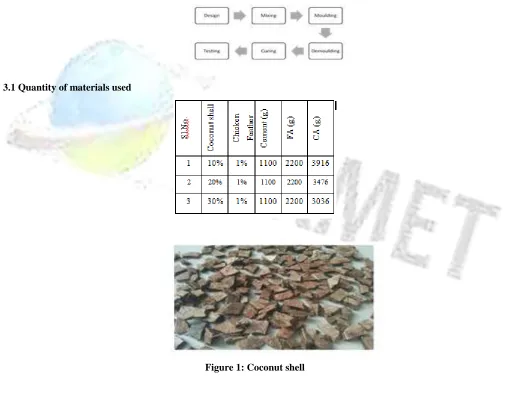
In this experiment coconut shell and chicken feather are mixed in different proportions of partially replacement of coarse aggregate. The purpose of this investigation is to evaluate the effect of partial replacement of coconut shell in concrete at a mix proportion of 10%, 20% and 30% with adding 1% of chicken feather. The mixture could be placed in the cubical mould of size 150mm x 150mm x 150mm and the cylindrical mould of size 150mm x 300mm for compressive and tensile tests respectively with a continuous 25 blows for 500mm depth using steel rod. Totally, there are 3 cubes and 1 cylinder was casted for single proportion. Allow the cubes and cylinders for 28 days for curing period and then they are tested using “Universal Testing Machine”. Then the corresponding values are recorded and compared.
3.1 Quantity of materials used
Figure 2: Chicken feathers Figure 3: Moulding of cube Figure 4: Moulding of cylinder
IV. RESULT
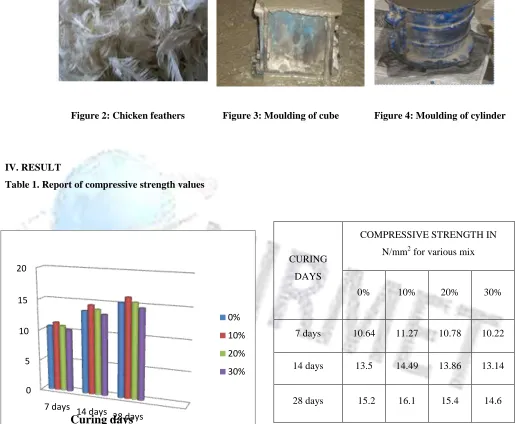
Table 1. Report of compressive strength values
Figure 5: Compressive strength of various mix ratio CURING
DAYS
COMPRESSIVE STRENGTH IN N/mm2 for various mix
0% 10% 20% 30%
7 days 10.64 11.27 10.78 10.22
14 days 13.5 14.49 13.86 13.14
28 days 15.2 16.1 15.4 14.6
0 5 10 15 20
7 days 14 days 28 days
Curing days
0%
10%
20%
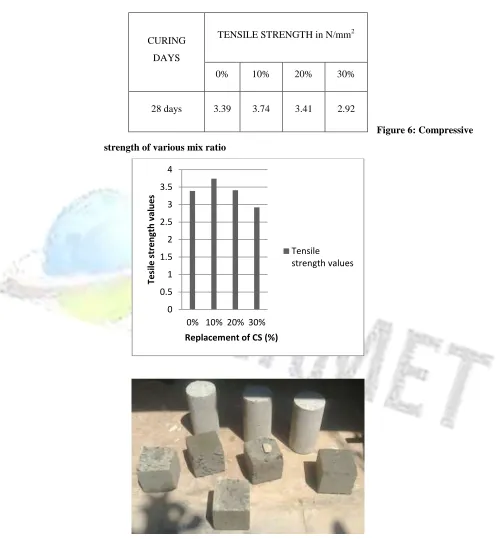
Table 2. Report of Split tensile strength values
Figure 6: Compressive
strength of various mix ratio
Figure 7: De-Moulding of cube & cylinder 0
0.5 1 1.5 2 2.5 3 3.5 4
0% 10% 20% 30%
Tesi
le
st
re
n
gth
v
al
u
e
s
Replacement of CS (%)
Tensile strength values CURING
DAYS
TENSILE STRENGTH in N/mm2
0% 10% 20% 30%
V. CONCLUSION
In this experiment coconut shell was used as a partial replacement of coarse aggregate and addition of chicken feather in concrete. The concrete was prepared under various mix combinations of materials. The compressive and tensile strength were found. This experiment is mainly for giving economic as well as eco-friendly concrete.
The following conclusions were drawn
The strength increased by adding 1% of chicken feathers with 10% of coconut shell and the strength equal in 20% and decreases in 30% in comparison with the conventional concrete. If we add more then 1% of chicken feathers in 20% and 30% of coconut shell, the strength may be increased.
The workability of the concrete increased, as the percentage of coconut shell and chicken feather increases in comparison with the conventional concrete.
From the experimental results and discussions the coconut shell has potential as lightweight aggregate in concrete. It was found that the chicken feather and coconut shell will reduce the cost and also the scar of natural resources.
To increase the speed of construction, enhance green construction environment we can use lightweight concrete. This can be useful for construction of low cost housing society.
VI. REFERANCE
1. Indian Standard (IS 12269-1987) Specification for 53 grade ordinary Portland cement
2. I.S (456-2000) “Code of practice for Plain and Reinforced Concrete”, Bureau of Indian Standards, New Delhi. 3. IS 10262 (2009) “Concrete mix proportioning - guidelines”, Bureau of Indian Standards, New Delhi.
4. IS: 516–1959 Method of test for strength of concrete.
5. ASTM C496 Standard Test Method for Splitting Tensile Strength of Cylindrical Concrete Specimens. 6. John Douglas McIntosh, “Concrete mix design data” Cement & Concrete Association, 1966
7. Neville A.M, Properties of concrete , 4/E”, Pearson Education India, 1963 8. Rajput R.K, “Construction Materials”, J.K Publishers 2001.
9. Shetty M.S., “Concrete Technology”, Chand and company, 2005.