
IJBCP
International Journal of Basic & Clinical Pharmacology
Research Article
Proton pump inhibitors: are they safe on kidneys:
a histopathological study
Ramachandra Prabhakar Limaye*, Shabbir Rafik Pendhari,
Kedar Shashikant Joshi
INTRODUCTION
Proton pump inhibitors (PPI) are the most commonly used drug worldwide. Since 2006 such trends are observed in Australia, US, New Zealand.1-3 Similarly several drug utilization studies were carried out in India, which showed that the use of proton pump inhibitors varies from 45-85% in different conditions.4,5 PPI were also used in 82.96% patients suffering from chronic renal disease.6
As this class of the drug is thought to be well tolerated, they are widely in use. However there have been case reports and case series which are reporting PPIs producing acute interstitial nephritis (AIN) progressing to
acute renal failure (ARF). The first report of omeprazole induced AIN is reported in 1992 while that of pantoprazole and lansoprazole was reported on 2004, since then similar reports about all PPIs is coming.1 Geevasinga et al reported 18 of 28 biopsy proven PPI induced AIN.1 In southeast England during 2007 and 2008, Ray et al examined 210 kidney biopsies and found six cases of AIN which were strongly associated with PPI.7 All these 6 patients are from geriatric age group. In the United Kingdom, eight reports were reported in four year periods. Analysis of Medicine and Healthcare Products Regulatory Agency reporting scheme in UK reports 74 cases of showing relation between AIN and PPI in 1992-2009 that is in nearly 17 years.7 Harmark L et al has published seven patients’ case reports, three each
ABSTRACT
Background: In India the utilization of PPI varies to 45-85%. PPI were used in 82.96% patient with chronic kidney disease. But now a day’s several case reports are suggesting PPI induces AIN. The exact rate of this rare adverse event is difficult to estimate because many patients are taking multiple medications, which also make it difficult to establish a causal relation between AIN and PPI. Early detection of AIN and immediate discontinuation of culprit drug may prevent progress of AIN to the end stage chronic kidney disease. So we planned a study to establish the relationship between PPI and AIN, if any.
Methods: Rats weighing 150-250 gm were used. In this study omeprazole, pantoprazole and rabeprazole were administered for 28 day group A - alone, Group B-with diclofenac and group C - ofloxacin, after 28th day the animal with deranged RFTs were grouped 2 animals were sacrificed from each group. And there histopathological studies were carried out.
Results: At least 3 rats showed deranged RFTs in each group. And most of the histopathological studies show structural, vascular changes with or without AIN.
Conclusions: PPI alone are prone to cause AIN but the incidence of AIN is increases with addition of other nephrotoxic dugs.
Keywords: AIN, Diclofenac, Histopathological examination, Ofloxacin, PPI DOI: http://dx.doi.org/10.18203/2319-2003.ijbcp20162220
Department of Pharmacology, Bharati Vidyapeeth Deemed University, Medical College and Hospital, Sangli, Maharashtra, India
Received: 04 July 2016
Revised: 08 July 2016
Accepted: 12 July 2016
*Correspondence to:
Dr. Ramachandra Prabhakar Limaye,
Email: [email protected]
of omeprazole and pantoprazole and another due to rabeprazole.8 But out of these seven, four patients had history of concurrent administration of drugs which can themselves produce AIN. In July 2011 World Health Organization (WHO) adverse drug reaction report included 498 cases of PPI induced AIN.9 Also a report from India has come in July 2013 by Sampathkumar K et al showing four cases of AIN due to PPI; out of which 2 cases are due to pantoprazole while each one of due to omeprazole and esomeprazole.9 They commented that PPI induced AIN is under-recognized and untreated in India. This PPI induced AIN is common in middle or older age. As the various studies indicate the numbers of case reports are increasing, may be because of increased use of PPI.10,11
The PPI induced AIN is postulated to be an idiosyncratic reaction; hence it is difficult to identify the condition.1,8,10-12 The exact rate of this rare adverse event is difficult to estimate as many patients are taking multiple medications, which also make it difficult to establish the causal relationship between AIN and PPI.1 The recognition and diagnosis of AIN is vitally important because the condition is potentially reversible.1,7 Most patient diagnosed with AIN recover, however some patients retain a degree of renal impairment and some even progress to end stage chronic kidney disease (CKD).1 Early detection of this rare adverse reaction and immediate discontinuation of the offending agent may potentially prevent renal failure.13
The link between PPI and AIN is being evaluated and the index of suspicion is high.10 Mouli VP and Ahuja V report that the available evidences may suggest a low-prevalence association between PPI and AIN however it is insufficient to establish causal relationship.14 In the electronic search study conducted by Sierra F et al, for articles written in between 1970-2006, studies with high level evidence (such as randomized trials) addressing the research question could not be found.12 All of the information came from observational case reports and case studies that cannot control for confounding factors both known and unknown.12 More than half of the samples of patients were on other medications capable of causing AIN, or had co-morbidities known to be risk factor for the development of renal failure.12 Because of that it is difficult to establish causality relationship and determine the AIN is due to PPI or the other co-prescribed medication.
So we planned this study with following aims and objectives was to establish relationship between PPI and acute interstitial nephritis, if exist
The Objectives of this study was do PPI induce AIN alone? Do they only aggravate the AIN induced by other drugs? To answer such research questions this study was planned with following objectives. To find the effect of PPI on kidney of rat based on histopathological
examination. And to evaluate possibility to establish the relationship between PPI and AIN, if any.
METHODS
The permission from the Institutional Animal Ethical Committee of Bharati Vidyapeeth Deemed University Medical College and Hospital, Sangli (BVDUMC&H, Sangli) was taken to conduct the animal study. Healthy adult Wistar rats of either sex weighing between 150-250 gm and age 180-210 days were used for present study. The animals were kept in ideal cages in the central animal house of BVDUMC and H, Sangli. The animals were selected and isolated a week prior to the study. They were maintained in standard conditions at 25±2oC temperatures and 12 hours light dark cycle was maintained. They were given standard pellet diet and the water was allowed adlib throughout the course of study. In this study we planned the study of omeprazole, rabeprazole and pantoprazole each in three doses.
In this study omeprazole was given orally in rats daily for 28 days.15 Everyday measured quantity of bulk drug powder of omeprazole (Spansules formulations, Hyderabad) was taken with the help of electronic weigh balance (Precision balance CA223 of Contech Company). Then omeprazole suspension was prepared by using 2-4% gum acacia powder (genuine chemical co. Mumbai, code no- C10325), and sodium bicarbonate (Na-bicarbonate T. Walker’s Pharmaceuticals Pvt. Ltd., Amboli, Pune). Each animal’s weight was noted and required quantity of drug was given to the animal by using tuberculin syringe along with the feeding needle. Similarly 100 mg of pantoprazole/rabeprazole (both from spansule formulations, Hyderabad) was weighed by using electronic weighing machine. Then this pantoprazole/ rabeprazole powder was transferred into a 25 ml bicker. Added 10 ml sterile water slowly with continuous stirring, to make a homogenous and clear solution. These freshly prepared solutions of pantoprazole and rabeprazole were used for animal study.
In these animals on 0th (before giving the drug), 7th, 14th, 21st and 28th day blood was collected by retro-orbital blood withdrawal technique with aseptic precautions.16 The collected blood was analysed in biochemistry laboratory of BVDUMC and H, Sangli. The blood analyses were done by Meril’s auto-analyser.17-19 (Merilyzer Auto-Quant 100); this is a fully automatic biochemical analyser.
This procedure was again repeated in all animal groups as listed above with dose of diclofenac (10 mg/kg) and ofloxacin (60 mg/kg) administered for five day in their groups.
and submitted to further histopathological analysis. From groups which showed mild or no change in RFTs at least 2 animals were sacrificed and their examination reports were used as standard comparators. In animals dying within 28 days, all major organs were subjected to
[image:3.595.50.549.174.304.2]histopathological analysis. (Histopathological analysis done with help of the department of Pathology from the Bharati Vidyapeeth Deemed University Medical College and Hospital Sangli).
Table 1: Plan of the study and group wise no of animals.
Test Drug Omeprazole Pantoprazole Rabeprazole
Dose (mg/kg) 5 mg/kg 10 mg/kg 20 mg/kg 10 mg/kg 20 mg/kg 40 mg/kg 10 mg/kg 15 mg/kg 20 mg/kg
PPI only 6 6 6 6 6 6 6 6 6
With diclofenac 10 mg/kg/day for 5 days
6 6 6 6 6 6 6 6 6
With Ofloxacin 60 mg/kg/day for 5 days
6 6 6 6 6 6 6 6 6
Total/Group 18 18 18 18 18 18 18 18 18
RESULTS
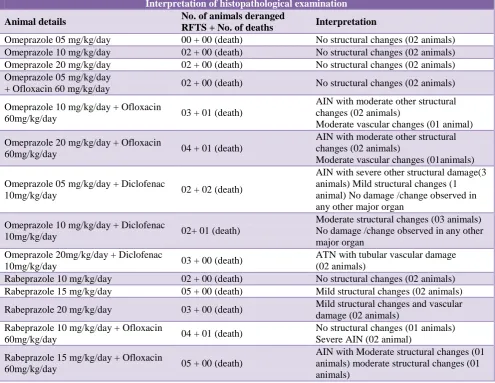
Table 1: Histopathological observations - effect of PPI on kidneys.
Interpretation of histopathological examination
Animal details No. of animals deranged
RFTS + No. of deaths Interpretation
Omeprazole 05 mg/kg/day 00 + 00 (death) No structural changes (02 animals)
Omeprazole 10 mg/kg/day 02 + 00 (death) No structural changes (02 animals)
Omeprazole 20 mg/kg/day 02 + 00 (death) No structural changes (02 animals)
Omeprazole 05 mg/kg/day
+ Ofloxacin 60 mg/kg/day 02 + 00 (death) No structural changes (02 animals)
Omeprazole 10 mg/kg/day + Ofloxacin
60mg/kg/day 03 + 01 (death)
AIN with moderate other structural changes (02 animals)
Moderate vascular changes (01 animal)
Omeprazole 20 mg/kg/day + Ofloxacin
60mg/kg/day 04 + 01 (death)
AIN with moderate other structural changes (02 animals)
Moderate vascular changes (01animals)
Omeprazole 05 mg/kg/day + Diclofenac
10mg/kg/day 02 + 02 (death)
AIN with severe other structural damage(3 animals) Mild structural changes (1 animal) No damage /change observed in any other major organ
Omeprazole 10 mg/kg/day + Diclofenac
10mg/kg/day 02+ 01 (death)
Moderate structural changes (03 animals) No damage /change observed in any other major organ
Omeprazole 20mg/kg/day + Diclofenac
10mg/kg/day 03 + 00 (death)
ATN with tubular vascular damage (02 animals)
Rabeprazole 10 mg/kg/day 02 + 00 (death) No structural changes (02 animals)
Rabeprazole 15 mg/kg/day 05 + 00 (death) Mild structural changes (02 animals)
Rabeprazole 20 mg/kg/day 03 + 00 (death) Mild structural changes and vascular
damage (02 animals) Rabeprazole 10 mg/kg/day + Ofloxacin
60mg/kg/day 04 + 01 (death)
No structural changes (01 animals) Severe AIN (02 animal)
Rabeprazole 15 mg/kg/day + Ofloxacin
60mg/kg/day 05 + 00 (death)
[image:3.595.52.548.387.770.2]Rabeprazole 20 mg/kg/day + Ofloxacin
60mg/kg/day 01 + 00 (death) No structural changes (02 animal)
Rabeprazole 10 mg/kg/day + Diclofenac
10mg/kg/day 02 + 04 (death)
No structural changes(02 animals)
Sever AIN (04 animal) No damage/change observed in any other major organ
Rabeprazole 15 mg/kg/day + Diclofenac
10mg/kg/day 06 (death)
Mild AIN without structural changes(05 animals) Severe ATN with all structural changes (01 animal) No damage /change observed in any other major organ Rabeprazole 20 mg/kg/day + Diclofenac
10 mg/kg/day 04 + 00 (death)
Moderate To Severe AIN Without Structural Changes (02 animals)
Pantoprazole 10 mg/kg/day 03 + 00 (death) Mild structural changes (02 animals)
Pantoprazole 20 mg/kg/day 03 + 00 (death) Mild structural changes (02 animals)
Pantoprazole 40 mg/kg/day 03 + 01 (death) Mild structural changes (03 animals)
Pantoprazole 10 mg/kg/day
+ Ofloxacin 60 mg/kg/day 01 + 00 (death)
Moderate vascular changes (01 animal) No structural changes (01 animal) Pantoprazole 20 mg/kg/day
+ Ofloxacin 60 mg/kg/day 00 + 00 (death)
No structural changes (01 animal) Mild vascular changes (01 animal)
Pantoprazole 40 mg/kg/day
+ Ofloxacin 60 mg/kg/day 02 + 00 (death)
Moderate vascular changes (01 animal) AIN with moderate vascular changes (01 animal)
Pantoprazole 10 mg/kg/day
+ Diclofenac 10 mg/kg/day 02 + 01 (death)
Sever AIN with severe structural changes (03 animals)
Pantoprazole 20 mg/kg/day
+ Diclofenac 10 mg/kg/day 02 + 00 (death)
AIN with Moderate vascular changes (01 animal) Moderate vascular changes (01 animal)
Pantoprazole 20 mg/kg/day
+ Diclofenac 10 mg/kg/day 01+ 02 (death)
Moderate AIN with mild structural changes (03 animal)
Omeprazole alone at low dose, medium dose and high dose was not able to produce the any structural changes. But when ofloxacin omeprazole was combined with omeprazole, at medium dose and high dose of omeprazole produced AIN along with severe structural changes. Thus indicating after AIN the vascular damage can still progress towards AKF. Low dose omeprazole along with diclofenac produced AIN with moderate structural changes. Medium dose produced only moderate structural changes without AIN but the higher dose caused AIN along with severe tubular and vascular damage.
Rabeprazole alone low dose was not able to produce any structural change, the medium dose which caused infarction of kidney. The high dose caused mild structural changes with vascular damage. One animal each from low and medium dose administration of rabeprazole along with ofloxacin showed AIN, while two animals from each group showed moderate structural changes. Rabeprazole along with diclofenac at all doses showed AIN, at medium dose out of all six animals five animals shows AIN without structural changes and one animal shows severe AIN along with all structural changes.
Pantoprazole alone in all three doses showed mild structural changes while when pantoprazole was given with ofloxacin low dose of pantoprazole showed moderate vascular changes without AIN. And at high dose one
animal showed AIN with moderate vascular changes and in one animal only moderate vascular change. When pantoprazole was used along with diclofenac all the groups showed AIN either with moderate structural change or with vascular changes.
DISCUSSION
So overall omeprazole alone was not able to produce AIN at all three doses, rabeprazole at high dose and pantoprazole at all doses caused mild structural changes in the kidney. All the samples showed variable degree of inflammation followed by structural damage.
While when PPI were used along with ofloxacin AIN developed, the vascular changes were more than structural changes along with inflammatory changes.
When PPIs were used along with diclofenac, this combination showed AIN with mild to severe structural change in the kidney in most of the animals.
variable degree of inflammatory damage to the glomeruli and even to blood vessels and tubules. This damage, in course of time lead to deranged function (as evidenced by deranged RFT), along with or followed by structural damage. This finally led to the HPE picture conclusive of AIN.
We observed in all the cases of AIN, variable degree of vascular damage and inflammatory response leading to structural damage was present. Also there was no obvious other cause of inflammation, like infection or environment induced damage. Hence it was safe to infer, this can strengthen the postulate of, AIN after use of PPI may be of immunological origin.8 As seen in our study, though the groups were homogenous not all animals suffered from this problem. As postulated by some researchers this can be attributed to idiosyncratic reaction.1,12,19
It is possible to infer that if we would have stopped the drug at the first confirmed sign of deranged renal function, we could have seen reversal of the damage and confirmation of the postulate.1,7 However since our aim was to first asses that the damage is produced and it is like AIN by HPE methodology, we accept this limitation of the study. Similar limitation is if it is immunological/idiosyncratic in nature, results cannot be extrapolated in humans as they are and large accurate data is needed. However our study indicates strongly a possibility of occurrence of this ADR and strong need for such data to be recorded.
CONCLUSION
With increased dose and after longer administration of PPI, it did produce derangement of RFTs and with concurrent administration of drugs like diclofenac and ofloxacin; it has hastened the process of renal damage as indicated by deranged RFTs
Our study indicated that PPI alone were able to induce inflammatory process in kidney along with deranged RFT. When PPIs were co-administered along with NSAID like diclofenac or anti-microbial agent like ofloxacin the percentage of animals showing such effect marginally increased. However direct extrapolation of animal study results has limited importance, hence longer and larger human pharmacovigilance data is needed. Present study however gives two important guidelines or indications
PPI can produce renal damage with or without concurrent administration of other drugs
Especially in nephrology unit patients, caution must be exercised while using PPI.
ACKNOWLEDGEMENTS
Authors would like to thankful to our central animal house in-charge Mr. R. P. Kulkarni for his help in the
extensive animal study. We are also thankful for the supply of drugs from the company itself.
Funding: No funding sources Conflict of interest: None declared
Ethical approval: The study was approved by the Institutional Ethics Committee, Permission letter no BVDUMC and H/Sangli/ CAH/IAEC/2012-13/02
REFERENCES
1. Geevasinga N, Patrik LC, Angela CW, Simon DR. Proton pump inhibitors and acute interstitial nephritis. Clin gastro hep. 2006;4:597-604.
2. U.S. Pharmaceutical Sales-2013. Available at www.drug.com/stat/top100/2013/sales on date 13/ 01/2016. Accessed on 13 January 2016.
3. Proton pump inhibitors: when is enough, enough? Brit J Pharmacol Issue. 2014:8-15.
4. Ingle P, Patil P, Lathi V. Study of rational prescribing and dispending of prescription with non-steroidal anti-inflammatory drug in orthopedic outpatient department. Asian J Pharmac Clinic Res. 2015:8(4):278-81.
5. Barot PA, Malhotra SD, Rana DA, Patel VJ, Patel KP. Drug utilization in emergency medicine department at a tertiary care hospital: a prospective study. J basic clin pharmacy. 2013;4(4):78-81. 6. Tamilsevan T, Veerapandiyan AK, Karthik N. study
on drug utilization pattern of chronic renal failure patient in a tertiary care hospital. Int j pharm sci. 2014;6(9):482-4.
7. Ray S, Delaney M, Mullar AF. Proton pump inhibitors and acute interstitial nephritis. Brit Med J. 2010;34:668-70.
8. Linda H, Hans EVDW, Mark CHDG, van Grootheest AC. Proton pump inhibitors induced acute interstitial nephritis. Br J Clinpharmacol. 2007;64(6):819-23. 9. Sampathkumar K, Ramlingam R, Prabhakar A,
Abraham A. Acute interstitial nephritis due to proton pump inhibitors. Ind Jnephro. 2013;23(4):304-7. 10. Sheila K, Joan CK, Ally PHP. Pantoprazole -induced
acute interstitial nephritis. Can med Asso J. 2013;185(1):56-9.
11. Jeffrey R, Gil K, James S, Rene W. Acute allergic interstitial nephritis after use of pantoprazole. Can med Asso J. 2009;180(5):535-8.
12. Sierra F, Suarez M, Rey M, Vela MF. Systematic review: proton pump inhibitors - associated acute interstitial nephritis. Aliment pharmacol Ther. 2007;26:545-53.
13. Amy R, Tobe SW. Acute interstitial nephritis due to pantoprazole. Ann pharmacotherapy. 2004;38:41-5. 14. Mouli VP, Ahuja V. Proton pump inhibitors:
concerns over prolonged use. Trop Gastro. 2011;32(3):175-84.
brothers medical publishers (P) ltd. New Delhi; 2007:471-483.
16. Ghosh MN. Some standard techniques in, fundamentals of pharmacology. Third edition. Hilton and company Kolkata; 2005:15-18.
17. Fuchs TC, Frick K, Emde B, Czusch S, Landenberg FV, Hewitt P. evaluation of novel acute urinary rat kidney toxicity biomarker for Subacute toxicity studies in preclinical trial. Toxicologic pathology. 2012;40:1034-48.
18. Erdem A, Gundogan NV, Usubutun A, Kilinc K, Erdem R, Kara A. The protective effect of taurine against gentamycin-induced acute tubular necrosis in rats. Nephrol dial transplant. 2000;15:1175-82. 19. Keppler A, Gretz N, Schmidt R, Kloetzer HM,
Groene HJ, Leiongt B, et al. Plasma creatinine determination in mice and rat: an enzymeatic method compares to variably with a high performance liquid chromatography assay. Kidney international. 2007;71:74-8.
![Simulation of formation of cold drawn square pressure tube of Zirconium Niobium [Zr-Nb] alloy for boiling water nuclear reactors- a case study](data:image/gif;base64,R0lGODlhAQABAIAAAP///wAAACH5BAEAAAAALAAAAAABAAEAAAICRAEAOw==)