www.biogeosciences.net/9/4139/2012/ doi:10.5194/bg-9-4139-2012
© Author(s) 2012. CC Attribution 3.0 License.
Biogeosciences
Imbalanced nutrients as triggers for black shale formation in a
shallow shelf setting during the OAE 2 (Wunstorf, Germany)
M. Blumenberg1and F. Wiese2
1Geobiology Group, Geoscience Centre, Georg-August-University G¨ottingen, Goldschmidtstr. 3, 37077 G¨ottingen, Germany 2Courant Research Centre Geobiology, Georg-August-University G¨ottingen, Goldschmidtstr. 3, 37077 G¨ottingen, Germany
Correspondence to: M. Blumenberg ([email protected])
Received: 19 April 2012 – Published in Biogeosciences Discuss.: 9 May 2012
Revised: 14 September 2012 – Accepted: 21 September 2012 – Published: 29 October 2012
Abstract. During the oceanic anoxic event 2 (OAE 2) in the Mid-Cretaceous Period, widespread black shale (BS) forma-tion occurred, reflecting perturbaforma-tions in major biogeochem-ical cycles. Here we present geochembiogeochem-ical and biomarker data of the OAE 2 from a shelf setting situated at about 100– 150 m water depth (Wunstorf, Germany). Our data support that processes inducing BS deposition were related to or-bital cyclicity in Wunstorf and that they were not restricted to the time of the OAE 2 carbon isotope excursion. Corre-lations of total organic carbon (TOC) and δ15N and high relative abundances of functionalized hopanoids (including 2-methylated structures) suggest that BS were formed dur-ing times of imbalanced nutrients with high phosphorus in-puts and increased cyanobacterial nitrogen fixation. Periods of BS formation were also characterized by enhanced growth of dinoflagellates and bacteriovorous ciliates, the latter sup-porting the presence of a stratified water body. The lack of biomarkers specific for green sulfur bacteria excludes photic zone euxinia during OAE 2 in Wunstorf. Conflicting matu-rities and biomarker distributions in kerogen and extractable organic matter and, interestingly, a negative correlation of the diagenetically resistant 2-methyl hopane hydrocarbons with TOC indicate a complex depositional setting at Wunstorf. This might have been induced by high continental runoff dur-ing BS formation and the accompanydur-ing mobilisation of re-fractory OM from the shelves and near shore areas.
1 Introduction
In the Mid-Cretaceous Period, elevated concentrations of CO2 created a greenhouse world with elevated tempera-tures and reduced oceanic circulation. As a result, oceanic sediments recorded several organic-rich black shales (BS) during so-called Oceanic Anoxic Events (OAEs; Schlanger and Jenkyns, 1976). Two mechanisms or the combination of these processes were proposed as responsible for BS forma-tion, enhanced bioproductivity and/or enhanced preservation of organic matter as a result of anoxic conditions (e.g., Arthur et al., 1988; Jenkyns, 2010; Mort et al., 2007). One of the best studied OAE occurred at the Cenomanian-Turonian bound-ary (∼93.5 Ma), and its global impact is evident from a pos-itive carbon isotope excursion (CIE) in carbonate and total organic carbon (TOC), most likely reflecting increased car-bon burial due to enhanced biological production (Jarvis et al., 2011, and references therein).
Fig. 1. Paleoceanographic situation at the Cenomanian-Turonian
Boundary and the sampling site (Wunstorf; modified after Voigt et al. (2004). The working area is indicated by dot and arrow).
Damst´e et al., 2010). Exciting findings of green sulfur bacte-ria biomarker indicate that local photic zone euxinia existed – suggesting stagnant or sluggish ventilated oceans with an extension of the oxygen minimum zone (OMZ) at least pe-riodically into the photic zone (e.g., Pancost et al., 2004; Sinninghe Damst´e and K¨oster, 1998). Moreover, nitrogen-fixing cyanobacteria were recognized as key players during black shale formation (Kashiyama et al., 2008; Kuypers et al., 2002, 2004; Ohkouchi et al., 2006). A major argument for cyanobacterial nitrogen fixation as a process supporting primary production under low N/P conditions are high 2-methyl hopane occurrences in the central North Atlantic dur-ing OAE 2 (Kuypers et al., 2004). However, in other OAE 2 settings, 2-methyl hopanoids were not found (in Livello Selli and Livello Bonarelli BS), although porphyrin nitrogen in the respective rocks was most likely also mainly sourced by cyanobacteria (Kashiyama et al., 2008). In a recent study, an elegant explanation for the 15N-depleted biomass, and chlorophyll derivatives in particular, accompanied by the par-tial lack of cyanobacterial biomarkers was presented. Based on the study of nitrogen stable isotope ratios of porphyrins and on modeling approaches, it was suggested that a signif-icant proportion (about 80 %) of the15N-depleted biomass has an algal and not cyanobacterial origin (Higgins et al., 2012). Higgins et al. (2012) suggested a nitrogen cycle in which15N-depleted biomass from diazotrophic cyanobacte-ria was mineralized to NH+4 in the anoxic bottom waters. Upwelling then brought this isotopically distinct ammonia (∼ −1 ‰) to the surface, where it was preferentially con-sumed by algae and transferred with its bacterial signature into the sediments.
There exists a considerable number of contributions to open oceanic OAE 2 occurrences from ODP sites (e.g., Kuypers et al., 2004) and onshore occurrences (e.g., Tsikos et al., 2004), but there is no knowledge so far on micro-bial communities and their contribution to BS deposition in palaeo-shelf settings with comparatively moderate water depths. Here, we present biomarker data from the Wunstorf core (Lower Saxony, Germany), deposited at water depths around 100–150 m water depth (Wilmsen et al., 2005) on the central European shelf, possibly the shallowest OAE 2 BS recorded so far.
We concentrate in particular on functionalized lipids, as these biosignatures are less prone to allochthonous transport processes due to their lower diagenetic stability compared to the commonly reported suites of hydrocarbon biomarkers. Moreover, biomarkers covalently linked to the major pool of organic matter in sediments (kerogen) were analyzed in or-der to obtain data on organisms whose contributions to sed-iments is usually negatively biased when working solely on extractable biomarkers. The aim of our study is a better un-derstanding of (i) major sources of OM; (ii) biogeochemical factors which controlled BS formation; and (iii) whether high TOC reflect rather enhanced productivity or preservation of OM deposited during OAE 2. Furthermore, interpretations from the shallow setting in Wunstorf may also bridge the gap to a better understanding of the controls and effects of BS formation in the Proto-North Atlantic, the most prominent trap of organic carbon in the OAE 2.
2 Geologic setting and previous works
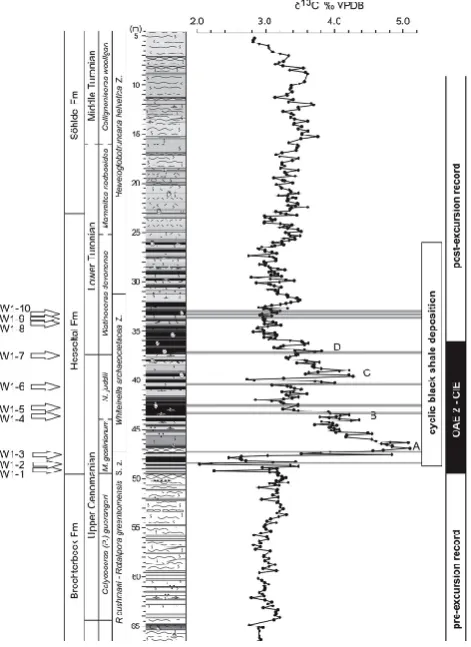
Formation is the expression of an orbital modulation of depo-sition (Voigt et al., 2008a; Fig. 2). There are numerous works on its lithology, sedimentology, stratigraphy and macrofauna (Breitkreutz et al., 1991; Hilbrecht and Dahmer, 1994; Kri-wet and Gloy, 1995; Voigt et al., 2006a, 2008a; Wood and Ernst, 1998), and recently, the Wunstorf section and the Wun-storf core (Fig. 2) were studied in detail by means of stable isotope geochemistry, orbital geochronology, inorganic geo-chemistry and palynology (Hetzel et al., 2011; Linnert et al., 2010; Prauss, 2006; Voigt et al., 2008a).
It needs to be emphasized that the definition of the OAE 2 is related to the well-documented positive OAE 2 carbon isotope excursion (OAE 2-CIE). In Wunstorf, the shift back to pre-OAE 2-CIEδ13C values occurs at about 36 m (Fig. 2). However, BS also developed after the excursion, and the last BS can be identified as a thin layer around 26 m already well in the Lower Turonian (Fig. 2).
3 Material and methods
3.1 Sample material and sample preparation
The cooled core samples were taken in 2011 at the IODP core repository in Bremen. Rock samples were then kept frozen until analyses. The samples were homogenized by grinding and aliquots were taken (see Fig. 2 for sampling depths) for bulk geochemical analyses and lipid extraction.
3.2 Bulk analysis (C/N/S) andδ15N
Homogenized aliquots of the sample were analyzed for bulk C/N/S using a Hekatech Euro EA CNS analyzer. To deter-mine the contents of TOC and carbonate carbon (Ccarb), each sample was also analyzed after acidification with hydrochlo-ric acid. Bulkδ15N isotope analysis was made in duplicate via elemental analysis-isotope ratio mass spectrometry (EA-IRMS, Delta plus, Thermo Finnigan).
3.3 Extraction and fractionation
About 60 g of freeze-dried sediments were extensively ex-tracted with dichloromethane/methanol (DCM/MeOH; 1/1; v/v) using ultrasonication. An aliquot of the combined ex-tract was acetylated and analyzed for hopanols including 32,35-anhydrobacteriohopanetetrols (anhydroBHTs). Acety-lation was performed using a mixture of acetic acid anhy-dride and pyridine (1:1, v:v, 50◦C for 1 h and overnight at
[image:3.595.311.547.65.389.2]room temperature). The pyridine/acetic acid anhydride mix-ture was then dried under vacuum. Another aliquot was sep-arated by column chromatography into a hydrocarbon (F1), a ketone (F2), and an alcohol and polar fraction (F3; details are described in Blumenberg et al., 2009).
Fig. 2. Stratigraphy of the Wunstorf core used for the study and
δ13Ccarb(from Voigt et al., 2008a). Arrows (and codes) mark sam-pling positions.
3.4 Catalytic hydropyrolysis (HyPy)
3.5 Gas chromatography–mass spectrometry (GC–MS) and gas chromatography-combustion isotope ratio mass spectrometry (GC-C-IRMS)
The hydrocarbon fractions (extract and after HyPy) and the ketone fractions after extraction were analyzed by GC–MS (Varian CP-3800 gas chromatograph coupled to a 1200L mass spectrometer), and peaks were assigned by compar-ing mass spectra and retention times with published data and/or reference compounds. Gammaceran-3-one (tetrahy-manone) was identified by comparison with published mass spectra (e.g., Barakat and Yen, 1990), and by co-injection with an authentic standard. The system was equipped with a fused silica column (Phenomenex Zebron ZB-5MS, 30 m, 0.25 µm film thickness, i.d. 0.32 mm). It was used as carrier gas, and the temperature programme was 80◦C (3 min) to
310◦(held 25 min) at 6◦C min−1. The MS source was oper-ated at 200◦C in electron impact mode at 70 eV ionisation
energy. Fractions were injected on column using a PTV in-jector. The injector was initially held at 80◦C for 0.2 min and then heated at 150◦C min−1to 320◦C (held for 15 min). Biomarkers were commonly analyzed in total ion current mode (from 50 to 650 amu; TIC), and for selected hydrocar-bon fractions by selected ion monitoring (SIM) of nine ions (total cycle time 0.9 s), and by multiple reaction monitoring (MRM) with a total cycle time of 1.6 s per scan for 16 tran-sitions (see Blumenberg et al., 2012, for details). Argon was used as the collision gas. The collision energy was−10 eV.
To analyze GC-amenable acetylated polyfunctionalized lipids (i.e., anhydroBHTs), high temperature GC was per-formed on a CP-3800 GC connected to a Saturn 2000 Ion Trap (both Varian). The GC was equipped with a VF5-HT (15 m length, 0.32 mm ID, 0.1 µm film thickness; tempera-ture program for HT-GC-MS was 1 min at 50◦C; from 50 to 200◦C at 15◦C min−1(held for 1 min), from 200 to 250◦C at 10◦C min−1(held for 1 min), and from 250 to 350◦C at 5◦C min−1 (held for 8 min). The ion trap and transfer line temperatures were 175◦C and 350◦C, respectively. Anhy-droBHTs were identified in comparison with published mass spectra (Bednarczyk et al., 2005) and MRMs specific for desmethyl and ring A methyl hopanoids. Elution charac-teristics of 2- and 3-methylated hopanoids on the VF5-HT column were tested by analysing acetylated extracts includ-ing 2- and 3-methylated diplopterol and BHT (from
Beijer-inckia indica and Gluconacetobacter xylinum). As shown in
Fig.7, 2-methyl hopanoids elute slightly before and 3-methyl hopanoids after the desmethylated analogue. Theδ13C val-ues of selected compounds were also analyzed. Details of the analytical procedure can be found elsewhere (Blumenberg et al., 2010).
4 Results
4.1 Bulk geochemical data
Figure 3 shows the amounts of total organic carbon (TOC) compared to the δ13Ccarb reported by Voigt et al. (2008a). Both are well-correlated. However, highest TOC abundance of 1.8 % was found in the sample taken at 33.10 cm (W1-9) well above the OAE 2-CIE (Fig. 2). Similar values were found in BS layers in between, whereas the lowest val-ues correspond to lowδ13Ccarbwith TOC as low as 0.07 % (lowermost sample; W1-1). Thus, BS formation is generally linked to positiveδ13Ccarbvalues. TOC/S ratios were mostly lowest at times of increased TOC values (TOC/S: 1 to 2.5), but were generally low in the upper OAE 2. In the lower OAE 2 and above (at 20.08 cm; W1-11) values exceed 20. Figure 3 also demonstrates TOC/N ratios andδ15N values, which are both negatively correlated. Cross plotting of TOC andδ15N demonstrates a good negative correlation (Fig. 4).
4.2 Extractable biomarkers
The highest abundance of biomarkers was found in the black shales. Total ion chromatograms (TIC) of the hy-drocarbon (F1) and ketone (F2) fraction of one repre-sentative sample – taken within the OAE 2 (W1-9) – are shown in Fig. 5. In addition to n-alkanes, hydrocar-bons consist of sterenes, hopenes, and homohopanes in the F1. Homohopanes were dominated by 17β(H),21β (H)-homohopane, while higher homohopanes of up to C35 were only present in trace amounts (not visible in TIC, Fig. 5). The relative amounts of C32to C35homohopanones, however, were higher than for homohopanes, but high-est relative amounts were also found for 17β(H),21β (H)-homohopanone. The latter suggests pentafunctionalized bac-teriohopanepolyols as a major source, while 17β(H),21β (H)-homohopane has most likely the ubiquitous tetrafunctional-ized BHPs as an origin (Farrimond et al., 2000). The dis-tribution of homohopanoids is mostly comparable between hydrocarbon and ketone fractions [order of abundances ex-emplified for W1-9 in Fig. 6; ketones (diagenetically re-lated hydrocarbons in brackets): ββH31-one (ββH30) ≈
ββH32-one (ββH31)> ββH30-one (ββH29)]. Additional hopanes, also resembling higher maturities (particularly α,β-isomers), were found in the hydrocarbon fraction (Fig. 6). Slightly eluting before 17β(H),21β(H)-hopanone, another C30-pentacyclic triterpenanone was observed, which was identified as tetrahymanone (syn. gammacerane-3-one).
Fig. 3. Biogeochemical (three left) and biomarker (two right diagrams) data of the samples studied compared to theδ13Ccarb(from Voigt et al., 2008a). Left codes are sample names. Selected biomarker ratios and hopanoid concentrations in the extractable organic matter are shown in the two right diagrams.
Fig. 4. Cross plot ofδ15N bulk values with TOC concentrations, indicating that black shale formation is linked to increasing impor-tance of nitrogen fixation (decreasingδ15N).p-values represent a Spearman rank order correlation.
trifunctionalized anhydroBHT (m/z449, tentatively identi-fied from comparisons with published mass spectra in Talbot et al., 2005) were observed. These biomarkers were found only in low amounts or they were under detection limit in non-BS samples, respectively. Ring A methylated hopanoids were also present in other fractions (in hydrocarbons and ketones).
Fig. 5. Biomarkers in the extractable organic matter of sample
W1-9 (total ion chromatograms of the hydrocarbons (F1) and the ketone (F2) fraction). Compounds with C represent steroids, H hopanes, and T unknown triterpenoids. Numbers refer to the carbon skeleton. 1number orx=double bond position (x= unknown).
[image:5.595.312.546.373.532.2]Fig. 6. Hopanoids in different fractions in the sample W1-9
(exemplified). In the upper part hydrocarbons (F1) and ketones (F2) in the extractable organic matter are shown. In the lower part hydrocarbons released from the kerogen are presented (mak-ing up more than 95 % of the total lipid OM in the samples). *22,29,30-trisnorhopane-21-one was tentatively identified based on published data (Barakat and Yen, 1990). Ts=22,29,30-trinor-18α -neohopane, Tm=22,29,30-trinor-17α-hopane. Compounds with H represent hopanes and T unknown triterpenoids. Numbers refer to the carbon skeleton. Greek letters abbreviate H isomerisation at car-bon atoms 17 and 21.
Fig. 7. Hopanols in the F3 of sample W1-3 (exemplified) shown
[image:6.595.308.553.82.151.2]as total ion chromatogram (TIC) and as selected ions specific for hopanols (m/z191) and ring A-methylated hopanols (m/z205). The largest peak in the suite of anhydroBHTs is the common 17β(H),21β(H)-anhydroBHT.
Table 1. Maturities of biomarkers released by catalytic HyPy.
Sample Rc C22S/R 17α-hopane/(17β-mor. (MPI-1) (for C32) +17α-hopane)
W1-10 1.00a – –
W1-9 (BS; above OAE 2) 1.05a 0.15b 0.26b
W1-8 0.94a – –
W1-3 (BS; OAE 2) 1.03a 0.5b 0.34b
BS=black shale;apeak to late oil,bimmature (after Killops and Killops, 2005), –=below detection limit. For position of the samples refer to Fig. 2.
the relative distribution of hopanones (cyanobacteria) to steroidal ketones (algae) and dinostanone (dinoflagellates) to steroidal ketones. Except for sample W1-1, both corre-late excellently, demonstrating highest relative abundance of bacteria and dinoflagellates during deposition of BS. Anhy-droBHTs (maximum 280 ng g−1TOC) and 17β(H),21β (H)-trishomohopanol (maximum 330 ng g−1 TOC) were also highest during BS deposition. Based on the relative occur-rence of methylated versus non-methylated hopanoids, 2-methyl hopanoid indices (Summons et al., 1999) were cal-culated for the different fractions. The 2-methyl hopane in-dices for hydrocarbons were from 12 to 24 % high (Summons et al., 1999). Interestingly, the lowest 2-methyl hopane in-dices were calculated for BS horizons. Using anhydroBHTs, lower 2-methyl hopanoid indices of up to 4 % were calcu-lated, and maxima correlated positively with the TOC con-tents (Fig. 8a). This is contrary to 2-methyl hopane indices calculated from hydrocarbons (Fig. 9).
The presence of isorenieratene and other carotenoids from green sulfur bacteria was tested by using SIM and MRM. Neither isorenieratane nor other related carotenoids were found in the kerogen and in the extractable organic matter.
δ13C values of biomarkers were also analyzed, but are not shown in detail. Values were not depleted in13C (maximiz-ing at−35 ‰ VPDB). Values of biomarkers in samples taken within the upper OAE 2 demonstrated slight enrichments in 13C compared to the samples below and above the OAE 2
(up to 5 ‰ difference).
4.3 Composition of kerogens
[image:6.595.52.285.418.610.2]Fig. 8. Cross plot ofδ15N bulk values with selected biomarker ratios. p-values represent a Spearman rank order correlation.
Fig. 9. Cross plot of TOC (a) andδ15N bulk (b) versus 2-methyl hopane indices, respectively (based on hydrocarbons in extractable organic matter). The negative correlation with TOC and positive correlation withδ15N indicates that 2-methyl hopane abundances were diluted by other allochthonous non-ring A methylated hopanes during periods of black shale formation (characterized by high TOC). p-values represent a Spearman rank order correlation.
were found to be high (Table 1). It was much higher than the maturity calculated from biomarkers in the bitumen (not shown), where aromatic hydrocarbons were absent. Maturi-ties in different compound classes of the kerogen were also different. For instance, much lower values for S isomerisa-tion at C22of hopanes (0.15) than expected from maturities in the aromatics (expected 0.6) were found. Hopanes released from the kerogen also containβ,β-isomers along with more-tanes (β,α; Fig. 6), a feature, which also does not fit to the much higher maturities calculated from aromatic hydrocar-bons. This indicates that only a portion of the hopanes in
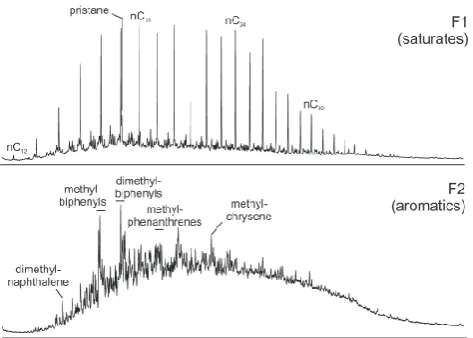
[image:7.595.97.499.384.506.2]Fig. 10. Total ion chromatograms (TICs) of the saturate and
aro-matic fraction of the BS sample W1-9. HyPy released about 5 times more aromatic than saturated hydrocarbons.
5 Discussion
5.1 Sources for organic matter during BS deposition in the OAE 2 at Wunstorf
Our biomarker data show that bacteria and organic-walled dinoflagellates (and, less important, calcareous nannoplank-ton) are the main sources of extractable organic matter in the BS (independent of whether they formed during the OAE 2 or later). Bacterial OM is evidenced by the occurrence of hopanoids, including functionalized structures (hopanones, hopanols and 32,35-anhydrobacteriohopanetetrols (anhy-droBHTs)). The most common bacteriohopanepolyol (BHP), bacteriohopanetetrol (BHT), and other BHPs were not found in Wunstorf, most likely because they were already degraded. AnhydroBHTs are diagenetically relatively stable and are products of bacteriohopanepolyols (Bednarczyk et al., 2005; Schaeffer et al., 2008, 2010). Despite the relatively high sta-bility of anhydroBHTs, there is only one report of anhy-droBHT in rocks older than the Cenozoic (from the Gorodis-che; Upper Jurassic; Bednarczyk et al., 2005), and thus the findings here represent the second oldest record of this biomarker.
Among ring A methylated functionalized hopanoids, 3-methylated structures were found to be most abundant (Fig. 7). 3-methyl hopanoids were reported from aerobic methanotrophic and acetic acid bacteria (Rohmer et al., 1984; Zundel and Rohmer, 1985). In all fractions of the extractable OM, 2-methyl hopanoids were partially abundant (including anhydroBHTs; Fig. 7) with 2-methyl hopane indices of more than 20 %. Moreover, the abundance of 2-methyl anhydroB-HTs correlates negatively with bulkδ15N (Fig. 8), which it-self correlates well with TOC (Fig. 4). Bulkδ15N can be af-fected by diagenetic overprint. It was demonstrated that dur-ing laboratory experiments under oxic conditions bulkδ15N
increases (Lehmann et al., 2002), a potential explanation for the relatively high δ15N observed in non-BS in Wunstorf. However, at the same time, TOC/N ratios were also observed to increase (Lehmann et al., 2002), the opposite to what we observed in the Wunstorf core (Fig. 3). We therefore surmise that bulkδ15N in Wunstorf record those from primary pro-duction and low values to represent enhanced nitrogen fixa-tion (e.g., Sachs and Repeta, 1999). The high relative abun-dances of 2-methyl anhydroBHTs suggest a biogeochemi-cal situation preferring 2-methyl hopanoid producers (and/or production). Commonly, cyanobacteria are regarded as a source for 2-methyl hopanoids (Summons et al., 1999). How-ever, other sources for 2-methyl hopanes are also known. These include methanotrophic, methylotrophic and soil bac-teria (Bisseret et al., 1985; Renoux and Rohmer, 1985; Bravo et al., 2001). For the Wunstorf BS, a methanotrophic ori-gin is unlikely because none of the hopanoids demonstrated 13C-depletions, which are common for biomasses produced
hopanoids, which appear to be related to high nitrogen fixa-tion.
Dinosterol (and the degradation products dinosterane or dinostanone; 4α,23,24-trimethyl-5α-cholestane-3-one) is an excellent biomarker for dinoflagellates (Summons et al., 1987). In accordance with bacterial hopanoids and in contrast to algae producing 4-desmethyl steroids (e.g., calcareous nannoplankton), dinosterol-producing dinoflagellates were found to be highly abundant in most of the samples, and the relative abundance of dinostanone compared to steroidal ketones correlates well with BS formation (Fig. 3). A good adaptation of specific dinoflagellates to the conditions during OAE 2 and particularly during BS formation was also ob-served in micropaleontological studies (Linnert et al., 2010; Prauss, 2006). In these studies, Cyclonephelium
membra-niphorum, which is thought to flourish in abundance under
harsh surface-water conditions induced by anoxia (Marshall and Batten, 1988), was reported to dominate the dinoflagel-late community. Further indications for high contributions of algae to the OM of the Wunstorf BS in general come from HyPy data of kerogens. The relative abundance of HyPy re-leased biomarkers was about 20 times higher than the ex-tractable OM. HyPy of selected Wunstorf samples released aliphatic hydrocarbons with carbon numbers from 12 to 37 (Fig. 10). The respective distributions are different than those in the related extractable organic matter, which is a common feature in immature rocks (e.g., Love et al., 1998, and ref-erences therein), mirroring different sources for the majority of bitumen and macromolecular organic matter in respective rocks. A mixture of allochthonous and autochthonous por-tions in the macromolecular OM is also likely for the Wun-storf samples (see below). High abundances of aliphatic hy-drocarbons in the kerogen, only slight even over odd predom-inances of carbon chain numbers in then-alkanes, and a vir-tual absence of acyclic isoprenoids like phytane and pristane has been frequently reported from biomacromolecules of cal-citrant aliphatic biomolecules from specific algae. These in-clude the freshwater algae Botryococcus braunii and ma-rine microalgae (e.g., Berkaloff et al., 1983; Derenne et al., 1992). In Wunstorf, however, palynomorphs of
Botryococ-cus were low in numbers (Prauss, 2006; M. Prauss,
per-sonal communication). We therefore favor marine algae as the major source for alkyl dominated kerogens at Wunstorf. Abundant algae in the Wunstorf setting were the Chloro-phyta Pterospermopsis and Tasmanites (Prauss, 2006). The latter, however, is less likely since Tasmanites produces tri-cyclic triterpenoids (Greenwood et al., 2000), which were ab-sent in Wunstorf. Algae might have also contributed to the aromatic hydrocarbons bond in the kerogen. In the organic-rich samples W1-3 and W1-9, aromatic hydrocarbons were highly abundant and shared similar distributions with mainly low molecular weight HCs and a prominent underlying un-resolved complex mixture (see Fig. 10). In these samples, the aromatic parts of the kerogen may be interpreted in two ways or a mixture of both origins: mainly as an input of
allochthonous degraded terrestrial organic matter, which is commonly highly aromatic due to the input from lignin (e.g., van de Meent et al., 1980). An allochthonous source may indeed explain parts of the aromatics, particularly because maturities calculated from MPI-1 are too high to fully reflect immature autochthonous biomacromolecules from microal-gae (Table 1) and because of differences between biomarker distributions in kerogen and extracts (e.g., lack of dinoster-ane and 2-methyl hopdinoster-anes in HyPy products). However, an autochthonous origin of the aromatic portion of the macro-molecular OM is also likely. Aromatic subunits are occa-sionally reported from biomacromolecules of marine alga, such as Chlorella (Derenne et al., 1996), dinoflagellate rest-ing cysts (Kokinos et al., 1998; although recently questioned by Versteegh et al., 2012), and acritarchs (Arouri et al., 2000; Marshall et al., 2005). All these groups were recorded from Wunstorf (Prauss, 2006) and are good candidates for an input of aromatic units into the kerogen matrix. Notwithstanding the definite origin, our data suggest that, along with bacteria, algae also contributed significantly to OM in the Wunstorf BS.
5.2 Triggers for high organic carbon accumulation
Fig. 11. Biogeochemical situations prevailing during black shale and carbonate deposition at Wunstorf in the context of other OAE 2 settings.
The changes in N/P ratios are given in relationship to the Redfield ratio (16/1). The scenario of enhanced nitrogen fixation and temporal photic zone anoxia for the Central N Atlantic was inferred from previous reports (Kuypers et al., 2002, 2004; Sinninghe Damst´e and K¨oster, 1998; Pancost et al., 2004). APB: Anglo-Paris Basin; MCB: M¨unsterland Cretaceous Basin; LSB: Lower Saxony Basin.
continental run-off). A respective scenario for the OAE 2, also including enhanced growth of algae, has recently been presented (Higgins et al., 2012). Moreover, in addition to the two above mentioned scenarios, a third trigger is apparent in Wunstorf: a significant input of allochthonous OM. As al-ready described above, 2-methyl hopanoids were found in almost all samples and fractions analyzed but they were ab-sent in biomarkers released from the kerogen by catalytic hy-dropyrolysis. This situation was also observed for dinosterol derivatives. Moreover, the relation of 2-methyl hopane hy-drocarbon indices to TOC demonstrates lowest values dur-ing times of high TOC accumulation (Fig. 9a). As shown from 2-methyl anhydroBHT (Fig. 8a), this does not corre-spond with lower production of 2-methyl hopanoids during these times. More likely, the samples showing the highest
long distances. Thus, it is simple to derive the OM, e.g., from the Bohemian Massive. There, expanded estuary and fluvial valleys drowned during the Upper Cenomanian transgression (Ulicn´y et al., 1997), and the transgressive surge might have reworked considerable amount of organic matter.
5.3 The OAE 2 in the Wunstorf setting – a biogeo-chemical productivity scenario
This study points to further problems in interpreting OAE 2 from shelf settings. Looking at the Hesseltal Formation as de-posited in Westphalia and Lower Saxony (Germany) in spe-cial or other OAE 2 in general, BS are often interpreted to represent eutrophic conditions in conventional views (Hadras and Mutterlose, 2007; Linnert et al., 2010), while the white intercalated calcareous nannofossil limestones are – as in the case of the underlying Brochterbeck Formation (Fig. 2) – seen to result from biomineralisation in oligotrophic sur-face waters (Linnert et al., 2010; Wilmsen et al., 2005). These terms, however, are misleading as they are simply non-quantitatively/non-proportionally used to indicate low and high availabilities of nutrients irrespective of its composition and its origin (internal cycling vs. continental run-off).
In the case of the Wunstorf area, the nearest coasts and the shelf edge were hundreds kilometers away during the deposition of the Brochterbeck Formation (Fig. 1). As the OAE 2 is associated with a transgressive pulse of about 25 m within only 80 to 180 kyr. (Voigt et al., 2006b), the coast-lines migrated rapidly further away from the Wunstorf area, minimizing the nutrient input by rivers or by upwelling even more. Thus, the depositional area should have been charac-terized by a persisting highly N-limited biosedimentary sys-tem like the Brochterbeck Formation with very high internal recycling rates as observed in today’s open oceanic settings (e.g., Duarte and Agust´ı, 2011). However, the OAE 2 is as-sociated with a sedimentary phosphorus peak (Hetzel et al., 2011; Mort et al., 2007), also in settings without BS devel-opment (e.g., the Helvetic Shelf; Westermann et al., 2010). Parts of the P excursion in BS settings can be explained by a decreasing retention potential of P in organic rich deposits (Mort et al., 2007). On the other hand, Fl¨ogel et al. (2011, with references therein) suggested that the volcanogenic high pCO2 led to increased continental silicate weathering dur-ing OAE 2 and an increased phosphorus load to the oceans. Assuming an approximately constant N availability in near-shore settings, this excess phosphorus could not be metabo-lized and was transported in large quantities over the shelf into distal settings without being consumed, leading to low N/P conditions, compared to the Redfield ratio of 16:1. Im-balanced, high phosphorus and low nitrogen availability in distal shelf and open oceanic settings triggered bacterial ni-trogen fixation. Thus, the introduction of bioavailable nitro-gen species into the open oceanic N-limited settings fueled bioproductivity, leading finally to BS deposition Thus, in our biogeochemical model, the application of the term “highly
imbalanced nutrients” or “settings with low N/P ratios” in relation to the Redfield ratio characterizes the system better as eutrophic or oligotrophic.
beds is an expression of orbital control (Voigt et al., 2008b), and this is also suggested for the concomitant Bonarelli Level in Italy (Mitchell et al., 2008). If we consider maximum BS development and photic zone euxinia during warm phases of the OAE 2 and its absence during cooling stages (e.g., Plenus Event; van Bentum et al., 2012), a scenario as in Fig. 11 is likely, showing a lowering of phosphorus supply during cool stages due to (i) less continental run-off; (ii) less pronounced anoxia; and (iii) a deepening of the oxic-anoxic transition zone in the Central North Atlantic. The persis-tence of an at least periodically stratified water body (sea-sonal thermocline?) is also suggested by the occurrence of ciliate biomarkers.
Our data cannot answer the question whether or not bio-productivity was additionally stimulated by submarine vol-canic exhalation and Fe2+ release into the sea water.
How-ever, it needs to be emphasized that our data can be read as support of the scenario of an “ammonia ocean” (Higgins et al., 2012), since algae and bacteria were both important pri-mary producers during BS formation in Wunstorf. But, BS deposition was related to a source of15N-depleted biomass (directly or indirectly from nitrogen fixation) and an increas-ing relative abundance of hopanoid-producincreas-ing cyanobacte-ria also in Wunstorf. Nevertheless, our model has the large advantage that biogeochemical loops can elegantly be im-plemented in geochemical modeling of the OAE 2 as pre-sented by Fl¨ogel et al. (2011). Therefore, the complex model of Linnert et al. (2010), who applies various ocean mixing intensities, fertile seasons during BS development and olig-otrophic seasons during deposition of calcareous nannofossil ooze, is not required. Furthermore, our model shows the im-practicability when thinking about high bioproductivity ex-clusively in terms of eutrophication (e.g., Hadras and Mut-terlose, 2007), as this concept neglects the complex micro-bial loops potentially associated with BS genesis during the OAE 2.
6 Conclusions
Biogeochemical data of a sedimentary succession of BS and calcareous nannofossil ooze deposited in a shelf setting of the OAE 2 suggest that BS formation was induced by en-hanced inputs of imbalanced nutrients due to high weathering rates and continental run-off triggered by apCO2, resulting from the CLIP eruptions. High abundances of 2-methyl and desmethyl hopanoids (anhydroBHTs) suggest that from the resulting low N/P ratios nitrogen fixing cyanobacteria prof-ited, accompanied by (heterotrophic?) dinoflagellates. Ac-companying water column stratification during BS deposi-tion is indicated by high abundances of biomarkers from ciliates (tetrahymanone). Biomacromolecules were found to make up the majority of organic matter in the BS, and the composition suggests (among significant allochthonous sources) dinoflagellates and other marine algae as the main
origin. Together this supports a – perhaps in the OAE 2 widespread – situation where remineralized cyanobacterial OM boosted the growth of eukaryotic primary producers. This situation and other features are excellently mirrored in depositions of the Wunstorf setting, where the rapid alterna-tions of black shales and limestones allow detailed studies of controls and consequences of biogeochemical changes dur-ing the OAE 2.
Acknowledgements. C. Conradt and M. Reinhardt (both University
of G¨ottingen) are kindly acknowledged for laboratory assistance and V. Thiel for sharing ideas. We thank N. Ohkouchi and one anonymous reviewer and M. Weinkauf for their constructive comments. We thank J. Dyckmans (Centre for Stable Isotope Research and Analysis, University of G¨ottingen) for help with stable nitrogen and compound-specific carbon isotope analysis. S. Voigt is thanked for the stable carbon isotope carbonate data. We thank J. Erbacher (Hannover) for access to the core material, and A. W¨ulbers (Bremen) for sampling support. We are also indebted to W. Meredith, G. Love and M. Rohrrssen who helped with the installation of the HyPy system in G¨ottingen. The study was supported by the Deutsche Forschungsgemeinschaft (DFG) through grant BL 971/1-3 and through the Courant Research Center (CRC) Geobiology. The CRC and the University of G¨ottingen are thanked for the financing of the system for catalytic hydropyrolysis.
This Open Access Publication is funded by the University of G¨ottingen.
Edited by: N. Ohkouchi
References
Arouri, K. R., Greenwood, P. F., and Walter, M. R.: Biological affinities of Neoproterozoic acritarchs from Australia: micro-scopic and chemical characterisation, Organic Geochemistry, 31, 75–89, 2000.
Arthur, M. A., Dean, W. E., and Pratt, L. M.: Geochemical and cli-matic effects of increased marine organic carbon burial at the Cenomanian/Turonian boundary, Nature, 335, 714–717, 1988. Barakat, A. O. and Yen, T. F.: Distribution of pentacyclic
triter-penoids in Green River oil shale kerogen, Organic Geochemistry, 15, 299–311, 1990.
Bednarczyk, A., Carillo Hernandez, T., Schaeffer, P., Adam, P., Talbot, H. M., Farrimond, P., Riboulleau, A., Largeau, C., Derenne, S., Rohmer, M., and Albrecht, P.: 32,35-Anhydrobacteriohopanetetrol: an unusual bacteriohopanepolyol widespread in recent and past environments, Organic Geochem-istry, 36, 673–677, 2005.
Berkaloff, C., Casadevall, E., Largeau, C., Metzger, P., Peracca, S., and Viret, J.: The resistant walls of the hydrocarbon-rich alga
Botryococcus braunii, Phytochemistry, 22, 389–397, 1983.
Berner, R. A.: Sedimentary pyrite formation: An update, Geochim-ica et CosmochimGeochim-ica Acta, 48, 605–615, 1984.
and Nostoc muscorum, a new series of prokaryotic triterpenoids, European Journal of Biochemistry, 150, 29–34, 1985.
Blumenberg, M., Seifert, R., Kasten, S., Bahlmann, E., and Michaelis, W.: Euphotic zone bacterioplankton sources major sedimentary bacteriohopanepolyols in the Holocene Black Sea, Geochim. Cosmochim. Ac., 73, 750–766, 2009.
Blumenberg, M., Mollenhauer, G., Zabel, M., Reimer, A., and Thiel, V.: Decoupling of bio- and geohopanoids in sediments of the Benguela Upwelling System (BUS), Organic Geochemistry, 41, 1119–1129, 2010.
Blumenberg, M., Thiel, V., Riegel, W., Kah, L. C., and Re-itner, J.: Biomarkers of black shales formed by micro-bial mats, Late Mesoproterozoic (1.1 Ga) Taoudeni Basin, Mauritania, Precambrian Research, 196–197, 113–127, doi:10.1016/j.precamres.2011.11.010, 2012.
Bravo, J.-M., Perzl, M., H¨artner, T., Kannenberg, E. L., and Rohmer, M.: Novel methylated triterpenoids of the gammacer-ane series from the nitrogen-fixing bacterium Bradyrhizobium
japonicum USDA 110, European Journal of Biochemistry, 268,
1323–1331, 2001.
Breitkreutz, H., Diedrich, R., and Metzdorf, R.: Fossilfunde aus der Schwarz-Bunten Wechselfolge (Ob. Cenoman bis Unt. Turon) des Ostwestfalendammes bei Bielefeld, Bericht des Naturwis-senschaftlichen Vereins von Bielefeld und Umgebung, 32, 37– 48, 1991.
Derenne, S., Le Berre, F., Largeau, C., Hatcher, P., Connan, J., and Raynaud, J. F.: Formation of ultralaminae in marine kerogens via selective preservation of thin resistant outer walls of microalgae, Organic Geochemistry, 19, 345–350, 1992.
Derenne, S., Largeau, C., and Berkaloff, C.: First example of an al-gaenan yielding an aromatic-rich pyrolysate. Possible geochem-ical implications on marine kerogen formation, Organic Geo-chemistry, 24, 617–627, 1996.
Deutsch, C., Sarmiento, J. L., Sigman, D. M., Gruber, N., and Dunne, J. P.: Spatial coupling of nitrogen inputs and losses in the ocean, Nature, 445, 163–167, 2007.
Duarte, C. M. and Agust´ı, S.: Rapid carbon cycling in the oligotrophic ocean, Biogeosciences Discuss., 8, 11661–11687, doi:10.5194/bgd-8-11661-2011, 2011.
Erbacher, J., Mutterlose, J., Wilmsen, M., Wonik, T., and Party, W. D. S.: The Wunstorf Drilling Projetc: Coring a global strati-graphic reference section of the Oceanic Anoxic Event 2, Scien-tific Drilling, 4, 19–21, 2007.
Farrimond, P., Head, I. M., and Innes, H. E.: Environmental in-fluence on the biohopanoid composition of recent sediments, Geochim. Cosmochim. Ac., 64, 2985–2992, 2000.
Fl¨ogel, S., Wallmann, K., Poulsen, C. J., Zhou, J., Oschlies, A., Voigt, S., and Kuhnt, W.: Simulating the biogeochemical effects of volcanic CO2degassing on the oxygen-state of the deep ocean during the Cenomanian/Turonian Anoxic Event (OAE2), Earth Planet. Sci. Lett., 305, 371–384, doi:10.1016/j.epsl.2011.03.018, 2011.
Forster, A., Schouten, S., Moriya, K., Wilson, P. A., and Sinninghe Damst´e, J. S.: Tropical warming and intermittent cooling during the Cenomanian/Turonian oceanic anoxic event 2: Sea surface temperature records from the equatorial Atlantic, Paleoceanog-raphy, 22, PA1219, doi:10.1029/2006pa001349, 2007.
Freeman, K. H. and Hayes, J. M.: Fractionation of carbon isotopes by phytoplankton and estimates of ancient CO2levels, Global
Biogeochem. Cycles, 6, 185–198, 1992.
Friedrich, O., Voigt, S., Kuhnt, T., and Koch, M. C.: Repeated bottom-water oxygenation during OAE 2: timing and duration of short-lived benthic foraminiferal repopulation events (Wun-storf, northern Germany), J. Micropalaeontology, 30, 119–128, doi:10.1144/0262-821x11-011, 2011.
Gale, A. S., Smith, A. B., Monks, N. E. A., Young, J. A., Howard, A., Wray, D. S., and Huggett, J. M.: Marine biodiversity through the Late Cenomanian-Early Turonian: palaeoceanographic con-trols and sequence stratigraphic biases, J. Geol. Soc., 157, 745– 757, 2000.
Greenwood, P. F., Arouri, K. R., and George, S. C.: Tricyclic ter-penoid composition of Tasmanites kerogen as determined by pyrolysis GC-MS, Geochim. Cosmochim. Ac., 64, 1249–1263, 2000.
Hadras, P. and Mutterlose, J.: Calcareous nannofossil assemblages of Oceanic Anoxic Event 2 in the equatorial Atlantic: Evidence of an eutrophication event, Marine Micropaleontology, 66, 52– 69, 2007.
Hedges, J. I.: Global biogeochemical cycles: progress and prob-lems, Marine Chem., 39, 67–93, 1992.
Hetzel, A., M¨arz, C., Vogt, C., and Brumsack, H.-J.: Geochemical environment of Cenomanian – Turonian black shale deposition at Wunstorf (northern Germany), Cretaceous Res., 32, 480–494, doi:10.1016/j.cretres.2011.03.004, 2011.
Higgins, M. B., Robinson, R. S., Husson, J. M., Carter, S. J., and Pearson, A.: Dominant eukaryotic export produc-tion during ocean anoxic events reflects the importance of recycled NH+4, Proc. Natl. Acad. Sci., 109, 2269–2274, doi:10.1073/pnas.1104313109, 2012.
Hilbrecht, H. and Dahmer, D. D.: Sediment dynamics during the Cenomanian-Turonian (Cretaceous) Oceanic Anoxic Event in Northwestern Germany, Facies, 30, 63–84, 1994.
Hiss, M., Kaplan, U., and Wiese, F.: Hesseltal-Formation, in: Lithostratigraphie der norddeutschen Oberkreide, edited by: Niebuhr, B., Hiss, M., Kaplan, U., Tr¨oger, K.-A., Voigt, S., Wiese, F., and Wilmsen, M., Schriftenreihe der Deutschen Gesellschaft f¨ur Geologische Wissenschaften, 37–38, 2007. Jahnke, L. L., Summons, R. E., Hope, J. M., and Des Marais, D.
J.: Carbon isotopic fractionation in lipids from methanotrophic bacteria II: The effects of physiology and environmental param-eters on the biosynthesis and isotopic signatures of biomarkers, Geochim. Cosmochim. Ac., 63, 79–93, 1999.
Jarvis, I., Lignum, J. S., Gr¨ocke, D. R., Jenkyns, H. C., and Pearce, M. A.: Black shale deposition, atmospheric CO2 drawdown, and cooling during the Cenomanian-Turonian Oceanic Anoxic Event, Paleoceanography, 26, PA3201, doi:10.1029/2010pa002081, 2011.
Jenkyns, H. C.: Geochemistry of oceanic anoxic events, Geochemistry Geophysics Geosystems, 11, Q03004, doi:10.1029/2009gc002788, 2010.
Kashiyama, Y., Ogawa, N. O., Kuroda, J., Shiro, M., Nomoto, S., Tada, R., Kitazato, H., and Ohkouchi, N.: Diazotrophic cyanobacteria as the major photoautotrophs during mid-Cretaceous oceanic anoxic events: Nitrogen and carbon isotopic evidence from sedimentary porphyrin, Organic Geochemistry, 39, 532–549, 2008.
Kleemann, G., Poralla, K., Englert, G., Kjøsen, H., Liaaen-Jensen, S., Neunlist, S., and Rohmer, M.: Tetrahymanol from the pho-totrophic bacterium Rhodopseudomonas palustris: First report of a gammacerane triterpene from a prokaryote, J. General Micro-biology, 136, 2551–2553, 1990.
Kokinos, J. P., Eglinton, T. I., Goni, M. A., Boon, J. J., Martoglio, P. A., and Anderson, D. M.: Characterisation of a highly resistant biomacromolecular material in the cell wall of a marine dinoflag-ellate resting cyst, Organic Geochemistry, 28, 265–288, 1998. Kriwet, J. and Gloy, U.: Zwei mesopelagische Raubfische
(Actinopterygii: Euteleostei) aus dem Unterturon der Kronsberg-Mulde bei Hannover/Misburg (NW Deutschland), Berliner Ge-owissenschaftliche Abhandlungen, E, 16, 335–356, 1995. Kuypers, M. M. M., Pancost, R. D., Nijenhuis, I. A., and Sinninghe
Damst´e, J. S.: Enhanced productivity led to increased organic carbon burial in the euxinic North Atlantic basin during the late Cenomanian oceanic anoxic event, Paleoceanography, 17, 13 pp., 2002.
Kuypers, M. M. M., van Breugel, Y., Schouten, S., Erba, E., and Sinninghe Damst´e, J. S.: N2-fixing cyanobacteria supplied nutri-ent N for Cretaceous oceanic anoxic evnutri-ents, Geology, 32, 853– 856, 2004.
Lehmann, M. F., Bernasconi, S. M., Barbieri, A., and McKenzie, J. A.: Preservation of organic matter and alteration of its carbon and nitrogen isotope composition during simulated and in situ early sedimentary diagenesis, Geochim. Cosmochim. Ac., 66, 3573– 3584, 2002.
Linnert, C., Mutterlose, J., and Erbacher, J.: Calcareous nannofos-sils of the Cenomanian/Turonian boundary interval from the Bo-real Realm (Wunstorf, northwest Germany), Marine Micropale-ontology, 74, 38–58, doi:10.1016/j.marmicro.2009.12.002, 2010. Love, G. D., Snape, C. E., Carr, A. D., and Houghton, R. C.: Re-lease of covalently-bound alkane biomarkers in high yields from kerogen via catalytic hydropyrolysis, Organic Geochemistry, 23, 981–986, 1995.
Love, G. D., Snape, C. E., and Fallick, A. E.: Differences in the mode of incorporation and biogenecity of the principal aliphatic constituents of a Type I oil shale, Organic Geochemistry, 28, 797–811, 1998.
Marshall, K. L. and Batten, D. J.: Dinoflagellate cyst associations in Cenomanian–Turonian “Black Shale” sequences of northern Europe, Review of Palaeobotany and Palynology, 54, 85–103, 1988.
Marshall, C. P., Javaux, E. J., Knoll, A. H., and Walter, M. R.: Com-bined micro-Fourier transform infrared (FTIR) spectroscopy and micro-Raman spectroscopy of Proterozoic acritarchs: A new ap-proach to Palaeobiology, Precambrian Research, 138, 208–224, 2005.
Mitchell, R. N., Bice, D. M., Montanari, A., Cleaveland, L. C., Christianson, K. T., Coccioni, R., and Hinnov, L. A.: Oceanic anoxic cycles? Orbital prelude to the Bonarelli Level (OAE 2), Earth Planet. Sci. Lett., 267, 1–16, 2008.
Morse, J. W. and Emeis, K. C.: Controls on C/S ratios in hemipelagic upwelling regimes, American Journal of Science, 290, 1117–1135, 1990.
Mort, H. P., Adatte, T., F¨ollmi, K. B., Keller, G., Steinmann, P., Mat-era, V., Berner, Z., and St¨uben, D.: Phosphorus and the roles of productivity and nutrient recycling during oceanic anoxic event 2, Geology, 35, 483, doi:10.1130/g23475a.1, 2007.
Ohkouchi, N., Kuroda, J., Okada, M., and Tokuyama, H.: Why Cre-taceous black shales have high C/N ratios: Implications from SEM-EDX observations for Livello Bonarelli black shales at the Cenomanian-Turonian boundary, Frontier Research on Earth Evolution, 1, 239–241, 2003.
Ohkouchi, N., Kashiyama, Y., Kuroda, J., Ogawa, N O., and Ki-tazato, H.: The importance of diazotrophic cyanobacteria as pri-mary producers during Cretaceous Oceanic Anoxic Event 2, Bio-geosciences, 3, 467–478, doi:10.5194/bg-3-467-2006, 2006. Pancost, R. D., Crawford, N., Magness, S., Turner, A., Jenkyns, H.
C., and Maxwell, J. R.: Further evidence for the development of photic-zone euxinic conditions during Mesozoic oceanic anoxic events, J. Geol. Soc., London, 161, 353–364, 2004.
Prauss, M.: The Cenomanian/Turonian Boundary Event (CTBE) at Wunstorf, north-west Germany, as reflected by marine palynology, Cretaceous Research, 27, 872–886, doi:10.1016/j.cretres.2006.04.004, 2006.
Rashby, S. E., Sessions, A. L., Summons, R. E., and Newman, D. K.: Biosynthesis of 2-methylbacteriohopanepolyols by an anoxy-genic phototroph, Proc. Natl. Acad. Sci., 104, 15099–15104, doi:10.1073/pnas.0704912104, 2007.
Renoux, J. M. and Rohmer, M.: Prokaryotic triterpenoids: New teriohopanetetrol cyclitol ethers from the methylotrophic bac-terium Methylobacbac-terium organophilum, European Journal of Biochemistry, 151, 405–410, 1985.
Rohmer, M., Bouvier-Nav´e, P., and Ourisson, G.: Distribution of hopanoid triterpenes in prokaryotes, J. General Microbiology, 130, 1137–1150, 1984.
Sachs, J. P. and Repeta, D. J.: Oligotrophy and Nitrogen Fixation During Eastern Mediterranean Sapropel Events, Science, 286, 2485–2488, doi:10.1126/science.286.5449.2485, 1999. Salmon, V., Derenne, S., Lallier-Verg`es, E., Largeau, C., and
Beau-doin, B.: Protection of organic matter by mineral matrix in a Cenomanian black shale, Organic Geochemistry, 31, 463–474, 2000.
Schaeffer, P., Schmitt, G., Adam, P., and Rohmer, M.: Acid-catalyzed formation of 32,35-anhydrobacteriohopanetetrol from bacteriohopanetetrol, Organic Geochemistry, 39, 1479–1482, 2008.
Schaeffer, P., Schmitt, G., Adam, P., and Rohmer, M.: Abi-otic formation of 32,35-anhydrobacteriohopanetetrol: A ge-omimetic approach, Organic Geochemistry, 41, 1005–1008, doi:10.1016/j.orggeochem.2010.04.013, 2010.
Schlanger, S. O. and Jenkyns, H. C.: Cretaceous oceanic anoxic events: causes and consequences, Geologie en Mijnbouw, 55, 179–184, 1976.
Sinninghe Damst´e, J. S. and K¨oster, J.: A euxinic southern North Atlantic Ocean during the Cenomanian/Turonian oceanic anoxic event, Earth Planet. Sci. Lett., 158, 165–173, 1998.
Sinninghe Damst´e, J. S., Kenig, F., Koopmans, M. P., K¨oster, J., Schouten, S., Hayes, J. M., and de Leeuw, J.: Evidence for gammacerane as an indicator of water column stratification, Geochim. Cosmochim. Ac., 59, 1895–1900, 1995.
Sinton, C. W. and Duncan, R. A.: Potential links between ocean plateau volcanism and global ocean anoxia at the Cenomanian– Turonian boundary, Economic Geology, 92, 836–842, 1997. Snape, C. E., Bolton, C., Dosch, R. G., and Stephens, H. P.: High
Liquid Yields from Bituminous Coal via Hydropyrolysis with Dispersed Catalysts, Energy & Fuels, 3, 421–425, 1989. Summons, R. E. and Powell, T. G.: Chlorobiaceae in palaeozoic
seas revealed by biological markers, isotopes and geology, Na-ture, 319, 763–765, 1986.
Summons, R. E., Volkman, J. K., and Boreham, C. J.: Dinoster-ane and other steroidal hydrocarbons of dinoflagellate origin in sediments and petroleum, Geochim. Cosmochim. Ac., 51, 3075– 3082, 1987.
Summons, R. E., Jahnke, L. L., Hope, J. M., and Logan, G. A.: 2-Methylhopanoids as biomarkers for cyanobacterial oxygenic photosynthesis, Nature, 400, 554–557, 1999.
Talbot, H. M., Farrimond, P., Schaeffer, P., and Pancost, R. D.: Bac-teriohopanepolyols in hydrothermal vent biogenic silicates, Or-ganic Geochemistry, 36, 663–672, 2005.
Talbot, H. M., Summons, R. E., Jahnke, L. L., Cockell, C. S., Rohmer, M., and Farrimond, P.: Cyanobacterial bacterio-hopanepolyol signatures from cultures and natural environmental settings, Organic Geochemistry, 39, 232–263, 2008.
Ten Haven, H. L., Rohmer, M., Rullkoetter, J., and Bisseret, P.: Tetrahymanol, the most likely precursor of gammacerane, oc-curs ubiquitously in marine sediments, Geochim. Cosmochim. Ac., 53, 3073–3079, 1989.
Thiel, V., Jenisch, A., Landmann, G., Reimer, A., and Michaelis, W.: Unusual distributions of long-chain alkenones and tetrahy-manol from the highly alkaline Lake Van, Turkey, Geochim. Cos-mochim. Ac., 61, 2053–2064, 1997.
Tsikos, H., Jenkyns, H. C., Walsworth-Bell, B., Petrizzo, M. R., Forster, A., Kolonic, S., Erba, E., Premoli Silva, I., Baas, M., Wagner, T., and Sinninghe Damst´e, J. S.: Carbon-isotope stratig-raphy recorded by the Cenomanian-Turonian Oceanic Anoxic Event: correlation and implications based on three key locali-ties, J. Geol. Soc., 161, 711–719, doi:10.1144/0016-764903-077, 2004.
Turgeon, S. C. and Creaser, R. A.: Cretaceous oceanic anoxic event 2 triggered by a massive magmatic episode, Nature, 454, 323– 326, 2008.
Ulicn´y, D., Hlad´ıkov´a, J., Attrep, M. J., Cech, S., Hradeck´a, L., and Svobod´a, M.: Sea-level changes and geochemical anoma-lies across the Cenomanian-Turonian boundary: Pecinov quarry, Bohemia, Palaeogeography, Palaeoclimatology, Palaeoecology, 132, 265–285, 1997.
van Bentum, E. C., Reichart, G.-J., Forster, A., and Sinninghe Damst´e, J. S.: Latitudinal differences in the amplitude of the OAE-2 carbon isotopic excursion:pCO2and paleo productivity, Biogeosciences, 9, 717–731, doi:10.5194/bg-9-717-2012, 2012. van de Meent, D., Brown, S. C., Philp, R. P., and Simoneit, B. R. T.: Pyrolysis-high resolution gas chromatography and pyrolysis gas chromatography-mass spectrometry of kerogens and kerogen precursors, Geochim. Cosmochim. Ac., 44, 999–1013, 1980.
Versteegh, G. J. M., Blokker, P., Bogus, K. A., Harding, I. C., Lewis, J., Oltmanns, S., Rochon, A., and Zonneveld, K. A. F.: Infra red spectroscopy, flash pyrolysis, thermally assisted hydrolysis and methylation (THM) in the presence of tetramethylammo-nium hydroxide (TMAH) of cultured and sediment-derived
Lin-gulodinium polyedrum (Dinoflagellata) cyst walls, Organic
Geo-chemistry, 43, 92–102, doi:10.1016/j.orggeochem.2011.10.007, 2012.
Voigt, S., Gale, A. S., and Fl¨ogel, S.: Midlatitude shelf seas in the Cenomanian-Turonian greenhouse world: Temperature evolution and North Atlantic circulation., Paleoceanography, 19, PA4020, doi:10.1029/2004PA001015, 2004.
Voigt, S., Aurag, A., Leis, F., and Kaplan, U.: Late Cenomanian to Middle Turonian high-resolution carbon isotope stratigraphy: New data from the M¨unsterland Cretaceous Basin, Germany, Earth Planet. Sci. Lett., 196–210, 2006a.
Voigt, S., Gale, A. S., and Voigt, T.: Sea-level change, carbon cy-cling and palaeoclimate during the Late Cenomanian of north-west Europe; an integrated palaeoenvironmental analysis, Creta-ceous Research, 27, 836–858, doi:10.1016/j.cretres.2006.04.005, 2006b.
Voigt, S., Erbacher, J., Mutterlose, J., Weiss, W., Westerhold, T., Wiese, F., Wilmsen, M., and Wonik, T.: The Cenomanian – Turonian of the Wunstorf section – (North Germany): global stratigraphic reference section and new orbital time scale for Oceanic Anoxic Event 2, Newsletters on Stratigraphy, 43, 65– 89, doi:10.1127/0078-0421/2008/0043-0065, 2008a.
Voigt, S., Erbacher, J., Mutterlose, J., Weiss, W., Westerhold, T., Wiese, F., Wilmsen, M., and Wonik, T.: The Cenomanian– Turonian of the Wunstorf section – (North Germany): global stratigraphic reference section and new orbital time scale for Oceanic Anoxic Event 2, Newsletters on Stratigraphy, 43, 65– 89, 2008b.
Westermann, S., Caron, M., Fiet, N., Fleitmann, D., Matera, V., Adatte, T., and F¨ollmi, K. B.: Evidence for oxic conditions dur-ing oceanic anoxic event 2 in the northern Tethyan pelagic realm, Cretaceous Research, 31, 500–514, 2010.
Wiese, F.: The S¨ohlde Formation (Cenomanian, Turonian) of NW Germany: Shallow marine red beds, in: Cretaceous Oceanic Red Beds: Stratigraphy, Composition, Origins, and Paleoceano-graphic and Paleoclimatic Significance, edited by: Scott, R. W., Jansa, L., Wang, C., Hu, X., and Wagreich, M., SEPM Special Publications, 153–170, 2009.
Wilmsen, M., Niebuhr, B., and Hiss, M.: The Cenomanian of north-ern Germany: facies analysis of a transgressive biosedimentary system, Facies, 51, 242–263, 2005.
Wood, C. J. and Ernst, G.: C 2.4 Cenomanian-Turonian of Wun-storf, in: Bochumer Geologische und Geotechnische Arbeiten, edited by: Mutterlose, J., Bornemann, A., Rauer, S., Spaeth, C., and Wood, C. J., Key localities of the northwest European Creta-ceous, Institut f¨ur Geologie und Pal¨aontologie, Bochum, 62–73, 1998.
Zundel, M. and Rohmer, M.,: Prokaryotic triterpenoids. 3. The biosynthesis of 2β-methylhopanoids and 3β-methylhopanoids of
Methylobacterium organophilum and Acetobacter pasteurianus