https://doi.org/10.5194/gmd-12-879-2019 © Author(s) 2019. This work is distributed under the Creative Commons Attribution 4.0 License.
DCMIP2016: the splitting supercell test case
Colin M. Zarzycki1,2, Christiane Jablonowski3, James Kent4, Peter H. Lauritzen2, Ramachandran Nair2,
Kevin A. Reed5, Paul A. Ullrich6, David M. Hall7,8, Mark A. Taylor9, Don Dazlich10, Ross Heikes10, Celal Konor10, David Randall10, Xi Chen11, Lucas Harris11, Marco Giorgetta12, Daniel Reinert13, Christian Kühnlein14,
Robert Walko15, Vivian Lee16, Abdessamad Qaddouri16, Monique Tanguay16, Hiroaki Miura17, Tomoki Ohno18, Ryuji Yoshida19, Sang-Hun Park20, Joseph B. Klemp2, and William C. Skamarock2
1Department of Meteorology and Atmospheric Science, Penn State University, University Park, PA, USA 2National Center for Atmospheric Research, Boulder, CO, USA
3Department of Climate and Space Sciences and Engineering, University of Michigan, Ann Arbor, MI, USA 4School of Computing and Mathematics, University of South Wales, Pontypridd, Wales, UK
5School of Marine and Atmospheric Sciences, Stony Brook University, Stony Brook, NY, USA 6Department of Land, Air and Water Resources, University of California, Davis, Davis, CA, USA 7Department of Computer Science, University of Colorado, Boulder, Boulder, CO, USA
8NVIDIA Corporation, Santa Clara, CA, USA
9Sandia National Laboratories, Albuquerque, NM, USA
10Department of Atmospheric Science, Colorado State University, Fort Collins, CO, USA
11Geophysical Fluid Dynamics Laboratory (GFDL), National Oceanic and Atmospheric Administration, Princeton, NJ, USA 12Department of the Atmosphere in the Earth System, Max Planck Institute for Meteorology, Hamburg, Germany
13Deutscher Wetterdienst (DWD), Offenbach am Main, Germany
14European Centre for Medium-Range Weather Forecasts (ECMWF), Reading, UK
15Rosenstiel School of Marine and Atmospheric Science, University of Miami, Coral Gables, FL, USA 16Environment and Climate Change Canada (ECCC), Dorval, Québec, Canada
17Department of Earth and Planetary Science, University of Tokyo, Bunkyo, Tokyo, Japan 18Japan Agency for Marine-Earth Science and Technology, Yokohama, Kanagawa, Japan 19RIKEN AICS/Kobe University, Kobe, Japan
20Department of Atmospheric Sciences, Yonsei University, Seoul, South Korea Correspondence:Colin M. Zarzycki ([email protected])
Received: 24 June 2018 – Discussion started: 3 August 2018
Revised: 4 February 2019 – Accepted: 11 February 2019 – Published: 5 March 2019
Abstract.This paper describes the splitting supercell ideal-ized test case used in the 2016 Dynamical Core Model Inter-comparison Project (DCMIP2016). These storms are useful test beds for global atmospheric models because the hori-zontal scale of convective plumes is O(1 km), emphasizing non-hydrostatic dynamics. The test case simulates a supercell on a reduced-radius sphere with nominal resolutions rang-ing from 4 to 0.5 km and is based on the work of Klemp et al. (2015). Models are initialized with an atmospheric en-vironment conducive to supercell formation and forced with a small thermal perturbation. A simplified Kessler micro-physics scheme is coupled to the dynamical core to
1 Introduction
Supercells are strong, long-lived convective cells contain-ing deep, persistent rotatcontain-ing updrafts that operate on spatial scales O(10 km). They can persist for many hours and fre-quently produce large hail, tornados, damaging straight-line winds, cloud-to-ground lightning, and heavy rain (Brown-ing, 1964; Lemon and Doswell, 1979; Doswell and Burgess, 1993). Therefore, accurate simulation of these features is of great societal interest and critical for atmospheric models.
The supercell test applied in the 2016 Dynamical Core Model Intercomparison Project (DCMIP2016) (Ullrich et al., 2017) permits the study of a non-hydrostatic moist flow field with strong vertical velocities and associated precipitation. This test is based on the work of Klemp and Wilhelmson (1978) and Klemp et al. (2015), and assesses the perfor-mance of global numerical models at extremely high spa-tial resolution. It has recently been used in the evaluation of next-generation weather prediction systems (Ji and Toepfer, 2016).
Previous work regarding the role of model numerics in simulating extreme weather features has generally focused on limited area domains (e.g., Gallus and Bresch, 2006; Gui-mond et al., 2016). While some recent work has targeted global frameworks and extremes – primarily tropical cy-clones (e.g., Zhao et al., 2012; Reed et al., 2015) – these stud-ies have almost exclusively employed hydrostatic dynamical cores at grid spacings approximately 0.25◦and coarser.
The supercell test here emphasizes resolved, non-hydrostatic dynamics. In this regime, the effective grid spac-ing is very similar to the horizontal scale of convective plumes. Further, the addition of simplified moist physics in-jects energy near the grid scale in a conditionally unstable atmosphere, which imposes significant stress on model nu-merics. The supercell test case therefore sheds light on the interplay of the dynamical core and subgrid parameteriza-tions and highlights the impact of both implicit and explicit numerical diffusion on model solutions. It also demonstrates credibility of a global modeling framework to simulate ex-treme phenomena, essential for future weather and climate simulations.
2 Description of test
The test case is defined as follows. The setup employs a non-rotating reduced-radius sphere with scaling factor
X=120. Reducing the model’s planetary radius allows for fine horizontal grid spacing and non-hydrostatic motions to be resolved at relatively low computational cost com-pared to a configuration using the actual size of the Earth (Kuang et al., 2005). Wedi and Smolarkiewicz (2009) pro-vide a detailed overview of the reduced-radius framework for testing global models. For a 1◦ mesh, the grid spac-ing of the reduced-radius sphere is approximately 1◦/X∼
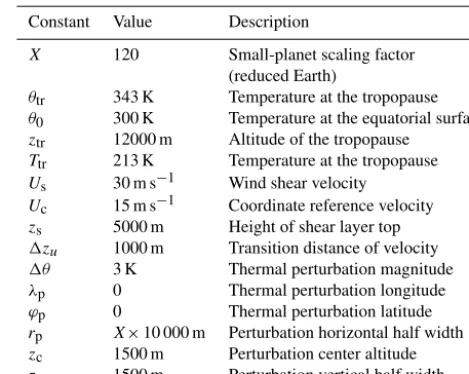
Table 1.List of constants used for the supercell test.
Constant Value Description
X 120 Small-planet scaling factor
(reduced Earth)
θtr 343 K Temperature at the tropopause
θ0 300 K Temperature at the equatorial surface
ztr 12000 m Altitude of the tropopause
Ttr 213 K Temperature at the tropopause
Us 30 m s−1 Wind shear velocity
Uc 15 m s−1 Coordinate reference velocity
zs 5000 m Height of shear layer top
1zu 1000 m Transition distance of velocity
1θ 3 K Thermal perturbation magnitude
λp 0 Thermal perturbation longitude
ϕp 0 Thermal perturbation latitude
rp X×10 000 m Perturbation horizontal half width
zc 1500 m Perturbation center altitude
zp 1500 m Perturbation vertical half width
111 km/X∼111 km/120∼1 km near the Equator. Klemp et al. (2015) demonstrated excellent agreement between simulations using this value of X and those completed on a flat, Cartesian plane with equivalent resolution. The model top (zt) is placed at 20 km with uniform vertical grid spacing (1z) equal to 500 m, resulting in 40 full vertical levels. No surface drag is imposed at the lower boundary (free slip condition). Water vapor (qv), cloud water (qc), and rainwater (qr) are handled by a simple Kessler microphysics routine (Kessler, 1969). In particular, the Kessler microphysics used here is outlined in detail in Appendix C of Klemp et al. (2015) and code for reproducing this configuration is available via the DCMIP2016 reposi-tory (https://doi.org/10.5281/zenodo.1298671, Ullrich et al., 2018).
All simulations are integrated for 120 min. Outputs of the full three-dimensional prognostic fields as well as all vari-ables pertaining to the microphysical routines were stored for post-processing at least every 15 min. Four different hor-izontal resolutions were specified: 4, 2, 1, and 0.5◦. For the reduced-radius framework, this results in approximate grid spacings of 4, 2, 1, and 0.5 km, respectively. Note that here we use “(nominal) resolution” and “grid spacing” inter-changeably to refer to the horizontal length of a single grid cell or distance between grid points. All relevant constants mentioned here and in the following section are defined in Table 1.
2.1 Mean atmospheric background
The definition of this test case relies on hydrostatic and cy-clostrophic wind balance, written in terms of Exner pressure
π and virtual potential temperatureθvas ∂π
∂z = − g cpθv
, and u2tanϕ= −cpθv ∂π
∂ϕ. (1)
Definingu=ueqcosϕto maintain solid body rotation, where ueq is the equatorial wind velocity, these equations can be combined to eliminateπ, leading to
∂θv ∂ϕ =
sin(2ϕ)
2g u
2 eq
∂θv ∂z −θv
∂u2eq ∂z
!
. (2)
The wind velocity is analytically defined throughout the domain. Meridional and vertical wind is initially set to zero. The zonal wind is obtained from
u(ϕ, z)= (3)
Us z zs
−Uc
cos(ϕ) forz < zs−1zu,
"
−4 5+3
z zs
−5 4
z2 zs2
!
Us−Uc
#
cos(ϕ) for|z−zs| ≤1zu
(Us−Uc)cos(ϕ) forz > zs+1zu .
The equatorial profile is determined through numerical it-eration. Potential temperature at the Equator is specified via
θeq(z)=
θ0+(θtr−θ0)
z ztr
54
for 0≤z≤ztr, θtrexp
g(z−z tr) cpTtr
forztr≤z
, (4)
and relative humidity is given by
H (z)=
1−3 4
z
ztr 5/4
for 0≤z≤ztr, 1
4 forztr≤z.
(5)
It is assumed that the saturation mixing ratio is given by
qvs(p, T )= 380.0
p
exp
17.27×T −273.0 T −36.0
. (6)
Pressure and temperature at the Equator are obtained by iterating on hydrostatic balance with initial state
θv,eq(0)(z)=θeq(z), (7)
and iteration procedure
πeq(i)=1−
z Z
0 g cpθv,eq(i)
dz (8)
p(i)eq =p0
πeq(i) cp/Rd
(9)
Teq(i)=θeq(z)πeq(i) (10)
qeq(i)=H (z)qvs
p(i)eq, Teq(i) (11)
θv,eq(i+1)=θeq(z)
1+Mvqeq(i)
. (12)
This iteration procedure generally converges to machine epsilon after approximately 10 iterations. The equatorial moisture profile is then extended through the entire domain:
q(z, ϕ)=qeq(z). (13)
Once the equatorial profile has been constructed, the vir-tual potential temperature through the remainder of the do-main can be computed by iterating on Eq. (2):
θv(i+1)(z, ϕ)= (14)
θv,eq(z)+ ϕ Z
0
sin(2φ)
2g u
2 eq
∂θv(i) ∂z −θ
(i) v
∂u2eq ∂z
!
dϕ.
Again, approximately 10 iterations are needed for conver-gence to machine epsilon. Once virtual potential temperature has been computed throughout the domain, Exner pressure throughout the domain can be obtained from Eq. (1):
π(z, ϕ)=πeq(z)− ϕ Z
0
u2tanϕ cpθv
dϕ, (15)
and so
p(z, ϕ)=p0π(z, ϕ)cp/Rd, (16)
Table 2.Participating modeling centers and associated dynamical cores that submitted results for the splitting supercell test.
Short name Long name Modeling center or group
ACME-A (E3SM) Energy Exascale Earth System Model Sandia National Laboratories and University of Colorado, Boulder, USA
CSU Colorado State University Model Colorado State University, USA
FV3 GFDL Finite-Volume Cubed-Sphere Dynamical Core Geophysical Fluid Dynamics Laboratory, USA FVM Finite Volume Module of the Integrated Forecasting System European Centre for Medium-Range Weather Forecasts
GEM Global Environmental Multiscale model Environment and Climate Change Canada
ICON ICOsahedral Non-hydrostatic model Max-Planck-Institut für Meteorologie/DWD, Germany
MPAS Model for Prediction Across Scales National Center for Atmospheric Research, USA
NICAM Non-hydrostatic Icosahedral Atmospheric Model AORI/JAMSTEC/AICS, Japan
OLAM Ocean Land Atmosphere Model Duke University/University of Miami, USA
TEMPEST Tempest Non-hydrostatic Atmospheric Model University of California, Davis, USA
2.2 Potential temperature perturbation
To initiate convection, a thermal perturbation is introduced into the initial potential temperature field:
θ0(λ, φ, z)= (18)
(
1θcos2π
2Rθ(λ, ϕ, z)
forRθ(λ, ϕ, z) <1,
0 forRθ(λ, ϕ, z)≥1,
where
Rθ(λ, ϕ, z)= "
R
c(λ, ϕ;λp, ϕp) rp
2
+
z−z c zp
2#1/2 .
(19)
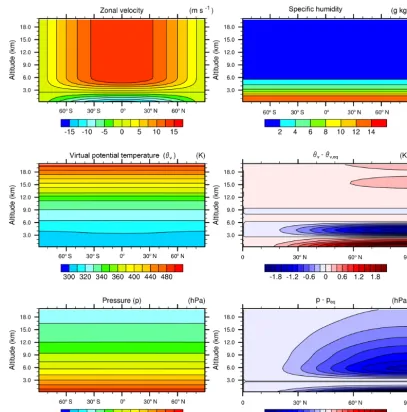
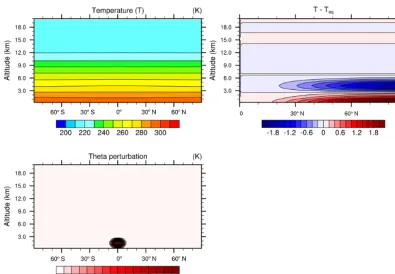
An additional iterative step is then required to bring the potential temperature perturbation into hydrostatic balance. Without this additional iteration, large vertical velocities will be generated as the flow rapidly adjusts to hydrostatic bal-ance since the test does not possess strong non-hydrostatic characteristics at initialization. Plots showing the initial state of the supercell are shown in Figs. 1 and 2 for reference. Code used by modeling centers during DCMIP2016 for ini-tialization of the supercell test case is archived via Zen-odo (https://doi.org/10.5281/zenZen-odo.1298671, Ullrich et al., 2018).
The test case is designed such that the thermal perturbation will induce a convective updraft immediately after initializa-tion. As rainwater is generated by the microphysics, reduced buoyancy and a subsequent downdraft at the Equator in com-bination with favorable vertical pressure gradients near the peripheral flanks of the storm will cause it to split into two counter-rotating cells that propagate transversely away from the Equator until the end of the test (Rotunno and Klemp, 1982, 1985; Rotunno, 1993; Klemp et al., 2015).
2.3 Physical and numerical diffusion
As noted in Klemp et al. (2015), dissipation is an important process near the grid scale, particularly in simulations inves-tigating convection in unstable environments such as this. To represent this process and facilitate solution convergence as resolution is increased for a given model, a second-order dif-fusion operator with a constant viscosity (value) is applied to all momentum equations (ν=500 m2s−1) and scalar equa-tions (ν=1500 m2s−1). In the vertical, this diffusion is ap-plied to the perturbation from the background state only in order to prevent the initial perturbation from mixing out.
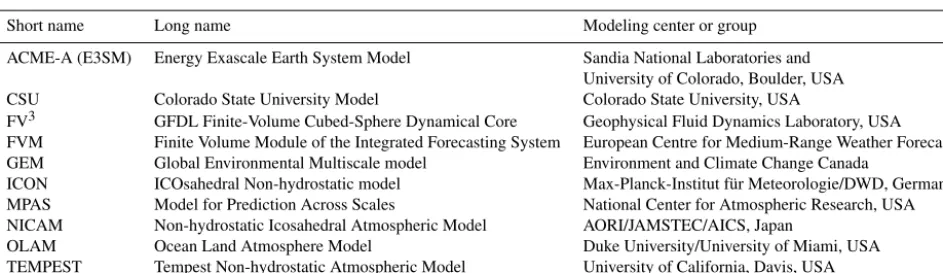
Models that contributed supercell test results during DCMIP2016 are listed in Table 2. They are formally de-scribed in Ullrich et al. (2017) and the references therein. Further, specific versions of the code used in DCMIP2016 and access instructions are also listed in Ullrich et al. (2017). Note that not all DCMIP2016 participating groups submitted results for this particular test.
Figure 1.Initial state for the supercell test. All plots are latitude–height slices at 0◦longitude. Deviations from equatorial values are shown for virtual potential temperature and pressure.
3 Results
The following section describes the results of the supercell test case during DCMIP2016, both from a intermodel time evolution perspective and intramodel sensitivity to model resolution and ensuing convergence. Note that there is no an-alytic solution for the test case, but features specific to super-cells should be observed and are subsequently discussed. It is not the intent of this paper to formally explore the precise mechanisms for model spread or define particular solutions as superior but rather to publish an overview set of results from a diverse group of global, non-hydrostatic models to be used for future development endeavors. Future work employ-ing this test case in a more narrow sense can isolate some of the model design choices that impact supercell simulations.
3.1 Time evolution of supercell at control resolution
Figure 3 shows the temporal evolution (every 30 min, out to 120 min test termination) of the supercell for contributing models at the control resolution of 1 km. The top four pan-els for each model highlight a cross-section at 5 km elevation through vertical velocity (w), while the bottom four show a cross-section (at the same elevation) through the rainwater (qr) field produced by the Kessler microphysics. Forw, red contours represent rising motion, while blue contours denote sinking air. Note that the longitudes plotted vary slightly in each of the four time panes to account for zonal movement. This analysis framework closely follows that originally out-lined in Klemp et al. (2015).
Figure 2.Same as Fig. 1 for temperature and potential temperature.
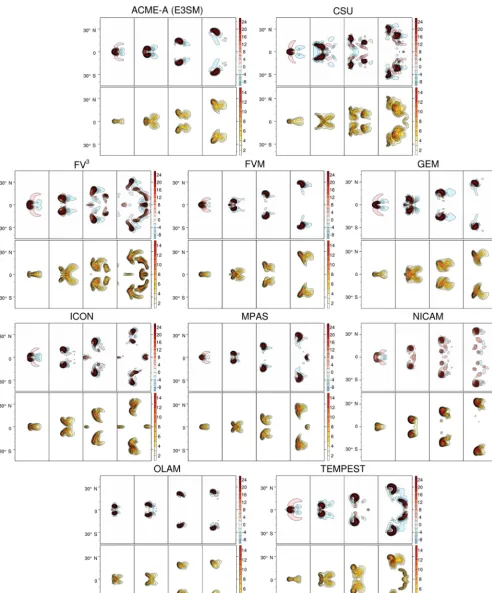
noted at 30 min in all models, although the degree to which the maximum updraft velocities are centered on the Equator vary. A corresponding downdraft is located immediately to the east of the region of maximum positive vertical velocity. This downdraft is single-lobed (e.g., ACME-A) or double-lobed (e.g., GEM) in all simulations. Separation of the initial updraft occurs by 60 min across all models, although vari-ance begins to develop in the meridional deviation from the Equator of the splitting supercell. Models such as NICAM, FV3, OLAM, and ICON all have larger and more distinct north–south spatial separation, while FVM, GEM, ACME-A, and TEMPEST show only a few degrees of latitude between updraft cores.
Structural differences also begin to emerge at 60 min. For example, FVM, GEM, ACME-A, and TEMPEST all exhibit three local maxima in vertical velocity: two large updrafts mirrored about the Equator with one small maximum still located over Equator centered near the initial perturbation. Similar behavior is noted in theqrfields. This is in contrast with other models which lack a third updraft on the equatorial plane. Generally speaking,qrmaxima are collocated with the locations of maximum updraft velocities and thereby conver-sion fromqvandqctoqrin the Kessler microphysics.
While the aggregate response of a single updraft eventu-ally splitting into poleward-propagating symmetric storms about the Equator is well matched between the configura-tions, notable differences exist, particularly towards the end of the runs. At 120 min, FVM, GEM, ACME-A, OLAM, and
MPAS all show two discrete supercells approximately 30◦ from the Equator. FV3 and TEMPEST both produce longi-tudinally transverse storms that stretch towards the Equator in addition to the two main cells. Each of the splitting super-cells splits a second time in ICON, forming, in conjunction with a local maximum at the Equator, five maxima of vertical velocity (and correspondingly rainwater). NICAM produces two core supercells (as more clearly evident in theqr field at 120 min) but has noticeable alternating weak updrafts and downdrafts in the north–south space between the two storm cores.
The relative smoothness of the storms as measured by the vertical velocity and rainwater fields also varies between models, particularly at later times. ACME-A, FVM, GEM, OLAM, and MPAS produce updrafts that are relatively free of additional, small-scale local extrema in the vicinity of the core of the splitting supercell. Conversely, CSU, FV3, ICON, NICAM, and TEMPEST all exhibit solutions with additional convective structures, with multiple updraft maxima versus two coherent cells. This spread is somewhat minimized when looking at rainwater, implying that the overall dynamical character of the cells as noted by precipitation generation is more similar, with all models showing cohesive rainwater maxima O(10 g kg−1).
3.2 Resolution sensitivity of the supercell
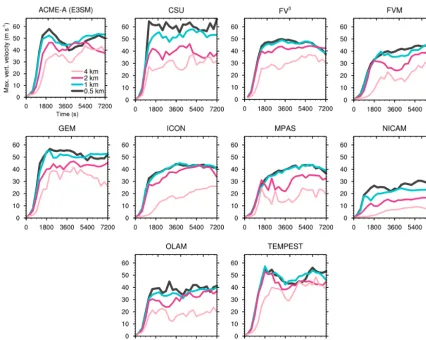
Figure 5.Maximum domain updraft velocity (m s−1) as a function of time (seconds from initialization) for each model at each of the four specified resolutions. Note that the dark grey line is the finest grid spacing (0.5 km) in this test.
4, 2, 1, and 0.5 km, from left to right) at test termination of 120 min. Therefore, the third panel from the left for each model (1 km) should match the fourth panel from the left for each model in Fig. 3.
As resolution increases (left to right), models show in-creasing horizontal structure in both the vertical velocity and rainwater fields. Updraft velocity generally increases with resolution, particularly going from 4 to 2 km, implying that the supercell is underresolved at 4 km resolution. This is supported by previous mesoscale simulations investigat-ing supercells in other frameworks (Potvin and Flora, 2015; Schwartz et al., 2017), although it should be emphasized that this response is also subject to each numerical scheme’s ef-fective resolution (Skamarock, 2004) and that the resolvabil-ity of real-world supercells can depend on the size of indi-vidual storms.
At the highest resolutions, there is a distinct group of mod-els that exhibit more small-scale structure, particularly in ver-tical velocity, at+120 min at higher resolutions. CSU, GEM, and NICAM appear to have the largest vertical velocity vari-ability at 0.5 km, while ACME-A, FVM, MPAS, and TEM-PEST appear to produce the smoothest solutions. This
Figure 6.Same as Fig. 5 except showing area-integrated instantaneous precipitation rate (×105kg s−1).
3.3 Convergence of global supercell quantities with resolution
While Fig. 4 highlights the structural convergence with res-olution, more storm-wide measures of supercell intensity are also of interest. Figure 5 shows the maximum resolved up-draft velocity over the global domain as a function of time for each dynamical core and each resolution (finer model resolution is denoted by progressively darker lines). Maxi-mum updraft velocity is chosen as a metric of interest due to its common use in both observational and modeling studies of supercells. All models show increasing updraft velocity as a function of resolution, further confirming that, at 4 km, the supercell is underresolved dynamically. For the major-ity of models and integration times, the gap between 4 and 2 km grid spacing is the largest in magnitude, with subse-quent increases in updraft velocity being smaller as models further decrease horizontal grid spacing. At 0.5 km, the ma-jority of models are relatively converged, with FV3, ICON, and MPAS showing curves nearly on top of one another at these resolutions. Other models show larger differences be-tween 0.5 and 1 km curves, implying that these configura-tions may not yet be converged in this bulk sense. Further grid refinement or modifications to the dissipation schemes
are necessary to achieve convergence; this is left to the indi-vidual modeling groups to verify (see Sect. 3.4 for an exam-ple).
The maximum updraft velocity as a function of resolu-tion for particular model configuraresolu-tions varies quite widely. NICAM produces the weakest supercell, with velocities around 30 m s−1 at 0.5 km, while ACME-A, TEMPEST, GEM, and CSU all produce supercells that surpass 55 m s−1 at some point during the supercell evolution. Models that have weaker supercells at 0.5 km tend to also have weaker supercells at 4 km (e.g., NICAM), while the same is true for stronger supercells (e.g., TEMPEST), likely due to config-uration sensitivity. This agrees with the already discussed structural plots (Fig. 4) which demonstrated model solutions were generally converging with resolution on an intramodel basis but not necessarily across models.
Figure 7.Same as Fig. 5 except showing storm-integrated kinetic energy (PJ) as defined in Eq. (20).
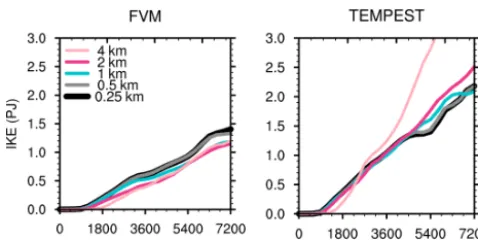
Figure 9.As in Fig. 7 except showing the subset of models that completed a 0.25 km test.
availableqrto fall out of the column at these grid spacings, even though updraft velocities are weaker at coarser resolu-tions. Unlike maximum vertical velocity, the integrated pre-cipitation rate does not monotonically increase with resolu-tion for most models. At 120 min, integrated rates at 0.5 km range by approximately a factor of 3 or 4, from a low of 50– 70×105kg s−1(ACME-A, FVM, OLAM) to a high of 170– 200×105kg s−1(CSU, FV3), highlighting the sensitivity of final results that have been already been discussed.
In addition to Figs. 5 and 6, which directly correspond to analysis in Klemp et al. (2015), we also define a storm-integrated kinetic energy (IKE) metric as follows:
IKE(t )=1 2
zt Z
0 Ae Z
0
ρu02+v02+w02dAdz, (20)
wherezt is the model top,Ae is the area of the sphere, and
winds (u0,v0, w0) are calculated as perturbations from the initial model state at the corresponding spatial location (e.g.,
u0=u0(t, φ, ψ, z)=u(t, φ, ψ, z)−u(0, φ, ψ, z)). Here, local air density,ρ(t, φ, ψ, z), is computed using a standard atmo-sphere due to limitations in available data from some groups. As a metric, IKE is less sensitive to grid-scale velocities and is also a more holistic measure of storm-integrated inten-sity. This is shown in Fig. 7. Results are generally analogous to those in Fig. 6. This should be expected since total precip-itation within a supercell is tied to the spatial extent and mag-nitude of the upward velocities that dominate the IKE term. Convergence behavior between 1 and 0.5 km appears simi-lar for each model as noted earlier. The total spread across models at the end of the simulation for the 0.5 km simula-tions is also similar to that seen in Fig. 6, demonstrating the large range in “converged” solutions across models due to the various design choices discussed earlier.
3.4 Sample experiments at 0.25 km grid spacing While the formal supercell test case definition during DCMIP2016 specified 0.5 km grid spacing as the finest res-olution for groups to submit, it is clear that full convergence
has not been reached for some of the modeling groups (e.g., Sect. 3.3). To confirm that the solution still converges further, two groups (FVM and TEMPEST) completed an exploratory set of simulations at 0.25 km resolution. Figure 8 shows the structural grid spacing convergence at 120 min for the two models from 2 to 0.25 km. Note that the left three panels for each model in Fig. 8 should match the corresponding three rightmost panels in Fig. 4. Figure 9 shows FVM and TEM-PEST IKE results, including the 0.25 km simulations.
For TEMPEST and FVM, results indicate solution differ-ences are markedly smaller between 0.5 and 0.25 km than be-tween 1 and 0.5 km, implying the test is not fully converged at 0.5 km for these models. Therefore, 0.25 km may be a bet-ter target for a reference grid spacing going forward.
It is worth noting that the reference solution in Klemp et al. (2015) is indeed converged at 0.5 km, as are some of the mod-els in DCMIP2016. Given this, it is unclear whether the need to go beyond DCMIP2016 protocols for “full” convergence is due to the test case definition itself or, rather, the imple-mentation of the test case in particular models. This is left for subsequent analyses. However, given this result, it is rec-ommended that groups applying this test case in the future continue to push beyond the four resolutions specified here if convergence is not readily apparent in either storm structure or bulk quantities at 0.5 km.
4 Conclusions
Non-hydrostatic dynamics are required for accurate repre-sentation of supercells. The results from this test case show that clear differences and uncertainties exist in storm evolu-tion when comparing identically initialized dynamical cores at similar nominal grid resolutions. Intramodel convergence in bulk, integrated quantities appears to generally occur at approximately 0.5 km grid spacing. However, intermodel dif-ferences are quite large even at these resolutions. For exam-ple, maximum updraft velocity within a storm between two models may vary by almost a factor of 2 even at the highest resolutions assessed at DCMIP2016.
Structural convergence is weaker than bulk-integrated metrics. Two-dimensional horizontal cross-sections through the supercells at various times show that some models are well converged between 1 and 0.5 km, while results from other models imply that finer resolutions are needed to as-sess whether convergence will occur with a particular test case formulation and model configuration. Interestingly, in some cases, maximum bulk quantities converge faster than snapshots of cross-sections.
particu-larly sensitive to numerical diffusion since damping of prog-nostic variables in global models is occurring at or near the scales required for resolvability of the storm. This is differ-ent from other DCMIP2016 tests (baroclinic wave and trop-ical cyclone), which produced dynamics that were less non-hydrostatic in nature and required resolvable scales much coarser than the grid cell level. Further, since DCMIP2016 did not formally specify a particular physics–dynamics cou-pling strategy, it would not be surprising for particular design choices regarding how the dynamical core is coupled to sub-grid parameterizations to also impact results.
Given the lack of an analytic solution, we emphasize that the goal of this paper is not to define particular supercells as optimal answers. Rather, the main intention of this test at DCMIP2016 was to produce a verifiable database for models to use as an initial comparison point when evaluating non-hydrostatic numerics in dynamical cores. Pushing grid spac-ings to 0.25 km and beyond to formalize convergence would be a useful endeavor in future application of this test, either at the modeling center level or as part of future iterations of DCMIP. Variable-resolution or regionally refined dynamical cores may reduce the burden of such simulations, making them more palatable for researchers with limited computing resources.
We acknowledge that, as groups continue to develop non-hydrostatic modeling techniques, small changes in the treat-ment of diffusion in the dynamical core will likely lead to changes in their results from DCMIP2016. We recommend modeling centers developing or optimizing non-hydrostatic dynamical cores to perform this test and compare their so-lutions to the baselines contained in this paper as a check of sanity relative to a large and diverse group of next-generation dynamical cores actively being developed within the atmo-spheric modeling community.
Code availability. Information on the availability of source code for the models featured in this paper can be found in Ullrich et al. (2017). For this particular test, the initialization routine, microphysics code, and sample plotting scripts are available at https://doi.org/10.5281/zenodo.1298671 (Ullrich et al., 2018).
Author contributions. CMZ prepared the text and corresponding figures in this paper. PAU assisted with formatting of the test case description in Sect. 2. Data and notations about model-specific con-figurations were provided by all co-authors representing their mod-eling groups.
Competing interests. The authors declare that they have no conflict of interest.
Acknowledgements. DCMIP2016 is sponsored by the National
Center for Atmospheric Research Computational Information
Systems Laboratory, the Department of Energy Office of Science (award no. DE-SC0016015), the National Science Foundation (award no. 1629819), the National Aeronautics and Space Ad-ministration (award no. NNX16AK51G), the National Oceanic and Atmospheric Administration Great Lakes Environmental Research Laboratory (award no. NA12OAR4320071), the Office of Naval Research and CU Boulder Research Computing. This work was made possible with support from our student and postdoctoral participants: Sabina Abba Omar, Scott Bachman, Amanda Back, Tobias Bauer, Vinicius Capistrano, Spencer Clark, Ross Dixon, Christopher Eldred, Robert Fajber, Jared Fer-guson, Emily Foshee, Ariane Frassoni, Alexander Goldstein, Jorge Guerra, Chasity Henson, Adam Herrington, Tsung-Lin Hsieh, Dave Lee, Theodore Letcher, Weiwei Li, Laura Maz-zaro, Maximo Menchaca, Jonathan Meyer, Farshid Nazari, John O’Brien, Bjarke Tobias Olsen, Hossein Parishani, Charles Pel-letier, Thomas Rackow, Kabir Rasouli, Cameron Rencurrel, Koichi Sakaguchi, Gökhan Sever, James Shaw, Konrad Simon, Abhishekh Srivastava, Nicholas Szapiro, Kazushi Takemura, Pushp Raj Tiwari, Chii-Yun Tsai, Richard Urata, Karin van der Wiel, Lei Wang, Eric Wolf, Zheng Wu, Haiyang Yu, Sungduk Yu, and Jiawei Zhuang. We would also like to thank Rich Loft, Cecilia Banner, Kathryn Peczkowicz and Rory Kelly (NCAR), Carmen Ho, Perla Dinger, and Gina Skyberg (UC Davis), and Kristi Hansen (University of Michigan) for administrative support during the workshop and summer school. The National Center for Atmospheric Research is sponsored by the National Science Foun-dation. Sandia National Laboratories is a multimission laboratory managed and operated by National Technology and Engineering Solutions of Sandia, LLC, a wholly owned subsidiary of Honeywell International Inc., for the US Department of Energy’s National Nuclear Security Administration under contract DE-NA0003525.
Edited by: Simone Marras
Reviewed by: two anonymous referees
References
Browning, K. A.: Airflow and Precipitation Trajectories Within Se-vere Local Storms Which Travel to the Right of the Winds, J. Atmos. Sci., 21, 634–639, https://doi.org/10.1175/1520-0469(1964)021<0634:AAPTWS>2.0.CO;2, 1964.
Doswell, C. A. and Burgess, D. W.: Tornadoes and toraadic storms: A review of conceptual models, The Tornado: Its Structure, Dy-namics, Prediction, and Hazards, Geophysical Monograph Se-ries, American Geophysical Union, 161–172, 1993.
Gallus, W. A. and Bresch, J. F.: Comparison of Impacts of WRF Dynamic Core, Physics Package, and Initial Conditions on Warm Season Rainfall Forecasts, Mon. Weather Rev., 134, 2632–2641, https://doi.org/10.1175/MWR3198.1, 2006.
Weather Rev., 146, 3505–3544, https://doi.org/10.1175/mwr-d-17-0345.1, 2018.
Guimond, S. R., Reisner, J. M., Marras, S., and Giraldo, F. X.: The Impacts of Dry Dynamic Cores on Asymmet-ric HurAsymmet-ricane Intensification, J. Atmos. Sci., 73, 4661–4684, https://doi.org/10.1175/JAS-D-16-0055.1, 2016.
Jablonowski, C. and Williamson, D. L.: The pros and cons of dif-fusion, filters and fixers in atmospheric general circulation mod-els, in: Numerical Techniques for Global Atmospheric Modmod-els, Springer, 381–493, 2011.
Ji, M. and Toepfer, F.: Dynamical Core Evaluation Test Report for NOAA’s Next Generation Global Prediction System (NGGPS), Tech. rep., National Oceanic and Atmospheric Administration, available at: https://repository.library.noaa.gov/view/noaa/18653 (last access: 25 February 2019), 2016.
Kessler, E.: On the Distribution and Continuity of Water Substance in Atmospheric Circulations, American Meteorological Soci-ety, Boston, MA, 1–84, https://doi.org/10.1007/978-1-935704-36-2_1, 1969.
Klemp, J. B. and Wilhelmson, R. B.: The simulation of three-dimensional convective storm dynamics, J. Atmos. Sci., 35, 1070–1096, 1978.
Klemp, J. B., Skamarock, W. C., and Park, S.-H.: Idealized global nonhydrostatic atmospheric test cases on a reduced-radius sphere, J. Adv. Model. Earth Sy., 7, 1155–1177, https://doi.org/10.1002/2015MS000435, 2015.
Kuang, Z., Blossey, P. N., and Bretherton, C. S.: A new approach for 3D cloud-resolving simulations of large-scale atmospheric circulation, Geophys. Res. Lett., 32, L02809, https://doi.org/10.1029/2004gl021024, 2005.
Kühnlein, C., Deconinck, W., Klein, R., Malardel, S., Piotrowski, Z. P., Smolarkiewicz, P. K., Szmelter, J., and Wedi, N. P.: FVM 1.0: a nonhydrostatic finite-volume dynamical core for the IFS, Geosci. Model Dev., 12, 651–676, https://doi.org/10.5194/gmd-12-651-2019, 2019.
Lemon, L. R. and Doswell, C. A.: Severe Thunderstorm Evolution and Mesocyclone Structure as Related to Tornadogenesis, Mon. Weather Rev., 107, 1184–1197, https://doi.org/10.1175/1520-0493(1979)107<1184:STEAMS>2.0.CO;2, 1979.
Malardel, S.: Physics–dynamics coupling, in: Proceedings of ECMWF Workshop on Non-hydrostatic Modelling, European Centre for Medium-Range Weather Forecasts, vol. 6777, 2010. Potvin, C. K. and Flora, M. L.: Sensitivity of Idealized
Su-percell Simulations to Horizontal Grid Spacing: Implications for Warn-on-Forecast, Mon. Weather Rev., 143, 2998–3024, https://doi.org/10.1175/MWR-D-14-00416.1, 2015.
Reed, K. A., Bacmeister, J. T., Rosenbloom, N. A., Wehner, M. F., Bates, S. C., Lauritzen, P. H., Truesdale, J. E., and Hannay, C.: Impact of the dynamical core on the direct simulation of tropical cyclones in a high-resolution global model, Geophys. Res. Lett., 42, 3603–3608, https://doi.org/10.1002/2015GL063974, 2015. Rotunno, R.: Supercell thunderstorm modeling and theory,
The tornado: Its structure, dynamics, prediction, and haz-ards, in: Geophysical Monograph Series, edited by: Church, C., Burgess, D., Doswell, C., and Davies-Jone R., 57–73, https://doi.org/10.1029/GM079, 1993.
Rotunno, R. and Klemp, J.: On the Rotation and Prop-agation of Simulated Supercell Thunderstorms, J. At-mos. Sci., 42, 271–292, https://doi.org/10.1175/1520-0469(1985)042<0271:OTRAPO>2.0.CO;2, 1985.
Rotunno, R. and Klemp, J. B.: The Influence of the Shear-Induced Pressure Gradient on Thunderstorm Motion, Mon. Weather Rev., 110, 136–151, https://doi.org/10.1175/1520-0493(1982)110<0136:TIOTSI>2.0.CO;2, 1982.
Schwartz, C. S., Romine, G. S., Fossell, K. R., Sobash, R. A., and Weisman, M. L.: Toward 1-km Ensemble Forecasts over Large Domains, Mon. Weather Rev., 145, 2943–2969, https://doi.org/10.1175/MWR-D-16-0410.1, 2017.
Skamarock, W. C.: Evaluating Mesoscale NWP Models Using Kinetic Energy Spectra, Mon. Weather Rev., 132, 3019–3032, https://doi.org/10.1175/MWR2830.1, 2004.
Smolarkiewicz, P. K., Kühnlein, C., and Grabowski, W. W.: A finite-volume module for cloud-resolving simulations of global atmospheric flows, J. Comput. Phys., 341, 208–229, https://doi.org/10.1016/j.jcp.2017.04.008, 2017.
Staniforth, A., Wood, N., and Côté, J.: Analysis of the numerics of physics–dynamics coupling, Q. J. Roy. Meteor. Soc., 128, 2779– 2799, https://doi.org/10.1256/qj.02.25, 2002.
Thatcher, D. R. and Jablonowski, C.: A moist aquaplanet variant of the Held–Suarez test for atmospheric model dynamical cores, Geosci. Model Dev., 9, 1263–1292, https://doi.org/10.5194/gmd-9-1263-2016, 2016.
Ullrich, P. A., Jablonowski, C., Kent, J., Lauritzen, P. H., Nair, R., Reed, K. A., Zarzycki, C. M., Hall, D. M., Dazlich, D., Heikes, R., Konor, C., Randall, D., Dubos, T., Meurdesoif, Y., Chen, X., Harris, L., Kühnlein, C., Lee, V., Qaddouri, A., Girard, C., Gior-getta, M., Reinert, D., Klemp, J., Park, S.-H., Skamarock, W., Miura, H., Ohno, T., Yoshida, R., Walko, R., Reinecke, A., and Viner, K.: DCMIP2016: a review of non-hydrostatic dynamical core design and intercomparison of participating models, Geosci. Model Dev., 10, 4477–4509, https://doi.org/10.5194/gmd-10-4477-2017, 2017.
Ullrich, P., Lauritzen, P. H., Reed, K., Jablonowski, C., Zarzy-cki, C., Kent, J., Nair, R., and Verlet-Banide, A.: Cli-mateGlobalChange/DCMIP2016: v1.0 (Version v1.0), Zenodo, https://doi.org/10.5281/zenodo.1298671 (last access: 25 Febru-ary 2019), 2018.
Wedi, N. P. and Smolarkiewicz, P. K.: A framework for testing global non-hydrostatic models, Q. J. Roy. Meteor. Soc., 135, 469–484, https://doi.org/10.1002/qj.377, 2009.
Weisman, M. L. and Klemp, J. B.: The Dependence of Numerically Simulated Convective Storms on Vertical Wind Shear and Buoyancy, Mon. Weather Rev., 110, 504–520, https://doi.org/10.1175/1520-0493(1982)110<0504:TDONSC>2.0.CO;2, 1982.