Copyright © 2019 (Michael Johann and Lars Bülow). Licensed under the Creative Commons Attribution Non-commercial No Derivatives (by-nc-nd). Available at http://ijoc.org.
One Does Not Simply Create a Meme:
Conditions for the Diffusion of Internet Memes
MICHAEL JOHANN
University of Passau, Germany
LARS BÜLOW
University of Salzburg, Austria
Internet memes are particularly popular among young social Web users. Research into this phenomenon is booming. However, the success and diffusion factors of memes remain unclear. This interdisciplinary study delves deeper into the question of how and why memes spread through social media platforms. Based on Spitzberg’s model of meme diffusion and Rogers’ framework on the diffusion of innovations, this study integrates linguistic perspectives on image-based memes. Using a quantitative content analysis (n = 3,253), this study analyzes the reasons for the successful diffusion of the so-called Merkel Meme on Twitter. The results indicate success factors such as the participation of well-connected early adopter groups like journalists and media organizations in the early stage of the diffusion process as well as image editing.
Keywords: Internet memes, Merkel Meme, diffusion, Twitter, social media, content analysis
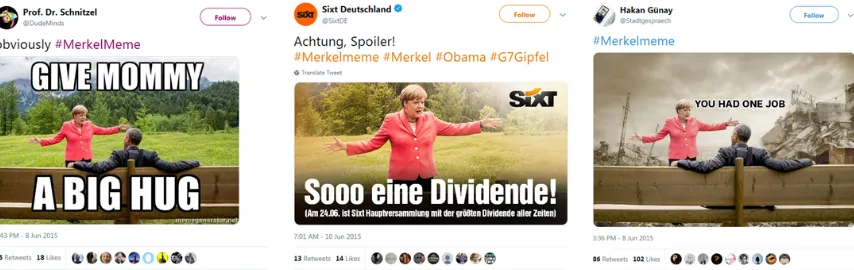
At the 2015 G7 summit in Germany, a photo of Angela Merkel and Barack Obama gained attention among social media users. The photo shows Obama sitting on a bench looking at Merkel, who faces him with wide open arms. The users not only spread it within a few hours via Twitter but also adapted it by including written language and creating photoshopped variants (see Figure 1). From this photo, the so-called Merkel Meme emerged.
Michael Johann: [email protected] Lars Bülow: [email protected]
Figure 1. Adaptations of the Merkel Meme. (Sources: Twitter @DudeMinds, @SixtDE, @Stadtgespraech)
The concept of an Internet meme (Milner, 2016; Shifman, 2012, 2014) comprises relatively new and diffuse types of texts (motifs, phrases, pictures, and videos) that spread through social media. Their encompassing nature has resulted in the term being operationalized differently. Some studies focus on written text memes such as quotes (Shubeck & Huette, 2015), and others concentrate on moving images such as YouTube memes (Shifman, 2012; Xie, Natsev, Kender, Hill, & Smith, 2011). Overall, Internet memes are considered as part of a participatory digital culture (Shifman, 2014, p. 18; Wiggings & Bowers, 2015, p. 1886), often picking up political and pop cultural content (Shifman, 2014, p. 51).
Research on Internet memes has increased in the past years. However, there is little empirical work on the success and diffusion factors (e.g., Johann & Bülow, 2018; Schlaile, Knausberg, Mueller, & Zeman, 2018). Some studies aim at predicting the success of Internet memes rather than focusing on structural features of social media platforms. Only some pay attention to the characteristics of the meme itself. Shubeck and Huette (2015), for example, found that “linguistic features appear to be enough to predict meme transmission success without any information about social network structure” (p. 2182). Although the authors only examine the language structure, they neglect the characteristics of multimodal texts and the structural features of social media platforms. Generally, linguistic perspectives on Internet memes are rare (e.g., Dancygier & Vandelanotte, 2017; Grundlingh, 2018; Nissenbaum & Shifman, 2018).
Political Internet memes have emerged as a relevant subgenre in the broad “memesphere” (Shifman, 2014, p. 117). The attribute “political” means that the memes refer to societal interests, societal conflicts, political actors, their representative acts, or political decisions (Grittmann, 2007, pp. 312–313). Researchers have examined political Internet memes especially in the context of elections (e.g., Ross & Rivers, 2017; Wells, 2018), political activism (e.g., Bebić & Volarevic, 2018; Harlow, 2013), and social criticism (e.g., Cepeda, 2018; Mielczarek, 2018).
construction of meaning. The potential of being taken up and diffusing via social media opens numerous strategic possibilities for application, from political action and discourse (Ross & Rivers, 2017; Shifman, 2014, p. 120) to viral marketing and advertising (Csordás, Horváth, Mitev, & Markos-Kujbus, 2017).
This study seeks to contribute to the understanding of how political Internet memes such as the Merkel Meme are powerful forms of user participation in a modern digital culture. Specifically, this case study aims to uncover the success and diffusion factors and to isolate the attributes that make it susceptible for adaptation on the microblogging service Twitter.
First, the multimodal nature of Internet memes will be specified. Subsequently, these characteristics will be applied to the question of how the Merkel Meme spread through Twitter. As information diffusion is at the core of diffusion research, a conceptual analysis model will be developed with regard to Rogers’ (1962/2003) diffusion factors innovation, communication channel, time, and social system. Specifically, Spitzberg’s (2014) meme diffusion levels of the meme, the individuals, the time, and the social network will be addressed in this framework. The model will be applied in a quantitative content analysis of the tweets about the Merkel Meme. Based on the analysis results, the study finally discusses the implications of success factors such as participation from well-connected early adopter groups in the early stage of the diffusion process as well as content-related features.
Literature Review
Internet Memes as Image-Language-Texts
The concept of the “meme” goes back to the evolutionary biologist Richard Dawkins (1976) in his attempt to find a term for the cultural counterpart to genetic evolution. He explains memes as replicators that should be considered as information units that are transferred via symbols (Dawkins, 1976, p. 206). He also binds meme evolution to the conditions of variation, replication, and fitness. Good replicators are characterized by their longevity, fecundity, and copying fidelity (Dawkins, 1976, pp. 18–19). Dawkins’ neo-Darwinian meme concept was frequently adopted and developed (Blackmore, 1999; Shifman, 2014). Since the Web 2.0 revolution, the term “meme” has also been used to describe ideas spreading across social media. This new application of the term must be distinguished from Dawkins’ original concept. In accordance with Shifman (2014, p. 7), this study refers to these ideas as Internet memes.
I define an Internet meme as: (a) a group of digital items sharing common characteristics of content, form, and/or stance, which (b) were created with awareness of each other, and (c) were circulated, imitated, and/or transformed via the Internet by many users. (Shifman, 2014, p. 41)
To empirically research the phenomenon, Shifman’s (2014) expression “group of digital items” (p. 41) has to be clarified. A broad conception of text as defined in media semiotics can be applied: This includes principally any form of language (manifested as [written] language or spoken [talk-]in-interaction), pictures, gestures, and facework and other semiotic signs (Van Dijk, 2008, p. 116). Texts are principally all emblematic vocalizations and their communicative function and performance, regardless of their medial provenance. The most important criterion to define a text in media semiotics as well as in linguistics is coherence. The term coherence refers to semantic relations among single units of a text. Therefore, coherence is traditionally seen as a text-inherent property that can be disclosed by analyzing the language structure (De Beaugrande & Dressler, 1996). In the case of multimodal texts, however, the interplay of the language and the elements of the image has to be taken into account. Bear in mind that a minimum of coherence is a necessary precondition for every text, even if the text wants to break with the expectations of the recipients. Humor or irony might play with the incongruity between what is anticipated and what actually occurs on the text surface. In such cases, it is the challenge of the recipient to (re-)construct the underlying coherence. Thus, this study applies a process-oriented view on coherence. It is not only a text-inherent property, but also a cognitive operation of selecting and categorizing information (Fetzer, 2012, p. 448). In this view, textual coherence is something that is construed actively in text or discourse processing, based on the language and the image in a multimodal context. However, the sociocultural environment, genre, and other resources also contribute to the construction of coherence (Fetzer, 2012). In the memesphere, the recipients are used to humorous meme adaptations that violate their conventional expectations.
Osterroth (2015, p. 33) notices the semiotic character of memes in his definition. Internet memes are language-image-texts. The development of meaning can be achieved through collective (often hyperbolic) semiosis. Internet memes therefore consist of images of pop culture, politics, or everyday life, which are often but not necessarily recontextualized by the users. These language-image-texts usually follow a prototypical composition: the basis is the image, which is mostly recontextualized by language (Osterroth, 2015). The present study also refers to this widespread meme type.
The Diffusion of Internet Memes
In contrast to genes, memes can be replicated through imitation alone (Dawkins, 1976, p. 208). Hence, the Internet influences the replication of a message, as a loss-free transmission (copying fidelity) of information is possible through digital channels. Online communication benefits exponential diffusion (fecundity), regardless of place and time. In addition, the message is saved (longevity) through the storage function of the Internet.
Regarding this process, the similarity to the concept of virality becomes evident (Shifman, 2014, p. 55). However, memes fundamentally differ from viral contents regarding the adaptation process. Whereas viral diffusion is based on the numerous spreading of one single version, a memetic phenomenon is constituted by the diffusion of various adaptations (Shifman, 2014, p. 56). In the case of the Merkel Meme, the photo of Angela Merkel and Barack Obama is a picture replicated by the users that initiated the meme on Twitter. As image-based Internet memes (in the form of stock character macros) can be characterized by a constant image and the variation of language (Osterroth, 2015, p. 34; Shifman, 2014, p. 63), it is assumed that meme diffusion is rooted in both virality and memetics.
Overall, viral and memetic diffusion processes are highly complex and depend on many different interacting factors. A well-established theory in both contexts is Rogers’ (1962/2003) theory of the diffusion of innovations. Diffusion research sheds light on the question of how innovations spread in a social system. Internet memes can be conceptualized as innovative practices of digital culture (Burgess, 2007, p. 29; Shifman, 2014, p. 99). Their variation and replication are “typically a form of innovation diffusion” (Spitzberg, 2014, p. 316). The concept of diffusion is the process “by which an innovation is communicated through certain channels over time among the members of a social system” (Rogers, 2003, p. 5). Although the theory’s limitations are characterized as controversial (e.g., MacVaugh & Schiavone, 2010), diffusion research still lacks a holistic framework to explain the diffusion of Internet memes. Spitzberg (2014) proposes a multilevel model of meme diffusion (M3D), which “elaborates six major nested levels of variables likely to influence or reflect meme diffusion” (Spitzberg, 2014, p. 317). Considering the complexity of the model, however, Spitzberg (2014) admits that the M3D framework is to “expansive to be tested completely in any one study” (p. 327). Therefore, only a few studies use this framework to examine meme diffusion on Twitter, looking at different levels of diffusion (e.g., Kim, Feng, Wang, Spitzberg, & Tsou, 2017; Sharag-Eldin, Ye, & Spitzberg, 2018; Ye, Sharag-Sharag-Eldin, & Spitzberg, 2018). This study follows a similarly exploratory approach primarily focusing on the meme level, the individual level, and the social network level (Spitzberg, 2014, p. 318) to gain further insights into memetic diffusion processes.
Meme Level
edited. Shubeck and Huette (2015, p. 2184) differ in their study between psycholinguistic factors as working memory and orthographical features as word length. However, complexity is also affected by the coherence between the meme’s language and image. A high coherence between the language and the image helps the recipients to process information, where at the same time incongruity is at work to evoke humor.
In addition, the compatibility of innovations is responsible for their diffusion potential (Rogers, 2003, p. 15; Spitzberg, 2014, p. 318). Compatibility refers to the relationship of an innovation with existing values and attitudes, introduced ideas, or the needs of the person taking on a concept (Fliegel & Kivlin, 1966, p. 246). Virality research has indicated that people tend to forward humorous and emotionally charged content (e.g., Berger, 2011; Berger & Milkman, 2012; Kim, 2015; Porter & Golan, 2006; Stieglitz & Dang-Xuan, 2013). As Internet memes often refer to pop culture or political topics (Shifman, 2014, p. 51), it is assumed that intertextual references that are compatible with the recipients’ own feelings and evoking humor foster meme diffusion. The same might apply for political references. The first research question therefore focuses on the meme level (Spitzberg, 2014, pp. 321–323):
RQ1: Which meme-related indicators influence the diffusion of the Merkel Meme adaptations?
Individual Level
Following Spitzberg (2014, p. 319), meme diffusion depends on the characteristics of the individual users in the diffusion process. Rogers (2003) subsumes these characteristics under the factor communication channel. He postulates that diffusion is realized between “an individual or other unit of adoption that has knowledge of the innovation or experience with using it [and] another individual or other unit that does not yet have experience with the innovation” (p. 18). Crucial variables in predicting meme diffusion are, for example, the users’ networking, source credibility, and the role of influential network members (Spitzberg, 2014, pp. 319–320). The process of forwarding itself is rooted in individual motivations such as self-presentation (Ho & Dempsey, 2010) or extroversion (Chiu, Hsieh, Kao, & Lee, 2007). Research indeed has shown that there is a strong connection between the extroversion of social media users and their network strength (Chen, 2014). Based on these considerations, the second research question addresses the individual level and the characteristics of the communication channel (Spitzberg, 2014, pp. 321–323):
RQ2: Which characteristics on the individual level influence the diffusion of the Merkel Meme adaptations?
Temporal Level
process. Whether they foster the spread of information such as memes has been a controversial topic in diffusion research (Spitzberg, 2014, pp. 321–323). On the one hand, theoretical and empirical research on information diffusion has shown that well-connected influencers are crucial for achieving popularity (e.g., Gladwell, 2002; Luarn, Yang, & Chiu, 2014). On the other hand, opinion prevails that popularity depends on factors such as homophily or receptiveness (e.g., Harrigan, Achananuparp, & Lim, 2012; Watts, 2007). Finally, the third research question explores the role of the adopter groups in the diffusion process:
RQ3: How do the different adopter groups influence the diffusion of the Merkel Meme adaptations?
Social Network Level
Meme diffusion further relies on the degree to which the social network is uniquely receptive to the meme. According to Rogers (2003, pp. 23–31), the social system and innovation diffusion are in a reciprocal relationship and influence each other. Spitzberg (2014) postulates that memes are likely to cascade through a social system “when a certain proportion of their social network has done so” (p. 323). The technical architecture of Twitter with its memetic functions (hashtags, retweets, favorites etc.; Moskopp & Heller, 2013, pp. 131–136) not only supports this process but also increases a meme’s “cultural salience” (Leavitt, 2014, p. 139) among individual interconnected users in a social system. Meme diffusion on Twitter therefore can be explained as a result of both social behavior and technical features (Leavitt, 2014, p. 137). Thus, the following three research questions are relevant with special regard to the social network level (Spitzberg, 2014, pp. 321–323):
RQ4.1: How do the users’ roles differ in each adopter group?
RQ4.2: How networked are the different users?
RQ4.3: How do the adopter groups’ meme adaptations differ in diffusion?
Conceptual Analysis Model
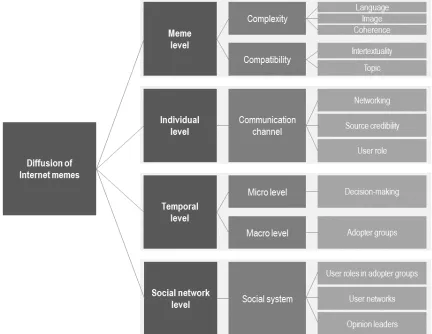
To empirically analyze Internet meme diffusion the theoretical assumptions can be transposed into a conceptual analysis model (see Figure 2) using the meme level, the individual level, the temporal level, and the network level as independent variables. On Twitter, the number of retweets and favorites1 can be used as platform-specific indicators for a message’s diffusion among the individual users (Moskopp & Heller, 2013, pp. 131–136). They are used as dependent variable in the conceptual analysis model.
Figure 2. Conceptual analysis model for the diffusion of the Merkel Meme (Source: Own model based on Spitzberg, 2014; Rogers, 2003).
Method
Sample and Units of Analysis
This study examines the diffusion of the Merkel Meme on Twitter. The platform’s public application programming interface (API) allowed to retrieve a complete data set of tweets containing the hashtag #MerkelMeme (N = 4,475), including several formal metadata such as information about the user, time of the tweet, number of favorites, and number of retweets. The investigation period started on June 8, 2015, when the first meme adaptation was tweeted, and ended on June 30, 2015. Afterward, there was hardly any further resonance to this topic on Twitter.
multilevel approach where the user, tweet, and meme adaptations were individual units of analysis. Two trained coders were responsible for executing the coding. Specific training and more precise coding instructions were applied after a pretest with unique meme adaptations (n = 40) to ensure intercoder reliability. Thus, satisfactory coding quality in the final data set of the main analysis for the formal (e.g., number of characters, number of retweets) as well as the latent variables (e.g., topic, user role) could be achieved (Krippendorf’s α = .86–1).
Measures
The code book for the content analysis and the categories’ operationalization is based on Spitzberg’s (2014) and Rogers’ (2003) frameworks adapted for the diffusion of Internet memes. The meme level is the first pillar of this analysis. Leaning on the dimensions of complexity, compatibility, and coherence, each meme’s image-language-structure was analyzed.
Memes can vary on two levels. On the language level, complexity was measured by the number of characters, words, and sentences. Besides, sentence structure complexity was operationalized by basic linguistic indicators, which are typical for the German language (Liedtke, 2016): the word order in the sentences (independent, dependent) and the position of the finite verb (verb first, verb second, verb last).
On the image level, complexity was evaluated with recourse to concepts originating in pictorial science. It was coded whether the original picture contained technical (e.g., by cropping), content-related modifications (e.g., by erasing or adding parts of the picture), or was used in a photoshopped variant (Greer & Gosen, 2002; Huang, 2001).
The coherence between language and image was assessed by the sentence type (e.g., declarative, interrogative, exclamatory sentence). Meme creators might use exclamatory sentences to construct coherence by emphasizing Angela Merkel’s posture, gesture, and facial expression. Coherence can also be achieved by imitating the image’s dialogic scenery on a language level. Thus, the linguistic scenery (dialogue, monologue) and the active speakers (Merkel, Obama, offstage) were coded.
Memes are likely to evoke humor and to be compatible with the recipients’ values and attitudes in their references (Segev, Nissenbaum, Stolero, & Shifman, 2015; Shifman, 2014). It was coded whether an intertextual reference was apparent. Furthermore, a main thematic category (politics, sex, culture, advertisement, sports, metacommunication, other) was assigned to each meme adaptation. The categories were inductively derived.
Twitter is a communication channel that favors the diffusion of memes through communication among individual users. The extent of networking for each user was operationalized by their number of followers, followings, and list entries.2 Moreover, the user profiles’ source credibility was examined (Yilmaz & Quintero Johnson, 2016). It was coded whether the users gave their real name or used a pseudonym on
Twitter. In addition, each user was assigned a specific user role (private user, politician/political party, journalist/media company, expert, brand) that was inductively developed and based on indicators taken from his or her (or their) Twitter profile page.
Concerning the temporal level, Rogers (2003) differentiates two levels: micro and macro. On the micro level, the individual spreading of an innovation is established in the innovation-decision process. This was measured by the time that the user tweeted or retweeted a meme. On the macro level, the users’ relative adaptation rate (shares of tweets and retweets) over time was considered. Thus, each user was assigned an adopter group that followed Rogers’ (2003) classification of innovators (2.5%), early adopters (13.5%), early majority (34%), late majority (34%), and laggards (16%). The allocation of a group depended on the adaptations’ tweet timing on the micro level.
On the social network level, the distribution of the user roles in the different adopter groups was examined as well as the networking and the diffusion index of the different user roles. The dependent variable—meme diffusion—was measured by Twitter’s memetic functions favorites and retweets (Moskopp & Heller, 2013). Greater weight was attributed to retweets as being a direct form of replicating a tweet containing a meme adaptation, while favorites indirectly contribute to a tweet’s ranking in the Twitter timeline. The diffusion index is calculated by the sum of both the number of favorites and the number of retweets. The latter are counted twice.
Results
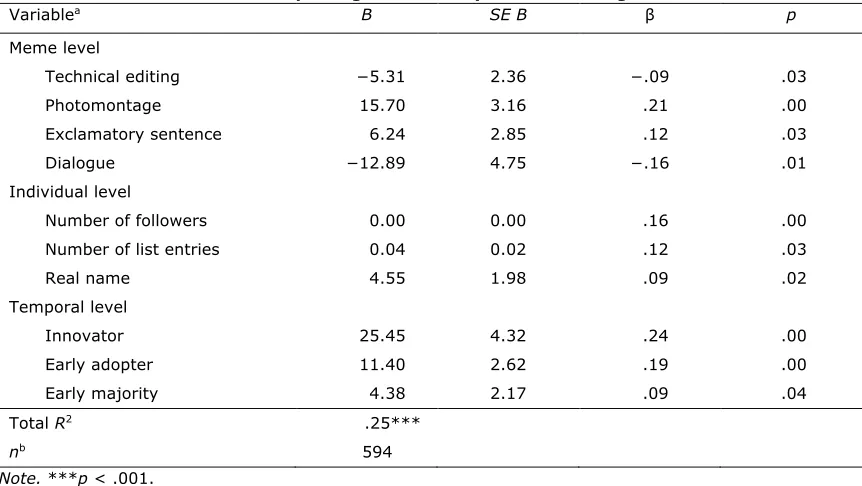
Table 1. Results of Multiple Regression Analysis in Predicting Meme Diffusion.
Variablea B SE B β p
Meme level
Technical editing −5.31 2.36 −.09 .03
Photomontage 15.70 3.16 .21 .00
Exclamatory sentence 6.24 2.85 .12 .03
Dialogue −12.89 4.75 −.16 .01
Individual level
Number of followers 0.00 0.00 .16 .00
Number of list entries 0.04 0.02 .12 .03
Real name 4.55 1.98 .09 .02
Temporal level
Innovator 25.45 4.32 .24 .00
Early adopter 11.40 2.62 .19 .00
Early majority 4.38 2.17 .09 .04
Total R2 .25***
nb 594
Note. ***p < .001.
a Only significant variables are reported.
b After list-wise deletion of cases with missing values.
Meme Level
The first research question (RQ1) asked for meme-related influences on the diffusion of Merkel Meme adaptations. The information diffusion in social systems is more likely when its complexity is reduced. The structural complexity of image-based memes can be influenced by the language and image complexity, and the coherence between the language and image.
of photoshopped variants had a positive effect on meme diffusion (β = .21, p < .001). Thus, the image in multimodal memes has stronger association with diffusion than their language parts.
It might be assumed that meme adaptations that create a coherent relationship between language and image are easier to understand and therefore receive more favorites and retweets. No major influence could be revealed regarding the different sentence types. One exception of this observation is that exclamation sentences emphasizing Merkel’s body language predict diffusion (β = .12, p = .03). The presence of a dialogic scenery between Merkel and Obama on the image level can be reinforced by imitating the dialogue on the language level. Surprisingly, the results show that adding a dialogue on the language level decreases diffusion (β = −.16, p = .01). The question is therefore whether the interchange of speaker roles is too complex for users deconstructing memes. On the other hand, there were no significant effects in meme adaptations that used Merkel or Obama as single active speakers.
Memes that are compatible with user mind-sets might achieve more attention and therefore higher diffusion index values. Memes often refer to pop cultural content or political topics. However, the regression shows that neither intertextuality nor meme topics affect diffusion.
Individual Level
The second research question (RQ2) focused on the individual level and its influence on meme diffusion. On this level, the communication channel among the single interconnected users was of particular interest. It was expected that meme adaptations created by well-connected users might spread more successfully than adaptations from users who are less well connected on Twitter. Indeed, there are significant differences among these types of users. Both the number of followers (β = .16, p < .01) and the number of list entries (β = .12, p = .03) predict meme diffusion. The extent to which Twitter users are part of a communication network on the platform seems to be a crucial factor for the successful diffusion of Internet memes.
Another important factor is source credibility. The results indicate that meme adaptations tend to be forwarded when the users revealed their real names—in other words, when their source is identifiable and trustworthy (β = .09, p = .02). In contrast, the specific user role does not affect meme diffusion.
Temporal Level
Figure 3. Cumulated adaptation rate of the Merkel Meme (Source: Own research).
On the macro level, the regression analysis confirms the theoretical assumption that information diffusion is largely influenced by early adopter groups in the early-stage diffusion process. Innovators (β = .24, p < .001), early adopters (β = .19, p < .001), and early majority (β = .09, p = .04) clearly contribute to meme diffusion. These early-stage adopter groups are considered as more proactive and willing to take risks concerning the diffusion of innovations. Therefore, they are more likely to develop and to spread their own meme adaptations, whereas later adopter groups tend instead to replicate the meme adaptations that have already been produced. The data indicate significant differences among adopter groups, χ²(4, n = 3,253) = 85.11, p < .000, Cramer’s V = .16. Especially innovators, but also early adopters, produce a considerable share of their own meme adaptations compared with the other adopter groups. More than a quarter of the early majority group still tweet own meme adaptions, whereas later adopter groups largely concentrate on retweeting (see Table 2). Consequently, the early adopter group’s role as opinion leaders and gatekeepers can be confirmed.
0%
10%
20%
30%
40%
50%
60%
70%
80%
90%
100%
June
6
June
7
June
8
June
9
June
10
June
11
June
12
June
13
June
14
June
15
June
16
June
17
June
18
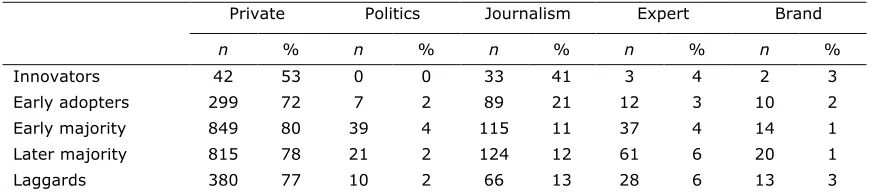
Table 2. Distribution of the Tweet Types Within the Adopter Groups.
Tweeted meme adaptations Retweeted meme adaptations
n % n %
Innovators 39 48 43 52
Early adopters 154 35 285 65
Early majority 285 26 821 74
Later majority 228 21 878 79
Laggards 79 15 441 85
Note. χ²(4, n = 3,253) = 85.11, p < .000, Cramer’s V = .16.
Social Network Level
On the social network level, it can be assumed that the meme spread through Twitter within a social network of interconnected users (RQ4). Figure 3 illustrates the typical diffusion in the form of an S curve with a steep slope indicating a rather quick diffusion process (Rogers, 2003, p. 23). To characterize the social network more precisely, the distribution of the different user roles within the adopter groups is investigated (RQ4.1). A considerable share of journalists or media companies were among the innovators and early adopters, χ²(16, n = 3,089) = 104.45, p < .000, Cramer’s V = .09 (see Table 3). This is not surprising, as these groups have a genuine affinity for social media trends, such as Internet memes. Moreover, the photo emerged during the G7 summit as a part of a political news story. Looking at their networks (RQ4.2), they have significantly more followers (M = 28,540.73, SD = 19,4302.27) than private users (M = 2,227.64, SD = 68,904.11) who are represented in every adopter group, F(4, 3041) = 6.97, p < .000.
Table 3. User Roles Within the Adopter Groups.
Private Politics Journalism Expert Brand
n % n % n % n % n %
Innovators 42 53 0 0 33 41 3 4 2 3
Early adopters 299 72 7 2 89 21 12 3 10 2
Early majority 849 80 39 4 115 11 37 4 14 1
Later majority 815 78 21 2 124 12 61 6 20 1
Laggards 380 77 10 2 66 13 28 6 13 3
Note. χ²(16, n = 3,089) = 104.45, p < .000, Cramer’s V = .09.
[image:14.612.89.525.434.531.2]Discussion
This study aimed to reveal the conditions for the successful diffusion of Internet memes. Based on the example of the Merkel Meme, a major challenge of this article was to examine whether Spitzberg’s (2014) and Rogers’ (2003) theoretical considerations on information diffusion can be applied to the diffusion of Internet memes. Even though in communication science—as in all language and communication-oriented scientific disciplines—there are fundamental concerns about the transfer of analogous theories to the digital playground, the analysis shows that an application is in principle quite reasonable.
Furthermore, this case study is a first empirical attempt to explore the diffusion of image-based Internet memes and to identify crucial diffusion factors based on a full census on Twitter. In the following, the key findings will be discussed against the backdrop of digital participation culture. Limitations and follow-up research will also be addressed.
Meme Level: Language and Image Properties
On the meme level (Spitzberg, 2014, pp. 317–319), among others, it was questioned whether intertextual references are factors that influence the diffusion of Internet memes (Berger & Milkman, 2012; Porter & Golan, 2006). The data indicate that intertextuality does not have a major effect. An explanation might be the genuine limitation of intertextual references by the rather narrow topic of a political Internet meme’s language variation (here, G7 summit). Moreover, as pop culture is a wide and heterogeneous field, it is likely that the coders as well as the users simply did not recognize certain references. This issue can be described as “meme literacy” (Shifman, 2014, p. 100). Literacy is an important prerequisite for the question if a meme adaptation can prove itself among users with different levels of knowledge. It can be linked to the concept of a community of practice (CofP). Members of such CofPs actively develop their own ways of doing things (Eckert, 2005, p. 16) and are mainly characterized by their shared repertoire (Wenger, 1998, p. 125). Their communication strategies are highly dynamic and adaptable, particularly regarding the construction of common communicative knowledge.
Regarding the diffusion of Internet memes, the role of the CofPs should be given more attention in the context of the social network of the individual users. The conceptual overlap with the social network theory (Meyerhoff & Strycharz, 2013) makes it possible to understand micro- and meso-synchronization processes and to uncover in-group intertextuality. Here, an analytical approach to social networks could provide more insight into how communication is shaped and how memes are referenced on the particular communication channel (Spitzberg, 2014, pp. 321–323).
step should be to measure both the syntactic and the morphologic complexity that affect attitudes and the process of understanding.
These findings on meme complexity are in line with studies on language complexity in advertising. Bradley and Meeds (2002) found that advertising slogans that moderate linguistic complexity can be more cognitively engaging for readers. Consequently, experimental or observational data might be helpful to clarify the process of decoding language complexity in Internet memes.
Sentence type had an influence on meme diffusion. Exclamatory sentences might support the expressive communicative function of Internet memes. They often contain expressive language like directives, expressives, and commissives (Osterroth, 2015), addressing the recipients more directly and transporting emotions. Research on arousal and attention dynamics supports these findings, indicating that emotional content is likely to be shared (e.g., Berger, 2011; Berger & Milkman, 2012; Stieglitz & Dang-Xuan, 2013). Sentence type is perhaps the most important illocutionary force indicating devices in German language (Liedtke, 2016, pp. 55–57). Additionally, regarding the level of coherence between language and image elements in the case of the Merkel Meme, exclamatory sentences could support Angela Merkel’s gesture and facial expression. However, the speech acts, which Obama and Merkel express, do not have to coincide with the speech acts intended by the meme adaptations’ authors. That Merkel’s expressive arm gesture is supported on the language level can be illustrated by the many adjectives of dimension as “lang” (“long”) and “groß” (“big”), which the adaptations’ authors used to construct Merkel’s turn. Furthermore, these adjectives of dimensions are significant collocations of the intensifier “so,” which was frequently (182 cases) realized in different spelling variants (e.g., “so,” “sooo,” or “SOOOO”) to emphasize the expressive function (Bülow, Merten, & Johann, 2018).
Coherence can also be achieved by imitating dialogic scenery on a language level. Therefore, different language strategies were used: The dialogic structure, for example, is indicated by the frequent use of pronouns of the first (“ich,” “I”) and second person singular (“du,” “you”). These pronouns could be identified as the most frequent words in the whole language corpus of Merkel Meme adaptations.
Surprisingly, imitating dialogue on the language level has a negative effect on the diffusion of Merkel Meme adaptations. It could be possible that the change in speaker roles is too complex for deconstructing memes. Furthermore, it was assumed that meme users are not accustomed to dialogical memes. Prototypical image-based Internet memes based on image macros usually do not encompass dialogic sceneries. Again, it seems a question of literacy at an individual level that predicts whether a meme adaptation is able to persist in the diffusion process.
great effect photoshopped variants have on the diffusion of Merkel Meme adaptations but also the dominance of the image in the multimodal constitution of meaning.
In contrast to language complexity, image complexity predicts meme diffusion. This finding emphasizes the importance of visual content in Internet memes being able to overcome language boundaries (Shifman, 2014, p. 161). It can be concluded that Internet memes operate in a multimodal manner with a salient image. Meme complexity might therefore be determined not by the complexity of its formal components, such as the length of the language or image editing, but rather by the complexity of (de-)constructing meaning (Dancygier & Vandelanotte, 2017, p. 591). This aspect has been completely neglected, for example, in Shubeck and Huette’s (2015) study on the influence of language complexity. Although no significant coherence effects were found between the image and the language level, research has yet to clarify interdependencies. Experimental eye-tracking studies could potentially uncover the way social media users are visually processing singular meme adaptations and clarify how they cope with the complexity of language, image, and the meaning.
Individual Level: Networked Adopters and Credible Users
On the individual level, the results about the communication channel indicate a positive correlation between the meme’s diffusion and the network (number of followers, number of list entries) of a meme’s originator. This finding is not surprising and is in line with experimental findings from virality research. Chiu et al. (2007), for example, in experiments on the forwarding behavior of Internet users, showed that known transmitters and extroverted multipliers are important for a topic’s diffusion. De Bruyn and Lilien (2008) also demonstrated in their field experiment on the influence of transmitter characteristics in the diffusion process that binding strength and the affinity to the sender of a message count toward its diffusion. Thus, a further direction of meme research is the individual adopter with a focus on motivations, personality traits, and the role perception within the meme discourse.
Even if user roles have no significant influence on meme diffusion in this case study, users giving their real name does make a difference (Yilmaz & Quintero Johnson, 2016). This may be linked to the fact that journalists, media companies, and politicians all give their real names. Journalists and media organizations also make up a significant proportion of the innovator and early adopter groups. Other users can both trust and support the named source, which leads to the fact that the Merkel Meme adaptations published by these users received more favorites and retweets in an early stage of the diffusion process. Their genuine source credibility might be a success factor.
Temporal Level: Early Adoption
influencers at the early stage of the diffusion process (Gladwell, 2002; Luarn et al., 2014). However, future meme research must further explore additional factors, such as social homophily or receptiveness (Harrigan et al., 2012; Watts, 2007), to contribute to the ongoing debate on individual diffusion factors and the tipping points of diffusional processes (Gladwell, 2002).
These findings, however, have to be reflected against the backdrop of the examined Internet meme. The Merkel Meme is a political Internet meme that was spread in the context of a major political event with an inherent news value for journalists and media companies. Even though their engagement on Twitter is then not surprising, it demonstrates the strong participatory power of Internet memes especially in political settings. Moreover, the significance of social bots in political debates on Twitter must be questioned. Research has shown that political discussions on Twitter are strongly affected by social bots appearing as individual, legitimate users (e.g., Martinez, Hughes, Walsh-Buhi, & Tsou, 2018). Future studies might clarify the role of social bots contributing to the diffusion of Internet memes on an individual level (Spitzberg, 2014, p. 319–321).
Conclusion
Meme diffusion is a highly complex process that is affected by numerous variables. Especially in the political context, Internet memes are able to serve as forms of collective action and discursive expression due to their persuasive and participatory potential (Shifman, 2014, pp. 122–123). Based on an empirical exploration, this study contributes to the growing body of research on the diffusion of Internet memes. In the case of the Merkel Meme, well-networked journalists and media organizations were identified as crucial innovators that foster memetic diffusion. Furthermore, the data highlighted early stage participation and image editing as important factors for successful Internet meme diffusion. Taken together, this case study emphasizes the potential of Internet memes for a digital participatory culture and mobilization.
References
Bebić, D., & Volarevic, M. (2018). Do not mess with a meme: The use of viral content in communicating politics. Communication & Society, 31(3), 43–56. doi:10.15581/003.31.3.43-56
Benaim, M. (2018). From symbolic values to symbolic innovation: Internet-memes and innovation. Research Policy, 47(5), 901–910. doi:10.1016/j.respol.2018.02.014
Berger, J. (2011). Arousal increases social transmission of information. Psychological Science, 22(7), 891– 893. doi:10.1177/0956797611413294
Berger, J., & Milkman, K. L. (2012). What makes online content viral? Journal of Marketing Research, 49(2), 192–205. doi:10.1509/jmr.10.0353
Bradley, S. D., & Meeds, R. (2002). Surface-structure transformations and advertising slogans: The case for moderate syntactic complexity. Psychology & Marketing, 19(7/8), 595–619.
doi:10.1002/mar.10027
Bülow, L., Merten, M.-L., & Johann, M. (2018). Internet-Memes als Zugang zu multimodalen
Konstruktionen [Internet memes as an approach to multimodal constructions]. Zeitschrift Für Angewandte Linguistik, 69(1), 1–32. doi:10.1515/zfal-2018-0015
Burgess, J. E. (2007). Vernacular creativity and new media (Doctoral thesis, University of Queensland, Australia). Retrieved from https://eprints.qut.edu.au/16378/1/Jean_Burgess_Thesis.pdf
Burgess, J. E. (2008). All your chocolate rain are belong to us? Viral video, YouTube, and the dynamics of participatory culture. In G. Lovink & S. Niederer (Eds.), Video vortex reader: Responses to YouTube (pp. 101–109). Amsterdam, Netherlands: Institute of Network Cultures.
Cepeda, M. E. (2018). Putting a “good face on the nation”: Beauty, memes, and the gendered rebranding of global colombianidad. Women’s Studies Quarterly, 46(1/2), 121–138.
doi:10.1353/wsq.2018.0005
Chen, G. M. (2014). Revisiting the social enhancement hypothesis: Extroversion indirectly predicts number of Facebook friends operating through Facebook usage. Computers in Human Behavior, 39(C), 263–269. doi:10.1016/j.chb.2014.07.015
Chiu, H.-C., Hsieh, Y.-C., Kao, Y.-H., & Lee, M. (2007). The determinants of email receivers’ disseminating behaviors on the Internet. Journal of Advertising Research, 47(4), 524–534.
doi:10.2501/S0021849907070547
Csordás, T., Horváth, D., Mitev, A., & Markos-Kujbus, E. (2017). User-generated Internet memes as advertising vehicles: Visual narratives as special consumer information sources and consumer tribe integrators. In G. Siegert, M. B. Rimscha, & S. Grubenmann (Eds.), Commercial
communication in the digital age: Information or disinformation? (pp. 247–266). Berlin, Germany: De Gruyter. doi:10.1515/9783110416794-014
Dancygier, B., & Vandelanotte, L. (2017). Internet memes as multimodal constructions. Cognitive Linguistics, 28(3), 565–598. doi:10.1515/cog-2017-0074
Davison, P. (2012). The language of Internet memes. In M. Mandiberg (Ed.), The social media reader (pp. 120–134). New York, NY: New York University Press.
Dawkins, R. (1976). The selfish gene. Oxford, UK: Oxford University Press.
De Bruyn, A., & Lilien, G. L. (2008). A multi-stage model of word-of-mouth influence through viral marketing. International Journal of Research in Marketing, 25(3), 151–163.
doi:10.1016/j.ijresmar.2008.03.004
Eckert, P. (2005, January). Variation, convention, and social meaning. Paper presented at the Annual Meeting of the Linguistic Society of America, Oakland, CA.
Fetzer, A. (2012). Textual coherence as a pragmatic phenomenon. In K. Allan & K. M. Jaszczolt (Eds.), The Cambridge handbook of pragmatics (pp. 447–467). Cambridge, UK: Cambridge University Press. doi:10.1017/CBO9781139022453.024
Fliegel, F. C., & Kivlin, J. E. (1966). Attributes of innovations as factors in diffusion. American Journal of Sociology, 72(3), 235–248.
Gladwell, M. (2002). The tipping point: How little things can make a big difference. New York, NY: Back Bay Books.
Greer, J. D., & Gosen, J. D. (2002). How much is too much? Assessing levels of digital alteration as factors in public perception of news media credibility. News Photographer, 4(10), 4–13.
doi:10.1080/15551390209363485
Grittmann, E. (2007). Das politische Bild. Fotojournalismus und Pressefotografie in Theorie und Empirie [The political image: Theoretical and empirical research on photo journalism and press photography]. Cologne, Germany: Herbert von Halem.
Grundlingh, L. (2018). Memes as speech acts. Social Semiotics, 28(2), 147–168. doi:10.1080/10350330.2017.1303020
Harlow, S. (2013). It was a ‘Facebook revolution’: Exploring the meme-like spread of narratives during the Egyptian protests. Revista de Communicación, 12, 59–82.
Harrigan, N., Achananuparp, P., & Lim, E. P. (2012). Influentials, novelty, and social contagion: The viral power of average friends, close communities, and old news. Social Networks, 34(4), 470–480. doi:10.1016/j.socnet.2012.02.005
Ho, J. Y. C., & Dempsey, M. (2010). Viral marketing: Motivations to forward online content. Journal of Business Research, 63(9/10), 1000–1006. doi:10.1016/j.jbusres.2008.08.010
Huang, E. S. (2001). Readers’ perception of digital alteration in photojournalism. Journalism Communication Monographs, 3(3), 149–182. doi:10.1177/152263790100300302
findings on the diffusion of image-language-texts in social media]. kommunikation @ gesellschaft, 19(1), 1–24.
Kim, H. S. (2015). Attracting views and going viral: How message features and news-sharing channels affect health news diffusion. Journal of Communication, 65(3), 512–534.
doi:10.1111/jcom.12160
Kim, I.-H., Feng, C.-C., Wang, Y.-C., Spitzberg, B. H., & Tsou, M.-H. (2017). Exploratory spatiotemporal analysis in risk communication during the MERS outbreak in South Korea. The Professional Geographer, 69(4), 629–643. doi:10.1080/00330124.2017.1288577
Leavitt, A. (2014). From #FollowFriday to YOLO: Exploring the cultural salience of Twitter memes. In K. Weller, A. Bruns, J. Burgess, M. Mahrt, & C. Puschmann (Eds.), Twitter and society (pp. 137– 154). New York, NY: Peter Lang. doi:10.3726/978-1-4539-1170-9
Liedtke, F. (2016). Moderne Pragmatik. Grundbegriffe und Methoden [Modern pragmatics: Basic concepts and methods]. Tübingen, Germany: Narr.
Luarn, P., Yang, J. C., & Chiu, Y. P. (2014). The network effect on information dissemination on social network sites. Computers in Human Behavior, 37, 1–8. doi:10.1016/j.chb.2014.04.019
MacVaugh, J., & Schiavone, F. (2010). Limits to the diffusion of innovation: A literature review and integrative model. European Journal of Innovation Management, 13(2), 197–221.
doi:10.1108/14601061011040258
Martinez, L. S., Hughes, S., Walsh-Buhi, E. R., & Tsou, M.-H. (2018). “Okay, we get it. You vape”: An analysis of geocoded content, context, and sentiment regarding e-cigarettes on Twitter. Journal of Health Communication, 23(6), 550–562. doi:10.1080/10810730.2018.1493057
Meyerhoff, M., & Strycharz, A. (2013). Communities of practice. In J. K. Chambers & N. Schilling (Eds.), The handbook of language variation and change (pp. 428–447). Hoboken, NJ: Wiley.
doi:10.1002/9780470756591.ch21
Mielczarek, N. (2018). The “pepper-spraying cop” icon and its Internet memes: Social justice and public shaming through rhetorical transformation in digital culture. Visual Communication Quarterly, 25(2), 67–81. doi:10.1080/15551393.2018.1456929
Milner, R. (2016). The world made meme: Public conversations and participatory media. Cambridge, MA: MIT Press.
Nissenbaum, A., & Shifman, L. (2018). Meme templates as expressive repertoires in a globalizing world: A cross-linguistic study. Journal of Computer-Mediated Communication, 23(5), 294–310.
doi:10.1093/jcmc/zmy016
Osterroth, A. (2015). Das Internet-Meme als Sprache-Bild-Text [Internet memes as language-image-texts]. IMAGE 22, 26–46.
Porter, L., & Golan, G. (2006). From subservient chickens to brawny men: A comparison of viral advertising to television advertising. Journal of Interactive Advertising, 6(2), 26–33. doi:10.1080/15252019.2006.10722116
Rogers, E. M. (2003). Diffusion of innovations. New York, NY: Free Press. (Original work published 1962)
Ross, A. S., & Rivers, D. J. (2017). Digital cultures of political participation: Internet memes and the discursive delegitimization of the 2016 U.S. Presidential candidates. Discourse, Context & Media, 16, 1–11. doi:10.1016/j.dcm.2017.01.001
Schlaile, M. P., Knausberg, T., Mueller, M., & Zeman, J. (2018). Viral ice buckets: A memetic perspective on the ALS ice bucket challenge’s diffusion. Cognitive Systems Research, 52, 947–969.
doi:10.1016/j.cogsys.2018.09.012
Segev, E., Nissenbaum, A., Stolero N., & Shifman, L. (2015). Families and networks of Internet memes: The relationship between cohesiveness, uniqueness, and quiddity concreteness. Journal of Computer-Mediated Communication, 20(4), 417–433. doi:10.1111/jcc4.12120
Sharag-Eldin, A., Ye, X., & Spitzberg, B. H. (2018). Multilevel model of meme diffusion of fracking through Twitter. Chinese Sociological Dialogue, 3(1), 17–43.doi:10.1177/2397200917752646
Shifman, L. (2012). An anatomy of a YouTube meme. New Media & Society, 14(2), 187–203. doi:10.1177/1461444811412160
Shifman, L. (2014). Memes in digital culture. Cambridge, MA: MIT Press.
Shubeck, K., & Huette, S. (2015). Predicting meme success with linguistic features in a multilayer backpropagation network. Proceedings of the Annual Meeting of the Cognitive Science Society, USA, 37, 2182–2187.
Spitzberg, B. H. (2014). Toward a model of meme diffusion (M3D). Communication Theory, 24(3), 311– 339. doi:10.1111/comt.12042
Van Dijk, T. (2008). Discourse and context: A sociocognitive approach. Cambridge, UK: Cambridge University Press.
Watts, D. J. (2007). Challenging the influentials hypothesis. WOMMA Measuring Word of Mouth, 3(4), 201–211.
Wells, D. D. (2018). You all made dank memes: Using Internet memes to promote critical thinking. Journal of Political Science Education, 14(2), 240–248. doi:10.1080/15512169.2017.1406363
Wenger, E. (1998). Communities of practice: Learning, meaning, and identity. Cambridge, UK: Cambridge University Press.
Wiggings, B. E., & Bowers, G. B. (2015). Memes as genre: A structurational analysis of the memescape. New Media and Society, 17(11), 1886–1906. doi:10.1177/1461444814535194
Xie, L., Natsev, A., Kender, J. R., Hill, M., & Smith, J. R. (2011). Visual memes in social media. Tracking real-world news in YouTube videos. Proceedings of the ACM International Conference on Multimedia, USA, 19, 53–62. doi:10.1145/2072298.2072307
Ye, X., Sharag-Eldin, A., & Spitzberg, B. H. (2018). Analyzing public opinions on death penalty abolishment. Chinese Sociological Dialogue, 3(1), 53–75. doi:10.1177/2397200918761665