A Mobile App-Based Intervention for
Self-Control (Hands-ON): usability and
feasibility evaluations
Marcia Cristina da Silva
26 August 2019
Examination committee: S. M. Kelders, PhD (first supervisor) H. Kip, MSc (second supervisor)
Master’s programme in Health Sciences Track in Personalized Monitoring and Coaching Faculty of Science and Technology University of Twente
Abstract
Background: Aggression can lead to violence, which is one of the leading causes of
death worldwide. Research suggests that high levels of self-control can prevent
aggression. The non-dominant hand paradigm is a promising approach to improve
self-control, yet there are limitations in delivering this intervention. The Hands-ON app was
developed to expand this intervention beyond clinical settings into one’s pocket. The
study aimed to evaluate the Hands-ON app’s usability and feasibility.
Methods: A usability test was conducted with experts in a think-aloud approach and it
was measured using the System Usability Scale (SUS) and semi-structured interview.
Then, a feasibility study was conducted with university students in a single-case
experiment in two groups, ABA and BAB-design, where participants used the app- and
email-based instructions to perform tasks with the non-dominant hand for 15 days.
Aggression and self-control levels were measured with the Brief Aggression
Questionnaire and Brief Self-Control Scale, respectively. Also, half of the participants
participated in a semi-structured interview.
Results: In the usability test, experts positively evaluated the app. The SUS mean score
was above average (N = 82.5). Two main categories raised from the experts’ interviews:
perceived usability, and perceived persuasive elements. Feedback was used to support
further app improvements. In the feasibility study, nineteen university students and most
of them positively evaluated the app. Three participants had clinically significant results
in both aggression and control, four only for aggression, and three only for
self-control. Among all participants, levels of aggression decreased by 13.8%, and levels of
self-control increased by 13.5%. Four categories raised from the interviews: perceptions
of the intervention, comparison between the app and email instructions, app bugs
Conclusion: Hands-ON app was demonstrated to be usable and feasible. The next step
is to further improve the app and to test with individuals with aggressive behaviour
problems.
Acknowledgments
I would like to express my deep and sincere gratitude to my supervisors, Dr.
Saskia M. Kelders and Hanneke Kip, MSc, for their guidance, learning opportunities,
and availability provided during my master’s thesis.
I am also deeply thankful to the experts who participated in the usability test.
Their names cannot be disclosed, but I want to acknowledge, and I appreciate their
helpful feedback.
Furthermore, I would like to thank the participants of the feasibility study. They
were willing to test the app for 15 days, as well as answering surveys and being
interviewed, so their contribution was incredibly meaningful.
Finally, I would like to thank my family for all the support. They always
motivate me to pursue my dreams and they are by my side, even when we are physically
Table of Contents
Abstract ... 2
Acknowledgments ... 4
Introduction ... 6
General Method ... 11
Overview ... 11
A Brief Description of the App and its Development ... 11
Phase 1: Usability ... 14
Method ... 14
Participants ... 14
Procedure ... 14
Data analysis ... 15
Results ... 15
Perceived usability ... 16
Perceived persuasive elements ... 17
Phase 2: Feasibility ... 19
Method ... 19
Participants ... 19
Materials ... 19
Procedure ... 20
Data analysis ... 22
Results ... 22
Aggression and self-control ... 25
Discussion ... 31
Strengths and Limitations ... 32
Conclusion ... 33
Appendices ... 40
Appendix A... 40
Appendix B ... 41
Appendix C ... 42
Appendix D... 43
Appendix E ... 44
Appendix F ... 45
Appendix G... 46
Appendix H... 47
Appendix I ... 48
Appendix J ... 49
Appendix K... 50
Appendix L ... 53
Introduction
Aggression can be broadly defined as a behaviour intended to harm a person
who does not desire to be harmed (Denson, DeWall, & Finkel, 2012). Aggressive
behaviour can lead to violence, which is the fourth leading cause of death worldwide for
people between 15-44 years (World Health Organization, 2014; Pompili, Carlone,
Silvestrini, & Nicolò, 2017). One of the major types of aggression is reactive aggression
(RA), a defense-driven and impulsive reaction in response to a threat or frustrating
event and it is associated with anger, sympathetic activation, and a breakdown of
self-regulation (e.g., bar fights, crimes of passion) (Wrangham, 2017). A common predictor
of RA is self-control since when aggressive impulses are triggered, one’s self-control
helps to act according to personal and social principles (Gottfredson, & Hirschi, 1990).
Self-control is commonly categorized into two types: trait (or dispositional) and state.
Trait self-control is assumed to be stable, while state self-control varies across situations
and over time. People with high trait self-control tend to be better in controlling their
impulses in general, while state self-control is more influenced by the circumstances of
the moment (e.g., mood, working memory capacity, motivation) (de Ridder,
Lensvelt-Mulders, Finkenauer, Stok, & Baumeister, 2012). In this context, a high level of trait
and state self-control can suppress RA (Denson, DeWall, & Finkel, 2012; Denissen,
Thomaes, & Bushman, 2017).
Currently, the most common treatment for RA is cognitive-behavioural therapy,
but more scientific investigation about interventions that increase self-control and
consequently prevent RA is needed (Denson, 2015; Lee, & DiGiuseppe, 2018). One of
these promising approaches is self-control training, which is based on the strength
model theory. This theory makes an analogy that self-control functions as a “muscle”
suggests that if an individual exercise self-control in one domain, other domains are also
affected consequently (Baumeister, Vohs, & Tice, 2007; Miles et al., 2016; Friese,
Frankenbach, Job, & Loschelder, 2017). A meta-analysis (Friese, Frankenbach, Job, &
Loschelder, 2017) about effects of different control trainings to improve
self-control showed that the ones which require more frequent but less rigorous tasks, such
as the use of the non-dominant for mundane tasks, are more effective (Denson, 2015).
In this regard, two previous studies carried out experiments about the use of the
non-dominant hand for daily tasks for two weeks, also known as the non-dominant hand
paradigm (Denson, 2015). The first study (Finkel, DeWall, Slotter, Oaten, & Foshee,
2009) focused on self-regulatory failure as a predictorof intimate partner violence.
Forty participants were requested to use their non-dominant hand for daily tasks (e.g.,
brushing their teeth, opening doors, carrying items) every other day for two weeks and
they needed to record their progress in a paper diary. Results showed that participants
reported a decrease in physical inclinations to harm their romantic partners, while no
changes in levels of aggression in the control group. In 2011, another similar
experiment was published (Denson, Capper, Oaten, Friese, & Schofield, 2011),
focusing on self-control improvement in general. In this study, 70 undergraduates used
their non-dominant hand every day for two weeks, and they registered their progress in
an online diary. Results showed that participants with higher trait aggression reported
lower angriness after the intervention when compared to the control group. In sum, both
studies concluded that the non-dominant hand paradigm has potential to be
implemented as an alternative to treat aggression, with the advantage of being
inexpensive and without relying on a high level of patient’s cognitive ability (Denson,
Although the results of these self-control interventions using the non-dominant
hand are promising, there are some limitations. First, access is limited to time and
space, i.e., it requires the presence of researchers to provide information on how to
perform the tasks, which may limit the implementation on a larger scale (Friese,
Frankenbach, Job, & Loschelder, 2017). Another limitation is the cost that would be
necessary to train and hire personnel to apply the intervention in a real-life context,
besides diminishing one’s empowerment to execute the intervention wherever and
whenever they want (Denson, 2015; van Gemert-Pijnen, Kip, Kelders, & Sanderman,
2018). These limitations can be addressed with the use of technology, especially a
mobile application (app), which is a software designed to be used on smartphones or
tablets. Nowadays, smartphones are widespread, i.e., many people have one, which
gives an app the potential to expand this intervention beyond clinical settings into one’s
daily life (van Gemert-Pijnen, Kelders, Kip, & Sanderman, 2018). Another benefit is the
app persuasive potential, defined as the use of technology “to reinforce, change or
shape attitudes or behaviours or both without using coercion or deception”
(Oinas-Kukkonen, & Harjumaa, 2008). Persuasive technology has the potential to increase
adherence and effectiveness (van Gemert-Pijnen, Kelders, Beerlage-de Jong, &
Oinas-Kukkonen, 2018). In this context, reminders within the app can boost efficacy, acting as
a habit reinforcement to support behaviour change (Pirolli, Mohan, Venkatakrishnan,
Nelson, Silva, & Springer, 2017). In sum, an app offers advantages such as broad
access, empowerment and it can be a persuasive, tailored and innovative tool that opens
up a range of possibilities for the non-dominant hand intervention to be as effective as
possible (Kip, Bouman, Kelders, & van Gemert-Pijnen, 2018; van Gemert-Pijnen, Kip,
Therefore, the current study hypothesized that the non-dominant hand paradigm
has potential to improve one's self-control, consequently decreasing aggressive
behaviour (Denson, 2015), and an app has multiple advantages to add value to deliver
this promising intervention (Kip, Bouman, Kelders, & van Gemert-Pijnen, 2018). In this
study, an app called Hands-ON was developed based on the existing interventions
(Finkel, DeWall, Slotter, Oaten, & Foshee, 2009; Denson, Capper, Oaten, Friese, &
Schofield, 2011) that support users in using their non-dominant hand in daily tasks. The
aims of this study were (a) to determine the usability and persuasive elements of the
Hands-ON app by investigating the perceptions of health and technology experts, and
(b) to determine the feasibility of the app by investigating the perceptions and
experiences of university students. The accompanying research questions and
sub-questions were:
Research question 1:What are the perceptions of eHealth experts regarding
usability and persuasive elements of the Hands-ON app?
Sub-questions:
• What are the general impressions of the experts when using the app in terms
of look and feel, ease of use, understandability, and persuasive features?
• What are the points of improvement of the app according to the experts?
Research question 2: Is the Hands-ON app feasible to support university
students in using the non-dominant hand for daily tasks?
Sub-questions:
• What are the university students’ general impressions and experiences of the
intervention regarding approach (app versus email instructions), and tasks
• Does the intervention have clinically and statistically significant influences
in levels of aggression and self-control of university students?
• What are the points of improvement of the app according to the university
General Method
Overview
We developed the Hands-ON app and conducted two types of evaluation:
usability (phase 1) and feasibility (phase 2). Ethical approval was sought and obtained
from the University of Twente - BMS Ethics Committee (request number: 190514).
A Brief Description of the App and its Development
The Hands-ON app was developed in The Incredible Intervention Machine
(TIIM) (BMS LAB - University of Twente, 2018a) for iOS and Android smartphone
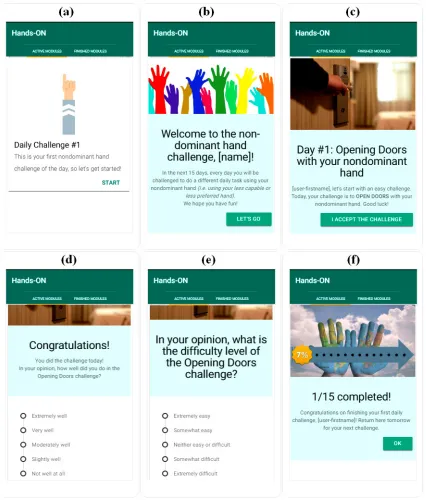
and tablet devices. This high-fidelity version of the app (see Figure 1) emerged from a
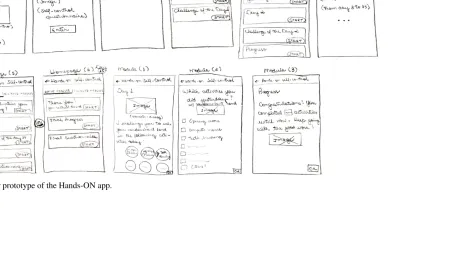
low-fidelity paper prototype (see Appendix A). The first time the users accessed the
app, they created an account where they entered basic information such as name and
password. Within the app, their first name was used to enable a more personalized
experience. Each day, the app unlocked one daily task and users were asked to perform
it using their non-dominant hand (see Figure 1a and 1b). For instance, the first task was
to open doors with the non-dominant hand (see Figure 1c). In total, there were 15 tasks,
therefore, the entire intervention was completed in 15 days (see Appendix B). By the
end of the day, the users answered how well they did (performance) (see Figure 1d) and
what was the level of difficulty of the task, both in a 5-point Likert scale (see Figure
1e). After this, the app showed the progress of users, i.e., how many days of the
intervention they already completed in numbers and percentage, and a word of praise,
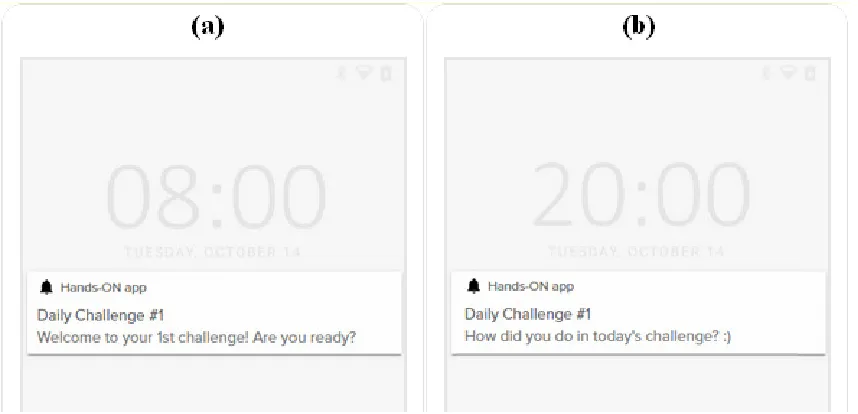
such as “congratulations” (see Figure 1f). Besides, the app sent two daily push
Figure 1. Screenshots of the Hands-ON app in the first day of the challenges with the
non-dominant hand (a) Opening screen of the first task, (b) Explanation about the
15-day intervention, (c) Explanation about the opening doors task, (d) Evaluation on how
well users did in the task in a Likert scale, (e) Evaluation of the difficulty level of the
In previous studies (Finkel, DeWall, Slotter, Oaten, & Foshee, 2009; Denson,
Capper, Oaten, Friese, & Schofield, 2011), the researchers asked participants to perform
several tasks with the non-dominant hand per day. But in the app, participants had only
one task a day to make it easier to remember and to test whether just one task per day
would be enough to have significant effects on levels of aggression and self-control.
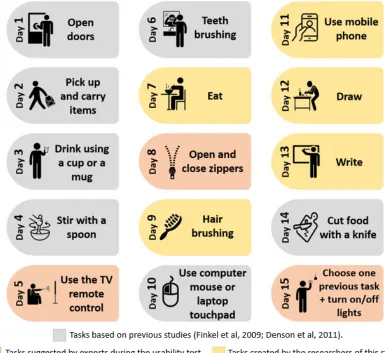
The order of tasks was intuitively organized at increasing difficulty level by one of the
researchers. As can be seen in Figure 2, some tasks were based on previous studies
(Finkel, DeWall, Slotter, Oaten, & Foshee, 2009; Denson, Capper, Oaten, Friese, &
[image:13.595.102.487.324.677.2]Schofield, 2011), while other tasks were created by us and experts of this study.
Phase 1: Usability
Method
Participants. A convenience sample ofsix experts from the Universityof
Twente (four from the Department of Psychology, Health & Technology, and two from
the Biomedical Signals and Systems) participated in the Hands-ON app’s usability test.
Qualifications of the experts included (a) at least a masters’ degree, and (b) academic
experience in the field of health and technology.
Procedure. The usability tests were in person and conducted by one researcher
with one expert at a time, with a duration between 30 and 45 minutes. The sessions
were audio-recorded with the participants’ informed consent. First, experts were
provided with a general explanation about the Hands-ON app. Second, they were asked
to think-aloud while navigating the app on a tablet provided by the researcher. A
conventional user would only have access to one task per day for 15 days, but for this
usability test, experts had access to all app’s content at once. After this, experts filled in
a form demographic information questions (i.e., age and gender), and the System
Usability Scale (SUS) (Brooke, 1996), which is a 10-item validated scale to obtain the
perceived usability of a technological tool, such as a mobile app (see Appendix D).
Finally, the researcher conducted a semi-structured interview composed of seven
open-ended questions inspired by previous app’s usability studies (Fuller-Tyszkiewicz et al.,
2018; Hsieh, Fanning, Rogers, Wood, & Sosnoff, 2018) to further understand
participants’ general impressions of the app and the tasks, and points of improvement
focusing on look and feel, ease of use, and understandability (see Appendix E). An
example of the open-ended questions was: “Do you think the app provided enough
Data analysis. The data were analysed descriptively and statistically using the
software Microsoft Excel.The interviews were transcribed verbatim and then
summarized using a hybrid process of inductive and deductive thematic analysis
(Fereday, & Muir-Cochrane, 2006). Starting with an inductive approach, the transcripts
were read several times to allow familiarity with the content. Notes taken during this
process were used to generate an initial set of codes. Then, extracts from the transcripts
were grouped into their respective codes. Transcripts were reread and some extracts
were reassembled into different codes, to better captured the essence of the data. This
process was repeated iteratively until the codes accurately reflected the content of the
transcripts. Finally, a deductive approach was applied. A template (or codebook) was
developed based on the previous steps and according to terms and definitions
commonly used in literature (Oinas-Kukkonen, & Harjumaa, 2006; Bevan, Carter,
Earthy, Geis, & Harker, 2016; Karnouskos, Sinhay, Leitão, Ribeiro, & Strasser, 2018).
This template was applied to identify existing codes and to rename (sub)categories. For
example, a subcategory that was named “design” during the inductive process was
renamed “look and feel” during the deductive process. Then, quotes that better
illustrated each (sub)category were identified. To improve readability, these quotes were
edited, without changing their essence.
Results
The mean age of the six experts was 33 years (SD = 10.9, range = 25-57), with
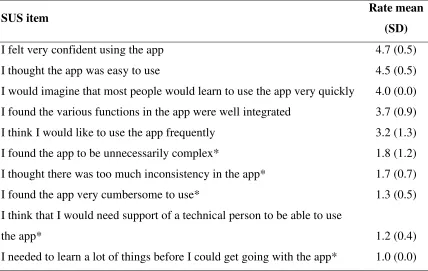
five being female. An overview of the SUS items and corresponding average rates can
be seen in Appendix F. The mean SUS score of the app across experts was 82.5 (SD =
10.2), where a score over 68 is considered above average. Statements of the SUS that
participants most strongly disagreed were “I needed to learn a lot of things before I
technical person to be able to use the app” (SD = 0.4). On the other hand, participants
strongly agreed with the statements “I felt very confident using the app” (SD = 0.5), and
“I thought the app was easy to use” (SD = 0.5).
Two categories and complementary subcategories emerged from the coding
analysis of the interview transcripts, namely, perceived usability, and perceived
persuasive elements.
Perceived usability. This category presents experts’ perception of usability
divided in look and feel, ease of use, and understandability. In general, the experts
described the app as nice, easy, and clear.
Look and feel. The first subcategory is related to the graphical user interface of
the app, comprising design (e.g., layout, colours) and behaviour of dynamic elements
(e.g., buttons). Overall, participants considered that the visual was good (N = 6), as
stated: “Nice. I think this is cheerful like the colour of the page andI think the buttons
are easy to find (E4)”. However, most experts (N = 5) highlightedminor problems
regarding the size of the text and buttons: “I would prefer to have the text a bit bigger
and that you do not have to scroll (E3)”.
Ease of use. This subcategory is about how (un)natural it was to operate the app.
The majority of the experts considered the app easy to use (N = 5), although a point of
improvement was identified by them (N = 5), since it was necessary to click on a button
to go to the next page after selecting an option, while they expected that it would load
automatically.
Understandability. This subcategory shows how information about the tasks
was perceived so that users can easily comprehend it and how achievable the tasks
were.In the expert’s opinion (N = 6), the instructions for the tasks were clear, short, and
some words and images, redundant information, and more clear information about
alternative tasks, as stated: “(…) if the person needs to skip the challenge of the day, it
could provide more information about what to do then (E1)”. Two tasks present in the
first version of the app were suggested to be replaced (N = 4), namely, to strike a match
or use a lighter (because most people do not use it), and to unlock the mobile phone
(because most mobile phones nowadays use either fingerprint or facial recognition).
Some tasks were perceived as difficult but interesting and executable (N = 4), such as to
cut food with a knife, use the computer mouse or laptop touchpad, draw, and write.
Also, some experts gave suggestions for tasks that were later included in the app, such
as to use zippers (N = 2), to use the television remote control (N = 2), and to turn on and
off lights (N = 1).
Perceived persuasive elements. The second main category is related to
persuasive elements in the experts’ perception divided into personalization, praise, and
reminders. Overall, experts appreciated the persuasive features included within the app,
with a point of improvement regarding reminders.
Personalization. This subcategory includes details that make the app more
personal for each user.In this sense, the element that most experts perceived (N = 4)
was the user’s given name, as stated: “I like it that you sometimes see your name, so
that's really personal, it feels like it's just for you (E2)”.
Praise. Another persuasive feature identified by five experts was praise via
words and images, i.e., expressions of admiration or approval of the user’s
achievements, as an expert stated:
“I like that there are motivating or challenging questions, like ‘you can do it’
(...). It would be even funnier if you add a comment like ‘you’re almost a
Reminders. All experts (N = 6) stressed the importance of the app sending push
notifications to help remind users to access the app twice a day (to check the task of the
day and later to evaluate the task). During the usability test, the app had only one
notification. One of the experts stated: “It would be awesome (having a reminder), and
that could be at the beginning of the day (…) and then in the evening, like nine o'clock
(E3)”.
After the usability test, the app was improved according to the experts’
suggestions presented above before the start of the feasibility study. For instance, the
size of text and buttons were adjusted to better fit the screen, inconsistent or redundant
information was corrected, and explanation about the tasks was revised to be more
Phase 2: Feasibility
Method
Participants. Twenty-fiveuniversity students were invited via Sona, a test
subject pool of the University of Twente where students participate in an exchange of
course’s credits. Also, a convenience sample of students from other universities was
invited via email. The inclusion criteria were (a) minimum age of 18 years, (b)
university student, and (c) availability to use the Hands-ON app for 15 days. Exclusion
criteria were (a) the participant was not able to use his/her hands for daily tasks, and (b)
the participant was ambidextrous (i.e., a person who can use the right and left hand
equally well).
Materials. The improved version of the Hands-ON app (post-usability test) was
installed by participants on their mobile phones.To measure participants’ trait and state
aggression and self-control, two self-report questionnaires were used.
Brief Aggression Questionnaire. The Brief Aggression Questionnaire (BAQ)
(Webster et al., 2015) is a 12-item validated scale to measure trait aggression in four
dimensions: physical aggression, anger, verbal aggression, and hostility (see Appendix
G). Scores are on a Likert scale and results are between 12 and 60 points (higher scores
mean a higher level of aggression). It was chosen to make our study comparable to
previous literature (Denson, Capper, Oaten, Friese, & Schofield, 2011).
Brief Self-Control Scale. The Brief Self-Control Scale (BSCS) (Tangney,
Baumeister, & Boone, 2004) is a 13-item measure of individual differences in trait
self-control, using a Likert scale (see Appendix H). Scores results are between 13 and 65
points (the higher the score, the higher the level of self-control). The BCSC was chosen
although previous studies (Finkel, DeWall, Slotter, Oaten, & Foshee, 2009; Denson,
Capper, Oaten, Friese, & Schofield, 2011) only measured aggression levels.
Currently, there are no validated questionnaires to collect participants state
aggression and self-control, therefore, both trait questionnaires (BAQ and BSCS) were
adapted by three researchersto measure these states. For instance, the BAQ statement “I
have trouble controlling my temper” (trait aggression), was converted to “I have had
trouble controlling my temper in the last five days” (state aggression) (see Appendix I).
In contrast, the BSCS statement “I am lazy” (trait self-control), was converted to “I
have been lazy in the last five days” (state self-control) (see Appendix J).
Qualtrics online survey tool (BMS LAB - University of Twente, 2018b) was
used to collect participants’ demographic information (i.e., age, gender, occupation,
country of residence) and to apply the BSCS and BAQ, resulting in five surveys in total
(see Appendix K).
Semi-structured interviews. The semi-structured interview was composed by
seven open-ended questions to further understand participants’ general impressions and
experiences with the app, differences between the intervention with and without the app,
and points of improvement for the app (see Appendix L). For instance, one of the
questions was “did you encounter any difficulties as you used the app? Which ones?”.
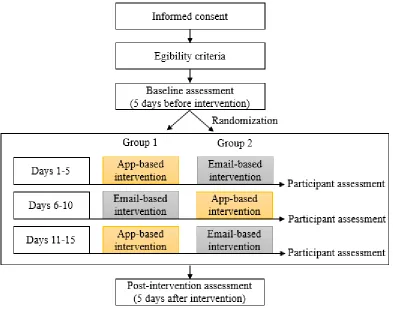
Procedure. Participants were divided randomly into two groups in a single-case
experiment design, i.e., each participant was their own control (Dallery, Cassidy, &
Raiff, 2013). There were three phases during the intervention, ABA for Group 1 and
BAB-design for Group 2, each phase lasting 5 days. During A-phases, participants used
the Hands-ON app to perform daily tasks with the non-dominant hand with as much
the same tasks but only with one email instruction at the beginning of the phase, without
using the app (existing intervention).
See Figure 3 for a summary of the procedure. Participants’ assessment was made
in five online surveys: 5 days before the start of the intervention (baseline, trait), during
the intervention in-between phases (days 5, 10, and 15, state), and 5 days before the end
of the intervention (post-assessment, state). To ensure authenticity (since most of the
data collection was remote), only the participants had access to the web address for the
surveys via their email. Also, the participants needed to confirm their email address at
[image:21.595.86.480.319.629.2]the beginning of each survey.
Figure 3. Participants’ procedures during the study, ABA (group 1) and BAB-design
(group 2).
After the intervention, the survey also included multiple-choice questions about
non-dominant hand (see Appendix M). In the end, 10 participants, five from each group,
were randomly invited to an in-person or video-conferencesemi-structured interview.
Data analysis. The data was organized and analysed descriptively using the
software Microsoft Excel.Graphical displays of the time-series measures of aggression
and self-control for each participant were created to allow visual analysis using
conservative dual-criterion method to detect clinically significant changes (Fisher,
Kelley, & Lomas, 2003; Dallery, Cassidy, & Raiff, 2013). For statistical calculations,
we used the software GraphPad Prism to detect significant outliers using Grubbs’ test
and paired t-test to identify statistically significant effects of the intervention within and
across participants and per group. The coding process of the interviews was similar to
those of Phase 1, except that only an inductive approach was used to summarize the
interview’s transcripts.
Results
Twenty-five individuals accepted to participate in the feasibility study, among
them, six dropped out at the beginning of the intervention for personal reasons, while 19
completed the intervention, composing the final sample. Among them, most were
female (N = 11), with an average age of 23 years old (SD = 2.5), and all of them were
right-handed (N = 19). Participants were mainly from the Netherlands (N = 12),
followed by Brazil (N = 6) and Germany (N = 1). There were no important demographic
differences between groups 1 and 2.
Most of the participants (N = 12) preferred to use the Hands-ON app rather than
email instructions (N = 7), although participants reported that they completed 69% of
the tasks when using the app and 87% of the tasks when using email instructions. Both
As shown in Table 1, writing, drawing, and cutting food with a knife were the
most difficult tasks with the lower performances, while using the TV remote control,
turning on/off lights, and using zippers were the easiest tasks, with higher performances.
The number of daily tasks performed by each participant varied from four to 15 tasks
Table 1
Number of participants who completed each task and average classification of the tasks on a 5-point Likert scale regarding rate, participants’
performance, and difficulty level.
Task with the non-dominant hand
N of participantswho
completed the task Rate of the task*
Participants’
performance* Difficulty level* App Email* Total App Email Total App Email Total App Email Total
1. Open doors 8 10 18 3.8 4.7 4.3 3.1 3.6 3.4 2.5 2.2 2.3
2. Pick up/carry items 7 10 17 3.6 4.3 4.0 2.9 3.6 3.3 2.9 2.1 2.4
3. Drink 7 10 17 3.9 4.3 4.1 4.0 3.4 3.6 2.3 2.2 2.2
4. Stir with a spoon 5 9 14 3.1 3.4 3.2 3.8 2.9 3.2 2.8 3.0 2.9
5. TV remote control 4 8 12 2.5 3.4 2.9 4.5 4.0 4.2 1.8 1.8 1.8
6. Teeth brush 8 9 17 2.4 3.6 2.9 2.8 3.3 3.1 3.6 3.1 3.4
7. Eat 8 7 16 3.0 2.6 2.8 3.1 2.7 2.9 3.0 3.6 3.3
8. Zippers 7 7 14 2.7 3.3 3.0 4.3 2.9 3.6 1.6 2.4 2.0
9. Hair brush 5 7 12 2.5 3.9 3.2 3.2 2.9 3.0 2.8 2.9 2.8
10. Mouse 6 6 12 2.7 3.3 3.0 3.0 2.3 2.7 2.8 3.3 3.1
11. Mobile phone 6 10 16 4.1 4.0 4.0 3.2 3.8 3.6 3.0 2.3 2.6
12. Draw 4 8 12 3.2 2.0 2.5 3.3 1.4 2.0 3.5 4.8 4.3
13. Write 5 10 15 3.4 1.2 2.2 3.0 1.0 1.7 3.8 4.9 4.5
14. Cut food 2 9 11 2.2 1.8 2.0 4.5 2.0 2.5 2.5 4.1 3.8
15. Turn on/off lights 4 10 14 3.4 4.5 4.0 2.3 4.3 3.7 2.3 1.8 1.9
Average 5.7 8.7 14.5 3.1 3.4 3.2 3.4 2.9 3.1 3.7 3.0 2.9
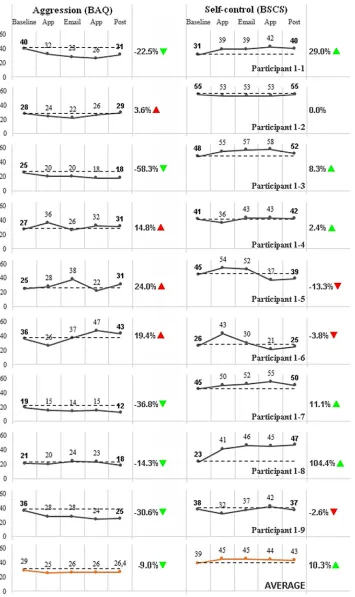
Aggression and self-control. The measures of aggression and self-control of the
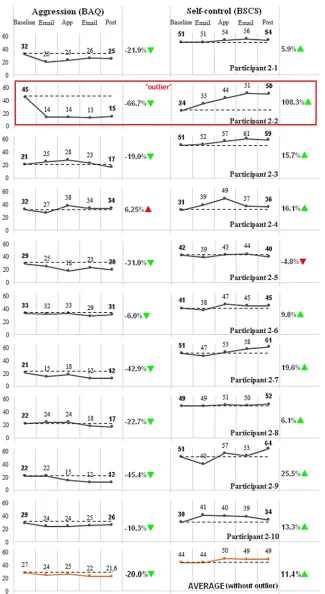
participants can be seen in Figures 4 and 5 (group 1 and 2, respectively). Results of
participant 2-2 were detected as a major statistical outlier (aggression decreased by
-66.7% and self-control increased by 108.3%, both p < 0.05), and for this reason, they
were removed from the results described below.
To be considered clinically significant, all points of measures were expected to
be below (for aggression, decrease) or above (for self-control, increase) the dashed line.
Therefore, there were no visual trends, i.e., the lines in the graphic do not follow a
similar pattern across all participants. However, three participants had clinically
significant results in both aggression and self-control (participants 1-1, 1-3, and 2-10),
while four only for aggression (1-9, 2-1, 2-5, and 2-7), and three only for self-control
(1-8, 2-3, and 2-4).
On average, aggression decreased by 13.8% (SD = 24.9) and self-control
increased by 13.5% (SD = 25.2) among all participants, when comparing their
self-reported measurements before and after the intervention. Paired t-test demonstrated
statistically significance in these results (aggression, p = 0.0132, and self-control, p =
0.0097). However, for the subgroup analysis, while group 1 had no statistically
significant differences in aggression (p = 0.3795) and self-control (p = 0.2152) before
and after the intervention, group 2 had very statistically significant differences in both
Figure 4. Brief Aggression Questionnaire (BAQ) and Brief Self-Control Scale (BSCS)
scores of the participants from group 1 (ABA-design) during 5 assessments: baseline (5
days before the intervention), during the intervention (days 5, 10 and 15) and
Figure 5. Brief Aggression Questionnaire (BAQ) and Brief Self-Control Scale (BSCS)
scores of the participants from group 2 (BAB-design) during 5 assessments: baseline (5
days before the intervention), during the intervention (days 5, 10 and 15) and
Table 2
Paired t-test results when comparing the levels of trait and state aggression and self-control, before and after the intervention respectively, per
group of participants and in total (without outlier).
Groups
Aggression (BAQ) Self-control (BCSC)
Average (SD)
95% CI Two-tailed
p-value*
Average (SD)
95% CI Two-tailed
p-value*
Before After
Before After
(Trait) (State) (Trait) (State)
Group 1
(N = 9) 28.56 (7.23) 26.44 (9.33) [-3.12, 7.34] 0.3795 39.11 (10.62) 43.0 (9.19) [-10.55, 2.77] 0.2152 Group 2
(N = 9) 26.78 (5.19) 21.56 (7.92) [2.20, 8.24] 0.0040 44.10 (8.65) 49.40 (11.1) [-8.73, -1.94] 0.0068 Total
From the 19 participants, 10 (five participants from each group) were randomly
selected for an interview. Four categories emerged, namely, perceptions of the
intervention, comparison between the app and email instructions, app bugs reporting,
and points of improvement.
Perceptions of the intervention. Most of the interviewees (N = 6) noticed
changes in their cognitions during the intervention. They needed to be more
self-conscious about their daily tasks to remember and try to do it with the non-dominant
hand. One participant said: “I had to use other functions of my brain that I felt like they
were asleep. I had to pay more attention to the things I did in my day-to-day life(S6)”.
Another participant noticed directly influence on their behaviour: “I try to change or
control my behaviour when I did it, which is helpful (S9)”.
Comparison between the app and email instructions. In general, interviewees
preferred the app rather than email instructions (N = 8), mainly because the app sent
them reminders to support the use of the non-dominant hand and most people have their
mobile phone close by during the day. According to participants: “The app was more
interactive to use (…) it is very handy, and it gave me some reminders (S7)” and “I
prefer the app because I use my phone every day (...) the app is more convenient (S9)”.
Two participants reported not having a preference since during the day they prefer not
to use the mobile phone frequently to be more productive.
App bugs reporting. Four interviewees experienced different bugs while using
the app. The errors varied from unusable (one participant could not log in temporally),
moderate (on the evaluation page of the activity of the day, one participant had
problems with the keyboard that did not appear and another participant after selecting
an alternative, could not proceed to the next page) and irritant, i.e., only intermittently
Besides affecting their overall experience with the app, participants considered the bugs
not severe, as stated: “Only once it bugged (...) I could not type. But otherwise,
everything was normal. I really enjoyed it (S2)”.
Points of improvement. Among the points for improvement of the app most
interviewees (N = 6) said they would like to have at least one more reminder during the
day. Also, in their opinion, the app could be more visually attractive. Another point
raised was the need for more personalization, i.e., users wanted to choose how many
and which tasks to accomplish each day, as well as a better track of personal progress,
as one participant stated: "I’d definitely make it tracking progress (...) so you’d see
which tasks you’ve done and if you’re doing great or not (...) if the tasks are repetitive
then it’d also show you if you’re getting better or not (S4)". Finally, two participants
suggested that the app could have a competition feature with other app users, as one
student stated: “Visually the app could be much nicer (...) I’d make it visually more
attractive with its own branding, bright colours, games and maybe an interactive tool to
share experiences with other users (S10)”.
All in all, participants considered the app easy to use, simple and clean. The
instructions to perform the tasks were easy to understand and the intervention was
Discussion
The findings of Phases 1 and 2 demonstrated the usability and feasibility of the
Hands-ON app, since both experts and university students had a positive attitude
towards the app, and they were readily able to use it to support them in performing
mundane tasks with their non-dominant hand.
The development of the Hands-ON app was not linear, but iterative and
dynamic, i.e., constant changes were made throughout the process and evaluation was
interrelated, instead of a separated or final phase. For instance, errors detected by
experts, such as typos and buttons that did not work properly, were fixed between each
usability test session. This approach is recommended for app development in the field
of health to achieve a better fit between context, individuals and technology (van
Gemert-Pijnen, Kelders, Kip, & Sanderman, 2018).
We found that the app has potential to be engaging because it included relevant
persuasive features such as reminders, which were specially identified as an important
feature by the participants since remember to perform the tasks with the non-dominant
hand is essential for the intervention. These results reflect those of Pirolli et al. (2017),
who also found that reminders can boost effects of a behavior-changing intervention,
and they are highly appreciated by users (Dennison, Morrison, Conway, & Yardley,
2013; Knight-Agarwal, Davis, Williams, Davey, Cox, & Clarke, 2015). We recommend
that in addition to including reminders, they should be customizable by users, i.e., they
can choose how many and at what times they want to receive them.
We had two main unanticipated findings. First, since previous studies (Finkel,
DeWall, Slotter, Oaten, & Foshee, 2009; Denson, Capper, Oaten, Friese, & Schofield,
2011) suggested that the non-dominant hand intervention reduces levels of aggression,
self-control levels, which was not the case. It seems possible that these results are due to the
number of tasks participants performed per day, i.e., while in these previous studies
participants were asked to do multiple tasks using the non-dominant a day, our app
forced users to perform only one task a day. For instance, one of the tasks was to open
doors, which is something that people do not perform frequently throughout the day.
Therefore, we recommend that the app should include multiple tasks a day since only
one task seems to not be enough.
Second, even though participants preferred the app, they reported performing
more tasks using the email instructions. It seems possible that these results are due to,
again, the number of tasks a day. During the phases with e-mail instructions,
participants received five tasks to be performed for the next 5 days, so possibly they
chose to perform more than one task a day. Another possible explanation for this is that
the app asked if they did the task or not at the end of each day, while for e-mail
instructions, they answered this question at once after 5 days. We suspect this
culminated in some participants forgetting whether they did the task or not, and
consequently reporting that they had done the task even without doing it. This
explanation corroborates the ideas of Rosenman, Tennekoon, & Hill (2011), who
suggested that participants usually want to “look good” in self-reported surveys, even
when it is anonymous, which results in response bias.
Strengths and Limitations
The main strength of this study is that it was the first app created based on the
non-dominant hand paradigm. Another strength is that it is one of the first studies to
evaluate an app using a single-case experiment approach. However, there are a few
limitations. First, participants of Phase 2 were young university students with varying
future end-users, i.e., individuals with aggressive behaviour. Further studies could test
the app with other populations, with a wider range of age and education, and end-users
should be included. Also, some participants dropped out at the beginning of the
intervention and their reasons could have been further explored to grasp more insights if
these reasons were related to the app or not. Another limitation was the bugs found in
the app according to the participants, affected their experiences, but in general, these
bugs were not severe. Lastly, although the measures for trait aggression and self-control
were validated scales, it is not true for state scales, which were adapted by researchers
of the present study. To further improve it, we recommend that these state scales should
be validated.
Conclusion
Based on the results of this study, we conclude that an app incorporating the
non-dominant hand paradigm intervention has the potential to be implemented as a
treatment for aggression in the future since it is usable and feasible. An iterative
approach for the development of such an app is important to create an engaging final
product. Therefore, further studies need to be carried out to improve and test the app
with end-users, and the mechanisms behind why and how the intervention works need
to be better understood. However, the clinical applications are promising, particularly
References
Alqahtani, F. & Orji, R. (2019). Usability Issues in Mental Health Applications,
presented at 27th Conference on User Modeling, Adaptation and
Personalization, Lanarca, Cyprus 2019. New York: ACM.
doi:10.1145/3314183.3323676
Baumeister, R. F., Vohs, K. D., Tice, D. M. (2007). The strength model of self-control.
Current Directions in Psychological Science, 16(6), 351-355.
doi:10.1111/j.1467-8721.2007.00534.x
Bevan, N., Carter, J., Earthy, J., Geis, T., & Harker S. (2016). New ISO Standards for
Usability, Usability Reports and Usability Measures, presented at 18th
International Conference on Human-Computer Interaction, Toronto, Canada
2016. Toronto: HCI. doi:10.1007/978-3-319-39510-4_25
BMS LAB - University of Twente. (2018a, April 21). TIIM (The Incredible
Intervention Machine). Retrieved from
http://bmslab.utwente.nl/knowledgebase/tiim/
BMS LAB - University of Twente. (2018b, October 16). Qualtrics. Retrieved from
http://www.utwente.nl/en/bms/datalab/datacollection/surveysoftware/qualtrics/
Brooke, J. (1996). SUS - A quick and dirty usability scale. Usability evaluation in
industry, 189(194), 4-7. Retrieved from https://hell.meiert.org/core/pdf/sus.pdf
Dallery, J., Cassidy, R. N., & Raiff, B. R. (2013). Single-case experimental designs to
evaluate novel technology-based health interventions. J Med Internet Res, 15(2),
1-17. doi:10.2196/jmir.2227
de Ridder, D. T. D., Lensvelt-Mulders, G., Finkenauer, C., Stok, F. M., & Baumeister,
Self-Control Relates to a Wide Range of Behaviors. Personality and Social
Psychology Review, 16(1), 76-99. doi: 10.1177/1088868311418749
Denissen, J. J. A., Thomaes, S., & Bushman, B. J. (2017). Self-regulation and
aggression: Aggression-provoking cues, individual differences, and self-control
strategies. In D. de Ridder, M. Adriaanse, & K. Fujita (Eds.), Routledge
international handbooks. The Routledge international handbook of self-control
in health and well-being (pp. 330-339). New York, NY, US: Routledge/Taylor
& Francis Group.
Dennison, L., Morrison, L., Conway, G., & Yardley, L. (2013). Opportunities and
Challenges for Smartphone Applications in Supporting Health Behavior
Change: Qualitative Study. J Med Internet Res, 15(4), e86.
doi:10.2196/jmir.2583
Denson, T. F., Capper, M. M., Oaten, M., Friese, M., & Schofield, T. P. (2011).
Self-control training decreases aggression in response to provocation in aggressive
individuals. Journal of Research in Personality, 45(2), 252-256.
doi:10.1016/j.jrp.2011.02.001
Denson, T. F., DeWall, C. N., & Finkel, E. J. (2012). Self-control and aggression.
Current Directions in Psychological Science, 21(1), 20-25.
doi:10.1177/0963721411429451
Denson, T. F. (2015). Four promising psychological interventions for reducing reactive
aggression. Current Opinion in Behavioural Sciences, 3(1), 136-141.
doi:10.1016/j.cobeha.2015.04.003
Fereday, J., Muir-Cochrane, E. (2006). Demonstrating Rigor Using Thematic Analysis:
Development. International Journal of Qualitative Methods, 5(1), 80-92.
doi:10.1177/160940690600500107
Finkel, E. J., DeWall, C. N., Slotter, E. B., Oaten, M., & Foshee, V. A. (2009).
Self-regulatory failure and intimate partner violence perpetration. Journal of
Personality and Social Psychology, 97(3), 483-499. doi:10.1037/a0015433
Fisher, W. W., Kelley, M. E., & Lomas, J. E. (2003). Visual aids and structured criteria
for improving visual inspection and interpretation of single-case designs.
Journal of Applied Behavior Analysis, 36(3), 387–406.
doi:10.1901/jaba.2003.36-387
Friese, M., Frankenbach, J., Job, V., & Loschelder, D. D. (2017). Does self-control
training improve self-control? A meta-analysis. Perspectives on Psychological
Science, 12(6), 1077–1099. doi:10.1177/1745691617697076
Fuller-Tyszkiewicz, M., Richardson, B., Klein, B., Skouteris, H., Christensen, H.,
Austin, D., ...Ware, A. (2018). A Mobile App–Based Intervention for
Depression: End User and Expert Usability Testing Study. JMIR Ment Health,
5(3), e54. doi:10.2196/mental.9445
Gottfredson, M. R., & Hirschi, T. (1990). A general theory of crime. Stanford, Calif:
Stanford University Press.
Hsieh, K. L., Fanning, J. T., Rogers, W. A., Wood, T. A., Sosnoff, J. J. (2018). A Fall
Risk mHealth App for Older Adults: Development and Usability Study. JMIR
Aging, 1(2), e11569. doi:10.2196/11569
Karnouskos, S., Sinhay, R., Leitão, P., Ribeiro, L., & Strasser, T. I. (2018). The
Applicability of ISO/IEC 25023 Measures to the Integration of Agents and
Industrial Electronics Society, Washington, DC, United States 2018. Sainte
Luce, Martinique: IEEE. doi:10.1109/IECON.2018.8592777
Kip, H., Bouman, Y. H. A., Kelders, S. M., & van Gemert-Pijnen, L. J. E. W. C. (2018).
eHealth in Treatment of Offenders in Forensic Mental Health: A Review of the
Current State. Frontiers in Psychiatry, 9:42. doi:10.3389/fpsyt.2018.00042
Knight-Agarwal, C., Davis, D. L., Williams, L., Davey, R., Cox, R., & Clarke, A.
(2015). JMIR mHealth uHealth, 3(2), e44. doi:10.2196/mhealth.4071
Lee, A. H., & DiGiuseppe, R. (2018). Anger and aggression treatments: a review of
meta-analyses. Current Opinion in Psychology, 19(1), 65–74.
doi:10.1016/j.copsyc.2017.04.004
Lindner, C., Nagy, G., & Retelsdorf, J. (2015). The dimensionality of the Brief
Self-Control Scale - An evaluation of unidimensional and multidimensional
applications. Personality and Individual Differences, 86, 465–473.
doi:10.1016/j.paid.2015.07.006
Miles, E., Sheeran, P., Baird, H., Macdonald, I., Webb, T., & Harris, P. (2016). Does
self-control improve with practice? Evidence from a six-week training program.
Journal of Experimental Psychology: General, 145(8), 1075-1091.
doi:10.1037/xge0000185
Oinas-Kukkonen, H., & M., Harjumaa. (2008). Towards Deeper Understanding of
Persuasion in Software and Information Systems. In ACHI 2008: First
International Conference on Advances in Human-Computer Interaction (pp.
200-205). Sainte Luce, Martinique: IEEE. Retrieved from
https://ieeexplore.ieee.org/document/4455982
Pirolli, P., Mohan, S., Venkatakrishnan, A., Nelson, L., Silva, M., & Springer, A.
Pompili, E., Carlone, C., Silvestrini, C., & Nicolò, E. (2017). Focus on aggressive
behaviour in mental illness. Riv Psichiatr, 52(5), 175-179.
doi:10.1708/2801.28344
Raiff, B. R., & Dallery, J. (2010). Internet-based Contingency Management to Improve
Adherence with Blood Glucose Testing Recommendations for Teens with Type
1 Diabetes. Journal of Applied Behavior Analysis, 43(3), 487-491.
doi:0.1901/jaba.2010.43-487
Rosenman, R., Tennekoon, V., & Hill, L. G. (2011). Measuring bias in self-reported
data. Int J Behav Healthc Res, 2(4), 320–332. doi:10.1504/IJBHR.2011.043414
Sieverink, F., Köhle, N., Cheung, K., Roefs, A., Trompetter, H., Keizer, J., ... Kelders,
S. M. (2018). Evaluating eHealth. In L. van Gemert-Pijnen, S. M. Kelders, H.
Kip, & R. Sanderman (Eds.), eHealth Research, Theory and Development: A
Multi-Disciplinary Approach (pp. 290-318). London: Routledge.
Tangney, J. P., Baumeister, R. F., & Boone, A. L. (2004). High Self-Control Predicts
Good Adjustment, Less Pathology, Better Grades, and Interpersonal Success.
Journal of Personality, 72(2), 271–324. doi:10.1111/j.0022-3506.2004.00263.x
van Gemert-Pijnen, L. J. E. W. C., Kelders, S. M., Beerlage-de Jong, N., &
Oinas-Kukkonen, H. (2018). Persuasive health technology. In L. van Gemert-Pijnen, S.
M. Kelders, H. Kip, & R. Sanderman (Eds.), eHealth Research, Theory and
Development: A Multi-Disciplinary Approach (pp. 228-246). London:
Routledge.
van Gemert-Pijnen, L. J. E. W. C., Kelders, S. M., Kip, H., & Sanderman R. (2018).
eHealth Research, Theory and Development: A Multi-Disciplinary Approach.
Webster, et al. (2015). The Brief Aggression Questionnaire: Structure, Validity,
Reliability, and Generalizability. Journal of personality assessment. 97(1), 1-12.
doi:10.1080/00223891.2015.1044093
World Health Organization. (2014). Global status report on violence prevention.
Retrieved from
https://www.who.int/violence_injury_prevention/violence/status_report/2014/en
Wrangham, R. (2017). Two types of aggression in human evolution. Proceedings Of
The National Academy Of Sciences, 115(2), 245-253.
Appendices
Appendix A
[image:40.595.130.720.168.484.2]Paper prototype of the Hands-ON app
Appendix B
Daily tasks to perform using the non-dominant hand
1. Open doors;
2. Pick up and carry items;
3. Drink;
4. Stir with a spoon;
5. Use the TV remote control;
6. Teeth brushing;
7. Eat;
8. Use zippers;
9. Hair brushing;
10.Using computer mouse or laptop touchpad;
11.Use mobile phone;
12.Draw;
13.Write;
14.Cut food with a knife;
Appendix C
[image:42.595.85.514.125.332.2]Daily reminders of the Hands-ON app
Figure C1. Screenshots of the reminders (i.e., push notifications) of the Hands-ON app
Appendix D
System Usability Scale (SUS)
Table D1
System Usability Scale (SUS). Rate each item between 1 and 5, with 1 being “strongly
disagree” and 5 being “strongly agree”.
Item 1 2 3 4 5
I think I would like to use the app frequently I found the app to be unnecessarily complex I thought the app was easy to use
I think that I would need support of a technical person to be able to use the app
I found the various functions in the app were well integrated I thought there was too much inconsistency in the app
I would imagine that most people would learn to use the app very quickly I found the app very cumbersome to use
I felt very confident using the app
I needed to learn a lot of things before I could get going with the app
Appendix E
Semi-structured interview questions - Expert Usability Testing
1. What are your general impressions of the app?
2. Do you think the app provided enough instructions to support users in using
their non-dominant hand in daily tasks?
3. What do you think about the design of the app? Would you change something?
4. What do you think about the daily tasks? Do you think they are appropriate? Are
there any other daily task you would add?
5. What did you like most about the app?
6. What did you like least about the app?
Appendix F
[image:45.595.84.512.209.480.2]Overview of the System Usability Scale (SUS) results
Table F1
Average experts’ rate and standard deviation (SD) per item of the System Usability
Scale (SUS).
SUS item Rate mean
(SD)
I felt very confident using the app 4.7 (0.5) I thought the app was easy to use 4.5 (0.5) I would imagine that most people would learn to use the app very quickly 4.0 (0.0) I found the various functions in the app were well integrated 3.7 (0.9) I think I would like to use the app frequently 3.2 (1.3) I found the app to be unnecessarily complex* 1.8 (1.2) I thought there was too much inconsistency in the app* 1.7 (0.7) I found the app very cumbersome to use* 1.3 (0.5) I think that I would need support of a technical person to be able to use
the app* 1.2 (0.4)
I needed to learn a lot of things before I could get going with the app* 1.0 (0.0)
Appendix G
Brief aggression questionnaire (BAQ)
Table G1
Brief aggression questionnaire (BAQ). Using the Likert scale shown below, indicate
how uncharacteristic or characteristic each of the following statements is in describing
you.
Item 1 2 3 4 5
Given enough provocation, I may hit another person (PA) If I have to resort to violence to protect my rights, I will (PA) There are people who pushed me so far that we came to blows (PA) I am an even-tempered person (A)*
Sometimes I fly off the handle for no good reason (A) I have trouble controlling my temper (A)
I tell my friends openly when I disagree with them (VA)
When people annoy me, I may tell them what I think of them (VA) My friends say that I’m somewhat argumentative (VA)
Other people always seem to get the breaks (H)
I sometimes feel that people are laughing at me behind my back (H) When people are especially nice, I wonder what they want (H)
Note. 1 = Extremely uncharacteristic of me, 2 = Somewhat uncharacteristic of me, 3 = Neither
Appendix H
Brief self-control scale (BSCS)
Table H1
Brief self-control scale (BSCS). Using the scale provided, please indicate how much of
the statement above reflects how you typically are.
Item 1 2 3 4 5
I am good at resisting temptation I have a hard time breaking bad habits* I am lazy*
I say inappropriate things*
I do certain things that are bad for me, if they are fun* I refuse things that are bad for me
I wish I had more self-discipline*
People would say that I have iron self-discipline
Pleasure and fun sometimes keep me from getting work done* I have trouble concentrating*
I am able to work effectively toward long-term goals
Sometimes I can’t stop myself from doing something, even if I know it is wrong*
I often act without thinking through all the alternatives*
Note. *Reversed scores. 1 = Not at all, 2 = Slightly, 3 = Moderately, 4 = Very, 5 = Extremely.
Appendix I
Brief aggression questionnaire (BAQ) Adapted
Table I1
Brief aggression questionnaire (BAQ) adapted to collect data on state aggression.
Using the Likert scale shown below, indicate how uncharacteristic or characteristic
each of the following statements were in describing you during the past five days.
Item 1 2 3 4 5
Given enough provocation, I could hit another person (PA) If I had to resort to violence to protect my rights, I would (PA)
There were people who pushed me so far that we could came to blows (PA)
I have been an even-tempered person (A)*
Sometimes I flied off the handle for no good reason (A) I had trouble controlling my temper (A)
I told my friends openly when I disagreed with them (VA)
When people annoy me, I may tell them what I think of them (VA) My friends would say that I was somewhat argumentative (VA) Other people always seemed to get the breaks (H)
I sometimes felt that people were laughing at me behind my back (H)
When people were especially nice, I wondered what they wanted (H)
Note. 1 = Extremely uncharacteristic of me, 2 = Somewhat uncharacteristic of me, 3 = Neither
Appendix J
Brief self-control scale (BSCS) Adapted
Table J1
Brief self-control scale (BSCS) adapted to collect data on state self-control. Using the
scale provided, please indicate how much of the statement above reflects how you
typically have been in the last five days.
Item 1 2 3 4 5
I have been good at resisting temptation I have had a hard time breaking bad habits* I have been lazy*
I have been saying inappropriate things*
I have been doing certain things that are bad for me, if they are fun* I have been refusing things that are bad for me
I wish I had more self-discipline*
People would say that I have iron self-discipline
Pleasure and fun sometimes kept me from getting work done*
I have had trouble concentrating*
Note. *Reversed scores. 1 = Not at all, 2 = Slightly, 3 = Moderately, 4 = Very, 5 = Extremely.
Appendix K
First survey - Feasibility Study
Opening statement and informed consent
Welcome to the Hands-ON app study!
My name is Marcia, I am a master’s student in Health Sciences at the University
of Twente and I would like to kindly invite you to participate in the Hands-ON app
study. The Hands-ON is an app-based version of an existing intervention that supports
ones use of the non-dominant hand in daily tasks.
We are interested in your experience with this intervention with and without the
app for 15 days, i.e. during some days you will be asked to use the app to support you in
using your non-dominant hand for daily tasks and other days you will be required to do
the tasks only with email instructions, without the app. On days where you are asked to
use the app, please use it at least twice every day (e.g. in the morning to check which
daily task you are required to do that day, and in the evening to inform how you did in
that task).
This is the first of five surveys that you will be asked to fill out over this period.
After filling out this survey (which will take about 10 minutes), you will receive an
email with instructions on how to install the app on your smartphone. Each day, we will
give you a different challenge where you will be asked to use your non-dominant hand
to perform a daily task, such as open doors, brush your teeth, and cutting food.
You will be asked to fill out the second survey on the fifth day, the third survey
on the tenth day, the fourth survey on the fifteenth days, and the final survey five days
after the intervention. Each of these surveys will take about 5-10 minutes. After this,
you might be invited for an interview in person or audio/video (Skype), to better
Figure K1. Feasibility study timeline.
You have the right to withdraw at any point during the study, for any reason. If
you would like to contact the researcher to discuss this study, please e-mail Marcia C.
da Silva ([email protected]). For students registered at the University of
Twente, your participation will be counted towards your SONA credits when you fill
out all five surveys, use the app at least twice each day, and participate in the interview.
By clicking the button below, you acknowledge that your participation in the
study is voluntary, you are 18 years of age, that you are aware of risks, and that you are
aware that you may choose to terminate your participation in the study at any time and
for any reason. Your response to the surveys will be processed anonymously, and data
will be used once aggregated. The researchers follow the standards and guidelines set
out by the World Health Organization on performing health related research with human
participants, and the public document can be accessed at your leisure from:
https://www.who.int/ethics/publications/9789241502948/en/
( ) I consent, begin the study
( ) I do not consent, I do not wish to participate
Demographic information
First, we will ask some questions about you.
What is your email address (we will use this to contact you during the study)?:
What is your gender?: ( ) Male; ( ) Female; ( ) Other; ( ) I prefer not to answer.
What is your age?: ______
What is your current occupation?: ________________________
Location: (automatically estimated through device IP).
Baseline assessment
Brief self-control scale (BSCS) (see Appendix D) and Brief aggression
questionnaire (BAQ) (see Appendix E).
End of the survey
Thank you for filling out this baseline survey. You will receive an email with the
Appendix L
Semi-structured interview questions - Feasibility Study
1. How would you describe your overall experience with the app?
2. Which of these two options do you find better: the app intervention or paper
intervention? Why?
3. Did you encounter any difficulties as you used the app? Which ones?
4. Do you think the app provided enough information to support users in using
their non-dominant hand in daily tasks?
5. What do you think about the design of the app? Would you change something?
6. What did you like most about the app?
7. What did you like least about the app?
Appendix M
Fourth survey - Feasibility Study
The following questions will give you an opportunity to tell us more about your
experience during this intervention. Please answer openly and truthfully.
How do you evaluate your overall experience with the app?
( ) Extremely good
( ) Somewhat good
( ) Neither good nor bad
( ) Somewhat bad
( ) Extremely bad
Which of the following adjectives, if any, better describe your experience with the app?
Please check all that apply
( ) Funny
( ) Challenging
( ) Difficult
( ) Clean
( ) Frustrating
( ) Boring
( ) Easy to use
( ) Complex
( ) Interesting
( ) Uncomfortable
( ) Annoying
How do you evaluate your overall experience with the email instructions?
( ) Extremely good
( ) Somewhat good
( ) Neither good nor bad
( ) Somewhat bad
( ) Extremely bad
Which of these two options did you find better?
( ) The app
( ) The email instruction
( ) I do not have a preference
Rate the following tasks (to do with your nondominant hand) according to your
preferences (Minimum.: 0,5 star - Maximum: 5 stars):
Open doors
Pick up and carry items
Drink
Stir with a spoon
Use the TV remote control
Teeth brushing
Eat
Use zippers
Hair brushing
Using computer mouse or laptop touchpad
Draw
Write
Cut food with a knife
Turn on/off lights
If you have any other comment about this intervention, please write below (optional):