Possibilities Of Technology To Decrease Stress
In Students At The University Of Twente
Master thesis Kira Oberschmidt University of Twente
First supervisor: Dr. Saskia Kelders
Abstract
Introduction. Reports of stress in students have increased in the past years. A possible way of decreasing student stress could be the development of a technological intervention, as this allows for larger scale provision of counselling and fits students as a target group.
Method. Several sub-studies were conducted to determine points of improvement in the current counselling process that the University of Twente offers for its students - the main target group and key stakeholders -, their needs, and the main features a possible technology should include. The used methods were desk research, a survey, focus groups and two interview studies, in which students as well as counselling staff were included.
Results. Outcomes show that factors like fear of missing out or making mistakes play a role in the onset of students stress. Furthermore, international students specifically are more vulnerable to feeling stressed, due to circumstances like the unfamiliar environment and financial pressure. Stakeholders were open to the idea of a new technological intervention. Values were determined based on the stakeholders’ preferences.
Introduction
In the Netherlands, the pressure on students, and with it the occurrence of stress and burnout in students, seems to have increased in the last years (NOS, 2018; Van Dinther, 2018). Approximately a quarter of all students show some symptoms of a burnout (Dopmeijer, 2017), which is as much or even more than the percentage in the general population (CBS, 2018; Vandereycken, 2012). Similar results have been found in other countries within and outside of Europe (dos Santos Boni et al., 2018; Grützmacher, 2018; Salmela-Aro & Read, 2017; Wolf & Rosenstock, 2017). A recent multinational study on student mental health mentions the possible benefits of a technological intervention to improve prevention and treatment of stress-related disorder in students (Auerbach et al., 2018).
Stress is commonly defined as the fit between a person and the environment, where a good fit means little or no stress and a bad fit results in higher stress levels (Lazarus & Launier, 1978). However, stress does not always have to be harmful. The term ‘eustress’ is used for stress that has a beneficial effect, while negative stress is also referred to as ‘distress’ (Ogden, 2012). The right perception or mindset with regards to stress is very important for the impact that stress can have.
Consequences of (prolonged) stress
A prolonged period of negative stress is defined as a burnout (Vandereycken, Hoogduin, & Emmelkamp, 2012). Students who suffer from a burnout were found to show less
Next to the previously mentioned link between stress and burnout, research on student stress often includes the concepts of depression and anxiety (Bayram & Bilgel, 2008; Beiter et al., 2015; Dahlin, Joneborg, & Runeson, 2005; Mahmoud, Staten, Hall, & Lennie, 2012). Similar to stress and burnout, depression and anxiety were also related to lower academic achievement (Deroma, Leach, & Leverett, 2009; Taylor, Ruhl, & Park, 2019).
Consequently, once a student has reached a state of too much stress or any related disorder, this in turn affects how they perform in their classes and can cause new stressors to arise. Therefore, it is important to prevent the onset of stress in students and to treat students that already suffer from stress or related disorders, by helping them deal with stressors that they are facing (Bayram & Bilgel, 2008).
Causes of stress
Vandereycken et al. (2012) make a distinction between different situations that can evoke stress or a stress-related disorder. Firstly, they name a cumulation of minor events in everyday life as a possible reason for such a disorder, if not enough coping capacity is available. Next to this, a major life event (e.g. death of a family member, termination of employment) can also trigger a stress related disorder and result in symptoms like fatigue, physical pain or feelings of depression. Lastly, next to these more temporary circumstances, long-term problematic situations might also result in a stress-related disorder.
uncertainty about life planning in general (Lin and Huang, 2014) and are confronted with different competing demands like extracurricular activities, part-time work, different forms of activism or family demands(Schaufeli, Leiter, & Maslach, 2009; Vaccaro & Mena, 2011).
Being less involved with the university, not being flexible in the learning process and having a high subjective workload can lead to increased stress and risk of burnout (Chang, Rand, & Strunk, 2000; Jacobs & Dodd, 2003; Neumann, Finaly-Neumann, & Reichel, 1990). Additionally, character traits like pessimism, neuroticism or having a high self-expectation increase the likeliness of stress or burnout (Chang et al., 2000; Sulea, Van Beek, Sarbescu, Virga, & Schaufeli, 2015; Van Baar, 2015). Higher levels of extraversion and agreeableness on the other hand are related to lower levels of burnout. Furthermore, self-compassion works as a moderator between academic burnout and psychological well-being (Kyeong, 2013), attenuating the effects of academic burnout. This all shows that there is a broad range of causes for stress in students that need to be taken into account when looking to prevent and treat student stress.
Treatment and prevention
While there are different stressors that play a role in students, and student stress has become an increasing problem, there are commonly used ways of decreasing stress. In the general population, relaxation exercises and stress management training, group interaction, cultural activities and cognitive behavioural approaches were all found to reduce symptoms of stress or burnout (Berger & Friedman, 1988; Grape Viding et al., 2015; Iancu, Rusu, Măroiu, Păcurar, & Maricuțoiu, 2017).
mindfulness meditation generally decreased college students’ anxiety. Baghurst and Kelley (2014) found stress management and physical activity to be the best strategies for treating and preventing burnout in students. Their studies showed that education on the positive effects of physical activity decreased stress levels. Furthermore, resilience and coping skills enable students to deal with stressful situations (Dunn, Iglewicz, & Moutier, 2008). Mentioned examples of interventions are mindfulness, mentorship and healthy lifestyle initiatives. Ideally, some part of this training could be included in the curriculum or a program to decrease stigma (IsHak et al., 2013). To summarize, there is a variety of treatments that can be effective against student stress.
However, while there are these different options for treatment, it is important that students recognize their problems first and seek help. However, Mackenzie, Erickson, Deane, and Wright (2014) found that students are often reluctant to seek help for mental health issues because of stigmatization. Additionally, students prefer talking to peers rather than contacting a professional (Atik & Yalçin, 2011). These results show that while treatment options might be available, this does not guarantee that students make use of them. Therefore, the threshold of starting to use an intervention should be kept low, to increase the probability of uptake.
Furthermore, reviews found that studies often focus on a small homogeneous group of students, for example mainly on female students, so the positive effects are not guaranteed for all students (Bamber & Morpeth, 2018; Regehr et al., 2013). Because of this focus on specific groups, only a small fraction of the student population benefits from the intervention. The aim should be to develop an intervention that fits the needs and wishes of as many students as possible.
Technology
solutions for emotional distress. Specifically, they asked students whether they were willing to use serious gaming, and the majority agreed. While Stellefson et al. (2011) also found students to be in favour of using eHealth, they concluded that students were not always doing so because they lacked “skills related to searching for, retrieving, using, and evaluating sources of eHealth information”. This emphasizes the importance of a well-grounded technology by a credible source to increase the uptake in the student population.
Generally, there is little research into the possibilities of technology for stress reduction in students. However, several universities have made a start in developing mental health technology at and for their institution, for example the University of California, Los Angeles (UCLA), the University of Amsterdam (Universiteit van Amsterdam, UvA) together with the Amsterdam University of Applied Sciences (Hogeschool van Amsterdam, HvA) and the ‘Caring universities’ program (Caring Universities, No Date; "Check In Survey and iCBT," 2017; Van der Heijde, Vonk, & Meijman, 2018). These programs offer free web-based mental health interventions to students. Outside of the university context, others also provide technological interventions to decrease stress, like for example the eQuooGame (PsycApps Limited, 2018) that teaches skills in order to increase mental wellbeing. However, no scientific evidence of the effects has been given yet for any of these interventions and it is unclear whether any of the approaches fits the needs and wishes of university students.
Ossebaard, 2013). This approach of human centred design is one of the core principles of the CeHRes roadmap, which will be explained subsequently.
Technology development
The CeHRes roadmap that was developed by J. E. van Gemert-Pijnen et al. (2011) and helps systematically develop the best technological solution in any given context. This roadmap is a framework that can be used in the development of eHealth technologies. It consists of five main steps as well as iterative evaluations between steps. The first step, the contextual inquiry, encompasses the description of the context, needs, and problems at hand as well as gaining insight into possible stakeholders. To achieve this, possible methods are desk research or interviews or focus groups with different stakeholders. Next follows the value specification, in which the information that was gathered is translated into requirements for the new technology, again in close contact with stakeholders. During the design phase, a prototype is drafted and tested with possible users. In the fourth phase, the operationalization, a business model for the implementation of the technology is developed and the technology is put into practice. Lastly, the summative evaluation looks at the different effects of the
developed product. Furthermore, cycles of formative evaluation take place during and after each stage to ensure that the process is going in the right direction. By following these steps for the development of a new technology, there is a high chance of a good fit with possible users.
Aim of the study
features that should be included in such an intervention?’. Depending on what will be found during this study, a prototype for a possible eHealth intervention for student stress can be developed.
Overview of methods
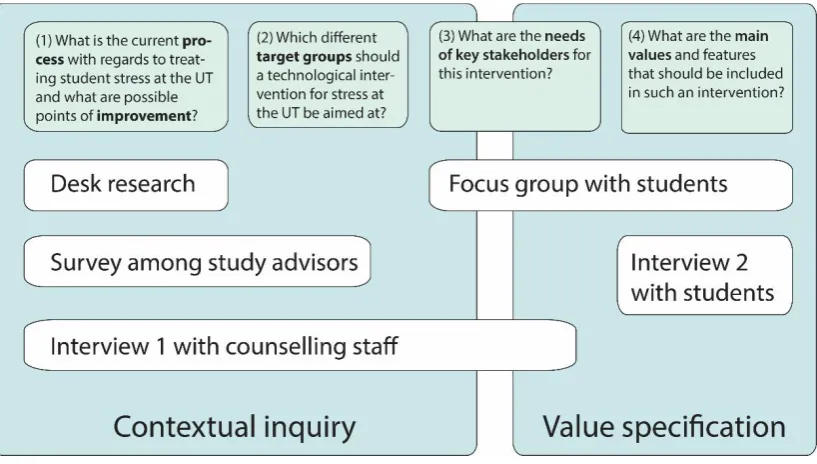
[image:9.595.76.485.330.562.2]An overview of the research questions, the corresponding methods and steps in the CeHRes roadmap can be found in Figure 1. As the sub-studies build upon each other and follow from previous results, for each part the method, results and implications for further research will be discussed individually before turning to the next step. All results are discussed together and conclusions are drawn based on the full study.
Figure 1. Overview of the research questions and methods used per phase of the CeHRes
roadmap.
Desk research Method
regards to international students. Furthermore, research was done into specific factors that might play a role in student stress at the UT. Therefore, information on characteristics like the type of educational program, financing and extracurricular activities was included. These characteristics were based on previous knowledge of the universities characteristics and the Dutch educational system. Then, literature on the relationship between these factors and student stress was consulted.
Lastly, information on different types of counselling at the UT, such as study advisors and the student psychologists’ office, was sought. This was done to identify the different types of support that these instances offer. The descriptions of the counselling services were read to get a clearer picture of the role of each counselling party in providing help to students. Results
General information. The University of Twente (UT) is a Dutch university located in the city of Enschede, in the East of the Netherlands, close to the German border. In 2017 approximately 10.000 students studied at the UT, of which 5.489 were bachelor students and 4.010 were master students (University of Twente, 2018). More than 2.600 of those students were international students. Of these, approximately half come from Germany, but 78 other nationalities are represented as well. All buildings of the university are located on a campus together with student housing, sports- and other facilities.
Factors influencing student stress. The University of Twente is no exception to the increasing numbers of burnout in students (Kuipers, 2018). Different factors that might contribute to the increase in stress in students were identified, and will subsequently be discussed in more detail. These factors are the educational model at the UT, student activism, changes in the student loan model and internationalization.
(TEM), lays an emphasize on project work with small groups of students. The TEM also entails that students must pass all module components (usually 15 European credits (EC) during a period of ten weeks) in order to earn the credits. However, this system has been adapted a bit during the last year, allowing for more exceptions where 5 or 10 EC can be obtained as well. Still, this high workload puts a lot of pressure on students and might therefore make them more prone to burnout (Bowyer, 2012).
There are several forms of student activism at the UT. Many students work in committees or student teams during their studies or become members of a student board. Activism is promoted as a means of developing skills next to those that are taught in the study programs. The university also shares stories of student activism on their website. It was shown by Vaccaro and Mena (2011) that too many competing demands, like participating in many different activities next to studying, can lead to an increased risk of burnout.
With the change of the student loan model in the Netherlands in 2016 came an increasing pressure on students to finish their studies without any delays and thus avoid having to pay back higher student loans (Van Dinther, 2018). This development has in turn lead to increased stress in those students that loan money (NOS, 2018). Students tend to work more than before the student loan model changed and sometimes make sacrifices in their university work for their paid work (Van der Werf, Schonewille, & Stoof, 2017). Having to work next to studying at a university can lead to ‘work-university conflict’, which in turn was related to aspects of burnout (Lingard, 2007).
stress for reasons like language barriers or being unfamiliar with the local lifestyle, culture and schooling system (Chen, 1999; Mori, 2000). Furthermore, Lungu and Sun (2016) found that there may be cultural differences when it comes to actively seeking help. In their study, participants of Asian descend where less likely to ask for help when facing emotional distress.
Counselling. There are different people that are expected to be in contact with
students that experience stress and stress-related disorders and therefore are likely to have the best overview of the problem at hand. These are the study advisors, the student psychologists and, to some extent, the student counsellors.
Every program at the UT has its own study advisor, and in some cases there are also different advisors for the bachelor’s and master’s programs (University of Twente). The study advisors are among the first people that students can come to when experiencing
problems during their studies. According to the website of the UT, study advisors mainly help with questions regarding educational matters but are open to discuss other subjects as well.
Furthermore, the UT also provides the service of a student psychologists’ office (University of Twente). The student psychologist is the contact person for students that experience different personal problems, like mental health issues or problems with parents. All appointments here are free of charge and no reference is needed to make an appointment.
Lastly, there are student counsellors at the UT (University of Twente). They can provide advice on topics like regulations, appeals and legal procedures. For other issues like study delay or personal circumstances, the website advises to first contact the study advisors, before getting in contact with a student counsellor.
Implications
the student loan model for Dutch students in general were outlined. Looking at these findings in the light of literature shows that the abovementioned factors can cause the onset of student stress. However, not all mentioned aspects might play an actual role in the onset of student stress, or there might be other aspects that were not found before. Therefore, more
information from sources within the UT is necessary to explain student stress there in more detail. As it became clear from the results of the desk research that the study advisors and the student psychologists were most likely to see students experiencing stress, they were included in the next parts of the research.
Survey Method
Goal. The main aim in this stage was to get a clearer view of the current process with regard to treating students stress, possible improvements of this process and the identification of at-risk groups.
Participants. For this purpose, an online survey was emailed to the 33 study advisors at the UT, of which 13 responded. Of these, five worked for the faculty of Behavioural, Management and Social Sciences (BMS), three for Engineering Technology (ET), two for the faculty of Electrical Engineering, Mathematics and Computer Sciences (EEMCS), two for Science and Technology (TNW) and one for the faculty of Geo-Information Science and Earth Observation (ITC).
no previous contact between the researcher and the participants. The survey itself contained open-ended questions about whether the study advisors had contact with students with stress or burn-out symptoms. Furthermore, the study advisors were asked how they perceive the occurrence of stress and burnout in the student population of their respective program and whether there had been an increase in this. Lastly, a question about possible reasons of stress in students was included. All questions that were asked can be found in Appendix A. In the same email, study advisors were asked whether they were willing to participate in an interview on the subject as well.
Analysis. The full content of the email replies was included in the analysis of the surveys. These results were analysed using open coding in ATLAS.ti. All results were coded by the researcher. The codes were developed inductively for each question.
Results
All 13 study advisors that answered the survey stated that they do see students with burnout or stress-related problems in their practice. However, the number of students seems to vary, with some study advisors saying that they rarely see students with burnout and related symptoms (n=4) while others mention that the number of students that experienced these problems has increased in the previous years (n=3). The remaining participants did not
achieve at least 45 EC in the first year of studying (n=3) and the change in the student loan model (n=2). Next to the expectations from the program the students have their own expectations to manage as well, concretely “having the feeling that you must always be pretty, successful, etcetera” or “wanting to do everything well […] sometimes extremely
ambitious”. As an example of fear of missing out, one study advisor mentioned that
“oftentimes students can’t choose between activities and want to do everything: active on social media, sport, association, house and study”. Often, this “does not fit within the hours
of a day or week”. Less frequently reported causes of burnout are social media (n=2), being in
a different environment, away from home (n=2) and having to work next to the study (n=2). Financial pressure and expectations from parents are mentioned as specific reasons for burnout in international students (n=2).
Implications
Interview I Method
Participants. Before conducting the interviews, approval was requested from the ethical committee of the faculty of Behavioral, Management and Social Sciences (BMS) and was granted on September 27th (application number 18784).
Three interviews were held with study advisors from different programs. The programs were all part of a different faculty, namely Behavioural, Management and Social Sciences (BMS), Electrical Engineering, Mathematics and Computer Sciences (EEMCS) and Science and Technology (TNW). The programs which the study advisors represented also differed in other aspects such as size and the number of international students. Furthermore, a student counsellor from the student psychologists’ office was interviewed.
Procedure and materials. The semi-structured interviews lasted between 30 and 60 minutes. All interviews were conducted in the office of the respective interviewee and were recorded, after participants signed an informed consent form allowing this. An interview scheme was developed so that similar questions would be posed during each interview. After the development of this first interview scheme, a pilot interview was conducted with one of the supervisors of this project, and some adjustments were made to the interview scheme. Firstly, some general questions were asked to determine whether the respondent encountered student burnout and stress-related symptoms in their practice. Possible reasons for these complaints were discussed. Afterwards, the interviewee was asked to describe the typical steps that a student follows before and after contacting them about their stress. All steps in this process were subsequently discussed to determine what worked well and where
Analysis. Based on the audio recordings, verbatim transcripts of the interviews were made. The code scheme that was used for analysing the surveys was used as a basis for the analysis. New codes were added inductively during analyses of the interviews. Again, one coder analysed all results using ATLAS.ti.
Results
Stress level in students. All interviewees agree that the attention for mental health in general, and stress and burnout more specifically, has grown. However, it was stated in two of the interviews that the stress level in students might not have increased in the past years, contrary to what was said in media articles. One participant pointed out that “the threshold of talking about stress is lower and I think that is why we hear about it more”.
Another new aspect that was mentioned in all interviews is that students often act too late and that they could be helped sooner and better if they were to contact a study advisor or student psychologist earlier.
fixed if approached the right way (n=1). The participant related this to a general belief in a “protocol of happiness” and said that to students it feels like “it is your own fault if you do not have a good time”.
[image:18.595.53.554.304.671.2]Another interviewee mentioned that students often feel like they are the only one encountering certain problems. Therefore, not being in contact with others and putting your problems into perspective was added as another possible reason for student stress.
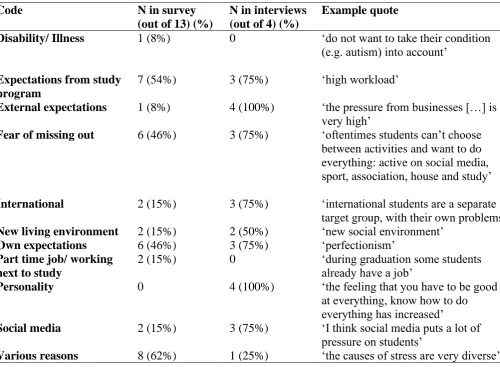
Table 1
Comparison of codes describing reasons for stress in the surveys and interviews, in alphabetical order.
Code N in survey
(out of 13) (%)
N in interviews (out of 4) (%)
Example quote
Disability/ Illness 1 (8%) 0 ‘do not want to take their condition (e.g. autism) into account’
Expectations from study program
7 (54%) 3 (75%) ‘high workload’
External expectations 1 (8%) 4 (100%) ‘the pressure from businesses […] is very high’
Fear of missing out 6 (46%) 3 (75%) ‘oftentimes students can’t choose between activities and want to do everything: active on social media, sport, association, house and study’ International 2 (15%) 3 (75%) ‘international students are a separate
target group, with their own problems’ New living environment 2 (15%) 2 (50%) ‘new social environment’
Own expectations 6 (46%) 3 (75%) ‘perfectionism’ Part time job/ working
next to study
2 (15%) 0 ‘during graduation some students
already have a job’
Personality 0 4 (100%) ‘the feeling that you have to be good at everything, know how to do everything has increased’
Social media 2 (15%) 3 (75%) ‘I think social media puts a lot of pressure on students’
Various reasons 8 (62%) 1 (25%) ‘the causes of stress are very diverse’
study program. When students contact the study advisor about stress, the study advisors usually starts by assessing whether it is enough to help the students with tasks like “study skills, making a planning […], separating main tasks from secondary tasks [and] studying
more efficiently”. If those skills are enough to help the student, a referral to the student
psychologists’ office is usually not necessary, but the study advisors nevertheless stay in contact with the student to check whether more help is needed.
In case the study advisors feel that the problems are more severe, the student is referred to the student psychologists’ office. While the study advisors will still keep in touch with the student they do not always know whether the student followed up on their referral. Furthermore, one interviewee mentioned that “students that contact the student
psychologists’ office themselves are not often referred back to the study advisors”.
Additionally, some participants had the feeling that “there is not much consultation between the study advisors and the student psychologists” or that they get no feedback whether they
were right in their decision to refer a student to the student psychologists’ office (n=2). It would therefore be an improvement to increase the communication between both parties. Furthermore, making sure that a student reaches the right person decreases unnecessary referral and prevents students from not being helped by the right person. This could in turn make the process go more smoothly and provide students with better care.
Current intervention process – Student psychologist. The student psychologists’ office has a standardized procedure of entry. Students are either referred by a study advisor or register themselves. Before their first orientational meeting they need to fill in a questionnaire about certain complaints. After that, the student has a right to five individual meetings and then sometimes students are referred to other mental health institutions. The student
There are sometimes students that have already seen a GP or psychologist outside of the university and were for example diagnosed with burnout. They do get in contact with the study advisor for adaptations in the study program and the study advisors usually keep in regular contact with them to monitor the development and help where necessary. However, these students are not referred to the student psychologist.
The student psychologist expects that there is another group of students that does not seek help with the student psychologists’ office, even thought they might need it, for example “people who are ashamed and for whom the threshold [of going to see a professional] is too high”. An adaptation of the current process to make care more accessible to those students
would therefore be very beneficial.
Possibilities for a new technological intervention. There was no specific mention of a technological intervention to support the counselling for students with stress that is
currently being used by either of the interviewees. However, it was mentioned that the student psychologists’ office has the intention to work with eHealth in the future.
When asked which group would be in need of a technological intervention most, several groups were indicated by the participants. As mentioned before, all interviewees suggested that international students encounter specific problems, like “financial pressure […] or social pressure from parents” and might be more vulnerable to stress than Dutch
students because they do not always have their trusted network around them. However, it was also mentioned that Dutch students that move out of their parents’ house when they start studying experience a similar situation as they are new to the environment as well and need to learn how to live on their own. Other student groups that were specifically mentioned as experiencing stress or burnout were students that are graduating (n=1) and students that are active in a committee or board (n=1).
stress in students. Specific advantages that were mentioned were that this approach might fit with the technological mindset of the students and the possibility of reaching students that would not normally sign up. However, one interviewee mentioned two possible outcomes of giving the option of online sign up. On the one hand, a whole different group that would usually not contact the study advisor or student psychologists might make use of a
technological intervention. On the other hand, it was also mentioned that this might just lead to a shift from people that would usually sign up at the study advisor or student psychologist and would then make use of a technology instead.
One interviewee said that it would be good to give students “tools, so that they do not have to come and see me”. An example that was mentioned in two of the interviews is to
provide mindfulness instructions. It was pointed out that the instructions and way of
presenting this to students is very important. Firstly, students might not perform the exercises in the intended way if no instructions are given or if those instructions are unclear. Secondly, students from technical programs sometimes perceive exercises like mindfulness as “floaty” or “psychological chitchat” until it is explained to them “that this is very practical, you are doing a task-concentration exercise”.
Implications
The results of the interviews gave an overview of different at-risk groups for, and reasons of, students stress and illustrated the current process of helping these students. It was pointed out that certain target groups like international or technical students have specific wants and needs for mental health treatment. As it was mentioned earlier, international students might approach seeking mental health treatment differently (Lungu & Sun, 2016). Furthermore, while Huerta (2018) found that engineering students were open to the idea of online mental health treatment, in this case mindfulness practices, it seems that this needs to be
focused on the opinion and view that the counselling staff holds, students, being the main stakeholder for a possible intervention, need to be included in the design process as well. Therefore, it was decided to discuss some of the outcomes with students in the next step.
Focus Group Method
Goal. Scenario’s were drawn up based on what was described in the interviews. These scenario’s were discussed with several focus groups to gather insight into the students’ opinion on possible solutions for student stress.
Participants. Ethical approval was requested, and granted by the ethical committee of the faculty of Behavioral and Management Sciences (BMS) on November 19th, 2018
(application number 18892). Participants for the three focus groups were recruited both from the network of the researcher as well as via the test subject pool of the University of Twente, SONA. A short message was placed on Facebook and shared via WhatsApp, describing the aim and procedure of the research. This message was also shared in a Facebook group specifically for international students at the UT. A similar call was placed on the website of the test subject pool where mainly first and second years students from psychology and communication sciences can sign up to earn credit.
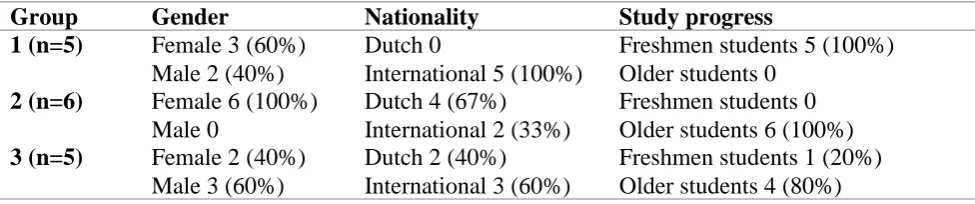
Table 2
Demographic variables of the participants for each focus group.
Group Gender Nationality Study progress
1 (n=5) Female 3 (60%) Dutch 0 Freshmen students 5 (100%) Male 2 (40%) International 5 (100%) Older students 0
2 (n=6) Female 6 (100%) Dutch 4 (67%) Freshmen students 0 Male 0 International 2 (33%) Older students 6 (100%) 3 (n=5) Female 2 (40%) Dutch 2 (40%) Freshmen students 1 (20%)
Male 3 (60%) International 3 (60%) Older students 4 (80%)
other students around them. The three scenario’s can be found in Appendix D. For each scenario the participants were asked to think of different technological interventions that could help the person in question deal with their stress better. Prompting questions were presented on slides to give them some idea of what to think about (Appendix C). To round off the focus group some questions were asked about whether the participants themselves would be open to using some of the ideas that were discussed and how they experienced the focus group in general.
Analysis. Stress scores were calculated from the perceived stress scale as described by Cohen et al. (1983). A mean score was calculated for each individual group as well as for the total group of participants. The answers written down by the participants were digitalized and additional remarks made during the discussion were added based on the recoding of the session if they made the suggestion clearer or if a new part of the idea was introduced during the discussion. The results were coded by one researcher using inductive coding in ATLAS.ti.
Results
[image:24.595.71.529.687.759.2]Stress scores. The overall mean stress score was 27.85 (possible range 0 to 56), which is higher than the mean scores of 23.18 and 23.67 found in student samples by Cohen et al. (1983). The mean, minimum and maximum score for each group can be found in Table 3. In the group of SONA students one of the five participants did not complete the whole scale, this survey was disregarded.
Table 3
Mean, minimum and maximum score on the perceived stress scale per group.
Group Mean Minimum Maximum
1 (n=4) 23.75 15 37
2 (n=6) 30 22 37
3 (n=5) 29.8 14 41
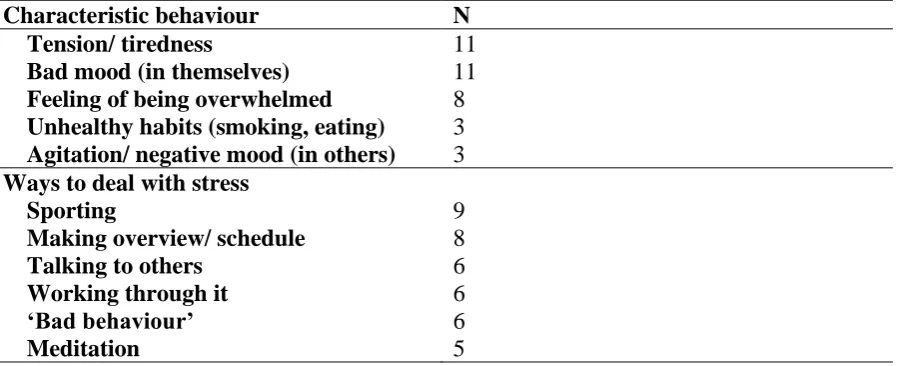
Recognizing and dealing with stress. All students were able to identify stress in themselves and in others. The characteristic behaviours they described are listed in Table 4, together with mentioned actions to deal with stress. While most techniques were evaluated as positive and helpful in dealing with stress, participants also named some techniques that they categorized as ‘bad’ themselves, like smoking, eating or procrastinating (n=6).
Table 4.
Characteristics of feeling stressed, ways to deal with stress and the number of mentions.
Characteristic behaviour N
Tension/ tiredness 11
Bad mood (in themselves) 11 Feeling of being overwhelmed 8 Unhealthy habits (smoking, eating) 3 Agitation/ negative mood (in others) 3 Ways to deal with stress
Sporting 9
Making overview/ schedule 8
Talking to others 6
Working through it 6
‘Bad behaviour’ 6
Meditation 5
Possibilities for a new technological intervention. As there was a lot of overlap between the general ideas mentioned at the start of the focus group and the specific suggestions given for the scenario’s later on, both will be discussed together. For ideas brought up during the discussion of the scenario’s, the numbers in brackets indicate how many times a suggestion was brought up, independent of whether it was mentioned several times by the same person, hence the higher numbers.
perspective by showing that others often feel the same way (n=28). Another idea that was frequently mentioned was using reflection and feedback through technology to get insight into behaviour and stress level (n=18). An organizing tool or time manager app was suggested as a good technological solution both during discussion of the scenario’s (n=16) and in the general discussion (n=8). Another idea that was mentioned generally (n=3) and for the specific scenario’s (n=15) was the inclusion of exercises like meditation or sport, for example via an app or “meditation class online”, but also in the form of “informative videos of the Dutch culture” to promote inclusion of international students or suggestions for healthy
eating. Links or referral to professionals like the study advisor or student psychologist were also generally seen as a useful addition (n=10).
Examples of what can support students in recognizing stress are biofeedback
(gathering data on physiological functions) (n=1), technologies to analyse mood or emotions (n=1) and tracking of health behaviour like walking or sleeping (n=1).
Some participants were worried that a technology to decrease stress could be counterproductive and actually increase the feeling of agitation or that it might only be a short-term solution (n=3).
Implications
early on. Up until this point, little attention was paid to for example the way that students would be informed about a technological intervention. As the idea of what the technology could look like becomes clearer, it is important to start thinking about this as well.
Interview II Method
Goal. To see how students feel about existing examples of the suggested
technologies, another set of interviews was conducted. Existing examples of technologies were presented to students to identify important values for each idea and to determine which aspects should be included in a prototype. Furthermore, students were asked about their preference for receiving information about the possible technological intervention, to get a better idea of what the implementation process could look like.
Table 5.
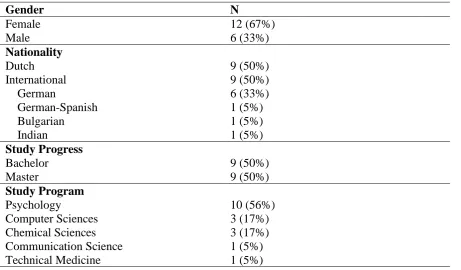
Demographic variables of the interviewees (n=18).
Gender N
Female 12 (67%)
Male 6 (33%)
Nationality
Dutch 9 (50%)
International 9 (50%)
German 6 (33%)
German-Spanish 1 (5%)
Bulgarian 1 (5%)
Indian 1 (5%)
Study Progress
Bachelor 9 (50%)
Master 9 (50%)
Study Program
Psychology 10 (56%)
Computer Sciences 3 (17%)
Chemical Sciences 3 (17%)
Communication Science 1 (5%)
Technical Medicine 1 (5%)
Procedure and materials. All interviews were conducted in March and April 2019. The full interview scheme can be found in Appendix E. The semi-structured interview started with a general explanation about the subject and structure of the study. In the next part, open-ended questions were asked about where students would go to look for mental health information or to receive counselling. After the participant had given their answer, other possible channels, like for example the student psychologist, study associations or the UT website, were
presented to them and they were asked to give their opinion on each suggestion. For the next part of the interview, webpages of five different technologies were presented, together with a short description of a situation where this technology might be used. These example
and the website of a student mental health program (MindMates). An exemplary screenshot and the links to these technologies can be found in the interview scheme in Appendix E. Some participants reported being familiar with some of the apps. Five participants said that they had used or were currently using Headspace. Furthermore, five were familiar with it, while the other eight had not heard about it. Two participants had used Wunderlist before. The other technologies were new to all participants.
First, the participants had a bit of time to get acquainted with the technology, in case they were not familiar with it. Then, they were asked to voice everything that came to mind with regard to this technology. At the end of the interview the participants were asked about their general preference when looking at all technologies. Afterwards, there was room for questions or general remarks from the interviewees. On average, the interviews took 27 minutes (range: 16 to 36 minutes).
Analysis. The analysis, like the interview, was twofold. Firstly, the participants’ opinion about the information channels was analysed. For each of the mentioned channels, they had to indicate whether they were positive about this channel or not. The number of students that were positive and negative were counted for each channel. Any more specific remarks or clarifications were also taken into account and inductively coded. Secondly, the results regarding the different technologies were analysed. The main comments with regards to benefits and disadvantages of the different technologies were written down by the
researcher. Those were later inductively categorized into more concrete values for each technology. Lastly, an overview of those technologies that were seen as most useful by the participants was made.
Results
psychologists’ office (n=14). A few students were initially not aware of the student
psychologists’ office (n=4). Some participants reported that if they had a personal bond with their teacher they might go to them for mental health support (n=7), while others mentioned that their personal bond with teachers (n=8) and mentors (n=6) was not strong enough to seek mental health information there. Some students also stated that they would initially look on the UT website for information (n=7).
The preferred way of being informed about the different counselling options at the UT was including the information in a lecture talk, for example at the start of the quartile (n=15). Participants were also enthusiastic about a personal messages, for example via email,
including all the information (n=11) or having a system of fellow students that act as mental health ambassadors (n=10).
With regards to how an intervention should be presented to students, most participants preferred either a website (n=10) or an app (n=6). Mentioned reasons were that these
technologies fit their lifestyle the best and that they were easily accessible. Opinions were mixed about technologies like a forum or a blog, there were equal amounts of participants sceptic as positive about them. Some participants felt that they were ‘too old’ to read blogs or did not like the idea of exposing their mental health struggles in a blog. However, others saw these technologies as another low threshold way of connecting to others.
Technologies. The main advantages and disadvantages that participants perceived for each technology can be found in Table 6 and 7. Participants appreciated the personal content, variety of options and clear structure of the technologies but disliked some technologies that they did not perceive as useful or necessary for themselves. Overall, there were more positive remarks than critical ones for each of the technologies.
results could then link you to a technology that might be useful for you, like Headspace if you have trouble relaxing or Wunderlist if you are struggling with planning your tasks effectively.
Table 6.
Overview of the mentioned positive aspects for each technology.
Student Minds Blog Headspace Five Minute Journal App
Wunderlist MindMates Personal and relatable
(n=10)
Structured, well designed (n=9)
Daily reflection is useful to decrease stress (n=8)
Variety of features (n=6)
Having a fellow student to talk to (n=7)
Well structured, good overview (n=9)
Useful
explanations and tips ‘how to get started’ (n=8)
Positivity (n=5) Helpful for creating an overview (n=6)
Possibility to attend workshops or activities (n=3) Good content, ‘feeling
prepared’ section is useful (n=5)
Meditation is useful to decrease stress (n=6)
‘Quick and easy’ (n=3)
Useful to decrease stress levels (n=4)
Possibility to become a buddy yourself (n=2) Link with different
sites, good starting point (n=5)
Appealing look (n=5)
Table 7.
Overview of the mentioned negative aspects for each technology.
Student Minds Blog
Headspace Five Minute Journal App
Wunderlist MindMates
Chaotic, too much text (n=4)
Meditation
perceived as floaty (n=5)
Not necessary, can be done without app (n=4)
Not necessary, can be done on paper/ with other apps (n=7)
Feeling pressure to attend activities would increase stress level (n=2) Not useful to
decrease stress, talking in person would work better (n=3)
Costs money (n=4) Daily use can become
annoying (n=4)
Not useful to decrease stress, just gives a better overview (n=3) Meditation does not
work for everyone (n=4)
[image:31.595.44.571.470.644.2]could make use of the structured overview of the blog as well as the lower threshold of seeking help through a buddy system. Students also mentioned that they could find technologies similar to Headspace, the 5 Minute Journal App or Wunderlist online by themselves, but that the more personal approach of the Student Minds Blog and MindMates made those more attractive and unique. However, it was suggested to include links to those technologies in one of the blogs or to promote them via the buddies, effectively combining all presented technologies. Furthermore, four participants mentioned that the promotion and information about current counselling options of the UT could be improved, so that you can easily find where you need to be to find certain information or get the right counselling.
Lastly, the participants that saw the mental health test on the MindMates website suggested that more personalized care and tips could be provided based on the test results. Implications
It became apparent that there is no one technology that all students like or dislike. Rather, there were always some positive and some negative remarks. This shows that students have widely different preferences and that a ‘one size fits all’ approach for a student mental health technology is not feasible. Generally, students did prefer the personal rather than practical technologies. Therefore, offering personal help to students should be a main objective of any to be developed technology. Furthermore, to cater to the different needs and preferences of students, combining several of the mentioned examples into one technology was seen as a fruitful possibility by the participants. To translate these findings in a way that makes them useful or the further development process, values were developed next.
Value development Method
taken into account where this fit. To determine the values the approach described by Van Velsen, Wentzel, and Van Gemert-Pijnen (2013) was used. This approach was developed with the CeHRes roadmap in mind and thus fits well for this study. Only those steps relating to the attribute and value development were followed. Firstly, attributes were made based on recurring observations and comments made by participants. As described by Van Velsen et al. (2013), the attributes were “formulated as a very short summary of the end user or stakeholder expression”. The second set of interviews was used as the main basis for the development of attributes. However, all outcomes of the other sub-studies were revisited to look for further remarks relating to these attributes, as well as for any additional attributes. Then, the list of attributes was reviewed, to make a categorization of which attributes fit together well. Lastly, the overarching theme for each set of attributes was described in a few words as the value. Contrary to the process that is described by Van Velsen et al. (2013), the process was performed by only one researcher, but discussed with the supervisors.
Results
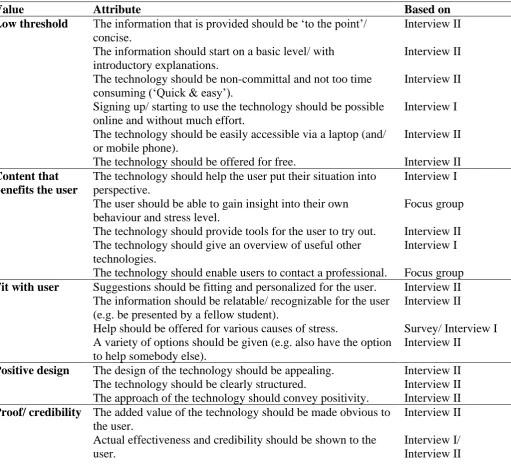
Five values were determined, with two to six corresponding attributes. An overview of all values and attributes can be found in Table 8.
approach to mental health, emphasizing the need for positive design. Lastly, students need to perceive the information they receive as credible, and should belief that the technology will help them.
Table 8.
Overview of the values and corresponding attributes per method where they were mentioned.
Value Attribute Based on
Low threshold The information that is provided should be ‘to the point’/ concise.
Interview II The information should start on a basic level/ with
introductory explanations.
Interview II The technology should be non-committal and not too time
consuming (‘Quick & easy’).
Interview II Signing up/ starting to use the technology should be possible
online and without much effort.
Interview I The technology should be easily accessible via a laptop (and/
or mobile phone).
Interview II The technology should be offered for free. Interview II Content that
benefits the user
The technology should help the user put their situation into perspective.
Interview I The user should be able to gain insight into their own
behaviour and stress level.
Focus group The technology should provide tools for the user to try out. Interview II The technology should give an overview of useful other
technologies.
Interview I The technology should enable users to contact a professional. Focus group Fit with user Suggestions should be fitting and personalized for the user. Interview II
The information should be relatable/ recognizable for the user (e.g. be presented by a fellow student).
Interview II
Help should be offered for various causes of stress. Survey/ Interview I A variety of options should be given (e.g. also have the option
to help somebody else).
Interview II Positive design The design of the technology should be appealing. Interview II The technology should be clearly structured. Interview II The approach of the technology should convey positivity. Interview II Proof/ credibility The added value of the technology should be made obvious to
the user.
Interview II Actual effectiveness and credibility should be shown to the
user.
Discussion
The aim of this study was to get an insight into stress and counselling for stress at the UT in order to start the development of a technological intervention. The current counselling process at the UT, involving study advisors and student psychologists was discussed and possible improvements were found mainly in the prevention of stress onset and in making timely and easy counselling more accessible to students. Study advisors and the student psychologists’ office are therefore some of the key stakeholders, together with the students themselves. Lastly, based on these results and through the use of several methods, main values for a technology to decrease stress in students were determined. These are offering care with a low threshold, providing content that benefits the user, making the content fit for each individual user, using positive design and providing credible information.
The first value, which was mentioned in several parts of this study, was that the intervention should be provided with a low threshold. This way, those that might not usually seek treatment, for example because of stigmatization, can be reached. Furthermore, online treatment can also act as a ‘gateway’ for seeking further support in the future, as was found by for example Richards and Tangney (2008) in their study on online communities for
student mental health and by Toscos et al. (2018) in a study on tele mental health. This means that the barrier of seeking help in the future is decreased because the student successfully sought help online in the past. Convenience, affordability, accessibility and availability were all seen as reason for students’ interest in mental health apps, supporting the idea that
mentioned that easy to follow instructions, and making use of technology that is familiar to the students will help create a lower threshold.
A main goal of any online treatment should be the actual positive effect of the intervention for the user, which relates to the second value that was determined, namely offering content that benefits the user. However, literature is not conclusive on the type of content and way of presenting an intervention that will increase students mental health. While a review of different mental health technologies for students concluded that none of the included interventions for stress reduction (VR interventions, online feedback and
psychoeducation) had significant effects (Farrer et al., 2013), others found that online therapy reduced stress in college students (Davies, Morriss, & Glazebrook, 2014), Similarly, in a study by Harrer et al. (2018) positive effects of an online stress treatment were found,
compared to a waiting list control group. Interestingly, several of the different aspects of their intervention were also brought up by stakeholders in parts of this research, like the
acquisition of knowledge and skills through online lessons, the use of an online diary, being guided by fellow students and the use of positive reinforcement. Thus, these seem to be promising elements for the development of new technology to reduce student stress, and should therefore be implemented in a future prototype.
Lober, and Kim (2011) found that the system helped students recognize their mental health issues and also encouraged them to seek professional help. Next to such a referral system, a list of suggestions for other technologies that users can try out could for example be
generated by the counselling staff on campus, to make sure that proper tools are presented (Lattie, Lipson, & Eisenberg, 2019).
The fourth value that was determined is the use of positive design elements. Positive design is based on principles of positive psychology and “aims to design for human
flourishing” (Zeiner et al., 2018). Positivity in the design of a technology, to which participants in the interviews responded with enthusiasm, can generally have beneficial effects on the well-being of users (Desmet & Pohlmeyer, 2013). Personal fit and active user involvement are mentioned as important aspects of positive design in their research, which fits the outcomes and setup of the current study as user were actively involved early on and stressed the importance of personalized content. Additionally, the promotion of relatedness and interaction between users as well as the facilitation of being able to influence others, like for example by posting on a blog or forum, are mentioned as principles of positive design by Zhang (2007). Similarly, Tolan, Ross, Arkin, Godine, and Clark (2016) found that
‘engagement with others’ and ‘societal bonding’ are overarching concepts in the positive development research. Thus, some important elements of positive design were included already in the ideas brought up by participants of the study. By incorporating positive design, positive emotional experiences can be increased, which in turn can lead to more optimism and higher levels of resilience, amongst other things (Burmester, Zeiner, Laib, Hermosa Perrino, & Queßeleit, 2015). This underlines that a positive approach should be taken in the technology development.
credible information online (Donald, 2016; McGrew, Breakstone, Ortega, Smith, & Wineburg, 2018). Suggestions for making online information more credible are to offer verification for sources and to make use of comprehensible language (Thon & Jucks, 2017). Other important aspects in the evaluation of mental health information are style and content related factors (Rowley, Johnson, & Sbaffi, 2015). Therefore, special attention should be paid to make sure that reliable and accurate information is provided in an ‘easy to use’ way. This was also underlined in one of the interviews, were a study advisor mentioned that the way an intervention is presented matters a lot, as students might not believe in something that they perceive to be ‘floaty’ or unnecessary.
While these are separate values, it is important to incorporate and combine them well. The content that is developed should be targeted to the needs of the user. Similarly, the technology should be easy to use and accessible without losing credibility. Therefore, the interplay between values needs to be taken into account in the later stages of the
development. Furthermore, the values form only a small part of the outcomes of this study, and other aspects like the ideas that were brought up by the stakeholders and the suggested focus for the technology should not be neglected in the development of the technology. Strengths and limitations
add to each other ideas.
The choice of starting with a general desk research to get an overview of the situation and offered possibilities at the UT made sure that the correct stakeholders would be included later on. This way both the study advisors and the student psychologists’ office, as well as students themselves, were able to give their input and thereby benefit the outcomes of this study. Otherwise, a technology might have been developed that would be useful neither to students nor to the counselling staff and use of the technology would be low.
During the interviews it became clear that while the study advisors and the student psychologists’ office had a slightly different perspective on some of the topics, the general picture that they perceived was very similar. Therefore, a good basis was given for the further research, as the counselling staff was able to advise on possible target groups and
intervention possibilities. During the focus groups it became apparent that the situations that had been described by the counselling staff and that were translated into scenario’s were indeed recognizable for the students, emphasizing that the context of student stress had been adequately researched and described. While the survey and interviews gave a good
impression of the situation at the UT, there was overlap between the information that was given, and what was mentioned in literature. However, while the survey and interviews might not have been necessary to gather all of the information, it was good to still get in contact with the counselling staff to get them involved in the project.
for the to be developed intervention was heard. Including the students at this point of the study allowed for an evaluation of what had been mentioned by the counselling staff. The students were able to see whether they agreed with the main aims and target groups that had been set, which they did. Had this not been the case, the early inclusion of students in the process would have allowed for changes in the aims of the project. It is therefore advisable to include stakeholders in early stages of the development process.
By making use of example technologies in the second set of interviews, participants were able to get an idea of what might be possible without the need of developing a prototype beforehand. This saved time and resources, as there were so many different ideas that
developing a prototype for each would have been a lot of work, without being sure whether participants would appreciate the idea.
Lastly, the iterative character of this study is one of its big strengths. Each method evaluated what was done before in a different setting and with different participants. This way, any wrong assumptions and conclusions from previous research could have been ruled out in a next step, and revised if necessary. The fact that there was not much discrepancy between the first results and what was discussed in the next stage underlines that this study has succeeded in giving a good overview of the context and needs of stressed students.
With a total of 16 participants in the focus group and 18 in the interviews, only 34 out of the approximately 10.000 students at the University of Twente have given input for this research. More participants should be included during the further process to verify that the technology that is being developed fits with the wishes and needs of the general student population, for example by evaluating the determined values with them. However, as this research was meant to give a first look at the situation at the UT, and regarding the qualitative approach of the study, the small sample size does not discredit the results that were found.
participants. Furthermore, a lot of the participants were first-years and of the international students that were included, most were German. This is partially based on sampling bias as participants were recruited via the SONA subject pool, where mainly first year students of psychology and communication science are registered. However, other participants were approached and recruited to balance the sample, meaning that the aim of the convenience sampling was to include more male non-psychology students. This way, not only the opinion of a select group of students was taken into account. Still, it is crucial for further research to include a broader range of participants to ensure support for the technological intervention from different groups within the student population at the University of Twente.
Future research
This research concluded the first two phases of the CeHRes roadmap, contextual inquiry and value specification. The next step in this framework is the design of the new technology. Based on the values that were determined in this study, a prototype should be developed and tested. Furthermore, the roadmap indicates that attention should be paid to the
implementation of the product early on in the process. Therefore, it is also recommendable to develop an implementation strategy or business plan.
effective ways to tackle these issues. Therefore, it would be beneficial to investigate how such campaigns need to be set up in order to work, and to see whether they are actually able to increase the level of help seeking in students.
In this study, blogs were seen as a means of stress prevention and helping students deal with their stress. However, it has not yet been studies whether blogs can actually fulfil those tasks. In research, blogs have mainly been used as a means of data collection, with some exceptions like case studies or using blogs to test the perceived credibility of
information (Wilson, Kenny, & Dickson-Swift, 2015). The effects of blogging for those that write the blogs has also been researched (Barak & Grohol, 2011; Sundar, Edwards, Hu, & Stavrositu, 2007). However, data on the effects of reading a blog is lacking and should therefore be investigated in future research. An example could be whether reading a blog actually has an impact on a person’s perceived stress level.
A set of attributes and values was determined based on the results of this study. However, these values have not yet been evaluated with stakeholders to see whether they agree. After such an iteration has taken place, resulting in a set of values that are endorsed by stakeholders, the next steps in the development process can be taken. Based on the attributes and values, requirements for the technology can be developed (Van Velsen et al., 2013). These requirements can then be used first to make a prototype and later for the actual development of the technology.
values, and into the integration of the different topics into one technology. Participants should still be able to find the fitting information for their situation easily and quickly, as the value ‘low threshold’ underlines. This can be complicated by the inclusion of additional topics.
Conclusion
The present study shows that there is a need for the development of a technology to decrease stress in students at the University of Twente. There are several important points that need to be taken into account in the next steps of the process. Firstly, both students and counsellors find it important that the technology is easily accessible to students, and does not increase the barrier around seeking help because of stigmatization. Furthermore, the content that is offered should be useful for the students and personalization to ensure a good fit between he
technology and the user is very important. A positive design approach can make the
References
Atik, G., & Yalçin, Y. J. S. A. J. o. P. (2011). Help-seeking attitudes of university students: the role of personality traits and demographic factors. 41(3), 328-338.
Auerbach, R. P., Mortier, P., Bruffaerts, R., Alonso, J., Benjet, C., Cuijpers, P., . . . Hasking, P. (2018). WHO World Mental Health Surveys International College Student Project: prevalence and distribution of mental disorders. Journal of abnormal psychology, 127(7), 623.
Baghurst, T., & Kelley, B. C. (2014). An examination of stress in college students over the course of a semester. Health promotion practice, 15(3), 438-447.
Baker, Z. G., Krieger, H., & LeRoy, A. S. (2016). Fear of missing out: Relationships with depression, mindfulness, and physical symptoms. Translational Issues in
Psychological Science, 2(3), 275.
Bamber, M. D., & Morpeth, E. J. M. (2018). Effects of mindfulness meditation on college student anxiety: A meta-analysis. 1-12.
Barak, A., & Grohol, J. M. (2011). Current and future trends in internet-supported mental health interventions. Journal of Technology in Human Services, 29(3), 155-196. Bayram, N., & Bilgel, N. (2008). The prevalence and socio-demographic correlations of
depression, anxiety and stress among a group of university students. Social psychiatry and psychiatric epidemiology, 43(8), 667-672.
Beiter, R., Nash, R., McCrady, M., Rhoades, D., Linscomb, M., Clarahan, M., & Sammut, S. (2015). The prevalence and correlates of depression, anxiety, and stress in a sample of college students. Journal of affective disorders, 173, 90-96.
Berger, B. G., & Friedman, E. (1988). Comparison of jogging, the relaxation response, and group interaction for stress reduction. Journal of Sport and Exercise Psychology, 10(4), 431-447.
Bowyer, K. (2012). A model of student workload. Journal of Higher Education Policy and Management, 34(3), 239-258.
Burmester, M., Zeiner, K. M., Laib, M., Hermosa Perrino, C., & Queßeleit, M.-L. (2015). Experience Design and Positive Design as an alternative to classical human factors approaches. INTERACT 2015 Adjunct Proceedings, 153-160.
Car, J., Tan, W. S., Huang, Z., Sloot, P., & Franklin, B. D. (2017). eHealth in the future of medications management: Personalisation, monitoring and adherence. BMC Medicine, 15(1). doi:10.1186/s12916-017-0838-0
Caring Universities. (No Date). Caring Universities. Retrieved from https://caring-universities.com/
Chang, E. C., Rand, K. L., & Strunk, D. R. (2000). Optimism and risk for job burnout among working college students: Stress as a mediator. Personality and Individual
Differences, 29(2), 255-263.
Check In Survey and iCBT. (2017). Retrieved from
https://grandchallenges.ucla.edu/depression/approach/student-study/
Chen, C. P. (1999). Professional issues: Common stressors among international college students: Research and counseling implications. Journal of College Counseling, 2(1), 49-65.
Chew‐Graham, C. A., Rogers, A., & Yassin, N. (2003). ‘I wouldn't want it on my CV or their records': medical students' experiences of help‐seeking for mental health problems. Medical education, 37(10), 873-880.