warwick.ac.uk/lib-publications
Manuscript version: Author’s Accepted Manuscript
The version presented in WRAP is the author’s accepted manuscript and may differ from the
published version or Version of Record.
Persistent WRAP URL:
http://wrap.warwick.ac.uk/110312
How to cite:
Please refer to published version for the most recent bibliographic citation information.
If a published version is known of, the repository item page linked to above, will contain
details on accessing it.
Copyright and reuse:
The Warwick Research Archive Portal (WRAP) makes this work by researchers of the
University of Warwick available open access under the following conditions.
© 2018 Elsevier. Licensed under the Creative Commons
Attribution-NonCommercial-NoDerivatives 4.0 International
http://creativecommons.org/licenses/by-nc-nd/4.0/.
Publisher’s statement:
Please refer to the repository item page, publisher’s statement section, for further
information.
Interrogating metabolism as an electron flow system
Q4Q3
Christian Zerfaß
1,2
, Munehiro Asally
1,2,3and
Orkun S. Soyer
1,2,3Abstract
Metabolism is generally considered as a neatly organised system of modular pathways, shaped by evolution under se-lection for optimal cellular growth. This view falls short of explaining and predicting a number of key observations about the structure and dynamics of metabolism. We highlight these limitations of a pathway-centric view on metabolism and summarise studies suggesting how these could be overcome by viewing metabolism as a thermodynamically and kinetically constrained, dynamical flow system. Such a systems-level, first-principles based view of metabolism can open up new avenues of metabolic engineering and cures for metabolic diseases and allow better insights to a myriad of physiological processes that are ultimately linked to metabolism. Towards further developing this view, we call for a closer interaction among physical and biological disciplines and an increased use of electrochemical and biophysical approaches to inter-rogate cellular metabolism together with the microenvironment in which it exists.
Q5
Addresses
1Bio-Electrical Engineering (BEE) Innovation Hub, University of
Warwick, Coventry, CV4 7AL, UK
2School of Life Sciences, University of Warwick, Coventry, CV4 7AL,
UK
3Warwick Integrative Synthetic Biology Centre (WISB), University of
Warwick, Coventry, CV4 7AL, UK Q1
Corresponding author: Soyer, Orkun S ([email protected])
Current Opinion in Systems Biology2018,-:1–9
This review comes from a themed issue onSystems ecology and evolution (2019)
Edited byEors SzathmaryandFerenc Jordan For a complete overview see theIssueand theEditorial
Available online xxx
https://doi.org/10.1016/j.coisb.2018.10.001
2452-3100/© 2018 The Authors. Published by Elsevier Ltd. This is an open access ar ticle under the CC BY-NC-ND license (http:// creativecommons.org/licenses/by-nc-nd/4.0/).
Keywords
Electrobiology, Metabolic organisation, Evolution of metabolism, Redox potential, Thermodynamics, Cellular physiology, Cellular trade-offs.
Metabolism refers to the collective set of biochemical reactions that occur within a cell. Early pioneering studies, crowned by several Nobel prizes, has mapped
the so-called core metabolism that includes glycolytic and pentose phosphate pathways (PPP), CalvineBenson cycle, gluconeogenesis and the tricarboxylic acid (TCA) cycle [1,2]. In parallel, the chemiosmotic theory of energy generation through the respiratory electron transport chain has been formulated and proven correct
[3] (even though the mechanistic details are still a matter of debate [4,5]). These productive lines of research elucidating individual enzymatic reactions continue to make important contributions to our un-derstanding of metabolism[6]. In this opinion article, we argue that it is now time to use this accumulating knowledge to develop an explanatory theoretical frame-work based on electron flows for interrogating cellular metabolic structure and dynamics at systems-level.
Pathway-centric views of metabolism and
its shortcomings
Following the early pioneering studies on the biochemistry of enzymes, a pathway-centric framework has dominated the description of metabolism [7e9]. This textbook view organizes cellular metabolism into modular pathways that link sugars to pyruvate (i.e. the glycolysis pathways of pentose-phosphate (PP), EntnereDoudoroff (ET), and EmbdeneMeyerhofe Parnas (EMP)), and those that link pyruvate to the generation of the key reductive equivalents via the TCA (a.k.a. Krebs) cycle and associated glyoxylate and glutamate cycles. These pathways and their interactions with the biosynthesis pathways of lipids and amino acids are considered to give rise to a higher organisation of metabolism as catabolic (energy generating) and anabolic (energy consuming) reactions [7e9]. Such organisational view is further enforced by graph-theory analyses that suggest a hierarchical and modular orga-nisation of metabolism[10,11](although it is important to note that identifying appropriate null models is challenging when studying metabolism as a graph
[12,13] and different graph representations can give different results[14]).
This pathway-centric framework, thus, draws a picture of cellular metabolism as consisting of well-defined flows through modularly organised pathways. The pathways themselves are suggested to represent his-torical contingencies in evolution, where a key set of metabolites and metabolic conversions emerged as first
–
1 2 3 4 5 6 7 8 9 10 11 12 13 14 15 16 17 18 19 20 21 22 23 24 25 26 27 28 29 30 31 32 33 34 35 36 37 38 39 40 41 42 43 44 45 46 47 48 49 50 51 52 53 54 55 56 57 58
forms of “life”[15] and subsequently maintained and expanded through an evolutionary process that is commonly seen as driven by cellular growth under diverse conditions. While this adaptive view of meta-bolism gives us one possible way of rationalising it, it ignores other possible driving forces and constraints in the evolution of metabolism (e.g. osmotic or toxic ef-fects, trade-offs, cell stability)[16,17], and falls short in explaining and predicting many of the key structural and dynamical features of metabolism. We list below some of these as open questions, and argue for the development of a new explanatory framework, which can offer starting points towards addressing them.
Why are metabolic systems diverse across different species? Pathways that offer alternative routes for glucose consumption are present or absent in different microbes [18]. Biosynthesis pathways for essential co-factors, such as thiamine or vitamin B12, are lacking in different algae and fungi species[19,20], and even the TCA cycle structure can be varied in different organisms
[21]. While the pathway-centric view tends to explain such structural diversity as “adaptations to different conditions”, we need a more predictive theory that can directly link specific environmental factors to specific metabolic structures (e.g. lack of a given enzyme predicted under a certain environment). For example, loss of metabolic pathways in some organisms is explained as an adaptive process under the provision of specific metabolites by other organisms [22], but it is left unclear why and under what conditions any organ-ism would excrete any such metabolites. Similarly, functionally equivalent pathways are suggested to be adaptive under different conditions due to their different energetic costs [7,18], but it is left unclear what those conditions might be. An ideal theoretical framework for metabolism should provide experimen-tally testable predictions about where and when to find which structural variants of metabolism.
What are the design principles of common metabolic system structures?While metabolic systems show some diversity, there are common structures that are conserved across many species, and that can be presented as key metabolic pathways. It is still not clear why these common pathways are structured in the way that they are. Several studies have tried to answer this question based on biophysical and energetic aspects
[18,23,24], but did so while treating individual pathways as isolated units. These approaches should be further developed, given the fact that no pathway (and its re-actions and metabolites) exist in isolation in a cellular environment, but instead operate under high intercon-nectedness through metabolites and common electron shuttles (Figure 1). Developing a system-level frame-work that could naturally explain the emergence of interconnected pathways as a whole remains to be an open challenge.
Why do cells excrete metabolites and enzymes to their environment? Many metabolites are readily excreted from cells despite still carrying energy value, and many enzymes are known to operate outside of the cell. A pathway-centric view focused on optimization of growth does not provide any explanations for these observa-tions, nor does it allow any predictions about which metabolites or enzymes might be secreted under which conditions. Adaptive arguments have been made about some metabolic excretions (i.e. ethanol) providing a mechanism to inhibit or kill competing species [25]. This particular example also highlights a broader issue with adaptive arguments in that they can readily be formulated for many different observations, but lack a clear sequential evolutionary path; in this case, for example, the killing argument does not explain how small amounts of metabolic excretions, that would not yet function as a toxic agent, could have emerged and stabilised. A series of recent studies indicate that metabolic excretions, in particular those involving organic acids, can arise from cellular trade-offs linked to biophysical constraints on enzymatic reactions such as space (i.e. cytosolic vs. membraneebound reactions)
[26e28] and protein capacity [29,30]. These studies highlight the importance of considering the biophysical basis and limits as directing evolutionary processes when explaining and predicting specific features of metabolic systems.
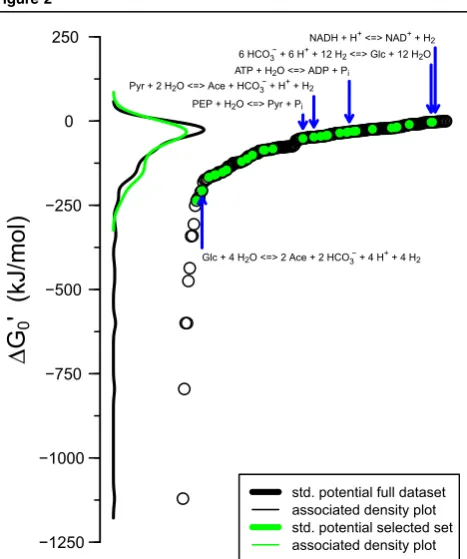
How does metabolism exhibit non-linear dynamics as a whole? The pathway-centric view of metabolism does not consider the dynamics of fluxes across path-ways. This dynamic nature is evident from the inter-connectedness of key metabolic pathways through common electron and energy shuttles such as NADH and ATP (Figure 1), and the fact that many of their constituting reactions are close to thermodynamic equilibrium under standard conditions[31](Figure 2). These reactions could thus be operating reversibly with changing cellular conditions, such as pH and redox potential, as shown for some pathways[32e34], and lead to non-intuitive flux dynamics. In addition, the sharing of (or competition for) metabolites and enzymes across many reactions can lead to complex temporal dynamics such as oscillations and multi-stability, as theoretically shown for even simplified biochemical reaction systems[35e38]. Indeed, where measured, periodic oscillations are found to be present in central metabolism[39e42]. These oscillations are well studied in continuous yeast cultures, in which they have been shown for virtually all metabolites and coincide with a separation of oxidative and reductive phases[43]. Similarly, combined levels of NADH and NADPH in Escherichia coli, measured fluorimetrically, were found to oscillate in line with the cell division cycle [41]. It has been furthermore suggested that these oscillations are crucially linked to other biolog-ical oscillations, such as cell cycle and circadian
2 Systems ecology and evolution (2019)
1 2 3 4 5 6 7 8 9 10 11 12 13 14 15 16 17 18 19 20 21 22 23 24 25 26 27 28 29 30 31 32 33 34 35 36 37 38 39 40 41 42 43 44 45 46 47 48 49 50 51 52 53 54 55 56 57 58 59 60 61 62 63
rhythms [44,45]. While some models [46e48] and metabolic mediators [39,49] have been proposed to explain these oscillations, a detailed and predictive understanding of metabolic oscillations still needs to be developed. Besides oscillations, bistable dynamics have been predicted and experimentally shown for isolated enzymatic reactions and pathways [36,50e 53]. These dynamics are still challenging to analyse at the single-cell level, but emerging fluorescence approaches offer a promising route [54]. Finally, the dynamics arising from (seemingly) futile enzymatic
cycles have been discussed theoretically as a mecha-nism for achieving robustness against perturbations
[37], but have not been studied in the context of temporal dynamics. Theoretical models of futile cycles have shown that these can give rise to bistability and oscillations under certain parameter regimes[50], but these ideas have not been explored experimentally. Overall, the dynamics of metabolism either at the whole system level or at the level of commonly observed dynamical modules (like futile cycles) is understudied.
Figure 1
Common metabolic pathways, shown in their broader context, and highlighting their interconnected nature. Reactions are compiled from Ref.[7]and do not represent the full list of known metabolic reactions in the cell. Metabolites are shown using their common names, while reactions are indicated with arrows. Yellow and green arrows indicate oxidation and reduction reactions respectively, with arrow type indi-cating the involved electron shuttle; solid, dashed, and double dashed lines for NADH, NADPH, and FADH2. Reactions releasing and
consuming ATP are shown in red and blue respectively. Where multiple reactions are involved when going from one metabolite to another, this is indicated by multiple arrows. Involvement of co-factors and release of small molecules (such as carbon dioxide) are indicated partly (with smaller arrows). Metabolites involving in multiple reactions, and therefore forming additional metabolic cycles, are indicated with a grey backdrop.
1 2 3 4 5 6 7 8 9 10 11 12 13 14 15 16 17 18 19 20 21 22 23 24 25 26 27 28 29 30 31 32 33 34 35 36 37 38 39 40 41 42 43 44 45 46 47 48 49 50 51 52 53 54 55 56 57 58 59 60 61 62 63
Metabolism as a thermodynamically driven electron flow system
Life depends on free energy gradients[55]. Organisms, or cells, act as “disequilibrium converters” [56] that exploit these energy gradients and couple thermody-namically spontaneous and nonspontaneous reactions through a defined path, the metabolic reaction network. The ratio of the forward and reverse kinetic constants of a reaction equals to the equilibrium constant Keq, which
in turn determines its standard Gibbs free energy at a dynamical steady state (
D
G0=eR,T,ln(Keq), where Ris universal gas constant and T is temperature in Kelvin)
[56e58]. The actual reaction free energy (and hence the spontaneous direction of a reaction) at a given condition is based on
D
G0(Figure 2) and the concen-trations of substrates and products under that condition.Thus, changing concentrations through one reaction can make another reaction feasible, allowing metabolism to couple external gradients to internal ones in turnstile-like mechanism [56]. For example, light-energy drives photosynthetic reactions forward (i.e. water-oxidation with carbon dioxide reduction), and once a pool of me-tabolites is generated, the reverse reaction (e.g. glucose oxidation with oxygen reduction) becomes spontaneous (i.e. energy releasing), allowing excess energy for other non-spontaneous reactions.
These dynamics of metabolic flows can be formalised through non-equilibrium thermodynamics, which is well developed for simplified enzymatic reaction networks
[58,59]. The use of this formalism as a general theo-retical framework for studying the entire cellular metabolism, however, has not been fully explored. This is mainly due to a lack of information about thermody-namic properties (i.e. standard Gibbs energies) and intracellular concentrations of many metabolites. The former issue can be approached computationally using statistical (e.g. group contribution) or quantum chemi-cal methods, however, these are currently limited and can only cover a fraction of cellular metabolites[60,61]. The intracellular metabolite concentrations can be increasingly determined using technological de-velopments in high-throughput mass spectroscopy and ion chromatography [33], hence, with knowledge of a reaction’s
D
G0, allowing direct assessment of the ther-modynamic state of the reaction.Development of a dynamical thermodynamic framework for cellular metabolism can benefit from a special focus on redox reactions. These reactions hold a key inter-connecting role among different pathways and offer electrochemical interrogation of their dynamics[62,63]. Redox reactions interlink for example glucose oxidation via PP, ET, and EMP pathways, pyruvate oxidation through the TCA cycle, and biosynthesis of many of the amino acids (Figure 1), through the shared use of conserved moieties acting as electron shuttles, such as NADþ/NADH, NADPþ/NADPH, FAD/FADH2,
ferre-doxins, and quinones. This, crucially, makes the ratio of the concentration of the oxidised and reduced forms of these molecules a key factor in determining the ther-modynamics of (and flows through) different metabolic paths.
[image:5.612.57.291.87.367.2]Considering this interconnected set of redox reactions can crucially allow us to consider electronic circuits as an analogy to metabolic systems[64]on one hand, and to attempt its manipulation by electrochemical means on the other [65e67]. Indeed, it has been shown that influencing the ratio of key electron shuttles (e.g. NADþ/NADH) through enzymatic and electrochemical means can directly influence metabolic pathway fluxes and the dynamics of metabolic excretions[63,68e70].
Figure 2
Thermodynamics of common metabolic conversions as collated from references[31,73]. The y-axis shows the standard Gibbs free energy at physiological conditions (DG00), while x-axis is used for
reaction index (ordering them from lowest to highestDG00). In
calculating theDG00, reactions are considered in their spontaneous
direction and the H+/H2pair is used for electron balancing (in the
case of redox reactions). Each reaction is shown as a single data point, while lines are for the density distribution (as indicated in the inset). Reactions that were included inFig. 1are shown as green filled points and their distribution by the green line. This figure suggests that most metabolic conversions are similarly low in terms of theirDG0’(see distributions), but calls for a further mapping of
metabolites and reactions in order to allow more general conclu-sions to be drawn (with regards to how these distributions compare to those of all possible reactions). Note that reactions with the most negativeDG0’(<-250 kJ/mol, left side in plot) are those involving the reduction of nitrate, oxygen, and sulphite; common terminal electron acceptors.
4 Systems ecology and evolution (2019)
1 2 3 4 5 6 7 8 9 10 11 12 13 14 15 16 17 18 19 20 21 22 23 24 25 26 27 28 29 30 31 32 33 34 35 36 37 38 39 40 41 42 43 44 45 46 47 48 49 50 51 52 53 54 55 56 57 58 59 60 61 62 63
Potential explanatory powers of viewing metabolism as electron flows
We argued so far that considering metabolism as a thermodynamically driven flow system, rather than isolated pathways, can provide an overarching theoret-ical framework and that focusing this framework to redox reactions can further allow the formulation of new explanatory and predictive theories. We list below some of the key areas where this electrical view of metabolism can make immediate impact in our understanding of metabolism.
Energetic barriers in electron flow driving metabolic pathway diversity and utilization.When strong electron acceptors are not available in the environment, cells have to use weaker electron acceptors such as organic acids or inorganic molecules (such as Hþ) as electron sinks (i.e. to maintain electron flow). The result is a smaller free energy available from the overall redox re-action that the cell implements, and an increased risk of the system reaching equilibrium by product accumula-tion (i.e. thermodynamic inhibiaccumula-tion). Recently, it has been shown theoretically that this type of thermody-namic inhibition due to product accumulation can lead to diversity of microbial growth-supporting metabolic reactions and possibly internal metabolic pathways[71]. This theory aligns well with the observation that or-ganisms, such as methanogens and sulfate reducers, adapted to weak or fluctuating electron acceptors show diverse respiratory and fermentative pathways and en-zymes [55,72,73]. It would be interesting to see if theories relating to thermodynamic inhibition could be developed further to link the diversity of broader orga-nization of metabolic systems (in particular redox shuttle and respiratory enzyme usage) to environmental conditions, and in particular availability and ecological dynamics of common electron acceptors.
Metabolic excretions to maintain electronflows. Ther-modynamic inhibition could also be a driving force beyond observed metabolic excretions. For example, oxidation of certain metabolites can become thermo-dynamically inhibited if the reduced forms of their paired electron shuttle have reached a low concentra-tion. Such an inhibition would be lifted if another metabolite could be reduced using the oxidized form of the same shuttle molecule. This coupling can be further facilitated if one (or some) of the metabolites can be made to act as a sink, e.g. by excreting them from the cell. The increased rate of formation and excretion of organic and amino acids through reductive reactions can be understood within this view, as a mechanism to combat shifts in the NADþ/NADH ratio. Indeed, experimental manipulation of the NADþ/NADH ratio in
E. coli and yeast were found to directly influence the dynamics of metabolic excretions through fermentative pathways (i.e. acetate and ethanol excretion) [69,70]. Thus, furthering a theoretical framework based on
thermodynamically driven redox paths might allow us to predict metabolic excretions under different conditions.
Enzymatic excretions combatting toxic effects arising from redox reactions involving electron sinks (i.e. respiration).Redox reactions with compounds that act as final electron acceptors (i.e. electron sinks), should ideally involve strong electron acceptors so to provide a significant energy gradient (see Figure 2). This, how-ever, creates an additional constraint on metabolic system structure and dynamics in that strong terminal redox reactions can also result in the generation of even stronger redox active compounds [74]. The respiration (i.e. reduction) of O2, for example, is found
to lead to a generation of reactive oxygen species (ROS) at a rate up to 20% [75], while sulfate and ni-trate respiration results in ‘toxic’ sulfide and nitrite, respectively. To avoid additional, uncontrolled redox reactions by these strong oxidizing agents, cells must have evolved ways to generate enzymes and redox metabolites that can act as effective neutralizers against strong redox agents. While catalases and per-oxidases are known enzymes that can combat ROS toxicity [76], the generation of ROS from respiration could have been a strong driver also for the overall metabolic structure and dynamics. Indeed, connections between resistance to ROS and metabolic flux changes have been shown [77e81], and ROS mitigation is suggested as an explanation for excretions of metal oxidizing enzymes in bacteria [82,83].
Compartmentalization of electron flows in space or time. Spatial compartmentalization of metabolism can be seen in form of specialized organelles within an individual cell [84,85] (e.g. mitochondria and chloro-plasts) and in form of subpopulations within an isogenic cell population [54,86]. Such compartmen-talisation could be understood in the context of ther-modynamic inhibition due to product accumulation and the associated issue of maintaining electron flows: local microenvironments that can maintain a disequi-librium through separation or flow of products from their reactions can allow overcoming thermodynamic inhibition. A similar effect could also be achieved by separation of processes over time, i.e. by implementing oscillatory dynamics that can balance the impact of opposing processes (e.g. on the NADþ/NADH ratio). Indeed, theoretical analyses suggest that oscillations, as observed for example in the NADþ/NADH ratio in yeast and eukaryotic cells[39,44,49], may enhance the thermodynamic efficiency of glycolysis [87] or, more broadly, coupled chemical reaction systems[88]. This is in line with experimental observations of periodic NADH/NADPH concentration oscillations correlating with cell cycle phases [41,43], which could be an adaptation to alternately maximize thermodynamic driving force through pathways of interest with tem-poral separation.
1 2 3 4 5 6 7 8 9 10 11 12 13 14 15 16 17 18 19 20 21 22 23 24 25 26 27 28 29 30 31 32 33 34 35 36 37 38 39 40 41 42 43 44 45 46 47 48 49 50 51 52 53 54 55 56 57 58 59 60 61 62 63
Testing and establishing the electrical view
of metabolism
–
the road ahead
It has been long-recognized that metabolism is a prime example of a system obeying non-equilibrium thermo-dynamics[89]. Bringing this view to practical study and engineering of metabolism, however, remains a challenge. We believe that the presented framework highlighting a view of metabolism that is based on maintenance of electron flows, under constraints arising from thermody-namics, kinetics, and interconnectedness of pathways through common electron and energy shuttles, can initiate further studies towards overcoming this chal-lenge. This framework calls for more interaction between experimental and modelling disciplines and the devel-opment of new theoretical and experimental tools.
On the theoretical side, we note that efforts have been made to expand the stoichiometric, constraint-based optimization models of metabolism (i.e. flux balance analysis, FBA) with thermodynamics [90e93] and also with overall constraints that can mimic some of the bio-physical constraints arising from resource and space limi-tations [27,94e96]. It would be important to continue these developments, and also consider coupling FBA with the modelling of cell environment dynamics[95,97] to-wards incorporating possible thermodynamics inhibitions and electron acceptor availabilities in these environments. Inevitably, however, capturing the full dynamics of metabolism as electron flows will require kinetic and even spatial models that account for physiological parameters such as pH and membrane potential. To achieve this, current kinetic models, which usually assume fixed ratios for common electron and energy shuttles, and tend to consider pathways in isolation, need to be further devel-oped. Dynamics of electron shuttles and the possibility of reaction reversibility will need to be incorporated to ac-count for thermodynamics. Statistical thermodynamics simulations, as used recently to simulate TCA cycle dy-namics[98], can be useful in this context but would need to be expanded and further developed to account for the larger parts and interconnected nature of metabolism. Similarly, emerging thermodynamic models for modelling overall metabolic conversions embedded through meta-bolism (i.e. thermodynamic microbial growth models)
[99] can be possibly adapted to model cellular meta-bolism. As kinetic models incorporate more biochemical realism through reaction reversibility, electron and energy shuttle dynamics, and pathway interconnectedness, the major challenge will be to maintain models as tractable and ‘simple enough’ so that they can still generate experimentally testable insights and predictions.
On the experimental side, approaches integrating phys-iological, metabolomic, and electrochemical techniques will need to be developed to better understand electron flows in metabolism and constraints on these flows. In particular, we note that combined application of
fluorescent reporters (as being increasingly used to interrogate cellular redox states and physiology (e.g. Refs.[41,100e104])) and emerging nano-scale electro-chemical probing methods [105]can provide powerful insights into the electron flow dynamics at cellular and population levels. These methods can be particularly suited to link metabolic dynamics to higherelevel com-plex physiological processes such as cellular differentia-tions. Intriguingly, cellular differentiation is often associated with specialization of metabolism (e.g. bac-terial spores[106,107], Tcells[108], cancer cells[109]). We envision that development of the electron-flow based view to metabolism may provide a novel insight to these cellular differentiation processes as arising from ther-modynamic limits and imbalances in metabolism. This, in turn, can open up novel means of controlling these processes using electrochemistry, and opening up new medical intervention methods. Q6
Acknowledgments
Q2
This work is funded by The University of Warwick and by the Biotech-nological and Biological Sciences Research Council (BBSRC), with grant IDs: BB/K003240/2 (to OSS) and BB/M017982/1 (to the Warwick Inte-grative Synthetic Biology Centre, WISB).
References
Papers of particular interest, published within the period of review, have been highlighted as:
* of special interest * * of outstanding interest
1. Kresge N, Simoni RD, Hill RL:Otto Fritz Meyerhof and the elucidation of the glycolytic pathway.J Biol Chem2005,280:e3.
2. Krebs HA, Johnson WA:Metabolism of ketonic acids in animal tissues.Biochem J1937,31:645–660.
3. Mitchell P:Coupling of phosphorylation to electron and hydrogen transfer by a chemi-osmotic type of mechanism. Nature1961,191:144–148.
4 * *
. Mulkidjanian AY, Heberle J, Cherepanov DA:Protons @ in-terfaces: implications for biological energy conversion. Bio-chim Biophys Acta–Bioenerg2006,1757:913–930.
This review highlights what is still not understood about chemiosmosis, and how this affects bacterial energy metabolism in different pH environments.
5. Nath S:Analysis of molecular mechanisms of ATP synthesis from the standpoint of the principle of electrical neutrality. Biophys Chem2017,224:49–58.
6. Prosser GA, Larrouy-Maumus G, de Carvalho LPS: Metab-olomic strategies for the identification of new enzyme func-tions and metabolic pathways.EMBO Rep2014,15:657–669. 7
*. Gottschalk G:Bacterial metabolism. Springer New York; 1986. An important and comprehensive reference for metabolic pathway structure and energetics.
8. Voet D, Voet JG:Biochemistry. Wiley; 2011.
9. Berg JM, Tymoczko JL, Stryer L:Biochemistry. W. H. Freeman & Co.; 2002.
10. Ravasz E, Somera AL, Mongru DA, Oltvai ZN, Barabási AL: Hi-erarchical organization of modularity in metabolic networks. Science2002,297:1551–1555.
11. Jeong H, Tombor B, Albert R, Oltvai ZN, Barabási AL:The large-scale organization of metabolic networks.Nature2000,407: 651–654.
6 Systems ecology and evolution (2019)
1 2 3 4 5 6 7 8 9 10 11 12 13 14 15 16 17 18 19 20 21 22 23 24 25 26 27 28 29 30 31 32 33 34 35 36 37 38 39 40 41 42 43 44 45 46 47 48 49 50 51 52 53 54 55 56 57 58 59 60 61 62 63
12. Stumpf MPH, Wiuf C, May RM:Subnets of scale-free networks are not scale-free: sampling properties of networks.Proc Natl Acad Sci2005,102:4221–4224.
13. Fox Keller E:Revisiting“scale-free”networks.Bioessays 2005,27:1060–1068.
14. Arita M:The metabolic world of Escherichia coli is not small. Proc Natl Acad Sci2004,101:1543–1547.
15. Martin W, Russell MJ:On the origin of biochemistry at an alkaline hydrothermal vent.Philos Trans R Soc B Biol Sci2007, 362:1887–1926.
16. Schuster S, Pfeiffer T, Fell DA:Is maximization of molar yield in metabolic networks favoured by evolution?J Theor Biol2008, 252:497–504.
17. Papp B, Teusink B, Notebaart RA:A critical view of metabolic network adaptations.HFSP J2009,3:24–35.
18 *
. Flamholz A, Noor E, Bar-Even A, Liebermeister W, Milo R: Glycolytic strategy as a tradeoff between energy yield and protein cost.Proc Natl Acad Sci2013,110:10039–10044. An important contribution that formalizes the different enzyme in-vestments required to achieve the same net forward flux among func-tionally equivalent pathways due to thermodynamic differences.
19. Helliwell KE, Wheeler GL, Smith AG:Widespread decay of vitamin-related pathways: coincidence or consequence? Trends Genet2013,29:469–478.
20. Jiang X, Zerfaß C, Feng S, Eichmann R, Asally M, Schäfer P, Soyer OS:Impact of spatial organization on a novel auxotrophic interaction among soil microbes.ISME J2018,12:1443–1456. 21. Steinhauser D, Fernie AR, Araújo WL:Unusual cyanobacterial
TCA cycles: not broken just different.Trends Plant Sci2012, 17:503–509.
22. Morris JJ, Lenski RE, Zinser ER:The black queen hypothesis: evolution of dependencies through adaptive gene loss.mBio 2012,3. e00036-12-e00036-12.
23. Court SJ, Waclaw B, Allen RJ:Lower glycolysis carries a higher flux than any biochemically possible alternative.Nat Commun2015,6:8427.
24 *
. Bar-Even A, Flamholz A, Noor E, Milo R:Rethinking glycolysis: on the biochemical logic of metabolic pathways.Nat Chem Biol2012,8:509–517.
An important contribution, highlighting the role of multitude of bio-physical factors that might have influenced evolution of key pathways.
25. Piskur J, Rozpedowska E, Polakova S, Merico A, Compagno C: How did Saccharomyces evolve to become a good brewer? Trends Genet2006,22:183–186.
26
* *. Szenk M, Dill KA, de Graff AMR:
Why Do Fast-Growing Bac-teria Enter Overflow Metabolism? Testing the Membrane Real Estate Hypothesis.Cell Syst2017,5:95–104.
A recent and important study of biophysical limits and constraints on the metabolic fluxes among respiratory and fermentative pathways.
27. Beg QK, Vazquez A, Ernst J, de Menezes MA, Bar-Joseph Z, Barabasi A-L, Oltvai ZN:Intracellular crowding defines the mode and sequence of substrate uptake by Escherichia coli and constrains its metabolic activity.Proc Natl Acad Sci2007, 104:12663–12668.
28. Majewski RA, Domach MM:Simple constrained-optimization view of acetate overflow in E. coli.Biotechnol Bioeng1990,35: 732–738.
29. Molenaar D, van Berlo R, de Ridder D, Teusink B:Shifts in growth strategies reflect tradeoffs in cellular economics.Mol Syst Biol2009,5:323.
30. Basan M, Hui S, Okano H, Zhang Z, Shen Y, Williamson JR, Hwa T:Overflow metabolism in Escherichia coli results from efficient proteome allocation.Nature2015,528:99–104. 31
* . Miller SL, Smith-Magowan D:
The thermodynamics of the krebs cycle and related compounds.J Phys Chem Ref Data 1990,19:1049–1073.
A key reference paper, listing thermodynamics data for reactions forming the TCA cycle.
32. Timmers PHA, Welte CU, Koehorst JJ, Plugge CM, Jetten MSM, Stams AJM:Reverse methanogenesis and respiration in methanotrophic archaea.Archaea2017,2017:1–22. 33
* *
. Bennett BD, Kimball EH, Gao M, Osterhout R, Van Dien SJ, Rabinowitz JD:Absolute metabolite concentrations and implied enzyme active site occupancy in Escherichia coli. Nat Chem Biol2009,5:593–599.
An example of how quantitation of metabolites allows direct in-terpretations of the thermodynamics of metabolic pathways.
34
* . Noor E, Bar-Even A, Flamholz A, Reznik E, Liebermeister W,Milo R:Pathway thermodynamics highlights kinetic obstacles in central metabolism.PLoS Comput Biol2014,10, e1003483. An important contribution formalising the relation between reaction forward flux and thermodynamics.
35
* . Feng S, Sáez M, Wiuf C, Feliu E, Soyer OS:
Core signalling motif displaying multistability through multi-state enzymes. J R Soc Interface2016,13:20160524.
A theoretical study suggesting that enyzme or substrate sharing among reactions, which is also common in metabolism, can result in multi-stability in system dynamics.
36. Cimino A, Hervagault J-F:Irreversible transitions in a model substrate cycle. An experimental illustration.FEBS Lett1990, 263:199–205.
37 *
. Reich JG, Selkov E:Energy metabolism of the cell. Academic Press; 1981.
An important reference point for the understanding of kinetics and nonlinar dynamics of enzymatic reaction systems
38
* *. Liu J, Prindle A, Humphries J, Gabalda-Sagarra M, Asally M,Lee DD, Ly S, Garcia-Ojalvo J, Süel GM:Metabolic co-dependence gives rise to collective oscillations within bio-films.Nature2015,523:550–554.
The first demonstration of metabolism related oscillations in a spatial context, discovered through the application of redox sensitive fluores-cent dyes.
39. Sohn H-Y, Murray DB, Kuriyama H:Ultradian oscillation of Saccharomyces cerevisiae during aerobic continuous cul-ture: hydrogen sulphide mediates population synchrony. Yeast2000,16:1185–1190.
40. Iotti S, Borsari M, Bendahan D:Oscillations in energy meta-bolism.Biochim Biophys Acta –Bioenerg2010,1797: 1353–1361.
41 * *
. Zhang Z, Milias-Argeitis A, Heinemann M:Dynamic single-cell NAD(P)H measurement reveals oscillatory metabolism throughout the E. coli cell division cycle.Sci Rep2018,8:2162. An important study, attempting to develop fluorescent dyes for the measurement of redox state in single bacterial cells.
42. Ahn E, Kumar P, Mukha D, Tzur A, Shlomi T:Temporal fluxo-mics reveals oscillations in TCA cycle flux throughout the mammalian cell cycle.Mol Syst Biol2017,13:953.
43. Murray DB, Amariei C, Sasidharan K, Machné R, Aon MA, Lloyd D:Temporal partitioning of the yeast cellular network. InSystems Biology of metabolic and signaling networks. Springer series in biophysics. Edited by Aon M, Saks V, Schlattner U. Springer Berlin Heidelberg; 2014:323–349.
44. Papagiannakis A, Niebel B, Wit EC, Heinemann M:Autonomous metabolic oscillations robustly gate the early and late cell cycle.Mol Cell2017,65:285–295.
45. O’Neill JS, Feeney KA:Circadian redox and metabolic oscil-lations in mammalian systems.Antioxid Redox Signal2014, 20:2966–2981.
46. Wolf J, Heinrich R:Effect of cellular interaction on glycolytic oscillations in yeast: a theoretical investigation.Biochem J 2000,345:321.
47. Smallbone K, Messiha HL, Carroll KM, Winder CL, Malys N, Dunn WB, Murabito E, Swainston N, Dada JO, Khan F,et al.: A model of yeast glycolysis based on a consistent kinetic characterisation of all its enzymes.FEBS Lett2013,587: 2832–2841.
48. Wolf J, Sohn H-Y, Heinrich R, Kuriyama H:Mathematical anal-ysis of a mechanism for autonomous metabolic oscillations
1 2 3 4 5 6 7 8 9 10 11 12 13 14 15 16 17 18 19 20 21 22 23 24 25 26 27 28 29 30 31 32 33 34 35 36 37 38 39 40 41 42 43 44 45 46 47 48 49 50 51 52 53 54 55 56 57 58 59 60 61 62 63
in continuous culture of Saccharomyces cerevisiae.FEBS Lett2001,499:230–234.
49. Richard P, Bakker BM, Teusink B, Dam K, Westerhoff HV: Acetaldehyde mediates the synchronization of sustained glycolytic oscillations in populations of yeast cells.Eur J Biochem1996,235:238–241.
50. Guidi GM, Goldbeter A:From bistability to oscillations in a model for the isocitrate dehydrogenase reaction.Biophys Chem1998,72:201–210.
51. Kotte O, Volkmer B, Radzikowski JL, Heinemann M:Phenotypic bistability in Escherichia coli’s central carbon metabolism. Mol Syst Biol2014,10:736.
52. Mulukutla BC, Yongky A, Grimm S, Daoutidis P, Hu W-S: Multi-plicity of steady states in glycolysis and shift of metabolic state in cultured mammalian cells.PloS One2015,10, e0121561.
53. van Heerden JH, Wortel MT, Bruggeman FJ, Heijnen JJ, Bollen YJM, Planqué R, Hulshof J, O’Toole TG, Wahl SA, Teusink B:Lost in transition: start-up of glycolysis yields subpopulations of nongrowing cells.Science2014,343: 1245114.
54. Rosenthal AZ, Qi Y, Hormoz S, Park J, Li SH-J, Elowitz MB: Metabolic interactions between dynamic bacterial sub-populations.Elife2018,7,https://doi.org/10.7554/eLife.33099.
55
* . Schoepp-Cothenet B, van Lis R, Atteia A, Baymann F,Capowiez L, Ducluzeau A-L, Duval S, ten Brink F, Russell MJ, Nitschke W:On the universal core of bioenergetics.Biochim Biophys Acta - Bioenerg2013,1827:79–93.
An important contribution highlighting and surveying the central role of redox reactions in metabolism.
56. Branscomb E, Russell MJ:Turnstiles and bifurcators: the disequilibrium converting engines that put metabolism on the road.Biochim Biophys Acta–Bioenerg2013,1827:62–78. 57. Bergethon PR:The physical basis of biochemistry. New York:
Springer; 2010.
58. Ederer M, Gilles ED:Thermodynamically feasible kinetic models of reaction networks.Biophys J2007,92:1846–1857. 59. Qian H, Reluga TC:Nonequilibrium thermodynamics and
nonlinear kinetics in a cellular signaling switch.Phys Rev Lett 2005,94:028101.
60 *
. Jinich A, Sanchez-Lengeling B, Ren H, Harman R, Aspuru-Guzik A:A mixed quantum chemistry/machine learning approach for the fast and accurate prediction of biochemical redox potentials and its large-scale application to 315,000 redox reactions.bioRxiv2018,https://doi.org/10.1101/245357. An alternative approach towards trying to fill the gap in the knowledge (estimation) of reaction thermodynamics.
61. Du B, Zhang Z, Grubner S, Yurkovich JT, Palsson BO, Zielinski DC:Temperature-dependent estimation of Gibbs energies using an updated group-contribution method. Bio-phys J2018,114:2691–2702.
62. Kaneko M, Ishikawa M, Hashimoto K, Nakanishi S:Molecular design of cytocompatible amphiphilic redox-active polymers for efficient extracellular electron transfer.Bioelectrochemistry 2017,114:8–12.
63. Rawson FJ, Downard AJ, Baronian KH:Electrochemical detection of intracellular and cell membrane redox systems in Saccharomyces cerevisiae.Sci Rep2015,4:5216.
64. Berry MN:An electrochemical interpretation of metabolism. FEBS Lett1981,134:133–138.
65. Zerfaß C, Chen J, Soyer OS:Engineering microbial commu-nities using thermodynamic principles and electrical in-terfaces.Curr Opin Biotechnol2018,50:121–127.
66. Kato S:Biotechnological aspects of microbial extracellular electron transfer.Microb Environ2015,30:133–139.
67. Lovley DR:Electromicrobiology.Annu Rev Microbiol2012,66: 391–409.
68. Vemuri GN, Altman E, Sangurdekar DP, Khodursky AB, Eiteman MA:Overflow metabolism in Escherichia coli during steady-state growth: transcriptional regulation and effect of the redox ratio.Appl Environ Microbiol2006,72:3653–3661. 69. Hou J, Scalcinati G, Oldiges M, Vemuri GN:Metabolic impact of
increased NADH availability in Saccharomyces cerevisiae. Appl Environ Microbiol2010,76:851–859.
70
* . Vemuri GN, Eiteman MA, McEwen JE, Olsson L, Nielsen J:Increasing NADH oxidation reduces overflow metabolism in Saccharomyces cerevisiae.Proc Natl Acad Sci2007,104: 2402–2407.
An important contribution demonstrating the relation between meta-bolic excretion dynamics and cellular redox balances.
71
* . Großkopf T, Soyer OS:
Microbial diversity arising from ther-modynamic constraints.ISME J2016,10:2725–2733. A theoretical demonstration that thermodynamic inhibition can result in diversity of metabolic routes from a single compound.
72. Thauer RK, Kaster A-K, Seedorf H, Buckel W, Hedderich R: Methanogenic archaea: ecologically relevant differences in energy conservation.Nat Rev Microbiol2008,6:579–591. 73
*
. Thauer RK, Jungermann K, Decker K:Energy conservation in chemotrophic anaerobic bacteria.Bacteriol Rev1977,41: 100–180.
An important and early compilation of reaction thermodynamics discussed in the context of microbial metabolism.
74. Davies KJ:Oxidative stress: the paradox of aerobic life. Bio-chem Soc Symp1995,61:1–31.
75. Imlay JA:Pathways of oxidative damage.Annu Rev Microbiol 2003,57:395–418.
76. Mishra S, Imlay J:Why do bacteria use so many enzymes to scavenge hydrogen peroxide?Arch Biochem Biophys2012, 525:145–160.
77. Ralser M, Wamelink MM, Kowald A, Gerisch B, Heeren G, Struys EA, Klipp E, Jakobs C, Breitenbach M, Lehrach H,et al.: Dynamic rerouting of the carbohydrate flux is key to coun-teracting oxidative stress.J Biol2007,6:10.
78. Mailloux RJ, Lemire J, Appanna VD:Metabolic networks to combat oxidative stress in Pseudomonas fluorescens. Anto-nie Leeuwenhoek2011,99:433–442.
79. Alhasawi A, Leblanc M, Appanna ND, Auger C, Appanna VD: Aspartate metabolism and pyruvate homeostasis triggered by oxidative stress in Pseudomonas fluorescens: a func-tional metabolomic study.Metabolomics2015,11:1792–1801. 80. Tharmalingam S, Alhasawi A, Appanna VP, Lemire J,
Appanna VD:Reactive nitrogen species (RNS)-resistant mi-crobes: adaptation and medical implications.Biol Chem2017, 398:1193–1208.
81. Lemire J, Alhasawi A, Appanna VP, Tharmalingam S,
Appanna VD:Metabolic defence against oxidative stress: the road less travelled so far.J Appl Microbiol2017,123:798–809. 82. Zerfaß C, Christie-Oleza JA, Soyer OS:Manganese oxide
bio-mineralization is a social trait protecting against nitrite toxicity.bioRxiv2018,https://doi.org/10.1101/294975.
83. Banh A, Chavez V, Doi J, Nguyen A, Hernandez S, Ha V, Jimenez P, Espinoza F, Johnson HA:Manganese (Mn) oxida-tion increases intracellular Mn in Pseudomonas putida GB-1. PloS One2013,8, e77835.
84. Zecchin A, Stapor PC, Goveia J, Carmeliet P:Metabolic pathway compartmentalization: an underappreciated oppor-tunity?Curr Opin Biotechnol2015,34:73–81.
85. Brandriss MC, Magasanik B:Subcellular compartmentation in control of converging pathways for proline and arginine metabolism in Saccharomyces cerevisiae.J Bacteriol1981, 145:1359–1364.
86. Campbell K, Vowinckel J, Ralser M:Cell-to-cell heterogeneity emerges as consequence of metabolic cooperation in a synthetic yeast community.Biotechnol J2016,11:1169–1178. 8 Systems ecology and evolution (2019)
1 2 3 4 5 6 7 8 9 10 11 12 13 14 15 16 17 18 19 20 21 22 23 24 25 26 27 28 29 30 31 32 33 34 35 36 37 38 39 40 41 42 43 44 45 46 47 48 49 50 51 52 53 54 55 56 57 58 59 60 61 62 63
87. Richter P, Ross J:Concentration oscillations and efficiency: glycolysis.Science1981,211:715–717.
88. Himeoka Y, Kaneko K:Enzyme oscillation can enhance the thermodynamic efficiency of cellular metabolism: conse-quence of anti-phase coupling between reaction flux and affinity.Phys Biol2016,13:026002.
89. Gräber P:Free energy transduction and biochemical cycle kinetics.Bioelectrochem Bioenerg1990,24:69.
90. Beard DA, Babson E, Curtis E, Qian H:Thermodynamic con-straints for biochemical networks.J Theor Biol2004,228: 327–333.
91. Hoppe A, Hoffmann S, Holzhütter H-G:Including metabolite concentrations into flux balance analysis: thermodynamic realizability as a constraint on flux distributions in metabolic networks.BMC Syst Biol2007,1:23.
92. Feist AM, Henry CS, Reed JL, Krummenacker M, Joyce AR, Karp PD, Broadbelt LJ, Hatzimanikatis V, Palsson BØ: A genome-scale metabolic reconstruction for Escherichia coli K-12 MG1655 that accounts for 1260 ORFs and thermo-dynamic information.Mol Syst Biol2007,3:121.
93. Henry CS, Broadbelt LJ, Hatzimanikatis V: Thermodynamics-based metabolic flux analysis.Biophys J2007,92:1792–1805. 94. Zhuang K, Vemuri GN, Mahadevan R:Economics of membrane occupancy and respiro-fermentation.Mol Syst Biol2014,7. 500–500.
95. Großkopf T, Consuegra J, Gaffé J, Willison JC, Lenski RE, Soyer OS, Schneider D:Metabolic modelling in a dynamic evolutionary framework predicts adaptive diversification of bacteria in a long-term evolution experiment.BMC Evol Biol 2016,16:163.
96. Mori M, Hwa T, Martin OC, De Martino A, Marinari E: Constrained allocation flux balance analysis.PLoS Comput Biol2016,12, e1004913.
97. Harcombe WR, Riehl WJ, Dukovski I, Granger BR, Betts A, Lang AH, Bonilla G, Kar A, Leiby N, Mehta P,et al.:Metabolic resource allocation in individual microbes determines ecosystem in-teractions and spatial dynamics.Cell Rep2014,7:1104–1115.
98. Cannon WR:Simulating metabolism with statistical thermo-dynamics.PloS One2014,9, e103582.
99. Desmond-Le Quéméner E, Bouchez T:A thermodynamic theory of microbial growth.ISME J2014,8:1747–1751. 100.te Winkel JD, Gray DA, Seistrup KH, Hamoen LW, Strahl H:
Analysis of antimicrobial-triggered membrane depolarization using voltage sensitive dyes.Front Cell Dev Biol2016,4,https:// doi.org/10.3389/fcell.2016.00029.
101. Arlt J, Martinez VA, Dawson A, Pilizota T, Poon WCK:Painting with light-powered bacteria.Nat Commun2018,9:768.
102. Prindle A, Liu J, Asally M, Ly S, Garcia-Ojalvo J, Süel GM:Ion channels enable electrical communication in bacterial com-munities.Nature2015,527:59–63.
103. Lin MZ, Schnitzer MJ:Genetically encoded indicators of neuronal activity.Nat Neurosci2016,19:1142–1153. 104. San Martín A, Sotelo-Hitschfeld T, Lerchundi R,
Fernández-Moncada I, Ceballo S, Valdebenito R, Baeza-Lehnert F, Alegría K, Contreras-Baeza Y, Garrido-Gerter P,et al.: Single-cell imaging tools for brain energy metabolism: a review. Neurophotonics2014,1:011004.
105. Bentley CL, Kang M, Unwin PR:Scanning electrochemical cell microscopy: new perspectives on electrode processes in action.Curr Opin Electrochem2017,6:23–30.
106. Sonenshein AL:Control of key metabolic intersections in Bacillus subtilis.Nat Rev Microbiol2007,5:917–927. 107. Sporer AJ, Kahl LJ, Price-Whelan A, Dietrich LEP:Redox-based
regulation of bacterial development and behavior.Annu Rev Biochem2017,86:777–797.
108. Peng M, Yin N, Chhangawala S, Xu K, Leslie CS, Li MO:Aerobic glycolysis promotes T helper 1 cell differentiation through an epigenetic mechanism.Science2016,354:481–484.
109. Jain M, Nilsson R, Sharma S, Madhusudhan N, Kitami T, Souza AL, Kafri R, Kirschner MW, Clish CB, Mootha VK: Metabolite profiling identifies a key role for Glycine in rapid cancer cell proliferation.Science2012,336:1040–1044.
1 2 3 4 5 6 7 8 9 10 11 12 13 14 15 16 17 18 19 20 21 22 23 24 25 26 27 28 29 30 31 32 33 34 35 36 37 38