Exploring the challenges of managing blended learning courses in selected Irish higher education institutes: An activity theory study.
Tony Murphy MBA, DipLis, DipBus, BA (Hons)
This thesis is submitted in partial fulfilment of the requirements for the degree of Doctor of Philosophy.
Exploring the challenges of managing blended learning courses in selected Irish higher education institutes: An activity theory study.
Tony Murphy MBA, DipLis, DipBus, BA
This thesis results entirely from my own work and has not been offered previously for any other degree or diploma.
Candidates are required to make a declaration at the front of the thesis that the word-length conforms to the permitted maximum. If it exceeds this, the declaration must also include confirmation that this has been approved on behalf of the University (currently by the PVC (Education).
i
Tony Murphy MBA, DipLis, DipBus, BA
Exploring the challenges of managing blended learning courses in selected Irish higher education institutes: An activity theory study.
Doctor of Philosophy, September, 2018
Abstract
This research explores the challenges of managing the development and delivery of blended learning courses in three higher education institutes (HEIs) in Ireland. Taking a case study approach and utilising Cultural Historical Activity Theory (CHAT), more specifically Engeström’s (2015) activity systems model (ASM), the research seeks to highlight the challenges by identifying contradictions in the activity systems for developing and
delivering blended learning in each of the three HEIs. Three cases are examined by compiling separate ASMs for each case that reveal three quite different management approaches. A typology of managing course
ii
Contents
Abstract ... i
Acknowledgements ... v
Publications derived from work on the Doctoral Programme ... vi
List of Figures and Tables ... viii
Prologue ... 1
Chapter 1 Introduction ... 2
1.1 International and national context ... 2
1.2 Research need and importance ... 4
1.3 Research questions ... 7
Chapter 2 Exploring the management of blended learning courses: collegiality, new managerialism and CHAT ... 9
2.1 HEI management through the discourse of collegiality and new managerialism ... 10
2.1.1 Literature selection and review procedure ... 11
2.1.2 The Themes ... 13
2.1.3 The contribution to knowledge in the collegiality-new managerialism debate 22 2.2 The Management of the development and delivery of blended learning courses... 23
2.2.1 Literature selection and review procedure ... 24
2.2.2 The Themes ... 25
2.2.3 The contribution to knowledge in the field of managing blended learning courses and the link to collegiality—new managerialism debate ... 46
2.3 Activity Theory and the study of organisational behaviour in HE ... 47
2.3.1 Literature selection and review procedure ... 48
2.3.2 The Themes ... 50
2.3.3 Activity System terminology: definitions and contestations ... 64
2.3.4 The contribution to knowledge in the field of activity theory and ASM ... 68
iii
Chapter 3 Methodology ... 71
3.1 Defining Methodology ... 71
3.2 The type of study: methodologies considered ... 71
3.2.1 Change Theories... 71
3.2.2 Design Based Research ... 72
3.2.3 Action Research ... 72
3.2.4 A multiple case study approach: adopted for this study ... 73
3.3 A brief overview of the research design ... 74
3.4 The relationship between the research design and the research aims ... 74
3.4.1 ASM and AODM ... 77
3.5 Choice of cases: study context ... 79
3.6 ASM analysis data collection methods ... 81
3.6.1 Sampling strategy and participants ... 83
3.6.2 CHAT ASM Interviews ... 84
3.7 Data analysis ... 86
3.8 Ontological and epistemological issues: Pragmatism ... 89
3.9 Ethical Issues ... 92
Chapter 4 Presenting the Data and Data Analysis ... 95
4.1. Introduction ... 95
4.2. Definitions ... 97
4.3. HEI A ... 99
4.3.1. Description of HEI A’s BLAS ... 100
4.3.2. Contradictions ... 116
4.4. HEI B ... 129
4.4.1. Description of HEI B’s BLAS ... 129
4.4.2. Contradictions ... 149
4.5. HEI C ... 160
4.5.1. Description of HEI C’s BLAS ... 161
4.5.2. Contradictions ... 178
Overview of Findings ... 187
4.6.1. Commonalities ... 187
4.6.2. Distinguishing aspects... 189
Chapter 5 Discussion ... 192
5.1 How are blended learning courses managed as ASMs in selected Irish
iv
5.2 What are the challenges of managing the development and delivery of
blended learning courses as identified as contradictions in the analysis of the
three ASMs? ... 193
5.3 What possible resolutions and implications for managing blended learning course development and delivery in the future can be concluded? ... 196
5.4 How do the responses to these contradictions, as seen in changes to HEI practices, structures and staff relationships, inform the debate about new managerialism and collegiality in HE? ... 197
5.5 What new understandings of CHAT as a theoretical framework can be garnered from applying the ASM to blended learning course management in HE? 200 5.6 Limitations ... 202
5.7 Further research... 203
Chapter 6 Conclusion ... 205
6.1 Key findings and significance of the study ... 205
6.2 Reflections on the literature review ... 207
6.3 Implications for practitioners ... 209
6.4 Final Comments ... 210
References ... 211
Appendix One: Articles on Blended Learning Models and Case Studies ... 238
Appendix Two: Explanation of the Attributes and Elements of the Blended Learning Management Typology ... 244
Appendix Three: Ethics Documents ... 246
Consent Form ... 246
Participant Information Sheet ... 247
v
Acknowledgements
Thank you to all those who participated in this study. If this experience has taught me anything, it is that agreeing to participate in research requires a generosity and a leap of faith that I hope I have done justice to.
I would also like to acknowledge the contribution of all the staff and students of Doctoral Programme in E-Research and Technology Enhanced Learning at Lancaster University, specifically my supervisor Dr. Nataša Lacković and my
peers in cohort six, without who I would still be stumbling around in the dark fumbling for a light switch.
It is important that I recognise the staff and management of the Institute of Technology, Tralee for their support and tolerance during my time studying. I specifically would like to mention Dr. Tom Farrelly for his advice, support and encouragement and Angela O’Connor-Desmond for her critical friendship over
the years.
Finally, I would like to acknowledge the contribution of the staff of the National Forum for the Enhancement of Teaching and Learning, who helped me
understand the real practical impact of research, while I was on secondment there.
Dedication
vi
Publications derived from work on the Doctoral Programme
vii
List of abbreviations
AODM Activity-Oriented Design Method
ASM Activity Systems Model
BLAS Blended Learning Activity System CHAT Cultural Historical Activity Theory
DBR Design Based Research
EHEA European Higher Education Area
ESG Standards and Guidelines for Quality Assurance in the European Higher Education Area
EU European Union
HE Higher Education
HEA Higher Education Authority, Ireland
HEI Higher Education Institute
HoD Head of Department
IUA Irish Universities Association, Ireland
LASO Leadership, Academic & Student Ownership and Readiness
LMS Learning Management System
NFTL National Forum for the Enhancement of Teaching and Learning
NPM New Public Management
OECD Organization for Economic Cooperation and Development Q&A Quality and Assurance
QQI Quality and Qualifications Ireland T&L Teaching and Learning
TEL Technology Enhanced Learning
THEA Technological Higher Education Association, Ireland VLE Virtual Learning Environment
viii
List of Figures and Tables
Tables Page
Table 2.1 HE Management Search Terms 10
Table 2.2 HE Management Search Results 12
Table 2.3 Managing Blended Learning Search Terms 23
Table 2.4 Managing Blended Learning Search Results 24
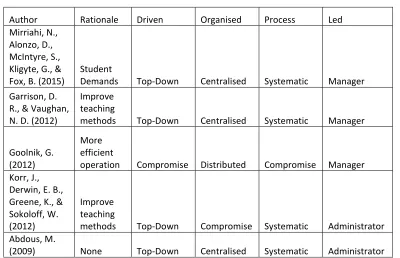
Table 2.5 Blended Learning Course Management Attributes 36/95
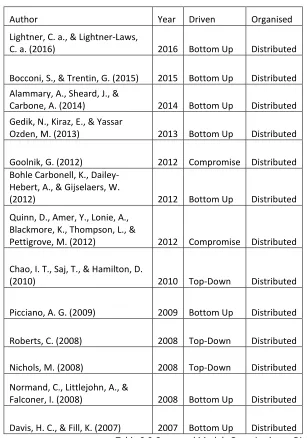
Table 2.6 Attributes in the Blended Learning Management Typology 38 Table 2.7 Attributes in the Blended Learning Management Typology 39
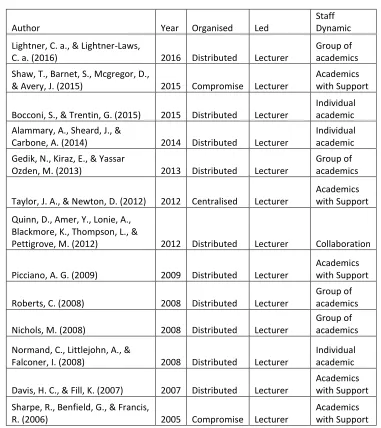
Table 2.8 Cases and Models Led by Academics 40
Table 2.9 Cases and Models Organised on a Distributed basis 41
Table 2.10 Cases and Models Led by Manager/Administrator 42
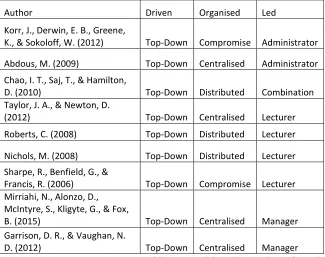
Table 2.11 Cases and Models Driven from Top Down 42
Table 2.12 Blended learning management typology through new
managerialist-collegiality lens 43
Table 2.13 Models and Cases led by the lecturer 44
Table 2.14 Models and Cases driven from the top-down 44
Table 2.15 Models and Cases with a staff dynamic of Academics with
Support 45
Table 2.16 Most frequently occurring attributes 45
Table 2.17 Blended learning management through a new-managerial—
collegial—neo collegial lens 46
Table 2.18 Activity Theory Search Terms 48
Table 2.19 Activity Theory Search Results 49
Table 2.20 Elements of the ASM Defined 53
Table 3.1 Research Questions, Methods and Analysis 76
Table 3.2 Eight Step Model 85
Table 3.3 Types of Discursive Manifestations of Contradictions 87
Table 4.1 Manifestation of contradictions 96
Table 4.2 Blended learning development and delivery terminology 98
ix
Table 4.4 Contradictions compared 189
Table 5.1 Categories of Professional Identity 199
Figures
Fig. 2.1 Blended Learning Course Management Scale 29
Fig. 2.2 Activity Systems Model 51
Fig. 3.1 Activity Systems Model 77
Fig. 4.1 BLAS for HEI A 100
Fig. 4.2 ASM of HEI A’s Course Approval Process 125
Fig. 4.3 Summary of Contradictions in HEI A’s BLAS 128
Fig. 4.4 BLAS for HEI B 129
Fig. 4.5 ASM of HEI B’s Review of Programmes 156
Fig. 4.6 Summary of Contradictions in HEI B’s BLAS 159
Fig. 4.7 BLAS for HEI C 161
Fig. 4.8 ASM of HEI C’s Course Approval Process 183
1
Prologue
The desire to pursue this research emerged from my experience of working on the development of blended learning courses first as a Systems Librarian and then as an E-Learning Projects Coordinator at an Irish Higher Education Institute (HEI). During this time, I witnessed what I understood to be an ongoing culture clash within the HE sector that has had an adverse effect on the sector’s ability to facilitate learning. This clash appeared to me to be between an academic culture and a culture that promoted operational efficiency and effectiveness. The adverse effects of this clash were also apparent to me during the three occasions in the past 20 years when I have been a postgraduate student at three different HEIs in Ireland. What attracted me initially to online education was a suspicion that, along with the potential to provide a more rewarding and diverse learning environment to many students who otherwise might not have the opportunity of attending a HEI, online education might also offer further insight into the culture clash that I had been witnessing. The use of digital education technology appeared to be forcing HEIs to think about how and why they functioned the way they did; “the virtual university is . . . the university made concrete?” (Cornford, 2000). Becoming involved in developing and delivering blended learning, I started to be able to better understand and articulate this culture clash. It appeared that, in trying to support the implementation of blended learning courses, I was getting a sense of helping to expose and highlight what was not working in the
operations behind facilitating learning in a HEI, however, I remained unable to articulate what it was about blended learning that was exposing these issues. Therefore, on a personal level, this research is an effort to see if the
2
Chapter 1 Introduction
1.1International and national context
There is an international and national context within which blended learning courses are being developed in Irish HEIs. The European Union (EU) has been promoting the development of blended learning courses within the context of encouraging member states to move toward a more flexible teaching and learning environment. Under Education 2020, the EU’s framework for co-operation on Education and Training, one of the four common objectives highlighted was that “40% of those aged 30-34 should have a higher education or equivalent qualification by 2020” (European Commission, 2010 p. 11). In order to achieve this and other objectives, a number of benchmarks and priority areas were identified. One of the priority areas was digital technology in education, which was seen as being key to increased open and flexible learning, which in itself was seen as key to achieving the 40% higher education qualification objective noted above. The importance of digital technology in education was reflected in An agenda for the Modernisation of Europe's Higher Education Systems (European
Commission, 2011) which identified key policy issues for Member States and HEIs that want to best support Europe’s growth and jobs, and the specific actions that the EU plans in order to support the modernisation efforts at national level. Among the key policy issues for member states and HEIs from this agenda are: “To encourage a greater variety of study modes (e.g. part-time, distance and modular learning, continuing education for adult returners and others already in the labour market) [and to] better exploit the potential of ICTs to enable more effective and personalised learning experiences,
teaching and research methods (e.g. eLearning and blended learning) and increase the use of virtual learning platforms” (p. 7).
3
(European Commission, 2014). The group called for a change in the culture of conservatism in higher education and challenged public authorities to consider how the learning opportunities afforded by new models of provision can be more fully integrated. Among its recommendations was a call for the EU to support efforts at a national level to develop and implement
“comprehensive national frameworks for diversifying provision and integrating new modes of learning” (European Commission, 2014 p. 24). Moreover, the report recommended that national guidelines should be developed for
“ensuring quality in open and online learning, and to promote excellence in the use of ICT in higher education provision” (European Commission, 2014 p.41).
The direction being taken by the EU toward flexible teaching and learning was reflected in Ireland by the Strategy for Higher Education to 2030 (DoES, 2011). This so-called Hunt report noted that, in the future, there would be increasing demand for higher education opportunities that would require an increase in flexible learning opportunities, part-time, work-based learning and short intensive skills programmes. The report noted the potential offered by digital technologies in helping to facilitate that move to a more flexible delivery program. What the report also noted, however, was the inflexibility in the current system and the administrative and institutional challenges that the drive for a more flexible and open learning environment creates. This view is echoed by Devine (2015) who noted the concern expressed regarding “inbuilt rigidities in the system,” which are seen as driving “institutional behaviours, but not in a way that supports flexibility for students or develops the
aspirations for the diversity espoused in the National Strategy for HE” (p. 17). The drive toward more flexible learning environments supported by digital teaching and learning was also reflected in the Irish Higher Education Authority’s (HEA) Higher Education System Performance Framework 2014-2016’s (HEA, 2014a) key objective 2.3, which called for “increased numbers and proportions of entrants into flexible learning opportunities in higher
4
5.3 Excellent teaching and learning and quality of the student experience, most HEIs made commitments to achieve targets that would reflect their commitment to digital teaching and learning. Some HEIs made specific commitments to the development of blended learning courses, offering detailed targets for the number of blended learning students and/or blended learning courses to be achieved by 2016. The move toward blended learning courses in Ireland is also seen in the Irish Quality and Qualifications Institute’s (QQI) consultation process over its Statutory Quality Assurance Guidelines for Flexible and Distributed Learning (White Paper) (QQI, 2015). It is understood that what emerged from that consultation process is a set of guidelines
specifically on blended learning courses, which have been forwarded to HEIs for consultation (QQI, 2017). At both an EU and Irish national level, there appears to be a drive to develop blended learning courses, which is seen as a factor in encouraging a more flexible learning environment.
1.2Research need and importance
In this section, the argument is made that this research is original and necessary because more insights and studies are needed on how HEIs manage technologically mediated teaching and learning, such as through blended learning courses. There is a scarcity of studies on blended course management, especially from the perspectives of collegiality and new managerialism. Moreover, there is a lack of studies that utilise CHAT as a theoretical framework to analyse the complex processes of managing blended learning course development and delivery in HEIs.
It has been suggested that digital technology poses a challenge to how HEIs operate (Christensen, Horn, Caldera, & Soares, 2011; Marshall, 2010;
Rossiter, 2007; Salmon, 2005). One of the ways in which digital technology has become a reality for HEIs is through the emergence of blended learning courses, which are defined by Garrison and Vaughan (2008) as “the
5
HEIs by the introduction of more corporate business-like practices (Burnes, Wend & Todnem By, 2013; Deem, Hillyard & Reed, 2007; Halffman & Leydesdorff, 2010; Trowler, 2010). Some have even suggested that the introduction of digital technology is helping the HE sector to become more corporate (Cornford, 2000). Either way, the consequence of the dual
challenges of digital technology and more corporate business practices is that many HEIs are asking some fundamental questions about how and why they operate the way they do.
The challenges posed by blended learning are multifaceted. Blended learning, can be very demanding for academics (Hillman & Corkery, 2010; Torrisi-Steele & Drew, 2013), as they find themselves under pressure to expand their knowledge of digital technology and its implications for the teaching and learning environment. The team-based approach to online and blended learning development and delivery promoted by several authors (Bass, 2012; Bates, 2014; Carbonell, Dailey-Hebert & Gijselaers, 2012; Garrison &
Vaughan, 2012; Hillman & Corkery 2010; Taylor & Newton, 2012; Vasser, 2010), challenges the traditional authority (Bass, 2012) and academic identity (Hanson, 2009) of lecturers. Blended learning and other forms of online education also challenge the norms, structures, processes, hierarchy, views, perspective and understanding of the HEI (Jones & O’Shea, 2004). In addition, there are legal questions (Jones & O’Shea, 2004), infrastructural demands (Hillman & Corkery, 2010), the incentivisation of staff to participate (Hanson 2009; Graham, Woodfield & Harrison 2012) and the decision to take a centralised or decentralised faculty-based approach (Carbonel et al., 2012; Chew, 2009; Moskal, Dziuban & Hartman, 2013). Bass (2012) claims that “the power of innovation in the co-curriculum and flexible learning, particularly afforded by the internet, are making colleges and universities run headlong into their own structures” (p. 24).
6
2010; Sharpe, Benfield & Francis, 2006; Stacey & Gerbic, 2008; Torrisi-Steele & Drew, 2013). A number of case studies of blended learning
implementation (Graham, et al., 2012; Garrison and Vaughan, 2012; Taylor & Newton, 2012) can also be found in the literature. However, there is an absence of in-depth detailed studies that explore the complexity of how the development and delivery of blended learning courses are actually managed.
Much of the recent literature on management in HEIs has been dominated by the debate over collegiality and ‘new managerialism’ (Clegg & McAuley, 2005; Deem & Brehony, 2005; Lynch, Grummell, & Devine, 2011; Ramirez & Tiplic, 2013; Stensaker, Välimaa, Henkel & Sarrico, 2012; Tight, 2014; Trowler 2010). Collegiality refers to the idea that decisions in HEIs are made
collectively by academics (Tight, 2014). Collegial HEI’s are also identified as being decentralised arenas of cooperation, where the emphasis is on
academic freedom (Sahlin, 2012) and the idea that activities or cultures are managed would be seen as “heretical” (Deem, 1998, p. 47). New
managerialism refers to the idea that decisions are made by managers, with little input from anyone else (Tight, 2014). Trowler (2010) outlines the characteristics of new managerialism as including devolved budgets, quality assurance, league tables, research decisions determined by funding and not academic value and increased workloads. It has been argued that the HE sector in the UK, and further afield, has spent the past 30 years going through a transition whereby new managerialism has come to be imposed on the sector (Deem, 1998; Halffman & Leydesdorff, 2010; Trowler, 2010; Burnes, et al., 2013). A discussion of the management of blended learning courses would have to be seen in the context of this clash of collegiality and new managerialism.
7
ASM, which is a theoretical framework focused on exposing contradictions and conflicts in an activity, has been used to assess such complex
phenomenon as knowledge sharing (Mwanza, 2002), human-computer
interaction (Kuutti, 1995) and strategic practices (Jarzabkowski, 2003). It has been argued that the ASM offers a broad lens of inquiry that encompasses various aspects of the educational setting (Murphy & Rodriguez-Manzanares, 2013). Unsurprisingly, the ASM has been used in organisational studies of HEI’s to, among other areas, assess the interfaces between e-learning and the macro and micro organisational levels in higher education (Benson, Lawler & Whitworth, 2008) and as a framework for “negotiating the form that
sustainable e-learning might take” (Robertson, 2008 p. 218) in a HEI. The ASM has not been used to undertake an in-depth analysis of the complexity of managing a blended learning course, however, within the context of the
collegiality-new managerialism debate in HE.
Given the importance of blended learning to the national and EU goals of a more flexible learning environment, there is a scarcity of research offering deeper insights into how the development and delivery of blended learning courses are managed. In particular, there is a scarcity of studies that explore blended learning courses as complex activity systems informed by activity theory. Furthermore, there is a lack of research on viewing the complexity of managing blended learning within the context of the wider management debate over collegiality and new managerialism.
1.3Research questions
8
the complex processes of managing blended learning courses at three Irish HEIs using CHAT. Doing so offers the opportunity to explore the response to the complex impact of the dual challenge of digital technology and corporate management practices in the HE sector. It is appropriate that such an
exploration focusses on the management of blended learning courses aimed at work-based, part-time learners, given that this cohort of students is most closely associated with the need for the flexible learning environment
prioritised at national and EU level. The questions to guide this research are:
1. How are blended learning courses managed as ASMs in selected Irish HEIs?
2. What are the challenges of managing the development and delivery of blended learning courses as identified as contradictions in the analysis of the three ASMs?
3. What possible resolutions and implications for managing blended learning course development and delivery in the future can be concluded?
4. How do the responses to these contradictions, as seen in changes to HEI practices, structures and staff relationships, inform the debate about new managerialism and collegiality in HE?
5. What new understandings of CHAT as a theoretical framework can be garnered from applying the ASM to blended learning course management in HE?
Given these research questions, the literature review specifically focuses on 1. Management practices and management of HEIs through the discourse of
collegiality and new managerialism
2. The management of blended learning courses
9
Chapter 2 Exploring the management of blended learning
courses: collegiality, new managerialism and
CHAT
The approach to the literature review was to break down the research topic into the three areas identified at the end of section 1.3 and to take a
systematic approach to searching for and assessing relevant literature in each of the three areas, before synthesising the review findings at the end of the section.
The review itself involves three main tasks:
searching for relevant research
critically appraising it in a systematic manner
synthesising the findings by bringing them together to form a coherent statement (Gough & Thomas, 2012)
A starting point in searching for relevant literature was to determine the scope of the search and resources available. A useful first step in determining the scope or the review is a reference interview (Cassell & Hiremath, 2012). The interview took the form of a series of closed and open questions, the answers to which define the limits of the subject and help to fully cover the extent of the subject within those limits.
10
2.1HEI management through the discourse of collegiality and new managerialism
In the case of the first area, the following topics were identified:
Collegiality
New managerialism
Higher Education
Management
Alternative keywords and phrases for each of the above topics that emerged from the reference interview are listed in table 2.1.
Keyword /
Phrases management "higher education"
"middle management"
Al
te
rn
ativ
es
Collegiality "third level" dean "new
managerialism" tertiary
"head of department" "new public
management" post-secondary "head of faculty"
NPM university
college
non-compulsory
Table 2.1. HE Management Search Terms The following string, which was created by placing Boolean operator OR
between the words in a column and Boolean operator AND in between collection of words in the rows, was used as the basis for the search.
(collegiality OR NPM OR "New Public Management" OR managerialism) AND (“Higher Education” OR "third level" OR tertiary OR college OR university OR post-secondary OR non-compulsory) AND ("middle management" OR dean OR "head of department" OR "head of faculty")
The search was limited by the following criteria:
Material published in the last ten years
Peer reviewed with references available
English language
11
The rationale for restricting the search initially to the last ten years is that the question of new managerialism and collegiality appears to have dominated the literature on management in HEIs in recent times (Clegg & McAuley, 2005; Ramirez & Tiplic, 2013; Stensaker et al., 2012). The year 2005 also marked the 20th anniversary of the publication of the Jarret Report which is taken by some commentators (Burnes et al., 2014) as the starting point for the
centralisation of universities in the UK. The 20th anniversary of its publication
appears to have generated a renewed discussion of the validity of new managerialism and collegiality that has seen considerable material published on the subject in the past ten years. Material published prior to 2005 was considered as part of this review, by including references to citations listed in the post-2005 material recovered.
2.1.1 Literature selection and review procedure
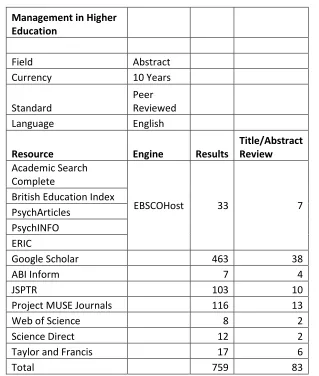
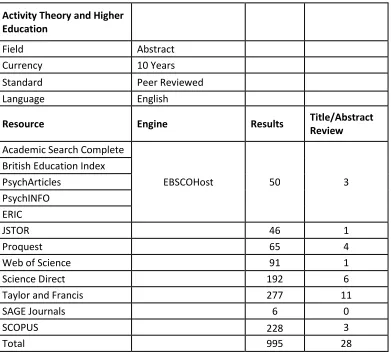
The searches took place over a three-day period 9-11/11/15. The search string was applied to online resources listed on Lancaster University Library's Educational Research subject guide. Where possible, all searches were carried out on the abstract field. The search string above formed the basis for searches but was changed for some of the resources, such as Science Direct and Google Scholar, which do not accommodate multi-faceted search strings on the abstract field. The results are listed in Table 2.2.
12
Management in Higher
Education
Field Abstract
Currency 10 Years
Standard
Peer
Reviewed
Language English
Resource Engine Results
Title/Abstract Review Academic Search
Complete
EBSCOHost 33 7
British Education Index PsychArticles
PsychINFO ERIC
Google Scholar 463 38
ABI Inform 7 4
JSPTR 103 10
Project MUSE Journals 116 13
Web of Science 8 2
Science Direct 12 2
Taylor and Francis 17 6
[image:23.594.159.478.64.440.2]Total 759 83
Table 2.2. HE Management Search Results
2.1.1.1 Critical appraisal
The abstracts and titles of the results were scanned for relevance and the results were reduced by asking whether or not the results were:
too discipline specific
genuinely about management practice
too focused on academic identity/practice/role
duplicates
examined middle management
13
2.1.1.2 Synthesising
A second and third reading allowed for a synthesis of what was emerging from the literature to take place. A narrative synthesis was adopted, which is
defined as taking a textual approach to the process of synthesis to ‘tell the story’ of the findings from the research retrieved, according to Popay et al. (2006), who argue that narrative synthesis is appropriate where the material recovered includes so many research designs as to prevent synthesis based on research methodology and where the subjects covered by the material retrieved are not sufficiently similar to allow for the use of a specialist synthesis. Additional readings of the material retrieved focused on the findings and conclusions of the articles and book chapters, and during these subsequent readings themes emerged, merged and developed.
2.1.2 The Themes
Initially, what emerged from the literature review was this very clear sense that collegiality and new managerialism was a dichotomy. The characteristics of both approaches seemed to bear that out, no more obviously than when looking at the impact on academic staff of trying to perform while being pulled in apparently opposite directions. There is the alternative view, however, that appears to be gaining traction in the literature, which suggests that there is no dichotomy and that a compromise is possible, in the form of neo-collegiality. The third theme that emerged focusses on the key role that middle managers in HEIs appear to have in making this compromise, if it is possible, work.
2.1.2.1 A Dichotomy of collegiality and new managerialism
The first theme to emerge is the idea that collegiality and new managerialism are two sides of a dichotomy, in that the two approaches are mutually
exclusive, opposed and contradictory. The extent to which this dichotomy is substantive can be explored by looking at it in terms of:
Definition
Accountability and Structure
14
2.1.2.1.1 Definition
Collegiality, in its most basic sense, refers to a method of decision-making (Burnes et al., 2014). Collegiality constitutes a structured form of collaborative decision-making that recognises the value of participation in decisions about how a HEI works and what its purpose is (Bacon, 2014; Burnes et al., 2014; Huisman, de Boer, & Goedegebuure, 2006). In contrast, new managerialism refers to the belief that the most important decisions in organisations are
made by managers almost independently of other employees (Teelken, 2012). With new managerialism, participatory decisions previously made by subject-based senates of academics are made by senior management teams, with academic managers turning into line-managers (Bacon, 2014; Dowling-Hetherington, 2013)
Looking at a broader definition, new managerialism refers to a management ideology (Carvalho & Santiago, 2010; Deem & Brehony, 2005; Meek,
Goedegebuure, Santiago, & Carvalho, 2010) that draws on the principles of neo-liberalism (Meek et al., 2010). New Public Management (NPM) is used to define the practical manifestation of new managerialism; practices brought in from the corporate world and based on competition, decentralisation and efficiency (Carvalho & Santiago, 2010; Deem & Brehony, 2005) that include privatisation, downsizing and outsourcing, budget diversification,
benchmarking, performance appraisal and quality assurance (Meek et al., 2010).
15
The specificity and clarity of even a broad definition of new managerialism is in stark contrast to a broad definition of collegiality, which is quite elusive (Caesar, 2005; Weinberg & Graham-Smith, 2012). For the purposes of this review, collegiality is used to refer to the manifestation of the collegial tradition in different national HEI sectors as opposed to the collegiality as understood in the collegial universities (Tapper & Palfreyman, 2010). This collegial tradition is seen to a large extent as intrinsic to any institution that wants to refer to itself as a university (Tapper & Palfreyman, 2010). While difficult to define, it would appear that integral to the collegial tradition is this idea that “nothing can be achieved unless it has the formal blessing of the collective
membership” (Tapper & Palfreyman, 1998, p.145). The concept of collective governing is far removed from the neo-liberal influenced governing of new managerialism. The contrast between the two management cultures is also reflected in the different approaches to governance and structure.
2.1.2.1.2 Governance and structure
A collegiate or traditional HEI tends to be independent from government or other state bodies (Hedley, 2010; Trowler, 2010). Self-credentialing, the collegiate HEI does not look to outside organisations for validation or quality control. HEI departments, the manifestation of the disciplines, hold significant organisational sway (Trowler, 2010), with academics within the department making a structured form of collaborative decisions (Bacon, 2014; Burnes et al., 2014) and assuming autonomy even from internal management (Elton, 1995).
For new managerialism, the tendency is to look externally for validation and quality control to league tables and state agencies (Hedley, 2010). For example, in Ireland, the 2012 Quality Assurance and Qualifications Act
16
"concentration of power at the top of an administrative hierarchy” (Meek et al., 2010).
Stensaker et al. (2012) note that, with the onset of new managerialism, most of the HE sector has experienced policy initiatives intended to change the structure and the way teaching and research are organised and function. The key aspect of this change has been the centralisation of power away from the academic departments (Alford & Hughes, 2008; Bacon, 2014). With a
traditional HEI, the academic discipline-based departments were the main structural features in HE (Trowler, 2010), with academics more likely to act independently of each other, giving their loyalty primarily to their discipline (Elton, 1995). New managerialism, through its practical manifestation, NPM, involves centralising control with “line management autonomy” (Alford & Hughes, 2008, p.135), with the structure of the HEI tending to have a centralised headquarters, with relatively autonomous divisions each
responsible for achieving a separate set of results, yet controlling the functions required to achieve those results (Capano & Regini, 2014; Meek et al., 2010). Again, with governance and structure, a dichotomy appears to emerge,
whereby there is this contrast in the self-governing independent decentralised loose structure typical of collegiality and the centralised line-managed
controlling structures that were introduced with new managerialism.
2.1.2.1.3 Impact on academic staff
17
(Hedley, 2010; Trowler, 2010). The idea behind this academic freedom appears to be that no “culture, tradition, religion or philosophy is sacrosanct” (Weinberg & Graham-Smith, 2012, p.74), as a university should be able to provide protection to research in pursuit of truth and that to constrain such freedom is to harm the integrity of a university (Weinberg & Graham-Smith, 2012).
For academics, however, the implication of new managerialism and NPM is less freedom and autonomy and more structure and monitoring (Kolsaker, 2008). NPM offers a clear move towards standards of performance that can be measured (Teelken, 2012), implying that what is measureable becomes what is valuable. Teaching and research is constantly under review (Hedley, 2010; Teelken, 2012), and the criteria against which achievement is measured can include efficiency and effectiveness (Keating, 2001; Meek et al., 2010); public good, private good, value for money (Hedley, 2010) and client
satisfaction (Meek et al., 2010). Being driven by results and the measurement of outputs rather than being guided by a set of rules (Keating, 2001; Meek et al., 2010) skewers collegial behaviour (Bacon, 2014), the consequences of which, some argue, has been seen as an identity schism within academia (Winter, 2009). Key to this schism is the idea that there is no ideological or values common ground for academics and management and the purpose of the organisation. Trying to stay collegiate and principled when under
18
This idea that the introduction of new managerialism and the practices of NPM may be causing an identity schism among academic staff further illustrates that collegiality and new managerialism are so distinct and opposite so as to be a true dichotomy.
2.1.2.2 There is compatibility
Despite the apparent dichotomy outlined above, an alternative theme of compatibility between new managerialism and collegiality also emerged. This compatibility theme is based on the idea that one management approach does not suit all circumstances and demands and that there are advantages and disadvantages to both approaches for the HE sector. What also emerged in support of compatibility is the idea that an organisation, such as a HEI, is sufficiently complex in its purpose and operations to accommodate different management approaches. Moreover, the number of suggested solutions that are being discussed in the literature supports the idea that the two approaches can co-exist or even intertwine to achieve compatibility.
One of the criticisms directed at NPM is that it was put forward as the only viable approach and that it was applicable to all forms of government (Alford & Hughes, 2008), yet it has been unable to generate internal homogeneity (Huisman et al., 2006). Another criticism of NPM is that technological
advances that facilitate flatter structures and enable increased autonomy and flexibility (Bacon, 2014) have superseded the hierarchical outdated structures it promotes, which makes NPM less suited to a knowledge-based venture. The so-called golden era of collegiality has also been criticized as promoting elitism (Elton, 1995) and adopting gender-biased practices (Clegg & McAuley, 2005). If, as suggested, collegiality was intended for the few, the resources would never have been there to support collegiality with the increase in student numbers that has taken place over the past 20 years (Elton, 1995; Tight, 2014), suggesting that it is no longer fit for purpose.
19
collegiality nor new managerialism have been totally rejected by academics, and that there are many aspects to HEI administration that are not deemed successes for either collegiality or new managerialism (Hedley, 2010). It has been noted that aspects of collegiality continue to survive in the HE sector (Kolsaker, 2008; Nuttall, 2012) and are still regarded as being important for research and teaching to be of a high quality (Sahlin, 2012). Moreover, it would appear that academic decisions continue to be the purview of academics (Kok, Douglas, McClelland, & Bryde, 2010).
Tight (2012) highlights the efforts at resisting new managerialism and NPM by academics but it has also been noted that academics are reshaping their identities to accommodate the change (Kolsaker, 2008). There is recognition among some academics that new managerialism has had a positive effect on performance (Smeenk, Teelken, Eisinga & Doorewaard, 2009) and an
acceptance that it can be a “facilitator of improved performance,
professionalism and status” (Kolsaker, 2008, p 522). Going a further step in drawing a link between academics and new managerialism, Miller (2014) argues that the individuality of academics has more in common with the values of neo-liberalism and argues for the preservation of academic freedom within a neo-liberal framework.
Therefore, it appears that HEIs can have complex, hybrid models (Hedley, 2010; Kolsaker, 2008) where different approaches exist (Alford & Hughes, 2008). Sahlin (2012) notes when outlining four different approaches to university governance, organisation and management, that these approaches do not follow each other but rather “are institutionalized in the environment and operation of today’s universities” (p. 214). Given that new managerialism is likely to be here for a long time (Santiago, Carvalho, Amaral & Meek, 2006), it has been argued that some form of reconciliation or blending (Burnes et al., 2014; Dearlove, 2002) of the approaches is required where an
20
2.1.2.2.1 Neo-Collegiality
One of the suggestions as to why new managerialism has not taken on more of a foothold in the HE sector is that it was implemented without regard for the distinct nature of HEIs as professional autonomous institutions (Teelken, 2012). An alternative approach, neo-collegiality, has been suggested as a mechanism for new managerialism to take into consideration that
distinctiveness (Bacon, 2014), while also blending the centralised aspects of new managerialism and the decentralised nature of collegiality (Burnes et al., 2014). Neo-collegiality suggests restoring the broader more collective
decision-making processes of collegiality but in a way that engages both academic and professional staff as peers across a HEI (Bacon, 2014; Elton, 1995; Rixom, 2011). Neo-collegiality also seeks to marry centralised decision-making with local control (Bacon, 2014). Among some of the elements
required for neo-collegiality to gain traction is for the proposed group decision-making to take place around particular areas of work and for a trust in
professionalism to emerge (Elton, 1995) reinforced by staff development. For academics, there are still considerable challenges posed by neo-collegiality, such as a need to work not as individuals but as equals in teams with non-academic staff, as well as reconciling their loyalty to their discipline with their loyalty to the HEI (Elton, 1995). In the UK, Bacon (2014) argues that now is a good time to update collegiality for a 21st century environment. Alternatively, a
21
2.1.2.2.2 Middle managers are the key to the compromise
This idea that new managerialism and collegiality can co-exist was the outcome of a study analysing data from a survey of 26 universities in eight European countries (Marini & Reale, 2015). That survey focused on middle managers (deans and heads of departments) because they are perceived to “represent a key level in university organizational dynamics” (Marini & Reale, 2015 p. 4). Not a lot is known about middle managers (De Boer et al., 2010; Hedley, 2010), with uncertainty over whether or not they are a coherent class (Hedley, 2010; Trowler, 2010), how they go about their business and what are their roles (De Boer et al., 2010; Rudhumbu, 2015). However, with the
potential to subtly influence different local strategies and institutional programmes, middle managers are seen as mediators who assess and resolve tensions (Carvalho & Santiago, 2010; Marini & Reale, 2015), allowing for the smooth flow of information within departments and the institution (Rudhumbu, 2015). These middle managers are perfectly placed within the organisation for academic influence while also being able to encourage commercial, new managerial activity (Trowler, 2010; Winter, 2009). It has been argued that the role of the middle manager has changed with the
22
2.1.3 The contribution to knowledge in the collegiality-new managerialism
debate
This review illustrates how all-encompassing the collegiality—new
managerialism debate is when considering any aspect of management in HEIs. It would appear that any inquiry into the functioning processes of a HEI, including the processes for adopting blended learning, would need to be contextualised within the collegiality—new managerial debate. What also appears to have emerged from this review is that, while there is evidence of a dichotomy, the potential benefits that both the collegial and new managerialist approaches can bring suggests that there may be value in a compromise in the form of neo-collegiality. The role of middle managers in achieving that compromise also appears to be crucial, yet under-investigated.
The debate about new managerialism and collegiality as competing management approaches for HE is ongoing. However, the gap in the
23
2.2 The Management of the development and delivery of blended learning courses
For this second part of the literature review, the focus is on discovering how the development and delivery of blended learning courses is being managed as reported in the literature. The following concepts were identified as a starting point for the literature selection and review:
Blended Learning
Management
Higher education
Keyword / Phrases management
"blended learning"
"higher education"
Alternatives
manage "third level" develop tertiary implement university maintain college administer operate
Table 2.3 Managing Blended Learning Search Terms
Placing Boolean operator OR between the words in the columns and Boolean operator AND in between the rows created the following search string.
“Blended Learning” AND (manag* OR develop* OR implement OR administer OR coordinate OR operat* OR supervise OR maintain) AND (“higher
education” OR tertiary OR “third level” OR university OR college)
The search was limited further by the following criteria:
Material published in the last ten years
Peer reviewed with references available
English language
24
2.2.1 Literature selection and review procedure
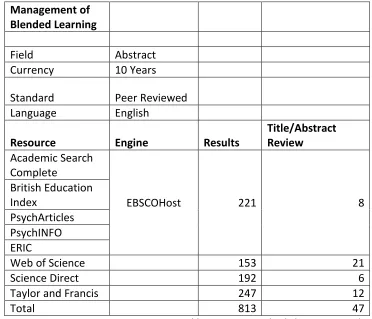
[image:35.594.129.501.227.546.2]The searches took place over a three-day period 23-25/5/16. The search string was applied to online resources listed on Lancaster University Library's Educational Research subject guide. Where possible, all searches were carried out on the abstract field. The search string above formed the basis for searches but was changed for some of the resources. The results are listed in Table 2.4.
Table 2.4 Managing Blended Learning Search Results
2.2.1.1 Critical review
The abstracts and titles of the results were scanned for relevance and the results were reduced from 813 to 47 by asking whether the results were:
genuinely concerned with blended learning course development
focused on the management of the course development
duplicates
The selected 47 were read for relevance and some were rejected, but the list of articles grew to 61 by including some articles that had been cited in the 47 articles reviewed. Some of the additional articles were published prior to the
Management of
Blended Learning
Field Abstract
Currency 10 Years
Standard Peer Reviewed
Language English
Resource Engine Results
Title/Abstract Review Academic Search
Complete
EBSCOHost 221 8
British Education Index
PsychArticles PsychINFO ERIC
Web of Science 153 21
Science Direct 192 6
Taylor and Francis 247 12
25
ten-year search limit but were included because of their seminal nature. Most of the articles included in the review referred to blended learning specifically or discussed blended learning along with fully online courses or courses that utilised digital technology. Some articles did not use the term blended learning but were included, however, because they did discuss courses that met the definition of blended learning being used for this review—“the
thoughtful fusion of face-to-face and online learning experiences” (Garrison & Vaughan, 2008, p. 5).
A more specialist synthesis of the literature was possible with the literature in this part of the review because of the similarity between the articles retrieved. Extracts from the articles were coded and those codes were grouped into categories, which iteratively changed and merged with subsequent readings and further coding.
2.2.2 The Themes
The categories were then grouped under the following themes:
Blended learning course development and delivery needs to be managed
Blended learning course development and delivery is management averse
There are identifiable attributes to the process of developing and delivering blended learning courses that can be used to determine the extent to which the processes are being managed
2.2.2.1 Blended learning course development and delivery needs to be managed
26
and teaching into a course often involves a combination of skills that are not typically resident in one individual but more likely to be provided by a
multidisciplinary team (Boyle, 2005; Chao, Saj & Hamilton, 2010; Chew, 2009; Garrison & Vaughan, 2012; Vaughan, 2010). Many online and blended
learning projects reported taking a multidisciplinary approach (Jones & O’Shea, 2004) between academics and computer scientists (Davis & Fill, 2007), between researchers, instructional designers, project managers and academics (Bohle Carbonell et al., 2012) and between academics and
instructional designers (Chao et al., 2010). The level of collaboration required has led Botterill (2013) to suggest that building online content is an activity for what Whitchurch (2009) refers to as “blended professionals”, who not only cross internal and external institutional boundaries, but also “contribute to the development of new forms of third space between professional and academic domains” (p. 407). Given that consensus is required in order for a team to function (Boyle, 2005), and that collaboration is notoriously difficult (Conole, 2007), the argument is that the complexity that results from trying to make a cross-organisation and cross-professional team work requires a higher degree of management than would have been needed for face-to-face curriculum development and delivery.
27
Transitioning to blended learning course development and delivery also introduces internal management challenges for a HEI. The need to up skill staff in order to utilise educational technology (Graham et al., 2012; Jones & O’Shea, 2004; Kaur, 2013; Korr, Derwin, Greene, & Sokoloff, 2012;
28
2.2.2.2 Blended learning course development and delivery is management averse
In contrast to above, there is also the suggestion that for course development to work, management needs to be avoided and can even be seen as harmful. Generally, any form of curriculum design has been portrayed as an iterative messy process (Conole, 2013), whether for on or offline learning. Specifically, for Casanovas (2010), the whole process of introducing online education is iterative and cannot be planned for. The argument has been made that when it comes to the design of blended learning courses, a bottom-up approach is even more important as academics are seeking to reconsider how students learn while trying to discover the right blend (Bohle Carbonell et al., 2012). Another reason why an un-managed bottom-up approach should be the case is that teachers themselves are iterative and spontaneous (Bocconi & Trentin, 2015). There is also the argument that teachers are responsible for
determining the approach to blended learning (Alammary, Sheard, & Carbone, 2014; Georgouli, Skalkidis, & Guerreiro, 2008) and should have ownership of the course (Davis & Fill, 2007). The impression here is that blended learning course development should be allowed to happen naturally and
spontaneously, unforced and unmanaged.
29
technology and change (Goolnik, 2012). With this academic-centric model for development and delivery, other members of the team are seen less as
collaborators and are expected to fulfil more of a supportive role (Porter et al., 2014; Quinn et al., 2012). Concerns have been expressed that initiatives not controlled by academics, which are perceived as top-down led, will cause tensions and face resistance from academics (Bohle Carbonell et al., 2012; Clegg et al., 2003; Porter et al., 2014), whose culture does not suit systematic approaches (Chao et al., 2010). Developing and delivering blended learning courses in a managed team-based environment, where the academic is a partner, seems unlikely to gain the support of faculty. Under these
circumstances, the development and delivery of blended learning courses would appear to be an un-managed process with minimal influence and involvement from those outside the academic discipline.
The two themes outlined above present a picture of contradicting extremes in the management of blended learning course development and delivery. On the one side, there is a highly managed process and, on the other, a much looser, less tangible, less predictable process that appears to be management averse. The two extremes in the management of BL course development and delivery is representable on a scale.
Fig. 2.1 Blended Learning Course Management Scale
Where to position approaches to blended learning course development and delivery on this managed scale requires a set of criteria against which to assess a particular approach.
30
2.2.2.3 Identifiable attributes to determine the extent to which the development and delivery of blended learning is being managed
There are models to explain the wide range of approaches to developing and delivering blended learning courses. The framework for institutional adoption and implementation of blended learning(Graham et al., 2012) identified three stages of institutional adoption—Awareness/Exploration, Adoption/Early
implementation and Mature implementation/growth—and posited that the level of strategic, structural and support activity increased as institutions moved toward the third stage of adoption. The suggestion is that as a HEI
progresses along the stages of institutional adoption, the level of management increases. However, this model works only on an institutional level and does not account for different levels of management that may be occurring within the same department or even within the same course. The level of disparity in a HEI is such that a multi-disciplinary team led by a project manager may be developing one module of a course and an academic working alone is
developing a second module on the same course. Conole, White & Oliver (2007) use McNay’s organisational types to help understand appropriate strategies for implementing e-learning in an institution. Identifying which of McNay’s four idealised types of institutions—collegial, bureaucratic, enterprise or corporate (as cited in Conole et al., 2007)—a HEI is most closely aligned to can indicate whether a highly managed or un-managed approach is most suited. Again, this model takes an institutional view and is not able to account for different cultures existing within the same institution, department or course. In order to understand how the level of management involved in developing and delivering a blended learning course increases and decreases, a set of criteria is required with attributes that can illustrate a greater or lesser level of management.
31
motivation or rationale behind the initiative. Sharpe et al. (2006) note that agreeing on what was the rationale for pursuing a blended learning course caused much debate and consideration within the faculty, which is not
surprising given that curricular and institutional business needs do not always complement each other. Stepanyan, Littlejohn, & Margaryan’s (2013) scoping review of the literature revealed that few studies looked at the “tensions
between the concepts of cost-efficiency, effective pedagogy, and continuous innovative practice” (p. 98). The desire to respond to student teaching and learning needs (Bocconi & Trentin, 2015; Uys, Nleya, & Molelu, 2004) or to improve access to higher education (Bocconi & Trentin, 2015; Korr et al., 2012) are un-contentious motivations. However, the desire to pursue innovative teaching methods, which may be behind the move to blended learning (Bocconi & Trentin, 2015; Korr et al., 2012), will not necessarily fit well with the pursuit of greater cost efficiencies and effectiveness or improved mechanisms for quality assurance testing, which have also been identified as reasons for pursuing blended learning initiatives (Bocconi & Trentin, 2015; Goolnik, 2012; Korr et al., 2012; Stepanyan et al., 2013; Uys et al., 2004). It would appear that explaining the rationale was one attribute authors used to describe the development and delivery of BL courses.
A second attribute is where in the organisation did the drive to develop and deliver blended learning courses emerge i.e. whether the development of the blended learning course is being driven from the top of the organisation or whether it is a bottom-up initiative. The terms bottom-up and top-down, and a combination of the two, are common throughout the literature: Clegg et al. (2003) discuss bottom-up agendas; Bohle Carbonell et al. (2012) talk about a bottom-up project with the goal of discovering new blended learning formats and Marshall's (2010) discussion of the challenge of change for universities outlines that most of the universities assessed supported bottom-up, early adopter innovation. Similarly, the term top-down is frequently used to
describe initiatives that emanate from senior management within a HEI: Bohle Carbonell et al. (2012) blamed the resistance created through top-down
32
emerging, while Kearns (2002) discusses how studies in a number of the countries found that traditional top-down policies are too slow. For McPherson & Whitworth (2008), educational technology lies at the interface between top-down and bottom-up processes in HEIs and, similarly, Bohle Carbonell, et al. (2012) talk about bottom-up approaches as a bridge to the ultimate goal of ensuring every course in a university adopts a blended learning format. The LASO (Leadership, Academic & Student Ownership and Readiness) model for Technological Transformation in Higher Education highlights the importance of an integrated bottom-up and top-down inside-out approach (Uys, 2007). Pless & Maak (2011) argue that the bottom-up approach to blended learning development and delivery is frequently implemented in institutions with a ‘collegiate’ culture and a top-down approach more likely found in HEIs with a managerial culture. Whether a bottom up, top down or bottom-up meets top-down approach is adopted, blended learning initiatives are defined in the literature by the source within the organisation from which the drive initially emerged.
Blended learning and online education initiatives are also often described by how the development and delivery is organised; either centrally or on
decentralised, discipline basis. Moskal et al. (2013) state a preference for a centralised over a decentralised approach to blended learning initiatives, while acknowledging that there is no standard organisational model. Chew (2009) also supports a centralised, institute-wide approach so as to avoid confusion and duplication. Garrison and Kanuka (2004) highlighted a clear institutional policy as one of the requirements for a blended learning approach that would promote the effectiveness and efficiency of teaching and learning.
33
delivery are often described in terms of centralised and decentralised, such as Salmon, Jones, & Armellini (2008), where the implementation was centrally approved, funded and organised but the work, very consciously, took place on a discipline basis. A variation of the decentralised-centralised approach was also a feature of models discussed by Bates (2000), Sharpe et al. (2006), and Torrisi-Steele & Drew (2013). Therefore, blended learning courses can also be described by the extent to which the development was organised centrally or on a discipline level.
The next descriptive attribute that emerged was who was responsible for leading the development and delivery of blended learning courses. Articles often define academics as leaders for blended learning initiatives. Academic leadership is deemed important so as to ensure that academics then have the independence to allow them to work the way they feel they need to (Davis & Fill, 2007). Academics are also seen as needing to be in charge in order that they can overcome any fears that they may have encountering change
(Goolnik, 2012). For Sharpe et al. (2006) academic leadership was important in order for disciplines to have a sense of ownership of the blended learning initiatives. As stated above, another reason for academics to lead blended learning developments is because it is the best way to ensure that the sanctity of independent scholarship is protected (Teghe & Knight, 2004). Alternatively, professional staff could lead blended learning initiatives. A project manager to lead blended learning initiatives has been promoted by several commentators (Ari & Taplamacioglu, 2012; Boyle, 2005; Garrison & Kanuka, 2004; Korr et al., 2012). Also a compromise solution of professional staff and academics acting as co-leads has been proposed (Chao et al., 2010). Therefore, who leads the blended learning initiative is seen as a significant factor in how the initiative is managed and what course development could prioritise.
34
professional roles. These multi-skilled cross-functional teams could include academics, teaching assistants, graduate students and subject area librarians (Vaughan, 2010) or educationalists, technologists, subject specialists and support staff (Conole, 2007). The need for a collaborative multidisciplinary approach would appear to be all the more relevant at the start of a blended learning initiative, when many academics may be unsure of the best design approach (Alammary et al., 2014). The team approach allows faculty not to have to learn and manage technology on their own and will, therefore, be able to focus on the educational benefits of blended learning (Garrison & Vaughan, 2012). Boyle et al. (2005) argue that building a creative group that works by consensus is vital to building an effective blended solution.
The working relationship can be a collaborative one within a discipline but less collaborative once outside the discipline. Jones & O’Shea (2004) claim from their study that collaborations outside the discipline were rare, given how strong discipline divisions are, and how well those divisions were supported by culture and tradition. Here, the work dynamic may be collaborative within the discipline, with the collaboration being supported from outside. Quinn et al. (2012) discuss how a support team can set up communities of practice for the academics to share experiences within the discipline but not necessarily participate in those communities of practice. It has also been acknowledged that the use of educational technology in blended learning courses challenges the culture of isolation in a HEI (Hillman & Corkery, 2010), and that there is a strangeness for academics that comes from working with colleagues outside their disciplinary area who may lack an academic tradition to the extent that their pedagogic basis is challenged (Jones & O’Shea, 2004). Faced with such challenges, the work dynamic that develops between colleagues may not be collaborative. A study by Botterill (2013) found that blended learning projects became contested work areas when there was an inability to defer to
horizontal expert authority, which influenced the ability to work in an
35
blended learning adoption and administrators are there to facilitate that drive. A situation where the academic expects support as and when they want and need it (Davis & Fill, 2007) suggests a subservient rather than collaborative relationship. The emphasis on training and up-skilling of academic staff that is recommended by numerous studies suggests that the traditional individual model of course design can and should be maintained, once the academic has been sufficiently up-skilled. Either way, the staff involved and their working relationship or dynamic is a way of distinguishing between different approaches to how the design and delivery of blended learning courses is managed.
The development process is the final attribute identified to describe the management of blended learning course design and development. What is meant by development process is the extent to which the course is designed and delivered systematically or iteratively. As stated above, a number of studies depict the course design process as iterative (Conole, 2007) and not capable of being planned for (Casanovas, 2010), and that it should remain so in order to learn more about the design process (Bohle Carbonell et al., 2012) and because it suits the spontaneous nature of teaching (Bocconi & Trentin, 2015). Alternatively, blended learning is defined as a “systematic
combination of face-to-face interactions and technologically mediated
interactions between students, teachers and training resources” (Alammary et al., 2014 p. 234). Chao et al.’s (2010) study of the revision and development of 600 courses at Royal Roads University suggested that a systematic
approach to course development was a necessity. In an analysis of research trends in dissertations and theses studying blended learning, Drysdale et al. (2013) noted a lack of research focusing on programme and institution-level blending, which the authors attribute to the extensive planning, coordination and stakeholder engagement required for this level of blend. Similarly, a study of three cases suggested that the implementation of eLearning
initiatives need to be strategically developed and “based on a clear and unified vision and a central educational rationale” (Uys et al., 2004, p. 77). A
36
systematic approach is adopted but one that also appreciates the need to facilitate creativity in course design. Boyle (2005) notes that the highly systematic approaches were seen as too rigid and not supportive enough of pedagogical innovation, especially with the emergence of constructivism, and that there is a need for more flexibility. Rossiter (2007) agrees, claiming that the ultimate goal is a system whereby “apparently contradictory agents and elements, such as creativity and conformity, order and disruption,
collaboration and individualism (p. 104) are fostered.
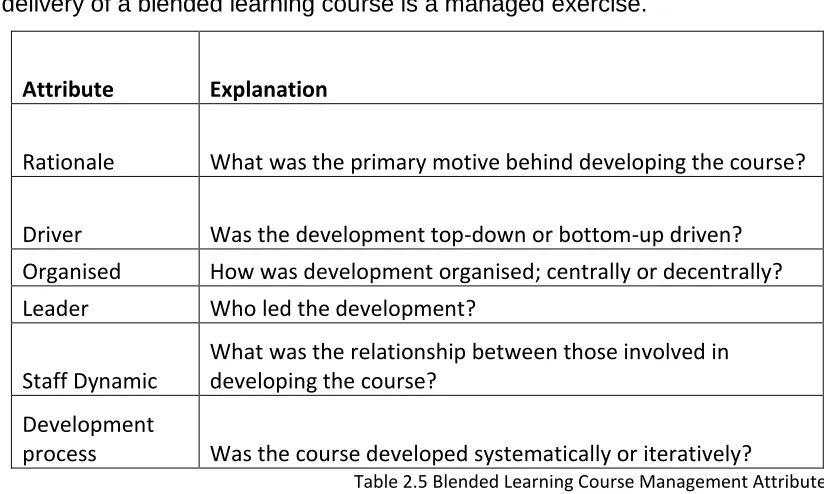
From above, the following six attributes have emerged that collectively constitute a typology for describing the extent to which the development and delivery of a blended learning course is a managed exercise.
Attribute Explanation
Rationale What was the primary motive behind developing the course?
Driver Was the development top-down or bottom-up driven? Organised How was development organised; centrally or decentrally? Leader Who led the development?
Staff Dynamic
What was the relationship between those involved in developing the course?
Development
[image:47.594.107.519.304.551.2]process Was the course developed systematically or iteratively?
Table 2.5 Blended Learning Course Management Attributes
Applying the Typology