‘Re-Creating’ Science in Higher Education:
Exploring a Creativity Philosophy
Michael A. Wride
Master in Education
University of Dublin, Trinity College
Supervisor: Prof Aidan Seery
Declaration
I hereby declare that this is entirely my own work and that it has not been submitted as an exercise for the award of a degree at this or any other University. I agree that the Library may lend or copy this dissertation on request.
Signature:___________________________________________________
Name: Michael A Wride.
Date: August 26th, 2014
Word count: 20,659
Summary
There is a perception by the general public and students, as well as some scientists, that science is not creative. Views of the ‘official’ scientific method as ‘linear’ and ‘mechanical’ may be partly responsible for these views, as well as the way science is taught. Creativity, including imagination, insight and intuition are all involved in developing scientific hypotheses and theories for example, but are not necessarily acknowledged as implicit in the method. Here, a creativity philosophy for science teaching and learning in Higher Education is explored with a view to ‘re-creating’ science.
Here, the literature pertaining to creativity in science and science education is reviewed. Then a philosophical perspective of nature as being inherently creative is presented, based on developments in quantum physics and philosophy. The work of David Bohm regarding creativity in science is introduced as well as the radical views of ‘nature’ and ‘knowing’ proposed by Christian De Quincey, based in part on the process philosophy of Alfred North Whitehead. The scientific work of Johann Wolfgang von Goethe is also discussed, as a way of developing the imagination and the ability to perceive the creative dynamism and wholeness of nature.
Using a phenomenological approach, semi-structured, exploratory research interviews were also carried out with students and scientists who teach in Higher Education at Schumacher College, UK and Trinity College Dublin, Ireland. Questions focused on the participants’ interests in art and/or other creative pursuits (e.g. sports) and the extent to which these pursuits feed into their scientific work. Opinions on the ‘official’ scientific method, imagination, insight, creative scientists and creativity in nature were also solicited. Quotes from participants revealed consistent views that creativity is important for both the process of doing science and that it is inherent in nature (e.g. evolution and embryonic development).
scientific and creative pursuits such as poetry, drawing, music and sport were outlined. Teaching about science from a historical perspective, including the stories of creative breakthroughs of eminent scientists was also seen as advantageous in creative science teaching. Creating a group dynamic for teaching and learning in order to instil confidence in students, and where group members are at ease, was considered important for overcoming fear of failure or fear of being creative. Moreover, small group teaching and group work in general, role-play, active and self-directed learning and inquiry-based approaches were also discussed as advantageous. Providing space and freedom and time to reflect were considered vitally important for both science lecturers and students. The advantages of an immersive educational environment as well as opportunities to discuss science with students in small informal gatherings, such as on field trips, were described. The necessity of focus, restraints and discipline for creativity in research, teaching and learning were highlighted. The ability of a lecturer to impart a feeling for the subject in students was seen as important, while open-minded and creative questioning should be encouraged. Finally, development of skills for obtaining a state of ease, relaxation or ‘flow’ was highlighted as a requirement for creativity in art and sport as well as in science. Indeed, the acquisition of skills outside academic work was seen as transferring productively into the practice of science.
A further part of this study presents comments from student self-reflective pieces obtained following a session on problem solving and creativity. The quotes from students contain real evidence of the transformative nature of this activity, particularly with regard to helping students to see the relationships between art and science, the creative process of science and in gaining skills to present their work creatively.
Reflections
Well, I’m probably going against the prescribed protocol here. You see, I was going to hide this in the back of the Appendix, but then who would read it? I decided that it’s important. One of the participants I interviewed here said: “I have to remind myself sometimes how I ended up here. What
inspired me to take up science?” I thought it might be worth my while to
think about that and reflect on it. One of the students also said something interesting that got me thinking: “I found since studying science that we may
have lost our sense of creativity somewhere along the way.” You see,
liquefaction I found out years later. Sitting still and silently on the riverbank in the dark, catching eels. Then there was the old antique telescope – we studied craters on the moon. Other times on clear nights he pointed up at the stars “There’s the milky way me zun and he’s Orion. Do ‘ee zee ‘iz belt.
And tha’s a pulsar?” And the twelve bore shotgun – one in a thousand
model – beautiful etched hunting scene on the boss “Thees gotta hold in
tight in to yer shoulder – ‘ee da kick zee!” So, I wondered about the Milky
Way and the stars and Orion and pulsars and how twelve bore shotguns work. We hatched out chicks and ducks in an old paraffin heated incubator. I learned a bit about mechanics - changing the clutch in the Vauxhall Viva and always needing a creative solution to keep Dad’s old ‘Fergie’ tractor going during haymaking. Then Dad got me a subscription for Safari Cards – I waited impatiently for them to drop through the letterbox every week; cards with pictures and details about animals. I can still smell the cellophane. I would catalogue them in all sorts of different ways, alphabetical and according to Genus, Phylum, Species – hours and hours whiled away. Then to cap it all, Dad got me a microscope – it sits in my office window now – a reminder to me of “how I ended up here”. We grew brine shrimp and looked at the slides that came with it. And the most amazing thing – I went out and collected water from the pond in the next field and put a drop under there with my Pasteur pipette. And what did I see? Well, more than that, it was beautiful, a little tiny wriggling pond flea - Daphnia! And what happened? I’ll never forget it! She, well she must have been a she, gave birth to a little tiny live pond flea and I witnessed it!!! Well, I actually felt like I’d participated in it! Wow! I was hooked. I’ll do something with microscopes then….years later, I’m in the lab in Canada…phoning home to Dad, so far away, on his kidney dialysis machine with Mum there keeping an eye on him …and the machine.
“How be on me zun? What’ve ‘ee been up to?”… “Oh Dad, it’s going great!
The experiments are finally working! I’m just looking at these patterns of protein expression in my chick embryos – they’re beautiful!”. “Ah, I’m glad
for ‘ee me zun. Glad it’s all beginning to work for ‘ee.” So, in “studying
science” I hope we can maintain our “sense of creativity along the way.” I
Acknowledgements
Dedication
To the memory of my Dad
Eric James Wride
1943-2010
Who loved nature and always encouraged me to be creative
And for my children:
Thomas, Charlotte and Samantha
That you may always see the play of creativity in nature and
that your days will always be filled with the joy and love of
Table of Contents
Declaration ... i
Summary ... ii
Reflections ... iv
Acknowledgements ... vi
Dedication ... vii
Quotations ... x
Chapter 1: General Introduction ... 1
1.1. The Creativity of the Embryo ... 1
1.2. An Artists eye? ... 1
1.3. Re-visioning Science ... 2
1.4. A creativity philosophy at the heart of science ... 2
1.5. ‘Re-creating’ science education ... 3
1.6. Outline of the dissertation ... 4
Chapter 2: Literature Review ... 5
2.1. What is creativity? ... 5
2.2. Left Brain-Right Brain ... 6
2.3. Bildung and Creativity ... 7
2.4. Creativity in science and science teaching and learning ... 8
2.5. The ‘official’ scientific method and some history and philosophy of science ... 10
2.6. Science and dogmas ... 11
2.7. A consistent philosophy of creativity in nature: organisms and processes ... 12
2.8. Creativity and quantum physics ... 13
2.9. David Bohm on creativity ... 13
2.10. Radical nature and radical knowing: creative participation ... 17
2.11. Goethean Science and the imagination ... 21
2.12. Summary of the literature review ... 25
Chapter 3: Methodology ... 27
3.1. Research Interviews about creativity in science ... 27
3.2. Student reflections on problem solving and creativity sessions ... 30
Chapter 4: Research Findings and Discussion ... 32
4.1. Findings from Interviews ... 32
4.1.1. Creativity in the ‘official’ scientific method and in nature ... 33
4.1.2. Imagination, intuition, drawing, visualisation, perception and Goethean science ... 37
4.1.3. Creative teaching and learning ... 42
4.1.4. Skills, embodiment, wholeness and flow ... 58
4.2. Case study: creativity in science teaching session and student reflections ... 61
Chapter 5: Conclusions ... 64
5.2. Methods for enhancing creativity in science teaching ... 65
5.3. Final comments ... 65
Bibliography ... 68
Appendix 1: Question sheets ... 77
Appendix 1.1: Student Question Sheet ... 77
Appendix 1.2: Staff Question Sheet ... 77
Appendix II: Project information sheet ... 79
Appendix III: Consent form ... 80
Appendix IV: Biographies of Participants, Inspiration and Artistic Interests and Hobbies ... 81
Schumacher Staff 1 (SSF1): ... 81
Schumacher Staff 2 (SSF2): ... 81
Schumacher Student 1 (SST1): ... 82
Schumacher Student 2 (SST2): ... 83
Trinity Staff 1 (TSF1): ... 83
Trinity Staff 2 (TSF2): ... 84
Trinity Staff 3 (TSF3): ... 85
Trinity Staff 4 (TSF4): ... 86
Trinity Staff 5 (TSF5): ... 87
Trinity Student 1 (TST1): ... 89
Trinity Student 2 (TST2): ... 90
Trinity Student 3 (TST3): ... 91
Appendix V: Problem solving and creativity assignment for JS Functional Biology and Plant Science - details 2013-2014 ... 93
Appendix VI: Case Study: Creativity in Science Teaching Session and Student Reflections and Feedback (Detailed Comments). ... 94
[image:10.595.98.511.71.397.2]List of Figures Figure 1: “More to seeing than meets the eye”………...15
Quotations
“And an eternal, living Activity
Works to create anew what has been created Lest it entrench itself in rigidity.
And that which has not yet been Seeks now to come into being As pure suns and many-coloured earths:
None of it may remain at rest.
It is intended to move, to act and create – First to form and then to transform itself; Its moments of immobility are only apparent.
In all that lives the eternal force works on; For everything must dissolve into nothingness,
If it is to remain in Being.”
Johann Wolfgang von Goethe (1749-1832)
“My mind has changed during the last twenty or thirty years... Now for many years I cannot endure to read a line of poetry… I have also almost lost any
taste for pictures or music… My mind seems to have become a kind of machine for grinding general laws out of large collections of facts...If I had to live my life again I would have made a rule to read some poetry and listen to some music at least once every week… The loss of these tastes is a loss of happiness, and may possibly be injurious to the intellect, and more probably
to the moral character, by enfeebling the emotional part of our nature.”
Pen and ink drawing by MW.
"In all things we learn only from those we love." Goethe
1
Chapter 1: General Introduction
1.1. The Creativity of the Embryo
I am still filled with a sense of awe and wonder when studying embryos. The gradual appearance of form of a zebrafish (Danio rerio) embryo is astounding. The fertilized egg begins to cleave and the first cells are formed, wrapping around the yolk sac that will provide all the food the embryo needs. The cells move and divide in an intricate dance of creative exuberance co-operating and responding with ease to the rhythms in the silent music, creating intricate, interweaving patterns that are beautiful to behold. I agree with Aristotle that there is within the embryo an inherent creativity or self-agency (Brady, 1998).
1.2. An Artists eye?
To understand embryonic development, is it then just a case of explaining the material interactions between the molecules and cells or is there something more at work here, something perhaps even more wondrous? Can we remind ourselves occasionally to just step back, perhaps with an artist’s eye, and admire the beauty and creativity of the process as it is? Surely, this is the way that science really works?
“The Scientist does not study nature because it is useful to do so. He (sic) studies it because he takes pleasure in it; and he takes pleasure in it because it is beautiful. If nature were not beautiful, it would not be worth
knowing and life would not be worth living.” Henri Poincaré (Root-Bernstein,
1984)
The most successful and creative scientists have always been able to move beyond the ‘official’ hypothetico-deductive scientific method (Popper, 2002) into the realms of aesthetics, intuition, imagination, feeling and inspiration to gain their creative insights. Perhaps this is actually the normal mode of operation of all scientists. We need to move away from the idea that
creativity is only associated with art and music, rather than science (McWilliam et al., 2008). Indeed, science is apparently not perceived by the public as a creative endeavour (Schmidt, 2011). Furthermore, there is currently a ‘battle’ for creativity at the frontiers of both science and science education (Schmidt, 2010) and it has been argued that creativity should be at the heart of biology (Medina, 2006) - art can be a science and science an art (Root-Bernstein, 1984), particularly in terms of the creative processes involved (Waddington, 1969). Can we ‘re-create’ or ‘re-vision’ science by putting a creativity philosophy at its heart?
1.3. Re-‐visioning Science
In a study on ‘re-visioning science’, scientists were interviewed about their motivations and every day ‘lived experience’ (Lunn & Noble, 2008). The most common theme to emerge was the relationship between science and creativity - relating to art was highly important for scientists in finding inspiration and providing a wider context for their work. The words ‘wonder’ and ‘beauty’ were often used. A wonderful quote from this study by Prof. Jeff Tallon of the University of Wellington, New Zealand stands out:
“If you have science without passion, forget it as far as I’m concerned. If you have science without creativity or without insight, well you don’t have science. It’s about extracting order out of a chaos of information, some kind of beautiful, simple, elegant theory…”
1.4. A creativity philosophy at the heart of science
Bohm (Bohm & Nichol, 1998, 2003; Bohm & Peat, 2000), who thought deeply about creativity in science and the universe as fundamentally creative. We may also need radical new views of ‘nature’ and ‘knowing’ (De Quincey, 2005, 2010) and we may need to consider a science and a science education that actively develops the imagination and which re-cognises the ability to see the wholeness and dynamism of nature, as developed by the German polymath Goethe (Bortoft, 1996, 2012; Kidd, 2009).
1.5. ‘Re-‐creating’ science education
We will require a pedagogy that goes beyond dumping ‘factoids’ into students, towards one of relationships between student and teacher, student to student and teacher to student to subject (Palmer et al., 2010). We need a science education that tells the personal stories of scientists and the process of science and enables students to see the creativity inherent in nature. We need a science that understands its own history, for as Goethe said “The history of science is science itself” (Naydler, 1996). We need a science where wisdom, creativity and purpose are valued; a science that is integrated with philosophy again, so that deep reflection, questioning and creative thinking are encouraged and facilitated. We should emphasise that scientific research is learning and learning is research - the causes flow into the effects and the effects flow into the causes in an iterative and spiralling process of increased understanding.
Curricula should become more flexible and open, more like scaffolding than a rigid structure (perhaps just like the way the cytoskeleton remodels continuously within the cells of our developing embryo). Students and lecturers will co-create their teaching and learning experiences together as a group by utilising and playing with knowledge. We will require an integrative and participative science pedagogy (Palmer et al., 2010).
1.6. Outline of the dissertation
Here I will explore through the literature review (Chapter 2) the following:
What is creativity? Some background on creativity in science, creativity and the brain, creativity and self-transformation (Bildung), creativity and science education.
Some history and philosophy of science, looking at where are we now in science and the current ‘official’ scientific method.
A radical new view of ‘nature and knowing’, based on process philosophy, which recognises the fundamental role of creativity in nature.
Goethe’s way of science as a participatory, imaginative and creative science that enables the scientist to ‘see’ the dynamism and wholeness of the phenomenon studied.
I also used a qualitative phenomenological approach (described in Chapter 3) to carry out semi-structured interviews with practicing scientists who teach and with science postgraduate and undergraduate students in order to explore their views of science and creativity. The results of and relevant discussion of these interviews are presented in Chapter 4.1.
A further aspect to this study relates to teaching sessions I facilitated on problem solving and creativity. Students reflected on undertaking a science and creativity assignment. A selection of student quotes is presented as evidence in Chapter 4.2.
Chapter 2: Literature Review
2.1. What is creativity?
The Oxford English Dictionary defines creativity as “The use of imagination
or original ideas to create something; inventiveness”. Societal
understandings of creativity have undergone changes throughout history (Runco & Albert, 2010). The ancient Greeks, along with both Chinese and Indian ancient cultures, had no word for creativity and saw creativity in art as an act of discovery, not of creation. The concept of creativity seems to have entered Western culture through the divine inspiration associated with Christianity.
Creativity ‘Guru’ Sir Ken Robinson defines creativity as “the process of
developing original ideas that have value” (Robinson, 2011), but this is
problematic, as it is not clear what is meant by ‘value’ - what is being ‘valued’ and who is doing the ‘valuing’? In other words, how is the ‘value’ of a creative product to be assessed? Does it always have to have ‘value’? Is this ‘value’ to be found in aesthetics, financial or economic value or all three, for example? Or, in science, how is a particular set of results, produced following a creative insight, to be ‘valued’? It may be more accurate to say that the original creative artefact produced provides a possibility for the interpretation of new meaning to emerge in the world, which may or may not have value, or may be valuable in different ways, to different observers. There is also the possibility of assembling existing artefacts in novel ways and this is also a form of creativity. Creativity is always the ability to ‘see’ or ‘feel’ the possibility of something new and to have the skills to bring this new possibility into being in the world, through linear, iterative and recursive processes (e.g. through trial and error), or by a sudden insight or quantum leap – the classic ‘eureka moment’! Creativity is also a process of evolution and evolution is characterised by both long periods of stasis and relatively short periods of rapid change.
kind of unconscious brooding is carried out or, perhaps more accurately, experienced; illumination, in which the new idea appears or a new set of connections is made (in other words, the existing state is transcended); and finally verification, in which the new idea is tested and adjusted – a second period of conscious work. To the process of verification maybe added
innovation which deals with the application and utilisation of the new idea
(HammershØj, 2009).
According to Bloom’s taxonomy of learning skills (Bloom, 1956), creativity is the most complex and abstract of the higher order cognitive learning skills required to solve problems (DeHaan, 2011). While James Wisdom, in reporting on the Imaginative Curriculum Initiative (Wisdom, 2006), cites the work of Gibbs that factors improving the quality of students’ learning confirm that opportunities for creativity ensue when the focus of teaching changes from a knowledge-driven, personal performance approach to a student centred mode, with an explicit care for the students’ growth of understanding (Gibbs, 1992).
Thus, the development of the creative skills and interests of the student becomes paramount, and the process of learning is then associated with a creative transformation in the state of ‘Being’ (Bildung; see below) of both student and teacher. As Norman Jackson puts it, we have to “imagine a
different world” – a vision of higher education in which creativity is valued
alongside more traditional forms of academic achievement (Jackson, 2006).
2.2. Left Brain-‐Right Brain
imaginative, intuitive, artistic and connected right side. However, McGilchrist also makes clear that the situation is not as clear as a simple division between the left and right brain hemispheres:
“Certainly there is plenty of evidence that the right hemisphere is important for creativity, which given its ability to make more and wider-ranging connections between things, and to think more flexibly, is hardly surprising. But this is only part of the story. Both hemispheres are importantly involved. Creativity also depends on the union of things that are also maintained separately – the precise function of the corpus collosum, both to separate and connect; and interestingly division of the corpus collosum does impair
creativity.” (McGilchrist, 2010), p 42.
2.3. Bildung and Creativity
Bildung is a holistic view of education developed by the German Neo-humanists concerning the relationship between the individual and the world at large (HammershØj, 2009). Specifically, it refers to the concept of self-cultivation or the formation of personality in which philosophy and education are linked to promote and support personal and cultural maturation. It can also be thought of as a unification of mind and heart and, in that sense, is a romantic or idealistic concept of education in which the ultimate outcome is a life-long commitment to the transformation or transcendence of the self – the development of ‘Being’. Thus, Bildung involves creativity as a process of formation of the self or ‘making a project of oneself’ - self-Bildung (HammershØj, 2009). In this philosophy, creativity is primarily conceived as a state of transcendence of the self or of existing paradigms of thought.
2.4. Creativity in science and science teaching and learning
It has been stated that “creativity is not the antithesis of scientific rigour but
the core business of scientific thinking” (McWilliam et al., 2008). However, a
number of so-called ‘creativity myths’ continue to be propagated, including: creativity is ‘artiness’; creativity is individual genius and idiosyncrasy; creativity is not economically valuable; and creativity is not rigorous, systematic nor learnable.
Furthermore, little attention has been paid to creativity in science teaching and learning and science courses are often perceived as failing to reflect the reality of modern science and its contributions to society (McWilliam et al., 2008). Therefore, we need to enable science students to both think and act creatively and to be imaginative. This is not only an imperative within science, but is also the best way to empower students to meet the challenges of the future. We are, after all, in what Ron Barnett terms the age of super-complexity, which requires “an epistemology for living amid
uncertainty” (Barnett, 2000a, 2000b).
There is evidence of declining enrolments and widespread disengagement and confusion of students in science education programmes (Schmidt, 2010). An indicator of this is the major bug-bear of lecturers the world over - lack of student engagement, epitomised by reduced student attendance of lectures (Massingham & Herrington, 2006). However, there may be good reason, since it has been said that this is “not a flight from rigour but from
rigor mortis.” (McWilliam et al., 2008). Indeed, lack of student motivation is a
defining problem, as well as a potential incompatibility of student and teacher learning styles. At the very least, new approaches to teaching are required (Kottasz, 2005). A ‘re-design’ of science pedagogy as a kind of
“creative capacity building” that deals in dynamic rather than static sources
of knowledge has been called for (McWilliam et al., 2008), since this reflects the nature of 21st century scientific knowledge – “truth for the moment”.
This also relates to questions about the very nature and purpose of the science curriculum in Higher Education. Is it only to impart a body of knowledge and to produce competent technicians, rather than to allow for the blossoming of creative scientists? Do we need to simply just tweak what we do or do we need to bring about a radical re-construction of science curricula to more truly reflect the actual process of doing science? And what form would such a curriculum take? Would this entail ‘re-creating’ science to reflect a deep philosophical viewpoint of nature and the process of science as being inherently creative? How would creative curricula follow on from this change of emphasis?
of analysis in any exploration of how creativity gets fostered (Csikszentmihalyi, 1999).
And yet we tend to continue, on the whole, to teach and assess individual students, even where collaboration through teams and group work takes place. So, there will also need to be a fundamental re-think about how science students’ creative work is assessed (Balchin, 2006; Cowan, 2006). For example, by student self-assessment and reflection and/or by using consensual assessment, in which appropriate individual observers, who have subject-domain knowledge, independently assess the extent to which a particular piece of work is creative. Overall, there needs to be a move away from the linear principle of alignment of teaching and assessment towards a full integration of student-centred learning, which combines
“outcomes and assessment and learning and teaching” (Cowan, 2006).
2.5. The ‘official’ scientific method and some history and philosophy of science
There may be a fundamental reason at the heart of the misconception by the public at large, students and significant numbers of scientists, why science is not seen as creative. It is possible that the problem is with the metaphysical basis of science itself and particularly the scientific world-view that has evolved over the last 300 years, since the enlightenment, particularly in the western hemisphere (Sheldrake, 2012).
The official hypothetico-deductive scientific method (Popper, 2002) really only begins with the hypothesis or the theory and then, so the argument goes, it is a fairly logical series of inductions and deductions that lead to the solving of the problem under investigation (Medawar, 1969). Peter Medawar was a British biologist and philosopher of science who went as far as to say that the best experiments avoid the need for thinking entirely:
“…a ‘good’ experiment is precisely that which spares us the exertion of thinking: the better it is, the less we have to worry about its interpretation,
Medawar was in good company – the philosopher Heidegger, a long-term critic of science, said that “Science does not think” (Birch, 1988).
So, the hypothetico-deductive method is a rather linear, mechanical approach that does not lend itself to recognising the dynamic nature of the process of science and, more particularly, the source of the hypothesis or idea itself. Neither is it a truly evolutionary or organismic view of a dynamic, developing, evolving universe (Hirst, 2008). Indeed, mechanistic and insentient models of nature have been undermined by developments in both 20th century physics and philosophy, even though the implications have not yet, on the whole, filtered down to the way we teach science (Birch, 1988). Moreover, it has been pointed out that this particular scientific world-view has resulted in a “metaphysics of education” that does not support development of the imagination or a “reflective habit of mind” (Laura, 1981).
Furthermore, greater exposure of students to the history and philosophy of science, which is generally neglected in science teaching, would in itself help to engender a questioning and ultimately creative approach to science (Birch, 1988). The traditional approach in science teaching is an adherence to a strict materialism or at least a focus on the ‘hard science of facts’, which Rupert Sheldrake has argued is stifling creativity in science (Sheldrake, 2012).
2.6. Science and dogmas
1. Everything is essentially mechanical. Dogs and people are complex mechanisms, rather than living organisms with goals of their own. 2. All matter is unconscious. It has no inner life or subjectivity or point of
view. Even human consciousness is an illusion produced by material activities of the brain.
2.7. A consistent philosophy of creativity in nature: organisms and processes
Sheldrake argues that:
“Living organisms may have an internal creativity, as we do ourselves. When we have a new idea or a new way of doing something, we do not design the idea first and put it into our own minds. New ideas just happen, and no one knows how or why. Humans have an inherent creativity; and all living organisms may have an inherent creativity that is expressed in larger or smaller ways. Machines require external designers; organisms do not.” (Sheldrake, 2012), pp 37-38.
Sheldrake goes on to describe how the backlash against the view of the universe and biological systems as machines was provided by the Romantic Movement to which both Johann Wolfgang von Goethe and Samuel Taylor Coleridge belonged:
“Followers of the enlightenment put their faith in mechanistic science, reason and human progress. ‘Enlightened’ ideas or values still have a major
influence on our educational, social, and political systems today. But from
around 1780-1830 in the Romantic Movement, there was a widespread reaction against the Enlightenment faith, expressed mainly in the arts and literature. Romantics [….] saw nature as alive, rather than mechanical [….]. [and] portrayed nature as a dynamic interplay of opposing forces and
polarities through which matter is ‘brought to life.” (Sheldrake, 2012), pp
I outline Goethe’s contributions to an alternative or complementary approach to science below. Moreover, when Coleridge wrote that matter should be contemplated as “a product in time”, this anticipated the process philosophy of Alfred North Whitehead (1861-1947) in which change or ‘becoming’ is the cornerstone of reality (Whitehead, 1929b). The fundamental constituents of reality are ‘actual occasions’ that are in essence pure creative acts that result from ‘moments of experience’ (De Quincey, 2010), p 136.
2.8. Creativity and quantum physics
Furthermore, in the early 20th century, along came a new way of viewing the universe – Quantum physics, initiated by Max Planck (1858-1947) and Albert Einstein (1879-1955). Quantum physics emphasises that we exist in an energetic universe of potential and possibility in which, to quote Nobel Prize winning physicist John Wheeler (1911-2008), “we are shapers and
creators living in a participatory universe” (Folger, 2002). In other words, we
are co-creators, not passive, powerless and separate from the rest of reality. This insight has profound implications for the way we view the world and our place in it, how we comprehend the nature of creativity and how we teach students to understand their innate potential to be creative. The Quantum Physicist Amit Goswami puts it this way:
“Consciousness is the ground of being and matter, mind, all these things, are possibilities within consciousness. And that gives us a fairly new way of looking at it where creativity becomes possible because with every collapse of possibility into actuality, consciousness has a new beginning, has the possibility of a new beginning. So, at every moment, we have the possibility
of choosing the new and therefore creativity.” (Goswami, 2010).
2.9. David Bohm on creativity
One of the greatest scientists turned philosophers of the 20th century was
Bohm & Peat, 2000). Bohm worked on wholeness in quantum physics and developed the concepts of the ‘implicate’ and ‘explicate’ orders. The ‘implicate order’ being an unmanifest matrix from which mind and matter (manifest reality) unfold as the ‘explicate order’ (De Quincey, 2005), p165. Bohm saw the source of creativity as being within the ‘implicate order’ and he called this the ‘generative order’. In Bohm’s view, there is no such thing as pure chaos, only infinite degrees of order. Creativity produces novel forms of order in a process of unfolding from the ‘generative order’. Furthermore, Bohm’s assertion that quantum events are not purely random, challenges the mainstream Copenhagen interpretation of quantum physics and has the profound implication that “something very like intelligence is at
work at the deepest levels of reality” (De Quincey, 2005), p135 and that
“consciousness creates reality” ibid p165. Indeed, the philosopher Thomas
Nagel has suggested that the “materialist Neo-Darwinian conception of
nature is almost certainly false” (Nagel, 2012), while, recently, in Scientific
American, there has been a call for recognising that consciousness may be
universal (Koch, 2013). Perhaps we will have to consider the possibility that the ‘cosmic soup’ of Joseph Chilton Pearce is the source of creativity (Dossey, 2013).
Bohm also became fascinated about the relationship between art and science and the role of creativity in them both. Bohm explored extensively in various books and dialogues the idea that the work of the visual artist is remarkably similar to that of the scientist. He also thought about the latent creativity in the human mind and the presence of creativity in nature and the universe at large:
“Bohm [….] links mind to the realm of natural processes, ultimately suggesting that manifestations of creativity in humankind are not merely similar to the creative process in nature. Rather they are of the same
intrinsic nature as the creative forces in the universe at large.” (Bohm &
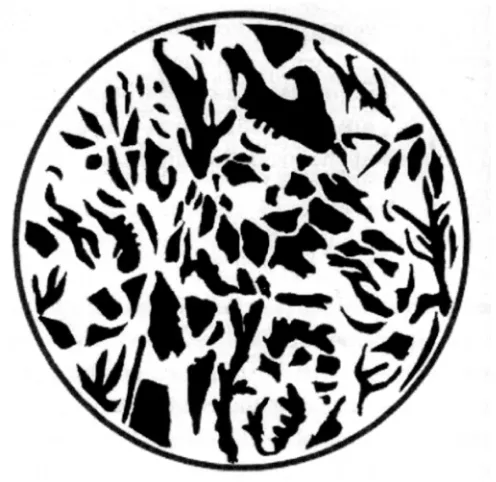
Bohm saw the human being as having a unique position of perceiving the dynamism and movement (he called it the holomovement) of the world around him, while realising that perception itself can be considered to be an equivalent order of creativity and that it participates intimately with the world it observes. Thus, there is a non-sensory organising activity required by observer-participants, which is essential for creating meaning (Figure 1).
Figure 1:“More to seeing than meets the eye” - the non-sensory factor in perception (Bortoft, 1996) (image designed by Jackie Bortoft – retrieved from: www.transitionconsciousness.org).
At first sight, this appears to the observer to be a random pattern of black and white areas. However, sooner or later a recognisable figure suddenly emerges from the seeming chaos in a creative leap of perception:
“Meaning about the world through science is obtained through an act of
creative imagination in the mind.” (Bohm & Peat, 2000), p 67.
scientific research is conducted as well as how students see the similarities and differences between material provided on related topics in different modules. They cannot appreciate the similarities and differences when they are caught in a mechanical and fixed, shall we say, ‘text-book of facts’ mode of thought. They require development of new modes (or organs) of perception (this will be discussed further below in the section on Goethe):
“Initially of course scientists may fail to recognise the essential similarity between different things, for this requires a creative act of perception. But once the perception has been achieved, science may fail to see the essential differences that are also inherent within the metaphor. Clearly, the problem with thought is that it often fails to be perceptively sensitive to similarities and differences and instead applies mechanical habits of seeing
similarities and differences.” (Bohm & Peat, 2000), p 32.
Bohm and Peat also point out that a narrowness of vision has developed in science owing to specialisation and fragmentation, which is a practical division of knowledge into ever-more separate disciplines. However, they also point out that creativity can be maintained if the specialisation remains flexible and dynamic (i.e. is seen as a process) rather then something rigid, since there can be no creativity in rigidity. This means that Bohm and Peat disagree somewhat with Kuhn in that they believe that there is the potential for a continuously creative approach to science, so that any abrupt discontinuity (Kuhn’s paradigm shift) is not inevitable. Indeed, they state that
“paradigms interfere with the free play of creativity.”Ibid, p52.
Bohm and Peat also discuss the idea of ‘the play of thought’ as creative:
“It is the very nature of play that nothing is taken for granted as being absolutely unalterable and that its outcomes and conclusions cannot be
They go on, in a positive vain, suggesting that science can move in a new direction in which greater freedom for the ‘play of thought’ is permitted and in which creativity can work at all times. This should also be our aim for a true creative philosophy of science teaching and learning, which is more playful and less rigid. Indeed, there is a positive correlation between playfulness, ideas and creativity (Bateson & Nettle, 2014), while Vygotsky described play as “imagination in action” and outlines how a creative process develops in play as new and unfamiliar meanings emerge (Lindqvist, 2003). I always felt when I was working in the laboratory that I was at play and I always felt playful in my approaches to learning about new things and making new connections between them. But, my own experience is that most students are very serious and earnest about their education -fun and play are not natural bedfellows with the ‘serious business’ of passing the exams!
The above brief review of Bohm and creativity has tremendous implications for our educational practices. We have to recognise the participatory nature of the student-teacher relationship in manifesting an educational experience that is truly creative:
“…any search for absolute, fixed knowledge is illusory since all knowledge arises out of the shifting, changing activity of creative perception, free play,
unfoldment into action and its return into experience.” (Bohm & Peat, 2000),
pp 55-56.
2.10. Radical nature and radical knowing: creative participation
In Radical Nature – the soul of matter, Christain De Quincey, Professor of
philosophy from Thales (585-525 BCE), to Plotinus (205-270 BCE), Bruno (1548-1600), Leibniz (1646-1716), Spinoza (1632-1677), Goethe (1749-1832), and Coleridge (1772-1834) who, as mentioned above, anticipated Whitehead’s process philosophy.
I would like to suggest that this worldview truly sees nature as creative and, since humans are part of nature, it also recognises that all humans (scientists and science students included!) are inherently creative; their creativity cannot be denied and they are then able to “participate creatively
with nature with harmony, balance and wisdom” (De Quincey, 2010), p 78.
The duality of mind and matter inherent in Descartes’ mind body dualism and the consequent ‘hard problem’ of how matter and consciousness interact is overcome in De Quincey’s ontology:
“The underlying pathology, therefore, is metaphysical: a split between matter and mind. This fragmentation runs right through our science, our education, our social and legal systems, our interpersonal relationships and our relationships with the rest of the world. It even conditions our relationships with our own selves, splitting body from mind. It is deeply
ingrained in the way we think, and in what and how we know anything.” (De
Quincey, 2010), p 5.
As a means to overcome this “underlying pathology” of a science without mind or subjective experience, De Quincey explores the process philosophy of Alfred North Whitehead (introduced previously). In this cosmology, creativity takes centre stage:
“For any subject-object or mind-body interaction to be possible, they must
share an ontological commonality. Something about the nature of matter
must be ontologically similar to the nature of mind. Whitehead proposed that both the objective mechanics of matter-energy and the subjective dynamics of consciousness derive from a deeper, ultimate ontological nature that he
that gives rise to what we call “energy” and “consciousness”. (De Quincey, 2010), p72.
Moreover, the cosmos is experienced as:
“…a vast, perhaps infinite, network and hierarchy of interrelated events where all objects are in reality the coming into being and fading away of energetic patterns-within-patterns, self organizing cascades of creativity,
converging pulses of sentient energy.” (De Quincey, 2010), p155.
Whitehead’s cosmology is summed up as follows (De Quincey, 2010), pp 54-55:
1. Events not things – reality is not material substance; it is organisms in process; ‘process’ not ‘substance’ is fundamental.
2. Nature feels all the way down – universal process is sentient; it unfolds by feeling. So, both matter and mind are derived from fundamental ‘actual events’ that are inherently experiential.
3. Fundamental interrelatedness – all events are mutually co-creating and inter-fuse and interpenetrate each other; there is no such thing as an isolated self-contained entity
4. Fundamental process is inherently experiential – process and feelings are connected because each ‘now’ moment (duration) feels aspects of the past and gives something of itself to the next, future moment (this is the “epochal process” according to Whitehead). During this process, something novel (i.e. creative) can be added by the subject, because the subject has experience, freedom and self agency as well as intention (De Quincey, 2010), pp 232-235.
participatory epistemology, which undermines the dominant paradigm in science of objectivity, mechanism and the insentience of matter. There is a ‘real world’ out there that is not wholly constructed by the human mind or social consensus (unlike in constructivism), a world, which constitutes us as knowers – we can know the “things in themselves”. The body literally incorporates the world experientially through acts of physical prehension:
“For we cannot know the body through our mind without at the same time knowing consciousness through our body. In a very real, literal sense: the
body knows itself – it feels” (De Quincey, 2010), p258.
Furthermore, we, the subjects, can exercise voluntary, creative spontaneity. De Quincey goes so far as to say:
“This process of creative unification is the mind – it is the whole that integrates all the parts of which it is constituted, with the addition of its own
injected creativity” (De Quincey, 2010), p238.
So, how can this new radical cosmology feed into our ways of knowing? In
Radical Knowing – understanding consciousness through relationship (De
Quincey, 2005), De Quincey argues for a transformational science that closes the gap between the beliefs of science and our own personal experience of nature. This is what William James called a “radical
empiricism”, which leaves out nothing that falls within the range of human
experience. De Quincey calls for a much more open and participatory science, a science in which there is:
“a shift from concept-based epistemology - models and metaphors derived
from cognitive and intellectual modes of thought to more experiential modes
of knowing.” (De Quincey, 2005), p 72.
analytical scientific method. Someone we can look to regarding practical methods to contribute towards such a shift towards “more experiential
modes of knowing” is Johann Wolfgang von Goethe (1749-1832).
2.11. Goethean Science and the imagination
Goethe was famous as a politician as well as an artist, poet and novelist (the author of Faust). It is not widely appreciated that Goethe also produced a large body of work in science investigating topics such as plants, colour, clouds, geology and meteorology (Bortoft, 1996; Seamon & Zajonc, 1998). Goethe used a phenomenological approach in which the scientist actively engages with the phenomenon of study using the intuitive mode of consciousness to gain creative insights (Wahl, 2005).
“Next, you must trust your senses: They will show you nothing false If your intelligence keeps you awake.
Keep your eyes fresh and open and joyful, And move with sure steps, yet flexibly,
Through the fields of a world so richly endowed.”
Goethe - in: (Naydler, 1996), p29.
Using this approach, for example, Goethe intuited the developmental relationship between leaves and flowers long before plant geneticists had realized the same thing (Theissen & Saedler, 2001).
awareness of art with the rigorous observation of science and is truly experiential.
For Goethe, there were no contradictions or tensions between his art and his science, since he carried out his science with the same passion that drove him to express nature’s creativity as a writer and an artist (Wahl, 2005). Goethe’s approach rests on the development of human consciousness towards a new way of seeing in which the intrinsic organisational and creative principles in nature can be appreciated. This generates the possibility of a new science of nature that is fundamentally aesthetic and spiritual, which is beyond cause and effect and which is what Henri Bortoft (who worked on the problem of seeing wholeness with David Bohm) calls the “dynamic unity of nature” (Bortoft, 1996). It is a reverential path, not one of manipulation and control, towards a feeling and appreciation of wholeness within the scientist and an experience of nature, which opens to the sacred (Naydler, 1996).
Goethe’s science also emphasised a truly participatory approach to nature, a phenomenology of nature (Seamon, 2005), in which there transpires “an intimate firsthand encounter between the student and thing studied” (Seamon, 1998) and in which the human being is “the most exact scientific
instrument” (Naydler, 1996). This approach also leads to a metamorphosis
or transformation of the scientist in the process of doing science (Amrine, 1998) through self-Bildung, as described previously. Goethe called this participatory approach a “zarte Empirie” or “delicate empiricism” (science as a conversation) (Holdrege, 2005b), which legitimises and organises the role of imagination, intuition and inspiration in science and makes these qualities systematic (Wahl, 2005):
“There is a delicate empiricism that makes itself utterly identical with the object, thereby becoming true theory. But this enhancement of our mental
Furthermore, Goethe’s approach was able to develop so-called “new organs
of perception” that allow for an appreciation of the ‘wholeness’ of the
phenomenon under study, the inter-relatedness between the parts and the dynamic processes that lead to the development (or metamorphosis) of form (Bywater, 2005). So, the three important capacities, which distinguish Goethean science from modern science, are intuitive perception
(Anschauung), perceptive imagination (exact sensorial imagination), and
synthesis - all of which contribute to creativity. Allowing such intuitive thinking, imagination and feeling a place in our scientific method, provided that they are deployed in conjunction with exact observation and clear thought, allow for a much fuller and more complete experience of nature (Naydler, 1996).
So, the question arises about how it might be possible to develop these
“new organs of perception” in science students so as to develop their
abilities of intuitive perception, perceptive imagination and ability to synthesise? One problem is that science students are generally removed from the ‘lived experience’ of being immersed in nature and when they are, such as on field trips, it is generally for a relatively short period of time.
The focus in academia is usually on textbook explanations and theoretical knowledge, such that students do not develop their skills of observation, for example through prolonged immersion in nature and drawing the objects of study. So what practical methods are required? Goethean scientist Craig Holdrege describes his experience of “a conversation with nature”, in this case skunk cabbage, in the woods where he lives in the North West United States:
vividly what I have observed. I try to be as precise as possible - and will often notice where I haven’t observed carefully enough, which I try to do the next time I’m out. When you do this kind of conscious picture building, you
grow more and more connected to what you’re observing.” (Holdrege,
2005a).
Daniel Wahl (Wahl, 2005) describes four stages of Goethean observation, based on the work of Goethean scientist Isis Brook:
1. Exact Sense Perception (Perception): Detailed observation of the
object perceived through all the senses, while suspending all form of personal judgement and evaluation – drawing and/or poetry are good ways to do this.
2. Exact sensorial imagination (imagination): Imagination is
employed as a legitimate tool of scientific investigation and as the key to entering another way of knowing in which the phenomenon under study is “entered within” and “played with” in the mind, so that
“imagination is involved in the act of observation itself”, rather than
the imagination being “added on, externally, to the observation” (Bortoft, 1996). Moreover, this is not a complete ‘free play’ because the practical limits on what can be imagined are also brought to bear on the object. This kind of imagination is therefore scientific rather than artistic because there are constraints on what can legitimately be imagined.
3. Seeing is Beholding (inspiration): Active perception is suspended
and as much as possible the scientist ‘receives’ from the object. The phenomenon is ‘seen’ in the dynamic awareness reached through the use of the imagination to allow the ‘thing’ to express itself through the observer.
4. Being One with the Object (intuition): Being one with the object of
Thus, this approach is a practical methodology for developing students’ faculties of perception, imagination, inspiration and intuition where these qualities are intrinsic to the process of science, rather than ‘add-ons’prior to or post analysis. However, this process is not without its challenges - moving into new modes of perception and knowing can be disorientating for the student, who is trained through their prior education to expect, strive towards or look for a specific ‘outcome’ (see interview below, p41).
Maura Flannery describes a Goethean approach to the analysis of proteins (Flannery, 2005) and points out that this is a method that scientists routinely use, even though it is unlikely that most would label it as such. Moreover, the following has been said about the Nobel Prize winning plant geneticist Barbara McClintock (1902-1992), so this approach is by no means limited to the distant past:
“[she] gained valuable knowledge by empathizing with her corn plants, submerging herself in their world and dissolving the boundary between
object and observer” (Palmer et al., 2010), p28.
Thus, the ‘official’ scientific method appears not to be the true or complete scientific method that scientists practice day by day. Goethean science is at work in modern science, though it will take pointing this out and discussing it with science students to truly bring it out into the open and to expand students’ perceptions about what science really is or at least has the potential to be.
2.12. Summary of the literature review
In Chapter 2, an overview of the literature related to creativity, including definitions of creativity, was provided. Then some of the work of the UK
Imaginative Curriculum Initiative was described, which was an in depth
Bildung. Creativity in science teaching and learning was then addressed, including current limitations on both students and practicing scientists in perceiving science as a creative pursuit. Following this, some background thoughts and considerations regarding the ‘official’ hypothetico-deductive scientific method were provided and why imagination, intuition and creativity are apparently not fully acknowledged in this method. This was followed by a discussion of the possible restrictions on creativity in science as a consequence of dogmas and mechanistic and dualistic views of the universe. It was then proposed that to truly perceive nature as creative, we need a different approach. Support for this view was then provided from insights from philosophy and quantum physics, including the observer as a participant. The work of David Bohm on creativity in science was focused on as well as that of Christian De Quincey, who argues for a ‘radical nature’ and ‘radical knowing’, which are, in part, based on Alfred North Whitehead’s philosophy of organisms and processes, ‘actual occasions’ of pure creative acts. Finally, an introduction to Goethean science was provided, which allows for and develops the faculties of imagination, inspiration and intuition. It was proposed that this approach would enable science students to gain a ‘lived experience’ of nature and to see and experience its dynamism and inherent creativity.
In Chapters 3 and 4 the methodology, findings and discussions of interviews and reflections of practicing scientists and science students are presented, regarding creativity in science, focusing on science teaching and learning. An attempt is made to explore their ‘lived experience’ in relation to some of the philosophical and theoretical background provided in this chapter as well as in additional emergent themes. The reflections presented comprise a case study of creativity in science and science education with two embedded cases: TCD (a traditional University setting) and Schumacher College (where creativity is embedded in the institutional norms).
Chapter 3: Methodology
3.1. Research Interviews about creativity in science
Research interviews were undertaken between April and June 2014 using a qualitative phenomenological approach. Phenomenology is a design of enquiry coming from philosophy and psychology in which the researcher describes the ‘lived experience’ of individuals about a phenomenon (Creswell, 2014). Phenomenology is as an appropriate approach for study of the creative process as it is well suited to the study of the immediate ordinary human experience (‘lived experience’) (Bindeman, 1998). The study was exploratory as there remains a lack of a commonly agreed framework for interpreting perceptions of creativity (Oliver et al., 2006).
The method of participant recruitment was purposeful in that ‘information rich’ staff and students were approached initially by email. At this time, the list of questions (either for staff or students; Appendix I), the project information sheet (Appendix II), and the consent form (Appendix III) were provided. This ensured that participants who were enthusiastic about and at ease with the topic were recruited (Lunn & Noble, 2008). Ethical approval for the study was obtained from the Trinity College School of Education ethics committee.
Each interview took between 34 mins and 78 mins, equating to a total of 9 hours and 51 minutes. Notes were taken and interviews recorded using a LiveScribe pen (http://www.livescribe.com) and transcribed. Two published studies investigating creativity in Higher Education, as part of the UK
Imaginative Curriculum Initiative, have previously utilised a similar
exploratory approach, but did not focus specifically on science (Edwards et al., 2006; Oliver et al., 2006).
encourage themes to emerge during the course of the interview. The interviewer asked relevant follow-up questions where appropriate.
The research process began with asking each participant to provide a brief autobiography. Questions then focused on the perspectives of the participants on the relationships between art and science research, teaching and learning, their own interests in art and/or other creative pursuits (e.g. sports), whether these pursuits feed into their scientific work or whether they compartmentalise them, their opinions on creativity in science, particularly regarding to the ‘official’ scientific method, imagination, insight and creative scientists and creativity in nature. Thus, an attempt was made to develop a holistic picture of the opinions of each participant and the ways in which other aspects of their lives informed their scientific research and/or study. This was a similar approach to that utilized in the study of Re-Visioning
Science (Lunn & Noble, 2008).
Interviews were carried out at the following sites: Trinity College Dublin, Faculty of Science, School of Natural Sciences (4 academic staff – one additional staff member provided written responses only and was not interviewed; 3 students – 2 undergraduate students, 1 PhD student) and Schumacher College, Totnes, Devon, UK (2 academic staff; 2 MSc students). The biographies, inspirations and creative hobbies from the interview transcripts of all those interviewed can be found in Appendix IV.
Details of the Schumacher College MSc Holistic Science course are at
http://www.schumachercollege.org.uk/about/msc-holistic-science-programme and information about the overall ethos of the College is at http://www.schumachercollege.org.uk/about/schumacher. The MSc in Holistic Science at Schumacher College is a full-time one-year programme, the student group is less than 20 students and the focus is on interactive, experiential and participatory learning. Various non-traditional teaching formats, learning experiences and assessments are facilitated. A nice summary of the kind of approaches that are utilised and encouraged can be seen in this quote from the Holistic Science web site, specifically regarding the dissertation component of the MSc:
“As a new type of masters degree which encourages novel approaches to scientific investigation, students’ holistic investigations for the dissertation often result in different outcomes to traditional styles of research and reporting. The dissertation can involve the use of alternative creative formats such as personal narrative, artwork and experiential material alongside those normally used in scientific writing in order to integrate intuitive insights and feelings that arise during the course of the work. Students are encouraged to blend the analytic-synthetic and the narrative-experiential as extensions and complements of each other in a coherent, holistic manner.”
Following transcription, interviews were read and re-read so that the researcher could become familiar with the material obtained and relate it to the theoretical and philosophical underpinnings of the study outlined in the literature review (Chapter 2). The transcripts were then analysed by constant and iterative comparative categorisation and collated into themes using MSExcel®. Quotes from selected themes are presented in Chapter 4.1. Abbreviations used are as follows: SSF: Schumacher College Staff;
3.2. Student reflections on problem solving and creativity sessions
A second part of this study entailed collating comments from student self-reflective pieces obtained following a session on problem solving and creativity in the tutorial series of Junior Sophister (third year) Functional Biology and Plant Science students at Trinity College Dublin. This session built on previous sessions involving ‘getting to know each other’, ‘facilitating group work’, and ‘philosophy and history of science’, and ‘animal research and stem cell ethics’ that were held by the author.
Although this session had been introduced in the previous academic year, it was modified and developed following the micro-teaching session held as part of Module 4 of the MEd. Peer feedback suggested that the student assignments should be more creative and so these suggestions were incorporated into the teaching and assessment of this session during the 2013-2014 academic year. The assignment information and assessment criteria are provided in Appendix V.
Abbreviated reflections are presented in Chapter 4.2, while a selection of complete student reflections is presented in Appendix VI. The reflections allowed a wide perspective of student opinions to be obtained. The comments also provide further evidence for the efficacy of implementing creativity through both assessment of creativity and creative assignments into the undergraduate science curriculum. Briefly, the assignment involved
Presentations were of ten minutes duration each, including a question period. The students were asked to avoid use of passive and one-way presentations using Power Point, but to present their chosen topic creatively
“in an interesting and alternative way”. Suggestions were given, including