Multiple levels of influence affecting the utilisation of adult asthma services in the private sector in Khartoum 1
Multiple levels of influence affecting the utilisation of adult
asthma services in the private sector in Khartoum
Rachael Thomson
BSc (Hons), MSc, PGDip
A thesis submitted in partial fulfilment of the requirements for the degree of Doctor of Philosophy. The candidate has already achieved 180 credits for assessment of taught modules within the blended learning PhD programme.
Submission: March 2018 Faculty of Health and Medicine
Lancaster University
Multiple levels of influence affecting the utilisation of adult asthma services in the private sector in Khartoum 2 Multiple levels of influence affecting the utilisation of adult asthma services in the
private sector in Khartoum
Abstract Background
Asthma is the third most common cause of hospital visits in Sudan and globally affects more than 300 million people (WHO, 2007) (IUATLD, 2011, 2018). Sudan has a pluralistic health care system with a strong and varied private sector and a three-tiered public health sector (federal, state and district). Most asthma patients in Sudan seek asthma care in hospital emergency rooms or in the private sector. The main constraints of the asthma services in the public sector are lack of resources, lack of medical doctors in certain areas, inconsistent drug supplies and an absence of community involvement in health affairs (Ebrahim et al., 2017). While there has been research examining the low availability of asthma services in the public sector in Sudan (El Sony et al., 2013), very little is known about which asthma services are available in the private sector.
Objective
The goal of this thesis was to use a mixed method approach to understand the utilisation of adult asthma services in the private sector in Khartoum.
Design
Multiple levels of influence affecting the utilisation of adult asthma services in the private sector in Khartoum 3 influencing factors of asthma service utilisation in the private sector by considering the five nested, hierarchical levels: individual, familial/interpersonal, community, organisational, and policy/enabling environment. The quantitative research was conducted using a health facility survey of private hospitals, private chest clinics, and pharmacies, in order to describe the asthma services available. This was followed by qualitative research using in-depth interviews with asthma patients who use the private sector, to explore decision-making around facility use and asthma health care seeking behaviour in more detail.
Findings
Multiple levels of influence affecting the utilisation of adult asthma services in the private sector in Khartoum 4 Conclusion
The Social Ecological approach facilitated an in depth understanding of the barriers and enablers of effective care. Effective asthma case management requires input at all levels of service provision: inclusive health policy and government commitment, high quality service delivery, an uninterrupted affordable drug supply, community involvement in care and patient empowerment. Encouraging stakeholders across the different levels of influence to implement this holistic model of asthma case
Multiple levels of influence affecting the utilisation of adult asthma services in the private sector in Khartoum 5
Table of Contents
Abstract ... 2
Table of Figures ... 11
Table of Tables ... 11
Acknowledgements ... 12
Chapter 1: Introduction ... 13
• 1.1 Project starting point ... 13
• 1.2 Theoretical approach ... 14
• 1.3 Aims and objectives ... 15
• 1.4 Non-communicable diseases in low and middle-income countries... 16
• 1.5 Asthma, its symptoms and prevalence ... 17
• 1.6 Barriers to successful asthma management ... 18
• 1.7 Asthma in low and middle-income countries ... 20
• 1.8 Asthma as a leading cause of hospital emergency room visits ... 22
• 1.9 Asthma in Sudan – a growing problem ... 23
• 1.91 A pluralistic health care system in Sudan ... 25
• 1.92 Outline of the thesis ... 27
Chapter 2: Literature review ... 29
• 2.1 Chapter summary ... 29
• 2.2 An overview of the theoretical approach ... 29
• 2. 3 Literature review search strategy ... 32
Multiple levels of influence affecting the utilisation of adult asthma services in the private sector in Khartoum 6 • 2.4.1 Understanding health care use within pluralistic health care systems
... 41
• 2.4.2 The health system perspective: ... 42
• 2.4.3 The cultural and community perspective ... 46
• 2.4.6 The individual’s perspective: ... 51
• 2.4.7 Combining the health system, community/cultural and individual perspectives ... 54
• 2.5 Research regarding private health care use ... 54
• 2.5.1 Pluralistic Health Care Systems ... 54
• 2.5.2 The increasing role of the private sector in low and middle-income countries ... 55
• 2.5.3 Understanding Private Health Service Provision ... 56
• 2.5.4 Role of pharmacies in low and middle-income countries ... 60
• 2.6 Research applying theories and models of asthma care seeking and asthma service utilisation for patients in low and middle-income countries. ... 62
• 2.6.1 Asthma care within the private sector: the health system perspective ... 62
• 2.7 Understanding choice of provider for asthma care ... 67
• 2.8 Methodological approaches used in health care utilisation models .... 68
• 2.9 Methodological approaches used in pathway to care theory ... 69
• 2.91 Conclusion ... 70
Chapter 3: Research methodology ... 73
Multiple levels of influence affecting the utilisation of adult asthma services in the private sector in Khartoum 7
• 3.2 Overall design ... 73
• 3.3 Rationale for design choice ... 74
• 3.4 ... Phase 1: Understanding from a health system perspective: A health facility survey of private hospitals, private clinics and private pharmacies 80 • 3.4.1 Stage 1: Mapping of health facilities ... 80
• 3.5 Stage 2: Quantitative Data collection ... 82
• 3.5.1 Inclusion criteria for the survey: ... 83
• 3.5.2 Piloting of the survey ... 84
• 3.5.3 Quantitative data collection... 86
• 3.5.5 Quantitative Data Analysis ... 90
• 3.6 Phase 2: Understanding from the individual’s perspective ... 90
• 3.6.1 In-depth interviews with asthma patients ... 90
• 3.6.2 Piloting the topic guide, role of researcher, and interview style ... 92
• 3.7 Identification of participants and Data collection in Qualitative component ... 94
• 3.8 Data Analysis of the qualitative interviews ... 98
• 3.9 My positionality ... 100
• 3.91 Ethics ... 101
Chapter 4: Findings ... 104
• 4.1 Chapter summary ... 104
Multiple levels of influence affecting the utilisation of adult asthma services in the private sector in Khartoum 8 • 4.2.1 Availability: levels of trained asthma health workers, asthma drugs,
registers, guidelines and asthma diagnostic equipment... 105
• 4.2.2 Range of Asthma services available ... 105
• 4.2.3 Asthma registers and guidelines ... 106
• 4.2.4 Asthma specific training ... 107
• 4.2.5 Diagnostic services ... 107
• 4.2.6 Availability, type, and price of essential asthma drugs ... 108
• 4.2.7 Facility opening hours ... 109
• 4.3 Accessibility: Understanding the rate and type of use of services by asthma patients ... 110
• 4.4 Acceptability: Provider perspectives of the health-seeking behaviour of patients who use the private sector ... 112
• 4.5 Findings: Exploring the perspective of individual asthma patients . 116 • 4.5.1 Access: symptoms, awareness and first care seeking ... 116
• 4.5.2 Utilisation: rate and pattern of use of services ... 118
• 4.6 Demand for service: health behaviour, reasons for seeking asthma care ... 123
• 4.6.1 Family history of disease ... 123
• 4.7 Knowledge of others with the disease ... 125
• 4.8 Severity of disease... 125
• 4.9 Impact of the disease ... 127
• 4.91 Self-management of their disease ... 128
Multiple levels of influence affecting the utilisation of adult asthma services in the private sector in Khartoum 9 • 4.93 Perceptions of quality of care: Key factors that patients give about
seeking asthma care in the private sector ... 132
• 4.94 Acceptability: Health beliefs held by asthma patients and how these affect their choice of provider, traditional belief systems, shared misconceptions ... 137
• 4.95 Socio-Cultural influences: Community/societal views ... 139
5. Discussion ... 145
• 5.1 Interpersonal or family factors ... 146
• 5.2 Individual level factors ... 147
• 5.2.1 Health beliefs affecting choice of provider ... 147
• 5.2.2 Perceptions of quality of care ... 148
• 5.2.3 Health-care-seeking behaviour ... 149
• 5.2.4 Health care utilisation ... 150
• 5.2.6 Health care consequences ... 151
• 5.3 Community and cultural level factors ... 152
• 5.4 Organisational and health systems ... 153
• 5.5 Health Policy ... 156
• 5.6 Recommendations: ... 157
• 5.7 Limitations of the study design... 159
• 5.8 Reflections on data quality ... 161
• 5.9 Areas for future research ... 163
• 5.91 Contribution to knowledge ... 163
Multiple levels of influence affecting the utilisation of adult asthma services in the private sector in Khartoum
10
Annex A: Summary of Reviewed journal articles... 169
Annex B: ... 179
• List of facilities surveyed ... 179
Annex C: ... 181
• Ethics approval letters from the Liverpool School of Tropical Medicine and Khartoum Ministry of Health ... 181
Annex D: questionnaires ... 184
Annex E: Topic Guide: In-depth interviews – patients ... 203
Annex F: Informed consent forms and participant information sheets ... 206
Annex G: Health seeking models: ... 218
Annex H: Word cloud of word frequency in the qualitative interviews ... 219
Multiple levels of influence affecting the utilisation of adult asthma services in the private sector in Khartoum
11
Table of Figures
Figure 1: A Social Ecological approach: Multiple levels of influence in health care behaviour
(Shahabuddin et al., 2017) ... 31
Figure 2: A Flow diagram detailing the literature search process... 36
Figure 3: Model for assessing access to health services... 46
Figure 4: Pathway to care (Levesque et al., 2013)... 53
Figure 5: Conceptual framework: multiple levels of influence affecting asthma services in the private sector ... 72
Figure 6: The Analytical Framework ... 77
Table of Tables Table 1: A Description of Social Ecological Model (SEM) Levels (UNICEF, 2014)... 31
Table 2: Search terms ... 32
Table 3: Literature search strategy ... 34
Table 4: literature search findings ... 38
Table 5: literature review criteria ... 38
Table 6: Type of facility surveyed ... 81
Table 7: Profile and type of provider surveyed ... 87
Table 8: In depth interview participants ... 97
Table 9: Prices of asthma drugs ...109
Table 10: Estimated mean number of asthma patients per month at each facility level ...111
Multiple levels of influence affecting the utilisation of adult asthma services in the private sector in Khartoum
12
Acknowledgements
Firstly, I would like to express my sincere gratitude to my supervisors: Dr Sara Morris and Professor Christine Milligan for their continuous support of my PhD study and related research, for their patience, motivation, and for their insightful comments and encouragement, but also for the hard questions which challenged me to widen my research from various theoretical perspectives. Great thanks to Professor Bertie Squire and the Liverpool School of Tropical Medicine who provided funding for this PhD and for the Sudan data collection work.
My sincere thanks also goes to Professor Asma El Sony, Magde Noor and the EPILAB Khartoum team (in particular my data collectors Nagla and Hind) who provided me an opportunity to work with their organisation, and who gave access to the research facilities and their detailed knowledge of asthma services and the health system in Sudan. Without their precious support, it would not have been possible to conduct this research.
Multiple levels of influence affecting the utilisation of adult asthma services in the private sector in Khartoum
13
Chapter 1: Introduction 1.1 Project starting point
The initial catalyst of this research was my own personal observation, as a
researcher, of the very high prevalence of severe asthma in Sudan and the impact it has on people’s lives. People with asthma can live normal lives if their asthma is managed properly. In many low and middle-income countries, low awareness of the
disease, health systems challenges and inaccessible asthma care are among the
major factors that contribute towards poor management of asthma and can lead to
dangerously increased severity of the disease (IUATLD, 2011). In Sudan, the inability
to access asthma preventative drugs in the public sector and a lack of effective basic
care results in asthma being mostly treated in hospital emergency rooms or in the
private sector as opposed to primary care outpatient clinics in the public sector. There is very limited literature on asthma treatment in Sudan or the Arab region. Consequently, little is known about the factors affecting patient decision-making, if and where they seek treatment and the primary drivers or barriers to that decision within this region.
Multiple levels of influence affecting the utilisation of adult asthma services in the private sector in Khartoum
14
particular, it identifies the importance of understanding the availability of private sector service provision to provide a context to understanding the patients’ decision-making. In turn, these findings identify a potential impact for policy makers by providing a more informed picture of health utilisation in Khartoum and help improve linkages between the public and private health care systems. I adopted a Social Ecological approach to the research looking at asthma services from different perspectives (policy, health systems, community, family and individuals). The problem of high levels of asthma in Sudan has been documented with prevalence among Sudanese adults approaching 10% in many areas (Elamin et al., 2012) but there has been little research regarding the reasons why there are such high levels, how asthma patients interact with the different levels of the health system, how use of the private sector for asthma care differs to public sector use and what can be changed to improve the situation for those living with the disease.
1.2 Theoretical approach
Most successful public health programmes are based on an understanding of health behaviours and the contexts in which they occur (Glanz 2008). It is suggested no single factor or set of factors adequately account for a behaviour and that thinking beyond the individual can enhance knowledge and understanding of a health
programme (Ammerman et al., 2002). The Social Ecological theory explores dynamic levels of influence such as personal /individual factors, interpersonal/familial factors and societal influence that continually interact to affect a health outcome. It
Multiple levels of influence affecting the utilisation of adult asthma services in the private sector in Khartoum
15
factors) and the broader organisational and policy environments (health system and health policy). This research will use Social Ecological theory, which is discussed more fully in chapter 2, to explore these interacting components to look at how and why asthma patients seek care in Khartoum. It will examine the interface of the social, cultural and economic environment of asthma patients, the physical environment of asthma services and asthma patients’ individual characteristics and behaviours (Grundy & Annear, 2010).
1.3 Aims and objectives
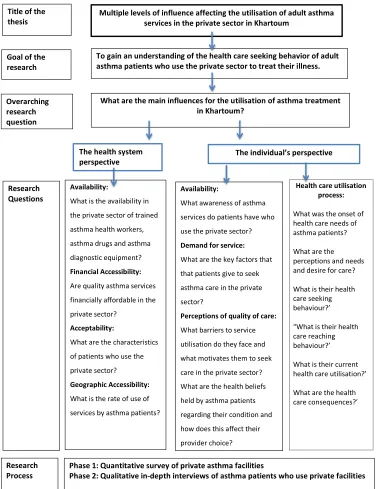
Key research question: what are the main influences for the utilisation of private sector asthma treatment in Khartoum?
The aim of this research is to gain an understanding of the health-care-seeking behaviour of adult asthma patients who use the private sector in Khartoum to treat their illness.
Research objectives
Objective 1: To examine the provision of asthma diagnostic and treatment services
available for adult patients in the private health sector, in Khartoum
Objective 2: To identify the factors that result in asthma patients choosing private health care providers for their treatment.
Objective 3: Explore how and why asthma patients make health care provider
Multiple levels of influence affecting the utilisation of adult asthma services in the private sector in Khartoum
16
1.4 Non-communicable diseases in low and middle-income countries
In 2011, the United Nations General Assembly held a high-level meeting of policy makers for the first time to address the prevention and control of Non
Communicable Diseases (NCDs), with a particular focus on the challenges faced by low and middle-income countries (LMIC)1 (Alleyne et al., 2010). It is estimated that 63% of all deaths worldwide are due to NCDs, and this is expected to rise. By 2030, NCDs are projected to cause nearly five times as many deaths as communicable diseases worldwide (Assembly, 2011).
There are four main categories of NCDs: cardiovascular disease, cancer, respiratory disease, and diabetes. These are all chronic, long-term conditions. It is estimated that 80% of all NCD deaths occur in low- and middle-income countries (WHO, 2013). However, focusing on death rates alone can mean that respiratory diseases such as asthma are neglected in terms of global funding and advocacy, there needs to be a
1For the current 2017 fiscal year, low-income economies are defined as those with a GNI per capita, calculated using the World Bank Atlas method, of $1,025 or less in 2015; lower
middle-income economies are those with a Gross national income (GNI) per capita between
$1,026 and $4,035; upper middle-income economies are those with a GNI per capita
between $4,036 and $12,475; high-income economies are those with a GNI per capita of
Multiple levels of influence affecting the utilisation of adult asthma services in the private sector in Khartoum
17
focus on quality of life and improving morbidity. The global push on shared behavioural interventions proposed to address NCDs, such as improved diets and exercise, will have little effect on controlling asthma (Pearce et al., 2013). Respiratory diseases, in particular asthma, were also found to have a strong inverse association with wealth and education which contrasts with other NCDs such as diabetes and heart disease (Hosseinpoor et al., 2012).
1.5 Asthma, its symptoms and prevalence
Asthma is a chronic, non-communicable respiratory disease of the lungs, in which inflammation leads to wheezing, breathlessness, and coughing. It can cause severe disability, and if left untreated, can result in death (Desalu et al., 2011). It can develop at any age, but symptoms usually start in childhood. The causes of asthma are not well understood; asthma attacks can be triggered by an allergic reaction, but this is not the case for all. Asthma often runs in families, but non-genetic factors such as air pollution and smoking also play a key causal role (IUATLD, 2011).
The prevalence of asthma has increased dramatically worldwide over the last 20 years and currently affects 300 million people (Ait-Khaled et al., 2007). It is estimated that 180,000 people die every year of asthma related complications, globally
Multiple levels of influence affecting the utilisation of adult asthma services in the private sector in Khartoum
18
from the disease (Azza et al., 2011). The reasons for this are not widely understood, but it is thought that pollution (especially indoor pollution) may be a factor.
Asthma is a disease found in both developed and low and middle-income countries (LMICs). However, prevalence, severity, and mortality due to asthma is rising much more rapidly in LMICs compared to high income countries (Bousquet et al., 2005). Correct diagnosis is a key challenge in asthma care. There are no blood or urine point-of-care tests that can accurately diagnose the disease. Diagnosis involves taking a detailed history, a physical examination, and lung function tests such as spirometry or the use of peak flow meters (Adeloye et al., 2013). However, in many LMICs clinics and hospitals, spirometers are not available as they are expensive and require specific training to use. Whilst effective medicines do exist (a combination of inhaled steroids and bronchodilators), these are often not prescribed or available. A study by the World Health Organisation found that the three drugs it recommended for asthma treatment were rarely available in LMICs and especially rarely available in the public sector. When they were available in these settings, the costs were
extremely high (Lessing et al., 2013).
1.6 Barriers to successful asthma management
Multiple levels of influence affecting the utilisation of adult asthma services in the private sector in Khartoum
19
1. Economic and generic barriers; the broader social factors of health that affect health care seeking for asthma, such as poverty, poor education, poor
sanitation, and poor infrastructure.
2. Cultural barriers; these have a larger impact in areas of multiple languages and religious beliefs (Enarson & Ait‐Khaled, 1999).
3. Environmental barriers including tobacco smoking, indoor and outdoor air pollution, and occupational exposure.
4. Asthma Drug and diagnostic device shortages, which is considered a major barrier particularly in LMICs (Sterckx, 2004).
5. Traditional medicine which is very commonly used in many countries and is often the first point of care for patients with asthma and can be used alone or in combination with modern medicine.
6. Differences in health care systems: there are large differences in the equity of access to health facilities in many countries and these are much more
pronounced in LMICs.
7. Gaps and relevance of guidelines for low and middle-income countries; often existing guidelines for asthma care do not take into account issues faced by LMICs such as a lack of available drugs, transport issues travelling to asthma facilities, specialised training for asthma care providers or affordability of the asthma services (Ait-Khaled et al., 2006).
Multiple levels of influence affecting the utilisation of adult asthma services in the private sector in Khartoum
20
These barriers to effective asthma care do exist throughout the world but are much more pronounced in LMICs (Pearce et al., 2013). Asthma used to be considered as a condition that predominately affected those in the western world (Beasley, 2011), however, this has changed and the majority of those living with the disease now are located in low and middle-income countries (Ait-Khaled et al., 2007)
1.7 Asthma in low and middle-income countries
Respiratory diseases now account for 17.4% of all deaths in sub-Saharan Africa (Bousquet et al., 2003). This figure is expected to rise due to increasing levels of urbanisation, outdoor and indoor air pollution, and tobacco smoking. In 1990, there were 74.4 million reported cases of asthma in Africa. This figure rose to 94.8 million cases in 2000 and 119.3 million in 2010 (Adeloye et al., 2013). However, due to low levels of accurate diagnosis, the true prevalence of the disease is expected to be much higher. It is estimated that the number of cases will continue to increase and reach 400 million by 2025 (IUATLD, 2011).
Multiple levels of influence affecting the utilisation of adult asthma services in the private sector in Khartoum
21
to smoking dry elephant dung (Teklu, 1989). In Sudan, the main traditional asthma treatment is the use of Nigella seeds (Koshak et al., 2017)
The majority of people living with asthma in LMICs have very limited access to essential prevention and treatment (Lessing et al., 2013). There is a high financial burden on the person living with the disease, on their families, and on the health-care system (Ait-Khaled et al., 2007). Inadequate treatment coupled with high financial healthcare costs often results in high levels of disability, absenteeism, and increased risk of poverty. If the disease is left untreated, it can become much more severe and result in hospitalisation, or in some cases death. Severe adverse
outcomes of asthma, such as death and hospitalisation, disproportionately affect the poor compared to higher socioeconomic groups (Ait-Khaled et al., 2000). The total cost of asthma treatment and care is estimated to be at least USD $20 billion annually in LMICs(Ait-Khaled et al., 2007). Due to the fact that many cases do not receive adequate diagnosis and treatment, the condition worsens and costs escalate as people visit hospital emergency rooms for urgent treatment (Ait-Khaled et al., 2007).
Multiple levels of influence affecting the utilisation of adult asthma services in the private sector in Khartoum
22
notification and recording systems, and the issues of implementing long term care in a poorly functioning health care system (Aït-Khaled et al., 2001). A recent study of asthma care in the public sector in Nigeria found that most of the hospitals surveyed lacked basic infrastructure for asthma care, and only one third had diagnostics tests such as peak flow meters or spirometers (Desalu et al., 2011). In addition to weak health care system support for asthma patients, it has been shown that there are sociocultural misconceptions attached to the disease and to the use of inhaled steroids, and that these have a significant effect on adherence to treatment (Adeloye et al., 2013). One study in Yemen found that patients preferred tablets or injectables to inhalers (Schultz, 2002), although the study did not explore the reasons for this.
1.8 Asthma as a leading cause of hospital emergency room visits
Multiple levels of influence affecting the utilisation of adult asthma services in the private sector in Khartoum
23
asthma, and many depend on the emergency room for asthma management (Hamdan et al., 2012). Avoiding crisis care of acute asthma by long-term
management and reducing the use of emergency rooms for acute asthma treatment are major goals of asthma management, as detailed in the Global Strategy for Asthma Management and Prevention (Beasley, 2011).
1.9 Asthma in Sudan – a growing problem
Asthma is a major health concern in Sudan and there is an estimated overall prevalence of 8.7% of the population (global prevalence is 4.3%) (WHO, 2007). Asthma is ranked as the third most common cause of hospitalisation in the country, following pneumonia and malaria (excluding maternity and deliveries) (El Sony et al., 2013). There was a striking rise in the number of emergency room visits by
Multiple levels of influence affecting the utilisation of adult asthma services in the private sector in Khartoum
24
health spending (EMRO, 2006). Research on asthma management in Sudan, conducted in 2003, found that 95% of patients paid the full cost of their asthma medicines; less than 2% of them received regular treatment from a single facility, and the patients had no knowledge of their asthma management plan (IUATLD, 2011). In a country where the daily wage of the lowest paid, unskilled government worker is USD$2 .20 per day, the cost of one day of hospitalisation for asthma is USD$79.60 and patients are also responsible for the cost of medicines, and other additional costs (IUATLD, 2011). These high costs of health care and medication often result in asthma patients self-managing their condition and only seeking care when they are extremely ill.
A situational analysis of asthma patients using public health facilities in Khartoum and Gezira (Aït-Khaled et al., 2007) found that cough, wheezing, and breathlessness were the most common reported symptoms: however, the severity of the symptoms or severity of the disease were rarely noted. Peak flow meters were not available and airflow
impairment was not assessed. Inhaled corticosteroids are essential for decreasing severe asthma attacks and for managing the disease long term (Ait-Khaled et al., 2006).
Multiple levels of influence affecting the utilisation of adult asthma services in the private sector in Khartoum
25
A recent study of asthmatic patients at public hospitals in Khartoum, found that many have a low level of knowledge of their disease, are reluctant to accept the diagnosis, and prefer to consider the disease as an allergy (Merghani et al., 2012). 46% of patients interviewed did not use preventers regularly when prescribed, and most used inhalers only for the treatment of asthmatic attacks as and when they occurred (Merghani et al., 2012). A study in Khartoum in 2014, found that a quarter of asthmatics studied were not on inhaler therapy at all, and more than one third were not on steroid inhalers (Imad & Yasir, 2015). The researchers also observed very poor inhaler techniques in the study group. This was consistent with a study at the main respiratory hospital in Khartoum, where 82% of patients were found to have poor inhaler technique (Abdelhamid et al., 2008). This emphasises the importance of patient education and physician training.
1.91 A pluralistic health care system in Sudan
Multiple levels of influence affecting the utilisation of adult asthma services in the private sector in Khartoum
26
Partly as a result of low confidence in the public health sector in Sudan, a pluralistic health system has grown and health care is provided by both the public and private sector (Pantuliano et al., 2011). The government levels of funding for the public health sector is low at 6% of the GDP, well below the 9% recommended by the World Health Organisation (WHO), and there is high out-of-pocket expenditure by
individuals, estimated to be above 60% of monthly salary (WHO, 2011). There are policies to exempt user fees for vulnerable groups but in practice these exemptions are not often applied (Ebrahim et al., 2017). Primary health care services have struggled to keep up with the increasing population of the country. Up to the 1990s, public health services were provided for free but now operate on a fee for service basis and is one suggested reason for the large growth in private clinics and hospitals (Awad et al., 2006). The private sector includes ‘not for profit’ and ‘market based/for
profit’, and has expanded rapidly in the last 10 years (Eltilib et al., 2010). The
Government has strongly encouraged the private sector to provide services in urban areas, and there has been a rapid increase in private health facilities which are located throughout the cities in Sudan, but predominately in the Khartoum urban area (Pantuliano et al., 2011).
Multiple levels of influence affecting the utilisation of adult asthma services in the private sector in Khartoum
27
1.92 Outline of the thesis
Chapter One has outlined the research starting point and provided a brief introduction to the issues surrounding non-communicable diseases in low and middle-income countries and how those issues relate to asthma in particular. It has sought to highlight the key barriers to asthma care and how these issues are
exacerbated in LMICs. It has given an overview of the health care system in Sudan with a focus on Khartoum and how the low provision of asthma services in the public sector has led to a surge in the use of the private sector.
Chapter Two briefly outlines the methodology for the literature review, theories regarding individuals’ health seeking pathways (if and when to seek care) and theories regarding the health system of health care utilisation (where to seek care within complex health care systems) and the Socio-Cultural factors affecting
decision-making. The chapter then focuses on pluralistic health care systems in more detail and the changing ways that health services are accessed in LMICs. Finally, the chapter links the multiple levels of influence (health policy, health system,
community, family and individual) that affect health care decision-making for asthma care.
Multiple levels of influence affecting the utilisation of adult asthma services in the private sector in Khartoum
28
project with a description of the quantitative and qualitative methods that were used.
Chapter four presents the findings of the quantitative and qualitative research. It is structured according to the Analytical Framework (page 77) and the key models of access to health services, the pathway to care and the Social Ecological model of the multiple levels that influence health care behaviour (Levesque et al., 2013; Peters et al., 2008; Shahabuddin et al., 2017). It opens with the results of the quantitative health facility survey, then the qualitative research with asthma patients is presented, starting with a focus on the access to services from the patients’ perspective leading to the discussions surrounding the process and pathway to health care.
Chapter 5 aims to provide a discussion of the different interpretations of the findings of the study using a Social Ecological approach and the implications for asthma care and the provision of asthma services. It aims to provide an understanding of how asthma patients engage with different health systems, what the actual or perceived barriers are to accessing asthma care, and how the different levels of health care influence asthma patient behaviour.
Multiple levels of influence affecting the utilisation of adult asthma services in the private sector in Khartoum
29
Chapter 2: Literature review 2.1 Chapter summary
This chapter will consider the three main areas of literature that inform our understanding of the choices that are made in health care seeking (symptoms, perceived threat of disease and perceived effectiveness of care) and health care utilisation (health system factors, individual factors and sociocultural factors). There is little literature regarding health care seeking by asthma patients, so I have
included broader literature on the different levels of influence affecting health care seeking. This chapter will provide a review of the literature on the range of factors affecting the choice of provider by identifying the key theories on health-care utilisation (theories taking a health systems perspective) and health-seeking behaviour (theories taking an individual perspective). It then focuses on the literature which applies these models to the type of health provider and complex health care system that occur in low and middle-income countries. It moves on to consider the disease specific literature regarding access to health care and choice of provider for asthma care in low and middle-income countries. The literature search strategy is set out below and focuses primarily on asthma care provision in adults in low and middle-income countries, including relevant research articles on asthma in Sudan.
2.2 An overview of the theoretical approach
Multiple levels of influence affecting the utilisation of adult asthma services in the private sector in Khartoum
30
Multiple levels of influence affecting the utilisation of adult asthma services in the private sector in Khartoum
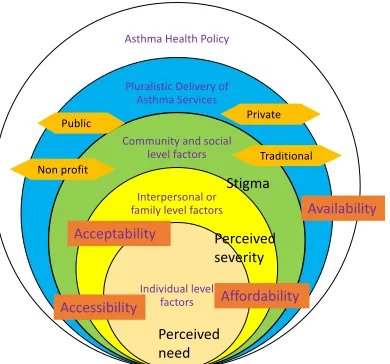
[image:31.595.245.522.117.330.2]31 Figure 1: A Social Ecological approach: Multiple levels of influence in health care
behaviour (Shahabuddin et al., 2017)
Table 1: A Description of Social Ecological Model (SEM) Levels (UNICEF, 2014)
SEM Level Description
Individual • Characteristics of an individual that influence behaviour change, including knowledge, attitudes, behaviour, self-efficacy, developmental history, gender, age, religious identity, racial/ethnic/caste identity, sexual orientation, socio-economic status, financial resources, values, goals, expectations, literacy, stigma, and others.
Interpersonal • Formal (and informal) social networks and social support systems that can influence individual behaviours, including family, friends, peers, co-workers, religious networks, customs or traditions.
Community • Relationships among organizations, institutions, and informational
networks within defined boundaries, including the built environment (e.g., parks), village associations, community leaders, businesses, and
transportation.
Health Policy
Organisational and Health systems
Community and social level factors
Interpersonal or family level
factors
[image:31.595.109.551.437.724.2]Multiple levels of influence affecting the utilisation of adult asthma services in the private sector in Khartoum
32
Organizational . Organizations or social institutions with rules and regulations for
operations that affect how, or how well, for example, health services are provided to an individual or group; schools that include health in the curriculum.
Policy/Enabling Environment
. Local, state, national and global laws and policies, including policies regarding the allocation of resources for health and access to healthcare services, restrictive policies (e.g., high fees or taxes for health services), or lack of policies that require childhood immunizations.
2. 3 Literature review search strategy
The primary search engines used as starting points for the review were PubMed and Google Scholar which are two of the most commonly used search engines for Global Public health. I also searched the following websites for relevant non peer-reviewed literature such as policy documents, meeting reports, working papers and
[image:32.595.107.524.530.706.2]conference findings: World Health Organisation, DFID, GINA, IUATLD, the World Bank, Save the Children, Global Asthma Network, and Sudan Ministry of Health. The search terms used are in table 2 below:
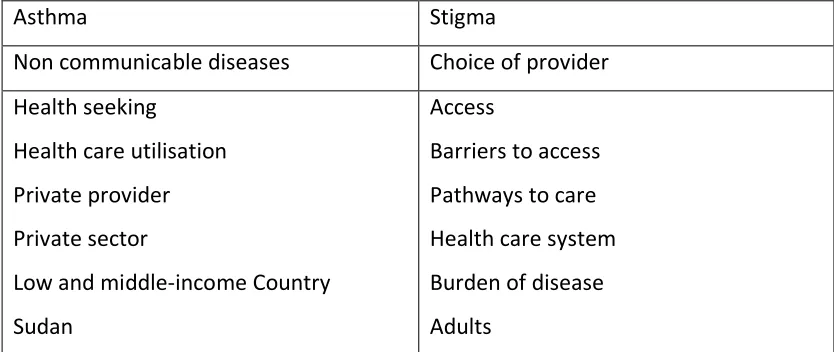
Table 2: Search terms
Asthma Stigma
Non communicable diseases Choice of provider Health seeking
Health care utilisation Private provider Private sector
Low and middle-income Country Sudan
Access
Multiple levels of influence affecting the utilisation of adult asthma services in the private sector in Khartoum
33
The terms in the first column were always used in combination with one or more terms from the second. Only English-language articles were reviewed. The time period selected was 1995 to 2017. A search of both databases for articles that included the words ‘asthma’ and ‘Developing countries’ revealed that more than 85% of articles on this central theme had been written since 1995. Hence this date was selected as the cut-off date for the literature search.
The methodology used to search and select the peer reviewed journal articles is summarised in Table 3. The abstracts of all selected articles were reviewed, and those that addressed only the medical aspects of asthma without reviewing the disease in the context of the health care system, were excluded for the purpose of this thesis. Figure 2 details the number of papers identified, screened and reviewed. Articles reviewing drug-dosage and diagnostic technical innovations in the developed world or that focused fully on asthma in children were also excluded as they were not directly relevant to the research question.
Multiple levels of influence affecting the utilisation of adult asthma services in the private sector in Khartoum
34
[image:34.595.113.520.188.713.2]describes the main search engines used and the inclusion and exclusion criteria for selecting which studies to include in the literature review. The focus of the review was factors affecting the choice of provider.
Table 3: Literature search strategy
Search Terms: Key word Key
word(s) Number of papers found Additional key words (added when search number was over 100) Number of papers found
Number of papers retrieved after applying
inclusion/exclusion criteria
Asthma AND Developing countr*
573 AND
adults
216 28
Asthma AND Stigma 66 2
Asthma AND Health
seeking 251 AND adults 135 11
Asthma AND Health care utilisation
143 AND
adults 79 4
Asthma AND Private
providers 53 5
Asthma AND Sudan 30 13
Asthma AND Choice of
provider 11 1
Asthma AND Access 1295 AND
developing countr*
27 1
Asthma AND Barriers to
access 150 AND adults 68 1
Asthma AND Pathway
to care 319 AND adults 71 7
Asthma AND Burden of disease
1528 AND
developing countr*
55 8
Data Bases searched:
Multiple levels of influence affecting the utilisation of adult asthma services in the private sector in Khartoum
35
Part of Journals searched:
Keywords in abstract and title
Years of Search:
1995 – date
Language:
English
Types of studies included:
All types of studies: mixed methods, qualitative, quantitative and policy briefs
Inclusion Criteria
• Study target audience characteristics related to patient-centered approaches to asthma health care seeking and treatment
• Describe elements of health seeking, health care utilisation in particular in low and middle-income countries
• Describe interventions for patient and family engagement in asthma care seeking
• Use qualitative or quantitative research methods, including meta-analyses and literature reviews.
• Describe theories related to asthma and health care system factors in low and middle-income countries
• Are opinion or editorial pieces only if directly related to asthma access in low and middle-income countries
• Articles published since 1995
Exclusion criteria:
• Focus on only clinical aspects of asthma
•Focus on only asthma care in developed countries without addressing health seeking behaviour
•Focus on only children’s asthma care
•Focus on only specific new asthma drug/ diagnostic technology •Non-English
Multiple levels of influence affecting the utilisation of adult asthma services in the private sector in Khartoum
[image:36.595.144.507.164.493.2]36 Figure 2: A Flow diagram detailing the literature search process
The majority of the articles identified through the literature review were policy analysis and theoretical discussions regarding access to services. Where the article did present an intervention that was evaluated, I applied the GRADE principles of
PRISM A Flow Diagram
Records identified through database searching
(n = 4,419)
Sc re en in g In cl ud ed El ig ib ili ty Id en ti fic at io n
Records after duplicates removed (n =3,063 )
Abstracts screened (n =651)
Full-text articles assessed for eligibility
(n = 94 )
Full-text articles excluded, with reasons
(n = 557)
• Developed countries
• Focused only clinical aspects of asthma
• Protocol description
Articles included in final review (n = 94)
Records excluded after title screening (n =2,412)
• Did not meet date period (1995 – 2017)
• Not in English
• Focused on drug dosage or diagnostic technology
• Focused on children Additional records identified
through reference list screening (n = 15 )
Multiple levels of influence affecting the utilisation of adult asthma services in the private sector in Khartoum
37
quality (Badger et al., 2000). The GRADE approach (Grading of Recommendations, Assessment, Development and Evaluation) is a system for rating the quality of
evidence adopted by WHO and many other organisations. It ranks the evidence from high quality (usually randomised controlled trials) to low quality (some observation studies) (Guyatt et al., 2011). I took an inclusive approach so that even those articles that scored lower quality were still useful for the discussions that they presented. This inclusive approach meant that I did not exclude any journal articles based only on quality but applied the inclusion criteria outlined in table 3. I took a thematic analysis approach to the literature review due to the fact that the literature on this topic is so limited. It was hoped that reviewing different styles of interventions could highlight potential areas for future research and possible experimental solutions for the issues found. Table 4 below sets out the number and types of articles and studies found during the literature search process.
Multiple levels of influence affecting the utilisation of adult asthma services in the private sector in Khartoum
[image:38.595.108.529.100.296.2]38
Table 4: literature search findings
Thematic Area Empirical
Policy Brief/ Commentary
Review TOTAL
Asthma 12 14 5 31
Access 5 5 15 25
Private 6 16 7 29
Respiratory
disease 1 3 1 5
Non
Communicable
Diseases 0 3 1 4
TOTAL 24 41 29 94
The articles were reviewed under the headings: summary/synthesis, comparison /critique as set out in Table 5.
Table 5: literature review criteria
Summary and Synthesis Comparison and Critique 2
▪ What is known about the immediate areas of this research field?
▪ What are the key arguments, key characters, key concepts, key figures? ▪ What are the existing
debates/theories within this study? ▪ What kind of methodologies were used?
▪ How does the study relate to others? What is new, different, or
controversial about this study? What views need to be further tested? ▪ Is the evidence comprehensive or
limited, inconclusive, contradicting? ▪ Did the research designs or methods
seem satisfactory/unsatisfactory?
2 Table adapted from:
[image:38.595.110.524.380.605.2]Multiple levels of influence affecting the utilisation of adult asthma services in the private sector in Khartoum
39
Using a thematic analysis method, the literature that met the inclusion selection criteria (table 3) were organised based on key themes (Badger et al., 2000; Carolina, 2017; Philbrook, 2017). The organisation of the papers was done firstly by title and key word search, then the abstract was reviewed for relevance to the thesis topic and then the whole paper reviewed. I divided the papers into groups of similar themes (access, asthma care, private sector use, respiratory diseases and non communicable diseases in developing countries) and into types of paper (empirical, policy brief and review) as detailed in table 4. Summary notes were written on each paper in each category and then compared and contrasted. The reference lists of each paper were also reviewed for other potential relevant papers that could be helpful in the review.
Summary of literature search findings:
The key empirical papers on asthma that were included in the review focused primarily on patient pathways in hospitals and looked at potential ways of altering this pathway away from a reliance of hospital emergency room care by
strengthening human resources such as training pharmacists or strengthening outpatient clinics to provide education on inhaler use and better prescribing
Bosnic-Multiple levels of influence affecting the utilisation of adult asthma services in the private sector in Khartoum
40
Anticevich et al., 2014; Osman et al., 2012). The key papers on access focused on health seeking behaviour with women identified as having lower knowledge levels of disease (Kamel et al., 2003) and high levels of self-medication, both herbs and over the counter pharmaceuticals in urban Khartoum for both men and women (Awad et al., 2005; Awad et al., 2006). Service quality (communication, responsiveness of health staff) was found to positively influence patient satisfaction and influence where a patient would seek care (Andaleeb, 2001; Lule & Allwright, 2003). With regards to the private health sector use, the main papers focused on comparing the costs involved in seeking private or public health care and patients’ perceptions of differing quality between the sectors and found that costs were similar for public and private sector use and no significant differences between socio economic groups accessing the different sectors (George et al., 1997; Ha et al., 2002). The empirical study on respiratory disease highlighted that smartphones were a reliable method of recording prevalence data when compared with standard paper surveys and this study was used to assist the design of the quantitative data collection component of my study (Ahmed et al., 2018).
Multiple levels of influence affecting the utilisation of adult asthma services in the private sector in Khartoum
41
to apply the models and a pluralistic health approach to asthma service provision and asthma care seeking.
The literature review findings were divided into three main areas:
1. The key theories of health care seeking and health care utilisation: grouped according to the Social Ecological approach layers of influence: pluralistic health care, health systems perspective, community/cultural perspective including stigma, beliefs, gender issues and individual perspective (section 2.4).
2. Research regarding private health care use (section 2.5).
3. Research applying theories and models of asthma care seeking and asthma service utilisation for patients in low and middle-income countries (section 2.6).
2.4 The key theories of health care seeking and health care utilisation 2.4.1 Understanding health care use within pluralistic health care systems
Health care in almost all countries is provided within a pluralistic health care system and, consequently, patients face a large number of choices when seeking care (Horton & Clark, 2016). In order to understand why people choose one health
Multiple levels of influence affecting the utilisation of adult asthma services in the private sector in Khartoum
42
understanding the barriers to access. A broad definition of health-seeking behaviour is: ‘when and where individuals seek help for an illness’ (Lule & Allwright, 2003). Health-seeking behaviour studies focus on an individual’s perceptions of illness and health beliefs. Health care utilisation studies focus on the endpoint - the theoretical utilisation of the formal or informal health care system while the health seeking behaviour studies focus on the theoretical process of an individual seeking care.
2.4.2 The health system perspective:
The choice of health care provider is a complex one, and it is driven by both supply-side and demand-supply-side barriers. Demand-supply-side barriers are factors that influence the ability to use services; supply-side barriers are factors that hinder service uptake (Jacobs et al., 2012). Supply-side barriers include poor quality of staff skills, low availability of supplies (drugs and equipment), inadequate treatment protocols, and poor health facility buildings and infrastructure (Ensor & Cooper, 2004). These tend to be the focus of most of the health policy interventions, and where the majority of funding is focused but usually exclude the social and individual health seeking factors such as stigma and traditional beliefs that also affect provider choice.
Multiple levels of influence affecting the utilisation of adult asthma services in the private sector in Khartoum
43
demographics, social structures and health beliefs) are interrelated with enabling factors (such as income, insurance, and availability of services).
The literature regarding predisposing variables or factors and enabling factors including barriers to accessing health services and the models that demonstrate this theory for the most part focus on health care system factors (Levesque et al., 2013). The main approach covered by health care utilisation models is the identification of supply and demand factors. However, it is proposed that these factors should be viewed as interlinked with each other. It is suggested in the literature that ignoring socio - cultural factors or socio-demographic approaches can lead community interventions to fail (MacKian, 2003).
Access to health care services is a complex concept that involves an adequate supply of services and the ability of a population to utilise these services (Gulliford et al., 2002). Utilisation is often used as a proxy of access; realised access being more measurable than potential access (Levesque et al., 2013). Access in terms of
utilisation depends on a number of variables including affordability, accessibility, and acceptability of services (Peters et al., 2008).
Multiple levels of influence affecting the utilisation of adult asthma services in the private sector in Khartoum
44
also important to include distance and economic factors as key decision-making components in determining which health provider to access (Good, 1987). Four main dimensions of access to health care are identified as follows:
1. Geographic accessibility - physical distances or travel time to health facility or to pharmacies (Hjortsberg & Mwikisa, 2002).
2. Availability – the right services available for those who need them,
appropriate opening hours, appropriate health workers and supplies needed and acceptable waiting times (Hanson (2003).
3. Financial accessibility – the relationship between price of services and the willingness and ability of users to pay for the services. This is also known as affordability and includes direct, indirect and opportunity costs (James et al., 2006).
4. Acceptability – the services and health providers meet the social and cultural needs to users and communities. This includes gender barriers to access, health workers’ behaviour, excessive bureaucracy and culturally sensitive communication (Andaleeb, 2001).
These four As of access - availability, accessibility, affordability, acceptability are illustrated in more detail in Figure 3 (Peters et al., 2008). In this model, quality of care is at the centre of all four dimensions of access, as it is viewed as an important component of each dimension. The dimensions outside the circle are the
Multiple levels of influence affecting the utilisation of adult asthma services in the private sector in Khartoum
45
but their effects can be reduced or alleviated (Bates, Fenton, Gruber, Lalloo, Medina Lara, et al., 2004).
Health care utilisation studies have often used patient surveys to investigate
community characteristics in helping understand barriers to access (Guthmann et al., 2008; Sharma & Vong-Ek, 2009; Uthman, 2009). One study in South America used the Argentinean National Risk Factor Survey data to explore the interrelation of components in the Andersen Model (Jahangir et al., 2012).This model suggests that seeking health care is based on predisposing characteristics of the individual,
enabling resources and need (Tomison, 2013). Jahangir et al found that the Health Care Utilisation theory holds true in that context, with increasing age and a
perception of having poor health affecting acceptability are the largest impacts on utilisation. A study in Ecuador applied the Andersen model to the 2004 National Demographic and Maternal Health Survey (López-Cevallos & Chi, 2009). It also found that perceived need was a significant factor in health-care utilisation, as was
Multiple levels of influence affecting the utilisation of adult asthma services in the private sector in Khartoum
[image:46.595.179.472.122.339.2]46 Figure 3: Model for assessing access to health services (Peters et al., 2008)
Many of these models were constructed with developed country contexts in mind and thus they often do not adequately account for situations in which there is a plurality in health care options. Given the plurality in healthcare systems in LMIC many of the models outlined above fail to adequately describe or predict health care utilisation in these contexts.
2.4.3 The cultural and community perspective
Multiple levels of influence affecting the utilisation of adult asthma services in the private sector in Khartoum
47
Multiple levels of influence affecting the utilisation of adult asthma services in the private sector in Khartoum
48
diagnostics equipment or trained personnel). This type of disconnect can lead to a surge in mistrust between communities and health professionals (LaMorte, 2016).
2.4.4 Stigma and Gender-related barriers to access
Certain infectious diseases such as tuberculosis (TB) and HIV are known to be associated with high levels of stigma. This stigma can lead to a fear of social exclusion, loss of employment and income, and poor marriage prospects (STOPTB, 2005). This fear can lead to denial of the condition, and subsequently a delay in seeking health care. Stigma and negative staff attitudes have a more deleterious effect on women and can impact on if, when and where they seek care (Bates, Fenton, Gruber, Lalloo, Lara, et al., 2004). Women tend to worry about social rejection (from husbands, in laws and community in general) more than men and in many countries, have to overcome more barriers to accessing care (such as having less use of household resources, less decision making power and care providing responsibilities are viewed as a priority (STOPTB, 2005). In poor countries, women often access health services less than men (Uplekar et al., 2001). Gender differences have been shown to be more pronounced in the Arab region than in other areas (Kronfol, 2012). It was found that in the region, women face more barriers in
Multiple levels of influence affecting the utilisation of adult asthma services in the private sector in Khartoum
49
the social stigma of the condition (Kamel et al., 2003). One study in India, found that women of marriageable age (15 to 24 years) are far more likely to avoid the public health sector and access private care (George et al., 1997). The main factors
highlighted for this preference for private care were proximity, convenient timings, cordiality and confidentiality. It was also suggested that public facilities were highly associated with family planning services and therefore there was stigma to access services there (Uplekar et al., 2001). There are gender differences affecting the choice of provider from both the provider and patient side: provider bias; treating and diagnosing women differently to men and patient bias; women delaying seeking treatment, more likely to self-medicate and the non-acceptance of a long term diagnosis (Borgdorff et al., 2000).
2.4.5 Perceptions and beliefs
Some groups, particularly in populations which tend to have low socioeconomic status, have strongly held cultural and traditional beliefs about health which causes patients to seek traditional or spiritual healing before seeking modern medicine (STOPTB, 2005). This can lead to a delay in diagnosis and can result in increased costs (financial, time, and opportunity). Patients may also find that these informal
Multiple levels of influence affecting the utilisation of adult asthma services in the private sector in Khartoum
50
first point of health care seeking, traditional medicine is often used in parallel with modern medicine by patients with long-term conditions.
Traditional beliefs on how certain illnesses are detected or treated can affect the type of care sought. In Tanzania, there is a strongly held belief that moths and hot sun cause the symptoms of fever and convulsions, symptoms that are known to correspond with malaria. As the individuals do not view their symptoms to be malaria, they seek out traditional treatments such as elephant dung and herbal concoctions, despite often knowing that malaria is best treated at hospital (MacKian, 2003). The type of health care provider that is sought, whether traditional, public or private, differs according to the type of disease. For example, mothers are more likely to seek modern public health care help for diarrhoeal disease than respiratory infections for their children despite both being leading causes of death in young children (Iwelunmor et al., 2010). Fever in malaria is often poorly recognised by mothers as it usually occurs with other symptoms and so may be thought to be worms or another illness and so seek treatment from pharmacies or local healers (Lubanga et al., 1997).
Multiple levels of influence affecting the utilisation of adult asthma services in the private sector in Khartoum
51
A Socio-Cultural approach could view any changes in health service use as arising purely from changes in society and not from changes in the availability of new services. In the case of asthma care in Sudan, there is likely to be little success in patient education if demand is increased but not matched by an increase in available services. It is proposed that a combination of physical, social, economic, cultural, and political factors all interact to play a part in health seeking behaviour (Bates, Fenton, Gruber, Lalloo, Medina Lara, et al., 2004).
2.4.6 The individual’s perspective:
“To begin to picture the resources and constraints which impinge on treatment, the
way the actor experiences them, is to take a crucial step towards understanding why
and how people do what they do”(Wallman & Baker, 1996) (page 678)
Over the last few decades, there has been much discussion on individual health seeking theories. The Health Belief Model (Annex E) was developed to help
Multiple levels of influence affecting the utilisation of adult asthma services in the private sector in Khartoum
52
actual behaviour or behaviour change. They assume a direct link between intention and behaviour which is not always the case (Schwarzer, 2008). RAA intention theories focus on the initial motivation phase but there is a need, especially where service provision is weak, to understand health seeking behaviour where intentions are translated into action and why some barriers are more significant than others (Schwarzer, 2014).
Multiple levels of influence affecting the utilisation of adult asthma services in the private sector in Khartoum
[image:53.595.180.490.119.283.2]53 Figure 4: Pathway to care (Levesque et al., 2013)
The socio-psychological perspective considers decision-making at different stages of seeking care but it is limited when it comes to proposing strategies for change (Mackian et al., 2004). Health care seeking theories, such as the social behaviour model and the theory of reasoned action (TRA), focus on the motivational aspects of disease control and the influence of social networks on an individual’s behaviour (Hausmann-Muela, Ribera, & Nyamong, 2003). The theories show how demographic and social factors affect attitudes, and perceived risks and benefits of seeking care, which may lead an individual to action. However, these studies do not take into account structural factors which prevent utilisation of care such as limited access, availability of resources, or enhancement of stigma by health professionals.
Multiple levels of influence affecting the utilisation of adult asthma services in the private sector in Khartoum
54
education which is often a top down strategy implying that knowledge is the key barrier to seeking care.
2.4.7 Combining the health system, community/cultural and individual perspectives
Social Ecological theory on health describe the interaction between individuals, society, public policy and the health system. This model places the individual within the larger social system and describes the interaction and influence of the multiple levels and how these can affect health outcomes (Golden & Earp, 2012). Health behaviour and health outcomes operate within complex systems that have multiple levels of influence (Gillen et al., 2014). The social and physical environment, political will and an individual’s beliefs can all interact to influence behaviour. Reviewing the literature from an array of theoretical perspectives that span different Social
Ecological levels of influence can provide a broad insight into health behaviour.
2.5 Research regarding private health care use 2.5.1 Pluralistic Health Care Systems
The position of the private sector in health care needs to be understood in the context of pluralistic health care systems as both private and public sectors interact (Mackintosh et al., 2016). Factors that influence how people interact with the health care system can be categorised as: System factors (structure, regulation and
Multiple levels of influence affecting the utilisation of adult asthma services in the private sector in Khartoum
55
characteristics (objectives, competence, size) and Performance (quality, equity and efficiency) (Morgan & Ensor, 2016). Private sector use is influenced by the
availability and style of private sector providers, the accessibility of public provision and the reliance on out of pocket payments (Mackintosh et al., 2016).
2.5.2 The increasing role of the private sector in low and middle-income countries As highlighted above, the private and public sector are intrinsically linked and the private sector varies greatly in style and quality. For the last 50 years, most
Multiple levels of influence affecting the utilisation of adult asthma services in the private sector in Khartoum
56
2.5.3 Understanding Private Health Service Provision
Private providers range from traditional healers and market drug-sellers, to highly qualified, specialist hospital consultants (Horton & Clark, 2016). In some literature, private providers are all those who work outside the public health care system, including non-profit-making community- and faith-based Non-Government Organisations (NGOs) (Malmborg et al., 2011). When developing the literature search criteria, an initial search showed that there are very few articles regarding the private health sector in Sudan and so it was decided to broaden the literature search to examine literature on the private health sector in low and middle-income
countries more generally to understand the role that private providers play in health care provision.
The private health sector in sub-Saharan Africa is large and varied. It is estimated that of the $16.7 billion spent on health expenditure in sub-Saharan Africa, 60% of it was funded by individuals (rather than by insurance schemes), and half of this expenditure went to private providers (Ghatak et al., 2008). The main services offered privately are curative and pharmaceutical. One study of private providers in Kampala, Uganda, found that the quality of providers is varied, some facilities met the Ugandan Ministry of Health standards, but many of the clinics and facilities assessed were found to be poorly equipped and have poor hygiene standards (Lule & Allwright, 2003). There is also concern that some of the services offered in the