A panel of the EASST2014 Conference
Organised by Sarah R Davies and
Maja Horst
Volume edited by Erik Stengler
Studying Science Communication
A panel of the EASST2014 Conference (September 17-19th, 2014, Torun, Poland) Organised by Sarah R Davies and Maja Horst Edited by Erik Stengler - July 2015
ISBN:
10 digit: 186043522X 13 digit: 9781860435225
Contents
Sarah R Davies and Maja Horst
Foreword………..5
Sarah R Davies
Deficit, deliberation and delight: STS and Science Communication………..……7
Nina Amelung
Same, same – but different: Public engagement devices enacted by science communication providers……….12
Miira Hill
Embodiment of science in science slams. A case of informal public science communication ……….……18
Göde Both
Youtubization of research. Enacting the high tech cowboy through video demonstrations……….………24
Dorothea Born
Communicating science, transforming knowledge: Insights into the knowledge communication practices of the popular science magazine GEO……….28
Maja Horst
Communicating science – Shaping identities………..34
Hauke Riesch
Science, comedy, distinction, activism and science communication………...41
Erik Stengler
Science communication in science centres and museums: Return to their core business……….45
Per Hetland
The communication of scientific knowledge: Between popularization and policy………...48
Kasper Ostrowski
Foreword
We knew, as we thought about proposing a panel for the EASST conference 2014, that we wanted to showcase STS research that looked at science communication. But how to frame this? The final panel abstract, for an open panel titled Studying Science Communication, read as follows:
The last decades have, in a number of European countries, seen an increase in science communication and public engagement activities. In many places a well-defined ‘deficit to dialogue’ narrative tells of the move from ‘public understanding of science’ (PUS) models of communication (dominant in the 1980s and ‘90s) to more dialogic approaches, based on two-way communication between science and its publics.
STS scholarship has been instrumental in these developments. Theoretical and analytical attention, as well as experiments with practice, have, however, tended to focus on policy-oriented or governmentally-sponsored engagement, and especially on overt efforts to ‘democratise’ science. This panel focuses on the often overlooked area of (what we might call) ‘straight’ science communication – that which does not claim to formally influence policy or scientific research, and which may at first glance feature one-way communication. This includes, for instance, science in museums, science fairs and festivals, popular science media, science blogging, sci-art activities, and university and lab open days. We invite critical STS analysis and discussion of these activities. This might include, for example, reflections on the role science communication may play in the democratisation of science, analyses of the constitution of publics and knowledges within particular science communication activities, or accounts of experimental practice. The panel will thus use the methodologies of critical STS to reflect upon the problems, potential and practice of contemporary science communication.
The notion of ‘straight’ science communication is perhaps a confusing one (is there such a thing as a queer, or a twisty, science communication?). Used as a shorthand for focusing attention beyond dialogic forms of public engagement, though, it worked well: the submissions to our panel, many of which are represented in this short volume of proceedings, explored a spread of communication forms from newspaper science to deliberative meetings. Once at the EASST meeting itself, we were thrilled with the quality and breadth of the presentations within the panel, and with our introduction not only to relevant research, but also to many new colleagues. As such we’re even more pleased that this volume can act as a more lasting record of our discussions – and, hopefully, as a trigger for more conversations around this topic.
Sarah R Davies & Maja Horst
Deficit, deliberation and delight: STS and science
Communication
Sarah R Davies Department of Media, Cognition and Communication University of Copenhagen Denmark
Introduction
This short conference paper discusses the relation between STS research and science communication, which is here understood as public communication of scientific knowledge or research, by scientists or others, through processes which do not seek to directly inform policy (Davies et al 2009). Examples include science in museums, science fairs and festivals, popular science media, science blogging, sci-art activities, and university and lab open days. As such this paper sets out some of the thinking behind the convening of this panel.
STS and science communication: Some history
Science communication is relatively understudied in the STS literature. In looking at science in public, scholarship has predominantly focused on ’policy-informing’ forms of engagement and dialogue (Davies et al 2009), which have been extensively argued for (e.g. Jasanoff 2003; Marris et al 2001), conceptualised (e.g. Collins and Evans 2002), and empirically analysed (e.g. Irwin 2001; Kerr et al 2007). In these discussions, ’public engagement’ has tended to mean deliberative public participation in science policy, rather than the informal education or leisure activities that characterise science communication.
It has, then, been hard to shake off the association of science communication with the deficit model and the desire to assure science of public support. Indeed, organisers often do subscribe to deficit models of their publics (Casini and Neresini 2013), and do cite motivations such as inspiring young people to work in science or correcting misunderstandings (Davies 2013; Wilkinson et al 2011). However, we might ask whether this is all that is going on within science communication events and practices. Even if such models are being mobilised, are they also being resisted, subverted, or transformed? And does their use allow us to write off science communication completely – or might this area of practice provide some resources for STS thinking? I want to suggest that science communication – even ’deficit model’ forms which straightforwardly seek to educate publics – does has the potential to overflow and exceed the aims and structures of PUS, and that it is therefore important to explore how it is understood and experienced by those who participate in it. My first point is therefore to propose the study of science communication as a new research agenda in STS.
Second, I also want to argue that science communication may offer STS new resources to think with. In other words, it can highlight some aspects of science, technology and society that have not been well addressed in the STS literature, and offer new angles on key research topics. In the rest of this paper I want to briefly discuss two potential examples of this.
The non-discursive in science, technology, and society
First, I want to suggest that the study of science communication may help develop STS study of science, technology and society – and especially thinking on public participation and deliberation – because it highlights the non-discursive. Science communication is focused on the elicitation of emotions such as enthusiasm, interest, outrage and delight, and it often mobilises affective, aesthetic, or material configurations or techniques in doing this. It emphasises that public interactions with science are always grounded in material realities, are always emotional, and always go beyond discursive exchanges or arguments. Science communication may be messy, loud, immersive, or reflective. It is exactly not concerned with ‘pure’ knowledge, as expressed in language (even written science journalism, for instance, works hard to evoke particular material set-ups, or embodiments, or enthusiasms. Public science communication is never textbook writing).
Scientific citizenship
The nature of scientific citizenship has been a key area of interest for STS (Irwin 2001). Understandings of scientific citizenship have tended to be tied to activities emerging from traditionally structured representative or participatory democracy; thus, STS has studied phenomena such as voting, public debate, and opinion formation (e.g. Satterfield et al 2009); participation, deliberative processes, and consultations (e.g. Irwin 2001); or, less frequently, activism and protest (e.g. Seifert and Plows 2014). Again, however, there has been relatively little engagement with political science knowledge concerning the nature of citizenship and democratic engagement (Brown 2009). Does scientific citizenship need to be expressed through organised processes of representative democracy, engagement, or activism (Campbell 2005)? Must citizenship be something active, or might passivity or disinterest also be considered a valid mode of engagement (Kearnes and Wynne 2007)? STS has not yet explored these kinds of questions in any detail.
Science communication offers one avenue for investigation. Its status as a leisure activity – something laypeople choose to engage with, for pleasure or self-education – places it outside of what is traditionally considered the public sphere. But it also involves thoroughgoing engagement with science and technology. Might such engagement be considered a part of scientific citizenship? What effects does it have on other aspects of both private and civic life? How do laypeople themselves understand scientific citizenship? Conceptual and empirical research on science communication could, I suggest, help answer these questions and therefore further develop STS thinking on citizenship in technoscientific societies.
Conclusion
In sum, I have sketched out some of the thinking that led to this EASST panel and which is behind our shared interest in developing STS research on science communication. I have argued that, though science communication tends to be rather understudied in the STS literature (especially when compared to organised processes of participation, deliberation and engagement), there are good reasons to pay attention to it. Despite its use of a model of the public with which we may not agree (the so-called deficit model), it offers an empirically rich space within which laypeople consume, negotiate, and (perhaps) resist scientific knowledge. Its use of formats and techniques that evoke the materialities and emotions of science may help us to devise more robust participatory formats, and its emphasis on pleasure, leisure, and the private sphere might point us to new conceptualisations of scientific citizenship. It deserves to have the full resources of critical STS scholarship brought to bear upon it.
References
Brown, Mark B. (2009) Science in Democracy: Expertise, Institutions, and Representation. MIT Press.
Casini, Silvia, and Federico Neresini (2013). Behind Closed Doors Scientists’ and Science Communicators’ Discourses on Science in Society. A Study Across European Research Institutions. TECNOSCIENZA: Italian Journal of Science & Technology Studies 3, no. 2: 37–62.
Cohen, Joshua (1989). Deliberation and Democratic Legitimacy. In The Good Polity, edited by Alan Hamlin and Phillip Petit. London: Blackwell.
Collins, H.M., and Robert Evans (2002) The Third Wave of Science Studies: Studies of Expertise and Experience. Social Studies of Science 32, no. 2: 235–96.
Davies, Sarah, Ellen McCallie, Elin Simonsson, Jane L. Lehr, and Sally Duensing (2009). Discussing Dialogue: Perspectives on the Value of Science Dialogue Events That Do Not Inform Policy. Public Understanding of Science 18, no. 3 (May 1, 2009): 338–53.
Davies, Sarah R. (2013). Constituting Public Engagement Meanings and Genealogies of PEST in Two U.K. Studies. Science Communication 35, no. 6 (December 1, 2013): 687–707.
Dryzek, John S (2000). Deliberative Democracy and Beyond. Oxford: Oxford University Press.
Gregory, Jane, and Simon Jay Lock (2008). The Evolution of ‘Public Understanding of Science’: Public Engagement as a Tool of Science Policy in the UK. Sociology Compass 2, no. 4: 1252–65.
Hamlett, P. W. (2003). Technology Theory and Deliberative Democracy. Science, Technology & Human Values 28, no. 1 (January 2003): 112–40.
House of Lords (2000). Third Report: Science and Society. London: The Stationery Office, Parliament.
Irwin, Alan (2001). Constructing the Scientific Citizen: Science and Democracy in the Biosciences. Public Understanding of Science 10, no. 1: 1–18.
Irwin, Alan (2006). The Politics of Talk: Coming to Terms with the ‘New’ Scientific Governance. Social Studies of Science 36, no. 2: 299–320.
Irwin, Alan, and Brian Wynne (1996). Misunderstanding Science? The Public Reconstruction of Science and Technology. Cambridge: Cambridge University Press.
Jasanoff, Sheila (2003) Technologies Of Humility: Citizen Participation In Governing Science. Minerva 41: 223–44.
Kearnes, Matthew, and Brian Wynne (2007). On Nanotechnology and Ambivalence: The Politics of Enthusiasm. NanoEthics 1, no. 2: 131–42.
Kerr, Anne, Sarah Cunningham-Burley, and Richard Tutton (2007). Shifting Subject Positions: Experts and Lay People in Public Dialogue. Social Studies of Science 37, no. 3: 385–411.
Marris, Claire, Brian Wynne, Peter Simmons, and Sue Weldon (2001). Public Perceptions of Agricultural Biotechnologies in Europe. Lancaster: Lancaster University.
Sanders, L. M. (1997). Against Deliberation. Political Theory 25, no. 3 (June 1997): 347–76.
Satterfield, Terre, Milind Kandlikar, E.H. BeaudrieChristian, Joseph Conti, and Barbara Herr Harthorn (2009). Anticipating the Perceived Risk of Nanotechnologies. Nat Nano 4, no. 11 (November 2009): 752–58.
Seifert, Franz, and Alexandra Plows (2014). From Anti-Biotech to Nano-Watch: Early Risers and Spin-Off Campaigners in Germany, the UK and Internationally. NanoEthics 8, no. 1 (April 2014): 73–89. doi:10.1007/s11569-014-0189-7.
Turney, Jon (1998). To Know Science Is to Love It? Observations from Public Understanding of Science Research. COPUS.
Wilkinson, Clare, Karen Bultitude, and Emily Dawson (2011). ‘Oh Yes, Robots! People Like Robots; the Robot People Should Do Something’: Perspectives and Prospects in Public Engagement With Robotics. Science Communication.
Young, Iris Marion (2001). Activist Challenges to Deliberative Democracy. Political Theory 29, no. 5: 670–90.
Acknowledgements
I would like to thank all who participated in the panel Studying Science Communication at the 2014 EASST conference, and particularly my colleague Maja Horst, who was the co-convener of the panel.
Same, same – but different: Public engagement devices enacted
by science communication providers
Nina Amelung Department of Sociology Technische Universität Berlin Germany Abstract
This short conference paper focuses on translation processes of science museums enacting participatory devices, and investigates whether science museums as classical science communication providers have a particular approach to public engagement and participation. The case study of one of the few existing transnational citizen deliberation cases, the World Wide Views on Biodiversity (WWVB), provides insights into how local organizers – staff from science museums at selected national sites – enacted and shaped the implementation of a pre-defined participatory format.
Introduction
This short conference paper focuses on translation processes of science museums enacting participatory devices. Science museums as classical science communication providers are increasingly experimenting with public participation. Do they have a particular understanding and approach when using public engagement and participation devices? The case study of one of the few existing transnational citizen deliberation cases, the World Wide Views on Biodiversity (WWVB), provides insights into how local organizers – science museums at selected national sites in the US and in Germany – enacted and shaped the implementation of a pre-defined participatory format. This research is related to my ongoing PhD project “Democracy under construction: The micro-politics of coordinating transnational public engagement.”
Context: ‘Public engagement’ and ‘technologies of participation’ through the lenses of science communication providers
My second research interest comes from “technologies of participation” literature. This literature stream is concerned with how normative visions and values become inscribed in participatory models and are translated and enacted in a different manner when they are transferred to different contexts (Amelung and Voss, 2011; Felt and Fochler, 2010; Lezaun and Soneryd, 2007). Increasingly science museums as science communication providers are getting involved in using standardized ‘technologies of participation’. My second research question is: How do science museums enact public engagement in the participatory devices they use?
Analytical framework: Inscription, script and enactment of public engagement devices
In order to analyse the particular understanding of public engagement of science museums, I apply analytical concepts familiar to STS scholars: “inscription” and “enactment”. Applying Akrichs’ notion of “inscription” (1992) for technologies of participation draws attention to the normative script for public engagement which becomes inscribed into the form and materiality of participatory devices. Designers inscribe a vision of the world by “defining actors with specific tastes, competences, motives, aspirations, political prejudices, and the rest, and they assume that morality, technology, science, and economy will evolve in particular ways” (Akrich, 1992, p. 208). Those inscriptions that predetermine the settings for the projected users – the projected organizers who implement a device – to use a technology of participation are materialized in notices, contracts, forms of advices, etc. But also the materiality of the participatory device itself restricts users to using it in a particular way.
Sawards’ notion of enacting democratic principles in participatory devices focuses on the designer’s and adopter’s real environment (Saward, 2003). Even though the materiality of devices prescribes the way in which participatory devices unfold, local conditions are equally strong in shaping how participatory devices become enacted. In particular, knowledge and organizational culture and systemic constraints play a role in how normative principles become translated and enacted in local contexts.
Case study: Science communication providers enacting the World Wide Views on Biodiversity device
The case is a transnational public engagement device, the World Wide Views format, which was implemented twice at various sites by a network of civil society organizations, including science museums. The second project, the World Wide Views on Biodiversity, took place in the context of the United Nations Conference of Parties 11 on the Convention of Biological Diversity in 2012. It was a decentralized citizen deliberation event involving 42 civil society organizations which organized 34 synchronized citizen participation events in 25 countries, with about 3000 citizens in total. It was a follow-up to a previous project from 2009, World Wide Views on Global Warming (WWVGW), which took place against the backdrop of the UN climate conference in Copenhagen (the Danish Board of Technology, 2013).
implemented the device locally. I used participant observation of meetings, interviews and documents to analyse the case.
The Danish Board of Technology (DBT) led the heterogeneous network of civil society actors including public participation agencies, science museums, university departments and environmental NGOs. DBT had predefined the standardized design which became applied to diverse local contexts, also on the basis of the pre-cursor (WWVGW).
I will focus here on particular design components and analyse how certain normative inscriptions of public engagement become materialized in particular design components. The selected design components are the “provision of information material” and the “structure of deliberation sessions”.
Information material was used to provide citizens with factual knowledge about biodiversity and to prepare them for forming their own opinions and arguments for use in discussions. At the same time, it worked as a representation of the policy issue “global biodiversity”. DBT organized a process in order to produce scientifically and globally balanced information material. It included evaluation by a scientific advisory board and the testing of cultural balances in focus groups in different countries. The deliberation sessions were meant to give the participants the chance to qualify their perspectives further within the exchange of views. Deliberation sessions were structured along standardized pre-defined questions on biodiversity and pre-defined answers to be voted on. In defining the questions, DBT was guided by an interest in pre-structuring the deliberation process in order to produce aggregated comparable results, which would then be acknowledged by policy makers (Interview organizer A). I follow the translation of the framework design into local designs in two different countries with particular epistemic cultures (Jasanoff, 2008). In Germany, a network of several organizations led by the Museum für Naturkunde (museum of natural history) coordinated the implementation of a single event in Berlin. In the US, four implementation sites were coordinated by an already existing network of organizations, the Expert & Citizen Assessment of Science & Technology (ECAST) network including university departments, policy think tanks and science museums such as the Boston Museum of Science.
In both cases, science museums translated the framework design differently. In the German case, the museum contributed in particular with expertise and experience on biodiversity and science communication, while in the US case the museum provided experiences and insights from public involvement in science communication.
In the German case the organization’s mission was described by an organizer from the museum:
“Well, we have a new director […] who brought this project with him and it fits perfectly into our mission. […] We intend to increase this area of public engagement education and also the dialogue with politics and with businesses. And so far this event or this approach at least fits quite well into our new strategy.” (Interview organizer B, Museum für Naturkunde)
“The critique from our panel was also towards the questions. They had a very differentiated discussion at the tables and then the voting was very simple. So it did not meet the discussion at the tables. So we also introduced the option to write ideas, opinions, suggestions on white cards. Because in our organization team we had also not been satisfied with the questions and the answer options. So we tried to open this process a bit more.” (Interview organizer B, Museum für Naturkunde)
Organizers also contested the representation of the issue of biodiversity in the information material, mainly due to the fact that the museum has a strong group of biodiversity researchers who found the information material trivial and misleading. They said it neither pointed to trade-offs of policies, nor did it have a good educational approach to relate to the daily lives of citizens. Here, organizers aimed at influencing the information material beforehand and succeeded partly (observation notes from organizers meeting at Museum für Naturkunde).
For the US case it is necessary to distinguish between the mission of ECAST and the mission of the science museum involved. While ECAST is a network that aims to push participatory technology assessment in the US, the individual organizations involved, including the Boston Science Museum, have additional approaches of their own to using public engagement methods:
“But the other thing I would say about the forums that we do and I said this before, is that we always try to make them a little fun, right, to bring in elements more than formal science education, so that although that deliberative discussion and contemplation, these things are all kind of essential and the things that we can’t throw away but we also increasingly are trying to bring in elements that make them interesting and fun for people.” (Interview organizer C, Boston Museum of Science)
The science entertainment approach gets pointed out, which is an interesting complementary aspect to deliberations and reflections. Also, the US organizers criticized the voting procedure for its survey character:
“but of what I have seen in our work in the informal science education area with forums, sometimes the act of voting is not satisfactory to people as a culminating thing. Putting it into words it is a little bit more useful for them. But to vote is important but it might not be what they want coming out of it.” (Organizer C, Boston Museum of Science)
Organizers also invented an additional design element. They decided to add a deliberation session at the end of the day after the other standardized deliberation sessions. The question focused on national policy-making issues and used open questions so that participants could formulate their answers in their own words.
Conclusions: Same, same – but different, the approach of public engagement by science communication providers
approach, but instead aimed more at education and increased the space for citizens to articulate their views in their own way. The science museums thus challenged the framing of the participant and the way in which citizens’ views should be collected and represented in the results as determined in the framework design.
They used the local designs to enact their own normative visions for public engagement, which should serve the citizens’ need to articulate their views and arguments in a qualitative way. They enacted divergent participatory principles and modified the designs by adding an open deliberation sessions and providing white cards.
The science museums studied constructed public engagement in participatory devices by acting as stakeholders for citizens’ views and for biodiversity expertise. Museums acted to protect their own areas of reputation and expertise. Ways in which science and expertise are (re)presented to a wider public are therefore crucial, as demonstrated in the contestation by biodiversity researchers at the museum about how scientific facts about the issue at stake, biodiversity, were provided in the information material.
The analysis sharpens the assumption that the understanding of the public engagement of science museums is shaped by strong, internalized public participation ideals such as citizen empowerment. But they are combined with elements from science communication, science education and science entertainment. This can be taken as a motivation to explore these questions further.
References
Akrich, M. (1992). The De-Scription of Technical Objects, in: Bijker, W.E., Law, J. (Eds.), Shaping Technology / Building Society. Studies in Sociotechnical Change. Massachusetts Insitute of Technology, Baskerville, pp. 205–224.
Amelung, N. and Voss, J.P. (2011). Instrumentalising citizen deliberation. Ironies of innovating anti-technocratic forms of governance.
Bandelli, A. and Konijn, E.A. (2013). Science Centers and Public Participation: Methods, Strategies, and Barriers. Sci. Commun. 35, 419–448. doi:10.1177/1075547012458910
Bucchi, M. and Trench, B. (2014). Science communication research: themes and challenges, in: Bucchi, M., Trench, B. (Eds.), Routledge Handbook of Public Communication of Science and Technology. Routledge, Taylor & Francis Group, London ; New York, pp. 1–15.
Chittenden, D., Farmelo, G. and Lewenstein, B.V. (2004). Creating connections: museums and the public understanding of current research. AltaMira Press, Walnut Creek, CA.
Felt, U. and Fochler, M. (2010). Machineries for Making Publics: Inscribing and De-scribing Publics in Public Engagement. Minerva 48, 219–238. doi:10.1007/s11024-010-9155-x
Lezaun, J. and Soneryd, L. (2007). Consulting citizens: technologies of elicitation and the mobility of publics. Public Underst. Sci. 16, 279.
Saward, M., (2003). Enacting Democracy. Polit. Stud. 51, 161–179. doi:10.1111/1467-9248.00418
The Danish Board of Technology, (2013). About World Wide Views on Biodiversity [WWW Document]. URL http://biodiversity.wwviews.org/about/ (accessed December 14 2013)
Acknowledgement
I especially would like to thank local organizers in Germany and in the US who let me do my field work at their implementation sites.
Embodiment of science in science slams. A case of informal
public science communication
Miira Hill Department of Sociology Technische Universität Berlin Germany
Abstract
Science slam is a new approach of presenting research and science in popular and artistic ways. In public science communication events like science slams an external audience judges whether a presentation included an adequate amount of science and entertainment. Expertise and institutions are important sources for the audience to generate trust. I additionally argue that social knowledge and embodiment of science are playing an important role in public science communication.
Introduction
authority by using age-old symbols of power and mysteries like an outlandish costume and an incomprehensible language. A certain body of professional knowledge or legitimating machinery is at work and empowers scientists to distinguish scientific proof from quackery. There are certain techniques of intimidation that scientists use to create boundaries to laypersons. Also STS researchers have pointed to the question of how the powers of science may relate to the visual tricks and embodiments of science. Haraway was suspicious about the way in which western scientists become not locatable and irresponsible regarding their research. Disembodiment and universal claims were described as part of the western scientist’s bag of tricks. Even if STS researchers already suggested making STS the leading source for public insights into science-in-action (Yearley 1994) there is still much research missing concerning interaction, materiality, aesthetics and emotions in public science communication. Scholars have recently addressed the problem that STS research on science communication has been pretty disembodied in the past (Davies 2009). Even if empirical findings within the field of STS suggest that representations and visibility in science are generated and interpreted by social actors in the context of communicative processes (e.g. Lynch 1988, Amann/ Knorr-Cetina 1990, Beaulieu 2002, Alac 2008). And even if a few scholars focused on kinaesthetic and affective entanglement in science communication (Myers 2012) or on aspects of body movement and socio-technical environment in interaction (Goodwin 1981, Goffman 1981, Knoblauch 2013, Kiesow 2014, Tuma 2012). Researchers on science communication should still expand studies about performativity. Especially approaches from the interpretive paradigm in sociology can help because they traditionally focus on interactions and interpretations in which structures are developed (like researchers from the Chicago School). Also studies from Ethnomethodology and Symbolic Interactionism have presented insights into the rich field of situated action (Garfinkel 1967, Sacks 1974, Blumer 1969). In this case audio material of communicative processes was used to understand processes of interaction. Also the sociology of knowledge (Berger/Luckmann 1967) developed a major interest in communication, because knowledge is observable in communication. The main idea was that one has to describe, reconstruct and understand performative processes in order to understand the social construction of reality. Processes by which a body of knowledge comes to be socially established as reality are embodied processes. My project addresses embodied communicative processes and focuses on the understudied area of informal public science communication.
Methods
interaction studies” (Schnettler et al. 2013) - video analysis.1 To create a
multi-perspective validation and to describe different aspects of the science slam phenomenon I used qualitative interviews as third central method. With this method I tried to learn more about the justification (Berger/Luckmann 1967) of the action. Based on these different methods I aimed to triangulate features of the communicative genre of science slam. The following paper just gives a glimpse into my empirical work, based on just a small number of data.
Establishing a scientific body of knowledge in the public
Shapin reframed the history of truth as a “social history of truth” (Shapin 1994). With examples of early modern times he argued that for the constitution of a body of knowledge the identification of trustworthy agents is necessary. Other studies in STS showed how practitioners of the scientific field rhetorically and socially convince others through communication to believe in their truth. Scholars have highlighted how the rhetoric construction of a boundary between science and varieties of non-science works. Gieryn’s concept of “boundary work” (Gieryn 1983) pointed to the “ideological style found in scientist’s attempts to create a public image for science by contrasting it favourably to non-scientific intellectual or technical activities”. He focuses on rhetorical capabilities that help to establish a scientific body of knowledge. In STS there is an interest in the different statuses and roles of communicating scientists. Shapin and Gieryn both pointed to the interesting question how practitioners of the scientific field rhetorically and socially convince others to follow a certain body of knowledge. In contrast many modern sociological studies about scientific knowledge often do not focus on interaction and embodiment. Instead many researchers follow the idea that modern science is anonymous, and that system-trust (Luhmann 1989) in faceless institutions (Giddens 1990) leads the world. Shapin has argued against this one-sided perspective on science.
“So one story about the modern condition points to anonymity and system-trust in abstract capacities, while the other identifies persisting patterns of traditional familiarity and trust persons. […] One can characterize the modern condition through the serial application of both stories.” (Shapin 1994: 415) The study of science slam is not just about system-trust, but also about trust in persons. Relating to Goffman’s (1981) thoughts about lectures one could argue that also institutional authority is warranted in talks (and system-trust is generated). Science as institution is seen as guided by trustworthy agents if scientists deliver a trustworthy image in situated presentations.
In my empirical data from the science slams it is emphasized a lot that the presented knowledge of slammers has to be self-made scientific knowledge. In this way the author and ownership of knowledge seems to be very important. For the reason that the presenting persons at science slams are introduced as researchers the visitors expect scientifically legitimate claims about reality. In my interviews with science slam organizers I tried to find out how they ensure that the content that science slammers present will be scientific. Most of them said that they simply trust that someone who is associated to university will talk about science. So first of all the institutional
1Back in the 1960s researchers just had audiotapes to analyse interactions. Technology has developed greatly
background of the speaker generates the trust for the scientific legitimacy. This seems typical for the period since the 18 century in which the witness of truth is no longer dependent on persons (aristocracy), but on institutions. Organizers search on google for the speakers to see in which way they are related to a university. Sometimes they shortly read the publication list and if the list looks scientific (as opposed to pseudo-scientific) they assume that the scientist will communicate science. Also previous success at past science slam events is an indicator for organizers that they do not have to revise people. Most organizers know each other and trust that someone who has been successful in another event will be a suitable scientist.
The organizers describe the milieu of the event as young, sophisticated, and committed. A creative and scenic audience seems to be part of a science slam. If people from the audience are not scientists or part of the same discipline as the presenter they just have a feeling whether they believe that the speaker is a trustworthy agent of science or not. The audience has to trust their general knowledge and their feelings to decide if someone is scientific. Informal communicating scientists are judged on the basis of their embodied performance on the stage. The gentleman from early modern times (who formerly has been the type of individual who was trusted to speak the truth) in my field of public science communication today is replaced by new types of public scientists.2
Slammers drink beer on the stage, read poems, dress up as prisoner, tell jokes, show inappropriate YouTube videos, make fun of politicians, wear hoodies or miniskirts, talk about football, sing and use slang words. An image of young and untraditional science is favoured. Artistic and popularized presentations in science slam often define themselves through their difference from science. This construction of non-science is established by alienating a special scientific communication type. While typical science communication is labelled as non-personal, boring, dogmatic, rigid, self-controlled, uniform, serious, the new genres want to be easy, casual, short, emotional, enthusiastic, artistic, creative, and authentic. Science slam transforms expectations on public science communication.
Discussion and Conclusion
In this paper I partly followed Shapin’s argument and claimed that especially in public science communication social knowledge and trust are important warrants to identify who can legitimately speak for science. At public science communication events like science slams an external audience judges whether a presentation included an adequate amount of science and entertainment. Besides trusting that someone who is associated to a university will talk about science (institutional trust), people from the audience judge whether they believe that a speaker is a trustworthy agent of science. Although, like typical for nowadays, in science slam expertise and institutions are important sources to generate trust. I argued that social knowledge and embodiment have a remarkably important role in public science communication. What type of individuals are trusted to speak the truth in science communication events is not only dependent on faceless institutions, but on face-to-face interactions of individuals. Not only rhetorical strategies but also embodied interactions with the audience are very important to understand these processes. For that reason my PhD project will offer
more insights how science is embodied in a contemporary genre of science communication.
References
Alac, Morana (2008). Working with Brain Scans: Digital Images and Gestural Interaction in FMRI Laboratory, in: Social Studies of Science, 38, 443-506.
Amann, Klaus and Knorr Cetina, Karin (1990) The fixation of (visual) evidence, in: Lynch, Michael and Woolgar, Steve (eds): Representations in Scientific Practice. Cambridge. Berger, Peter and Luckmann, Thomas (1967). The social construction of reality. New York. Beaulieu, Anne (2002). Images are not the (Only) Truth: Brain Mapping, Visual Knowledge,
and Iconoclasm, in: Science, Technology & Human Values, 27, 53-83.
Blumer, Herbert (1969). Symbolic Interactionism. Perspective and Method, Englewood Cliffs, New Jersey.
Davies, Sarah R. (2013). Constituting Public Engagement Meanings and Genealogies of PEST in Two U.K. Studies, in: Science Communication 35, no. 6, 687–707.
Flick, Uwe (2005). Wissenschaftstheorie und das Verhältnis von qualitativer und quantitativer Forschung, in: Mikos, L.; Wegener, C. (eds): Qualitative Medienforschung. Ein Handbuch. Konstanz: UVK Verl.-Ges., 20–28.
Garfinkel, Harold (1967). Studies in Ethnomethodology.
Giddens, Anthony (1990). The Consequences of Modernity. Cambridge Polity Press. Goffman, Erving (1981). Forms of Talk. Pennsylvania.
Goodwin, Charles (1981). Conversational Organization. Interaction between Speakers and Hearers. New York.
Haraway, Donna (1988). Situated Knowledges. The science question in feminism and the privilege of partial perspective, in: Feminist Studies, Vol. 14, no. 3, 575-599.
Kiesow, Christian (2014). Exotische Sphären - eine wissenssoziologische Studie zu Kommunikation, Interaktion und Visualität in der mathematischen Forschung (in press). Knoblauch, Hubert (2001). Fokussierte Ethnographie, in: Sozialer Sinn Heft 1, 123-141. Knoblauch, Hubert (2013). Powerpoint, Communication, and the Knowledge Society. New
York Cambridge University Press.
Luhmann, Niklas (1989). Vertrauen. Ein Mechanismus der Reduktion sozialer Komplexität, 3. Auflage Stuttgart.
Lynch, Michael (1988). The Externalized Retina: Selection and Mathematization in the Visual Documentation of Objects in the Life Sciences, in: Human Studies, 11, 201-234.
Myers, Natasha (2012). Dance Your PhD: Embodied Animations, Body Experiments and the Affective Entanglements of Life Science Research’, in: Body & Society 18 (1), 151-189. Sacks, Harvey, Schegloff, Emanuel and Jefferson, Gail (1974). A simplest systematics for the
organisation of turn-taking in conversation. Language 50(4),696-735.
Shapin, Steven (1990). Science and the Public, in: Companion to the History of Modern Science, ed. R. C. Olby, G. N. Cantor, J. R. R. Christie, and M. J. S. Hodge, London, 990-1007.
Shapin, Steven (2006). "The Man of Science,” in: The Cambridge History of Science. Vol. 3: Early Modern Science, Daston, Lorraine; Park, Katharine (eds) Cambridge: Cambridge University Press, 179-191.
Tuma, René (2012). The (Re) Construction of Human Conduct: «Vernacular Video Analysis», in: Qualitative Sociology Review, 152–163.
Yearley, Steven (1994). Understanding science from the perspective of the sociology of scientific knowledge: an overview, in: Public Understanding of Science no. 3, 245
Acknowledgements
I would like to thank the German DFG and the Department of Sociology at the Technical University of Berlin for giving me the possibility to do this research project. I especially would like to thank local organizers of science slams in Germany who let me do my field work.
Youtubization of research. Enacting the high tech cowboy through
video demonstrations
Göde Both Gender, Technology & Mobility School of Mechanical Engineering Technische Universität Braunschweig Germany
Sustaining the promises of autonomous robots
Although video demos have become a wide-spread medium in communicating science, they remain curiously understudied in STS (Elish, 2011). With the rise of video sharing platforms, such as YouTube, researchers may easily disseminate their self-produced clips. For example, in order to excite the audience about the potential of robotics, video demos depict robots performing visible actions. Suchman (2008) argues that video demos do more than representing science. They are performative, “the videos create a record that can be reliably repeated and reviewed in what becomes a form of eternal ethnographic present.” (2008, p. 148) These videos imply that what might have only worked once will work anytime, anywhere and without the implicated networks of human and nonhuman actants. In conclusion, Suchman (2011) postulates that video demos play a significant role in sustaining the promises of humanoid robots. These videos provide proof of the existence of autonomous robots and of the feasibility of the imagined futures.
Horst argues (2013) that the activity of science communication is intimately linked with perceptions of identity and organizational culture. She identifies three different modes of representation. Each of them implies different notions of quality, audience, motivation, and learning. I take her argument as a starting point for my analysis of the relations between video demos and identity construction.
During my ongoing field work in self-driving cars research, I was surprised by the pervasiveness of video demos and the researchers' devotion of temporal resources to them. In this presentation, I elaborate on the researchers’ perception of their demo videos and the meanings they attribute to the videos. I introduce two concepts to deepen the understanding of the relations between the researchers’ identity and the medium of video demos: youtubization and high tech cowboys.
Empirical materials and methods
analysis is guided by Grounded-Theory-Methodology (Corbin and Strauss, 2008) and Situational Analysis (Clarke, 2005).
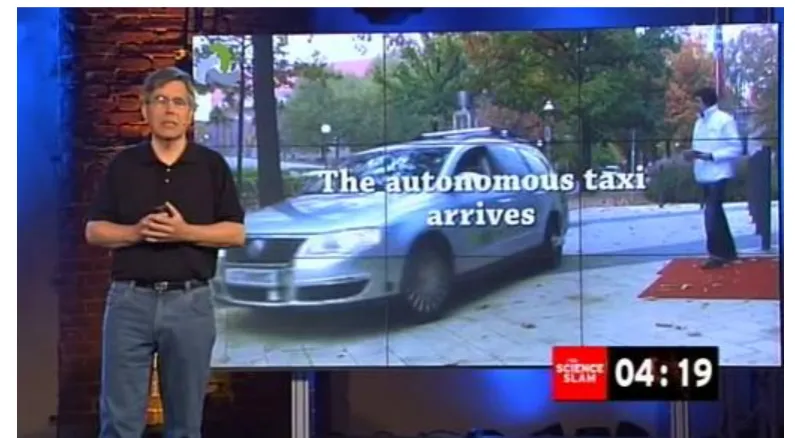
Figure 1: Example life world: The group leader speaks at a science slam in German public television. A video demo is running in the background during his talk.
(Screenshot: Radio Berlin-Brandenburg)
Youtubization and high tech cowboys
Winthereik et al. (2008) call for a relational analysis of video demos. By studying the “life world of the demo” (2008, p. 121) they foreground the time and space where video demos are shown. AUC stages video demos at various events and sites, both offline and online. For example, embedded YouTube clips have been used as eye-catchers on AUC’s website. Whenever AUC’s members give a presentation on their project, they usually show a video demo. There are two ways in which they integrate videos in an oral presentation. One approach is to show the video without audio in the background while a member of AUC explains what the audience is supposed to see. The other approach is to stage the video with audio during the talk to add excitement or at the very end of the presentation to make a final statement.
their research. Journalists who call AUC because of the popular videos have to be persuaded into filming experiments that better align with AUC’s self-perception. In addition, they are afraid of losing credibility as serious computer scientists among peer researchers.
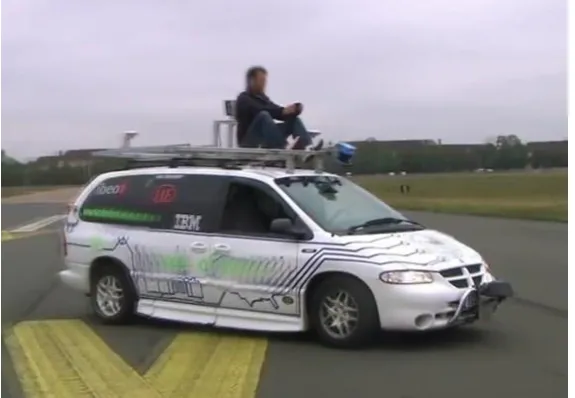
Figure 2: Example contested video demo: A researcher remotely controls the robotic car with his smart phone. (Screenshot: Youtube)
I propose the concept of ‘youtubization’ to denote two simultaneous processes in communicating science. First, it highlights the processes of creating or developing a choreography and a narrative for an autonomous robot, which do not necessarily conflate with the project’s overall objectives and work practices. For example, the activity of writing software code is omitted from those videos. Instead, AUC makes the audience see code through visual actions performed by the robot and through visualisations of the robot’s sensing capabilities. Second, the video is edited to comply with YouTube’s aethestic conventions in terms of length (usually no more than 3 minutes), background music and plot devices.
Producing video demos contributes to AUC’s culture of high tech cowboys. The concept of high tech cowboy highlights not only the fact that AUC is overtly male dominated. I derive the concept from the specific values and relations of AUC. Their imaginations and research practices highly resonate with the global myth of the cowboy (e.g. Wright, 2001). In particular, AUC’s members delineate themselves from, what they call, “ivory-tower” computer scientists working on theoretical computer science. By producing videos and actively communicating science to non-academic audiences, they identify themselves as making a difference in society as opposed to “ivory-tower” computer scientists who –in their view– only disseminate their research results among peer researchers.
References
Corbin, J. and Strauss, A., (2008). Basics of qualitative research: Techniques and procedures for developing grounded theory. Sage, London.
Elish, M.C., (2011). Responsible storytelling: communicating research in video demos, in: Proceedings of the Fifth International Conference on Tangible, Embedded, and Embodied Interaction, TEI ’11. ACM, New York, NY, USA, pp. 25–28.
Horst, M., (2013). A Field of Expertise, the Organization, or Science Itself? Scientists’ Perception of Representing Research in Public Communication. Science Communication 35, 758–779. doi:10.1177/1075547013487513
Suchman, L., (2008). Feminist STS and the Sciences of the Artificial, in: Hackett, E.J., Amsterdamska, O., Lynch, M., Wajcman, J. (Eds.), The Handbook of Science and Technology Studies. MIT Press, Cambridge, MA, pp. 139–163.
Suchman, L., 2011. Subject objects. Feminist Theory 12, 119 –145.
Winthereik, B.R., Johannsen, N. and Strand, D.L., (2008). Making technology public. Challenging the notion of script through an e-health demonstration video. Information Technology & People 21, 116–132.
Wright, W., (2001). The Wild West: the mythical cowboy and social theory. Sage, London.
Acknowledgements
Communicating science, transforming knowledge: Insights into
the knowledge communication practices of the popular science
magazine GEO
Dorothea Born Department of Science and Technology Studies University of Vienna Austria Abstract
Popular science magazines are an often-neglected medium in the field of science communication. While being committed to the scientific community, upholding an ethos of scientific accuracy, they aim at mediating science and are thus actively selecting, transforming and recontextualising scientific knowledge. Constituting a hybrid space of science communication, they continuously (re)draw the boundaries between ‘science’ and a highly educated ‘broader public’ that is co-constructed through the specific communication practices of these magazines.
My paper draws on ethnographic observations at the editorial office of the German popular science magazine GEO. Tracing its production processes I show how editorial members conceptualise science communication and on what notions of science they base their assumptions. This is linked to how GEO’s target audiences are imagined and what kind of scientific literacy is ascribed to them. By approaching these practices through the lens of Science and Technology Studies (STS), this article contributes to an understanding of how popular science magazines produce and communicate knowledge.
Introduction
In modern ‘knowledge societies’ (Stehr, 2001) science communication has become an important endeavour for politics, the media and the scientific community alike (Weingart, 2005). Popular science magazines thereby hold an interesting position, being located at the threshold between the scientific community and the broader public (Stöckel, 2009). Within the many formats of science communication existing today, popular science magazines can be regarded as a more classic medium, building on a linear mode of knowledge transfer and being restricted to the format of written texts, photography and illustrations within the limited space of a paper magazine.
Despite building on a long tradition, popular science magazines have not been studied as extensively as mass media in regard to science communication, especially within the field of STS.
What are their ideals of science communication and their imaginations of science as a concept?
Through ethnographic fieldwork at its editorial office I trace the history and production processes of the German popular science magazine GEO. I will show that through selection criteria, recontextualisations and specific ways of communication, knowledge is not simply transferred but actively transformed and thus new knowledge is created within this particular setting.
Methods
In April 2014 I spent one month in Hamburg conducting ethnographic observations at the editorial office of GEO. During this time I conducted 14 interviews with various members of the editorial staff, including the editor-in-chief, science journalists, photo editors as well as people working at the art- and verification department. I also attended meetings and conducted database research.
Results
Reconstructing GEO’s history
Here I would to highlight the three most important points in regard to GEO’s history as reconstructed from my observations. While necessarily fragmented and incomplete, it offers a glance at how members of the editorial staff imagine the history of the magazine they produce.
GEO was founded in 1976 by the German photojournalist Rolf Gillhausen at the publishing house Gruner + Jahr. Before, Gillhausen worked for Stern, another magazine at the same publishing house that had continuously bought a lot of high-resolution images it could not all print. GEOwas partly founded in order to have a space were these images could be published. This wide use of visual material, especially photography, had remained a trademark of the magazine until today. While GEObecame popular with ecological topics during the 1980s, it had to shift its focus during the early 2000s because the American popular science magazine National Geographic started producing for the German market in the late 1990s. Now GEOcould no longer buy stories from National Geographic, which applied especially for nature features with beautiful photographic footage. Thus, GEO’s focusshifted to more human centred topics, like psychology.
The attempt to make GEO more ‘reader friendly’ as a reaction to a declining readership can be seen in a recent change in the structural organisation of the magazine: Since November 2013 GEOis organised into 11 overall sections, dealing with different focal points such as ‘biosphere’ or ‘focus of research’. This new outline gives the magazine a stable structure but also leads to considerably shorter articles.
Production Processes
or freelancers, while 40% are photo-stories selected from portfolios of photographers. Each article gets edited and revised several time, with text editors copy-editing the work of freelancers. Next, articles are passed to the verification department, also called “DOK” (for documentation). Employing fact-checkers is not common for all print media but regarded as a sign of quality journalism (Schäfer, 2011). These journalists are responsible for checking every detail of an article by controlling if the text corresponds to the original (not necessarily cited) source. This includes a lot of tacit knowledge and implicit assumptions about what counts as a credible source. Fact checking goes beyond articles but also includes images, picture captions, scientific illustrations, graphs and maps.
Photo editors make the final selection of visuals for each article, either from photojournalists’ material or from photo archives. The final layout depends on the number of advertisement within the magazine, which may change until the last minute. Therefore, the art direction can make important changes to the content of an article through deletion of text and images.
Because of the rather small size of the editorial office informal decision-making plays an important role. The term “kitchen cabinet” was often employed for designating the five hierarchically most important people within the editorial department, consisting of the editor-in-chief, his deputy, the head of the photo department, the head of the art department and the executive editor. Although their tasks and responsibilities are not explicitly stated they decide on articles or images during their informal meetings. Investigating these production processes reveals that GEO conveys a specific picture of science that is shaped through various factors. This starts with the many selection criteria an article has to pass to be published. One important factor is the ability of a topic to be visualized. Additionally, stories that are too complex or not deemed fitting into the overall self-image of the magazine will fail in the selection process. Informal power plays cannot be underestimated in this regard since such guidelines are nowhere formally declared.
The way stories are told also leads to a specific image of science. Aiming to embed the science into an interesting story, science journalist “use the classic techniques of story-telling” by writing the story around a protagonist and trying to present the findings as new insights (Schäfer, 2011). Thus, stories not necessarily correspond to the daily routines and practices of scientific research.
Science Communication and Self-Image
The reasons for communicating science and the way it is done are strongly intertwined. Among members of GEO’s editorial staff the notion of an ever-increasing importance of science for society is prevalent. One science journalist said:
“…what I always liked about science journalism is the act of popularization, to explain things that influence our lives and society to people, to make them understandable…“ (Science Journalists_3)
The necessary selection of topics and resulting bias is understood as a central task and key feature of the magazine:
Within such a framework science communication constitutes a tedious, responsible and important activity since it means bringing science to the people. Being a science journalist working for GEO is perceived as a very prestigious position.
Imagined Target Audience
This conceptualisation of science communication is connected to imaginations of the audiences at which this work is directed. GEO tries to interact with its readers through various ways, e.g. market research, subscriber interviews, campaigns such as “GEO saves the Rainforest” or events like the “Day of Biodiversity”.
Members of the editorial staff are well aware that their target audience is very specific with an income and educational background ranging far above average. But GEO’s relation to its readers is somewhat ambiguous. In GEO’s own perception,the specific character of its audience makes GEO as well as its readers stand out from the crowd. If certain scientific facts are not accurate, readers will write letters to the editor complaining or simply correcting the fact.
“That says something about our audience, they always… if something is wrong there will always be someone to notice. That is incredible, it is terrific.” (Fact Checker_1)
While it may be harder to write for a highly educated readership this readership is simultaneously presented as flattering for GEOsince it reassures the self-image of being a high quality magazine and supports GEO’s ideal of scientific accuracy. GEO and its readers are thus co-produced (Jasanoff, 2004) through imaginations about who this readership is and what it knows as well as about what the magazine should accomplish.
On the other hand GEOseeks not to overwhelm their readers with information. Facts need to be made accessible by bedding them into a story.
“It has to be our aim to build bridges, not to (…) write condescendingly for the readers, but to take the readers along on a cognitive processes” (Editor-in-Chief)
GEOassumes that long and complex stories might overcharge the readers’ span of attention. Here, the market logic plays into the process of co-producing readers and magazine. GEOdoes not only want to communicate science but also wants to be bought and read. Since the magazine is also a brand in a wider media landscape, it has to be continuously refined and adapted to existing market conditions represented by reader needs and demands.
Discussion and Conclusion
GEO’s representation of science is based on specific selections. These start with the choice of topics to be published that focus on the natural sciences, which conveys a one-sided picture of science (Geretschlaeger, 1986). But also technical, personal, strategic and political issues come into play. Thus, certain sciences and their realities are left out in these communicated images of science, which in turn may influence the public’s perception of scientific research and science itself.
References
Beaudreau, S. (2002). The Changing faces of Canada: Images of Canada in National Geographic. American Review of Canadian Studies, 32, 517-546.
Bowler, P. J. (2013). Popular science magazines in interwar Britain: Authors and readerships. Science in Context, 26, 437-457.
Christidou, V., Dimopoulos, K. & Koulaidis, V. (2004). Constructing social representations of science and technology: the role of metaphors in the press and the popular scientific magazines. Public Understanding of Science, 13, 347-362. Geretschlaeger, E. (1986). Wie verkaufen populärwissenschaftliche Zeitschriften
Wissenschaft? Eine Untersuchung am Beispiel der Zeitschriften Die Umschau, Kosmos, Bild Der Wissenschaft, P.M. Und Spektrum Der Wissenschaft. In: Bungarten, T. (ed.) Wissenschaftssprache und Gesellschaft. Aspekte der wissenschaftlichen Kommunikation und des Wissenstransfers in der heutigen Zeit. Hamburg: Edition Akademion.
Gouthier, D. & Di Bari, M. (2003). Tropes, science and communication. Journal of Science Communication, 2, 1-15.
Heuman, I. (2009). "Mit Sicherheit und Würde der Öffentlichkeit über ihre Arbeit berichten" - Wissenschaftskommunikation in Bilder der Wissenschaft und Scientific American (1964-1974). In: Stöckel, S.; Lisner, W.; Rüve, G. (ed.) Das Medium Wissenschaftszeitschrift seit dem 19. Jahrhundert: Verwissenschaftlichung der Gesellschaft - Vergesellschaftung von Wissenschaft. Stuttgart: Steiner.
Jasanoff, S. (2004). States of knowledge: the co-production of science and social order, New York, Routledge.
Ricci, O. (2010). Technology for everyone: representations of technology in popular Italian scientific magazines. Public Understanding of Science, 19, 578-589.
Schäfer, M. (2011). Science journalism and fact checking. Journal of Science Communication, 10, 1-5.
Stehr, N. (2001) Moderne Wissensgesellschaften. Aus Politik und Zeitgeschichte, B 36, 7-14.
Stöckel, S. (2009). Verwissenschaftlichung der Gesellschaft - Vergesellschaftung der Wissenschaft. In: Stöckel, S.; Lisner, W.; Rüve, G. (ed.) Das Medium Wissenschaftszeitschrift seit dem 19. Jahrhundert: Verwissenschaftlichung der Gesellschaft - Vergesellschaftung von Wissenschaft. Stuttgart: Steiner.
Acknowledgements
I would like to thank everyone at GEO who has shared their thoughts and experiences with me. I would further like to thank Ulrike Felt for her constant support while writing my dissertation, Regula Burri and her team for hosting me as a guest researcher and for fruitful discussions during my research stay in Hamburg, and the organisers and participants of the panel “Studying Science Communication” at the EASST-conference in Torun in 2014.
Communicating science – Shaping identities
Maja Horst Department of Media, Cognition and Communication
University of Copenhagen
Abstract
This paper is a photo story about how science communication is more than just making science accessible to non-scientists. Using the 2014 ESOF conference and the related Science in the City festival as an example, the paper sketches a perspective on science communication which understands it as organizational communication.
Introduction
In the 21st Century, science communication has become institutionalized, professionalized and organized (Neresini and Bucchi 2011). Scientific organizations invest substantially in communication and they increasingly have policies, strategies and organizational units to direct their efforts in this direction. Nations and cross-national institutions such as the EU, brand themselves as knowledge societies and formulate action plans and reports on how to improve the science-society relationship through communication (Horst and Irwin 2010). At the same time science communication is also a task that is undertaken by individual scientists because they want to share their expertise, because they care deeply about the relationship between science and society or because they want to shine a positive light on their particular scientific field (Horst 2013). Communicating about research is a way of enhancing its legitimacy and reputation – some people also claim it increases the likelihood of funding. It is therefore fair to say that science communication has become an important part of the ability to DO science. And it is certainly intricately connected with organizational communication and with the shaping of individual, organizational and national identities.
ESOF and Science in the City 2014
Figure 1: Entrance and registration area ESOF conference 2014.
[image:37.595.178.417.71.230.2]The ESOF conference is held every second year in a European city and has 4-5000 delegates. The entire European establishment within science policy participates in this conference. The programme has a mix of talks on scientific themes, science-policy issues, outreach and business as well as career sessions. It is clear from looking at the registration area depicted above that this is a professional conference. Even the red carpet is out, fitting very well with the logo of the conference, the red circle. The carpet is ready to welcome notables to the opening of the conference, including the Danish Queen Margrethe II and the chairman of the European Commission Manuel Baroso. The queen welcomed all these people to Denmark, as shown below.
Figure 2: Opening ceremony of ESOF conference.
Figure 3: Opening ceremony of Science in the City festival.
At all the previous ESOF conferences, the Science in the City festivals had been held in the same city, but in different locations than the ESOF conference. In Copenhagen, the organizers had decided that they could host the two in the same location. They chose an area of the city, which used to house the Carlsberg brewery and laboratory. In 2014, however, the company had relocated and the area was in the middle of a redevelopment into a modern green, sustainable, young and family-friendly part of the city.
Carlsberg is a significant name in the Danish science world. The Carlsberg Brewery was founded in 1847 by J.C. Jakobsen who is renowned for being the first to adopt scientific technologies to improve the quality of beer brewing and for being an avid supporter of science in general. In 1875 he founded The Carlsberg Laboratory, which has had an important status as an exemplary industrial lab also producing excellent basic science. Jakobsen also established the Carlsberg foundation, which is one of the largest private foundations supporting science in Denmark. There are close links between the Carlsberg Foundation and the Danish Royal Academy of Sciences and Letters.
Placing the event in this area therefore connected it with at least two important cultural and historical trajectories, values and images. First of all, Carlsberg signifies the connection with science for economic progress and the linking of scientific excellence with industrial research. Secondly, the regeneration of the old industrial estate into a new modern and sustainable urban space links up with current branding of Copenhagen as a model of green and ‘liveable’ city planning – also marketed under the name of ‘Copenhagenization’.
The central events of the ESOF conference including the plenary, registration and exhibition area were placed in a large facility that used to be the bottling plant of Carlsberg. The Science in the City festival was placed around this central plant in the many other unused industrial buildings and in tents between them. Since the area is vast and usable industrial buildings were not located right next to each other, the festival was organized in six different areas – all in walking distance from each other.