Proceedings of the 12th International Workshop on Semantic Evaluation (SemEval-2018), pages 741–746
SUNNYNLP at SemEval-2018 Task 10: A Support-Vector-Machine-Based
Method for Detecting Semantic Difference using Taxonomy and Word
Embedding Features
Sunny Lai1,3, Kwong Sak Leung1,3and Yee Leung2,3 1Department of Computer Science and Engineering 2Department of Geography and Resource Management
3Institute of Future Cities The Chinese University of Hong Kong
Shatin, N.T., Hong Kong
{slai, ksleung}@cse.cuhk.edu.hk, [email protected]
Abstract
We present SUNNYNLP, our system for solv-ing SemEval 2018 Task 10: “Captursolv-ing Dis-criminative Attributes”. Our Support-Vector-Machine(SVM)-based system combines fea-tures extracted from pre-trained embeddings and statistical information from Is-A taxon-omy to detect semantic difference of concepts pairs. Our system is demonstrated to be ef-fective in detecting semantic difference and is ranked 1st in the competition in terms of
F1 measure. The open source of our code is coined SUNNYNLP1.
1 Introduction
Measuring semantic similarity between words has been a fundamental issue in Natural Language Processing (NLP). Semantic similarity measure-ments are used to improve downstream applica-tions including paraphrase detection (Xu et al., 2014), question answering (Lin,2007), taxonomy enrichment (Jurgens and Pilehvar,2016) and dia-logue state tracking (Mrksic et al.,2016).
Despite the current success in using semantic model to measure semantic similarity, lesser at-tention is paid to teaching machines to make refer-ence (Searle,1969;Abbott,2010) to the real world in detecting semantic difference. The semantic difference detection problem can be formalized as a binary classification task: given a triplet ( con-cept1, concept2, attribute) which comprises two concepts (e.g. apple, banana) and one attribute
(e.g. red), determine whether the attribute charac-terizes the former concept but not the latter. Com-pared to pairwise semantic similarity detection, this problem is more complex than measuring sim-ilarity in general because of its underlying asym-metric property and the extra attribute involved. The SemEval 2018 Task 10 (Krebs et al.,2018) is
1https://github.com/Yermouth/sunnynlp
therefore posed to attract attention to solving this problem.
Although the task of semantic difference detec-tion is novel, similar tasks like referring expres-sion generation (REG) have been studied in the literature. Resources such as ontologies, knowl-edge bases (Krahmer and Van Deemter,2012) and images (Kazemzadeh et al.,2014;Lazaridou et al., 2016) are used to learn referring expressions. The major difference between the present task and re-ferring expression is that REG systems can choose salient attributes for making successful reference to objects, while our system is required to decide whether a given attribute can be used to differenti-ate two similar objects.
The rest of the paper is organized as follows: Section 2 explains our motivation and approach. Section 3 describes the official and external data used. Section 4 details our system implementa-tion. We analyze and discuss the result in Section 5and conclude our work in Section6.
2 General Approach
Our approach to this problem is to divide the ternary concept-concept-attribute relationship (concept1, concept2, attribute) into two concept-attribute relationships (concept, attribute)2. The ternary relationship will hold only when the first pair of concept-attribute relation is true and the second false. This approach allows us to use well developed pairwise similarity measurements to ex-tract semantic information from the two concept-attribute pairs, and aggregate the features to train a support vector machine (Cortes and Vapnik,1995) to detect semantic difference of the triplet, i.e.
identifying whether a concept contains a specific attribute is a key task of our system.
2For instance, dividing the concept-concept-attribute
rela-tionship(apple, banana, red)into two concept-attribute rela-tionships:(apple, red)and(banana, red).
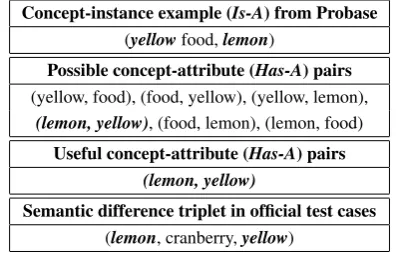
Concept-instance example (Is-A) from Probase (yellowfood,lemon)
Possible concept-attribute (Has-A) pairs (yellow, food), (food, yellow), (yellow, lemon),
(lemon, yellow), (food, lemon), (lemon, food) Useful concept-attribute (Has-A) pairs
(lemon, yellow)
[image:2.595.80.280.63.192.2]Semantic difference triplet in official test cases (lemon, cranberry,yellow)
Table 1: Concept-attribute pairs (Has-A) can be in-ferred from concept-instance (Is-A) entries in taxon-omy, and used to determine whether a semantic differ-ence relationship (concept1, concept2, attribute) holds in official test cases.
By observation, we draw similarities be-tween concept-attribute relationship and meron-omy(Has-A). They are similar in a sense that both describe subtype relationships. Although linguis-tics resources constructed by human subjects in-cluding norms and priming effect data can help us detect and verify these relationships effectively, they are not allowed to be used in this SemEval Task.
This SemEval Task also limits the scope of con-cepts and attributes to concrete concon-cepts and vi-sual attributes only. As instances of the same con-cept are likely to share common attributes from our intuitive perspective3, we would like to ex-periment on extracting meronomy (Has-A) infor-mation from hypernymy (Is-A) pairs. Taxonomies and ontologies which contain rich Is-A informa-tion in terms of concept-instance pairs are there-fore the key external linguistic resources which we rely on to extract concept-attribute relationships.
Another intuition that guides our research direc-tion is that modifiers such as adjectives, adverbs and noun modifiers are useful for capturing salient attribute of a specific class of objects4. As modi-fiers are used to describe the scope of concepts or specify context of instances, we can leverage on
3As both apple and banana are hypernyms of fruit, i.e.
ap-pleIs-Afruit and bananaIs-Afruit. If we know apple is “edi-ble”, then banana may have a higher chance of being “edible” by intuition because “edible” can be a common attribute for most fruits.
4When we want to differentiate one object from another,
we usually use a salient and outstanding attribute to describe the object instead of using a common or similar attribute. Similar viewpoint is previously raised in (Pechmann,1989;
Dale and Haddock,1991), which states that human beings prefer using efficient and sufficiently distinguishing descrip-tion when they are constructing referring expressions.
the co-occurrence probability of modifiers to ana-lyze their dependence/independence relationships with different concepts, and hence, to determine whether a concept-attribute relationship holds.
As the SemEval Task limits the word length of the concept and attribute to be 1, we can enu-merate all possible pairs of modifiers and con-cepts from large scale taxonomy and ontology and use them as features to train our system. Table1 shows anIs-Aentry in taxonomies which we find instructive for learning semantic difference rela-tionship. For instance, verifying whether semantic difference relationship holds for the triplet(lemon, cranberry, yellow)would require the information of “lemon has the attribute yellow?” and “ cran-berry does not have the attributeyellow?”. With the Is-A pair (yellow food, lemon)from Probase, we can extract possible concept-attribute pairs and their frequency to train our system, such that our system knows with high probability thatlemonhas the attributeyellowwhilecranberrydoes not.
3 Data
We use the official dataset together with two exter-nal linguistic resources, GloVe (Pennington et al., 2014) and Probase (Wu et al.,2012;Cheng et al., 2015), to train our system.
3.1 Official Dataset
Official datasets5are split into three parts – train-ing, validation and testtrain-ing, where the testing holds a disjoint attribute sets apart from training and val-idation. This further increases the difficulty of the task as it preventslexical memorization(Roller et al.,2014;Levy et al.,2015;Weeds et al.,2014) and tests for generalization.
3.2 Probase
Probase is a web scale open domain taxonomy which uses Hearst patterns (Hearst, 1992) to ex-tractIs-Arelationship from web documents. Each
Is-A entry in Probase is represented as a triplet form: super-concept, sub-concept and number of co-occurrence. We choose Probase for two main reasons:
1. Large number of concepts covered: The number of concepts covered in Probase (Wu et al.,2012) exceeds other publicly available
5in the form of concept-concept-attribute triplet with
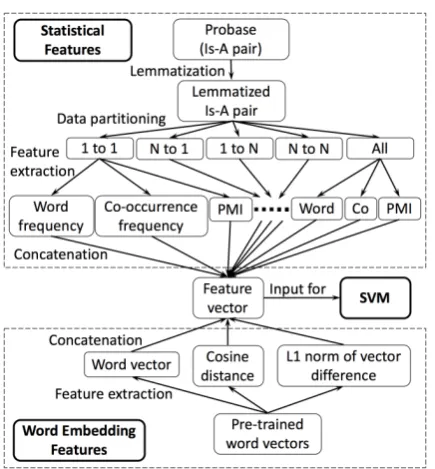
Figure 1: System architecture pipeline diagram.
taxonomies and ontologies including Word-Net (Miller, 1995) and YAGO (Suchanek et al.,2007)6.
2. Rich in semantic features: Probase provides
Is-A relationship pairs with concepts of dif-ferent senses and abstraction levels, which allows our system to extract rich statistical information for training. For instance, Is-A
pairs in Table2are extracted from Probase.
3.3 GloVe
Pre-trained embeddings such as Word2Vec (Mikolov et al.,2013), GloVe (Pennington et al., 2014) and FastText (Bojanowski et al., 2016) encode syntactic and semantic relationships of words in low-dimension space, which is crucial to the capturing of semantic difference. We use the GloVe embedding pre-trained on both Gigaword corpus and 2014 Wikipedia dump in our final submission system.
4 System Description
Our system architecture pipeline (Figure 1) in-cludes the process of data preprocessing, feature extraction and classifier selection.
4.1 Data Preprocessing
Preprocessing procedure is applied to Probase in-cluding:
6Probase includes 2,653,872 concepts while WordNet and
YAGO contain 25,229 and 352,297, respectively.
Partition Concept-Instance(Is-A) example Size
1 to 1 (fruit, banana) 2.12M
N to 1 (high sugar fruit, banana) 7.91M 1 to N (plant, banana tree) 9.32M N to N (dried fruit, banana chip) 14.01M
[image:3.595.307.530.62.125.2]Total 33.37M
Table 2: Partitioning of dataset into 4 subsets with an example entrand partition size provided.
Frequency Type Feature Extracted Individual word (dried), (fruit), (banana), (chip) Concept-Concept (dried, fruit)
Instance-Instance (banana, chip) Concept-Instance (dried, banana), (dried, chip),
(fruit, banana), (fruit, chip)
Table 3: Example of how individual word frequency (the first row) and three types of co-occurrences (the last three rows) are counted for theIs-Apair (dried fruit, banana chip) in Probase.
• Lemmatization: As Probase is crawled us-ing a rule-based system, we lemmatize the data using stanford CoreNLP (Manning et al., 2014) to reduce words of different forms and allow better matching betweenIs-Aentries in taxonomy and official dataset.
• Data partitioning: To give our system addi-tional information regarding the adjectives, adverbs and modifiers of both concepts and instances, we partition Probase into 4 sub datasets, according to the word length of the concept and instance pair. For instance, par-tition “1 to 1” indicates that both concept and instance are of word length 1. Partition “N to 1” indicates concepts of arbitrary word length (more than 1) and instances of word length 1. Example of each partition are given in Table 2.
4.2 Feature Extraction 4.2.1 Statistical Features
As for statistical features, we consider the statisti-cal features of the individual words,i.e. concept1, concept2, attribute, and the two concept-attribute relationship pairs, i.e. (concept1, attribute), (concept2, attribute)) using individual or
co-occurrence frequency in Probase.
Word frequency is extracted from individual words, and the following features are extracted from theIs-Apairs:
[image:3.595.314.518.172.240.2]Model (Features) Valid(cv=5) Train/Test Train+Valid/Test Valid/Test
SVM(GloVe, Probase) 0.790 0.644 0.714 0.754
SVM(FastText, Probase) 0.764 0.649 0.709 0.757
SVM(Word2Vec, Probase) 0.757 0.636 0.721 0.732
Logistic Regression(Probase) 0.698 0.602 0.644 0.717
SVM(Probase) 0.730 0.553 0.637 0.691
Logistic Regression(GloVe, Probase) 0.753 0.607 0.674 0.674
SVM(GloVe) 0.712 0.597 0.652 0.668
SVM(FastText) 0.689 0.563 0.593 0.650
[image:4.595.110.491.63.163.2]SVM(Word2Vec) 0.667 0.556 0.581 0.634
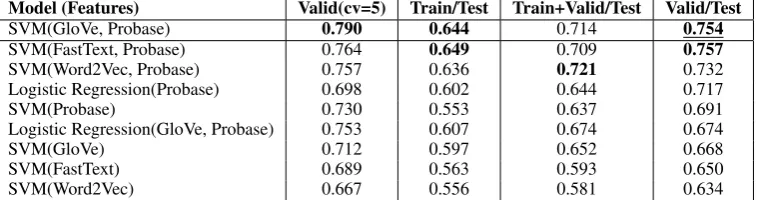
Table 4: Result (F1-score) obtained by our system. The underlined value represents the score of our official submission. Best scores for each partition are denoted in boldface.
• Pointwise Mutual Information(PMI) (Fano, 1961;Church and Hanks,1990)
• Asymmetric Pointwise Mutual Informa-tion(APMI)
There are three types of pairwise word co-occurrence frequencies, including Concept-Concept, Instance-Instance and Concept-Instance. All types of frequencies are calculated for all parti-tions as distinct features. Table3gives an example of how occurrence and co-occurrence are counted. We apply logarithm to the statistical features to re-duce the scale of frequently occurring words.
4.2.2 Word Embedding Features
We use the Python package Gensim (Rehurek and Sojka, 2010) to match each word in the triplet (concept1, concept2, attribute) in the offi-cial dataset with their corresponding pre-trained vectors vcon1, vcon2, vattr, each of 300
dimen-sions. We then divide the triplet into three pairwise relationshipsi.e.(vcon1, vcon2),(vcon1, vattr), and (vcon2, vattr), and calculate the cosine similarity
and L1-norm of the vector difference of these pairs as features. Dot-product is considered initially but removed as it adversely affects the performance of our system.
4.3 Classifiers
Using the same set of word embedding and statisti-cal features, we compared the performance of four off-the-shelf classifiers including SVM (Cortes and Vapnik,1995), Logistic Regression Classifier, Decision Tree Classifier and Random Forest Clas-sifier. SVM classifier with RBF kernel (Vert et al., 2004) is used in our system as it outperforms other classifiers in terms of precision and F1-score.
5 Results and Discussion
5.1 Results
We provide the results of our system with different combinations of features and datasets in Table4. ColumnTrain+Valid/Testrepresents the F1-score obtained by training our system with both the training partition and validation partition, while columnTrain/TestandValid/Testare F1-score ob-tained by training our system on the training parti-tion and validaparti-tion partiparti-tion individually. Training our SVM system with Probase and GloVe (or Fast-Text) gives the best result in terms of F1-score for official evaluation (columnValid/Test). Our sys-tem achieves a F1-score of 0.754 and outperforms those of the other teams.
5.2 Discussion
During the competition phase, we noticed that our system performs better when we did not use train-ing partition together with validation partition. As the entries in the training partition are automati-cally generated, there may be false entries or noise which can adversely affect our system. Since the validation partition comprises manually curated examples, we evaluate our models using 5-fold cross validation on the clean validation partition only (indicated by columnValid(cv=5)).
6 Conclusion
and attributes from visual only to sound and taxo-nomic.
As our system separates a concept-concept-instance relationship into two concept-concept-concept-instance re-lationships, our system is relatively weak in cap-turing attributes that are comparative or fuzzy, for instance,youngandtall. It would be interesting to explore how semantic difference relationship can be embedded into taxonomies, ontologies and vec-tor representations, so that comparative attributes can be comprehensively and directly captured.
Acknowledgments
This research was supported by the Chinese versity of Hong Kong - Utrecht University - Uni-versity of Toronto tripartite collaboration fund of The Chinese University of Hong Kong.
References
B. Abbott. 2010. Reference. Oxford Surveys in Se-mantics & Pragmatics No.2. OUP Oxford.
Piotr Bojanowski, Edouard Grave, Armand Joulin, and Tomas Mikolov. 2016. Enriching word vec-tors with subword information. arXiv preprint arXiv:1607.04606.
Jianpeng Cheng, Zhongyuan Wang, Ji-Rong Wen, Jun Yan, and Zheng Chen. 2015. Contextual text under-standing in distributional semantic space. In Pro-ceedings of the 24th ACM International on Confer-ence on Information and Knowledge Management, pages 133–142. ACM.
Kenneth Ward Church and Patrick Hanks. 1990. Word association norms, mutual information, and lexicog-raphy.Computational linguistics, 16(1):22–29.
Corinna Cortes and Vladimir Vapnik. 1995. Support-vector networks. Machine learning, 20(3):273–297.
Robert Dale and Nicholas Haddock. 1991. Content determination in the generation of referring expres-sions. Computational Intelligence, 7(4):252–265.
Robert M Fano. 1961. Transmission of information: A statistical theory of communications.
Simone Filice, Danilo Croce, Alessandro Moschitti, and Roberto Basili. 2016. Kelp at semeval-2016 task 3: Learning semantic relations between ques-tions and answers. In Proceedings of the 10th International Workshop on Semantic Evaluation (SemEval-2016), pages 1116–1123, San Diego, Cal-ifornia. Association for Computational Linguistics.
Marti A Hearst. 1992. Automatic acquisition of hy-ponyms from large text corpora. InProceedings of
the 14th conference on Computational linguistics-Volume 2, pages 539–545. Association for Compu-tational Linguistics.
David Jurgens and Mohammad Taher Pilehvar. 2016. Semeval-2016 task 14: Semantic taxonomy enrich-ment. In Proceedings of the 10th International Workshop on Semantic Evaluation (SemEval-2016), pages 1092–1102.
Sahar Kazemzadeh, Vicente Ordonez, Mark Matten, and Tamara Berg. 2014. Referitgame: Referring to objects in photographs of natural scenes. In Pro-ceedings of the 2014 conference on empirical meth-ods in natural language processing (EMNLP), pages 787–798.
Emiel Krahmer and Kees Van Deemter. 2012. Compu-tational generation of referring expressions: A sur-vey. Computational Linguistics, 38(1):173–218.
Alicia Krebs, Alessandro Lenci, and Denis Paperno. 2018. Semeval-2018 task 10: Capturing discrim-inative attributes. InProceedings of the 12th inter-national workshop on semantic evaluation (SemEval 2018).
Angeliki Lazaridou, Marco Baroni, et al. 2016. The red one!: On learning to refer to things based on dis-criminative properties. In Proceedings of the 54th Annual Meeting of the Association for Computa-tional Linguistics (Volume 2: Short Papers), vol-ume 2, pages 213–218.
Omer Levy, Steffen Remus, Chris Biemann, and Ido Dagan. 2015. Do supervised distributional meth-ods really learn lexical inference relations? In Pro-ceedings of the 2015 Conference of the North Amer-ican Chapter of the Association for Computational Linguistics: Human Language Technologies, pages 970–976.
Jimmy Lin. 2007. An exploration of the principles underlying redundancy-based factoid question an-swering. ACM Transactions on Information Systems (TOIS), 25(2):6.
Christopher D. Manning, Mihai Surdeanu, John Bauer, Jenny Finkel, Steven J. Bethard, and David Mc-Closky. 2014. The Stanford CoreNLP natural lan-guage processing toolkit. InAssociation for Compu-tational Linguistics (ACL) System Demonstrations, pages 55–60.
Tomas Mikolov, Ilya Sutskever, Kai Chen, Greg S Cor-rado, and Jeff Dean. 2013. Distributed representa-tions of words and phrases and their compositional-ity. InAdvances in neural information processing systems, pages 3111–3119.
Nikola Mrksic, Diarmuid ´O S´eaghdha, Tsung-Hsien Wen, Blaise Thomson, and Steve J. Young. 2016.
Neural belief tracker: Data-driven dialogue state tracking.CoRR, abs/1606.03777.
Alexander Panchenko, Stefano Faralli, Eugen Ruppert, Steffen Remus, Hubert Naets, Cedrick Fairon, Si-mone Paolo Ponzetto, and Chris Biemann. 2016.
Taxi at semeval-2016 task 13: a taxonomy induc-tion method based on lexico-syntactic patterns, sub-strings and focused crawling. InProceedings of the 10th International Workshop on Semantic Evalua-tion (SemEval-2016), pages 1320–1327, San Diego, California. Association for Computational Linguis-tics.
Thomas Pechmann. 1989. Incremental speech produc-tion and referential overspecificaproduc-tion. Linguistics, 27(1):89–110.
Jeffrey Pennington, Richard Socher, and Christo-pher D. Manning. 2014. Glove: Global vectors for word representation. InEmpirical Methods in Nat-ural Language Processing (EMNLP), pages 1532– 1543.
Radim Rehurek and Petr Sojka. 2010. Software frame-work for topic modelling with large corpora. InIn Proceedings of the LREC 2010 Workshop on New Challenges for NLP Frameworks. Citeseer.
Stephen Roller, Katrin Erk, and Gemma Boleda. 2014. Inclusive yet selective: Supervised distributional hy-pernymy detection. In Proceedings of COLING 2014, the 25th International Conference on Compu-tational Linguistics: Technical Papers, pages 1025– 1036.
John R Searle. 1969. Speech acts: An essay in the phi-losophy of language, volume 626. Cambridge uni-versity press.
Fabian M Suchanek, Gjergji Kasneci, and Gerhard Weikum. 2007. Yago: a core of semantic knowl-edge. InProceedings of the 16th international con-ference on World Wide Web, pages 697–706. ACM.
Jean-Philippe Vert, Koji Tsuda, and Bernhard Sch¨olkopf. 2004. A primer on kernel meth-ods. Kernel methods in computational biology, 47:35–70.
Julie Weeds, Daoud Clarke, Jeremy Reffin, David Weir, and Bill Keller. 2014. Learning to distinguish hyper-nyms and co-hypohyper-nyms. In Proceedings of COL-ING 2014, the 25th International Conference on Computational Linguistics: Technical Papers, pages 2249–2259. Dublin City University and Association for Computational Linguistics.
Wentao Wu, Hongsong Li, Haixun Wang, and Kenny Q Zhu. 2012. Probase: A probabilistic taxonomy for text understanding. InProceedings of the 2012 ACM SIGMOD International Conference on Management of Data, pages 481–492. ACM.