FORMULATION DEVELOPMENT AND IN VITRO EVALUATION OF
PULSATILE DRUG DELIVERY SYSTEM USING NOVEL NATURAL
SUPERDISINTEGRANT
Ganesh D. Basarkar*, Ajinkya S. Thorat and Rakesh G. Shinde
Department of Pharmaceutics, SNJB’s SSDJ College of Pharmacy, Neminagar, Chandwad,
Nashik, India.
ABSTRACT
The present study was an attempt to develop and evaluate an oral
pulsatile drug delivery system using dried mucilage of Hibiscus Rosa
sinensis linn as a novel superdisintegrant. The rapid release tableted
core contained a model drug (Diclofenac sodium) and novel
superdisintegrant (Hibiscus Rosa sinensis linn) and controlled release
effect was achieved with a combination of coating material (Eudragit
S100). A 32 full factorial design was employed for the optimization of
developed formulation considering concentration of superdisintegrant
and coating ratio as independent variables with lag time and drug
release as dependent variables. The developed formulations showed
uniform appearance, average weight, drug content and adequate
hardness. The increase in lag time was observed with an increase in Eudragit S100
concentration and decreased concentration of novel superdisintegrant. Design expert
software® was used to give the solution for optimized formulation based on the evaluation of
the developed formulations. Further comparison of Hibiscus Rosa sinensis linn in
concentration suggested in the optimized formulation with pharmaceutically acceptable
superdisintegrants in same concentration showed almost similar drug release behavior. It can
be concluded from the outcome of the present research that dried mucilage of Hibiscus Rosa
sinensis linn, a natural superdisintegrant, can prove to be best alternative to the existing
semi-synthetic or semi-synthetic superdisintegrant.
KEYWORDS: superdisintegrant, Hibiscus Rosa sinensis linn, Chronopharmaceutics.
Volume 5, Issue 7, 887-901. Research Article ISSN 2277– 7105
*Corresponding Author
Ganesh D. Basarkar
Department of
Pharmaceutics, SNJB’s
SSDJ College of Pharmacy,
Neminagar, Chandwad,
Nashik, India. Article Received on 12 May 2016,
Revised on 02 June 2016, Accepted on 22 June 2016
INTRODUCTION
Oral pulsatile/delayed delivery systems are designed to elicit programmable lag phases
preceding a prompt and quantitative, repeated or prolonged release of drugs. Accordingly,
they draw increasing interest because of the inherent suitability for accomplishing
chronotherapeutics goals, which have recently been highlighted in connection with a number
of widespread chronic diseases with typical night or early morning recurrence of symptoms
(e.g. bronchial asthma, cardiovascular disease, rheumatoid arthritis, early-morning
awakening). In addition, time-based colonic release can be attained when pulsatile delivery
systems are properly adapted to overcome unpredictable gastric emptying and provide delay
phases that would approximately match the small intestinal transit time. Oral pulsatile
delivery is pursued by means of a variety of release platforms, namely reservoir, capsular and
osmotic devices. Chronopharmaceutics is a branch of pharmaceutics devoted to the design
and evaluation of drug delivery systems that release a bioactive agent at a rhythm that ideally
matches the biological requirement of a given disease therapy.[1] There are three types of
mechanical rhythms in our body; namely, Circadian rhythm word originates from Latin word
‘circa’ means about and ‘dies’ means day, Ultradian rhythm means oscillation of shorter
duration i.e. more than one cycle per 24 h and Infradian rhythm having oscillations longer
than 24 h i.e. less than one cycle per day. A biological rhythm is a self-sustaining oscillation
of endogenous origin. It is defined by the characteristics of period, level, amplitude and
phase.[2] The human circadian time structure is to depict the peak time of 24-h rhythms on a
clock-like diagram. the peak time of human circadian rhythms in relation to the typical
synchronizer routine of most human beings-sleep in darkness from 10:30 p.m. to 6:30 a.m.
and activity during the light of the day between 6:30 a.m. and 10:30 p.m.[3]PDDS is defined
as the rapid and transient release of certain amount of drug molecules within a short time
period immediately after a pre-determined off-release period, i.e. lag time. After the lag
phase, pulsatile delivery systems may give rise to a prompt and quantitative, repeated or
prolonged release pattern depending on their formulation characteristics.[4]
Currently key technologies in Chronopharmaceutics include:
OROS® technology, CEFORM® technology, CONTIN® technology, DIFFUCAPS®
technology, CHRONOTOPIC® technology, EGALET® technology, CODAS® technology,
Advantages and disadvantage of PDDS
PDDS has unique advantages over other drug delivery systems as it does not release the drug
before the desired lag time, resulting in less inter- and intra-subject variability and also
avoiding the risk of dose dumping, it releases drug to the right site at the right time and hence
improves the bioavailability and stability, reduced adverse effects, and thus improve patient
comfort and compliance. Although advantages of PDDS are many, its only disadvantage is
that the rupture time cannot be always adequately manipulated as it is strongly correlated
with the physicochemical properties of the polymer.[2]
MATERIALS AND METHOD Materials
Diclofenac sodium BP was a gift sample from Aarti Drug Ltd., Boisar Thane .anhydrous
lactose AR, Loba Chemie pvt Ltd. Mumbai, starch AR Eudragit AR, PVP K30 AR Loba
chemie pvt Mumbai, Talc LR loba chemie pvt Ltd Mumbai, crosspovidon L100 AR research
Lab Fine chem industries Mumbai, sodium starch glycollate AR research Lab fine chem
Industries crosscarmellose sodium CG, Mumbai All other chemicals and reagents used in the
study were of analytical grade.
Methodology
Isolation of natural superdisintegrant:
Hibiscus is a genus of flowering plants in the mallow family, Malvaceae.[6] The fresh leaves
of Hibiscus Rosa Sinensis Linn were collected and washed with water to remove the dirt, and
dust particles. The leaves were dried at ambient 400C in hot air oven and then macerated in
water for 5-6 hrs. boiled for 30min and kept aside for 1hr to allow complete release of
mucilage in water. Mucilage was extracted using muslin cloth to remove mark and Acetone
was added to precipitate the mucilage. Then mucilage was separated and dried in oven at less
than 500C then passed through #80 sieve and stored at room temperature.[7]
Development of Prototype formulation
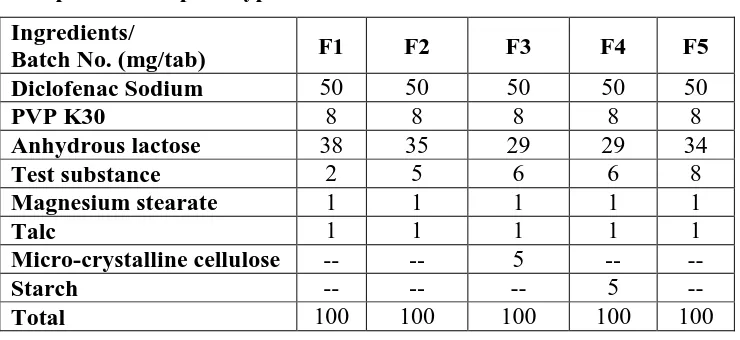
Prior to development of preliminary trials of core tablets, initially 5 prototype formulation
(F1-F5) were prepared to study effect of novel superdisintegrant concentration on
disintegration time. Table no.1 summarizes the composition for batches F1-F5. These prototype formulations were evaluated for hardness, friability, weight variations and
Prototype Formulation
Table 1: Composition for prototype formulation F1-F5 Ingredients/
Batch No. (mg/tab) F1 F2 F3 F4 F5
Diclofenac Sodium 50 50 50 50 50
PVP K30 8 8 8 8 8
Anhydrous lactose 38 35 29 29 34
Test substance 2 5 6 6 8
Magnesium stearate 1 1 1 1 1
Talc 1 1 1 1 1
Micro-crystalline cellulose -- -- 5 -- --
Starch -- -- -- 5 --
Total 100 100 100 100 100
Formulation of Core Tablets
Granules used were prepared by wet granulation technique. Drug, superdisintegrant were
passed from seive no. 80 and then 5% solution of pvp k-30 was added as binder to the
mixture and then wet mass was obtained and passed through seive no. 16 and then
Magnesium stearate and talc were added. The granules prepared were dried at 50˚C. The
powder mixture was then blended for 5 min. Core tablets (diameter 6 mm, hardness 3-6
kg/cm2, average tablet weight 100 mg) were compressed using a rotatory tableting machine
(Rimek, Karnavati Eng. Ltd). The core tablet should be formulated in such a way that it
release maximum drug after lag time. The core tablets were prepared by varying
concentration of novel superdisintegrant, microcrystalline cellulose and starch to study the
effect of these agents on drug release from core tablet. Based on the results of trial batches
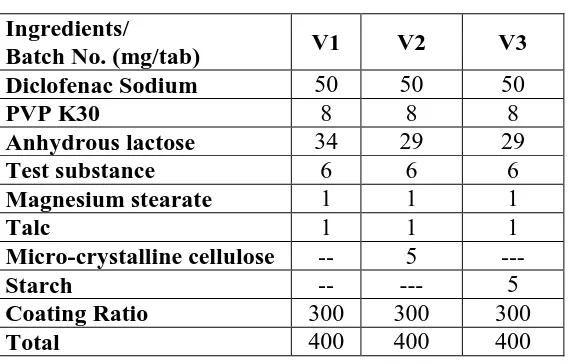
F1-F5 further trial batches were prepared which are summarized in Table no 2.
Formulation of press coated tablets
The combination of PVP K30 and novel superdisintegrant is commonly used for preparation
of press coated tablets for the adjustment of the drug release time. The coating layer was
composed of Eudragit S100 at different compositions, acting as a stimulus responsible layer.
This polymer do not allow the drug release in acidic Ph due to presence of carbonyl anionic
group. The enhancement was attributed to the higher rate of wetting and flexibility of the new
matrices due to the slower dissolution of the PVP macromolecules. Upon exposure of the
prepared tablets to the release medium it was found that the coating layer disintegrates first,
followed by the immediate release of drug from the active core.
Table 2: Composition of trial batches(V1-V3) Ingredients/
Batch No. (mg/tab) V1 V2 V3
Diclofenac Sodium 50 50 50
PVP K30 8 8 8
Anhydrous lactose 34 29 29
Test substance 6 6 6
Magnesium stearate 1 1 1
Talc 1 1 1
Micro-crystalline cellulose -- 5 ---
Starch -- --- 5
Coating Ratio 300 300 300
Total 400 400 400
Optimization of Formulation
A 32 randomized full factorial design was used in this study. In this design two factors were
evaluated, each at 3 levels. The amount of novel superdisintegrant i.e. dried mucilage of
Hibscus Rosa Sinensis Linn and coating ratio (Eudragit S100) were selected as independent
variables and the lag time (61/2hrs) and drug release after lag time were selected as dependent
variables. The dependent and independent variables and used levels are summarized in Table
no 3. The nine optimization batches (C1-C9) were prepared in 32 full factorial designs as per Table no 4.
Table No 3 Factors (Independent variables) Levels Responses (Dependent variables) (-1) (0) (+1)
Amount of
superdisintegrant (%) 6 7.5 9 Lag time of 6.5 hr.
Ratio of coating material (%w/w) i.e Eudragit S100
200 250 300 Drug release after lag
[image:5.595.158.445.86.268.2]time
Table 4: Composition of optimization batches C1-C9
Ingredients (mg/tab) C1 C2 C3 C4 C5 C6 C7 C8 C9
Diclofenac sodium 50 50 50 50 50 50 50 50 50
PVP K30 5 5 5 5 5 5 5 5 5
Anhydrous lactose q.s. q.s. q.s. q.s. q.s. q.s. q.s. q.s. q.s.
Test substance 6 7.5 9 6 7.5 9 6 7.5 9
Starch 5 5 5 5 5 5 5 5 5
Magnesium stearate 1 1 1 1 1 1 1 1 1
Talc 1 1 1 1 1 1 1 1 1
Coating ratio (%w/w) 200 200 200 250 250 250 300 300 300
Evaluation of Diclofenac Sodium Press Coated Pulsatile Release Tablets The tablet where evaluated for weight variation, friability as per IP.[8]
Drug Content
Twenty tablets were weighed individually and powdered in pestle mortar and an amount
equivalent to 50 mg of Diclofenac Sodium was extracted with 10 ml of methanol and
sonicated for 10 min. The solution was filtered through a watman filter paper and the content
of Diclofenac Sodium in the solution was determined by measuring absorbance at 276 nm
after suitable dilution.[9]
In vitro release study
The dissolution studies were performed according to the USP apparatus II (Electrolab, model
TDT-08L, Mumbai, India) using 900 ml of 0.1N HCL maintained at 37± 0.50C stirred at 50
rpm for 2 h. Then the same tablets were removed and placed in 900 ml of phosphate buffer
PH 6.8 and 7.4 as dissolution media maintained at 37± 0.50C. At appropriate time intervals
dissolution sample were withdrawn and analyzed using UV Spectrophotometer at 276 nm.
An equal volume of fresh prewarmed dissolution medium was added after withdrawing each
sample to maintain the sink condition. The amount of drug released was then determined with
the help of calibration curve and the cumulative percentage of drug released was calculated.
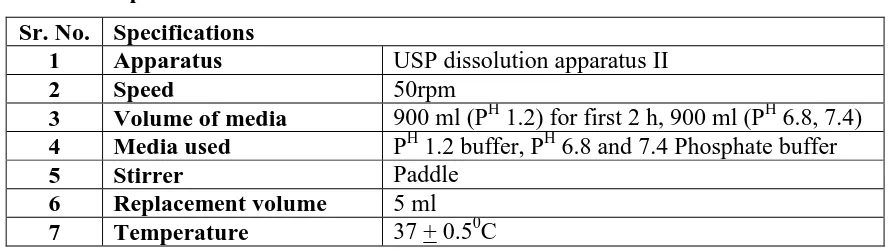
[image:6.595.75.519.498.623.2]Table no.5 summarizes specifications of In vitro dissolution study.
Table no 5: Specifications of In vitro dissolution studies Sr. No. Specifications
1 Apparatus USP dissolution apparatus II
2 Speed 50rpm
3 Volume of media 900 ml (PH 1.2) for first 2 h, 900 ml (PH 6.8, 7.4) 4 Media used PH 1.2 buffer, PH 6.8 and 7.4 Phosphate buffer
5 Stirrer Paddle
6 Replacement volume 5 ml
7 Temperature 37 + 0.50C
Comparative Study
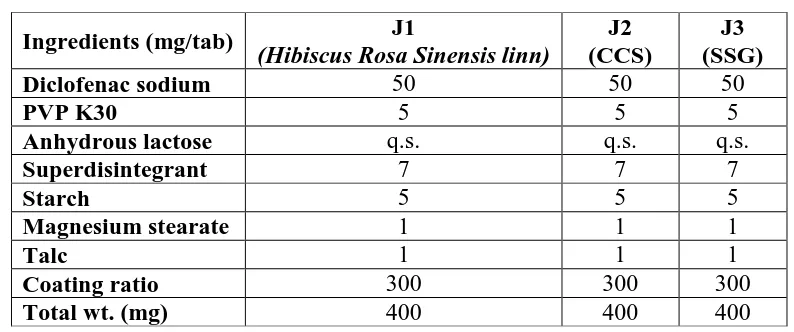
Optimized formulation as suggested by Design Expert® software was selected for further
comparative study with pharmaceutically accepted superdisintegrants namely, sodium starch
Table 6: Composition of comparative batches J1-J3
RESULTS AND DISCUSSION
Characterization novel superdisintegrant powder
Novel superdisintegrant was characterized for their physical properties such as weight loss on
drying, swelling index and flow properties like density, compressibility index, angle of
repose and Hausner’s ratio. Which is shown in Table 7. It is clear from result that the dried
powder has a good flow properties and swelling index which is a sign to indicate the
suitability of the material for a direct compression.
Table 7: Characteristics of novel superdisintegrant mucilage
Parameters Results
Loss on drying (%) 1.3±0.0104 Swelling Index (ml) 2.1±0.2886 Bulk density(g/ml) 0.5503±0.00866 Tapped density (g/ml) 0.6455±0.02080 Compressibility index (% ) 14.43±1.8840
Hausner’s ratio 1.17±0.0264
[image:7.595.160.427.591.743.2]Angle of repose(˚) 36.13±0.2020 IR spectrum of the Hibiscus Rosa Sinensis
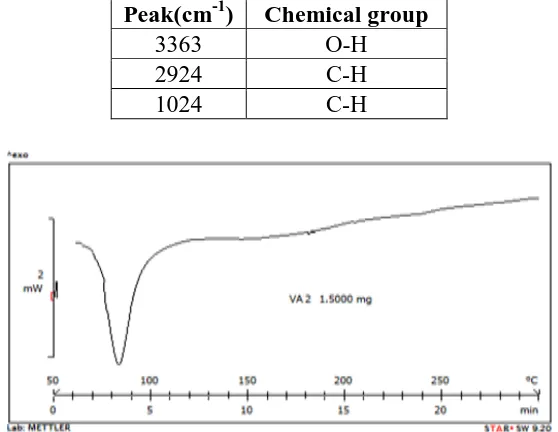
Fig.1: IR spectrum of the Hibiscus Rosa Sinensis
Ingredients (mg/tab) J1
(Hibiscus Rosa Sinensis linn)
J2 (CCS)
J3 (SSG)
Diclofenac sodium 50 50 50
PVP K30 5 5 5
Anhydrous lactose q.s. q.s. q.s.
Superdisintegrant 7 7 7
Starch 5 5 5
Magnesium stearate 1 1 1
Talc 1 1 1
Coating ratio 300 300 300
Peak(cm-1) Chemical group
3363 O-H
2924 C-H
[image:8.595.158.437.73.289.2]1024 C-H
Fig. 2: DSC spectrum of the Hibiscus Rosa SinensisLinn
Drug-Excipients Compatibility Study
The result of DSC spectra of drug and novel superdisintegrant shows no interference in peak,
which indicate that there was no major incompatibility between drug and novel
superdisintegrant.
Fig. 3: Combine DSC spectrum for drug and superdisintegrant
Evaluation
Pre-compression Parameters
For Granules used for compression
Granules where characterized for their physical properties such as density, compressibility
[image:8.595.158.434.435.622.2]Table 8: Pre-compression parameters of granules used for compression
Parameters Granules
Bulk density(g/ml) 0.5360 Tapped density (g/ml) 0.6455 Compressibility index (% ) 16.83
Hausner’s ratio 1.20
Angle of repose 33.23
Formulation of press coated tablet
Developmental of prototype formulation
In order to decide the proper formulation, initially 5 prototype formulation (F1-F5) were
carried out to study effect of novel superdisintegrant concentration on disintegration time. In
case of batches F1-F5, it was found that as concentration of superdisintegrant increases the
disintegration time was found to be decreases and vice-versa. This gave the preliminary
information of minimum concentration of superdisintegrant required for further studies.
Table no. 9 summarized the evaluation parameter for prototype formulation F1-F5.
Table 9: Evaluation parameters for prototype formulation F1-F5
Parameters F1 F2 F3 F4 F5
Tablet weight(mg) 101.06±10 99.74±10 101.17±10 100.6±10 100.35±10 Hardness(kg/cm2) 3.5±0.2886 3.2±0.4812 3.6±0.2876 3.8±0.2776 3.4±0.2638
Friability (%) 0.3364 0.4812 0.3471 0.2986 0.3087
Disintegration Time (Min.) 9.14±0.57 8.04±0.79 7.34±0.27 7.54±0.34 5.43±0.13
Development of Press coated Tablet
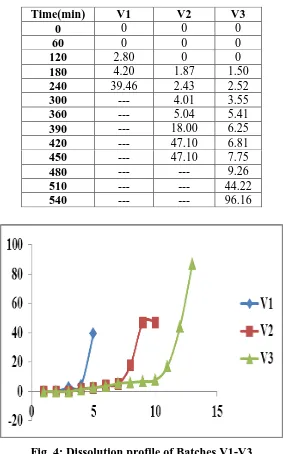
From the drug release profile for batches V1-V2 it was concluded that as the concentration of
Eudragit S100 increases lag time was found to be increased. Among the batch V1-V3, batch
V3 showed pulsatile drug release with desirable lag time, hence batch V3 was selected for
further design of formulation to obtained 8 hrs lag time and pulse release after lag time.
Hence batch V3 was selected for factorial design studies to optimize effects of variables on
formulation. There after further studies with full 32 factorial studies were carried out and
Table no 10: % Drug release of Trial Batches V1-V3
[image:10.595.156.440.89.543.2]
Fig. 4: Dissolution profile of Batches V1-V3
[image:10.595.55.544.630.707.2]Optimization of Formulation is based on the factorial design evaluation parameter for batch C1-C2.
Table 11: Evaluation parameters of batch C1-C9
Parameters C1 C2 C3 C4 C5 C6 C7 C8 C9
Weight variation (mg) 400.1 398.7 399.8 398.8 401.2 398.9 398.5 400.2 398.1 Hardness (Kg/cm2) 3.33 3.58 3.83 3.83 3.91 3.91 4 3.75 3.83 Friability (%) 0.766 0.559 0.641 0.358 0.432 0.565 0.450 0.572 0.518 Drug content (%) 99.94 99.92 99.45 99.18 98.96 98.51 98.77 98.51 98.82
Time(min) V1 V2 V3
0 0 0 0
60 0 0 0
120 2.80 0 0
180 4.20 1.87 1.50
240 39.46 2.43 2.52
300 --- 4.01 3.55
360 --- 5.04 5.41
390 --- 18.00 6.25
420 --- 47.10 6.81
450 --- 47.10 7.75
480 --- --- 9.26
510 --- --- 44.22
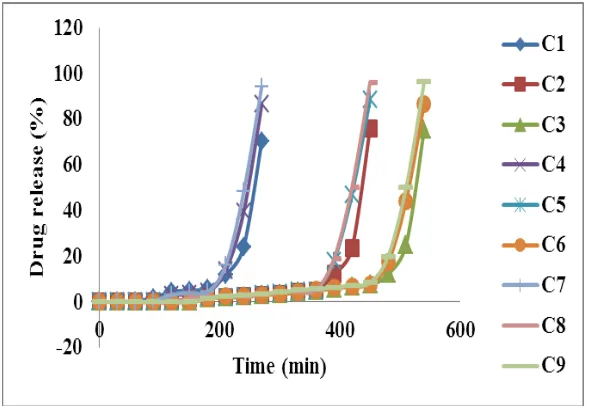
Fig. 4: Dissolution profile of Batches C1-C9
[image:11.595.78.516.353.588.2]● In vitro Drug Release Study
Table 12: % Drug release of batches C1-C9
Solution for optimized batch
Time (min) Cumulative % drug release
C1 C2 C3 C4 C5 C6 C7 C8 C9
0 0 0 0 0 0 0 0 0 0
60 0.26 0 0 0 0 0 0 0 0
120 2.29 0 0 2.80 0 0 3.08 0 0
180 4.69 0.87 1.55 4.20 1.87 1.50 4.29 2.24 1.65
240 24.0 2.34 2.49 39.46 2.43 2.52 48.11 2.71 2.80
300 52.33 3.46 3.55 --- 4.01 3.55 --- 4.23 4.20
360 77.42 4.95 4.95 --- 5.04 5.81 --- 5.32 5.69
390 --- 12.13 5.88 --- 18.00 6.25 --- 18.72 6.35
420 --- 23.41 6.81 --- 47.10 6.81 --- 50.13 7.19
450 --- 75.83 7.47 --- 88.70 7.75 --- 96.16 8.40
480 --- --- 8.10 --- --- 8.26 --- --- 9.87
510 --- --- 24.97 --- --- 44.21 --- --- 50.09
540 --- --- 75.46 --- --- 86.86 --- --- 96.35
Ingredients (mg/tab) Optimized batch
Diclofenac Sodium 50
PVP K30 5
Anhydrous lactose q.s.
Test substance 7
Starch 5
Magnesium stearate 1
Talc 1
Coating Ratio (Eudragit S100) 300
Composition of opitimized batch
Comparative Studies
From above studies, optimized final batch containing 7% of Hibiscus Rosa Sinensis Linnand
coating material 300mg was selected for further comparative study with pharmaceutically
accepted superdisintegrant namely sodium starch glycolate and cross carmellose sodium.
Evaluation of comparative batches J1-J3 Drug Release Study
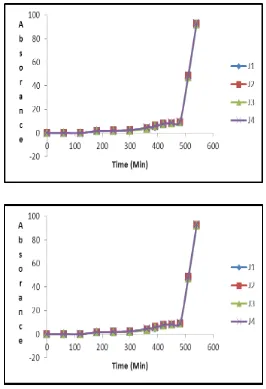
The dissolution data of batches J1-J3 revealed that, batch J1 i.e. optimized batch containing
Hibiscus Rosa Sinensis Linnshows same drug release when compared with batch J2 and J3.
Which indicate that Hibiscus Rosa Sinensis Linn can be use as novel superdisintegrant in
development of pulsatile drug delivery system. Table no. 13 summarized percent drug release of comparative batches J1-J3. Dissolution profile of the batches J1-J3 shown in figure
5.
Table 13. % Drug release of the batches J1-J3 Sr.
No.
Superdisintegrant conc. (mg)
coating ratio (mg)
Q7.5 (Lag time)
QCDR
(%CDR) Desirability
1 7 300 7.5 90.00 1.000
Time (min) J1 J2 J3
0 0 0 0
60 0 0 0
120 0 0 0
180 1.59 1.60 1.65
240 2.15 2.40 2.46
300 3.55 4.20 4.57
360 5.04 5.97 5.70
390 28.42 30.10 32.14
420 46.54 48.69 48.78
450 91.32 92.38 93.01
480 9.02 9.12 9.14
510 46.54 48.69 47.29
Fig 5. Dissolution profile of the batches J1-J3
Stability Studies
Therefore, from above studies optimized final batch was selected for further stability
consideration. Hence this batch was repeated and repeated batch was kept for stability studies
as per ICH guidelines in Glass vial packing. Samples were withdrawn according to the
sampling plan after 1 month. Accelerated stability studies were analyzed for in-vitro
dissolution profiles. From the stability studies of the optimized batches it was found that the
tablets remained stable even after exposing to high temperature and moisture conditions. The
dissolution profile of drug from the tablets was found to decrease to some extent after
stability. The dissolution profiles for 3 month stability are given as below:
Table 14: Evaluation parameters for stability batches
Para. Batch No. 01 Batch No. 02 Batch No. 03
In. 1 2 3 In. 1 2 3 In. 1 2 3
CONCLUSION
The outcome of the present study indicated that natural superdisintegrant like Hibiscus Rosa
Sinensis Linn mucilage exhibits excellent disintegrating property. The increase in lag time
was observed with an increase in Eudragit S100 concentration and decreased concentration of
novel superdisintegrant. The comparison of Hibiscus Rosa Sinensis Linn as a novel
superdisintegrant with pharmaceutically acceptable superdisintegrants for in vitro drug
release study shows almost similar results and thus Hibiscus Rosa Sinensis Linn can be used
in development of pulsatile dosage form. As primary ingredients are cheap, biocompatible,
biodegradable and easy to manufacture, they can be used as superdisintegrant in place of
currently marketed synthetic superdisintegrating agents.
ACKNOWLEDGEMENTS
The authors are thankful to Aarti Pharma Ltd., Thane, India for providing gift samples of
Diclofenac Sodium BP. The authors are also grateful to Principal (SNJB’s SSDJ College of
Pharmacy, Neminagar, Chandwad, Nashik) for providing necessaryfacilities to carry out this
work.
REFERENCES
1. Bi-Botti C. Y. and Youan. Chronopharmaceutics: gimmick or clinically relevant approach
to drug delivery. J cont Rel., 2004; 98: 337-353.
2. Gandhi B.R., Mundada A.S., and Gandhi P.P. Chronopharmaceutics: As a clinically
relevant drug delivery system. Drug Del., 2011; 18: 1–18.
3. Michael H.S. and Nicholas A.P. Chronobiology: drug delivery, and chronotherapeutics.
Adv Drug Del Rev., 2007; 59: 828–851.
4. Alessandra M., Lucia Z., Maria D., Del C., Giulia L. and Andrea G; Oral pulsatile
delivery: Rationale and Chronopharmaceutical formulations. Int J Pharm, 2010; 398:
1–8.
5. Asim S.M., Nikhil B., Kazi M.K., Arijit G., Sugata C., Mamata B. and Ketousetuo K.
Drug delivery system based on Chronobiology. J Cont Rel., 2010; 147: 314–325.
6. Shah Viral and Patel Rucha; Studies on mucilage from Hibiscus rosa-sinensis linn as oral
disintegrant, International Journal of Applied Pharmaceutics, 2010; 2(1): 18-21.
7. Ameena K, Dilip C, Saraswathi R, Krishnan PN, Sankar C, Simi SP; Isolation of the
mucilage from Hibiscus rosasinensis linn. and Okra and studies of the binding effects of
8. Indian Pharmacopeia. The Indian Pharmacopoeia Commission, Ghaziabad., 2007;
477-478, 1020-1021.
9. Borusu Sharada, B. V. Basavaraj, S. Bharath, R. Deveswaran, V. Madhavan; Sustained
release matrix tablets of indomethacin using Hibiscus rosa-sinensis as release retardant,