Energy Efficient Portable Refrigerator (EEPR)
Mrs. Harshada Mhetre1, Akshay Karhade2, Jay Marve3 Rashmi Singh4
1
Asst. Professor, Department of Electronics Engineering, Bharati Vidyapeeth Deemed University College of Engineering, Pune.
2, 3, 4
Student, Department of Engineering, Bharati Vidyapeeth Deemed University College of Engineering, Pune.
Abstract: Energy Efficient Portable Refrigerator also abbreviated as EEPR, focuses on cooling down an object with maximum energy efficiency. The project is expected to cut the electric power supply by approximately 75% and hence making it very efficient. Solar energy which remains to be abundant source of energy is the source for starting up the project. The Peltier device is controlled utilizing the Solar Panel. The device incorporates heat sink and Peltier plates and thus bringing about the suction of heat from one end and discharge of heat from the other. Because of this, there is a temperature contrast on the two closures. The venture will center on the cooling end of the device. Once the task module has accomplished the expected temperature, to keep the temperature constant, One Therm® is utilized. The material is created utilizing aluminum thwart with nanoparticles sandwiched between it. The nanoparticles don't enable the cooling to escape and subsequently keeping up the temperature for 3 to 4 hours. Thermoelectric cooling uses the Peltier effect to create a heat flux between the junction of two different types of materials. A Peltier cooler, heater, or thermoelectric heat pump is a solid-state active heat pump which transfers heat from one side of the device to the other, with consumption of electrical energy, depending on the direction of the current. Such an instrument is also called a Peltier device, Peltier heat pump, solid state refrigerator, or thermoelectric cooler (TEC). It can be used either for heating or for cooling, although in practice the main application is cooling. It can also be used as a temperature controller that either heats or cools.
Keywords: EEPR, nanoparticles, portable, refrigerator, energy.
I. INTRODUCTION
Solar as an energy resource is capable of yielding energy that can displace electricity generation from coal, natural gas, nuclear power, wind power, and other supply-side resources. Interests in vitality proficiency and the subsequent asset benefits are considered straightforwardly into utility vitality asset basic leadership about putting resources into new assets and working existing frameworks.
The world is confronting energy emergency. The non-sustainable assets are exhausting at an exponential rate. Because of such unfavorable circumstance, we are constrained to move our concentration towards sustainable and proficient power supply. This venture will center on utilization of sun powered energy with boosted productivity.
The module will consolidate sun-based energy with the Peltier effect for decrease in the temperature. Peltier effect is an effect in which temperature contrast can be estimated between two unique metals or semiconductors associated at one intersection when the electric current is gone through the other intersection.
Peltier cooler can also be used as a thermoelectric generator. When operated as a cooler, a voltage is applied across the device, and as a result, a difference in temperature will build up between the two sides. When operated as a generator, one side of the device is heated to a temperature greater than the other side, and as a result, a difference in voltage will build up between the two sides (the Seebeck effect). However, a well-designed Peltier cooler will be a mediocre thermoelectric generator.
This venture centers on the cooling end of the device and subsequently making it the wellspring of temperature decrease. To keep down the temperature One Therm® is being utilized. The creation is an aluminum thwart with sandwiched nanoparticles which don't enable cooling to escape and thus keeping a constant temperature of a given region.
With the given materials and devices, the undertaking tends to accomplish the thought process of energy proficient cooling and keeping down the temperature for 3 to 4 hours (without control supply) and henceforth satisfying the planned utilization of keeping the protest cool with Minimum power supply.
A. Briefing about EEPR
Thermoelectric coolers operate by the Peltier effect (which also goes by the more general name thermoelectric effect). The device has two sides, and when a DC electric current flows through the device, it brings heat from one side to the other, so that one side gets cooler while the other gets hotter. The "hot" side is attached to a heat sink so that it remains at ambient temperature, while the cool side goes below room temperature. In some applications, multiple coolers can be cascaded together for lower temperature. This undertaking centers on the cooling end of the device and henceforth making it the wellspring of temperature decrease. To keep down the temperature One Therm® is being utilized. The innovation is an aluminum thwart with sandwiched nanoparticles which don't enable cooling to escape and subsequently keeping down the temperature of a given zone.
With the given materials and devices, the task tends to accomplish the thought process of energy proficient cooling and keeping down the temperature for 3 to 4 hours (without electricity supply) and subsequently satisfying the planned use of keeping the object cool with least power supply.
In refrigeration applications, thermoelectric junctions have about 1/4th the efficiency compared to conventional means (they offer around 10–15% efficiency of the ideal Carnot cycle refrigerator, compared with 40–60% achieved by conventional compression-cycle systems (reverse Rankine systems using compression/expansion). Due to this lower efficiency, thermoelectric cooling is generally only used in environments where the solid-state nature (no moving parts, low maintenance, compact size, and orientation insensitivity) outweighs pure efficiency.
Peltier (thermoelectric) cooler performance is a function of ambient temperature, hot and cold side heat exchanger (heat sink) performance, thermal load, Peltier module (thermopile) geometry, and Peltier electrical parameters.
Applications for thermoelectric modules cover a wide spectrum of product areas. These include equipment used by military, medical, industrial, consumer, scientific/laboratory, and telecommunication organizations. Uses range from simple food and beverage coolers for an afternoon picnic to extremely sophisticated temperature control systems in missiles and space vehicles. Unlike a simple heat sink, thermoelectric cooler permits lowering the temperature of an object below ambient as well as stabilizing the temperature of objects which are subject to widely varying ambient conditions. A thermoelectric cooler is an active cooling module whereas a heat sink provides only passive cooling.
Thermoelectric coolers generally may be considered for applications that require heat removal ranging from milli watts up to several thousand watts. Most single-stage TE coolers, including both high and low current modules, can pump a maximum of 3 to 6 watts per square centimeter (20 to 40 watts per square inch) of module surface area. Multiple modules mounted thermally in parallel may be used to increase total heat pump performance. Large thermoelectric systems in the kilowatt range have been built in the past for specialized applications such as cooling within submarines and railroad cars. Systems of this magnitude are now proving quite valuable in applications such as semiconductor manufacturing lines.
II. LITERATURE REVIEW
As refrigerators, they are friendly to the environment as CFC gas or any other refrigerant gas is not used. Due to these advantages, the thermoelectric devices have found a large range of applications. In this paper, basic knowledge of the thermoelectric devices and an overview of these applications are given.
III. SPECIFICATIONS
A. Peltier Device
A Peltier cooler, heater, or thermoelectric heat pump is a solid-state active heat pump which transfers heat from one side of the device to the other, with consumption of electrical energy, depending on the direction of the current. Such an instrument is also called a Peltier device, Peltier heat pump, solid state refrigerator, or thermoelectric cooler (TEC). Thermoelectric cooling uses the Peltier effect to create a heat flux between the junctions of two different types of materials. It can be used either for heating or for cooling, although in practice the main application is cooling. The device has two sides, and when a DC electric current flows through the device, it brings heat from one side to the other, so that one side gets cooler while the other gets hotter. The "hot" side is attached to a heat sink so that it remains at ambient temperature, while the cool side goes below room temperature. It can also be used as a temperature controller that either heats or cools.
This technology is far less commonly applied to refrigeration than vapor-compression refrigeration is. The primary advantages of a Peltier cooler compared to a vapor-compression refrigerator are its lack of moving parts or circulating liquid, very long life, invulnerability to leaks, small size, and flexible shape. Its main disadvantages are high cost and poor power efficiency. Many researchers and companies are trying to develop Peltier coolers that are cheap and efficient.
A Peltier cooler can also be used as a thermoelectric generator. When operated as a cooler, a voltage is applied across the device, and as a result, a difference in temperature will build up between the two sides. When operated as a generator, one side of the device is heated to a temperature greater than the other side, and as a result, a difference in voltage will build up between the two sides (the Seebeck effect). However, a well-designed Peltier cooler will be a mediocre thermoelectric generator and vice versa, due to different design and packaging requirements.
Fig.1 TEC-12706 Peltier device
1) Model: TEC1-12706, TEC-12712
2) Size: 40mm x 40mm x 4mm
3) Operates from 0~15.2V DC and 0~6A for 12706, in a good condition with heat sink, current will rise to 4A.
4) up to 12A for 12712
5) Operates Temperature: -55℃~83℃
6) Max power consumption: 60 Watts for 12706, 114W for 12712
7) These devices must be used together with a heat sink to avoid burned in 2 seconds after powered up
8) Each device is full inspected and tested
9) Fitted with 6-inch insulated leads
10)1x Backside Heatsink, 1x front side heatsink
11)12V fan and fan protective shield
13)40×40 Peltier side fixture
14)2x 10cm the heat thinkable tube
15)DC 2.1mm to cable connector.
For this project we are using two TEC-12706 Peltier devices with specifications of 6A DC current supply and 12V voltage supply.
B. Insulated Box
Thermocol sheets or blocks are lightweight and eco-friendly and enable in easy transportation. They are used for packaging of glass articles, gift articles, and electronic components. They also have a wide application in the automobile industry. They are widely used as insulation tiles in homes, showrooms, offices, IT buildings, banks, hotels and other similar establishments.
1) Specifications
a) 480mm x 320mm x 350mm
b) We can develop all customized sizes from above sizes of the blocks in different density required
2) Density
Can be supplied from 13 - 25 kg/m3 Volume:
38.64itres
3) Features
1) Available in varied sizes for a wide range of applications
2) Lightweight & eco-friendly Application
C. Heat Sink
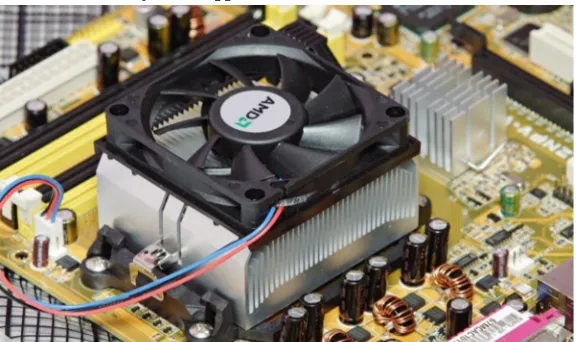
A heat sink is a passive heat exchanger that transfers the heat generated by an electronic or a mechanical device to a fluid medium, often air or a liquid coolant, where it is dissipated away from the device, thereby allowing regulation of the device's temperature at optimal levels. In computers, heat sinks are used to cool central processing units or graphics processors. Heat sinks are used with high-power semiconductor devices such as power transistors and optoelectronics such as lasers and light emitting diodes (LEDs), where the heat dissipation ability of the component itself is insufficient to moderate its temperature.
[image:4.612.163.451.539.710.2]A heat sink is designed to maximize its surface area in contact with the cooling medium surrounding it, such as the air. Air velocity, choice of material, protrusion design and surface treatment are factors that affect the performance of a heat sink. Heat sink attachment methods and thermal interface materials also affect the die temperature of the integrated circuit. Thermal adhesive or thermal grease improve the heat sink's performance by filling air gaps between the heat sink and the heat spreader on the device. A heat sink is usually made from copper or aluminum. Copper is used because it has many desirable properties for thermally efficient and durable heat exchangers. First and foremost, copper is an excellent conductor of heat. This means that copper's high thermal conductivity allows heat to pass through it quickly. Aluminum heat sinks are used as a low-cost, lightweight alternative to copper heat sinks, and have a lower thermal conductivity than copper.
For this project we are using total of four heat sinks. Since two Peltier modules are to be constructed for the refrigerator, two heat sinks for each module is required. Two heat sinks with dimensions of 3.5 x 3.5 inches and two heat sinks of dimensions 1.5 x 1.5 inches are required. Each heat sink will be attached to hot and cold side of the Peltier device and hence dissipating respective temperature outcomes. On each heat sink, a cooling fan is installed to help in dissipating the respective temperatures.
D. Fan
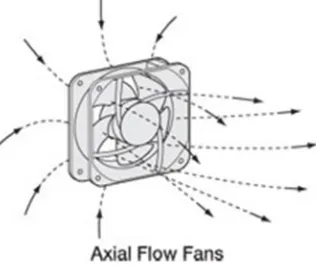
[image:5.612.226.384.242.376.2]A cooling fan is generally used in the computers and laptops for maintaining the temperature under a specified threshold. Generally if the graphic card, RAM and other processors power consumption and speed increases, as a side effect they start to generate heat as well. At high temperatures the processors and other components do not work efficiently and thus leading to further damage. To avoid such situations, a cooling fan is installed to circulate air and to maintain the temperature. This is the usage of a cooling fan. The diagram below shows how the air is circulated through the fan. The hot air generated due to the overheating of components inside the computer or laptop is thrown out of the device through the fan.
Fig 2. Air flow from the cooling fan
For this particular project, the purpose to be served is slightly different for the fan. Two cooling fans are to be used on each Peltier module, one for circulating the cool air and other to dissipate the hot air. Hence the hot side with help of fan will dissipate hot air outside the refrigeration box while the cold side with help of cooling fan will dissipate inside the box.
The specifications for the cooling fan installed on cool side are given as:
1) Dimensions – 5cm x 5cm
2) 0.25A DC current
3) 12V voltage supplyThe specifications for the cooling fan installed on hot side are given as:
4) Dimensions – 9cm x 9cm
5) 0.25A DC current
6) 12V voltage supply
E. Solar Panel
Solar panels absorb sunlight as a source of energy to generate electricity or heat. A photovoltaic (PV) module is a packaged, connect assembly of typically 6x10 photovoltaic solar cells. Photovoltaic modules constitute the photovoltaic array of a photovoltaic system that generates and supplies solar electricity in commercial and residential applications.
Each module is rated by its DC output power under standard test conditions (STC), and typically ranges from 100 to 365 Watts (W). The efficiency of a module determines the area of a module given the same rated output – an 8% efficient 230 W module will have twice the area of a 16% efficient 230 W module. There are a few commercially available solar modules that exceed efficiency of 22% and reportedly also exceeding 24%.
A single solar module can produce only a limited amount of power; most installations contain multiple modules. A photovoltaic system typically includes an array of photovoltaic modules, an inverter, and a
Fig. 3: Solar PV modules (top) solar hot water panels (bottom) mounted on rooftops
1) Material: Silicon; Color: Grey
2) Item Dimensions (L x B x H): 84 cm x 54 cm x 5 cm
3) Wattage: 50 Watts
4) Package Contents: 50-Watt Solar Panel
5) Warranty: 25 Years
F. Battery
An electric battery is a device consisting of one or more electrochemical cells with external connections provided to power electrical devices such as flashlights, smartphones, and electric cars. When a battery is supplying electric power, its positive terminal is the cathode and its negative terminal is the anode. The terminal marked negative is the source of electrons that when connected to an external circuit will flow and deliver energy to an external device. When a battery is connected to an external circuit, electrolytes can move as ions within, allowing the chemical reactions to be completed at the separate terminals and so deliver energy to the external circuit. It is the movement of those ions within the battery which allows current to flow out of the battery to perform work
The battery used for this particular venture has specifications of 12V voltage supply and 10A DC current supply. The battery is to be connected to the solar panel and hence storing the energy for later usage.
G. Temperature Controller
For this project, two major components are used, Arduino UNO and temperature sensor LM35 to serve the purpose of temperature controller. The Arduino UNO is programmed in such a way that the ambient temperature in refrigerating box is maintained in the range of 10-12 degree Celsius.
H. Arduino
Arduino is an open source computer hardware and software company, project, and user community that designs and manufactures single-board microcontrollers and microcontroller kits for building digital devices and interactive objects that can sense and control objects in the physical and digital world. The project's products are distributed as open-source hardware and software, which are licensed under the GNU Lesser General Public License (LGPL) or the GNU General Public License (GPL), permitting the manufacture of Arduino boards and software distribution by anyone.
Arduino board designs use a variety of microprocessors and controllers. The boards are equipped with sets of digital and analog input/output (I/O) pins that may be interfaced to various expansion boards or Breadboards (shields) and other circuits. The boards feature serial communications interfaces, including Universal Serial Bus (USB) on some models, which are also used for loading programs from personal computers. The microcontrollers are typically programmed using a dialect of features from the programming languages C and C++. In addition to using traditional compiler toolchains, the Arduino project provides an integrated development environment (IDE) based on the Processing language project.
I. LM35
LM35 is a precision IC temperature sensor with its output proportional to the temperature (in ˚C). The sensor circuitry is sealed and therefore it is not subjected to oxidation and other processes. With LM35, temperature can be measured more accurately than with a thermistor. It also possess low self-heating and does not cause more than 0.1 ˚C temperature rise in still air.
The operating temperature range is from -55°C to 150°C. The output voltage varies by 10mV in response to every ˚C rise/fall in ambient temperature, i.e., its scale factor is 0.01V/ ˚C.
Pin No: Function, Name
1) Supply voltage; 5V (+35V to -2V) VCC
2) Output voltage (+6V to -1V) Output
3) Ground (0V) Ground
IV. OBSERVATION
S.NO. TIME( TEMPERATURE WAS SUSTAINED)
(MIN)
TEMPERATURE (˚C)
1 0 23.5
2 1 25.48
3 2 26.95
4 3 28.42
5 4 29.89
6 5 30.38
7 6 30.87
8 7 31.85
9 8 31.85
10 9 32.83
11 10 33.32
V. FUTURE SCOPE
This electronic device has the main advantage of being energy efficient and as a result has wide scope in industrial, household and medical sector. It can be used to replace the commercial food refrigerator with a more energy efficient option. All the food items and tiffin could be kept cold for more hours by installing this device to sustain the cooling in the food. In medical sector too, this device can be used to keep the medical instruments bacteria free while saving energy side by side.
VI. CONCLUSION
Electrically Efficient Portable Refrigerator (EEPR) is a reliable alternative to another portable refrigerator. It is cost efficient and ecofriendly which is the most wanted requirement of today’s era. By controlling the temperature range of the cooling unit, it can be used in various sectors like in the rural areas where there’s no electricity to preserve the food or no electrical cooling devices available, near the coasts from where the marine edibles need to be transported to the market area, medical area for storing pharmaceuticals and keeping products bacteria free. The efficiency of the refrigerator can be increased by increasing the number of Peltier plate module which will eventually help in decreasing the temperature in less time. Number of Peltier plate modules used can be calculated using the cooling transfer formula. The biggest advantage of this device is that it can keep the cooling for 3-4 hours and hence can be used for commercial and corporate sectors to keep the food (for an example, we can say, ice cream) cold and save the electricity.
REFERENCES
[1]. International Research Journal of Engineering and Technology (IRJET) e-ISSN: 2395 -0056 Volume: 04 Issue: 06 | June -2017
[2]. Fabrication and CFD analysis of cylindrical heat sink having longitudinal fins with rectangular notches Kiran Beldar1, Mr. Avinashi Patil2 (2016) [3]. Peltier module for refrigeration and heating using embedded system (2015): Recent Developments in Control, Automation and Power Engineering
(RDCAPE), 2015.
[4]. Lasance, C.J.M and Eggink, H.J., 2001, A Method to Rank Heat Sinks in Practice: The Heat Sink Performance Tester, 21st IEEE SEMI-THERM Symposium.
[5]. "Photovoltaic System Pricing Trends – Historical, Recent, and Near-Term Projections, 2014 Edition" (PDF). NREL. 22 September 2014. p. 4. Archived (PDF) from the original on 29 March 2015.
[6]. "April 25, 1954: Bell Labs Demonstrates the First Practical Silicon Solar Cell". APS News. American Physical Society. 18 (4). April 2009. [7]. M. Mujahid Rafique and P. Gandhdasan, “Energy, Exergy and Anergy Analysis of a Solar Desiccant Cooling System” (2016)
[8]. A R DIGITECH International Journal of Engineering, Education and Technology (ARDIJEET) www.ardigitech.in ISSN 2320-883X, VOLUME 05 ISSUE 02 01/04/2017 Thermal Analysis of Heat sink for electronic devices Chintak Kamlesh Parasha, Shailesh Ravindra Nikam (2017)
[9]. Buhayar, Noah (28 January 2016) Warren Buffett controls Nevada’s legacy utility. Elon Musk is behind the solar company that’s upending the market. Let the fun begin. Bloomberg Businessweek.