Abstract—Ethyl acetate with the minimum purity of 85.0% by mole is inevitably needed as an active solvent used in a wide range of applications across many industries. It is normally produced by the esterification of ethanol and acetic acid. Due to the equilibrium limitation, it has been reported that the ethyl acetate with the maximum purity of 52.0% can be obtained in a batch reactor. To achieve higher purity, further purification unit is added with the use of some energy. Alternatively, to overcome the limitation, a batch reactive distillation column, combining the reaction and separation into a single stage, is proposed. The ethyl acetate is always distilled and withdrawn out the reaction zone and the equilibrium is shifted to the right. The reactant conversion is then improved. Therefore, the objective of this work is to study an approach to produce ethyl acetate with the purity of 90.0% by mole by a batch reactive distillation column. Based on open loop simulations, the distillation with constant reflux ratio cannot achieve the product specification. Thus, dynamic optimization strategy is proposed to handle this problem. The optimization problem is formulated to maximize the weight of distillate product for a given product specification, reboiler heat duty, and batch operating time. For the process safety—preventing the dried column and fractured, minimum reflux ratio must be determined in advance and then an optimal reflux profile is calculated to achieve optimal product yield. Simulation results show that 90.0% purity of distillate product can be produced by the dynamic optimization programming with two or more time intervals. Besides, the higher time intervals results in the higher distillate product.
Index Terms—batch reactive distillation, dynamic optimization, high purity ethyl acetate, optimal control
I. INTRODUCTION
Ethyl acetate, available in 3 grades: 85.0-88.0%, 99.0%, and 99.5%, is used as an active solvent in industrial lacquers and surface coating resins. It is also used as an extraction solvent in the production of pharmaceuticals and food, and as a carrier solvent for herbicides [1].
The ethyl acetate is normally produced by the
Manuscript submitted March 3, 2010. This work was financial supported by the Thailand Research Fund through the Royal Golden Jubilee Ph.D. Program under Grant PHD/0183/2548.
P. Kittisupakorn is with the Department of Chemical Engineering, Chulalongkorn University, Bangkok 10330 Thailand (corresponding author, tel: +66-2218-6892; fax: +66-2218-6877; e-mail: [email protected]).
K. Konakom and A. Saengchan are the doctoral students of the Department of Chemical Engineering, Chulalongkorn University, Bangkok, 10330 Thailand.
I. M. Mujtaba is with the School of Engineering, Design & Technology, University of Bradford, Bradford BD7 1DP, UK.
esterification reaction of ethanol and acetic acid. Helminen et al. [2] reported that the ethyl acetate with 52.0% purity maximum can be occurred in a batch reactor. The product purity is very low because of the equilibrium limitation resulting in the need of further purification. Therefore, the combination of reaction and separation processes into a single unit like reactive distillation column is used.
However, there has been only very few papers published on the industrial grade ethyl acetate production operating in a batch mode. One literature has proposed a nonlinear state estimator and control system to achieve the ethyl acetate of 93.44% by mole after operating under total reflux for 25 hrs [3]. Other literatures have presented the production of ethyl acetate using a batch reactive distillation column, focused on simulation, optimization [4], [5], and control of the distillate product at a maximum of 80.0% by mole of ethyl acetate [6], [7]. These works have shown the difficulty to achieve the industrial grade ethyl acetate in a shift of 8 hrs.
In this work, the production of industrial grade ethyl acetate of 90.0% by mole by 8 hrs using a conventional batch reactive distillation column is proposed. A dynamic optimization strategy is incorporated to solve an optimal control problem which is formulated to determine an optimal reflux ratio. The objective function of the control problem is to maximize the weight of distillate product with reboiler heat duty of 50 MJ/hr.
II. PROCESS DESCRIPTION
A batch reactive distillation column to produce the ethyl acetate studied in this work is shown in Fig. 1. It consists of 10 stages; the first stage is the total condenser and the tenth stage is the reboiler. Information regarding the column
Fig. 1. Conventional batch reactive distillation
High Purity Ethyl Acetate Production with
a Batch Reactive Distillation Column using
Dynamic Optimization Strategy
Table I. Column specifications
System: Acetic acid/ethanol/ethyl acetate/water Total feed charge, H10: 5.0 kmol
Feed composition (mole fraction): 0.45/0.45/0.0/0.1 Column holdup
Reflux drum holdup: 0.1 kmol
Internal plates: 0.0125 kmol
Heat supplied to the reboiler, QR: 50 MJ hr/
Column pressure: 1.013 bar
Table II. Vapor-liquid equilibrium and kinetic data for ethanol esterification
Vapor-Liquid Equilibrium: 2
,1 2.25 10 7.812,
j j
K T Tj 347.6K
,1 0.001, j
K Tj 347.6K
3 ,2
logKj ( 2.3 10 ) / Tj 6.588 3
,3
logKj ( 2.3 10 ) / Tj6.742
3 ,4
logKj ( 2.3 10 ) / Tj6.484
Kinetic data:
Rate of reaction, gmol/(L min ); rk C C1 1 2k C C2 3 4 where rate constants are k14.76 10 4 and
4
2 1.63 10 /( ),
k L gmol min and Ci stands for concentration in gmol L/ for the ith component
configuration, feed, feed composition, column holdup, etc., is given in Table I.
A chemical reaction occurred in the column in liquid phase give ethyl acetate as a main product and water by the esterification of ethanol with acetic acid:
(1) (2) (3) (4)
Boiling point (K) 391.1 351.5 350.3 373.2
acetic acidethanol ethyl acetatewater
For the ethanol esterification reaction, the vapor-liquid equilibrium and kinetic data presented by [5] are listed in Table II.
The ethyl acetate is the lightest component in the mixture. The continuous withdrawal of ethyl acetate as distillate shifts the chemical equilibrium further to the right and consequently, the reactant conversion is improved. An example process is discussed in details in Appendix.
III. DYNAMIC OPTIMIZATION PROBLEM FORMULATION
A conventional batch reactive distillation model described by the system of differential algebraic equations (DAEs) presented in the Appendix can be written as:
( , , , , ) 0
f t x x u v (1)
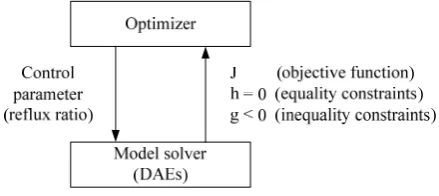
Fig. 2. Feasible path optimization strategy with consistent initial conditions
0 0 0 0
( 0, , , , ) 0
f t x x u v (2)
where x is the set of all the variables (differential and algebraic), x values are the time derivatives of the differential variables, u values are the time dependent control variables, v is a set of constant parameters, and t is the time. The function f is assumed to be continuously differentiable with respect to all arguments.
A dynamic optimization problem is formulated and solved using an optimal control algorithm. The optimization problem for the DAE system given by (1) is formulated as a nonlinear programming problem with the time-varying controls parameterized into a finite set of control parameters. Other optimization variables: time independent i.e., design parameters, initial conditions, and the final batch time, are optimized to give a maximum of a general objective function
( , ( ), ( ), (f f f f
)
, ) 0F t x t x t u t v , subject to any constraints as shown in Fig. 2. Details of the algorithm are in [8]-[10]. A robust code is used for DAE integration, with an efficient successive quadratic programming (SQP) method used for optimization of the finite number of parameters.
In this work, a maximum distillate problem for batch distillation is considered, subject to a given product purity constraints. The reflux ratio is selected as the control parameters to be optimized for the fixed batch time and reboiler heat duty to so as to maximize the weight of the distillate product. The optimization problem can be stated as follows:
Given: the column configuration, the feed mixture, reboiler heat duty, and purity specification for a key distillate component in the accumulator (x*a,3 0.90).
Determine: the optimal reflux ratio profile r tf( ) for the operation.
So as to maximize: an objective function defined for the weight of distillate product in the accumulator
Subject to: equality and inequality constraints
Mathematically the optimization problem can be written as:
( ) f
r t Max J
subject to xa,3
(
tf)x*a,3 and f t x x u v( , , , , ) 0 with f t x x u v( ,0 0, 0, 0, )0( ) 1.0 f
where J is the weight of the distillate product, xa,3( )tf is the composition of the third component, ethyl acetate, in the accumulator at the end of the operation (tf), ( )r tf is the reflux ratio as a function of time (t).
It is noted that, for process safety, the lower bound on reflux ratio (lb) must be determined in advance by trial the reflux ratio in an open loop process simulation.
To solve the optimal control problem, a full integration of the DAE system is required by each “function evaluation” of the optimizer. “Gradients” of the objective function and constraints with respect to optimization variable are evaluated in an efficient way using adjoint variables. In this work, the optimal reflux ratio profile is approximated by a piecewise constant function.
In the following section we will first determine the minimum value of the internal reflux ratio which prevents the column from the dry out condition. Next, the distillation operated under constant reflux ratio is considered. Finally, the use of dynamic optimization strategy for improving the product purity is investigated.
IV. RESULTS AND DISCUSSIONS
The esterification process has been simulated with the model presented in the Appendix. Fig. 3. shows the amount of liquid remaining in the bottom with respect to the assigned reflux ratio. The simulation shows that when total reflux ratio is used, the entire distillate product returns to the column and the holdup in the reboiler remains constant. In contrast, if no reflux ratio is set, the entire distillate product is withdrawn to the accumulator. Nevertheless, for the sake of process safety, the reflux ratio cannot be set lower than 0.51 because the entire liquid mixture in the column will be dried out and the column could be cracked. Consequently, the minimum reflux ratio of 0.51 is used as lower bound on the control parameters in optimization algorithm.
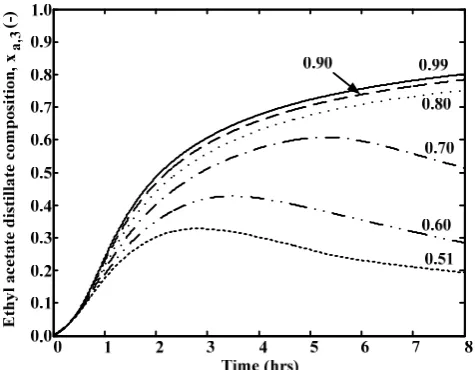
Fig. 4. shows the distillate composition profiles when the reflux ratio is set constant all along the operating time. It has been found that the purity of distillate product increases when the reflux ratio is close to one. At the final batch time, the maximum purity of 80.1% by mole of ethyl acetate can be
R
ebo
iler
hol
dup,
H
(kmol)
[image:3.595.306.544.51.236.2]10
Fig. 3. Reboiler holdup vs. internal reflux ratio
Fig. 4. Distillate composition profiles at different reflux ratios
Table III. The distillate composition in the accumulator at the final batch time with different reflux ratios
Reflux ratio xa,3(tf
)
0.99 0.8007 0.90 0.7838 0.80 0.7499 0.70 0.5143 0.60 0.2852 0.51 0.1940
produced as shown in Table III. Not surprisingly, the purity of 90.0% by mole of ethyl acetate cannot be achieved by fixing only one reflux ratio. For this reason, the dynamic optimization strategy with two or more intervals of reflux ratio is applied to solve this problem.
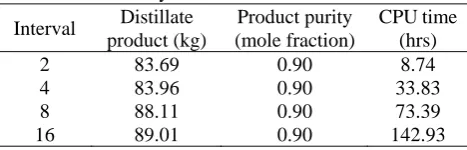
[image:3.595.307.543.584.773.2]Fig. 5. shows the optimal reflux ratio profiles when the batch operating time is divided into 2, 4, 8, and 16 equal stages, respectively. The weights of distillate product with various time intervals are shown in Table IV. It can be seen that using dynamic optimization strategy with two or more time intervals can drive the purity of distillate product to the given high purity specification. From the simulation results, it is noticed that the column must be operated under the total reflux (Rf 1.00) for a period of time before withdrawal of
[image:3.595.49.283.588.774.2]Table IV. Summary of the results Interval Distillate
product (kg)
Product purity (mole fraction)
CPU time (hrs)
2 83.69 0.90 8.74 4 83.96 0.90 33.83 8 88.11 0.90 73.39
16 89.01 0.90 142.93
the distillate product. This is because the distillation under total reflux drives the purity of the mixture at the top of the column close to pure lightest component. In addition, the increasing of time intervals can produce more distillate product but with the expenses of high computational time.
V. CONCLUSION
In this work, the industrial grade ethyl acetate of 90.0% by mole by 8 hrs by a conventional batch reactive distillation column is presented. The dynamic optimization strategy is incorporated to solve an optimization problem formulating with an objective function: to maximize the weight of distillate product for a given product specification, reboiler heat duty, and batch operating time. For the process safety—preventing the dried column and fractured, the minimum reflux ratio must be determined first by trial and error in an open loop operation. It has been found from the open loop simulations that the minimum value of reflux ratio of 0.51 is used in the dynamic optimization programming, and the distillation with a fixed constant reflux ratio all along the batch time cannot achieve the product specification. Ninety percentages purity of the distillate product can be produced by an optimal reflux ratio profile with two or more time intervals. The increasing of time intervals results in the increasing of distillate product. Finally, it is noted that the dynamic optimization strategy proposed in this paper is certainly applicable to achieve high product purities in any chemical reaction schemes.
APPENDIX
Mathematical models of a conventional batch reactive distillation column have been developed based on the following assumptions:
- Constant molar holdup in the condenser and in the intermediate plates
- Constant operating pressure - Fast energy dynamics
- Total condensation without subcooling - Negligible heat losses
- Negligible changes in liquid enthalpies - Negligible vapor holdup
- Theoretical plates - Adiabatic column
- Perfect mixing of liquid and vapor on the plates
- Chemical reaction taking place on the plates, in the condenser, and in the reboiler
The model equations based on mass and energy balances are summarized below.
Accumulator: i = 1 to nc Total mass balance
a D
dH L dt
(3)
Component balance ,
,
( a i a)
D i D d x H
x L dt
(4)
Condenser holdup tank: j = 1; i = 1 to nc Total mass balance
2 1
C
C C
dH
V L n H
dt
(5)
where LC L1LD
It is noted that the reflux ratio is given as the internal reflux ratio, L L1 C . This leads to problem solving numerically within a certain bound (between 0 and 1 instead of 0 and ).
1 f
C
L R
L
(6)
Component balance ,
2 , 2 , 1,
( D i C)
i D i C i C d x H
y V x L r H
dt
(7)
Energy balance 1
2 2 1 1,
( L C) V L
C i R C C d h H
h V h L r H H Q
dt
(8)
Internal plate: j = 2 to (N1); i = 1 to nc Total mass balance
1 1
j
j j j j j j
dH
L V L V n H
dt
(9)
Component balance
,
1, 1 1, 1 , , ,
( j i j)
j i j j i j j i j j i j j i j
d x H
x L y V x L y V r H
dt
(10) Energy balance
1 1 1 1 ,
( Lj j) L V L V
j j j j j j j j j i R j
d h H
h L h V h L h V r H H
dt
(11)
Reboiler: j = N; i = 1 to nc Total mass balance
1 N
N N N N
dH
L V n H
dt
(12)
Component balance ,
1, 1 , ,
( N i N)
N i N N i N N i N d x H
x L y V r H
dt
(13)
Energy balance
1 1 ,
( L )
L V
N N
N N N N N i R N R d h H
h L h V r H H Q
dt
Physical properties and other equations:
, 1 c
n
j j i i
n r
(15)Equilibrium
, , ,
j i j i j i
y K x (16)
Restriction
, 1
1
c
n
j i i
y
(17)In this work, at the beginning of the batch operation, it is assumed that the reboiler, all the trays, and the reflux drum are filled with the liquid feed.
Nomenclature: L
j
h Liquid enthalpy of component iat stage j (kJ kmol/ ) V
j
h Vapor enthalpy at stage j (kJ kmol/ ) a
H Accumulator holdup (kmol) C
H Condenser holdup (kmol) j
H Internal plate holdup (kmol) N
H Reboiler holdup (kmol)
1, 2
k k Reaction rate constants ( /(L gmol min )) ,
j i
K Vapor-liquid equilibrium constant C
L Condenser liquid flow rate (kmol hr/ ) D
L Distillate liquid flow rate (kmol hr/ ) j
L Internal plate liquid flow rate (kmol hr/ ) c
n Number of component
N Number of stages including a reboiler and a total condenser
C
Q Condenser duty (kJ hr/ ) R
Q Reboiler duty (kJ hr/ )
, j i
r Reaction rate of component i at stage j (1 /hr) f
R Internal reflux ratio [0,1] j
T Temperature at stage j ( )K j
V Internal plate vapor flow rate (kmol hr/ ) N
V Reboiler vapor flow rate (kmol hr/ )
, a i
x Accumulated distillate liquid composition (mole fraction)
, D i
x Instant distillate liquid composition (mole fraction) ,
j i
x Internal plate liquid composition (mole fraction) ,
N i
x Reboiler liquid composition (mole fraction) ,
j i
y Internal plate vapor composition (mole fraction) ,
N i
y Reboiler vapor composition (mole fraction) j
n
Change in moles due to chemical reaction at stage j
R H
Heat of reaction (kJ kmol/ )
Subscripts:
i Component number (1, 2, ...,nc)
j Stage number (1, 2, ...,N) where 1 is condenser and N is reboiler
ACKNOWLEDGMENT
Financial support acknowledgment is placed in the unnumbered footnote on the first page.
REFERENCES
[1] P. Dutia, “Product focus,” Chemical Weekly, Aug. 2004, pp. 179-186.
[2] J. Helminen, M. Leppamaki, E. Paatero, and P. Minkkinen,
“Monitoring the kinetics of the ion-exchange resin catalysed esterification of acetic acid with ethanol using near infrared spectroscopy with partial least squares (PLS) model,” Chemom. Intell. Lab. Syst., vol. 44, 1998, pp. 341-352.
[3] A. K. Jana, and P. V. R. K. Adari, “Nonlinear state estimation and control of a batch reactive distillation,” Chem. Eng. J., vol. 33, 2009, pp. 516-526.
[4] R. M. Wajge, and G. V. Reklaitis, “RBDOPT: a general-purpose
object-oriented module for distributed campaign optimization of reactive batch distillation,” Chem. Eng. J., vol. 75, 1999, pp. 57-68.
[5] I. M. Mujtaba, and S. Macchietto, “Efficient optimization of batch
distillation with chemical reaction using polynomial curve fitting techniques,” Ind. Eng. Chem. Res., vol. 36, 1997, pp. 2287-2295.
[6] R. Monroy-Loperena, and J. Alvarez-Ramirez, “Output-feedback
control of reactive batch distillation columns,” Ind. Eng. Chem. Res., vol. 39, 2000, pp. 378-386.
[7] L. S. Balasubramhanya, and F. J. Doyle III, “Nonlinear model-based control of a batch reactive distillation column,” J. Process Control, vol. 10, 2000, pp. 209-218.
[8] A. Arpornwichanop, P. Kittisupakorn, and I. M. Mujtaba, “On-line
dynamic optimization and control strategy for improving the performance of batch reactors,” Chem. Eng. Process., vol. 44, 2005, pp. 101-114.
[9] I. M. Mujtaba, and S. Macchietto, “Optimal operation of
multicomponent batch distillation—multiperiod formulation and solution,” Comput. Chem. Eng., vol. 17, 1993, pp. 1191-1207.
[10] I. M. Mujtaba, and S. Macchietto, “Simultaneous optimization of