Abstract — Although advances in computer technology and related digital design have created remarkable new ways to present works of art and the high cost of creation can be decreased, not only directly affects for students’ development but also students’ creative and thinking skill. Then, the foundation of design classroom is an illustration that is affected. This is because using convenience technology tools without sufficient knowledge could lead to poorly-work. Therefore, this paper is to present a model of creative learning process based on the six thinking hats theory. As this learning process, the students can create and achieve better works. At the same time, the digital design tools have become important tools that can help our students work well based on their idea, creativity, imagination, and skill.
Keywords – Advanced Technology Effect, Graphic Design, Design Classroom, Education
I. INTRODUCTION
Modern learning process in a classroom has been strongly geared towards students with several tools that are called “new media’. In general, new media refers to new forms of human and media communication that have been transformed by the creative use of technology to fulfill the same basic social need to interact and transact. The examples of new media tools are digital tools, computer, related electronic resources, the Internet, and computer software/program. Therefore, at present, these have become to play a central role in education and the use of computer technology resources in classroom instruction is gaining immense popularity today. Teachers/instructors can benefit from these resources, while most of students will have considerable experience with them as well. Finally, they have become a necessity for a classroom instruction.
However, in the previous study [1, 2, 3, and 4], many researchers have studied that although these tools can benefit too much for instruction class, not only directly affects for students’ development but also students’ creative and thinking skill. Then, a foundation of design classroom is an illustration that is affected.
In a foundation of design classroom, it is also influenced by using too much computer technology and related digital
Ratanachote Thienmongkol worls for Department of New Media, Faculty of Informatics, Mahasarakham University in Thailand. (phone: 66-4375-4359; fax: 66-4375-4359; e-mail: ratanachote.t@ msu.ac.th).
Jantima Polpinij works for Department of Computer Scinece, Faculty of Informatics, Mahasarakham University in Thailand. (phone: 66-4375-4359; fax: 66-4375-4359; e-mail: jantima.p@ msu.ac.th).
design tools. This is because although these technologies have been seen as useful tools for graphic design and advances in computer technology and related digital design tools have created remarkable new ways to present the work of arts and the high cost of creation can be decreased, it is possible that using convenience technology tools without sufficient knowledge could lead to poorly-work. In addition, it is also possible that student’s creative skill and imagine may be limited because of using these in a foundation of design learning process. Meanwhile, it is well-known that creative thinking is a majority factor of design learning process.
Based on above, this paper aims to study and present a design learning process based on using computer technology and related digital tools in the foundation of design classroom. Our new activities apply the Six Hats thinking in the learning process. Providing the new activities can help our students to improve their creative thinking still, while they can use the convenience tools appropriately. Finally, they can create and achieve better works.
The rest of this paper is organized as follows. In section 2, it is out literature reviews and the problem-solving is given in Section 3. Finally, conclusion is drawn in Section 4.
II. A LEARNING PROBLEM AND LITERATURE REVIEWS
A. The Problem of Using Computer Technology and Related Digital Design Tools in the Foundation of Design Classroom
The foundation of design classroom is a majority subject for the first year undergraduate students of New Media Department, Faculty of Informatics, Mahasarakham University in Thailand. The detail of this subject is to introduce and lead them understanding in graphic design theories and approach and design tools and related applications. This is because these can help them to create and develop any well-work in the area of multimedia such as 2D and 3D animation, games, and web page design.
One case in this classroom, it can be found that the use of computer/program tools can provide a positive influence on the learning success of the foundation of design course. These have been seen as useful tools in the part of character design because these tools can enable the students to active participants in this class. Additionally, the advance technology tools also increase the number of art works.
Thus, in this case, my students do not hesitate to proceed although they are not sure which tools work well and which are likely to fail. The students only believe that the use of computer technology or digital design tools in the design
Ratanachote Thienmongkol and Jantima Polpinij
process can help to reduce time of working and cost of traditional design materials.
As above, it is possible that using convenient tools without sufficient knowledge could lead to a poor work. It also seems to lead my students to be limited in their skill, creative ideas, and imagination.
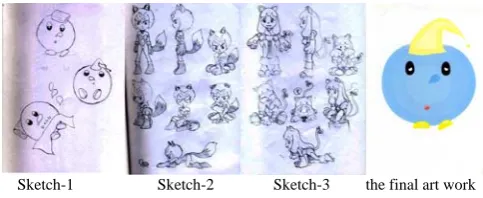
For an example of this case, when the students are provided an assignment, they firstly sketch their ideas on the paper-sketch. Then they must submit three works of character design. Afterwards, they will choose only one and transform it to a complete character that is built by a computer program such as 3D Max and Maya. Then, all of these are introduced and guided for them in the same time in the design laboratory. Afterwards, we let our students choose a tool for working by themselves. Finally, although the students have enough time to work (one month and half), about 70 percent of students firstly choose a sketch that has uncomplicated detail for working in the next step. This is because it is easy to create by using a digital design tool. That means using convenient tools without sufficient knowledge could lead to poor works. The examples are shown in Figure 1 and Figure 2.
[image:2.595.48.291.319.412.2]
Sketch-1 Sketch-2 Sketch-3 the final art work
Figure 1. An example of student’s work.
Sketch-1 Sketch-2 Sketch-3 the final art work
Figure 2. An example of student’s work.
As the sketch designs based on sketch-paper in Figure 1 and Figure 2, it can be seen that the students seem to imitate a Japanese character style. Then the students have chosen the sketches that have no complicated details to work with a computer material and program. This is because they are easy to create this character, even if the student lacks enough knowledge of the chosen digital tool. That means my students have no confidence to use the digital design tool which is chosen for using. Finally, they cannot present their creativity and build the good art work in the final. Thus, many final art works of our students seem to lack of creative idea and imagination.
B. Related Works
Becoming the advances computer technology and related resources, a lot of instructors have been using these
technologies in their classes. Then, the foundation of design classroom is an illustration that always uses these technologies in the class.
In general, any area of design such as character design requires creativity and imagination. To learn how to build believable characters we look back upon the rich history of traditional character animation. When looking at a character brought to life by a great animator we know exactly what that character is thinking and feeling at every instant [5].
A previous study, using the computer technologies and digital design materials in the graphic design class has been made by Dyson [6]. He indicated that most of the students in a design class always require the digital design tools to create their work more than using tradition tools such as pencil and paper. This is because the use of digital design tools in the design process can help to reduce time of working and cost of buying design materials. In addition, the digital design tools also decrease difficulties of using design skills such as the use of color, drawing, painting, and so on because the use of digital design tools is easier to correct mistakes in character design. In contrast, with traditional materials it is difficult to correct mistake points [7].
III. THE PROBLEM-SOLVING IN THIS CASE
A majority factor of learning process in design classroom is a creative thinking. This ability can lead effective solutions to meet social needs. However, it can be found that creative ability is skill fragmentary because learners lack of motivation and thinking skill [1]. In general, the foundation of knowledge and the human thinking process are essential for learning. Many researches believed that a dissatisfactory thinking process may be a background of this problem. Thus, they have to find a possible solution to solve this problem. The feasible ways of the creative problem-solving are to study some factors that affect for a creative thinking and to find a new learning process that can help to build a creative thinking skill [2, 3, and 4]
Some researches presented that thinking process and creativity have inherited from creative behaviors [8]. According to a research of Csikszentmihalyi in years 1988 [9], he described that creative behavior and creative skill have been examined within a social/cultural framework. In 1990, Runco and Albert [1] also presented that there are 3 factors affects for human’s creative thinking process: creative process, individual characteristic and environmental factors. These factors are variable of design consequent in term of different creativity in human perception. Hence, thinking process techniques are important role to transform mechanism of thinking process to a form of intangible physical model [2]. This physical model can help to develop the thinking process and to find a better consequence of graphic design learning process. At present, creativity theory and thinking process have several formats, and then selecting and using them always depend on suitable model adaptation in each design project [3].
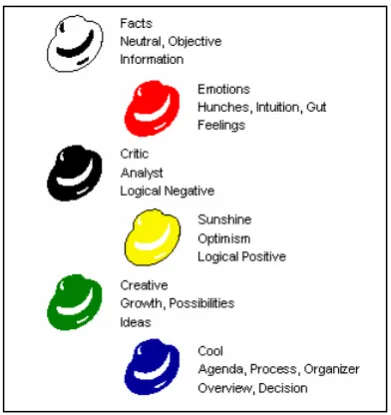
[image:2.595.46.288.457.556.2]major barrier of human thinking process is arranged with a list of human thought. A confused in the thinking process of human, absorbed with large information, emotions, and expectation in result, timing and so on, become to block their creativity. Finally, De Bono represented the structure of thinking process in format of using six hats theory [10]. This depends highly on role-playing technique. There are six different colored thinking hats, which are White, Red, Black, Yellow, Green and Blue. This theory can be expressed following.
- White Hat is to collect data and facts. It has no interpretation and no personal opinion.
- Red Hat is an expression of one’s emotion and feeling. This stage has no need to elaborate the reasons behind.
- Black Hat is to collect all negative comments. Afterwards, these comments can help to build up the negative design criteria.
- Yellow Hat is an optimistic opinion with reasons. Ii is constructive ideas with logical thinking.
- Green Hat is the creative ideas under lateral thinking based on selecting the appropriate solution and skill.
[image:3.595.69.265.326.534.2]- Blue Hat is a drafting of design statement and criteria. It can help to control and monitor the creative thinking process.
Figure 3. The six thinking hats by De Bono.1
As the problem in the foundation of design classroom, we realized that using digital design tools without sufficient knowledge can provide a negative influence on creative learning success. Afterwards, a tradition of our teaching process is improved and new activities are used in next semester. We provide the model of learning activities based on the six hats thinking theory. We believed that it can help to improve the processes of teaching and learning.
The use of the six hats theory in our new activities, it is very important that we must know the role of each hat. When conducting six thinking hats method in lesson, students can require others to wear or change their hats during the discussion.
Our learning processes consist of five stages of creative learning as follows:
---
1 http://www.12manage.com/methods_bono_six_thinking_hats.html
• Theories teaching stage: it is to make the students to understand about related theories that are used in the area of design. The white hat is applied for this stage. This is because our students must learn and understand the design theory and approaches, including the use of advances technologies for design.
• Given Assignments stage: the students should have the assignments regarding content of work. These can help them to learn and get ideas, imagination, and skill. They should make and have a positive thinking with their assignments. In addition, the assignments should consist of the optimistic opinions with reasons and constructive ideas with logical creative thinking (based onthe yellow hat). • The paper-sketch stage: this stage is to work based
on paper and pencil to practice their skill, idea, and imagination. Using the traditional materials can help them to improve their skill, idea, creativity, and imagination. Significantly, they have independence in creativity and imagination. The students should have a cautious design (based on the black hat). This is because when they start to design, they must consider to emotion and feeling of object that they want to present (based on the red hat). The students should be able to use and apply design theory in their work with positive and logical ideas (based on the yellow hat). Finally, they can build a creative idea under lateral thinking and selects the appropriate solution and skill (based on the green hat). It can be seen in next stage after they finish their works in this stage.
• Specific digital design tool using stage: the digital design tools which are suitable for using in each work is provided for our students in each assignment. This is because the students should recognize that -- which tools can help their works success? And how to use these tools? Of course, if they can choose the appropriate tools for their works, those tools can help them to achieve work success. However, they must be cautious when they are working with the technologies tools (based on the black hat). They can present their new perceptions through their final art works (based on the green hat) because our students can create and achieve better works.
an issue. Meanwhile, the students can require others to change specific hat when discussing an issue.
Figure 4. Our model of Creative Thinking in the foundation of design classroom based on the six thinking hats
IV. THE RESULTS OF STUDY
After developing the new activities in the foundation of design classroom in next semester, the students can create and achieve better works. At the same time, the digital design tools have become important tools which can help our students work well based on their idea, creativity, imagination, and skill.
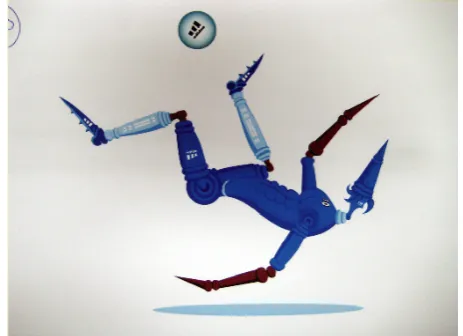
[image:4.595.310.542.102.270.2]Based on our new learning process in the foundation of design classroom, about 75 percent of students can improve their skills and they can suggest ideas to their friends. That means this teaching and learning process can help our students work better. This is because, after changing the activities in the foundation of design classroom, about 65 percent of students choose a sketch that is complicated detail for working with the computer and digital design tool. In addition, about 60 percent of students have sufficient knowledge in their works, the design theory approach, and the computer technologies and digital design tools. As these, it can be seen that they can describe and suggest each assignment for other students after using the new activities in the foundation of design classroom. An example of complicated character design is shown in Figure 5, while Figure 6 shows the final work based on a digital tool.
Figure 6. The complicated characters design on paper-sketch
V. CONCLUSION
This paper presents an experience of using advances in computer technology and related digital design tools in education. The foundation of design classroom is an illustra-
Figure 6. A final character design based on a digital tool
tion that is affected.These tools have come to play a central role in education. Teachers can benefit from these resources because computers have become a necessity for a classroom instruction. Meanwhile, most students will have considerable experience with them as well. However, in the foundation of design classroom, although my students do not hesitate to proceed but they are not sure which tools work well and which are likely to fail, it is possible that using convenient tools without sufficient knowledge could lead to poor work. Thus, providing new activities based on the six thinking hats in the foundation of design classroom is necessary. Our students still submit their character sketches in the format of the traditional design materials before using any digital tool. Afterwards, we will provide and guide a digital tool for my students in each time. In addition, we always discuss and comment the works together. A lot of students can improve their skills and they can make suggestions to their friends. That means this teaching and learning process can help my students work better. Based on new activities in my class, my students can create and achieve better works. Finally, the use of digital design tools can provide a positive influence on the learning success of the character design course.
REFERENCES
[1] M.A. Runco & R.S. Albert (eds), Theories of Creativity, Sage Publications, Newbury Park, 1990.
[2] J.S. Ger & M.L. Maher (eds), Preprints Modeling Creativity and Knowledge-based Creative Design, Design Computing Unit, Department of Architectural and Design Science, University of Sydney, Sydney, 1989.
[3] J.S. Gero & M.L. Maher (eds), Modeling Creativity and Knowledge-Based Creative Design, Lawrence Erlbaum, Hillsdale, New Jersey, 1993.
[4] M. Runco & S. Pritzker (eds), Encyclopedia of Creativity, Academic Press, San Diego, 1999.
[5] F. Thomas & O. Johnson, The Illusion of Life, Disney Animation, Hyperion, New York, 1981.
[6] M. Dyson, Exploring the interaction between design and software, , in TEP’94: Proceedings of Teaching Electronic Publishing, Darmstadt, 12-13 April 1994, pp 55-70, 1994.
[7] B.E. Plimmer & J. Grundy, Beautifying sketch-based design tool content: issues and experiences, In the Proceedings of Siggraph’91, ACM, pp 39-337, 2005.
[image:4.595.48.293.598.717.2][9] M. Csikszentmihalyi, Society, Culture, and Person: A Systems View of Creativity, In R. J. Sternberg (ed.), The Nature of Creativity, Cambridge University Press, Cambridge, 325–339. 1988.