Abstract—Big Data is characterized by 4Vs, namely Volume, Velocity, Variety and Veracity. Information security and data protection issues are magnified by these features. Hackers through Cyber Attacks deprive the value of Big Data. Hence, private and public sector should be ready for Big Data management and face its inherited security threat. This Paper analyzes the security threat of the contemporary IT infrastructure and proposes security solutions for possible Cyber Attacks.
Index Terms—Big Data, Cyber Attack, Information Security, Security Solution
I. INTRODUCTION
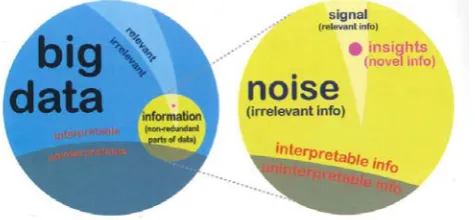
[image:1.595.311.551.376.458.2]ata is said to be the new gold of this digital age (Goldsmith, 2017). The term Big Data refers to the massive amounts of digital information companies and governments collect about us and our surroundings (CSA, 2012). It has become crucial for business organizations and government bodies to gain actionable insights (Figure 1) for policy making, efficiency enhancement and community engagement (Sou, 2017).
Fig. 1. Big Data transformed to Insights
Liedtke (2015) quotes that Big Data represents a situation where we have significantly more data than usual, for instance, a database containing 50,000,000 rows and 75 columns – terabytes. This is not a useful definition because traditional statistical methods can still be used and it does not adequately reflect what is happening in the data management.
Liedtke (2015) also quotes that Big Data represents a situation involving a large amount of data consisting of multiple data types sometimes arriving real-time from
Manuscript received March 9, 2017; reviewed March 20, 2017, revised March 30, 2017.
Dr. Gryphon Sou is a Visiting Professor of the City University of Macau, Macau Special Administrative Region, People’s Republic of China. (phone: 853—6237-3392; e-mail: [email protected])
multiple sources requiring exploratory data analysis and integrative analytical methods for problem-solving and problem-discovering. This is a more useful definition consistent with what is happening in the Big Data management and it suggests the need for new management techniques and skills.
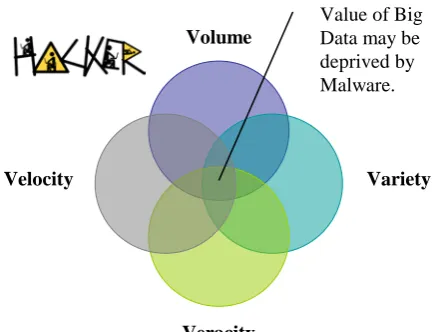
[image:1.595.52.290.459.569.2]Big Data is characterized by its four features: (1) Volume, (2) Velocity, (3) Variety, and (4) Veracity (Linuxpilot, 2015). Information security and data protection issues are magnified by these features (Sou, 2017) of Big Data (Figure 2). Therefore, traditional security mechanisms, which are tailored to securing small-scale static data, are inadequate. Either private or public sector should be ready for Big Data management and face its inherited security threat.
Fig. 2. Four Vs of Big Data
II. RESEARCH METHODOLOY
This Paper studies the characteristics of Big Data and review the Cyber Attacks in the last decade. Author of this Paper is a registered United Kingdom Information Technologist and Diagnostic Engineer. Applying diagnostic engineering skills and expert opinion, he tries to analyze the security threat of the contemporary information technology infrastructure.
With reference to ISO 27001: 2015 and best trade practice, this Paper also proposes security solutions for possible Cyber Attack on Big Data. Benchmarking business organizations and government departments in some countries, the author proposes information technology solutions to address security issues surfaced in the prevailing Cyber Attack.
III. CASE STUDY 2016
Information Systems Audit and Control Association (ISACA) is an independent, nonprofit, global association. It is engaged in the development, adoption and use of globally accepted, industry-leading knowledge and practices for information systems. ISACA once conducted a global survey in 129 countries. The Survey revealed that only 38% of
Big Data Management under Internet
Engineering and Information Security Threat
Gryphon Sou, Member, IAENG
respondents were prepared for a Cyber Attack. Ironically, 83% of respondents believed that Cyber Attacks are amongst the top three threats at the corporate level.
A. Asian Government Cases
In 2016, two agencies and four functional departments of the Government of Hong Kong Special Administrative Region respectively encountered Cyber Attacks (ORIENTAL News, 2016 & SINGTAO News, 2016):
Customs and Excise Department Department of Health
Food and Environmental Hygiene Department Marine Department
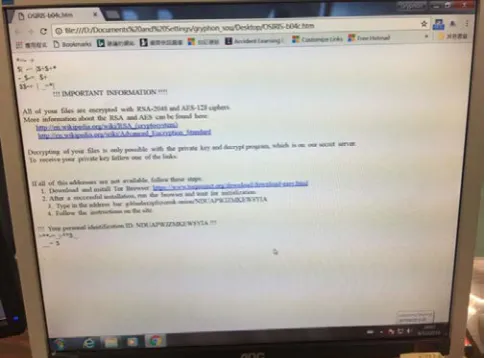
[image:2.595.306.549.174.326.2]One of the foregoing government departments has implemented ISO 27001 for 16 years. It maintains the Quality and Information Security Management System (QSS) which meets the requirements of the ISO 9001:2000 and ISO 27001:2005 standards. However, it becomes a victim of Cyber Attack (Figure 3) (Sou, 2017).
Fig. 3. Cyber Attack on a Government Department
During and after a Cyber Attack by the end of 2016, its firewalls and virus scanning software could not alert the users. The malware attacked the Hard Disk of a terminal with Universal Serial Bus Portable Drives and so forth SHARED Folders through the departmental and local network.
Thousands of data files such as *.doc, *.xls, *.jpg, *.pdf were maliciously encrypted with RSA-2048 and AES-128 ciphers. Technicians of its IT department tried to diagnose the infected Terminal by remote access but failed to sort out the problem. Users were advised to isolate the infected Terminal for on-site inspection.
On the following day, a Technician was deployed to scene and inspect the infected Terminal. After thorough checking, the Technician could not locate the Ransomware and restore the encrypted files. He elected to clone the hard disks of the Terminal and re-install its Operating Software and Applications. Naturally, all the encrypted data files could not
be restored.
Such situation surfaced the vulnerability of its existing information technology infrastructure. The malware unknowingly circumvented regular scanning of its Symantec Endpoint Protection software and other information technology measures in place. The hackers circumvented the scanning software (Figure 4) and asked for 3 Bitcoins (1 BTC = USD1,000 in December 2016) as ransom (Sou, 2017).
Fig. 4. Scanning Software of the Victimized Department Diagnosing the architecture of the above Scanning Software, the infection details would appear in the results list if the client detects a virus during the scan. (Note: If the software detects a large number of viruses, spyware, or high-risk threats, an aggressive scan mode engages. The scan restarts and uses Insight lookups.
When a virus is detected, the client tries to complete the designated action (Table I). If the action fails, the client performs the second action that was designated for that type of virus and scan. Further, the client can right-click on the name of a detected risk to display a list of post-scan actions. However, not all actions apply to every type of risk (Sou, 2017).
In Cyber Attack by Ransomware, the malware itself may be the newest or tailor-made for the victim. Therefore, the signature based architecture of a scanning software fails to detect it. When it successfully evades from the scanning, the designated actions would be inapplicable. After all, quarantine records have no audit trails of the malware and infected files.
TABLE I
Designated Action of Scanning Software
Option Description
Exclude Ensures that future scans ignore the virus or risk.
[image:2.595.47.291.343.522.2]Option Description
longer susceptible to the spread of that virus into other areas of your computer.
When the client cleans a file, it removes the virus from the infected file, boot sector, or partition tables. This removal process eliminates the ability of the virus to spread. In some instances, the cleaned file might not be usable. This unusable state is a result of the virus infection and not a result of the clean action.
Some infected files cannot be cleaned. Delete
Permanently
Deletes the infected file from your computer's hard drive.
Use this action only if you can replace the file with a backup copy that is free of viruses or security risks. After the file is permanently deleted, it cannot be recovered from the recycle bin.
Note: Use this action with caution when you configure actions for security risks, because deleting security risks might cause applications to lose
functionality.
Undo action taken
Reverts the action that the client performed on the detected risk.
This reversal is not always possible. For example, the client cannot restore a file that it deleted.
Move to Quarantine
Does one of the following:
For viruses, moves the infected file from its original location to the Quarantine. Infected files within the Quarantine cannot spread viruses. For security risks, moves the infected
files from their original location to the Quarantine and tries to remove or repair any side effects.
Quarantine contains a record of all actions that were performed. This record lets you return the computer to the state that existed before the client removed the risk.
Properties Displays more details about the detected risk.
Apart from four government departments, two Hong Kong government agencies were also attacked in August 2016. The China-based group APT 3 targeted them with “spear-phishing” attacks, in which e-mails with malicious links and attachments containing malware were used to access their computer networks. An American information
technology firm was subsequently hired to identify attackers.
The government agencies remained anonymous to avoid shining a spotlight on the victims. The Office of Government’s Chief Information Officer (OGCIO) confirmed that it had been informed about the hacks. “Relevant security measures had already been put in place to block the suspicious e-mails,” it said in a statement. “So far, there is no security incident report from the two concerned departments (agencies).”
B. Healthcare Industry Cases
Ransomware is not a new malware in Cyber Attack but its growth throughout 2016 has made its prevalence known around the world. Organizations in the private and the public sectors were victimized. A July 2016 report revealed that the healthcare industry was attacked significantly harder by Ransomware than any other sector – 88 percent of attacks hit hospitals (Dietschye, 2016 & Green, 2016).
Becker’s Hospital Review (2016) reported that 12 healthcare-related Ransomware Attacks in six months. With reference to Solutionary’s Security Engineering Research Team Quarterly Threat Report Q2/2016, 94 percent of attacks on healthcare organizations are linked to a specific variant of malware called Cryptowall.
In February 2016, a Los Angeles hospital paid 40 Bitcoins of digital currency (USD17,000) to Ransomware hackers (The Guardian, 2016). Federal Bureau of Investigation often discourages victim to pay the ransom as it would encourage hackers. Hackers always customize the ransom for each victim and set them just low enough to seem palatable, if a bit painful (The Guardian, 2016).
In the Los Angeles case, the President and Chief Executive of the Hollywood Presbyterian Medical Center said, “The quickest and most efficient way to restore our systems and administrative functions was to pay the ransom. … In the best interest of restoring normal operations, we did this.” (Yadron, 2016).
In May 2016, Kansas Heart Hospital became the second healthcare organization in America which publicly stated that it had paid the ransom. Hackers collected ransom from the Hospital but did not unlock all the data and then demanded more money.
President of Kansas Heart Hospital told the media that the first ransom was “a small amount” (Siwicki, 2016). However, he declined to pay the second ransom as it was not a wise move. He added that his hospital was aware of the looming ransomware threat and had a plan in place, highlighting that many organizations do not really know how to respond to a Cyber Attack.
IV. BIG DATA SECURITY CHALLENGES
Data specific security and privacy challenges (CSA, 2012). Experts of CSA interviewed the Alliance members and surveyed security practitioner-oriented trade journals to draft an initial list of high-priority security and privacy problems, studied published research, and arrived at the following top ten challenges (CSA, 2012):
1. Secure computations in distributed programming frameworks
2. Security best practices for non-relational data stores 3. Secure data storage and transaction logs
4. End-point input validation or filtering 5. Real-time security or compliance monitoring
6. Scalable and compostable privacy-preserving data mining and analytics
7. Cryptographically enforced access control and secure communication
8. Granular access control 9. Granular audits 10. Data provenance
To study information security threat, we shall focus on Item 5. Real-time security monitoring has always been a challenge, given the number of alerts generated by the security tools. These alerts lead to many false positives, which are mostly ignored or simply “clicked away”, as data users cannot cope with the shear amount (CSA, 2012). This problem might even aggregate with Big Data, given the 4 Vs (Volume, Velocity, Variety and Veracity) of data streams.
However, Big Data technologies might also provide an opportunity, in the sense that these technologies allow for fast processing and analytics of different types of data. Which in its turn can be used to provide, for instance, real-time anomaly detection based on scalable security analytics (CSA, 2012).
With real-time security monitoring, we attempt to be notified at the moment a Cyber Attack takes place. In reality, this will not always be the case. For instance, new attacks, missed true positives are difficult to be monitored.
For investigation of a missed Cyber Attack, we need audit information. This is not only relevant because we want to understand what happened and what went wrong, but also because of compliance, regulation and forensic reasons. In this regard, auditing is not something new; but the scope and granularity might be different and should keep pace with the trend of information security threat.
A. Advanced Persistent Threats
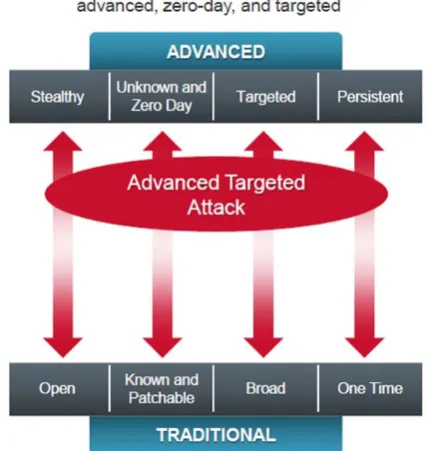
[image:4.595.321.535.81.307.2]Gartner (2012) said, “Organizations face an evolving threat scenario that they are ill-prepared to deal with advanced threats (Figure 5) that have bypassed their traditional security protection techniques and reside undetected on their systems.”. Since 2012, Advanced Persistent Threats (APTs) have become more prevalent. APTs targeted at critical infrastructure. They were persistent and difficult to be detected. APTs spread via LAN as well as USB.
Fig. 5. Contemporary Information Security Threat
(This diagram is reproduced with the permission of iCON Business Systems Ltd / FireEye, Inc.)
Nowadays, APT utilizes advanced techniques and/or malware that is unknown, targeted, polymorphic, dynamic and personalized. It uses zero-day exploits, commercial quality toolkits and social engineering. It often targets IP, credentials and often spreads laterally throughout network. Ransomware is a typical APT.
Facing the new threat landscape, typical security architecture (Figure 6) failed to tackle. In other words, existing threat intelligence is lack of automation from the basic threat intelligence to threat fingerprint.
Fig. 6. Typical Enterprise Security Architecture
(This diagram is reproduced with the permission of iCON Business Systems Ltd / FireEye, Inc.)
The above illustration surfaces that typical security architecture in most information technology infrastructure is inadequately tackling APT like Ransomware. Terminals have access to the internet (hyperlinks) and internet-mail or web-mail servers. They are naturally exposed to APTs.
[image:4.595.308.549.517.653.2]follow for information security and privacy (Villanustre, 2014), data users habitually use their “own” USB Thumb Drives on the office terminals as some brands of Portable Drives can cheat the corporate computer systems. Regardless of rules and regulations, a Whitelist Portable Drive System easily collapses within an organization with mass data users.
B. International Standards for Information Security
Humphreys (2015) of International Organization for Standardization (ISO) emphasizes, “To ensure security in today’s digital landscape, all organizations, irrespective of size should put in place a management framework as a starting point to manager cyber risks. ISO/IEC 27001 was designed to help organizations do just that. The standard is the world’s ‘common language’ when it comes to assessing, treating and managing information-related risks.”.
ISO/IEC 27000 series were revised in 2015. They formed part of the ISO/IEC 27001 “cyber-risk toolbox” to help keep information security threat in check (Lazarte, 2015). To name a few but not all, the following international standards are of referential value in Big Data management and information security threat mitigation.
Integrated Solutions for Services (ISO/IEC 27013)
More organizations are choosing to combine an information security management system (ISO/IEC 27001) with a service management system (ISO/IEC 20000-1). An integrated system means an organization can efficiently manage the quality of its services, handle customer feedback and solve problems, whilst keeping information (data) safe.
ISO/IEC 27013 offers a systematic approach to facilitate the integration of an information security management system with a service management system. It results in lower implementation costs and avoids duplication efforts in certification audit.
Detecting and Preventing Cyber Attacks (ISO/IEC 27039)
How can organizations detect and prevent cyber intrusions to their networks, systems and applications? Best trade practice shows that they must be able to know when and how an intrusion occurs. They should also be ready to identify what vulnerability is exploited and what controls should be implemented to prevent recurrence of similar intrusion in store. One way to do this is through an Intrusion Detection and Prevention System (IDPS).
ISO/IEC 27309 gives guidelines to prepare and deploy an IDPS, covering such crucial aspects as selection, deployment and operation. The standard is particularly useful in today’s market where there are many commercially available and open-source IDPS products and services based on different technologies and approaches.
V. FINDINGS
In short, internet access, email and unauthorized portable drives imposed risks to an organization. APTs possible damage to its information technology infrastructure and Big Data could be disastrous. In such circumstances, we should consider addressing APTs in the most realistic manner. Considering multiple stages of an Attack Cycle and Multi-Flow Virtual Execution (MVX), the Author finds that there is actually information security solution for APTs.
Benchmarking other victimized government departments and business organizations, the Author appraises the POC (Proof of Concept) of the FireEye Advance Threat Protection Architecture. Diagnosing FireEye architecture and hardware/software engineering, its concept of “behavioral” Malware Protection System (MPS) as an IDPS (Figure 7) is viable. Its inline blocking and quarantine available across MPS portfolio can:
block inbound zero-day web attacks block multi-protocol call-backs quarantine malicious zero-day emails quarantine malicious zero-day files mitigate risk of data exfiltration
[image:5.595.312.542.375.632.2]provide highly actionable information for timely incident response.
Fig. 7. Intrusion Detection and Prevention System
(This diagram is reproduced with the permission of iCON Business Systems Ltd / FireEye, Inc.)
Conclusion and Recommendations
the following key features:
Detect inbound 0-day and customs malware via virtual machine analysis
Track outbound call-backs and subsequent malicious payloads
Extremely accurate detection with near-zero false positive
[image:6.595.59.280.311.477.2]In America, it also supplies 10-Giga native solution. If other global hardware manufacturers are supplying the same or kindred MPS, they are also of referential value to prospective users. In conclusion, this is a viable information security solution to rebut the fallacy of “even the most powerful scanning software fails to detect newest or customs-made virus or malware”. To counter Cyber Attacks under internet engineering, we need professional software plus dedicated hardware for data protection. Otherwise, hackers would deprive the value of our data maliciously (Figure 8).
Fig. 8. Value of Big Data to be protected
ACKNOWLEDGMENT
Gryphon Sou thanks iCON Business Systems Ltd (FireEye, Inc.) for its input to the Expert Group Study 2016-17. Its Proof of Concept (POC) has enlightened the Author’s engineering diagnosis. Furthermore, it grants permission to the Author to reproduce Figure 5–7 in this Paper for illustration and presentation of findings.
REFERENCES
[1] APPLE DAILY (2016) Two Computer Terminals of the Center for Food Safety Hong Kong attacked by Hackers. Apple Daily. Hong Kong.
[2] CHEUNG, K. (2012) FireEye, Proactive Approach to Advanced Persistent Threat (APT). Hong Kong, iCON Business System Ltd. [3] CHINA.ORG.CN (2016) Book Launching of "Belt and Road Initiative
Big Data Report 2016". Beijing, General Office of the Leading Group for advancing the Building of Belt and Road Initiative.
[4] CHOI, K. L. (2017) ICON Expert explaining Hints of Anti-APT. Hong Kong, Linuxpilot.
[5] CSA (2012) Top Ten Big Data Security and Privacy Challenges. New York, Cloud Security Alliance.
[6] DIETSCHE, E. (2016) 12 Healthcare Ransomware Attacks of 2016. Becker’s Health IT & CIO Review, 2-4.
[7] EY (2017) Analysis of the "One Belt, One Road" Initiative - Telecommunications and Aviation Sectors. China Go Abroad. [8] GOLDSMITH, S. (2017) Experience Sharing by Professor Stephen
Goldsmith, Harvard University. Seminar on Data-Smart Governance - Connecting with the Communities. Hong Kong, CSTDI.
[9] GREEN, M. (2016) Hospitals are hit with 88% of All Ransomware Attacks. Health Information Technology, 2-3.
[10] SGS. (2008) HK Customs: The First Department of HKSAR to implement ISO 27001. Hong Kong, SGS Group.
[11] HIT CONSULTANT (2016) Healthcare Ransomware: Why Providers should not pay the Ransom. IN OUT THOUGHT LEADERS (Ed.) Chicago, HIT Consultant Media.
[12] --- (2017) Ransomware leads the Way in 2017's - Predicted Rise in Health Data Attack. IN OUT THOUGHT LEADERS (Ed.) Chicago, HIT Consultant Media.
[13] LAZARTE, M. (2015) Security Toolbox protects Organizations from Cyber Attack. London, International Organization for Standardization. [14] LIEDTKE, C. A. (2015) Big Data Quality Management: A Glimpse into the Future. Minnesota Section of American Society for Quality. Minnesota, USA, MNASQ.
[15] LINUXPILOT (2014) iCON helps STDM to build Private Cloud for Enhancement of Collaboration and Decision Making. Macau, Sociedade de Turismo e Diversoes de Macau, S.A.
[16] --- (2015) Big Data help Enterprise making Profit? Stop and Think before Use. Linuxpilot.
[17] --- (2015) HP with Red Hat using Innovative Technology to boost Real Time Big Data Analysis. Linuxpilot.
[18] --- (2017) Welcoming futuristic Hyper-Converged Infrastructure - Nutanix with iCON boost Lean Enterprise Computing. Hong Kong, iCON.
[19] MAK, K.-L. (2015) Xynergy helps Retail Industry applying SAP HANA - Integration of Big Data Analysis with Automatic Intelligent Vending Machine. Business Quotient Journal, 55, 6-7.
[20] ORIENTAL NEWS (2016) System being hacked for 9 Days - 17,000 Data Files of the Department of Health being compromised. Oriental News. Hong Kong.
[21] SINGTAO NEWS (2016) Hackers attacked Computer System of the Marine Department for Ransom. Singtao News. Hong Kong. [22] SIWICKI, B. (2016) Ransomware Attackers collect Ransom from
Kansas Hospital, don't unlock all the data, then demand more money. Healthcare IT News. Kansas.
[23] IBS. (2014) iCON Quality Network and Security Services entrusted by Government Departments and brings Innovative Technology. Business Quotient Journal, 1-4.
[24] SOU, G. (2017) A proposal improving work-related Information Technology Security. Hong Kong, Customs and Excise Department. [25] TWEED, D. (2016) Hong Kong Government hacked by Chinese
Cyberspies, FireEye says. Bloomberg News. Hong Kong.
[26] VILLANUSTRE, F. (2014) Big Data Security and Privacy. ISACA Spotlight Series India Webinar. India, ISACA.
[27] VMWARE (2014) World-ranked Business School rolls-out Flexible Workspaces to enhance Academic Performance. Hong Kong, City University of Hong Kong.
[28] YADRON, D. (2016) Los Angeles Hospital paid $17,000 in Bitcoin to Ransomware Hackers. The Guardian. San Francisco.
Dr. Gryphon Sou earned a Bachelor of Science in Engineering Degree from California Coast University, a Master of Administration Degree from Australian Catholic University, a Doctor of Management Degree from the International Management Center – Southern Cross University, Australia and a Doctor of Education Degree from the University of Technology Sydney. He is now working as a Visiting Professor in the City University of Macau. He is an International Professional Engineer as well as a Fellow of The Institution of Diagnostic Engineers, United Kingdom. His research interest includes quality management in big data.
Volume
Variety
Veracity Velocity