ORIGINAL ARTICLE
IJPHY
ABSTRACT
Background: Chest physiotherapy (CPT) and positioning of neonates has been used in many developed countries around the world to improve airway clearance and avoid lung complications, but the combined effect of both tech-niques is less documented. The objective of the study was to compare the effectiveness of chest physiotherapy in prone position versus conventional chest physiotherapy in ventilated neonates on respiratory outcomes.
Methods: The study design was randomized controlled pilot study. Participants: 12 ventilated neonates fitting in In-clusion Criteria. They were randomly divided into two groups (n=6 in each group) using simple random sampling i.e. Experimental group (4female and 2male) (Chest Physiotherapy and Prone Positioning) and the Control group (3 females and 3males) (Conventional Chest Physiotherapy). Primary outcome measures were SpO2 saturation, Partial Pressure of Arterial Oxygen (PaO2) & Peak Inspiratory Pressure (P.I.P.). Outcomes were recorded Pre & Post of every 120 minutes session of Intervention twice daily with a gap of 6 hours for consecutive three days for the experimental group while for the control group, parameters were measured at the same time of the day.
Result: Total 10 participants completed the study protocol. On comparison of three parameters in two groups using the unpaired t-test we found that there was a significant difference (p< 0.05) in SpO2 and PaO2 in both groups but no difference ( p >0.05) in P.I.P. levels.
Conclusion: Chest physiotherapy in the prone position for ventilated neonate concluded with a higher oxygen satura-tion (SpO2) and partial pressure of oxygen in the arterial blood (PaO2) when compared to convensatura-tional chest physio-therapy.
Keywords: Chest Physiotherapy, Ventilated neonates, Prone positioning, Arterial Oxygen, Peak Inspiratory Pressure, partial pressure of oxygen.
Received 23rd October 2017, revised 29th December 2017, accepted 15th January 2018
www.ijphy.org
10.15621/ijphy/2018/v5i1/167195
CORRESPONDING AUTHOR
Int J Physiother. Vol 5(1), 18-22, February (2018) ISSN: 2348 - 8336
THE EFFECTIVENESS OF CARDIOPULMONARY PHYSIOTHERAPY
VERSUS PRONE POSITIONING ON RESPIRATORY FUNCTIONS IN
VENTILATED NEONATES: A RANDOMIZED CONTROLLED PILOT
STUDY
*1Abhijit Diwate ²Subhash Khatri ³Sunil Mhaske
*1Abhijit Diwate
Ph.D. Scholar, Dr. Vitthalrao Vikhe Patil Foundation’s College of Physiotherapy,
Vadgaon Gupta, MIDC, Ahmednagar–414111, Maharashtra. Email: [email protected] Mobile: +91 – 8554990222
Phone: 0241 -2777906 Extn: 555 ²Principal and Ph.D. Supervisor, APJAK College
of Physiotherapy, PIMS, Loni.
³Professor and Head, Department of Paediatrics, DVVPF’s Medical College, Ahmednagar
This article is licensed under a Creative Commons Attribution-Non Commercial 4.0 International License.
INTRODUCTION
A child’s risk of dying is highest in the first 28 days of the neonatal period. Improving the quality of antenatal care, care at the time of delivery, and postnatal care for mothers and their newborns are important to prevent these deaths. In 2016, globally 2.6 million neonates died in the first month of life. There are approximately 7000 newborn deaths every day, which account for 46% of all child deaths under the age of 5-years. Preterm birth, intrapartum-related complications (birth asphyxia or lack of breathing at birth), and infections cause most neonatal deaths. (WHO Factsheet: October 2017)
Today, in addition to conventional and newly developing trends of Neonatal Intensive Care Management by Neonatologists, Chest Physiotherapy (CPT) techniques are used in many NICUs all over the globe to improve airway clearance and treat lung collapse in ventilated infants [1]. The use of CPT in airway clearance of mechanically ventilated adults has been shown to improve total lung/ thoracic compliance and cardiorespiratory function; however, very little is known about its effect on ventilated neonates [2].
Chest physiotherapy (CPT) is frequently prescribed for infants and children with the respiratory disease with the primary aims of facilitating airway clearance, improving lung volumes and optimizing ventilation-perfusion matching [3].
Neonatal chest physiotherapy in ventilated neonates has become the commonest method of care in neonatal intensive care units in the Western countries and Metro cities while the same is less common in the rural part of India, probably due to lack of awareness and training [4]. In ill and critically ill individuals, positioning is a non-invasive, inexpensive modality often used to improve oxygenation [5]. One of the key interventions used in CPT is body positioning [6]. This may be used to improve ventilation-perfusion matching by positioning a child in such a way as to maximize ventilation to the “healthier” lung or to improve ventilation to affected lung regions to facilitate re-expansion [7]. Body positioning has also been of importance in minimizing the occurrence of pressure sores, prevention of postural deformities, improving cardiovascular function, reducing gastroesophageal reflux [8].Whilst many studies describe the effects of prone or supine positioning on factors such as mortality, arterial oxygenation, functional residual capacity, work of breathing and ventilation-perfusion matching [9].Positioning is also aimed to improve various respiratory outcomes which may ultimately help in early weaning thereby reducing the overall period of mechanical ventilation. There are a limited number of studies that describe combine effect of chest physiotherapy and positioning in the neonates. Hence the purpose of this pilot study was to find out the effectiveness of chest physiotherapy along with positioning and conventional chest physiotherapy in ventilated neonates.
MATERIALS AND METHODS
This pilot Randomized Control Trial (RCT) study tests the effectiveness of chest physiotherapy with prone positioning versus conventional chest physiotherapy in ventilated neonates. This study was conducted in Neonatal Intensive care unit of VPHM, Ahmednagar. Ethical approval for the present study was obtained from PIMS (DU), IEC, Loni. (Letter no. PMT/PIMS/IEC/2014/83 Dt.20th Aug.2014) Ventilated Neonates between day 1 – day 28 and with a history of any recent respiratory tract infection, cardiorespiratory or disabling musculoskeletal or neurological condition affecting Ventilation & Perfusion were included in the study. Subjects with no history of recent respiratory tract infection affecting ventilation and perfusion and subjects who have undergone any cardiorespiratory or abdominal surgery were excluded. Written & recorded informed consent was obtained from the parent or legal guardian of each participant.
PROCEDURE
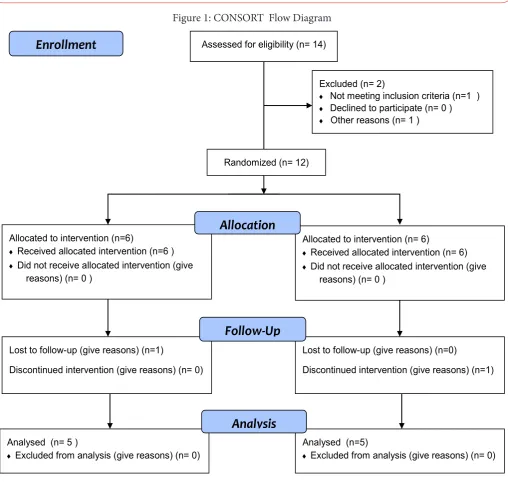
At the beginning of study 14 ventilated neonates were assessed for eligibility, out of which only 12 Participants fitted in Inclusion Criteria. They were randomly divided into two groups (n=6 in each group) using simple random sampling. Experimental Group (4female and 2male) received chest physiotherapy in a prone position whereas the Control Group (3 females and 3males) received conventional chest physiotherapy. Prone positioning was given to each participant in the experimental group for 240 minutes/day in two divided sessions of 120 minutes each with a gap of 6 hours (10 am -12 pm & 6 pm – 8 pm) for consecutive three days. (i.e. six intervention sessions). For prone positioning, two small towels were rolled and placed under infants’ knees and abdomen to avoid pressure on knees and chest. In this position, elbows were kept in flexed position and arms were kept along sides of the body, while hands were placed sides of the head which was rotated towards ventilator tubes. A conventional chest physiotherapy session included percussion (including cupping with face mask, contact heel percussion, and finger percussion) vibration (with fingers).
Outcome measurements: Primary outcomes were Oxygen saturation (SpO2), the Partial pressure of arterial oxygen (PaO2) & Peak Inspiratory Pressure (P.I.P.). Outcomes were recorded Pre and Post of every 120 minutes session (0 Min & 120 Mins) for the experimental group while for the Control Group; parameters were measured at the same time of the day (i.e. 10 am -12 pm & 6 pm – 8 pm). Out of 12, only 10 subjects completed the study protocol. (Figure 1)
RESULTS
Table1: Demographic characteristics of participants
Variables Experimental Group Control Group
Gender 4(F) and 2(M) 3(F) and 3( M) Age(days) 1.5±0.5 1.83 ± 0.37 Weight(gms) 1333.3 ±152.8 1316.6 ± 111.9
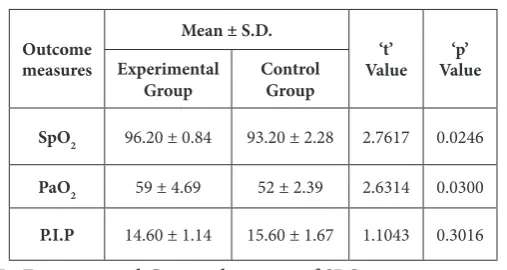
Table 2: Comparison of SpO2, PaO2 and P.I.P. levels in two groups at the end of 3rd day.
Outcome measures
Mean ± S.D.
‘t’
Value Value‘p’ Experimental
Group ControlGroup
SpO2 96.20 ± 0.84 93.20 ± 2.28 2.7617 0.0246
PaO2 59 ± 4.69 52 ± 2.39 2.6314 0.0300
P.I.P 14.60 ± 1.14 15.60 ± 1.67 1.1043 0.3016
In Experimental Group, the mean of SPO2 was 96.2 ± 0.84 percent, PaO2 was 59 ± 4.69 mmHg and P.I.P. was 14.60 ± 1.14 cmH2O after the 3rd day. In Control Group, the mean of SPO2 was 93.2 ± 2.28 percent, PaO2 was 52 ± 2.39 mmHg and P.I.P. was 15.60 ± 1.67 cmH2O at the end of 3rd day. On comparison of three parameters using unpaired ‘t’ test, we found that there was a significant difference (p < 0.05) in SpO2 and PaO2 in both groups but no difference ( p >0.05) in P.I.P. level.(Figure 4)
Figure 2: Comparison of SpO2 Levels in Experimental Group and Control Group
80 85 90 95 100
Experimental
Group Control Group
Per
cen
ta
ge
Groups
Comparison of SpO2( %) level in two groups
Experimental Group Control Group
Figure 3: Comparison of PaO2 in Experimental Group and Control Group
40 45 50 55 60
Experimental
Group Control Group
mm H
g
Groups
Comparison of PaO2level in two groups
Experimental Group Control Group
Figure 4: Comparison of P.I.P. in Experimental Group and Control Group
10 12 14 16 18 20
Experimental
Group Control Group
cm
H2
O
Groups
Comparison of PIP(cmH2O)level in two groups
Experimental Group Control Group
DISCUSSION
This study evaluated the effects of chest physiotherapy in a prone position in ventilated neonates. The measuring variables for oxygenation were analyzed by a standard Paediatric Pulse oximeter/ Cardiac Monitor reflecting SpO2, Arterial Blood Gas measurements for PaO2 and a Paediatric Ventilator for Peak Inspiratory Pressure (P.I.P.) The results showed that placing neonates in the prone position for the duration of 120 minutes along with chest physiotherapy, increased the mean of SpO2and PaO2 (Table 2, Fig. 2). Balaguer et al in a systematic review study regarding the effect of positioning on the amount of SpO2 showed that prone position increased SpO2level in the range between 1.18 to 4.36% during the intervention (prone position) [10].
The reason of increasing SpO2 in the prone position can be due to, the connection of hand-mouth and semi-embryonic flexion occur better than any other position and this can lead to good sleep as well as less consumption of oxygen compared to any other position. The study by Chang showed that positioning infants in prone position reduces their activities and led to better oxygenation and decreased the number of SpO2 attacks reduced as compared to supine position [11,12].
There was a statistically significant improvement in PaO2 levels (Figure 3). This may be contributed to increased median oxygen saturation and higher lung volumes (Increased FRC) in the prone position as reported by Bhat R Y et al (2003) [13].
Postural drainage is an intervention performed by placing the patient in various positions for airway clearance for mobilizing secretions in one or more lung segments of the central airways, where the gravity assists in the drainage process [15].
These findings could be explained by Hough et al (2008) [17]. who stated that Chest Physiotherapy results in lung mechanical effects, further optimizing the respiratory function in order to facilitate effective gas exchange and adjust ventilation-perfusion adequacy of respiratory support, to prevent and treat pulmonary complications, to provide good maintenance of airways and to facilitate weaning from mechanical ventilation and oxygen therapy. Physiotherapy procedures provide stability of hemodynamic variables, such as HR [18], the functional maintenance of newborn cerebral circulation and maintenance of airways with turbulent flow and minimal secretion, which allow an increased permeability and reduced number of the intrinsic airway that contribute to increased airway resistance and a decrease in gas changes physiological events [19].
As noted by Douglas W W et al (1977) [20], dorsal to the ventral orientation of major airways facilitate efficient drainage of secretions from peripheral airways or diseased dorsal lung segments.
In addition to above factors, pronation of a ventilated subject has shown to reduce airway resistance which may attribute to improved respiratory mechanics as reported by Mentzelopoulos SD et al (2005) [21]. Any reduction of airway resistance shall help to the limit the use of high pressures, in turn, pressure related complications such as barotrauma and hemodynamic mismatch.
Though we found significant improvement in parameters, the results can’t be generalized as it is a pilot study with small sample size. Hence, further studies with larger sample size are needed for this position to be incorporated into the routine pediatric care of ventilated neonates.
CONCLUSION
Chest physiotherapy in the prone position for ventilated neonate concluded with a higher oxygen saturation (SpO2) and partial pressure of oxygen in the arterial blood (PaO2) when compared to conventional chest physiotherapy.
Disclosure
The authors declare no conflict of interest. The authors alone are responsible for the content and writing of the manuscript.
Funding: None
REFERENCES
[1] Abeywardana S. The report of the Australian and New Zealand Network, 2003. Sydney: ANZNN, 2005. [2] Mackenzie CF, Shin B. Cardiorespiratory function
before and after chest physiotherapy in mechanically ventilated patients with post-traumatic respiratory failure. Critical Care Medicine 1985;13:483-6.
[3] Krause, M.F. & Hoehn, T. Chest physiotherapy in mechanically ventilated children: a review. Crit Care Med. 2000 May;28(5):1648-51.
[4] Mahoney M, Cohen MI. Effectiveness of developmental intervention in the neonatal intensive care unit: Implication for neonatal physical therapy. Paediatr Phys Ther. 2005;17:194–208.
[5] Gillies, D., Wells, D. & Bhandari, A.P. ‘Positioning for acute respiratory distress in hospitalised infants and children’, Cochrane Database of Systematic Reviews (Online) 7, CD003645.
[6] Dean, E. Effect of body position on pulmonary function. Physical Therapy.1985; 65(5): 613-618. [7] Pryor, J.A. & Prasad, S.A. Eds. Physiotherapy for
Respiratory and Cardiac Problems. Third edn, London: Churchill Livingston,2002, pp. 432.
[8] Curley, M.A., Quigley, S.M. & Lin, M. Pressure ulcers in pediatric intensive care: incidence and associated factors. Pediatric Critical Care Medicine. 2003; 4(3): 284-290.
[9] Gillies, D., Wells, D. & Bhandari, A.P. Positioning for acute respiratory distress in hospitalised infants and children”, Cochrane Database of Systematic Reviews. 2012; vol. 7, pp. CD003645.
[10] Balaguer A, Escribano J, Roque M. Infant position in neonates receiving mechanical ventilation. Cochrane Database Syst Rev 2006; 18(4): CD003668.
[11] Chang YJ, Anderson GC, Dowling D, Lin CH. Decreased activity and oxygen desaturation in prone ventilated preterm infants during the first postnatal week. Heart Lung. 2002;31(1):34–42.
[12] Chang YJ, Anderson GC, Lin CH. Effects of prone and supine positions on sleep state and stress responses in mechanically ventilated preterm infants during the first postnatal week. J Adv Nurs. 2002;40(2):161–9. [13] Bhat RY, Leipälä JA, Singh NR, Rafferty GF, Hannam
S, Greenough A. Effect of posture on oxygenation, lung volume, and respiratory mechanics in premature infants studied before discharge. Pediatrics. 2003 Jul;112(1 Pt 1):29-32.
[14] Chokshi T, Alaparthi GK, Krishnan S, Vaishali K, Zulfeequer CP. Practice patterns of physiotherapists in neonatal intensive care units: A national survey. Indian J Crit Care Med. 2013 Nov;17(6):359-66. [15] Kisner C, Colby LA. Therapeutic exercise foundation and
techniques. 5th ed. Philadephia: Jaypee Brothers; 2007. Management of pulmonary conditions; pp. 851–82. In: editor.
[16] Jingar A, Alaparthi GK, Vaishali K, Krishnan S, Zulfeequer, Unnikrishnan B. Clinical practices adopted by physiotherapists in India for chronic obstructive pulmonary disease: A national survey. Lung India. 2013;30:131–8.
[17] Hough JL, Flenady V, Johnston L, Woodgate PG. Chest physiotherapy for reducing respiratory morbidity in infants requiring ventilatory support. Cochrane Database Syst Rev. 2008;(3):CD006445. DOI: 10.1002/14651858.CD006445.pub2.
[18] Jones AM, Thomas PJ, Paratz JD. Comparison of flow rates produced by two frequently used manual hyperinflation circuits: A benchtop study. Heart Lung. 2009; 38(6):513-6.
chest physiotherapy in neonatal intensive care units in Australia. J Pediatr Child Health. 1992;28:297-300. [20] Douglas WW, Rehder K, Beynen FM, Sessler
AD, Marsh HM. Improved oxygenation in patients with acute respiratory failure: the prone position. Am Rev Respir Dis. 1977 Apr; 115(4):559-66.
[21] Mentzelopoulos SD, Roussos C, Zakynthinos SG. Prone position improves expiratory airway mechanics in severe chronic bronchitis. Eur Respir J. 2005 Feb;25(2):259-68.
Citation
Diwate, A., Khatri, S., & Mhaske, S. (2018). THE EFFECTIVENESS OF CARDIOPULMONARY PHYSIOTHERAPY VERSUS PRONE POSITIONING ON RESPIRATORY FUNCTIONS IN VENTILATED NEONATES: A RANDOM-IZED CONTROLLED PILOT STUDY. International Journal of Physiotherapy, 5(1), 18-22.
Assessed for eligibility (n= 14)
Excluded (n= 2)
♦ Not meeting inclusion criteria (n=1 )
♦ Declined to participate (n= 0 )
♦ Other reasons (n= 1 )
Allocated to intervention (n=6)
♦ Received allocated intervention (n=6 ) ♦ Did not receive allocated intervention (give
reasons) (n= 0 )
Allocated to intervention (n= 6)
♦ Received allocated intervention (n= 6) ♦ Did not receive allocated intervention (give
reasons) (n= 0 )
Allocation
Lost to follow-up (give reasons) (n=1)
Discontinued intervention (give reasons) (n= 0)
Lost to follow-up (give reasons) (n=0)
Discontinued intervention (give reasons) (n=1)
Analysed (n= 5 )
♦ Excluded from analysis (give reasons) (n= 0)
Analysed (n=5)
♦ Excluded from analysis (give reasons) (n= 0)
Analysis
Follow-Up
Randomized (n= 12)