Learning Problems in Children
of Refugee Background:
A Systematic Review
Hamish R. Graham, MBBS, MPH, FRACP, a, b Ripudaman S. Minhas, MD, MPH,FRCPC, c, d Georgia Paxton, MBBS, BMedSci, MPH, FRACPa, e
abstract
CONTEXT: Learning problems are common, affecting up to 1 in 10 children. Refugee childrenmay have cumulative risk for educational disadvantage, but there is limited information on learning in this population.
OBJECTIVE: To review the evidence on educational outcomes and learning problems in refugee children and to describe their major risk and resource factors.
DATA SOURCES: Medline, Embase, PubMed, Cumulative Index to Nursing and Allied Health Literature, PsycINFO, and Education Resources Information Center.
STUDY SELECTION: English-language articles addressing the prevalence and determinants of learning problems in refugee children.
DATA EXTRACTION: Data were extracted and analyzed according to Arksey and O’Malley’s descriptive analytical method for scoping studies.
RESULTS: Thirty-four studies were included. Refugee youth had similar secondary school outcomes to their native-born peers; there were no data on preschool or primary school outcomes. There were limited prevalence data on learning problems, with single studies informing most estimates and no studies examining specific language disorders or autism spectrum disorders. Major risk factors for learning problems included parental misunderstandings about educational styles and expectations, teacher stereotyping and low expectations, bullying and racial discrimination, premigration and postmigration trauma, and forced detention. Major resource factors for success included high academic and life ambition, “gift-and-sacrifice” motivational narratives, parental involvement in education, family cohesion and supportive home environment, accurate educational assessment and grade placement, teacher understanding of linguistic and cultural heritage, culturally appropriate school transition, supportive peer relationships, and successful acculturation.
LIMITATIONS: Studies are not generalizable to other cohorts.
CONCLUSIONS: This review provides a summary of published prevalence estimates for learning problems in resettled refugee children, highlights key risk and resource factors, and identifies gaps in research.
aDepartment of General Medicine, Royal Children’s Hospital, Melbourne, Australia; bCentre for International Child Health, University of Melbourne, Melbourne, Australia; cDepartment of Pediatrics, St. Michael’s Hospital, Toronto, Canada; dDivision of Developmental Pediatrics, Department of Pediatrics, University of Toronto, Toronto, Canada; and eMurdoch Childrens Research Institute, Parkville, Victoria, Australia
BACKGROUND
Conceptual Framework and Terminology
Learning problems are common, affecting up to 1 in 10 children.1
They may reflect impairments in intellect, difficulties in a specific learning domain, behavioral problems, or difficulties in social interaction; comorbidities are common.1 Bioecological system
theory recognizes that a child’s development occurs in the context of interactions between different layers of their “ecology” (eg, individual attributes, caregivers, family, school, community, society).2 Integrating
this bioecological perspective with neurocognitive research provides an understanding that learning problems arise from the interaction of neurodevelopmental predispositions with environmental factors and life experience in a dynamic process.3 This perspective
acknowledges both risk factors for failure and resource factors that contribute to developmental resilience, 1, 3 and it recognizes that
the expression (and experience) of learning problems will vary across the life span and between individuals, communities, and societies.1, 3
For clarity of reporting, we use contemporary clinical categories from developmental pediatrics to describe the prevalence of learning problems and broad categories to describe their determinants (negative risk factors and positive resource factors). We use the term refugee-background to describe children granted humanitarian protection or seeking asylum and children from refugee-like backgrounds who have migrated through other channels (eg, family reunion).
Refugee Children and Learning
In 2015, the United Nations High Commissioner for Refugees (UNHCR) reported the highest numbers of forcibly displaced people ever
recorded.4 Globally, there are
currently almost 60 million displaced people, including 13.9 million people newly displaced in the past year, 19.5 million refugees, and 1.8 million people who have lodged claims for asylum.4 More than half of refugees
are children, and the number of unaccompanied or separated children seeking asylum is the highest since records began (34 300 in 2014).4
Learning and development are particular concerns for children of refugee background.5 Displacement
has long-lasting effects on children and caregivers, often involving exposure to trauma and disruption of family structures.6 Relocation
brings additional stressors, as families negotiate their needs within foreign social structures and with limited supports.6 Within this
complex dynamic, a child enters a new educational environment and must negotiate multiple transitions, including transitions in family, friendships, schooling, community, language, culture, and identity.6
Although educational success is critical to overall well-being in refugee children, 6 there are limited
data on educational outcomes or learning problems in this group. Understanding learning problems and educational needs is essential to respond to the increasing populations of forcibly displaced children and families.
The aim of this study was to review evidence on educational outcomes and learning problems among refugee children, to describe major risk and resource factors, and
to highlight areas for additional investigation.
METHODS
We completed a systematic review by using the search, selection, extraction, analysis, and reporting methods described by Arksey and O’Malley’s framework for scoping studies.7, 8
Inclusion and Exclusion Criteria
Inclusion and exclusion criteria were broad, in keeping with the study question and scoping review methods. We included studies if they involved interventional, observational, or qualitative studies relating to the prevalence or determinants of learning problems in children of refugee background, available in English. We defined “determinants” as any demographic, individual, family, school, or other factors reported to be associated with learning problems or educational outcomes. We excluded single case reports and non–peer-reviewed papers.
Data Sources
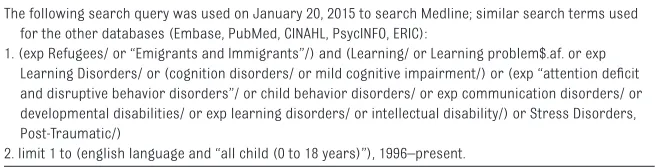
We completed searches of Medline, Embase, PubMed, CINAHL, PsycINFO, and Education Resources Information Center (ERIC) in January 2015 (see Supplemental Information), with the support of a research librarian for the time period 1996 through 2015 (Table 1). In addition, we searched key websites, reviewed reference lists, and contacted people through refugee health networks in Canada and Australia.
TABLE 1 Medline Search Query
The following search query was used on January 20, 2015 to search Medline; similar search terms used for the other databases (Embase, PubMed, CINAHL, PsycINFO, ERIC):
1. (exp Refugees/ or “Emigrants and Immigrants”/) and (Learning/ or Learning problem$.af. or exp Learning Disorders/ or (cognition disorders/ or mild cognitive impairment/) or (exp “attention defi cit and disruptive behavior disorders”/ or child behavior disorders/ or exp communication disorders/ or developmental disabilities/ or exp learning disorders/ or intellectual disability/) or Stress Disorders, Post-Traumatic/)
Data Extraction and Synthesis
We systematically extracted data using a standardized data charting form, which included information on study type, location, population, research methods, outcome measures, and key findings.
We adopted Arksey and O’Malley’s descriptive analytical method for data analysis and reporting,
7 including numerical summary of
included studies to describe the current state of the literature and narrative synthesis of findings using broad categories to describe educational outcomes, learning problems, and important risk and resource factors.
RESULTS
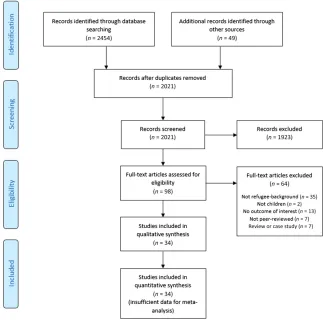
Database searches retrieved 2454 results: Medline 365, Embase 511, CINAHL 278, PsycINFO 543,
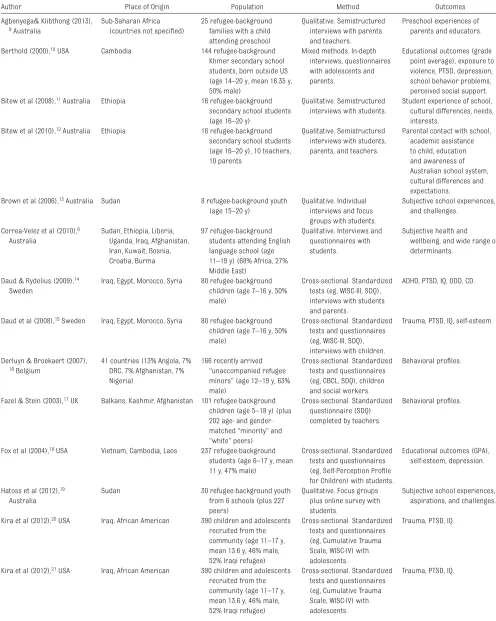
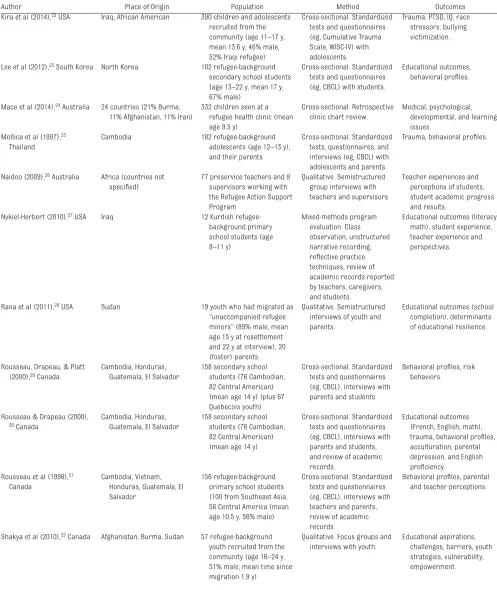
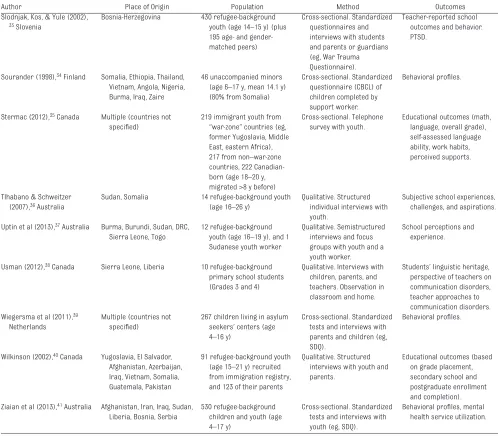
ERIC 601, and PubMed 156. After exclusion of duplicates and addition of 49 records from other sources, 2021 articles were identified for screening. Two investigators (H.R.G., R.S.M.) independently screened all titles and abstracts according to predefined inclusion criteria, then reviewed 98 full-text papers for inclusion. Thirty-four articles were included in the final analysis (Fig 1, Table 2).
Summary of Included Studies
Overall, 34 studies reported on learning problems in 29 cohorts of refugee children; half (17/34) were published since 2010 (Table 3, Fig 2). The majority (25/34, 74%) reported results from cohorts in Australia (11 studies), the United States (7 studies), or Canada (7 studies), with only 1 study from a low- or middle-income country (Thailand). Studies
included participants from diverse regions of origin, and 14 (41%) included mixed cohorts of children from multiple regions. Most studies (30/34, 88%) reported on adolescent refugees, with 13 studies including primary school–age children and a single study on preschool children. Twenty (59%) studies used
quantitative (or mixed) methods and reported on educational outcomes (n = 8), prevalence of learning problems (n = 14), and risk and resource factors (n = 9); the remaining 14 (41%) studies used qualitative methods and reported on risk and resource factors.
Educational Outcomes
Eight studies reported educational out comes for refugee children, all at secondary school
level10, 18, 23, 28, 30, 33, 35, 40 (Table 4).
Six studies from North America and Europe reporting on 1197 refugee-background youth from Sub-Saharan and North Africa, Eastern Europe, Middle East, Asia, and Latin America found they had similar educational outcomes to their peers, including similar rates of high school completion (although often at an older age).10, 18, 30, 33, 35, 40 One study
of 19 unaccompanied minors who migrated to the United States from Sudan reported superior performance to peers, with 100% high school completion and 79% progression to college.28 Conversely, a study
involving 102 youth who migrated from North Korea to South Korea reported lower academic performance relative to native-born peers.23
Prevalence of Learning Problems
Fourteen studies provided prevalence data on developmental or learning problems in children of refugee back-ground10, 14, 16, 17, 20, 23–25, 29–31, 34, 39, 41
(Table 5). No studies reported on autism spectrum disorder, specific language impairment, dyscalculia, or dyslexia.
FIGURE 1
TABLE 2 Summary of 34 Included Studies on Educational Outcomes and Learning Problems in Refugee Children (1996–2015)
Author Place of Origin Population Method Outcomes
Agbenyega& Klibthong (2013),
9 Australia
Sub-Saharan Africa (countries not specifi ed)
25 refugee-background families with a child attending preschool
Qualitative. Semistructured interviews with parents and teachers.
Preschool experiences of parents and educators. Berthold (2000), 10 USA Cambodia 144 refugee-background
Khmer secondary school students, born outside US (age 14–20 y, mean 16.35 y, 50% male)
Mixed methods. In-depth interviews, questionnaires with adolescents and parents.
Educational outcomes (grade point average), exposure to violence, PTSD, depression, school behavior problems, perceived social support. Bitew et al (2008), 11 Australia Ethiopia 16 refugee-background
secondary school students (age 16–20 y)
Qualitative. Semistructured interviews with students.
Student experience of school, cultural differences, needs, interests.
Bitew et al (2010), 12 Australia Ethiopia 16 refugee-background
secondary school students (age 16–20 y), 10 teachers, 10 parents
Qualitative. Semistructured interviews with students, parents, and teachers.
Parental contact with school, academic assistance to child, education and awareness of Australian school system, cultural differences and expectations.
Brown et al (2006), 13 Australia Sudan 8 refugee-background youth
(age 15–20 y)
Qualitative. Individual interviews and focus groups with students.
Subjective school experiences, and challenges.
Correa-Velez et al (2010), 6
Australia
Sudan, Ethiopia, Liberia, Uganda, Iraq, Afghanistan, Iran, Kuwait, Bosnia, Croatia, Burma
97 refugee-background students attending English language school (age 11–19 y) (68% Africa, 27% Middle East)
Qualitative. Interviews and questionnaires with students.
Subjective health and wellbeing, and wide range of determinants.
Daud & Rydelius (2009), 14
Sweden
Iraq, Egypt, Morocco, Syria 80 refugee-background children (age 7–16 y, 50% male)
Cross-sectional. Standardized tests (eg, WISC-III, SDQ), interviews with students and parents.
ADHD, PTSD, IQ, ODD, CD.
Daud et al (2008), 15 Sweden Iraq, Egypt, Morocco, Syria 80 refugee-background
children (age 7–16 y, 50% male)
Cross-sectional. Standardized tests and questionnaires (eg, WISC-III, SDQ), interviews with children.
Trauma, PTSD, IQ, self-esteem.
Derluyn & Broekaert (2007),
16 Belgium
41 countries (13% Angola, 7% DRC, 7% Afghanistan, 7% Nigeria)
166 recently arrived “unaccompanied refugee minors” (age 12–19 y, 63% male)
Cross-sectional. Standardized tests and questionnaires (eg, CBCL, SDQ), children and social workers.
Behavioral profi les.
Fazel & Stein (2003), 17 UK Balkans, Kashmir, Afghanistan 101 refugee-background
children (age 5–18 y) (plus 202 age- and gender-matched “minority” and “white” peers)
Cross-sectional. Standardized questionnaire (SDQ) completed by teachers.
Behavioral profi les.
Fox et al (2004), 18 USA Vietnam, Cambodia, Laos 237 refugee-background
students (age 6–17 y, mean 11 y, 47% male)
Cross-sectional. Standardized tests and questionnaires (eg, Self-Perception Profi le for Children) with students.
Educational outcomes (GPA), self-esteem, depression.
Hatoss et al (2012), 19
Australia
Sudan 30 refugee-background youth
from 6 schools (plus 227 peers)
Qualitative. Focus groups plus online survey with students.
Subjective school experiences, aspirations, and challenges. Kira et al (2012), 20 USA Iraq, African American 390 children and adolescents
recruited from the community (age 11–17 y, mean 13.6 y, 46% male, 52% Iraqi refugee)
Cross-sectional. Standardized tests and questionnaires (eg, Cumulative Trauma Scale, WISC-IV) with adolescents.
Trauma, PTSD, IQ.
Kira et al (2012), 21 USA Iraq, African American 390 children and adolescents
recruited from the community (age 11–17 y, mean 13.6 y, 46% male, 52% Iraqi refugee)
Cross-sectional. Standardized tests and questionnaires (eg, Cumulative Trauma Scale, WISC-IV) with adolescents.
Author Place of Origin Population Method Outcomes Kira et al (2014), 22 USA Iraq, African American 390 children and adolescents
recruited from the community (age 11–17 y, mean 13.6 y, 46% male, 52% Iraqi refugee)
Cross-sectional. Standardized tests and questionnaires (eg, Cumulative Trauma Scale, WISC-IV) with adolescents.
Trauma, PTSD, IQ, race stressors, bullying victimization.
Lee et al (2012), 23 South Korea North Korea 102 refugee-background
secondary school students (age 13–22 y, mean 17 y, 67% male)
Cross-sectional. Standardized tests and questionnaires (eg, CBCL) with students.
Educational outcomes, behavioral profi les.
Mace et al (2014), 24 Australia 24 countries (21% Burma,
11% Afghanistan, 11% Iran)
332 children seen at a refugee health clinic (mean age 9.5 y)
Cross-sectional. Retrospective clinic chart review.
Medical, psychological, developmental, and learning issues.
Mollica et al (1997), 25
Thailand
Cambodia 182 refugee-background
adolescents (age 12–13 y), and their parents
Cross-sectional. Standardized tests, questionnaires, and interviews (eg, CBCL) with adolescents and parents.
Trauma, behavioral profi les.
Naidoo (2009), 26 Australia Africa (countries not
specifi ed)
77 preservice teachers and 9 supervisors working with the Refugee Action Support Program
Qualitative. Semistructured group interviews with teachers and supervisors.
Teacher experiences and perceptions of students, student academic progress and results.
Nykiel-Herbert (2010), 27 USA Iraq 12 Kurdish
refugee-background primary school students (age 8–11 y)
Mixed-methods program evaluation. Class observation, unstructured narrative recording, refl ective practice techniques, review of academic records reported by teachers, caregivers, and students.
Educational outcomes (literacy, math), student experience, teacher experience and perspectives.
Rana et al (2011), 28 USA Sudan 19 youth who had migrated as
“unaccompanied refugee minors” (89% male, mean age 15 y at resettlement and 22 y at interview), 20 (foster) parents
Qualitative. Semistructured interviews of youth and parents.
Educational outcomes (school completion), determinants of educational resilience.
Rousseau, Drapeau, & Platt (2000), 29 Canada
Cambodia, Honduras, Guatemala, El Salvador
158 secondary school students (76 Cambodian, 82 Central American) (mean age 14 y) (plus 67 Quebecois youth)
Cross-sectional. Standardized tests and questionnaires (eg, CBCL), interviews with parents and students.
Behavioral profi les, risk behaviors.
Rousseau & Drapeau (2000),
30 Canada
Cambodia, Honduras, Guatemala, El Salvador
158 secondary school students (76 Cambodian, 82 Central American) (mean age 14 y)
Cross-sectional. Standardized tests and questionnaires (eg, CBCL), interviews with parents and students, and review of academic records.
Educational outcomes (French, English, math), trauma, behavioral profi les, acculturation, parental depression, and English profi ciency.
Rousseau et al (1996), 31
Canada
Cambodia, Vietnam, Honduras, Guatemala, El Salvador
156 refugee-background primary school students (100 from Southeast Asia, 56 Central America (mean age 10.5 y, 56% male)
Cross-sectional. Standardized tests and questionnaires (eg, CBCL), interviews with teachers and parents, review of academic records.
Behavioral profi les, parental and teacher perceptions.
Shakya et al (2010), 32 Canada Afghanistan, Burma, Sudan 57 refugee-background
youth recruited from the community (age 16–24 y, 51% male, mean time since migration 1.9 y)
Qualitative. Focus groups and interviews with youth.
Educational aspirations, challenges, barriers, youth strategies, vulnerability, empowerment.
A single Australian study reported on the prevalence of sensory impairment (vision, hearing) and developmental delay in a mixed cohort of 332 children attending a refugee health clinic: 7.5% had a visual impairment, 3.3% had a hearing impairment, and 6.9% had developmental delay, most commonly language (5.7%) or gross motor (2.1%).24
Two studies from the United States20
and Sweden14 provided information
on intellectual impairment, using cognitive testing to investigate the
impact of trauma on intelligence. These studies reported that among more than 400 Iraqi-background and African American adolescents, half (49.4%–56.3%) had low or borderline IQ scores on the Wechsler Intelligence Scales for Children (WISC). Mean IQ for the US cohort was 84 points (WISC, Fourth Edition [WISC-IV]), 20 consistent with
WISC-IV results for African American and other minority populations in the United States.20
Ten studies reported on behavioral profiles of refugee children, with
varying results.16, 17, 23, 25, 29–31, 34, 39, 41
A Canadian study of 156 primary school–age children from Southeast Asia and Central America reported an association between problems identified through behavioral profiles (especially “externalizing problems”) and adverse educational outcomes;31 however, this
association was not found in a similar adolescent cohort (n = 158).30 Overall, behavioral and
emotional problems were more common in refugee-background children compared with their
Author Place of Origin Population Method Outcomes
Slodnjak, Kos, & Yule (2002),
33 Slovenia
Bosnia-Herzegovina 430 refugee-background youth (age 14–15 y) (plus 195 age- and gender-matched peers)
Cross-sectional. Standardized questionnaires and interviews with students and parents or guardians (eg, War Trauma Questionnaire).
Teacher-reported school outcomes and behavior. PTSD.
Sourander (1998), 34 Finland Somalia, Ethiopia, Thailand,
Vietnam, Angola, Nigeria, Burma, Iraq, Zaire
46 unaccompanied minors (age 6–17 y, mean 14.1 y) (80% from Somalia)
Cross-sectional. Standardized questionnaire (CBCL) of children completed by support worker.
Behavioral profi les.
Stermac (2012), 35 Canada Multiple (countries not
specifi ed)
219 immigrant youth from “war-zone” countries (eg, former Yugoslavia, Middle East, eastern Africa), 217 from non–war-zone countries, 222 Canadian-born (age 18–20 y, migrated >8 y before)
Cross-sectional. Telephone survey with youth.
Educational outcomes (math, language, overall grade), self-assessed language ability, work habits, perceived supports.
Tlhabano & Schweitzer (2007), 36 Australia
Sudan, Somalia 14 refugee-background youth (age 16–26 y)
Qualitative. Structured individual interviews with youth.
Subjective school experiences, challenges, and aspirations. Uptin et al (2013), 37 Australia Burma, Burundi, Sudan, DRC,
Sierra Leone, Togo
12 refugee-background youth (age 16–19 y), and 1 Sudanese youth worker
Qualitative. Semistructured interviews and focus groups with youth and a youth worker.
School perceptions and experience.
Usman (2012), 38 Canada Sierra Leone, Liberia 10 refugee-background
primary school students (Grades 3 and 4)
Qualitative. Interviews with children, parents, and teachers. Observation in classroom and home.
Students’ linguistic heritage, perspective of teachers on communication disorders, teacher approaches to communication disorders. Wiegersma et al (2011), 39
Netherlands
Multiple (countries not specifi ed)
267 children living in asylum seekers’ centers (age 4–16 y)
Cross-sectional. Standardized tests and interviews with parents and children (eg, SDQ).
Behavioral profi les.
Wilkinson (2002), 40 Canada Yugoslavia, El Salvador,
Afghanistan, Azerbaijan, Iraq, Vietnam, Somalia, Guatemala, Pakistan
91 refugee-background youth (age 15–21 y) recruited from immigration registry, and 123 of their parents
Qualitative. Structured interviews with youth and parents.
Educational outcomes (based on grade placement, secondary school and postgraduate enrollment and completion). Ziaian et al (2013), 41 Australia Afghanistan, Iran, Iraq, Sudan,
Liberia, Bosnia, Serbia
530 refugee-background children and youth (age 4–17 y)
Cross-sectional. Standardized tests and interviews with youth (eg, SDQ).
Behavioral profi les, mental health service utilization.
CBCL, Child Behavior Checklist; DRC, Democratic Republic of the Congo; GPA, grade point average; SDQ, Strengths and Diffi culties Questionnaire.
peers, especially in young children (<10 years old).16, 17, 23, 25, 34, 39,
“Internalizing problems” (ie, anxious, depressive, and overcontrolled behavior) were more common than “externalizing problems” (ie, aggressive, hyperactive, noncompliant, and undercontrolled behavior).16, 17, 23, 25, 34, 39, However,
there is considerable variation in prevalence estimates, with some studies reporting no difference to peers29, 30, 41 and multiple studies
finding marked variation between self-report, teacher report, and parent report.16, 25, 29, 39, 41
One study examined the prevalence of attention-deficit/hyperactivity disorder (ADHD), involving 80 Middle Eastern refugee children
and adolescents in Sweden.14 There
was high prevalence of ADHD in students whose parents had experienced trauma (65% male, 30% female) but low prevalence in those whose parents had not
(5% male, 10% female).14 Most
(90%) children with ADHD also met criteria for posttraumatic stress disorder (PTSD); and lower IQ was a risk factor for both ADHD and PTSD.14
Two studies reported on the prevalence of oppositional defiant disorder/conduct disorder (ODD/ CD).10, 14 In the Swedish cohort
of adolescent Iraqi refugees, the prevalence of ODD/CD was 7.5% in those whose parents had been exposed to trauma and 0% in those whose parents did not have
trauma exposure.14 A US study of
144 Khmer adolescents found 30% had been reported at school for misconduct (eg, carrying a weapon, physical assault, swearing, stealing) and that misconduct was associated with higher exposure to trauma, male gender, and lower academic
outcomes.10 The Khmer cohort had
high levels of premigration trauma (99%), clinical depression (63%),
and PTSD (33%).10
Risk and Resource Factors
Twenty-five of the 34 studies (73.5%) provided qualitative information on determinants of learning in refugee children. We describe major risk
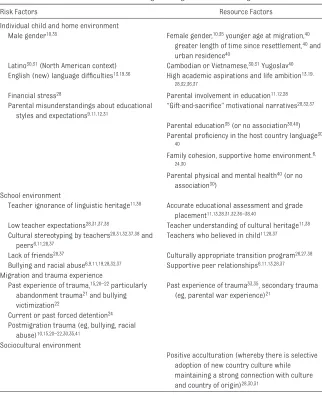
and resource factors by using broad categories: individual child and home environment, school environment, migration and trauma experience, and sociocultural environment (Table 6).
TABLE 3 Characteristics of 34 Included Studies on the Prevalence and Determinants of Learning Problems in Children of Refugee Background
Characteristic Number (%)
Country of settlement
United States 7 (20.6)
Canada 7 (20.6)
Australia 11 (32.4)
South Korea 1 (2.9)
Thailand 1 (2.9)
Sweden 2 (5.9)
Finland 1 (2.9)
Belgium 1 (2.9)
Netherlands 1 (2.9)
Slovenia 1 (2.9)
United Kingdom 1 (2.9)
Study population region of origin
Sub-Saharan Africa 9 (26.5)
Middle East and North Africa 6 (17.6)
East Asia and Pacifi c 4 (11.8)
Europe and Central Asia 1 (2.9)
Multiple regions 14 (41.2)
Study population age
Preschool age 1 (2.9)
Primary school age 3 (8.8)
Adolescent 20 (58.8)
Primary school age and adolescent 10 (29.4)
Study outcomes reported
Educational outcomes and prevalence of learning problems 19 (55.9)
Prevention of learning problems 14
Educational outcomes 8
Risk and resource factors (solely) 15 (44.1)
Method
Quantitative cross-sectional 20 (58.8)
Qualitative 14 (41.2)
FIGURE 2
Individual Child and Home Environment
Two of the 7 studies reporting secondary school outcomes in refugee youth found girls achieved higher results than boys.10, 35 However,
female academic advantage among refugee youth was less pronounced than among their nonrefugee peers and was limited to language subjects only.10, 35 A Canadian study of 91
refugee youth from 9 countries found that younger age at migration, greater length of time since resettlement, and urban residence were associated with better secondary school outcomes.40
This study found no association between self-reported English language proficiency and secondary school outcomes, 40 despite Sudanese
youth reporting English language difficulties as a common barrier to success.13, 19, 36
Three studies reported ethnic differences in educational
outcomes.30, 31, 40 A Canadian study
of 156 refugee children in primary school found that children from Central America had more severe learning difficulties reported by teachers than their peers from Cambodia and Vietnam, despite similar objective academic outcomes.31 Qualitative data from
this study suggested teachers were influenced by cultural stereotypes, leading them to identify Latino children more readily as having problems.31 Two studies in
Canadian secondary schools reported lower school failure rates for Cambodian-background youth (compared with Central American youth) (n = 158)30 and superior
outcomes for Yugoslav compared with other refugee-background youth (n = 91).40
Six studies reported that Sudanese-background refugee youth generally had high academic aspirations and life ambition and that this was an effective motivation for success.13, 19, 28, 32, 36, 37
Indeed, their desires to advance their education, support relatives and
friends left behind, and help rebuild their country were major motivators for migration and life.19, 28, 32, 37
Seven studies examined parental involvement in the education of
refugee children.9, 11, 12, 28, 31, 32, 37
Parental support for education was identified as a protective factor for refugee adolescents.28 However,
although they valued education strongly, parental involvement in
TABLE 4 Educational Outcomes in Refugee-Background Children From Studies Included in This Review
Educational Level Educational Outcomes
Preschool No studies identifi ed
Primary school No studies identifi ed
Secondary school performance
Failing, defi cient, GPA <2.0, % 21.910
Average, good, excellent, GPA >2.0, % 78.110
Mean GPA (secondary school) “Below peer level, ”23 “At peer level”33
0–4 scale 2.77–3.010, 30
0–5 scale 3.6818
Secondary school completion
Completed or on track, % 80–10028, 35, 40
Behind or dropped out, % 0–2028, 35, 40
Postsecondary school
Pursue postsecondary, % 53–8428, 40
GPA, grade point average.
TABLE 5 Estimated Prevalence of Learning Problems in Refugee-Background Children
Learning Problem Estimated Prevalence (%) Sample Size
Sensory impairment (n = 332)24
Vision 7.524
Hearing 3.324
Developmental delay 6.924
Gross motor 2.124
Fine motor 0.924
Language 5.724
Social 0.624
Cognitive 1.824
Specifi c language impairment, dyscalculia or dyslexia
No studies identifi ed —
Cognitive function
Mean IQ (WISC-IV FSIQ) 8420 (n = 80)14
IQ <84 (WISC-IV FSIQ) 49.4–56.314, 20 (n = 390)20
IQ <70 (WISC-IV FSIQ) 11.120
Behavioral profi les Total problems in “clinical
level”
CBCL (carer) 25.2–53.816, 23, 25, 34 (n = 102)11
Internalizing problems 13.9–27.316, 23 (n = 166)20
Externalizing problems 11.6–50.816, 23 (n = 182)22
YSR (self) 26.425 (n = 46)26
SDQ (self) 4.4–9.816, 39, 41
SDQ (carer) 9.0–3816, 17, 39, 41
ADHD 47.5 (M 65, F 30) if trauma14 (n = 80)14
7.5 (M 5, F 10) if no trauma14
ODD/CD 7.5 if trauma14 (n = 80)14
0 if no trauma14
Autism spectrum disorder No studies identifi ed —
Behavior problems 30 (M > F)10 (n = 144)20
Mental health problems (from previous systematic reviews and meta-analysis)
PTSD 11 (7–17) (n = 260)
19–5442 (n = 3003)42
Depression (n = 3003)42
education was limited, with parents having little contact with school and providing minimal homework help.11, 12
Parents and teachers perceived learning problems differently, with teachers emphasizing language and family dynamics whereas parents emphasized the cultural gap of educational styles and expectations.31
Parents and teachers both recognized the importance of parent–teacher communication, 31 but there were
frequent misunderstandings about education styles, rules, and pathways, attributed to different cultural expectations and a lack of familiarity with education systems.9, 11, 12 Three
studies described the positive effect of “gift-and-sacrifice” motivational narratives, whereby parents linked
their struggle with poverty and migration to the value of educational opportunity.28, 32, 37
One large US study found a positive association between parental education and secondary school outcomes.35 However, 2 similar-sized
Canadian studies found parental proficiency in the host country language to be more important than parental education per se.30, 40
These Canadian studies also found no association between household income and secondary school outcomes, suggesting that education was prioritized regardless of the family’s socioeconomic status.30, 40
However, financial stress was reported as a major risk factor
for secondary school dropout by unaccompanied minors, who cited unique challenges such as obligations to earn and send money back to family.28
Three studies reported that family cohesion and supportive home environment were associated with better secondary school outcomes (particularly for girls).6, 24, 30 Two
studies reported on the association between parental physical and mental health and secondary school outcomes, with 1 finding a positive association40 and the other finding no
association.30
School Environment
Eleven studies reported on school transition for refugee children.28, 31, 40, 11, 13, 32, 36, 37, 26, 27, 38
Accurate educational assessment and grade placement were major determinants of educational success11, 32, 40 but were often
inaccurate.31, 38 Inadequate
appreciation of a child’s educational experience was reported to result in inappropriate grade placement and expectations13, 28, 32, 36, 37, 40 and to
impair remedial educational efforts.38
This discrepancy resulted from either expectations that were too high (ie, failing to account for the impact of interrupted education)13, 36, 40
or too low (ie, failing to recognize previous learning).28, 37 Teacher
ignorance of linguistic heritage has resulted in misunderstandings (eg, misinterpreting respectful whispering as being shy, unsure, inattentive, or disrespectful), misdiagnosis, and counterproductive remediation attempts (eg, group reading and public correction creating a feeling of inadequacy and reinforced withdrawal).11, 38 Conversely,
teachers’ understanding of a child’s cultural heritage was associated with enhanced learning at both primary38
and secondary11 school level.
Low teacher expectations of refugee-background children were reported to be common in both primary and
TABLE 6 Risk and Resource Factors Infl uencing Learning Outcomes for Refugee Children
Risk Factors Resource Factors
Individual child and home environment
Male gender10, 35 Female gender, 10, 35 younger age at migration, 40
greater length of time since resettlement, 40 and
urban residence40
Latino30, 31 (North American context) Cambodian or Vietnamese, 30, 31 Yugoslav40
English (new) language diffi culties13, 19, 36 High academic aspirations and life ambition13, 19, 28, 32, 36, 37
Financial stress28 Parental involvement in education11, 12, 28
Parental misunderstandings about educational styles and expectations9, 11, 12, 31
“Gift-and-sacrifi ce” motivational narratives28, 32, 37
Parental education35 (or no association30, 40)
Parental profi ciency in the host country language30, 40
Family cohesion, supportive home environment.6, 24, 30
Parental physical and mental health40 (or no
association30)
School environment
Teacher ignorance of linguistic heritage11, 38 Accurate educational assessment and grade
placement11, 13, 28, 31, 32, 36–38, 40
Low teacher expectations28, 31, 37, 38 Teacher understanding of cultural heritage11, 38
Cultural stereotyping by teachers28, 31, 32, 37, 38 and
peers6, 11, 28, 37
Teachers who believed in child11, 28, 37
Lack of friends28, 37 Culturally appropriate transition program26, 27, 38
Bullying and racial abuse6, 9, 11, 19, 28, 32, 37 Supportive peer relationships6, 11, 13, 28, 37
Migration and trauma experience
Past experience of trauma, 15, 20–22 particularly
abandonment trauma21 and bullying
victimization22
Past experience of trauma33, 35, secondary trauma
(eg, parental war experience)21
Current or past forced detention24
Postmigration trauma (eg, bullying, racial abuse)10, 15, 20–22, 30, 35, 41
Sociocultural environment
secondary schools, 28, 31, 37, 38 with the
risk that such expectations would become a self-fulfilling prophecy.38
Refugee-background youth reported demotivation from low teacher expectations and appreciated teachers who believed in them and encouraged them to pursue challenging academic programs.11, 28, 37
Cultural stereotyping of refugee-background children by teachers was associated with prejudiced assessments, relationships, expectations, and behavior.28, 31, 32, 37, 38
Three studies reported on school-based interventions to facilitate school transition for refugee
children.26, 27, 38 These studies support
the use of intentional transition programs, culturally relevant classroom techniques (eg, student-driven gender segregation, student– student interaction and assistance) and explicit attention directed to low teacher expectations.26, 27, 38 One study
involving a teacher-as-tutor program reported benefits for both students (accelerated academic progression) and teachers (informed beliefs and attitudes), who became allies in helping students overcome broader educational barriers and challenges.26
Five studies reported on the school social environment in relation to school success.6, 11, 13, 28, 37, Refugee
youth consistently report that supportive peer relationships are academically protective6, 11, 13, 28, 37;
however, difficulty forming such relationships is the norm, resulting in significant loneliness and emotional stress.6, 13, 28, 37 Sport is a
common locus for successful peer relationships, especially for boys, but can both encourage and distract from academic endeavor.13, 28, 37 Cultural
stereotypes strongly influence social relationships, to the academic advantage of some and detriment of others (eg, African boys may be expected to play sports but not expected to succeed academically).6, 11, 28, 37
Six studies found that overt personal racism, bullying, and abuse were common, and more subtle discrimination was the norm for refugee children and adolescents, and this discrimination negatively affected their educational experience.6, 9, 11, 19, 28, 32, 37 Adolescents
reported feeling identified primarily by their appearance (especially skin color) and having to come to terms with “embodying difference, ” often experiencing this “otherness” for the first time when arriving at school.37
Parents of preschool children reported differential treatment and derogatory race-based language from teachers, whereas teachers reported exclusion by other children.9
Migration and Trauma Experience
Ten studies reported on the impact of trauma on
learning.10, 15, 20–22, 24, 30, 33, 35, 41 Three
studies involving 793 refugee-background youth from multiple countries reported that PTSD and exposure to war trauma had negligible10, 35 or positive33 impact on
school outcomes. Canadian students from war zone countries had similar academic outcomes to those from non–war zone countries, and they had higher academic expectations, lower truancy, and greater high school completion rates than their Canadian peers (although often finishing at older ages).35 Adolescents from Bosnia–
Herzegovina in Slovenia with greater trauma exposure and symptoms of PTSD tended to have higher academic performance compared with matched Slovenian-born peers.33
Conversely, 4 studies involving a total of 319 traumatized children and adolescents from Cambodia, Iraq, and the Middle East found that cognitive function was detrimentally affected by trauma.15, 20–22 Daud et al15
described intergenerational effects of trauma on Swedish refugees from the Middle East, with children of traumatized parents scoring lower on cognitive tests despite no
direct experience of trauma (and independent of whether they had PTSD). Three studies involving the same cohort of 200 Iraqi refugee adolescents in the United States reported that different types of trauma had different effects on cognitive testing (WISC-IV).20–22
“Abandonment trauma” had the largest impact on all domains (equal for either maternal or paternal abandonment), whereas “personal identity trauma” (eg, personal assault or rape) affected working memory, and “survival trauma” (eg, life-threatening accident) affected processing speed. “Collective identity trauma” (eg, genocide or discrimination) had no impact on cognitive test results, whereas “secondary trauma” (eg, parental war experience) improved reasoning, processing speed, and working memory21. “Bullying victimization”
was associated with lower test scores
over and above other traumas.22
Two studies involving 302 refugee youth from a variety of countries reported that parental experience in a refugee camp and parental separation had no association with secondary school outcomes.30, 40
Qualitative data from resettled Sudanese-background refugee youth demonstrated that thoughts of war continued to disturb their daily lives, including their ability to concentrate and learn.19
Although premigration trauma is common, there is increasing recognition that postmigration trauma is also common and may have greater impact on both learning10, 30, 35, 41 and cognitive
function.15, 20–22 Postmigration
trauma exposure was a significant predictor for behavior problems and academic failure in a cohort of Khmer adolescents in the United States, whereas premigration trauma exposure did not correlate with behavioral or educational outcomes.10 The Australian refugee
or past mandatory immigration detention was a significant predictor for learning and psychological difficulties among newly arrived children.24
Sociocultural Environment
Three studies reported better primary and secondary school outcomes among refugee children with greater levels of successful acculturation (whereby there is selective adoption of new country culture while maintaining a strong connection with culture and country of origin).28, 30, 31
DISCUSSION
Our review of educational outcomes and learning problems in refugee-background children highlights the complexity of examining learning in refugee children and identifies important gaps in the literature. Overall, there are limited data on the prevalence of learning problems in refugee children, with single studies informing most of the estimates. There are almost no studies describing children resettled in developing countries, despite the fact that 86% of refugees live in developing countries.4
Most studies examined outcomes in adolescent cohorts, there were few studies on primary school aged children and only a single study involving preschool children, which is concerning given the importance of early identification for effective intervention.43 Notably, no
studies reported the prevalence of autism spectrum disorder, despite higher rates in other immigrant populations44–47 and a postulated
association with low vitamin D levels, 48 which is well described
in resettled refugee populations.49
Similarly, there were no studies on language impairment, dyscalculia, or dyslexia, and only 1 study examined any contribution from sensory impairment. Only 1 study examined
the prevalence of ADHD, although these authors highlighted the overlap in ADHD and PTSD symptoms, which is an area of particular diagnostic and therapeutic uncertainty. The majority of studies were cross-sectional; the lack of longitudinal data is a significant limitation, because learning outcomes and contributing factors may change over time (both positively and negatively).
Implications for Practice
Despite significant data gaps, our review has important implications for health professionals, educators, refugee support agencies, and policymakers.
First, children of refugee background should be expected and supported to achieve school outcomes comparable to those of their peers. Despite limited data on the preschool or primary school population, evidence suggests refugee-background youth have similar pass rates, completion rates, and grade point averages to their peers.10, 18, 28, 30, 33, 35, 40
Population data from other immigrant populations have often shown an academic advantage for migrants compared with native-born peers after adjusting for variables such as socioeconomic status, the so-called immigrant paradox.50, 51
Although the data on refugee-background children are insufficient to draw similar conclusions, many of the same resource factors apply: strong family ties (although a significant minority experience family loss or dislocation),
prioritization of education, “gift-and-sacrifice” motivational narratives, 52
isolation from negative peer and social influences, bilingual advantage, and possible migration bias toward healthier, wealthier, and more educated parents.53 This finding
of academic resilience is echoed in reviews on mental health of refugee children, 42, 54–59 particularly the
examples of “positive deviance, ” where children have better mental
health than would be predicted from their life experiences and social situation.
Evidence on the impact of trauma on cognition and school outcomes is mixed, with several studies indicating that premigration trauma (and symptoms of PTSD) has negligible (or positive) effects on school outcomes. Possible explanations for this effect might be survival of past traumatic experiences contributing to greater resilience (eg, past trauma becoming part of individual motivational narratives), teachers being more supportive to students who display signs of PTSD, or survival bias (where only the most resilient successfully migrate).
Our review identified substantial data on educational risk and resource factors for refugee-background children (Table 6). Major risk factors included experience of trauma, racism, and bullying; parental misunderstandings about educational styles and expectations; and teacher stereotyping, low teacher expectations, and poor awareness of linguistic heritage. Resource factors included high academic and life ambition, parental motivational narratives and
involvement in education, family cohesion and supportive home environment, accurate educational assessment and grade placement, teacher understanding of linguistic and cultural heritage, culturally appropriate school transition, supportive peer relationships, and successful acculturation. The risk and resource factors identified in our review share commonality to those reported in previous reviews on resilience in refugee children58
and the educational needs of refugee students.60 It is clear that, although
these are modifiable in the country of settlement.
Recommendations
Health professionals, educators, social support agencies, and policymakers all have important roles in providing the individual, family, community, and structural support necessary for refugee-background children to succeed.
Health professionals must identify potential learning problems early and work with schools to support vulnerable children throughout their educational and social transitions. Pediatricians have a particular role in these areas and should tailor their developmental and educational assessments to address particular risk and resource factors. Alongside health screening and medical care, this support may include contributing to accurate grade placement (including age assessment where needed), acknowledging cultural and linguistic heritage, valuing past educational and life experience, affirming educational aspirations, encouraging parental involvement in school, reassuring and educating families about additional language acquisition, encouraging maintenance of the families’ first language, and explicitly inquiring about learning difficulties, racism experience, and bullying. Given that some problems become apparent only after time in mainstream schooling (and the dynamic nature of risk and resource factors), longitudinal care is important. Clinicians need to revisit serial screening for school-related problems as children and families move through their social and developmental transitions.6
Educators and schools must provide inclusive and culturally safe school environments and be aware that school represents a major transition for refugee-background students and their families.60–62 Positive
supports include dedicated transition
programs, enhancing teacher
linguistic and cultural understanding, proactively addressing bullying and racial discrimination, encouraging parental involvement in school, incorporating past educational and life experiences for appropriate grade placement and individualized learning plans, and promoting appropriately high academic expectations. The finding that refugee-background students experience high levels of school- and peer-based racial abuse and discrimination is disturbing, and this will affect not only learning, but health, well-being, and acculturation more broadly.6, 49
Support agencies and policymakers must recognize the importance of migration transition supports, including linguistic and educational transition programs. In the early postsettlement period, supporting access to health professionals and educators who are experienced in working with refugee-background children and families is likely to be of benefit, alongside education and support for parents to engage with their children’s schools.
Researchers also have a role in advancing our understanding of learning and educational outcomes in refugee-background students. Key evidence gaps include longitudinal assessments of educational and vocational outcomes and the
influence of risk and resource factors over time, evaluation of learning in preschool and primary school–age populations, directed research with new population groups, and comparative evaluations of resettled populations in different countries and contexts. Research is also needed into the validity of assessment tools in refugee-background populations. The tools we use to assess
intelligence, behavior, and social and emotional well-being are culturally bound, having been developed and validated in certain population and language groups (usually European
or North American) and cannot be assumed to be valid in other populations.63 Although some of
these tests have been adapted for use in other specific populations (eg, WISC tests), they are not validated for most of the population groups who become refugees63 or for use
with interpreters. Despite these obvious limitations, such testing may be mandated by education systems when learning problems or intellectual disability is suspected. Clinicians working with refugee children often grapple with understanding the meaning and application of cognitive, behavioral, or language assessments and deciding which diagnostic labels most accurately describe clinical presentations. These clinical dilemmas highlight the role of the developmental history and longitudinal care in supporting refugee-background students with learning problems. Additional research is needed to develop culturally appropriate assessment tools, address language difficulties in assessments, and develop a nuanced understanding of behavioral phenotypes in children of refugee background.
Many studies used convenience sampling rather than more robust selection methods. This limitation is due largely to the methodological, ethical, and practical challenges of working with vulnerable populations and remains an ongoing challenge to researchers in this field.
CONCLUSIONS
Success at school is critical to well-being for refugee-background children. Published data on educational
outcomes and learning problems in this population are limited, particularly for younger children and children in low- or middle-income countries. Overall, refugee-background children should be expected (and encouraged) to achieve comparably to their peers. Clinicians and educators have an important role in identifying risk
factors and also acknowledging the positive resources that refugee children and families bring to their education and countries of settlement. These findings provide practical guidance to clinicians and educators working with refugee children and families, highlight areas for future research, and inform interventions and policy to support refugee children to achieve their developmental potential.
ACKNOWLEDGMENTS
Thanks to Kate Milner for advice on developmental tools, Shidan Tosif and Kelly Jurianz for review of the manuscript, research librarian Poh Chua for assisting with the search strategy, and Thivia Jegathesan for assistance with proofreading and manuscript revision.
ABBREVIATIONS
ADHD: attention-deficit hyperactivity disorder CINAHL: Cumulative Index to Nursing and Allied Health Literature ERIC: Education Resources
Information Center ODD/CD: oppositional defiant
disorder/conduct disorder
PTSD: posttraumatic stress disorder
UNHCR: United Nations High Commission for Refugees
WISC: Wechsler Intelligence Scales for Children WISC-IV: Wechsler Intelligence
Scales for Children, Fourth Edition
Dr Graham conceptualized and designed the study, conducted the database searches, reviewed articles for inclusion, and drafted the initial manuscript; Dr Minhas conceptualized and designed the study, reviewed articles for inclusion, and drafted the initial manuscript; Dr Paxton contributed to the conceptualization and design of the study and reviewed the draft; and all authors approved the fi nal manuscript as submitted.
DOI: 10.1542/peds.2015-3994 Accepted for publication Mar 21, 2016
Address correspondence to Hamish R. Graham, MBBS, MPH, FRACP, Centre for International Child Health, Level 2 East, The Royal Children’s Hospital, 50 Flemington Rd, Parkville VIC 3052, Australia. E-mail: [email protected]
PEDIATRICS (ISSN Numbers: Print, 0031-4005; Online, 1098-4275). Copyright © 2016 by the American Academy of Pediatrics
FINANCIAL DISCLOSURE: The authors have indicated they have no fi nancial relationships relevant to this article to disclose.
FUNDING: No external funding.
POTENTIAL CONFLICT OF INTEREST: The authors have indicated they have no potential confl icts of interest to disclose.
REFERENCES
1. Goswami U. Foresight Mental Capital and Wellbeing Project. Learning Diffi culties: Future Challenges. London, England: The Government Offi ce for Science; 2008
2. Bronfenbrenner U. The Ecology of Human Development. Boston, MA: Harvard University Press; 1979
3. Oberklaid F, Levine MD. Precursors of school failure. Pediatr Rev. 1980;2(1):5–11
4. UNHCR. World at War: UNHCR Global Trends: Forced Displacement in 2014. Geneva, Switzerland: UNHCR; 2015
5. Crisp J, Talbot C, Cipollone DB. United Nations High Commissioner for Refugees G (Switzerland). Learning for a Future: Refugee Education in Developing Countries. Geneva, Switzerland: UNHCR; 2001
6. Correa-Velez I, Gifford SM, Barnett AG. Longing to belong: social inclusion and wellbeing among youth with refugee backgrounds in the fi rst three years in Melbourne, Australia. Soc Sci Med. 2010;71(8):1399–1408
7. Arksey H, O’Malley L. Scoping studies: towards a methodological
framework. Int J Soc Res Methodol. 2005;8(1):19–32
8. Levac D, Colquhoun H, O’Brien KK. Scoping studies: advancing the methodology. Implement Sci. 2010;5:69
9. Agbenyega J, Klibthong S. Whole school initiative: has inclusive education gone astray? Int J Whole Sch. 2013;9(1):3–22
11. Bitew G, Ferguson P, Dixon M. Ethiopian-Australian students’ experience of secondary schooling in the Australian education system in the State of Victoria. Australas Rev African Stud. 2008;29(1):78–91
12. Bitew G, Ferguson P. Parental support for African immigrant students’ schooling in Australia. J Comp Fam Stud. 2010;41(1):149–165
13. Brown J, Miller J, Mitchell J. Interrupted schooling and the acquisition of literacy: experiences of Sudanese refugees in Victorian secondary schools. Aust J Lang Lit. 2006;29(2):150–162
14. Daud A, Rydelius P-A. Comorbidity/ overlapping between ADHD and PTSD in relation to IQ among children of traumatized/non-traumatized parents. J Atten Disord. 2009;13(2):188–196
15. Daud A, Klinteberg B af, Rydelius P-A. Resilience and vulnerability among refugee children of traumatized and non-traumatized parents. Child Adolesc Psychiatry Ment Health. 2008;2(7):2
16. Derluyn I, Broekaert E. Different perspectives on emotional and behavioural problems in unaccompanied refugee children and adolescents. Ethn Health. 2007;12(2):141–162
17. Fazel M, Stein A. Mental health of refugee children: comparative study. BMJ. 2003;327(7407):134
18. Fox PG, Burns KR, Popovich JM, Belknap RA, Frank-Stromborg M. Southeast Asian refugee children: self-esteem as a predictor of depression and scholastic achievement in the US. Int J Psychiatr Nurs Res. 2004;9(2):1063–1072
19. Hatoss A, O’Neill S, Eacersall D. Career choices: linguistic and educational socialization of Sudanese-background high-school students in Australia. Linguist Educ. 2012;23(1):16–30
20. Kira I, Lewandowski L, Yoon J, Somers C, Chiodo L. The linear and nonlinear associations between multiple types of trauma and IQ discrepancy indexes in African American and Iraqi refugee adolescents. J Child Adolesc Trauma. 2012;5(1):47–62
21. Kira I, Lewandowski L, Somers CL, Yoon JS, Chiodo L. The effects of trauma types, cumulative trauma, and PTSD on IQ in two highly traumatized adolescent groups. Psychol Trauma. 2012;4(1):128–139
22. Kira IA, Lewandowski L, Ashby JS, Somers C, Chiodo L, Odenat L. Does bullying victimization suppress IQ? The effects of bullying victimization on IQ in Iraqi and African American adolescents: a traumatology perspective. J Aggress Maltreat Trauma. 2014;23(5):431–453
23. Lee YM, Shin OJ, Lim MH. The psychological problems of North Korean adolescent refugees living in South Korea. Psychiatry Investig. 2012;9(3):217–222
24. Mace AO, Mulheron S, Jones C, Cherian S. Educational, developmental and psychological outcomes of resettled refugee children in Western Australia: a review of School of Special
Educational Needs: Medical and Mental Health input. J Paediatr Child Health. 2014;50(12):985–992
25. Mollica RF, Poole C, Son L, Murray CC, Tor S. Effects of war trauma on Cambodian refugee adolescents’ functional health and mental health status. J Am Acad Child Adolesc Psychiatry. 1997;36(8):1098–1106
26. Naidoo L. A structuration theory analysis of the Refugee Action Support Program in greater western Sydney. Aust J Teach Educ. 2009;34(4):40–50
27. Nykiel-Herbert B. Iraqi refugee students: from a collection of aliens to a community of learners—the role of cultural factors in the acquisition of literacy by Iraqi refugee students with interrupted formal education. Multicult Educ. 2010;17(3):2–14
28. Rana M, Qin DB, Bates L, Luster T, Saltarelli A. Factors related to educational resilience among Sudanese unaccompanied minors. Teach Coll Rec. 2011;113(9):2080–2114
29. Rousseau C, Drapeau A, Platt R. Living conditions and emotional profi les of Cambodian, Central American, and Québécois youth. Can J Psychiatry. 2000;45(10):905–911
30. Rousseau C, Drapeau A. Scholastic achievement of adolescent refugees from Cambodia and Central America. Adolescence. 2000;35(138):243–258
31. Rousseau C, Drapeau A, Corin E. School performance and emotional problems in refugee children. Am J Orthopsychiatry. 1996;66(2):239–251
32. Shakya YB, Guruge S, Hynie M, et al. Aspirations for higher education among newcomer refugee youth in Toronto: expectations, challenges, and strategies. Refuge. 2010;27(2):65–78
33. Slodnjak V, Kos A, Yule W. Depression and parasuicide in refugee and Slovenian adolescents. Crisis. 2002;23(3):127–132
34. Sourander A. Behavior problems and traumatic events of unaccompanied refugee minors. Child Abuse Negl. 1998;22(7):719–727
35. Stermac L, Elgie S, Clarke A, Dunlap H. Academic experiences of war-zone students in Canada. J Youth Stud. 2012;15(3):311–328
36. Tlhabano KN, Schweitzer R. A qualitative study of the career aspirations of resettled young Sudanese and Somali refugees. J Psychol Afr. 2007;17(1–2):13–21
37. Uptin J, Wright J, Harwood V. “It felt like I was a black dot on white paper”: examining young former refugees’ experience of entering Australian high schools. Aust Educ Res. 2013;40(1):125–137
38. Usman LM. Communication disorders and the inclusion of newcomer African refugees in rural primary schools of British Columbia, Canada. Int J Prog Educ. 2012;8(2):102–120
39. Wiegersma PA, Stellinga-Boelen AAM, Reijneveld SA. Psychosocial problems in asylum seekers’ children: the parent, child, and teacher perspective using the Strength and Diffi culties Questionnaire. J Nerv Ment Dis. 2011;199(2):85–90
40. Wilkinson L. Factors infl uencing the academic success of refugee youth in Canada. J Youth Stud. 2002;5(2):173–193
and behavioural problems among refugee children and adolescents living in South Australia. Aust Psychol. 2013;48(2):139–148
42. Bronstein I, Montgomery P. Psychological distress in refugee children: a systematic review. Clin Child Fam Psychol Rev. 2011;14(1):44–56
43. Lazar I, Darlington R, Murray H, Royce J, Snipper A, Ramey CT. Lasting effects of early education: a report from the Consortium for Longitudinal Studies. Monogr Soc Res Child Dev. 1982;47(2–3):1–151
44. Bolton S, McDonald D, Curtis E, Kelly S, Gallagher L. Autism in a recently arrived immigrant population. Eur J Pediatr. 2014;173(3):337–343
45. Lehti V, Hinkka-Yli-Salomäki S, Cheslack-Postava K, Gissler M, Brown AS, Sourander A. The risk of childhood autism among second-generation migrants in Finland: a case–control study. BMC Pediatr. 2013;13:171
46. Haglund NG, Källén KB. Risk factors for autism and Asperger syndrome. Perinatal factors and migration. Autism. 2011;15(2):163–183
47. Dealberto MJ. Prevalence of autism according to maternal immigrant status and ethnic origin. Acta Psychiatr Scand. 2011;123(5):339–348
48. Kočovská E, Fernell E, Billstedt E, Minnis H, Gillberg C. Vitamin D and autism: clinical review. Res Dev Disabil. 2012;33(5):1541–1550
49. Paxton G, Smith N, Win AK, Mulholland N, Hood S. Refugee Status Report. Department of Education and Early Childhood Development. Melbourne, Australia: State Government Victoria; 2011
50. Cobb-Clark DA, Sinning M, Stillman S. Migrant youths’ educational achievement: the role of institutions. Ann Am Acad Pol Soc Sci.
2012;643(1):18–45
51. Coll CG, Marks AK. In: Coll CG, Marks AK, eds. The Immigrant Paradox in Children and Adolescents: Is Becoming American a Developmental Risk? Washington, DC: American Psychological Association; 2012
52. Ceballo R, Maurizi LK, Suarez GA, Aretakis MT. Gift and sacrifi ce: parental involvement in Latino adolescents’ education. Cultur Divers Ethnic Minor Psychol. 2014;20(1):116–127
53. Crosnoe R, Turley RN. K–12 educational outcomes of immigrant youth. Future Child. 2011;21(1):129–152
54. Porter M, Haslam N. Predisplacement and postdisplacement factors associated with mental health of refugees and internally displaced persons: a meta-analysis. JAMA. 2005;294(5):602–612
55. Lustig SL, Kia-Keating M, Knight WG, et al. Review of child and adolescent refugee mental health. J Am Acad Child Adolesc Psychiatry. 2004;43(1):24–36
56. Fazel M, Reed RV, Panter-Brick C, Stein A. Mental health of displaced and refugee children resettled in high-income countries: risk and protective factors. Lancet. 2012;379(9812):266–282
57. Reed RV, Fazel M, Jones L, Panter-Brick C, Stein A. Mental health of displaced and refugee children resettled in low-income and middle-low-income countries: risk and protective factors. Lancet. 2012;379(9812):250–265
58. Betancourt TS, Khan KT. The mental health of children affected by armed confl ict: protective processes and pathways to resilience. Int Rev Psychiatry. 2008;20(3):317–328
59. Fazel M, Wheeler J, Danesh J. Prevalence of serious mental disorder in 7000 refugees resettled in western countries: a systematic review. Lancet. 2005;365(9467):1309–1314
60. McBrien JL. Educational needs and barriers for refugee students in the United States: a review of the literature. Rev Educ Res. 2005;75(3):329–364
61. Brown CS, Chu H. Discrimination, ethnic identity, and academic outcomes of Mexican immigrant children: the importance of school context. Child Dev. 2012;83(5):1477–1485
62. Kia-Keating M, Ellis BH. Belonging and connection to school in resettlement: young refugees, school belonging, and psychosocial adjustment. Clin Child Psychol Psychiatry. 2007;12(1):29–43
DOI: 10.1542/peds.2015-3994 originally published online May 18, 2016;
2016;137;
Pediatrics
Hamish R. Graham, Ripudaman S. Minhas and Georgia Paxton
Learning Problems in Children of Refugee Background: A Systematic Review
Services
Updated Information &
http://pediatrics.aappublications.org/content/137/6/e20153994
including high resolution figures, can be found at:
References
http://pediatrics.aappublications.org/content/137/6/e20153994#BIBL
This article cites 56 articles, 2 of which you can access for free at:
Subspecialty Collections
http://www.aappublications.org/cgi/collection/immigration_sub
Immigration
alth_sub
http://www.aappublications.org/cgi/collection/international_child_he
International Child Health
rning_disorders_sub
http://www.aappublications.org/cgi/collection/cognition:language:lea
Cognition/Language/Learning Disorders
al_issues_sub
http://www.aappublications.org/cgi/collection/development:behavior
Developmental/Behavioral Pediatrics
following collection(s):
This article, along with others on similar topics, appears in the
Permissions & Licensing
http://www.aappublications.org/site/misc/Permissions.xhtml
in its entirety can be found online at:
Information about reproducing this article in parts (figures, tables) or
Reprints
http://www.aappublications.org/site/misc/reprints.xhtml
DOI: 10.1542/peds.2015-3994 originally published online May 18, 2016;
2016;137;
Pediatrics
Hamish R. Graham, Ripudaman S. Minhas and Georgia Paxton
Learning Problems in Children of Refugee Background: A Systematic Review
http://pediatrics.aappublications.org/content/137/6/e20153994
located on the World Wide Web at:
The online version of this article, along with updated information and services, is
http://pediatrics.aappublications.org/content/suppl/2016/05/17/peds.2015-3994.DCSupplemental
Data Supplement at:
by the American Academy of Pediatrics. All rights reserved. Print ISSN: 1073-0397.