3416
A Framework Model For Continuous Auditing In
Financial Statement Audits Using Big Data
Analytics
Jovan Lee Chein Feung, . Dr. Ir. Vinesh Thiruchelvam
Abstract : CA is first being defined by American Institute of Certified Public Accountants (AICPA) and the Canadian Institute of Chartered Accountants (CICA) in 1999, as ―a methodology that enables independent auditors to provide written assurance on subject matter using a series of auditors‘ reports issued simultaneously with, or a short period of time after, the occurrence of events underlying the subject matter‖. CA concept itself is not new to academic research, the majority of the papers published related to CA had largely focused in business organization as well as IA, while EA has not adopted the similar research pace in this area. With the arrival of big data, real-time economy and Industry 4.0, it is imminent that EA profession to relook at its fundamental approach and adopt technologies at a quicker and more relevant pace with accounting and auditing industry as a whole. As CA is still largely remains as concept and theories in FSA context and BDA application is starting to picking up pace in the EA profession, there is a research need to connect the CA and BDA together for a more coherent technological adoption discussion in the profession. Hence, this research proposed a CA framework model, with BDA as its core component, in the context of FSA. An archival research method with both qualitative and quantitative analysis is carried out for this purpose, to understand the extend of the existing researches, development, practice and application if any, of BDA and CA in FSA.
Index Terms : Continuous auditing; big data analytics; external audit; internal audit; financial statements auditing ————————————————————
LIST OF ABBREVIATIONS
ACCA Association of Chartered Certified Accountants BDA Big Data Analytics
CA Continuous Auditing EA External Auditor/Audit EY Ernst & Young – Big 4 firm
FSA Financial Statements Auditing/Audit IA Internal Auditor/Audit
ICAEW Institute of Chartered Accountants in England and Wales
IoT Internet of Things
KPMG Klynveld Peat Marwick Goerdeler – Big 4 firm PWC Pricewaterhouse Coopers – Big 4 firm
1.0
INTRODUCTION
As the world is moving into Industry 4.0, businesses organization had expanded enormously and businesses transactions volume, complexity and speed is increasing tremendously. The emergence and advancement in technology in the last 2 decades, namely the internet and the exponential growth in computing power, had allowed businesses to expand globally and rapidly. This is being further propelled with the technological development merely in the last 10 years, such as IoT quantum computing, Machine Learning, deep learning, cloud computing etc. Naturally, the rise of big data and these technologies advancement is closely associated with each other.
In 2013, 2.5 quintillion bytes of data is generated every day and 90% of the data has been created in the last 2 years [1], [2], during the time when the global internet population stood at 2.4 billion people [3]. In the year 2017, the global internet population had grew to 3.8 billion people, which is roughly 47% of the world population [4]. With the staggering data generation growth, data characteristics had evolved into a state of high volume, high variety, high velocity, high veracity and potentially of high value, collectively known as 5Vs [5], [6]. Big data properties of 5Vs signifies that data volume is growing enormously and with ever-increasing speed in data generation and data movement, with an estimated 80% of data type in a business environment belongs to unstructured type [7]. Raw data, especially big data is often messy and provides no meaningful insights without adequate processing and interpretation, hence the high veracity. However, data is the world‘s most valuable resources [8] and with appropriate processing, these raw data could be molded into high value insights, thus potentially bringing unfathomable economic benefits to the relevant users [6]. Therefore, big data had provided an opportunity like never before for businesses and organizations to capitalize and realize its worth, which includes accountancy and auditing profession. In the context of FSA, the underlying approach for auditing has fundamentally remained the same at least for the last 50 years [9], despite the rapid technology advancement that mankind had achieved in the last 2 decades, i.e. sampling based auditing has been applied till date. Subsequently, several major updates and modifications to the auditing model had been introduced with the aim of improving the efficiency and effectiveness of the approach, such as the introduction and adoption of risk-based auditing, materiality and sampling. Additionally the adoption of computerized audit support system as well as the usage of Computer-Assisted Audit Techniques has contributed vastly in improving the efficiency and effectiveness of auditing in recent decade [10], [11]. However, the underlying sampling ________________________________
Jovan Lee Chein Feung1 and Prof. Dr. Ir. Vinesh
Thiruchelvam2 & 2Asia Pacific University, Kuala Lumpur,
Malaysia [email protected],
3417 approach is still in place until today, there is no
transformative quantum leap yet to be seen in terms of FSA methodology [9], [12]. It has been generally agreed that the audit profession is slow in adopting technologies that might have been able to revolutionize the profession [13]-[15], particularly in the area of big data. However, in recent years the audit industry, especially PWC, KPMG, Deloitte and EY (collectively known as Big 4 audit firms) has started to react to the rise of big data, notably by making investments of various extent in technologies related directly or indirectly to it [16]. As the movement is relatively recent, the overall prevalence of big data technologies and techniques application in the profession remains largely unexplored [12]. The technological advancements as seen above has spur the business world into a real-time economy frenzy [17]. The entire economy value chain participants, especially multinationals as any business tactical and strategy implementation will be a big challenge due to the geographical factors, has no choice but to choose between adapt or exit, the only differences might only be the time frame. Businesses could thrive or fail within a matter of days, as information flow between the people is almost instantaneous, be it positive or negative sentiments. The ―now‖ economy and the presence of businesses globally has made the economy runs virtually 24/7 all year round. In the context of financial reporting, this means data are continuously being captured and processed in the information system. The information will ultimately flow to the primary user of corporate reporting, i.e. the investors. According to ACCA [18], there is a solid demand for real-time reporting, as real-real-time information dissemination would enable them to react quickly, in order to maximize investment returns. The demand for real-time reporting was exhibited by the gradual reduction of reporting timeline for listed companies. For instance, Bursa Malaysia [19] had shorten the Public Listed Company‘s annual report issuance deadline from 5 months to 4 months after the financial year end, in effect from 31 December 2015; Similarly, HKEX [20] had reduced the annual financial results announcements deadline from 4 months to 3 months after the financial year end, for Main Board Issuers of Hong Kong Stock Exchange, in effect from 31 December 2010. Consequently, the responsibility of data assurance falls on the EA. With the current periodical auditing approach, i.e. annual or quarterly auditing, there is an inherent time lag from the initial information generation within the entity to the dissemination of information to the investors in the form of financial statement, as traditional FSA will take time to be performed by auditors. Hence, the demand for an accelerated issuance of audit opinion on financial statements has call for the need of Continuous Auditing (CA). There is no official documented definition for CA yet till date, however many researches has largely adopted the definition provided by American Institute of Certified Public Accountants (AICPA) and Canadian Institute of Chartered Accountants (CICA) in 1999 [21], as ―a methodology that enables independent auditors to provide written assurance on subject matter using a series of auditors‘ reports issued simultaneously with, or a short period of time after, the occurrence of events underlying the subject matter‖. This is exactly what is being required right
3418 information to make investment decisions. Furthermore,
with the arrival of Industry 4.0 and real-time economy, it appears that EA legacy auditing method had become an obstacle to the real-time economy, instead of adding value and bolstering confidence to investors. Hence, this provides an incentive for new market participant to tap into the decades old audit profession. To put it short, audit profession is possibly under threaten [32], if no technological and fundamental leap had been put forward quickly enough.
2.0 RELATED WORKS
This research proposal topic covers 2 major components, namely BDA and CA. Both of these areas are not new areas in the academic world. Due to the technology advancement and the arrival of enabling technology, the research in these two areas has recently picked up pace, as these two areas are highly technological dependent [22]. With the emergence of Industry 4.0 and the core enabling technology that comes hand-in-hand with it, the relevant research and discussion on CA and its closely associated BDA has begun to accelerate [9], [33]. The following subsections will discuss the related works surrounding the individual components.
2.1 Financial Statements Auditing
It is crucial to first understand what FSA is and how it is being done traditionally. Generally, all registered businesses companies will need to furnish an annual audited financial statement to the relevant authority, usually the company registrar in their respective countries, according to the authority requirements, rules and regulation. Usually the requirement is even more stringent when comes to publicly listed companies submission. This is where the independent auditors, i.e. the EA plays a critical role in performing the FSA according to the relevant standards and guidelines. According to ISA 200 [34], the main purpose of a financial statements audit is to provide an independent assurance that the financial statements as a whole are free from material misstatement, whether due to fraud or error. This serves to enhance the level of confidence of the intended users, in the financial statements. The users usually are the stakeholders of the business entity, who will rely on the audited financial statements for making economic and financial decisions. However, despite the advancement in technology and the real-time economy that had arrived along with it in the last 2 decades, the auditing approach has never experienced any fundamental quantum leap revamp. A brief history of the evolution of FSA reveals that there is indeed a shift in auditing approach back in the 1929-1960 period. The United States (US) went into an economic depression after the Wall Street Crash in 1929. Subsequently, the US experience a recovery and exponential growth of the economy with the expansion of US businesses across the globe [35]. During that period, the FSA had evolved from a 100% transactions verification approach to the sampling based approach, as full transaction verifications were no longer practical and efficient due to the high volume of transactions. The sampling method has been used and still
being used until today, except that it is now known as risk-based auditing. The risk-risk-based auditing approach allows auditors to focus their resources by identifying and targeting areas that has high risk of material misstatement, whether due to fraud or error. Subsequent to the risk assessment, auditors applies the concept of materiality as well as statistical sampling approach to obtain the necessary audit evidence [36]. This risk-based approach had first been promulgated via the issuance of Statement on Auditing Standards (SAS) No.47: Audit Risk and Materiality in Conducting an Audit, in the year 1983 (currently superseded by SAS No. 107: Audit Risk and Materiality in Conducting an Audit). The SAS is issued by the Auditing Standards Board, a committee designated specifically to issue auditing statements, by AICPA. Similar standards could be found in the International Standard on Auditing (ISA) issued by the International Auditing and Assurance Standards Board (IAASB) under the International Federation of Accountants (IFAC), which is applied worldwide until today. The audit profession, tasked with the FSA is a critical element that underscore the economy‘s financial stability [37]. Ironically, the audit profession and FSA as a whole is lagging in keeping up with revolutionary technology and innovation [13]-[15], [38]. Fortunately, there are recent observations that the audit profession, particularly the Big 4 audit firms, albeit rather late, has made certain strategical moves and investments in the areas of BDA, as discussed further in section 2.2.
2.2 Big Data Analytics
3419 Big 4 [40]. Normally, listed companies will have an IA
function in which EA could rely on the work of IA during the performance of FSA (ISA 610 [41]) in order to achieve higher audit efficiency and effectiveness. However, currently the known BDA application in IA function appears to outpaced the EA [23]-[25]. There is a gap between the IA and EA in terms of BDA application. If the gap keeps widening, this might disqualify EA to leverage on the IA work since they are unequipped with the relevant technical knowledge and skills in BDA application. Furthermore, the high concentration of audit clients in merely 4 firms means that any technology implementation in the firm to cater for various audit clients will be of massive scale and will inherently take a long time to be strategically implemented. This could be of a massive business threat as pointed out by [16], [42], [43], where non-audit firms especially established tech firms and start-ups might seize the opportunity to join the audit industry with an array of technological tools in which the Big 4 will have a hard time acquiring or developing. In response to the above issues, the Big 4 firms has made certain strategical move and investments in the advent of Big Data. PWC has committed significant investments to in partial audit automation [44]; EY has started planning for the potential application and implementation Big Data and blockchain in FSA [45], [46]; Deloitte has entered into a partnership with Kira Systems for the development of text-mining software with the capability of Machine Learning. This is for the purpose of extracting unstructured data from business documents in supporting their audit and consulting practices [47]; KPMG has collaborated with IBM to use Watson, a cognitive computing with the capability of natural language processing and Machine Learning, to develop a tool in aiding certain judgmental driven decision making process in FSA [48]. Despite the development of BDA in audit profession, it has been noted that the current auditing standard (ISA) is silent regarding the use of BDA in FSA, it is a double-edged situation. The standard do not explicitly allow or disallow the use of BDA to replace the analytical procedures stated in the standard, the audit evidence collected by auditors using BDA might be seen a non-compliant with the standard from a certain perspective. The IAASB [49] had pointed out that the current standards are largely rule based and rigid, some in the audit profession views that although the BDA techniques is passively allowed, the result or audit evidence derived might not be seen as sufficient and appropriate according to the standard causing further work needs to be done. This will defeat the purpose of applying BDA techniques to improve efficiency and effectiveness of FSA [50]. In view of this, the IAASB has initiated a Data Analytics Working Group (DAWG) in 2016 for exploring technology adoption particularly BDA and to evaluate how the board could prepare for such advancement in FSA, whether by revamp or issuance of new standards or guidance in relation to this [51]. There is no conclusive report being published by the DAWG yet. Cao, Chychyla and Stewart [30] had pointed out that the EA must adopt BDA in order to provide for the current industry requirements. The need for BDA stems from the emergence of big data with its 5V characteristics and the application of BDA is part of the FSA move towards
real-time auditing. As such, the concept of CA has become even more pertinent in the age of real-time economy [52]. On a conceptual level, both the academicians and professional practitioners had recognized that BDA and CA goes hand-in-hand for FSA in a ―now‖ economy [9], [12], [16], [22], [28], [30].
2.3 Continuous Auditing
CA, often being discussed in conjunction with terms such as continuous control monitoring and continuous assurances in earlier research, due to its development in early stage are mainly for the purpose of IA function such as controls monitoring and feedback. Subsequently, it has evolved and expanded into the area of FSA. The original concept of CA is not new. Early discussion could be dated back to the 1980-1990s [53], [54], in the area of database application as well as management information system respectively. During the period, there have been a few research being done on theoretical principles and frameworks of CA [53]-[55]. CA is not an area of high interest for the auditing academicians and researchers due to its nature is not widely known [22]. There is only an average of 0.67 relevant publications being published every year from 1980-1999, until the year 1999 where AICPA and CICA had released a research report specifically on CA which set out a definition of the term CA (refer introduction section for the definition). The report had spurred subsequent research in the area of CA to an average of 10 publications being made annually up to year 2011 [22]. The study reviewed 118 papers published from the year 1983 to 2011 and reveals that approximately half of the publications are connected to architectural issues of CA, i.e. theories and frameworks models. This signifies that CA research is a relatively under explored area despite the fact that the basic concept has existed for almost 3 decades. From the research of 118 papers, it has been noted that 34% of the articles published focus in the general area of CA, the rest are spread over other related areas such as continuous control monitoring, reporting, assurance, risk monitoring, risk assessment and in the context of enabling technology as well as audit automation.
Several notable CA framework proposal has been noted in specific areas stated below:
Financial Reporting [55]-[57];
Automated confirmation system for accounting transactions and balances [58];
Conceptual model for the implementation of real time CA mechanism with auto correction feature, for any nonconformity found in the mechanism [59];
Artificial Neural Network Assistant (ANNA) for the analysis of monthly account values [60];
CA stages in a highly automated Procure-to-Pay Process [36], [61];
Exception prioritization framework in CA [62];
Integrated CA framework that promote a single CA system for the usage of both internal and EA [63]
3420 well as IA functions such as key controls monitoring, risk
monitoring, Key Performance Indicators (KPI) monitoring, fraud detection and audit testing. Over the years, there had been several observed actual implementations and adoption of CA in actual organizations:
A Continuous Process Auditing System (CPAS) was introduced by Vasarhelyi and Halper [54] to implement in AT&T Bell Laboratories‘ IA department, for monitoring and auditing a real-time billing system; A pilot implementation of Continuous Monitoring (CM)
was carried out in Siemens Corporation internal IT audit department, specifically for business process controls [64];
Metcash Limited had adopted CM and CA by developing a CaseWare Monitor workflow application, to monitor exceptions in controls and the action taken by management. There are more than 100 applications in various areas, an example would be Leave CM Routine algorithm. The application would cross check an employee log-in data against human resource leave records, any discrepancies (such as employee that has not log in for days, did not applied for leave) would be automatically notified via email to the respective managers in charged. Once investigation has been done and any actions to be taken will be recorded in the CaseWare duly. Periodical analysis report could be generated out from the CaseWare for management review [65];
South American Bank had implemented a CA process for monitoring of branch KPIs, by daily monitoring of stipulated indexes. Any variances arose will be investigated at a regular frequency and escalated to higher ups for further action, if needed. This implementation aims to reduce the audit work hours without any compromisation of control objectives [26]; Vodafone Iceland had implemented CM with exMon
software, to solve certain issues, i.e. fixing revenue leakage, accelerating monthly financial closing process, billing process streamlining, fraud control monitoring and customer relationship management. The CM tools works concurrently with the company‘s information system to provide a prompt (almost real-time) feedback for decision-making purpose [26].
Most of the CA implementation are closely related to internal controls function of the companies as well as IA. There is no implementation yet to be found for FSA. Over the years, FSA has achieved incremental improvement in efficiency and effectiveness by adopting technology and computing tools such as Computer-Assisted Audit Techniques, Interactive Data Extraction and Analysis, Excel etc. [26]. However, there is no quantum leap yet in the fundamental of FSA and the adoption of implementation of CA in FSA largely remains as theory until this day [22], [29].
2.4 Technology Advancement and The Need for BDA and CA
The 4th Industrial Revolution, also widely known as Industry 4.0, is a technological economic industrial state where it unify physical and digital technologies with an iterative cycle
flow of data and intelligence, in physical-digital-physical (PDP) loop. The loop consists of a combination of various technologies such as BDA, high-performance computing, additive manufacturing, advanced materials, robotics, cognitive technologies, augmented reality, artificial intelligence as well as natural language processing. The arrival of Industry 4.0 would not only fundamentally transform the way businesses operate their economic activities [66], it would affect everyone and everything to a certain extent, for instance new manufacturing models process, stakeholders interactions, driving new technical and non-technical skills and roles in the workforce etc. [66], [67]. Following suit, data is inevitably growing ―big‖ in this real-time economy and Industry 4.0, the need for BDA and CA in FSA is solidifying.
3.0
RESEARCH METHODOLOGY
This research will be conducted mainly by performing an archival content analysis, both quantitatively and qualitatively. Content analysis as a research method could provide descriptive results of the journal publications [190], it could be analysed qualitatively or quantitatively, in which this research will be doing both. The papers would be selected using a systematic review of literatures (refer Table 1) for filtering, screening and identifying the appropriate journal papers. This approach has been chosen as the papers selection model as it provides systematic steps to identify and select papers from a relatively large pool of papers, in which the synthesized analysis from the selected papers would aid in answering the research questions laid out in section 1.5 above [68].
Table 1: Literature selection process adopted from: Petersen, Vakkalanka and Kuzniarz [68]
Journal Selection Steps
Step 1 Apply keywords and strings to search Step 2 Remove any invalid papers and articles
Step 3 Apply inclusion and exclusion criteria to titles, keywords and abstracts
Step 4 Full-text reading and apply inclusion and exclusion criteria Step 5 Quality assessment
3421 papers to search for any papers that could have been
missed out by keyword search in online databases. For quantitative analysis, the period for the search will be from the year January 2000 until March 2019. For qualitative analysis, only papers that is after year 2010 will be selected for detail review. This is for the purpose of maintaining paper relevancy and according to Chiu, Liu and Vasarhelyi [22], the bulk of the research papers relating to CA area does appear after year 2000. The papers selected will be based on a list of inclusion and exclusion criteria [28]. A complete listing of all identified papers will be included in appendix as part of the final research deliverables. The followings are the general inclusion criteria (including but not limited to):
Published papers in academic journals, completed working papers and dissertations published and available online.
Papers discussing some aspect of CA, BDA, analytical procedures relating to auditing, accounting, IA environment.
Papers that meets the keywords mentioned above. Papers discussing the CA and BDA in FSA in
behavioural context.
Papers not to be selected or excluded based on the following exclusion criteria:
Practitioner journals.
Conference, seminars or workshop papers. Incomplete or duplicate papers.
Papers that do not discuss CA or BDA as a primary or secondary focus, i.e. papers that mention CA or BDA very briefly.
Papers that discuss CA or BDA purely on concept without relating at all to audit function.
The inclusion and exclusion list above are set out purely for the purpose of content analysis. The list are not applicable for other areas in the research write-up, such as for corroborative data or evidence in addition to the analysis. Once the papers had been identified and selected, the analysis will be done in both quantitative and qualitative method. The quantitative analysis will be done by using a taxonomic approach, segregated by IA and EA. For this purpose, judgement will be applied in segregating papers to related IA or EA. For example, papers that focus the application of CA or BDA in IA function that mention a possible leverage by EA, will be classified as IA. The taxonomic of research categories will be adopted from [22] and [28]. The classification of research categories consist of analytical, behavioral, archival and conceptual. The types of papers that goes under each categories are as follows: Analytical: Simulations, Design Science, Modelling Behavioral: Case Study, Field Study, Surveys,
Experimental
Archival: Data review/analysis, Historical, Literature Review
Conceptual: Discussion, Normative, Theoretical, Framework (proposed)
The classification is modified and expanded to cover segregations into area of research of CA, BDA and
CA&BDA as illustrated in Table 2 below: The qualitative analysis is tabulated in Appendix B. The qualitative analysis will look into the papers‘ various qualitative points (C1 and C2), will be summarised, and connected if possible (C3) to formulate a potential contribution or application in FSA (C4) as tabulated in Appendix B. Finally, the information or insights gathered at C4 will be used to formulate a framework for theoretical application of CA in FSA, with a data flowchart covering the related audit procedures (modified or non-modified) and stage.
4.0 RESULTS AND ANALYSIS
The result of the content analysis is separated into two output, namely qualitative analysis and quantitative analysis. The results from qualitative analysis will be synthesized and used as a building blocks for the formulation of a CA framework for FSA. While the quantitative analysis will look into the number of papers in its particular classification to understand the extent and direction of the researches heading to.
4.1 Quantitative Analysis
This literature quantitative survey encompasses a total of 125 papers across CA, CCM, continuous assurance, BDA, Machine Learning in accounting and auditing, selected using the keywords search in the relevant journals (refer section 3.1). 84 papers selected belongs to the CA area and 41 goes to BDA topic. Most papers selected will focus on either 1 area, only a moderate number of papers looked into both area with equal emphasize of discussion and content. The search is perform for period starting from January 2000 until April 2019, in order to maintain content and technological relevancy. The analysis is then analysed by year, research taxonomic type as well as journals and publisher as shown in the subsections below.
4.1.1 Overview of Content Analysis (Quantitative) The papers selected consists of areas covering CA and/or BDA, and each could cover either IA and/or EA. During the search for papers, it is discovered that certain paper do not distinguish clearly at which auditor group the study intended to target. For such cases, the paper will be classified as IA usage. This is due to the fact that EA job scope is very narrow as compared to IA, i.e. they are responsible for FSA. Some papers that could dwell in CA would only mention about BDA very briefly. These papers will be categorised as only ‗CA‘ and ‗CA & BDA‘. The paper is not classified under BDA as the paper do not discuss BDA as their main content. The same is true if the case is vice versa, i.e. paper that focus in BDA but mentioned briefly on CA is classified as ‗BDA‘ and ‗CA & BDA‘. The full detail of the papers searched and selected is included in Appendix A. Table 2 below provides a summarization for it. A total of 123 papers were selected for this purpose.
Table 2: Classification of CA and BDA research papers**
Research Method:
CA BDA CA &
BDA
IA EA IA EA
3422
Archival 5 3 4 3 4
Behavioural 33 23 17 18 17
Conceptual 24 6 2 3 4
Total 75 38 25 32 29
** The numbers shown in this table is not the number of papers. This is the number of ―focuses‖ of all the papers. For example, certain paper could only focus in BDA-IA alone (1 tick for that paper in Appendix A table), while certain paper could focus on CA-IA and CA-EA (2 ticks for that paper in Appendix A table). From Table 2, it could be seen that for CA, the papers that dwell in IA have almost double the number of EA papers. This is consistent with the fact (mentioned in earlier section) that CA research and applications has mainly focus in IA role or within business organization. FSA usage of CA is almost unheard off. Whereas for BDA, EA papers have roughly a quarter more than IA papers. This search of BDA is strictly limited to BDA discussion in relation to accounting and auditing, hence the number of papers found is limited. If such restriction is not placed, there are easily more than few thousand papers relating to BDA across all industries to be found as this is an area of high interest among the researchers in recent years. The discussion of cross areas, i.e. CA & BDA remains relatively low, even if the paper has just briefly mention the crossed areas.
4.1.2 Researches by Year
Figure 1: Selected CA researches by year
A total of 84 papers that focuses in areas of CA were selected. The breakdown of the papers according to years is shown in Figure 1 above. The researches in this area has slowly increase across a 20 years period (2000-2019). The increment is most apparent starting from the year 2012. This is in-line with the rise of its technology enabler, such as big data, Machine Learning, IoT etc. Researchers and practitioners are starting to show higher interest in this area of auditing.
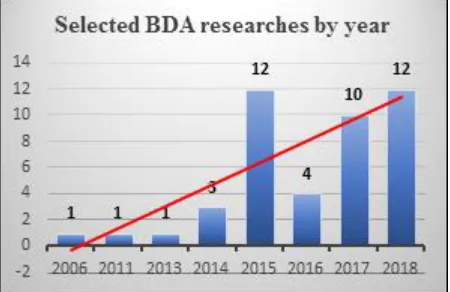
Figure 2: Selected BDA researches by year
For researches that discussed BDA in relation to auditing and accountancy, a total of 44 papers were selected. Figure 2 above has shown that the papers discussing BDA in relation to auditing and accountancy has taken a faster pace since year 2015. The increase in research pace in recent years is approximately aligned with the increase in CA researched (Figure 1). There is a void during the year 2007-2010 where there is no relevant paper found in this area. Although there are papers that might discuss a specific technique for a particular prediction objective, such as prediction of loan default rate using certain data mining technique, however those are not the focus of the search and hence would not be included in the search results, as loan default is not directly a matter of accounting and auditing.
4.1.3 Researches by Type
Figure 3: Selected CA researches by type
3423 company, benefits. Also, case studies of application of CA
in corporations are included as part of behavioural studies too.
Figure 4: Selected BDA researches by type
Figure 4 presents the BDA papers selected and similarly to CA researches, the area focus largely on conceptual level (more than 50%). However, interestingly behavioural studies are rather low in this aspect as compared to CA researches. This area of research tend to have more studies on data mining techniques, Machine Learning model etc. which is classified as analytical.
4.1.4 Researches by Publisher and Journal
Figure 5: Selected CA researches by publisher
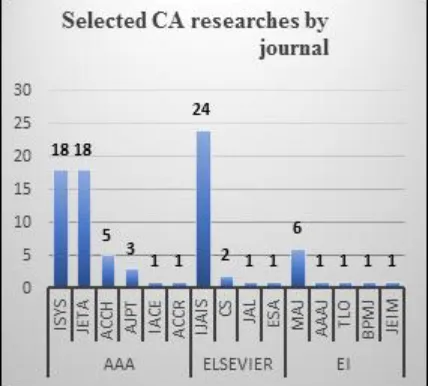
Figure 6: Selected CA researches by journal
Figure 5 shows a breakdown of papers according to the publisher (please refer to Appendix C for the Publisher and Journals Abbreviation list). As expected, AAA stands at the top as they are the largest community of accountants in academia. They have many leading journals under their belt covering areas across financial accounting, forensic accounting, management accounting, accounting information systems, emerging technologies in accounting, auditing etc. It comes as no surprise that AAA alone has more than the other two (next best) publisher in these areas of accounting and auditing, i.e. Elsevier and EI. These two belongs more to the scientific area of research. Figure 6 shows a breakdown of papers by the specific journals. The top 3 are IJAIS, ISYS and JETA for CA researches.
3424
Figure 8: Selected BDA researches by journal
Figure 7 shows a similar proportion of papers from the three publisher. Again AAA takes roughly 60% while the rest are divided among Elsevier and EI. The top 3 journal sources for BDA researches are ACCH, ISYS and IJAIS. It seems that there is a high number of papers that dwell into the technological and system element of CA and BDA as shown above. These papers are published in IJAIS, JETA as well as ISYS.
4.2 Qualitative Analysis
The purpose of this analysis is to examine the papers‘ content in regarding to BDA and CA. The papers could mainly be discussing about one topic or another, seldom both. In addition, the papers might not necessary use the exact term such as ‗big data analytics‘ and ‗continuous auditing‘ in the papers. Hence, judgement have to be applied to determine the relevancy of the papers in regarding to the mentioned two areas. For example, a paper could be dwelling in data mining techniques for predictive analysis in financial statement fraud detection. Although the word is ‗big data analytics‘ is nowhere to be found in the particular paper, it is understood that data mining is related to BDA to a great extent and hence it will be selected as high relevancy paper to be reviewed and synthesized. The analysis is being looked at from 3 angles, BDA, CA and BDA in CA environment. Finally the papers and its related topic will be linked to discussion on its application in FSA, which is the core domain review topic for this capstone project. The analysis angles is wide ranging and could cover (both theoretical and actual) elements such as the application, implementation, techniques, benefits, shortcomings, issues etc. The results of such analysis is shown in Appendix B. To maintain relevancy of the papers reviewed, only papers published on or after the year 2010 will be included in this section.
4.3 Formulation of Continuous Auditing Framework for Financial Statements Auditing
From the qualitative analysis above, it could be seen that CA for FSA is not discussed much and in great detail in any particular papers. Even if there is, it is highly theoretical as the industry has not evolved much from the traditional auditing approach, except for technological improvement in efficiency purpose (i.e. more user-friendly, administrative easing purpose). For explanation and contrast purpose, the traditional audit approach in which current audit engagements utilized is first shown and discussed in 4.2.1
below. Subsequently, the CA Framework is proposed and addressed in 4.2.2
4.3.1 Traditional (Current) Audit Approach
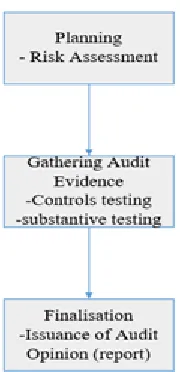
Figure 9: Traditional Audit Approach
Figure 9 above display the general traditional audit approach flowchart, adopted from PWC (2013) [108]. This is a simplified and condensed version of the flowchart that is being used in most FSA, i.e. Risk-Based Approach Auditing. The Auditing Standards are drafted and built mainly based on these stages. No doubt, the audit could get extremely complicated as there are conglomerates and business groups that spans across the globe, however the basic idea is expressed in Figure 9. The audit usually starts with planning stage, this is where auditors starts to assess the client risk areas (risk of material misstatements whether due to fraud or error). This is for the purpose of understanding the focus area and facilitates resource planning, i.e. staff experienced level, time-cost budgeting etc. Crudely speaking, for areas of high risk of material misstatement, more and quality audit evidence is required to be obtained while low risk area requires the opposite. Once this is done, an initial plan is laid out for the audit team to perform the field work, i.e. gathering audit evidence. This usually splits into two parts, i.e. Internal Controls Testing and Substantive Testing. These parts are usually done with sampling approach. Auditors only will test on internal controls that are critical to the assertions of financial statement figures (again, not all as auditors has determined in planning stages what to work on more, or less, or even not to worked on). Once the testing of internal controls satisfied that it is working as it should be, auditors will proceed to substantive testing, i.e. directly testing the accounting transactions. If the controls testing results shows an unsatisfactory result (or in cases that there is no controls at all), auditors will move on directly to substantive testing, with increase numbers of samples. Finally, an audit opinion will be issued at the final stage of FSA.
3425
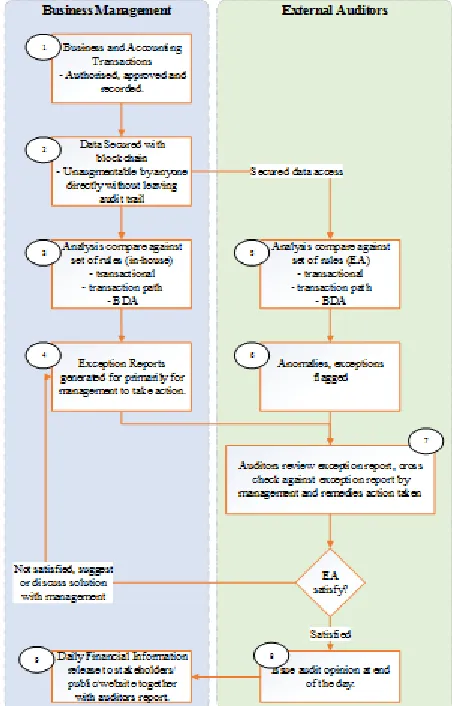
Figure 10: Proposed CA Framework for FSA with the use
of BDA
Figure 10 above shown the proposed CA Framework of a FSA using BDA as part of it work. The framework starts from point 1, where the business transactions happens on real-time basis. The data are captured in a BIS and Database Management System that could facilitate the CA Framework to work. The EA role in FSA in this CA Framework is to review the full population, i.e. all the transactions that goes through the client system, by way of an exception report, on a daily basis (as close to real-time audit opinion). This auditing could potentially be a paradigm shift from a Risk-Based Auditing and Sampling approach to a 100% population verification approach, i.e. Continuous Data Level Auditing System as proposed by Kogan et.al. [93]. Subsequently, the data is secured with blockchain where any augmentation requires the authorization of all the parties involved, and more importantly, full transparency and audit trail are available [104]. Subsequently the data will go through the client own analytic system as well as IA system to detect anomalies and potential errors. The data is transactional in nature and hence could be analysed in many way, BDA plays an important role here. The system will need to have a Continuity Equations Model Capability, i.e. developing an expected behaviour of transactions based on pre-determined financial or non-financial matrix
[93]. Both the transaction matrices and the transaction path itself could be analysed for such purpose. A Data mining technique called Process Mining of Event Logs have been introduced as an analytical procedure by Jans, Alles and Vasarhelyi [91] for the auditing of the transaction path continuously and in full population mode. From here, anything that is out of the norm is flagged up as anomalies for the management to investigate and pursue further action or remedies if required. All of these are documented within the system and an audit trail will be available for further review purpose. From point 2, the exact same data will be available for the auditor to access, with a secured connection and ensured data confidentiality [85]. The EA will have their own analytical system separated from the client one as shown in point 5, where it could perform the similar analysis or advanced ones based on the matrixes required for EA to report on the FSA. It is vital to have a separate system to maintain the independence and objectivity of the EA in performing the FSA. Potential anomalies and exceptions will be flagged up. Interestingly, there were various papers discussing topic related to financial statement frauds more than other element in financial statement, albeit fraud is not the only matter in financial statement. As a key aspect to auditing 100% transactions, there bound to be multiple exceptions and anomalies, and this could pose an overwhelming burden to the EA as they only have within the day to review the issues. Hence an exception prioritization method is required to filter out the real and critical issue to be followed up with management. This exception prioritization model has been drafted and proposed by Li, Chan and Kogan [62] as shown in Figure 11 below. The model shall improve over time with more back propagated data to constantly update and review the exception rules and eventually a highly accurate model could be produced.
3426 Subsequently to point 7, this is where auditor will need to
review the exceptions report generated by their system with certain prioritization implemented [62], cross matched against the reports generated by management as well as their remedies action reports. When there is unsatisfactory issue remains, the EA will need to bring up such issues back to the management to discuss further and take appropriate action. Once all the issues has been cleared, an audit opinion will be issued at the end of the day at point 8 and the financial information is ready to be released to the relevant stakeholders. The entire CA Framework although is expressed in points stages, however there is no real stages in the execution of the FSA as everything happen on real-time and within the working days. Only the audit opinion, reports and release of financial information happens at the end of the day business day.
5.0 CONCLUSION
This study has explore and examined the area surrounding CA in FSA with the touch of BDA, by employing a content analysis approach on existing literatures. Upon exploration of the literatures, it has re-affirmed that the BDA application in at its very infant stage and CA remains as a conceptual discussion areas among the academia and researchers. There were two main deliverables in this paper. Firstly, the quantitative analysis reveals the focus areas of past researches and study. The analysis provides an overview on the related work in CA and BDA areas in the most recent 20 years (approximately), i.e. 2000-2019. From the analysis, it is known that there is an increase in number of papers published in the recent years, i.e. the academia community and practitioners are getting active and interested in these areas. This situation has definitely provide an ease to the dire situation of the laggard in CA and BDA applications in FSA. The analysis shows that majority of the papers are conceptual in nature as well as case studies (behavioural) that focus on implementation of CA in IA capacity. Furthermore, both areas has fairly high number of papers published with journals related to technology and information systems, i.e. JETA, ISYS and IJAIS. There were not many use case type of research (analytical) being done on these areas. The analytical research type needs more attention from the researchers, as modelling, applications, simulations falls under this categories, this is what the practitioners could benefit greatly from, a use case. Researches should also give more emphasis on EA as the work focusing in EA is not enough, although it is one of the main contributor to the financial market world. Finally, the area of CA & BDA could see more linkage being worked in the study papers, as BDA is the backbone of CA. Secondly, a qualitative analysis has been done to inspect the selected literature work in more detail to provide a further understanding of the application of BDA and CA on FSA. This will help to provide an outlook of the individual ―part(s) needed‖ to form a CA Framework for FSA. Interestingly fraud detection has been a focus for researchers relating to these areas, more than other parts of FSA. It is to be noted that fraud detection is just one part of FSA, in fact, fraud detection is not the main objective of FSA. A typical FSA examine the significant accounts and
3427 nature. Granted, there is indeed certain transactions that is
one-off, non-repetitive, low in frequency and rare, such that the CA system that is based on BDA (i.e. tonnes of historical data) is not able to handle due to purely lack of historical data, or non-existence at all. For example, accounting transactions arising from company acquisition(s), business unit disposal(s), litigations etc. These type of transactions in which the timing and extent is largely unknown until it arises, could be an area for research for academia, particularly on how to handle it within a CA environment and subsequently to report it to the relevant stakeholder. This could be and area of high interest as the traditional periodic (annual) audited financial statement could be scrapped entirely becoming a daily event, where this type of non-recurring transactions could be separately reported, within a CA environment. Finally, this research paper would contribute mainly to the accounting and auditing communities, i.e. both practitioners, standard setters as well as academia. It is important to align the research and practice for these areas. For such purpose, a qualitative interview-based research is required to cover the alignment. This study should target all ranges of firms from the leading big 4 audit firms to small and medium firms across the countries. The findings from such study will definitely propel the advances in such areas in a more coherent direction and faster pace to catch up with the advent of big data.
REFERENCES
[1] R. Jacobson, ―2.5 quintillion bytes of data created every day‖, Industry Insights, 2013. [Online].
Available from:
https://www.ibm.com/blogs/insights-on- business/consumer-products/2-5-quintillion-bytes- of-data-created-every-day-how-does-cpg-retail-manage-it/ [Accessed: 5 June 2018]
[2] A. Dragland, ―Big Data, for better or worse:90% of world's data generated over last two years‖, 2013.
[Online]. Available from:
https://www.sciencedaily.com/releases/2013/05/ 130522085217.htm [Accessed: 6 June 2018] [3] Domo, ―Data Never Sleeps 2.0‖. [Online].2013.
Available from:
https://www.domo.com/learn/data-never-sleeps-2#/ [Accessed: 10 July 2018]
[4] Domo, ―Data Never Sleeps 6.0‖. [Online].2017.
Available from:
https://www.domo.com/learn/data-never-sleeps-6 [Accessed: 10 July 2018]
[5] Gartner, ―What Is Big Data?‖, Gartner IT Glossary - Big Data, 2012. [Online]. Available from: https://www.gartner.com/it-glossary/big-data/ [Accessed: 5 June 2018]
[6] B. Marr, ―Big Data: The 5 Vs Everyone Must Know‖, LinkedIn Pulse, 2014. [Online]. Available from:
https://www.linkedin.com/pulse/20140306073407-64875646-big-data-the-5-vs-everyone-must-know/ [Accessed: 5 June 2018]
[7] C. Schneider, ―The biggest data challenges that
you might not even know you have‖. [Online]. 25
May 2016. Available from:
https://www.ibm.com/blogs/watson/2016/05/bigge st-data-challenges-might-not-even-know/
[Accessed: 10 July 2018]
[8] The Economist, ―The world‘s most valuable resource is no longer oil, but data‖. [Online]. 6
May 2017. Available from:
https://www.economist.com/leaders/2017/05/06/th e-worlds-most-valuable-resource-is-no-longer-oil-but-data [Accessed: 10 July 2018]
[9] P. E. Byrnes, T. Criste, T. Stewart and M. A. Vasarhelyi, ―Reimagining auditing in a wired world‖, AICPA White Paper. [Online]. August 2014. Available from: https://www.aicpa.org/ interestareas/frc/assuranceadvisoryservices/down loadabledocuments/whitepaper_blue_sky_scenari o-pinkbook.pdf. [Accessed: 10 June 2018]
[10] H. Lin and W. Fan, ―Leveraging organizational knowledge through electronic knowledge repositories in public accounting firms: An empirical investigation‖, Behavioral Research in Accounting, vol. 23, no. 2, pp. 147–167, 2011. [11] E. Carson and C. Dowling, ―The competitive
advantage of audit support systems: The relationship between extent of structure and audit pricing‖, Journal of Information Systems, vol. 26, no. 1, pp. 35–49, 2012.
[12] A. Gepp, M. K. Linnenluecke, T. J. O‘Neill and T. Smith, ―Big data techniques in auditing research and practice: Current trends and future opportunities‖, Journal of Accounting Literature, vol. 40, pp. 102-115, 2018.
[13] M. G. Alles, A. Kogan and M. A. Vasarhelyi, ―Feasibility and economics of continuous assurance‖, Auditing: A Journal of Practice & Theory, vol. 21, no. 1, pp. 125–138, 2002.
[14] M. G. Alles, ―Drivers of the use and facilitators and obstacles of the evolution of Big Data by the audit profession‖, Accounting Horizonss, vol. 29, no. 2, pp. 439–449, 2015.
[15] J. Dai and M. A. Vasarhelyi, ―Imagineering Audit 4.0‖, Journal of Emerging Technologies in Accounting, vol. 13, no. 1, pp. 1-15, 2016.
[16] G. Richins, A. Stapleton, T. C. Stratopoulos and C. Wong, ―Big Data Analytics: Opportunity or Threat for the Accounting Profession?‖, Journal of Information Systems, vol. 31, no. 3, pp. 63-79, 2017.
[17] M. A. Vasarhelyi, R. A. Teeter and J. P. Krahel, ―Audit education and the real-time economy‖, Issues in Accounting Education, vol. 25, no. 3, pp. 405-423, 2010.
[18] ACCA, ―Understanding investors: the road to real-time reporting‖, Technical resources. [Online].1 September 2013. Available from: http://www.accaglobal.com/my/en/technical-
activities/technical-resources-search/2013/september/real-time-reporting.html [Accessed: 7 July 2018]
3428 Timeframe for Issuance of Annual Reports By
Public Listed Companies. Media release‖.[Online]. 2013 Available from: http://www.
bursamalaysia.com/corporate/media-centre/media-releases/2345 [Accessed: 10 June 2018]
[20] HKEX, ―Note to Subscribers for the Amendments to the RUles Governing the Listing of Securities (the"Listing Rules") Update no. 89‖, Listing Rules and Guidance, 2008. [Online]. Available from: https://www.hkex.com.hk/Listing/Rules-and-
Guidance/Listing-Rules- Contingency/Amendments-to-Main-Board-Listing-Rules/2010/Update-No-89?sc_lang=en [Accessed: 5 June 2018]
[21] AICPA and CICA, ―Continuous Auditing Research Report‖, The Canadian Institute of Chartered Accountants, 1999.
[22] V. Chiu, Q. Liu and M. A. Vasarhelyi, ―The development and intellectual structure of continuous auditing research‖, Journal of Accounting Literature, vol. 33, no. 1/2, pp. 37-57, 2014.
[23] J. L. Perols and B. Lougee, ―The relation between earnings management and financial statement fraud‖, Advances in Accounting, incorporating Advances in International Accounting, vol. 27, pp. 39-53, 2011.
[24] W. Dilla, D. J. Janvrin and R. Raschke, ―Interactive data visualization: New directions for accounting information systems research‖, Journal of Information Systems, vol. 24, no. 2, pp. 1-37, 2010.
[25] M. A. Vasarhelyi, A. Kogan and B. M. Tuttle, ―Big data in accounting: An overview‖, Accounting Horizonss, vol. 29, no. 2, pp. 381-396, 2015. [26] AICPA, ―Audit analytics and continuous audit‖.
[Online]. Available from:
https://www.aicpa.org/interestareas/frc/assurance advisoryservices/continuousassuranceworkinggro up.html [Accessed: 2 June 2018]
[27] D. Appelbaum, A. Kogan and M. A. Vasarhelyi, ―Big data and analytics in the modern audit engagement: Research needs‖, Auditing: A Journal of Practice & Theory, vol. 36, no. 4, pp. 1-27, 2017.
[28] D. Appelbaum, A. Kogan and M. A. Vasarhelyi, ―Analytical procedures in external auditing: A comprehensive literature survey and framework for external audit analytics‖, Journal of Accounting Literature, vol. 40, pp. 83-101, 2017.
[29] P. E. Byrnes, B. Ames, M. A. Vasarhelyi and J. D. Warren Jr., ―The current state of continuous auditing and continuous monitoring‖, AICPA White Paper. [Online]. October 2012. Available from: https://www.aicpa.org/interestareas/frc/assurance advisoryservices/
downloadabledocuments/whitepaper_current-state-continuous-auditing-monitoring.pdf. [Accessed: 10 June 2018]
[30] M. Cao, R. Chychyla and T. Stewart, ―Big data
analytics in financial statement audits‖, Accounting Horizonss, vol. 29, no. 2, pp. 423-429, 2015.
[31] H. Eastman, ―Investors are turning to 'alternative data' to corroborate the corporate story‖, ACCA article. [Online]. 1 May 2018. Available from: http://www.accaglobal.com/uk/en/
member/discover/cpd-articles/financial-management/aiaudit-cpd.html [Accessed: 4 June 2018]
[32] C. B. Frey and M. Osborne, ―The future of employment.Oxford Publications‖.[Online]. September 2013 Available from: https://www.oxfordmartin.ox.ac.uk/publications/vie w/1314 [Accessed: 4 June 2018]
[33] ACCA, ―Data: its power and perils‖, Technical resources. [Online].21 November 2013. Available from: http://www.accaglobal.com/my/en/technical-
activities/technical-resources- search/2013/december/big-data-its-power-and-perils.html [Accessed: 7 June 2018]
[34] ISA 200 (2009) Overall objectives of the independent auditor and the conduct of an audit in accordance with international standards on auditing. International Standard on Auditing.
[Online]. Available from:
http://www.ifac.org/system/files/downloads/a008-2010-iaasb-handbook-isa-200.pdf [Accessed: 11 June 2018]
[35] L. T. Heang and A. M. Ali, ―The evolution of auditing: An analysis of the historical development‖, Journal of Modern Accounting and Auditing, vol. 4, no. 12, pp. 1-8, 2008.
[36] D. Chan and M. A. Vasarhelyi, ―Innovation and practice of continuous auditing‖, International Journal of Accounting Information Systems, vol. 12, no. 2, pp. 152-160, 2011.
[37] Worldbank, ―Contributing to financial stability: encouragin greater dialogue between key players in the banking sector‖. [Online]. 21 September
2016. Available from:
http://www.worldbank.org/en/news/feature/2016/0
9/15/contributing-to-financial-stability- encouraging-greater-dialogue-between-key-players-in-the-banking-sector [Accessed: 4 June 2018]
[38] ACCA, ―The future of audit‖, Technical resources.
[Online]. Available from:
http://www.accaglobal.com/my/en/technical-activities/technical-resources-search/2016/ march/future-of-audit.html [Accessed: 7 June 2018]
[39] ISA 520 (2009) Analytical Procedures. International Standard on Auditing. [Online].
Available from:
http://www.ifac.org/system/files/downloads/a026-2010-iaasb-handbook-isa-520.pdf [Accessed: 11 June 2018]
[40] The Economist, ―Shape up, not break up; Reforming the big four‖. [Online]. 24 May 2018.
3429 https://www.economist.com/leaders/2018/05/24/re
forming-the-big-four [Accessed: 10 July 2018] [41] ISA 610 (2009) Using the work of internal auditors.
International Standard on Auditing. [Online].
Available from:
http://www.ifac.org/system/files/downloads/a034-2010-iaasb-handbook-isa-610.pdf [Accessed: 11 June 2018]
[42] H. Brown-Liburd, H. Issa and D. Lombardi, ―Behavioral implications of Big Data‘s impact on audit judgment and decision making and future research directions‖, Accounting Horizonss, vol. 29, no. 2, pp. 451–468, 2015.
[43] C. E. Earley, ―Data analytics in auditing: Opportunities and challenges‖, Business Horizons, vol. 58, no. 5, pp. 493–500, 2015.
[44] M. Rapoport, ―Auditing firms count on technology for backup‖, CFO Journal. [Online]. 7 March 2016.
Available from:
https://www.wsj.com/articles/auditing-firms-count-on-technology-for-backup-1457398380 [Accessed: 10 July 2018]
[45] EY, ―How Big Data and analytics are transforming the audit‖, EY Reporting. [Online] April 2015.
Available from:
http://www.ey.com/gl/en/services/assurance/ey- reporting-issue-9-how-big-data-and-analytics-are-transforming-the-audit [Accessed: 10 July 2018] [46] EY, ―Building blocks of the future‖, EY Reporting.
[Online] September 2016. Available from: http://www.ey.com/gl/en/services/assurance/ey-reporting-building-blocks-of-the-future [Accessed: 10 July 2018]
[47] Kirasystems, ―Deloitte Forms Alliance with Kira Systems‖, Deloitte US Press Release. [Online].8 March 2016. Available from: https://info.kirasystems.com/news/deloitte-forms- alliance-with-kira-systems-to-drive-the-adoption-of-artificial-intelligence-in-the-workplace [Accessed: 10 July 2018]
[48] IBM, ―Ushering in the Cognitive Era at KPMG‖, CTB10. [Online]. 8 March 2016. Available from:
http://www-03.ibm.com/press/us/en/pressrelease/49274.wss [Accessed: 10 July 2018]
[49] IAASB, ―Exploring the growing use of technology in the audit, with a focus on data analytics‖, Exposure Drafts and Consultation Papers, 2016. [Online]. Available from: http://www.ifac.org/ publications-resources/exploring-growing-use-technology-audit-focus-data-analytics [Accessed: 8 June 2018]
[50] K. Yoon, L. Hoogduin and L. Zhang, ―Big data as complementary audit evidence‖, Accounting Horizonss, vol. 29, no. 2, pp. 431-438, 2015. [51] IAASB, ―Data Analytics‖, Projects, 2018. [Online].
Available from: http://www.iaasb.org/ projects/data-analytics [Accessed: 8 June 2018] [52] M. A. Vasarhelyi, M. G. Alles and K. T. Williams,
―Continuous assurance for the now economy‖, Institute of Chartered Accountants in Australia.
[Online]. February 2010. Available from: https://pdfs.semanticscholar.org/d63e/6cb0b6dfeb 5392f2b2530e4b44 8674369094.pdf [Accessed: 6 June 2018]
[53] S. M. Groomer and U. S. Murthy, ―Continuous auditing of database applications: An embedded audit module approach‖, Journal of Information Systems, vol. 3, no. 2, pp. 53-69, 1989.
[54] M. A. Vasarhelyi and F. B. Halper, ―The continuous audit of online systems‖, Auditing: A Journal of Practice & Theory, vol. 10, no. 1, pp. 110-125, 1991.
[55] A. Kogan, E. Sudit and M. A. Vasarhelyi, ―Continuous online auditing: A program of research‖, Journal of Information Systems, vol. 13, no. 2, pp. 87-103, 1999.
[56] J. Woodroof and D. W. Searcy, ―Continuous audit: Model development and implementation within a debt covenant compliance domain‖, International Journal of Accounting Information Systems, vol. 2, no. 3, pp. 169-191, 2001.
[57] S. Flowerday, A. W. Blundell and R. Von Solms, ―Continuous auditing technologies and models: A discussion‖, Computers and Security, vol. 25, no. 5, pp. 325-331, 2006.
[58] R. B. Dull, D. P. Tegarden and L. L. F. Schleifer, ―ACTVE: A proposal for an automated continuous transaction verification environment‖, Emerging Technologies in Accounting, vol. 3, no. 1, pp. 81-96, 2006.
[59] C. Santos, P. Sousa, C. Ferreira and J. Tribolet, ―Conceptual model for continuous organizational auditing with real time analysis and modern control theory‖, Journal of Emerging Technologies in Accounting, vol. 5, pp. 37-63, 2008.
[60] E. Koskivaara and B. Back, ―Artificial Neural Network Assistant (ANNA) for continuous auditing and monitoring of financial data‖, Journal of Emerging Technologies in Accounting, vol. 4, pp. 29-45, 2007.
[61] A. F. Borthick, ―Designing continuous auditing for a highly automated procure-to-pay process‖, Journal of Information Systems, vol. 26, no. 2, pp. 153-166, 2012.
[62] P. Li, D. Y. Chan and A. Kogan, ―Exception prioritization in the continuous auditing environment: A framework and experimental evaluation‖, Journal of Information Systems, vol. 30, no. 2, pp. 135-157, 2016.
[63] S. Weins, B. Alm and T. Wang, ―An integrated continuous auditing approach‖, Journal of Emerging Technologies in Accounting, vol. 14, no. 2, pp. 47-57, 2017.
[64] M. G. Alles, G. Brennan, A. Kogan and M. A. Vasarhelyi, ―Continuous monitoring of business process controls: A pilot implementation of a continuous auditing system at Siemens‖, International Journal of Accounting Information Systems, vol. 7, no. 2, pp. 137-161, 2006.
3430 Metcash's Business Assurance Group‖, Journal of
Information Systems, vol. 29, no. 2, pp. 183-194, 2015.
[66] M. Cotteleer and B. Sniderman, ―Forces of change: Industry 4.0‖, Deloitte Insights. [Online].18 December 2017. Available from: https://www2.deloitte.com/insights/us/en/
focus/industry-4-0/overview.html [Accessed: 4 June 2018]
[67] P. Renjen, ―Industry 4.0: Are you ready?‖, Deloitte Insights [Online]. 22 January 2018.
Available from:
https://www2.deloitte.com/insights/us/en/deloitte-
review/issue-22/industry-4-0-technology-manufacturing-revolution.html [Accessed: 4 June 2018]
[68] K. Petersen, S. Vakkalanka and L. Kuzniarz, ―Guidelines for conducting systematic mapping studies in software engineering: An update‖, Information and Software Technology, vol. 64, pp. 1-18, 2015.
[69] T. E. Marshall and S. L. Lambert, ―Cloud-Based Intelligent Accounting Applications: Accounting Task Automation Using IBM Watson Cognitive Computing‖, Journal of Emerging Technologies in Accounting, vol. 15, no. 1, pp. 199-215, 2018. [70] Z. Rezaee, A. Dorestani and S. Aliabadi,
―Application of Time Series Analysis in Big Data: Practical, Research and Education Implications‖, Journal of Emerging Technologies in Accounting, vol. 15, no. 1, pp. 183-197, 2018.
[71] G. C. Gonzales and V. B. Hoffman, ―Continuous Auditing‘s Effectiveness as a Fraud Deterrent‖, Auditing: A Journal of Practice & Theory, vol. 37, no. 2, pp. 225-247, 2018.
[72] W. G. No and M. A. Vasarhelyi, ―Cybersecurity and Continuous Assurance‖, Journal of Emerging Technologies in Accounting, vol. 14, no. 1, pp. 1-12, 2017.
[73] D. Appelbaum and R. A. Nehmer, ―Using Drones in Internal and External Audits: An exploratory Framework‖, Journal of Emerging Technologies in Accounting, vol. 14, no. 1, pp. 99-113, 2017. [74] E. Huerta and S. Jensen, ―An Accounting
Information Systems Perspective on Data Analytics and Big Data‖, Journal of Information Systems, vol. 31, no. 3, pp. 101-114, 2017. [75] J. Kokina and T. H. Davenport, ―The Emergence
of Artificial Intelligence: How Automation is Changing Auditing‖, Journal of Emerging Technologies in Accounting, vol. 14, no. 1, pp. 115-122, 2017.
[76] H. Issa, T. Sun and M. A. Vasarhelyi, ―Research Ideas for Artificial Intelligence in Auditing: The Formalization of Audit and Workforce Supplementation‖, Journal of Emerging Technologies in Accounting, vol. 13, no. 2, pp. 1-20, 2016.
[77] D. Appelbaum, ―Securing Big Data Provenance for Auditors: The Big Data Provenance Black Box as Reliable Evidence‖, Journal of Emerging
Technologies in Accounting, vol. 13, no. 1, pp. 17-36, 2016.
[78] S. Kozlowski, H. Issa and D. Appelbaum, ―Making Government Data Valuable for Constituents: The Case for the Advanced Data Analytics Capabilities of the ENHANCE Framework‖, Journal of Emerging Technologies in Accounting, vol. 15, no. 1, pp. 155-167, 2018.
[79] L. Zhang, D. Pei and M. A. Vasarhelyi, ―Toward a New Business Reporting Model (BRM)‖, Journal of Emerging Technologies in Accounting, vol. 14, no. 2, pp. 1-15, 2017.
[80] A. M. Rose, J. M. Rose, K. A. Sanderson and J. C. Thibodeau, ―When Should Audit Firms Introduce Analyses of Big Data into the Audit Process?‖, Journal of Information Systems, vol. 31, no. 3, pp. 81-99, 2017.
[81] U. S. Murthy and G. L. Geerts, ―An REA Ontology-Based Model for Mapping Big Data to Accounting Information Systems Elements‖, Journal of Information Systems, vol. 31, no. 3, pp. 45-61, 2017.
[82] R. Haynes and C. Y. Li, ―Continuous Audit and Enterprise Resource Planning Systems: A Case Study of ERP Rollouts in the Houston, TX Oil and Gas Industries‖, Journal of Emerging Technologies in Accounting, vol. 13, no. 1, pp. 171-179, 2016.
[83] S. L. Lambert, J. Holladay and D. M. Drum, ―International AC: An Education Case on Continuous Monitoring SQL Server Data with ODBC-Linked Tables in Microsoft Access‖, Journal of Emerging Technologies in Accounting, vol. 13, no. 2, pp. 195-213, 2016.
[84] S. Y. Segal, ―Accounting Frauds – Review of Advanced Technologies to Detect and Prevent Frauds‖, Economics and Business Review, vol. 2, no. 16, pp. 45-64, 2016.
[85] J. Zhang, X. S. Yang and D. Appelbaum, ―Toward Effective Big Data Analysis in Continuous Auditing‖, Accounting Horizonss, vol. 29, no. 2, pp. 469-476, 2015.
[86] I. Malaescu and S. G. Sutton, ―The Reliance of External Auditors on Internal Audit‘s use of Continuous Audit‖, Journal of Information Systems, vol. 29, no. 1, pp. 95-114, 2015.
[87] J. P. Krahel and W. R. Titera, ―Consequences of Big Data and Formalization on Accounting and Auditing Standards‖, Accounting Horizonss, vol. 29, no. 2, pp. 409-422, 2015.
[88] C. C. Lin, A. A. Chiu, S. Y. Huang and D. C. Yen, ―Detecting the Financial Statement Fraud: The Analysis of the Differences between Data Mining Techniques and Experts‘ Judgments‖, Knowledge-Based Systems, vol. 89, pp. 459-470, 2015.
[89] J. D. Warren, K. C. Moffitt and P. Byrnes, ―How Big Data Will Change Accounting‖, Accounting Horizonss, vol. 29, no. 2, pp. 397-407, 2015. [90] M. A. Vasarhelyi and S. Romero, ―Technology in
![Table 1: Literature selection process adopted from: Petersen, Vakkalanka and Kuzniarz [68]](https://thumb-us.123doks.com/thumbv2/123dok_us/8634705.1424413/5.612.328.575.432.506/table-literature-selection-process-adopted-petersen-vakkalanka-kuzniarz.webp)