O R I G I N A L R E S E A R C H
How to Implement Adherence-Promoting Programs
in Clinical Practice? A Discrete Choice Experiment
on Physicians
’
Preferences
This article was published in the following Dove Press journal: Patient Preference and Adherence
Sabrina Müller 1
Tjalf Ziemssen 2
Curt Diehm3
Tobias Duncker4
Philipp Hoffmanns5
Inga-Marion Thate-Waschke6
Markus Schürks 6
Thomas Wilke 7
1Ingress-Health, Wismar 23966,
Germany;2Zentrum für klinische
Neurowissenschaften, Klinik und Poliklinik für Neurologie,
Universitätsklinikum Carl Gustav Carus an der Technischen Universität Dresden, Dresden 01307, Germany;3Private
Practice, Ettlingen 76275, Germany;
4Institut für Augenheilkunde Halle, Halle
06114, Germany;5Private Practice,
Rheinstetten 76287, Germany;6Bayer
Vital GmbH, Leverkusen 51368, Germany;7Institut für
Pharmakoökonomie und
Arzneimittelogistik, Wismar 23966, Germany
Introduction: The aim of this study was to examine physicians’ preferences regarding
adherence-promoting programs (APPs), and to investigate which APP characteristics infl
u-ence the willingness of physicians to implement these in daily practice.
Materials and Methods: A discrete choice experiment was conducted among general practitioners, cardiologists, neurologists and ophthalmologists in Germany. The design
considered five attributes with two or three attribute levels each: validation status of the
APP; possibility for physicians to receive a certificate; type of intervention; time
commit-ment per patient and quarter of the year to carry out the APP; reimbursecommit-ment for APP participation, per included patient and quarter of the year.
A multinomial logit model was run to estimate physicians’ utility for each attribute
and to evaluate the influence of different levels on the probability of choosing a specific
APP. The relative importance of the attributes was compared between different
pre-defined subgroups.
Results:In total, 222 physicians were included in the analysis. The most important char-acteristics of APPs were time commitment to carry out the program (34.8% importance), reimbursement (33.3%), and validation status of the program (23.7%). The remaining
attributes (type of intervention: 3.6%; possibility to receive a certificate: 4.7%) were proven
to be less important for a physician’s decision to participate in an APP. Physicians on average
preferred APP alternatives characterized by little time commitment (β=1.456, p<0.001), high
reimbursement for work (β=1.392, p<0.001),“positive validation status”(β=0.990, p<0.001),
the“possibility to get a certificate”(β=0.197, p<0.001), and the provision of“tools for both
physicians and patients”(β=0.150, p<0.001).
Conclusion:For the majority of the physicians participating in this survey, the willingness to implement an APP is determined by the associated time commitment and reimbursement. Considering physicians' preferences regarding different APP features in the promoting process of these programs may enhance physicians' participation and engagement.
Keywords:adherence promoting programs, adherence interventions, compliance programs, discrete choice experiment
Introduction
Patients’non-adherence to medication for chronic diseases is a common phenomenon1–3 and may have substantial negative clinical and health-economic impact.4,5Adherence to medication is a complex and multidimensional behavior.6Therefore, direct engagement with patients is crucial to address any“adherence barriers.”3,7Nevertheless, in real-world
Correspondence: Sabrina Müller Ingress-Health, Alter Holzhafen 19, Wismar 23966, Germany
Email [email protected]
Patient Preference and Adherence
Dove
press
open access to scientific and medical research
Open Access Full Text Article
Patient Preference and Adherence downloaded from https://www.dovepress.com/ by 118.70.13.36 on 26-Aug-2020
treatment settings, systematic interventions to measure and improve patients’adherence are rarely used.8,9For example, the Global Asthma Physician Survey (GAPS) estimated that written action plans (37%) and technology (15%) were rarely employed by physicians to aid patients’asthma management. Moreover, only a minority of physicians (10%) used validated patient-reported outcomes questionnaires to monitor asthma control.10
Even if adherence-promoting programs (APPs) are implemented, the evidence with regard to their success rates is still ambiguous.11 While some interventions were proven to increase patients’adherence12,13few were able to also improve patients’clinical outcomes.14
For an APP implementation, different options exist. Health care professionals such as physicians and pharmacists might be engaged in adherence-promoting interactions with patients. However, physicians’roles in these programs are crucial, as they are usually the central contact persons for patients in the prescription of a medication, in educating patients on why and how to take medication, and for re-engagement with patients and re-prescription of medication. Therefore, it may be hypothesized that limited success of many APPs is at least partly due to a lack of inclusion of and support by treating physicians. Hence, successful implementation of an APP requires physicians’willingness to fulfill their pivotal roles.13 So far, factors associated with the willingness to engage in APPs have not been studied.
The main aim of this study was to understand physicians’ preferences determining their willingness to carry out an APP.
Methods
Setting
A physician survey among quota-sampled general practi-tioners (GPs), cardiologists, neurologists and ophthalmolo-gists was conducted in Germany. Based on a database of physicians throughout Germany 4,000 physicians were invited to participate in the study via mail and phone. Participating physiciansfilled in paper-and-pencil or online questionnaires or participated in phone interviews. Since we did not collect patient-related data and did not interact with patients, we did not consult an ethics committee. Physicians received a reimbursement for their participation in this study (90,-€to 120,-€per completed questionnaire).
Preference Measurement
Among the different methods used to investigate preferences in health care, discrete-choice experiments (DCEs) have
become a widely accepted approach in health care.15–19 In a DCE, participants are presented with descriptions of two (or more) complete hypothetical options based on a combination of different attributes. Interviewees are then asked to select their preferred alternative from the presented choices.15,19The underlying assumption of a DCE is that rational individuals will always choose the alternative with the higher level of expected utility. Willingness to engage in APPs may be inves-tigated using a DCE study, as APPs are associated with obvious benefits from a physician's perspective (better adher-ence, additional income, etc.), but are also associated with potential cost, mainly in terms of time commitment.
Our first step in developing a DCE design suitable to assess physicians’preferences regarding different charac-teristics of APPs was to conduct a qualitative study. This included a targeted literature review regarding key attri-butes describing different APP options and four different focus groups discussions, each with 3–4 physicians. With these focus groups consisting of GPs, ophthalmologists, cardiologists and neurologists, we discussed the impor-tance and relevance of attributes identified from the litera-ture as well as the need of considering any additional attribute. Moreover, the questionnaire draft, which was generated after assessment of the results of the focus group discussions, was assessed by an advisory board of four clinical experts (TZ, CD, TD, PH). Finally, five attributes with two or three levels for each attribute were agreed upon and included in the questionnaire for the quantitative study:
● Validation status of the APP ○ Validated,
○ Not validated.
● Possibility for physicians to receive a certificate,
con-firming participation in the APP (which can be used for quality-oriented patient communication)
○ Yes,
○ No.
● Type of intervention
○ Tools for patients (digital and non-digital reminder), ○ Digital tools for physicians (simplified generation of medication plans, appointment management, patients can document data that physician have access to), ○ Comprehensive package including both tools for
patients and physicians, which will be based on beha-vioral and knowledge-related patient discussions.
Patient Preference and Adherence downloaded from https://www.dovepress.com/ by 118.70.13.36 on 26-Aug-2020
● Time commitment per patient and quarter of the year, to implement the APP
○ 10 mins for practice personnel, ○ 30 mins for practice personnel, ○ 30 mins for physician.
● Reimbursement for APP participation, per included patient and quarter of the year
○ 20€, ○ 50€, ○ 80€.
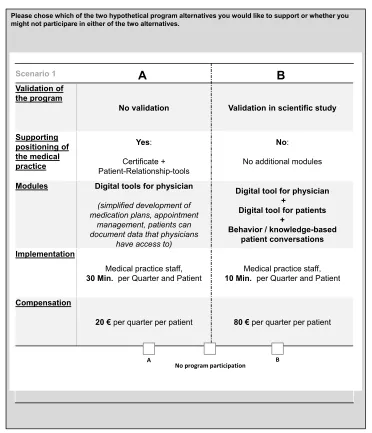
Based on the full-factorial design, including the complete set of combinations of all attribute levels and choice situa-tions, all possible main and interaction effects could be estimated. However, the full-factorial design is not feasi-ble in a survey due to the high number of choices and its complexity. Thus, a fractional-factorial design was consid-ered (using IBM SPSS Statistic software), consisting of a subset of all theoretically possible choice sets with which all effects of interest still can be estimated.20,21 The frac-tional-factorial design of this study contained 16 different choice sets (each with two alternative treatment options A and B). An opt-out option was added to each of the generated choice sets allowing the physicians to state that they would neither support alternative A nor alternative B. An example of a choice set is given in Figure 1.
Data Collection and Statistical Analysis
Demographic characteristics and additional information about the implementation of APPs were documented by participating physicians or collected by trained inter-viewers on paper-and-pencil or online questionnaires.Before data analysis, the consistency of given answers within the DCE choice situations was checked. Therefore, the so-called “straight-liners” (respondents who decided always for the same option, eg, in all 16 choice situations option A was selected) were identified and excluded from the analysis set.
Physicians’characteristics were analyzed using descrip-tive statistics, including absolute and reladescrip-tive frequencies for categorical variables and summary statistics (eg, mean, stan-dard deviation) for continuous variables. With regard to the DCE data, the influence of different attribute levels on the probability of a physician’s choice of a specific APP alter-native as well as utility levels for each attribute level were estimated, based on a multinomial logit model (MNL). The
relative importance of each attribute for the overall decision for/against an APP alternative was calculated based on the absolute distance between the minimum and maximum value/coefficients of the level of each attribute. The ratio of the coefficient distance of each attribute to the sum of the absolute coefficient distances of all attributes were inter-preted as the relative importance.22
Relative importance of the different attributes was com-pared between specific subgroups of interviewed physician. Mainly, it was investigated whether preferences differ by age, gender and specialty of the physician as well as by her/ his experience and the type of practice. In addition, the interaction effects between individual characteristics and attributes were estimated. The specific information to define respective subgroups was collected at the end of the survey. Analyses were done with Stata/MP 14, IBM SPSS Statistic software (version 20) and Microsoft Excel 2016.
Results
Study Population
The results of 222 physicians were included in the DCE analysis, after exclusion of the outcomes of 4 physicians (3 GPs and 1 neurologist) due to inconsistent answers. Of these, 47 were GPs, 47 cardiologists, 83 neurologists, and 45 ophthalmologists. The mean age was 49.6 (SD 8.8) years, and 36.5% were female (Table 1). On average, physicians treated 1691.8 patients per quarter, and they had a mean job experi-ence of 13.1 years (SD 9.1).
Physicians
’
APP Preferences
An initial descriptive analysis showed that in 31.9% of all decision situations (in total 3,552 different choice situa-tions–16 choice tasks per physician), physicians selected the“opt-out option”and, thus, decided not to participate in none of the provided APP alternative. 77.5% of all the interviewed physicians decided at least once for an opt-out alternative in one of the 16 choice cards, whereas 51.8% chose the opt-out alternative in at least 5 choice situations. Ophthalmologists were more often choosing for an opt-out alternative whereas cardiologists showed the lowest rate of choices of opt-out alternative (53.3% versus 40.4% with at least 5 opt-out).
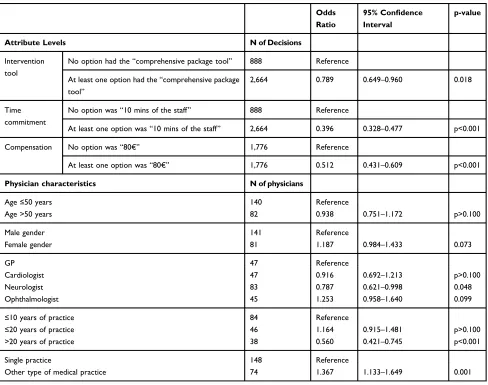
Table 2shows the results of the multivariable logistic
regression that included as a dependent variable whether the physician chose the opt-out option or one of the opt-in options (either A or B). The attribute levels were encoded as dummy variables: “best option” included versus “best
Patient Preference and Adherence downloaded from https://www.dovepress.com/ by 118.70.13.36 on 26-Aug-2020
option”not included in the choice (e.g., either option A or B include 80€of compensation vs neither A nor B include 80€ of compensation). Validation status of APP and the possibility to receive a certificate were dropped by the model since the attributes are presented with just two levels.
Table 2presents the results from the logistic regression analysis investigating the effect of the variation in attribute levels and physicians’as well as their practices’ character-istics on the probability to choose the opt-out option. It can be seen that if“the best alternative”(comprehensive pack-age as type of intervention, 10 mins of time commitment from the clinic staff and 80€compensation) was included
as an option in one of the alternatives, the probability to choose the opt-out option was significantly lower (odds ratios [OR]: 0.789, 0.396 and 0.512, respectively). In addition, neurologists have a significantly lower probabil-ity to choose the opt-out option, as well as physicians working in a single practice rather than other types of medical practice (OR: 0.787 and 1.367, respectively). Physicians with more than 20 years of practice experience have a significantly lower probability to choose the opt-out option than physicians with ≤10 years of practice experi-ence (OR: 1.367).
Figure 2 shows the results of the MNL regression
analyses. Overall, three attributes were proven to be Please chose which of the two hypothetical program alternatives you would like to support or whether you
might not participare in either of the two alternatives.
Scenario 1
A
B
Validation of the program
No validation Validation in scientific study
Supporting positioning of the medical practice
Yes:
Certificate + Patient-Relationship-tools
No:
No additional modules
Modules Digital tools for physician
(simplified development of medication plans, appointment
management, patients can document data that physicians
have access to)
Digital tool for physician +
Digital tool for patients +
Behavior / knowledge-based patient conversations
Implementation
Medical practice staff,
30 Min. per Quarter and Patient
Medical practice staff,
10 Min. per Quarter and Patient
Compensation
20 €per quarter per patient 80 €per quarter per patient
2 2 3
No program participation
A B
Figure 1An example of the applied choice sets. The DCE card shows two different hypothetical APP alternatives derived from a combination of the defined attributes and the respective levels. Physicians needed to decide between option A, B or an opt-out option.
Notes:Thefigure shows one choice set as presented to participating physicians. All in all, physicians were asked to decide on 16 different choice sets.
Patient Preference and Adherence downloaded from https://www.dovepress.com/ by 118.70.13.36 on 26-Aug-2020
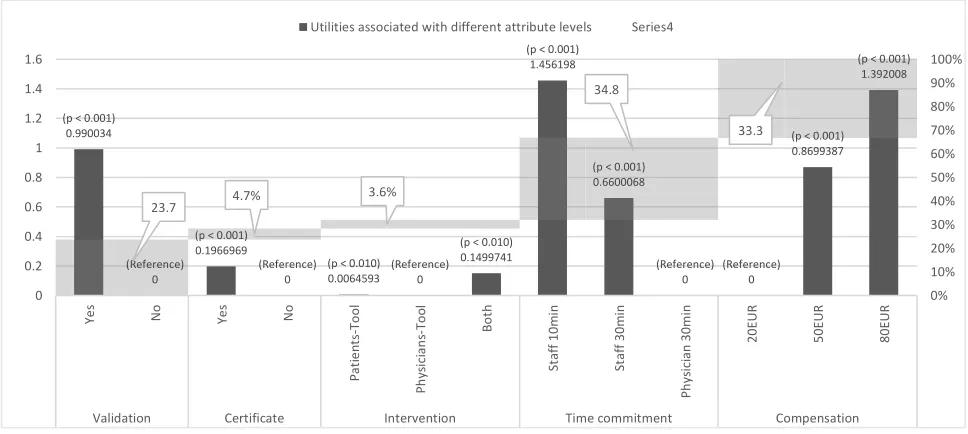
important from a physicians’ perspective: time commit-ment to carry out the program (34.8% importance), reim-bursement (33.3%), and validation status of the program (23.7%). The remaining attributes (type of intervention: 3.6%; possibility to receive a certificate: 4.7%) were much less important for a physician’s decision to participate in a specific APP.
Participating physicians preferred APP alternatives char-acterized by a minimal time commitment (β=1.456, p<0.001), but also by high reimbursement for work (β=1.392, p<0.001) as well as by a“positive validation status”(β=0.990, p<0.001), the“possibility to receive a certificate”(β=0.197, p<0.001) and the provision of“tools for both physicians and patients” (β=0.150, p<0.001) (Figure 2).
Subgroup Analysis
The subgroup analyses indicated heterogeneity among physi-cians with respect to preferences (Figure 3). In particular, physicians aged more than 50 years had a stronger relative preference for reimbursement (39.4%) compared to physicians aged ≤50 years, whose preferences were mainly determined by time commitment (35.4%). The interaction effect between the two age subgroups was statistically significant for the choice for having a certificate (p=0.011) and for choosing a higher compensation level (20€vs 50€: p=0.044; 20€ vs 80€: p=0.029). Among male physicians, the decision for/
against an APPs was mainly determined by reimbursement (37.3%) and time commitment (34.8%), whereas for female physicians’reimbursement was less important (24.0%), while the validation status of the APPs (26.7%) and the type of intervention (8.9%) appeared more important. With regard to the differences in the interaction effect among genders, the compensation attribute showed statistically significant differ-ences (20€vs 50€: p=0.065; 20€vs 80€: p=0.003).
Neurologists and cardiologists attributed roughly equal importance to time commitment and reimbursement. GPs' decisions were also mainly driven by these two attributes, with even a greater focus on reimbursement (39.3%). In con-trast, time commitment was most important to ophthalmolo-gists (44.3%) followed by the validation status of the APP (26.9%), whereas reimbursement had a lower relative impor-tance (19.0%). The differences in attribute imporimpor-tance among type of physicians was statistically significant for cardiologist in comparison with GPs with regard to the time compensation (10 mins staff vs 30 mins physician: p=0.035) and for ophthal-mologists compared to GPs regarding the monetary compen-sation (20€vs 50€: p=0.002; 20€vs 80€: p<0.001).
When stratifying physicians by work experience, relative importance of the reimbursement increased with the number of years in practice. In parallel, the relative importance of the validation status decreased. The estimated interaction effects showed that the importance attributed to the validation of the Table 1Characteristics of Interviewed Physicians
Overall Sample GPs Cardiologists Neurologists Ophthalmologists
N (%) 222 (100.0%) 47 (21.2%) 47 (21.2%) 83 (37.4%) 45 (20.3%)
Age in years - mean (Valid N | SD) 49.6 (164 | 8.8) 50.9 (36 | 8.9) 48.9 (34 | 8.8) 51.1 (66 | 7.9) 44.9 (28 | 9.4)
Female gender–N (%) 81 (36.5) 25 (53.2) 7 (14.9) 32 (38.6) 17 (37.7)
Type of medical practice
Single practice–N (%) 74 (37.6) 17 (36.2) 12 (25,5) 31 (37.3.) 15 (33.3)
Joint/community practice–N (%) 78 (39.6) 17 (36.2) 19 (40,4) 27 (32.5) 14 (31.1)
Practice cooperation - N (%) 10 (5.1) 2 (4.3) 1 (2.1) 5 (6.0) 2 (4.4)
Medical care center–N (%) 28 (14.2) 2 (4.3) 8 (17.0) 9 (10.8) 9 (20.0)
Others–N (%) 7 (3.6) 1 (2.1) 2 (4.3) 4 (4.8) 0 (0.0)
Patients per quarter–mean (Valid N | SD) 1,691.8 (159 | 1526.8)
1,579.1 (35 | 1177.9)
1,667.7 (31 | 1537.9)
1,263.3 (67 | 1074.1)
2,976.5 (26 | 2175.9) Total number of employees–mean (Valid N | SD) 9.4 (154 | 10.5) 6.3 (35 | 5.0) 10.3 (32 | 8.3) 7.0 (60 | 6.3) 17.3 (27 | 18.9) Years since start of practice–mean (valid N | SD) 13.1 (169 | 9.1) 15.2 (38 | 10.2) 10.4 (34 | 8.2) 13.7 (67 | 8.9) 12.0 (30 | 8.8) Number of physicians–mean (Valid N | SD) 2.6 (158 | 2.3) 2.1 (35 | 1.7) 2.6 (34 | 2.1) 2.4 (62 | 2.4) 3.5 (27 | 2.9)
Location of the practice
City Center–N (%) 124 (63.9) 18 (38.3) 30 (63,8) 48 (57.8) 29 (64.4)
Countryside–N (%) 23 (11.9) 8 (17.0) 4 (8.5) 5 (6.0) 6 (13.3)
Suburban–N (%) 33 (17.0) 11 (23.4) 5 (10.6) 14 (16.9) 3 (6.7)
Medical Center–N (%) 14 (7.2) 4 (8.5) 1 (2.1) 7 (8.4) 2 (4.4)
Patient Preference and Adherence downloaded from https://www.dovepress.com/ by 118.70.13.36 on 26-Aug-2020
program statistically differed among the years of practice categories (≤10 years vs ≤20 years: p=0.033;≤10 years vs >20 years: p<0.001), as well as monetary compensation for physician with >20 years practice compared to the ones with ≤10 years’experience (20€ vs 50€: p=0.026; 20€vs 80€: p=0.009).
Regarding the type of practice, single practices consid-ered compensation more important (36.6%) than other types of practices (29.2%), but the validation status of the APPs less important (20.2% versus 25.1%). The importance of a validated program was statistically sig-nificant between the two subgroups (p=0.009), as well as the type of intervention tool (tool for physicians vs tool for patients: p=0.021).
Discussion
Engaging physicians in the conduct of APPs is a key element driving the success of these programs. However,
their willingness to participate in APPs has not been investigated so far. Hence, the aim of our study was to explore physicians’preferences with regard to the imple-mentation and of APPs.
In our study interviewed physicians expressed
a preference for APPs that are characterized by high reimbursement, low time commitment, a positive valida-tion status, the possibility to get a certificate, and
inter-vention tools for both physicians and patients.
Reimbursement, time commitment, and validation status were the most important characteristics accounting for 91.8% of the overall relative preference of physicians for/against an APP. Time commitment and compensation were also found to be the main drivers of physician’s opt-out decision. In that respect, additional time commitment could potentially be made up for by additional compen-sation. The conditional logit used to compute the trade-offs identified in our analysis showed that 24.8€ were Table 2Logistic Regression Exploring the Probability to Choose the Opt-Out Option
Odds Ratio
95% Confidence
Interval
p-value
Attribute Levels N of Decisions
Intervention tool
No option had the“comprehensive package tool” 888 Reference
At least one option had the“comprehensive package tool”
2,664 0.789 0.649–0.960 0.018
Time commitment
No option was“10 mins of the staff” 888 Reference
At least one option was“10 mins of the staff” 2,664 0.396 0.328–0.477 p<0.001
Compensation No option was“80€” 1,776 Reference
At least one option was“80€” 1,776 0.512 0.431–0.609 p<0.001
Physician characteristics N of physicians
Age≤50 years 140 Reference
Age >50 years 82 0.938 0.751–1.172 p>0.100
Male gender 141 Reference
Female gender 81 1.187 0.984–1.433 0.073
GP 47 Reference
Cardiologist 47 0.916 0.692–1.213 p>0.100
Neurologist 83 0.787 0.621–0.998 0.048
Ophthalmologist 45 1.253 0.958–1.640 0.099
≤10 years of practice 84 Reference
≤20 years of practice 46 1.164 0.915–1.481 p>0.100
>20 years of practice 38 0.560 0.421–0.745 p<0.001
Single practice 148 Reference
Other type of medical practice 74 1.367 1.133–1.649 0.001
Patient Preference and Adherence downloaded from https://www.dovepress.com/ by 118.70.13.36 on 26-Aug-2020
expected for a commitment of 30 mins of the stuff instead of 10 mins, and 69.2€ were expected for a 30 mins commitment by the physician instead of 10 mins of the staff.
However, preferences differed across subgroups. Reimbursement was more important for older versus younger physicians, men versus women, and physicians who had been in practice longer vs shorter. Neurologists, cardiologists and GPs showed similar results with regard to the high importance of time commitment and reimbur-sement, while for GPs reimbursement appeared more
important than time commitment. In contrast, for
ophthalmologists, time compensation had the greatest rela-tive importance, followed by the validation status of the APP. Reimbursement was of much lower importance. Preference heterogeneity with regard to time commitment and opportunity cost might be influenced by differences in wage (specialist have higher wages, thus, they would assume a higher compensation for the immediate loss of productivity).
Even if patients are usually in the focus with respect to medication intake behavior, physicians play a pivotal role when it comes to ensuring adherence. Patient–physician rela-tion is largely determined by physicians’empathy and their (p < 0.001)
0.990034
(Reference) 0
(p < 0.001) 0.1966969
(Reference) 0
(p < 0.010) 0.0064593
(Reference) 0
(p < 0.010) 0.1499741
(p < 0.001) 1.456198
(p < 0.001) 0.6600068
(Reference) 0
(Reference) 0
(p < 0.001) 0.8699387
(p < 0.001) 1.392008
23.7 4.7%
3.6%
34.8
33.3
0% 10% 20% 30% 40% 50% 60% 70% 80% 90% 100%
0 0.2 0.4 0.6 0.8 1 1.2 1.4 1.6
Ye
s
No Yes No
Pa
ti
en
ts-Tool
Ph
ys
ic
ia
n
s-To
ol
Bo
th
St
aff 1
0m
in
St
aff 3
0m
in
Ph
ys
ici
an 3
0m
in
20
EUR
50
EUR
80
EUR
Validation Certificate Intervention Time commitment Compensation Utilities associated with different attribute levels Series4
Figure 2The results of the conditional logit estimation based on 222 physicians. For each attribute describing alternative APP options, its relative importance for overall (hypothetical) physicians’decisions for/against a specific APP is reported in % (light grey areas). Furthermore, utility per attribute level including significance of utility differences in comparison to the reference attribute level is shown (black bars).
Figure 3The relative importance of the different attributes across subgroups.
Patient Preference and Adherence downloaded from https://www.dovepress.com/ by 118.70.13.36 on 26-Aug-2020
ability to support patient’adherence to treatment. Moreover, physicians might be inquired about their patients’treatment adherence, hence, physicians are among the ones recognizing and addressing potential non-adherence. However, only few studies have investigated the role of physicians regarding adherence.23Furthermore, the available studies have analyzed physicians’perspectives and strategies to handle patient non-adherence in a more descriptive way. A multi-country study showed that physicians generally do not employ standardized tools to monitor asthma control or to manage its treatment with patients.10 This may indicate that adequate engagement of physicians into APPs bears great potential for both physicians and patients. Another study analyzed physician participation in clinical research and reported a generally low willingness of physicians to participate in such studies. This was mainly related to inadequate financial and nonfinancial incentives and inadequate training that were not in line with physicians’ interests.24Two studies investigated physicians’trade off with respect to financial and nonfinancial attributes of general patient supporting programs. With regard to cancer screening activities, GPs’trade-offs for screening incentives depend on the type of cancer: none of the attributes showed to be domi-nant over the others with respect to all the types of cancers (including thefinancial attribute).25The interaction between the payment and the issue of leaflets was never significant, explained by the fact that the leaflet was not an attractive incentive per se and the association with financial rewards did not change its intrinsic value. Another DCE study esti-mated the willingness to pay (WTP) by physicians for chronic disease management.26The highest WTP was associated with the duties of the nurse coordinators, underscoring the great importance of time commitment. The aspects determining physician participation in clinical research in this study and our results regarding factors important for physicians’ partici-pation in APPs partly overlap, specificallyfinancial and
non-financial interest. Hence, these appear to be general aspects to be considered in any form of patient involvement.27
The strengths of our study include the study design, methodology, and conduct. First, we developed the ques-tionnaire involving a literature review, focus groups meet-ings and obtaining expert advice. Second, DCE is an established method to investigate preferences circumvent-ing socially desired responses. While a DCE design might be perceived as difficult to understand and complex, we believe that physicians are trained to process complex information. In addition, we provided detailed explana-tions and the choice situaexplana-tions were supported by struc-tured choice sets. Third, sampling physicians from across
Germany and among different specialties ensured repre-sentativeness and allowed us to investigate potential dif-ferences by specialization.
However, some limitations need to be considered when interpreting our results. First, despite random and wide-scaled invitation of physicians, we cannot rule out the fact that those participating in our study already showed a higher preponderance for engagement in APPs than those who declined to participate. Second, our study can-not account for local differences (city vs countryside; differences among different German regions) regarding the organization of health care provision and established treatment patterns. For example, in some regions, the follow-up and the control of proper medication adherence might be done by specialists while in other regions spe-cialists may be the initial prescribers and follow-up is taken care of by GPs. Finally, the low-response rate in this study as well as the high“opt-out”rate might indicate a generally low interest of physicians in engaging in and carrying out APPs. Moreover, the high number of choice tasks might have discouraged physicians to complete the questionnaire (mainly applicable for questionnaires com-pleted via post). However, for a successful implementation of APPs physicians are crucial; hence, better understand-ing their views and preferences will inform the success of such programs.
Our study highlights the importance of considering physicians’ preferences when designing, implementing and promoting APPs. Engaging physicians prior to imple-menting an APP and considering their preferences may enhance the success of the programs for their and the patients’benefit.
Ethics Approval
An ethical approval was not required due to Section 15 (1) of the Professional Code for Physician in Mecklenburg-Western Pomerania. Based on that an ethical approval is not required if only anonymized data (no personal data) regarding the opinion of physicians are collected.
Acknowledgment
The authors would like to thank all physicians that sup-ported this study.
Funding
This work was supported by Bayer Vital GmbH.
Patient Preference and Adherence downloaded from https://www.dovepress.com/ by 118.70.13.36 on 26-Aug-2020
Disclosure
Sabrina Müller is an employee of Health; Ingress-Health received funding from Bayer Vital to conduct the study and the analysis of the study data. Markus Schürks and Inga-Marion Thate-Waschke are employees of Bayer Vital GmbH. Thomas Wilke has received honoraria from several companies: Novo Nordisk, Merck, GSK, BMS, Bayer, Boehringer Ingelheim. Tjalf Ziemssen has received honoraria for participation in scientific advisory boards from Almirall, Bayer Healthcare, Biogen, Novartis, Merck Serono, Teva, Genzyme, Roche. He has received speaker honorarium from Bayer Healthcare, Biogen, Genzyme, Novartis, Roche, Teva, Sanofi, and Almirall. He has also received research
support from Bayer Healthcare, Biogen, Genzyme,
Novartis, Teva. Philipp Hoffmanns has received honoraria from IPSEN Pharma GmbH in 2018. Tjalf Ziemssen, Curt Diehm, Tobias Duncker and Philipp Hoffmanns received a honorarium for participation in an advisory board meeting during the design phase of this study. The authors report no other conflicts of interest in this work.
References
1. Dunbar-Jacob J, Erlen JA, Schlenk EA, et al. Adherence in chronic disease.
Annu Rev Nurs Res.2000;18:48–90. doi:10.1891/0739-6686.18.1.48 2. WHO.Adherence to Long-Term therapies;Evidence for Action. World
Health Organisation;2003.
3. Müller S, Kohlmann T, Wilke T. Validation of the Adherence Barriers Questionnaire - An instrument for identifying potential risk factors associated with medication-related non-adherence Quality, perfor-mance, safety and outcomes. BMC Health Serv Res. 2015;15:1–22. doi:10.1186/s12913-015-0809-0
4. van Boven JF, Chavannes NH, Van der Molen T, et al. Clinical and economic impact of non-adherence in COPD: a systematic review. Respir Med.
2014;108:103–113. doi:10.1016/j.rmed.2013.08.044
5. McHorney CA, Peterson ED, Ashton V, et al. Modeling the impact of real-world adherence to once-daily (QD) versus twice-daily (BID) non-vitamin K antagonist oral anticoagulants on stroke and major bleeding events among non-valvular atrialfibrillation patients.Curr Med Res Opin.2018. doi:10.1080/03007995.2018.1530205
6. Perez-Ruiz F, Desideri G. Improving adherence to gout therapy: an expert review.Ther Clin Risk Manag.2018;14:793–802. doi:10.2147/ TCRM.S162956
7. Mueller S, Wilke T, Gorasso V, Erhart M, Kittner JM. Adaption and validation of the adherence barriers questionnaire for HIV patients on antiretroviral therapy (ABQ-HIV). BMC Infect Dis. 2018;18:599. doi:10.1186/s12879-018-3530-x
8. Ammoury A, Okais J, Hobeika M, et al. Adherence to systemic therapies for immune-mediated inflammatory diseases in Lebanon: a physicians’survey from three medical specialties. Patient Prefer Adherence.2017;11:939–945. doi:10.2147/PPA
9. Rozenblum R, Gianola A, Ionescu-Ittu R, et al. Clinicians’ perspec-tives on patient satisfaction in adult congenital heart disease clinics–a dimension of health care quality whose time has come.Congenit Heart Dis.2015;10:128–136. doi:10.1111/chd.2015.10.issue-2
10. Chapman KR, Hinds D, Piazza P, et al. Physician perspectives on the burden and management of asthma in six countries: the Global Asthma Physician Survey (GAPS).BMC Pulm Med.2017;17:153. doi:10.1186/s12890-017-0492-5
11. Fuangchan A, Dhippayom T, Kongkaew C. Intervention to promote patients’adherence to antimalarial medication: a systematic review.
Am J Trop Med Hyg.2014;90:11–19. doi:10.4269/ajtmh.12-0598 12. Costa E, Pecorelli S, Giardini A, et al. Interventional tools to improve
medication adherence: review of literature.Patient Prefer Adherence.
2015;9:1303–1314. doi:10.2147/PPA
13. Abdulsalim S, Unnikrishnan MK, Manu MK, et al. Structured pharmacist-led intervention programme to improve medication adherence in COPD patients: A randomized controlled study.Res Social Adm Pharm. 2018;14:909–914. doi:10.1016/j.sapharm. 2017.10.008
14. Boswell KA, Cook CL, Burch S, Eaddy M, Cantrell C. Associating medication adherence with improved outcomes: a systematic litera-ture review.Am J Pharm Benefits.2012;4:e97–e108.
15. Muhlbacher A, Johnson FR. Choice experiments to quantify preferences for health and healthcare: state of the practice.Appl Health Econ Health Policy.2016;14:253–266. doi:10.1007/s40258-016-0232-7
16. Johnson FR, Lancsar E, Marshall D, et al. Constructing experimental designs for discrete-choice experiments: report of the ISPOR conjoint analysis experimental design good research practices task force.
Value Heal.2013;16:3–13. doi:10.1016/j.jval.2012.08.2223 17. Mueller S, Agostini H, Ehlken C, et al. Patient preferences in the
treatment of neovascular age-related macular degeneration: a discrete choice experiment.Ophthalmology.2016;123:876–883. doi:10.1016/ j.ophtha.2015.12.001
18. Bottger B, Thate-Waschke I-M, Bauersachs R, Kohlmann T, Wilke T. Preferences for anticoagulation therapy in atrial fibrillation: the patients’view.J Thromb Thrombolysis.2015;40:406–415. doi:10.10 07/s11239-015-1263-x
19. Louviere JJ, Flynn TN, Carson RT. Discrete Choice Experiments Are Not Conjoint Analysis.J Choice Model.2010;3:57–72. doi:10.1016/ S1755-5345(13)70014-9
20. Hensher D, Irwin J. Combining sources of preference data for mod-eling complex decision processes.Marketing Lett.1999;3:205–217. 21. Bennett J, Blamey RK, editors. The choice modelling approach to
environmental valuation: new horizons in environmentalvaluation. Cheltenham: Edward Elgar: New Horizons in Environmental Economics.2001:40.
22. Conjoint Analysis – attribute Importance | SurveyAnalytics Help Document. Available from:https://www.surveyanalytics.com/help/con joint-analysis-attribute-importance.html. Accessed November 13,2019. 23. Devine F, Edwards T, Feldman SR. Barriers to treatment: describing
them from a different perspective. Patient Prefer Adherence.
2018;12:129–133. doi:10.2147/PPA.S147420
24. Rahman S, Majumder A, Shaban S, et al. Physician participation in clinical research and trials: issues and approaches.Adv Med Educ Pract.2011;2:85–93. doi:10.2147/AMEP
25. Sicsic J, Krucien N, Franc C. What are GPs’preferences forfinancial and non-financial incentives in cancer screening? Evidence for breast, cervical, and colorectal cancers. Soc Sci Med. 2016;167:116–127. doi:10.1016/j.socscimed.2016.08.050
26. Deal K, Keshavjee K, Troyan S, Kyba R, Holbrook AM. Physician and patient willingness to pay for electronic cardiovascular disease management. Int J Med Inform. 2014;83:517–528. doi:10.1016/j. ijmedinf.2014.04.007
27. Joosten E, de Weert G, Sensky T, van der Staak C, de Jong C. Effect of shared decision-making on therapeutic alliance in addiction health care.Patient Prefer Adherence.2008;2:277–285. doi:10.2147/PPA. S4149
Patient Preference and Adherence downloaded from https://www.dovepress.com/ by 118.70.13.36 on 26-Aug-2020
Patient Preference and Adherence
Dove
press
Publish your work in this journal
Patient Preference and Adherence is an international, peer-reviewed, open access journal that focusing on the growing importance of patient preference and adherence throughout the therapeutic conti-nuum. Patient satisfaction, acceptability, quality of life, compliance, persistence and their role in developing new therapeutic modalities and compounds to optimize clinical outcomes for existing disease
states are major areas of interest for the journal. This journal has been accepted for indexing on PubMed Central. The manuscript management system is completely online and includes a very quick and fair peer-review system, which is all easy to use. Visit http:// www.dovepress.com/testimonials.php to read real quotes from pub-lished authors.
Submit your manuscript here:https://www.dovepress.com/patient-preference-and-adherence-journal
Patient Preference and Adherence downloaded from https://www.dovepress.com/ by 118.70.13.36 on 26-Aug-2020