INTERNATIONAL RESEARCH JOURNAL OF PHARMACY
www.irjponline.com
ISSN 2230 – 8407
Research Article
FORMULATION AND EVALUATION OF SUSTAINED RELEASE MUCOADHESIVE MATRIX TABLET OF
LAMIVUDINE
Mansoori Samreen
1*, Asish Dev
21
M. Pharm Student, Department of Pharmaceutics, Oriental College of Pharmacy, Sanpada, Navi Mumbai, India
2Assistant Professor of Oriental College of Pharmacy, Sanpada, Navi-Mumbai, India
*Corresponding Author Email: [email protected]
Article Received on: 13/03/18 Approved for publication: 10/04/18
DOI: 10.7897/2230-8407.09455
ABSTRACT
The purpose of this study was to formulate sustained release mucoadhesive matrix tablet of antiviral drug lamivudine. Lamivudine matrix tablet was developed to prolong drug release, to enhance the bioavailability, to reduce the chances of dose dumping, so as to reduce the dosing frequency of the tablet. The mucoadhesive matrix tablets were prepared by direct compression technique using different polymers like HPMC K100, Ethyl cellulose and Carbopol 934p as rate retarding polymers. These tablets were evaluated for weight variation, diameter, thickness, hardness, friability, drug content, swelling index, Mucoadhesive strength, drug release and kinetics of release.All the formulations followed the pharmacopeia standards. Through FTIR studies, it was confirmed that there were no interactions between drug, polymers and other excipients. Among the entire formulations F11 batch showed the optimum drug release of 83.38 % for 12 hrs with Mucoadhesive strength of 55 grams.
KEY WORDS: Lamivudine, Sustained release Matrix tablet, hydroxy propyl methyl cellulose, Ethyl cellulose, Carbopol 934p, Mucoadhesive strength.
INTRODUCTION
Oral route most commonly adopted and most convenient route for the drug delivery. Oral route of administration has been receiving more attention in pharmaceutical field because of its flexibility in the designing of dosage form than other drug delivery design through any other routes. The oral drug delivery depends on various factors such as the type of delivery system, the disease being treated, and patient, the length of the therapy and the properties of the drug1. The current approach in novel drug
delivery system (NDDS) aims to increase efficacy and safety of already used drug molecule by formulating a convenient dosage form for achieving better patient compliance2.
A Sustained released dosage form; a modern approach in the pharmaceutical sciences has proved its importance and compliance. The oral conventional types of drug delivery system are known to provide a prompt release of the drug. Therefore, to achieve as well as to maintain the drug concentration within the therapeutically effective range needed for treatment, it is often necessary to take this type of drug delivery system.
Drawback of Conventional Dosage Form
1. Poor patient compliance, i.e. the chances of missing the dose is more.
2. There are unavoidable fluctuations in drug concentration which may lead to under medication or over medication. 3. Atypical peak-valley plasma concentration-time profile is
obtained which is the main drawback of conventional dosage form.
4. Variation in drug levels can lead to adverse effects mainly with the drug having small Therapeutic Index3, 4, 5.
Advantages of Sustained Release Dosage Form
1. Patient compliance is increased.
2. Reduced 'see-saw' fluctuation: The 'see-saw' pattern is more often seen in the case of drugs with a biological half-life less than four hour. Sustained release drug delivery system can widely reduce the frequency of drug dosing and maintain a steady drug concentration in blood circulation and target tissue cells.
3. Total dose reduction.
4. Sustained release dosage form leads to better management of the acute or chronic disease condition.
5. Economy: The cost of sustained release products is usually more than that of conventional dosage form because of the unique nature of these compounds but importantly the average cost of treatment over a longer period may be less.4, 6, 7
Disadvantages of Sustained Release Dosage Form
1. Dose dumping may occur with defective formulations. 2. The potential for dose adjustment is reduced.
3. Cost of sustained released dosage form is more than conventional dosage form.
4. The potential for first pass metabolism of drug is increased. 5. Patient education is necessary for proper medication. 6. Poor in vivo and in vitro correlations 3, 8, 9, 10.
slow down. This system has subcategories as follows hydrophobic matrices, lipid matrices, hydrophilic matrices, biodegradable matrices, and mineral matrices11.
Advantages of Mucoadhesive Drug Delivery Systems are 12
1. A prolonged residence time at the site of action or absorption is achieved,
2. Localization of the drug delivery system at a given target site, 3. An increase in the drug concentration gradient due to the
intestine contact of the particles with the mucosal surface, 4. A direct contact with intestinal cells, which is the step earlier
to particulate absorption.
Lamivudine
IUPAC name:(−)-L-2′,3′-dideoxy-3′-thiacytidine
Lamivudine is an antiretroviral drug, belongs to class III of the BCS Classification with high solubility and low permeability. It is rapidly absorbed with a bioavailability of over 80% following oral ingestion. The drug half-life in plasma is approximately 5-7 hrs. It is bound to plasma proteins less than 36 %. It can inhibit both types (1 and 2) of HIV reverse transcriptase and the reverse transcriptase of hepatitis B.
MATERIALS AND METHODS
Lamivudine was a gift sample from Aurobindo Pharma Limited, Hyderabad. HPMC K100 were procured from Chemdyes Corporation, Gujarat. Carbopol 934p and colloidal silicon dioxide were procured from Research lab-fine chem. industries, Mumbai. Ethyl cellulose and Magnesium stearate were procured from Thomas Baker Pvt. Ltd, Mumbai. Lactose was procured from Merck specialities Pvt. Ltd. All reagents used were of analytical grade.
Method
All ingredients were collected and weighed accurately as shown in Table 1. Lamivudine USP was sieved with lactose and polymers through sieve no. 60# and then remaining excipients were added. Colloidal silicon dioxide (Aerosil-200) and magnesium stearate were separately sifted, through sieve no. 60#. Pre blend all ingredients (except lubricant- magnesium stearate) for 15 minutes. Add magnesium stearate and then again blend for 5 minutes. Compress Lubricated powder by using 9 station single rotary machine having 9.5 (mm) diameter and circular standard concave shaped punch, with a pressure of 7-8 tons.
PRE FORMULATION STUDIES
Fourier transmission infrared (FT-IR) spectroscopy
The identity of the drug was confirmed by comparing the IR spectrum of drug with a reported spectrum of lamivudine as shown in Figure 2.
Melting point
The melting point of the drug was found to approximately 162˚C.
Construction of Standard Curve of Lamivudine
Spectrophotometrically estimate lamivudine at 270 nm as it obeys beer- Lambert’s law. A Stock solution was prepared by dissolving 100mg of lamivudine in 0.1 N HCl buffer to get a solution of 1000 µg/ml concentration13, 14.
Standard solution
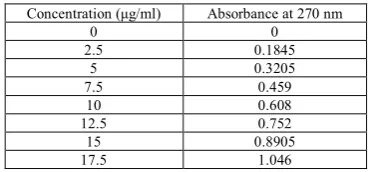
10ml of stock solution was made to 100ml with 0.1 N HCl thus giving a concentration of 100µg/ml. An aliquot of standard drug solutions ranging from 0.25ml to 2ml was transferred into a 10ml volumetric flask and were diluted up to the mark with 0.1 N HCl. Thus the final concentration ranges from 2.5-20µg/ml. Absorbance of these solutions was measured at 270 nm against 0.1 N HCl as a blank. A plot of concentrations of the drug versus absorbance was plotted as shown in figure 3.
Drug excipients compatibility studies (using FT-IR spectroscopy) 15, 16
A compatibility study should be done to know if any, chemical interactions exist between drug and excipients. Interpretation is done by comparing FTIR spectra of pure drug and drug-excipients mixture. Both the spectra should show that characteristic bands of drug were not altered, indicates no chemical interactions between the drug and excipients used.
Screening of polymers1, 17
Screening of polymers was done by calculating swelling index and observing gelling properties of different polymers.
PRECOMPRESSION PARAMETERS OF BLENDS18
Angle of repose
Weight accurately the powder blend and take it in the funnel. Funnel height was adjusted in such a way that a tip of the funnel just touches the apex of the powder blend. The powder was passed through the funnel freely. The diameter was measured and angle of repose was calculated using the following formula.
Tan α= h/r
Bulk density and Tapped density
An accurately weighed quantity of powder blend (W) was taken and carefully poured into the graduated measuring cylinder and the volume (V0) of the powder was measured. Then graduated
measuring cylinder was tapped 50 times and volume (VT) were
Bulk density = W/ V0
Tapped density = W/ VT
Compressibility index (CI)/ Carr’s index
It was obtained from bulk and tapped densities of the powder. It was calculated by using the following formula.
CI= Tapped Density – Bulk Density 𝑋 100 Tapped density
Hausner’s ratio
Hausner’s ratio is a number that is compared to the flowability of a powder. It is calculated by taking the ratio of tapped density to bulk density.
Hausner’s ratio= Tapped Density/ Bulk Density
POST COMPRESSION PARAMETERS 19,20,21,22
Thickness
Five tablets were selected randomly from each batch were used for thickness determination. The thickness of each tablet was measured in mm using a digital Vernier calliper their values were reported in millimeters. The mean and SD were calculated and reported.
Weight Variation Test
Ten tablets were selected randomly from each batch and individually weighed using an electronic balance. The average weight was calculated. The percentage deviation from average weight was reported.
Hardness
The strength of the tablet which prevents from chipping, abrasion or breakage under conditions of storage, transportation and handling before usage, depends on its hardness. The hardness of five tablets which randomly selected from each batch was measured using Monsanto Hardness tester and expressed in Kg/cm2. The average mean and SD were calculated.
Friability
Friability of tablets was performed by using Roche friabilator. The tablets should be carefully de-dusted prior to testing. Five tablets were randomly selected from each batch and accurately weigh the tablet sample, and place the tablets in the drum. Rotate the drum 100 times, and remove the tablets, reweighed and percentage loss was determined.
% friability =
{[Initial weight of the tablets-final weight of the tablets]/[Initial weight of the tablets]} x 100
Uniformity of Drug Content
Matrix tablet of Lamivudine from a batch was taken at random and was crushed to a fine powder and was transferred into a 100ml volumetric flask and add 100ml 0.1 N HCl to it. It was shaken occasionally for about 30 minutes and the volume was made up to 100ml by adding 0.1 N HCl. The resulting solution was set aside for a few minutes and the supernatant solution was
was subsequently diluted, and the absorbance was measured at 270nm.
The drug content was calculated as:
% Drug Content = (Analyzed value / Theoretical Value) × 100
Swelling Index22
Formulated tablets were weighed individually (W0) and placed
separately in a Petri dish containing 50 ml of 1.2 pH HCl Buffer. The Petri dishes were placed in an incubator maintained at 37±0.50 C. The tablets were removed from the Petri dish, at
predefined intervals of time and reweighed (Wt), and the %
swelling index was calculated using the following formula.
% Wu = Wt-W0 x 100
Wt
Where: Wu - Water uptake, Wt - Weight of tablet after time t,
W0 - Initial Weight of tablet before immersion in buffer
solution.
In-Vitro Dissolution Studies23
Dissolution studies on each formulation were performed by using USP type II apparatus, employing 900 ml HCl Buffer of pH 1.2 as a dissolution medium. The paddles were operated at a 50rpm and the temperature was maintained at 37±0.5°C throughout the experiment. 5 ml Samples were withdrawn for 12 hrs at regular interval of time and replaced with an equal volume of same dissolution medium to maintain the constant volume throughout the experiment. Samples withdrawn at various time intervals were suitably diluted with same dissolution medium and the amount of drug released was estimated by double beam UV – VIS spectrophotometer at 270nm. The dissolution studies on each formulation were conducted in triplicate and the average of 3 values was taken from studies.
Evaluation of Kinetics24
Dissolution parameters such as the zero order rate constant, the first order rate constant, Higuchi constant, Korsermayer-Peppas constant and Hixson Crowell constant were calculated from the dissolution data obtained from various formulations. The following mathematical expressions were used to calculate various drug release mechanisms from the dissolution data.
1) Zero order equation,
Qt= Q0 - K0t
Where, Qt =Amount of drug dissolved at time t,
Q0= Initial amount of drug in solution, K0 = Zero order rate
constant, t = Time.
2) First order equation,
Log Ct = log Co – K1t/2.303
Where, C0 = Initial concentration of drug,
K1 = First order rate constant.
3) Higuchi equation,
4) Korsermayer - Peppas Constant,
Mt/M∞ = Ktn
Where, Mt/M∞= Fraction of drug release at time t,
n = release exponent.
5) Hixson Crowell constant,
Q01/3-Qt1/3=Ks t
Where, Q0 =Initial amount of drug, Qt = Cumulative amount of
drug release at time t, Ks = Hixson Crowell release constant,
t = time in hrs.
Mucoadhesive Strength Measurement 25, 26, 27
Modified physical balance was used to measure Mucoadhesive strength of the matrix tablet. The goat gastric mucosal membrane was used as a model membrane for Mucoadhesive strength and 1.2 pH HCl buffer was used as the media for testing. The goat gastric mucosal membrane was placed in Tyrode solution at 37o c
for 2 hrs.
The left side arm of the balance was removed, and a thick thread was hanged of suitable height. To this thread a Teflon block was attached, another Teflon block was placed in a 100-ml beaker, which was kept on the left side of the balance. The mucous membrane was washed thoroughly with the buffer solution and was cut into desired size. This membrane was then attached to the Teflon block placed in the beaker and one which was hanged with thread by using cyanoacrylate solution (feviquick). The beaker was filled with the buffer solution of pH 1.2, so that the buffer solution reaches the surface of the mucosal membrane to keep it moist. This was then kept below the left-hand side of the balance. The balance was then adjusted so that the right-hand side of the balance was exactly 5 g heavier than the left side.
The matrix tablet was then placed between the two-mucous membranes. 5 g weight on the right side of the balance was removed, this will lead to an application of 5 g of pressure on the matrix tablet overlying between moist mucosa. The balance was kept as such for 3 min and then the weight was slowly increased on the right-hand side pan, till the tablet gets separated from the membranes. This will give the Bioadhesive strength in grams. The mean value was taken for three such trials. After every single measurement the tissue was washed gently with buffer solution and left for 5 minutes before taking reading for a new tablet.
From the Mucoadhesive strength, the force of adhesion was calculated using the following formula:
Force of adhesion (N) = Bioadhesive strength× 9.81. 100
Stability studies 28
The optimized batch of formulation was subjected to accelerated stability studies at 40˚C ± 2˚C/75 % RH ± 5 % RH for three months to investigate the stability of formulation in terms of physical and chemical changes. Stability study of an optimized F11 batch indicates no significant change in physical parameters.
RESULTS AND DISCUSSION
Drug Excipient Compatibility Studies
The results showed that the principle IR peak of pure drug, its physical mixture with polymer were almost similar as shown in figure 4, signifying no interaction was seen between drug and polymer during formulation of tablets.
Pre formulation Studies of Powder blend
The prepared powders were characterized for angle of repose, bulk density, tapped density, Hausner’s factor, Carr’s index and compressibility index and the values were reported in Table 4. The angle of repose of the different batches of powders was determined as per method mentioned earlier and the results ranged between 22.57° to 25.89°.The powder with the angle of repose 20°-300 indicates excellent flow properties. The bulk
densities of powder were ranged between 0.430 g/cm3 to 0.490
g/cm3. Tapped density ranged between 0.640 g/cm3 to 0.680
g/cm3. Compressibility index (%) were in the range of
11.29%-15.19%. The powder in the range of 11%-15% show good flow character. Hausner’s ratios of the entire batch were in the range of 1.12-1.65.
Evaluation of tablets
All the tablets passed the weight variation test as the % weight variation was within the Pharmacopoeia limits of ± 5% of the weight. Hardness was found to be between 10.12-13.15 kg per square centimeter. All tablets satisfied friability requirement, as the % friability values were less than 1%. The drug content estimations showed values in the range of 96.94 to 98.91%, which reflects good uniformity in drug content among all formulations. All the values were in Table 5.
Swelling index profiles of all formulations are shown in Table 6 and Figure 5, 6. Swelling index of all formulations varied between 46.55 to 234.66 %. Swelling of the matrix, this is indicated by the transition of the polymer from the glassy to the rubbery state. It is an important parameter in determination of the release characteristics of the matrix system. As swelling process proceeds, the gel layer gradually becomes thicker and therefore the drug concentration gradient along the diffusional path length is decreased results in the slow drug release.
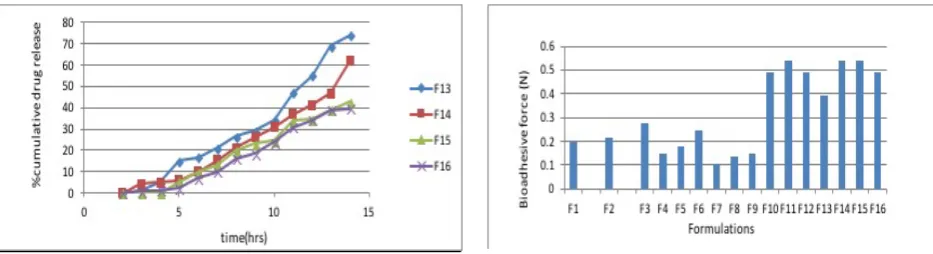
All the sixteen formulations were subjected to in-vitro dissolution studies using a USP type -II Dissolution Test Apparatus. The dissolution medium 1.2 pH buffer was used to study the drug release. The samples were withdrawn at different intervals of time and analyzed at 270 nm using a UV spectrophotometer. The cumulative percentage drug release was calculated. The data obtained from in vitro release for formulations prepared by direct compression technique are tabulated in the Table 7.From the results we can conclude that there was an increase in the extend of the duration of drug release with increase in concentration of polymer in the formula. The F11 batch showed best result as the percent cumulative drug release of F11 is 83.38 % at 12 h. Comparative graphs of In vitro drug release of all the 16 formulations were shown in Figure 7, 8, 9, 10, 11.
Table 1: Composition of lamivudine mucoadhesive matrix tablets formulated with different
Ingredients(mg) F1 F2 F3 F4 F5 F6 F7 F8 F9 F10 F11 F12 F13 F14 F15 F16
Lamivudine 159 159 159 159 159 159 159 159 159 159 159 159 159 159 159 159 HPMC K100 70 80 90 - - - 90 80 70 80 90 80 70 Ethyl cellulose - - - 70 80 90 - - - 70 80 90 - 50 40 30 Carbopol 934p - - - 20 40 60 - - - 40 20 40 60 Lactose 163 153 143 163 153 143 213 193 173 73 73 73 73 73 73 73 Mg stearate 4 4 4 4 4 4 4 4 4 4 4 4 4 4 4 4 Colloidal Silicon
dioxide 4 4 4 4 4 4 4 4 4 4 4 4 4 4 4 4 TOTAL 400 400 400 400 400 400 400 400 400 400 400 400 400 400 400 400
Table 2: Standard curve of Lamivudine in 0.1 N HCL
Concentration (µg/ml) Absorbance at 270 nm
0 0
2.5 0.1845
5 0.3205
7.5 0.459
10 0.608
12.5 0.752
15 0.8905
17.5 1.046
Table 3: Swelling index and Gelling property of different polymers in water and 1.2 pH phosphate buffer
Polymer Swelling index Gelling
water 1.2 pH Water 1.2Ph
HPMC K100 100 166.66 ++ +++
HPMC K4M 100 87.5 ++ +++
HPMC E15 87.5 66.6 ++ +
Ethyl cellulose 92.3 142.3 + ++
Carbopol 934 140 160 + +
Xanthan gum 80 100 ++ ++
Guar gum 86.66 73.3 ++ ++
Table 4: Evaluation of flow properties of powder blend
Formulation Bulk density(g/ml) Tapped density(g/ml)
Angle of repose(0) Compressibility index
(%)
Hausner’s ratio
F1 0.48±0.005 0.65±0.05 25.89±1.92 13.43±1.16 1.14±0.02
F2 0.46±0.01 0.65±0.01 24.56±0.89 13.21±1.77 1.14±0.02
F3 0.46±0.01 0.68±0.01 25.12±2.98 12.05±1.43 1.17±0.03
F4 0.49±0.02 0.65±0.01 23.88±0.55 13.18±1.27 1.13±0.02
F5 0.45±0.005 0.66±0.01 23.31±1.99 13.96±1.41 1.13±0.02
F6 0.44±0.01 0.64±0.01 23.74±1.60 14.15±1.71 1.16±0.01
F7 0.44±0.005 0.64±0.02 23.41±1.13 14.81±1.40 1.14±0.01
F8 0.46±0.01 0.67±0.03 22.73±1.69 16.08±1.56 1.14±0.02
F9 0.45±0.01 0.67±0.01 23.07±1.65 14.27±1.70 1.12±0.01
F10 0.48±0.01 0.67±0.01 22.57±1.58 14.47±1.37 1.32±0.02
F11 0.48±0.01 0.66±0.02 23.85±1.65 11.29±1.30 1.24±0.01
F12 0.47±0.01 0.65±0.01 23.85±2.85 14.86±1.95 1.33±0.01
F13 0.45±0.05 0.67±0.01 25.35±1.99 15.19±1.15 1.15±0.02
F14 0.47±0.02 0.67±0.02 23.55±1.48 11.98±1.79 1.19±0.01
F15 0.48±0.01 0.66±0.01 25.28±1.59 13.10±1.95 1.65±0.01
F16 0.43±0.005 0.64±0.01 24.23±2.94 13.84±1.78 1.41±0.01
Table 5: Evaluation of lamivudine matrix tablets
Parameters F1 F2 F3 F4 F5 F6 F7 F8 F9 F10 F11 F12 F13 F14 F15 F16
Uniformity of
weight(mg) ±3.8 400 400±2.8 400±5.2 400±3.7 400±4.4 400±4.4 400±3.7 400±2.7 400±3.9 400±1.7 400±1.4 400±4.7 400±6.3 400±7.1 400±3.5 400±7.6 Thickness
(mm) 4.2±0.03 4.2±0.04 4.2±0.09 4.2±0.04 4.2±0.03 4.2±0.07 4.2±0.02 4.2±0.02 4.2±0.02 4.2±0.01 4.2±0.03 4.2±0.06 4.2±0.04 4.2±0.05 4.2± 0.07 4.2± 0.02 Diameter
(mm) 9.6±0.01 9.6±0.02 9.6±0.08 9.6±0.02 9.6±0.01 9.6±0.01 9.6±0.01 9.6±0.03 9.6±0.01 9.6±0.01 9.6±0.03 9.6±0.01 9.6±0.01 9.6±0.02 9.6±0.03 9.6±0.04 Friability (%) 0.05 0.06 0.04 0.06 0.03 0.03 0.08 0.06 0.06 0.05 0.03 0.06 0.05 0.05 0.04 0.04
Tablet hardness 11.03±0.
01 11.06
±0.01 11.06±0.02 11.04±0.02 11.15±0.00 5
11.13
±0.02 11.21±0.02 ±0.07 11.09 12.1±0.05 12.1±0.05 ±0.03 13.15 ±0.02 10.15 11.1±0.05 ±0.06 10.12 11.14±0.02 11.14±0.03
Assay (%) 98.0 2
Table 6: Swelling index of Matrix tablets (%)
Formulation 2 hrs 4 hrs 6 hrs 8 hrs 10 hrs
F1 197.416 202.584 205.9432 209.0439 211.8863
F2 196.7089 205.0633 207.3418 214.1772 220.7595
F3 183.2918 195.0125 197.5062 228.6783 234.6633
F4 25.69975 33.84224 39.18575 48.60051 50.89059
F5 29.72292 36.02015 43.32494 44.83627 46.5995
F6 36.5 41.75 45.5 48.75 50.25
F7 21.93878 31.88776 37.2449 50 57.39796
F8 47.20812 63.19797 70.55838 75.38071 79.18782
F9 38.19095 36.93467 43.46734 46.73367 113.3166
F10 194.6565 209.9237 213.7405 221.374 227.4809
F11 140.5473 147.7612 182.5871 219.6517 221.1443
F12 72.29219 110.0756 130.9824 132.7456 147.6071
F13 92.1519 128.6076 146.3291 170.8861 174.9367
F14 78.73418 133.9241 160.7595 180.2532 185.3165
F15 73.5369 115.0127 149.1094 153.4351 155.7252
F16 65.26055 99.00744 122.5806 125.8065 129.0323
Table 7: Cumulative percent drug release of lamivudine matrix tablets
TIME (hrs.) 1 2 3 4 5 6 7 8 9 10 11 12
F1 4.49 18.00 21.52 29.20 35.22 40.29 48.07 49.80 57.39 58.92 60.95 63.72 F2 1.57 17.25 21.25 29.91 32.27 38.55 40.22 43.13 50.68 57.54 58.34 58.90 F3 0.09 11.35 17.76 22.49 27.01 29.84 39.52 43.89 49.74 54.40 55.67 57.68 F4 40.82 42.98 46.39 47.13 48.12 49.60 58.40 61.89 63.20 66.71 68.77 70.84 F5 23.84 35.64 41.45 42.41 42.37 43.85 50.92 52.66 56.12 59.10 60.39 66.81 F6 6.44 38.38 44.45 45.99 47.63 48.62 49.37 55.50 59.46 61.63 63.28 65.32 F7 30.96 50.39 54.33 57.55 58.36 59.89 67.78 87.66 166.21 206.16 - - F8 30.96 50.39 57.25 60.74 69.37 70.23 77.69 89.33 95.67 99.60 - - F9 6.47 24.41 34.55 40.60 47.41 56.94 60.43 68.08 71.37 75.42 - - F10 9.66 23.00 41.18 53.36 59.47 61.30 63.34 66.37 73.07 73.71 75.82 78.66 F11 7.70 25.90 35.31 43.07 52.09 59.94 64.42 65.01 70.98 71.85 76.87 83.38 F12 4.53 11.43 20.6 27.22 31.76 39.74 44.35 45.82 49.24 52.43 63.21 65.26 F13 1.32 4.96 15.00 16.79 21.03 26.51 29.10 34.38 47.01 55.08 68.80 73.81 F14 4.29 4.94 5.94 10.12 15.30 21.00 26.24 30.78 36.80 41.15 46.75 61.88 F15 0.01 0.02 5.15 9.57 13.53 19.66 23.23 24.33 33.98 34.66 39.00 42.82 F16 0.92 1.22 2.15 7.05 10.02 15.93 18.46 23.68 30.89 34.23 38.81 39.51
Table 8: Bioadhesive strength of matrix tablet
BIOADHESIVE STRENGTH(gm) BI0ADHESIVE FORCE(N)
F1 20 0.1962
F2 22 0.21582
F3 28 0.27468
F4 15 0.14715
F5 18 0.17658
F6 25 0.24525
F7 11 0.10791
F8 14 0.13734
F9 15 0.14715
F10 50 0.4905
F11 55 0.53955
F12 50 0.4905
F13 40 0.3924
F14 55 0.53955
F15 55 0.53955
F16 50 0.4905
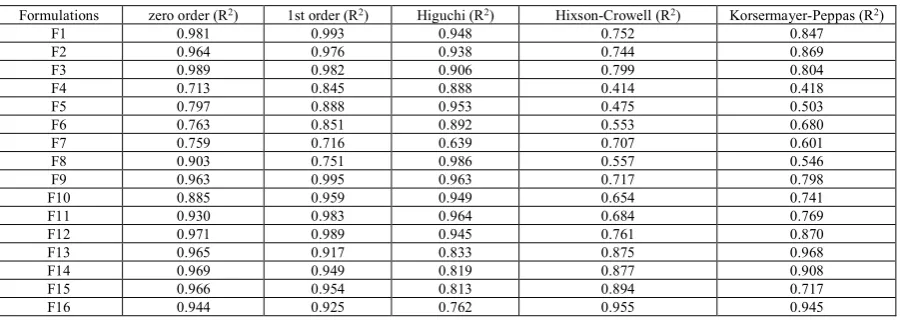
Table 9: Kinetic modelling data of lamivudine matrix tablets
Formulations zero order (R2) 1st order (R2) Higuchi (R2) Hixson-Crowell (R2) Korsermayer-Peppas (R2)
F1 0.981 0.993 0.948 0.752 0.847
F2 0.964 0.976 0.938 0.744 0.869
F3 0.989 0.982 0.906 0.799 0.804
F4 0.713 0.845 0.888 0.414 0.418
F5 0.797 0.888 0.953 0.475 0.503
F6 0.763 0.851 0.892 0.553 0.680
F7 0.759 0.716 0.639 0.707 0.601
F8 0.903 0.751 0.986 0.557 0.546
F9 0.963 0.995 0.963 0.717 0.798
F10 0.885 0.959 0.949 0.654 0.741
F11 0.930 0.983 0.964 0.684 0.769
F12 0.971 0.989 0.945 0.761 0.870
F13 0.965 0.917 0.833 0.875 0.968
F14 0.969 0.949 0.819 0.877 0.908
F15 0.966 0.954 0.813 0.894 0.717
Figure 1: UV-Spectrum of Drug lamivudine Figure 2: FTIR spectrum of drug lamivudine
Figure 3: standard curve of lamivudine
Figure 4: FTIR spectrum of lamivudine, HPMC K100, Ethyl cellulose, carbopol
Figure 5: Swelling Index of Formulation F1-F8 Figure 6: Swelling Index of Formulation F9-F16
Figure 11: In vitro drug release profile of batches (F13-F16) Figure 12: Bioadhesive strength of a tablet in acidic media
To ascertain the mechanism of drug release, the dissolution data were analyzed by zero order, first order kinetics, Higuchi, Hixson-Crowell and Peppas models. The kinetic data were shown in Table 9.
CONCLUSION
The aim of the study was to formulate and evaluate the sustained release Mucoadhesive matrix tablet of Lamivudine using different polymers such as HPMC K100, Ethyl cellulose, Carbopol 934p. Lactose monohydrate was used as filler. Identification and compatibility studies were done by FT-IR. Direct compression method was used for tablet preparation. All the Pre- compression parameters of the powder blend and post compression parameters of tablet were studied.
Amongst the other entire batches F11 batch was selected as an optimized batch because the Pre-and Post-compression parameters results are satisfactory. In-vitro dissolution studies of all 16 batches (F1-F16) were performed, from which we conclude that batch F11 shows % cumulative drug release of 83.38% for 12 hrs. The Bioadhesive strength of F11 batch was found to be 55 gm with Bioadhesive force of 0.53955 N. The swelling index was found to be 221.14 for the optimized batch. Stability study of an optimized F11 batch indicates no significant change in physical and chemical parameters in the tablet. The in vitro dissolution studies, drug content uniformity test and Bioadhesive strength of optimized batch F11 shows satisfactory results.
ACKNOWLEDGMENTS
The authors wish to acknowledge Aurobindo Pharma Limited, Hyderabad for providing a gift sample of lamivudine for the research work.
REFERENCES
1. Robinson JR, Lee VH, editors. Controlled drug delivery: fundamentals and applications.2nd ed.; Taylor and Francis: New York; Marcel Dekker Inc; 1987. p. 3 - 49.
2. Md. Mubashshir Momin, Asish Dev. Fast dissolving tablets: a novel approach. Indian Journal of Pharmaceutical and Biological Research; 2015; 3(1):18-23.
3. Brahmankar D.M., Jaiswal S B. Biopharmaceutics and Pharmacokinetics: A Treatise, 2nd edition, Vallabh
Prakashan Inc, Delhi2009. p. 397-408.
4. Kumar S.K.P, Debjit B, Srivastava S, Paswan S, Dutta A.S., Sustained Release Drug Delivery system potential. The Pharma innovation; 2012; 1(2):48-60.
5. Dusane A.R.,Gaikwad P.D., Bankar V.H, Pawar S.P. Sustained Release Drug Delivery System Potential.International journal research in ayurvedic and pharmacy; 2011; 2(6):1701- 1708.
6. Xuan Ding, Adam WG Alani, Joseph R Robinson. Extended-Release and Targeted Drug Delivery Systems. In: David B. Troy, Paul Beringer, editors. Remington: The Science and Practice of Pharmacy.21st Edn, Vol 1, Published by: Wolter Kluwer Health (India); 2006. p. 939-964.
7. Chugh I., Seth N., Rana A.C., Gupta S. Oral sustained release drug delivery system: an overview. International research journal of pharmacy; 2012; 3(5):57- 62.
8. Pundir S., Badola A., Sharma D., Sustained release matrix technology and recent advance in matrix drug delivery system: a review. International Journal of Drug Research and Technology; 2013; 3(1):12-20.
9. Nicolas G Lordi. Sustained Release Dosage Forms. Lieberman H.A., Lachman.L, and kanig J L, editors. The theory and practice of industrial pharmacy, 3rd Edn. Varghese publishing house Inc, Bombay 1990. p. 430-456 10.Lee V. H., Robinson J. R, editors. Sustained and Controlled
Release Drug Delivery System. Taylor and Francis: New York: Marcel Dekker Inc; p. 71-121,138-171
11.Gupta S, Dev A, Mansoori S, Yelwe A. Role of Matrix Tablet in Sustained Release System. World Journal of Pharmaceutical Research; 2016;6 (8):1705-1724.
12.Pathan A, Dev A. Formulation and Evaluation of Bioadhesive Drug Delivery System. Pharmaceutical and Biological Evaluation; June 2016; 3(3): 377-387.
13.Heidi I.G. AboElnaga. Photosynthetic Efficiency Promotion of Sugar Beet by Formulation of Trichoderma and Control of Some Sugar Beet Disease Seedling. Agrotechnol; 2014; 3: 127.
14.Hooi Ling Ho., Effects of Medium Formulation and Culture Conditions on Microbial Xylanase Production Using Agricultural Extracts in Submerged Fermentation (SmF) and Solid-State Fermentation (SsF): A Review. Journal of Biodiversity, Bioprospecting and Development; 2014; 1:130 15.Chatwal R.G, Shiyam K. A, Instruments Methods of chemical
analysis. Himalaya publishing house: Mumbai; 2008. p. 2.55. 16.Shaikh DM, Shende MA, Shaikh AM. Formulation development and evaluation of Gastro Retentive Mucoadhesive Tablets using synthetic polymers. International journal of Research in Pharmacy and Biosciences; 2013:1265.
17.Jain G.K, Oral Delivery of protein and peptides: Biochemical Considerations. In: Jain N.K, editor. Controlled and Novel Drug Delivery Systems. CBS Publisher: Delhi; 1997.p. 356. 18.Ashford .M, Barnes A.R. Bioavailability- physicochemical
and dosage form factors. Aulton M.E, editor. Pharmaceutics: The Design and Manufacture of Medicines. Livingston Publisher: Elsevier Science; 2007. p. 289–315, 661. 19.Punna Rao Ravi, Sindhura Ganga, Ranendra Narayan Saha.
Design and study of Lamivudine Oral Controlled Release Tablets. AAPS Pharma Sci Tech; 2007; 8(4):E1-E9. 20.Rishabha Malviya, Pranati Srivastava, Vipin Bansal, Pramod
Sustained Release Matrix Tablets of Diclofenac Sodium Using Natural Polymers as Release Modifier. International Journal of Pharma and Bio Sciences, 2010;1(2):01-08. 21.Potu Apparao, Jyothi, Veera Reddy Prabhakar reddy, Jukanti
Raju and Burra Shashidher. Formulation and evaluation of Gum based matrix tablets of Lamivudine. Der Pharmacia Sinica; 2011; 2(3):176-192.
22.Arkhel Alka, Bhumarkar Laxmi, Ramteke Suman. Formulation development and evaluation of sustained release matrix tablet of lamivudine using tamarind seed polysaccharide. Der Pharma Lettre, 2011; 3(4):20-28. 23.Swati Jain, Neelesh Kumar Mehra, Akhlesh Kumar Singhai
and Gaurav Kant Saraogi. Development and Evaluation of Sustained Release Matrix Tablet of Lamivudine. International Journal of Pharmaceutical Sciences and Research; 2011; 2(1):454-461.
24.M. Puli Singh, Md. Arshiya. J. Anand, Allam Vamshi Krishna, Sai Krushna Padhy. Formulation and Evaluation of Sustained Release Lamivudine Matrix Tablets. Scholars academic journal of pharmacy; 2013; 2 (3):160-167.
25.Singh S, Govind M, Bothara SB. A Review on in vitro - in vivo Mucoadhesive Strength Assessment. Pharma.Tech. Medica; 2013; 221 – 227.
26.Tangri P, Madhav NVS. Oral mucoadhesive drug delivery systems: A Review. International Journal of Biopharmaceutics; 2011; 36 – 46.
27.Khurana S, Madhav NVS, Pranshu T. Mucoadhesive drug delivery: Mechanism and method of evaluation: A Review, International Journal of Pharm and Bio sciences; 2011; 458 – 464.
28.Valvani S.C, Industrial stability testing in United States and computerization of stability data. Carstensen J, editor. ICH Guidelines. In: Drug Stability Principles and Practices, 3nd edition. New York, Marcel Dekker Inc.; 1995. p. 515– 552.
Cite this article as:
Mansoori Samreen and Asish Dev. Formulation and evaluation of sustained release mucoadhesive matrix tablet of Lamivudine. Int. Res. J. Pharm. 2018;9(4):20-28 http://dx.doi.org/10.7897/2230-8407.09455
Source of support: Nil, Conflict of interest: None Declared