R E V I E W
Open Access
Fog computing security: a review of
current applications and security solutions
Saad Khan
*†, Simon Parkinson
†and Yongrui Qin
Abstract
Fog computing is a new paradigm that extends the Cloud platform model by providing computing resources on the edges of a network. It can be described as a cloud-like platform having similar data, computation, storage and application services, but is fundamentally different in that it is decentralized. In addition, Fog systems are capable of processing large amounts of data locally, operate on-premise, are fully portable, and can be installed on
heterogeneous hardware. These features make the Fog platform highly suitable for time and location-sensitive applications. For example, Internet of Things (IoT) devices are required to quickly process a large amount of data. This wide range of functionality driven applications intensifies many security issues regarding data, virtualization,
segregation, network, malware and monitoring. This paper surveys existing literature on Fog computing applications to identify common security gaps. Similar technologies like Edge computing, Cloudlets and Micro-data centres have also been included to provide a holistic review process. The majority of Fog applications are motivated by the desire for functionality and end-user requirements, while the security aspects are often ignored or considered as an afterthought. This paper also determines the impact of those security issues and possible solutions, providing future security-relevant directions to those responsible for designing, developing, and maintaining Fog systems.
Keywords: Fog computing, Security threats, Internet of things, Performance, Wireless security, Malware protection
Introduction
Fog computing is a decentralized computing architecture whereby data is processed and stored between the source of origin and a cloud infrastructure. This results in the minimisation of data transmission overheads, and subse-quently, improves the performance of computing in Cloud platforms by reducing the requirement to process and store large volumes of superfluous data. The Fog comput-ing paradigm is largely motivated by a continuous increase in Internet of Things (IoT) devices, where an ever increas-ing amount of data (with respect to volume, variety, and velocity [1]) is generated from an ever-expanding array of devices.
IoT devices provide rich functionality, such as connec-tivity, and the development of new functionality is often data motivated. These devices need computing resources
*Correspondence: [email protected]
†Equal contributors
Department of Informatics, School of Computing and Engineering, University of Huddersfield, Queensgate, Huddersfield, UK
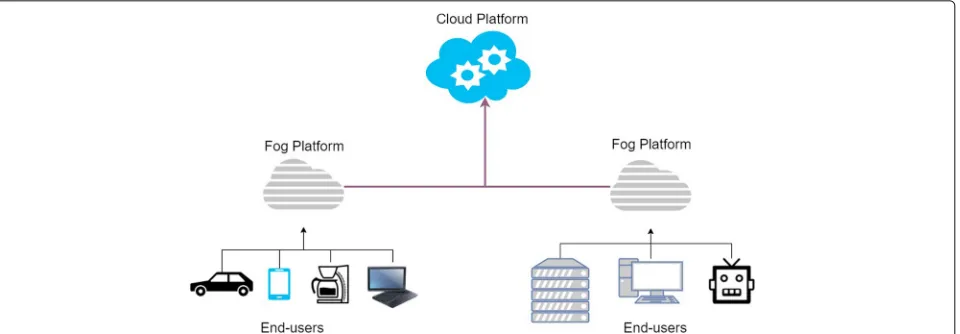
to process the acquired data; however, fast decision pro-cesses are also required to maintain a high-level of func-tionality. This can present scalability and reliability issues when utilising a standard client-server architecture, where data is sensed by the client and processed by the server. If a server was to become overloaded in a traditional client-server architecture, then many devices could be rendered unusable. The Fog paradigm aims to provide a scalable decentralised solution for this issue. This is achieved by creating a new hierarchically distributed and local plat-form between the Cloud system and end-user devices [2], as shown in Fig. 1. This platform is capable of filter-ing, aggregatfilter-ing, processfilter-ing, analysing and transmitting data, and will result in saving time and communication resources. This new paradigm is named Fog computing, initially and formally introduced by Cisco [3].
Cloud computing provides many benefits to individu-als and organizations through offering highly available and efficient computing resources with an affordable price [4]. Many cloud services are available in current commercial solutions, but they are not suitable for latency, portability
Fig. 1Fog computing by Cisco. This figure shows how diverse set of devices can communicate with the Cloud using Fog computing
and location-sensitive applications, such as IoT, Wear-able computing, Smart Grids, Connected Vehicles [5] and Software-Defined-Networks [6]. Latency depends on the speed of Internet connection, resource contention among guest virtual machines (VM) and has been shown to increase with distance [7]. Furthermore, such applications generate large volumes of varied data in a high velocity, and by the time data reaches a cloud system for analysis, the chance to inform the IoT device to take reactive action may be gone. For example, consider IoT devices in the medical domain where the latency of acting on the sensed data could be life-critical.
Cisco pioneered the delivery of the Fog comput-ing model that extends and brcomput-ings the Cloud platform closer to end-user’s device to resolve aforementioned issues. According to [8], a Fog system has the following characteristics:
• It will be located at the edge of network with rich and heterogeneous end-user support;
• Provides support to a broad range of industrial applications due to instant response capability; • It has its own computing, storage, and networking
services;
• It will operate locally (single hop from device to Fog node);
• It is highly a virtualized platform; and
• Offers inexpensive, flexible and portable deployment in terms of both hardware and software.
Besides having these characteristics, a Fog system is dif-ferent from Cloud computing in various aspects and poses its own advantages and disadvantages. Some of the more prominent are detailed in the below list [9–11]:
• A Fog system will have relatively small computing resources (memory, processing and storage) when
compared to a Cloud system, but the resources can be increased on-demand;
• They are able to process data generated from a diverse set of devices;
• They can be both dense and sparsely distributed based on geographical location;
• They support Machine-to-Machine communication and wireless connectivity;
• It is possible for a Fog system to be installed on low specification devices like switches and IP cameras; and
• One of their main uses is currently for mobile and portable devices.
Fig. 2Technical architecture of Cisco’s Fog Computing Platform. This figure shows all components from hardware to application layer
requires action and increases security by making data anonymous.
Many researchers and commercial infrastructure devel-opers believe that Fog platforms will be developed and released in the future to provide an enriched and more reliable infrastructure to handle the ever increasing expansion of connected computational devices. However, as with all distributed systems, the exposure to cyber threats is also prevalent and often heightened by the developer’s desire to provide functional systems first, and then add-in security measures afterwards. Many researchers are adopting a security-centric or secure by design[15] philosophy for producing such distributed sys-tems. But this viewpoint is still in its infancy and lacks in comprehensive understanding of the security threats and challenges facing a Fog infrastructure. This paper pro-vides a systematic review of Fog platform applications, determines their possible security gaps, analyses existing security solutions and then put forwards a list of com-prehensive security solutions that can eliminate many potential security flaws of Fog systems. The literature used in this paper is gathered using theGoogle Scholarsearch engine. The keywords used to find the literature are“Fog computing”,“Fog computing applications”,“Fog computing security”,“Fog security issues”and“Fog security”. The time frame of selected papers is up to June, 2017. To best of our knowledge, we reviewed all papers which were dis-played in the search engine at that time. In addition to that, we broadened the survey by including several rele-vant research areas as Fog computing is still in its infancy stage. Other search terms were also used to search closely related developments subject areas. These include“edge computing”,“cloudlet”,“micro data centre”and“Internet of Things”.
The paper is structured as follows: In the following section, a comprehensive review of literature is performed to identify established implementations of Fog and its similar systems. It also discusses the potential security
threats that have not been acknowledged. Following this, a summary is provided to classify common shortcom-ings and to highlight their significance. We also provide a discussion of potential mitigation mechanisms. Finally, we conclude by providing a discussion of the identified shortcomings, motivating future research.
Related work - current fog applications Review methodology
The Cisco Fog paradigm can be viewed in a broad and integrative manner as an enabler of many advanced tech-nologies. It can encompass, proliferate and impact several enhanced features such as rapid analysis, interoperability among devices, increased response time, centralized or machine-to-machine management, low bandwidth consumption, efficient power consumption, device abstraction and many others. Similar approaches like Fog computing have now been taken to increase the usability and potential of Cloud platform [16]. With the advent of such wide applicability, the Fog and its similar platforms like Edge computing, Cloudlets and Micro-data centres are prone to attacks that can compromise Confidentiality, Integrity, and Availability (CIA) [17].
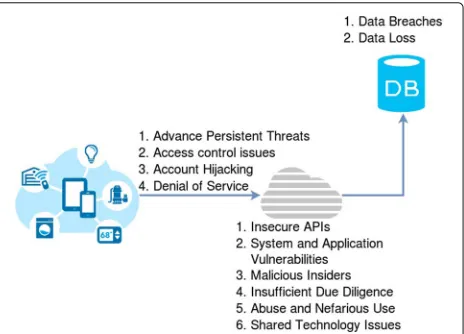
Cloud Security Alliance [18] have identified twelve crit-ical security issues, including other researchers such as [6, 19, 20]. These issues directly impact distributed, shared and on-demand nature of cloud computing. Being a vir-tualised environment like Cloud, Fog platform can also be affected by the same threats (see Fig. 3). Our study con-siders following twelve security categories to formulate a systematic review:
1. Advance Persistent Threats (APT)are cyber attacks whereby the aim is to compromise a
company’s infrastructure with the desire to steal data and intellectual property.
2. Access Control Issues (ACI)can result in poor management and any unauthorised user being able to acquire data and permissions to install software and change configurations.
3. Account Hijacking (AH)is where an attack aims to hijack the user accounts for malicious purpose. Phishing is a potential technique for account hijacking.
4. Denial of Service (DoS)are where legitimate users are prevented from using a system (data and applications) by overwhelming a system’s finite resources.
5. Data Breaches (DB)are when sensitive, protected or confidential data is released or stolen by an attacker. 6. Data Loss (DL)is where data is accidentally (or
maliciously) deleted from the system. This does not have to be resulting from a cyber attack and can arise through natural disaster.
7. Insecure APIs (IA)Many Cloud/Fog providers expose Application Programming Interfaces (APIs) for customer use. The security of these APIs is pivotal to the security of any implemented applications. 8. System and Application Vulnerabilities (SAV)are
exploitable bugs arising from software ad configuration errors that an attacker can use to infiltrate and compromise a system.
9. Malicious Insider (MI)is a user who has authorised access to the network and system, but has
intentionally decided to act maliciously.
10. Insufficient Due Diligence (IDD)often arises when an organisation rushed the adoption, design, and implementation of any system.
11. Abuse and Nefarious Use (ANU)often arises when resources are made available for free and malicious users utilise said resources to undertake malicious activity.
12. Shared Technology Issues (STI)occur due to sharing infrastructures, platforms or applications. For example, underlying hardware components may not have been designed to offer strong isolation properties.
The following section reviews a wide-range of Fog applications, paying particular attention to their poten-tial security implications. As the Fog computing is still in its infancy stage, similar technologies have also been dis-cussed to make the survey more holistic and beneficial. The Fog systems reviewed by analysing publicly available literature have been grouped into the below subsections. Throughout this section, the twelve categories illustrated in Fig. 3 are considered and a condensed summary is provided in Table 2.
Fog computing and similar technologies
Although the term Fog computing was first coined by Cisco, similar concepts have been researched and devel-oped by various other parties. The following list details three such technologies, including some of their key dif-ferences with Fog systems. A more detailed comparison is available at [21] and [22] for edge computing.
1. Edge Computingperforms localized processing on the device using Programmable Automation Controllers (PAC) [23], which can handle data processing, storage and communication [22]. It poses a advantage over Fog computing as it reduces the points of failure and makes each device more independent. However, the same feature makes it difficult to manage and accumulate data in large scale networks such as IoT [24].
2. Cloudletis a middle part of 3-tier hierarchy “mobile device - cloudlet - cloud”. There are four major attributes of Cloudlet: entirely self-managing, possesses enough compute power, low end-to-end latency and builds on standard Cloud technology [25]. Cloudlet differs from Fog computing as application virtualization is not suitable for the environment, consumes more resources and cannot work in offline mode as indicated by [26, 27]. 3. Micro-data centre[28] is a small and fully
functional data centre containing multiple servers and is capable of provisioning many virtual machines. Many technologies, including Fog computing, can benefit from Micro data centres as it reduces latency, enhances reliability, relatively portable, has built-in security protocols, saves bandwidth consumption by compression and can accommodate many new services.
Software defined and virtualized radio access networks Fog computing can enable users to take full control and management of the network by providing Network Level Virtualization (NLV) and real-time data services.
of Service (QoS), low energy consumption, and reduced latency and low network overhead. In addition, Fog nodes can compress and reorganize the web objects for optimal speed. In addition, various compelling research studies [30–32] have been presented for improving the perfor-mance of SDN and virtual machines by making use of cloudlets, which are able to perform dynamic VM synthe-sis, single-hop low-latency wireless access and creates the VM overlays to only load the difference of desired custom VM and its base VM. These features have been imple-mented by Carnegie Mellon University in a project called
Elijahand is available onGithubrepository [33].
The use of highly virtualized environment results in a large number of shared technology security issues. For example, an insecure hypervisor can be exploited to bring down the entire Fog platform as it is a single point of failure and manages all the Virtual Machines [34]. The vir-tualization issues include weak tenant segregation allow-ing one malicious user or attacker to compromise other users’ account and data, side-channel attacks [35], tar-geted APTs and illegal privilege escalation to gain unau-thorized data or resource access. The risks associated with shared technology are critical because it takes a minor vulnerability or misconfiguration to damage all Fog ser-vices, user operations and allows attackers to gain access to exploit Fog resources. Some of the recommended solutions to eliminate virtualization-based attacks are multi-factor or mutual authentication, Host and Network Intrusion Detection System, user-based permissions model, private networks and process/data isolation [36].
Web optimization
Researchers from Cisco are utilising Fog computing to increase the performance of websites [37]. Instead of making a round trip for every HTTP request for con-tent, style sheets, redirections, scripts and images, Fog nodes can help in fetching, combining and executing them at once. In addition, fog nodes can distinguish users based on MAC addresses or cookies, track user requests, cache files, determine local network condition. It is also possible to embed feedback scripts inside web page to measure the user browser’s rendering speed. The feed-back script reports directly to the Fog nodes and informs about the user’s graphical resolution, current area recep-tion (if wireless) and network congesrecep-tion. In another similar paper, Fog computing significantly reduced the response time of a Cloud-based temperature prediction system [38]. Due to Fog systems, the prediction latency was decreased from 5 to 1.5 s, web-page display latency from 8 to 3 s and internet traffic throughput from 75 to 10 Kbps. Another related use of Fog computing is dis-cussed in [39], wherein the Internet of Everything (IoE), IP addresses can be replaced with names, using Informa-tion Centric Networking (ICN) framework by enhanced
cache mechanisms. Fog nodes are able to manage cache (e.g. using Steiner Tree Based Optimal Resource Caching Scheme for Fog computing [40]), with the added benefit of supporting heterogeneous devices and computing, pro-cessing and storing on the edges of the network. Another simple approach [41] would be to use Edge computing for generating user-specific pages by replicating the appli-cation code at multiple edge servers. The edge servers are capable of keeping numerous copies of data, per-form content-aware data caching and content-blind data caching.
Using Fog platform for optimising web-services will also introduce web security issues. For example, if user input is not properly validated, the application becomes vulner-able to the code injection attacks, such as SQL injection, where SQL code provided by the user is automatically executed resulting in the potential for unauthorised data access and modification. This could result in the compro-mise of entire Fog system’s database or the forwarding of modified information to a central server [42]. Similarly, due to insecure web APIs, attacks like session and cookie hijacking (posing as a legitimate user), insecure direct object references for illegal data access, malicious redirec-tions and drive-by attacks [43] could force a Fog platform to expose itself and the attached users. Web attacks can also be used for targeting other applications in the same Fog platform by embedding malicious scripts (cross-site scripting) and potentially damage sensitive information. A potential mitigation mechanism is to secure the appli-cation code, patch vulnerabilities, conduct periodic audit-ing, harden the firewall by defining ingress and egress traffic rules and add anti-malware protection.
Provisioning 5G mobile networks
to 4 users per small cell. Edge computing is also being used for reducing network latency, ensuring highly efficient ser-vice delivery and offering an improved user experience by utilising programmable nature of NLV and SDN [47].
Without properly securing the virtualised infrastruc-ture of Fog nodes in a 5G network, providers risk not being able to achieve the desired performance. A sin-gle compromised Fog node in the 5G mobile network can generate the potential entry point for a Man-in-the-Middle (MITM) attack and interrupt all connected users, leak data, abuse the service by exceeding the limit of data plan and damage sibling Fog nodes. A MITM attack can be launched by a malicious internal user and can exploit the Fog platform by sniffing, hijacking, injecting and filtering data incoming from the end-user [48]. This will conse-quently affect the data communication of the underlying network (E.g. the 5G network). The most common way of eliminating such issues is to encrypt communication with either symmetric or asymmetric algorithms, mutual authentication, using the OAuth2 protocol, and ensur-ing the isolation of compromised nodes and certificate pinning as discussed by [49].
Improving throughput for smart meters
By deploying Smart Grids, large amounts of data is col-lected, processed and transmitted from smart meters using data aggregation units (DAU). Meter data manage-ment system (MDMS) use the generated data to forecast future energy demands. According to [50], the data aggre-gation process takes a long time due to the low bandwidth capacity of hardware, but can be improved with the help of Fog computing. First, a Fog-based router is connected with smart meters that accumulate the data reading of all sub-meters within a pre-defined time. Secondly, all values are transmitted to a second Fog platform, which per-forms data reduction processes. This Fog-based approach was tested on a general purpose Cisco routers and IOx, which are able to distinguished between Fog and non-Fog network packets. This method creates Advanced Meter-ing Infrastructure (AMI) that can reduce the amount of communication data and overheads within the net-work, resulting in an improvement in response time. A similar architecture is created in [51] for AMI, where Fog computing helped in reducing latency, delay jitter and distance while improving location awareness and mobility support.
Although sophisticated database software and high stor-age capacity hardware are used for aggregation and pro-cessing, data can easily be replicated, shared, modified and deleted by any malicious intermediate or fake exter-nal node using a Sybil (forging identities) attack, which can undermine the CIA of data [52]. In addition, it is difficult for a Fog platform to centrally define, set and maintain access control attributes of user ownership in
a large amount of moving data. Fog nodes are contin-uously processing, analysing and accumulating data to produce information and it becomes difficult to retain data integrity and prevent data loss. The tolerance at which a failure occurs is also very low as the exact point of error is hard to identify in a system. To eliminate these issues, security policies and strategies should be integrated into Fog systems to track energy consumption information along with contingency plans and disaster recovery modules [53, 54].
Improving healthcare systems and their performance Fog computing is also applied in healthcare and elderly care systems, where self-powered wireless sensors trans-mit data to Fog nodes, as a pose to sending them directly the Cloud. Using a large number of sensors, it is possible to create a smart healthcare infrastructure, where seman-tic tagging and classification of data is performed in the Fog layer, providing the refined data to a Cloud system for further processing [55]. Another system uses a sim-ilar approach and integrates a Fog-computing-informed paradigm within a Cloud for medical devices, providing a good Quality of Service (QoS) and governance [56]. Both architectures are in the context of the OpSIT health-care project in Germany. With the help of Fog comput-ing, healthcare systems provide services from a nearby location, store heterogeneous data, consists of smart low power devices, and are able to switch among various com-munication protocols as well as facilitating distributed computing [57]. Another application of Fog computing in healthcare includes Electrocardiogram (ECG) feature extraction to diagnose cardiac diseases [58]. This involves medical sensors transmitting data to a Fog layer that stores data in distributed databases, extract ECG features, and providing a graphical interface to display results in real-time. The proposed system is highly portable and results indicate a 90% increase in bandwidth efficiency over current solutions. The detection of a person hav-ing a stroke is of key importance as the speed of medical intervention is life critical. Two fall detection systems have been implemented using Fog platform, named U-FALL [59] and FAST [60]. Both systems distribute computa-tional tasks between Fog and Cloud platforms to pro-vide an efficient and scalable solution, which is essential as it allows for a quick detection and notification of a patient fall.
It is quite possible to compromise patient privacy, data integrity and system availability by exploiting sensors and their underlying communication network. Wireless sensors usually work in open, unattended and hostile environments. This ease-of-access has the potential to increase the chances of attacks like DoS, report disrup-tion, and selective forwarding attacks [62]. In addidisrup-tion, if the Fog node manages sensitive data and lacks access con-trol mechanisms, it might leak the data due to account hijacking, unintended access, and other vulnerable points of entry. To avoid such issues, strict policies should be enforced to maintain a high-level of control using multi-factor or mutual authentication, private networks and partial (selective) encryption.
Surveillance video stream processing
Fog computing can play an important role, where the efficient processing and instantaneous decision-making is required. Take an example of tracking multiple targets in a drone video stream as stated in [63]. Instead of sending live video feeds to a Cloud-based application, it is directed towards the nearest Fog node. Any mobile device such as tablets, smart-phones and laptop can become Fog node, run tracking algorithms and process raw video stream frames, hence removing the latency of transmitting data from the surveillance area to the Cloud. Results show that the addition of a Fog platform reduced an average of 13% of total processing time. The surveillance video processing can also be performed by using Edge computing and its potential in finding missing children [64]. Pushing video feeds of every camera sensor directly to the Cloud is not possible, but with the help of distributed edge servers and their processing power, each video can be processed indi-vidually and the Cloud system can gather the final results to yield a much faster output. Proximal algorithm [65] can also be implemented in the Fog nodes of a large-scale video streaming service, and can resolve joint resource allocation issue.
A video data stream generated by a camera sensors is sent to the respective Fog nodes, where it is stored and processed. The privacy of the stream should be main-tained as it contains audio and visual data, which are transmitted to heterogeneous clients. Here, not only is the security of Fog node is important, but the network and all end-user devices involved in the transmission should also be considered, especially against APTs. If a Fog platform or network contains any bugs due to lack of diligence, the crucial video stream might be viewed, altered and even destroyed. It is important that Fog node ensures a secure connection between all communicating devices and pro-tect multi-media content by obfuscation techniques, fine-grained access control, generating a new link for video stream, selective encryption and limiting the number of connections [66].
Vehicular networks and road safety
A new Vehicular Adhoc Networks (VANET) architecture has been proposed using Fog computing, called Fog-based Software Defined Network (FSDN) VANET [67]. The components of FSDN are SDN Controller (SDNC), SDN Wireless Nodes (vehicles), SDN Road-Side-Unit (Fog device), SDN Road-Side-Unit Controller (RSUC) and Cel-lular Base Station (BS). SDNC controls entire network along with Fog Orchestration and Resource Management for the Fog. RSUC is a group of Fog devices that per-forms data forwarding operations. BS also delivers Fog services and operates under the control of SDNC. Fog nodes and other devices communicate in the form of policy rules and content. SDNC receives vehicle informa-tion from BSs and transportainforma-tion informainforma-tion from RSUs. Fog enabled BSs and RSUs making it possible to provide faster services without contacting SDNC. Other similar implementations have been proposed in [6, 68], where either Fog devices are connected centrally with SDNC and Cloud or interconnected with each other in a Machine-to-Machine manner. To increase road safety, a Fog-based intelligent decision support driving rule violation moni-toring system [69] has also been developed. The proposed system has three layers: lower, middle and upper. The lower layer is able to detect hand-held devices during driv-ing and vehicle number usdriv-ing camera sensors, and send the information to nearest Fog server. In the middle layer, Fog server confirms if driver is intentionally violating the rules and communicates the vehicle identifier information to Cloud server. Finally, in upper the layer, Cloud server issues a traffic violation decision and alert the relevant authorities.
The security issues of Fog platforms in vehicular and road networks are similar to those associated with 5G mobile networks in terms of issues resulting from shared technology. Furthermore, vehicular networks do not have fixed infrastructure, and due to the volume of connec-tions, there are multiple routes between the same nodes. Such networks are exposed to potential DoS and data leak attacks due to a lack of centralized authority [70]. DoS attacks on a Fog platform, either from end-users or exter-nal systems, can prevent legitimate service use as the net-work becomes saturated. In addition, all communication is wireless and hence susceptible to impersonation, mes-sage replay, and mesmes-sage distortion issues [71]. Protection from these attacks is significant as human life is involved. The most common way of eliminating such issues is by implementing strong authentication, encrypted commu-nication, key management service, perform regular audit-ing, and implement private network and secure routing.
Intelligent food traceability
quality products from the supply chain using value-based processing [72]. A food item can be physically traced using various attributes, such as location, processing and trans-portation devices. The quality of a food item is determined by distributed food traceability through Cyber Physical System (CPS), which makes decisions based on Fuzzy rules. Both food traceability and quality information is sent to the Fog network, where the entire food supply chain is traceable. At this point, the Fog network holds complete information about all tracked food items and subsequently transmits food quality information to the Cloud system which can be viewed by stakeholders using the Internet.
The attackers could obstruct supply chain operations by exploiting location and transportation processes of this system. If a Fog node is compromised by means such as account hijacking or exploiting system and appli-cation vulnerabilities, the data can be falsified, which could ultimately result in the sale of substandard and low-quality food products. A network containing a large number of wireless sensors, and Machine-to-Machine (M2M) communications instigates a broad range of secu-rity concerns. One such example is resonance attack, where sensors are forced to operate at different fre-quencies and transmit incorrect data to a Fog node. This attack impacts the real-time availability of net-work and data, along with tolerance level [73]. Such systems should be protected by integrity checks, detect-ing deception attacks, redundancy to prevent sdetect-ingle-point of failure.
Collection and pre-processing of speech data
A new Fog computing interface (FIT) [74] is created for Android smart-watches connected with a smart tablet that collects, records and processes speech data from patients with Parkinson’s disease. Instead of transmitting the entire audio data, FIT extracts features like volume, short-time energy, zero-crossing rate and spectral cen-troid from speech and sends to the Cloud for long-term analysis. The application was tested on six patients and Fog computing made it possible to remotely process large-amount of audio data in a reduced duration. Another work extends the features of Mobile Edge Computing (MEC) into a novel programming model and framework [75] allowing mobile application developers to design flexible and scalable edge-based mobile applications. The devel-oper can benefit from the presented work as the frame-work is capable of processing data before its transmission and considers geo-distribution data for latency-sensitive applications.
Smartphones and tablets host large amount applications and can result in many complexities in terms of quality and security. Each applications has to legitimate access to user’s private data (often granted by the user during
installation), which has been identified as the driving force in many cyber attacks [76]. Fog platforms that are config-ured and executing on a mobile operating system should be protected, especially in case of open-source platforms, as one malicious application can compromise Fog oations and the connected network along with user’s per-sonal data [77]. Malware-based attacks can potentially corrupt and damage the CIA of data and communication. A recent survey identified that there are many poten-tial security solutions, such as anti-virus, firewall, Intru-sion Prevention System, constant data backups, software patching, and frequently creating system restore points and performing behaviour analysis techniques through dynamic monitoring [78].
Augmented brain computer interaction
A real-time brain state detection system has been imple-mented using a multi-tier Fog computing infrastructure [79]. The Fog platform is the data hub and signal pro-cessor that receives and processes data streams gener-ated by electroencephalogram (EEG) headset and motion sensors. The Fog server extracts time-frequency charac-teristics from signals and dispatches them to the brain state classifiers. The benefits of the proposed system are demonstrated through playing a multi-player online game called EEG Tractor Beam. Another similar system is developed in [80], where a multi-tiered Fog and Cloud system, linked data, and classification models have been used for EEG-based Brain-computer interfaces (BCI). The Fog servers are used for real-time data process-ing, cachprocess-ing, computation off-loadprocess-ing, managing hetero-geneity and forwarding data from mobile devices and sensors to the Cloud system. Fog computing also have many potential applications in telehealth systems [81], which can perform quick mining and perform analy-sis on a raw data stream gathered from different wear-able sensors. Fog nodes compress data and are physically located nearby, aiding to reduce bandwidth and power consumption.
Managing resources in micro data-centres
Apart from enabling advanced technologies, Fog comput-ing can perform many system-level tasks such as compu-tation resource management, prediction, estimation and reservation. It can also perform data filtration based on policy, pre-processing and enhance security measures. A similar framework has been provided by [83] for IoT devices resource management in micro data-centres. It consists of six layers:
• Physical, virtual ‘Things’ and wireless sensors; • Activity, power, response and service monitoring; • Pre-processing data by analysis, filtering,
reconstruction and trimming;
• Storing, distributing, replicating and de-duplicating data;
• Providing security by encryption/decryption and integrity checks; and
• Transporting pre-processed data to the cloud.
The framework also contains a resource estimation and pricing model for new IoT customers. Another article [84] suggests that Fog computing can enable dynamic real-time analysis, integrated security, reliability and fault tolerance. The Fog platform is highly flexible and scalable as processing nodes (mobile devices) can frequently join and leave a network. This property also allows the sup-port for more programming models and diverse system architectures to quickly manage substantial data.
Fog platforms that are used for the managing com-putation resources of other systems are highly prone to shared technology issues (discussed in “Software defined and virtualized radio access networks” section). Another critical threat is that of the malicious insider, who can violate access control on user, user-to-administrator, to-user and administrator-to-administrator levels. As virtualized environment are loaded into memory, it can also be exploited by resource abuse (privilege escalation and escaping attacks), account hijacking (exploiting authentication protocols or social engineering) and DoS attacks due to large number of users requesting resources use at the same time. Such attacks could result from inefficient and insufficient resource policies as well as a lack of user activity monitoring. In this case, identity-based encryption algorithms [85] and Role-Based Access Control model, as suggested by NIST [86], can be implemented to increase security.
Saving energy in Cloud computing
As Cloud operations require large amount of continu-ous energy, different types of applications are investi-gated in [87] using Raspberry Pi based servers, which can be installed and configured as a Fog platform to reduce energy consumption. According to the results,
applications that continuously produce static data within end-user premises and have low connection rate (e.g. video surveillance), can save significant energy using Fog computing. The authors also claim that the consumption of energy mostly depends on the amount of idle time, number of downloads, updates and data pre-loading, whereas actual content and number of network hops among users do not have vital impact. Another study [88] provides a systematic framework for creating a complete infrastructure consisting of a Cloud platform, Wide Area Network (WAN), Fog platforms and Local Area Network (LAN) in an optimal manner. They also designed a numer-ical model to prove that Fog computing significantly improves the performance of cloud computing by trading power consumption-delay with workload allocation. Simi-larly, to reduce the energy consumption in mobile-phones, researchers used used call graph to offload computa-tion to edge servers by optimally managing and allocating communication resources [89].
This particular application encourages the use of Fog platforms in storing and processing specific (user-defined) kinds of the (private) data locally in the Fog nodes, reduc-ing the communication cost and delay. However, the presence of such private data puts the Fog platform in a sensitive position. As previously mentioned there are many threats, which are capable of compromising CIA of data such as malicious insiders can read, alter and delete data. These issues can be resolved through the use of encryption, authentication (uniquely validating and veri-fying each user), data classification based on sensitivity, monitoring and data masking [90].
Disaster response and hostile environments
Fog computing can aid human search and rescue operations conducted over large geographical area in the occurrence of natural disaster [91]. Heterogeneous Commodity-Off-The-Shelf (COTS) Fog devices with low power consumption with wireless support are used in the implementation of the system. Different Quality of Service (QoS) metrics such as energy consumption, mobility, localization, optimal path calculation, data distribution among Fog devices and performance are mea-sured in the simulated post-disaster model to evaluate the system. Similar work suggests that VM-based Cloudlets
[92] andtactical Cloudlets[93] can offer significant ben-efits in hostile environment (e.g. military operations) as they are deployed in close proximity and can be placed inside vehicles for portability, ensuring continuous ser-vice, perform data filtering, reduces information leakage and support heterogeneous devices.
confidentiality. Wireless security protocols can carry out checksum (detect data errors), encrypt packets with min-imal resources [94] and provision fine-grained access control to strictly validate users (terminating unwanted connections). Furthermore, in case of emergency and key management to prevent losing decryption keys, these mechanisms should be considered to retain availability and integrity without compromising the overall perfor-mance of system.
Summary of security issues
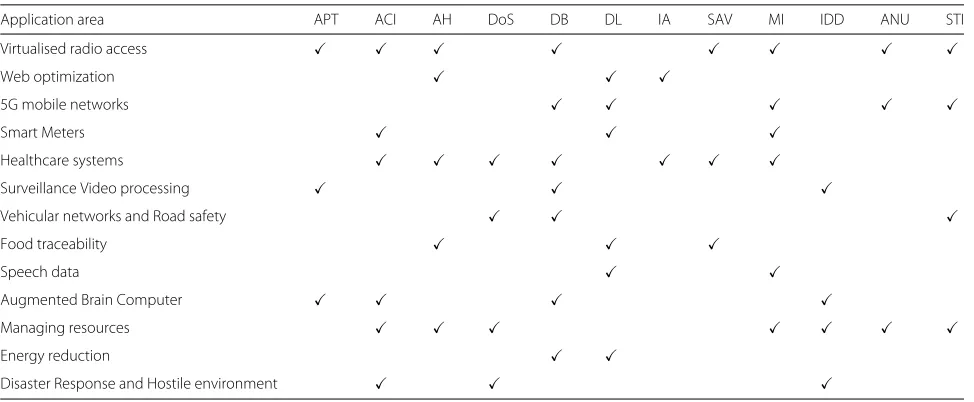
Table 1 presents the relationship of the surveyed Fog application areas and the categories of security issues. A description of each category can be found in “Review methodology” section. Although the table has been pop-ulated based upon interpreting published literature, it should be noted that in some cases it is possible that the authors may not have communicated specifics of their application which mitigate a potential security threat cat-egory. The table identifies that none of the surveyed application areas have taken the necessary precautions to minimise the potential impact and risk of each category of security threat.
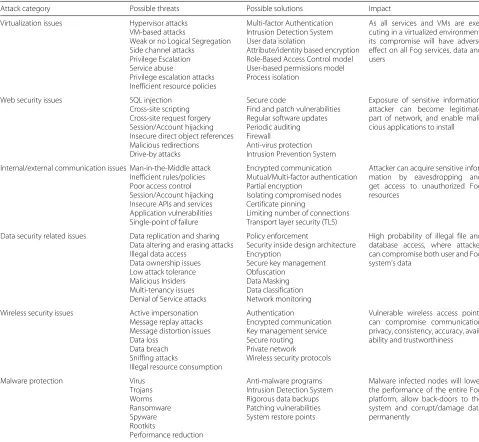
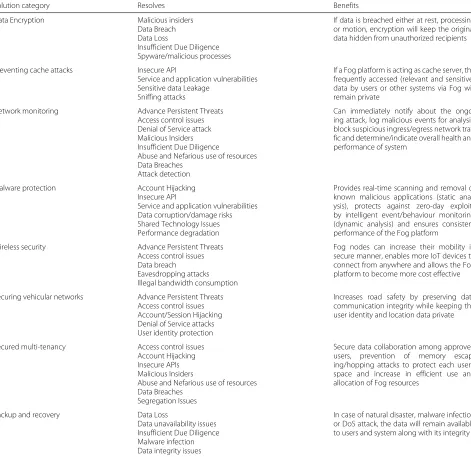
Table 2 provides a summary of security controls in respect to each application area. This table highlight-ing the potential impact on Fog platforms with respect of CIA model. The development of security measures in Fog systems is rapidly progressing, and some of the current publications do not contain sufficient detail to provide a thorough evaluation. This results in some of the knowledge gaps being speculative and futuristic and based on the latest research activity. It is important to note that due to continuous increase in attack vectors, it is not an exhaustive list and some security issues may
have been missed. With the advancement in Fog infras-tructure development, new security issues will need to be identified and acknowledged.
Existing security solutions for Fog computing As determined in the above sections, the introduction of Fog platform functionality between end-users and the Cloud systems creates a new point for vulnerabilities, which can potentially be exploited for malicious activ-ities. Unlike for Cloud systems, there are no standard security certifications and measures defined for the Fog computing. In addition, it could also be stated that a Fog platform:
• Has relatively smaller computing resources due to their very nature and hence it would be difficult to execute a full suite of security solutions that are able to detect and prevent sophisticated, targeted and distributed attacks;
• Is an attractive target for cyber-criminals due to high volumes of data throughput and the likelihood of being able to acquire sensitive data from both Cloud and IoT devices; and
• Is more accessible in comparison with Cloud systems, depending on the network configuration and physical location, which increases the probability of an attack occurring.
The real-world applications of Fog computing and similar technologies, which are surveyed in “Related work -current fog applications” section, are mostly motivated by functionality. However, it has also been identified that in most cases potential security measures against that can be implemented to mitigate threats are ignored. A potential
Table 1Knowledge gaps for application area based analysing current Fog implementations against the twelve categories of security issues
Application area APT ACI AH DoS DB DL IA SAV MI IDD ANU STI
Virtualised radio access
Web optimization
5G mobile networks
Smart Meters
Healthcare systems
Surveillance Video processing
Vehicular networks and Road safety
Food traceability
Speech data
Augmented Brain Computer
Managing resources
Energy reduction
Table 2Summary of potential security issues found in Fog applications
Attack category Possible threats Possible solutions Impact
Virtualization issues Hypervisor attacks VM-based attacks
Weak or no Logical Segregation Side channel attacks
Privilege Escalation Service abuse
Privilege escalation attacks Inefficient resource policies
Multi-factor Authentication Intrusion Detection System User data isolation
Attribute/identity based encryption Role-Based Access Control model User-based permissions model Process isolation
As all services and VMs are exe-cuting in a virtualized environment, its compromise will have adverse effect on all Fog services, data and users
Web security issues SQL injection Cross-site scripting Cross-site request forgery Session/Account hijacking Insecure direct object references Malicious redirections
Drive-by attacks
Secure code
Find and patch vulnerabilities Regular software updates Periodic auditing Firewall
Anti-virus protection Intrusion Prevention System
Exposure of sensitive information, attacker can become legitimate part of network, and enable mali-cious applications to install
Internal/external communication issues Man-in-the-Middle attack Inefficient rules/policies Poor access control Session/Account hijacking Insecure APIs and services Application vulnerabilities Single-point of failure
Encrypted communication Mutual/Multi-factor authentication Partial encryption
Isolating compromised nodes Certificate pinning
Limiting number of connections Transport layer security (TLS)
Attacker can acquire sensitive infor-mation by eavesdropping and get access to unauthorized Fog resources
Data security related issues Data replication and sharing Data altering and erasing attacks Illegal data access
Data ownership issues Low attack tolerance Malicious Insiders Multi-tenancy issues Denial of Service attacks
Policy enforcement
Security inside design architecture Encryption
Secure key management Obfuscation
Data Masking Data classification Network monitoring
High probability of illegal file and database access, where attacker can compromise both user and Fog system’s data
Wireless security issues Active impersonation Message replay attacks Message distortion issues Data loss
Data breach Sniffing attacks
Illegal resource consumption
Authentication
Encrypted communication Key management service Secure routing Private network
Wireless security protocols
Vulnerable wireless access points can compromise communication privacy, consistency, accuracy, avail-ability and trustworthiness
Malware protection Virus Trojans Worms Ransomware Spyware Rootkits
Performance reduction
Anti-malware programs Intrusion Detection System Rigorous data backups Patching vulnerabilities System restore points
Malware infected nodes will lower the performance of the entire Fog platform, allow back-doors to the system and corrupt/damage data permanently
reason for this is that the security issues facing Fog sys-tems is an infant research area, and only few of solutions are available to detect and prevent malicious attacks on a Fog platform. The below section provides an overview of such systems.
Privacy preserving in Fog computing
Research into preserving privacy in sensor-fog networks [95] consists of the following summarised steps to secure sensor data between end-user device and Fog network:
• They collect sensor data and extract features; • Fuzzing of data by inserting Gaussian noise in data at
a certain level of variance to lower the chance of eavesdropping and sniffing attacks;
• Segregation by splitting data into blocks and shuffling them to avoid Man-in-the-Middle (MITM) attacks; • Implementing Public Key Infrastructure for
encrypting each data block; and
• Transmit segregated data to Fog node, where data packets are decrypted and re-ordered.
little discussion on the required computational overheads for performing extensive data manipulation (fuzzing, segregation, encryption, decryption and ordering, re-ordering) before and after the communication. This could be of significance when designing and producing a Fog system as the required computation overheads might not be available. Another important aspect to notice here is that sensors transmit data continuously, possibly over longer periods of time, and the proposed privacy framework might overload or even crash the underlying Fog system.
Mitigating insider data theft
One study [96] provides a solution for protecting data from malicious insiders using components of Fog and Cloud computing. It combines behaviour profiling and decoy approaches to mitigate security threats. If any pro-file exhibits abnormal behaviour, such as the increase of accessing different documents at unusual times, the sys-tem will tag the access as suspicious and block the respec-tive user. Decoy is a disinformation attack that includes fake documents, honeyfiles, honeypots and other kinds of baiting data that can be used to detect, confuse and catch the malicious insider. This research domain is significant as it demonstrates potential altering and mitigation meth-ods to defend against data theft. More specifically, they demonstrate that the proposed technique can correctly identify abnormal behaviour with an average accuracy greater than 90%. However, the experiment is performed with a limited amount of data. More specifically, eigh-teen students from a single university over the duration of four days. Hence, the results in terms of accuracy they claim might not reproducible or universal. Their tech-nique can be improved by increasing the population size and running the experiment over longer timespan [97]. Furthermore, the computational requirements of such an approach are not mentioned. The paper provides no details on the quantity of data that is stored, as well as the CPU time and memory required during analysis. Such behaviour profiling techniques are often performed in a traditional client-server architecture where computation resources are freely available. It is not clear how this technique is able to be executed on a Fog node without having adverse affects on core functionality. The tech-nique can be further improved through critically analysing and selecting feasible machines learning techniques and training data required for behaviour profiling. This carries more importance due to the presence of a large number of user and files. Similar behaviour profiling and decoy techniques are used in other works [98, 99] to detect and prevent malicious insider threat.The behaviour profiling, monitoring and user matching process would not exert any burden on Cloud resources and prevent actual data theft without exposing any sensitive data. As an added
benefit, all of these operations will occur on-premise and execute relatively faster due to low bandwidth latency.
Policy-driven secure management of resources
One piece of work introduces a preliminary policy man-agement framework for the resources of Fog computing to enhance secure interaction, sharing and interoperabil-ity among user-requested resources [100]. The system is divided into five major modules:
• Policy Decision Engine (PDE) for taking action based on pre-defined policy rules;
• Application Administrator (AA) to manage Fog multi-tenancy;
• Policy Resolver (PR) for attribute-based authentication;
• Policy Repository (PRep) holding rules and policies; and
• Policy Enforcer (PE) to detect any discrepancies in policy implementation.
utilization and periodically comparing with estimated val-ues [102]. In case the system identifies an anomaly, the user would be redirected to theShark Tankcluster, which is essentially a proxy to closely monitor the user but can grant full application capabilities.
Authentication in Fog platform
Insecure authentication protocols between Fog platforms and end-user devices have been identified as a main secu-rity concern of Fog computing by [19]. The author’s claim that the IoT devices, especially in smart grids, are prone to data tampering and spoofing attacks and can be prevented with the help of a Public Key Infrastructure (PKI), Diffie-Hellman key exchange, Intrusion detection techniques and monitoring for modified input values. Furthermore, the authors demonstrate the high importance and impact of MITM attack on Fog computing by launching a Stealth attack on video call between 3G and the WLAN users within a Fog network. Results show that the attack did not cause any visible change in memory and CPU con-sumption of Fog node, hence it is quite difficult to detect and mitigate. The authors recommend that the risk of such attacks can be prevented by securing communication channels between the Fog platform and the user through implementing authentication schemes.
Based on the current state of authentication in Fog plat-form, Fog platforms are missing rigorous authentication and secure communication protocols as per their specifi-cation and requirements. In a Fog platform both security and performance factors are considered in conjunction, and mechanisms such as the encryption methodologies known asfully homomorphic[103] and Fan-Vercauteren somewhat homomorphic[104] can be used to secure the data. These schemes consists of a hybrid of symmetric and public-key encryption algorithms, as well as other variants of attribute-based encryption. As homomorphic encryp-tion permits normal operaencryp-tions without decrypting the data, the reduction in key distribution will maintain the privacy of data. Other research work provides a simi-lar framework to secure smart grids, regardless of Fog computing, called the Efficient and Privacy Preserving Aggregation (EPPA) scheme [105]. The system performs data aggregation based on the homomorphic Paillier cryptosystem. As the homomorphic ability of encryption makes it possible for local network gateways to perform an operation on cipher-text without decryption, it reduces the authentication cost (in terms of processing power) while maintaining the secrecy of data.
Using advance encryption standard (AES)
This paper [106] concludes that AES is a suitable encryption algorithm for a Fog platform. Multiple met-rics have been considered for the performance evalua-tion: user load against CPU time and file size against
encryption/decryption time and memory utilization. According to the results, encryption time was nearly the same for both smartphone and laptop using small amount of data, such as 500 Kb, 5 Mb, and 10 Mb. Although, AES encryption is universally accepted [107] and is fea-sible for Fog computing, due to low hardware specifica-tions and smaller computaspecifica-tions, the experiment does not compare AES with any other available encryption algo-rithm. In addition, the size of the encryption key plays an important role in strengthening the encryption. Fur-thermore, the experiment should also have compared the performance and efficiency vector of different key sizes; 128, 192 or 256-bits. Their work lacks evidence and jus-tification as only three sample files are used in whole experiment. Using small sample size might not provide the deep insight to whether AES is a suitable algorithm for Fog networks and storage or not. Furthermore, only textual data is used for encryption/decryption processes and it is unclear if the same results can be replicated with images or any other data format. Moreover, the Fog platform consists of heterogeneous devices with different specifications and single algorithm might not be able to cover all possible scenarios. Encryption is already an addi-tional task for the Fog platform and also consumes large amounts of resources. The selection of encryption algo-rithm (whether symmetric, asymmetric or hybrid) should be performed in accordance with provider and infrastruc-ture requirements.
Conclusion
Recommended security measures and future challenges
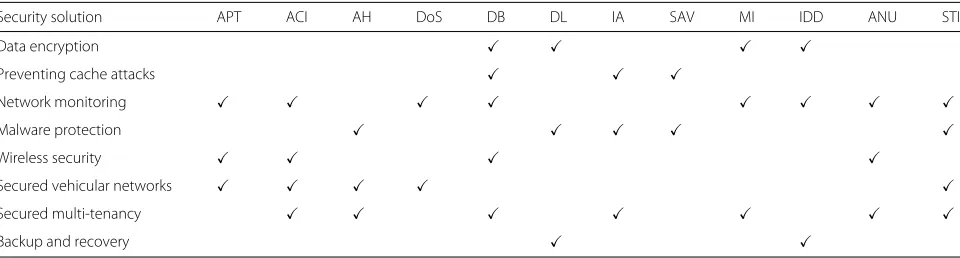
In the light of above literature review, this section presents the security knowledge gaps that should be covered to build a reliable, applicable and trustworthy Fog platform. Despite having large potential and number of applications, there is a lack of security solutions available for Fog system developers and designers. However, as Cloud computing and many similar technologies (albeit centralised systems) resemble the working mechanism of Fog computing, they can provide a deeper insight into the security threats and solutions. Even though each Fog deployment has a differ-ent set of security requiremdiffer-ents, applications and sensi-tivity, the following subsections provide a comprehensive, efficient and applicable security solutions, which are gath-ered and tested on various systems. They can also be used as generic best practise guidelines while developing the Fog software, so that the security is enabled from within the platform. Table 3 presents a summary of the relation-ship between the following proposed security solutions and the twelve categories (“Review methodology” section) of security threats used throughout this paper.
Data encryption
Recommendation: 1 The data needs to be secured before (at rest in source location), during (in motion through network) and after (at rest in destination location) com-munication among IoT devices, the Fog network and Cloud platform.
Future challenge: 1 Added data security measures typically cause significant reduction in computational resources available for normal Fog-based operations [108]. In addition, the cipher-text can consumes more disk space than original text and further influences the working mech-anism of application and database layers.
Data encryption is a widely used mechanism to pro-tect data confidentiality. To overcome the higher resource allocation issues of encryption, only sensitive and critical information should be encrypted, such as user’s identity in vehicular networks, patient data in healthcare systems, cached data and so on. For data at rest, the AES algorithm
with 256-bit key size or obfuscation can be used to ensure privacy, while the Secure Socket Layer (SSL) protocol can be used for establishing secure communication between a server and a client [109, 110]. In addition, efficient data integrity checks [111] should be performed before and after communication to validate the received information and it’s sender. The important aspect here is to clearly dis-tinguish between archival data and sensitive information. Encrypting archival data like public video streaming will reduce the performance of Fog system and impact upon the performance of sibling applications. It is, therefore, essential for the designer of a Fog system to adequately assess the importance of the data and implement security measures where necessary.
Preventing cache attacks
Recommendation: 2 Fog platforms maintained for
Cache management system are prone to software cache-based side channel attacks such as exposing cryptographic keys, which may lead toward leaking sensitive information.
Future challenge: 2 Prevention of cache-based attacks is either too expensive for practical implementation or the solution only protects against a specific kind of attack. Research shows that cache interferences is the most com-mon type of attack, whose elimination requires both hard-ware and softhard-ware modifications [112].
Fog systems that are used for enhancing the per-formance and power efficiency of other systems using advanced memory caching techniques can be probed via Cache Side Channel Attacks [113], resulting in the exposure of sensitive data within connected systems. The cache holds data that is frequently used and could contain personal user information. Fog platforms used in this manner should include security solutions like
Newcahe [114] and STEALTHMEM [115]. These solu-tions are alternative low-level implementasolu-tions of a security-centric memory cache system that can better protect residing data. For new cache designs, solutions like Partition Locked cache and Random Permutation cache [116] can relieve Fog network from cache inter-ferences attacks. In addition, the mechanism to prevent
Table 3Security solutions that can resolve twelve potential security issues in Fog implementations
Security solution APT ACI AH DoS DB DL IA SAV MI IDD ANU STI
Data encryption
Preventing cache attacks
Network monitoring
Malware protection
Wireless security
Secured vehicular networks
Secured multi-tenancy
modifications in smart meter data in the advanced meter-ing infrastructure would be to retain collected data in Fog node for specific duration of time before release. Even though these security solutions are expensive and difficult to implement, Fog platform developers should consider them as it is important not to rely on standard default implementations that may result in significant weaknesses.
Network monitoring
Recommendation: 3 Fog systems that are continuously handling private data (e.g generated by IoT device) from end-user to Cloud platform and vice versa, should monitor and detect anomalous activity in network through auto-mated enforcement of communication security rules and policies.
Future challenge: 3 A Fog network is usually connected to large number of small devices. The data generated by a single device may be small, but when the streams of mul-tiple devices are combined, the amount of overall data becomes significantly challenging to handle [117]. Hence, filtering each network packet would instigate the necessity to increasing processing and memory capacity.
Each Fog platform should implement resource efficient network monitoring mechanisms. They should be con-sidered as an integral part of every Fog system, so that malicious activity can be identified and terminated before any real damage occurs. The fundamental underlying pro-cess comprises of scanning dynamic and large networks to mark suspicious and malicious network packets based on pre-defined rules and policies. A Fog platform can deploy efficient tools like CLOUDWATCHER [118] for partial network monitoring by selecting specific devices andPayLess[119] for scanning SDN communication with minimal computing resources. The network scanning process can be classified as static, dynamic or a combina-tion of both. Scanning is typically achieved by assorting Firewalls, Anti-viruses and Intrusion Detection and Pre-vention Systems [120–122]. For further improvement, the network monitoring applications can start operating in distributed and intelligent manner. They can use Artifi-cial Neural Networks (ANNs) and rule matching [123] for threat detection as a large number of heterogeneous (IoT) devices are transmitting and processing heterogeneous data on multiple levels (hypervisor, operating system, and applications). Furthermore, due to the localised nature of Fog devices, the implementation of Virtual Private Net-works (VPNs) can also help in isolating the network from external attacks.
(Zero day) Malware protection
Recommendation: 4 Fog systems should protect them-selves against both new and existing malware-based attacks, which can occur in the form of virus, trojan,
rootkit, spyware and worms to avoid unwanted infection and serious damage.
Future challenge: 4 The ever increasing complexity of malware attacks, lack of modern day threats detection, possibility of more zero day vulnerabilities, and the and sparse nature of connected (mobile) devices presents signif-icant protection challenges. The Fog system also requires a lightweight, cross-storage host agent and a network-based detection service to fully defend against these threats [124].
Most Fog systems are missing appropriate malware pro-tection schemes as they requires dedicated and contin-uous allocation of network and computation resources, which might not be available in every Fog platform. With the presence of a large number of end-users and zero days threats, any user’s device or malicious tenant could (unknowingly) inject and spread malware, which as a result could compromise the entire network. As many Fog systems are also deployed on smart-phones and tablets such as in BCI applications, they can become a source of malware infection [125]. One suitable solution would be a physical malware detection device [126] as it would use minimal Fog resources. By increasing the Fog platform specifications, tools like BareCloud [127] can be deployed, which can automatically detect eva-sive malware. Furthermore, machine learning techniques [128–130] can be applied to identify zero day attacks with higher accuracy. These techniques essentially train algo-rithms like support vector machines with a benign soft-ware model and after that, any abnormal behaviour can trigger the detection event. Apart from stealing data or modifying core system functionality, the presence of mal-ware can decrease system performance. Hence, it is vital to continuously scan for compromised nodes and deploy counter-measures to prevent the inclusion of malicious nodes and end-user devices. Those designing and devel-oping Fog systems would need to consider the potential of underlying operating system [131] to become compro-mised and considering how their system, and its physical implications can be protected to minimise damage. For example, in the health-care domain, it would be essential that if a Fog system became compromised, that critical data and functionality would still be protected by having strong integrity checks and make sure that the system is quarantined as soon as malicious activity appears within the host operating system.
Wireless security
Recommendation: 5 The internal and external wireless communications of Fog platform with end-user devices need to minimise packet sniffing, rouge access points and similar challenges by implementing both encryption and authentication procedures.
and visibility of each wireless capable device, it is difficult to ensure the security of the Fog network. If not hidden and secured, the wireless network gives unprecedented freedom to attackers to intercept sensitive data in transmission.
Many wireless devices, such as health monitoring, cam-era sensors, RFIDs and mobile phones are connected with Fog platforms and are continuously transmitting private data from nearby locations. It is important that their com-munication is encrypted using Wi-Fi security algorithms likeWiFi Protected Access(WPA), WPA2 [133] etc. Wire-less access points are usually visible to all devices without any connection. If they are not properly secured, attacker can become part of network (Sybil attack), use bandwidth illegally (Flood Attack) and intercept network traffic using MiTM attack to alter or even terminate data commu-nication [134]. In case of medical applications, insecure wireless connection might also put human life at risk. It is therefore of critical importance to implement wire-less protocols like 802.11 or it’s amendments: 802.11a and 802.11g. In addition, different intrusion detection tech-niques can be used for protecting the communication of heterogeneous 5G mobile networks as discussed in a recent survey paper [135].
Secured vehicular networks
Recommendation: 6 In order to increase road safety and real-time application of vehicular networks, they should protect themselves from internal and external security threats.
Future Challenge: 6 A vehicular Fog network is volatile as the connection with end-user is established for only a shorter period of time, which makes it difficult to ver-ify identities. The amount of connections, heterogeneous data and factors of multi-hop connection can increase to a large scale, which will render even a robust security system useless. [136].
When using a Fog platform to support vehicular net-work, the security protocols should not be limited to BSs, SDNCs and RSUCs, but should also encompass Fog devices that are actually processing, storing and forward-ing vehicular data. A Fog system should secure itself by authenticating user identity, check for data consistency and integrity, service availability, ability to revoke any connection and anonymous key management as well as enhance the protection of connected systems by monitor-ing and insertmonitor-ing real-time constraints [137]. If Fog nodes are capable of performing user authentication and mes-sage integrity checks, it will eliminate mesmes-sage suppres-sion, fabrication, replay and alteration attacks [138]. The process should be anonymous and stateless like STAMP [139], so that the user’s location and identity is kept private, even from the Fog network. The implementa-tion of such security measures between vehicles and Fog nodes will prevent primitive attacks before they reach and
exploit cloud system too, and would help in improving the overall road safety.
Secured multi-tenancy
Recommendation: 7 Fog computing should enable highly constrained access control on both data and network, along with fair resource allocation mechanisms to protect confi-dentiality and integrity within a multi-user environment.
Future Challenge: 7 When a large number of end-users start to share Fog applications and resources, the perfor-mance, scalability, data security, user identity manage-ment, monitoring and the potential arising from insiders threats becomes difficult to manage in a Fog network [140].
As mentioned above, Fog platforms are a highly vir-tualized environment, supporting multi-tenancy and are capable of provisioning resource management facilities to Cloud systems. Many security concerns are driven by multi-tenancy implementations, such as co-resident data, malicious tenants, eavesdropping, memory escap-ing and hoppescap-ing and misconfiguration [141, 142]. Fog platforms should implement multi-factor authentication mechanisms based on either the role or identity of end-users, logically segregate data and resources and aggres-sively analyse the activities of both administrator and tenants. Another system calledSecure and Resilient Net-working (SeReNe) service can provide a Fog platform with programmable environment to adjust it’s topology, bandwidth allocation, and traffic policies [143]. Further-more, as many devices are connected, Fog system should be able to fairly allocate compute resources among users meanwhile preventing virtualization-based (hypervisor and VM) attacks (as shown in table 2) to keep the infras-tructure available.
Backup and recovery
Recommendation: 8 Depending upon the kind of appli-cation, Fog platforms should have data backup and recov-ery modules. Such system should mirror copies of data on-site, off-site or both on a regular basis. It will bene-fit both customers and company to keep the operations running from using previous backups, minimising service disruptions.
Future Challenge: 8 The Fog platform has a high fre-quency of data throughput and relatively low amount of stored data, but this does depend on the requirements and application. The challenge is that data backup and recov-ery is a costly process [144] and requires acute focus on data selecting, mapping, testing and determining accessi-bility roles in case of recovery process.