on treatment by spinal manipulation and
measurement with the Neck Disability Index
Robert J. Rodine, BSc, DC*
Howard Vernon, DC, PhD, FCCS(C)**
* Graduate Student, Graduate Education and Research Programs, Canadian Memorial Chiropractic College, Toronto, Ontario. Private Practice, Smiths Falls, Ontario.12 William Street West, Smiths Falls, Ontario, K7A 1M9.Tel.: (613) 205-0978. E-mail: [email protected] ** Professor, Division of Graduate Education and Research Programs, Canadian Memorial Chiropractic College, 6100 Leslie Street, Toronto,
Ontario, M2H 3J1. Tel.: (416) 482-2340 © JCCA 2012
La radiculopathie cervicale (RC), bien que moins courante que les cervicalgies seules, peut être une source considérable de douleur au cou et d’incapacité. Ainsi, il est essentiel d’établir des options de traitements adéquates pour les patients. À l’heure actuelle,
l’insuffisance des recherches scientifiques limite les traitements conservateurs propres à la RC pouvant être recommandés. En dépit du manque de preuves soutenant l’emploi de la manipulation vertébrale à grande vitesse et faible amplitude pour le traitement de la RC, il s’agit d’une stratégie fréquemment considérée comme contre-indiquée. Il existe également un manque en ce qui concerne l’appui de la communauté scientifique envers la mise au point de méthodes servant à mesurer de manière appropriée les résultats. Bien qu’il soit nécessaire d’obtenir plus de données scientifiques pour tirer des conclusions solides, la présente étude suggère que la manipulation vertébrale peut être considérée, en toute prudence, comme une option de traitement pour les patients souffrant de RC. Pour ce qui est de la mesure des résultats, l’index d’incapacité cervicale (Neck disability index – NDI) semble convenir au traitement de la RC par manipulation vertébrale.
(JCCA 2012; 56(1):18–28)
m o t s c l é s : Radiculopathie cervicale, manipulation vertébrale, chiropratique, manipulation à grande vitesse et faible amplitude, index d’incapacité cervicale
Cervical radiculopathy (CR), while less common than conditions with neck pain alone, can be a significant cause of neck pain and disability; thus the determination of adequate treatment options for patients is essential. Currently, inadequate scientific literature restricts specific conservative management recommendations for CR. Despite a paucity of evidence for high-velocity low-amplitude (HVLA) spinal manipulation in the treatment for CR, this strategy has been frequently labeled as contraindicated. Scientific support for appropriate outcome measures for CR is equally deficient. While more scientific data is needed to draw firm conclusions, the present review suggests that spinal manipulation may be cautiously considered as a therapeutic option for patients suffering from CR. With respect to outcome measures, the Neck Disability Index appears well-suited for spinal manipulative treatment of CR.
(JCCA 2012; 56(1):18–28)
k e y w o r d s: Cervical radiculopathy, spinal
Introduction
Cervical radiculopathy (CR) can be a significant cause of neck pain and disability. The reported annual incidence of CR is 83.2/100,000 persons1, while the reported
preva-lence is 3.5/1000 persons.2 Gender preference varies.2,3
Individuals are most commonly affected in the 5th and 6th
decades of life.1,4 Physical exertion or trauma at onset is
rare, involving less than 15%.1 Causal relationship to an
automobile accident ranges from 3–23%.1,4
Patients presenting with CR most frequently complain of neck pain, paresthesia and radicular pain.1 While
sen-sory symptoms typically present along a dermatome, pain is often myotomal.5 When present, dermatomal pain
pat-terns are more frequent at the C4 level (60%) as compared to the C7 (34.2% of cases) and C6 levels (35% of cases).3
Scapular pain is found in 51.6% of cases.3 Physical
exam-ination typically reveals painful cervical spine range of motion (ROM) and decreased deep tendon reflexes.1
Upper limb weakness involves only 15% of cases.1
De-creased sensation is found in 1/3 of cases; however, muscle atrophy presents in less than 2% of cases.1 Level
of involvement is most typically the C7 (39.3%–46.3%) and C6 (17.6%–42.6%) nerve roots.1,3 Bilateral
involve-ment is reported in 5–36% of cases.1,4
The intervertebral disc has be found to be causative in only 22% of cases, while 68% of cases appear to arise from a combination of discogenic and spondylotic causes.1
With respect to therapy, the Task Force on Neck Pain and Its Associated Disorders (TFNPAD) extensively re-viewed the literature to make best-evidence recommen-dations on the management of neck pain disorders. The review found insufficient evidence to draw firm conclu-sions or make appropriate treatment recommendations for CR, or identify contraindicated therapies.6
This begs the question as to the role of spinal manipu-lative therapy (SMT) for CR patients’. In fact, Saal et al, stated that “forceful joint manipulation was not used” in their protocol for CR,7 while Haas et al stated that
inter-vertebral disc herniation and CR are contraindications to manipulation.8 Unfortunately, statements such as these
are unsupported by both basic science evidence which justifies a plausible risk, and epidemiological evidence suggesting hazard or ineffectiveness.
Recently, the first systematic review of manipulative therapy for radiculopathy (including CR) was published. Leininger et al. concluded that evidence for manipulative
therapy in CR is minimal, low in quality and presents a high risk of bias.9 Despite this, 93% of surveyed
chiro-practors stated they would use SMT despite a suspected or confirmed cervical disc herniation.10 Therefore, a more
detailed review of the existing studies may prove clinic-ally valuable.
A secondary issue concerns the most appropriate out-come measure for determining the effectiveness of SMT for CR? Given that the Neck Disability Index (NDI) is the most commonly used outcome measure of self-rated disability due to non-specific mechanical neck pain,11 use
in a specific cause of neck pain (such as CR) should be evaluated.
The purpose of this paper is to systematically search and descriptively present the evidence as it applies to general chiropractic practice. Therefore, the primary ob-jective of this paper is to review the use of high-velocity low-amplitude (HVLA) SMT for CR, reflecting on chiro-practic treatment chiro-practices. A secondary objective is to review the use of the NDI, designed for use in neck pain patients, in the management of patients with neck and arm pain.
Methods
Objective 1:
Search Strategy
A literature search sought English language manuscripts published before February 28, 2011.
The databases of MEDLINE, Alt-Healthwatch, AMED and CINAHL were searched, using the terms found in Table 1. The Index to Chiropractic Literature (ICL) was searched using the terms “cervical radiculopathy” and “manipulation” within “all fields” and limited to the peer reviewed literature.
Relevant manuscripts were hand-searched and content experts were contacted for feedback.
Inclusion Criteria
eligible for inclusion. Studies which presented mixed groups of patients with/without arm pain were not eligible for inclusion.
Manuscripts were excluded if the designs reported data via case-by-case format; identified a mechanical cause of neck and arm pain; involved low-velocity low-amplitude (LVLA) procedures such as mobilizations, flexion-dis-traction procedures and intermittent cervical flexion-dis-traction as the principal method of manipulation (LVLA procedures ancillary to HVLA-SMT were acceptable); thoracic ma-nipulation was principally used; a traumatic mechanism of injury (such as a motor vehicle accident) was identi-fied; or if treatment fell outside the general scope of chiro-practic chiro-practice (such as manual therapy performed under anesthesia or in combination with injection therapy). This selection process was conducted by one reviewer only (RR).
Quality Reviewing and Data Analysis
Formal quality review and data pooling were not con-ducted. Retrieved manuscripts underwent qualitative an-alysis only.
Objective 2:
Search Strategy
The database PubMed was searched to May 2010 with the key words “neck disability index” and “arm pain.” Retrieved manuscripts were hand-searched for additional citations.
Inclusion Criteria
Only articles investigating the psychometric properties of
the NDI in the assessment of patients with neck and arm pain were included. This selection process was conducted by one reviewer only (HV).
Quality Reviewing and Data Analysis
Data were tabulated on sample characteristics and reli-ability or validity statistics.
Results
Objective 1:
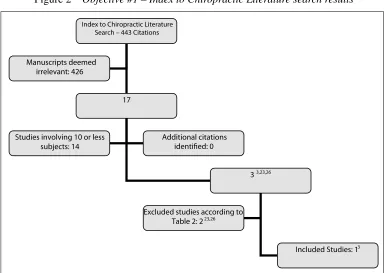
The process of literature consolidation and search results is depicted in Figures 1 and 2. Hand searching revealed an additional four citations.12–15 Contacting content experts
provided no further results.
Some inclusions of Leininger et al.9 were excluded
from this paper. As Shin et al. was published as a “letter to the editor” and avoided peer-review, the study was ex-cluded.12 Moretti et al. was excluded due to “the treatment
of benign cervicobrachialgia of mechanical origin.”13
Walker et al. was excluded given the mixed population of neck pain sufferers, with or without unilateral upper limb symptoms.13
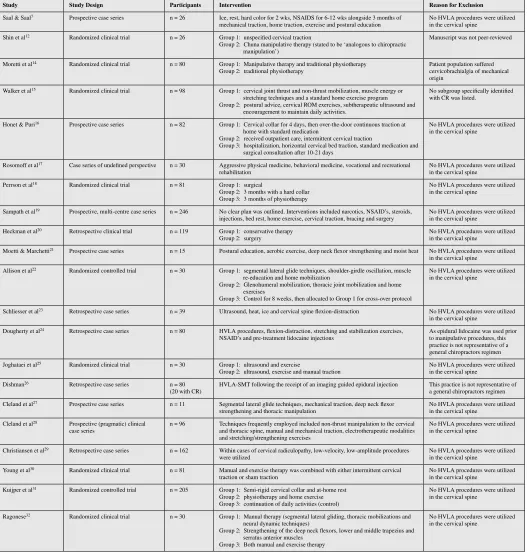
Table 2 presents the final exclusions, as they are rel-evant to readers in this field.7,14–32 Three manuscripts met
the objective criteria.3,13,33
Study Descriptions
Howe et al.13 used cervical SMT for the treatment of
pain/stiffness in the neck with or without shoulder, arm or hand pain/paresthesia, attributed to a lesion of the cervical spine.13
Blinded, goniometric ROM measurement of cervical rotation and lateral flexion was assessed beforesubjects were randomized to either the control or treatment group. Blinded measurement was repeated for the treatment group post-manipulation and subsequent to randomiza-tion for the control group, as well as at 1 and 3 weeks following initial consult.13
Twenty-six subjects were randomized to each group, a treatment and a control group. Baseline characteristics were comparable, except that more subjects in the treat-ment group had experienced pain for longer than 4 weeks (6 subjects versus 0).13
Arm and hand pain/paresthesia was experienced by 9 controls and 12 members of the treatment group.While
Pathophysiological Terms
Cervical AND (radiculopathy, radiculitis, neuralgia, brachialgia, disc herniation)
Interventional Terms
Spinal manipulation, spinal manipulative therapy, SMT, high-velocity low-amplitude, manual therapy, conservative therapy, non-operative therapy,
EBSCO Search – 322 Citations
34
223,7,12-22,24,25,27-33
Included Studies: 3 3,13,33 Manuscripts deemed
irrelevant: 288
Studies involving 10 or less subjects: 16
Excluded studies according to Table 2: 19 7,12,14-22,24,25,27-32
Additional citations identified: 4 12-15
Index to Chiropractic Literature Search – 443 Citations
17
33,23,26
Included Studies: 13 Manuscripts deemed
irrelevant: 426
Studies involving 10 or less subjects: 14
Excluded studies according to Table 2: 223,26 Additional citations
identified: 0
Figure 1 Objective #1 – EBSCO literature search results
Study Study Design Participants Intervention Reason for Exclusion
Saal & Saal7 Prospective case series n = 26 Ice, rest, hard color for 2 wks, NSAIDS for 6-12 wks alongside 3 months of
mechanical traction, home traction, exercise and postural education No HVLA procedures were utilized in the cervical spine Shin et al12 Randomized clinical trial n = 26 Group 1: unspecified cervical traction
Group 2: Chuna manipulative therapy (stated to be ‘analogous to chiropractic manipulation’)
Manuscript was not peer-reviewed
Moretti et al14 Randomized clinical trial n = 80 Group 1: Manipulative therapy and traditional physiotherapy Group 2: traditional physiotherapy
Patient population suffered cervicobrachialgia of mechanical origin
Walker et al15 Randomized clinical trial n = 98 Group 1: cervical joint thrust and non-thrust mobilization, muscle energy or stretching techniques and a standard home exercise program Group 2: postural advice, cervical ROM exercises, subtherapeutic ultrasound and
encouragement to maintain daily activities.
No subgroup specifically identified with CR was listed.
Honet & Puri16 Prospective case series n = 82 Group 1: Cervical collar for 4 days, then over-the-door continuous traction at home with standard medication
Group 2: received outpatient care, intermittent cervical traction
Group 3: hospitalization, horizontal cervical bed traction, standard medication and surgical consultation after 10-21 days
No HVLA procedures were utilized in the cervical spine
Rosomoff et al17 Case series of undefined perspective n = 30 Aggressive physical medicine, behavioral medicine, vocational and recreational rehabilitation
No HVLA procedures were utilized in the cervical spine
Perrson et al18 Randomized clinical trial n = 81 Group 1: surgical
Group 2: 3 months with a hard collar Group 3: 3 months of physiotherapy
No HVLA procedures were utilized in the cervical spine
Sampath et al19 Prospective, multi-centre case series n = 246 No clear plan was outlined. Interventions included narcotics, NSAID’s, steroids,
injections, bed rest, home exercise, cervical traction, bracing and surgery No HVLA procedures were utilized in the cervical spine Heckman et al20 Retrospective clinical trial n = 119 Group 1: conservative therapy
Group 2: surgery
No HVLA procedures were utilized in the cervical spine
Moetti & Marchetti21 Prospective case series n = 15 Postural education, aerobic exercise, deep neck flexor strengthening and moist heat No HVLA procedures were utilized in the cervical spine
Allison et al22 Randomized controlled trial n = 30 Group 1: segmental lateral glide techniques, shoulder-girdle oscillation, muscle re-education and home mobilization
Group 2: Glenohumeral mobilization, thoracic joint mobilization and home exercises
Group 3: Control for 8 weeks, then allocated to Group 1 for cross-over protocol
No HVLA procedures were utilized in the cervical spine
Schliesser et al23 Retrospective case series n = 39 Ultrasound, heat, ice and cervical spine flexion-distraction No HVLA procedures were utilized in the cervical spine
Dougherty et al24 Retrospective case series n = 80 HVLA procedures, flexion-distraction, stretching and stabilization exercises,
NSAID’s and pre-treatment lidocaine injections As epidural lidocaine was used prior to manipulative procedures, this practice is not representative of a general chiropractors regimen Joghataei et al25 Randomized clinical trial n = 30 Group 1: ultrasound and exercise
Group 2: ultrasound, exercise and manual traction
No HVLA procedures were utilized in the cervical spine
Dishman26 Retrospective case series n = 80
(20 with CR) HVLA-SMT following the receipt of an imaging guided epidural injection This practice is not representative of a general chiropractors regimen Cleland et al27 Prospective case series n = 11 Segmental lateral glide techniques, mechanical traction, deep neck flexor
strengthening and thoracic manipulation
No HVLA procedures were utilized in the cervical spine
Cleland et al28 Prospective (pragmatic) clinical
case series n = 96 Techniques frequently employed included non-thrust manipulation to the cervical and thoracic spine, manual and mechanical traction, electrotherapeutic modalities and stretching/strengthening exercises
No HVLA procedures were utilized in the cervical spine
Christiansen et al29 Retrospective case series n = 162 Within cases of cervical radiculopathy, low-velocity, low-amplitude procedures were utilized
No HVLA procedures were utilized in the cervical spine
Young et al30 Randomized clinical trial n = 81 Manual and exercise therapy was combined with either intermittent cervical
traction or sham traction No HVLA procedures were utilized in the cervical spine Kuijper et al31 Randomized controlled trial n = 205 Group 1: Semi-rigid cervical collar and at-home rest
Group 2: physiotherapy and home exercise Group 3: continuation of daily activities (control)
No HVLA procedures were utilized in the cervical spine
Ragonese32 Randomized clinical trial n = 30 Group 1: Manual therapy (segmental lateral gliding, thoracic mobilizations and neural dynamic techniques)
Group 2: Strengthening of the deep neck flexors, lower and middle trapezius and serratus anterior muscles
Group 3: Both manual and exercise therapy
No HVLA procedures were utilized in the cervical spine
a specific cause of CR via clinical testing or special im-aging was not identified, arm and hand pain/paresthesia was deemed to be caused by a “cervical lesion” and data was presented separately in this presentation group.13
In the treatment group, unspecified manipulation was delivered to 17 subjects once, 4 subjects twice and 2 sub-jects three times. One subject received both cervical and lumbar manipulation.A subset of subjects received an an-algesic injection prior to SMT due to high pain levels (n = 2/26).13
In all treated subjects, rotational ROM improved im-mediately following manipulation by an average of 5°. When results were stratified for patients with arm and hand symptoms, 6/12 members of the treatment group showed ROM improvement immediately following ma-nipulation versus 1/9 of the control group. At 1 week, this number rose to 9/12 in the treatment group versus 4/7 in the control, and 9/11 versus 4/5 at 3 weeks.No statistical significance was found between the stratified groups at any time point.
Symptoms of stiffness and paresthesia were also re-ported as improved for the treatment group, though sup-porting outcome data was absent.13
BenEliyahu33 conducted a more detailed clinical
case-series.Subjects were required to have neck or back pain with referral into the associated extremity, extremity pain reproduced via stretch testing (ie. shoulder depression test), restricted ROM, neurological deficit and a clinic-ally correlated disc herniation via magnetic resonance imaging (MRI).The overall study included 27 subjects, 11 of which presented with symptomatic cervical disc herniations.33
During the acute phase of care, subjects were treated with mechanical traction, interferential current/ultrasound and cold therapy.Cervical rotary SMT was introduced during the subacute phase, along with isometric exercises and stretching.Specific rehabilitation combined with dis-traction manipulation was introduced during the chronic phase.Subjects were treated 4–5 times per week for the first 2 weeks then 3 times per week with a decreasing fre-quency as symptoms resolved.Outcome measures includ-ed the Visual Analogue Scale (VAS), clinical findings and changes visualized with MRI.A “good clinical outcome” was sought, consisting of a VAS of 2 or less, resolution of extremity pain/paresthesia and improved clinical find-ings.Repeat MRI was performed upon achieving a good
clinical outcome or if subjects had been under care for one year.33
Unfortunately, not all data was stratified for cervical and lumbar categories, complicating analysis. For all subjects, the mean duration of care was 9 months. Mean pre-treatment VAS was 6.9/10 and 1.9 post-treatment. Twenty-two subjects achieved a good clinical outcome, 17 of which demonstrated a reduced herniation via re-peat MRI. This sub-group experienced an 80% reduction in VAS scores. The remaining 5 subjects demonstrated a marginal or poor clinical outcome, 2 of which demon-strated a worsening of herniation size. In one instance the worsened herniation did not correlate to clinical findings, while the other referred to an adjacent level. This final pa-tient achieved good clinical outcome following 4 months of continued chiropractic care.33
Return-to-work data was organized into cervical and lumbar cases, demonstrating a 1 year return to former oc-cupation rate in 82% of cervical cases and 75% of lumbar cases. Details regarding levels of involvement and applied SMT were not reported. No adverse events were reported during care.33
Murphy et al’s3 prospective cohort pragmatically
stud-ied 32 confirmed cases of CR. Imaging revealed cor-related lateral stenosis in 15 subjects, disc herniation in 10 and a combination in 7subjects. The C6 segment was involved in 23 subjects, C7 in 21, C5 in 7, C4 in 2 and C8 in 1 subject. The mean age of subjects was 47.2 years (24–68; SD 9.2) with a mean duration of symptoms of 46.9 weeks (0.5–260; SD 79.9). The mean baseline Bournemouth Disability Questionnaire (BDQ) score was 37.7 points (11–62; SD 14.8) and a mean Numerical Pain Rating Scale (NPRS) score of 6.4 points (2–10; SD 2.4). A mean of 11.7 treatment sessions (4–24; SD 5.2) were delivered with long-term follow-up averaging 8.2 months (3–23; SD 4.7).3
seen 1–2 times weekly. Once fully recovered, subjects were seen every 2–3 weeks for at least 3 months.3
Outcome data was available for 31 subjects, 27 of which provided long-term follow-up. The mean self-rat-ed improvement was 75.4% (0–100; SD 24.5), the mean BDQ score was improved by 53% (–240–100%; SD 63) and the mean change in NPRS was 62% (–20–100; SD 34.5) at final re-examination. Compared to baseline, long-term follow-up demonstrated a mean self-rated improve-ment of 88.2% (40–100; SD 14.9), the mean BDQ score was improved by 78% (5.3–100%; SD 32) and the mean change in NPRS was improved by 72% (66.7–100; SD 43).3
All 31 subjects received a manual procedure to the level of radiculopathy, with 18 of these cases being an HVLA procedure and the remaining 13 being MET. No differ-ences were found when comparing HVLA to MET. Ad-junctive over-the-door traction was used by 10 subjects.3
While no major complications were reported, increased pain not persisting beyond 2 days was experienced by 3 subjects who received HVLA manipulation, 6 subjects who received MET techniques and 7 subjects who re-ceived over-the-door traction.3
Objective 2:
The electronic search identified 91 citations, yielding 5 eligible studies.28,34–37 One additional study was
identi-fied through hand-searching methods.38
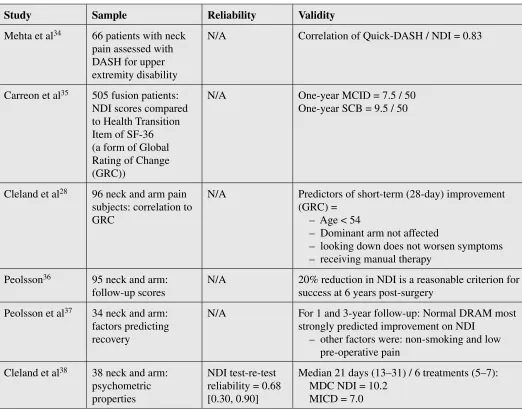
The relevant data from these 6 studies are presented in Table 3 and reviewed in the discussion.
Discussion
Strengths & Limitations of the Presented Research
Howe et al’s randomization of a treatment and a control group offered the highest quality design, though only a sample subset presented with arm and hand symptoms.13
BenEliyahu utilized a lower quality retrospective de-sign and consisted of a small sample size not adequately stratified for cervical case evaluation.33 Murphy et al.
was strengthened by prospective data, though pragmat-ic applpragmat-ication complpragmat-icated the evaluation of treatment specifics.3
Manipulative procedures, examination techniques and outcome measures were highly variable between stud-ies.3,13,33
Murphy et al. was the only study to adequately de-scribe the indications for SMT, consisting of dysfunc-tional motion segments identified on palpation in the sitting or prone position, responding with abnormal re-sistance compared to asymptomatic levels and the pres-ence of clinical symptoms.3 While Howe et al defines a
manipulable lesion to be palpatory evidence of reduced segmental motion and/or palpatory atlas asymmetry, mo-tion parameters, symptom response and posimo-tioning de-tails were omitted.13 BenEliyahu identified only a loss of
cervical ROM.33
The manipulative procedure was adequately described in all studies. BenEliyahu described using rotational “high-velocity short-lever manipulation.”33 Howe et al.
described moving joints to a comfortable endpoint and delivered a “quick thrust of moderate force” intending to move the joint(s) “as far as comfortably possible.”13
Mur-phy et al. moved the spinal joints until “a barrier of resist-ance” was felt, and delivered a “short and quick thrust.”3
Only Murphy et al. and BenEliyahu commented that an audible release was usually perceived.3,33
BenEliyahu suggested therapy be modified for stages of healing, utilizing traction and pain-relieving modal-ities during the acute phase while rotational manipu-lation was “judiciously added” during the subacute phase.33 While Murphy et al. did not address this
formal-ly, pragmatic treatment showed that only 18 of the 35 pa-tients received HVLA procedures.3 The remainder of the
patients received LVLA techniques and over-the-door traction.3 Howe et al. did not amend their manipulative
protocol; they added an analgesic injection where pain interfered with thrust delivery.13 While injection
ther-apy is technically part of our exclusion criteria, less than 10% of the subjects in this trial received an ancillary in-jection, therefore this was not felt to interfere with out-comes.13
Unfortunately, the mechanism of injury/onset was not adequately described within these studies.As traumatic onset is less common in CR and presents an alternate pathophysiology, this detail is relevant,1 though affect on
prognosis or treatment has not been commented on in sys-tematic reviews.39–41
did not specifically report CR outcomes, aside from the return to work rate at 1 year follow-up.33 Murphy et al.
however provided excellent insight into the clinical course of manipulative therapy as 89% of the patients described their improvement as excellent or good after a mean of 11.7 (4–24; SD 5.2) treatment sessions at a frequency of 2–3 times per week.3 Long-term follow-up was available
for 27/31 subjects, indicating that over 90% maintained clinically significant improvement.3
Comparisons of HVLA-SMT versus the natural course of CR are also difficult to draw. Due to high levels of pain and disability, a true no-treatment comparison is difficult
to evaluate and control. Therefore, the clinical course of various conservative therapies remains.
For consideration, CR sufferers randomized to hard collar immobilization did not demonstrate statistically different pain scores from baseline at either 4 or 12 month follow-up.18 Meanwhile, a population based study found
that while 90% of CR sufferers reported mild or no symp-toms at 4–5 years follow-up, recurrence was observed at 31.7%.1
Based on the reported details of the three included stud-ies, it is felt that Murphy et al. provides the best insight into the clinical-course of CR treated with HVLA-SMT.3
Table 3 NDI Search Results
Study Sample Reliability Validity
Mehta et al34 66 patients with neck
pain assessed with DASH for upper extremity disability
N/A Correlation of Quick-DASH / NDI = 0.83
Carreon et al35 505 fusion patients:
NDI scores compared to Health Transition Item of SF-36 (a form of Global Rating of Change (GRC))
N/A One-year MCID = 7.5 / 50
One-year SCB = 9.5 / 50
Cleland et al28 96 neck and arm pain
subjects: correlation to GRC
N/A Predictors of short-term (28-day) improvement
(GRC) = – Age < 54
– Dominant arm not affected
– looking down does not worsen symptoms – receiving manual therapy
Peolsson36 95 neck and arm:
follow-up scores
N/A 20% reduction in NDI is a reasonable criterion for
success at 6 years post-surgery
Peolsson et al37 34 neck and arm:
factors predicting recovery
N/A For 1 and 3-year follow-up: Normal DRAM most
strongly predicted improvement on NDI – other factors were: non-smoking and low
pre-operative pain
Cleland et al38 38 neck and arm:
psychometric properties
NDI test-re-test reliability = 0.68 [0.30, 0.90]
Median 21 days (13–31) / 6 treatments (5–7): MDC NDI = 10.2
While limited, non-randomized and without reference to a true control group, this trial may still assist the general practitioner in reasonably designing a trial of therapy.33
Reporting of Adverse Events
As previously alluded, concern has been reported re-garding the safety of HVLA procedures for confirmed or suspected CR.8,10 In fact, published case reports have
indicated cervical disc herniation and CR as adverse events related to SMT.42–44
While the included studies reported no major adverse events, safety conclusions of HVLA procedures for CR cannot be drawn from this data.3,13,33 While Murphy et
al. found a mild transient increase in pain in 16.7% of the subjects receiving HVLA procedures,3 this is
con-siderably lower than other estimates of similar events experienced in 44–62% of patients receiving SMT for non-specific neck pain.45–52 Additionally, the TFNPAD
did not find SMT to be contraindicated in CR patients.6
Further research exploring this area is needed to deter-mine proposed mechanisms as well as incidence.
NDI Appropriateness
Only one study reported on the test-re-test reliability of the NDI in neck and arm pain patients.38 The value
ob-tained, 0.68 (0.30,0.90) is somewhat lower than previous-ly reported for neck pain-onprevious-ly patients.11 Several studies
provided data on the responsiveness of the NDI in neck and arm pain patients. Two studies reported minimum clinically important differences of 7.5 and 7 NDI points, respectively.28,38 These values are only slightly higher
than those previously reported.1 One study reported that
20% improvement is a reasonable criterion of clinical success36 while Carreon et al. provided an estimate of
Substantial Clinical Benefit of 9.5 NDI points (19%).35
Several studies have reported on factors which pre-dicted outcome as measured by the NDI.11 While varied,
these factors generally appear to indicate that low initial pain and distress levels and low impact on neck/arm func-tion predict greater improvement in NDI scores at both 28 days and at 1–3 years.
Taken together, these data support the use of the NDI in studies of SMT for CR.
Review Limitations
First, the existing interventional evidence-base for CR
is small and principally composed of low quality study designs. This foundation is further compressed when iso-lated to a distinct therapy.
Secondly, the inclusion process lacked quality assess-ment. As this review targets a clinical rather than an aca-demic audience, the limitation is justified. Additionally, in the absence of data pooling, this factor has minimal impact.
Thirdly, the inclusion/exclusion process for each ob-jective lacked consensus. Given the small evidence-base and clearly defined criteria, consensus is unlikely to have altered results.
Lastly, study designs required a threshold of 10 sub-jects for inclusion. Of the included studies, BenEliyahu presented the smallest sample size, pooling data for 11 CR subjects.33 During our literature consolidation, no
studies were identified that included less than 10 subjects while reporting pooled data. Therefore, it is not felt that this criterion generates bias.
Conclusions
As CR evidence for LVLA and exercise therapy con-tinues to grow,7,16–23,25,27–32 minimal research concerning
HVLA procedures remains. Despite this, existing lit-erature does provide support for the cautious application of HVLA procedures in cases of confirmed or suspected CR.
Currently, randomized trials in the field of CR are lack-ing. Additionally, the lack of HVLA-related research for CR, particularly comparing HVLA to LVLA procedures, offers a unique and timely opportunity for chiropractic science. In designing such trials, as well as for clinical use, the NDI is well-suited as an outcome measure.
Acknowledgements
Special thanks to the Canadian Memorial Chiropractic College for their continued support of chiropractic re-search.
References
1 Radhakrishnan K, Litchy W, O’Fallon W et al. Epidemiology of cervical radiculopathy. A population-based study from Rochester, Minnesota, 1976 through 1990. Brain: A Journal Of Neurology. 1994; 117 ( Pt 2): 325–335.
in a Sicilian municipality. Acta Neurol Scan. 1996; 93(2– 3):184–88.
3 Murphy D, Hurwitz E, Gregory A et al. A nonsurgical approach to the management of patients with cervical radiculopathy: a prospective observational cohort study. J Manipulative Physiol Ther. 2006; 29(4):279–287.
4 Kelsey JL, Githens PB, Walter SD et al. An epidemiological study of acute prolapsed cervical intervertebral disc. J Bone Joint Surg. 1984; 66-A(6):907– 914.
5 Slipman CW, Plastaras CT, Palmitier RA et al. Symptom provocation of fluroscopically guided cervical nerve root stimulation. Are dynatomal maps identical to dermatomal maps? Spine (Phila Pa 1976). 1998; 23(20):2235–42. 6 Hurwitz E, Carragee E, van der Velde G et al. Treatment of
neck pain: noninvasive interventions: results of the Bone and Joint Decade 2000–2010 Task Force on Neck Pain and Its Associated Disorders. Spine. 2008; 33(4 Suppl): S123–52.
7 Saal J, Saal J, Yurth E. Nonoperative management of herniated cervical intervertebral disc with radiculopathy. Spine. 1996; 21(16): 1877–1883.
8 Haas M, Groupp E, Panzer D et al Efficacy of cervical endplay assessment as an indicator for spinal manipulation. Spine. 2003; 28(11):1091–6.
9 Leininger B, Bronfot G, Evans R et al. Spinal manipulation or mobilization for radiculopathy: a systematic review. Phys Med Rehabil Clin N Am. 2011; 22:105–125.
10 Croft A. Appropriateness of cervical spine manipulation: a survey of practitioners. Chiropractic Technique. 1996; 8(4):178–81.
11 Vernon H. The Neck Disability Index: State-of-the-art, 1991–2008. J Manipulative Physiol Ther. 2008; 31:491– 502.
12 Shin BC, Kim SD, Lee MS. Comparison between the effects of Chuna manipulation therapy and cervical traction treatment on pain in patients with herniated cervical disc: a randomized clinical pilot trial. Am J Chin Med. 2006; 34:923–5.
13 Howe DH, Newcombe RG, Wade MT. Manipulation of the cervical spine—a pilot-study. J R Coll Gen Pract. 1983; 33:574–9.
14 Moretti B, Vetro A, Garofalo R, et al. Manipulative therapy in the treatment of benign cervicobrachialgia of mechanical origin. Chir Organi Mov. 2004; 89:81–6. 15 Walker MJ, Boyles RE, Young BA, et al. The effectiveness
of manual physical therapy and exercise for mechanical neck pain: a randomized clinical trial. Spine (Phila Pa 1976). 2008; 33:2371–8.
16 Honet JC, Puri K. Cervical radiculitis: treatment and results in 82 patients. Arch Phys Med Rehabil. 1976; 57(1):12–6.
17 Rosomoff HL, Fishbain D, Rosomoff RS. Chronic cervical
pain: radiculopathy or brachialgia. Noninterventional treatment. Spine. 1992; 17(10 Suppl):S362–6.
18 Persson L, Carlsson C, Carlsson J. Long-lasting cervical radicular pain managed with surgery, physiotherapy, or a cervical collar: A prospective, randomized study. J Manipulative Physiol Ther. 1997; 20(7):504.
19 Sampath P, Bendebba M, Davis J et al. Outcome in patients with cervical radiculopathy: prospective,
multicentre study with independent clinical review. Spine. 1999; 24(6):591–597.
20 Heckmann J, Lang C, Zöbelein I et al. Herniated cervical intervertebral discs with radiculopathy: an outcome study of conservatively or surgically treated patients. Journal of Spinal Disorders 1999; 12(5):396–401.
21 Moeti P, Marchetti G. Clinical outcome from mechanical intermittent cervical traction for the treatment of cervical radiculopathy: a case series. J Orthop Sports Physical Therapy. 2001; 31(4):207–213.
22 Allison GT, Nagy BM, Hall T. A randomized clinical trial of manual therapy for cervico-brachial pain syndrome-a pilot study. Man Ther. 2002; 7:95–102.
23 Schliesser JS, Kruse R, Fallon F. Cervical radiculopathy treated with chiropractic flexion distraction manipulation: a retrospective study in a private practice setting. J Manipulative Physiol Ther. 2003; 26(9):e19.
24 Dougherty P, Bajwa S, Burke J et al. Spinal manipulation postepidural injection for lumbar and cervical
radiculopathy: a retrospective case series. J Manipulative Physiol Ther. 2004; 27(7):449–56.
25 Joghataei MT, Arab AM, Khaksar H. The effect of cervical traction combined with conventional therapy on grip strength on patients with cervical radiculopathy. Clin Rehabil. 2004; 18(8):879–87.
26 Dishman JD, Burke J, Dougherty P et al. Spinal manipulation postepidural injection for lumbar and cervical radiculopathy: a retrospective case series. J Manipulative Physiol Ther. 2004; 27(7):449–456. 27 Cleland J, Whitman J, Fritz J et al. Manual physical
therapy, cervical traction, and strengthening exercises in patients with cervical radiculopathy: a case series. J Orthop Sports Phys Ther. 2005; 35(12):802–811. 28 Cleland JA, Fritz JM, Whitman JM, Heath R. Predictors
of short-term outcome in people with a clinical diagnosis of cervical radiculopathy. Phys Ther. 2007; 87(12):1619– 32.
29 Christensen KD, Buswell K. Chiropractic outcomes managing radiculopathy in a hospital setting: a
retrospective review of 162 patients. J Chiro Med. 2008; 7:115–25.
30 Young IA, Michener LA, Cleland JA et al. Manual therapy, exercise and traction for patients with cervical radiculopathy: a randomized clinical trial. Phys Ther. 2009; 89(7):632–42
physiotherapy versus wait and see policy for recent onset cervical radiculopathy: randomized trial. BMJ. 2009; 339:b3883.
32 Ragonese, J. A randomized trial comparing manual physical therapy to therapeutic exercises, to a combination of therapies, for the treatment of cervical radiculopathy. Orthopaedic Practice. 2009; 21(3):71–76.
33 BenEliyahu DJ. Magnetic resonance imaging and clinical follow-up: study of 27 patients receiving chiropractic care for cervical and lumbar disc herniations. J Manipulative Physiol Ther. 1996; 19(9):597–606.
34 Mehta S, MacDermid JC, Carlesso LC et al. Concurrent validation of the DASH and the QuickDASH in comparison to the Neck-Specific Scales in patients with neck pain. Spine. 2010; Epub ahead of print.
35 Carreon LY, Glassman SD, Campbell MJ et al. Neck Disability Index, short form-36 physical component summary and pain scales for neck and arm pain: the minimum clinically important difference and substantial clinical benefit after cervical spine fusion. Spine J. 2010; 10:469–74.
36 Peolsson A. Investigation of clinically important benefit of anterior cervical decompression and fusion. Eur Spine J. 2007; 16:507–14.
37 Peolsson A, Vavruch L, Oberg B. Predictive factors for arm pain, neck pain and neck specific disability and health after anterior cervical decompression and fusion. Acta Neurochir (Wien). 2006; 148:167–73.
38 Cleland JA, Fritz JM, Whitman JM et al. The reliability and construct validity of the Neck Disability Index and patient specific functional scale in patients with cervical radiculopathy. Spine. 2006; 31:598–602.
39 Carroll LJ, Holm LW, Hogg-Johnson S et al. Course and prognostic factors for neck pain in whiplash-associated disorders (WAD): results of the Bone and Joint Decade 2000–2010 Task Force on Neck Pain and Its Associated Disorders. Spine. 2008; 33(4 Suppl):S83–S92.
40 Carroll LJ, Hogg-Johnson S, van der Velde G et al. Course and prognostic factors for neck pain in the general population: results of the Bone and Joint Decade 2000–2010 Task Force on Neck Pain and Its Associated Disorders. Spine. 2008; 33(4 Suppl):S75–82.
41 Hogg-Johnson S, van der Velde G, Carroll LJ et al. The burden and determinants of neck pain in the general population: results of the Bone and Joint Decade 2000–2010 Task Force on Neck Pain and Its Associated Disorders. Spine. 2008; 33(4 Suppl):S39–51.
42 Tome F, Barriga A, Espejo L. Multiple disc herniation after chiropractic manipulation. Rev Med Univ Navarra. 2004; 48(3):39–4.
43 Destee A, Lesoin F, Di Paola F et al. Intradural herniated cervical disc associated with chiropractic spinal
manipulation. J Neurol Neurosurg Psychiatry. 1989; 52(9):1113.
44 Rydell N, Räf L. Spinal manipulation – treatment associated with a high risk of complications. Lakartidningen. 1999; 96(34):3536–40. 45 Malone DG, Baldwin NG, Tomecek FJ et al.
Complications of cervical spine manipulation therapy: 5-year retrospective study in a single-group practice. Neurosurg Focus. 2002; 13(6):ecp1.
46 Rubinstein SM et al. The benefits outweigh the risks for patients undergoing chiropractic care for neck pain: a prospective, multicentre, cohort study. J Manipulative Physiol Ther. 2007; 30:408–418.
47 Rubinstein SM et al. Benign adverse events following chiropractic care for neck pain are associated with worse short-term outcomes but not worse outcomes at three months. Spine. 2008; 33(25):E950-E956.
48 Rubinstein SM et al. Predictors of adverse events following chiropractic care for patients with neck pain. J Manipulative Physiol Ther. 2008; 31:94–103.
49 Senstad O et al. Predictors of side effects to spinal manipulative therapy. J Manipulative Physiol Ther. 1996; 9: 441–6.
50 Senstad O et al. Frequency and characteristics of side effects of spinal manipulative therapy. Spine. 1997; 22(4):435–441
51 Leboeuf-Yde C et al. Side effects of chiropractic treatment: a prospective study. J Manipulative Physiol Ther. 1997; 20:511–516.