Exploring mobile learning opportunities and challenges
in Nepal: the potential of open-source platforms
Sujan Shrestha
School of Computing and Engineering
A thesis submitted in partial
fulfilment of the requirements
of the University of West
London for the Doctor of
Philosophy
Abstract
With the increasing access to mobile devices in developing countries, the number of pilots and projects embracing mobile devices as learning tools is also growing. The important role it can play in improving education is also positively received within education communities. But, providing a successful mobile learning service is still significantly challenging. The considerable problems arise due to existing pedagogical, technological, political, social and cultural challenges and there has been a shortage of research concerning how to deploy and sustain this technology in a resource constrained educational environment.
There are studies mainly conducted in sub-Saharan countries, India, and Latin America, which provide some guidelines for incorporating technology in the existing educational process. However, considering the contextual differences between these regions and other countries in Asia, such as Nepal, it requires a broader study in its own challenging socio-cultural context.
In response to this difficulty, the aims of this exploratory research work are to study the distinct challenges of schools’ education in Nepal and evaluate the use of open-source devices to provide offline access to learning materials in order to recommend a sustainable mobile learning model.
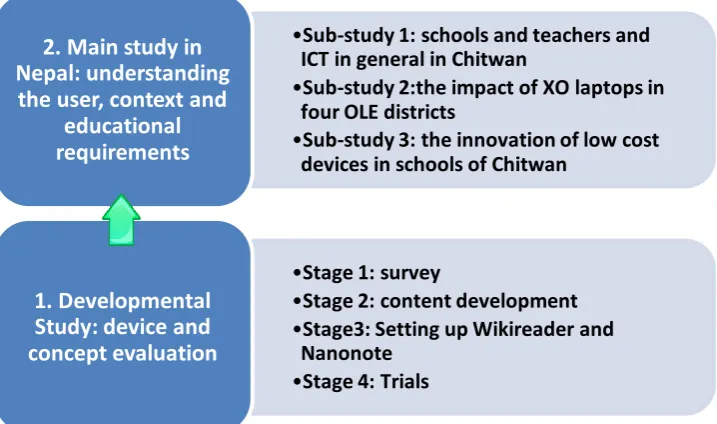
The developmental study was conducted in University of West London in order to assess the feasibility of these devices. The main study in Nepal explored i) the overall challenges to education in the challenging learning environment of schools with limited or no access to ICT, ii) how ICT might be helping teaching and learning in the rural public schools, and iii) how an offline mobile learning solution based on the open source platforms may facilitate English language teaching and learning. Data collection primarily involved interviews, questionnaires, observations and supplemented by other methods.
Acknowledgements
For Raphi,
Thank you, for everything.
And to my dearest daughter Shreya,
For your smile that gave me the strength.
I would like to express sincere appreciation to my supervisor Dr John Moore, Dr Jose Abdelnour-Nocera and the late Professor Andy Smith from the School of computing and Engineering, University of West London for this research opportunity.
A special thanks to my dad Mr. Sharad Ranjan Shrestha for all the help and support during the field study in Nepal. Thanks to all the students/participants of the University of West London, teachers and students of public and private schools of Nepal who gave their time and valuable feedback.
In addition, thanks to my friends, family and OLE Nepal for the support and contribution to setup the E-Pustakalaya (E-Library) in Balkumari Higher Secondary School of Chitwan, Nepal.
Thank you Maria Pennells, the graduate school’s senior administrative officer for your support at many stages of the doctoral journey and Dr Tony Olden, for your help with the revision and the final submission.
Dedication
Contents
Abstract ... 2
Acknowledgements ... 4
Dedication ... 5
Contents ... 6
List of Abbreviations ...11
Figures ...13
Tables ...15
Glossary ...16
Chapter 1 Introduction ...18
1.1 Research context: Nepal ...18
1.2 Background of the study...22
1.3 Statement of the problem ...26
1.4 Research questions ...30
1.5 Outline of the dissertation ...32
1.6 An overview of the research ...35
1.7 Timeline / Work plan ...36
1.8 Conference papers and publications ...39
Chapter 2 Literature review ...40
2.1 Literature review approach ...41
2.2 ICT4D ...43
2.3 Defining mobile learning ...46
2.4 Classification of Mobile learning ...52
2.5 Selection of mobile devices ...54
2.6 Mobile learning in developing countries...60
2.7 ICT in education in Nepal ...69
2.8 Open-source software ...74
2.9 Open-source hardware ...76
2.10 Offline mobile learning ...83
2.11 The knowledge gaps...86
2.12 Conclusion ...87
Chapter 3 Research methodology ...89
3.2 Research approach ...91
3.3 Ethical considerations of the research ...95
3.4 Developmental study: device and concept evaluation ...98
3.5 Main study in Nepal: understanding the user, context and educational requirements ...98
3.6 Conclusion ...99
Chapter 4 UK developmental study: evaluation of Wikireader & Nanonote devices ... 100
4.1 Introduction ... 100
4.2 Open-source platforms and educational contexts ... 101
4.3 Learning programming using mobile devices... 103
4.4 The Module: Mobile Application Development (MAD) ... 104
4.5 Study approach ... 106
4.5.1 Stage 1: survey ... 107
4.5.2 Stage 2: content development ... 107
4.5.3 Stage 3: setting up Wikireader and Nanonote ... 108
4.5.4 Stage 4: trials ... 108
4.6 Device aspect (D) ... 109
4.6.1 Preparation of devices ... 111
4.7 Learner aspect (L) ... 113
4.8 Device usability (DL) ... 114
4.8.1 Wikireader ... 114
4.8.2 Nanonote ... 116
4.9 Analysis of activity logs ... 117
4.10 Social technology (DS) & Interaction learning (LS) ... 119
4.11 Limitations ... 120
4.12 Conclusion ... 121
Chapter 5 Teaching & learning in schools of Nepal with or without access to ICT ... 123
5.1 Sub-study 1: schools and teachers and ICT in general in Chitwan ... 124
5.1.1 Study Approach ... 126
5.1.2 Demographics ... 131
5.1.3 The English language ... 133
5.1.4 Teaching techniques in public schools ... 134
5.1.6 Social divide ... 138
5.1.7 Schools divide ... 140
5.1.8 The lack of resources ... 143
5.1.9 The infrastructure ... 145
5.1.10 The political instability ... 146
5.1.11 Access and role of ICT ... 148
5.1.12 Mobile platform ... 149
5.2 Sub-study 2: the impact of XO laptops in four OLE districts ... 150
5.2.1 Open Learning Exchange Nepal (OLE Nepal) ... 151
5.2.2 Study approach... 152
5.2.3 Scale and sustain ICT programs ... 153
5.2.4 One to one use of technology ... 155
5.2.5 Online resources ... 157
5.3 Conclusion ... 158
Chapter 6 Sub-study 3: the innovation of low cost devices in schools of Chitwan ... 160
6.1 The innovation of low cost devices in schools of Chitwan ... 160
6.2 Study approach ... 162
6.3 Teachers, technology usage and support ... 165
6.4 Feasibility and usability of devices ... 167
6.4.1 Wikireader ... 167
6.4.2 Nanonote ... 169
6.5 Digital learning resources ... 171
6.6 Offline digital library ... 172
6.7 Conclusions ... 177
Chapter 7 Discussion of findings ... 178
7.1 The overall challenges... 178
7.1.1 Teachers and teaching techniques (C1) ... 179
7.1.2 Mobile platform (C2) ... 179
7.1.3 The lack of resources (C3) ... 180
7.1.4 Social divide (C4) ... 180
7.1.5 Schools divide (C5) ... 181
7.1.6 The infrastructure (C6) ... 181
7.1.7 The political instability (C7)... 181
7.2 Sustainable mobile learning solution ... 182
7.2.1 Teacher ... 183
7.2.2 Mobile device ... 184
7.2.3 Digital learning resources ... 184
7.2.4 Schools ... 185
7.3 Summary of key outcomes of the research ... 187
7.3.1 Assessment of open-source technology ... 187
7.3.2 The role of mobile learning Interventions in developing countries ... 188
7.3.3 Offline mobile learning: why and how?... 190
Chapter 8 Conclusion: contribution, limitations and future works ... 192
8.1 Contribution of the thesis ... 192
8.2 Limitations of the research ... 193
8.3 Future work and directions ... 194
Reference ... 196
Appendix A: Equipment Allocation Agreement ... 213
Appendix B: Evaluation Study Logbook ... 214
Appendix C: Pre-test Questionnaire ... 215
Appendix D: Post-test Questionnaire - Wikireader ... 217
Appendix E: Post-test Questionnaire - Nanonote ... 221
Appendix F: Informed Consent ... 225
Appendix G: About you and your school ... 227
Appendix H: Use of XO laptop in classroom ... 230
Appendix I: Letter from the UWL ... 232
Appendix J: Research Ethics Consent Form ... 233
Appendix K: Participant Information Sheet ... 234
Appendix L: Approval Form ... 236
Publications ... 240
Appendix M (Journal Paper 1): Shrestha, S., Moore, J., Abdelnour-Nocera, J. (2011). "Evaluation of a hands-on approach to learning mobile and embedded programming”, International(IJMLO), Vol. 5, Nos. 3/4, pp.327–344. ... 241
Appendix O (Conference Paper 1): Shrestha, S., Moore, J.,
Abdelnour-Nocera, J. (2010). "Offline Mobile Learning for ICT4D", IADIS International Conference Mobile Learning 2010, Porto,
Portugal. ... 290
Appendix P (Conference Paper 2): Shrestha, S., Moore, J.,
Abdelnour-Nocera, J. (2010)."Sustainable Mobile Learning: Open & Offline", mLearn 2010, Malta. ... 294
Appendix Q (Conference Paper 3): Shrestha, S., Moore, J.,
Abdelnour-Nocera, J. (2011). "Flexible learning with flexible
devices: opening up opportunities", mLearn 2011, Beijing. ... 311
Appendix R (Conference Paper 4): Shrestha, S., Moore, J.,
Abdelnour-Nocera, J. (2011). "The English Language Teaching and Learning Challenges in Public Schools of Nepal: Teacher's
Diary Study", IFIP WG 9.4 Conference, Kathmandu. ... 340
Appendix S (Conference Paper 5): Shrestha, S., Moore, J.,
Abdelnour-Nocera, J. (2011). Poster: "Open-source Platform: Exploring the Opportunities for Offline Mobile Learning", Mobile
List of Abbreviations
ICT Information Communication Technology
ICTD or ICT4D Information Communication Technology for Development ICT4ED Information Communication Technology for Development
and Education
ML4D Mobile Learning for Development
BoP Bottom of the Pyramid
HCI Human Computer Interaction
M-HCI/D Mobile Human Computer Interaction and Mobile Design Research
EFA Education For All
PC Personal Computer
XO (OLPC) One Laptop Per Child
OSS Open Source Software
OSH Open Source Hardware
GNU GNU's Not Unix
OS Operating System
ISP Internet Service Provider
CLT Communicative Language Teaching
ELT English Language Teaching
CDC Curriculum Development Centre
OLE Open Learning Exchange
NWNP Nepal Wireless Networking Project
NEA Nepal Electrical Authority
GON Government of Nepal
SLC School Leaving Certificate
HSEB Higher Secondary Education Board
INSTIL Institute for Teaching, Innovation and Learning
UWL University of West London
UNESCO The United Nations Organization for Education, Science and Culture
UNDP United Nations Development Programme
DFID The Department for International Development UNICEF The United Nations Children's Emergency Fund GSMA (Groupe Spéciale Mobile) Association
ADB Asian Development Bank
GDP Gross Domestic Product
NGO Non-Governmental Organisation
USB Universal Serial Bus
TFT Thin-Film-Transistor
LCD Liquid-Crystal Display
DNS Domain Name System
Figures
Figure 1: Literature Review Approach ... 41
Figure 2: Keywords for literature review ... 42
Figure 3: the Socio-cultural Ecology: Agency – Cultural Practices – Structures (Winters, 2007; Pachler et al., 2010) ... 49
Figure 4: The FRAME model (Koole, 2009) ... 50
Figure 5: Examples of mobile devices used in mobile learning ... 55
Figure 6: Examples of educational technologies ... 67
Figure 7:The FreeRunner: Linux-based Mobile Phone... 78
Figure 8: Wikireader – offline handheld reading device... 80
Figure 9: Ben Nanonote - an ultra-small form factor copyleft computing device which has 336 MHz XBurst CPU, 3.0” display and 2GB NAND flash memory ... 80
Figure 10: Examples of copyleft hardware (Arduino: electronics prototyping platform and BUG Platform: prototype & produce wireless devices) ... 81
Figure 11: Raspberry Pi and BeagleBone ... 82
Figure 12: Mobile learning and ICT4D dependency (Source: Author) ... 86
Figure 13: Research Design ... 92
Figure 14: Bottom-up research approach ... 94
Figure 15: Setting up Nanonotes and Wikireaders ... 111
Figure 16: The analysis of the results from the total number of activities students completed in the Nanonote and Wikireader devices... 119
Figure 17: The analysis of the total number of problems students encountered while using the Nanonote and Wikireader devices ... 119
Figure 18: Sub-study 1 Research Site... 127
Figure 21: Script for listening test used in first terminal examination in one of the schools (Source: Author) ... 161 Figure 22: Use of Nanonote to support listening activities in the classroom ... 171 Figure 23: Library in one of the public schools which mainly offer local
newspapers and books of literature (Source: Author) ... 172 Figure 24: Installation of offline server in one of the public school to allow local access to digital library (E-Pustakalaya) ... 173 Figure 25: School's computer technician helping OLE engineers to network the PCs and teachers training on the use of digital library ... 175 Figure 26: A teacher using his own mobile phone for listening test with a portable speaker. Previously a teacher used to read the text himself. ... 176 Figure 27: Designing a locally relevant sustainable mobile learning solution and making the same quality education accessible for all in schools of
Tables
Table 1: Mobile learning classifications from different perspectives
(Source: Author) ...52
Table 2: Overview of research methods and purposes (Kjeldskov and Paay, 2012) ...93
Table 3: Demographics of English teachers ... 131
Table 4: OLE Nepal deployment until 2012 (Source: OLE Nepal) ... 151
Table 5: Use of OLPC in under-resourced remote primary/lower-secondary schools (year 2 to 6) for teaching English, Math, Nepali & Science (for year 5 only). Data collected in 2012 (Source: Author) ... 154
Table 6: Cost and use of Internet and its benefits to remote schools. ... 158
Table 7: The breakdown of the costing per school for one-time... 173
Glossary
Public Schools: In the existing Education Act and the relevant
Regulations, the school owned, managed, financed and regulated by government has been recognized as public or government schools, 'sarkari
school' in Nepali.
Private Schools: The privately financed, managed and regulated by
parents' association, business, non-profit organisation or a religious institution is called the 'institutional school’ or private school.
Community Schools: The schools that are either funded by the
government or do not receive a regular government grants and financed with support from community, donations from other sources and school's own resource, and managed by some non-government body, such as a community are called community schools, 'samudayik school' in Nepali.
ICT4D: Information and communication technologies for development
(abbreviated as ICTD or ICT4D) helps to broaden the understanding of the associated challenges in the process of implementing a technological intervention in the context of developing regions. It involves multiple sectors and draws interest from multiple disciplines.
ML4D: It highlights the need for specific guidelines to assist mobile learning deployment in developing countries such as Nepal.
Copyleft: According to GNU, ccopyleft is a general method for making
Offline: systems are based on the learning material uploaded in the users’ mobile device and can be accessed without the need of wireless
communication.
Open-Source: refers to something people can modify and share
Chapter 1
Introduction
This chapter introduces the context of this research, elaborates the background of this study and draws the research question and sets the objectives to address in this thesis that is to identify overall challenges to deploy a sustainable mobile learning solution to support teaching and learning in Nepal.
1.1 Research context: Nepal
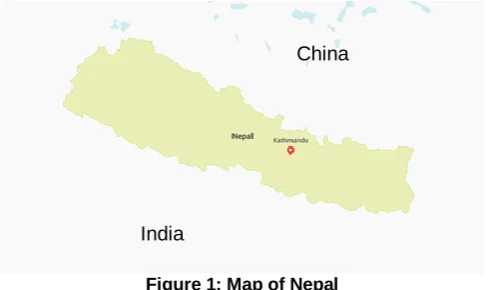
A mountainous country Nepal, officially the Federal Democratic Republic of Nepal, is one of the least developed countries in the world1. Located in south Asia, it is a small landlocked developing country between India and China (see Figure 1) where most of the countryside is remote and constrained by limited natural resources and poor infrastructure. While the country is still recovering from a ten-year civil war (1996 – 2006), it will take
1 UNDP List of Least Developed Countries (as of May 2016)
http://www.un.org/en/development/desa/policy/cdp/ldc/ldc_list.pdf
Figure 1: Map of Nepal
India
many years to overcome the damage from the devastating earthquake of April 2015.
Though the first constitution was promulgated in 20th September 2015 after eight years of deliberation by the democratically elected representatives of citizens of Nepal, the country is facing extreme political instability as the mainstream political parties are unable to deal with demand from ethnic minorities.
Nepal is a multi-ethnic, multilingual, multi-religious and multicultural country with an estimated population of 28.17 million2 and the last census in 2011 showed there are 123 languages being spoken and 125 Caste and ethnic group residing in a Nepalese society (Pangeni, 2016, p.35).
Nepal has a high rate of poverty and according to the United Nations Development Program, poverty in Nepal has increased over the past three decades, especially in rural areas (UNDP, 2010). Over 30 per cent of Nepalese people live on less than US$14 per person, per month, according to the national living standards survey conducted in 2010/11 by the Central Bureau of Statistics. While the overall poverty rate for Nepal is 25 per cent, this figure increases to 45 per cent in the Mid-Western region and 46 per cent in the Far-Western region.
A large proportion of the rural population of Nepal is illiterate. According to the Government of Nepal’s the recent Statistical Pocket Book3 2014, the
literacy rate of male and female are 75.1 and 57.4 per cent giving on average of 65.9 per cent. According to school sector reform plan report
(2009-2015), approximately half of the population in Nepal lacks the basic skills of functional literacy and numeracy (MOE, 2009, p.1). “Gender disparity in adult literacy rates is an even more critical problem in some Asian countries, such as India, Nepal and Pakistan, where the female literacy rate is considerably lower than the male literacy rate” (So, 2012, p.12).
“Many schools in Nepal still have no electricity as only 6% of primary schools and 24% of secondary schools have electricity” (UNESCO, 2015,
p.571). Kumar et al. (2015, p. X) states that:
“In spite of the techno-economic potential to generate 43,000 MW of
hydroelectric power, Nepal is currently facing a crippling energy crisis. In the fiscal year of 2013-14, Nepal’s domestic generation met only 60% of the
energy demand of grid-connected consumers. Import from India comprised 18% of the total energy supplied. Nearly, 22% of the demand could not be supplied, leading to load shedding in the grid for up to 12 hours per day. Moreover, around 33% of the country’s population, mostly in rural and remote areas, does not have any access to grid or off-grid electricity.”
In a bid to cope with the power crisis that has plagued the country, The Nepal Electricity Authority (NEA) regularly announces daily load-shedding schedule. As reported in the media, according to NEA, Nepal will continue to reel under power cuts for six to seven more years and in the dry season, the duration of load-shedding is up to 14 hours a day.
However, the recent draft of National Information and Communication Technology Policy 2015 aims to achieve entire population of Nepal to have access to internet by 2020 which seems a rather optimistic goal. World Bank estimates only 15.4 people out of 100 had an access to internet in 2014 and according to Nepal telecommunication authority, only 20% of the total population of the country have access to Internet and is mostly limited to urban areas of Nepal where 80% of population live in the rural areas. 50% of Internet access points are inside the capital – Kathmandu Valley and overall
90% of available points are located in urban areas.
While availability of ICT infrastructure remains a crucial to integrate ICT into the curriculum, mobile phones have perhaps the greatest potential for delivering ICT-based learning to the marginalised, and even in fragile contexts as it requires less infrastructure than computers (UNESCO, 2015). Therefore, a cost-effective mobile learning solution can enhance a classroom learning experience and extend it beyond.
This research study will focus on investigating the possibility of using mobile platforms to provide learning resources to support teaching and learning English subject, which is a part of Nepal’s public school's
1.2 Background of the study
For many years, forecasts have shown the rapid increase in adoption of mobile phones and the penetration is expected to soar in the coming years. Decreasing cost of an ICT with improving functionalities and access to services has led to wider availability and adoption of the portable mobile devices around the world. The developing countries are home to more than three quarters of all mobile-cellular subscriptions. According to the ITU report, by end 2015, there are more than 7 billion mobile cellular subscriptions, corresponding to a penetration rate of 97%, up from 738 million in 2000 and global Internet penetration also grew 7 fold from 6.5% to 43%. Globally, mobile broadband penetration has also reaches 47% in 2015, a value that increased 12 times since 2007 and the global penetration of internet-enabled smartphones is also expected to grow.
This rapid mobile communication technology development has given opportunities for economic and social development even in developing countries. Many ICT4D projects leverage the widespread availability of mobile phones as the ultimate intervention to achieve their development goals (Molapo and Densmore, 2015). Mobile capabilities are increasingly explored to realise productivity and efficiency in variety of contexts such as to improve health, governance, agriculture and business by meeting day-to-day communication and information needs.
Therefore, “the integration of ever growing number of mobile devices, application and services into people’s daily lives on a personal and professional level is continuously increasing” (Hagen et al., 2005a, p.1). But,
“ICT4D is a difficult challenge for Engineering, since the nominal
outcome (Development) is a social, rather than a technical phenomenon, and it lacks a universally accepted definition. Given the difficulty of designing interventions in complex social situations, it is important for engineers and researchers to develop an understanding of the contexts where they are working”.
Thus, bridging the digital divide particularly in education remains a challenge as only providing access to computers and internet services does not reduce the digital gap in education (Thapa and Sein, 2016).
However, as the concept and idea of using mobile devices for education is also growing, the investment in the exploration of mobile technology is also in rise and expected to deliver the learning outcomes. Even though mobile learning is a relatively new, it is rapidly gaining momentum looking for teaching and learning opportunities even in the remotest areas of developing countries. There are increasing attempts to explore or expand the use of ICT in Education in developing countries and there are number of studies that focused on mobile learning in the context of developing regions like Africa, China and India which evaluated mobile learning in controlled classroom and unsupervised settings as well (Kumar et al., 2010).
curriculum-based content (Sahni et al., 2008; Hollow and Masperi, 2009; Hutchful et al., 2010; Thapa and Sæbø, 2011; Bass and Thapa, 2014).
The exploration of the use of mobile technology to support language learning around the world is also increasing which shows that the ICT intervention in language teaching and learning is facilitating transition from teacher-centred approaches towards more student-centred ones, such as Communicative Language Teaching (Vihavainen et al., 2010) which emphasizes on interaction. Previously, one of the applied research project in Sub-Saharan Africa showed the improvement to access and quality of an education by the use of mobile technologies (Leach et al., 2006). One of the key policy implications raised by this study was the need to further investigate in a wider range of contexts and purposes of the potential of new mobile technologies.
Due to difficulty of adapting technology to the users need and vice versa (Deegan and Rothwell, 2010), the bigger challenges are of embedding mobile learning applications, sustaining and scaling for future remains (Traxler, 2011b). In the UNESCO Working Paper Series on Mobile learning, as Carly et al., (2013; p.7)highlighted:
“Despite over fifteen years of research, mobile learning has so far failed
awareness of how these technologies fit into the broader social and cultural fabric of communities.”
Therefore, it is crucial for technology research to identify the best-fit solutions for developing regions (Brewer et al., 2005) that integrates with the social and cultural practices of the locality to make sure it is a sustainable solution and for long-term use and benefits (Evans et al., 2008).
UNESCO (2015, p.213) refers to a work by (Lugo and Schurmann, 2012) and (Isaacs, 2012) that demonstrated mobile learning initiatives have the potential to become a resource for teachers and students in Latin America and the Caribbean and in the Arab States and sub-Saharan Africa. A detailed discussion of wide range of technical, environmental, and cultural challenges in general (mainly in the context of India, Ghana and Cambodia) provided some guidelines for implementing different ICT related solutions in developing regions (Brewer et al., 2006). Schwartz et al. (2014) offered guidelines for mobile deployment which could be useful for governments, NGOs, and funding agencies who arm frontline workers with mobile devices as tools to improve service delivery, monitoring, and evaluation.According to Thapa and Sæbø (2014, p.10), “more research is also certainly needed to consider the contextual differences between the different regions such as, for instance, the developing Arabic countries, and other countries in Asia, such as Nepal”. In a culturally rich Nepalese society, need a multi-cultural
education system and different modes of learning fitting to the existing cultural practices (Pangeni, 2016).
the failure and successes of future projects. In remote public schools of Nepal, poor pedagogical approaches, untrained teachers, scarcity of text books and students dropout are some of the major challenges in education (Thapa and Sein, 2016). However, as Shields (2011, p.86) highlighted, even though the cash-strapped and over-burdened education system of Nepal struggles to provide basic education, it presents an ideal test case to evaluate the arguments for ICT in education. In the Information & Communication Technology in Education Master Plan 2013 - 2017, use of ICT in education has also been considered as one of the strategies to achieve the broader goals of education.
Thus, to design and implement a sustainable mobile learning solution
in developing countries requires guidelines on how to introduce mobile technology to support teaching and learning. Therefore, there is a need to identify the unique set of challenges in existing teaching and learning practices in the current social, cultural and political context and to yield a deeper understanding, this study focuses on how a mobile learning may work from developing countries perspective.
1.3 Statement of the problem
globally and encouraging and positive evidences, mobile learning is still an emerging and maturing field and to identify the best mobile technology to use at the beginning of any ICT4D project is still a challenge. In Nepal, there is a clear knowledge gap that highlights various challenges faced while exploring the use of mobile devices in schools which has direct implications on sustainability of such ICT interventions.
“Smartphones are trending upwards due to declining prices, higher
computing offerings, improved interactions and future potential in developing regions but require additional considerations because of poorer battery lives, higher costs of use and the issue of liability and security” (Molapo and
Densmore, 2015, p.4). Due to lack of access to electricity, charging smartphones regularly is challenging and the total cost of devices and their associated services is still one of the major concerns and one of the most significant barriers to using technology, especially in the low-income developing countries.
With the rapid advancement and proliferation of both ‘open-source’ and ‘closed’ mobile technologies, today mobile learning researchers are
Due to advancing and changing nature of mobile technology, the focus of many mobile learning initiatives have often been on evaluating the technical capabilities of a specific mobile technology by deploying in academic settings to identify the pedagogic possibilities (Traxler, 2011b). Hence, there are many examples of mobile learning studies that experiment the feature rich sophisticated devices in educational settings, confidently making claim of increasing engagement and frequency of access and achieving better results.
The mobile learning literature clearly points out that the focus on the technology aspect has been more than necessary and the challenges remains associated with how the technology is adopted and used for mobile learning. Most of the mobile learning research and development has been proof-of-concept, project-based, fixed-term and small-scale and lacked consolidated view of how to sustain the practices or opportunities that are being explored (Traxler, 2011a; Parsons, 2014; Ng and Nicholas, 2013). In the recent study of Open Learning Exchange (OLE) project in Nepal which has implemented education projects based on OLPC computers highlighted the need to move away from techno-centric approach and take a holistic approach to successfully address some of the challenges of providing quality education (Thapa and Sein, 2016) .
devices in resource-poor settings, in particular when it is not clear what pedagogical innovation or value the device features” (Langer et al., 2014).
In Nepal, the lack of relevant education materials, poor pedagogical approaches and untrained teachers are still the major challenges in majority of schools. However, Nepal’s current ICT in Education Master Plan 2013 – 2017 considers the use of ICT in education as one of the strategies to achieve the broader goals of education. But, to support teaching and learning in Nepal’s own socio-cultural context is a significant challenge and
remains under-researched.
Traditionally, Nepalese teachers and students had no choices more than chalk and talk including blackboard and textbook as teaching materials (Pangeni, 2016). “Despite the hype and fevered activity, very little research
has explored the real and potential impact of online education in the developing world” (Cutrell et al., 2015, p.1). To recognize and implement the
benefits of open and distributed learning in Bhutan and Nepal, Rennie and Mason (2007) found the technical and socio-cultural challenges of a much greater order of magnitude. While limited or inconsistent internet access does not allow any reliance on net-based learning solutions, the academic culture resistant to the recognition of the value of open-learning degrees hinder re-designing course materials for a more educationally flexible, student-centered learning environment.
technology is adopted for a specific user group and used for mobile learning. By identifying and addressing these aspects in any educational context increases the chances of sustaining and possibly scale the mobile learning solution in the future.
Current research in the ICT4D lack common understanding of concepts, challenges, and opportunities in the developing countries as they are mainly based on Sub-Saharan countries, India, and Latin America (Thapa and Sæbø, 2014). In the context of Nepal, there is a lack of understanding of the overall challenges that hinder the mobile learning deployment to support traditional teaching and learning practices. Thus, the need is to identify sustainability factors to assist the design of a mobile learning solution based on a flexible technology platform with the clear understanding of teachers’ and students’ educational requirements and the
overall learning context.
1.4 Research questions
The research question that this research specifically aims to address is:
“What are the challenges of introducing ICT for supporting
schools’ education in Nepal and how might we design a sustainable
mobile learning solution using open-source platforms?”
potential of technology to address that need by exploring its use. The primary research aim is centred on identifying sustainability factors to design a mobile learning solution. In order to answer the major question, below are the subset of research questions which aim to address the problems in detail. All these questions are distributed across a developmental and three sub-studies according to the different stages of the research. Outcome based on the findings emerges from the evaluation of users, their needs and their context from these studies.
1.4.1 What are the benefits and difficulties of using open-source
mobile devices for teaching and learning? (UK Developmental
Study) Conduct a study to understand and evaluate the usefulness of the open-source devices to provide an access to the necessary resources and support learning.
1.4.2 What are the challenges of teaching and learning in schools of
Nepal? (Sub-study 1 and 2) Conduct exploratory studies to
understand these challenges in the schools with or without an access to ICT.
1.4.3 What are the benefits and difficulties of using open-source
mobile devices to support teaching and learning in the context
1.5 Outline of the dissertation
This thesis is divided into seven chapters. The first chapter introduces the subject, further elaborates the background of this research in the context of a developing country - Nepal, draws the research question and sets the objectives to address in this thesis.
Chapter 2: This chapter describes the theoretical background of this thesis, focusing on the main concepts of mobile learning that have informed this research. It further discusses the development of the Open-source platforms, specifically Nanonote and Wikireader devices. This chapter will discuss the mobile technology used in educational context and highlight the possible role open-source devices can play.
Chapter 3: This chapter describes the overall research approach, the procedures and methods used to collect and analyse the data to evaluate the open source platforms emerging from the evaluation of users, their needs, context and technology.
Chapter 4: This chapter reports on a developmental study of students’
exploration and use of Nanonote and Wikireader mobile devices for offline mobile learning in UK. They used devices for learning embedded programming in the context of UK higher education.
It also includes qualitative study conducted in public schools from 4 different districts that use XO laptops and supported by Open Learning Exchange Nepal. The study identified the benefits and challenges of using ICT in poor schools and investigated how the use of ICT may be helping to solve some of the concerns identified from the earlier study.
Chapter 6: This chapter reports on a study that explored the use of open-source devices in the formalised traditional teaching setting of schools in Nepal. The devices were used to support teaching English within a well-defined curriculum of class 9 and 10 by providing an offline access to relevant learning resources. It further highlights the challenges to develop a sustainable mobile learning solution.
Chapter 7: This chapter will highlight the key findings of the research reviewing the outcomes of the studies presented in the above chapters. It reflects on how the research contributes to an understanding of the contexts that could facilitate the introduction of the mobile devices as a learning tool in schools of Nepal.
Chapter 8: This chapter concludes highlighting the contributions to the
Thesis contributions:
a novel use of open-source platforms
detail discussion on the choice of theory and methods used
identify major challenges to design a sustainable mobile learning solution in the context of a developing country – Nepal
offline mobile learning: why and how?
limitations/weakness of this research and further
recommendations to conduct such a study. (Note: For a detailed discussion of thesis contributions, please refer to
1.6 An overview of the research
Main study in Nepal Methodology
CHAPTER 3
UK Developmental Study: device and concept evaluation
CHAPTER 4
Sub-study 1: schools and teachers and ICT in general in Chitwan
CHAPTER 5
Sub-study 2: the impact of XO laptops
in four OLE districts CHAPTER 5 Sub-study 3: exploratory intervention study CHAPTER 6 Future Work, Contributions and Conclusions CHAPTER 7 Understanding and analysis of
the background research, develop a context for this
research Introduction CHAPTER 1 Literature Review CHAPTER 2 Research Questions CHAPTER 1
September 2009 – August 2012
(ongoing)
May 2010 – February 2011
1.7 Timeline / Work plan
The first year of this research study beginning September 2009, I spent familiarising with the research area, reading papers and identifying problem areas. At the end of first year, I identified quite closely the area I wanted to work in and develop some ideas on which thesis could be based. Literature review was an ongoing process. In February 2010, I also completed Post Graduate Certificate in Research which was a requirement for doing this PhD. At the very beginning of this research study, following studies were planned:
An exploratory study A (understanding the challenges of teaching and learning English in public schools of Nepal).
An exploratory study B (a study to understand the existing teaching and learning practices in private schools of Nepal).
An exploratory study C (in the schools supported by OLE Nepal to investigate how the use of ICT in teaching and learning is helping to solve some of the concerns identified from the above exploratory studies).
An exploratory study D (identifying the type of resources and technological needs for schools in Nepal).
Pilot study A (evaluation of open-platforms for delivering offline mobile learning).
Pilot study B (to explore the use of low-cost open-source devices to deliver customised contents to support English language teaching & learning in public schools of Nepal).
difficulties/complexities of this research study considerably challenging and time-consuming. Work plan was further reviewed at the end of this year.
Considering the objectives of the study, timescale and resources available, there were some changes to the purposed studies. Exploratory studies A and B including an aspect of a study D were conducted as a sub-study 1. An exploratory sub-study C became a sub-sub-study 2 and a pilot sub-study B was carried out as a sub-study 3. The purposed pilot study A in UK became a developmental study. Actual studies carried out:
UK developmental study
Sub-study 1: schools and teachers and ICT in general in Chitwan
Sub-study 2: the impact of XO laptops in four OLE districts
Sub-study 3: the innovation of low cost devices in schools of Chitwan
User performance / Data analysis started in August 20011 and I was able to begin writing up in November 2011. Due to the nature of the studies, analysis took more time than expected. Only at the end of the third year, I was able to draft the substantial parts of the thesis. Writing up and thesis submission also got further delayed due to my family and work commitments. However, during 2013 – 2015/ 2016 period I kept reviewing the literature. The recent literature reinforces the choice of Nepal as an ideal test case to evaluate the arguments for ICT in education (references UNESCO Education for all global monitoring report 2015 and Ministry of Education Nepal’s latest study on implementation of English listening and
line with the recent literature. Hence, the research question is still relevant and the purpose of this research study is justified.
UK developmental study was conducted to understand and evaluate
the usefulness of the open-source devices to provide an access to the necessary resources and to support learning. The data collection for the UK developmental study started in May 2010 and was completed in February 2011. Chapter four reports on this study of students’ exploration and use of low-cost open-source mobile devices Nanonote and Wikireader for learning.
Sub-study 1: schools and teachers and ICT in general in Chitwan was
carried out between August 2010 and April 2011. This study examined the challenges that public and private schools face and highlight why the school education system is not effective in Nepal. The data collection for the field study in Nepal started while the UK developmental study was undergoing. Chapter five (section 5.1) reports this preliminary qualitative study.
Sub-study 2: the impact of XO laptops in four OLE districts was carried
out between May and July 2011. The aim of this study was to examine the benefits and challenges of using ICT in schools and understand how the use of ICT may be helping to solve some of the concerns discussed as above in this chapter. Chapter five (section 5.2) reports this study.
Sub-study 3: the innovation of low cost devices in schools of Chitwan
1.8 Conference papers and publications
Part of this submission has been reported in a number of research papers, all of which are listed in the contents pages. Conference paper 1 ("Offline Mobile Learning for ICT4D", Appendix O) and Journal Paper 2 ("Mobile learning and low-cost hardware for ICT4D: what's right and what's copyleft?", Appendix M) highlight the possible role of previously unexplored open platforms for delivering affordable and sustainable offline mobile learning in the context of ICT4D which is mainly based on Chapters 1 and 2. Conference Papers 2 ("Sustainable Mobile Learning: Open & Offline", Appendix P) and 3 ("Flexible learning with flexible devices: opening up opportunities", Appendix Q) presents the preliminary results from the UK developmental study. Journal Paper 1 ("Evaluation of a hands-on approach to learning mobile and embedded programming”, Appendix M) presents
Chapter 2
Literature review
2.1 Literature review approach
This chapter is based on a systematic review of literature relevant to the use of mobile devices in education. The aim was to read and analyse literature relevant to this study, formulate the research questions and establish the direct link between those two (see Figure 2). In order to ensure that the review process is rigorous and valid, the relevant papers published in the leading journals relating to education and technology and their citations also reviewed. It also involved a review of mobile learning and ICT4D with the main focus on existing works in research and practice in the context of developing countries. This allowed identifying gaps in current research and suggest areas for further research.
At the beginning of a literature review process involved researching articles and books by scanning the UWL digital library which identifies relevant databases for every subject. However, due to an interdisciplinary
Research Questions
Problem Identification Overview of the Research
Research context Background of the study Statement of the problem
Mobile Learning / ICT4D
Definition, classification and current state of mobile learning
Mobile learning in developed and developing countries
ICT in education in Nepal
Open-source software / low-cost hardware
nature of this research, information was retrieved from various fields of knowledge in the subject area of computing covering mobile learning, mobile HCI and ICT4D. The search was based on the main keywords (see Figure 3 for the initial list), its related synonyms and alternative terms as well.
Figure 3: Keywords for literature review
Mobile learning is relatively a new field of research and the majority of literature on this topic dates from early 2000, while use of ICT for development goes back much further than that. So, literature search was not restricted to a specific period. Then the evaluation of the literature, analysis and synthesis provided both background and context to the area of this research study. But, the literature review was an ongoing process throughout the project to keep the review relevant and up-to-date. In the next chapter, contents are organised/discussed in relation to identified themes.
ICT4D
•Developing Country
•Nepal
•User Community
•Existing ICT solutions •SMS
•Telecentre
Mobile Learning
•Mobile Device
•OSS/OSH
Platforms
•Which Device?
•Which Platform?
•Authoring/deployi ng barriers? •Mobile User
•Existing solutions in Developed Countries and Developing Countries
Mobile HCI
•Usability Concerns
•Wireless Network
•User Studies
2.2 ICT4D
In this research study, information and communication technologies for development (abbreviated as ICTD or ICT4D) helps to broaden the understanding of the associated challenges in the process of implementing a technological intervention in the context of developing regions as there is clear evidence that ICT use does not by itself lead to progress (Islam and Grönlund, 2016).
ICT4D involves multiple sectors and draws interest from multiple disciplines. ICT4D attempts to understand and explain how information communication technology (ICT) leads to development. The “ICT has the connotation of modern electronic technology—the PC, the mobile phone, and the Internet play central roles” (Toyama and Dias, 2008, p.23). The
development is however a complex social phenomenon (Dearden et al., 2010) and arriving at a definition is far more contentious, and the field of development studies includes a very wide range of positions (Anokwa et al., 2009). As Dearden and Tucker, (2015, p.1) explained:
“Within the community of research and practice that is ICTD, the
acronym is variously discussed as either: Information and Communication Technologies and Development or to Information and Communication Technologies for Development. The former construction ‘and Development’
is more easily associated with social scientific studies of the processes and consequences of technology adoption, whereas the ‘for Development’
While the mainstream discourse's conceptualization remains heavily focused on economic growth (Kleine, 2009), some on the millennium development goals (MDGs) and some concentrate on people’s livelihoods,
Amartya Sen's capability approach (CA) offers a way of thinking about development not as economic growth, but as individual freedom (Anokwa et al., 2009). The approach is seen as a suitable framework to explore the link between ICT and development (Thapa and Sæbø, 2014). Sen identifies a range of types of freedom that should be considered: political freedoms (such as freedom of speech and democratic governance), social opportunities (such as education and social mobility), guarantees of transparency (from agents of government and other wielders of power), protective security (health care and other social safety nets), as well as the economic freedom in the form of opportunities and capabilities to earn or create a livelihood. All of these elements contribute to people’s freedom to
determine their priorities and to improve the quality of their own lives (Dearden et al., 2010).
“As every aspects of our life in the 21st century is increasingly becoming digital, those without ICTs will be increasingly excluded” (Heeks,
any platform c) with low maintenance needs and no budgetary implications, and d) using limited or intermittent power of the kind that currently fuels our appliances, the product is to be used by people with different understandings of knowledge, culture and the role of technology” (Dearden et al., 2010, p.2).
Even though studies on digital divide indicate strong correlation between GDP growth and ICT investment (Walid, 2006; cellular-news, 2009), according to Sey et al. (2013, p.68), “having access to knowledge resource does not necessarily mean that there will be a corresponding change in social and economic conditions of the people who have been blessed with such access as such change does not usually happen in a simple and linear cause and effect scenario”. Therefore as Shields (2009) highlighted, though the presence of ICTs and network access is generally necessary for information access, it is not sufficient due to the complex and convoluted relationship among information technology, information access, and development. “Due to the difficulty in identifying and isolating the factors
that explain how ICT contributes to development, future research is needed to identify the challenges and potential benefits of introducing ICT for development” (Thapa and Sæbø, 2014, p.10). Thus, a first step towards a
2.3 Defining mobile learning
Any sort of learning that happens when the learner is not at a fixed,
predetermined location, or learning that happens when the learner takes
advantage of the learning opportunities offered by mobile technologies
(O’Malley et al. 2003, cited by Sharples, 2013, p.3).
A number of mobile learning research studies carried out with the aim to improve teaching and learning are increasing (Traxler, 2009). In general, mobile learning explores mobile devices capabilities to identify the learning opportunities and locating distinctive features of learning with mobile devices is an evolving process as technologies mature (Kearney et al., 2012). Portability, social interactivity, context sensitivity, connectivity and individuality are five unique affordances of mobile devices (Klopfer et al. 2002 cited by Naismith et al., 2004), which inspires a development of a mobile learning solution.
According to Dyson et al. (2010), so far, the theories of mobile learning are either built on contemporary learning theories or by examining the distinctive affordances and use of such mobile devices. While mobile learning has been defined from the narrow techno-centric view, mobile devices were seen as a medium to deliver learning, or to support e-Learning in a formal or traditional education setting. “Such definitions merely put mobile learning somewhere on e-learning’s spectrum of portability and also
complex nature, there is still a lack of a coherent conceptual/theoretical frameworks, methods and tools to understand, analyse, explain and theorise its practices (Vavoula and Sharples, 2009; Pachler et al., 2010; Kearney et al., 2012;Sharples, 2013). For the effective assessment, pedagogy, and design of new applications for learning, there still remains a need for the widely accepted mobile learning theory (Pachler et al., 2010). A theory of mobile learning that can be used to inform educational design by taking learners’ experiences perspective and using pedagogies appropriate for
mobile learning (Dyson et al., 2010;Traxler 2007 in Kearney et al., 2012).
Now, wider exploration of mobile technologies is increasing to identify educational benefits in and outside classroom and as part of everyday life and a mobile device is seen as a mediating tool to guide learner’s knowledge construction process (Winters, 2007; Pachler et al., 2010). As Traxler & Leach (2006, p.1) described “mobile learning is the term
increasingly being applied to the use of small, portable, handheld and lightweight electronic devices used for educational activities in classrooms, in fieldwork, at home, at work and when travelling”. It defines mobile learning
by considering the mobility of a portable technology, the learner and the
information in various contexts to support learning activities. With the change
‘Mobility’ of learners is augmented by personal and public technology and ‘context’ is continually created by people in interaction with other people,
with their surroundings and with everyday tools. Thus, mobile learning is characterised as the processes (both personal and public) of coming to know through ‘exploration’ and ‘conversation’ across multiple contexts
amongst people and interactive technologies. A learner explores by moving physically or through the conceptual space, linking the experiences and concepts into new knowledge and connects learning across contexts through conversation.
To enable such explorations and conversations, the need is to open up the formal teaching and learning practices of educational establishments to learning in informal contexts. Therefore, Winters (2007); Pachler et al.(2010) suggest adopting new cultural resources (mobile devices, contexts and content) into school-based learning and pedagogical practices to harness the learning that takes place in everyday life as the result of the active transformative engagement with those resources where meaning-making is seen as an integral part of learning. According to Winters(2007); Pachler et al. (2010):
Mobile learning is the processes of understanding and knowing how to
utilise our everyday life-worlds (the environment, the lifestyle and habitus) as
learning spaces and being able to operate successfully in, and across, new
and ever changing contexts and learning spaces.
In the proposed ecological approach, (Winters, 2007; Pachler et al., 2010) highlighted the interrelationship of three components (agency, cultural
approach, learning with mobile devices is understood as a process of meaning-making within socio-cultural and technological structures that govern their being in the world; cultural practices - the routines users engage in their everyday lives; and agency - the user’s capacity to act on the world
(see Figure 4).
With this high level theoretical definition, the focus of mobile learning has changed from simple mechanisms of content delivery using mobile technology to that considers the characteristics of mobility of learner from formal classroom to informal contexts. However, Dyson et al. (2010) argue that it is still insufficient to create an active learning experience that deeply engages students. They highlighted the need for mobile learning to incorporate sound educational design principles and a theoretical underpinning which reinforces the need for learner engagement through active student-centred experiences. But to exploit and integrate the various ways that mobile devices can be used in education and leverage its benefits, it is important to understand the complex nature of mobile learning.
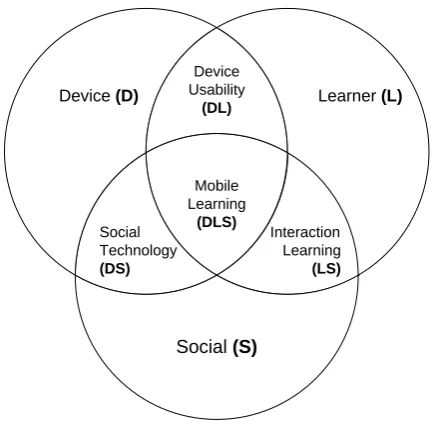
Koole, (2009) definition of mobile learning which sits well with socio-cultural views of learning (Kearney et al., 2012) that describes mobile learning as a process resulting from the convergence of mobile technologies, human learning capacities, and social interaction (Kenny et al. 2009; Koole & Ally 2006; Koole, 2009).
Mobile Learning
(DLS)
Social Technology
(DS)
Device (D)
Device Usability
(DL)
Interaction Learning
(LS)
Learner (L)
Social (S)
Figure 5: The FRAME model (Koole, 2009)
This model (see Figure 5) has been developed as a complete framework that provides the criteria and examples of each aspect and interaction and the checklist that might help educators plan and design mobile learning environments (Park, 2011). Use of such framework provides the focus on the essential aspects of mobile learning. There are set of three intersecting circles representing the device (D) which describes characteristics unique to electronic, networked mobile technologies; learner
the interaction and communication with others such as learners and teachers (Frohberg et al., 2009). The overlapping intersection of the FRAME model representing the device usability (DL) and social technology (DS) describe the affordances of mobile technology; the interaction learning
(LS) contains instructional and learning theories and the primary intersection (DLS) in the centre is a convergence of all three aspects, defines an ideal mobile learning situation that provides enhanced collaboration among learners, access to information, and a deeper contextualization of learning (Koole, 2009).
As research and practice in mobile learning are still in their infancy, mobile learning is still new and rapidly growing as a discipline (Sharples, 2013)and the lack of common understanding (Frohberg et al., 2009) shows the complexities that surrounds this field. However, “design of mobile
learning still needs a clear understanding of ever changing technology, the related challenges and learning opportunities it provides, learners’ and teachers’ specific characteristics, needs, preferences, expectations, their roles and beliefs and characteristics of the environments that influence the learning experiences” (Kearney et al., 2012). Therefore, this research study
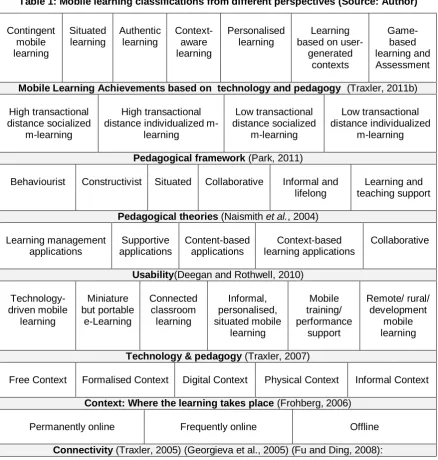
Table 1: Mobile learning classifications from different perspectives (Source: Author)
2.4 Classification of Mobile learning
As the capabilities of a mobile technology continue to improve, it also increases the possibilities of designing an effective mobile learning to suit a varied learning context. The nature of mobile learning is such that it is difficult to develop the broad classification that includes all of its aspects and there is no one theory of mobile learning that fits in every situation. Therefore, mobile learning and its applications have been classified from
Contingent mobile learning Situated learning Authentic learning Context-aware learning Personalised learning Learning based on
user-generated contexts Game-based learning and Assessment Mobile Learning Achievements based on technology and pedagogy (Traxler, 2011b)
High transactional distance socialized
m-learning
High transactional distance individualized
m-learning Low transactional distance socialized m-learning Low transactional distance individualized m-learning Pedagogical framework (Park, 2011)
Behaviourist Constructivist Situated Collaborative Informal and lifelong
Learning and teaching support Pedagogical theories (Naismith et al., 2004)
Learning management applications Supportive applications Content-based applications Context-based learning applications Collaborative
Usability(Deegan and Rothwell, 2010)
Technology-driven mobile learning Miniature but portable e-Learning Connected classroom learning Informal, personalised, situated mobile learning Mobile training/ performance support Remote/ rural/ development mobile learning Technology & pedagogy (Traxler, 2007)
Free Context Formalised Context Digital Context Physical Context Informal Context Context: Where the learning takes place (Frohberg, 2006)
different perspectives and a specific mobile learning solution may belong to different groups due to similar characteristics (see Table 1 above).
Mobile learning practices varies from formal - in the classroom and informal - out of classroom such as museums and zoos, from a fixed to anytime/anywhere learning and also integrating into society enhancing the social interactions. Therefore, there are various categorisations of mobile technologies and learning based on different characteristics of mobile devices, learners and the context of use. There are classifications base on connectivity (Traxler, 2005); Usability (Deegan and Rothwell, 2010); pedagogical theories (Naismith et al., 2004); based on how technology has been deployed (Traxler, 2007); mobile learning achievements (Traxler, 2011b); based on context which is the most persistent characteristic in mobile learning (Frohberg, 2006) and in the context of distance learning (Park, 2011).
Though selective, the mobile learning classifications mentioned in the figure 3 above shows that the general focus of such classifications have been on the different aspects of the technology used and/or the pedagogy that it supported. These categorisations are made based on different types of mobile learning solutions implemented or deployed in varied contexts to support different types of learning activities, their usability and also the learning theories. “Classification schemes such as the mobile learning
overlaps or similarities between the categories, a specific project cannot be equally positioned in several categories (Frohberg et al., 2009). But, these categorisations highlight the underlying specific issues, challenges and benefits of mobile learning that allows developers make better informed design choices by considering both the technologies used and the various contexts of the learner aspects. It helps to design a mobile learning solution by maximising the identified benefits, reducing the related issues and thus increasing the chances of successfully embedding the solution in to the educational context where it is expected to be used.
2.5 Selection of mobile devices
An iPhone application such as iStanford (Pena 2009) from Stanford University was developed to disseminate learning services and also by Curtin University of Technology (Robinson et al. 2009), which has again utilized the iPhone and its subsequent operating system as their platform of choice (Crane & Benachour 2010).
Low-end phones High-end phones
e-Book readers Tablets Figure 6: Examples of mobile devices used in mobile learning
As part of university initiative to encourage creative usage of technology in education and campus life, Duke distributed 20GB Apple iPod devices to over 1600 entering freshmen in August 2004 (Duke Digital Initiative 2004). In the fall of 2008, Abilene Christian University became the first university to distribute Apple iPhones and iPod Touches to incoming freshmen of the university, allowing people to explore a new vision for mobile learning (Duke Digital Initiative 2004).
by providing devices with Wi-Fi capability to students through project funding (Olasoji & Draganova 2010). Most recently, examples of institution-wide m-learning transformations projects such as a three-year iPads-for-m-learning initiative (2012-2014) at the University of Western Sydney (UWS) purchased 45,000 iPads for distribution and students appreciated the flexibility iPads afforded (Rankine-Venaruzzo & Macnamara, 2015).
Even though high-end smart devices offer a truly innovative multi-touch interface applications and applications based on these devices may prove to be highly successful, with their choice of exclusive medium, do restrict the amount of penetration in a vast and varying mobile market (Crane & Benachour 2010). Moore et al. (2009) explored capability of the iPhone as an offline learning tool. The goal of the software was to allow documents to be located during an Internet search and then cached on the device to be read offline. To facilitate offline access to these documents a powerful open source search engine was ported to mobile architectures. This provided an efficient method of locating documents using familiar keyword searches which scaled beyond traditional file browser approaches. In addition, it allowed documents to be easily located despite having ambiguous file names. The authors faced significant challenges during development which required “jail breaking” the device. Thus, although storing, searching and