Minimally Important Differences
in Patient or Proxy-Reported
Outcome Studies Relevant to
Children: A Systematic Review
Shanil Ebrahim, MSc, PhD, a, b, c Kelsey Vercammen, BSc, d Arunima Sivanand, BSc, e Gordon
H. Guyatt, MD, MSc, b, f Alonso Carrasco-Labra, DDS, PhD, b, g Ricardo M. Fernandes, MD, PhD, h
Mark W. Crawford, MD, i Gihad Nesrallah, MD, MSc, j, k, l Bradley C. Johnston, PhDa, b, i, m
abstract
CONTEXT: No study has characterized and appraised all anchor-based minimally important
differences (MIDs) associated with patient-reported outcome (PRO) instruments in pediatric studies.
OBJECTIVE: To complete a comprehensive systematic survey and appraisal of published
anchor-based MIDs associated with PRO instruments used in children.
DATA SOURCES: Medline, Embase, and PsycINFO (1989 to February 11, 2015).
STUDY SELECTION: Studies reporting empirical ascertainment of anchor-based MIDs among PROs
used in pediatric care.
DATA EXTRACTION: All pertinent data items related to the characteristics of PRO instruments, anchors, and MIDs.
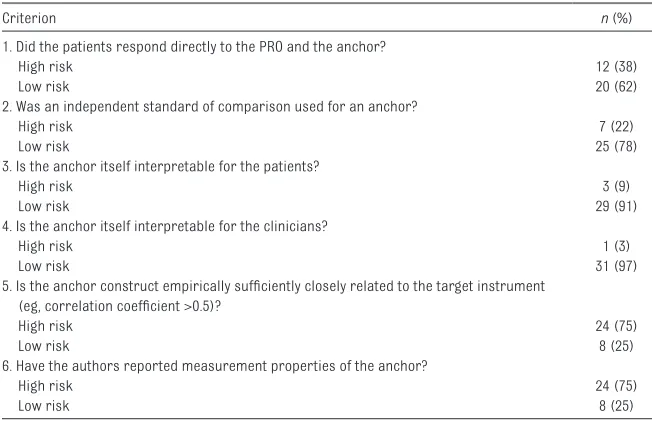
RESULTS: Of 4179 unique citations, 30 studies (including 32 cohorts) proved eligible and reported on 28 unique PROs (8 generic, 13 disease-specific, 5 symptoms-specific, 2 function-specific), with 9 (32%) classified as patient-reported, 11 (39%) proxy-reported, and 8 (29%) both patient- and proxy-reported. Of the 30 studies, we rated 14 (44%) as providing highly credible estimates of the MID. Most cohorts (n = 20, 62%) recorded patients’ direct response to the target PRO and the use of an independent standard of comparison (n = 25, 78%). Most, however, failed to effectively report measurement properties of the anchor (n = 24, 75%).
LIMITATIONS: We have not yet addressed the measurement properties of instrument to measure
credibility; our search was restricted to 3 electronic sources, and we used a single data abstractor.
CONCLUSIONS: Our study found 28 PROs that have been developed for children, with fewer
than half providing credible estimates. Clinicians, clinical trialists, systematic reviewers, and guideline developers seeking to effectively summarize and interpret results of studies addressing PROs in child health are likely to find our comprehensive compendium of MIDs of use, both in providing best estimates of MIDs and identifying credible estimates.
aSystematic Overviews through advancing Research Technology (SORT), Child Health Evaluative Sciences, The Research Institute, and iDepartment of Anaesthesia and Pain Medicine,
The Hospital for Sick Children, Toronto, Ontario, Canada; Departments of bClinical Epidemiology and Biostatistics and fMedicine, and Faculty of Health Sciences, McMaster University,
Hamilton, Ontario, Canada; cMeta-Research Innovation Center at Stanford (METRICS), Stanford University, Stanford, California; dDepartment of Epidemiology, Harvard University, Cambridge,
To cite: Ebrahim S, Vercammen K, Sivanand A, et al. Minimally Important Differences in Patient or Proxy-Reported Outcome Studies Relevant to Children: A Systematic
Patient-reported outcomes (PROs) provide patients’ perspectives regarding treatment benefits and harms, and are often the outcomes of greatest importance to patients. The PRO literature has grown considerably over the
past 3 decades 1; clinical trialists
increasingly use PRO instruments as primary outcomes. PROs are also used in monitoring quality and performance in health systems, and have become a priority for research funding agencies
worldwide. 2, 3 Although evidence
supporting reliability, validity, and responsiveness exists for many PROs, interpretation of their results remains a challenge; for a given instrument, what change in a score constitutes a trivial, small but important, moderate, or large treatment effect?
The minimally important difference (MID) provides a measure of the smallest change in the PRO of interest that patients perceive as important, either beneficial or
harmful. 4, 5 The MID can be helpful
for patients, clinicians, and clinical practice guideline developers when considering the trade-off between beneficial and harmful outcomes, and for clinical trialists planning sample sizes for their studies. There are multiple methods to assess MIDs, including anchor-based methods, distribution-anchor-based methods, Delphi-methods, and scale-judgment methods with anchor- and distribution-based methods being the 2 primary approaches used to
estimate MIDs. 6, 7 The anchor-based
approach is generally considered the optimal way to determine the MID because it directly captures the
patients’ preferences and values.6, 7
In pediatric populations, clinicians and researchers use PRO
instruments to measure symptoms, disease severity, mental health, development, functional ability, and other constructs. For children too young to answer for themselves,
proxy-respondents must substitute for the patient; such measures represent the best way of assessing the patients’ subjective health state in these circumstances. No study or database has thus far systematically documented all available anchor-based MIDs associated with patient- or proxy-reported instruments for children. Given that clinical trialists, systematic review authors, and guideline panels are likely to find a compendium of trustworthy MID estimates of considerable use, we conducted a systematic survey to summarize all published anchor-based MIDs associated with PRO instruments used to evaluate the effects of interventions on chronic medical and psychiatric conditions in pediatric populations.
METHODS
A previously published protocol, summarized briefly in this article, provides additional details of our
methods. 1
Eligibility Criteria
We included original reports of studies that document the development of anchor-based MIDs for PRO instruments designed for chronic medical and psychiatric conditions in pediatric populations (<18 years of age). We defined an anchor-based approach as any independent assessment to which the PRO instrument is compared, irrespective of the interpretability or the quality of the anchor. PROs of interest included self-reported patient-important outcomes of health-related quality of life, functional ability, symptom severity, and measures of psychological distress and well-being.
Although self-reported measures are likely to provide more valid anchors for generating MID estimates, proxy-respondents (parents, caregivers, or clinicians) are often called on to respond on behalf of pediatric
patients, particularly when patients are too young or are incapable due to disability. We therefore included studies in which a proxy completed the PRO instrument and/or the anchor.
We excluded studies in which only the clinician completed the PRO instrument, and excluded studies reporting only distribution-based MIDs without an accompanying anchor-based MID.
Information Sources and Search
We searched Medline, Embase, and PsycINFO for studies published from 1989 to February 11, 2015, by using relevant medical subject headings. Our published protocol describes the
Medline search strategy. 1
Study Selection
Two reviewers independently screened titles and abstracts to identify potentially eligible citations. Subsequently, to determine
eligibility, teams of 2 reviewers reviewed the full texts of citations identified as potentially eligible.
Data Collection, Items, and Extraction
Pairs of investigators independently extracted data by using a pilot-tested data collection form consisting of the following items: study design, description of population, interventions, outcomes, and characteristics of PRO instruments, anchors, and MID assessment (data collection forms provided in protocol
manuscript 1). We classified PROs as
“generic” if they measured health profiles not specific to a disease state/population or symptom or function (eg, Child Health Questionnaire, Short Form-36), or “specific” if they were specific to a disease state or population (eg, Hydrocephalus Outcome
independent extractor verified all data.
Methodologists familiar with MID methods (S.E., B.C.J.) reviewed a pool of 10 eligible studies, and used standard thematic analysis
techniques 8 to abstract concepts
related to the methodological quality of MID determinations. They reviewed coding and revised the taxonomy of methodological factors iteratively until informational redundancy and consensus were achieved. Based on this initial survey of the literature and our group’s experience with methods of
ascertaining MIDs, 9 –16 we developed
criteria for evaluating the credibility of anchor-based MID determinations. Our group has previously used such methods successfully for developing methodological quality appraisal standards across a wide range of
topics.17 –21
The MID credibility instrument includes 6 items, with greater credibility if (1) patients directly responded to PRO; (2) investigators used an independent standard of comparison (instead of the same instrument to assess hypothetical scenarios); (3) the anchor was interpretable for patients; (4) the anchor was interpretable to clinicians; (5) the anchor was sufficiently closely empirically related to the target PRO; and (6) the anchor measurement properties (validity and reliability) were reported and satisfactory (validity and reliability coefficients >0.5). Each of the 6 criteria were judged by using 4 response options: definitely no, not so much, to a great extent, and definitely yes. Assessors resolved disagreements by discussion, and if needed, with the study team. We present results for each criterion as high risk, consisting of definitely no and not so much, and low risk, consisting of to a great extent and definitely yes.
To summarize the credibility of the MID, we compiled the 6 criteria rated for each study as
high, moderate, and low overall credibility. Studies received a high credibility rating if all criteria were met, including report of satisfactory relation to target instrument or measurement properties of anchor specified (ie, all criteria rated low risk). Studies received a moderate-credibility rating if all criteria were met with the exception of the requirements for a demonstrated satisfactory relation to target and satisfactory demonstrated measurement properties of the anchor. A low-credibility rating was where the study failed to report satisfactory measurement properties of the anchor specified and also failed to meet >1
additional criteria.
This article summarizes MID estimates, along with study design, intervention, population characteristics, characteristics of the PRO, characteristics of the anchor, and credibility ratings.
RESULTS
Search Results
Of 4179 candidate citations, 752 were flagged as potentially eligible, of which 30 proved eligible. From the title and abstract screening, we excluded 3427 articles. Studies were excluded for not being a primary study, addressing an adult population, failing to evaluate an MID, not evaluating the MID by using an anchor-based approach, or having health status assessed by a clinician. Our final sample of 30 articles included 32 cohorts and reported on 28 unique PRO instruments; 2 articles reported the MID by using
2 separate datasets ( Fig 1). 22, 23 The
Supplemental References provides a list of included studies.
Study Characteristics
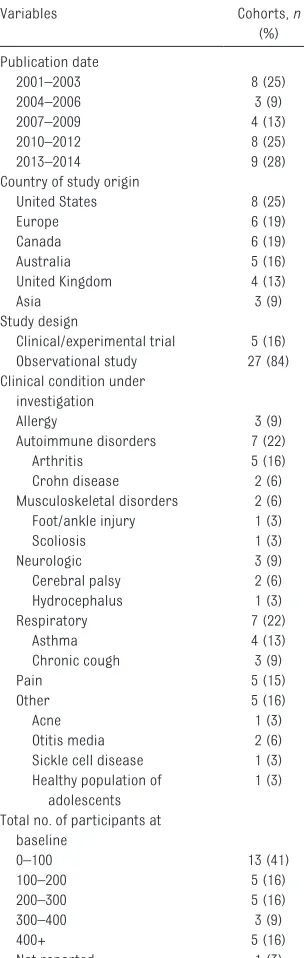
Table 1 provides a summary of study characteristics and Supplemental Table 6 presents the characteristics per study. Among the 32 cohorts,
FIGURE 1
most (n = 27) were prospective observational studies, half were evaluated in autoimmune or respiratory conditions, and half in North America. All studies were published after 2000 with 9 (28%) published within the past 2 years. Sample size that was used to calculate the MID varied across studies, with a median (interquartile range) of 126 (41–281), and the mean age ranged from 2.8 to 14.6 years.
PRO Instrument Characteristics
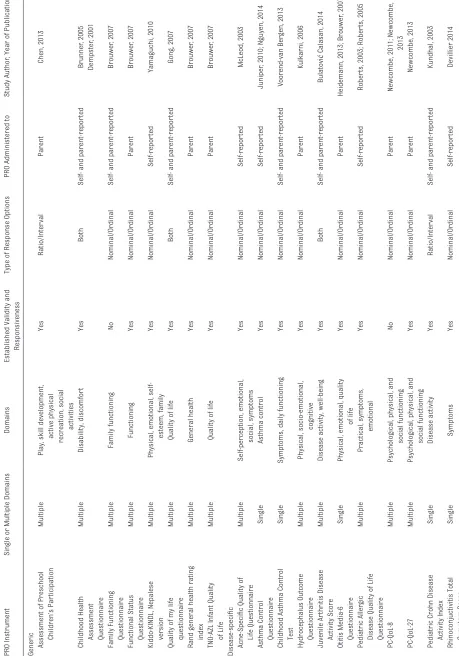
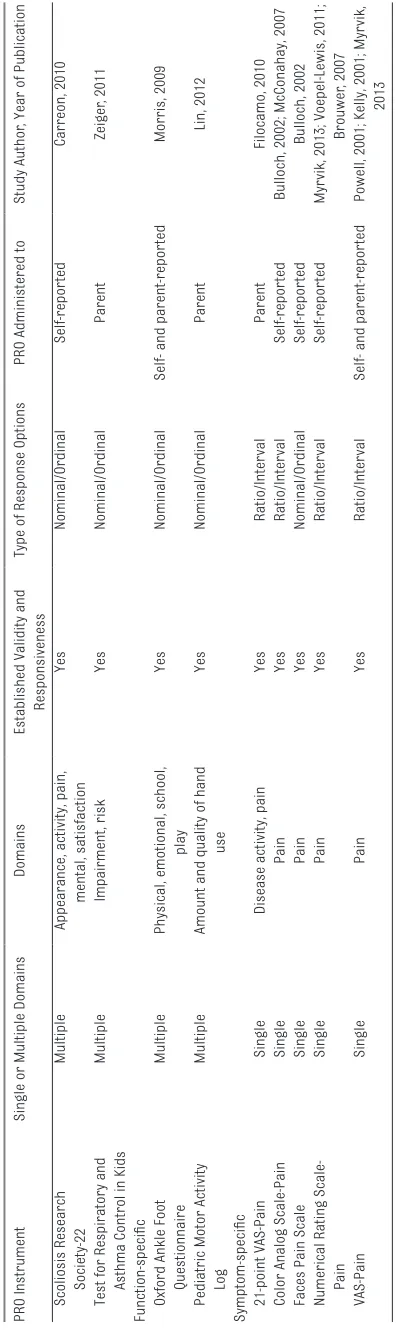
Table 2 presents detailed characteristics of the PRO
instruments. Of the 28 unique PRO instruments reported across the 32 cohorts, 8 (29%) were generic and 13 (46%) were disease-specific, 5 (18%) were symptom-specific, and 2 (7%)
were function-specific. Most (n = 26,
93%) had been previously cited in existing literature; only 2 (7%), the Family Functioning Questionnaire and the Parent Cough-Specific Quality of Life Questionnaire (PC-QoL-8),
being used for the first time. 23, 24
The number of items in each PRO varied widely, with half having >10 items. Eighteen (64%) of the PROs were measured on the nominal/ ordinal scale, with 7 (25%) being measured on the ratio/interval scale and 3 (11%) including elements of both. Ten (36%) of the instruments assessed a single domain, whereas
18 (64%) assessed ≥2 domains, with
the most frequently reported domain
being physical function (n = 12, 31%).
Nine (32%) PROs were administered solely to the pediatric patient, 11 (39%) to the proxy only, and 8 (29%) to both the patient and a proxy.
Anchor Characteristics
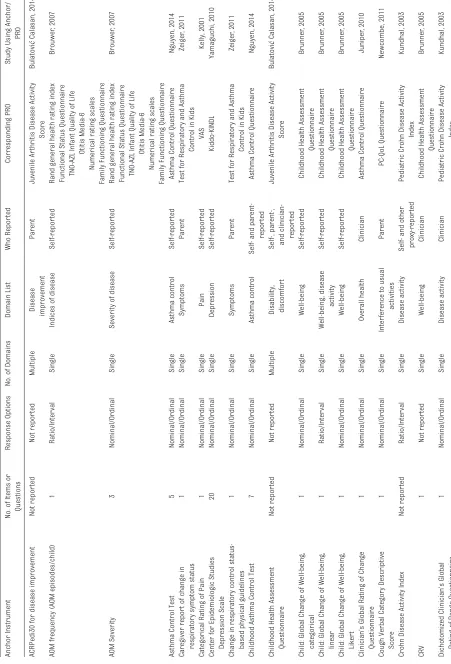
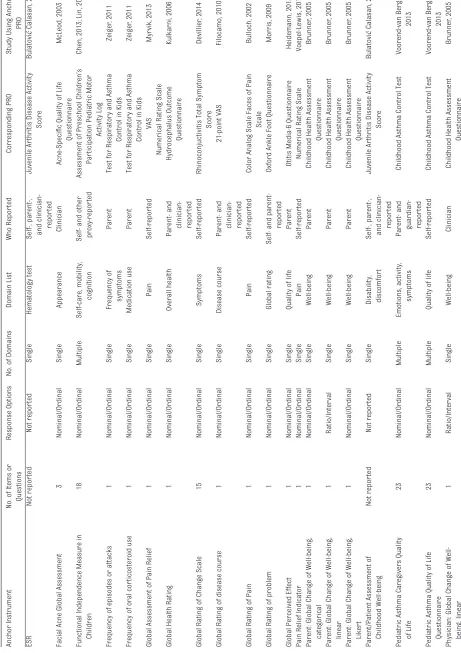
Table 3 presents detailed
characteristics of the anchors. Of the 51 anchors, 32 (63%) used a single-item instrument with the remaining 13 (25%) including >1 item; 6 (12%) did not present this information. Most of the anchor response options
were nominal/ordinal (n = 36, 71%),
whereas 7 (14%) were ratio/interval, 2 (4%) contained components of both, and 6 (11%) did not report this information. Forty-two (82%) anchors were limited to a single
domain and 9 (18%) addressed ≥2
domains. Twenty (38%) anchors were administered to the pediatric patient only, 22 (42%) to the proxy only, and 9 (17%) to both the patient and the proxy.
MID Details
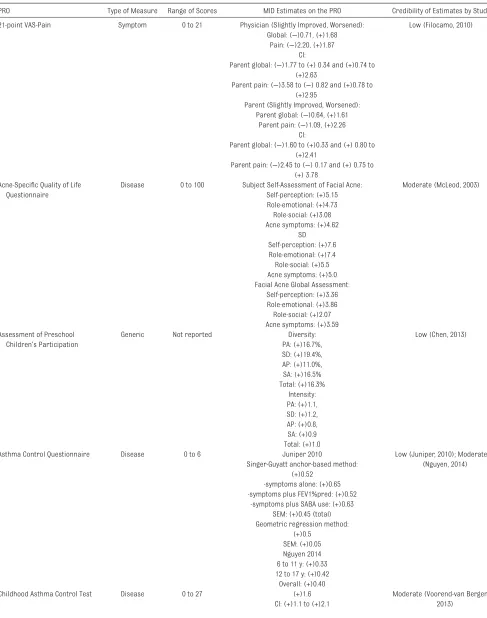
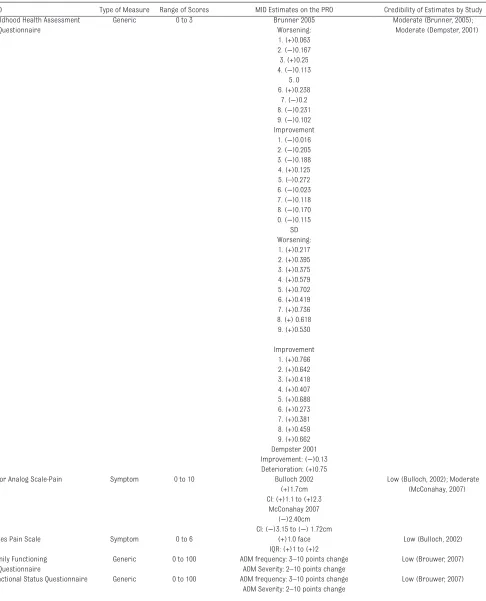
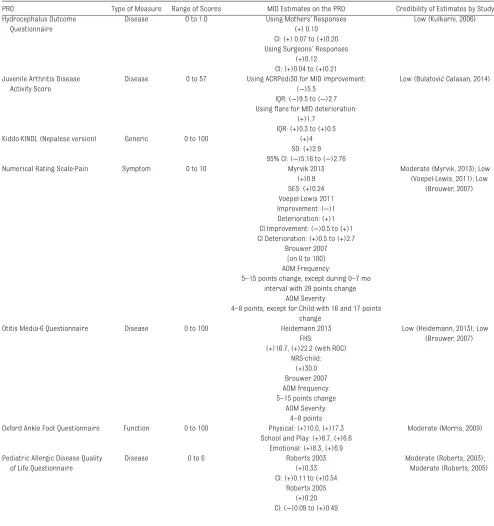
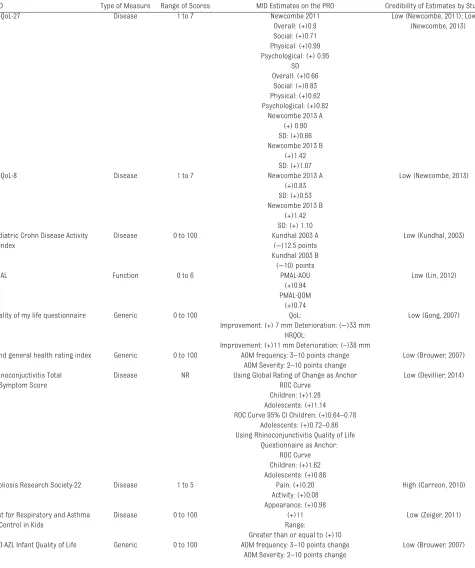
Table 4 provides a compendium of MIDs and the credibility of their estimates. Across the 32 cohorts, 3 studies reported >1 anchor-based method of determining the MID. In total, our review identified 35 distinct MID estimates for the
28 instruments. 24–26 Methods of
determining the MID included specifying a change in score or an absolute threshold on the anchor that constituted a minimum improvement or deterioration
(n = 33): hypothetical scenarios
(n = 2) in which response options
were based on a hypothetical response to the PRO instrument (which was also used as the anchor). Of the eligible MID estimates, all but 1 reported the MID as an absolute difference or threshold score rather than as a relative change (percentage
of total instrument score).27 A single
article reported boy- and girl-specific
estimates. 28 Twenty-three (66%)
of the MID estimates included a measure of precision, and 12 (34%) did not.
Credibility Assessment
Table 5 summarizes our credibility assessment and Supplemental Table 7 presents the results of our credibility assessment per cohort. We rated 18 cohorts as having low-credibility MIDs, 13 cohorts as having moderate-credibility MIDs, and 1 cohort as having high credibility.
DISCUSSION
Main Findings
Our study represents the first systematic survey and appraisal of anchor-based MID estimates, and the first comprehensive compendium of such estimates for chronic medical and psychiatric conditions among children. We found 30 studies consisting of 32 cohorts of children reporting 28 unique PRO instruments; >50% TABLE 1 Description of Eligible Cohorts (n = 32)
Variables Cohorts, n
(%) Publication date
2001–2003 8 (25)
2004–2006 3 (9)
2007–2009 4 (13)
2010–2012 8 (25)
2013–2014 9 (28)
Country of study origin
United States 8 (25)
Europe 6 (19)
Canada 6 (19)
Australia 5 (16)
United Kingdom 4 (13)
Asia 3 (9)
Study design
Clinical/experimental trial 5 (16)
Observational study 27 (84)
Clinical condition under investigation
Allergy 3 (9)
Autoimmune disorders 7 (22)
Arthritis 5 (16)
Crohn disease 2 (6)
Musculoskeletal disorders 2 (6)
Foot/ankle injury 1 (3)
Scoliosis 1 (3)
Neurologic 3 (9)
Cerebral palsy 2 (6)
Hydrocephalus 1 (3)
Respiratory 7 (22)
Asthma 4 (13)
Chronic cough 3 (9)
Pain 5 (15)
Other 5 (16)
Acne 1 (3)
Otitis media 2 (6)
Sickle cell disease 1 (3)
Healthy population of
adolescents
1 (3) Total no. of participants at
baseline
0–100 13 (41)
100–200 5 (16)
200–300 5 (16)
300–400 3 (9)
400+ 5 (16)
TABLE 2
Characteristics of PRO Instruments
PRO Instrument
Single or Multiple Domains
Domains
Established Validity and
Responsiveness
Type of Response Options
PRO Administered to
Study Author
, Year of Publication
Generic Assessment of Preschool
Children’s Par
ticipation
Multiple
Play, skill development,
active physical recreation, social
activities Yes Ratio/Inter val Parent Chen, 2013 Childhood Health
Assessment Questionnaire
Multiple
Disability, discomfor
t
Yes
Both
Self- and parent-repor
ted Brunner , 2005 Dempster , 2001 Family Functioning Questionnaire Multiple Family functioning No Nominal/Ordinal
Self- and parent-repor
ted Brouwer , 2007 Functional Status Questionnaire Multiple Functioning Yes Nominal/Ordinal Parent Brouwer , 2007 Kiddo-KINDL, Nepalese version Multiple
Physical, emotional,
self-esteem, family Yes Nominal/Ordinal Self-repor ted Yamaguchi, 2010
Quality of my life questionnaire
Multiple
Quality of life
Yes
Both
Self- and parent-repor
ted
Gong, 2007
Rand general health rating index
Multiple General health Yes Nominal/Ordinal Parent Brouwer , 2007
TNO-AZL Infant Quality of Life
Multiple
Quality of life
Yes Nominal/Ordinal Parent Brouwer , 2007 Disease-specifi c Acne-Specifi
c Quality of
Life Questionnaire Multiple Self-perception, emotional, social, symptoms Yes Nominal/Ordinal Self-repor ted McLeod, 2003 Asthma Control Questionnaire Single Asthma control Yes Nominal/Ordinal Self-repor ted Juniper
, 2010; Nguyen, 2014
Childhood Asthma Control Test
Single
Symptoms, daily functioning
Yes
Nominal/Ordinal
Self- and parent-repor
ted Voorend-van Ber gen, 2013 Hydrocephalus Outcome Questionnaire Multiple Physical, socio-emotional, cognitive Yes Nominal/Ordinal Parent Kulkarni, 2006 Juvenile Ar thritis Disease Activity Score Multiple
Disease activity, well-being
Yes
Both
Self- and parent-repor
ted Bulatovi ć Calasan, 2014 Otitis Media-6 Questionnaire Single
Physical, emotional, quality
of life
Yes
Nominal/Ordinal
Parent
Heidemann, 2013; Brouwer
, 2007
Pediatric
Aller
gic
Disease Quality of Life Questionnaire
Multiple Practical, symptoms, emotional Yes Nominal/Ordinal Self-repor ted Rober
ts, 2003; Rober
ts, 2005
PC-QoL-8
Multiple
Psychological, physical, and
social functioning
No
Nominal/Ordinal
Parent
Newcombe, 2011; Newcombe,
2013
PC-QoL-27
Multiple
Psychological, physical, and
social functioning
Yes
Nominal/Ordinal
Parent
Newcombe, 2013
Pediatric Crohn Disease Activity Index
Single
Disease activity
Yes
Ratio/Inter
val
Self- and parent-repor
were published in the past 5 years. Among the instruments identified, more than half used a PRO that was administered directly to patients; however, it was most common for proxies to respond to both the PRO instrument and the anchor. We found that more than two-thirds of questionnaires were specific instruments as opposed to generic, with nearly half being disease-specific PROs.
Our systematic survey draws attention to the methodological issues and challenges involved in MID determinations. We classified more than half of the studies as low credibility with only 1 regarded as high quality. In particular, for all but 4 instruments, investigators neglected to either report a satisfactory relation between the PRO instrument and the anchor or they did not report satisfactory measurement properties of the anchor. Although it is promising to see the increasing frequency of MID ascertained in child and adolescent populations, our findings highlight the limitations in establishing highly credible estimates. Our credibility assessment tool helps with the transparency of this issue to readers.
The interpretation or applicability of MIDs from the same instrument across 2 different populations may differ. For example, a 2001 study in our sample assessed the MID of the VAS in patients with acute pain of either traumatic or nontraumatic
cause, 29 whereas a 2013 study
assessed the MID of the VAS in
patients with sickle cell disease. 30
The former ascertained an MID of +11 mm for improvement whereas the latter ascertained 9.7 mm for improvement. Readers may be confused as to which one is more accurate when they see 2 (or more) estimates or whether the difference can be explained by chance. Thus, it is crucial to provide readers with MID estimates for the population to which one intends to apply the estimates.
PRO Instrument
Single or Multiple Domains
Domains
Established Validity and
Responsiveness
Type of Response Options
PRO Administered to
Study Author
, Year of Publication
Scoliosis
Research
Society-22
Multiple
Appearance, activity, pain,
mental, satisfaction
Yes
Nominal/Ordinal
Self-repor
ted
Carreon, 2010
Test for Respiratory and Asthma Control in Kids
Multiple
Impairment, risk
Yes
Nominal/Ordinal
Parent
Zeiger
, 2011
Function-specifi
c
Oxford Ankle Foot Questionnaire
Multiple
Physical, emotional, school,
play
Yes
Nominal/Ordinal
Self- and parent-repor
ted
Morris, 2009
Pediatric Motor Activity Log
Multiple
Amount and quality of hand
use
Yes
Nominal/Ordinal
Parent
Lin, 2012
Symptom-specifi
c
21-point VAS-Pain
Single
Disease activity, pain
Yes
Ratio/Inter
val
Parent
Filocamo, 2010
Color Analog Scale-Pain
Single
Pain
Yes
Ratio/Inter
val
Self-repor
ted
Bulloch, 2002; McConahay, 2007
Faces Pain Scale
Single
Pain
Yes
Nominal/Ordinal
Self-repor
ted
Bulloch, 2002
Numerical Rating Scale- Pain
Single
Pain
Yes
Ratio/Inter
val
Self-repor
ted
Myr
vik, 2013; Voepel-Lewis, 2011;
Brouwer
, 2007
VAS-Pain
Single
Pain
Yes
Ratio/Inter
val
Self- and parent-repor
ted
Powell, 2001; Kelly, 2001; Myr
vik,
2013
Studies are listed in the Supplemental References.
TABLE 2
TABLE 3
Characteristics of Anchor Instruments
Anchor Instrument
No. of Items or Questions
Response Options
No. of Domains
Domain List
Who Repor
ted
Corresponding PRO
Study Using Anchor/
PRO
ACRPedi30 for disease improvement
Not repor ted Not repor ted Multiple Disease improvement Parent Juvenile Ar
thritis Disease Activity
Score
Bulatovi
ć
Calasan, 2014
AOM frequency (AOM episodes/child)
1
Ratio/Inter
val
Single
Indices of disease
Self-repor
ted
Rand general health rating index
Brouwer
, 2007
Functional Status Questionnaire TNO-AZL Infant Quality of Life
Otitis Media-6
Numerical rating scales
Family Functioning Questionnaire
AOM Severity
3
Nominal/Ordinal
Single
Severity of disease
Self-repor
ted
Rand general health rating index
Brouwer
, 2007
Functional Status Questionnaire TNO-AZL Infant Quality of Life
Otitis Media-6
Numerical rating scales
Family Functioning Questionnaire
Asthma Control Test
5 Nominal/Ordinal Single Asthma control Self-repor ted
Asthma Control Questionnaire
Nguyen, 2014
Caregiver repor
t of change in
respiratory symptom status
1
Nominal/Ordinal
Single
Symptoms
Parent
Test for Respiratory and Asthma
Control in Kids
Zeiger
, 2011
Categorical Rating of Pain
1 Nominal/Ordinal Single Pain Self-repor ted VAS Kelly, 2001
Center for Epidemiologic Studies Depression Scale
20 Nominal/Ordinal Single Depression Self-repor ted Kiddo-KINDL Yamaguchi, 2010
Change in respiratory control status- based physical guidelines
1
Nominal/Ordinal
Single
Symptoms
Parent
Test for Respiratory and Asthma
Control in Kids
Zeiger
, 2011
Childhood Asthma Control Test
7
Nominal/Ordinal
Single
Asthma control
Self- and
parent-repor
ted
Asthma Control Questionnaire
Nguyen, 2014
Childhood Health Assessment Questionnaire
Not repor
ted
Not repor
ted
Multiple
Disability, discomfor
t
Self-, parent-, and
clinician-repor
ted
Juvenile Ar
thritis Disease Activity
Score
Bulatovi
ć
Calasan, 2014
Child: Global Change of Well-being, categorical
1 Nominal/Ordinal Single Well-being Self-repor ted
Childhood Health Assessment
Questionnaire
Brunner
, 2005
Child: Global Change of Well-being, linear
1 Ratio/Inter val Single Well-being, disease activity Self-repor ted
Childhood Health Assessment
Questionnaire
Brunner
, 2005
Child: Global Change of Well-being, Liker
t 1 Nominal/Ordinal Single Well-being Self-repor ted
Childhood Health Assessment
Questionnaire
Brunner
, 2005
Clinician’s Global Rating of Change Questionnaire
1
Nominal/Ordinal
Single
Overall health
Clinician
Asthma Control Questionnaire
Juniper
, 2010
Cough Verbal Category Descriptive Score
1
Nominal/Ordinal
Single
Interference to usual
activities
Parent
PC-QoL Questionnaire
Newcombe, 2011
Crohn Disease Activity Index
Not repor ted Ratio/Inter val Single Disease activity
Self- and other proxy-repor
ted
Pediatric Crohn Disease Activity
Index Kundhal, 2003 CR V 1 Not repor ted Single Well-being Clinician
Childhood Health Assessment
Questionnaire
Brunner
, 2005
Dichotomized Clinician’s Global Rating of Range Questionnaire
1
Nominal/Ordinal
Single
Disease activity
Clinician
Pediatric Crohn Disease Activity
Index
Anchor Instrument No. of Items or Questions
Response Options
No. of Domains
Domain List
Who Repor
ted
Corresponding PRO
Study Using Anchor/
PRO ESR Not repor ted Not repor ted Single Hematology test
Self-, parent-, and
clinician-repor
ted
Juvenile Ar
thritis Disease Activity
Score
Bulatovi
ć
Calasan, 2014
Facial Acne Global Assessment
3 Nominal/Ordinal Single Appearance Clinician Acne-Specifi
c Quality of Life
Questionnaire
McLeod, 2003
Functional Independence Measure in Children
18
Nominal/Ordinal
Multiple
Self-care, mobility,
cognition
Self- and other proxy-repor
ted
Assessment of Preschool Children’s
Par
ticipation Pediatric Motor
Activity Log
Chen, 2013; Lin, 2012
Frequency of episodes or attacks
1
Nominal/Ordinal
Single
Frequency of symptoms
Parent
Test for Respiratory and Asthma
Control in Kids
Zeiger
, 2011
Frequency of oral cor
ticosteroid use 1 Nominal/Ordinal Single Medication use Parent
Test for Respiratory and Asthma
Control in Kids
Zeiger
, 2011
Global Assessment of Pain Relief
1 Nominal/Ordinal Single Pain Self-repor ted VAS
Numerical Rating Scale
Myr
vik, 2013
Global Health Rating
1
Nominal/Ordinal
Single
Overall health
Parent- and clinician- repor
ted
Hydrocephalus Outcome
Questionnaire
Kulkarni, 2006
Global Rating of Change Scale
15 Nominal/Ordinal Single Symptoms Self-repor ted
Rhinoconjuctivitis Total Symptom
Score
Devillier
, 2014
Global Rating of disease course
1
Nominal/Ordinal
Single
Disease course
Parent- and clinician- repor
ted
21-point VAS
Filocamo, 2010
Global Rating of Pain
1 Nominal/Ordinal Single Pain Self-repor ted
Color Analog Scale Faces of Pain
Scale
Bulloch, 2002
Global Rating of problem
1
Nominal/Ordinal
Single
Global rating
Self- and
parent-repor
ted
Oxford Ankle Foot Questionnaire
Morris, 2009
Global Perceived Effect
1
Nominal/Ordinal
Single
Quality of life
Parent
Otitis Media-6 Questionnaire
Heidemann, 2013
Pain Relief Indicator
1 Nominal/Ordinal Single Pain Self-repor ted
Numerical Rating Scale
Voepel-Lewis, 2011
Parent: Global Change of Well-being, categorical
1
Nominal/Ordinal
Single
Well-being
Parent
Childhood Health Assessment
Questionnaire
Brunner
, 2005
Parent: Global Change of Well-being, linear
1 Ratio/Inter val Single Well-being Parent
Childhood Health Assessment
Questionnaire
Brunner
, 2005
Parent: Global Change of Well-being, Liker
t 1 Nominal/Ordinal Single Well-being Parent
Childhood Health Assessment
Questionnaire
Brunner
, 2005
Parent/Patient Assessment of Childhood Well-being
Not repor
ted
Not repor
ted
Single
Disability, discomfor
t
Self-, parent-, and
clinician-repor
ted
Juvenile Ar
thritis Disease Activity
Score
Bulatovi
ć
Calasan, 2014
Pediatric Asthma Caregivers Quality of Life
23
Nominal/Ordinal
Multiple
Emotions, activity,
symptoms
Parent- and guardian- repor
ted
Childhood Asthma Control Test
Voorend-van Ber
gen,
2013
Pediatric Asthma Quality of Life Questionnaire
23
Nominal/Ordinal
Multiple
Quality of life
Self-repor
ted
Childhood Asthma Control Test
Voorend-van Ber
gen,
2013
Physician: Global Change of Well- being, linear
1 Ratio/Inter val Single Well-being Clinician
Childhood Health Assessment
Questionnaire
Brunner
, 2005
TABLE 3
One needs to be also cautious when interpreting these findings to similar clinical populations but where other factors, such as the region in which the study was conducted, could result in different manifestations or interpretations of the disease.
Developing an estimate of the MIDs is needed for interpreting the magnitude of improvement or deterioration of PROs relevant to children; however, the measurement and interpretation in this population poses additional challenges to that of an adult population. First, what is considered to be minimally important can vary depending on if it is the patient (child) or a proxy (eg, parent) answering the question; sometimes a proxy report may be
misleading, 31 whereas in other
instances, a proxy report may be a reasonable estimate of patient
status. 32 In our study, we thus
restricted proxies to include only parents/guardians. Second, previous authors have speculated that patients presenting with different baseline scores may have different ratings or interpretations of a minimal change. For example, a child with severe functional impairment or pain may require a smaller change in rating to be considered meaningful as opposed to one who has a low degree of impairment or pain. However, a recent study demonstrated that the MID, on average, does not change
relative to the baseline scores. 33
As well, the reader should note that Food and Drug Administration guidance does not use the term MID but rather emphasizes establishing meaningful change in PRO measures at the individual level (ie, defined as a responder) versus at the treatment group level. The Food and Drug Administration defines a responder threshold as “a score change in a measure, experienced by an individual patient over a predetermined time period that has been demonstrated in the target population to have a significant
Anchor Instrument
No. of Items or Questions
Response Options
No. of Domains
Domain List
Who Repor
ted
Corresponding PRO
Study Using Anchor/
PRO
Physician: Global Change of Well- being, categorical
1
Nominal/Ordinal
Single
Well-being
Clinician
Childhood Health Assessment
Questionnaire
Brunner
, 2005
Physician Guidelines-based control table rating
1
Nominal/Ordinal
Single
Control of disease
Self- and
clinician-repor
ted
Test for Respiratory and Asthma
Control in Kids
Zeiger
, 2011
Physician’s therapy recommendations
1
Nominal/Ordinal
Single
Therapy
recommended
Self- and
clinician-repor
ted
Test for Respiratory and Asthma
Control in Kids
Zeiger
, 2011
Responses to hypothetical scenarios on Quality of My Life PRO
3
Both
Multiple
Quality of life
Self- and
parent-repor
ted
Quality of my life questionnaire
Gong, 2007
Responses to hypothetical scenarios on Childhood Health Assessment Questionnaire PRO
2
Ratio/Inter
val
Multiple
Disability, discomfor
t
Parent
Childhood Health Assessment
Questionnaire
Dempster
, 2001
Response to Liker
t scale about pain
1 Nominal/Ordinal Single Pain Self-repor ted
Color Analog Scale
McConahay, 2007
Rhinoconjunctivitis Quality of Life Questionnaire
Not repor
ted
Not repor
ted
Multiple
Quality of life
Self-repor
ted
Rhinoconjuctivitis Total Symptom
Score
Devillier
, 2014
Scoliosis Research Society-30 (last 8 questions), SAQ items 26, 32
10 Nominal/Ordinal Multiple Appearance, activity, pain Self-repor ted
Scoliosis Research Society-22
Carreon, 2010
Subject Self-Assessment of Facial Acne
1 Nominal/Ordinal Single Appearance Self-repor ted Acne-Specifi
c Quality of Life
Questionnaire
McLeod, 2003
VAS for Asthma or Hayfever
1
Ratio/Inter
val
Single
Trouble with disease
Self-repor
ted
Pediatric Aller
gic Disease Quality of
Life Questionnaire
Rober
ts, 2005
VAS for how troubled they were about asthma, hayfever
, aller gies 3 Ratio/Inter val Single
Trouble with disease
Self-repor
ted
Pediatric Aller
gic Disease Quality of
Life Questionnaire
Rober
ts, 2003
Verbal Categorical Descriptive
1
Nominal/Ordinal
Single
Trouble with disease
Parent
PC-QoL Questionnaire-27 PC-QoL
Questionnaire-8
Newcombe, 2013
Verbal Categorical Rating of “heaps better” to “heaps worse”
1 Nominal/Ordinal Single Pain Self-repor ted
VAS Pain Score
Powell, 2001
Studies are listed in the Supplemental References. AOM, acute otitis media; CR
V, core response variable; ESR, erythrocyte sedim
entation rate; PRO, patient repor
ted outcome; SAQ, scoliosis appearance questionnaire.
TABLE 3
TABLE 4 Characteristics of MID
PRO Type of Measure Range of Scores MID Estimates on the PRO Credibility of Estimates by Study
21-point VAS-Pain Symptom 0 to 21 Physician (Slightly Improved, Worsened): Low (Filocamo, 2010)
Global: (−)0.71, (+)1.68
Pain: (−)2.20, (+)1.87
CI:
Parent global: (−)1.77 to (+) 0.34 and (+)0.74 to
(+)2.63
Parent pain: (−)3.58 to (−) 0.82 and (+)0.78 to
(+)2.95
Parent (Slightly Improved, Worsened):
Parent global: (−)0.64, (+)1.61
Parent pain: (−)1.09, (+)2.26
CI:
Parent global: (−)1.60 to (+)0.33 and (+) 0.80 to
(+)2.41
Parent pain: (−)2.45 to (−) 0.17 and (+) 0.75 to
(+) 3.78 Acne-Specifi c Quality of Life
Questionnaire
Disease 0 to 100 Subject Self-Assessment of Facial Acne: Moderate (McLeod, 2003)
Self-perception: (+)5.15 Role-emotional: (+)4.73 Role-social: (+)3.08 Acne symptoms: (+)4.62
SD Self-perception: (+)7.6 Role-emotional: (+)7.4 Role-social: (+)5.5 Acne symptoms: (+)5.0 Facial Acne Global Assessment:
Self-perception: (+)3.36 Role-emotional: (+)3.86 Role-social: (+)2.07 Acne symptoms: (+)3.59 Assessment of Preschool
Children’s Participation
Generic Not reported Diversity: Low (Chen, 2013)
PA: (+)16.7%, SD: (+)19.4%, AP: (+)11.0%, SA: (+)16.5% Total: (+)16.3%
Intensity: PA: (+)1.1, SD: (+)1.2, AP: (+)0.8, SA: (+)0.9 Total: (+)1.0
Asthma Control Questionnaire Disease 0 to 6 Juniper 2010 Low (Juniper, 2010); Moderate
(Nguyen, 2014) Singer-Guyatt anchor-based method:
(+)0.52 -symptoms alone: (+)0.65 -symptoms plus FEV1%pred: (+)0.52
-symptoms plus SABA use: (+)0.63 SEM: (+)0.45 (total) Geometric regression method:
(+)0.5 SEM: (+)0.05 Nguyen 2014 6 to 11 y: (+)0.33 12 to 17 y: (+)0.42 Overall: (+)0.40
Childhood Asthma Control Test Disease 0 to 27 (+)1.6 Moderate (Voorend-van Bergen,
PRO Type of Measure Range of Scores MID Estimates on the PRO Credibility of Estimates by Study Childhood Health Assessment
Questionnaire
Generic 0 to 3 Brunner 2005 Moderate (Brunner, 2005);
Moderate (Dempster, 2001) Worsening:
1. (+)0.063
2. (−)0.167
3. (+)0.25
4. (−)0.113
5. 0 6. (+)0.238
7. (−)0.2
8. (−)0.231
9. (−)0.102
Improvement
1. (−)0.016
2. (−)0.205
3. (−)0.188
4. (+)0.125 5. (–)0.272
6. (−)0.023
7. (−)0.118
8. (−)0.170
0. (−)0.115
SD Worsening:
1. (+)0.217 2. (+)0.395 3. (+)0.375 4. (+)0.579 5. (+)0.702 6. (+)0.419 7. (+)0.736 8. (+) 0.618 9. (+)0.530 Improvement
1. (+)0.766 2. (+)0.642 3. (+)0.418 4. (+)0.407 5. (+)0.688 6. (+)0.273 7. (+)0.381 8. (+)0.459 9. (+)0.662 Dempster 2001
Improvement: (−)0.13
Deterioration: (+)0.75
Color Analog Scale-Pain Symptom 0 to 10 Bulloch 2002 Low (Bulloch, 2002); Moderate
(McConahay, 2007) (+)1.7cm
CI: (+)1.1 to (+)2.3 McConahay 2007
(−)2.40cm
CI: (−)3.15 to (−) 1.72cm
Faces Pain Scale Symptom 0 to 6 (+)1.0 face Low (Bulloch, 2002)
IQR: (+)1 to (+)2 Family Functioning
Questionnaire
Generic 0 to 100 AOM frequency: 3–10 points change Low (Brouwer, 2007)
AOM Severity: 2–10 points change
Functional Status Questionnaire Generic 0 to 100 AOM frequency: 3–10 points change Low (Brouwer, 2007)
AOM Severity: 2–10 points change
PRO Type of Measure Range of Scores MID Estimates on the PRO Credibility of Estimates by Study Hydrocephalus Outcome
Questionnaire
Disease O to 1.0 Using Mothers’ Responses Low (Kulkarni, 2006)
(+) 0.10 CI: (+) 0.07 to (+)0.20 Using Surgeons’ Responses
(+)0.12 CI: (+)0.04 to (+)0.21 Juvenile Arthritis Disease
Activity Score
Disease 0 to 57 Using ACRPedi30 for MID improvement: Low (Bulatović Calasan, 2014)
(−)5.5
IQR: (−)9.5 to (−)2.7
Using fl are for MID deterioration: (+)1.7
IQR: (+)0.3 to (+)0.5
Kiddo-KINDL (Nepalese version) Generic 0 to 100 (+)4
SD: (+)2.9
95% CI: (−)5.16 to (−)2.76
Numerical Rating Scale-Pain Symptom 0 to 10 Myrvik 2013 Moderate (Myrvik, 2013); Low
(Voepel-Lewis, 2011); Low (Brouwer, 2007) (+)0.9
SES: (+)0.24 Voepel-Lewis 2011
Improvement: (−)1
Deterioration: (+)1
CI Improvement: (−)0.5 to (+)1
CI Deterioration: (+)0.5 to (+)2.7 Brouwer 2007
[on 0 to 100] AOM Frequency:
5–15 points change, except during 0–7 mo interval with 29 points change
AOM Severity:
4–8 points, except for Child with 16 and 17 points change
Otitis Media-6 Questionnaire Disease 0 to 100 Heidemann 2013 Low (Heidemann, 2013); Low
(Brouwer, 2007) FHS:
(+)16.7, (+)22.2 (with ROC) NRS-child:
(+)30.0 Brouwer 2007 AOM frequency: 5–15 points change
AOM Severity: 4–8 points
Oxford Ankle Foot Questionnaire Function 0 to 100 Physical: (+)10.0, (+)17.3 Moderate (Morris, 2009)
School and Play: (+)8.7, (+)6.6 Emotional: (+)8.3, (+)6.9 Pediatric Allergic Disease Quality
of Life Questionnaire
Disease 0 to 6 Roberts 2003 Moderate (Roberts, 2003);
Moderate (Roberts, 2005) (+)0.33
CI: (+)0.11 to (+)0.54 Roberts 2005
(+)0.20
CI: (−)0.09 to (+)0.49
PRO Type of Measure Range of Scores MID Estimates on the PRO Credibility of Estimates by Study
PC-QoL-27 Disease 1 to 7 Newcombe 2011 Low (Newcombe, 2011); Low
(Newcombe, 2013) Overall: (+)0.9
Social: (+)0.71 Physical: (+)0.99 Psychological: (+) 0.95
SD Overall: (+)0.66
Social: (+)0.83 Physical: (+)0.62 Psychological: (+)0.82
Newcombe 2013 A (+) 0.90 SD: (+)0.66 Newcombe 2013 B
(+)1.42 SD: (+)1.07
PC-QoL-8 Disease 1 to 7 Newcombe 2013 A Low (Newcombe, 2013)
(+)0.83 SD: (+)0.53 Newcombe 2013 B
(+)1.42 SD: (+) 1.10 Pediatric Crohn Disease Activity
Index
Disease 0 to 100 Kundhal 2003 A Low (Kundhal, 2003)
(−)12.5 points
Kundhal 2003 B
(−10) points
PMAL Function 0 to 6 PMAL-AOU Low (Lin, 2012)
(+)0.94 PMAL-QOM
(+)0.74
Quality of my life questionnaire Generic 0 to 100 QoL: Low (Gong, 2007)
Improvement: (+) 7 mm Deterioration: (−)33 mm
HRQOL:
Improvement: (+)11 mm Deterioration: (–)38 mm
Rand general health rating index Generic 0 to 100 AOM frequency: 3–10 points change Low (Brouwer, 2007)
AOM Severity: 2–10 points change Rhinoconjuctivitis Total
Symptom Score
Disease NR Using Global Rating of Change as Anchor Low (Devillier, 2014)
ROC Curve Children: (+)1.28 Adolescents: (+)1.14 ROC Curve 95% CI Children: (+)0.64–0.78
Adolescents: (+)0.72–0.86 Using Rhinoconjunctivitis Quality of Life
Questionnaire as Anchor: ROC Curve Children: (+)1.62 Adolescents: (+)0.88
Scoliosis Research Society-22 Disease 1 to 5 Pain: (+)0.20 High (Carreon, 2010)
Activity: (+)0.08 Appearance: (+)0.98 Test for Respiratory and Asthma
Control in Kids
Disease 0 to 100 (+)11 Low (Zeiger, 2011)
Range:
Greater than or equal to (+)10
TNO-AZL Infant Quality of Life Generic 0 to 100 AOM frequency: 3–10 points change Low (Brouwer, 2007)
AOM Severity: 2–10 points change
treatment benefit.” 34 This guidance
may have implications on different interpretations in the magnitude of treatment effects for PROs developed for child health.
Strengths and Limitations
The strengths of our study include a comprehensive and transparent search strategy and independent eligibility assessment and data extraction. We used a methodological quality appraisal method to
assess MID determination across 6 criteria, allowing us to classify
MIDs as high, moderate, and low credibility.
Our study has limitations, one of which is that although our credibility assessment instrument consisting of 6 criteria was developed to provide transparency to the credibility of the MID, we have not yet addressed the measurement properties of our instrument to measure credibility. The development of the instrument was, however, informed by a review of the relevant literature and our own extensive experience with the
generation of MIDs. 17 –21 We are
currently addressing the validity of the instrument as part of an ongoing larger study.
Another limitation is the restriction of our search to 3 electronic sources: Medline, Embase, and PsycINFO. There is a possibility that other databases, such as CINAHL, may have included original studies of MID estimates in children that were not indexed in the databases we searched. However, given that our focus was chronic medical and psychiatric conditions, it is likely that our selected databases effectively capture most, if not all, studies. Last, we did not conduct duplicate data abstraction and thus there is the possibility of errors in data extracted. However, to mitigate this risk, 1 reviewer checked all data and made corrections where necessary.
CONCLUSIONS
Our systematic presentation of all anchor-based MID estimates relevant to children will help promote informed decision-making by allowing clinical trialists, systematic review authors, guideline developers, and clinicians to better interpret the magnitude (size) of treatment effects for PROs. If, for example, we have identified a credible MID of 1.0 on an 11-point pain instrument, a mean difference
PRO Type of Measure Range of Scores MID Estimates on the PRO Credibility of Estimates by Study
VAS-Pain Symptom 0 to 100 Powell 2001 Moderate (Powell, 2001); Moderate
(Kelly, 2001); Moderate (Myrvik, 2013)
Improvement: (+)11 mm Deterioration: (+)8 mm
Overall: (+)10 mm IQR:
Improvement: (+)15 to (+)19 mm
Deterioration: 0 to (−)14 mm
Overall: (+)3 to (+)19 mm CI:
Overall: (+)7 to (+)12 mm Kelly 2001
(+)24 CI: (+)17 to (+)31
Myrvik 2013 (+)0.97 cm SE: (+)0.27 cm
Studies are listed in Supplemental References. ACRPedi30, American College of Rheumatology Pediatric 30; AOM, acute otitis media; AOU, amount of use; AP, active physical recreation; CI, confi dence interval; HRQOL, health-related quality of life; IQR, interquartile range; PA, areas of play; PMAL, Pediatric Motor Activity Log; QoL, quality of life; QOM, quality of movement; ROC, receiver operating characteristic; SA, social activities.
TABLE 4 Continued
TABLE 5 Credibility Assessment (n = 32)
Criterion n (%)
1. Did the patients respond directly to the PRO and the anchor?
High risk 12 (38)
Low risk 20 (62)
2. Was an independent standard of comparison used for an anchor?
High risk 7 (22)
Low risk 25 (78)
3. Is the anchor itself interpretable for the patients?
High risk 3 (9)
Low risk 29 (91)
4. Is the anchor itself interpretable for the clinicians?
High risk 1 (3)
Low risk 31 (97)
5. Is the anchor construct empirically suffi ciently closely related to the target instrument (eg, correlation coeffi cient >0.5)?
High risk 24 (75)
Low risk 8 (25)
6. Have the authors reported measurement properties of the anchor?
High risk 24 (75)
of 2.0 is twice the MID and likely considered a moderate to large treatment effect. Further, our work allows knowledge users to identify anchor-based MIDs that are more or less credible. Our credibility instrument, currently in the process of being validated, also provides guidance for subsequent work in developing,
further establishing, or confirming MID estimates for PROs among the pediatric population.
ACKNOWLEDGMENTS
We thank Ms Tamsin Adams-Webber at the Hospital for Sick Children and Dr Paul Alexander for their assistance with developing the initial literature search.
ABBREVIATIONS
MID: minimally important difference
PC-QoL: Parent Cough-Specific Quality of Life Questionnaire
PRO: patient-reported outcome VAS: visual analog scale
Massachusetts; eDepartment of Medicine, University of Toronto, Toronto, Ontario, Canada; gEvidence-Based Dentistry Unit, Faculty of Dentistry, Universidad de Chile, Independencia,
Santiago, Chile; hDepartment of Pediatrics, Santa Maria Hospital, Lisboa, Portugal; jNephrology Program, Humber River Regional Hospital, Toronto, Ontario, Canada; kDivision of
Nephrology, University of Western Ontario, London, Ontario, Canada; lLi Ka Shing Knowledge Institute, St. Michael’s Hospital, Toronto, Ontario, Canada; and mInstitute of Health Policy,
Management and Evaluation, Dalla Lana School of Public Health, University of Toronto, Toronto, Ontario, Canada
Dr Ebrahim conceptualized and designed the study, was involved in the study selection and extraction process of the study and analysis, and drafted the initial manuscript; Ms Vercammen, Ms Sivanand, and Dr Carrasco-Labra were involved in the study selection and extraction process of the study; Drs Fernandes and Crawford reviewed and revised the manuscript; Drs Guyatt, Nersrallah, and Johnston conceptualized and designed the study and reviewed and revised the manuscript; and all authors approved the fi nal manuscript to be submitted.
DOI: 10.1542/peds.2016-0833
Accepted for publication Nov 28, 2016
Address correspondence to Bradley Johnston, PhD, Systematic Overviews through advancing Research Technology (SORT), Department of Anaesthesia and Pain Medicine, The Hospital for Sick Children, University of Toronto, 686 Bay St, Toronto, Ontario, Canada M5G 0A4. E-mail: [email protected]
PEDIATRICS (ISSN Numbers: Print, 0031-4005; Online, 1098-4275). Copyright © 2017 by the American Academy of Pediatrics
FINANCIAL DISCLOSURE: The authors have indicated they have no fi nancial relationships relevant to this article to disclose.
FUNDING: This project is funded by the Canadian Institutes of Health Research, Knowledge Synthesis grant DC0190SR. Dr Ebrahim was supported by a MITACS Elevate and SickKids Restracomp Postdoctoral Fellowship Award.
POTENTIAL CONFLICT OF INTEREST: The authors have indicated they have no potential confl icts of interest to disclose.
REFERENCES
1. Johnston BC, Ebrahim S, Carrasco-Labra A, et al. Minimally important difference estimates and methods: a protocol. BMJ Open. 2015;5(10):e007953
2. Schünemann HJ, Guyatt GH.
Commentary—goodbye M(C)ID! Hello MID, where do you come from? Health
Serv Res. 2005;40(2):593–597
3. Methodology Committee of the Patient-Centered Outcomes Research Institute (PCORI). Methodological standards and patient-centeredness in comparative effectiveness research: the PCORI perspective. JAMA.
2012;307(15):1636–1640
4. Guyatt GH, Osoba D, Wu AW, Wyrwich KW, Norman GR; Clinical Signifi cance Consensus Meeting Group. Methods to explain the clinical signifi cance of health status measures. Mayo Clin Proc. 2002;77(4):371–383
5. Jaeschke R, Guyatt GH, Keller J, Singer J. Interpreting changes in quality-of-life score in N of 1 randomized trials. Control
Clin Trials. 1991;12(suppl 4):226S–233S
6. King MT. A point of minimal important difference (MID): a critique of terminology and methods. Expert
Rev Pharmacoecon Outcomes Res.
2011;11(2):171–184
7. Morse J. Designing funded qualitative research. In: Denzin NK, Lincoln YS, eds.
Handbook for Qualitative Research.
Thousand Oaks, CA: Sage; 1994:220–235 8. Fallah A, Akl EA, Ebrahim S, et al.
Anterior cervical discectomy with arthroplasty versus arthrodesis for single-level cervical spondylosis: a systematic review and meta-analysis.
PLoS One. 2012;7(8):e43407
9. Turner D, Schünemann HJ, Griffi th LE, et al. The minimal detectable change cannot reliably replace the minimal
important difference. J Clin Epidemiol. 2010;63(1):28–36
10. Turner D, Schünemann HJ, Griffi th LE, et al. Using the entire cohort in the receiver operating characteristic analysis maximizes precision of the minimal important difference. J Clin
Epidemiol. 2009;62(4):374–379
11. Juniper EF, Guyatt GH, Willan A, Griffi th LE. Determining a minimal important change in a disease-specifi c quality of life questionnaire. J Clin Epidemiol. 1994;47(1):81–87
12. Johnston BC, Thorlund K, Schünemann HJ, et al. Improving the interpretation of quality of life evidence in meta-analyses: the application of minimal important difference units. Health Qual
Life Outcomes. 2010;8:116
minimal important difference units in meta-analyses of continuous outcome measures. J Clin Epidemiol. 2012;65(8):817–826
14. Jaeschke R, Singer J, Guyatt GH. Measurement of health status. Ascertaining the minimal clinically important difference. Control Clin
Trials. 1989;10(4):407–415
15. Yalcin I, Patrick DL, Summers K, Kinchen K, Bump RC. Minimal clinically important differences in Incontinence Quality-of-Life scores in stress urinary incontinence. Urology. 2006;67(6):1304–1308
16. Levine M, Ioannidis J, Haines T, Guyatt G. Harm (observational studies). In: Guyatt GRD, Meade M, Cook D, eds. Users’ Guides to the Medical Literature: A Manual for
Evidence-Based Clinical Practice. New York, NY:
McGraw-Hill; 2008
17. Randolph A, Cook DJ, Guyatt G. Prognosis. In: Guyatt GRD, Meade M, Cook D, eds. Users’ Guides to the Medical Literature: A Manual for
Evidence-Based Clinical Practice. New
York, NY: McGraw-Hill; 2008
18. Furukawa T, Jaeschke J, Cook DJ, Jaeschke R, Guyatt G. Measuring patients’ experience. In: Guyatt GRD, Meade M, Cook D, eds. Users’ Guides to the Medical Literature: A Manual for Evidence-Based Clinical
Practice. New York, NY: McGraw-Hill;
2008
19. Sun X, Briel M, Walter SD, Guyatt GH. Is a subgroup effect believable? Updating criteria to evaluate the credibility of subgroup analyses. BMJ. 2010;340:c117
20. Akl EA, Sun X, Busse JW, et al. Specifi c instructions for estimating unclearly reported blinding status in randomized trials were reliable and valid. J Clin
Epidemiol. 2012;65(3):262–267
21. Kundhal PS, Critch JN, Zachos M, Otley AR, Stephens D, Griffi ths AM. Pediatric Crohn Disease Activity Index: responsive to short-term change. J Pediatr Gastroenterol Nutr. 2003;36(1):83–89
22. Newcombe PA, Sheffi eld JK, Chang AB. Parent cough-specifi c quality of life: development and validation of a short form. J Allergy Clin Immunol. 2013;131(4):1069–1074
23. Brouwer CN, Schilder AG, van Stel HF, et al. Reliability and validity of functional health status and health-related quality of life questionnaires in children with recurrent acute otitis media. Qual Life Res. 2007;16(8):1357–1373
24. Bulatović Calasan M, de Vries LD, Vastert SJ, Heijstek MW, Wulffraat NM. Interpretation of the Juvenile Arthritis Disease Activity Score: responsiveness, clinically important differences and levels of disease activity in prospective cohorts of patients with juvenile idiopathic arthritis. Rheumatology
(Oxford). 2014;53(2):307–312
25. Devillier P, Chassany O, Vicaut E, et al. The minimally important difference in the Rhinoconjunctivitis Total Symptom Score in grass-pollen-induced allergic rhinoconjunctivitis. Allergy. 2014;69(12):1689–1695
26. McLeod LD, Fehnel SE, Brandman J, Symonds T. Evaluating minimal clinically important differences for the acne-specifi c quality of life questionnaire. Pharmacoeconomics. 2003;21(15):1069–1079
27. Chen CL, Shen IH, Chen CY, Wu CY, Liu WY, Chung CY. Validity, responsiveness, minimal detectable change, and minimal clinically important change of Pediatric Balance Scale in children with cerebral palsy. Res Dev Disabil. 2013;34(3):916–922
28. Voepel-Lewis T, Burke CN, Jeffreys N, Malviya S, Tait AR. Do 0–10 numeric rating scores translate into clinically meaningful pain measures for children? Anesth Analg. 2011;112(2):415–421
29. Powell CV, Kelly AM, Williams A. Determining the minimum clinically signifi cant difference in visual analog pain score for children. Ann Emerg Med. 2001;37(1):28–31
30. Myrvik MP, Brandow AM, Drendel AL, Yan K, Hoffmann RG, Panepinto JA. Clinically meaningful measurement of pain in children with sickle cell disease. Pediatr Blood Cancer. 2013;60(10):1689–1695
31. Schel SH, Bouman YH, Bulten BH. Quality of life in long-term forensic psychiatric care: comparison of self-report and proxy assessments.
Arch Psychiatr Nurs. 2015;29(3):
162–167
32. Kim EJ, Song DH, Kim SJ, et al. Proxy and patients ratings on quality of life in patients with schizophrenia and bipolar disorder in Korea. Qual Life Res. 2010;19(4):521–529
33. Zhang Y, Zhang S, Thabane L, Furukawa TA, Johnston BC, Guyatt GH. Although not consistently superior, the absolute approach to framing the minimally important difference has advantages over the relative approach.
J Clin Epidemiol. 2015;68(8):
888–894
DOI: 10.1542/peds.2016-0833 originally published online February 14, 2017;
2017;139;
Pediatrics
Bradley C. Johnston
Carrasco-Labra, Ricardo M. Fernandes, Mark W. Crawford, Gihad Nesrallah and
Shanil Ebrahim, Kelsey Vercammen, Arunima Sivanand, Gordon H. Guyatt, Alonso
Relevant to Children: A Systematic Review
Minimally Important Differences in Patient or Proxy-Reported Outcome Studies
Services
Updated Information &
http://pediatrics.aappublications.org/content/139/3/e20160833
including high resolution figures, can be found at:
References
http://pediatrics.aappublications.org/content/139/3/e20160833#BIBL
This article cites 29 articles, 2 of which you can access for free at:
Subspecialty Collections
http://www.aappublications.org/cgi/collection/child_care_sub Child Care
ine_sub
http://www.aappublications.org/cgi/collection/evidence-based_medic Evidence-Based Medicine
following collection(s):
This article, along with others on similar topics, appears in the
Permissions & Licensing
http://www.aappublications.org/site/misc/Permissions.xhtml
in its entirety can be found online at:
Information about reproducing this article in parts (figures, tables) or
Reprints
http://www.aappublications.org/site/misc/reprints.xhtml
DOI: 10.1542/peds.2016-0833 originally published online February 14, 2017;
2017;139;
Pediatrics
Bradley C. Johnston
Carrasco-Labra, Ricardo M. Fernandes, Mark W. Crawford, Gihad Nesrallah and
Shanil Ebrahim, Kelsey Vercammen, Arunima Sivanand, Gordon H. Guyatt, Alonso
Relevant to Children: A Systematic Review
Minimally Important Differences in Patient or Proxy-Reported Outcome Studies
http://pediatrics.aappublications.org/content/139/3/e20160833
located on the World Wide Web at:
The online version of this article, along with updated information and services, is
http://pediatrics.aappublications.org/content/suppl/2017/02/13/peds.2016-0833.DCSupplemental
Data Supplement at:
by the American Academy of Pediatrics. All rights reserved. Print ISSN: 1073-0397.