Nat. Hazards Earth Syst. Sci., 10, 857–863, 2010 www.nat-hazards-earth-syst-sci.net/10/857/2010/ © Author(s) 2010. This work is distributed under the Creative Commons Attribution 3.0 License.
Natural Hazards
and Earth
System Sciences
A reconnaissance study of radon concentrations in Hamadan city,
Iran
G. K. Gillmore1and N. Jabarivasal2,3
1Centre for Earth and Environmental Sciences Research, School of Geography, Geology and the Environment, Kingston University, London, UK
2Dept. of Medical Physics, Hamadan University of Medical Sciences, Iran 3School of Life Sciences, University of Bradford, UK
Received: 30 November 2009 – Revised: 25 March 2010 – Accepted: 7 April 2010 – Published: 19 April 2010
Abstract. This paper presents results of a reconnaissance
study that used CR-39 alpha track-etch detectors to mea-sure radon concentrations in dwellings in Hamadan, western Iran, significantly, built on permeable alluvial fan deposits. The indoor radon levels recorded varied from 4 (i.e. below the lower limit of detection for the method) to 364 Bq/m3 with a mean value of 108 Bq/m3which is 2.5 times the aver-age global population-weighted indoor radon concentration – these data augment the very few published studies on indoor radon levels in Iran. The maximum radon concentration in Hamadan occurs during the winter period (January to March) with lower concentrations during the autumn. The effective dose equivalent to the population in Hamadan is estimated from this study to be in the region of 2.7 mSv/y, which is above the guidelines for dose to a member of the public of 1 mSv/y suggested by the International Commission on Ra-diological Protection (ICRP) in 1993. This study supports other work in a number of countries that indicates such per-meable “surficial” deposits as being of intermediate to high radon potential. In western Iran, the presence of hammered clay floors, the widespread presence of excavated qanats, the textural properties of surficial deposits and human behaviour intended to cope with winds are likely to be important factors influencing radon concentrations in older buildings.
Correspondence to: G. K. Gillmore
1 Introduction
The presence of radon (222Rn) and its decay products in some dwellings in North America (Lubin et al., 1994) and Eu-rope (Darby et al., 1998), together with an increased under-standing of the carcinogenic effects of this gas on the human population, has prompted many countries to assess the ex-tent to which they also might have an indoor radon problem. Published studies demonstrate that radon is the largest sin-gle contributor to natural radiation exposure for the general public (UNSCEAR, 1993). However, there is limited work published in the international scientific literature on indoor radon concentrations in Iranian homes and workplaces (one exception being Hadad et al., 2007), although some data can be found in less readily available sources (Taghizadeh and Eftekharnejad, 1968; Sohrabi et al., 1993; Samavat, 2002). These though were focussed on High Level Background Ra-diation Areas (HLBRAs) in northern Iran.
Iran is one of the most mountainous countries in the world (Metz, 1989). Thus the topographic setting and associated climate of Hamadan (at an elevation of 1850 m) suggest that radon concentrations in the winter period in most build-ings could be raised (due to temperatures falling as low as −32◦C, with consequently closed doors/windows etc.). In
windy and rainy periods that occur in the autumn, average temperatures are in the region of 10◦C, with many
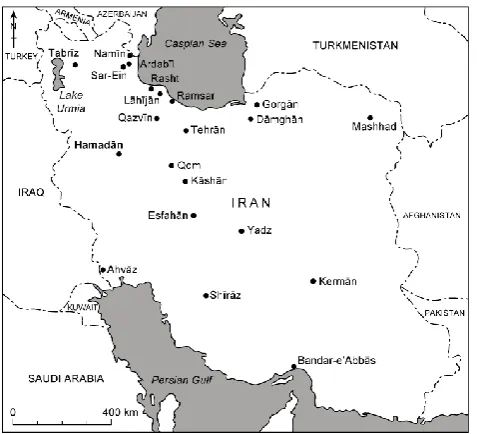
Fig. 1. Location map showing Hamadan in relation to the capital of
Iran, Tehran, the high background radiation area of Ramsar and the towns discussed by Hadad et al. (2007).
between elevated areas and the lower plains (Beaumont, 1973; Metz, 1989).
The behaviour of radon gas in buildings constructed on al-luvial fan sequences is not well known, and most previous studies with a geological interest have focused on the signif-icance of near-surface bedrocks. Beneath the unconsolidated materials at Hamadan the bedrock geology consists, in part, of limestones of Oligo-Miocene age which crop out as high ground to the south-east of the city, and in the south, eastern and western parts, granites, diorites and contact and regional metamorphic rocks occur.
A potential for higher indoor radon concentrations on Holocene alluvial fans along the Wasatch Range Front (Utah, USA) was suggested by Solomon (1993) and Black and Solomon (1996). Lico and Rowe (1992) noted that Qua-ternary alluvial fan material (acting as an aquifer, as in Hamadan) occurred at the base of the Carson Range in Nevada, USA, and contained raised radon concentrations because of its contact with fractured Cretaceous granitic bedrocks with high uranium content. A significant normal fault also probably acted as a conduit for deeper radon en-riched groundwaters in the area. Other reports have high-lighted the importance of surficial deposits more generally (e.g. fluvio-glacial sands/gravels; see Smethurst et al., 2008) in the construction of maps of radon potential from geolog-ical data. Breitner et al. (2008) noted that homes built on Finnish eskers (elongated sinuous ridges composed of fluvio-glacial sands and gravels) were not only radon prone, but that 59% of homes built in their study area on the Hollola esker were above the Finnish national reference concentration of 400 Bq/m3. In the UK, unconsolidated surficial (i.e.
“super-ficial” or “drift” in UK terminology) deposits are responsible for 5% of the variability of indoor radon, with bedrock geol-ogy responsible for 24% (Appleton et al., 2008).
In the case of the Hamadan alluvial fan, the gravels (and sands) are mostly derived from the Alvand granites and the associated metamorphic aureole, laid down in a poorly sorted clay matrix (H. Mohseni, personal communication). This provides potential source material in the form of uranium en-riched minerals and rock fragments. Many cities are built on surficial sediments whose significance in terms of their permeability associated sedimentary texture, and hence their ability to act as a store, transport pathway and exhalation source in some cases, is not well understood.
This work presents data obtained for radon levels in Hamadan city, Hamadan Province, western Iran (see Fig. 1). This city is not currently known to have a radon problem. It is built mostly on poorly sorted alluvial fan deposits, which is a common scenario in Iran (Fisher, 1968; Beaumont, 1989; Gillmore et al., 2007).
Hamadan (population greater than 700 000) has a variety of dwelling styles. It is one of the oldest cities in the world and has undergone significant urban development at differ-ent times (Hiromasa, 1978; Metz, 1989). The dwellings are mostly constructed of two storeys, the most modern of which have a solid concrete base, with open clay tile/brick walls, a steel framework and often clad with polished decorative stone slices. Older buildings are constructed of stones and fired bricks with clay/earth floors, whilst the oldest historic buildings are made from mud brick (adobe). In the modern buildings, the walls are covered with clay and lime on the inside and then painted. Many such dwellings utilize dou-ble glazing, but the older homes are usually single glazed (Mohandesin-e moshaver-e Mozh’deh, 1984).
One of the aims of this reconnaissance study was to de-termine the average indoor radon concentrations, focussing on the brick built dwellings with single glazing which make up more than 80% of the total dwellings (Mohandesin-e moshaver-e Mozh’deh, 1984). Such buildings have more cracks in the floor when compared to relatively new build-ings. As a result, it is reasonable to expect higher radon concentrations in such buildings, than in the newer styles. If many homes were found with high radon concentra-tions by this reconnaissance study, this would suggest that the housing stock in Hamadan should at the very least be tested further. As the adobe built dwellings in Hamadan are mostly abandoned and derelict (Mohandesin-e moshaver-e Mozh’deh, 1984) they were not tested.
2 Measurement method
G. K. Gillmore and N. Jabarivasal: Reconnaissance study of radon concentrations in Hamadan city, Iran 859
Table 1. Radon levels in Hamadan houses during the autumn
sea-son, exposure period of 90 days. The bottom line shows averages for sitting rooms (S), bedrooms (B) and the overall average (M). Households and detector numbers have been coded to protect the identity of individuals. Double glazed property marked with a *. Note that some results are probably below the lower limit of detec-tion (marked in red).
Detector Household Bedroom (B) Radon level identification Sitting Room (S) Bq/m3
GA1 HA S 21
GA2 HA B 77
GA3 HB S 13
GA4 HB B 21
GA5 HC B 25
GA6 HC S 5
GA7 HD S 25
GA8 HD B 26
GA9 HE B 91
GA10 HE S 26
GA11 HF B 13*
GA12 HF S 13*
GA13 HG S 13
GA14 HG B 38
GA15 HH S 4
GA16 HH B 7
GA17 HI S 38
GA18 HJ B 18
GA19 HJ S 4
Averages 25 M
16S 35 B
limitations are outlined by Cliff and Gillmore (2001) and Phillips et al. (2004). Over a total time period of 11 months (rather than 12 due to problems of access and recovery), 70 detectors were left for time periods that reflected various sea-sons, measuring radon concentrations in bedrooms and sit-tings rooms following as far as possible the protocols estab-lished by the UK Health Protection Agency (HPA). One de-tector was also placed in the open atmosphere for a 3 month period to assess whether any radon was present. This re-turned a result that was below the lower limit of detection.
After exposure, all detectors were wrapped in their pro-tective aluminium foils and returned to the metrology lab-oratory for processing at Bradford University (and later at Kingston University, UK, which is a laboratory validated by the UK Health Protection Agency for measurement in do-mestic properties). In the laboratory detectors were chemi-cally etched with a 32% concentration by weight of NaOH solution at 60◦C for 4 h and then washed with distilled wa-ter and dried. The tracks for were counted using an auto-mated RadoSys RadoMeter microscope and computer unit.
Table 2. Radon levels in Hamadan buildings during the winter
sea-son for 85 days. The bottom line shows averages for sitting rooms (S), bedrooms (B) and the overall average (M). Double glazed prop-erty marked with a *.
Detector Household Bedroom (B) Radon level identification Sitting Room (S) Bq/m3
GW1 HA S 169
GW2 HA B 180
GW3 HB B 109
GW4 HB S 94
GW5 HC S 60
GW6 HC B 165
GW7 HK B 210
GW8 HK S 124
GW9 HE B 184
GW10 HE S 176
GW11 HL B 60
GW12 HL S 34
GW13 HM B 143
GW14 HF B 224*
GW15 HF S 128*
GW16 HG B 71
GW17 HG S 56
GW18 HH S 360
GW19 HH B 364
Averages 153 M
133 S 171 B
The typical sensitivity of this system for a RadoSys alpha track-etch detector is 45 tracks per square mm per one hour exposure to a level of 1 kBq/m3. The annual effective dose (D e) for households was calculated using the following formula suggested by UNSCEAR (2000): De=C Rn F.T.D. Where, C Rn is222Rn concentration (in Bq/m−3),F is the222Rn equilibrium factor indoor (assumed to be 0.4), T is the in-door occupancy time (0.8×24 h×365.25≈7010 h/y), andD is the dose conversion factor (9×10⁶ mSv/h per Bq/m3).
3 Results
Table 3. Radon concentrations during the combined spring and
summer period, for 146 days. The bottom line shows averages for sitting rooms (S), bedrooms (B) and the overall average (M). Dou-ble glazed property marked with a *.
Detector Household Bedroom (B) Radon level identification Sitting Room (S) Bq/m3
GSS1 HE B 257
GSS2 HE S 162
GSS3 HK B 205
GSS4 HL B 218
GSS5 HG B 123
GSS6 HG S 117
GSS7 HF S 90*
GSS8 HF B 112*
GSS9 HA B 163
GSS10 HA S 114
GSS11 HC B 101
GSS12 HC S 81
Averages 145 M
117 S 165 B
and a sitting room during the autumn respectively, but it should be noted that this is below the lower limit of detection (LLD) for CR-39 SSNTDs, which is in the region of 10– 20 Bq/m3for around 100 days exposure. The radon levels in the winter season were found to be higher than in the windy autumn season. The double glazed property (most of the sults were for single glazed) showed some of the lowest re-sults in the Autumn, with higher rere-sults in the winter, and lower results in the spring and summer period. The effective dose equivalent, for those living in Hamadan homes, with a mean radon concentration of 108 Bq/m3to the population, is equal to 2.7 mSv/y.
4 Discussion
The expectation that radon concentrations would be rela-tively low in the autumn in homes, due to windows / doors being open was proved correct by these new data. The max-imum mean level was observed during the winter period, as one might expect from UK data (see Phillips et al., 2004). In the winter season, due to the relatively cold weather (typ-ically below minus 10◦C) windows and doors are closed, with more restricted air ventilation (together with heating), and hence accumulated radon concentrations in rooms are higher. It is interesting to note that radon concentrations in the summer and winter are not dissimilar. This may be be-cause of inhabitants closing doors and windows in the sum-mer to keep hot air from entering the buildings, although in the year of measurement the summer was wetter and cooler than in the previous year.
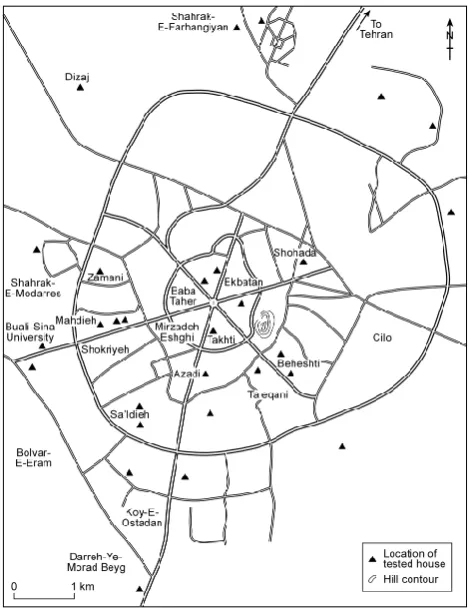
Fig. 2. Plan view of the street layout of Hamadan showing districts
together with the location of indoor radon measurement sites.
A recent study of radon in homes in Iran was published by Hadad et al. (2007) focussed on four northern cities (Lahi-jan, Arbadil, Sar-Ein and Namin, see Fig. 1). The average radon concentrations in these cities were (in order) 163, 240, 160 and 144 Bq/m3. These were in a region close to an area known for its high background radiation levels (Ram-sar, with its associated hot water springs and 226Ra/222Rn content, Fig. 1; Samavat, 2002). The mean radon concentra-tion in this study for Hamadan was 108 Bq/m3: the highest concentration of 364 Bq/m3being observed in a ground floor bedroom with a simple mud floor, and the lowest observed in a ground floor bedroom which had a floor covered with a better engineered clay material. Earth floors may crack eas-ily (through drying out or shrinking and swelling if they con-tain bentonite) and allow radon gas to permeate through the ground to the floor level inside of such homes. Seasonal vari-ation showed that during the winter period due to the closure of entrance doors and windows, radon gas accumulated in the more restricted spaces and led to increased radon levels.
G. K. Gillmore and N. Jabarivasal: Reconnaissance study of radon concentrations in Hamadan city, Iran 861
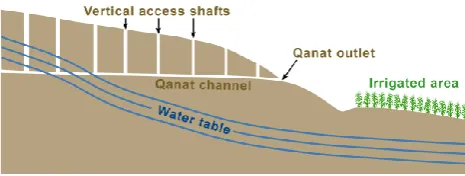
Figure 3. Cartoon cross-section through a typical qanat.
Fig. 3. Cartoon cross-section through a typical qanat.
qanats distributing water, with average tunnel dimensions of 1.2 m height and 0.8 m width, stretching for typically 0– 5 km (Beaumont, 1989; see Fig. 3), and also providing easy pathways for radon. The mother wells for these qanats are normally at depths of between 10 m and 50 m (maximum recorded 250 m) (Beaumont, 1974). A survey by the au-thors of atmospheric radon down some of these vertical well shafts, near to the homes measured, noted high concentra-tions (with a maximum of 36 600 Bq/m3, measured near the water surface), suggesting that radon-rich groundwaters may be playing a significant role in the transportation of radon through the alluvial fan system. Various authors (Faraji, 1987; Farshad and Zinck, 1998) note that Hamadan is well supplied (in Iranian terms) with underground water, with over 1500 qanats, 3000 springs, 6000 deep wells and 5000 semi-deep wells. Rivers also discharge from the mountains around Hamadan and are utilised in agriculture, but their flow can be highly variable (Beaumont, 1973). Gomes et al. (2008) highlighted the fact that groundwater from coarse geologically young sediments show radon potential based on groundwater measurements, despite low uranium content, in northern Portugal.
The limestones of Oligo-Miocene age which crop out as high ground in the south-east of the city of Hamadan, (see Fig. 2 – small area highlighted by contours) are known to contain caves to the north, some of these have been shown to contain high radon levels. Jabarivasal and Gillmore (2008), highlighted a maximum concentrated of 4317 Bq/m3 with cave guides receiving an estimated yearly dose of around 16.5 mSv in the Alisadr caves. This is significant because Oligo-Miocene limestone partly underlies the permeable al-luvial fan sands and gravels that underlay the city.
Some metallic ore mineralization has also taken place in the area, with deposits of gold and antimony (Maanijou and Aliani, 2001). Gillmore et al. (2005), Grattan et al. (2004) and el-Rishi et al. (2007) noted elsewhere that raised in-door radon concentrations can occur in regions that have been mined, partly because of the presence of associated uneconomic uranium minerals, partly because of introduced ground permeability (Appleton, 2005). In the Hamadan area there are 142 active mines, although mostly for building ma-terials (Markaz-e aamaar-e Iran, 1996). The igneous and metamorphic bedrocks may well also be a source for
ura-nium, radium (and hence radon gas). The folded (and frac-tured) nature of the bedrock geology (with faults such as the Keshin Simin and the Tafrijan-Mangavi-kandelan) will con-tribute to the transport of radon gas to the partially over-lying alluvial fan sequences. Appleton (2005) notes that drier permeable soils and bedrock such as limestones and coarse glacial deposits and fractured/cavernous bedrock to-gether with hill slopes, are usually associated with high lev-els of indoor radon, whilst Solomon et al. (2005) noted that alluvial fan sediments act as storage and transport conduits for222Rn enriched groundwater.
Pleistocene alluvial fans exist in the UK in areas known for high indoor radon concentrations, such as at the edge of Dart-moor and the Mendip region in SW England (Gillmore et al., 2001). The fans in Dartmoor are rich in coarse sediments, span the boundary between granites and metamorphic aure-ole rocks, and are overlain by head deposits (aeolian and so-lifluction in origin) (Gilbertson, 1973). However, no attempt has been made to correlate indoor radon with such surficial deposits in the UK. Although there are similarities between the geological setting of Hamadan and regions around Dart-moor for example, the Iranian fans are much larger in scale, and occur in a semiarid as opposed to a temperate climate.
5 Conclusions
The mean radon concentration in Hamadan’s dwellings, noted in this reconnaissance study, is relatively high when compared with the average global population-weighted radon concentration of about 40 Bq/m3indoors (Magalhaes et al., 2003). This may be due, in part, to the construc-tion style of the majority of buildings in Hamadan, where the floor is covered with clay rather than concrete, together with the prevalence of older brick buildings. The presence of these clay/earth floors may play a significant role regard-ing raised indoor radon gas concentrations, with gas beregard-ing released through the floor and penetrating inside such build-ings. The geology of the area though is probably the pri-mary control on indoor radon. In particular the surficial ge-ology, that is, the presence of highly porous ground materi-als, which act as a local water conduit, together with the ex-tensive construction and use of qanats providing additional gas pathways. The movement of water through the fan se-quence will also influence transport of the gas. The impor-tance of the existence of permeable ground materials where radon concentrations are concerned was noted by Gillmore et al. (2005) in the UK, Solomon (1993) in the USA (the latter with respect to alluvial fans), and Smethurst et al. (2008) in Norway.
northern Iran, by Hadad et al. (2007) which was 5.00 mSv/y. As a result of this study, it is therefore recommended that a more extensive study of radon in dwellings in such regions (in particular on alluvial fans) should be undertaken to more fully quantify the risk to householders. Local authorities can then take appropriate action through a targeted response to reduce risks in areas of risk.
Acknowledgements. The authors thank colleagues and referees for providing comments on this paper and home owners in Hamadan for permission to measure radon, together with the Universities of Bradford and Kingston, UK, for supporting this project and providing testing facilities. Thanks also goes to Claire Ivison, cartographer at Kingston University, for help in producing the figures.
Edited by: T. Przylibski
Reviewed by: two anonymous referees
References
Appleton, J. D.: Radon in air and water, in: Essentials of Medical Geology: Impacts of the Natural Environment on Public Health, edited by: Selinus, O., London, Elsevier, 227–262, 2005. Appleton, J. D., Miles, J., Rawlins, B., Scheib, C., Green, M.,
Chell, I., Hall, I., and Larmour, R.: A statistical evaluation of the geologic controls on indoor radon concentrations and radon risk, Geological Aspects of Radon Risk Mapping, 9th Sympo-sium (GARRM 9), 12–13 August 2008, Oslo, Norway, 2008. Beaumont, P.: River regimes in Iran, University of Durham
Geog-raphy Department Occasional Publications (New Series), No.1, Durham, 1973.
Beaumont, P.: Water resource development in Iran, The Geograph-ical Journal, 140(3), 418–431, 1974.
Beaumont, P.: Environmental Management and Development in Drylands, London, Routeledge, 1989.
Black, B. D. and Solomon, B. J.: Radon Hazard Potential of the Lower Weber River Area, Tooele Valley, and Southeastern Cache Valley, Cache, Davis, Tooele, and Weber Counties, Utah, Utah Division of Radiation Control, US EPA, Utah Geological Survey, USA, 1996.
Breitner, D., Arvela, H., Turtiainen, T., Vesterbacka, P., Johanson, B., Lehtonen, M., Hellmuth, K.-H., and Szab´o, C.: A multidis-cipline measurement on Finnish esker sediment: Test for exact radon source identification, Geological Aspects of Radon Risk Mapping, 9th Symposium (GARRM 9), 12–13 August 2008, Oslo, Norway, 2008.
Cliff, K. and Gillmore, G. K. (Eds.): The Radon Manual (Third Edition), A guide to the requirements for the detection and mea-surement of natural radon levels, associated remedial measures and subsequent monitoring of results, The Radon Council, Shep-perton, Middlesex, UK, 2001.
Darby, S. C., Whitley, E., Silcocks, P., Tharkar, B., Green, M., Lo-mas, P., Miles, J. C. H., Reeves, G., Fearn, T., and Doll., R.: Risk of lung cancer associated with residential radon exposure in south-west England: a cause control study, British Journal of Cancer, 78, 394–408, 1998.
El-Rishi, H., Hunt, C., Gilbertson, D., Grattan, J., McLaren, S., Py-att, B., Duller, G., Gillmore, G., and Phillips, P.: The past and
present landscapes of the Wadi Faynan: geoarchaeological ap-proaches and frameworks, in: Archaeology and desertification: The Wadi Faynan Lansdcape Survey, Southern Jordan, edited by: Barker, G., Gilbertson, D., and Mattingly, D., Levant Sup-plementary Series 6, Oxbow Books, 25–96, 2007.
Faraji, A. (Ed.): Jogh’raa’fia-ye kaamel-e Iran (The Complete Ge-ography of Iran), Tehran, Iran, 1987 (in Persian).
Fisher, W. B. (Ed.): The Cambridge History of Iran. Volume I. The Land of Iran, Cambridge, Cambridge University Press, 1968. Gilbertson, D. D.: The Construction of Hedgebanks around Filham
Moor, Ivybridge, Devon, Journal of the Devon Trust for Nature Conservation, V(1), 41–44, 1973.
Gillmore, G. K., Phillips, P., Denman, A., Sperrin, M., and Pearce, G.: Radon levels in abandoned metalliferous mines, Devon, Southwest England, Ecotoxicology and Environmental Safety, 49, 281–292, 2001.
Gillmore, G. K., Phillips, P. S., and Denman, A. R.: The effects of geology and the impact of seasonal correction factors on indoor radon levels: a case study approach, J. Environ. Radioactiv., 84, 469–479, 2005.
Gillmore, G. K., Coningham, R. A. E., Young, R., Fazeli, H., Rush-worth, G., Donahue, R., and Batt, C. M.: Holocene alluvial sedi-ments of the Tehran Plain: Sedimentation and Site Visibility, in: Reconstructing Human-Landscape Interactions, edited by: Wil-son, L., DickinWil-son, P., and Jeandron, J., Newcastle, Cambridge Scholars Publishing, 37–67, 2007.
Gomes, M., Neves, L., Coelho, F., Carvalho, A., Sousa, M., and Pereira, A.: Radon risk in the urban area of Vila Real (northern Portugal), Geological Aspects of Radon Risk Mapping, 9th Sym-posium (GARRM 9), 12–13 August 2008, Oslo, Norway, 2008. Grattan, J., Gillmore, G. K., Gilbertson, D., Pyatt, F. B., Hunt, C.
O., McLaren, S. J., Phillips, P. S., and Denman, A. R.: Radon and ”King Solomon’s Miner’s”: Faynan Orefield, Jordanian Desert, Sci. Tot. Environ., 319, 99–113, 2004.
Hadad, K., Doulatdar, R., and Mehdizadeh, S.: Indoor radon mon-itoring in Northern Iran using passive and active measurements, J. Environ. Radioactiv., 95, 39–52, 2007.
Hiromasa, K.: City development and occupational change in Iran. A case study of Hamadan, The Developing Economies, 16(3), 298–328, 1978.
ICRP: International Commission on Radiological Protection. Pro-tection against radon at home and at work, ICRP, Publication 65, Washington D.C., 1993.
Jabarivasal, N. and Gillmore, G. K.: The study of radon level and absorbed dose in staff and visitors of Alisadr Cave, Int. J. Low Radiation, 5(2), 91–97, 2008.
Khademi, B. and Mesghali, A.: Investigation and measurement of radium in Ramsar mineral water, Health Physics, 21, 464–466, 1971.
Lico, M. S. and Rowe, T. G.: Radon in ground water of Carson Val-ley, West Central Nevada, in: Field Studies of Radon in Rocks, Soils, and Water, edited by: Gundersen, L. C. S. and Wanty, B., CRC Press, 279–288, 1992.
G. K. Gillmore and N. Jabarivasal: Reconnaissance study of radon concentrations in Hamadan city, Iran 863
Maanijou, M. and Aliani, F.: Stibnite mineralization in Hamedan, West Iran, in: Mineral deposits at the beginning of the 21st Cen-tury, edited by: Piestrzynski A., Proceedings of the Joint 6th Bi-ennial SGA-SEG meeting, Krakow, August 2001, pp. 437–440, 2001.
Magalhaes, M. H., Amaral, E. C. S., Sachett, I., and Rochedo, E. R. R.: 222 Rn in Brazil: an outline of indoor and outdoor measure-ments, J. Environ. Radioactiv., 67(2), 131–143, 2003.
Markaz-e aamaar-e Iran (Office of National Statistics, Iran): Shenaas-naame-ye aamaari-ye nahr’haa-ye ostaan-e Hamadan (Statistical identity-book of Hamadan Province), Tehran (in Per-sian), 1996.
Metz, H. C. (Ed.): Iran: A Country Study, 4th Edition, Library of Congress, Federal Research Division, USA, 1989.
Mohandesin-e moshaver-e Mozh’deh, Tarh’haa-ye tawse’e wa omraan-e Hamadaan (Hamadan Development and Construction Plan), Hamadan, Iran, 1984 (in Persian).
Phillips, P. S., Denman, A. R., Crockett, R. G. M., Gillmore, G. K., Groves-Kirkby, C., and Woolridge, A.: Comparative analysis of weekly vs. three monthly radon measurements in dwellings, London, UK, DEFRA report RAS/0.3.006 RW5/2/346, 2004. Samavat, H.: High level background radiation areas in Iran,
Univer-sity of Bradford PhD thesis, unpublished, 2002.
Smethurst, M. A., Sundal, A. V., Strand, T., and Bingen, B.: Test-ing the performance of a recent radon-hazard evaluation in the municipality of Gran, eastern Norway, in: Geology for Society, edited by: Slagstad, T., Geological Survey of Norway Special Publication, 11, 145–154, 2008.
Sohrabi, M., Zaninali, H., Mahdi, S., Solamanian, A. R., and Salehi, M.: Determination of the 222 Rn levels in houses, schools and hotels of Ramsar by the Atomic Energy Organization of Iran with passive radon diffusion dosimeters, High Levels of Natural Radi-ation, Proceedings of the International Conference, Ramsar, Iran, 1993.
Solomon, B. J.: PI – 21, Radon-hazard potential in the Provo-Orem area, Utah County, Utah, Public Information Series, Utah Geo-logical Survey, USA, 1993.
Solomon, B. J., Ashland, F. X., Giraud, R. E., Hylland, M. D., Black, B. D., Ford, R. L., Hernandez, M. W., and Hart, D. H.: Geologic hazards of the Wasatch Front, Utah, GSA Field Guide, 6, 505–524, 2005.
Taghizadeh, N. and Eftekharnejad, J.: Geological survey of Iran, Report on Radioactivity in Ramsar Area, University of Tehran, Iran, 1968.
UNSCEAR: Ionising Radiation Sources and Effects on Ionising Ra-diation. United Nations Scientific Committee on the Effects of Atomic Radiation, Report to the General Assembly, with Sci-entific Annexes, United Nations Sales Publication E.94.IX.2, United Nations, New York, 1993.