BASIC FUZZY LOGIC CONTROLLER
DESIGN FOR APPLICATION IN A BASIC
SMART IRRIGATION SYSTEM FOR
SMALLHOLDER FARMERS
1
Taurai George Rebanowako,
2J. Jayanthi Arunkumar
1PG Student,
2Assistant Professor
1Computer Science and Engineering 1Parul University PIET, Vadodara, India
Abstract : Fuzzy logic basically works on a degree of truth to determine the degree of membership of an element to a given class or set. This paper aims to design a basic fuzzy logic controlled smart irrigation system which can enable a smallholder farmer to manage tasks at his small plot with minimal human intervention.
IndexTerms - Fuzzy logic, smart irrigation system, smallholder farmer, fuzzification, defuzzification, crisp values.
I.INTRODUCTION
Fuzzy logic has enabled humans to design solutions to everyday tasks resulting in more efficient and effective utilization of scarce resources[1]. This paper seeks to show how fuzzy logic control can be applied in the design of a basic smart irrigation system which can enable a smallholder farmer manage tasks at his small plot with minimal human intervention[3].
II. FUZZY LOGIC CONTROL
Fuzzy logic control is a type of control in which the degree to which an element is a member of the phenomenon being described is taken into account, rather than only considering the presence or absence of the phenomenon[4].
III.HARDWARE FOR MEASURING HUMIDITY, TEMPERATURE AND LIGHT INTENSITY
A. DHT11 Humidity and Temperature sensor setup
The DHT11 temperature and humidity sensor provides digital temperature and humidity readings. It is easy to set up, and only requires one wire for the data signal. These sensors are popular for use in remote weather stations, soil monitors, and home automation systems[7].
Figure 1: DHT11 humidity/temp sensor on Rasberry Pi[7]
B. TSL2561 Light Intensity Sensor
The TSL2561 luminosity sensor is an advanced digital light sensor, ideal for use in a wide range of light situations. It contains both infrared and full spectrum diodes, which means you can separately measure infrared, full-spectrum or human-visible light[8].
Figure 2: TSL2561 Light intensity sensor[8]
IV.DESIGN OF BASIC FUZZY LOGIC CONTROLLED SMART IRRIGATION SYSTEM
A. Schematic Layout of Fuzzy Inference System
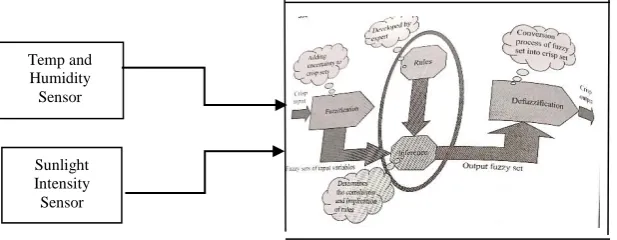
Figure 4.1 shows the fuzzy inference system schematic diagram with inputs from the DHT11 Humidity and Temperature sensor and the TSL2561 Light Intensity sensor.
Figure 3: Fuzzy inference system schematic diagram (Adapted from Padhy and Simon)[6]
The crisp values from the temperature and humidity, and light intensity sensors are input into the fuzzy logic control system. They are converted into fuzzy membership functions through the process of fuzzification before being fed to the fuzzy inference system where fuzzy rules are applied to determine the output fuzzy set. The fuzzy outputs are then converted back into crisp outputs through the process of defuzzification. The crisp outputs are then fed to the smart irrigation system to trigger an appropriate action (water amount).
B. Adding variables
The Fuzzy Logic Designer tool in MATLAB was used to design the basic smart irrigation system. The model has three inputs variables (humidity, temperature and light intensity) and one output variable (water amount) as shown in Figure 4.
Figure 4: Basic Fuzzy logic controlled smart irrigation system model design using MATLAB
C. Adding membership functions
The membership function editor was invoked to add membership functions for the model.
1. Inputs
The gaussian membership function was chosen for the inputs and the number of inputs was set at 3 with each input defined as shown below.
(a) Humidity
The membership function for humidity was given a range of 0 – 100 and was divided into three categories: Low (1 – 33), Moderate (34 – 66) and High (67 – 100) as shown in Figure 5.
Figure 5: Humidity membership functions
(b) Temperature
The membership function for temperature was given a range of 0 – 40 and was divided into three categories: Low (1 – 13), Moderate (14 – 26) and High (7 – 40) as shown in Figure 6 (a).
Figure 6 (a): Temperature membership functions Temp and
Humidity Sensor
(c) Light Intensity
The membership function for light intensity was given a range of 0 – 15 and was divided into three categories: Low (1 – 5), Moderate (6 – 10) and High (11 – 15) as shown in Figure 6 (b).
Figure 6 (b): Light intensity membership functions
2. Output: water amount
The gaussian membership function was chosen for the output and was given a range of 0 – 30 divided into three categories: Low (1 – 10), Moderate (11 – 20) and High (21 – 30) as shown in Figure 6 (c).
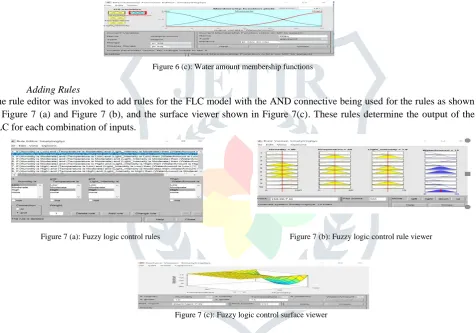
Figure 6 (c): Water amount membership functions
D. Adding Rules
The rule editor was invoked to add rules for the FLC model with the AND connective being used for the rules as shown in Figure 7 (a) and Figure 7 (b), and the surface viewer shown in Figure 7(c). These rules determine the output of the FLC for each combination of inputs.
Figure 7 (a): Fuzzy logic control rules Figure 7 (b): Fuzzy logic control rule viewer
Figure 7 (c): Fuzzy logic control surface viewer
V. SYSTEM OUTPUT
The rule viewer was used to show a sample of rules for different input combinations and the corresponding output for the FLC model. Assuming humidity to be the key determinant of the decision to trigger watering, the sample rules used hinged on each of the three member functions for humidity being held constant as the member functions for the other two inputs were changed at the same time.
A. Low Humidity
Membership functions for temperature and light intensity were changed while that for humidity remained fixed at low and the output water amount was noted (Figures 8 (a) to (f)).
Figure 8 (a): Low/Low/Low rule viewer Figure 8 (b): Low/Low/Low surface viewer
Figure 8 (e): Low/High/High rule viewer Figure 8 (f): Low/High/High surface viewer
B. Moderate Humidity
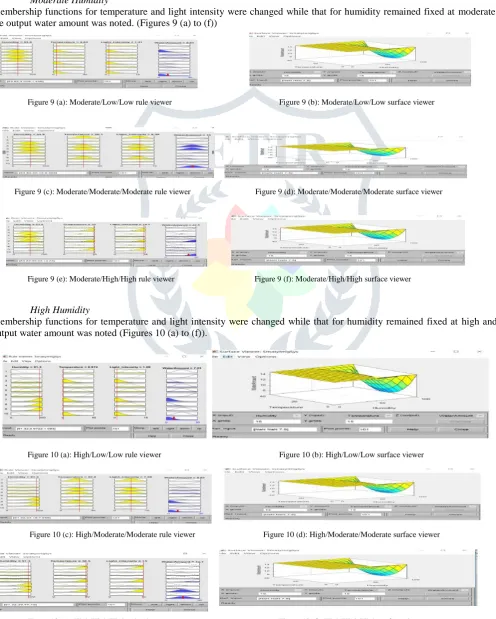
Membership functions for temperature and light intensity were changed while that for humidity remained fixed at moderate and the output water amount was noted. (Figures 9 (a) to (f))
Figure 9 (a): Moderate/Low/Low rule viewer Figure 9 (b): Moderate/Low/Low surface viewer
Figure 9 (c): Moderate/Moderate/Moderate rule viewer Figure 9 (d): Moderate/Moderate/Moderate surface viewer
Figure 9 (e): Moderate/High/High rule viewer Figure 9 (f): Moderate/High/High surface viewer
C. High Humidity
Membership functions for temperature and light intensity were changed while that for humidity remained fixed at high and the output water amount was noted (Figures 10 (a) to (f)).
Figure 10 (a): High/Low/Low rule viewer Figure 10 (b): High/Low/Low surface viewer
Figure 10 (c): High/Moderate/Moderate rule viewer Figure 10 (d): High/Moderate/Moderate surface viewer
The authors have presented the design of a basic fuzzy logic control model for application in a small-scale smart irrigation system which can enable a smallholder farmer manage tasks at his small plot with minimal human intervention. Fuzzy logic rules have been simulated in MATLAB and the corresponding outputs of the system have been shown.
VII. ACKNOWLEDGMENTS
The authors would like to acknowledge Parul University, Faculty of Engineering and Technology, Computer Science and Engineering for giving the opportunity and encouragement to make this submission to PiCET 2019.
.
REFERENCES
[1] H. Kang and G. J. Vachtsevanos, "Model reference fuzzy control," Proceedings of the 28th IEEE Conference on Decision and Control, Tampa, FL, USA, 1989, pp. 751-756 vol.1.
[2] J. R. dela Cruz, R. G. Baldovino, F. B. Culibrina, A. A. Bandala and E. P. Dadios, "Fuzzy-based Decision Support System for Smart Farm Water Tank Monitoring and Control," 2017 5th International
[3] K. Pernapati, "IoT Based Low Cost Smart Irrigation System," 2018 Second International Conference on Inventive Communication and Computational Technologies (ICICCT), Coimbatore, 2018, pp. 1312-1315.
[4] H. Ying, "A two-input two-output fuzzy controller is the sum of two nonlinear PI controllers with variable gains," [Proceedings 1993] Second IEEE International Conference on Fuzzy Systems, San Francisco, CA, USA, 1993, pp. 35-37, Vol. 1.
[5] Y. E. M. Hamouda, "Smart Irrigation Decision Support Based on Fuzzy Logic Using Wireless Sensor Network," 2017 International Conference on Promising Electronic Technologies (ICPET), Deir El-Balah, 2017, pp. 109-113.
[6] N.P. Padhy and S.P. Simon, Soft Computing with MATLAB Programming, Oxford University Press, 2015, 336.
[7] “How to set up the DHT11 Humidity sensor on Raspberry Pi,” http://www.circuitbasics.com/how-to-set-up-the-dht11-humidity-sensor-on-the-raspberry-pi/
![Figure 1: DHT11 humidity/temp sensor on Rasberry Pi[7]](https://thumb-us.123doks.com/thumbv2/123dok_us/1360154.1645156/1.595.181.418.624.695/figure-dht-humidity-temp-sensor-rasberry-pi.webp)