IJSRSET185301 | Published : 28 April 2018 | March-April-2018 [(5) 3 : 01-12 ]
Themed Section : Engineering and Technology © 2018 IJSRSET | Volume 5 | Issue 3 | Print ISSN: 2395-1990 | Online ISSN: 2394-4099
01
Analysis and Implementation of Q-Leach Protocol Based On
Genetic Algorithm for WSN
G.R. AnnushaKumar1, V. Padmathilagam2
1Assistant professor in Electronics and Communication Engineering, Annamalai University, Chidambaram,
Tamil Nadu, India
2Assistant Professor in Electrical and Electronics Engineering, Annamalai University, Chidambaram, Tamil
Nadu, India
ABSTRACT
Wireless sensor networks have gained widespread significance in recent times due to their immense potentials that could be tapped for a wide range of applications. The evolution of wireless network protocols like 4G, 5G etc. has further accelerated the research prospects of wireless sensor networks. Among the many features of WSNs, one of the most important factors is that they could be deployed in remote locations where human intervention or presence is not possible or undesirable. Nodes in remote locations are powered by batteries which cannot be often replaced and hence appropriate energy management strategies form an integral part of an effective WSN deployment. Routing plays an essential role and forms the backbone of any WSN implementation. A well-known routing technique known as LEACH protocol and its variants have been extensively investigated and experimented in this research paper and a comprehensive comparative performance analysis has been inferred from this research article. A modified hybrid fusion routing algorithm Q LEACH has been proposed in this paper and maximum lifetime of the first and half the nodes is optimized using Genetic algorithm, with help of this methods lifetime is increased.
Keywords : Wireless Sensor Networks, Routing, LEACH Protocol, Genetic Algorithm, Energy Management, Lifetime Of WSNs
I.
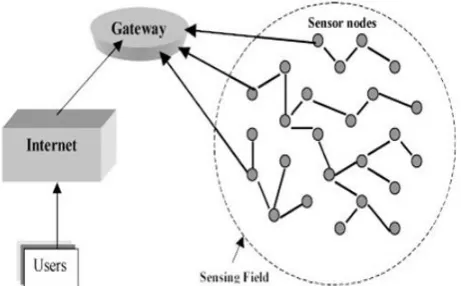
INTRODUCTIONWireless sensor networks have in recent times have seen an increased usage over a wide range of applications ranging from a simple and effective home monitoring system [1] [2] from a remote location, hospital management, military applications, monitoring of remote locations for possible disaster prediction and management [3]. A simple wireless
As seen from the above figure, WSN are comprised of a number of nodes deployed in the field under study and information from these sensors being sensed and transmitted in the form of packets of information continuously to the source through a gateway through the wireless transfer protocol. The information from these nodes could also be transmitted to cloud to enable the users to access required information as and when required from any point of the globe. A wireless sensor network system includes sensor mode, sink node and management node. A large number of sensor nodes are established in the monitoring area, constituting a network through the way of self-organizing. The data monitored [4] by sensor nodes is transmitted along other nodes, one by one, that will reach the sink node after a multi-hop routing and then reach the management node through the wired and wireless Internet. Routing forms the backbone behind any WSN implementation as the efficiency of any WSN network is determined by how effectively the information from the sensor nodes is being transmitted from source to destination. It is further defined by several attributes such as packet loss which defines the number of packets that have been effectively transferred to destination to the total number of packets in the initial stage ready for transmission. Selection of shortest path for routing the information from source to destination plays a major role in the working of a routing algorithm. The routing algorithm should also be able to ensure smooth transfer of information even in cases of unpredictable eventual failure of links, channels or nodes due to low levels of energy levels in the battery or battery failures. In such circumstances, the routing algorithm should be able to discover an alternate path in the shortest time possible so as to ensure a smooth transition and thereby prevent traffic congestion in the failed path.
Another essential criterion with respect to routing efficiency is the network lifetime [5], which is governed by the battery efficiency and their efficient use. WSN nodes operate in an unattended
environment and thus have irreplaceable batteries. Hence, an effective routing mechanism has been well investigated in this research paper in the form of the LEACH protocol, which is self-organizing and is characterized as an adaptive clustering protocol. It distributes energy among the nodes in a random manner and works on the principle of clustering.
II.
LITERATURE SURVEYRouting in WSNs is quite a challenging task due to the inherent incapability of using conventional IP based protocols [1] due to increasing maintenance of
drop ratio [4], and node lifetime issues [13], the storage and processing capabilities [14], of each node in the routing path, etc.
An energy aware routing algorithm has been implemented [3]by assuming that nodes in a network are equipped with global positioning system (GPS). Initially the nodes are deployed randomly, and after deployment all the sensor nodes inform the location information to the base station before the set -up phase and steady state phase. After the location information is collected in the base station, the network coverage area A is divided into groups A1, A2, A3, etc. The groups are created based on the location of the node and cluster head election probability p .The group’s creation is done with the BS and does not guzzle too much energy. In each group a CH is selected randomly for each round, therefore the elected cluster heads are distributed uniformly in the network. Then each CH sends identity message to the group member nodes before starting the steady state phase. In steady state phase, all the CHs receive and aggregate the data from group member nodes as in LEACH but instead of directly sending the data to the base station. Therefore, CH reduces the radio communication distance. In the proposed LEACH the residual energy remains up to 460 rounds when compared to LEACH which remains only for 193 rounds because the modified LEACH distributes the energy equally among all nodes compared to LEACH. In the modified LEACH first node dies in 240th round and in LEACH the first node dead at 102 rounds.
By using cluster heads and data aggregation[4] excessive energy consumption is avoided. Wireless sensor networks are often placed in an open environment and are susceptible to various attacks. Traditional cryptography methods are not effective in WSNs. More the initial energy more will be the net lifetime of the network, as the number of live nodes will be more. Simulation and analytical results reveal that the Modified LEACH protocol [10] outperforms
the traditional LEACH in every aspect. Major issues
here are, cluster head (CH) selection, forming clusters scheme and a routing algorithm for the data transmission between cluster heads and the base station. The cluster formation is carried out by exchanging messages between member nodes and the cluster head. The key function of the cluster head is rotated at predefined interval to assure even distribution of energy among the sensor nodes. The routing is based on the flawless hauling range data transmission between base station and cluster heads using multi-hop. Its performance is figured out by comparing with LEACH routing protocol using MATLAB. The advantage of LEACH is that each node has the same probability to be a cluster head, which makes the energy dissipation of each node be relatively balanced. Assisted LEACH (A-LEACH) achieves lessened and uniform distribution of dissipated energy by separating the tasks of Routing and Data Aggregation. It tells the concept of Helper Nodes which contain Cluster Heads for Multi-hop Routing. The designs of Q-LEACH for homogeneous networks, which establish stability period, network lifetime by optimization. In this paper, we have given a brief review of these techniques.
Clustering in WSN is the process of dividing the nodes of WSN into groups, where each group agrees on a central node, called the Cluster Head (CH)[15], which is responsible for storing the sensory data of all group members, and sending to the Base Station (BS). Cluster based routing is an effective research area in wireless sensor networks. The classical LEACH protocol [13],[15] has many advantages in energy
reach the base station. Every helper node chooses as the next hop, the node nearest to the base station from all its neighboring helper nodes. The good clustering algorithm cannot only reduce the energy consumption of the sensor nodes can also reduce communication interference, improve the efficiency of the MAC and routing protocols. Therefore, it is proposed that a highly efficient and stable rational algorithm has become an urgent need to solve the problem. In this paper, considering the residual energy for each node, a more efficient. After receipt this information, the base station calculates the average energy value of all nodes, the nodes with residual energy higher than average are considered as the candidate, then the base station will choose a group of cluster heads from the candidate using the simulated annealing to minimize the objective function. According to this Q leach sensor, nodes are implied in the territory. In order to acquire better clustering, we partition the network into four parts.
III.
Q-LEACH PROTOCOLIn Q-LEACH, network is partitioned into sub-sectors and hence, clusters formed within these sub-sectors are more deterministic in nature. Therefore, nodes are well distributed within a specific cluster and results in efficient energy drainage. Concept of randomized clustering as is given for optimized energy drainage is applied in each sector. Assigning CH probability P = 0.05 we start clustering process. Q-LEACH is a routing protocol, which chains the advantage of both locations based routing protocol and hierarchical based routing protocol. The restricted flooding concepts are exploited in which nodes that are located closer to the destination or in a promoting zone broadcasts the packet. Distance and forwarding zone information are calculated at the individual nodes to decide their advancement towards the destination. These nodes will show the packets and the process is repeated at each midway node until it reaches the destination and also uses clustering procedures in which nodes are convened into the cluster and cluster head is dispensed to each cluster to execute the data
combination and blending in order to diminish the energy consumed by nodes within the cluster.
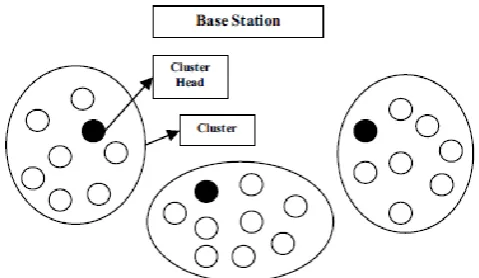
The hierarchical based routing protocol which is a cluster based protocol is the best protocol to reduce the useful energy consumption. Clustering is the task of grouping a set of objects in such a way that objects in the same group are more similar to each other than to those in other groups. In WSN, nodes are grouped into clusters and each cluster has a cluster head. The nodes in a cluster do not directly communicate with base station instead they send their data to the cluster head and then the cluster head send the aggregated data to the base station. The Fig 4 shows a clustered WSN in which three clusters are formed and each cluster is having a cluster head
Figure 2. Cluster formations in LEACH
Sensor node form clusters and the cluster heads act as routers to the sink. This will save energy since the transmissions will only be done by Cluster Heads (CHs) rather than all sensor nodes. Optimal number of CHs is estimated to be 5% of the total number of nodes. In the LEACH protocol selection of cluster head is done in two phases.
A. Setup Phase
( ) {
( ⁄ )} (1)
Here p is the desired percentage of cluster heads and r is the current round, G is the group of nodes that has not been the CHs in the last rounds. The sensor node that is selected as a CH in previous round is not selected in the next rounds until all other nodes in the network become cluster heads.
B. Steady Phase
In the study phase, nodes send their data to the cluster head using a TDMA schedule. TDMA schedule allots time slots to every node. The CH aggregates the data and sends it to the base station (BS). In the Fig 4, sensor nodes are grouped to form clusters and each cluster is having a Cluster Head. The GA operators still can’t stratify the optimization condition by desiring the optimal threshold value. The cluster head collects data from the nodes of its cluster is optimized, then it send the aggregated data to the base station. The nodes in the cluster do not directly communicate with the base station
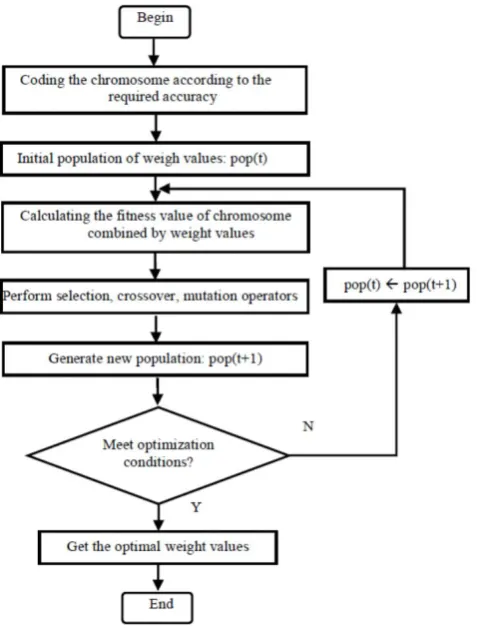
Figure 3. Flow chart of genetic algorithm for solving
wi
Using genetic algorithm to determine the optimal solution of each weight value. In genetic algorithm [17], four parameters are presented. The size of the population pop_size = 50, cross probability pcro = 0.8, mutation probability pmut = 0.1 and weight accuracy of influence factors e = 0.001. The use of genetic algorithm for solving the wi process as shown in Fig.6, the specific operations as follows.
1) Coding the chromosome according to the required accuracy In the paper, set influence factor of the weight value accuracy e = 0.001 .Using binary encoding, solutions of weight value will be divided into (1 -- 0)* (1e + 3) equal portions .The length of gene string of weight value is calculated by the formula.
(2) The total length of a binary string combined by weight value is the length of an individual. And the total length of weight value chromosome is 30 in this paper.
2) Initial population of weight values By the size of the population and the length of the individual obtained in 1), the initial population of weights can be obtained.
3) Calculating the fitness value of chromosome combined by weight values. Before getting the fitness value of the individual, the encoding of the individual is needed to decode and the data is normalized. Fitness function determines the evolutionary process of genetic algorithm. In this paper, the performance of the network is evaluated jointly by the survival time of the first and half of nodes. Through repeated simulations and constantly modifying the fitness function, fitness function is eventually identified as formula
Where FND is the lifetime of the first node, HND is the lifetime of the half of the nodes, represented by the number of rounds.
4) Perform selection, crossover and mutation operators
a) Selection Combine roulette wheel selection method and optimal individual preservation method in Q-LEACH. In roulette wheel selection method, chromosomes of high fitness values operate selection as a parent. The individual of the smallest fitness value is taken place by the historical best individual in the current population that can make the best individual into the next generation population.
b) Crossover Single potion cross is used in Q-LEACH, crossing the two neighboring individuals to generate more new individuals. If a cluster head node is crossed into an ordinary node, original cluster member nodes need to search a new cluster head.
c) Mutation Digit mutation is used in Q-LEACH, that is 0 to 1 or 1 to 0. 5) If the new weight value generated by GA operators still can't satisfy the optimization condition, then go to 3). Else draw the optimal weight values. After optimized by Genetic Algorithm, the individual with high fitness value corresponds to the first and half of the nodes.
IV.
RESULTS AND DISCUSSIONIn the proposed system, a fusion of LEACH is optimized by GA with first and half of the nodes and QDIR has been proposed in the form of Q-LEACH algorithm. It is a modification of the original LEACH algorithm where the behavior of the sensor nodes has been taken as an additional parameter and an evaluation formula modified accordingly. The degree of a node is computed based on its distance from others. A node x is considered to be a neighbor of another node y if x lies within the transmission range of y. Transmission range is the average distance of the all the nodes from the base-station.
The proposed algorithm is implemented in three steps, namely creation of network mode, assignment of initial energy and using the bubble sort algorithm based on distance metric of node to BS defined as
( )
√ ( ) ( )) ( ( ) ( )) (4)
Energy level in each cluster head is monitored using the pseudo code given below.
If (node_distance (i)>do)
S(i).E=S(i).E- ( (ETX+EDA)*(4000) +
Emp*4000*(node_distance(i)*node_distance(i)* node_distance(i)*node_distance(i) ));
Else
S(i).E=S(i).E- ( (ETX+EDA)*(4000) + Efs*4000*( node_distance (i)* node_distance(i) ));
For the next round r =1:1: rmax If (S(i).E >=Eavg) then
i = nominee_clusterhead //nominated for cluster-head selection
Calculate node-degree of the chosen nominee for cluster heads
If (node_degree>=avg_degree)
If the neighborhood of the nominee cluster head is not a cluster head then i=cluster head //cluster-head selected Dead node: if (S(i).E = 0) then
Dead=i //ith node dies
n=n-dead //n: decrease no of alive nodes Goto step-5
The following assumptions are taken into consideration.
There exists only one base station and it is fixed at a far distance from the sensor nodes.
The sensor nodes are homogeneous and energy constrained with uniform energy.
Sensor nodes are immobile and all nodes are able to reach BS.
The RAM size of each node must be sufficient enough to store the distance of the node from BS.
The base station is situated at the center of the area space.
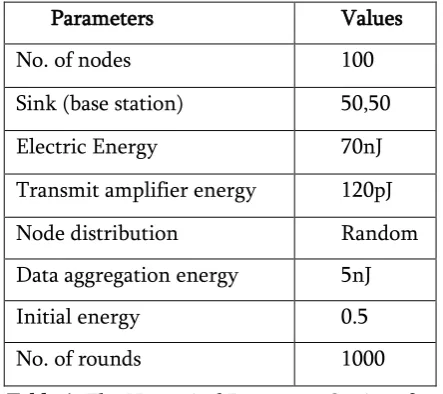
Parameters Values No. of nodes 100 Sink (base station) 50,50 Electric Energy 70nJ Transmit amplifier energy 120pJ Node distribution Random Data aggregation energy 5nJ Initial energy 0.5 No. of rounds 1000 Table 1. The Numerical Parameter Settings for
Experimentation Are Listed
According to this approach sensor, nodes are deployed in the territory and partitioned into four quadrants to improve the clustering process and thereby increase the network coverage. Additionally, the exact distribution of nodes in field is also well defined. Figure 5 describes the optimal approach of load distribution among sensor nodes.
Figure 4. Structure of Clustered Wireless Sensor Network
Moreover, it also presents an idea of efficient clustering mechanism which yields significantly better coverage of whole network. We deployed random nodes in a 100m×100m filed. Based on location information, network is divided into four equal parts, i.e, (a1, a2, a3, a4). Defining overall network area as below:
(5)
( ) (6)
Where, n = 4, and m = 100. Hence, overall field is distributed as follows:
(7)
The partitioning of network into quadrants yields in efficient energy utilization of sensor nodes. Through this division optimum positions of CHs are defined. Moreover, transmission load of other sending nodes is also reduced. In conventional LEACH cluster are arbitrary in size and some of the cluster members are located far away. Due to this dynamic cluster formation, a farther node suffers through high energy drainage and thus, network performance degrades. Whereas, in Q-LEACH network is partitioned into sub-sectors and hence, clusters formed within these sub-sectors are more deterministic in nature. Therefore, nodes are well distributed within a specific cluster and results in efficient energy drainage. Concept of randomized clustering as is given for optimized energy drainage is applied in each sector. Assigning CH probability P = 0.05 we start clustering process. In every individual round nodes decides to become CH based upon and threshold T(n) given as:
Algorithm 1 Setup Phase
1: begin
2: if node εG −→ G =nodes which did not become CHs in current EPOCH then
4: if (NUMBEROFCHs <= N/K_) then 5: TEMP=random number (0-1) 6: if (temp <= P
1−P(r,mod1/P) ) then 7: node=CH A
8: NUMBER OF CHs = NUMBER OF CHs+1 9: end if
10: else if (NODE BELONGS TO ==_ areaB_) then 11: REPEAT STEP 4 : 8
12: else if (NODE BELONGS TO ==_ areaC_) then 13: REPEAT STEP 4 : 8
14: else if (NODE BELONGS TO ==_ areaD_) then 15: REPEAT STEP 4 : 8
16: end if 17: end if 18: end if
Algorithm 1 defines CHs selection mechanism. Overall network is divided into four areas as: Area A, B, C and D. Initially, each node decides whether or not to become a CH. The node chooses a random number between 0 and 1. If this number is less than certain threshold T(n), and condition for desired number of CHs in a specific area is not met, then the node becomes a CH. Similarly the same process continues for the rest of the sectors and optimum number of clusters is formed. Selection of clusters will depend upon receiving Signal Strength Indicator (RSSI) of advertisement.
The working principle is depicted in figure 6. After the decision of clusters, nodes must tell CHs about their association. On the basis of gathered information’s from attached nodes, guaranteed time slots are allocated to nodes using Time Division Multiple Access (TDMA) approach. Moreover, this information is again broadcasted to sensor nodes in the cluster.
BS performs logical partitioning of network on the basis of gathered information’s. The network is divided into four quadrants and broadcasts information to nodes. On the basis of threshold some nodes are elected as CH in each division. Normal
nodes choose their CHs within their own quadrant based on RSSI. For association nodes send their requests to CHs. TDMA slots are assigned to every node for appropriate communication without congestion. Every node communicates in its allocated slot with its defined CH.
Figure 5. Working Principle of Q-LEACH
Algorithm 2 Node Association in Q-LEACH 1: N = Group of normal nodes
2: GC = Group of CHs 3: if N = (A, a1) then 4: Where
5: A = a1,a2,a3,a4
6: Check all possible ACHs 7: Check RSSI of CHs 8: Associate with ACHs 9: then
10: transfer of data occurs 11: end if
12: if N = (A, a2) then
13: Repeat step from 5 : 8 for BCHs 14: end if
15: if N = (A, a3) then
17: end if
18: if N = (A, a4) then
19: Repeat step from 5 : 8 for DCHs 20: end if
Algorithm 2 defines the association of nodes with their appropriate CHs. Non-CHs nodes will locate themselves in specified area they belong to. Then they will search for all possible CHs, and on the basis of RSSI they will start an association. This process will continue until association phase comes to an end. Once a cluster setup phase is complete and nodes are assigned to TDMA slots every node communicates at its allocated time interval. A reset of the time radio of each non-cluster head node will remain off in order to optimize energy utilization. When all nodes data are received at the CHs then, the data is compressed and is sent to BS. The round completes and new selection of CHs will be initiated for the next round. In proposing idea, we implement above mentioned concept of localized coordination in each sector area. We used the same radio model as discussed for transmission and reception of information from sensor nodes to CHs and then to BS. Packet length K of 2000 bits is used in our simulations.
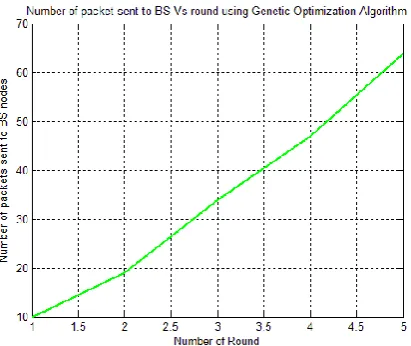
Figure 6. No of rounds vs no of packets send to the base station in LEACH protocol
A comparison of the number of packets sent to the BS in different rounds using different protocols using a genetic optimization algorithm is shown in figure 6. The life time of WSN depends upon the live
nodes with respect to rounding. The number of those nodes is alive in each round during the simulation. The nodes are randomly deployed creating n number of groups named as clusters using genetic optimization with membership function. First of all, it is needed to choose a cluster head for each cluster of membership functions. From the sender node, the data are transmitted to the cluster head of different regions of genetic rule.
Figure 7. Sum of energy of nodes vs Round
Figure 8. Dead Node Detection In LEACH Protocol
The genetic optimization algorithm is used to make the dead node as zero as shown in figure 9. The main concerns in WSNs are energy and network lifetime and there are many protocols introduce to overcome these concerns. LEACH with genetic optimization is an energy efficient protocol, which also prolong the network lifetime. But there is a drawback of this protocol that if the threshold is not reached, then there will be no communication and user will not come to know about dead nodes of network or all the nodes are dead in network. The genetic optimization rule is used to make the dead node zero.
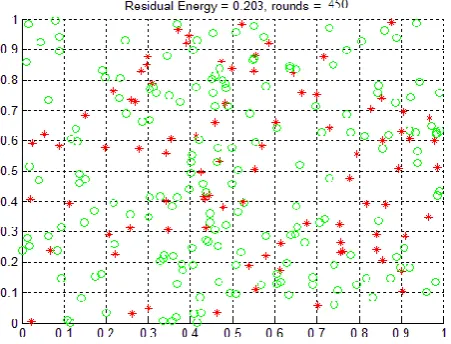
Figure 9. Residual Energy after Optimization
Figure 9. Shows the residual energy absorbed by the nodes and the nodes energy is optimized at the round of 450. The Cluster head’s receive and aggregate the data from group member nodes as in Cluster but instead of directly sending the data to the
base station that the remaining nodes be optimized and they get saturated by transferring the data to the cluster head. Therefore, CH reduces the radio communication distance. In the proposed LEACH the residual energy remains up to 460 rounds when compared to LEACH which remains only for 193 rounds because the modified LEACH distributes the energy equally among all nodes compared to LEACH.
Figure 10. Comparison between the Present Method and the Proposed Method
The Figure 10. Shows the comparison between the present method and the proposed method of LEACH by using GA. In that the Proposed method Q-Leach the false alarm get reduced even though previous method also negligible, if using genetic algorithm but in Q-leach the number round increases the lifetime of the sensors and the false alarm of the node get reduced even more number of sensors node increases. The life time of the sensors node is increases compare with the LEACH by using GA in Q-leach due to energy optimized.
V.
CONCLUSIONhead is allotted to each cluster. The cluster heads in each quadrant play a centralized role of coordinating the route discovery and route maintenance to ensure smooth packet forwarding to the next nearest cluster from source to destination. A localized broadcasting strategy is employed within the nodes of the cluster by RREQ prior to determination of shortest path. Thy hybrid routing algorithm is achieved by fusion of conventional LEACH and Q – DIR to form QLEACH and experimental results justify the superior performance of proposed Genetic algorithm in terms of energy consumption and network lifetime. The main aim of this work is to enhance existing protocol such that more robust and optimized results can be achieved. Q-LEACH significantly improves network parameters and seems to be an attractive choice for WSNs by extending and enhancing overall network quality parameters.
VI.
REFERENCES[1] Jihye Kim, Gene Tsudik (2009), ―SRDP: Secure route discovery for dynamic source routing in MANET’s‖, Ad Hoc Networks, 7(6): 1097-1109.
[2] Jin R, T. Gao, J. Song, J. Zou and L. Wang (2013), ―Passive cluster-based multipath routing protocol for wireless sensor networks‖, Wireless Networks, 19(8):1851-1866.
[3] Mohanty P and M Kabat M (2016), ―Energy Efficient Reliable Multi-path Data Transmission in WSN for Healthcare Application‖, International Journal of Wireless Information Networks, 23(2):162-172.
[4] Chao C, I. Li, C. Yang and J. Li (2011), ―An efficient diversity-driven selective forwarding approach for replicated data queries in wireless sensor networks‖, Journal of Systems Architecture, 57(9):830-839.
[5] Liu A, Z. Zheng, C. Zhang, Z. Chen and X. Shen (2012), ―Secure and Energy-Efficient Disjoint Multipath Routing for WSNs‖, IEEE
Transactions on Vehicular Technology, 61(7): 3255 - 3265.
[6] Kadri B, Moussaoui D, Feham M (2012), ―An efficient key management scheme for hierarchical wireless sensor networks‖, Wireless Sensor Network, 4(6):155 – 161. [7] Zhao L and Hong Z (2011), ―Improved
DV-Hop Localization Algorithm Based on Wireless Sensor Networks‖, Journal of Computer Applications, 31(5): 1189-1192. [8] Jubin Sebastian E, Sreeraj V.R and Tauheed U
Islam (2012), ― Location Based Opportunistic Routing Protocol for Mobile Ad Hoc Networks‖, American Journal of Engineering Research, 1(1):16 - 21.
[9] Ahn, C.W., Ramakrishna, R.S. (2002), ―A genetic algorithm for shortest path routing problem and the sizing of populations‖, IEEE Transactions on Evolutionary Computing, 6(6): 566–579.
[10] Ravneet Kaur, Deepika Sharma, Navdeep Kaur (2013), ―Comparative analysis of LEACH and its descendants protocols in wireless sensor network‖, International journal of P2P network trends and technology, 3(1):22- 27. [11] Shalli Rani, Jyoteesh Malhotra, Rajneesh
Talwar (2013), ― EEICCP—Energy Efficient Protocol for Wireless Sensor Networks‖, Wireless Sensor Network, 5:127-136.
[12] Doshi S, S. Bhandare, and T.X. Brown (2002), ―An On-Demand Minimum Energy Routing Protocol for a Wireless Ad Hoc Network‖, ACM Mobile Computing and Comm. Reviews, 6(3):50 - 66.
[13] Zhao Y, Wu L, Li F, Lu S (2012), ―On maximizing the lifetime of wireless sensor networks using virtual backbone scheduling‖, Transactions on parallel and distributed processing, 23:1528 – 1535.
[15] Dehghani, Shahrzad, Mohammad Pourzaferani, and BehrangBarekatain (2015), ―Comparison on Energy-efficient Cluster Based Routing Algorithms in Wireless Sensor Network‖, Procedia Computer Science, 72:535-542.
[16] Jin R, T. Gao, J. Song, J. Zou and L. Wang (2013), ―Passive cluster-based multipath routing protocol for wireless sensor networks‖, Wireless Networks, 19(8):1851-1866.