Consumer Behavior In Situations Recession
Behrije RamajUniversity 'Haxhi Zeka'/ Peja, Kosovo E-mail: [email protected]
ABSTRACT: The recession is exerting a broad influence on consumer trends and attitudes. The level of uncertainty in the economy and society is already high. Understanding the psychology of a customer their motivations, behaviors, thoughts, feelings, reasons, ways of processing information and making decisions and how they affect the customer or influenced by socioeconomic environment poses a substantial advantage in today's society . Recessions have impacts buyers, to individuals and to the enterprise. Consumer behavior is the study of how individuals, groups and organizations select, buy, use the goods, services, ideas or experiences to satisfy their needs and desires. The study of consumers creates opportunities for improving products or services or presentation, pricing, determination of the distribution network, communication messages and develop other marketing activities. Understanding consumer behavior is the key to a successful business. While it is important that the products or services that will be offered good quality, clear recognition of behavioral patterns will give customers the opportunity to refer to their needs as best it resulting in a business very successful. Understanding the customer's mind and heart is a very complex issue. If consumer behavior would be easy to explain, then the products will be sold as easily as projected, all ads would be effective, the economy would have efficiency and marketing would be a fairly easy prospect.
Keywords : Consumer behavior, recession, Motivation
1
I
NTRODUCTIONConsumer behavior has a huge impact on the quality of life of people and the environment. Customers go through a journey far more favorable than the first time because they are more educated and informed than before and have the opportunity to choose significantly more favorable alternatives. Customers evaluate the bids and determine which bid is perceived that provides the desired value.After treatment of the theoretical aspects of consumer behavior, this paper includes measuring the impact of the recession on consumer behavior .For do re-search, we have developed an online poll run social networks for consumers to understand consumer behavior. The purpose of this paper raises a number of other preliminary questions as:
1. What influences consumer behavior?
2. The impact of recession on consumer behavior in the phase of purchasing decisions?
2.
T
HE CONTRIBUTION OF THE STUDYWe believe that this study brings its contributions through: 1) Review of the literature, studies and research carried
out in relation to consumer behavior in situations re-cession.
2) Given that the country has very few studies conduct-ed on this field, we hope that this study will make a valuable contribution.
3) Results of the study can be used by different entre-preneurs to understand that things have priority for consumers in reducing economic situation.
2.1 Methodology
During the treatment of this paper will collect data using com-bined some of the scientific research methods to arrive at the results of the study in order to have the answers to research questions posed. To achieve the goal of the study are using the methods listed below:
a) Method of interview through questionnaires online so-cial networks
b) Method comparison
c) Review of the literature Information is gathered and processed along several main stages, where:
The first phase consisted of research and information gather-ing. The study of literature includes the study of books, arti-cles, conference papers, other scientific research which pre-sent similar situations recession consumer behavior. By browsing the literature, I noticed that no foreign material which describe this topic but very little work in language and litera-ture about the impact of the recession shipe consumer behav-ior. The second phase consisted of a number of interview re-spondents through online questionnaires that are currently users of social networks. The first part of the questionnaire is mainly composed of general questions which aim was to re-trieve results based on the data while the second part is pre-cisely the behavior of consumers in recession situation. This study was conducted in September 2013 on consumer behav-ior in situations recession questions were the same for all re-spondents. Results and conclusions of this research given further in this paper.
3.
CONSUMER
BEHAVIOR
AND
TREATMENT
THEORETICAL
3.1 Important psychological processes
Figura 1. Model of consumer behavior
Source; Kotler&Keller (2012) 3.2 Motivation by Frojdi, Maslow, Herzberg
An individual has a variety of needs at a particular time. They may be biological as hunger, thirst, or driven by psychological needs special moments in human life. A motive is basically a human need which makes pressure and pushes the latter to act. People have many needs at any time. Some needs are biogenic tension stemming from a psychological condition as thirst, hunger or discomfort. While some other needs are psy-chogenic (derived from a psychological state of tension as the need for recognition, appreciation or respect, or that of belong-ing). Motive is a need sufficient incentives which pushes a person to do something. Theories better known to human mo-tivation are: Freud's theory, the theory of Herzbergut and Maslow's theory.
Freud's Theory- Freud's theory. Sigmund Freud asserts that the psychological forces that push a person in decision making are deeply unfamiliar and a person can not understand its mo-tivations.When a person identifies a particular brand, he will react to it. Size, colors, message or brand name to inspire cu-riosity and excitement it special. a technique called it the rank, explains the causes and levels of motivation for individuals (Elmazi &Bytyqi, 2007)
Maslow's Theory .-Abraham Maslow sought to explain why people are driven to a certain pointin time, from a certain mo-tive. According to the author there is a hierarchy of needs ranging fromphysiological and grow those specific classes. Importantly, according to the author, is to firstunderstand that people will begin to satisfy their basic needs and necessary and only after they meet these, then it will start to look for the needs of higher rank ( Maslow ,1954)
Figura 2. Hierarchy of Needs
Source; Maslow Abraham (1954)
Herzberg Theory.-The author has developed the socalled "two factor theory" which distinguishes discontent on the one hand and on the other hand satisfaction (in both cases the author means the factors that cause this condition). Lack of discontent is not enough as the motive, should ekszistojë fac-tor that causes pleasure to have success.
3.3 Factors influencing consumer behavior
Marketers must fully understand the theoretical as well as practical consumer behavior. Purchasing behavior is influ-enced by cultural factors, social and personal them.
Cultural factors
Cultures, subculturesand social classes are important infl en-ces on consumer behavior. Culture is a determinant factor of human behavior and desires. Throughout his life a child gets a set ofvalues, perceptions and preferences through family and other important institutions. Each culture consists of a set of subcultures, which provide a more individualized society members. These subcultures include elements such as: reli-gion, ethnicity, and citizenship. When subculturesgrow signifi-cantly, companies often develop marketing strategies and pro-grams to serve them.All societies manifest social layers. Often these take place as a social class, relatively homogeneous, located under a separate hierarchy, where members of the same class share their same values, in terests and behavior. Social classes have more features. First, members of the same class behave almost in the same way and that is differ-ent from the behavior of members ofother classes. They differ in the way we dress, preferences and many other elements. Secondly,people are perceived based on social classes, such as those thought to have superior or inferiorpositions. Thirdly, social class is identified by a number of variables such as em-ploy- ment, income, health, education, and orientation towards specific values r at her than to a particular variable. Fourth, individuals can move in different social classes throughout their lives
Social factors
groups are primary groups (family, friends, neighbors, and as-sociates, those with whom the person interacts correctly and consistently unofficially). People also belong to the fringe groups, such as religious groups, professional, business communities, which tend to be more formal and require less continuous interaction. People are influenced by groups that do not belong, like the secessionist groups or those Aspiration. Aspiration groups are those groups that a person wants to join. Secessionist groups (dissociative) are those values o r behav-iors that an individual refuses.Manufacturers of products and brands with influential groups are great need to determine how to reach and influence the opinion leader of these reference groups. Opinion leader is a person in informal, in communica-tions regarding product offers advice or information about a product or a certain category of products, as p.sh which of several brands is the best, or about how to to use a particular product. Family is the most important purchasing organizations in society and family members constitute the most influential primary reference. People take part in as many family groups, clubs and organizations. Position of person in each group can be determined along with the role and status. Social role con-sists of expected activity performed by a person. Each role carries a status (sales manager has higher status than the employee).
Personal factors
Buying and influenced by personal characteristics of the per-son who buys. These include age, life expectancy rates, em-ployment and different economic circumstances, personality and selfesteem, as well as the lifestyle and values. E ach of these features affects the buying decision so it is important for marketers to follow them closely and learn the trends of the future. Age and level of life cycle, people buy different products throughout their life. Taste and preferences in clothing, food, equipment is quite related to age. Employment and economic circumstances. Employment impacts directly on the level of consumption. Workers will buy some plain clothes work, unlike a senior officer who is looking for a luxury clothing. Occupation also affects purchasing behavior. A president of a company shall be vested suits, will fly by plane because it is economical-ly better, while a laborer working to buy uniform, work shoes and bags i take wing to lunch with him. Each person has their own personality characteristics that affect purchasing behavior. Customers frequently choose and use brands that have a compatible personality with it's own conception (how she sees the man himself). People for the same subculture, social class and occupation may be managed by different life styles. The life style is an expression of a person to live in the world as expressed in activities, areas that interest and opinions.
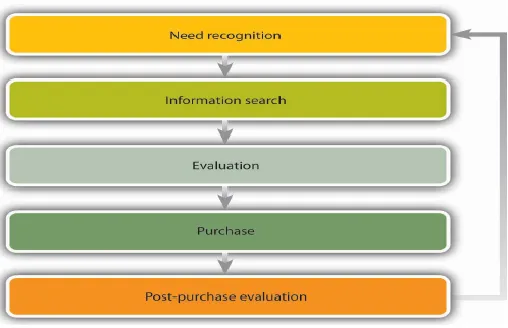
Fig 3. The model of five stages of the consumer buying pro-cess
Source; Elmazi Liliana & Bytyqi Shaip (2007)
4.
PRESENTATION
OF
FINDINGS
4.1. Presentation of findings
Presentation of the results obtained from research conducted on local consumers brought their recesoni situations. The re-search was conducted using the method of the survey via online questionnaires in order to reach the desired outcome for the understanding of the situation of financial crisis which aspects give you the priority customers primarily in selection of products / services. The method of formulating questions in this survey is similar to pyetjete directed to a survey conducted in the United States by Harris Ineractive a study that was con-ducted in March 2011 (Humphrey Taylor, 2011) . The wording of the questions the same is done with the sole purpose to see whether the same priority in situations of recession. These questions are answered online consumers from 40 to 36 were selected
4.1.2. Discussion of analysis / research
past and this leads to prefe ences for products / services in situations of recession. Employment affects how consumers deal with a situation of severe economic depending on how they are employed fulltime work or are a student, unemployed or retired this reflects their current financial situation. The re-sults shows that the percentages are separated at one point had it mostly dominated by the figure of unemployed and stu-dents But some of them are employed with a percentage of 19.4% of fulltime work. Monthly household income of a family, according to research varies from 200 500 euros in a high percentage. By papers based that a family consists of 4 7 members of the monthly income that are not considered suffi-cient for a family this fact shows that the recession affects many more of these families than to families whose income is higher than 1000 financial euro. Condition which found re-spondents in this period in a high percentage of 69.4% have a good fit is good monthly income had it going like that in the future have a higher financial stability. To the questions as to which things you grant a higher priority and how the recession affects consumer behavior in purchasing decisions. Below we have the results from the surveyed made . Information about purchasing products or services in a high percentage of the take from family or cronies. In addition to a large extent influ-ence the advertising still thought that advertising does not show real properties and attributes of a product therefore has a lack of confidence. Lacking confidence to retailers, newspa-pers or magazines from this shows that consumers decide not to buy something based only on the seller. The difficult finan-cial situation is determining what criteria are based on con-sumers when deciding to purchase products or services, so at this stage should know what the select . As basic criteria are price and quality since they do not have the opportunity to watch other brand attributes as poor financial situation does not allow this. In difficult financial situation should know how many times a year do buying luxury products a large percent-age of the respondents answered that twice a year, making purchases because not afford while a small percentage of them once a month . Products twice and services that have more priority to be selected in situations recession in a high percentage përzhgjedhën food products. This result shows that such a situation can not be thought of buying luxury prod-ucts or services. Countries where purchases are mainly per-forms shopping centers of the city, far more purchases are not carried in stores and very few make online purchases because they have the knowledge and confidence to buy online. Things that have the least priority when placed in a situation of reces-sion are not going to restaurants for lunch eaten if you are not in a good financial situation also will not buy brand products. Services which have been used as the hairdresser getting, barber or hair stylist in recession situations are not their priori-ty at a high level of repealing . So little if any spending for the-se the-services in order to save money . Investing money in a diffi-cult economic situation is a diffidiffi-cult decision to take as we have known where to invest to create a better economic stabil-ity. Results show that a high percentage will make buying a home and starting a business but such a decision in a situation like this, it provides high stability.
Comparison of results of research on the results of Harris In-teractive
The wording of questions similar to our study of Harris Interac-tive study is done with the sole purpose to see whether the same priority in situations of recession. Buying brands and going to restaurants for lunch eaten were not priority custom-ers in the USA and also our results show that we are not the priority to purchase brand products as well as going to restau-rants. Customers in the United States had canceled services to the hairdresser / stylist in this difficult financial period the same actually show the results of our research as a high per-centage of the respondents would also cancel the hairdresser or stylist services
5.
C
ONCLUSIONCulture and social classes have high influence on consumer behavior. Culture is a determining factor on human behavior and desires. Buying influenced by personal characteristics of the person who buys. Age, employment, occupation and life-style affect the decisionmaking process, what things are priori-tized in situations recession. Consumer behavior in the situa-tion varies considerably in relasitua-tion recession when economic growth after the hulumtiti conducted is shown that in large measure priortiet change in the selection of products / services as a priority since they already reach to meet the needs espe-cially the base Kosovar families because income is not very high of course to those families that have a defined work full time and seasonal non financial stability even slightly higher in case of crisis mainly the major factors that influence decisions to or consumed something for the whole family is non-consumer. Monthly household income not considered sufficient that influence decisions to buy products. The difficult financial situation is choice decisive criteria when deciding to perform a purchase. Price and quality are the main determi-nants in this period. Shopping centers are the most frequented places where the purchases. As part of the measures to be take by the respondents to save money as their priority would not be buying brand products and buying luxury products.
R
EFERENCES[1] Ceku Bardhy & Nail Reshidi 'Marketing' Prishtina, University Royal, Illyria, 2006.354 p.
[2] Ceku Bardhyl & Ali Hamiti & Deari Hasim '’Principles of Marketing'’Tirana; Progress, Tetovo, 2011
[3] Duke Xh.Artan '’Behavior Konsumatoreve'' Tirane, 2009.
[4] Economicus 4 (Tourism where are you going?), The scientific journal of the Faculty of Economics No. 4, Autumn 2009.
[5] Elmazi Liliana Bytyqi Shaip, ‘’Marketing Manage-ment’’ Pristina. 2007
[7] Kotler P. & Keller. KL, 2012 Marketing Management. 14 ed. Upper Saddle River: Pearson Oxford: But-terworth Heinemann publications.
[8] Abraham Maslow's 8 '’Motivation and Personality,' 'Harper and Row 1954
[9] George E. BELCA & Michael A. BELCA '’Advertising and Promotion;Integration Perspective Mar-kentingut communications’’, seventh edition.
[10]www.harrisinteractive.com)
[11] https://adobeformscentral.com/?f=ks4YViT0dcSNn