evolution
Gonzalo R Ordoñez
*
, LaDeana W Hillier
†
, Wesley C Warren
†
,
Frank Grützner
‡
, Carlos López-Otín
*
and Xose S Puente
*
Addresses: *Departamento de Bioquímica y Biología Molecular, Facultad de Medicina, Instituto Universitario de Oncología, Universidad de Oviedo, C/Fernando Bongera s/n, 33006 Oviedo, Spain. †Genome Sequencing Center, Washington University School of Medicine, Campus Box 8501, 4444 Forest Park Avenue, St. Louis, Missouri 63108, USA. ‡Discipline of Genetics, School of Molecular & Biomedical Science, The University of Adelaide, 5005 South Australia, Adelaide, Australia.
Correspondence: Xose S Puente. Email: [email protected]
© 2008 Ordoñez et al.; licensee BioMed Central Ltd.
This is an open access article distributed under the terms of the Creative Commons Attribution License (http://creativecommons.org/licenses/by/2.0), which permits unrestricted use, distribution, and reproduction in any medium, provided the original work is properly cited.
Gastric gene loss in Platypus
<p>Several genes implicated in food digestion have been deleted or inactivated in platypus. This loss perhaps explains the anatomical and physiological differences in the gastrointestinal tract between monotremes and other vertebrates and provides insights into platypus genome evolution.</p>
Abstract
Background: The duck-billed platypus (Ornithorhynchus anatinus) belongs to the mammalian subclass Prototheria, which diverged from the Theria line early in mammalian evolution. The platypus genome sequence provides a unique opportunity to illuminate some aspects of the biology and evolution of these animals.
Results: We show that several genes implicated in food digestion in the stomach have been deleted or inactivated in platypus. Comparison with other vertebrate genomes revealed that the main genes implicated in the formation and activity of gastric juice have been lost in platypus. These include the aspartyl proteases pepsinogen A and pepsinogens B/C, the hydrochloric acid secretion stimulatory hormone gastrin, and the α subunit of the gastric H+/K+-ATPase. Other genes
implicated in gastric functions, such as the β subunit of the H+/K+-ATPase and the aspartyl protease
cathepsin E, have been inactivated because of the acquisition of loss-of-function mutations. All of these genes are highly conserved in vertebrates, reflecting a unique pattern of evolution in the platypus genome not previously seen in other mammalian genomes.
Conclusion: The observed loss of genes involved in gastric functions might be responsible for the anatomical and physiological differences in gastrointestinal tract between monotremes and other vertebrates, including small size, lack of glands, and high pH of the monotreme stomach. This study contributes to a better understanding of the mechanisms that underlie the evolution of the platypus genome, might extend the less-is-more evolutionary model to monotremes, and provides novel insights into the importance of gene loss events during mammalian evolution.
Published: 15 May 2008
Genome Biology 2008, 9:R81 (doi:10.1186/gb-2008-9-5-r81)
Received: 16 December 2007 Revised: 4 April 2008 Accepted: 15 May 2008 The electronic version of this article is the complete one and can be
Background
A major goal in the sequencing of different genomes is to identify the genetic changes that are responsible for the phys-iological differences between these organisms. In this regard, the comparison between human and rodent genomes has identified an expansion in rodents of genes that are implicated in fertilization and sperm maturation, host defense, odor perception, or detoxification [1-3], confirming at the genetic level the physiological differences in these proc-esses between humans and rodents. Additionally, the devel-opment of specific biological processes during evolution, for example the production of milk in mammals, has been accompanied by the appearance of novel genes that are
impli-cated in these novel functions, such as casein and α
-lactalbu-min [4]. Therefore, it appears that the acquisition of novel physiological functions during vertebrate evolution has been driven by the generation of novel genes adapted to these newer functions. However, although gene gains constitute an intuitive mechanism for the development of novel biological functions, gene losses have also been important during evolu-tion, both quantitatively and qualitatively [5-9]. The recent availability of numerous vertebrate genomes has opened the possibility to perform large-scale evolutionary analysis in order to identify differential genes responsible for the specific differences in particular biological processes.
The duck-billed platypus (Ornithorhynchus anatinus) repre-sents a valuable resource for unraveling the molecular mech-anisms that have been active during mammalian evolution, due both to its phylogenetic position and to the presence of unique biological characteristics [10]. Together with the echidnas, platypus constitutes the Monotremata subclass (prototherians); this is one of the two subclasses into which mammals are divided, together with therians, which are fur-ther subdivided into marsupials (metafur-therians) and placental mammals (eutherians) [11]. The appearance of mammal-spe-cific characteristics such as homeothermy, presence of fur, and mammary glands makes this organism a key element in elucidating the genetic factors that are implicated in the appearance of these biological functions. Nevertheless, since the last mammalian common ancestor, more than 166 million years ago (MYA) [12,13], other characteristics have emerged, such as the presence of venom glands or electroreception, and some vertebrate characteristics have been lost, resulting in the absence of adult teeth or a functional stomach [14,15].
In this work, we show that there has been a selective deletion and inactivation in the platypus genome of several genes that are implicated in the activity of the stomach, including all genes encoding pepsin proteases, which are involved in the initial digestion of proteins in the acidic pH of the stomach, as well as the genes required for the secretion of acid in this organ (Figure 1). The loss and inactivation of these genes pro-vide a molecular basis for understanding the mechanisms that are responsible for the absence in platypus of a functional
stomach, and expand our knowledge of the evolution of mam-malian genomes.
Results and discussion
Loss of pepsin genes in the platypus genome
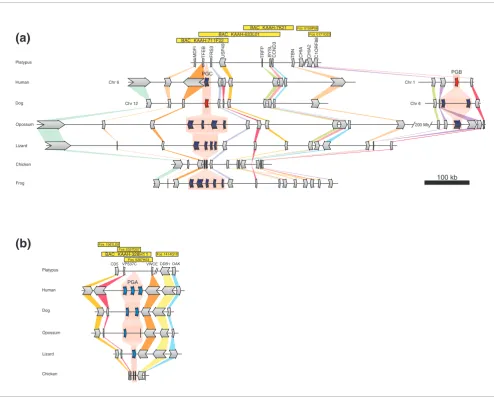
During the initial annotation and characterization of the plat-ypus genome, we noticed the absence of several protease genes in this organism that were present in other mammalian species [2,10]. Most of these lost protease genes encode mem-bers of rapidly evolving protease families, including proteases that are implicated in immunological functions, sperma-togenesis, or fertilization [2,16]. However, when we per-formed a further detailed analysis of all of these protease genes lost in platypus, we observed that those encoding three major gastric aspartyl proteases (pepsinogen A, pepsinogen B, and gastricsin/pepsinogen C) were also absent from the platypus genome assembly. These proteases are responsible for the proteolytic cleavage of dietary proteins at the acidic pH of the stomach, and have been highly conserved through evolution, from fish to mammals and birds [17]. The genes encoding these proteases (PGA, PGB, and PGC) are located in different chromosomal loci, whose overall structure has also been well conserved in most vertebrate genomes, including platypus (Figure 2). Therefore, it appeared unlikely that their absence in platypus could be due to the incompleteness of the genome assembly in a specific chromosomal region. Moreo-ver, analysis of more than 2 million trace sequences not present in the assembly and expressed sequence tag (EST) sequences from different platypus tissues [10] also failed to reveal the existence of any of these pepsinogen genes, rein-forcing the hypothesis that they had been specifically deleted in the genome of this mammal.
To investigate this possibility further, we first compared the genomic organization of these three aspartyl protease genes -PGA, PGB and PGC - in the genomes of human, dog, opos-sum, chicken, lizard, and frog [18-21]. It is well established that the genes encoding pepsinogens have undergone several expansions during vertebrate evolution, leading to the pres-ence of at least three to six distinct functional members in the genomes of these organisms (Figure 2a). Additionally, a duplication event in PGC in the therian lineage has resulted in the formation of PGB, which appears to be functional in opos-sum and dog, and in the latter has probably replaced the func-tion of PGC, which has been inactivated by pseudogenizafunc-tion. The loci containing these pepsinogen genes have been highly preserved through evolution, and their flanking genes are also perfectly conserved in both order and nucleotide sequence in vertebrate genomes (Figure 2a).
cor-responding to murine pepsinogen A failed to hybridize with the analyzed platypus BACs or fosmids spanning the regions of interest (see Additional data file 1). Moreover, complete sequencing of the platypus genomic regions flanked by TFEB and FRS3 as well as by C1orf88 and CHIA2 failed to detect any genes encoding pepsinogen C or pepsinogen B, respec-tively. Additionally, and in order to test the possibility that pepsinogen genes have been transposed to other loci during platypus evolution, a Southern blot analysis with the same probe was performed using total genomic DNA. This analysis resulted in the absence of hybridization when genomic DNA from platypus and one echidna species (Tachyglossus aculeatus) were used, whereas the same probe readily detected two hybridization bands in more evolutionary dis-tant species such as lizard (Podarcis hispanica) and chicken (data not shown).
Together, these data indicate that the genes encoding these gastric proteases have been specifically deleted in the genome of monotremes, probably resulting in important differences in the digestion of dietary proteins in these species when com-pared with other vertebrates.
Loss or inactivation of platypus genes implicated in stomach acid secretion
Pepsinogens are synthesized by chief cells in the oxyntic glands of the stomach as inactive precursors that become acti-vated when they are exposed to the low pH of the gastric fluid [22]. The secretion of hydrochloric acid is stimulated by the gastric hormone gastrin, which is released by enteroendo-crine G cells that are present in pyloric glands in response to amino acids and digested proteins. To try to extend the above findings on the absence of pepsinogen genes in platypus, we next evaluated the possibility that the gene encoding gastrin (GAST) could also be absent from the platypus genome.
[image:3.612.55.556.84.469.2]Scheme of the eutherian gastrointestinal system, showing gastric glands and specific cell types
Figure 1
Scheme of the eutherian gastrointestinal system, showing gastric glands and specific cell types. Proteins secreted by each cell type and directly implicated in food digestion are indicated, highlighting in red those proteins that are absent in platypus. *Gastric intrinsic factor is produced by parietal cells in humans but in the pancreas of monotremes and other mammals.
Oxyntic gland
Mucous cells
G cells
Pyloric gland
Ductal cells
Acinar cells
Acinus
Duodenum
Pancreas
Stomach
- Trypsinogens - Chymotrypsinogens - Pancreatic proelastase - Procarboxypeptidase A - Procarboxypeptidase B - Pancreatic amylase - Pancreatic lipases
- Gastrin Mucous cells
Parietal cells
Enteroendocrine cells
Chief cells - Cathepsin E
- Pepsinogen A - Pepsinogen B/C - Acid secretion
- Gastric intrinsic factor*
H /K ATPase subunit+ +
H /K ATPase subunit+ +
- Mucins
- Chymosin
- Enterokinase
Enterocytes, Brunner, K cells
- Gastric inhibitory polypeptide - Vasoactive intestinal polypeptide - Cholecystokinin
After comparative genomic analysis following the same strat-egy as in the case of pepsinogen genes, we failed to detect any evidence of the presence of GAST in platypus (see Additional data file 1), which suggests that acid secretion might also be impaired in this species. Consistent with this observation,
parallel genomic analysis also showed that the α subunit of
the H+/K+-ATPase (ATP4A), which is responsible for the
acidification of the stomach content by parietal cells, has also been deleted from the platypus genome. This gene, which is present from fish to amniotes, has been highly conserved through evolution but is absent from the platypus genome assembly (Figure 3a). Also similar to the case of pepsinogen
genes, the ATP4A-flanking genes (TMEM147 and
KIAA0841), which are present in fish, therians, and chicken, were readily identified in platypus. Thus, analysis of a fosmid clone corresponding to this region with a probe for the most proximal gene (TMEM147) resulted in detection of a specific hybridization band in platypus (see Additional data file 1). However, no hybridization bands could be detected in platy-pus fosmid KAAG-0404B19, or total genomic DNA from plat-ypus and T. aculeatus when using a human derived ATP4A probe, which otherwise recognized specific bands in mouse, chicken, and lizard (Additional data file 1 and data not shown). These results extend the above findings on gastric
[image:4.612.57.551.85.484.2]Deletion of pepsinogen-coding genes in the platypus genome
Figure 2
Deletion of pepsinogen-coding genes in the platypus genome. (a) Synteny map of the loci containing PGB and PGC in vertebrates shows a strong conservation of the genes encoding pepsinogen C and its flanking genes, with the exception of platypus, in which PGC has specifically been deleted. The figure also shows how the gene encoding pepsinogen B appeared in therians as a result of a duplication of PGC to a nearby locus, followed by a translocation. The corresponding region in the platypus genome lacks any pepsinogen-coding gene. Functional pepsinogen genes are colored in blue, whereas pepsinogen pseudogenes are in red. For human and dog, which underwent a translocation of the PGB locus, chromosomes are indicated on the left. The genome sequences analyzed are from platypus (Ornithorhynchus anatinus), human (Homo sapiens), dog (Canis familiaris), opossum (Monodelphis domestica), lizard (Anolis carolinensis), chicken (Gallus gallus), and frog (Xenopus tropicalis). (b) Synteny map of the PGA locus in different vertebrate species shows the deletion of this gastric protease gene in the platypus genome. Bacterial artificial chromosomes (BACs) and fosmids used in the study are indicated at the top of each panel. Gene colors and scale are the same as in panel a.
Frog Chicken Opossum Dog Human
PGB MDFI TFEB FRS3 TRFP BYSL CCND3 TBN CHIA CHIA2 C1ORF88
PGC
USP49
BAC KAAH-71 1F22
BAC KAAH-633L01
(a)
100 kb
Platypus
CD5 VPS37C VWCEDDB1DAK
Chicken Lizard Opossum Dog Human
PGA
BAC KAAH-328H1 1
Fos 0287H03 Fos 0357D07 Fos 1061L09
Fos 1414G10
(b)
Chr 6 Chr 1
Chr 12 Chr 6
200 Mb Platypus
Lizard
Fos 0109P06 Fos 0171O23
protease genes and demonstrate that other genes involved in the digestive activity of gastric juice have also been selectively deleted from the genomes of monotremes.
We next examined the possibility that mechanisms distinct from those involving the specific deletion of gastric genes could also contribute to the apparent loss in platypus of evo-lutionarily conserved digestive functions. This analysis led us to conclude that two well known gastric genes - namely CTSE
and ATP4B [23-25], which encode the aspartyl protease
cathepsin E and the β subunit of the H+/K+-ATPase,
respec-tively - have been inactivated by pseudogenization. Thus, we first observed that the platypus genome contains sequences with high similarity to both gastric genes in the correspond-ing syntenic regions, suggestcorrespond-ing that CTSE and ATP4B could indeed be functional genes in platypus. However, further detailed analysis of their nucleotide sequence revealed that CTSE is nonfunctional in this species due both to the presence of a premature stop codon in exon 7 (Lys295Ter) and to the loss of six of its nine exons. Similarly, the gene encoding ATP4B has been pseudogenized in platypus because of the presence of premature stop codons in exons 3 and 4 (Tyr98Ter and Lys153Ter), as well as a frameshift in exon 7 (Figure 3b). This observation, together with the loss of ATP4A
in platypus, confirms the absence of a functional H+/K+
-ATPase in this vertebrate and provides at least part of the explanation for the lack of acid secretion in the platypus stomach; this is a characteristic feature of monotremes, whose gastric juice is above pH 6 [14].
Loss of gastric genes during platypus evolution
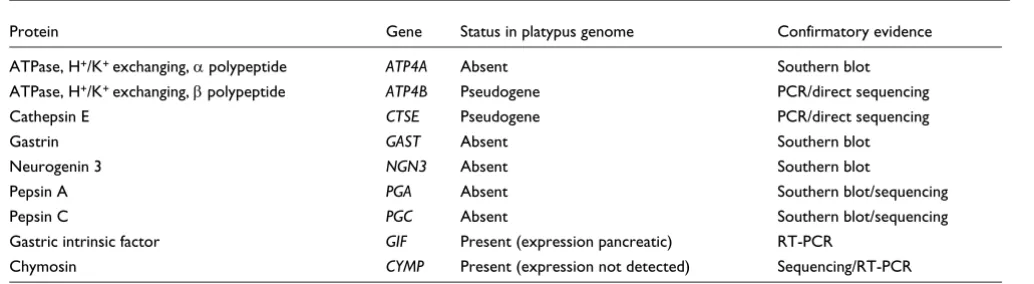
The mammalian stomach is lined with a glandular epithelium that contains four major cell types [26]: mucous, parietal, chief, and enteroendocrine cells. The data presented above show that the genes encoding different products of these four major cell types of the gastric glandular epithelium have been selectively deleted or inactivated during monotreme evolution (Figure 1 and Table 1). Although the genes encoding proteases have been shown to be subjected to processes of gene gain/loss events in both vertebrate and invertebrate genomes [5,16,27], we have determined that these gene loss events observed in platypus gastric genes do not represent a general process affecting all proteins that are involved in food digestion, because analysis of genes implicated in gastrointes-tinal functions revealed that those encoding proteases and hormones expressed in the intestine or exocrine pancreas from eutherians are perfectly conserved in platypus (Figure 1). It therefore appears that there has been a selective loss of platypus genes responsible for the biological activity of gastric juice.
To address this question further, we next performed a detailed search for the putative occurrence in the platypus genome of functional genes encoding proteins secreted by gastric glands. This search led us to the identification of two genes with interesting characteristics in this regard. The gene encoding gastric intrinsic factor (GIF), which is necessary for
the absorption of vitamin B12, is perfectly conserved in
platy-pus. This protein is secreted by chief or parietal cells in most eutherians, but it is mainly produced by pancreatic cells in dogs as well as in opossum, in which no gastric expression can be detected [28,29]. It is therefore likely that the expression
Absence of a functional gastric acid secreting H+/K+-ATPase in monotremes
Figure 3
Absence of a functional gastric acid secreting H+/K+-ATPase in monotremes. (a) Phylogenetic tree showing the distribution of a functional α subunit of the
H+/K+-ATPase gene (ATP4A) in vertebrates, indicating in red the absence of this gene in platypus. The percentage of identities at the protein level of
ATP4A from human (Homo sapiens), dog (Canis familiaris), opossum (Monodelphis domestica), lizard (Anolis carolinensis), chicken (Gallus gallus), and frog (Xenopus tropicalis) is shown in yellow boxes. (b) Gene structure of ATP4B and amino acid sequence alignment of the indicated exons with ATP4B from different vertebrate species, including the teleost fish stickleback (Gasterosteus aculeatus). Electropherograms and sequence translation of platypus ATP4B exons 3, 4, and 7 showing the presence of premature stop codons and a frameshift (red arrow). MYA, million years ago.
P
R R
Q Frog
(a)
(b)
ATP4A ATP4B
>88%
>93%
>86%
of this gene was pancreatic before the prototherian-therian split, and the intrinsic factor might still be secreted by the pancreas in platypus, where it can exert its physiological function.
To investigate this possibility, we conducted RT-PCR analysis using specific primers for GIF and RNA from different tissues from either platypus or echidna (T. aculeatus). This allowed
us to find that GIF expression can be detected in pancreas,
and lower expression could be also detected in liver as well as in echidna brain, whereas no expression was detected in mus-cle or brain from platypus (see Additional data file 2). There-fore, these findings indicate that, similar to the case of marsupials, the GIF gene is also expressed by the pancreas in monotremes. A similar situation could occur in the case of chymosin, an aspartyl protease that participates in milk
clot-ting by limited proteolysis of κ casein [30]. Chymosin is
present in chicken and in most mammalian species, although it has been inactivated by pseudogenization in humans and other primates [2,31]. Our genomic analysis also detected a gene containing a complete open reading frame that might constitute a functional chymosin gene in the platypus genome. This finding, together with the absence of soluble pepsins and cathepsin E in platypus, suggests that chymosin might be the only aspartyl protease with ability to contribute to food digestion in the stomach of platypus. Nevertheless, it is very unlikely that chymosin could compensate for the lack of pepsin activity in platypus stomach because of its much lower proteolytic activity when compared with that of pepsins [30]. Additionally, the high pH of platypus stomach might prevent the zymogen activation and proteolytic activity of this peptidase. Finally, it is possible that, similar to the case of the intrinsic factor, platypus chymosin might be also produced by other tissues. In this regard, we have been unable to detect the expression of this gene in any of the tissues analyzed above (data not shown), although its putative participation in the digestion of dietary proteins should be further characterized.
The loss of stomach function in prototherians is unique among vertebrates, because this organ has been functional for more than 400 million years, from fish to therians and birds, and it has been adapted to specific dietary habits, resulting in the formation of multiple chambers in birds and ruminants [32]. In contrast, the stomach of platypus is completely aglan-dular and has been reduced to a simple dilatation of the lower esophagus [14,15]. It is remarkable that some fish species such as zebrafish (Danio rerio) and pufferfish (Takifugu rubripes) have also lost their gastric glands during evolution, although this fact has not apparently resulted in the loss of so many gastric genes in these teleosts as in platypus [33,34]. On the other hand, the small stomach, high pH of gastric fluid, and lack of gastric glands in echidna, together with the find-ing that some of the gastric genes lost in platypus are also absent in T. aculeatus, suggest that the loss of the stomach function and gastric genes in monotremes occurred before the platypus-echidna split, more than 21 MYA [10]. However, it is difficult to determine whether the loss of gastric genes in platypus has conferred a selective advantage during evolu-tion, or whether they have been lost as a result of a relaxed constraint due to additional changes in this species.
[image:6.612.50.567.116.258.2]In this regard, it is possible that the loss of gastric genes in monotremes might have conferred a selective advantage to this population against parasites or pathogens that rely on the presence of an acidic pH in the stomach for their infection or propagation, or the use of cell surface proteins such as ATP4A, ATP4B, or CTSE as receptors for the infection. Should this be the case, then this would represent a clear example of the 'less-is-more' hypothesis [35,36], which pos-tulates that the loss of a gene might confer a selective advan-tage under specific conditions. Nevertheless, in the absence of additional data, it cannot be ruled out that additional changes in the digestive system of monotremes made irrelevant the function of the genes described in this work, and they were subjected to the accumulation of deleterious mutations because of a relaxed constraint. However, an interesting question at this point is whether additional strategies have
Table 1
Summary of genes implicated in gastric function in platypus
Protein Gene Status in platypus genome Confirmatory evidence
ATPase, H+/K+ exchanging, α polypeptide ATP4A Absent Southern blot
ATPase, H+/K+ exchanging, β polypeptide ATP4B Pseudogene PCR/direct sequencing
Cathepsin E CTSE Pseudogene PCR/direct sequencing
Gastrin GAST Absent Southern blot
Neurogenin 3 NGN3 Absent Southern blot
Pepsin A PGA Absent Southern blot/sequencing
Pepsin C PGC Absent Southern blot/sequencing
Gastric intrinsic factor GIF Present (expression pancreatic) RT-PCR
Chymosin CYMP Present (expression not detected) Sequencing/RT-PCR
been adopted by platypus to accomplish efficient protein digestion in the absence of a number of gastric enzymes. Changes in dietary habits, such as feeding on insect larvae, which are easily digested; the presence of specific anatomical structures, such as grinding plates or cheek-pouches, which allow food trituration and storage; and the putative occur-rence of a characteristic gastrointestinal flora in platypus might constitute mechanisms by which this species has over-come the loss of a functional stomach.
Another question raised by this comparative genome analysis is whether the loss of all of the above discussed genes is cause or consequence of this particular platypus gastric phenotype. Deletion of the gene encoding gastrin might have contributed to this process, because mice deficient in gastrin exhibit an atrophy of the oxyntic mucosa, with a reduced number of parietal and enteroendocrine cells, achlorhydria, and decreased mucosa thickness [37-39]. Additionally,
inactiva-tion of ATP4B has been shown to produce a significant
decrease in pepsin-producing chief cells and alterations in the structure of parietal cells [25]. Moreover, loss of PGA might also contribute to the gastric atrophy observed in platypus, because this protease was recently shown to be required for the processing and activation of the morphogen sonic hedge-hog (Shh) in the stomach [40]. Therefore, deletion or inacti-vation of gastrin, the acid-secreting ATPase, and pepsinogen A could have contributed to a substantial reduction in the for-mation of gastric glands in monotremes. Nevertheless, we cannot discard the possibility that the stomach function was lost by some other unrelated mechanism, and - in the absence of a selective pressure to maintain the genes encoding pro-teins implicated in the gastric function - these genes were lost by pseudogenization and/or deletion events. However, the exclusive absence of these genes cannot explain the signifi-cant reduction in size observed in the stomach of platypus, suggesting that other factors might be responsible for this characteristic feature.
To evaluate this possibility, we first selected a series of genes previously described to influence stomach size in mice and examined its putative presence and sequence conservation in the platypus genome (Additional data file 3). This analysis allowed us to determine that the gene encoding neurogenin-3 has been lost in platypus (Additional data file 1 and Table 1).
Neurogenin-3 is a transcription factor whose activity is required for the specification of gastric epithelial cell identity, and deficiency of this factor results in considerably smaller stomachs and absence of gastrin-secreting G cells, somatosta-tin-secreting D cells and glucagon-secreting A cells [41]. Therefore, it is tempting to speculate that neurogenin-3 could be a candidate gene to explain, at least in part, the morpho-logical differences between platypus stomach and that of other vertebrates. Nevertheless, further studies of the role of neurogenin-3 in different species will be required to ascribe a
role to this transcription factor in defining structural or func-tional differences in stomach during mammalian evolution.
Mechanisms involved in the loss of gastric genes in platypus
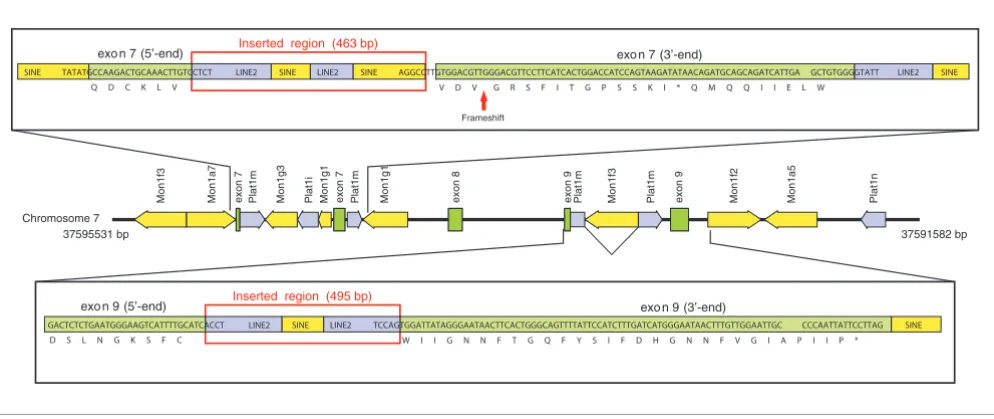
Finally, in this work we have also examined putative mecha-nisms responsible for the loss of gastric genes in the platypus genome. A first possibility in this regard should be the occur-rence of directed gene losses specifically occurring in platypus and the two extant echidna species Zaglossus and Tachyglos-sus. As a first step in this analysis, and based on recent studies of specific gene losses during hominoid evolution [42], we examined the hypothesis that gastric genes were independ-ently deleted in platypus by nonallelic homologous recombi-nation or by insertion of repetitive sequences. Consistent with this possibility, and in agreement with the increased activity of interspersed elements in the platypus genome [10,43], we
have found that the CTSE gene has been disrupted in platypus
by the insertion of long interspersed elements (LINEs) and short interspersed elements (SINEs) in exons 7 and 9, dis-rupting the protein coding region (Figure 4). Interestingly, exon 9 was disrupted by the insertion of a LINE2 Plat1m ele-ment, which was further disrupted by the insertion of a SINE Mon1f3 element (Figure 4). In this regard, analysis of differ-ent interspersed elemdiffer-ents in the platypus genome has revealed that the main period of activity of Mon1f3 elements was between 88 and 159 MYA [10], indicating that
pseudog-enization of CTSE might have occurred within this period,
and suggesting that the inactivation of gastric genes in monotremes started at least 88 MYA. Furthermore, the high abundance of repetitive elements in the CTSE region (more than 3.8 interspersed elements per kilobase as compared with 2 for the genome average [10]) might have contributed to the
deletion of six out of the nine exons of CTSE by nonallelic
homologous recombination between these repetitive ele-ments. The variable density of interspersed elements in the regions examined in this study raises the possibility that sim-ilar mechanisms to that observed in CTSE might have been responsible for the complete deletion of other gastric genes, although the participation of other mechanisms in this proc-ess cannot be ruled out.
Conclusion
stomach by other unrelated events might have resulted in the neutral evolution of these genes. The gastric genes lost in the platypus genome include those encoding the aspartyl pro-teases pepsinogen A, pepsinogens B/C and cathepsin E, the hydrochloric acid secretion stimulatory hormone gastrin, and
both subunits of the gastric H+/K+-ATPase. Likewise, genes
encoding proteins implicated in stomach development, such as the neurogenin-3 transcription factor, are also absent in the platypus genome. All of these genes have been highly con-served in vertebrates for more than 400 million years, reflect-ing a unique pattern of evolution in the platypus genome when compared with other mammalian genomes. On the basis of these findings, we propose that loss of genes involved in gastric functions might be responsible for the remarkable anatomical and physiological differences of the gastrointesti-nal tract between monotremes and other vertebrates, and underscores the importance of gene loss for mammalian evolution.
Materials and methods
Bioinformatic analysisThe identification of protease-coding genes in the platypus genome was carried out as previously described [27], using a 6X assembly (version 5.0) generated with the PCAP assembly program, with an estimated coverage of 90% to 93% [10]. Briefly, protein sequences corresponding to human proteases were searched in the platypus assembly using the TBLASTN algorithm with an expected threshold of 10. In most cases this was sufficient to identify individual contigs containing exons with high sequence identity to the queried protease, which were further analyzed to obtain the full-length coding
sequence. In those cases in which no clear ortholog was found in the platypus genome assembly, the following procedure was used. First, the traces and the EST sequences were ana-lyzed using BLASTN and TBLASTN, increasing the expected threshold up to 1,000, which was sufficient to detect the orthologous genes in the assembly and traces of more evolu-tionary distant vertebrates such as lizard, chicken, or frog. Second, to exclude the possibility that these results arose sim-ply because that the human gene was too divergent from the platypus one, the query sequence was replaced by the corre-sponding ortholog in mouse, dog, opossum, chicken, lizard, frog, or fish (when available), and the search was performed in the platypus assembly, traces, and ESTs using BLASTN and TBLASTN. Third, if the previous strategies failed, then the 5'- and 3'-flanking genes in other vertebrate genomes were used as query to identify platypus contigs corresponding to the locus in which the candidate gene was supposed to lie. These contigs were then searched with the TBLASTN algorithm with increasing expected threshold to identify potential exons of the gene or pseudogene, and the contigs were analyzed for the presence of large gaps. When large gaps were found, BACs and/or fosmids corresponding to those regions were obtained and analyzed by Southern blot and/or sequencing.
Southern blot and sequencing
Platypus BACs were obtained from Children's Hospital Oak-land Research Institute, and fosmids and genomic DNA were provided by the platypus genome sequencing project [10]. DNA was digested with the indicated enzymes, separated in a 0.7% agarose gel, and transferred to a nylon membrane. Southern blot hybridization was performed using specific
[image:8.612.57.554.89.298.2]oli-Inactivation of CTSE gene by insertion of interspersed elements
Figure 4
Inactivation of CTSE gene by insertion of interspersed elements. Genetic map of the CTSE locus in the platypus genome showing the disruption of exons 7 and 9 by interspersed elements. Top and bottom panels show a more detailed view of exons 7 and 9, respectively, indicating the nucleotide sequence of exons and the disrupting long interspersed element (LINE)2 and short interspersed element (SINE) elements. bp, base pairs.
Mon1f3 Mon1a7 exon
7
Plat1m Mon1g3 Plat1i Mon1g1 exon
7
Plat1m Mon1g1 exon
8
exon
9
Plat1m Mon1f3 Plat1m exon
9
Mon1f2 Mon1a5 Plat1n
SINE TATATGCCAAGACTGCAAACTTGTCCTCT LINE2 SINE LINE2 SINE AGGCCTTGTGGACGTTGGGACGTTCCTTCATCACTGGACCATCCAGTAAGATATAACAGATGCAGCAGATCATTGA GCTGTGGGGTATT LINE2 SINE
Q D C K L V V D V G R S F I T G P S S K I * Q M Q Q I I E L W
exo n 7 (3’-end) exo n 7 (5’-end)
Frameshift
Inserted region (463 bp)
GACTCTCTGAATGGGAAGTCATTTTGCATCACCT LINE2 SINE LINE2 TCCAGTGGATTATAGGGAATAACTTCACTGGGCAGTTTTATTCCATCTTTGATCATGGGAATAACTTTGTTGGAATTGC CCCAATTATTCCTTAG SINE
D S L N G K S F C W I I G N N F T G Q F Y S I F D H G N N F V G I A P I I P *
exo n 9 (3’-end) exo n 9 (5’-end) Inserted region (495 bp)
37591582 bp 37595531 bp
gonucleotides corresponding to platypus genes present in the assembly (Additional data file 4) or using human or mouse-derived cDNA probes for ATP4A (corresponding to nucle-otides 1,899 to 2,503 of sequence NM_000704), PGA (corre-sponding to nucleotides 867 to 1,259 of sequence NM_021453), and NGN3 (corresponding to nucleotides 387 to 593 of sequence NM_020999). DNA probes were PCR-amplified using Taq Platinum (Invitrogen, Carlsbad, CA) and purified. All PCRs were performed in a Veriti 96-well thermal cycler (Applied Biosystems, Foster City, CA) for 35 cycles of denaturation (95°C for 15 seconds), annealing (60°C for 15 seconds), and extension (72°C for 30 seconds).
Double-stranded DNA probes were radiolabeled with [α-32P]dCTP
(3,000 Ci/mmol) from GE Healthcare (Uppsala, Sweden), using a commercial random priming kit purchased from the same company. When specific oligonucleotides were used for
hybridization, they were labeled with [γ-32P]ATP (3,000 Ci/
mmol) from GE Healthcare using T4 Polynucleotide Kinase (USB, Cleveland, OH). Hybridization was performed at 42°C or 60°C for oligonucleotides or cDNA probes, respectively, using a Rapid-Hyb hybridization solution (GE Healthcare). Additionally, the regions corresponding to the PGC and PGB loci in platypus were cloned from the indicated BACs and fos-mids, and subjected to direct sequencing using the kit DR
ter-minator TaqFS and the automatic DNA sequencer
ABI-PRISM 310 (Applied Biosystems), with specific oligonucle-otides as primers. Mutations in gastric genes were confirmed by amplification of the corresponding exons with specific primers (Additional data file 4) using platypus genomic DNA as template, and the amplified product was subjected to nucleotide sequencing.
Analysis of GIF expression in platypus and echidna tissues
Total RNA from platypus and echidna (T. aculeatus) tissues was reverse-transcribed using oligo-dT and the RNA-PCR Core kit from Perkin Elmer Life Sciences (Foster City, CA) and subjected to PCR amplification using specific primers for
GIF (5'-TGGCTCTGACCTGTATGTACA and
5'-GGTTTT-GCCTTTCAGG GAAGG) and GAPDH
(5'-AAGGCTGT-GGGCAAGGTCAT and 5'-CTGTTGAAGTCACAGGAGAC).
Abbreviations
BAC, bacterial artificial chromosome; EST, expressed sequence tag; LINE, long interspersed element; MYA, million years ago; RT-PCR, reverse transcription polymerase chain reaction; SINE, short interspersed element.
Authors' contributions
GRO, CLO, and XSP conceived of the study, carried out the data analysis and interpretation, and contributed to the writ-ing of the manuscript. LWH and WCW performed the analy-sis of BAC and Fosmid ends, and provided individual clones
for the indicated loci. FG provided platypus and echidna sam-ples. All authors read and approved the final manuscript.
Additional data files
The following additional data files are available. Additional data file 1 is a figure showing the following: Southern blot analysis of platypus fosmids 0287H03, KAAG-0109P06, and BAC KAAG-711F22; synteny map of the gastrin locus in the indicated species; synteny map of the neuro-genin-3 locus in the indicated species; synteny map of the
ATP4A locus in different vertebrates and platypus fosmid
KAAG-0404B19 corresponding to this region. Additional data file 2 is a figure showing the analysis of GIF expression in platypus and echidna tissues. Additional data file 3 is a table listing genes implicated in stomach size and develop-ment and their status in the platypus genome. Additional data file 4 is a table listing the oligonucleotides used for amplifica-tion, sequencing, and hybridization of the indicated platypus genes.
Additional data file 1
Southern blot analysis of gastric genes in platypus
Presented is a figure. (A) Southern blot analysis of platypus fosmids KAAG-0287H03, KAAG-0109P06, and BAC KAAG-711F22, corre-sponding to the PGA, PGB, and PGC loci with a murine probe for pepsin (PGA5), which failed to hybridize with the indicated platy-pus clones, whereas specific probes for upstream and downstream genes showed strong hybridization signals. Molecular weight markers are indicated on the left. (B) Synteny map of the gastrin locus in the indicated species. (C) Synteny map of the neurogenin-3 locus in the indicated species showing the position of platypus BAC KAAG-414H19. Southern blot analysis of this BAC resulted in the hybridization with a specific probe for the proximal gene C1ORF35, but failed to hybridize with a human-derived probe for neurogenin-3, whereas this probe recognized specific bands in chicken and lizard (Podarcis hispanica) genomic DNA. (D) Syn-teny map of the ATP4A locus in different vertebrates and platypus fosmid KAAG-0404B19 corresponding to this region. Southern blot analysis with a specific probe for TMEM147 revealed the pres-ence of this gene in fosmid KAAH-0404B19. Hybridization with a human probe for ATP4A corresponding to exons 13 to 16 failed to hybridize with platypus fosmid KAAH-0404B19.
Click here for file Additional data file 2
Analysis of GIF expression in platypus and echidna tissues Presented is a figure showing the analysis of GIF expression in plat-ypus and echidna tissues. Total RNA from platplat-ypus and echidna (T. aculeatus) tissues was subjected to RT-PCR using specific primers for GIF and GAPDH as control. The amplification products were separated in a 3% agarose gel, showing the highest expression of GIF in echidna pancreas, as well as in liver from platypus an echidna, whereas no expression could be detected in platypus brain or muscle. The identity of echidna GIF was confirmed by direct nucleotide sequencing of the amplified product.
Click here for file Additional data file 3
Genes implicated in stomach size and development
Presented is a table listing genes implicated in stomach size and development and their status in the platypus genome.
Click here for file Additional data file 4
Oligonucleotides used for amplification, sequencing and hybridization
Presented is a table listing the oligonucleotides used for amplifica-tion, sequencing and hybridization of the indicated platypus genes. Click here for file
Acknowledgements
We thank T Graves for help with fosmid clones; A Fueyo, V Quesada, and A Smit for helpful discussions; and F Rodríguez for technical assistance. This work was supported by grants from the European Union (CancerDegra-dome-FP6), Ministerio de Educación y Ciencia-Spain, Ministerio de Sanidad-Spain, Fundación La Caixa, Fundación M Botín, Fundación Lilly, and Ramón y Cajal Program (XSP). The Instituto Universitario de Oncología is sup-ported by Obra Social Cajastur.
References
1. Gibbs RA, Weinstock GM, Metzker ML, Muzny DM, Sodergren EJ, Scherer S, Scott G, Steffen D, Worley KC, Burch PE, Okwuonu G, Hines S, Lewis L, DeRamo C, Delgado O, Dugan-Rocha S, Miner G, Morgan M, Hawes A, Gill R, Celera , Holt RA, Adams MD, Amanati-des PG, Baden-Tillson H, Barnstead M, Chin S, Evans CA, Ferriera S, Fosler C, et al.: Genome sequence of the Brown Norway rat yields insights into mammalian evolution. Nature 2004, 428:493-521.
2. Puente XS, Sánchez LM, Overall CM, López-Otín C: Human and mouse proteases: a comparative genomic approach. Nat Rev Genet 2003, 4:544-558.
3. Godfrey PA, Malnic B, Buck LB: The mouse olfactory receptor gene family. Proc Natl Acad Sci USA 2004, 101:2156-2161. 4. Kawasaki K, Weiss KM: Mineralized tissue and vertebrate
evo-lution: the secretory calcium-binding phosphoprotein gene cluster. Proc Natl Acad Sci USA 2003, 100:4060-4065.
5. Hahn MW, Han MV, Han SG: Gene family evolution across 12 Drosophila genomes. PLoS Genet 2007, 3:e197.
6. Stedman HH, Kozyak BW, Nelson A, Thesier DM, Su LT, Low DW, Bridges CR, Shrager JB, Minugh-Purvis N, Mitchell MA: Myosin gene mutation correlates with anatomical changes in the human lineage. Nature 2004, 428:415-418.
7. Krylov DM, Wolf YI, Rogozin IB, Koonin EV: Gene loss, protein sequence divergence, gene dispensability, expression level, and interactivity are correlated in eukaryotic evolution. Genome Res 2003, 13:2229-2235.
8. Blomme T, Vandepoele K, De Bodt S, Simillion C, Maere S, Peer Y Van de: The gain and loss of genes during 600 million years of vertebrate evolution. Genome Biol 2006, 7:R43.
9. Wang X, Grus WE, Zhang J: Gene losses during human origins. PLoS Biol 2006, 4:e52.
JE, Thompson K, Kirby P, Papenfuss AT, Wakefield M, Olender T, Lancet D, Huttley GA, et al.: Genome analysis of the platypus reveals unique signatures of evolution. Nature 2008, 453:175-183.
11. Killian JK, Buckley TR, Stewart N, Munday BL, Jirtle RL: Marsupials and Eutherians reunited: genetic evidence for the Theria hypothesis of mammalian evolution. Mamm Genome 2001, 12:513-517.
12. Bininda-Emonds OR, Cardillo M, Jones KE, MacPhee RD, Beck RM, Grenyer R, Price SA, Vos RA, Gittleman JL, Purvis A: The delayed rise of present-day mammals. Nature 2007, 446:507-512. 13. van Rheede T, Bastiaans T, Boone DN, Hedges SB, de Jong WW,
Madsen O: The platypus is in its place: nuclear genes and indels confirm the sister group relation of monotremes and Therians. Mol Biol Evol 2006, 23:587-597.
14. Krause WJ, Leeson CR: The gastric mucosa of two monotremes: the duck-billed platypus and echidna. J Morphol 1974, 142:285-299.
15. Krause WJ: Brunner's glands of the duckbilled platypus ( Orni-thorhynchus anatinus). Am J Anat 1971, 132:147-165.
16. Puente XS, Sanchez LM, Gutierrez-Fernandez A, Velasco G, Lopez-Otin C: A genomic view of the complexity of mammalian pro-teolytic systems. Biochem Soc Trans 2005, 33:331-334.
17. Carginale V, Trinchella F, Capasso C, Scudiero R, Riggio M, Parisi E: Adaptive evolution and functional divergence of pepsin gene family. Gene 2004, 333:81-90.
18. Lander ES, Linton LM, Birren B, Nusbaum C, Zody MC, Baldwin J, Devon K, Dewar K, Doyle M, FitzHugh W, Funke R, Gage D, Harris K, Heaford A, Howland J, Kann L, Lehoczky J, LeVine R, McEwan P, McKernan K, Meldrim J, Mesirov JP, Miranda C, Morris W, Naylor J, Raymond C, Rosetti M, Santos R, Sheridan A, Sougnez C, et al.: Initial sequencing and analysis of the human genome. Nature 2001, 409:860-921.
19. Kirkness EF, Bafna V, Halpern AL, Levy S, Remington K, Rusch DB, Delcher AL, Pop M, Wang W, Fraser CM, Venter JC: The dog genome: survey sequencing and comparative analysis. Science 2003, 301:1898-1903.
20. Mikkelsen TS, Wakefield MJ, Aken B, Amemiya CT, Chang JL, Duke S, Garber M, Gentles AJ, Goodstadt L, Heger A, Jurka J, Kamal M, Mauceli E, Searle SMJ, Sharpe T, Baker ML, Batzer MA, Benos PV, Belov K, Clamp M, Cook A, Cuff J, Das R, Davidow L, Deakin JE, Faz-zari MJ, Glass JL, Grabherr M, Greally JM, Gu W, et al.: Genome of the marsupial Monodelphis domestica reveals innovation in non-coding sequences. Nature 2007, 447:167-178.
21. Hillier LW, Miller W, Birney E, Warren W, Hardison RC, Ponting CP, Bork P, Burt DW, Groenen MAM, Delany ME, Dodgson JB, Chinwalla AT, Cliften PF, Clifton SW, Delehaunty KD, Fronick C, Fulton RS, Graves TA, Kremitzki C, Layman D, Magrini V, McPherson JD, Miner TL, Minx P, Nash WE, Nhan MN, Nelson JO, Oddy LG, Pohl CS, Ran-dall-Maher J, et al.: Sequence and comparative analysis of the chicken genome provide unique perspectives on vertebrate evolution. Nature 2004, 432:695-716.
22. Richter C, Tanaka T, Yada RY: Mechanism of activation of the gastric aspartic proteinases: pepsinogen, progastricsin and prochymosin. Biochem J 1998, 335:481-490.
23. Barrett AJ, Rawlings ND, Woessner JF: Handbook of Proteolytic Enzymes 2nd edition. Amsterdam, The Netherlands: Elsevier Aca-demic Press; 2004.
24. Muto N, Yamamoto M, Tani S, Yonezawa S: Characteristic distri-bution of cathepsin E which immunologically cross-reacts with the 86-kDa acid proteinase from rat gastric mucosa. J Biochem (Tokyo) 1988, 103:629-632.
25. Franic TV, Judd LM, Robinson D, Barrett SP, Scarff KL, Gleeson PA, Samuelson LC, Van Driel IR: Regulation of gastric epithelial cell development revealed in H+/K+-ATPase beta-subunit- and gastrin-deficient mice. Am J Physiol Gastrointest Liver Physiol 2001, 281:G1502-G1511.
26. Lorenz RG, Gordon JI: Use of transgenic mice to study regula-tion of gene expression in the parietal cell lineage of gastric units. J Biol Chem 1993, 268:26559-26570.
27. Puente XS, López-Otín C: A genomic analysis of rat proteases and protease inhibitors. Genome Res 2004, 14:609-622. 28. Vaillant C, Horadagoda NU, Batt RM: Cellular localization of
intrinsic factor in pancreas and stomach of the dog. Cell Tissue Res 1990, 260:117-122.
29. Brada N, Gordon MM, Shao JS, Wen J, Alpers DH: Production of gastric intrinsic factor, transcobalamin, and haptocorrin in opossum kidney cells. Am J Physiol Renal Physiol 2000,
279:F1006-F1013.
30. Kageyama T: Pepsinogens, progastricsins, and prochymosins: structure, function, evolution, and development. Cell Mol Life Sci 2002, 59:288-306.
31. Puente XS, Gutiérrez-Fernández A, Ordóñez GR, Hillier LW, López-Otín C: Comparative genomic analysis of human and chim-panzee proteases. Genomics 2005, 86:638-647.
32. Smith DM, Grasty RC, Theodosiou NA, Tabin CJ, Nascone-Yoder NM: Evolutionary relationships between the amphibian, avian, and mammalian stomachs. Evol Dev 2000, 2:348-359. 33. Kurokawa T, Uji S, Suzuki T: Identification of pepsinogen gene in
the genome of stomachless fish, Takifugu rubripes . Comp Bio-chem Physiol B BioBio-chem Mol Biol 2005, 140:133-140.
34. Wang X, Chu LT, He J, Emelyanov A, Korzh V, Gong Z: A novel zebrafish bHLH gene, neurogenin3, is expressed in the hypothalamus. Gene 2001, 275:47-55.
35. Olson MV: When less is more: gene loss as an engine of evo-lutionary change. Am J Hum Genet 1999, 64:18-23.
36. Olson MV, Varki A: Sequencing the chimpanzee genome: insights into human evolution and disease. Nat Rev Genet 2003, 4:20-28.
37. Koh TJ, Goldenring JR, Ito S, Mashimo H, Kopin AS, Varro A, Dockray GJ, Wang TC: Gastrin deficiency results in altered gastric dif-ferentiation and decreased colonic proliferation in mice. Gas-troenterology 1997, 113:1015-1025.
38. Friis-Hansen L: Lessons from the gastrin knockout mice. Regul Pept 2007, 139:5-22.
39. Samuelson LC, Hinkle KL: Insights into the regulation of gastric acid secretion through analysis of genetically engineered mice. Annu Rev Physiol 2003, 65:383-400.
40. Zavros Y, Waghray M, Tessier A, Bai L, Todisco A, Gumucio DL, Sam-uelson LC, Dlugosz A, Merchant JL: Reduced pepsin A processing of sonic hedgehog in parietal cells precedes gastric atrophy and transformation. J Biol Chem 2007, 282:33265-33274. 41. Lee CS, Perreault N, Brestelli JE, Kaestner KH: Neurogenin 3 is
essential for the proper specification of gastric enteroendo-crine cells and the maintenance of gastric epithelial cell identity. Genes Dev 2002, 16:1488-1497.
42. Zhu J, Sanborn JZ, Diekhans M, Lowe CB, Pringle TH, Haussler D: Comparative genomics search for losses of long-established genes on the human lineage. PLoS Comput Biol 2007, 3:e247. 43. Margulies EH, Maduro VV, Thomas PJ, Tomkins JP, Amemiya CT, Luo
M, Green ED: Comparative sequencing provides insights about the structure and conservation of marsupial and monotreme genomes. Proc Natl Acad Sci USA 2005, 102:3354-3359.
44. Takamoto N, You LR, Moses K, Chiang C, Zimmer WE, Schwartz RJ, DeMayo FJ, Tsai MJ, Tsai SY: COUP-TFII is essential for radial and anteroposterior patterning of the stomach. Development 2005, 132:2179-2189.
45. Guo RJ, Suh ER, Lynch JP: The role of Cdx proteins in intestinal development and cancer. Cancer Biol Ther 2004, 3:593-601. 46. Besnard V, Wert SE, Hull WM, Whitsett JA:
Immunohistochemi-cal loImmunohistochemi-calization of Foxa1 and Foxa2 in mouse embryos and adult tissues. Gene Expr Patterns 2004, 5:193-208.
47. Takano-Maruyama M, Hase K, Fukamachi H, Kato Y, Koseki H, Ohno H: Foxl1-deficient mice exhibit aberrant epithelial cell posi-tioning resulting from dysregulated EphB/EphrinB expres-sion in the small intestine. Am J Physiol Gastrointest Liver Physiol 2006, 291:G163-G170.
48. Jacobsen CM, Mannisto S, Porter-Tinge S, Genova E, Parviainen H, Heikinheimo M, Adameyko II, Tevosian SG, Wilson DB: GATA-4:FOG interactions regulate gastric epithelial development in the mouse. Dev Dyn 2005, 234:355-362.
49. Jensen J, Pedersen EE, Galante P, Hald J, Heller RS, Ishibashi M, Kageyama R, Guillemot F, Serup P, Madsen OD: Control of endo-dermal endocrine development by Hes-1. Nat Genet 2000, 24:36-44.
50. Wakabayashi N, Itoh K, Wakabayashi J, Motohashi H, Noda S, Taka-hashi S, Imakado S, Kotsuji T, Otsuka F, Roop DR, Harada T, Engel JD, Yamamoto M: Keap1-null mutation leads to postnatal lethality due to constitutive Nrf2 activation. Nat Genet 2003, 35:238-245.
regulate multiple aspects of gastrointestinal development. Development 2000, 127:2763-2772.
53. Sock E, Rettig SD, Enderich J, Bosl MR, Tamm ER, Wegner M: Gene targeting reveals a widespread role for the high-mobility-group transcription factor Sox11 in tissue remodeling. Mol Cell Biol 2004, 24:6635-6644.
54. Kanai-Azuma M, Kanai Y, Gad JM, Tajima Y, Taya C, Kurohmaru M, Sanai Y, Yonekawa H, Yazaki K, Tam PP, Hayashi Y: Depletion of definitive gut endoderm in Sox17-null mutant mice. Develop-ment 2002, 129:2367-2379.