Students’ academic expectations and experiences during the first
year of their undergraduate nursing programme
Janice Grant
Submitted as part fulfilment of the requirements for the degree of PhD The University of Salford, School of Nursing, Midwifery and Social Work
i
Table of contents
Students’ academic expectations and experiences during the first year of their
undergraduate nursing programme ... i
Janice Grant ... i
Table of contents ... i
Figures ... vii
List of Tables ... viii
Appendices... xi
Acknowledgements ... xii
Abbreviations ... xiii
Glossary ... xiv
Abstract ... 1
Chapter 1: Student nurse education: An overview ... 2
1.0 Introduction ... 2
1.1 Thesis aim and objectives ... 3
1.2 Context ... 3
1.3 Overview of trends in nurse education ... 4
1.3.1 Historical perspectives of nurse education ... 5
1.3.2Nurse education: commissioning and funding ... 6
1.3.3Expectations, attrition and retention ... 7
1.3.4 Widening participation and the recruitment of nursing students ... 8
1.4 Early theoretical perspectives on student attrition ... 9
1.4.1Tinto’s model of student integration ... 9
1.4.2 Bean and Metzner’s model of non-traditional undergraduate student attrition ... 12
1.4.3 Dopfer et al’s model for evolutionary economics ... 14
1.5 Summary ... 14
1.6 Overview of thesis ... 15
Chapter 2: A structured literature review ... 16
2.0 Introduction ... 16
2.1 Aim and objectives of the literature review ... 16
2.2Review design ... 17
2.3. Search strategies ... 18
2.3.1 Inclusion criteria ... 18
ii
2.4. Synthesis of study findings ... 21
2.4.1 Quality appraisal ... 21
2.4.1.2 Detailed questions ... 22
2.4.1.3 Screening questions for quantitative studies (Cho et al., 1994; Timmer et al., 2003). ... 22
2.5 Findings of the literature review ... 23
2.5.1 Overview of review studies ... 23
2.5.2 Summary of the quality appraisal assessment ... 30
2.6 Synthesised findings ... 31
2.6.1 Micro factors associated with student nurse retention and attrition ... 31
2.6.1.2 Age ... 32
2.6.1.3 Gender ... 32
2.6.1.4 Entry qualifications ... 34
2.6.1.5 Preparedness ... 35
2.6.1.6 Financial hardship ... 37
2.6.1.7 Health issues ... 38
2.7 Meso factors associated with student nurse retention and attrition ... 38
2.7.1 Branch of nursing ... 39
2.7.2 Academic and/or clinical skills failure ... 40
2.7.3 Personal and family issues ... 41
2.7.4 Clinical placement experience ... 42
2.8 Macro factors associated with student nurse retention and attrition ... 43
2.8.1 Factors linked to organisational and programme issues ... 43
2.8.2 Effective recruitment and selection processes ... 44
2.8.3 Student expectations and realities of a nursing programme ... 45
2.8.4 Recruitment, selection and widening participation strategies ... 47
2.9Discussion ... 48
2.9.1 First year nursing students ... 48
2.9.2 First year students on non-nursing courses ... 49
2.9.3 Issues in student retention and attrition: Similarities between general students in HE and nursing students ... 50
2.9.3.1 Students in HE ... 50
2.10 Conclusion ... 51
Chapter 3: Research methods... 54
3.0Introduction ... 54
3.1 Overall aim ... 54
3.1.1 Study objectives ... 54
iii
3.3 Study setting and sample ... 55
3.3.1 Study Setting ... 55
3.3.2Study Sample... 56
3.4Data Collection ... 57
3.4.1 Recruitment Procedure ... 57
3.4.1.1 Time period one ... 57
3.4.1.2 Time period two ... 58
3.4.2 Data Collection from institutional records ... 58
3.4.2.1 Time period three ... 58
3.4.2.2 Time Period Four ... 59
3.5 Instruments ... 59
3.5.1 The College Students’ Expectations Questionnaire (CSXQ) ... 59
3.5.1.1 Background characteristics ... 60
3.5.1.2 Student activities ... 60
3.5.1.3 University environment ... 61
3.5.2 The College Students’ Experience questionnaire (CSEQ) ... 61
3.6 Psychometric properties of the CSXQ and the CSEQ ... 62
3.7 Pilot testing of the instruments ... 66
3.7.1 Cognitive debriefing ... 66
3.7.2 Pilot test one - sample and process ... 66
3.7.3 Pilot retest ... 68
3.8 Data analysis procedures ... 68
3.8.1 Descriptive statistics ... 68
3.8.2 Inferential statistics ... 69
3.8.3 Analysis of institutional data (individual and cohort completion) ... 71
3.9 Ethical considerations... 71
3.9.1 Introduction ... 71
3.9.2 The risk of perceived coercion ... 72
3.9.3 The risk of breach of confidentiality ... 72
3.9.4 Formal ethics approval ... 73
3.10Chapter summary ... 74
Chapter 4: Results ... 75
4.0 Introduction ... 75
4.1 Student characteristics ... 75
4.1.1 Sources of income and financial support ... 77
4.1.2 Accommodation ... 79
iv
4.2.1 Expected versus reported marks ... 80
4.2.2 Expected vs reported study hours ... 82
4.2.3 Expected vs reported paid work ... 84
4.2.4 Expectations vs experiences of HE relationships - overview ... 85
4.2.4.1 CSXQ vs CSEQ – HE relationships – statistical analysis ... 86
4.2.5 Expectations vs experiences of the university environment ... 87
4.2.6 Expectations vs experiences of academic effort - overview ... 89
4.2.6.1 Statistical analysis of the CSXQ vs CSEQ - academic effort ... 91
4.3. Comparison between characteristics of stayers and leavers (H02) ... 92
4.3.1 Stay vs leave: Age ... 94
4.3.2 Stay vs leave: Domicile ... 95
4.3.3 Stay vs leave: Finance ... 96
4.3.4 Stay vs leave and parental academic history ... 97
4.3.5 Stay vs leave: Paid work ... 99
4.4 Comparison of academic effort of stayers and leavers (H03) ... 100
4.4.1 Stay vs Leave: Academic effort - Descriptive Summary ... 100
4.4.2 Stay vs leave: Academic effort - statistical analysis ... 102
4.5 Comparison of social activities of stayers and leavers (H04) ... 103
4.5.1 Stay vs Leave – Social integration - Descriptive summary ... 104
4.5.2 Stay vs Leave: Social integration - statistical analysis ... 105
4.5.3 Stay vs leave: University environment and relationships ... 106
4.6 Comparison between estimated gains and final grade (H05) ... 108
4.6.1 Descriptive summary of Estimated Gains ... 108
4.6.2 Statistical analysis of estimated gains vs final grade ... 110
4.7 Investigation of non-hypothesised areas of interest ... 111
4.7.1 Stay vs Leave: Search for Predictor Variables ... 111
4.7.2 Expectations and experiences of social activity ... 113
4.7.3 Expectations and experiences of diversity ... 115
4.7.4 Expectations and Experiences of Topics of discussion... 115
4.7.5 Effect Of Age On Academic Expectation and Experience ... 116
4.7.6 Institutional data ... 118
4.7.6.1 Reasons for Leaving ... 118
4.7.6.2 Degree classification by expected marks ... 118
4.7.6.3 Degree classification by age ... 119
4.7.6.4 Degree classification by Entry Qualifications ... 120
4.8 Results from the five null hypotheses ... 121
v
4.9.1.Stay vs leave Issues ... 123
4.9.2 Social Expectation vs Experience Issues ... 123
4.9.3 Degree Classification Issues ... 123
Chapter 5: Discussion ... 125
5.0 Introduction ... 125
5.1 Impact of selected individual characteristics on student nurse retention and attrition ... 125
5.1.1 Age, expectation and experiences ... 125
5.1.2 Gender role retention and attrition ... 127
5.1.3 Ethnicity ... 128
5.1.4 Pre-entry academic qualifications ... 129
5.1.5 Parental academic history ... 129
5.1.6 Sources of financial support and impact on retention ... 130
5.2 Relationships between academic expectations, academic effort, experiences and student retention ... 132
5.2.2 Study hours and academic success... 132
5.2.3 Living arrangements and impact on social integration ... 133
5.3 Reasons for leaving and characteristics of leavers in the first year ... 135
5.3.1 Characteristics of leavers ... 135
5.4 Expectations of perceived gains and degree attainment ... 136
5.5 Devlopment of a framework for nursing student retention based on Tinto’s (1997) model ... 137
5.6 Methodological issues impacting on the study ... 142
5.6 Chapter summary ... 142
Chapter 6: Conclusions and recommendations ... 144
6.0Introduction ... 144
6.1 Limitations of the study ... 144
6.1.2 Collection of data from institutional records ... 146
6.2 Key Findings and their relationship to the thesis objectives ... 146
6.3 inter-relationships between the key findings, Dopfer et al’s (2004) model and Tinto’s (1997) model. ... 151
6.4 Conclusions ... 153
6.5 Implications and recommendations ... 154
6.5.1 Recommendations for educational policy ... 154
6.5.2 Recommendations for educational practice ... 155
6.5.3 Recommendations for further research ... 156
vii
Figures
Figure 1 Tinto’s model of student integration 13
Figure 2 Bean and Metzner model 15
Figure 3 Flow chart of study selection process 22
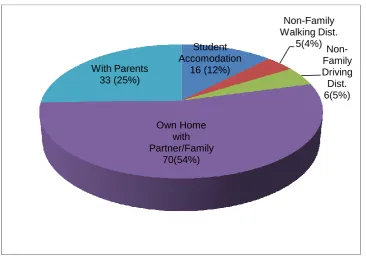
Figure 4 Students’ accommodation 82
Figure 5 Categorical summary of university environment emphasis 91 Figure 6 Grant’s (2012) framework for nursing student retention
incorporating Tinto’s (1997) model
viii
List of Tables
2.1 Summary of articles Included in the review 26
2..2 Micro, meso and macro factors associated with student nurse retention and attrition
33
3.1 Cronbach’s Alpha coefficients and mean inter-item correlations - CSXQ
67
3.2 Cronbach’s Alpha coefficients and mean inter-item correlations - CSEQ
68
4.1 Student characteristics by Branch of Study 79
4.2 Sources of Income and Financial Support by Age Group 81
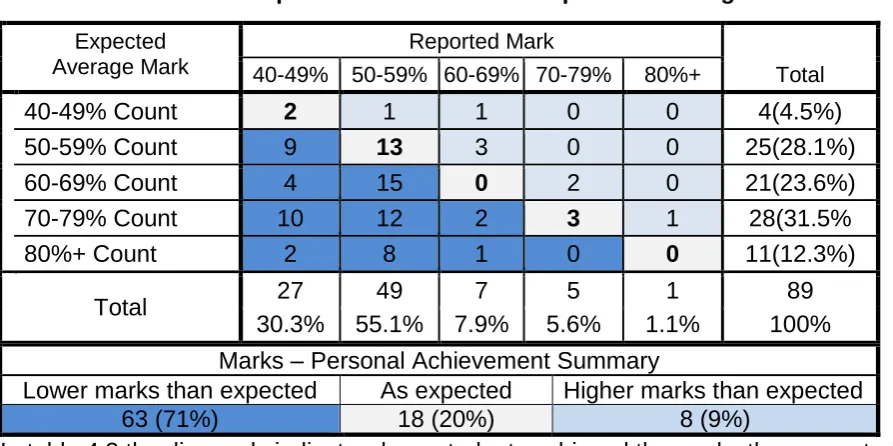
4.3 Reported Marks for each Expectation Range 84
4.4 McNemar Test - Expected vs Reported Marks (Re-coded) 84
4.5 Reported Study for Each Expectation Range 86
4.6 McNemar Test - Expected vs Reported Study Hrs (Recoded) 86
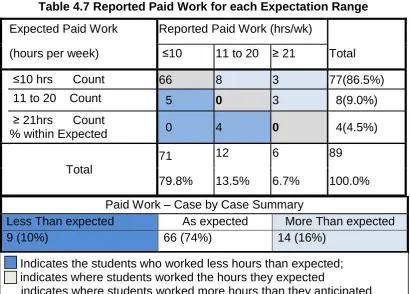
4.7 Reported Paid Work for each Expectation Range 87
4.8 McNemar Test - Expected vs Reported Paid Work (Recoded) 88
4.9 CSXQ vs CSEQ - Summary of Higher Education Relationships 89
4.10 CSXQ vs CSEQ – HE Relationships - Wilcoxon Signed RanksTest 90
4.11 CSXQ vs CSEQ - University Environment Summary and Wilcoxon Signed RanksTest
91
4.12 Summary of Academic Effort CSXQ vs CSEQ 93
4.13 CSXQ vs CSEQ – Academic Effort - Wilcoxon Signed Ranks Test 95
4.14 Characteristics of Students – Stay vs Leave 97
4.15 Time Usage and Marks – Stay vs Leave 98
4.16 Crosstabulation of Persistence vs Age (re-coded) 99
4.17 Re-Coding of Student Domicile 100
ix
4.19 Crosstabulation of Persistence vs Finance (re-coded) 101
4.20 Re-coding of Parental Academic History 102
4.21 Crosstabulation of Persistence vs Parental Education (re-coded) 102
4.22 Crosstabulation of Persistence vs Paid Work (re-coded) 103
4.23 CSXQ Academic Effort Summary – Stay vs Leave 105
4.24 Mann Whitney U Test – Stay vs Leave – Expected Academic Effort 107
4.25 CSXQ Social Integration Summary – Stay vs Leave 109
4.26 Mann Whitney U Test – Stay vs Leave – Expected Social Integration
110
4.27 CSXQ Environment and Relationships Summary – Stay vs Leave 111
4.28 Mean Estimated Gains in Benefit Order 114
4.29 Mean Estimated Gains vs Final Grade 114
4.30 Summary of Total Estimated Gain vs Final Grade 115
4.31 Logistic Regression Analysis of Stay vs Leave Factors 116
4.32 Logistic Regression - Stay vs Leave – Variables in the Equation 117
4.33 Campus Social Activities Summary CSXQ vs CSEQ 118
4.34 Student Acquaintances and Discussion Topics CSXQ vs CSEQ 119
4.35 Expected And Reported Marks By Age 121
4.36 Recorded Reasons for Leaving by Age 122
4.37 Crosstabulation of Expected Marks vs Degree Classification 123
4.38 Crosstabulation of Age vs Degree Classification 123
4.39 Crosstabulation of Entry Qualification vs Degree Classification 124
5.1 Expected marks and final year course outcomes 136
xi
Appendices
Appendix I Quality appraisal tool for qualitative papers (based on CASP) tools
Appendix 2 Quality appraisal tool quantitative studies
Appendix 3 College Students’ Expectations Questionnaire (CSXQ)
Appendix 4 College Students’ Experiences Questionnaire (CSEQ)
xii
Acknowledgements
The completion of this thesis would have been impossible without the support, encouragement and guidance that I received from many people over the years. Professor Tony Long and Professor Greg Smith have been a constant source of guidance and encouragement. Their knowledge, experience and expertise have enabled me to develop confidence as a developing researcher and critical thinker.
Dr Janelle Yorke lit the touch paper for my understanding of the intricacies of inferential statistics. Her guidance has been invaluable and I am extremely grateful for her input in the supervisory team.
Several of my colleagues have contributed to the completion of this thesis by providing support, encouragement and the space to overcome the final hurdles. Special mention goes to Dr Joanna Smith who has been a tower of strength in enabling me to explore ideas and clarify my thoughts when all seemed lost.
xiii
Abbreviations
CASP Critical Appraisal Skills Programme
CINAHL Cumulative Index to Nursing and Allied Health Literature CSEQ College Students’ Experience questionnaire
CSXQ College Students’ Expectations Questionnaire
CRD Centre for Reviews and Dissemination
DH Department of Health
DHA District Health Authorities
BSc Bachelor of Science degree
ENB English National Board for Nursing and Midwifery
GCE General Certificate of Education
HE Higher education
HESA Higher Education Statistics Agency
NAO National Audit Office
NHS National Health Service
NMC Nursing and Midwifery Council
P2000 Project 2000
RCN Royal College of Nursing
UCAS Universities and Colleges Admissions Service
UK United Kingdom
xiv
Glossary
Attrition: leaving University prior to completion of a degree programme. Attrition will refer to either voluntary or compulsory withdrawal of a student from an undergraduate nursing programme before completion of the course of study.
Retention: Referring to students whose enrolment at the same institution continues without interruption of the period of study
Student: An undergraduate student currently enrolled on a programme of study leading to the title of registered nurse with Bachelor of Science in nursing.
Non-traditional student: A student who does not meet the standard university entrance criteria in terms of age or academic qualifications
Traditional student: A student (usually aged 18 years) who enters university directly from a Further Education College having completed advanced General Certificate of Education
Stayer: One who continues enrolment at the same institution for the duration of the programme’s period of study (Tinto, 1987).
Academic Effort: Positive, formal and informal interactions between the student and the university related to degree requirements and coursework (Tinto, 1993).
Social Integration: Positive formal and informal interactions of the student with the socialisation agents of the institution, academic staff and peers (Tinto, 1993).
1
Abstract
The thesis examines why first year nursing students leave their programme of study and the factors that influence whether they stay or leave. A descriptive, exploratory study design was undertaken using two survey instruments, the College Students Expectations Questionnaire and the College Student Experiences Questionnaire. Data about the expectations and experiences of one cohort of nursing students were collected at the beginning and compared with experiences the end of their first year of study. Additional data obtained from institutional records.
There was a preponderance of first generation university students who entered the university through completion of an Access to Health Studies course. This group entertained similar high expectations of academic achievement to the school leavers. These expectations were not that was not matched by their experiences in the main. The most successful students being those in the 30 to 39 age group. Overall, students’ degree classifications did not match their expected performance. The findings show that most students who left the programme intended to return but did not do so.
2
Chapter 1: Student nurse
education: An overview
1.0 Introduction
This chapter presents the rationale underpinning a quantitative empirical study exploring the expectations and experiences of a cohort of students during the first year of their undergraduate nursing programme. In order to investigate the impact of expectations on the student experience, the survey was undertaken at two time periods: in the first week of the programme and at the end of the common foundation prior to students entering into their specific field of practice.
This chapter provides the background context to the student experience in nursing and higher education. The historical background of the development of nursing, tracking its integration into higher education (HE) in the United Kingdom (UK) will be outlined. Over the past twenty years, nursing education in the UK has undergone many changes. Over this same period HE in the UK has also undergone many changes, shifting from a highly selective system to one of mass education. Shifts in the nature of the HE provision have changed the context of the student decision to leave the educational arena and given greater salience to student dropout as a policy problem. These changes and their implications for student retention and dropout will be presented.
3
1.1 Thesis aim and objectives
The aim of this thesis is to explore student nurses’ retention, attrition and their academic expectations and experiences during the first year of their programme of study.
The specific objectives were to:
Explore whether the expectations of first year undergraduate nursing students align with their experiences;
Identify the similarities and differences in (a) the characteristics, (b)
expectations and (c) academic experiences between students who stay and students who leave their programme of study;
Isolate factors in relation to expectation, experience, or the mismatch between these concepts that are predictive of students completing the first year of their programme or leaving it;
Explore possible factors that could be used to develop strategies to optimise the expectations and experience of the first year.
1.2 Context
4
As a nurse lecturer, with over 20 years experience, including close involvement in student recruitment and selection, I have developed a personal interest in student retention and attrition, and appreciate that the reasons student leave nursing programmes of study are multi-factorial. A study I undertook in 2003 explored the factors that contributed to students’ leaving an undergraduate nursing programme and found cycles of high and low attrition levels both nationally and internationally at regular intervals. Students who left before completing their programme of study were more likely to be younger than those who stayed (Grant, 2005). The study also highlighted that students over 20 years of age who had entered university via the widening participation initiative because they did not have the standard entry qualifications or had not undertaken any recent study were more likely to stay in the programme. These findings also supported the assumption that nursing students did not make use of university-wide student support services (Grant, 2005). Explanatory factors included a reluctance to admit the need for additional academic support, proximity of the services, and unrealistic images of nursing. This led me to question the extent to which students’ expectations of a nursing course experiences predict their behaviour and their experiences. An overview of nurse education and key issues pertinent to this thesis are presented in section 1.3.
1.3 Overview of trends in nurse education
5
success in relation to nursing programmes of study; and widening participation and the recruitment of student nurses.
1.3.1 Historical perspectives of nurse education
Prior to 1989 the dominant model for nursing education was a skills based training managed and delivered within schools of nursing which were typically located within hospitals (Burke, 2005 and Griffiths, 2010). Student nurses worked as apprentices and were funded by the NHS as hospital employees. Changes in the social, political and economic landscape during the 1980’s resulted in the development of a new national programme of nursing education, ‘Project 2000’. Project 2000 aimed to facilitate higher academic achievement than previously offered to nursing students, where there was greater emphasis on the integration of theory with clinical practice. Furthermore, it was intended to produce a flexible practitioner equipped to work in a variety of settings and meet projected healthcare needs in the 21st century (Magnusson & Amundson, 2003 and Ousey, 2011). The apprentice model of training was replaced by a programme that aimed to prepare nurse with the critical analytical and evaluation skills required to meet the rapidly changing health and social care needs of the population (UKCC, 1987b). The student contribution to service was 20% and students were supernumerary (Ousey, 2011). Hospital based schools of nursing had to respond quickly to changes in the delivery of nurse education and become integrated with higher education institutes (Kevern et al., 1999). Universities faced the challenge of meeting the needs of the large student numbers in nursing programmes, who were predominantly studying at diploma level (Gillett, 2010). Although Project 2000 was politically, socially, economically, and educationally desirable at the time of its inception, the supernumerary student status of nursing students, and the move of nurse education into higher education institutes, had a significant impact on the NHS workforce (Roxburgh et al., 2008). There was widespread criticism from NHS managers that students were not being prepared effectively for professional practice as a consequence of the reduction in time students spent in clinical practice (DH, 1999 and Farrand et al., 2006).
6
in the education of nursing students that have superseded Project 2000. Evaluations of Project 2000 after the first wave of completions, recommendations from the Dearing Report on higher education (DoE, 1998), Making a Difference (DH,1999) and the report of the Peach Commission (UKCC, 1999) all contributed to ensuring that nurse education had closer links with the NHS and clinical practice. These modernisation reforms have been driven by both a desire to improve the professional standing of nurses within the UK and to improve the retention of student nurses and newly qualified staff. Evolutionary reforms have continued and the current challenge is the move to an all graduate profession and by 2013, all nursing curricula will be offered at degree level (NMC, 2009). The latest review of standards of nurse education are intended to better reflect the current and future changes in health care delivery and equip newly qualified nurses to work competently and flexibly across a variety of health care settings (NMC, 2010).
1.3.2 Nurse education: commissioning and funding
Integrating hospital schools of nursing into higher education institutes occurred within the context of reorganisation and change in the NHS and the introduction of purchasing consortia for nursing educational programmes (Corbett, 1998; Humphreys, 1996a and Francis & Humphreys, 1998). Prior to the implementation of Working Paper 10 in 1989, the funding of the education of nurses and allied health professionals was complex and locally managed by District Health Authorities (DHA). Funding for nurse education, although based on workforce planning, was not ring fenced and could be used, if necessary, by DHA to meet service shortfalls (Cox, 1992). Following a decade of debate, the Department of Health’s (DH) policy for the contracting of non-medical education and training (NMET) was outlined in the government’s Working Paper 10 document (DH, 1989a). The purpose of Working Paper 10 was to maintain the NHS workforce and ensure that contracted education places for nurse and allied health professionals were sufficient to meet local needs and prevent staff shortages.
7
were the educational institutions and the student (Francis & Humphries, 1997). The relationship between funding and student attrition has been brought into sharp economic focus as a result of the escalating costs of the NHS over the years (Waters, 2010). Current estimated cost of attrition is approximately £108 million per year resulting from wasted education fees, funded by the NHS for nursing students who left before completion of their studies (Waters, 2010). The DH proposes to review student funding in a bid to tackle attrition by working with SHAs and universities to address problems at a local level (DH, 2010). This is very timely as the burden to the taxpayer will rise dramatically as the government cap on tuition fees is removed from 2012, unless strategies are put in place to address student attrition as a matter of urgency. Reducing the attrition of students from nursing programmes is important because of the rising financial cost of pre-registration nurse training, and the need to manage public resources efficiently particularly at times of economic instability. The reforms of the National Health Service will require a new health professional who will be able to work within the new health milieu (DH, 2012). The report from the NHS Future Forum comments on the importance of selection and reduction of significant dropout rates (Moore et al., 2012).
1.3.3 Expectations, attrition and retention
Student expectations create the frame of reference for satisfaction, which occurs when expectations are fulfilled, whether these expectations are reasonable or not (Oliver, 1996 and Higgs et al., 2005). There is evidence that students who experience dissonance between expectations and experiences are more at risk from leaving their course of study (Laing et al., 2005 and Smith & Hopkins, 2005). Therefore, understanding the relationship between student expectations and attrition is important because of its link to progression, one of the indicators of HE organizational quality and effectiveness (Johnes & McNabb, 2004).
8
Despite the implementation of different models of delivery of nurse education, the retention of nursing students both within the UK and internationally is a perennial problem and remains a cause for concern (Robshaw & Smith, 2004). In 2009, the nursing student attrition rate was calculated at 27% nationally though there were some universities that were well below this level (Waters, 2010). Concerns about high attrition from nursing programmes have resulted in a significant number of studies that has explored the reasons why students leave nursing programmes of study. A critical analysis of this body of research is presented in Chapter 2.
1.3.4 Widening participation and the recruitment of nursing students
9
five widening participation models to facilitate flexible entry and exit points on pre-registration nursing programmes (DH, 2010).
1.4 Early theoretical perspectives on student attrition
Theoretical frameworks are useful to guide the development of a study because they can provide a link between existing concepts and help explain complex phenomena, such as student retention and attrition (LoBiondo-Wood & Haber, 2010 and Polit & Hungler, 1998). There are a range of theoretical frameworks and concepts that attempted to explain the multi-factorial nature of student retention and attrition. Although these frameworks are not specific to nursing students, they are likely to be relevant when considering why students’ nurses leave their programmes of study and the findings of the empirical study undertaken as part of this thesis. Two theoretical frameworks that had particular relevance to this thesis are Tinto (1997) and Bean & Metzner (1985). An outline of these frameworks is now presented.
1.4.1 Tinto’s model of student integration
10
Tinto’s (1987, 1993) theory of student persistence and his focus on student integration is one of the most central theoretical frameworks on which empirical research studies have been based (Metz, 2004). Tinto has acknowledged that there are limitations in his work in that the theory is based largely on traditional university students and that it does not address the experience of students from ethnic minorities or mature students (Tinto, 1993). However, there are relevant practical applications of the model, for example, Tinto (1997). He postulated that retention rates could be improved by using the model as a predictor of student persistence. While these results are useful the findings only represent one study in one institution and may not produce similar results if applied to other institutions. Research studies using Tinto’s model, found little evidence that the model had practical applications in reducing actual student attrition rates (Duquette, 2000 and Torres & Solberg, 2001). However, it contributes to the understanding of it.
11
Figure 1: Tinto’s model of student integration (adapted from Tinto, 1997)
Intentions Prior Schooling Social Integration Goal and Institutional Commitment External Commitments External Commitments Family Background Skills and Abilities Goal & Institutional Commitment Academic System Social System Academic Integration Quality of Student Effort Learning Persistence
Personal/Normative Recognition Intentions Pre-entry attributes Goal Commitments (T1) Time Classes/ Labs/ Studios
T1: time 1, T2 time 2:
12
1.4.2 Bean and Metzner’s model of non-traditional undergraduate student attrition
This model has been included for comparison with Tinto’s (1997) model as it addresses the trajectory of non-traditional students. In the Bean & Metzner (1985) model the drop-out decision for non-traditional students is based upon four sets of variables: background and defining variables, academic performance, environmental variables, and the intention to leave. The environmental variables consist of items such as finances, hours of employment, outside encouragement, family responsibilities, and opportunities to transfer-all of which are external to the university (Bean & Metzner, 1985). Students with poor academic performance drop out at higher rates than students who perform well (Bean & Metzner, 1985). The second major factor is intent to leave, which is influenced by both the psychological outcomes and the academic variables. The third group of variables that affect attrition are the background and defining variables-primarily high school performance and educational goals. These effects, however, may be mediated by other endogenous variables in the model such as environmental variables which are predicted to have substantial direct effects upon dropout decisions.
13
Figure 2: Bean and Metzner Model (1985)
Intent to leave
Dropout
Social Integration Variables
Psychological Outcomes Utility Satisfaction Goal
commitment Stress Environmental Variables
Finances
Hours of employment Outside encouragement Family responsibilities Opportunity to transfer
Academic Outcome GPA Academic
variables Study habits Academic advising Absenteeism Major uncertainty Course
availability Background & defining
variables Age
Enrolment status Educational goals
High school performance Ethnicity
Gender
Direct effects
Direct effects presumed to be most important Compensatory effects
14
1.4.3 Dopfer et al’s model for evolutionary economics
Dopfer et al. (2004) developed a model in evolutionary economics that is divided into ‘micro’, ‘meso’ and ‘macro’ elements. The term ‘meso’ was coined in an effort to explain economic concepts. This model has been adapted for this study to represent the multi-factorial nature of student attrition and provide a framework for grouping the explanatory factors for students leaving nursing programmes of study. The factors that influence student attrition were categorised into three areas namely ‘micro’, ‘meso’ and ‘macro’. ‘Micro’ in this context refers to factors that are individual to students such as age, gender, personality. ‘Meso’ refers to factors that may be related to student characteristics but may be controllable and or attributable to activities in and around the institution. ‘Macro’ factors in this context refer to professional requirements, university or national policy that may be influential on students’ experience and persistence on their programme of study. This model does not appear to have been used in this way to categorise factors associated with student attrition but was thought to be useful in managing the plethora of factors associated with student attrition in the literature.
1.5 Summary
15
student attrition, presented in chapter 2. This model is useful because it provides a structure for considering the plethora of reasons why students leave nursing
1.6 Overview of thesis
This section provides an overview of this thesis. A narrative review of the literature that explored the reasons student nurses leaving their programme of study before completion is presented in chapter 2. The findings from this literature review will be used to contextualise the findings from the empirical study undertaken as part of this thesis. Chapter 3 explains the methods used to conduct of a two part survey and examination of institutional data.
16
Chapter 2: A structured literature
review
2.0 Introduction
This chapter presents a review of research that has explored the reasons student nurses leaving their programme of study before completion. An initial survey of the literature undertaken in preparation for this thesis suggested that student attrition is a global issue both in higher education and in nursing. Chapter 1 provided an overview of the move of nursing into higher education and the political and professional changes that underpinned the move to full student status and nursing education to diploma and degree levels. There are ongoing concerns about student retention and attrition within nursing programmes of study for many years, with many students not completing their programmes of study both nationally and internationally (Jeffreys, 2007; Yorke & Longden, 2008 and Pryjmachuk et al., 2009).
In the context of the UK, understanding why students leave nursing programmes is both a political and financial necessity; insufficient nursing numbers is often associated with the failings of NHS to deliver quality care (Currie et al., 2005), and the current financial climate requires an even greater need to ensure resources are being used effectively (Carr-Hill et al., 2003 and DH, 2010). A review of the literature pertaining to nursing students’ experiences, expectations, and decision to stay or leave their programme of study will enable the empirical study undertaken as part of this thesis to be contextualised.
2.1 Aim and objectives of the literature review
This review aimed to summarise and critically evaluate the literature relating to the factors that influence student nurses’ decisions to stay or leave their programme of study. The specific objectives were to:
17
2. Summarise the literature pertaining to student nurse expectations of nursing programme of study;
3. Explore the reasons why student nurses choose to stay or leave their programme of study;
4. Identify gaps in current knowledge in relation to student retention and attrition.
2.2 Review design
Literature reviews are undertaken for a range of reasons, including identifying and summarising existing literature about the topic of interest that may involve synthesising research findings, assessing the quality of existing literature and to identify gaps in the literature that may assist in planning future research (Baumeister & Leary, 1997). There are two main types of literature reviews: namely, narrative and systematic review (Jones, 2004). Narrative and systematic reviews differ in their use of research methods. Narrative reviews tend to provide a summary of research in order to support an empirical study and usually report on a small selection of studies (Petticrew & Roberts, 2006). In contrast, in systematic reviews there is an extensive literature search and where appropriate synthesis of the study findings (Armitage & Keeble-Ramsay, 2009). However, narrative review needs to be as comprehensive as possible within the given constraints and undertaken in a systematic manner (Centre for Reviews and Dissemination [CRD], 2009).
18
2.3. Search strategies
Studies were identified by searching four health and social sciences bibliographic data bases, MEDLINE, CINAHL, EMBASE, and SWETSWISE, which routinely index a wide range of subject matter (CRD 2009). The key search terms were ‘student nurse’, ‘nursing education’ ‘nursing in higher education’, ‘Project 2000’, which were combined with ‘retention’ or ‘attrition’ or ‘wastage’ or ‘dropout’. A 10-year period, January 1999 to December 2010, was chosen because studies within this period are more likely to capture the increased research activity in the UK in relation to student retention and attrition. Furthermore, prior to 1999 it was difficult to make comparisons between nursing students and programmes before Project 2000 programmes because of the longer common foundation programme and introduction of means tested bursaries. A small number of international studies from the USA, Australia and Eire have been included in the literature review in recognition of the global nature of student attrition irrespective of the educational and cultural context.
In order to reduce sampling bias, hand searching of Nurse Education Today, Journal of Nurse Education, Nursing Standard and Journal of Advanced Nursing between 2000 and 2010 was undertaken. These journals were selected because of their relevance to nursing educational issues. In addition, grey literature which was not included in bibliographic databases was identified by searching SIGLE. Reference lists and bibliographies of key papers were also perused to identify studies not identified in database searches.
The studies considered relevant included research from both quantitative and qualitative paradigms.
2.3.1 Inclusion criteria
Studies published in English language;
Studies related to pre-registration student nurse attrition, dropout, wastage, discontinuation;
19
Studies undertaken during any stage of the programme.
2.3.2 Exclusion criteria
Professions allied to medicine as these programmes were not comparable to nursing;
Review articles, commentaries and individual case studies; Opinion articles.
20
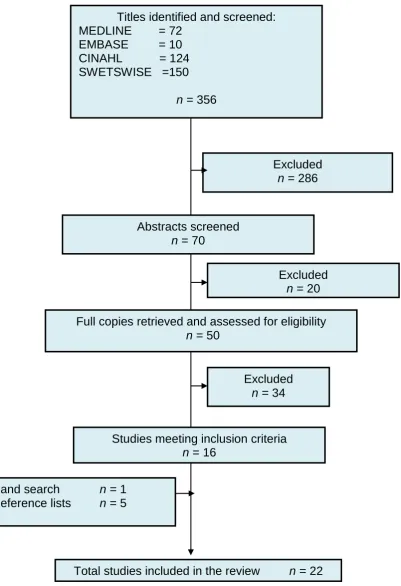
Figure 3: Flow chart of study selection process for literature review
Titles identified and screened: MEDLINE = 72
EMBASE = 10 CINAHL = 124 SWETSWISE =150
n = 356
Excluded n = 286
Abstracts screened n = 70
Excluded n = 20
Full copies retrieved and assessed for eligibility n = 50
Excluded n = 34
Studies meeting inclusion criteria n = 16
Hand search n = 1 Reference lists n = 5
21
2.4. Synthesis of study findings
Integrative analysis based on thematic analysis was used in order to incorporate the ‘micro, ‘meso’, macro’ categorisation of reasons for student attrition. Appraising the quality of evidence is central to the credibility of the review. Quality appraisal was challenging because of the diversity of included studies in terms of design and outcomes. The tools used to appraise studies are summarised below.
A meta-analysis was not considered to be appropriate because of the differences in study designs and data cohesion outcome measures of the studies selected for review.
Student attrition is multi-factorial and as outlined in Chapter 1 and has been categorised in terms of ‘micro’, ‘meso’ and ‘macro’ factors (Dopfer et al., 2004). In summary, ‘micro are the factors that are individual to students such as age, gender, personality’; ‘meso’ factors are related to student characteristics which may be controllable and/or attributable to activities driven by the institution or associated with it and ‘macro’ factors relate to university or national policy that may influence the student experience in the educational setting or in clinical practice. These factors are considered in relation to their bearing on the students’ experience and in the context of the nursing profession. These terms were used to organise the studies included in the review in relation to the reasons why students stay on their programme of study or leave.
2.4.1 Quality appraisal
2.4.1.1 Screening questions for qualitative research (CASP 1999) 1. Were the aims clear?
22
2.4.1.2 Detailed questions
4. Was the research design appropriate? To address aims? 5. Was the recruitment strategy appropriate for the aims?
6. Did the data collection procedures address the research issue?
7. Has the relationship between researcher and participants been adequately considered?
8. Have ethical issues been taken into consideration? 9. Was the data analysis sufficiently rigorous?
10. Is there a clear statement of findings? 11. How valuable is the research?
2.4.1.3 Screening questions for quantitative studies (Cho et al., 1994; Timmer et al., 2003).
1. Was the question / objective sufficiently described? 2. Study design evident & appropriate?
3. Method of subject / comparison group selection or source of information / input variable described and appropriate?
4. Subject (& comparison group, if appropriate) characteristics sufficiently described?
5. If interventional & random application was possible was it reported? 6. If interventional & blinding of investigations was possible, was it reported? 7. If interventional & blinding of subjects was possible, was it reported?
8. Outcome and (if applicable) exposure measurements well defined & robust to measurement / misclassification bias? Means of assessment reported?
9. Sample size appropriate?
10. Analytic methods described / justified?
11. Some estimate of variance is reported for the main results? 12. Controlled for confounding?
23
2.5 Findings of the literature review
This section presents an overview of review studies, findings from the quality appraisal assessment and the themes and categories that emerged from the data synthesis.
2.5.1 Overview of review studies
The literature reviewed originates from the United Kingdom, Ireland, the United States of America and Australia where a significant body of knowledge has emerged surrounding the attributes of students who leave and possible explanatory models for early departure from higher education institutions (Bean & Metzner, 1985; Tinto, 1987; Benda, 1991; Aber, 1996; Tinto, 1997; Astin, 1997 and Jeffreys, 1998, 2002, 2007).
The survey of the literature suggests that while a number of studies have been undertaken in the United Kingdom on student nurse attrition, very few have examined the similarities and differences between the expectations and experiences of the academic experience and their impact upon student retention. Furthermore, it is helpful to look at student retention and attrition through a multi-factorial lens that is, identifying a number of factors associated with attrition rather than any single factor responsible for students leaving (Pryjmachuk et al., 2009). A summary of the studies reviewed is presented in Table 2.1.
24
Table 2.1: Summary of articles included in the review
AUTHOR COUNTRY OF
ORIGIN
STUDY AIM SAMPLE METHODS FINDINGS Constructs of
Tinto’s model
Bowden (2008)
UK To explain attrition from the point of view of students who considered leaving and students who stayed
N = 101 Mixed methods qualitative and quantitative survey
Micro Factors
22% of students had considered leaving the course during the programme. Academic, placement, financial and personal issues were cited as the reason for considering leaving. Main facilitators for staying on the programme were – academic and support staff, peers, friends, family, self help, personal tutors, clinical teachers and University support mechanisms. Pre-entry attributes External commitments Goal commitment Christie et al. (2004)
UK To identify reasons for non-completion of nursing programmes
N = 169 Quantitative survey
Micro Factors
Students who left felt loneliness, isolation, and had negative perceptions of university.
Additional factors included personal and family issues poor choice of programme and debt.
Social integration
External
commitments
Donaldson et al., (2010)
UK To gain an understanding of patterns of retention and attrition for student nurses on the Dip HE/ B.Sc. adult on completion of the common foundation programme
N = 638 Mixed
methods Quantitative survey Qualitative interviews Micro Factors
From the characteristics noted at interview on the ISS, the most reliable predictor of success was age. Younger students needed more support and clinical placement was a source for anxiety. Age of student and content of work were better predictors of success than other variables 118 (18%) were
unsuccessful and 520 (82%) were successful completers of the CFP. The total score achieved on the ISS was shown not to be a reliable predictor of success.
Pre-entry attributes
Intentions
25
AUTHOR COUNTRY OF
ORIGIN
STUDY AIM SAMPLE METHODS FINDINGS Constructs of
Tinto’s model
Glackin & Glackin, (1998)
Ireland To investigate experiences of older students
N = 86 Quantitative survey
Micro/Meso Factors
University not meeting the needs of older students. Older students fear academic failure and experienced difficulty with life sciences. Experience and maturity not recognised in practice. Students were more motivated but had
financial and family issues, difficulties in adapting to the course and the speed required to learn new skills.
Academic system External commitments Pre-entry attributes Learning Social system
Glossop, (2000) UK To explore attrition in one school of nursing
N = 178 Qualitative interviews
Micro Factors
Reasons for leaving- personal or family difficulties, academic, financial, health, wrong career, poor
attendance, travel difficulties. Poor course organisation and negative staff attitudes accounted for very small percentages of leavers.
Learning
External
commitments
Jeffreys, (2007) USA To track students through retention pathways
N = 112 Retrospectiv e study of academic outcomes, progression, completion and licensure
Micro Factors
Successful students had good entry grades. Students at risk scored low grade on the first assignments, failed a module. Recommended
mandatory study skills time and stress management. Other successful strategies like peer mentoring and support strategies for older students, women and minority students as they were perceived to be at risk.
Pre-entry attributes
Academic integration
Quality of student
26
AUTHOR COUNTRY
OF ORIGIN
STUDY AIM SAMPLE METHODS FINDINGS Constructs of
Tinto’s model
Kevern & Webb (1999)
UK To identify biographical
characteristics of pre registration students, role of organisational factors in retention
N = 355 Audit of institutional data
Micro/Meso Factors
34% of students left in the first year. Educational background and age were predictors of success. Younger students with modest qualifications did less well on theory tests. Younger students more likely to leave. Organisational and course characteristics can be influential in relation to location, type of clinical experience. Pre-entry qualifications Prior schooling Academic system Learning
Kevern et al., (2004) UK To gain an understanding of mature students experiences and consider ways to meet their needs
N = 32 Qualitative focus groups
Micro/Meso/Macro Factors
Students did not know what to expect on starting the programme. Reality shock about nursing practice. Learning the game in relation to academic study, practice placements and shift work, managing the effect of academic work on family roles, personal growth and relationships. Goal & instututional commitment Social system Social integration External commitments
Kotecha, (2002) UK To explore interactions between levels of integration achieved and decision to stay
N = 30 Quantitative- questionnaire Qualitative- Interviews
Meso Factors
Dichotomy between two discourses ;
apprentice – which expected the learner to be “a compliant doer” subject to the rules in practice; autonomous discourse- full academic integration into higher education with self direction, reflection, assertion and knowledgeable doer. Social system Academic system Academic integration Social integration
Last & Fulbrook, (2003)
UK To explore why students leave pre registration programme
N = 47 Mixed methods Interviews Focus group Delphi study
Meso Factors
Reasons for student leaving were varied but too much emphasis on academic work, insufficient clinical skills teaching, lack of confidence and knowledge in practical nursing. Students needed more guidance and structure in the first year. Large class numbers were inhibitors, academic work stressful and caused feelings of overload. Poor clinical experiences and lack of support in practice were significant. Financial problems, travelling and unmet expectations were implicated in withdrawal.
Quality of student effort
27
AUTHOR COUNTRY
OF ORIGIN
STUDY AIM SAMPLE METHODS FINDINGS Constructs of
Tinto’s model
Lowe & Cook, (2002)
UK To elicit expectations of pre-enrolment first year students of social & academic expectations of university
N = 16,000 Quantitative Meso Factors
Most students managed the transition to university without difficulty. 20-30% constantly experienced academic and personal problems and university was a negative experience. Disengagement was due to inaccurate prior perceptions. Academic system Academic integration Goal commitments
McCarey et al., (2007)
UK To explore the predictive relationship between entry qualifications, age, gender, attendance and academic performance
N = 154 Mixed methods Audit of institutional data Qualitative interviews Micro Factors
Students with higher academic entry
qualifications and aged over 26 performed better academically than younger students. Year one academic performance predicted performance in year 3. High absenteeism correlated with poor academic achievement.
Pre-entry attributes
Quality of student effort
Acdemic integration Intentions
McLaughlin et al.,
(2008)
UK To examine the role of personality and self efficacy in predicting academic performance & student attrition
N = 384 Quantitative – longitudinal survey questionnaire s at the beginning of 1st year and end of 3rd year
Micro / Meso Factors
Students who were introverted had a better chance of achieving higher marks in
assessments. Students with higher self efficacy beliefs were more likely to complete their studies.
Pre-entry
attributes
Persistence
Learning
Mooney et al., (2008)
Eire To identify why mature students choose nursing as a career. To
determine what factors influence this decision
N = 23 Qualitative – focus group interviews
Meso Factors
Participants identified an intrinsic need to care as the primary reason for choosing nursing as a career. For 30% nursing was not their first choice. Family, friends and society influential in the recruitment process. The media was not an influencing factor.
28
AUTHOR COUNTRY
OF ORIGIN
STUDY AIM SAMPLE METHODS FINDINGS Constructs of Tinto’s
model
Moseley & Mead, (2008)
UK To predict which students drop out
of nursing courses
N = 528 Quantitative analysis of student records
Micro Factors
Age, gender, entry qualifications, branch and performance were used to predict dropout with reasonable accuracy.
Pre-entry attributes
O’Brien et al., (2009)
Dublin To explore experiences of mature students To examine gender differences in types & extent of experiences
N = 115 Qualitative focus groups
Micro/Meso Factors
Mature women students found it difficult to adjust to full time study. Supported by partners if they adhered to gender roles. Balancing home and university was a constant juggling act for students with children and the dual roles of parent and student caused role strain.
Essay writing, study skills, time management and support would have been helpful.
External commitments
Skills and attributes
Academic system
O’Donnell, (2009)
UK To identify reasons for voluntary attrition in pre-registration nursing students
N = 15 Qualitative interviews
Micro Factors
Students who leave nursing undergo a process of disengagement before leaving. Non-attendance may be an early warning. Former students experienced significant pain and emotional distress prior to leaving but did not make their tutors aware of their distress.
Academic integration
29
AUTHOR COUNTRY
OF ORIGIN
STUDY AIM SAMPLE METHODS FINDINGS Constructs of Tinto’s
model
Ofori (2000) UK To compare entry qualifications as predictors of performance
N = 222 Quantitative survey
Micro Factors
Academic entry qualifications made no difference to assessment outcomes. Students over 34 years of age performed better than younger students despite non-standard entry criteria
Pre-entry attributes
Pryjmachuk et al.,(2009)
UK To identify factors having an impact on student
completion rates in a pre-registration students
N = 1259 students Quantitative retrospective analysis of course data Micro Factors
Mature students with higher entry qualifications were most likely to successfully complete their programme. Leavers were younger, had basic qualifications were likely to be from the child branch and from an ethnic minority.
Pre-entry attributes
Stott, (2007) Australia To investigate reasons for male student attrition
N = 8 male students
Qualitative Diary record analysis
Meso Factors
Students felt isolated and excluded in both academic and clinical environments. Preference for more technical aspects of nursing.
Social integration Acdemic integration Intentions
Wharrad et al., (2003)
UK To determine relationship between academic outcomes and pre-entry qualifications To discuss
progress of students different qualifications
N = 181 Quantitative Institutional data analysis
Micro Factors
Pre-entry qualifications predicted success. AS levels may be a better indicator of
performance because choice was wider. Students with non-conventional qualifications achieved lower marks and higher attrition rates.
Pre-entry attributes
White et al., (1999)
UK To compare perceived and actual reasons for leaving
N = 315 Quantitative Survey 1.Satisfaction survey 2. Exit questionnaires Micro Factors
Reasons for leaving included 53% personal, 39% academic reasons. More male students left than female. Reasons included course related problems such as lack of organisation, too high an academic level and too much work were identified as contributing factors to leaving. These reasons were not identified in the satisfaction study
30
2.5.2 Summary of the quality appraisal assessment
The studies included in this review used a range of methods to address the reasons why student nurses leave nursing. Some studies used quantitative approaches and age, gender, attrition, and qualifications were found to be statistically significant (Kevern et al., 2004; Mulholland et al., 2008; Pryjmachuk et al., 2009 and McLaughlin et al., 2010). Where studies did not provide data on statistical significance, the findings were included as they offered insights into explanatory reasons for student retention and attrition and suggest areas for future research. All of the studies focused on pre-registration nursing students with the exception of Christie et al. (2004) which relates to higher education students in general and used a stratified sample of students.
Several limitations of study methods were identified such as small sample size (Spouse, 2000; Stott 2007; O’Brien et al., 2008 and O’Donnell, 2009); incomplete routinely collected data (Kevern et al., 1999; Glossop, 2002; McCarey et al., 2006; Mulholland et al., 2008 and Pryjmachuk et al., 2009). The studies primarily used either convenience sampling or documentary analysis, and the validity of data for these studies could not be established. Where exit interviews were conducted or questionnaires used, the number of students who completed them were small (Last & Fulbrook, 2003). Response rates to invitations to participate in retention research were also poor (Pryjmachuk et al., 2009), and most of the studies were conducted in single institutions, which reduced the ability to generalise the findings to other institutions. However, despite differences in institutions and populations of students there were a number of common threads that ran between studies which suggested that they measuring similar constructs among similar populations.
31
In other studies, omission of explanations for missing data concerning participants in the studies was a drawback in terms of drawing conclusions from studies such as Glossop (2002) and Pryjmachuk et al., 2009).
The quality appraisal tools are presented in Appendix I.
2.6 Synthesised findings
A range of factors were identified that appear to influence student nurses retention and attrition from their programme of study. These have been grouped into ‘micro’, ‘meso’ and ‘macro’ factors. The factors and associated categories, presented in Table 2.2, will now be described.
Table 2.2: Micro, meso and macro factors associated with student nurse retention and attrition
MICRO FACTORS MESO FACTORS MACRO FACTORS
Preparedness Age
Gender
Academic background Financial hardship
Branch of nursing Academic/clinical skills failure
Academic support Clinical placement experience
Student support
Inter-organizational working relationships Recruitment and selection
Widening participation
2.6.1 Micro factors associated with student nurse retention and attrition
32
2.6.1.2 Age
The review studies varied in relation to age as a factor that contributed to student attrition. Some studies reported no correlation between age and attrition (White et al., 1999; Kevern et al., 1999 and Pryjmachuk et al., 2009). In contrast, other studies report a correlation between age and attrition, with students over 24 years of age more likely to leave nursing courses (Deary et al., 2003 and McLaughlin et al., 2008). McLaughlin et al. (2008) found that in a sample comprised of similar numbers for each age range, students under the age of 26 were more likely to withdraw. The greater number of students who withdrew in this group may have been related to the composition of the group as most of the participants came from this age range. Age was found to be statistically significant for students under the age of 21 (McLaughlin et al., 2010). Recent studies have indicated that age was a better predictor of student success than other variables in determining student success which is a more positive emphasis on retention than attrition (Moseley & Mead, 2008; Donaldson et al., 2010).
2.6.1.3 Gender
33
Nevertheless, gender role identity and the female dominance of nursing may be an issue related to whether students stay on their course or withdraw before completion of the programme. For female students in particular, balancing home life and university was seen as a constant juggling act for students with children, causing role strain and divided loyalties between home and the programme (O’Brien et al., 2009). Furthermore, as women are still seen as natural carers, in order to participate in higher education, other studies indicate that women were need to adopt a number of coping strategies and support systems for management of both their academic workload and their domestic role in order to continue their studies (Kevern & Webb, 2004). The duality of roles and the accompanying stresses may contribute to the number of women who do not complete their studies (Andrew et al., 2007 and Mulholland et al., 2008). However, missing data relating to the total numbers of both males and females leaving nursing was a limiting factor in making cross study comparisons.
Greater numbers of women leaving nursing programmes is indicative of the proportionate difference between the numbers of both sexes recruited into nurse education. Jeffreys (2007) encountered this disparity when making comparisons between men and women in relation to either retention and/or attrition and she concluded that gender and its relationship to attrition was equivocal. Similar conclusions emerged from another study where no statistical significance was found when comparisons were made using gender versus completion or non-completion alone (Pryjmachuk et al., 2009). However, when comparisons were made between completion categories (which encompassed completed on time or late, did not complete, resigned, removed) a statistically significant number of men were shown to have been removed from the programme in comparison with women.
There does not appear to be a clear indication of how many male students left as a result of academic failure alone or whether there was a relationship between academic failure, leaving and failure of the institution to meet students’ learning needs (McLaughlin et al., 2008).
34
of Mulholland et al., (2008) who also found that men were less likely to complete their course. As the number of women outweigh the number of men in nursing, when considering the attrition rates in relation to gender the percentage differences for each gender recruited must be taken into account.
2.6.1.4 Entry qualifications
Across studies students’ entry qualifications were diverse and there were conflicting findings in relation to academic entry qualifications as some studies found that entry criteria made no difference to assessment outcomes, students with non-standard entry qualifications performed better than younger counterparts while students under 21 were more likely to experience academic failure (Ofori, 2000). The majority of diploma students entered their programme with the minimum entry requirements of five GCSE passes at Grade C and above. Furthermore, a significant proportion of students entered their pre-registration nurse education programme with either a BTEC or Access course qualification (Kevern et al., 1999; Mulholland et al., 2008 and McLaughlin et al., 2008). Students with minimum entry qualifications were more likely to drop out of university (Kevern et al., 1999; Wharrad, 2003; Mulholland et al., 2008; McLaughlin et al., 2008 and Pryjmachuk et al., 2009).
Across research studies, the majority of the respondents who entered with two ‘A’ levels completed the common foundation programme (McCarey et al., 2007). In this study, the association between academic attainment and completion of the common foundation programme was not statistically significant. However, this may have been attributable to the omission of data relating to the impact of entry via the Dennis Child Test (DC test) on the results, would have enriched the findings. Nevertheless, it would not have enhanced the generalisability of the findings, as the DC Test is a UK specific test for those non standard entrants over the age of 21 years, who do not have the required entry requirements.