A 12 MONTH FOLLOW UP OF THE RE-EDUCATION
OF ARM AND HAND FUNCTION FOLLOWING
STROKE (REACH) RANDOMISED CONTROLLED
TRIAL: A MIXED METHODS STUDY
Helen LUCKIE
School of Health Sciences,
University of Salford, Salford, UK
Table of Contents
Table of Contents ... i
List of Tables ... vii
List of Figures ... viii
Acknowledgements ... ix
List of Abbreviations ... x
Abstract ... xi
Chapter 1 Introduction ... 1
1.1 Background and rationale ... 1
1.2 Outline of Thesis Structure ... 2
1.2.1 Chapter 2 ... 2
1.2.2 Chapter 3 ... 3
1.2.3 Chapter 4 ... 3
1.2.4 Chapter 5 ... 3
1.2.5 Chapter 6 ... 4
1.2.6 Chapter 7 ... 4
Chapter 2 Literature Review ... 5
2.1 Incidence and Prevalence of Stroke ... 5
2.2 Upper Limb After Stroke ... 5
2.2.1 Incidence and prevalence of upper limb impairment & functional limitation following stroke ... 5
2.2.2 Time course of recovery of the upper limb following stroke ... 6
2.2.3 Predictors of recovery ... 7
2.3 Theoretical Basis for Upper Limb Treatments ... 8
2.4 What Should Upper Limb Rehabilitation Consist of? ... 9
2.4.1 Stroke recovery thresholds ... 10
2.5 The Reality of Therapy Interventions ... 11
2.6.1 Overview of factors influencing recovery following stroke: PwS
perspective ... 14
2.6.2 The influence rehabilitation professionals have on the recovery of PwS 15 2.7 Impact of Upper Limb Impairment Following Stroke ... 16
2.7.1 PwS perspective of factors associated with upper limb stroke recovery . 16 2.8 Functional Electrical Stimulation ... 18
2.8.1 Background ... 18
2.8.2 Electrical stimulation - definition ... 19
2.8.3 Functional Electrical Stimulation – definition and overview ... 20
2.8.4 Upper limb FES systems ... 21
2.8.5 Theoretical basis for FES - Neuroplasticity and motor learning ... 23
2.8.6 Literature Search Methods ... 24
2.8.7 Evidence for FES in acute stroke rehabilitation ... 24
2.8.8 Evidence for FES in chronic stroke rehabilitation ... 27
2.8.9 Long-term follow-up in upper limb FES studies ... 29
2.9 Odstock 2 Channel Movement-Triggered Pilot Study and REACH Study . 31 2.10 Chapter Summary ... 34
2.11 Thesis Aims ... 36
Chapter 3 Quantitative Method ... 37
3.1 Introduction / Overview ... 37
3.2 Study Protocol ... 37
3.2.1 Study design ... 37
3.2.2 Size of the study... 38
3.2.3 Selection criteria ... 38
3.2.4 Recruitment... 39
3.2.5 Consent ... 39
3.2.6 Safety ... 40
3.2.7 Bias protection ... 40
3.2.8 Appointment details ... 41
3.3 Outcome measures ... 41
3.4 Statistical Analysis... 44
3.5 Data Storage and Confidentiality... 45
4.1 Introduction... 46
4.2 Justification for the Research Approach ... 46
4.2.1 Theoretical underpinning of the methodology ... 46
4.3 Data Collection Tool... 48
4.3.1 Rationale for choice of data collection tool ... 48
4.3.2 Development of the data collection tool ... 49
4.4 Recruitment and Consent ... 51
4.5 Ethical Considerations ... 51
4.6 Procedure of the Interview... 51
4.7 Data Analysis ... 52
4.7.1 Rationale for method of analysis ... 52
4.7.2 Process of analysis ... 52
4.7.3 Verification ... 55
4.7.3.1 Researcher perspective ... 55
4.7.3.2 Outside reviewer perspective ... 57
4.8 Summary ... 58
Chapter 5 Quantitative Results ... 59
5.1 Recruitment... 59
5.2 Demographics ... 60
5.2.1 Baseline demographics ... 60
5.2.2 Demographics baseline comparison ... 60
5.3 Baseline Measures ... 61
5.3.1 Baseline measures - REAcH and 12-month follow up study cohorts ... 61
5.3.2 Comparison in week 0 – 12 outcome measures between REAcH and 12 month follow up cohorts ... 61
5.4 Statistical Analysis of Follow Up Cohort (n=9) ... 62
5.5 Summary ... 63
Chapter 6 Findings from the Thematic Analysis of the interviews ... 64
6.1 Introduction... 64
6.2.1 Organising Theme - Perceptions and experiences of voluntary triggered
FES in the REAcH study ... 65
6.2.1.1 Basic Theme - Participants generally showed a low awareness /
understanding of FES ... 66
6.2.1.2 Basic Theme – There were some negative experiences, usability and
reliability issues experienced with the FES device. ... 67
6.2.1.3 Basic Theme – The overall concept of the FES device was good,
positive effects of using the device were reported. ... 68
6.2.2 Organising Theme – The interventions in the REAcH study had a positive
effect on most of the participants ... 70
6.2.2.1 Basic Theme – Seeing a Physiotherapist in the chronic phase of stroke
had a positive effect on participants ... 71
6.2.2.2 Basic Theme – Benefits were reported from the interventions in the
REAcH study, which had a positive impact on participants ... 71
6.2.2.3 Basic Theme – Not all participants reported positive effects from the
REAcH study ... 73
6.2.2.4 Summary ... 74
6.3 Global Theme – Upper Limb Recovery is Not Just a Physical Process ... 76
6.3.1 Organising Theme – Participants’ Perceptions of Their Upper Limb
Recovery ... 76
6.3.1.1 Basic Theme- In the follow up period, most participants have improved
or stayed the same in their level of upper limb recovery ... 77
6.3.1.2 There is a mix of participants who are actively still trying, hope for
further improvement and perceive they are improving. There are those who are
not improving and or trying and conflict exists for others ... 79
6.3.2 Organising Theme – Personal Attitudes, Beliefs and Approaches Are
Important Factors in Upper Limb Stroke Recovery ... 81
6.3.2.1 Basic Theme – Some participants’ interviews were characterized by
their positive attitude and approach to upper limb stroke recovery ... 82
6.3.2.2 Individuals take responsibility and credit for their own progress... 84
6.3.3 Organising Theme - Education is important ... 85
6.3.3.1 Basic Theme - Some participants showed insight into the rehabilitation
6.3.3.2 Basic Theme - There is varied knowledge and understanding of
recovery processes and timescales of recovery post stroke ... 88
6.3.3.3 Basic Theme- Information is available from a variety of sources and is
valued by participants ... 90
6.3.3.4 Basic Theme - Participant’s perceived a lack of information across all
time points, this information can lack quality and have a negative impact on an
individual’s ability to drive their own recovery ... 90
6.3.4 Organising Theme - A variety of internal factors are perceived by the
participants to contribute and provide challenges to their recovery ... 91
6.3.4.1 Basic Theme- ‘Use it or lose it’ is a phenomenon recognized and
experienced by the participants. ... 94
6.3.4.2 Basic Theme- Maintaining general health and fitness is perceived as
important to the participants and contributes to their recovery... 95
6.3.4.3 Basic Theme - Physical effects from stroke and comorbidities can be
challenges to recovery ... 96
6.3.4.4 Basic Theme - Independent rehabilitation and self-motivation can be
difficult for some participants ... 97
6.3.4.5 Basic Theme – The participants have experienced a range of emotions
since having a stroke ... 98
6.3.5 Organising Theme – A variety of external issues are perceived by the
participants to contribute and provide challenges to their recovery ... 99
6.3.5.1 Basic Theme – Participation in the community and returning to
previously valued activities is meaningful to the participants ... 101
6.3.5.2 Basic Theme – Participants draw on support from a variety of sources
102
6.3.5.3 Basic Theme – Groups were reported as having social, psychological
and physical benefits ... 103
6.3.5.4 Basic Theme – Input from therapists is valued by the participants ... 104
6.3.5.5 Basic Theme – Some participant’s perception is they did not receive
enough therapy across all the time points ... 105
6.4 Summary ... 109
Chapter 7 Discussion, Limitations and Conclusion ... 112
7.1 Long Term Follow-up of FES in People with Chronic Stroke ... 112
7.2 Quantitative Findings in Relation to the Research Aims... 113
7.3 Could Changes in Outcome be Attributed to the Nature of Intervention? 115 7.4 Participants’ Experiences and Perceptions of Upper Limb Recovery ... 115
7.4.1 Interventions in chronic stroke ... 115
7.4.2 Non-physical factors and their impact on recovery ... 117
7.5 Mixed Methods ... 119
7.5.1 Relationship between quantitative and qualitative findings ... 119
7.6 Limitations ... 122
7.7 Conclusion ... 123
Appendix 1: Long Term Follow Up of Electrical Stimulation Studies ... 126
Appendix 2: REAcH Study Results Presentation ... 132
Appendix 3: Ethical Approval ... 143
Appendix 4: Participant Information Sheet ... 144
Appendix 5: Participant Consent Form ... 148
Appendix 6: Interview Guide ... 149
Appendix 7: Individual Participant Results ... 151
List of Tables
Table 5.1 Demographics of all participants on entering the REAcH study... 60
Table 5.2 Baseline demographics of full REAcH cohort and follow up cohort ... 60
Table 5.3 Baseline measures of REAcH and follow-up studies ... 61
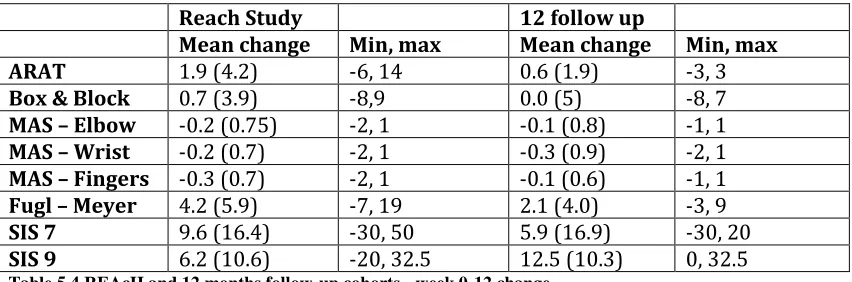
Table 5.4 REAcH and 12 months follow-up cohorts - week 0-12 change ... 61
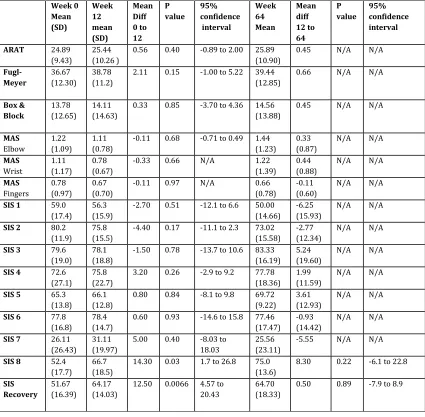
Table 5.5 Statistical analysis follow-up group ... 62
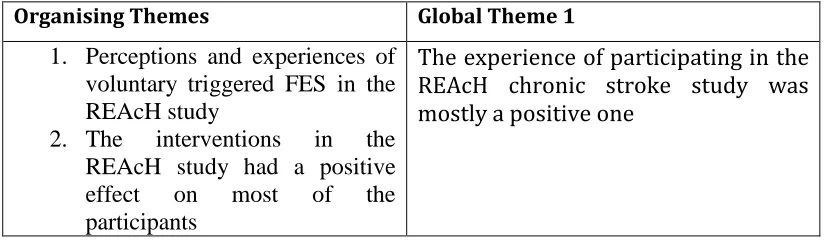
Table 6.1 Global theme 1... 64
Table 6.2 Organising theme - perceptions and experiences of voluntary triggered FES in the REAcH study ... 65
Table 6.3 Organising theme - the interventions in the REAcH study had a positive effect on most of the participants... 70
Table 6.4 Global theme 2... 76
Table 6.5 Organising theme - participants perceptions of their upper limb recovery . 77 Table 6.6 Organising theme - personal attitudes, approached and beliefs are important aspects of recovery ... 81
Table 6.7 Organising theme - education is important... 86
Table 6.8 Organising theme - a variety of internal factors are perceived by the participants to contribute and provide challenges to their recovery ... 93
List of Figures
Figure 2.1 Neuron cell structure ... 19
Figure 2.2 Bioness H200 Neuroprosthesis ... 21
Figure 2.3 Odstock 2-channel programmable (O2PS) / REAcH stimulator ... 23
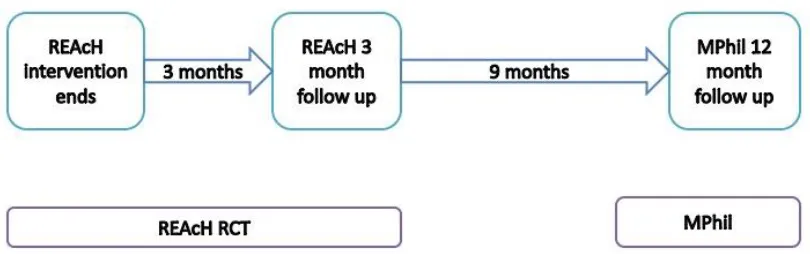
Figure 3.1 The REAcH and follow-up studies ... 37
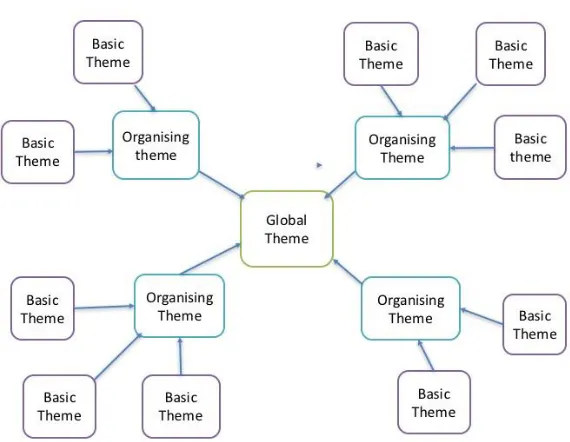
Figure 4.1 Structure of a thematic network ... 53
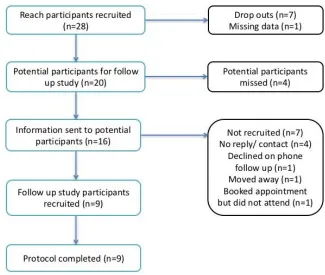
Figure 5.1 Recruitment for the follow-up study ... 59
Figure 6.1 Thematic Network: Global theme 1 ... 75
Acknowledgements
I would like to express my deepest appreciation to my MPhil supervisory team,
Professor Laurence Kenney, Doctor Christine Smith and Doctor Anita Williams who
all assisted in steering me towards completion of this thesis. I would like particularly
like to thank Professor Kenney for his patience, expertise and guidance.
I extend my gratitude to Peter Bowden and his team Sue, Sue and Carol in the
Podiatry department for their years of assistance with the participants throughout the
REAcH and this study.
I extend my gratitude to the participants who gave their time and returned to assist me
with this study.
I would like to thank my colleagues for their support. I would like to thank my family
and friends for their constant support, especially in these last few months. Finally, last
but not least, I would like to thank my husband for his unwavering support in all ways
List of Abbreviations
ADL Activities of Daily Living ARAT Action Research Arm Test
CCFES Contralaterally Controlled Functional Electrical Stimulation CNS Central Nervous System
CIMT Constraint Induced Movement Therapy COPM Canadian Occupational Performance Measure CQC Care Quality Commission
DOH Department of Health
EBRSR Evidence Based Review of Stroke Rehabilitation
EMG Electromyography
ESD Early Supported Discharge FES Functional Electrical Stimulation FET Functional Electrical Therapy
FM Fugl-Meyer Assessment
HFG Higher Functioning Group HRQOL Health Related Quality of Life
IFESS International Functional Electrical Stimulation Society
K+ Potassium
LFG Lower Functioning Group
MAL Motor Assessment Log
MAS Modified Ashworth Scale
MICD Minimal Important Clinical Difference
Na+ Sodium
NHS National Health Service
NICE National Institute for Health and Care Excellence NMES Neuromuscular Electrical Stimulation
O2PS Odstock 2 channel Programmable Stimulator
OT Occupational Therapy
PCT Primary Care Trust
PIADS Psychological Impact of Assistive Devices Scale PwS Person/ People with Stroke
RCT Randomised Controlled Trial
REAcH Re-Education of Arm and Hand function following stroke RCP Royal College of Physicians
SIS Stroke Impact Scale
SSNAP Sentinel Stroke National Audit Programme
UK United Kingdom
VR Virtual Reality
Abstract
Functional electrical stimulation (FES) has shown promise as a treatment for upper
limb rehabilitation following stroke, although current devices are limited in
functionality. To address this a new movement-triggered FES device was developed
and trialled in people with chronic stroke in the REAcH study.
Studies of long term effects of FES have been limited both in time (up to 9-months
post intervention) and scope (focusing only on quantitative outcomes). Therefore, this
mixed methods study followed up a sub-set of participants in the REAcH study at the
Salford site at 12 months post intervention with the aims of: 1. Identifying whether
changes in impairment, function and Quality of Life seen during REACH were
maintained at 12 months. 2. Whether the changes in outcomes could be attributed to
the nature of the intervention. 3. Exploring the experiences of the participants’ upper
limb post stroke recovery during the REAcH study and over the 12 month follow up
period.
Measures taken during the REACH study were repeated 12 months following the end
of the intervention period, and semi-structured interviews were carried out. Statistical
and thematic analysis were used to present data.
The nine participants recruited showed no statistically significant differences in all but
two domains of the SIS, participation (p=0.03) and recovery (p = 0.006) at the end of
intervention which were maintained at follow up. Some changes in study measures
were seen at an individual level, which in cases were maintained, or showed continued
improvement over the 12 month follow up. Thematic analysis identified long term
positive outcomes from exercise and FES interventions in chronic stroke as well as
non-physical issues which influence upper limb recovery. A degree of mismatch
between quantitative and qualitative measures was noted, in line with recent research.
Chapter 1
Introduction
1.1 Background and rationale
Stroke is a leading cause of disability in the UK (Mendis, 2013). Impairment of the
upper limb commonly extends into the chronic post-stroke phase, with up to 65% of
patients with stroke (PwS) reporting resulting limitations in activities of daily living
and participation (Mayo, Wood-Dauphinee, Côté, Durcan, & Carlton, 2002; Winstein
et al., 2013). Upper limb impairment is associated with a low level of subjective
well-being
(Broeks, Lankhorst, Rumping, & Prevo, 1999) and can negatively influence leisure
activities (Sveen, Bautz-Holter, Sodring, Wyller, & Laake, 1999). Exploring the
perceptions of PwS reveals stroke has broad impact extending beyond physical issues
alone (Graven, Sansonetti, Moloczij, Cadilhac, & Joubert, 2013).
Stroke recovery is a complex process thought to continue for years post stroke, via
neuroplastic mechanisms. The recovery process can be influenced by external stimuli,
such as rehabilitation interventions (Kwakkel, Kollen, & Lindeman, 2004; Nudo,
2003a, 2003b). Evidence from both animal models and human trials supports
relatively high doses of repetitive task practice in rehabilitation interventions to
promote neuroplastic changes (Plautz, Milliken, & Nudo, 2000; Pollock et al., 2014).
The evidence also suggests that effective practice is characterised by being varied,
meaningful and involving a voluntary element on the part of the patient (Krakauer,
2006). The reality of therapy is that it is low in dosage and its content does not align
well with the evidence base (Lang et al., 2009; NICE, 2013).
Technology is emerging within rehabilitation as an adjunct to therapy. Functional
Electrical Stimulation (FES) has the potential to deliver high intensity task practice,
combined with task training it can be effective in reducing impairment and increasing
function. FES can also allow PwS with a more severe impairment to practice tasks.
Only a small number of rehabilitation and indeed FES studies have followed up
participants over a longer term to establish the long term persistence of any changes in
impairment or function or quality of life (Knutson et al., 2012; Kraft, Fitts, &
Hammond, 1992; Wolf et al., 2008). Even more scarce is data from the perspective of
the user. However, user perceptions of technology can contribute valuable feedback in
relation to usability and effectiveness (Hughes et al., 2011), and barriers to translation
of evidence based technologies (Hughes et al., 2014). As noted above PwS do not
view their recovery only from a physical perspective, so the experiences and
perceptions of participants within a trial using new technology can be valuable
information, towards shaping future rehabilitation for the upper limb.
1.2 Outline of Thesis Structure 1.2.1 Chapter 2
This chapter sets the scene for the thesis by reviewing the incidence and prevalence of
stroke, and of upper limb impairments and functional limitations following stroke.
The time course of recovery of the upper limb in stroke is reviewed, highlighting
evidence showing recovery is possible in chronic stroke. The theoretical basis,
evidence base for upper limb treatments and national guidelines are then outlined, and
contrasts are drawn with the reality of therapy interventions in the United Kingdom
(UK). The section concludes with recent work on prediction of upper limb recovery
following stroke and other factors which may influence upper limb recovery.
The perspectives of people with stroke are reviewed, in particular in the concept of
recovery is discussed, along with factors involved which are not only physical, but
psychological, emotional and social.
Functional electrical stimulation (FES) is introduced and the mechanism of action
outlined. Neuroplasticity and motor learning are reviewed as components of the
rehabilitation is briefly presented, with a more in-depth review of the literature in
chronic stroke, aligning with the population of this study. This study focuses upon
long-term follow up in FES and the lack of evidence in this field is discussed.
This chapter concludes with a summary of the Stroke Association-funded randomised
controlled trial (RCT) Accelerometer-triggered functional electrical stimulation for
the recovery of upper limb function in chronic stroke patients (short title:
Re-Education of Arm and Hand function following stroke, acronym: REAcH), leading to
the research aims and objectives.
1.2.2 Chapter 3
This chapter outlines the quantitative methods of the study, including details of
design, size of the study, criteria, recruitment, consent and ethical considerations. The
outcome measures used in this study are presented along with details of the validity
and reliability of each measure. Finally, the data analysis approach is presented.
1.2.3 Chapter 4
This chapter outlines the qualitative methods of the study. It includes the justification
for the approach taken and the relevant theoretical underpinning of the methodology
chosen. The rationale and development of the data collection tool are presented.
Pertinent ethical considerations in addition to those in the previous chapter are
outlined, along with the procedure for the interviews. The process of thematic analysis
and thematic networks are introduced to guide the reader in the process of reduction
of the qualitative data to themes. The chapter concludes with details of the verification
process.
1.2.4 Chapter 5
1.2.5 Chapter 6
In Chapter 6, the data from interviews with participants are analysed following the
process set out in chapter 4. The results of a thematic analysis of the data are
presented and conclusions are drawn.
1.2.6 Chapter 7
This chapter synthesises the quantitative and qualitative findings, which are reviewed
in relation to the study aims and objectives. The quantitative and qualitative findings
are then explored further in relation to individual participants in the study. The
limitations within the work are discussed. Finally, conclusions are drawn and future
Chapter 2
Literature Review
2.1 Incidence and Prevalence of Stroke
Each year in the UK around 152,000 people have a stroke (The Stroke Association,
2016). Stroke is the fourth largest cause of death in the UK and second in the world
(The Stroke Association, 2016). It is estimated there are approximately 1.2 million
people living with stroke in the UK (The Stroke Association, 2016), making stroke the
leading cause of adult disability in the UK and the western world (Mendis, 2013).
Stroke incidence fell by 19% from 1990 to 2010 in the UK, but stroke mortality rates
also fell by 46% in the same time period (Feigin et al., 2014), meaning that there are
now more people living with the long-term consequences of stroke than ever before
(Langhorne, Bernhardt, & Kwakkel, 2011).
Stroke also poses a substantial economic burden. For example, in 2008 the cost to the
United States was estimated at US$65 billion (Zhang, Chapman, Plested, Jackson, &
Purroy, 2012). The cost to the UK is estimated to be around £9 billion a year (Saka,
McGuire, & Wolfe, 2009), and with the increasing numbers of people living with the
consequences of stroke, this economic burden is only predicted to increase (Romano,
Imrey, & Sacco, 2011).
2.2 Upper Limb After Stroke
2.2.1 Incidence and prevalence of upper limb impairment & functional limitation following stroke
At onset of stroke 77 % have impairments to their upper limb (Lawrence et al., 2001).
Winstein et al (2013) report that 65% of people with stroke (PwS) at 6 months post
limitations with higher level activities of daily living (ADL) such as housework, and
65% restrictions with their integration back into community activities (Mayo et al.,
2002).
Kwakkel et al (2003) found in severely affected PwS, approximately 40% achieved
some dexterity at 6 months post stroke (Kwakkel, Kollen, van der Grond, & Prevo,
2003). In mild / moderately affected individuals Nijland et al (2010) found the
prognosis to be better with 71% achieving at least some dexterity at 6 months
(Nijland, van Wegen, Harmeling-van der Wel, & Kwakkel, 2010).
2.2.2 Time course of recovery of the upper limb following stroke
It has been widely accepted that the rate of recovery from stroke is fastest in the first 3
months. The rate of recovery is reported to slow around 6-months post-stroke. A
plateau is often referred to at this point, however as discussed below recovery may
continue beyond 6-months (Jorgensen et al., 1995a, 1995b).
In the Copenhagen Stroke Study, Jorgensen et al stratified the 1197 people with acute
stroke according to initial severity, using the Scandinavian Neurological Stroke Scale
of neurological deficit and the Bartel Index of ADL function as outcome measures
(Jorgensen et al., 1995a, 1995b). In 95% of the PwS functional recovery reached the
maximum value as assessed by the Bartel Index within 12.5 weeks of stroke onset,
with 80% of PwS achieving their best function within 6 weeks. They found the time
course of functional recovery was strongly correlated to the initial stroke severity,
with best function by Bartel Index reached in 8.5, 13, 17 and 20 weeks for mild,
moderate, severe and very severe respectively. The study also reported that no
significant improvements were made after these times. In conclusion the study
reported that reliable prognoses can be made within 12 weeks of a stroke, and even in
very severe PwS no further recovery should be expected after 5 months.
However, since the Copenhagen study, a large body of evidence has been produced
that challenges the plateau in recovery around 6-month post stroke, that recovery can
(Dobkin, 2005; Page, Gater, & Bach, 2004; Teasell et al., 2012). The plateau has also
been re-interpreted as a cue to vary and progress therapy rather than to cease it (Page
et al., 2004). A Cochrane review of interventions aimed at improving upper limb
function after stroke found moderate quality evidence of recovery in measures of
function in the chronic stroke phase (Pollock et al., 2014). In an analysis of over 125
RCT’s robust evidence was found for rehabilitation interventions in chronic stroke
(Teasell et al., 2012). For example, analysis of studies into Virtual Reality (VR) also
show evidence of functional improvement in patients over one year post-stroke
(Laver, George, Thomas, Deutsch, & Crotty, 2011). Of particular note, Constraint
Induced Movement Therapy (CIMT) was evaluated in the EXCITE Randomised
Controlled Trial (RCT) which showed significant and clinically relevant
improvements in upper limb function in the sub-acute / chronic stroke phase. In this
trial the participants were between 3 and 9-months post stroke (mean of 184 days post
stroke) and received 2 weeks of CIMT with follow up at the 1 and 2 year marks.
Improvements seen immediately after the end of the intervention were maintained
over follow-up (Wolf et al., 2006; Wolf et al., 2008).
Recent evidence suggests the ‘plateau’ is conceptually more complex than previously
considered. Demain et al (2006) propose that it relates not only to the PwS physical
potential, but can also be influenced by how recovery is measured, the intensity and
type of therapy, PwS actions and motivation, therapist values and service limitations
(Demain, Wiles, Roberts, & McPherson, 2006).
2.2.3 Predictors of recovery
Veerbeek et al (2011), found strong evidence that age and the initial severity are
predictors of outcome (Veerbeek, Kwakkel, van Wegen, Ket, & Heymans, 2011). In a
review of predictors of upper limb recovery Coupar et al (2012) agree with Veerbeek
et al (2011) that initial severity of motor impairment of function is the most important
predictive factor (Coupar, Pollock, Rowe, Weir, & Langhorne, 2012). A few authors
2013; Nijland et al., 2010). Nijland et al (2010) found that those patients who could
produce some active finger extension and shoulder abduction on the second day after
their stroke, had a 98% chance of having some dexterity at 6 months and 60% showed
a full recovery as measured by the Action Research Arm Test (ARAT) (Nijland et al.,
2010). However, for those individuals who did not have this level of activity in their
upper limb, only 25% regained some dexterity at 6-months. Factors such as age, initial
severity and early observations of motor function appear strong predictors of outcome
for upper limb recovery. However, as discussed below, therapy interventions also play
a role in the recovery of the upper limb.
2.3 Theoretical Basis for Upper Limb Treatments
Stroke recovery is a complex process, and is not fully understood, but current thinking
is that it occurs via a mix of spontaneous (non learning dependent processes) and
learning-dependent processes (Barnes, Dobkins, & Bogousslavsky, 2005; Langhorne
et al., 2011). The early, spontaneous recovery is described as restitution. This term
refers to the restoration of the functionality of damaged neural process that is
generally independent of external stimuli and includes resolution of oedema (early
weeks), reperfusion of the non-infarcted ischemic penumbra (early hours-weeks) and
resolution of diaschisis (early days to months).
Central nervous system (CNS) reorganisation or “neuroplasticity” is thought to extend
longer than the other processes up to years following a stroke, and is thought to be
influenced by external stimuli such as rehabilitation interventions (Kwakkel et al.,
2004; Nudo, 2003a, 2003b). Nudo (2003) has suggested that changes that occur
during motor learning such as synaptogenesis and synaptic strengthening are likely to
be the same type of changes that occur in stroke recovery (Nudo, 2003a). Nudo
reports that neuroplasticity after a stroke is based on three concepts, firstly that in a
normal brain, skill acquisition of movements is associated with predictable functional
changes within the motor cortex. Secondly that injury to the motor cortex from a
stroke produces functional changes in the remaining cortical tissue. Thirdly after a
associated with functional neurological reorganisation that is occurring in the
non-damaged areas of the cortex (Nudo, 2003a).
2.4 What Should Upper Limb Rehabilitation Consist of?
A recent Cochrane review found there was no high-quality evidence found for any
interventions that are currently used in routine practice in the UK (Pollock et al.,
2014). Moderate-quality evidence was found in support of CIMT, mental practice,
mirror therapy, interventions for sensory impairment, virtual reality and a relatively
high dose of repetitive task practice (Pollock et al., 2014). Indeed, repetitive task
practice is a core part of most evidence-based interventions, including CIMT and
technology-supported therapy using virtual reality, robotics or FES. The findings from
clinical studies are consistent with reports by Nudo and colleagues that neuroplastic
changes occur when new functional skills are learned by repeated practice of
functional tasks, not by simply repeating identical non-skilled movements (Nudo,
2003a, 2003b). Work in animal models (Plautz et al., 2000) has also supported the
assumption that repetitive motor activity alone does not produce the functional
reorganisation of cortical maps needed. Skill acquisition is a prerequisite part of
driving plasticity in the motor cortex (Plautz et al., 2000).
There is an emerging consensus on the features of task practice that are thought to be
required to drive positive neural and functional changes in the person. These include
high intensity practice of varied, meaningful and functionally relevant tasks, as well as
active cognitive involvement such as initiation and control of activity (Krakauer,
2006; Shumway-Cook & Woollacott, 2001; van Peppen et al., 2004). Voluntary
initiation of the movement promotes sensorimotor integration, intrinsic proprioceptive
and sensory feedback which are key elements driving motor learning (Krakauer, 2006;
Subramanian, Massie, Malcolm, & Levin, 2010). Extrinsic feedback in the form of
knowledge of results and/or performance is another key element of motor learning
2014; van Peppen et al., 2004). A recent systematic review and meta-analysis looked
at the evidence for physical therapy post stroke and found strong evidence for
interventions favouring intensive, high repetitive task-orientated and task-specific
training in all phases post-stroke (Veerbeek et al., 2014). The review noted that the
intensity of practice is a key factor in meaningful training, and more practice is better.
However, it also noted that the effects on function are mostly restricted to the actual
functions trained.
A number of studies have explored the dose-response relationship in task-specific
practice. Animal studies suggest that to make changes in the primary motor cortex the
number of repetitions needs to be in the hundreds (Luke, Allred, & Jones, 2005).
Monkeys performed 600 repetitions of a pellet retrieval task per day, to reverse the
detrimental changes caused by a cortical lesion (Nudo, Wise, SiFuentes, & Milliken,
1996). A human study investigated the feasibility of translating the animal doses to
people with chronic stroke in one-hour training sessions (Birkenmeier, M., & Lang,
2010). The goal of an average of 300 repetitions per session was exceeded with an
average of 322. Action Research Arm Test scores improved by an average of 8 points,
(above the MICD of 5.7) during the intervention and activity and participation
measures both improved, but impairment did not.
2.4.1 Stroke recovery thresholds
The EXCITE study results and associated subsequent studies found evidence to
suggest that there may be a definable point at which therapy is no longer beneficial
(Schweighofer, Han, Wolf, Arbib, & Winstein, 2009; Wolf et al., 2006). Han et al
(2008) hypothesised that if motor retraining after stroke leads to spontaneous use of
the paretic arm in everyday life (Han, Arbib, & Schweighofer, 2008), the PwS could
enter a ‘virtuous’ circle and therapy could be stopped. However, if the dose of therapy
is not sufficient to facilitate the practice and spontaneous use increases above a
threshold at which the paretic arm is used in everyday life, then performance in turn
will not improve and the patient may develop further compensatory strategies and
learned non-use (Han et al., 2008). This work was continued by Schweighofer, Han
was a ‘group’ threshold, above which a majority of participants, but not all, improve
spontaneously (Schweighofer et al., 2009). Further research is ongoing regarding
identifying the threshold.
2.5 The Reality of Therapy Interventions
2.5.1 Guidelines
Stroke rehabilitation is designed to “facilitate restoration of, or adaption to the loss of,
physiological or psychological function when reversal of the underlying pathological
process is incomplete” (NICE, 2013). Major improvements have been achieved in the
medical management of stroke over the past ten to twenty years, including the
widespread introduction of stroke units (Royal College of Physicians, 2010).
However, improvements in acute care have not yet been matched by progress in
delivery of effective post-hospital support (Department of Health, 2010). The National
Institute for Health and Care Excellence (NICE) recommends the following
rehabilitation programme: “Patients with stroke are offered a minimum of 45 minutes
of each active therapy that is required, for a minimum of 5 days a week, at a level that
enables the patient to meet their rehabilitation goals for as long as they are continuing
to benefit from the therapy and are able to tolerate it.” (NICE, 2013).
With regard to chronic stroke, Royal College of Physicians (RCP) guidelines state that
any patient whose situation changes (e.g. new problems emerge or they enter a
changed environment) should be offered further assessment by the specialist stroke
rehabilitation service (Royal College of Physicians, 2012). A named person and/or
contact point should also be identified and communicated to the patient to provide
further information and advice if needed. If any patient has residual impairment after
the end of initial rehabilitation, they should be offered a formal review at least every 6
months, to consider whether further interventions are warranted, and should be
referred for specialist assessment. It also states however that further therapy following
2.5.2 Reality of stroke therapy
The National Sentinel Stroke Audit from 2014 reports physiotherapy/occupational
therapy was provided to patients on 65.3% and 53.8% of in-patient days respectively
and the median duration of physiotherapy per day was 33.3 minutes and 40 minutes
for occupational therapy (Royal College of Physicians, 2014b), significantly below
the recommended intensity discussed above.
McHugh and Swain (2014) compared reported therapy staffing levels and Department
of Health (DOH) therapy staffing guidelines (McHugh & Swain, 2014), and found
only 42% of units reached DOH guidelines for Physiotherapy, 16% for Speech and
language therapy and 84% for Occupational therapy. They conclude “most in-patient
stroke units are operating below the DOH guidelines and are therefore challenged in
providing the recommended amount of therapy and patient time to facilitate optimal
functional recovery for stroke patients” (McHugh & Swain, 2014). It is estimated that
due to other administrative duties which are non-patient contact time for therapists, a
PwS on an acute stroke unit in the UK could receive as little as 5 hours of
Physiotherapy during their stay (McHugh & Swain, 2014). It is also often reported
that the upper limb is not given priority in the inpatient setting, as the focus is on
transfers and mobility to facilitate discharge (The Stroke Association, 2012).
A study that observed the amount of movement practice provided during stroke
rehabilitation, found that practice of task-specific functional upper limb movements
occurred in 51% of sessions that addressed the upper limb. The average number of
repetitions was 32, which is well below the number of repetitions that were found
needed in animal studies to make cortical changes (Lang et al., 2009).
There is still little data available on the reality of care once a PwS has been discharged
from hospital. A report by the Stroke Association found that almost half of people
who have had a stroke had unmet needs for care and that over half wanted more
information about stroke (McKevitt et al., 2010). A Care Quality Commission (CQC)
report found therapy services were generally available but found wide levels of
variation in the accessibility and quality of care and support provided to people after
discharge teams are still evolving and not all patients meet the criteria for an Early
Supported Discharge (ESD) team. Other rehabilitation services vary significantly in
their provision across the country, with 32% of primary care trusts reporting that they
did not commission specialist stroke physiotherapy in the community (Care Quality
Commission, 2011).
The CQC report in 2011 also found while most Primary Care Trusts (PCT) had a
system in place for reviewing treatment, around two thirds of the 6 week reviews were
taking place, and 6 month reviews were planned in 44%, the actual number
undertaken was not known (Care Quality Commission, 2011). While these standards
exist it is unclear how this is communicated to the PwS and their family. For example,
the CQC found that despite PCT’s having policy of carrying out reviews, only one in
ten of the information packs given to people around the time of their transfer home
mentioned these reviews or set out their rights to ask for a reassessment if their needs
change.
2.6 Perspective of People with Stroke
The literature review, up to this point has focused on objective measures of recovery
of the upper limb and factors influencing these. However, factors other than the
amount, and nature of therapy provided may also influence recovery. Further, in
many, if not most, research studies, the primary outcome measure is concerned with
impairment or ability to perform functional tasks, PwS may consider other factors to
be equally, if not more important.
The concept of recovery from the PwS perspective is reviewed, along with factors
such as attitudes and approaches, motivation, education and information and the
influence of rehabilitation professionals in their interactions and attitudes with the
PwS. There is also a perceived imbalance between the rehabilitation professionals
focus on the physical impact of stroke and the PwS’s perspective of not just their
life and participation, and specific factors found to responsible for contributing to
upper limb recovery.
2.6.1 Overview of factors influencing recovery following stroke: PwS perspective
A small number of papers have reported on PwS experiences and perceptions of
rehabilitation and stroke recovery (Luker, Lynch, Bernhardsson, Bennett, &
Bernhardt, 2015; Peoples, Satink, & Steultjens, 2011), while even fewer have
specifically considered the upper limb.
Graven et al (2013) explored the concept of recovery from the perspective of PwS and
their carers (Graven et al., 2013). The main theme that emerged was of ‘individual
recovery expectations’, that recovery is an individual phenomenon, comprising of a
broad range of factors extending beyond physical improvement alone (Graven et al.,
2013). Recovery was considered to be a process of gradually returning to previously
valued activities, and could be used as a benchmark of improvement for PwS. Themes
of perseverance, keeping going and maintaining hope for improvement are common in
the literature regarding PwS perceptions of important factors in recovery (Barker &
Brauer, 2005; Graven et al., 2013).
MacLean et al (2000) noted that rehabilitation professionals have long held the belief
that patient motivation affects outcome, but there is little research in the area
(Maclean, Pound, Wolfe, & Rudd, 2000). In the data that emerged from
semi-structured interviews, MacLean et al explored the attitudes and beliefs of 22 stroke
in-patients, who were deemed as having high or low motivation by the rehabilitation
professionals. They found PwS with high motivation were found to align themselves
more closely to the aims and methods of rehabilitation professionals, and were more
likely to understand the nature and purpose of their rehabilitation than those with low
motivation. Factors that were found to be positive determinants of motivation were
information about rehabilitation, favourable comparisons with other stroke patients
and the desire to leave hospital (Maclean et al., 2000). Negative determinants of
professionals and the provision of mixed messages about rehabilitation to patients
from staff (Maclean et al., 2000).
2.6.2 The influence rehabilitation professionals have on the recovery of PwS
A number of studies have explored the influence of rehabilitation professionals’ interactions and attitudes on the experience of PwS during recovery (Jones, Mandy, & Partridge, 2008; Luker et al., 2015; Maclean et al., 2000; Peoples et al., 2011). In a 2008 study, participants reported positive impacts of therapist interactions, including therapists assisting with their motivation and being encouraging, and viewing rehabilitation as a joint effort between them and the therapists (Jones et al., 2008). Peoples et al (2011) found participants reported negative interactions with staff, with dignity and respect being challenged, conversely, a kind, respectful and hopeful attitude was able to outshine the negative interactions and encouragement from
therapists in rehabilitation sessions strongly influenced satisfaction (Peoples et al., 2011).
People with stroke can suddenly be dependent on all those around them, both in the hospital and at home, and this ‘lack of control’ over their daily lives was associated with fear, frustration and anxiety (Luker et al., 2015). In the light of this, a number of studies have found that participants felt a loss of autonomy in dealings with their therapists, potentially further reinforcing this perception of reduced control over their lives (Jones et al., 2008; Luker et al., 2015; Peoples et al., 2011).Some participants reported that feelings of improved levels of control were associated with recovery of functional abilities, suggesting a complex interaction between therapy, recovery and patient autonomy (Luker et al., 2015).
support PwS as an active member of their rehabilitation, not a passive recipient (Luker et al., 2015; Peoples et al., 2011).
A review of PwS experiences of rehabilitation (Peoples et al., 2011), revealed a perceived imbalance in the focus of clinical staff compared to the PwS. The emphasis of clinical staff tended to be on the physical needs of the PwS, with little attention to their non-physical needs such as, social aspects, spirituality, couples counseling and psychological support (Graven et al., 2013; Peoples et al., 2011). Jones et al (2008)
also discussed how the physical measures of recovery dominate and are not only the key focus for clinicians, but also tend to be prioritised in stroke research (Jones et al.,
2008).
Barker et al (2007) conclude that PwS have a long term view of recovery and stroke
services would benefit from a self-management and self-improvement approach that
could prepare and guide PwS through the psychological, physical, emotional, social
and educational aspects of recovery (Barker, Gill, & Brauer, 2007). Barker proposed
that people with stroke should be equipped with the skills, knowledge and confidence
to drive their own recovery (Barker et al., 2007), as in reality most PwS, once they are
past the initial rehabilitation period, are out there on their own with no professional
support.
2.7 Impact of Upper Limb Impairment Following Stroke
2.7.1 PwS perspective of factors associated with upper limb stroke recovery
Upper limb impairment can have wide ranging physical, social and psychological
impacts. A study investigated the outcome of arm function four years after stroke and
found many participants, even those with moderate to good Fugl-Meyer (FM) scores,
still reported the loss of function in the arm to be a major problem (Broeks et al.,
1999). Upper limb motor impairment is also associated with a low level of subjective
well-being (Wyller, Sveen, Sodring, Pettersen, & Bautz-Holter, 1997). Poor upper
limb functioning can negatively influence participation in functional and leisure
dysfunction in predicting health related quality of life (HRQOL) six months after
stroke (J. H. Morris, van Wijck, Joice, & Donaghy, 2013) and found upper limb
impairment to be an important predictor of perceived physical HRQOL. Barker and
colleagues (Barker & Brauer, 2005; Barker et al., 2007) investigated what upper limb
deficits mean to PwS, their differing beliefs and behaviours with regard to upper limb
recovery, and to determine what factors other than medical diagnosis and
co-morbidities contribute to recovery of the upper limb after stroke in the chronic phase.
Barker postulated that PwS who showed continued recovery after 6 months had either
achieved the required amount and type of task practice to promote their recovery in
terms of task specificity and progression to achieve their goals, or had employed
equally effective strategies to promote recovery (Barker et al., 2007).
In the first stage of their work, Barker et al (2005) conducted focus groups and
in-depth interviews which sought to identify from the PwS’s perspective, factors
contributing to upper limb recovery (Barker & Brauer, 2005). In the second stage
Barker et al (2007) surveyed 220 participants with upper limb impairment who were
more than 3-months post stroke (mean of 4.9 years post stroke) (Barker et al., 2007).
The survey was developed using content sourced from existing instruments with
demonstrated reliability and validity, together with some material taken from a
previous study (Barker & Brauer, 2005). The survey, despite being long and
potentially challenging for stroke participants to complete (at 8 pages with 96 items),
was piloted and adequate test-retest reliability was established. The survey
participants were found to be a representative sample of the stroke population in
Queensland, Australia in age, gender and place of residence, but the results may not
be representative of people with stroke in other countries. Findings from part of the
survey, an upper limb self-reported recovery rating (measured by the recovery item of
the Stroke Impact Scale) varied from 23% reporting no recovery at all, 70% reporting
50% or less recovery and less than 2% reporting full recovery (Barker et al., 2007).
Certain factors were found to correlate with recovery. Positive correlations were
found between self-reported recovery rating and ‘hope for recovery’, ‘confidence to
professionals’ and ‘not enough movement to work with’ (Barker et al., 2007). A high
proportion, 90% of participants reported being ‘determined and persistent’ and 83% reported ‘getting help from family and friends’.
In terms of the relative contribution of these factors to recovery, ‘use of the arm in everyday tasks’ was responsible for more than 12% of the unique variance in recovery
and was the single largest independent predictor of recovery (Barker et al., 2007). The
second most significant factor was ‘not enough movement to work with’ which
represented the greatest barrier to recovery reported by 52% of participants (Barker et
al., 2007). Barker postulated that technologies such as FES and robotics should lead
the way in providing sufficient practice for those PwS with severe paresis.
Barker et al found that those that perceived they had recovered well were more likely
to have hope, confidence and a sense of responsibility for driving their own recovery.
The extent of self-reported upper limb recovery can be dependent on the commitment
of the individual, and this underlines the importance of the psychological aspect of
recovery (Barker et al., 2007).
2.8 Functional Electrical Stimulation 2.8.1 Background
Neurons are cells, which transmit messages or impulses in the nervous system. A
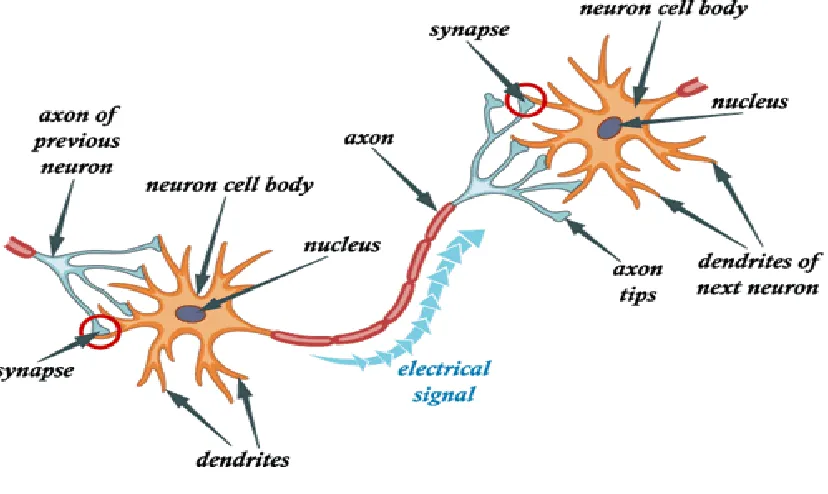
typical neuron has 3 parts, the cell body, dendrites and an axon (see Figure 2.1). When
a motor nerve axon approaches a muscle that it innervates, it divides into multiple
branches, each of which makes a synapse called a neuromuscular junction with an
Figure 2.1 Neuron cell structure
At rest an axon internally has a negative electrical charge compared to the outside of
the cell (-70mv), described as a resting potential. This is caused by a difference in the
concentration of chemical ions between the inside and outside of the cell, with a high
potassium (K+) concentration, and low sodium (Na+) on the inside and a high
concentration of Na+ and low K+ on the outside in the extracellular fluid, with an
electrical pump inside the cell membrane maintaining the concentrations
(Shumway-Cook & Woollacott, 2001). When the axon is stimulated it momentarily reverses
polarity to positive inside the cell then quickly reverts back to negative. The change in
potential is from -70mv to +30mv, achieved by the opening up of the chemical
channels allowing a rush of Na+ into the cell causing the inside of the cell to
momentarily be positive. Potassium channels then open causing a flood of K+ ions out
of the cell leaving it negatively charged again at its resting potential. This sudden
change across the membranes of the cell is called an action potential or nerve impulse
and propagates along the axon (Baker, Wederich, McNeal, Newsam, & Waters, 2000).
potentials are induced. A depolarisation of the neuron membrane occurs near the
cathode, as positive sodium ions are attracted by the negative electric field, reducing
the positive charge on the outside of the membrane (Baker et al., 2000). Decreasing
the positive ions outside the membrane, allows larger protein anions, which are found
outside the cell with a negative charge, to drop into the cellular sink away from the
membrane itself. This then reduces the potential difference across the cell membrane
and raises it closer to the threshold for excitation. With a positive potential at the
anode, the outside of the membrane is made even more positive than usual, there is an
increased potential difference between inside and outside, which actually
hyperpolarises the nerve membrane, compared to the normal physiological process
(Baker et al., 2000).
When action potentials are generated with an external source, such as electrical
stimulation, they travel in both directions from the site of excitation, both away from
the cell body (orthodromic impulse), and towards the cell body (antidromic impulse)
(Baker et al., 2000).
2.8.3 Functional Electrical Stimulation – definition and overview
Neuromuscular electrical stimulation (NMES) is the electrical stimulation of an intact
lower motor neuron to activate paralysed or paretic muscles (Sheffler & Chae, 2007),
Functional Electrical Stimulation (FES) is “the use of NMES to activate paralysed
muscles in precise sequence and magnitude so as to directly accomplish functional
tasks” (Sheffler & Chae, 2007). Current applications for FES include standing,
walking, cycling, control of respiration and bladder function, but this thesis
concentrates on its use in the upper limb to assist performance of functional tasks
(Sheffler & Chae, 2007).
An FES system comprises a stimulator, associated electrodes, and one or more
sensors. Surface electrodes, are most commonly used, which attach to the skin via a
hydrogel pad. Electrodes can also be implanted and have been used in this way
especially in the lower limb foot drop application of FES (Schiemanck et al., 2015),
2.8.4 Upper limb FES systems
In this section, the upper limb FES systems are reviewed. There are a number of
reports of stimulation systems for the upper limb in research, although only one
dedicated upper limb system is on the market, the H200 manufactured by Bioness Inc.
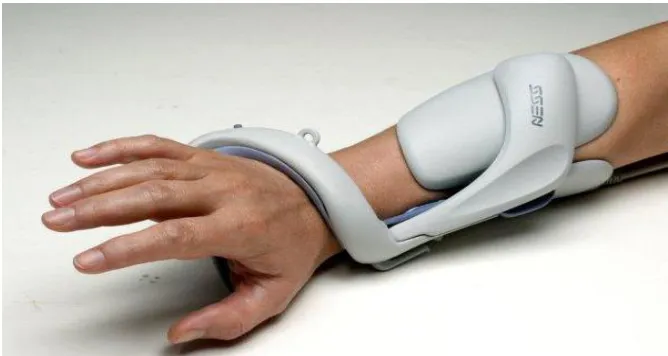
The H200 wireless hand rehabilitation system consists of an orthosis (see Figure 2.2)
and a wireless control unit. The orthosis supports the wrist in a functional position, the
electrical stimulation is individually programmed to assist with reaching, grasping,
opening, closing of the hand and pinching activities. Stimulation is triggered by user
activation of the pre-programmed wireless control unit. It has the advantages of being
wireless, quick to don and doff and individually programmed, however it only
stimulates around the wrist, fingers and thumb and so caters to a specific level of
[image:35.595.90.424.354.532.2]impairment only.
Figure 2.2 Bioness H200 Neuroprosthesis
Knutson et al have developed contralaterally controlled functional electrical
stimulation (CCFES) with a glove on the unaffected hand to trigger the stimulation
(Knutson, Harley, Hisel, & Chae, 2007; Knutson et al., 2012; Knutson, Hisel, Harley,
& Chae, 2009). Chan et al (2009) used a similar approach, a self-triggered
accelerometer in a ring on the unaffected hand to produce hand opening on the
affected side (Chan, Tong, & Chung, 2009). FES can also be EMG triggered where
surface electrodes pick up the electromyography signal and stimulate the selected
Meadmore et al (2012) report on the feasibility of iterative learning control mediated
by FES, whereby the controller adapts the amount of FES delivered based on previous
attempts (Meadmore et al., 2012). This enables the participant to work at the limit of
their ability supported by the FES to carry the tasks. This system also uses robotic
support to carry out the tracking tasks. It is in the early phases of investigation but is
promising technology aimed at supporting a participants voluntary effort (Meadmore
et al., 2012). These systems have been reported in research papers but to the authors’
knowledge do not exist commercially.
Despite the evidence for the importance of voluntary initiated task-specific practice,
there is no commercially available system that enables the user to initiate movement
and then be supported by the electrical stimulation to carry out a functional task. By
using FES in this way, principles of motor leaning of repetition, intrinsic feedback and
sensorimotor integration can be exploited. Also most systems concentrate only on the
wrist and fingers, and do not assist with shoulder flexion or elbow extension and the
coordination and sequencing across these joints, which is required for more complex
upper limb tasks and/or the more severely impaired patients.
The REAcH study uses the Odstock two channel programmable stimulator (O2PS) a
CE marked device and is detailed in a paper by (Mann, Taylor, & Lane, 2011). The
O2PS encompasses a biaxial accelerometer which detects movement of the arm as it
attempts to reach forward, the accelerometer is within the device which is small
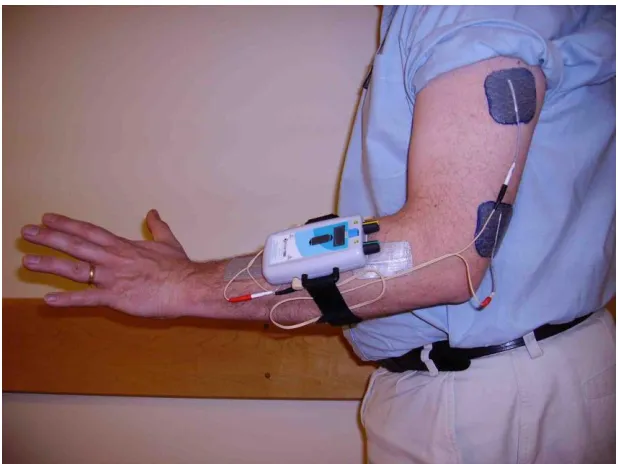
enough to wear on the upper arm in a pouch see figure 2.3 below. The movement
detected by the accelerometer is interpreted as a change of angle between the axis of
the device and the earth’s gravitational field, when this reaches a pre-set angle the
device triggers the stimulation (Mann et al., 2011). The stimulation is delivered via
two channels; one stimulates anterior deltoid and triceps assisting shoulder flexion and
elbow extension respectively. The other channel stimulates forearm extensors to assist
with wrist and finger flexion and opening of the hand for functional tasks. The device
can also be set to deliver cyclic stimulation. Throughout the thesis it is referred to as
Figure 2.3 Odstock 2-channel programmable (O2PS) / REAcH stimulator
2.8.5 Theoretical basis for FES - Neuroplasticity and motor learning
Upper limb studies have found that combining voluntary effort with appropriately
timed (via EMG or push button) electrical stimulation to lower motor neurons can
lead to an increase in cortical excitability compared to electrical stimulation or
repetitive voluntary training alone (Barsi, Popovic, Tarkka, Sinkjaer, & Grey, 2008;
Bhatt et al., 2007) It is postulated the peripheral effect of electrical stimulation in
changing somatosensory input and the centrally mediated mechanism of motor
learning, are together more effective in producing changes in cortical excitability
(Barsi et al., 2008; Bhatt et al., 2007). This effect has also been shown in lower limb
studies (Khaslavskaia & Sinkjaer, 2005; Thompson, Doran, & Stein, 2006).
There may also be an effect of FES combined with voluntary activity at spinal level.
Rushton hypothesised that the Hebb-type corticospinal-anterior horn cell synapses,
may be open to modification by electrical stimulation (Rushton, 2003). Rushton
proposed that electrical stimulation-induced activity may artificially synchronise
2.8.6 Literature Search Methods
Searches for articles were made via the University of Salford’s online resources, the
databases used were Medline, Cinahl and Academic Search Premier. Search terms
used included: functional electrical stimulation or electrical stimulation or
neuro-muscular electrical stimulation; upper limb or upper extremity or arm or paretic arm;
stroke or hemiplegia or hemiplegic or paresis or hemiparesis or cerebrovascular
accident. Search results revealed papers, which were screened on reading of the title
and/or abstract for relevance to the study aims. Hand searching of papers and
reference lists revealed further articles. Searches were repeated over the course of the
study to check for recently published relevant articles.
2.8.7 Evidence for FES in acute stroke rehabilitation
A few studies have looked at PwS with a mild to moderate paresis in the acute stages,
with others focusing on those more severely affected. An early study by Powell et al
(1999) involving 60 participants (30 in an intervention group and 30 in a control
group) (Powell, Pandyan, Granat, Cameron, & Stott, 1999). The treatment group were
given stimulation to the wrist extensors 3 times a day for 30 minutes for 8 weeks.
However, the ES was not used to support functional movement or task practice.
Participants were followed up at the end of the 8-week intervention period and 24
weeks after the end of intervention. Significantly greater increases in isometric wrist
extensor strength were seen at the end of intervention in the treatment group compared
to the control, and these changes were maintained at follow up. A trend (p=0.11)
towards better functional improvement in the treatment group compared with the
control group was also seen in the total ARAT scores. The trend continued at the
follow up measure of total ARAT scores, but differences between the groups were
also not statistically significant.
A single-blinded study investigated the effects of functional electrical therapy (FET),
consisting of an exercise program of voluntary arm movements opening, closing,
holding and releasing of objects assisted by a neural prosthesis (electrical stimulation)
(M. B. Popovic, Popovic, Sinkjaer, Stefanovic, & Schwirtlich, 2003). The FET group
control intervention was the same program of exercises, for the same duration daily
without the electrical stimulation. The participants were divided into higher
functioning groups (HFG) and lower functioning groups (LFG) for each intervention
dependant on their ability to actively extend the wrist and fingers (M. B. Popovic et
al., 2003). There were four groups in all, and with only 28 participants overall there
was not more than 8 participants in any one group. However, the FET and control
groups showed a recovery trend in all outcome measures, and gains were maintained
at a 26 week follow up. The gains in FET groups were much larger compared with the
gains in control groups. The LFG subjects showed less improvement than the HFG in
both the FET and control groups. One explanation for this finding could be that LFG’s
found more difficulty performing the required functional tasks, even with the aid of
stimulation, as the stimulation only assisted finger and thenar muscles and not more
proximal muscles. For the LFG the average number of successful repetitions per
session was 0 at the start for both the FET and control groups. Small increases in
number of repetitions were seen in both groups. Despite larger increases in the
number of repetitions in the HFG’s, the average number of repetitions achieved were
still low at the end of the intervention period (29.9 for the FET and 15.4 for the
controls) in terms of promoting plasticity. A statistically significant decrease in
muscle spasticity measures by the Ashworth scale was only seen in subjects in the
HFG who had FET. This study also looked at the users’ satisfaction with the Reduced
Upper Extremity Motor Activity Log and both HFG’s showed increased satisfaction at
the end of the study, and there was a statistically significant difference between the
groups in favour of the FET group. Satisfaction was lower in both the LFG’s.
A later pilot study by Alon et al (2007) of 15 individuals, used a well-designed
training program, comparing FES with tailored task specific therapy with task specific
therapy alone, all participants regained hand function, with significantly better
improvements in the FES group for all outcome measures (Alon, Levitt, & McCarthy,
2007). Following an informative but mainly descriptive review of FES applications,
Popovic et al (2009) also suggested that repetitive, active movement mediated by