© 2016, IRJET | Impact Factor value: 4.45 | ISO 9001:2008 Certified Journal | Page 2732
ENERGY EFFICIENT TECHNIQUES OBJECT TRACKING IN
WIRELESS SENSOR NETWORK
Ms. Monisha. D
*1
Assistant Professor, Department of Computer Science Auxilium College (Autonomous),
Vellore, Tamil Nadu, India
---***---Abstract
- Wireless sensor network (WSN) isdistributed over an area and sensors are devoted to task for controlling and monitoring the physical condition of the environment. Interesting application in wireless sensor network is Object Tracking Sensor Network (OTSN) which is used to track the objects in an environment and update its current location to the base station. OTSN accurately detects the location of objects and collecting all the data which is processed and aggregated, sent its current movements to the base station. OTSN is used in several real-life applications like wild-life monitoring, security applications for buildings and international borders monitoring for illegal crossings. There are two major issues in WSN, high energy consumption and low packet delivery rate. Previous object tracking techniques like scheduled monitoring and continues monitoring provides less energy consumption. To improve it, in this proposed system PTSP is used. PTSP has two stages; they are sequential pattern generation and object tracking and monitoring. Effective sleep-awake mechanism is used to conserve energy in proposed system. Markov decision process or learning technique is used to predict the future location of moving objects by mathematical calculations and also reduces object missing rate. Energy calculation and route finding is used to increase the network lifetime. Communication between the sensor node in the network and base station will be based on multi-hop communications. The sensor nodes are static and that the network topology, including the positions of each sensor node in the network, is well known to the base station.
Key Words:
Object Tracking Sensor Network (OTSN), Wireless sensor network (WSN).I. INTRODUCTION
Wireless networking which is comprised on number of numerous sensors and they are interlinked or connected with each other for performing the same
function collectively or cooperatively for the sake of checking and balancing the environmental factors. This type of networking is called as Wireless sensor networking.
A wireless sensor network consists of sensor nodes deployed over a geographical area for monitoring physical phenomena like temperature, humidity, vibrations, and seismic events. Typically, a sensor node is a tiny device that includes three basic components: a sensing subsystem for data acquisition from the physical surrounding environment, a processing subsystem for local data processing and storage, and a wireless communication subsystem for data transmission. In addition, a power source supplies the energy needed by the device to perform the programmed task.
1.1 Criteria to Choose a Sensor
There are certain features which have to be considered when we choose a sensor. They are as given below:
Accuracy.
Environmental condition - usually has limits for temperature/ humidity.
Range - Measurement limit of sensor.
Calibration - Essential for most of the measuring devices as the readings changes with time.
Resolution - Smallest increment detected by the sensor.
Cost.
[image:1.595.324.556.662.747.2]Repeatability - The reading that varies is repeatedly measured under the same environment.
© 2016, IRJET | Impact Factor value: 4.45 | ISO 9001:2008 Certified Journal | Page 2733
1.2 Wireless Sensor Network Working ProcessTotal working of wireless sensor networking is based on its construction. Sensor network initially consists of small or large nodes called as sensor nodes. These nodes are vary in size and totally depend on the size because different sizes of sensor nodes work efficiently in different fields.
Wireless sensor networking have such sensor nodes which are specially designed in such a typical way that,
They have a microcontroller which controls the monitoring in environmental field.
A radio transceiver for generating radio waves. Different type of wireless communicating devices.
and also equipped with an energy source such as battery.
1.3 Characteristics of WSN
The main characteristic of a WSN includes: Power consumption constrains for nodes using
batteries or energy harvesting. Ability to cope with node failures. Mobility of nodes.
Communication failures. Heterogeneity of nodes.
Scalability to large scale of deployment.
Ability to withstand harsh environmental conditions.
[image:2.595.311.559.229.395.2] Ease of use. 1.4 Applications of WSN
Fig. 1.2 An overview of WSN applications
1.5 Object Tracking in Wireless sensor Network (OTSN)
Object tracking is an important application of wireless sensor networks (e.g., military intrusion
Detection and habitat monitoring). Existing research efforts on object tracking can be categorized in two ways. In the first category, the problem of accurately estimating the location of an object. In the second category, in-network data processing and data aggregation for object tracking.
Object tracking typically involves two basic operations: update and query. In general, updates of an object’s location are initiated when the object moves from one sensor to another.
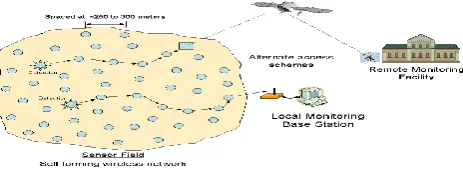
Fig. 1.3 Example of OTSN in Wildlife Monitoring
II. RELATED WORK
2.1. Energy conservation in wireless sensor networks: A survey
Wireless sensor networks (WSNs) have gained increasing attention from both the research community and actual users. As sensor nodes are generally battery-powered devices, the critical aspects to face concern how to reduce the energy consumption of nodes, so that the network lifetime can be extended to reasonable times. The energy consumption for the components of a typical sensor node, and discuss the main directions to energy conservation in WSNs. It explains a systematic and comprehensive taxonomy of the energy conservation schemes, which are subsequently discussed in depth. Special attention has been devoted to promising solutions which have not yet obtained a wide attention in the literature, such as techniques for energy efficient data acquisition.
[image:2.595.36.289.345.681.2]© 2016, IRJET | Impact Factor value: 4.45 | ISO 9001:2008 Certified Journal | Page 2734
2.2. Title Prediction-Based Strategies for EnergySaving In Object Tracking Sensor Networks
A prediction-based energy saving (PES) scheme is proposed to exploit the energy management issues in object tracking sensor networks. Energy awareness is incorporated into computing and sensing operations by inactivating the sensing and MCU (Micro controller unit) components whenever possible.
o Comparison of several basic energy saving schemes for object tracking sensor networks, and point out the direction for designing an energy-aware OTSN.
o It describes architecture of a prediction-based energy saving scheme (i.e., PES) which consists of prediction models, wake up mechanisms and recovery mechanisms. PES activates only the essential sensor nodes needed to track the moving objects, but hibernates other nodes into low-power mode.
A prediction model in PES predicts the future movement of the tracked objects, which provides the knowledge for a wake up mechanism to decide which nodes need to be activated for object tracking. Different heuristics are explained for both prediction and wakeup mechanisms. An extensive simulation study has been conducted to evaluate the performance (in terms of total energy consumption and missing rates) of the proposed PES scheme and other basic energy saving schemes for object tracking sensor networks. The experimental result confirms that PES can effectively reduce the energy consumption on MCU and sensor components. The different heuristics were provided a space for object tracking applications to balance between the energy consumption of the entire network and required data quality (in terms of missing rate).
III PROPOSED SYSTEM
3.1 Introduction to Object Tracking Sensor Network
Object tracking, which is also called target tracking, is a major field of research in WSNs and has many real-life applications such as wild life monitoring, security applications for buildings and compounds to prevent intrusion or trespassing, and international border monitoring for illegal crossings.
Object tracking is considered one of the most demanding applications in WSNs due to its application requirements, which place a heavy burden on the network resources, particularly energy consumption. In OTSN, the sensor node is a very small device that represents the building blocks of the WSN. These nodes are being produced at a very low cost and yet with high levels of sophistication in terms of computing power, energy consumption savings, and multipurpose functionalities when compared with earlier generations of sensor nodes.
WSNs are created by deploying a large number of sensor nodes in a certain area, which is usually called the monitored region, for monitoring purposes. These nodes are interconnected and are used together as a monitoring and reporting device to acquire specific types of data as desired by the application requirements.
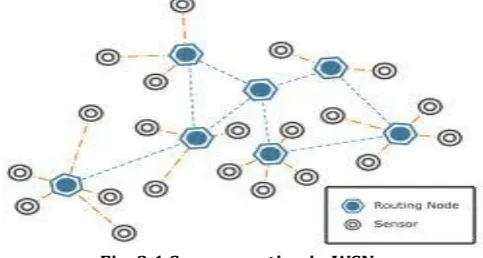
[image:3.595.315.557.340.469.2]The main task of Object trackingsensor network (OTSN) is to track a moving object and toreport its latest location in the monitored area to the application in an acceptable timely manner, and this dynamic process of sensing and reporting keeps the network’s resources underheavy pressure. OTSN is considered one of the most energy consumingapplications of WSNs. Due to this fact, there is anecessity to develop energy-efficient techniques that adhere tothe application requirements of an object-tracking system, which reduce the total energy consumption of the OTSN while maintaining a tolerable missing rate level. The information of interests are location, speed, direction, size, and shape.
Fig. 3.1 Sensor routing in WSN
3.2 Prediction-based tracking
Prediction-based techniques are built on top of a tree-based and/or cluster-based approaches which are modified to include a prediction mechanism usually called the prediction model. Furthermore, prediction models are typically designed in a way that employs heuristics which follow certain assumptions, for example:
• Objects tracked by the network are going to proceed with their movement while maintaining a certain speed and direction every few seconds.
• Based on the object's movement history, it will be possible to determine its future speed and direction for the next few seconds.
• For each stage in the recorded history a certain weight can be assigned to determine its value for prediction purposes.
© 2016, IRJET | Impact Factor value: 4.45 | ISO 9001:2008 Certified Journal | Page 2735
3.3 Paper overview and ContributionThe sensor nodes are static and that the network topology, including the position of each sensor node in the network, is well known to the base station. In addition, the researcher assumes that the communications between the sensor nodes in the network and base station will be based on multi-hop communications. Each sensor node in the network is required to monitor its detection area in anticipation of an intrusion by a moving object. Thus, when the sensor nodes start sensing their detection area to retrieve the object's attributes, this sensing task lasts for a specified period of time called the sampling duration(X).
Furthermore, while the sensor node is went through the sampling duration, its MCU and sensing components are turned on to obtain the sensed data and then process it. However, the communication component in the sensor node (RF radio) is most likely kept inactive when there are no communication requirements. The reporting frequency is controlled by the application requirements where the sensor nodes report to the application the presence of an object in their detection area every specified period of time (T).
3.4 Object Tracking and Monitoring
Object tracking consists of two stages: sensor node activation occurs when the next sensor that should wake up is decided, whereas missing object recovery, which is the second stage, involves the location of missing objects.
Sensor Node Activation Mechanism:
After the completion of the first stage of the PTSP, i.e., sequential pattern generation, the second stage, which is object tracking and monitoring, starts. The key objective of this stage is to keep in sleep mode, for the longest possible period, any sensor node that has no object moving in its detection area, thus saving its energy. Moreover, in the case of a moving object in the vicinity of a certain sensor node, this sensor node will not be awake all the time. It ought to switch to sleep mode as long as possible while not impairing the tracking process; this sensor node will be called the current sensor.
3.5 Energy Conservation in Object Tracking
A wireless sensor network consists of sensor nodes deployed over a geographical area for monitoring physical phenomena like temperature, humidity, vibrations, seismic events, and so on. Typically, a sensor node is a tiny device that includes three basic components: a sensing subsystem for data acquisition from the physical surrounding environment, a processing subsystem for local data processing and storage, and a wireless communication subsystem for data transmission. In addition, a power source supplies the energy needed by the device to perform the programmed task. This power
source often consists of a battery with a limited energy budget.
3.6 General approaches to energy conservation
Fig.3.6 Architecture of a typical wireless sensor node.
IV PROPOSED PREDICTION-BASED TRACKING
TECHNIQUE DESIGN AND IMPLEMENTATION
This section introduces the new proposed prediction-based tracking technique PTSP. First, the problem definition is provided with the assumptions of the application requirements. Moreover, three basic OTSN schemes are introduces and analyzed in terms of their energy consumption. Then, the proposed prediction-based tracking scheme is introduced and explained in details along with its 3 components:
Sequential Patterns Generation and Prediction Model.
Sensor node Activation Mechanism and Missing Object Recovery Mechanism.
4.1 Problem Statement
This section states the problem and presents the requirements of applications designed to track moving objects. Moreover, introducing the two main performance metrics which will be used to determine how efficient proposed technique compared to other energy saving techniques. Also, presenting the assumptions which have maintained while designing proposed technique and some basic OTSN techniques which will be used for comparison purposes.
4.2 Basic OTSN techniques
The following OTSN techniques will be used to compare our proposed technique performance to their performance while tracking moving objects. These techniques are designed to satisfy the application requirement of a basic object tracking system.
Naive:
© 2016, IRJET | Impact Factor value: 4.45 | ISO 9001:2008 Certified Journal | Page 2736
where progress in energy conservation can be measured,since it's not possible to adjust this technique to produce better results in terms of energy savings.
4.3 Energy Consumption Analysis in OTSNs
[image:5.595.311.558.296.479.2]When analyzing the performance of the aforementioned techniques it can determine that all those techniques weren't allowing any missing reports to take place. Therefore, the resulted missing rate level is 0%, while this could indicate a successful monitoring process, it comes on the expense of the network's energy consumption levels which is suffering badly due to the fact that both MCU and sensing components are being switched to active mode for long periods that mostly goes to waste. When analyzing the differences between the SM technique and the Naive technique, can deduce that if lower the sampling frequency of all the senors in the Naive technique instead of keeping them active all the time, then the result will be a tracking technique which is exactly identical to the SM technique. Also, in a similar case, if reducing the number of sensor nodes involved in the tracking of a moving object in the Naive technique to a single sensor node, then it create a tracking technique with high similarities to the CM technique.
Table 4.3 Energy consumption analysis in OTSN techniques.
4.4 Proposed Prediction-based Tracking Technique (PTSP)
It was obvious from the energy consumption analysis that the Ideal technique was the best in terms of both the energy preservation and the quality of tracking, since it doesn't allow any missing reports and therefore its missing rate level is kept at 0%. However, in order to design the ideal tracking technique then this system must be able to determine the exact time and place an object will be at, so that it can activate the node which the moving object will moving under its detection area, so what we are looking for is a system that produces perfect and 100% accurate predictions.
Given that the development of such perfect predictions system is not possible then we can try to reach the next best thing which is a tracking technique that's capable of making good predictions and reducing the number both the sampling frequency and number of nodes involved in the tracking process. Therefore, our proposed system (Prediction-based Tracking using Sequential Patterns (PTSP)) will be based on two stages as follows:
Stage 1: Sequential Patterns Generation. Stage 2: Object Tracking and Monitoring.
V. EVALUATION RESULT:
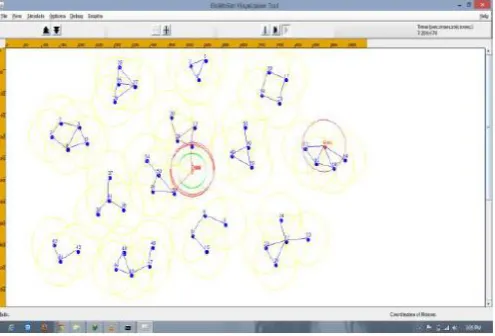
[image:5.595.38.288.391.470.2]To evaluate this technique, different scenarios and settings have been implemented using a GloMoSim simulator. The simulation experiments carried out in an OTSN of 55 logical sensor nodes in a 1000× 1000m2 monitored region. It is assumed that each sensor node will have a coverage range of 15 m. The network is based on a hexagon topology, i.e., sensor nodes are evenly placed in the area such that each sensor node has a hexagon-shaped detection area. The default speed of the tracking the object = 5m/s. Ewake=0.5mw, Esleep=0.05mw, TS=100seconds, X=180seconds, T=210seconds.
Fig.5.1 Energy Consumption Analysis
The continuous monitoring is participation of all nodes not continuously, consumes energy 0.39w.The scheduled monitoring consumes energy 0.32w. The planned PTSP technique consumes 0.2709mw energy for tracking the object which reduces energy consumption of 15.5%
[image:5.595.311.559.584.752.2]© 2016, IRJET | Impact Factor value: 4.45 | ISO 9001:2008 Certified Journal | Page 2737
Fig.5.3 The transmission between the dataEnergy Consumption Analysis
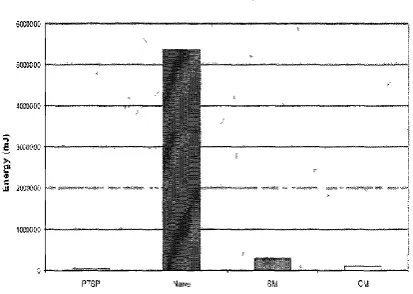
[image:6.595.313.555.267.368.2]The basic energy consumption of PTSP compared to the other tracking schemes, i.e. Naive, SM and CM, it states that PTSP has outperformed all the other object tracking techniques. Compared to the Naive technique all the other tracking techniques have shown very high energy savings that reached more than 90% of the energy consumption by the Naive technique The second best tracking technique was the CM, since it only needs one sensor node at a time to track a moving object unlike the SM which uses all its sensor nodes to locate the object In figure 5.6 it explains the chart except to used a logarithmical scale to represent the energy consumption.
Fig: 5.4 Energy Consumption of Each Tracking Techniques
Network Workload Analysis
This experiment have tested and compared PTSP to the other basic tracking schemes, namely the SM and CM, in regard to the network workload which is represented by the number of moving objects in the network. The experiments were conducted by increasing the number of moving objects from 1 to 10 objects. Since as expected the naïve technique was not affected by the
increase of the network workload. Since it had an enormously huge energy consumption level compared to the other schemes. PTSP to be the best tracking technique for all conditions. Therefore, we can see that the three techniques (PTSP, CM and SM) had maintained a very low level of energy consumption. These energy savings were accomplished by keeping the sensor nodes in the network in sleep mode as long as possible compared to the naive technique which keeps all the sensor nodes in active mode all the time, thus consuming huge amounts of energy in a futile manner.
Fig: 5.5 Energy Consumption of Each Tracking Techniques Using a Logarithmical Scale For The Energy
Consumption. Missing Rate Analysis
The missing rate analysis only considers PTSP, since for the other basic tracking techniques (Naive, SM and CM) the missing rate is always 0%. It notice in figure that the missing rate levels is not impacted by increase in the number of moving objects as we have expected, since the missing rate is the ratio of the missing reports to the total number of reports, therefore this ratio is not affected by the increase in the number of objects since even though it's likely that the number of missing reports will increase, this number will be matched with an increase in the number of total reports, thus the ratio remains unchanged.
[image:6.595.64.271.471.618.2]© 2016, IRJET | Impact Factor value: 4.45 | ISO 9001:2008 Certified Journal | Page 2738
easy task, if energy saving is also a factor of the trackingtechnique.
CONCLUSION
In this thesis, A Prediction based Energy Efficient Technique is proposed for tracking the object in wireless sensor networks, by reducing energy consumption, which minimizes nodes participation, has been achieved. PTSP utilizes the sensor sequential patterns to produce accurate predictions of the future movements of a certain object. These sequential patterns are continuously evaluated and updated to provide the prediction mechanism with the late stand most accurate predictions. Simulations have done in proposed tracking scheme (PTSP), along with two basic tracking schemes for comparison purposes. The results generated by the experiments were mainly through testing the performance of PTSP and the other tracking schemes such that the total energy consumed by the network during the simulation period, including the active and sleep mode energy consumption for each sensor node in the network, and missing rate, which represents a ratio of the missing reports to the total number of reports received by the application. Moreover, it has been verified by the simulation results that PTSP outperformed all the other tracking schemes by observance allow energy consumption level while maintaining an adequate level of missing rate. Therefore, the need to optimize the energy consumption in OTSNs has to solved. Since most of the energy savings research was focusing on minimizing the energy consumed by the radio component (RF radio) in the sensor nodes by reducing the number of messages transmitted and received, Considering the energy consumed by the MCU and the sensing components in the sensor nodes which also attributed to a respectful amount of energy consumption. Therefore, it is necessary to develop an object tracking scheme that minimizes the time the sensor node stays in active mode (when both the MCU and the sensing component is active), thus generating a considerable amount of energy savings.
REFERENCES:
1. Y. Xu, J.Winter, and W.-C. Lee. "Prediction-based strategies for energy saving in object tracking sensor networks". In Proceedings of the International Conference on Mobile Data Management, pages 346-357, Berkeley, CA, Jan. 2004.
2. H. Yang and B. Sikdar, "A Protocol for Tracking Mobile Targets Using Sensor Networks”, Sensor Network Protocols and Applications, in Proceedings of the First IEEE International Workshop on Sensor Network Protocols and Applications, Anchorage, Alaska, May 2003.
3. Akyildiz, I.F., Su,W., Sankarasubramaniam, Y., and Cayirci, E. "Wireless sensor networks: a survey". Computer Networks, vol 38(4), pp 393-422, March 2002.
4. Karl H and Willig A. Protocols and Architectures for Wireless Sensor Networks. John Wiley & Sons Ltd, Chichester. 2005.
5. Vincent S. Tseng and Kawuu W. Lin, "Energy Efficient Strategies for Object Trackingin Sensor Networks: A Data Mining Approach", Journal of Systems and Software, Vol. 80, No. 10, pp. 1678-1698, October 2007.
6. Y. Xu, J. Winter and W.-C. Lee, "Dual Prediction-based Reporting for Object Tracking Sensor Networks", In Proceedings of the First Annual International Con-ference on Mobile and Ubiquitous Systems: Networking and Services (MobiQuitous' 04), 2004.
7. S.-M. Lee, H. Cha and R. Ha, "Energy-Aware Location Error Handling for Object Tracking Applications in Wireless Sensor Networks", Computer Communication 30, 2007.