© 2017, IRJET | Impact Factor value: 5.181 | ISO 9001:2008 Certified Journal
| Page 494
Bioconversion of Cellulosic Materials by the action of Microbial
Cellulases
Vibha Bhardwaj
1, Giuliano Degrassi
2, Rakesh Kumar Bhardwaj
31,2
International Centre for Genetic Engineering and Biotechnology, Industrial Biotechnology Group,
Godoy Cruz 2390, C1425FQD, Bs As, Argentina
3
BLJS College Tosham , India
---***---
Abstract- Lignocellulose comprises more than 60 % of
plant biomass produced on earth, which mainly consists of three components: cellulose, hemicellulose and lignin. On worldwide basis, land plants produce about 25 tones of cellulose per person per year. Lignocellulose constitutes a large proportion of agricultural, industrial, municipal and forest wastes, the disposal of which is a growing problem. In India, the output of agricultural lignocellulosic waste alone i.e. wheat straw, rice straw, biogasse and cotton stalks is estimated over 100 million tons per year. Recycling of these wastes would not only aid pollution abatement but would also serve as vital source of bio energy and food for future. Moreover, oil and gas resources are depleting every day at alarming rate. Thus, it is important to overcome these problems. Utilization of cellulose is possible through its hydrolysis to glucose and other soluble sugars that in turn can be used as substrates for production of single cell protein, energy materials or other fermentation materials. A variety of microbial species e. g. bacteria, actinomycetes and fungi are known to produce enzyme systems for efficient biodegradation of cellulose and will ultimately providing means to a ‘greener technology’.
Key words: Cellulose, Cellulase enzyme, bioconversion, biomass.
1.
Introduction
Current status of energy and environment are large obstacles to the development of human civilization. The world’s energy demand is increasing steadily with the increase in human population, industrialisation and economic development. This energy demand is fulfilled mainly with fossil fuel, which is in limited supply. In addition, use of fossil fuel accelerated release of CO2, the global greenhouse effect
becomes more and more serious. Therefore, continuous efforts have to be emphasized towards the solution of the energy supply depletion problem and the environmental impacts caused due to fossil fuel. It has generated worldwide interest in alternative sources of energy (Aristidou and Penttila, 2000; Jeffries and Jin, 2000; Zaldivar et al., 2001), such as agricultural biomass. The use of biomass for energy can complement solar, wind, and other intermittent energy resources in the renewable energy mix of the future, reduce fossil fuel
green house gas emissions, and contribute to ecological sustainability.
One of the most immediate and important applications of biomass energy systems could be in the fermentation of ethanol from biomass (Lin and Tanaka, 2006). Each year, photosynthetic fixation of CO2 yields more than 1011 tons of dry plant material worldwide and almost half of this material consists of cellulose (Leschine, 1995). In addition, agronomic residues arised from human activities, such as corn Stover (corn cobs and stalks), sugarcane waste, wheat or rice straw, forestry, paper mill discards and the municipal wastes which have plentiful cellulose, can be converted into fuel ethanol. Now-a-days, nearly all fuel ethanol is produced by fermentation of starchy grains such as corn, wheat, barley and rice (Lin and Tanaka, 2006). But this technology consumes a lot of food materials and is costly, also under the pressure of world’s food crisis at present; there is even a serious competition between human food and fuel ethanol. Thus, there is need to find an alternative sustainable way to solve this problem and make this approach sustainable. These days, research for fuel is mainly concentrated in the field of cellulase enzymes, which can hydrolyze cellulosic biomass present in industrial and agricultural wastes economically with high efficiency.
This review presents a general account of cellulose and cellulase enzyme as well as microorganisms producing cellulases, and focuses on their current status in research and gives insight into some promising prospects for its future.
Cellulose and Cellulase
© 2017, IRJET | Impact Factor value: 5.181 | ISO 9001:2008 Certified Journal
| Page 495
[image:2.595.55.264.258.478.2]oils, and ash make up the remaining fraction of lignocellulosic biomass . The structure of these materials is very complex, and native biomass is generally resistant to enzymatic hydrolysis due to the composition and function of the plant cell wall, mainly conferring resistance to biotic and abiotic stress factors. In such situation, only complex microbial consortia have been shown to be able to completely degrade plant biomass. Cellulose is a fibrous, insoluble, crystalline polysaccharide. It is a major polysaccharide constituent of plant cell walls, composed of repeating D-glucose.
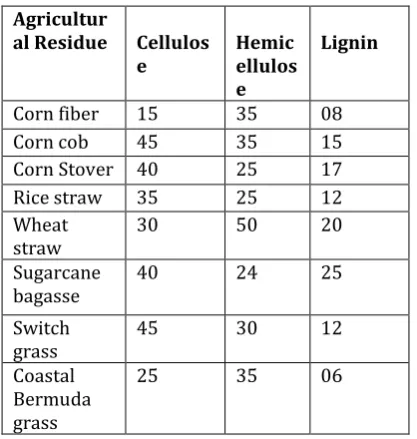
Table 1 Composition (%, dry basis) of some agricultural lignocellulosic biomass
Agricultur
al Residue Cellulos e
Hemic ellulos e
Lignin
Corn fiber 15 35 08
Corn cob 45 35 15 Corn Stover 40 25 17 Rice straw 35 25 12 Wheat
straw 30 50 20 Sugarcane
bagasse 40 24 25 Switch
grass 45 30 12 Coastal
Bermuda
grass
25 35 06
* Badal C. Saha
units linked by-1,4-glucosidic bonds (Jagtap and Rao, 2005) and is the most abundant carbohydrate polymer on earth (Guo et al., 2008). Cellulose has attracted worldwide attention as renewable resource that can be converted into value added products and bioenergy. But now-a-days, enormous amounts of agricultural, industrial and municipal cellulose wastes have been accumulating or used inefficiently due to the high cost of their utilization processes (Kim et al., 2003). Therefore, it is of considerable economic interest to develop processes for the effective treatment and utilization of cellulosic wastes as cheap carbon sources. Cellulose is used as substrate by a wide variety of organisms including fungi, bacteria and plants as well as a wide range of invertebrate animals, such as insects, crustaceans, annelids, molluscs and nematodes (Watanabe and Tokuda, 2001; Davison and Blaxter, 2005). These organisms possess cellulases. The complete enzymatic system of cellulase includes three different types exo-β-1,4-glucanases (EC 3.2.1.91), endo-β-1,4-glucanases (EC3.2.1.4), and β-1,4-glucosidase (EC 3.2.1.21) (Wilson and Irwin, 1999). These enzymatic
components act sequentially in a synergistic system to facilitate the breakdown of cellulose and the subsequent biological conversion to a utilizable energy source i.e. glucose (Beguin and Aubert, 1994). The endo-β-1,4-glucanases randomly hydrolyze the β -1,4 bonds in the cellulose molecule, and the exo-β-1,4-glucanases in most cases release a cellobiose unit showing a recurrent reaction from chain extremity. Lastly, the cellobiose is converted to glucose by β-1,4-glucosidase (Bhat and Bhat, 1997). This whole enzymatic process to hydrolyze cellulosic materials could be accomplished through a complex synergistic reaction of these enzymatic components in an optimum proportion (Tomme et al., 1995). Cellulases provide a key opportunity for achieving tremendous benefits of biomass utilization (Wen et al.,2005). The overall convenience of this enzyme-based bioconversion technology depends on two significant factors, reaction conditions and production cost of the enzyme system. Therefore, there has been much research aimed at obtaining new microorganisms producing cellulase enzymes with higher specific activities and greater efficiency (Subramaniyan and Prema, 2000).
Microorganisms producing cellulases: Cellulolytic microorganisms degrade primarily carbohydrates and are generally unable to use proteins or lipids as energy sources for growth. Cellulolytic microbes notably the bacteria Cellulomonas and Cytophaga and most fungi can utilize a variety of other carbohydrates in additions to cellulose, whereas the anaerobic cellulolytic species have a restricted carbohydrate range, limited to cellulose and or its hydrolytic products. The ability to secrete large amounts of extra cellular enzymes is characteristic of certain fungi and such strains are most suited for production of higher levels of extra cellular cellulases. One of the most extensively studied fungi is Trichoderma reesei, which converts native as well as derived cellulose to glucose. Most commonly studied cellulolytic organisms include fungi (Trichoderma, Humicola, Penicillium, Aspergillus), bacteria (Bacillus, Pseudomonas) and actinomycetes (Streptomyces, Actinomucor, Streptomyces).
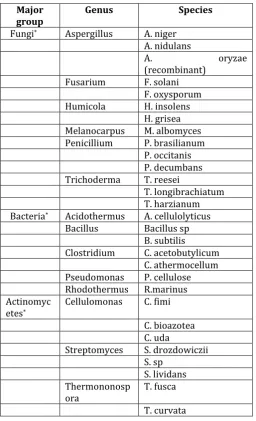
Several fungi can metabolize cellulose as an energy source but only few strains are capable of secreting a cellulase enzyme complex, which could have practical application in the enzymatic hydrolysis of cellulose. Besides T. reesei, other fungi like Humicola, Penicillium and Aspergillus have the ability to yield high levels of extra cellular cellulases. Aerobic bacteria such as Cellulomonas, Cellovibrio and Cytophaga are capable of cellulose degradation in pure cultures. However, the microbes commercially exploited for cellulase preparation are mostly limited to T. reesei, H. insolens, A. niger, Thermospora fusca, Bacillus sp, and a few other organisms (Table 2).
© 2017, IRJET | Impact Factor value: 5.181 | ISO 9001:2008 Certified Journal
| Page 496
Table 2: Major microorganisms employed for cellulase production
Major
group Genus Species
Fungi* Aspergillus A. niger
A. nidulans
A. oryzae
(recombinant) Fusarium F. solani
F. oxysporum Humicola H. insolens
H. grisea Melanocarpus M. albomyces Penicillium P. brasilianum
P. occitanis P. decumbans Trichoderma T. reesei
T. longibrachiatum T. harzianum Bacteria* Acidothermus A. cellulolyticus
Bacillus Bacillus sp B. subtilis
Clostridium C. acetobutylicum C. athermocellum Pseudomonas P. cellulose Rhodothermus R.marinus Actinomyc
etes* Cellulomonas C. fimi
C. bioazotea C. uda
Streptomyces S. drozdowiczii S. sp
S. lividans Thermononosp
ora T. fusca
T. curvata
*Rajeev K Sukumaran, 2005
Research status of cellulase enzyme: Cellulase is an important enzyme for carrying out the depolymerization of cellulose into fermentable sugars. Cellulose is the major source for energy and raw materials and cellulase is widely used in the bioconversion of renewable cellulosic biomass. Glucose generated from depolymerization of cellulosic biomass, also with the help of biotechnology, can be used in production of value added products such as fuel ethanol, single cell protein, feed stock and important chemicals for food and chemical industry (Gawande and Kamat, 1999; Fujita et al., 2002; Lynd et al., 2002). The importance of this enzyme in so many products has raised considerable interest and research efforts are being currently focused on understanding the reaction mechanism and industrial application of cellulase, which began in the early 1950s. Nature has evolved a number of cellulases
for the hydrolysis of cellulose, including exoglucanase enzymes that depolymerize cellulose from the ends progressively, and endoglucanase enzymes that cleave along the cellulose chains randomly (Warren, 1996; Coughlan, 1985; Wilson and Irwin, 1999). Prior studies for natural cellulose hydrolysis have revealed many cellulolytic microorganisms and their complex cellulases (Lowe et al., 1987; Lynd et al., 2005). A number of fungi and bacteria capable of utilizing cellulose as a carbon source have been identified (Kim et al., 2003).
© 2017, IRJET | Impact Factor value: 5.181 | ISO 9001:2008 Certified Journal
| Page 497
this enzyme have been the major problems for industrial application. Therefore, investigations on ability of microbial strains to utilize inexpensive substrates (Griffin, 1973; Hurst et al., 1978; Liaw and Penner, 1990; Ju and Afolabi, 1999; Stenberg et al., 2000) and improvement of enzyme productivity (Kumakura et al., 1984; Chadha and Garcha, 1992; Hayward et al., 2000; Bailey and Tahtiharju, 2003;Villena and Gutierrez-Correa, 2006) are being done. Though the cellulase enzyme cost has dropped due to improvements in expression vectors and on-site production (Barros and Thomson, 1987; Din et al., 1990; Sahasrabudhe and Ranjekar, 1990; Harkki et al., 1991; Okamoto et al., 1994; Kobayashi et al., 2003; Kashima and Udaka, 2004), there is still a necessity of engineering a new generation of cellulase cocktails that would further reduce cellulase cost.
2. Applications of Cellulases
Cellulases were initially investigated several decades back for the bioconversion of biomass which gave innovative way to research in industrial applications of the enzyme. It has become the third largest group of enzymes used in the industry since their introduction (Xia et al, 1999). They are used in the biostoning of denim garments for producing softness and the faded look of denim garments (Olson, 1990), in food industry for extraction and clarification of fruit and vegetable juices (Galante et al, 1998), in pulp and paper industry for biomechanical pulping for modification of the coarse mechanical pulp and hand sheet strength properties (Akhtar,1994), deinking of recycled fibres (Pere et al,1990) and for improving drainage and runnability of paper mills (Prasad et al, 1992). Perhaps the most important application currently being investigated actively is in the utilization of lignocellulosic wastes for the production of biofuels.
Apart from these common applications, cellulases are also employed in formulations for removal of industrial slime (van Zessen et al, 2003), in research for generation of protoplast (Wiatr, 1990), and for generation of antibacterial chitooligosaccharides, which could be used in food preservation (Liu et al, 2000), immuno-modulation (Tsai et al, 2000) and as a potent antitumor agent (Wuet et al, 2004).
3. Future prospects
Lignocellulose is the potential source of biofuels, biofertilizers, animal feed and chemicals, besides being the raw material for paper industry. Exploitation of this renewable resource needs either chemical or biological treatment of the material, and in the latter context cellulases have gained wide popularity over the past several decades. Research has shed light into the mechanisms of microbial cellulase production and has
led to the development of technologies for production and applications of cellulose degrading enzymes. However, there is no single process, which is cost effective and efficient in the conversion of the natural lignocellulosic material for production of useful metabolites or biofuels. Use of the current commercial preparations of cellulase for bioconversion of lignocellulosic waste is economically not feasible.
The major goals for future cellulase research would be: (1) Reduction in the cost of cellulase production; and (2) Improving the performance of cellulases to make them more effective, so that less enzyme is needed (Qin et al, 2004). The former task may include such measures as optimizing growth conditions or processes, whereas the latter require directed efforts in protein engineering and microbial genetics to improve the properties of the enzymes.
Optimization of growth conditions and process has been attempted to a large extent in improving cellulase production. Many of the current commercial production technologies utilize submerged fermentation technology and employ hyper producing mutants (NREL research review). In spite of several efforts directed at generating hyper producers by directed evolution, the cost of enzymes has remained high (Philippidis, 1994). Alternative strategies thought of in cellulase production include mainly solid substrate fermentation on lignocellulosic biomass particularly by using host/substrate specific microorganisms. There are several reports on such use of filamentous fungi in production of optimal enzyme complex for the degradation of host lignocellulose (Pandey et al, 2001; Tengerdy et al, 2003; Awafo et al, 1996; Chahal et al, 1996).
Performance of enzyme complex on lignocellulosic material is best when these complexes are prepared with the same lignocellulosic material as the host/substrate in fermentation (Chahal et al, 1996; Szakacs et al, 1996). Another strategy is to use mixed culture in the production of enzyme. Several reports have shown that mixed culture gives improved production and enzyme complexes with better hydrolytic activity (Duenas et al, 1995; Krishna, 1999). Thus, SSF may be considered as a cost effective means for large scale production of cellulases which probably would de several fold cheaper compared to the current commercial preparations.
© 2017, IRJET | Impact Factor value: 5.181 | ISO 9001:2008 Certified Journal
| Page 498
in the cellulase production profile of organism (Harkki et al, 1991).
4.
ConclusionsMore and more research is oriented in genetic manipulations of cellulase process design. Medium formulations have come to an age and the futures definitely requires controlled genetic interventions into the physiology of cellulase producers to improve production and thereby make the cellulase production process more cost effective.
Improvement in cellulase activities or imparting of desired features to enzymes by protein engineering are probably other areas where cellulase research has to advance. Active site modifications can be important through site directed mutagenesis and the mutant proteins can be used for understanding the mechanisms of action as well as for altering the substrate specificities or improving the activities. There are several reports of development in this direction. Meinke et al (Stockton et al, 1991) has generated a mutant enzyme with endoglucanase like features and improved activity by deleting C-terminal loop of Clostridium fimi CELB. Protein engineering has been successfully employed to improve the stability of Humicola cellulose in presence of detergents (Meinke et al, 1995), to improve the thermo stability of an alkaline, mesophilic endo-1,4-β-glucanase from alkaliphilic Bacillus sp (Otzen et al, 1999) and for altering pH profile of cellobiohydrolase(Ozawa et al, 2001) and more recently endoglucanase (Becker et al, 2001) from T. reesei. Such modifications affecting the enzyme properties may be beneficial in improving the overall performance of cellulases and a better understanding of their mode of action, which will enable better utilization of enzymes in biomass conversion. More basic research is needed to make designer enzymes suited for specific applications.
Acknowledgement
one of the author Dr Vibha Bhardwaj acknowledges the financial support received under Arturo Falaschi SMART Fellowship from ICGEB Trieste Italy and special thanks to MINCyT for hosting ICGEB in the IBioBA institute of Buenos Aires Argentina .
REFERENCES
Anzai H, Nisizawa K, Matsuda K (1984). Purification and characterization of a cellulose from Dolabella auricularia. J. Biochem. 96(5): 1381-1390.
Aristidou, A. and Penttila, M. (2000). Metabolic engineering applications to renewable resource utilization. Curr. Opin. Biotechnol. 11(2): 187-198.
Aro N, Pakula T & Penttila M(2005). Transcriptional regulation of plant cell wall degradation by filamentous fungi, FEMS Microbiol Rev.
Bailey M J, Tahtiharju J (2003). Efficient cellulase production by Trichoderma reesei in continuous cultivation on lactose medium with a computer-controlled feeding strategy. Appl. Microbiol. Biotechnol. 62(2-3): 156-162.
Barros M E, Thomson J A (1987). Cloning and expression in Escherichia coli of a cellulase gene from Ruminococcus flavefaciens. J. Bacteriol. 169(4): 1760-1762.
Becker D, Braet C, brumer H 3rd, Claeyssens M, Divne C,
Fagerstrom B R, Harris M et al(2001) . Engineering of a glycosidase Family 7 cellobiohydrolase to more alkaline pH optimum: The pH behavior of Trichoderma reesei Cel17A and its E223S/A224H/L225V/T226A/D262G mutant. Biochem J, 356: 19-30.
Beguin P, Aubert J P (1994). The Biological degradation of cellulose. FEMS Microbiol. Rev. 13(1): 25-58.
Bhat M K, Bhat S (1997). Cellulose degrading enzymes and their potential industrial applications. Biotechnol. Adv. 1593(4): 583-620.
Chaabouni S E, Belguith H, Hassairi I, M’Rad K & Ellouz R(1995). Optimization of cellulase production by Penicillium occitanis. Appl Microbiol Biotechnol, 43: 267-269.
Chadha B S, Garcha H S (1992). Mixed cultivation of Trichoderma reesei and Aspergillus ochraceus for improved cellulase production. Acta Microbiol. Hung, 39(1): 61-67.
Chahal P S, Chahal D S & Le G B B(1996). Production of cellulase in solid state fermentation with Trichoderma reesei MCG 80 on wheat straw, Appl. Biochem Biotechnol, 57/58 :433-442.
Chapon V, Czjzek MEI, Hassouni M, Py B, Juy M, Barras F (2001). Type II protein secretion in gram-negative pathogenic bacteria: the study of the structure/secretion relationships of the cellulase Cel5 (formerly EGZ) from Erwinia chrysanthemi. J. Mol. Biol. 310(5): 1055-1066.
© 2017, IRJET | Impact Factor value: 5.181 | ISO 9001:2008 Certified Journal
| Page 499
Davison A, Blaxter M (2005). Ancient origin of glycosyl hydrolase family 9 cellulase genes. Mol. Biol. Evol. 22(5): 1273-1284.
Din N, Beck C F, Miller Jr R C, Kilburn D G, Warren R A (1990). Expression of the Cellulomonas fimi cellulase genes cex and cenA from the divergent tet promoters of transposon Tn10. Arch Microbiol. 153(2): 129-133.
Duenas R, Tengerdy R P & Gutierrez-Correa M(1995). Cellulase production by mixed fugal solid substrate fermentation of sugar cane bagasse, World J Microbiol Biotechnol, 11 : 333-337.
Durand H, Baronm M, Calmels T & Tiraby G(1988). Classical and molecular genetics applied to Trichoderma reesei for the selection of improved cellulolytic industrial strains, FEMS Symp, 43:135-152.
Gawande P V, Kamat M Y (1999). Production of Aspergillus xylanase by lignocellulosic waste fermentation and its application. J. Appl. Microbiol. 87(4): 511-519.
Girard C, Jouanin L (1999). Molecular cloning of cDNAs encoding a range of digestive enzymes from a phytophagous beetle, Phaedon cochleariae. Insect Biochem. Mol. Biol. 29(12): 1129-1142.
Griffin H L (1973). Filter paper assay--effect of time and substratesconcentration on cellulase activity. Anal. Biochem. 56(2): 621-625.
Guo R, Ding M, Zhang SL, Xu GJ, Zhao FK (2008). Molecular cloning and characterization of two noval cellulase genes from the mollusc Ampullaria crossean. J. Comp. Physiol. [B], 178(2): 209-215.
Harkki A, Mantyla A, Penttila M, Muttilainen S, Buhler R, Suominen P, Knowles J & Nevalainen H(1991). Genetic engineering of Trichoderma to produce strains with noval cellulase profiles. Enzyme Microb Technol, 13: 227-233.
Hayashida S, Otta K & Mo K(1988). Cellulases of Humicola insolens and Humocola grisea, in methods in Enzymology, vol 160, edited by W A Wood & J N Abelson (Academic Press, New York),323-332.
Hayward T K, Hamilton J, Tholudur A, McMillan J D (2000). Improvements in titer, productivity, and yield using Solka-floc for cellulase production. Appl. Biochem. Biotechnol. 84-86: 859-874.
Henrissat B, Teeri T T, Warren R A (1998). A scheme for designating enzymes that hydrolyse the
polysaccharides in the cell walls of plants. FEBS Lett. 425(2): 352-354.
Hong J, Wang Y, Kumagai H, Tamaki H (2007). Construction of thermotolerant yeast expressing thermostable cellulase genes. J. Biotechnol. 130(2): 114-123.
Hurst P L, Sullivan P A, Shepherd M G (1978). Substrate specificity and mode of action of a cellulase from Aspergillus niger. Biochem. J. 169(2): 389-395.
Jagtap S and Rao M (2005). Purification and properties of a low molecular weight 1,4-beta-d-glucan glucohydrolase having one active site for carboxymethyl cellulose and xylan from an alkalothermophilic Thermomonospora sp. Biochem. Biophys. Res. Commun. 329 (1): 111-116.
Jeffries T W, Jin Y S (2000). Ethanol and thermotolerance in the bioconversion of xylose by yeasts. Adv. Appl. Microbiol. 47: 221-268.
Jorgensen H, Eriksson T, Borjesson J, Tjerneld F & Olsson L(2003). Purification and Characterization of five cellulases and one xylanase from Penicillium brasilianum 1 Bt 20888, Enzyme Microb technol,329: 851-861.
Ju L K, Afolabi OA (1999). Wastepaper hydrolysate as soluble inducing substrate for cellulase production in continuous culture of trichoderma reesei. Biotechnol. Prog. 15(1): 91-97.
Jung H, Wilson D B, Walker L P (2002). Binding mechanisms for Thermobifida fusca Cel5A, Cel6B, and Cel48A cellulose-binding modules on bacterial microcrystalline cellulose. Biotechnol. Bioeng. 80(4): 380-392.
Kanda T, Wakabayashi K, Nisizawa K (1976). Purification and properties of an endo-cellulase of avicelase type from Irpex lacteus (Polyporus tulipiferae). J. Biochem. 79(5): 977-988.
Kashima Y, Udaka S (2004). High-level production of hyperthermophilic cellulase in the Bacillus brevis expression and secretion system. Biosci. Biotechnol. Biochem. 68(1): 235-237.
Kim J Y, Hur S H, Hong J H (2005). Purification and characterization of an alkaline cellulase from a newly isolated alkalophilic Bacillus sp. HSH-810. Biotechnol. Lett. 27(5): 313-316.
© 2017, IRJET | Impact Factor value: 5.181 | ISO 9001:2008 Certified Journal
| Page 500
Kobayashi Y, Taquchi H, Goto T N, Koike S, Ohmiya K (2003). Expression and export of a Ruminococcus albus cellulase in Butyrivibrio fibrisolvens through the use of an alternative gene promoter and signal sequence. Can. J. Microbiol. 49(6): 375-382.
Krishna C (1999). Production of bacterial cellulases by solid state bioprocessing of banana wastes, Biores Technol, 69: 231-239.
Kumakura M, Kaetsu I, Nisizawa K (1984). Cellulase production from immobilized growing cell composites prepared by radiation polymerization. Biotechnol. Bioeng. 26(1): 17-21.
Lee S J, Lee K S, Kim S R, Gui Z Z, Kim Y S, Yoon H J, Kim I, Kang P D, Sohn H D, Jin B R (2005). A novel cellulase gene from the mulberry longicorn beetle, Apriona germari: gene structure, expression, and enzymatic activity. Comp. Biochem. Physiol. B Biochem. Mol. Biol. 140(4): 551-260.
Lee Y J, Kim B K, Lee B H, Jo K I, Lee N K, Chung C H, Lee Y C, Lee J W (2008). Purification and characterization of cellulase produced by Bacillus amyoliquefaciens DL-3 utilizing rice hull. Bioresour. Technol. 99(2): 378-386.
Leschine, S B. (1995). Cellulose degradation in anaerobic environments. Annu. Rev. Microbiol.49: 399-426.
Li Y H, Guo R, Yin Q Y, Ding M, Zhang S L, Xu GJ, Zhao FG (2005). Purification and characterization of two endo-beta-1,4-glucanases from mollusca, Ampullaria crossean. Acta Biochem. Biophys. Sin (Shanghai), 37(10): 702-708.
Liaw E T, Penner M H (1990). Substrate-velocity relationships for the Trichoderma viride cellulase-catalyzed hydrolysis of cellulose. Appl. Environ. Microbiol. 56(8): 2311-2318.
Lin, Y. and Tanaka, S. (2006). Ethanol fermentation from biomass resources: current state and prospects. Appl. Microbiol. Biotechnol. 69(6): 627-642.
Liu W & Zhu W M(2000). Production and regeneration of Trichosporon cutaneum protoplast, Process Biochem, 35: 659-664.
Lowe S E, Theodorou M K, Trinci A P (1987). Cellulases and xylanase of an anaerobic rumen fungus grown on wheat straw, wheat straw holocellulose, cellulose, and xylan. Appl. Environ. Microbiol. 53(6): 1216-1223.
Lynd L R, Weimer P J, van Zyl W H & Pretorious I
S(2002).Microbial cellulase
utilization:Fundamentals and biotechnology, Microbiol Mol Biol Rev, 66 :506-577.
Mae A, Heikinheimo R, Palva E T (1995). Structure and regulation of the Erwinia carotovora subspecies carotovora SCC3193 cellulase gene celV1 and the role of cellulase in phytopathogenicity. Mol. Gen. Genet. 247(1): 17-26.
Meinke A, Damnde H G, Tomme P, Kwan E, Kilburan D G, Miller R C Jr, Warren A J & Gilkes N R(1995). Enhancement of the Endo-beta-1,4-glucanase activity of an exocellobiohydrolase by deletion of a surface loop J Biol Chem, 270: 4383-4386.
Mori Y (1992). Purification and characterization of an endoglucanase from the cellulosomes (multicomponent cellulase complexes) of Clostridium thermocellum. Biosci. Biotechnol. Biochem. 56(8): 1198-1203.
Murashima K, Nishimura T, Nakamura Y, Koga J, Moriya T, Sumida N, Yaguchi T, Kono T (2002). Purification and characterization of new endo-1, 4-_-D-glucanses from Rhizopus oryzae. Enzyme Microb. Technol. 30: 319-326.
Murray P G, Collins C M, Grassick A Tuohy M G (2003). Molecular cloning, transcriptional, and expression analysis of the first cellulase gene (cbh2), encoding cellobiohydrolase II, from the moderately thermophilic fungus Talaromyces emersonii and structure prediction of the gene product. Biochem. Biophys. Res. Commun. 301(2): 280-286.NREL research review, 2003, http://www.nrel.gov/research_review/archive_2 003. html.
Ogura J, Toyoda A, Kurosawa T, Chong A L, Chohnan S, Masaki T (2006). Purification, characterization, and gene analysis of cellulase (Cel8A) from Lysobacter sp. IB-9374. Biosci. Biotechnol. Biochem. 70(10): 2420-2428.
Ohtoko K, Ohkuma M, Moriya S, Inoue T, Usami R, Kudo T (2000). Diverse genes of cellulase homologues of glycosyl hydrolase family 45 from the symbiotic protists in the hindgut of the termite Reticulitermes speratus. Extremophiles, 4(6): 343-349.
Oikawa T, Tsukagawa Y, Soda K (1998). Endo-beta-glucanase secreted by a psychrotrophic yeast: purification and characterization. Biosci. Biotechnol. Biochem. 62(9): 1751-1756.
© 2017, IRJET | Impact Factor value: 5.181 | ISO 9001:2008 Certified Journal
| Page 501
Zymomonas mobilis. Appl. Microbiol. Biotechnol. 42(4): 563-568.
Olson L A, Treatment of denim with cellulase to produce a stone washed appearance, US Patt. 4912056( to Ecolab Inc,USA),27March 1990.
Ong L G, Abd-Aziz S, Noraini S, KarimM I & Hassan M A(2004). Enzyme production and profile by Aspergillus niger during solid substrate fermentation using palm kernel cake as substrate ,.Appl Biochem Biotechnol, 118:73-79.
Otzen D E, Christiansen L & Schulein M (1999). A comparative study of the unfolding of endoglucanase cel 45 from H.insolens in denaturant and surfactant, Protein Sci, 8 :1878-1887.
Ozawa T, Hakamada Y, Hatada Y, Kobayashi T, Shirai T & Ito S(2001). Thermostabilization by replacemeny of specific residues with lysine in a Bacillus alkaline cellulase: building a structural model implications of newly formed double intrahelical salt bridges, Protein Eng, 14: 501-504.
Penttila M, Lehtovaara P, Nevalainen H, Bhikhabhai R, Knowles J (1986). Homology between cellulase genes of Trichoderma reesei: complete nucleotide sequence of the endoglucanase I gene. Gene, 45(3): 253-263.
Pere J, Siika-Aho M, Buchert J & Viikari L(1995). Effects of purified T. reesei cellulases on the fibre properties of kraft pulp, Tappi J, 78:71-78.
Philippidis G (1994).Cellulase production technology. Evaluation of current status, in Enzymatic Conversation of Biomass for Fuels Production, ACS Symp Ser 566, edited by M E Himmel et al (American Chemicals Society, Washington, Dc) 188-217.
Pilz I, Schwarz E, Kilburn DG, Miller Jr R C, Warren R A, Gilkes N R (1990). The tertiary structure of a bacterial cellulase determined by small-angle X-ray-scattering analysis. Biochem. J. 271(1): 277-280.
Pinto R, Amaral A L, Carvalho J, Ferreira E C, Mota M, Gama M (2007). Development of a method using image analysis for the measurement of cellulose-binding domains adsorbed onto cellulose fibers. Biotechnol. Progr. 23(6): 1492-1497.
Poulsen O M & Petersen L W (1988). Growyh of Cellulomonas sp. ATCC 21399 on different polysaccharides as sole carbon source induction of extracellular enzymes. Appl Microbiol Biotechnol, 29:480-484.
Prasad D Y, Heitmann J A & Joyce T W (1992). Enzyme de-inking of black and white letterpress printed newsprint waste, Prog Paper Recycl, 1: 21-30.
Qin C, Zhou B, Zeng L, Zhaug Z, Liu Y, Du Y & Xia L(2004). The Physicochemical properties and antitumor activity of cellulase-treated chitosan, Food Chem, 84: 107-115.
Rajoka M I &Malik K A(1997). Cellulase Production by Cellulomonas biozotea cultured in media containing different cellulosic substrates, Biores Technol, 59:21-27.
Sahasrabudhe NA, Ranjekar PK (1990). Cloning of the cellulase gene from Penicillium funiculosum and its expression in Escherichia coli. FEMS Microbiol. Lett. 54(1-3): 291-293.
Saito K, Kawamura Y, Oda Y (2003). Role of the pectinolytic enzyme in the lactic acid fermentation of potato pulp by Rhizopus oryzae. J. Ind. Microbiol. Biotechnol, 30(7): 440-444.
Scharf M E, Wu-Scharf D, Pittendrigh B R, Bennett G W (2003). Casteand development-associated gene expression in a lower termite. Genome Biol. 4(10): p. 62.
Schulein M (1997). Enzymolgy properties of cellulases from Humicola insolens, J Biotechnol, 57:71-81.
Selby K, Maitland C C (1967). The cellulase of Trichoderma viride. Separation of the components involved in the solubilization of cotton. Biochem. J. 104(3): 716-724.
Stenberg K, Bollok M, Reczey K, Galbe M, Zacchi G (2000). Effect of substrate and cellulase concentration on simultaneous saccharification and fermentation of steam-pretreated softwood for ethanol production. Biotechnol. Bioeng. 68(2): 204-210.
Stockton B C, Mitchell D J, Grohmann K & Himmel M E (1991). Optimum beta-D-Glucosidase supplementation of cellulase for efficient conversion of Cellulose to Glucose, Biotech Lett, 13:57-62.
Subramaniyan S, Prema P (2000). Cellulase-free xylanases from Baccilus and other microorganisms. FEMS Microbiol. Lett. 183(1): 1-7.
© 2017, IRJET | Impact Factor value: 5.181 | ISO 9001:2008 Certified Journal
| Page 502
by T W Jeffries & T Viikari(American Chemicals Society, Washington Dc),175-182.
Thurston B, Dawson K A & Strobel H J (1993). Cellobiose versus glucose utilization by ruminal bacterium Ruminococcus albus, Appl Environ Microbiol, 59:2631-2637.
Thongekkaew J, Ikeda H, Masaki K, Iefuji H (2008). An acidic and thermostable carboxymethyl cellulase from the yeast Cryptococcus sp. S-2: purification, characterization and improvement of its recombinant enzyme production by high cell-density fermentation of Pichia pastoris. Protein Exp. Purif. 60(2): 140-146.
Tokuda G, Lo N, Watanabe H, Slaytor M, Matsumoto T, Noda H (1999). Metazoan cellulase genes from termites: intron/exon structures and sites of expression. Biochem. Biophys. Acta, 1447(2-3): 146-159.
Tomme P, Van Tilbeurgh H, Pettersson G, VanDamme J, Vandekerchhove J, Knowles J, Teeri T, Claeyssens M (1988). Studies of the cellulolytic system of Trichoderma reesei QM 9414. Analysis of domain function in two cellobiohydrolases by limited proteolysis. Euro. J. Biochem. 170(3): 575-581.
Tomme P, Warren R A, Gilkes N R (1995). Cellulose hydrolysis by bacteria and fungi. Adv. Microb. Physiol. 37: 1-81.
Tong C C, Cole A L, Shepherd M G (1980). Purification and properties of the cellulases from the thermophilic fungus Thermoascus aurantiacus. Biochem. J. 191(1): 83-94.
Toyama N, Ogawa K (1975). Sugar production from agricultural woody wastes by saccharification with Trichoderma viride cellulase. Biotechnol. Bioeng. Symp. (5): 225-244.
Tsai G J, Wu Z Y & Su W H (2000). Antibacterial activity of a chitooligosaccharide mixture prepared by cellulase digestion of shrimp chitosan and its application to milk preservation , J Food Prot, 63: 747-752.
van-Den Broeck H C, De Graaff L H, Visser J V O & Albert J J, Fungal cellulase, US Patt. 6306635 (to Gist. Brocades BV,NL), 23October, 2001.
van Zessen E, Weismannn M, Bakker R R, Elberson H W, Reith J H & den Uil H Lignicellulosic Ethanol-A second opinion – Report 2 “GAVE” 03.11, Netherlands Agency for energy and environment, Catharijnesingel, 59, Netherlands,2003, http://www.novem.nl/default.asp?menuId=10&d ocum entId=34649.
Violot S, Aghajari N, Czjzek M, Feller G, Sonan G K, Gouet P, Gerday C, Haser R, Receveur-Brechot V (2005). Structure of a full length psychrophilic cellulase from Pseudoalteromonas haloplanktis revealed by X-ray diffraction and small angle X-ray scattering. J. Mol. Biol. 348(5): 1211-1224.
Warren RA (1996). Microbial hydrolysis of polysaccharides. Annu Rev. Microbiol. 50: 183-212.
Watanabe H, Noda H, Tokuda G, Lo N (1998). A cellulase gene of termite origin. Nat. 394(6691): 330-331.
Watanobe H, tokuda G (2001). Animal Cellulases:Cell. Mol. Life Sci. 58(9): 1167-1178.
Wen Z, Liao W, Chen S (2005). Production of cellulases by Trichoderma reesei from dairy manure. Bioresour. Technol. 96(4): 491-499.
Whitaker D R (1951). Purification of the cellulase of Myrothecium verrucaria. Nat. 168(4288): 1070-1071.
Wiatr C L, Application of cellulase to control industrial slime, US Patt 4936994( to Nalco chemicals company, Illinois,USA) 26 June 1990.
Wilson D B, Irwin D C (1999). Genetics and properties of cellulases. Advances in Biochemical Engineering/Biotechnology: Recent Progress in Bioconversion, 65:1-2).
Wilson D C (1999). Genetics and properties of cellulases.
Advances in Biochemical
Engineering/Biotechnology : Recent Progress in Bioconversion, 65: 1-21.
Wu G J & Tsai G J (2004). Cellulase degradation of shrimp chitosan for the preparation of a water-soluble hydrolysate with immunoactivity, Fisheries sci, 70: 1113.
Xia L & Cen P (1999). Cellulase production by solid state fermentation on lignocellulosic waste from the xylose industry, Process Biochem, 34:909-912.
Xing-hua Li, Hua-jun Yang,Bhaskar Roy, Dan Wang, Wan-fu Yue, Li-jun Jing, Enoch Y. Park and Yun-gen Miao (2009). The most stirring technology in future:Cellulase enzyme and biomass utilization. African journal of Biotechnology. 8(11): 2418-2422.
© 2017, IRJET | Impact Factor value: 5.181 | ISO 9001:2008 Certified Journal
| Page 503
Zaldivar J, Nielsen J, Olsson L (2001). Fuel ethanol production from lignocellulose: a challenge for metabolic engineering and process integration. Appl. Microbiol. Biotechnol. 56(1-2): 17-34.
Zhang Y H, Lynd L R (2004). Toward an aggregated understanding of enzymatic hydrolysis of cellulose: non complexed cellulase systems. Biotechnol. Bioeng. 88(7): 797-824.
BIOGRAPHIES:
1. Dr Vibha Bhardwaj is working as postdoc fellow under ICGEB Arturo Falaschi SMART Fellowship IBIOBA-ICGEB, Polo Científico Tecnológico Buenos Aires, ARGENTINA . She has completed her Ph D from Department of microbiology Kurukshetra University Kurukshetra India in 2015. Her research interest includes Development of biotechnological products and processes for agriculture and industry, microbial inoculants, biofertilizers and biocontrol agents; microbes and enzymes for improvement of bioenergy production processes and she has published 14 research papers in the journal of international repute
2. Dr Giuliano Degrassi is working as Coordinator IBIOBA-ICGEB International Centre for Genetic Engineering and Biotechnology Polo Científico Tecnológico Godoy Cruz 2390, C1425FQD, Bs. As., Argentina . His research interest interest includes the Development of biotechnological products and processes for agriculture and industry, microbial inoculants, biofertilizers and biocontrol agents; microbes and enzymes for improvement of bioenergy production processes