© 2017, IRJET | Impact Factor value: 5.181 | ISO 9001:2008 Certified Journal | Page 1060
CONTROL OF A PLATOON OF VEHICLES IN VANETS USING
COMMUNICATION SCHEDULING PROTOCOL
R.Jerlin Emiliya
1, D.Delphy
2, G.Duraiyarasan
31
Associate professor hod of ece
2Assitant professor
3PG student, Dept. of ece, As Salam college of engg& tech, Tamilnadu India
---***---Abstract
- This paper is concerned with the problem of vehicular platoon control in vehicular ad hoc networks subject to capacity limitation and random packet dropouts. By introducing binary sequences as the basis of network access scheduling and modeling random packet dropouts as independent Bernoulli processes, we derive a closed-form methodology for vehicular platoon control. In particular, an interesting framework for network access scheduling and platoon control code design is established based on a set of priority rules for network access control. The resulting platoon control and scheduling algorithm can resolve network access conflicts in vehicular ad hoc networks and guarantee string stability and zero steady-state spacing errors. The effectiveness of the method is demonstrated by numerical simulations and experiments with laboratory-scale Arduino cars.1. INTRODUCTION
IVHS is to become the promising vision of future transportation technology. VANET [1] is a wireless communication network in which each vehicles represented as the node.VANET enables two types of communication namely 1)V2V-Vehicle to Vehicle communication 2)V2I-Vehicle to Infrastructure Communication. In an IVHS [2] the vehicles are organized into platoons (or strings) with some intervehicle spacing to increase the traffic efficiency and accuracy. Considering the spacing there are two types of policies are discussed based on constant time-headway and constant distance. Because of the availability of automotive sensors and communication techniques to exchange information between vehicles such as DSRC helps to produce new applications to provide comfortable and safe driving experience to the passengers. In this work V2V communication takes place with constant distance spacing because timing of vehicles are usually unpredictable. The Slinky effect can occur due to the spacing and velocity errors propagated along the string of vehicles causes the whole network as unstable even if the individual vehicle is stable. Therefore an important aspect is to ensure string stability beyond stabilizing each vehicle for yielding more accuracy.
The platoon control becomes a vital thing in VANET with increasing number of vehicles and population.
However the VANET having some challenges like short connection time, high mobility, frequent handoffs etc[3][4].With some special techniques the above challenges can reduced but the major issues are access scheduling and random packet dropouts. The inefficient methods till now for these issues lead to more accidents on highway roads especially at the area of lane changing intersection point. In this work the access scheduling is governed by a priority based scheduling and the random packet dropouts by Bernoulli’s process of assigned probability. The merging algorithm introduced with sliding window strategy or sorting strategy. The integration method of access scheduling and traffic merging is to reduce more number of accidents compare with the individual process.
2 LITERATURE SURVEY
Xiang Cheng et al [3] demonstrated the method D2D (Device to Device) communication which is a special case of cognitive radio to support both V2V and V2I communication to increase access efficiency. The information exchanged between the user devices that are in proximity using direct link in the roadside unit. They also analyze the spectrum efficiency in terms of outband and inband .The D2D operation done in four bands namely Silent(no D2D),reuse(D2D underlay),Dedicated(D2D overlay) and Unique(D2D only) . The usefulness of the CSI is seen in the predictive positions of vehicles and scheduling to reduce the accidents in highways.
© 2017, IRJET | Impact Factor value: 5.181 | ISO 9001:2008 Certified Journal | Page 1061 Ji-Wook Kwon et al [5] given a method of adaptive
bidirectional platoon control for an interconnected vehicle system. The paper analyzes the pros and cons of leader-predecessor and bidirectional strategies. The employed platoon control is based on couple sliding mode control method to improve the performance and stability of bidirectional platoon and achieve string stability. The platoon control having the advantage of higher implementation feasibility than the leader-predecessor strategy and the error function are independent of frequency.
Fangwen Fu et al [6] considers the problem of real time transmission scheduling over time varying channels. To resolve this process they formulate the problem using Markov decision process and form the online learning algorithm similar to reinforcement algorithm. The algorithm updates the state value function instead of learning and approximates those functions instead of periodic learning. So the method doesn’t require any prior knowledge and adaptively approximate the state function using piecewise linear functions to derive the structural properties of vehicles.
Chung Shue chen et al [7] proposed the bandwidth allocation for multimedia systems with MRBS (Most Regular Binary Sequence).In which the scheduling is done by flexible slot assignment to support multirate operation using hybrid TDMA/CDMA technique. It defines the time slot corresponding to the service of data rates. The MRBS is to support variable rate transmission in wideband CDMA to increase the spreading factor. The information transferred from the vehicle only having “1” in their buffer slot which we used in our method.
Richard H.Middleton et al [8] gives some sufficient condition to an array of time invariant autonomous vehicles to achieve string stability. The method specifies the lower bound on spacing, intervehicle communication and vehicle settling response. They also analyze in extending the information flow, heterogeneous controller tuning. The conditions incorporate both homogeneous and heterogeneous predecessor following with time headway and constant spacing.
Mani Amoozahed et al [9] describes the platoon management control with CACC (Cooperative Adaptive Cruise Control) by employing three maneuvers namely merge, split and lane change. The information exchanged between the vehicles through beacon messages using set of micro-commands. The CACC consists of upper level controller which operated on three modes such as speed control, gap control and collision avoidance. Then the lower layer controller determines the throttle and brake delay in vehicular communication.
He hao et al [10] derives the double integrator model for both predecessor following and bidirectional strategies. The objective is to maintain the rigid geometry for the network of agents. The constant headway control law is established for both strategies as linear and non-linear control laws. They prove that the convergence rate is higher for predecessor following than the symmetric bidirectional strategy. The robustness of the control laws are examined by the factors namely first to last amplification, all to all amplification to ensure the string stability. They also mention the sensitivity effect in throughput performance.
Tan Yan et al [11] proposed a novel Grid-based On-road localization to calculate the position and location of each vehicle instead of quadratic equation. The method works on fuzzy geometric relationship using three neighbors corresponding to that vehicle. In which they analyze collinearity and interference problem occurred in highways. They also explain protocols involving two modes namely city mode and tunnel mode. The determination and duplication of information can be detected using the communication threshold value.
Sugam Saini et al [12] presents the survey on different routing techniques to select the best path for exchange of information. The routing protocols discussed are based on several scenarios namely road based, intersection based and cluster based. They also mention the pros and cons of each routing protocol to overcome those issues and explain the dead end reduction mechanism for critical section vehicle to exchange information without any interrupt to reduce the accidents occurred in highways.
3 PROBLEM STATEMENT
Considering N vehicles running in a VANET environment with i=0 standing for lead vehicle and other vehicles being the followers. Each vehicle transmits its position, velocity and acceleration to its lead vehicle. In same way the lead vehicle transmits its information periodically to all the followers. The leader-broadcasting strategy is used to transmit those information to ensure the string stability.
© 2017, IRJET | Impact Factor value: 5.181 | ISO 9001:2008 Certified Journal | Page 1062 handled using Bernoulli’s process. Second issue is
concerned on lane changing to reduce the accidents occurred on merging point in highways.
4 PROPOSED WORK
The framework for this communication scheduling works based on assigned priority rules. The central scheduler allocates a circular buffer to each vehicle to transmit information to other vehicle in their respective slot. The scheduling function generates binary sequences to each vehicle in order to guarantee the medium access free from conflicts. The successful transmission of packet is governed by Bernoulli’s process based on probability function. The central scheduler also work as the switching controller operated the vehicles in open and closed modes. The total number of modes switched between these modes is called chatter frequency. This parameter is major factor to ensuring the string stability.
A. Scheduling Rule
The medium access status of each vehicle is governed by the binary scheduling function as,
The assumption that the lead vehicle has access to the network according to binary sequence in advance. The scheduling function generates the Most Regular Binary Sequences to all the vehicle to avoid the slinky effect. The switching controller assigns the transmission slot based on open and closed modes to move the vehicles with constant spacing.
Figure1ProposedArchitecture
To resolve the communication conflicts the central scheduler performs the priority based scheduling considering all the importance of comfortable driving experience.
∑ The priority scheduling starts with first come first served rules.
∑ If more number of vehicles come at same time then the priority based on the duty factor of each vehicle mainly to prevent the accidents. ∑ For those vehicles with same duty factor then
the access status based on earlier arrival of vehicles.
∑ If all the above rules are fail to resolve the priority then the vehicle with the highest index number has high priority.
Note that the above mentioned priorities are taken considering both the vehicle and wireless network conditions. So this scheduling rule becomes an efficient scheduling for the vehicle passengers to drive comfortly on highways.
B. Limitation of Packet Dropouts
The information about the vehicles such as position, velocity, acceleration are transmitted within a single packet for the follower vehicle i from lead vehicle i-1 via an unreliable wireless channel. The two independent Bernoulli’s process is used to denote the random packet dropouts from the lead vehicle and the preceding vehicle. If the probability is”1” means the packet is successfully transmitted. If the probability is “0” means that the packet is dropped across the wireless channel. The probability of packet arrival form the lead vehicle and the preceding vehicle is given by,
and
C. Merging Section
Usually the merging point in highways is located between the main road and ramp road .At this merging section the possibility of accidents is more than the other places. To resolve this problem the sorting strategies are generally used. But the problems in these strategies are lacking of priority which we having in our communication scheduling.
The proposed work using the information about the vehicles for scheduling also used to make a decision for vehicles at the intersection point. The controller takes the decision about the merging point by
ROADSEGMEN T
ARRIVAL OF
PRIORITY
BASED GMERGIN
STRATEG
COMPARE MRBSWIT
HMODES
OFPLATOONS
INTERVEHICLE COMMUNICATIO N
CENTRALSCHEDULE R
SWITCHING CONTROLLE R
LEADER
© 2017, IRJET | Impact Factor value: 5.181 | ISO 9001:2008 Certified Journal | Page 1063 collection of information. After the scheduling all the
vehicles are transferred the information about the vehicle conditions without any conflicts. So the combination of priority scheduling and merging can be an efficient method in VANET. Generally there are three points in highway: a) decision region b) merge point c) ramp end. The merging algorithm can be based on distance, velocity and total platoon-velocity.
The performance of merge maneuver as follows:
1. Merge Request: The platoon from either of roads
can initiate the MERGE REQUEST to other platoon to form the single platoon without any conflicts in scheduling and about the intersection point.
2. Merge Response: The platoons which receive the
MERGE REQUEST analyze the request to take the decision about the intersection point. After analyzing the MERGE RESPONSE message transferred through beacon message.
3. Merge Execution: Then at the intersection point
the MERGE EXECUTION can be done by controller and form a platoon with safe distance from other platoons beyond the intersection point provide the comfortable driving experience.
5 SIMULATIONS AND DISCUSSIONS
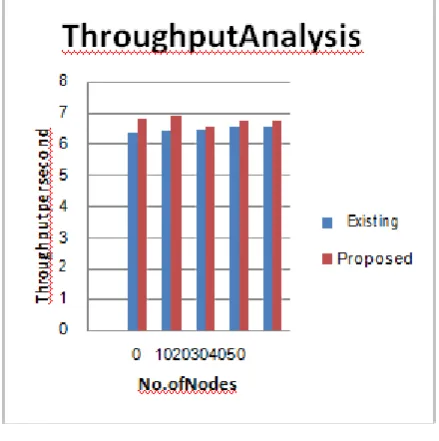
In this section the efficiency of proposed priority based scheduling for platoon control by conducting the following simulations. The below results clearly pictures the complexity of platoon scheduling inspite of the dynamic nature of network.
Figure 2 shows that the network lifetime of proposed scheduling was increased compared to the existing scheduling protocols. By experimenting
with simulation it shown that the number of nodes is large compared with numerical simulations. The simulation also shows the each node energy at various timing to verify the network lifetime by indicating the weaker node in platoon.
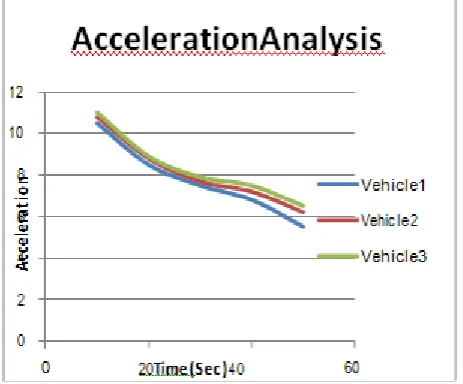
[image:4.595.299.519.141.362.2] [image:4.595.38.255.504.726.2]© 2017, IRJET | Impact Factor value: 5.181 | ISO 9001:2008 Certified Journal | Page 1064 Figure 4 & Figure 5 shows the analysis of both
velocity and acceleration can be done by considering three vehicles in a network to test the suitable velocity and acceleration of vehicle for platoon merging and for avoiding the accidents by
exchanging information with corresponding vehicles in a platoon.
6. CONCLUSION
In this paper the new form of communication scheduling is investigated to resolve the communication conflicts in VANET. Also the combination of platoon merging concept with access scheduling by using the same information and overcome the merging without any priority about vehicles nature. By using dynamic configuration of network the scheduling and reduction of random packet dropouts is assured and help to make immediate decisions about platoon merging at intersection point in highways.
The important issue is to investigate the control and scheduling methods to deal with fueling delay and the throttling/braking delay. Another issue is to employ the encryption/decryption techniques for secured communication.
REFERENCES
[1]Y. Toor, P. Muhlethaler, and A. Laouiti, “Vehicle ad hoc networks: Applications and related technical issues,” IEEE Commun. Surveys Tuts.,vol. 10, no. 3, pp. 74–88, 3rd Quart. 2008.
[2] G. Guo and W. Yue, “Hierarchical platoon control with heterogeneous information feedback,”
IET Control Theory Appl., vol. 5, no. 15, pp. 1766–
1781, Oct. 2011.
[4]Q. Wang, P. Fan, and K. B. Letaief, “On the joint V2I and V2V scheduling for cooperative VANETSs with network coding,” IEEE Trans. Veh. Technol., vol. 61, no. 1, pp. 62–73, Jan. 2012.
[5] X. Cheng et al., “Electrified vehicles and the smart grid: The ITS perspective,” IEEE Trans. Intell.
Transp. Syst., vol. 15, no. 4, pp. 1388–1404,Aug.
2014.
[6] X. Cheng, L. Yang, and X. Shen, “D2D for intelligent transportation systems: A feasibility study,” IEEE Trans. Intell. Transp. Syst., vol. 16, no. 4, pp. 1784–1793, Aug. 2015
[7]R. Zhang, X. Cheng, L. Yang, X. Shen, and B. Jiao, “A novel centralized TDMA-based scheduling protocol for vehicular networks,” IEEE Trans. Intell.
Transp. Syst., vol. 16, no. 1, pp. 411–416, Feb. 2015.
[8] J.-W. Kwon and D. Chwa, “Adaptive bidirectional platoon control using a coupled sliding mode control method,” IEEE Trans. Intell. Transp.
Syst., vol. 15, no. 5, pp. 2040–2048, Oct. 2014.
[9]F. W. Fu and M. van der Schaar, “Structure-aware stochastic control for transmission scheduling,” IEEE
Trans. Veh. Technol., vol. 61, no. 9, pp. 3931–3945,
Nov. 2012.
[10] C. S. Chen and W. S. Wong, “Bandwidth allocation for wireless multimedia systems with most regular sequences,” IEEE Trans. Wireless
Commun., vol. 4, no. 2, pp. 635–645, Mar. 2005.
[11]R. H. Middleton and J. H. Braslavsky, “String instability in classes of linear time invariant formation control with limited communication range,” IEEE Trans. Autom. Control, vol. 55, no. 7, pp. 1519–1530, Jul. 2010.
[12]M.Amoozadeh et al., “Platoon Management with Cooperative adaptive cruise Control enabled by VANET” Elsevier Vehicular Communications,no.5,pp. 110–123,March 2015.
[13] H. Hao and P. Barooah, “Stability and robustness of large platoons of vehicles with double-integrator models and nearest neighbor interaction,”
Int. J. Robust Nonlinear Control, vol. 23, no. 18, pp.
2097–2122, Dec. 2013.
[image:5.595.38.270.83.275.2]