ORIGINAL RESEARCH ARTICLE
COPY MOVE IMAGE CLASSIFICATION BY FEATURE
OPTIMIZATION WITH SUPPORT VECTOR MACHINE
APPROACH
*
Neha jain and Er. Sushil Bansal
Cse, Maharaja Agarsen University, Badd
ARTICLE INFO ABSTRACT
Copy-move is a simple and effective operation for creating digital image forgeries, where an area of an image is copied and pasted to a different location in that image. Generally, a forger uses some affine transformations to make the changes visually intact. Most existing copy-move detection methods are not effective when copied regions are under geometrical distortions.In this paper detection and classification by point base and block base features SIFT and SURF Respectively but use ant colony optimization in matching and feature selection phases ,in case of SIFT features and proposed SIFT with ACO features which also use in classification with support vector machine with Gaussian and polynomial kernel.
*Corresponding author:
Copyright ©2017,Neha jain and Er. Sushil Bansal.This is an open access article distributed under the Creative Commons Attribution License, which permits
unrestricted use, distribution, and reproduction in any medium, provided the original work is properly cited.
INTRODUCTION
The availability of powerful digital image processing programs, such as Photoshop, makes it relatively easy to create digital forgeries from one or multiple images. An example of a digital forgery is shown in Figure 1. As the newspaper cutout shows, three different photographs were used in creating the composite image: Image of the White House, Bill Clinton, and Saddam Hussein. The White House was rescaled and blurred to create an illusion of an out-of-focus background. Then, Bill Clinton and Saddam were cut off from two different images and pasted on the White House image. Care was taken to bring in the speaker stands with microphones while preserving the correct shadows and lighting. Figure 1 is, in fact, an example of a very realistic looking forgery. Another example of digital forgeries was given in the plenary talk by Dr. Tomas A. Pogo at Electronic Imaging 2003 in Santa Clara. In his talk, Dr. Pogo showed how engineers can learn the lip movements of any person from a short video clip and then digitally manipulate the lips to arbitrarily alter the spoken content.
In a nice example, a video segment showing a TV anchor announcing evening news was altered to make the anchor appear singing a popular song instead, while preserving the match between the sound and lip movement. The fact that one can use sophisticated tools to digitally manipulate images and video to create non-existing situations threatens to diminish the credibility and value of video tapes and images presented as evidence in court independently of the fact whether the video is in a digital or analog form. To tamper an analogue video, one can easily digitize the analog video stream, upload it into a computer, perform the forgeries, and then save the result in the NTSC format on an ordinary videotape. As one can expect, the situation will only get worse as the tools needed to perform the forgeries will move from research labs to commercial software. There are numerous approaches to order the digital image forgery; however principle classes of Digital image Forgery are Enhancing, Retouching, Splicing, Morphing and Copy/Move [Gagandeep Kaur, 2013]. Taking after is brief depiction of various sorts of digital image forgery:
ISSN: 2230-9926
International Journal of Development Research
Vol. 07, Issue, 08, pp.14782-14786, August, 2017
Article History:
Received 14th May, 2017
Received in revised form 25th June, 2017 Accepted 23rd July, 2017
Published online 30th August, 2017
Citation: Neha jain and Er. Sushil Bansal, 2017. “Copy Move Image Classification By Feature Optimization With Support Vector Machine
Approach”, International Journal of Development Research, 7, (08), 14782-14786.
ORIGINAL RESEARCH ARTICLE Open Access
Keywords:
Image Enhancing
Image enhancing includes enhancing an image with the assistance of Photoshop, for example, immersion, obscure and tone and so on. These upgrades don't influence image significance or appearance. However, by one means or another impacts the understanding of an image [Osamah, 2013]. Enhancing includes changing the shade of articles, changing time of day in which the image seems to have been taken, changing the climate conditions, Blurring out items.
Image Retouching
It is fundamentally used to diminish certain element of an image and improves the image quality to catch the perser’s consideration. In this strategy, image editors change the foundation, fill some alluring hues, and work with tint immersion for conditioning [Osamah, 2013].
Image Splicing
In image splicing distinctive components from various images are stuck into a solitary image. Finally, one image is gotten from substance of various images.
Image Morphing
Image morphing is characterized as a digital method that slowly changes one image into another. Changes are finished utilizing smooth move between two images.
Copy-Move
In copy-move forgery one district is duplicated from a picture and glued onto another locale of a similar picture. In this way, source and the goal both are same [Gagandeep Kaur, 2013; Osamah, 2013]. Copy Move includes copying locales of the first picture and gluing into different regions.
Copy Move Forgery Attack
Copy-Move is a kind of forgery in which a piece of picture is replicated and afterward glued on to another segment of a similar picture. The fundamental expectation of Copy-Move forgery is to conceal some data from the first picture. Since the duplicated territory has a place with a similar picture, the properties of replicated region like the shading palette, commotion parts, dynamic range and alternate properties too will be perfect with whatever is left of the picture [Gagandeep Kaur, 2013; Bolun Chen et al., 2013]. Thus, the human eye more often than not has substantially more inconvenience recognizing copy-move falsifications. Additionally counterfeiter may have utilized some kind of correct or resample devices to the replicated zone so as it turns out to be significantly more hard to recognize copy-moved forgery. Retouching includes packing the replicated region, adding the clamour to the duplicated territory and so forth and re-examining may incorporate scaling or turning the picture.
LITERATURE REVIEW
Beset Ustubioglu et al. [2016]In this paper authors proposed a method to calculate threshold automatically. Threshold is value that is used to compare similarity between feature vectors.
Authors utilize DCT-phase terms to restrict the range of the feature vector elements’ and Benford’s generalized law to determine the compression history of the image under test. The method uses element-by-element equality between the feature vectors instead of Euclidean distance or cross correlation and utilizes compression history to determine the threshold value for the current test image automatically. Experimental results show that the method can detect the copied and pasted regions under different scenarios and gives higher accuracy ratios/lower false negative compared to similar works.
Bolun Chen et al. [2013] In this paper, creators display a feature selection calculation in view of subterranean insect settlement improvement (ACO). Feature selection is an imperative errand which can altogether influence the execution of image classification and recognition.The calculation fuses the classification execution and feature set size into the heuristic guidance, and chooses a feature set with little size and high classification accuracy. Proposed calculation can get higher handling speed and also better classification accuracy utilizing a littler feature set than other existing techniques. M. Buvana Ranjani et al. [2016].In this paper creators proposed a picture duplicate move imitation discovery with another technique DCT (Discrete Cosine Transform Techniques) and IDCT (Inverse Discrete Cosine Transform Techniques by Row and Column Reduction method). The new method decreases the computational complexity identified with time, cost and parallel increment the proficiency of the picture. At first the first picture is isolated into grids, for example, rows and columns. At that point DCT is connected to each row and columns with the assistance of row reduction and column reduction techniques. At that point it is transformed into different pieces with different measurements. At last the copied picture gets dealt with its limit esteem.
Proposed strategy is intended to be hearty to geometric transformations. Results were contrasted and a piece coordinating strategy and a point-based technique. Chi-Man Pun et al. [13] In this paper creators proposed a novel copy-move forgery detection conspire utilizing versatile over division and highlight point coordinating. The proposed plot coordinates both block-based and Keypoint-based forgery detection strategies. To begin with, the proposed versatile over division calculation sections the host picture into nonoverlapping and sporadic blocks adaptively. Then, the element focuses are removed from each block as block elements, and the block components are coordinated with each other to find the named highlight focuses; this technique can around show the presumed forgery districts. The test comes about show that the proposed copy-move forgery detection plan can accomplish much better detection comes about even under different testing conditions contrasted and the current state-of-the-art copy-move forgery detection techniques.
METHODOLOGY
Any Copy-Move forgery introduces a correlation between the original image segment and the pasted one. This correlation can be used as a basis for a successful detection of this type of forgery. Because the forgery will likely be saved in the lossy JPEG format and because of a possible use of the retouch tool or other localized image processing tools, the segments may not match exactly but only approximately. Thus, we can formulate the following requirements for the detection algorithm: 1. The detection algorithm must allow for an approximate match of small image segments 2. It must work in a reasonable time while introducing few false positives (i.e., detecting incorrect matching areas). 3. Another natural assumption that should be accepted is that the forged segment will likely be a connected component rather than a collection of very small patches or individual pixels. In this section, two algorithms for detection of the Copy-Move forgery are developed – one that uses an exact match for detection and one that is based on an approximate match. Before describing the best approach based on approximate block matching that produced the best balance between performance and complexity, two other approaches were investigated – Exhaustive search and Autocorrelation.
In this design methodology firstly image is converted into overlapping blocks after converting into grey scale, then features are extracted using Ant colony Optimization, then matching will be performed using Ant colony Optimization and at last forged regions are marked. Steps are as following:
Take a colored forged image as input.
Convert image into Grey Scale.
Divide greyscale image into overlapping blocks.
Store these blocks into a metrics.
Extract feature vectors using Ant colony Optimization.
Match similar feature vectors using Ant Colony Optimization.
Initialize ants.
Evaluate results and update pheromone values.
Check if exit criteria met.
If yes give final detected forged regions, else initialize new ants.
RESULTS
Detection
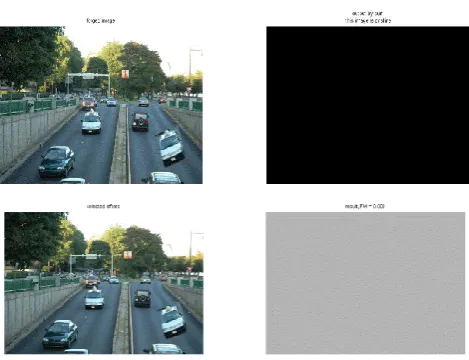
[image:3.595.316.551.554.734.2]Fig4.1: Analysis of SIFT ACO features Detection
Fig 4.2 Analysis of SuRF features Detection
Table 4.1 Precision of different classifier
Classifier Precision
SIFT with ACO(polynomial) 0.8917
surf(Gaussian) 0.4714
Gaussian SIFT with ACO(Gaussian) 0.9
surf(polynomial) 0.4737
[image:4.595.67.259.74.275.2]Fig 4.3 Precision Graphs of different classifier
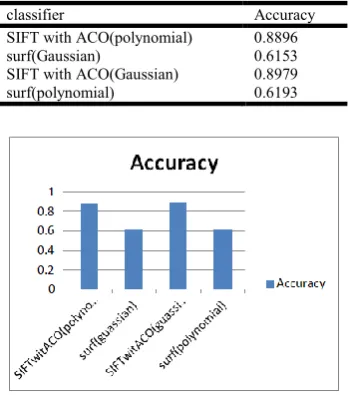
Table 4.2 Accuracy of different classifier:
classifier Accuracy
SIFT with ACO(polynomial) 0.8896
surf(Gaussian) 0.6153
SIFT with ACO(Gaussian) 0.8979
surf(polynomial) 0.6193
Figure 4.4 Accuracy Graphs of different classifier
Fig 4.5 Recall graph of different classifiers
Table 4.4 Comparison between parameters (Precision, Accuracy, Recall) of different classifiers
REFERENCES
Ardizzone, E., Bruno, A. and Mazzola, G. 2015. Copy-Move Forgery Detection by Matching Triangles of Keypoints”, IEEE Transactions on Information Forensics and Security,Volume 10 , Issue 10 , Oct.,pp 2084 – 2094. Babak Mahdian, Stanislav Saic, 2007. "Detection of copy–
move forgery using a method based on blur moment invariants", Forensic Science International, an international journal dedicated to the applications of medicine and science in the administration of justice, Vol.171 No.2-3, Sep. pp. 181-189.
Beste Ustubioglu, Guzin Uluta, Mustafa Ulutas, Vasif V. Nabiyev, 2016. A new copy move forgery detection
technique with automatic threshold
determination",Elsevier- International Journal of Electronics and Communications Volume 70, Issue 8, August, pp. 1076–1087
Bolun Chen, Ling Chen, Yixin Chen, 2013. "Efficient ant colony optimization for image feature selection",Volume 93, Elsevier- Special issue on Machine Learning in Intelligent Image Processing, Issue 6, June, pp. 1566–1576. Bolun Chen, Ling Chen, Yixin Chen, 2013. "Efficient ant
colony optimization for image feature selection", Volume 93, Elsevier -Special issue on Machine Learning in Intelligent Image Processing, Issue 6, June, pp. 1566–1576. Buvana Ranjani, M., Poovendran, R. 2016. "Image
Duplication Copy Move Forgery Detection Using Discrete Cosine Transforms Method", International Journal of Applied Engineering Research ISSN 0973-4562, Volume 11, Number 4 , pp. 2671-2674.
Devanshi Chauhana, Dipali Kasatb, Sanjeev Jainc, Vilas Thakared, 2016. "Survey On Keypoint Based Copy-move Forgery Detection Methods On Image", Elsevier – International Conference on Computational Modeling and Security (CMS),pp. 206 – 212.
Gagandeep Kaur, Dr. Maitreyee Dutta, 2013. “Digital Image Forgery: A Survey”, International Journal of Computer Science Research & Technology (IJCSRT), Vol. 1 Issue 6, Nov. pp.1-7.
Guzin Ulutas, Mustafa Ulutas, 2013. "Image forgery detection using Color Coherence Vector", Electronics, Computer and Computation (ICECCO), Nov. pp. 107 – 110.
Osamah M. Al-Qershi and Khoo Bee Ee, 2013. "Passive Detection of Copy-Move Forgery in Digital Images:
State-Table 4.3 Recall of different classifier
classifier Recall
SIFT with ACO(polynomial) 0.888
surf(Gaussian) 0.4703
SIFT with ACO(Gaussian) 0.8963
[image:4.595.76.251.328.526.2] [image:4.595.62.265.581.766.2]of-the-art" Forensic Science International, Volume 231, Issue 1, Sep, pp. 284-295.
Shi Wenchang, Zhao Fei, Qin Bo, Liang Bin, 2016. "Improving image copy-move forgery detection with particle swarm optimization techniques", IEEE-China Communications ,Volume 13 , Issue, 1 , Jan, pp. 139 – 149.
Yong-Dal Shin,2016. "Fast Exploration of Copy-Move Forgery Image" Advanced Science and Technology Letters, Vol.123 (ISA), pp.1-5.